
| import numpy as np | |
| import onnxruntime as rt | |
| import mediapipe as mp | |
| import cv2 | |
| import os | |
| import time | |
| from skimage.transform import SimilarityTransform | |
| # --------------------------------------------------------------------------------------------------------------------- | |
| # INITIALIZATIONS | |
| # Target landmark coordinates for alignment (used in training) | |
| LANDMARKS_TARGET = np.array( | |
| [ | |
| [38.2946, 51.6963], | |
| [73.5318, 51.5014], | |
| [56.0252, 71.7366], | |
| [41.5493, 92.3655], | |
| [70.7299, 92.2041], | |
| ], | |
| dtype=np.float32, | |
| ) | |
| # Initialize Face Detector (For Example Mediapipe) | |
| FACE_DETECTOR = mp.solutions.face_mesh.FaceMesh( | |
| refine_landmarks=True, min_detection_confidence=0.5, min_tracking_confidence=0.5, max_num_faces=1 | |
| ) | |
| # Initialize the Face Recognition Model (FaceTransformerOctupletLoss) | |
| FACE_RECOGNIZER = rt.InferenceSession("FaceTransformerOctupletLoss.onnx", providers=rt.get_available_providers()) | |
| # --------------------------------------------------------------------------------------------------------------------- | |
| # FACE CAPTURE | |
| # Capture a frame with your Webcam and store it on disk | |
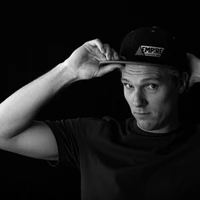
| if not os.path.exists("img.jpg"): | |
| cap = cv2.VideoCapture(1) # open webcam | |
| time.sleep(2) # wait for camera to warm up | |
| if not cap.isOpened(): | |
| raise IOError("Cannot open webcam") | |
| ret, img = cap.read() # capture a frame | |
| if ret: | |
| cv2.imwrite("img.jpg", img) # save the frame | |
| else: | |
| img = cv2.imread("img.jpg") # read the frame from disk | |
| # --------------------------------------------------------------------------------------------------------------------- | |
| # FACE DETECTION | |
| # Process the image with the face detector | |
| result = FACE_DETECTOR.process(img) | |
| if result.multi_face_landmarks: | |
| # Select 5 Landmarks (Eye Centers, Nose Tip, Left Mouth Corner, Right Mouth Corner) | |
| five_landmarks = np.asarray(result.multi_face_landmarks[0].landmark)[[470, 475, 1, 57, 287]] | |
| # Extract the x and y coordinates of the landmarks of interest | |
| landmarks = np.asarray( | |
| [[landmark.x * img.shape[1], landmark.y * img.shape[0]] for landmark in five_landmarks] | |
| ) | |
| # Extract the x and y coordinates of all landmarks | |
| all_x_coords = [landmark.x * img.shape[1] for landmark in result.multi_face_landmarks[0].landmark] | |
| all_y_coords = [landmark.y * img.shape[0] for landmark in result.multi_face_landmarks[0].landmark] | |
| # Compute the bounding box of the face | |
| x_min, x_max = int(min(all_x_coords)), int(max(all_x_coords)) | |
| y_min, y_max = int(min(all_y_coords)), int(max(all_y_coords)) | |
| bbox = [[x_min, y_min], [x_max, y_max]] | |
| else: | |
| print("No faces detected") | |
| exit() | |
| # --------------------------------------------------------------------------------------------------------------------- | |
| # FACE ALIGNMENT | |
| # Align Image with the 5 Landmarks | |
| tform = SimilarityTransform() | |
| tform.estimate(landmarks, LANDMARKS_TARGET) | |
| tmatrix = tform.params[0:2, :] | |
| img_aligned = cv2.warpAffine(img, tmatrix, (112, 112), borderValue=0.0) | |
| # safe to disk | |
| cv2.imwrite("img2_aligned.jpg", img_aligned) | |
| # --------------------------------------------------------------------------------------------------------------------- | |
| # FACE RECOGNITION | |
| # Inference face embeddings with onnxruntime | |
| input_image = (np.asarray([img_aligned]).astype(np.float32)).clip(0.0, 255.0).transpose(0, 3, 1, 2) | |
| embedding = FACE_RECOGNIZER.run(None, {"input_image": input_image})[0][0] | |
| print("Embedding:", embedding) | |
| # If you have embeddings for several facial images - you can then compute the cosine distance between them and distinguish | |
| # between different or same people based on a threshold. For example, if the cosine distance is less than 0.5, then the | |
| # two images are of the same person, otherwise they are of different people. The lower the cosine distance, the more similar | |
| # the two images are. The cosine distance is a value between 0 and 2, where 0 means the two images are identical and 2 means | |
| # the two images are completely different. | |
| # --------------------------------------------------------------------------------------------------------------------- | |
| # VISUALIZATION | |
| # Draw Boundingbox on a copy of image | |
| img_draw = img.copy() | |
| cv2.rectangle(img_draw, (bbox[0][0], bbox[0][1]), (bbox[1][0], bbox[1][1]), (255, 0, 0), 2) | |
| # Show the detected face on the image | |
| cv2.imshow("img", img_draw) | |
| cv2.waitKey(0) | |
| # Show the aligned image | |
| cv2.imshow("img", img_aligned) | |
| cv2.waitKey(0) | |