
Visualize the encoding process in HuggingFace Byte-Pair Encoding tokenizer

Byte-Pair Encoding (BPE) was initially developed as an algorithm to compress texts, and then used by OpenAI for tokenization when pre-training the GPT model. It’s used by a lot of Transformer models, including GPT, GPT-2, RoBERTa, BART, and DeBERTa.
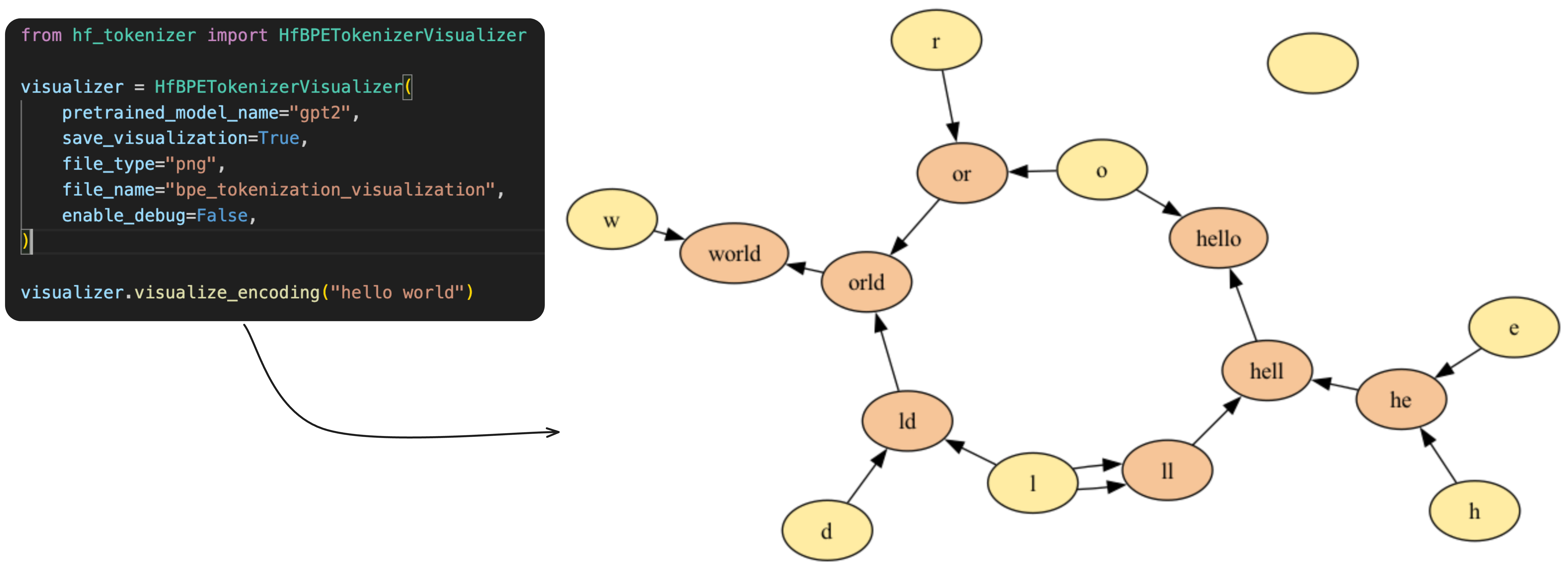
Byte-Pair Encoding tokenization
BPE training starts by computing the unique set of words used in the corpus (after the normalization and pre-tokenization steps are completed), then building the vocabulary by taking all the symbols used to write those words.
More about the algorithm here
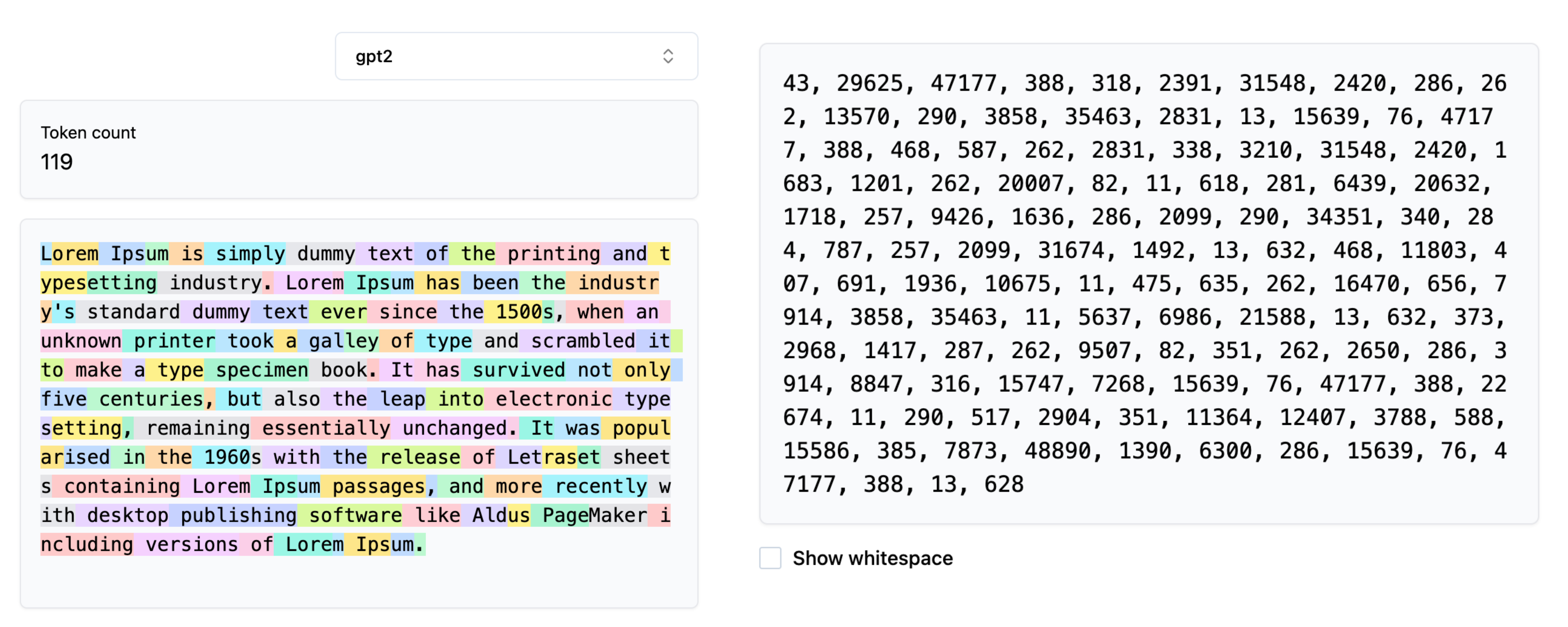
Visualizing the Tokenization process
During the tokenization process the input content is compressed into the encoded IDs based on the trained BPE-Tokenizer. During the training process the token-pairs are merged into new token ID based on their frequency of existence in the training corpus.
This library helps in visualizing how the merging process looks like for a given string to be encoded. It generates a graph where the nodes are tokens / characters and if a pair of characters are merged, the nodes are connected via directed edges.
Installing the Library
pip install hf-tokenizer-visualizer
- Save your visualization in a
PNGor aPDFfile.
from hf_tokenizer_visualizer import HfBPETokenizerVisualizer

visualizer = HfBPETokenizerVisualizer(
    pretrained_model_name="gpt2",
    save_visualization=True,
    file_type="png",
    file_name="bpe_tokenization_visualization_2",
    enable_debug=False,
)

visualizer.visualize_encoding('hello world')
Output Graph generated
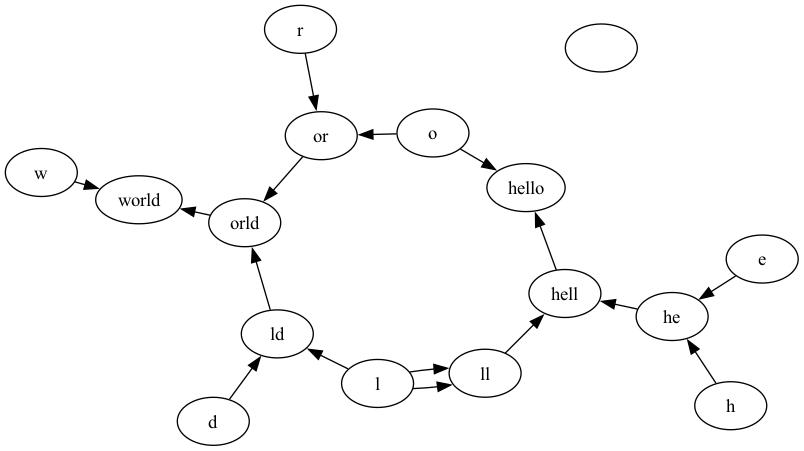
Note: The file is saved in your current working directory. Note: You can choose between
pngand
- Get the raw encoding
from hf_tokenizer_visualizer import HfBPETokenizerVisualizer

visualizer = HfBPETokenizerVisualizer(
    pretrained_model_name="gpt2",
    save_visualization=True,
    file_type="png",
    file_name="bpe_tokenization_visualization_2",
    enable_debug=False,
)

visualizer.encode('hello world')
Output: [31373, 995]
Pre-requisites
Following are the libraries which are mandatory for running this: