

File size: 40,415 Bytes
ab74ec2 | 1 2 3 4 5 6 7 8 9 10 11 12 13 14 15 16 17 18 19 20 21 22 23 24 25 26 27 28 29 30 31 32 33 34 35 36 37 38 39 40 41 42 43 44 45 46 47 48 49 50 51 52 53 54 55 56 57 58 59 60 61 62 63 64 65 66 67 68 69 70 71 72 73 74 75 76 77 78 79 80 81 82 83 84 85 86 87 88 89 90 91 92 93 94 95 96 97 98 99 100 101 102 103 104 105 106 107 108 109 110 111 112 113 114 115 116 117 118 119 120 121 122 123 124 125 126 127 128 129 130 131 132 133 134 135 136 137 138 139 140 141 142 143 144 145 146 147 148 149 150 151 152 153 154 155 156 157 158 159 160 161 162 163 164 165 166 167 168 169 170 171 172 173 174 175 176 177 178 179 180 181 182 183 184 185 186 187 188 189 190 191 192 193 194 195 196 197 198 199 200 201 202 203 204 205 206 207 208 209 210 211 212 213 214 215 216 217 218 219 220 221 222 223 224 225 226 227 228 229 230 231 232 233 234 235 236 237 238 239 240 241 242 243 244 245 246 247 248 249 250 251 252 253 254 255 256 257 258 259 260 261 262 263 264 265 266 267 268 269 270 271 272 273 274 275 276 277 278 279 280 281 282 283 284 285 286 287 288 289 290 291 292 293 294 295 296 297 298 299 300 301 302 303 304 305 306 307 308 309 310 311 312 313 314 315 316 317 318 319 320 321 322 323 324 325 326 327 328 329 330 331 332 333 334 335 336 337 338 339 340 341 342 343 344 345 346 347 348 349 350 351 352 353 354 355 356 357 358 359 360 361 362 363 364 365 366 367 368 369 370 371 372 373 374 375 376 377 378 379 380 381 382 383 384 385 386 387 388 389 390 391 392 393 394 395 396 397 398 399 400 401 402 403 404 405 406 407 408 409 410 411 412 413 414 415 416 417 418 419 420 421 422 423 424 425 426 427 428 429 430 431 432 433 434 435 436 437 438 439 440 441 442 443 444 445 446 447 448 449 450 451 452 453 454 455 456 457 458 459 460 461 462 463 464 465 466 467 468 469 470 471 472 473 474 475 476 477 478 479 480 481 482 483 484 485 486 487 488 489 490 491 492 493 494 495 496 497 498 499 500 501 502 503 504 505 506 507 508 509 510 511 512 513 514 515 516 517 518 519 520 521 522 523 524 525 526 527 528 529 530 531 532 533 534 535 536 537 538 539 540 541 542 543 544 545 546 547 548 549 550 551 552 553 554 555 556 557 558 559 560 561 562 563 564 565 566 567 568 569 570 571 572 573 574 575 576 577 578 579 580 581 582 583 584 585 586 587 588 589 590 591 592 593 594 595 596 597 598 599 600 601 602 603 604 605 606 607 608 609 610 611 612 613 614 615 616 617 618 619 620 621 622 623 624 625 626 627 628 629 630 631 632 633 634 635 636 637 638 639 640 641 642 643 644 645 646 647 648 649 650 651 652 653 654 655 656 657 658 659 660 661 662 663 664 665 666 667 668 669 670 671 672 673 674 675 676 677 678 679 680 681 682 683 684 685 686 687 688 689 690 691 692 693 694 695 696 697 698 699 700 701 702 703 704 705 706 707 708 709 710 711 712 713 714 715 716 717 718 719 720 721 722 723 724 725 726 727 728 729 730 731 732 733 734 735 736 737 738 739 740 741 742 743 744 745 746 747 748 749 750 751 752 753 754 755 756 757 758 759 760 761 762 763 764 765 766 767 768 769 770 771 772 773 774 775 776 777 778 779 780 781 782 783 784 785 786 787 788 789 790 791 792 793 794 795 796 797 798 799 800 801 802 803 804 805 806 807 808 809 810 811 812 813 814 815 816 817 818 819 820 821 822 823 824 825 826 827 828 829 830 831 832 833 834 835 836 837 838 839 840 841 842 843 844 845 846 847 848 849 850 851 852 853 854 855 856 857 858 859 860 861 862 863 864 865 866 | openapi: 3.0.3
info:
title: Device Identifier
version: wip
description: |
# Summary
The Mobile Device Identifier API returns details of the physical mobile device currently being used by a specified mobile subscriber. The following information can be returned:
- A unique network identifier for the specific device itself (IMEI SV and IMEI)
- A pseudonymised network identifier for the specific device itself (Pairwise Pseudonymous Identifier)
- A network identifier for the device make and model (IMEI Type Allocation Code)
- Device manufacturer name and model
This information can be useful in a number of scenarios, such as the following:
- For insurance purposes, to automatically identify a device that a customer wishes to insure
- For security / fraud reasons, to establish that a customer is not using a device they claim to have broken or lost
- For service delivery reasons, to optimise content for a particular device or OS type
# Introduction
Mobile devices are allocated a unique identifier by the manufacturer, known as the International Mobile Equipment Identity, or IMEI. The current software version (SV) of the device can be appended to this, in which case the identifier is known as the IMEI SV. This identifier is signalled to the mobile network when the device connects, both to confirm that the device is not blocked, and also allow device dependent network configurations to be implemented.
The IMEI is a 15 digit integer, and the IMEI SV is a 16 digit integer:
- The first 8 digits are known as the Type Allocation Code (TAC), and identify the manufacturer and model of the device
- The following 6 digits are the serial number of the device for that TAC
- For IMEI, the remaining digit is a check digit
- For IMEI SV, the remaining two digits are the software version
TACs are issued and managed by the GSMA, and can be queried using the [GSMA IMEI database](https://www.gsma.com/aboutus/workinggroups/terminal-steering-group/imei-database).
The mobile network associates this device identifier with the mobile subscription currently using the device. The mobile subscription is defined by the Subscriber Identity Module (SIM) currently active in the mobile device. This may be a removable SIM or an eSIM. In either case, it is possible for the association between the device identifier and subscription to change - for example, when a physical SIM is transferred to another mobile device.
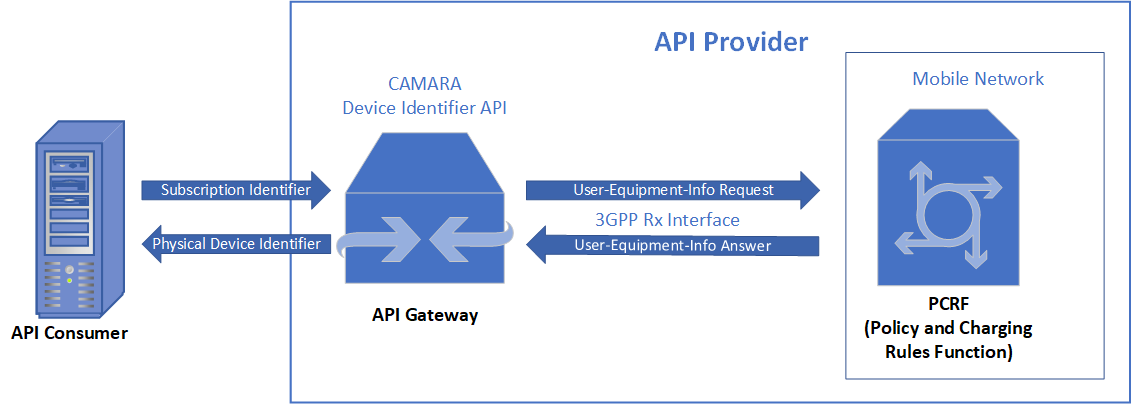
The Device Identifier API allows the API consumer to obtain the IMEI and associated parameters for a specified mobile subscription identifier or equivalent. The mobile subscription can be identified using one or more of the following subscription identifiers:
- the subscription phone number (also known as MSISDN)
- the subscription network access identifier, which is a domain specific identifier typically allocated to devices that do not require voice / SMS connectivity
- the current IP address and port alloacted to the device, which must be an IPv6 or public IPv4 address
The API can be called by an API consumer to establish an identifier for the physical device currently being used by the mobile subscription. The information returned will depend upon the consent that the end user (i.e. mobile subscription owner) has given for that information to be provided to the API consumer. For example, if the end user has not consented to any information about their device being given, then the API consumer will receive an error in response to their request. Otherwise, the information that the end user has consented to being given will be returned.
# Relevant terms and definitions
### Device Identifier API service endpoint
The URL pointing to the RESTful resource of the Device Identifier API.
### Identifier for the mobile subscription
At least one identifier for the mobile subscription from the following four options:
- Phone number (i.e. MSISDN)
- Network Access Identifier assigned by the mobile network operator for the device
- IPv6 address
- IPv4 address
### Identifier for the physical mobile device
The IMEI or IMEISV of the physical mobile device
### Pairwise Pseudonymous Identifier
An identifier that has been pseudonymised such that the resulting pseudonymous identifier is unique to but persistent for a given API consumer
# API functionality
The API defines three service endpoints:
- `POST /retrieve-identifier` to get details about the specific device being used by a given mobile subscriber, including IMEI / IMEISV and the type of device
- `POST /retrieve-type` to get details only about the type (i.e. manufacturer and model) of device being used by a given mobile subscriber
- `POST /retrieve-ppid` to get a pseudonymised identifier for the specific device being used by a given mobile subscriber
To call any of these endpoints, the API consumer must first obtain a valid access token from the token endpoint, which is then passed as an Authorization header. When a 2-legged access token is used, the API consumer must also pass at least one of the available mobile subscription identifiers in the body of the request.
If the request is valid, the API response is a JSON object containing the data that the end user has consented to sharing with the API consumer.
- When calling endpoint `retrieve-identifier`, the response will always contain `imei`
- When calling endpoint `retrieve-type`, the response will always contain `tac`
- When calling endpoint `retrieve-ppid`, the response will always contain `ppid`
- Responses will also always contain a `lastChecked` field, indicating when the information provided was last confirmed to be correct
- Other response parameters are implementation dependent, and thus optional
An example of a JSON response object is as follows:
```
{
"lastChecked": "2024-02-20T10:41:38.657Z",
"imeisv": "49015420323751800",
"imei": "4901542032375181",
"tac": "49015420",
"model": "3110",
"manufacturer": "Nokia"
}
```
## Error handling
Errors may be returned for the following reasons. Note that this list is not exhaustive.
`401 UNAUTHENTICATED`:
- The access token is not a valid access token for the API provider
- The access token was valid but has now expired
`400 INVALID_ARGUMENT`:
- The API request is not compliant with this OAS definition
`400 OUT_OF_RANGE`:
- A parameter value in the API request is outwith the range documented in this OAS definition for that parameter
`404 IDENTIFIER_NOT_FOUND`:
- The device identified by the `device` object in the request is not managed by the API provider
`403 PERMISSION_DENIED`:
- The access token does not have the required scope for the endpoint being called
- The end user has not consented to the API consumer getting access to the device identifier information (2-legged access token only)
`422 SERVICE_NOT_APPLICABLE`:
- A device identifier cannot be provided for the identified device. For example, the phone number might identify a landline.
`422 UNSUPPORTED_IDENTIFIER`:
- A parameter provided in the `device` object is not supported by this implementation (e.g. `networkAccessIdentifier`)
`422 MISSING_IDENTIFIER`:
`422 UNNECESSARY_IDENTIFIER`:
- See the section "Identifying the device from the access token" below
`429 QUOTA_EXCEEDED`:
- The API consumer has used up the quota of API requests that they were allocated for this API
`429 TOO_MANY_REQUESTS`:
- The rate at which the API consumer is sending requests has exceeded that allowed by the API provider. Try again later.
### Additional CAMARA error responses
The list of error codes in this API specification is not exhaustive. Therefore the API specification may not document some non-mandatory error statuses as indicated in `CAMARA API Design Guide`.
Please refer to the `CAMARA_common.yaml` of the Commonalities Release associated to this API version for a complete list of error responses. The applicable Commonalities Release can be identified in the `API Readiness Checklist` document associated to this API version.
As a specific rule, error `501 - NOT_IMPLEMENTED` can be only a possible error response if it is explicitly documented in the API.
# Further info and support
## Authorization and authentication
The "Camara Security and Interoperability Profile" provides details of how an API consumer requests an access token. Please refer to Identity and Consent Management (https://github.com/camaraproject/IdentityAndConsentManagement/) for the released version of the profile.
The specific authorization flows to be used will be agreed upon during the onboarding process, happening between the API consumer and the API provider, taking into account the declared purpose for accessing the API, whilst also being subject to the prevailing legal framework dictated by local legislation.
In cases where personal data is processed by the API and users can exercise their rights through mechanisms such as opt-in and/or opt-out, the use of three-legged access tokens is mandatory. This ensures that the API remains in compliance with privacy regulations, upholding the principles of transparency and user-centric privacy-by-design.
## Identifying the device from the access token
This API requires the API consumer to identify a device as the subject of the API as follows:
- When the API is invoked using a two-legged access token, the subject will be identified from the optional `device` object, which therefore MUST be provided.
- When a three-legged access token is used however, this optional identifier MUST NOT be provided, as the subject will be uniquely identified from the access token.
This approach simplifies API usage for API consumers using a three-legged access token to invoke the API by relying on the information that is associated with the access token and was identified during the authentication process.
### Error handling:
- If the subject cannot be identified from the access token and the optional `device` object is not included in the request, then the server will return an error with the `422 MISSING_IDENTIFIER` error code.
- If the subject can be identified from the access token and the optional `device` object is also included in the request, then the server will return an error with the `422 UNNECESSARY_IDENTIFIER` error code. This will be the case even if the same device is identified by these two methods, as the server is unable to make this comparison.
## Multi-SIM scenario handling
In scenarios where a main phone number is shared between multiple devices, each of which has its own individual "secondary" phone number (e.g. connectivity plans that let you share your airtime and data allowances with a smartwatch or eSIM-enabled tablet), the phone number passed by the API consumer will be treated as the secondary phone number, and hence the identifier returned will be that of the single device associated with that phone number (e.g. smartphone, smartwatch, or eSIM-enabled tablet).
In such scenarios, the "primary" device is usually allocated the same main and secondary phone numbers, and hence providing the main phone number to the API will return the identity of the primary device (usually the smartphone) and not any associated devices.
(FAQs will be added in a later version of the documentation)
license:
name: Apache 2.0
url: https://www.apache.org/licenses/LICENSE-2.0.html
x-camara-commonalities: 0.6
externalDocs:
description: Product documentation at CAMARA
url: https://github.com/camaraproject/DeviceIdentifier
servers:
- url: "{apiRoot}/device-identifier/vwip"
variables:
apiRoot:
default: http://localhost:9091
description: API root, defined by the service provider, e.g. `api.example.com` or `api.example.com/somepath`
tags:
- name: Get Device Identifiers
description: Retrieve details about the device being used by a mobile subscriber
paths:
"/retrieve-identifier":
post:
summary: Get details about the specific device being used by a given mobile subscriber
description: Get details about the specific device being used by a given mobile subscriber
operationId: retrieveIdentifier
tags:
- Get Device Identifiers
security:
- openId:
- device-identifier:retrieve-identifier
parameters:
- $ref: "#/components/parameters/x-correlator"
requestBody:
description: Parameters to create a new session
required: true
content:
application/json:
schema:
$ref: "#/components/schemas/RequestBody"
examples:
Identify Device By 3-Legged Access Token:
$ref: '#/components/examples/IdentifyDeviceBy3LeggedToken'
Identify Device By Phone Number:
$ref: '#/components/examples/IdentifyDeviceByPhoneNumber'
Identify Device By IP Address:
$ref: '#/components/examples/IdentifyDeviceByIPAddress'
Identify Device By Multiple Identifiers:
$ref: '#/components/examples/IdentifyDeviceByMultipleIdentifiers'
responses:
"200":
$ref: '#/components/responses/200RetrieveIdentifier'
"400":
$ref: '#/components/responses/400BadRequest'
"401":
$ref: '#/components/responses/401Unauthorized'
"403":
$ref: '#/components/responses/403Forbidden'
"404":
$ref: '#/components/responses/404NotFound'
"422":
$ref: '#/components/responses/422UnprocessableContent'
"429":
$ref: '#/components/responses/429TooManyRequests'
"/retrieve-type":
post:
summary: Get details about the type of device being used by a given mobile subscriber
description: Get details about the type of device being used by a given mobile subscriber
operationId: retrieveType
tags:
- Get Device Identifiers
security:
- openId:
- device-identifier:retrieve-type
parameters:
- $ref: "#/components/parameters/x-correlator"
requestBody:
description: Parameters to create a new session
required: true
content:
application/json:
schema:
$ref: "#/components/schemas/RequestBody"
examples:
Identify Device By 3-Legged Access Token:
$ref: '#/components/examples/IdentifyDeviceBy3LeggedToken'
Identify Device By Phone Number:
$ref: '#/components/examples/IdentifyDeviceByPhoneNumber'
Identify Device By IP Address:
$ref: '#/components/examples/IdentifyDeviceByIPAddress'
Identify Device By Multiple Identifiers:
$ref: '#/components/examples/IdentifyDeviceByMultipleIdentifiers'
responses:
"200":
$ref: '#/components/responses/200RetrieveType'
"400":
$ref: '#/components/responses/400BadRequest'
"401":
$ref: '#/components/responses/401Unauthorized'
"403":
$ref: '#/components/responses/403Forbidden'
"404":
$ref: '#/components/responses/404NotFound'
"422":
$ref: '#/components/responses/422UnprocessableContent'
"429":
$ref: '#/components/responses/429TooManyRequests'
"/retrieve-ppid":
post:
summary: Get a pseudonymous identifier for device being used by a given mobile subscriber
description: Get a pseudonymous identifier for device being used by a given mobile subscriber
operationId: retrievePPID
tags:
- Get Device Identifiers
security:
- openId:
- device-identifier:retrieve-ppid
parameters:
- $ref: "#/components/parameters/x-correlator"
requestBody:
description: Parameters to identify the mobile subscription when a 2-legged access token is being used
required: true
content:
application/json:
schema:
$ref: "#/components/schemas/RequestBody"
examples:
Identify Device By 3-Legged Access Token:
$ref: '#/components/examples/IdentifyDeviceBy3LeggedToken'
Identify Device By Phone Number:
$ref: '#/components/examples/IdentifyDeviceByPhoneNumber'
Identify Device By IP Address:
$ref: '#/components/examples/IdentifyDeviceByIPAddress'
Identify Device By Multiple Identifiers:
$ref: '#/components/examples/IdentifyDeviceByMultipleIdentifiers'
responses:
"200":
$ref: '#/components/responses/200RetrievePPID'
"400":
$ref: '#/components/responses/400BadRequest'
"401":
$ref: '#/components/responses/401Unauthorized'
"403":
$ref: '#/components/responses/403Forbidden'
"404":
$ref: '#/components/responses/404NotFound'
"422":
$ref: '#/components/responses/422UnprocessableContent'
"429":
$ref: '#/components/responses/429TooManyRequests'
components:
securitySchemes:
openId:
description: Common security scheme for all CAMARA APIs
type: openIdConnect
openIdConnectUrl: https://example.com/.well-known/openid-configuration
parameters:
x-correlator:
name: x-correlator
in: header
description: Correlation id for the different services
schema:
$ref: "#/components/schemas/XCorrelator"
headers:
X-Correlator:
description: Correlation id for the different services
required: false
schema:
$ref: "#/components/schemas/XCorrelator"
responses:
200RetrieveIdentifier:
description: An device identifier has been found for the specified subscriber
headers:
x-correlator:
$ref: "#/components/headers/X-Correlator"
content:
application/json:
schema:
required:
- lastChecked
- imei
allOf:
- $ref: "#/components/schemas/CommonResponseBody"
- $ref: "#/components/schemas/DeviceIdentifier"
- $ref: "#/components/schemas/DeviceType"
examples:
Successful Identifier Retrieval:
description: Device identifier has been successfully retrieved when the device subscription was identified by a 3-legged access token or single device subscription identifier
value:
lastChecked: "2024-02-20T10:41:38.657Z"
imeisv: "49015420323751800"
imei: "4901542032375181"
tac: "49015420"
model: "3110"
manufacturer: "Nokia"
Successful Identifier Retrieval With Device Disambiguation:
description: Device identifier has been successfully retrieved when a 2-legged access token and multiple device subscription identifiers were provided
value:
device:
phoneNumber: "+123456789"
lastChecked: "2024-02-20T10:41:38.657Z"
imeisv: "49015420323751800"
imei: "4901542032375181"
tac: "49015420"
model: "3110"
manufacturer: "Nokia"
200RetrieveType:
description: A device identifier has been found for the specified subscriber
headers:
x-correlator:
$ref: "#/components/headers/X-Correlator"
content:
application/json:
schema:
required:
- lastChecked
- tac
allOf:
- $ref: "#/components/schemas/CommonResponseBody"
- $ref: "#/components/schemas/DeviceType"
examples:
Successful Type Retrieval:
description: Device type has been successfully retrieved when the device subcsription was identified by a 3-legged access token or single device subscription identifier
value:
lastChecked: "2024-02-20T10:41:38.657Z"
tac: "49015420"
model: "3110"
manufacturer: "Nokia"
Successful Type Retrieval With Device Disambiguation:
description: Device type has been successfully retrieved when a 2-legged access token and multiple device subscription identifiers were provided
value:
device:
phoneNumber: "+123456789"
lastChecked: "2024-02-20T10:41:38.657Z"
tac: "49015420"
model: "3110"
manufacturer: "Nokia"
200RetrievePPID:
description: A pseudonymous device identifier has been found for the specified mobile subscriber
headers:
x-correlator:
$ref: "#/components/headers/X-Correlator"
content:
application/json:
schema:
required:
- lastChecked
- ppid
allOf:
- $ref: "#/components/schemas/CommonResponseBody"
- $ref: "#/components/schemas/DevicePPID"
examples:
Successful PPID Retrieval:
description: Device PPID has been successfully retrieved when the device subcsription was identified by a 3-legged access token or single device subscription identifier
value:
lastChecked: "2024-02-20T10:41:38.657Z"
ppid: "b083f65ccdad365d7489fff24b6d5074b30c12b6d81db3404d25964ffd908813"
Successful PPID Retrieval With Device Disambiguation:
description: Device PPID has been successfully retrieved when a 2-legged access token and multiple device subscription identifiers were provided
value:
device:
phoneNumber: "+123456789"
lastChecked: "2024-02-20T10:41:38.657Z"
ppid: "b083f65ccdad365d7489fff24b6d5074b30c12b6d81db3404d25964ffd908813"
400BadRequest:
description: Bad Request
headers:
x-correlator:
$ref: "#/components/headers/X-Correlator"
content:
application/json:
schema:
allOf:
- $ref: "#/components/schemas/ErrorInfo"
- type: object
properties:
status:
enum:
- 400
code:
enum:
- INVALID_ARGUMENT
- OUT_OF_RANGE
examples:
Insufficient Parameters:
description: Sufficient parameters must be provided to allow the target UE to be identified
value:
status: 400
code: INVALID_ARGUMENT
message: "At least one of phoneNumber, networkAccessIdentifier, ipv4Address and ipv6Address must be specified"
Inconsistent Device Properties:
description: Device parameters provided identify different devices
value:
status: 400
code: INVALID_ARGUMENT
message: "Multiple inconsistent device parameters specified"
Invalid Network Access Identifier:
value:
status: 400
code: INVALID_ARGUMENT
message: "Invalid format: networkAccessIdentifier"
Invalid Phone Number:
value:
status: 400
code: INVALID_ARGUMENT
message: "Invalid format: phoneNumber"
Invalid IPv4 Address:
value:
status: 400
code: INVALID_ARGUMENT
message: "Invalid format: ipv4Address"
Invalid IPv6 Address:
value:
status: 400
code: INVALID_ARGUMENT
message: "Invalid format: ipv6Address"
Invalid Port Value:
value:
status: 400
code: OUT_OF_RANGE
message: "Invalid value: ipv4Address.publicPort"
401Unauthorized:
description: Unauthorized
headers:
x-correlator:
$ref: "#/components/headers/X-Correlator"
content:
application/json:
schema:
allOf:
- $ref: "#/components/schemas/ErrorInfo"
- type: object
properties:
status:
enum:
- 401
code:
enum:
- UNAUTHENTICATED
examples:
Unauthenticated Request:
description: Request cannot be authenticated and a new authentication is required
value:
status: 401
code: UNAUTHENTICATED
message: Request not authenticated due to missing, invalid, or expired credentials. A new authentication is required.
403Forbidden:
description: Forbidden
headers:
x-correlator:
$ref: "#/components/headers/X-Correlator"
content:
application/json:
schema:
allOf:
- $ref: "#/components/schemas/ErrorInfo"
- type: object
properties:
status:
enum:
- 403
code:
enum:
- PERMISSION_DENIED
examples:
Permision Denied:
description: Permission denied. OAuth2 token access does not have the required scope or when the user fails operational security
value:
status: 403
code: PERMISSION_DENIED
message: Client does not have sufficient permissions to perform this action.
404NotFound:
description: Not found
headers:
x-correlator:
$ref: "#/components/headers/X-Correlator"
content:
application/json:
schema:
allOf:
- $ref: "#/components/schemas/ErrorInfo"
- type: object
properties:
status:
enum:
- 404
code:
enum:
- IDENTIFIER_NOT_FOUND
examples:
Device Cannot Be Found:
description: The provided identifier cannot be matched to a device known to the API provider
value:
status: 404
code: IDENTIFIER_NOT_FOUND
message: The provided identifier cannot be matched to a device.
422UnprocessableContent:
description: Unprocessable Content
headers:
x-correlator:
$ref: "#/components/headers/X-Correlator"
content:
application/json:
schema:
allOf:
- $ref: "#/components/schemas/ErrorInfo"
- type: object
properties:
status:
enum:
- 422
code:
enum:
- SERVICE_NOT_APPLICABLE
- MISSING_IDENTIFIER
- UNSUPPORTED_IDENTIFIER
- UNNECESSARY_IDENTIFIER
examples:
Service Not Applicable For Device:
description: The service is not applicable for the identified device
value:
status: 422
code: SERVICE_NOT_APPLICABLE
message: The service is not applicable for the identified device.
Unsupported Identifier:
description: None of the provided identifiers is supported by the implementation
value:
status: 422
code: UNSUPPORTED_IDENTIFIER
message: None of the provided identifiers is supported by the implementation.
Unnecessary Identifier:
description: An explicit identifier has been provided for the device when this is already identified by the access token
value:
status: 422
code: UNNECESSARY_IDENTIFIER
message: An explicit identifier has been provided for the device when this is already identified by the access token
Missing Identifier:
description: An identifier is not included in the request and the device cannot be identified from the 2-legged access token
value:
status: 422
code: MISSING_IDENTIFIER
message: An identifier is not included in the request and the device cannot be identified from the 2-legged access token
429TooManyRequests:
description: Too Many Requests
headers:
x-correlator:
$ref: "#/components/headers/X-Correlator"
content:
application/json:
schema:
allOf:
- $ref: "#/components/schemas/ErrorInfo"
- type: object
properties:
status:
enum:
- 429
code:
enum:
- QUOTA_EXCEEDED
- TOO_MANY_REQUESTS
examples:
Too Many Requests:
description: Access to the API has been temporarily blocked due to quota or spike arrest limits being reached
value:
status: 429
code: TOO_MANY_REQUESTS
message: Rate limit reached
Quota Exceeded:
description: Request is rejected due to exceeding a business quota limit
value:
status: 429
code: QUOTA_EXCEEDED
message: Out of resource quota
schemas:
CommonResponseBody:
description: |
Common parameters to be included in all responses
properties:
device:
description: The device subscription identifier that was used to identify the device whose identifier is being returned. If this property is not present, then the device subscription identifier specified in the request was used.
allOf:
- $ref: "#/components/schemas/DeviceResponse"
- example: {"phoneNumber": "+123456789"}
lastChecked:
description: |
Date and time that the information was last confirmed by the mobile operator to be correct. It must follow [RFC 3339](https://datatracker.ietf.org/doc/html/rfc3339#section-5.6) and must have time zone.
type: string
format: date-time
example: "2024-02-20T10:41:38.657Z"
DeviceIdentifier:
description: |
The individual physical mobile device identifier, as expressed by the IMEI and IMEISV
type: object
properties:
imeisv:
type: string
description: IMEISV of the device
example: "49015420323751800"
imei:
type: string
description: IMEI of the device
example: "4901542032375181"
DeviceType:
description: |
The physical device type, as expressed by Type Approval Code, manufacturer name and model name
type: object
properties:
tac:
type: string
description: IMEI TAC of the device
example: "49015420"
model:
type: string
description: Model of the device
example: "3110"
manufacturer:
type: string
description: Manufacturer of the device
example: "Nokia"
DevicePPID:
description: |
The individual physical mobile device identifier, expressed as a PPID (Pairwise Pseudonymous Identifier)
type: object
properties:
ppid:
type: string
description: A PPID for the identified physical device
example: "b083f65ccdad365d7489fff24b6d5074b30c12b6d81db3404d25964ffd908813"
Device:
description: |
End-user equipment able to connect to a mobile network. Examples of devices include smartphones or IoT sensors/actuators.
The developer can choose to provide the below specified device identifiers:
* `ipv4Address`
* `ipv6Address`
* `phoneNumber`
* `networkAccessIdentifier`
NOTE 1: The MNO might support only a subset of these options. The API invoker can provide multiple identifiers to be compatible across different MNOs. In this case the identifiers MUST belong to the same device.
NOTE 2: For the current Commonalities release, we are enforcing that the networkAccessIdentifier is only part of the schema for future-proofing, and CAMARA does not currently allow its use. After the CAMARA meta-release work is concluded and the relevant issues are resolved, its use will need to be explicitly documented in the guidelines.
type: object
properties:
phoneNumber:
$ref: "#/components/schemas/PhoneNumber"
networkAccessIdentifier:
$ref: "#/components/schemas/NetworkAccessIdentifier"
ipv4Address:
$ref: "#/components/schemas/DeviceIpv4Addr"
ipv6Address:
$ref: "#/components/schemas/DeviceIpv6Address"
minProperties: 1
DeviceResponse:
description: |
An identifier for the end-user equipment able to connect to the network that the response refers to. This parameter is only returned when the API consumer includes the `device` parameter in their request (i.e. they are using a two-legged access token), and is relevant when more than one device identifier is specified, as only one of those device identifiers is allowed in the response.
If the API consumer provides more than one device identifier in their request, the API provider must return a single identifier which is the one they are using to fulfil the request, even if the identifiers do not match the same device. API provider does not perform any logic to validate/correlate that the indicated device identifiers match the same device. No error should be returned if the identifiers are otherwise valid to prevent API consumers correlating different identifiers with a given end user.
allOf:
- $ref: "#/components/schemas/Device"
- maxProperties: 1
DeviceIpv4Addr:
type: object
description: |
The device should be identified by either the public (observed) IP address and port as seen by the application server, or the private (local) and any public (observed) IP addresses in use by the device (this information can be obtained by various means, for example from some DNS servers).
If the allocated and observed IP addresses are the same (i.e. NAT is not in use) then the same address should be specified for both publicAddress and privateAddress.
If NAT64 is in use, the device should be identified by its publicAddress and publicPort, or separately by its allocated IPv6 address (field ipv6Address of the Device object)
In all cases, publicAddress must be specified, along with at least one of either privateAddress or publicPort, dependent upon which is known. In general, mobile devices cannot be identified by their public IPv4 address alone.
properties:
publicAddress:
$ref: "#/components/schemas/SingleIpv4Addr"
privateAddress:
$ref: "#/components/schemas/SingleIpv4Addr"
publicPort:
$ref: "#/components/schemas/Port"
anyOf:
- required: [publicAddress, privateAddress]
- required: [publicAddress, publicPort]
example:
{
"publicAddress": "84.125.93.10",
"publicPort": 59765
}
ErrorInfo:
type: object
required:
- status
- code
- message
properties:
status:
type: integer
description: HTTP response status code
code:
type: string
description: A human-readable code to describe the error
message:
type: string
description: A human-readable description of what the event represents
NetworkAccessIdentifier:
description: A public identifier addressing a subscription in a mobile network. In 3GPP terminology, it corresponds to the GPSI formatted with the External Identifier ({Local Identifier}@{Domain Identifier}). Unlike the telephone number, the network access identifier is not subjected to portability ruling in force, and is individually managed by each operator.
type: string
example: "123456789@example.com"
PhoneNumber:
description: A public identifier addressing a telephone subscription. In mobile networks it corresponds to the MSISDN (Mobile Station International Subscriber Directory Number). In order to be globally unique it has to be formatted in international format, according to E.164 standard, prefixed with '+'.
type: string
pattern: '^\+[1-9][0-9]{4,14}$'
example: "+123456789"
Port:
description: TCP or UDP port number
type: integer
minimum: 0
maximum: 65535
RequestBody:
description: Common request body to allow optional Device object to be passed
type: object
properties:
device:
$ref: "#/components/schemas/Device"
SingleIpv4Addr:
description: A single IPv4 address with no subnet mask
type: string
format: ipv4
example: "84.125.93.10"
DeviceIpv6Address:
description: |
The device should be identified by the observed IPv6 address, or by any single IPv6 address from within the subnet allocated to the device (e.g. adding ::0 to the /64 prefix).
type: string
format: ipv6
example: 2001:db8:85a3:8d3:1319:8a2e:370:7344
XCorrelator:
type: string
pattern: ^[a-zA-Z0-9-_:;.\/<>{}]{0,256}$
example: "b4333c46-49c0-4f62-80d7-f0ef930f1c46"
examples:
IdentifyDeviceBy3LeggedToken:
description: Empty JSON when device is identified by access token
value:
{}
IdentifyDeviceByPhoneNumber:
description: Identifying device by phone number
value:
device:
phoneNumber: "+123456789"
IdentifyDeviceByIPAddress:
description: Identifying device by IP address
value:
device:
ipv4Address:
publicAddress: "84.125.93.10"
publicPort: 59765
IdentifyDeviceByMultipleIdentifiers:
description: Identifying device by multiple device identifiers
value:
device:
phoneNumber: "+123456789"
ipv4Address:
publicAddress: "84.125.93.10"
publicPort: 59765
networkAccessIdentifier: "123456789@example.com"
|