 +
+# Contributing to Ultralytics Open-Source Projects
+
+Welcome! We're thrilled that you're considering contributing to our [Ultralytics](https://www.ultralytics.com/) [open-source](https://github.com/ultralytics) projects. Your involvement not only helps enhance the quality of our repositories but also benefits the entire [computer vision](https://www.ultralytics.com/glossary/computer-vision-cv) community. This guide provides clear guidelines and best practices to help you get started.
+
+[](https://github.com/ultralytics/ultralytics/graphs/contributors)
+
+## 🤝 Code of Conduct
+
+To ensure a welcoming and inclusive environment for everyone, all contributors must adhere to our [Code of Conduct](https://docs.ultralytics.com/help/code-of-conduct). **Respect**, **kindness**, and **professionalism** are at the heart of our community.
+
+## 🚀 Contributing via Pull Requests
+
+We greatly appreciate contributions in the form of [pull requests (PRs)](https://docs.github.com/en/pull-requests/collaborating-with-pull-requests/proposing-changes-to-your-work-with-pull-requests/about-pull-requests). To make the review process as smooth as possible, please follow these steps:
+
+1. **[Fork the repository](https://docs.github.com/en/pull-requests/collaborating-with-pull-requests/working-with-forks/fork-a-repo):** Start by forking the relevant Ultralytics repository (e.g., [ultralytics/ultralytics](https://github.com/ultralytics/ultralytics)) to your GitHub account.
+2. **[Create a branch](https://docs.github.com/en/desktop/making-changes-in-a-branch/managing-branches-in-github-desktop):** Create a new branch in your forked repository with a clear, descriptive name reflecting your changes (e.g., `fix-issue-123`, `add-feature-xyz`).
+3. **Make your changes:** Implement your improvements or fixes. Ensure your code adheres to the project's style guidelines and doesn't introduce new errors or warnings.
+4. **Test your changes:** Before submitting, test your changes locally to confirm they work as expected and don't cause [regressions](https://en.wikipedia.org/wiki/Software_regression). Add tests if you're introducing new functionality.
+5. **[Commit your changes](https://docs.github.com/en/desktop/making-changes-in-a-branch/committing-and-reviewing-changes-to-your-project-in-github-desktop):** Commit your changes with concise and descriptive commit messages. If your changes address a specific issue, include the issue number (e.g., `Fix #123: Corrected calculation error.`).
+6. **[Create a pull request](https://docs.github.com/en/pull-requests/collaborating-with-pull-requests/proposing-changes-to-your-work-with-pull-requests/creating-a-pull-request):** Submit a pull request from your branch to the `main` branch of the original Ultralytics repository. Provide a clear title and a detailed description explaining the purpose and scope of your changes.
+
+### 📏 Contribution Scope & PR Size Guidelines
+
+#### First-time Contributors
+
+First-time contributors are expected to submit small, well-scoped pull requests. Large PRs (more than ~50 lines of change) are generally not accepted at this stage, except when the size is driven primarily by docstrings, documentation, or formatting rather than substantive code changes. Contributions should focus on speed improvements, bug fixes, documentation updates, and other minor issues. Feature PRs are not encouraged for first-time contributors. However, if you still wish to contribute a feature, follow the guidelines outlined in the [Feature PRs](#feature-prs) section below.
+
+#### Established Contributors
+
+Pull requests from established contributors generally receive higher review priority. Actions and results are fundamental to the [Ultralytics Mission & Values](https://handbook.ultralytics.com/mission-vision-values). There is no specific threshold to becoming an 'established contributor' as it's impossible to fit all individuals to the same standard. The Ultralytics Team notices those who make consistent, high-quality contributions that follow the Ultralytics standards.
+
+Following our [contributing guidelines](./CONTRIBUTING.md) and [our Development Workflow](https://handbook.ultralytics.com/workflows/development) is the best way to improve your chances for your work to be reviewed, accepted, and/or recognized; this is not a guarantee. In addition, contributors with a strong track record of meaningful contributions to notable open-source projects may be treated as established contributors, even if they are technically first-time contributors to Ultralytics.
+
+#### Feature PRs
+
+Feature pull requests must be preceded by a feature request GitHub issue that has been sufficiently discussed and explicitly approved by the maintainers. This process helps avoid unnecessary effort on changes that are unlikely to be merged. Even after approval, feature PRs are expected to remain well-scoped and focused. All feature contributions are evaluated with attention to long-term maintenance costs and their overall usefulness to the Ultralytics user base.
+
+#### PR Size and Review Time
+
+The larger the proposed changes to the code, the longer the review process will take. Smaller, narrowly-scoped PRs that align with the style and structure of the Ultralytics codebase have significantly higher likelihood of timely review and merge.
+
+### 📝 CLA Signing
+
+Before we can merge your pull request, you must sign our [Contributor License Agreement (CLA)](https://docs.ultralytics.com/help/CLA). This legal agreement ensures that your contributions are properly licensed, allowing the project to continue being distributed under the [AGPL-3.0 license](https://www.ultralytics.com/legal/agpl-3-0-software-license).
+
+After submitting your pull request, the CLA bot will guide you through the signing process. To sign the CLA, simply add a comment in your PR stating:
+
+```text
+I have read the CLA Document and I sign the CLA
+```
+
+### ✍️ Google-Style Docstrings
+
+When adding new functions or classes, please include [Google-style docstrings](https://google.github.io/styleguide/pyguide.html). These docstrings provide clear, standardized documentation that helps other developers understand and maintain your code.
+
+#### Example Google-style
+
+This example illustrates a Google-style docstring. Ensure that both input and output `types` are always enclosed in parentheses, e.g., `(bool)`.
+
+```python
+def example_function(arg1, arg2=4):
+ """Example function demonstrating Google-style docstrings.
+
+ Args:
+ arg1 (int): The first argument.
+ arg2 (int): The second argument, with a default value of 4.
+
+ Returns:
+ (bool): True if successful, False otherwise.
+
+ Examples:
+ >>> result = example_function(1, 2) # returns False
+ """
+ if arg1 == arg2:
+ return True
+ return False
+```
+
+#### Example Google-style with type hints
+
+This example includes both a Google-style docstring and [type hints](https://docs.python.org/3/library/typing.html) for arguments and returns, though using either independently is also acceptable.
+
+```python
+def example_function(arg1: int, arg2: int = 4) -> bool:
+ """Example function demonstrating Google-style docstrings.
+
+ Args:
+ arg1: The first argument.
+ arg2: The second argument, with a default value of 4.
+
+ Returns:
+ True if successful, False otherwise.
+
+ Examples:
+ >>> result = example_function(1, 2) # returns False
+ """
+ if arg1 == arg2:
+ return True
+ return False
+```
+
+#### Example Single-line
+
+For smaller or simpler functions, a single-line docstring may be sufficient. The docstring must use three double-quotes, be a complete sentence, start with a capital letter, and end with a period.
+
+```python
+def example_small_function(arg1: int, arg2: int = 4) -> bool:
+ """Example function with a single-line docstring."""
+ return arg1 == arg2
+```
+
+### ✅ GitHub Actions CI Tests
+
+All pull requests must pass the [GitHub Actions](https://github.com/features/actions) [Continuous Integration](https://docs.ultralytics.com/help/CI) (CI) tests before they can be merged. These tests include linting, unit tests, and other checks to ensure that your changes meet the project's quality standards. Review the CI output and address any issues that arise.
+
+## ✨ Best Practices for Code Contributions
+
+When contributing code to Ultralytics projects, keep these best practices in mind:
+
+- **Avoid code duplication:** Reuse existing code wherever possible and minimize unnecessary arguments.
+- **Make smaller, focused changes:** Focus on targeted modifications rather than large-scale changes. Smaller, narrow-scope pull requests are easier to review, less error-prone, and have a higher chance of being merged.
+- **Simplify when possible:** Look for opportunities to simplify the code or remove unnecessary parts.
+- **Consider compatibility:** Before making changes, consider whether they might break existing code using Ultralytics.
+- **Use consistent formatting:** Tools like [Ruff Formatter](https://github.com/astral-sh/ruff) can help maintain stylistic consistency.
+- **Add appropriate tests:** Include [tests](https://docs.ultralytics.com/guides/model-testing) for new features to ensure they work as expected. New tests should be added to existing test files rather than creating new test files. Tests do not need to be exhaustive, but must be able to reasonably confirm correct behavior and detect regressions.
+
+## 👀 Reviewing Pull Requests
+
+Reviewing pull requests is another valuable way to contribute. When reviewing PRs:
+
+- **Check for unit tests:** Verify that the PR includes tests for new features or changes.
+- **Review documentation updates:** Ensure [documentation](https://docs.ultralytics.com/) is updated to reflect changes.
+- **Evaluate performance impact:** Consider how changes might affect [performance](https://docs.ultralytics.com/guides/yolo-performance-metrics).
+- **Verify CI tests:** Confirm all [Continuous Integration tests](https://docs.ultralytics.com/help/CI) are passing.
+- **Provide constructive feedback:** Offer specific, clear feedback about any issues or concerns.
+- **Recognize effort:** Acknowledge the author's work to maintain a positive collaborative atmosphere.
+
+### 🤖 Automated Review
+
+All pull requests undergo an automatic review by Ultralytics Assistant. Each suggestion from Ultralytics Assistant includes an associated level of importance. Contributors are expected to review all suggestions and either apply them or explicitly explain in a PR comment why a given suggestion is not applicable or should not be adopted.
+
+If needed, you may re-request a review from Ultralytics Assistant via the GitHub reviewers panel.
+
+## 🐞 Reporting Bugs
+
+We highly value bug reports as they help us improve the quality and reliability of our projects. When reporting a bug via [GitHub Issues](https://github.com/ultralytics/ultralytics/issues):
+
+- **Check existing issues:** Search first to see if the bug has already been reported.
+- **Provide a [Minimum Reproducible Example](https://docs.ultralytics.com/help/minimum-reproducible-example/):** Create a small, self-contained code snippet that consistently reproduces the issue. This is crucial for efficient debugging.
+- **Describe the environment:** Specify your operating system, Python version, relevant library versions (e.g., [`torch`](https://pytorch.org/), [`ultralytics`](https://github.com/ultralytics/ultralytics)), and hardware ([CPU](https://en.wikipedia.org/wiki/Central_processing_unit)/[GPU](https://www.ultralytics.com/glossary/gpu-graphics-processing-unit)).
+- **Explain expected vs. actual behavior:** Clearly state what you expected to happen and what actually occurred. Include any error messages or tracebacks.
+
+## 📜 License
+
+Ultralytics uses the [GNU Affero General Public License v3.0 (AGPL-3.0)](https://www.ultralytics.com/legal/agpl-3-0-software-license) for its repositories. This license promotes [openness](https://en.wikipedia.org/wiki/Openness), [transparency](https://www.ultralytics.com/glossary/transparency-in-ai), and [collaborative improvement](https://en.wikipedia.org/wiki/Collaborative_software) in software development. It ensures that all users have the freedom to use, modify, and share the software, fostering a strong community of collaboration and innovation.
+
+We encourage all contributors to familiarize themselves with the terms of the [AGPL-3.0 license](https://opensource.org/license/agpl-3.0) to contribute effectively and ethically to the Ultralytics open-source community.
+
+## 🌍 Open-Sourcing Your YOLO Project Under AGPL-3.0
+
+Using Ultralytics YOLO models or code in your project? The [AGPL-3.0 license](https://opensource.org/license/agpl-3.0) requires that your entire derivative work also be open-sourced under AGPL-3.0. This ensures modifications and larger projects built upon open-source foundations remain open.
+
+### Why AGPL-3.0 Compliance Matters
+
+- **Keeps Software Open:** Ensures that improvements and derivative works benefit the community.
+- **Legal Requirement:** Using AGPL-3.0 licensed code binds your project to its terms.
+- **Fosters Collaboration:** Encourages sharing and transparency.
+
+If you prefer not to open-source your project, consider obtaining an [Enterprise License](https://www.ultralytics.com/license).
+
+### How to Comply with AGPL-3.0
+
+Complying means making the **complete corresponding source code** of your project publicly available under the AGPL-3.0 license.
+
+1. **Choose Your Starting Point:**
+ - **Fork Ultralytics YOLO:** Directly fork the [Ultralytics YOLO repository](https://github.com/ultralytics/ultralytics) if building closely upon it.
+ - **Use Ultralytics Template:** Start with the [Ultralytics template repository](https://github.com/ultralytics/template) for a clean, modular setup integrating YOLO.
+
+2. **License Your Project:**
+ - Add a `LICENSE` file containing the full text of the [AGPL-3.0 license](https://opensource.org/license/agpl-3.0).
+ - Add a notice at the top of each source file indicating the license.
+
+3. **Publish Your Source Code:**
+ - Make your **entire project's source code** publicly accessible (e.g., on GitHub). This includes:
+ - The complete larger application or system that incorporates the YOLO model or code.
+ - Any modifications made to the original Ultralytics YOLO code.
+ - Scripts for training, validation, inference.
+ - [Model weights](https://www.ultralytics.com/glossary/model-weights) if modified or fine-tuned.
+ - [Configuration files](https://docs.ultralytics.com/usage/cfg), environment setups (`requirements.txt`, [`Dockerfiles`](https://docs.docker.com/reference/dockerfile/)).
+ - Backend and frontend code if it's part of a [web application](https://en.wikipedia.org/wiki/Web_application).
+ - Any [third-party libraries](
+
+  +
 +
 +
 +
 +
 +
 +
 +
 +
 +
 +
+
+
 +
 +
 +
+
 +
+
 +
+
 +
+
 +
+
 +
 +
+
 +
+
+## 🤝 Contribute
+
+We thrive on community collaboration! Ultralytics YOLO wouldn't be the SOTA framework it is without contributions from developers like you. Please see our [Contributing Guide](https://docs.ultralytics.com/help/contributing) to get started. We also welcome your feedback—share your experience by completing our [Survey](https://www.ultralytics.com/survey?utm_source=github&utm_medium=social&utm_campaign=Survey). A huge **Thank You** 🙏 to everyone who contributes!
+
+
+
+[](https://github.com/ultralytics/ultralytics/graphs/contributors)
+
+We look forward to your contributions to help make the Ultralytics ecosystem even better!
+
+## 📜 License
+
+Ultralytics offers two licensing options to suit different needs:
+
+- **AGPL-3.0 License**: This [OSI-approved](https://opensource.org/license/agpl-3.0) open-source license is perfect for students, researchers, and enthusiasts. It encourages open collaboration and knowledge sharing. See the [LICENSE](https://github.com/ultralytics/ultralytics/blob/main/LICENSE) file for full details.
+- **Ultralytics Enterprise License**: For development and production use, this license enables seamless integration of Ultralytics software and AI models into business products and services, including internal tools, automated workflows, and production deployments, bypassing the open-source requirements of AGPL-3.0. To get started, please contact us via [Ultralytics Licensing](https://www.ultralytics.com/license).
+
+## 📞 Contact
+
+For bug reports and feature requests related to Ultralytics software, please visit [GitHub Issues](https://github.com/ultralytics/ultralytics/issues). For questions, discussions, and community support, join our active communities on [Discord](https://discord.com/invite/ultralytics), [Reddit](https://www.reddit.com/r/ultralytics/), and the [Ultralytics Community Forums](https://community.ultralytics.com/). We're here to help with all things Ultralytics!
+
+
+
+
+
+
+
+
+
+
+
+
+
+
+
+
+
+
+
+
+
+
+
+
+
+
+
+
+
+
+
+
+
+
+
+
+
+
+
+
+
+
+
+
+
+
+
+## 🤝 贡献
+
+我们依靠社区协作蓬勃发展!没有像您这样的开发者的贡献,Ultralytics YOLO 就不会成为如今最先进的框架。请参阅我们的[贡献指南](https://docs.ultralytics.com/help/contributing)开始贡献。我们也欢迎您的反馈——通过完成我们的[调查问卷](https://www.ultralytics.com/survey?utm_source=github&utm_medium=social&utm_campaign=Survey)分享您的体验。非常**感谢** 🙏 每一位贡献者!
+
+
+
+[](https://github.com/ultralytics/ultralytics/graphs/contributors)
+
+我们期待您的贡献,帮助 Ultralytics 生态系统变得更好!
+
+## 📜 许可证
+
+Ultralytics 提供两种许可选项以满足不同需求:
+
+- **AGPL-3.0 许可证**:这种经 [OSI 批准](https://opensource.org/license/agpl-3.0)的开源许可证非常适合学生、研究人员和爱好者。它鼓励开放协作和知识共享。有关完整详细信息,请参阅 [LICENSE](https://github.com/ultralytics/ultralytics/blob/main/LICENSE) 文件。
+- **Ultralytics 企业许可证**:适用于开发和生产用途,此许可证允许将 Ultralytics 软件和 AI 模型无缝集成到业务产品和服务中,包括内部工具、自动化工作流和生产部署,绕过 AGPL-3.0 的开源要求。如需开始使用,请通过 [Ultralytics 授权许可](https://www.ultralytics.com/license)与我们联系。
+
+## 📞 联系方式
+
+有关 Ultralytics 软件的错误报告和功能请求,请访问 [GitHub Issues](https://github.com/ultralytics/ultralytics/issues)。如有疑问、讨论和社区支持,请加入我们在 [Discord](https://discord.com/invite/ultralytics)、[Reddit](https://www.reddit.com/r/ultralytics/) 和 [Ultralytics 社区论坛](https://community.ultralytics.com/)上的活跃社区。我们随时为您提供有关 Ultralytics 的所有帮助!
+
+
+
+
+
+
+
+
+
+
+
+
+
+
+
+
+# Ultralytics Model Configurations
+
+Welcome to the [Ultralytics](https://www.ultralytics.com/) models configuration directory. This folder contains a collection of model configuration files (`*.yaml`) that define Ultralytics YOLO model architectures. These configurations are used across common [computer vision](https://www.ultralytics.com/glossary/computer-vision-cv) tasks such as [object detection](https://docs.ultralytics.com/tasks/detect), [image segmentation](https://docs.ultralytics.com/tasks/segment), pose estimation, oriented bounding boxes (OBB), and image classification.
+
+Configurations are designed to run efficiently on a range of hardware, from standard [CPUs](https://en.wikipedia.org/wiki/Central_processing_unit) to modern [GPUs](https://www.ultralytics.com/glossary/gpu-graphics-processing-unit). Pick a base model that matches your constraints (latency, memory, and accuracy), then customize it as needed.
+
+To get started, choose a `*.yaml` file (see the [YAML format](https://www.ultralytics.com/glossary/yaml)) and use it to [train](https://docs.ultralytics.com/modes/train) or export your model. For more details, see the Ultralytics [Documentation](https://docs.ultralytics.com/) or open a question on [GitHub Issues](https://github.com/ultralytics/ultralytics/issues).
+
+## 🚀 Usage
+
+Model configuration files (`*.yaml`) can be used directly from the [Command Line Interface (CLI)](https://docs.ultralytics.com/usage/cli) via the `yolo` command:
+
+```bash
+# Train a YOLO26n detection model using the coco8 dataset for 100 epochs
+yolo task=detect mode=train model=yolo26n.yaml data=coco8.yaml epochs=100 imgsz=640
+```
+
+The same YAML files can be used from [Python](https://www.python.org/), with the same [configuration arguments](https://docs.ultralytics.com/usage/cfg) as in the CLI:
+
+```python
+from ultralytics import YOLO
+
+# Initialize a YOLO26n model from a YAML configuration file
+# This creates a model architecture without loading pre-trained weights
+model = YOLO("yolo26n.yaml")
+
+# Alternatively, load a pre-trained YOLO26n model directly
+# This loads both the architecture and the weights trained on COCO
+# model = YOLO("yolo26n.pt")
+
+# Display model information (architecture, layers, parameters, etc.)
+model.info()
+
+# Train the model using the COCO8 dataset (a small subset of COCO) for 100 epochs
+results = model.train(data="coco8.yaml", epochs=100, imgsz=640)
+
+# Run inference with the trained model on an image
+results = model("path/to/image.jpg")
+```
+
+## 🏗️ Pre-trained Model Architectures
+
+Ultralytics supports a variety of model architectures. Visit the [Ultralytics Models](https://docs.ultralytics.com/models) documentation page for details and usage examples, including:
+
+- [YOLO26](https://docs.ultralytics.com/models/yolo26)
+- [YOLO12](https://docs.ultralytics.com/models/yolo12)
+- [YOLO11](https://docs.ultralytics.com/models/yolo11)
+- [YOLOv10](https://docs.ultralytics.com/models/yolov10)
+- [YOLOv9](https://docs.ultralytics.com/models/yolov9)
+- [YOLOv8](https://docs.ultralytics.com/models/yolov8)
+- [YOLOv5](https://docs.ultralytics.com/models/yolov5)
+- [And more...](https://docs.ultralytics.com/models)
+
+You can easily use any of these models by loading their configuration files (`.yaml`) or their [pre-trained](https://docs.pytorch.org/tutorials/beginner/transfer_learning_tutorial.html) checkpoints (`.pt`).
+
+## 🤝 Contribute New Models
+
+Have you developed a novel YOLO variant, experimented with a unique architecture, or achieved state-of-the-art results through specific tuning? We encourage you to share your innovations with the community by contributing to our Models section! Contributions like new model configurations, architectural improvements, or performance optimizations are highly valuable and help enrich the Ultralytics ecosystem.
+
+Sharing your work here allows others to benefit from your insights and expands the range of available model choices. It's an excellent way to showcase your expertise and make the Ultralytics YOLO platform even more versatile and powerful.
+
+To contribute, review the [Contributing Guide](https://docs.ultralytics.com/help/contributing) for instructions on submitting a [Pull Request (PR)](https://docs.github.com/en/pull-requests/collaborating-with-pull-requests/proposing-changes-to-your-work-with-pull-requests/about-pull-requests).
+
+Thank you for helping improve the Ultralytics model zoo.
diff --git a/models_related/ultralytics/ultralytics/cfg/models/rt-detr/rtdetr-l.yaml b/models_related/ultralytics/ultralytics/cfg/models/rt-detr/rtdetr-l.yaml
new file mode 100644
index 0000000000000000000000000000000000000000..3593b48e695cb9fbe36c3ac9d546ac2b0c736b74
--- /dev/null
+++ b/models_related/ultralytics/ultralytics/cfg/models/rt-detr/rtdetr-l.yaml
@@ -0,0 +1,53 @@
+# Ultralytics 🚀 AGPL-3.0 License - https://ultralytics.com/license
+
+# Ultralytics RT-DETR-l hybrid object detection model with P3/8 - P5/32 outputs
+# Model docs: https://docs.ultralytics.com/models/rtdetr
+# Task docs: https://docs.ultralytics.com/tasks/detect
+
+# Parameters
+nc: 80 # number of classes
+scales: # model compound scaling constants, i.e. 'model=rtdetr-l.yaml' will call rtdetr-l.yaml with scale 'l'
+ # [depth, width, max_channels]
+ l: [1.00, 1.00, 1024]
+
+backbone:
+ # [from, repeats, module, args]
+ - [-1, 1, HGStem, [32, 48]] # 0-P2/4
+ - [-1, 6, HGBlock, [48, 128, 3]] # stage 1
+
+ - [-1, 1, DWConv, [128, 3, 2, 1, False]] # 2-P3/8
+ - [-1, 6, HGBlock, [96, 512, 3]] # stage 2
+
+ - [-1, 1, DWConv, [512, 3, 2, 1, False]] # 4-P4/16
+ - [-1, 6, HGBlock, [192, 1024, 5, True, False]] # cm, c2, k, light, shortcut
+ - [-1, 6, HGBlock, [192, 1024, 5, True, True]]
+ - [-1, 6, HGBlock, [192, 1024, 5, True, True]] # stage 3
+
+ - [-1, 1, DWConv, [1024, 3, 2, 1, False]] # 8-P5/32
+ - [-1, 6, HGBlock, [384, 2048, 5, True, False]] # stage 4
+
+head:
+ - [-1, 1, Conv, [256, 1, 1, None, 1, 1, False]] # 10 input_proj.2
+ - [-1, 1, AIFI, [1024, 8]]
+ - [-1, 1, Conv, [256, 1, 1]] # 12, Y5, lateral_convs.0
+
+ - [-1, 1, nn.Upsample, [None, 2, "nearest"]]
+ - [7, 1, Conv, [256, 1, 1, None, 1, 1, False]] # 14 input_proj.1
+ - [[-2, -1], 1, Concat, [1]]
+ - [-1, 3, RepC3, [256]] # 16, fpn_blocks.0
+ - [-1, 1, Conv, [256, 1, 1]] # 17, Y4, lateral_convs.1
+
+ - [-1, 1, nn.Upsample, [None, 2, "nearest"]]
+ - [3, 1, Conv, [256, 1, 1, None, 1, 1, False]] # 19 input_proj.0
+ - [[-2, -1], 1, Concat, [1]] # cat backbone P4
+ - [-1, 3, RepC3, [256]] # X3 (21), fpn_blocks.1
+
+ - [-1, 1, Conv, [256, 3, 2]] # 22, downsample_convs.0
+ - [[-1, 17], 1, Concat, [1]] # cat Y4
+ - [-1, 3, RepC3, [256]] # F4 (24), pan_blocks.0
+
+ - [-1, 1, Conv, [256, 3, 2]] # 25, downsample_convs.1
+ - [[-1, 12], 1, Concat, [1]] # cat Y5
+ - [-1, 3, RepC3, [256]] # F5 (27), pan_blocks.1
+
+ - [[21, 24, 27], 1, RTDETRDecoder, [nc]] # RTDETRDecoder(P3, P4, P5)
diff --git a/models_related/ultralytics/ultralytics/cfg/models/rt-detr/rtdetr-resnet101.yaml b/models_related/ultralytics/ultralytics/cfg/models/rt-detr/rtdetr-resnet101.yaml
new file mode 100644
index 0000000000000000000000000000000000000000..e05b592a7c7c4b8962984e74bfbcde83f3d4fb55
--- /dev/null
+++ b/models_related/ultralytics/ultralytics/cfg/models/rt-detr/rtdetr-resnet101.yaml
@@ -0,0 +1,45 @@
+# Ultralytics 🚀 AGPL-3.0 License - https://ultralytics.com/license
+
+# Ultralytics RT-DETR-ResNet101 hybrid object detection model with P3/8 - P5/32 outputs
+# Model docs: https://docs.ultralytics.com/models/rtdetr
+# Task docs: https://docs.ultralytics.com/tasks/detect
+
+# Parameters
+nc: 80 # number of classes
+scales: # model compound scaling constants, i.e. 'model=rtdetr-resnet101.yaml' will call rtdetr-resnet101.yaml with scale 'l'
+ # [depth, width, max_channels]
+ l: [1.00, 1.00, 1024]
+
+backbone:
+ # [from, repeats, module, args]
+ - [-1, 1, ResNetLayer, [3, 64, 1, True, 1]] # 0
+ - [-1, 1, ResNetLayer, [64, 64, 1, False, 3]] # 1
+ - [-1, 1, ResNetLayer, [256, 128, 2, False, 4]] # 2
+ - [-1, 1, ResNetLayer, [512, 256, 2, False, 23]] # 3
+ - [-1, 1, ResNetLayer, [1024, 512, 2, False, 3]] # 4
+
+head:
+ - [-1, 1, Conv, [256, 1, 1, None, 1, 1, False]] # 5
+ - [-1, 1, AIFI, [1024, 8]]
+ - [-1, 1, Conv, [256, 1, 1]] # 7
+
+ - [-1, 1, nn.Upsample, [None, 2, "nearest"]]
+ - [3, 1, Conv, [256, 1, 1, None, 1, 1, False]] # 9
+ - [[-2, -1], 1, Concat, [1]]
+ - [-1, 3, RepC3, [256]] # 11
+ - [-1, 1, Conv, [256, 1, 1]] # 12
+
+ - [-1, 1, nn.Upsample, [None, 2, "nearest"]]
+ - [2, 1, Conv, [256, 1, 1, None, 1, 1, False]] # 14
+ - [[-2, -1], 1, Concat, [1]] # cat backbone P4
+ - [-1, 3, RepC3, [256]] # X3 (16), fpn_blocks.1
+
+ - [-1, 1, Conv, [256, 3, 2]] # 17, downsample_convs.0
+ - [[-1, 12], 1, Concat, [1]] # cat Y4
+ - [-1, 3, RepC3, [256]] # F4 (19), pan_blocks.0
+
+ - [-1, 1, Conv, [256, 3, 2]] # 20, downsample_convs.1
+ - [[-1, 7], 1, Concat, [1]] # cat Y5
+ - [-1, 3, RepC3, [256]] # F5 (22), pan_blocks.1
+
+ - [[16, 19, 22], 1, RTDETRDecoder, [nc]] # RTDETRDecoder(P3, P4, P5)
diff --git a/models_related/ultralytics/ultralytics/cfg/models/rt-detr/rtdetr-resnet50.yaml b/models_related/ultralytics/ultralytics/cfg/models/rt-detr/rtdetr-resnet50.yaml
new file mode 100644
index 0000000000000000000000000000000000000000..68a9406c6ff035df7de39bdc279b9446e5061ced
--- /dev/null
+++ b/models_related/ultralytics/ultralytics/cfg/models/rt-detr/rtdetr-resnet50.yaml
@@ -0,0 +1,45 @@
+# Ultralytics 🚀 AGPL-3.0 License - https://ultralytics.com/license
+
+# Ultralytics RT-DETR-ResNet50 hybrid object detection model with P3/8 - P5/32 outputs
+# Model docs: https://docs.ultralytics.com/models/rtdetr
+# Task docs: https://docs.ultralytics.com/tasks/detect
+
+# Parameters
+nc: 80 # number of classes
+scales: # model compound scaling constants, i.e. 'model=rtdetr-resnet50.yaml' will call rtdetr-resnet50.yaml with scale 'l'
+ # [depth, width, max_channels]
+ l: [1.00, 1.00, 1024]
+
+backbone:
+ # [from, repeats, module, args]
+ - [-1, 1, ResNetLayer, [3, 64, 1, True, 1]] # 0
+ - [-1, 1, ResNetLayer, [64, 64, 1, False, 3]] # 1
+ - [-1, 1, ResNetLayer, [256, 128, 2, False, 4]] # 2
+ - [-1, 1, ResNetLayer, [512, 256, 2, False, 6]] # 3
+ - [-1, 1, ResNetLayer, [1024, 512, 2, False, 3]] # 4
+
+head:
+ - [-1, 1, Conv, [256, 1, 1, None, 1, 1, False]] # 5
+ - [-1, 1, AIFI, [1024, 8]]
+ - [-1, 1, Conv, [256, 1, 1]] # 7
+
+ - [-1, 1, nn.Upsample, [None, 2, "nearest"]]
+ - [3, 1, Conv, [256, 1, 1, None, 1, 1, False]] # 9
+ - [[-2, -1], 1, Concat, [1]]
+ - [-1, 3, RepC3, [256]] # 11
+ - [-1, 1, Conv, [256, 1, 1]] # 12
+
+ - [-1, 1, nn.Upsample, [None, 2, "nearest"]]
+ - [2, 1, Conv, [256, 1, 1, None, 1, 1, False]] # 14
+ - [[-2, -1], 1, Concat, [1]] # cat backbone P4
+ - [-1, 3, RepC3, [256]] # X3 (16), fpn_blocks.1
+
+ - [-1, 1, Conv, [256, 3, 2]] # 17, downsample_convs.0
+ - [[-1, 12], 1, Concat, [1]] # cat Y4
+ - [-1, 3, RepC3, [256]] # F4 (19), pan_blocks.0
+
+ - [-1, 1, Conv, [256, 3, 2]] # 20, downsample_convs.1
+ - [[-1, 7], 1, Concat, [1]] # cat Y5
+ - [-1, 3, RepC3, [256]] # F5 (22), pan_blocks.1
+
+ - [[16, 19, 22], 1, RTDETRDecoder, [nc]] # RTDETRDecoder(P3, P4, P5)
diff --git a/models_related/ultralytics/ultralytics/cfg/models/rt-detr/rtdetr-x.yaml b/models_related/ultralytics/ultralytics/cfg/models/rt-detr/rtdetr-x.yaml
new file mode 100644
index 0000000000000000000000000000000000000000..7a7a0cdb8a9b6589f6ecc35bb18e29cadfba5c04
--- /dev/null
+++ b/models_related/ultralytics/ultralytics/cfg/models/rt-detr/rtdetr-x.yaml
@@ -0,0 +1,57 @@
+# Ultralytics 🚀 AGPL-3.0 License - https://ultralytics.com/license
+
+# Ultralytics RT-DETR-x hybrid object detection model with P3/8 - P5/32 outputs
+# Model docs: https://docs.ultralytics.com/models/rtdetr
+# Task docs: https://docs.ultralytics.com/tasks/detect
+
+# Parameters
+nc: 80 # number of classes
+scales: # model compound scaling constants, i.e. 'model=rtdetr-x.yaml' will call rtdetr-x.yaml with scale 'x'
+ # [depth, width, max_channels]
+ x: [1.00, 1.00, 2048]
+
+backbone:
+ # [from, repeats, module, args]
+ - [-1, 1, HGStem, [32, 64]] # 0-P2/4
+ - [-1, 6, HGBlock, [64, 128, 3]] # stage 1
+
+ - [-1, 1, DWConv, [128, 3, 2, 1, False]] # 2-P3/8
+ - [-1, 6, HGBlock, [128, 512, 3]]
+ - [-1, 6, HGBlock, [128, 512, 3, False, True]] # 4-stage 2
+
+ - [-1, 1, DWConv, [512, 3, 2, 1, False]] # 5-P4/16
+ - [-1, 6, HGBlock, [256, 1024, 5, True, False]] # cm, c2, k, light, shortcut
+ - [-1, 6, HGBlock, [256, 1024, 5, True, True]]
+ - [-1, 6, HGBlock, [256, 1024, 5, True, True]]
+ - [-1, 6, HGBlock, [256, 1024, 5, True, True]]
+ - [-1, 6, HGBlock, [256, 1024, 5, True, True]] # 10-stage 3
+
+ - [-1, 1, DWConv, [1024, 3, 2, 1, False]] # 11-P5/32
+ - [-1, 6, HGBlock, [512, 2048, 5, True, False]]
+ - [-1, 6, HGBlock, [512, 2048, 5, True, True]] # 13-stage 4
+
+head:
+ - [-1, 1, Conv, [384, 1, 1, None, 1, 1, False]] # 14 input_proj.2
+ - [-1, 1, AIFI, [2048, 8]]
+ - [-1, 1, Conv, [384, 1, 1]] # 16, Y5, lateral_convs.0
+
+ - [-1, 1, nn.Upsample, [None, 2, "nearest"]]
+ - [10, 1, Conv, [384, 1, 1, None, 1, 1, False]] # 18 input_proj.1
+ - [[-2, -1], 1, Concat, [1]]
+ - [-1, 3, RepC3, [384]] # 20, fpn_blocks.0
+ - [-1, 1, Conv, [384, 1, 1]] # 21, Y4, lateral_convs.1
+
+ - [-1, 1, nn.Upsample, [None, 2, "nearest"]]
+ - [4, 1, Conv, [384, 1, 1, None, 1, 1, False]] # 23 input_proj.0
+ - [[-2, -1], 1, Concat, [1]] # cat backbone P4
+ - [-1, 3, RepC3, [384]] # X3 (25), fpn_blocks.1
+
+ - [-1, 1, Conv, [384, 3, 2]] # 26, downsample_convs.0
+ - [[-1, 21], 1, Concat, [1]] # cat Y4
+ - [-1, 3, RepC3, [384]] # F4 (28), pan_blocks.0
+
+ - [-1, 1, Conv, [384, 3, 2]] # 29, downsample_convs.1
+ - [[-1, 16], 1, Concat, [1]] # cat Y5
+ - [-1, 3, RepC3, [384]] # F5 (31), pan_blocks.1
+
+ - [[25, 28, 31], 1, RTDETRDecoder, [nc]] # RTDETRDecoder(P3, P4, P5)
diff --git a/models_related/ultralytics/ultralytics/cfg/models/v10/yolov10b.yaml b/models_related/ultralytics/ultralytics/cfg/models/v10/yolov10b.yaml
new file mode 100644
index 0000000000000000000000000000000000000000..8b801dfc64a61f8f475deebc3f150571503a6e96
--- /dev/null
+++ b/models_related/ultralytics/ultralytics/cfg/models/v10/yolov10b.yaml
@@ -0,0 +1,45 @@
+# Ultralytics 🚀 AGPL-3.0 License - https://ultralytics.com/license
+
+# YOLOv10b object detection model with P3/8 - P5/32 outputs
+# Model docs: https://docs.ultralytics.com/models/yolov10
+# Task docs: https://docs.ultralytics.com/tasks/detect
+
+# Parameters
+nc: 80 # number of classes
+scales: # model compound scaling constants, i.e. 'model=yolov10n.yaml' uses the 'n' scale
+ # [depth, width, max_channels]
+ b: [0.67, 1.00, 512]
+
+backbone:
+ # [from, repeats, module, args]
+ - [-1, 1, Conv, [64, 3, 2]] # 0-P1/2
+ - [-1, 1, Conv, [128, 3, 2]] # 1-P2/4
+ - [-1, 3, C2f, [128, True]]
+ - [-1, 1, Conv, [256, 3, 2]] # 3-P3/8
+ - [-1, 6, C2f, [256, True]]
+ - [-1, 1, SCDown, [512, 3, 2]] # 5-P4/16
+ - [-1, 6, C2f, [512, True]]
+ - [-1, 1, SCDown, [1024, 3, 2]] # 7-P5/32
+ - [-1, 3, C2fCIB, [1024, True]]
+ - [-1, 1, SPPF, [1024, 5]] # 9
+ - [-1, 1, PSA, [1024]] # 10
+
+# YOLOv10 head
+head:
+ - [-1, 1, nn.Upsample, [None, 2, "nearest"]]
+ - [[-1, 6], 1, Concat, [1]] # cat backbone P4
+ - [-1, 3, C2fCIB, [512, True]] # 13
+
+ - [-1, 1, nn.Upsample, [None, 2, "nearest"]]
+ - [[-1, 4], 1, Concat, [1]] # cat backbone P3
+ - [-1, 3, C2f, [256]] # 16 (P3/8-small)
+
+ - [-1, 1, Conv, [256, 3, 2]]
+ - [[-1, 13], 1, Concat, [1]] # cat head P4
+ - [-1, 3, C2fCIB, [512, True]] # 19 (P4/16-medium)
+
+ - [-1, 1, SCDown, [512, 3, 2]]
+ - [[-1, 10], 1, Concat, [1]] # cat head P5
+ - [-1, 3, C2fCIB, [1024, True]] # 22 (P5/32-large)
+
+ - [[16, 19, 22], 1, v10Detect, [nc]] # v10Detect(P3, P4, P5)
diff --git a/models_related/ultralytics/ultralytics/cfg/models/v10/yolov10l.yaml b/models_related/ultralytics/ultralytics/cfg/models/v10/yolov10l.yaml
new file mode 100644
index 0000000000000000000000000000000000000000..ab73c304ce26e49028014c9ae3b25fddd16109df
--- /dev/null
+++ b/models_related/ultralytics/ultralytics/cfg/models/v10/yolov10l.yaml
@@ -0,0 +1,45 @@
+# Ultralytics 🚀 AGPL-3.0 License - https://ultralytics.com/license
+
+# YOLOv10l object detection model with P3/8 - P5/32 outputs
+# Model docs: https://docs.ultralytics.com/models/yolov10
+# Task docs: https://docs.ultralytics.com/tasks/detect
+
+# Parameters
+nc: 80 # number of classes
+scales: # model compound scaling constants, i.e. 'model=yolov10n.yaml' uses the 'n' scale
+ # [depth, width, max_channels]
+ l: [1.00, 1.00, 512]
+
+backbone:
+ # [from, repeats, module, args]
+ - [-1, 1, Conv, [64, 3, 2]] # 0-P1/2
+ - [-1, 1, Conv, [128, 3, 2]] # 1-P2/4
+ - [-1, 3, C2f, [128, True]]
+ - [-1, 1, Conv, [256, 3, 2]] # 3-P3/8
+ - [-1, 6, C2f, [256, True]]
+ - [-1, 1, SCDown, [512, 3, 2]] # 5-P4/16
+ - [-1, 6, C2f, [512, True]]
+ - [-1, 1, SCDown, [1024, 3, 2]] # 7-P5/32
+ - [-1, 3, C2fCIB, [1024, True]]
+ - [-1, 1, SPPF, [1024, 5]] # 9
+ - [-1, 1, PSA, [1024]] # 10
+
+# YOLOv10 head
+head:
+ - [-1, 1, nn.Upsample, [None, 2, "nearest"]]
+ - [[-1, 6], 1, Concat, [1]] # cat backbone P4
+ - [-1, 3, C2fCIB, [512, True]] # 13
+
+ - [-1, 1, nn.Upsample, [None, 2, "nearest"]]
+ - [[-1, 4], 1, Concat, [1]] # cat backbone P3
+ - [-1, 3, C2f, [256]] # 16 (P3/8-small)
+
+ - [-1, 1, Conv, [256, 3, 2]]
+ - [[-1, 13], 1, Concat, [1]] # cat head P4
+ - [-1, 3, C2fCIB, [512, True]] # 19 (P4/16-medium)
+
+ - [-1, 1, SCDown, [512, 3, 2]]
+ - [[-1, 10], 1, Concat, [1]] # cat head P5
+ - [-1, 3, C2fCIB, [1024, True]] # 22 (P5/32-large)
+
+ - [[16, 19, 22], 1, v10Detect, [nc]] # v10Detect(P3, P4, P5)
diff --git a/models_related/ultralytics/ultralytics/cfg/models/v10/yolov10m.yaml b/models_related/ultralytics/ultralytics/cfg/models/v10/yolov10m.yaml
new file mode 100644
index 0000000000000000000000000000000000000000..6d11875f952fa0411336136113591689bd216ca7
--- /dev/null
+++ b/models_related/ultralytics/ultralytics/cfg/models/v10/yolov10m.yaml
@@ -0,0 +1,45 @@
+# Ultralytics 🚀 AGPL-3.0 License - https://ultralytics.com/license
+
+# YOLOv10m object detection model with P3/8 - P5/32 outputs
+# Model docs: https://docs.ultralytics.com/models/yolov10
+# Task docs: https://docs.ultralytics.com/tasks/detect
+
+# Parameters
+nc: 80 # number of classes
+scales: # model compound scaling constants, i.e. 'model=yolov10n.yaml' uses the 'n' scale
+ # [depth, width, max_channels]
+ m: [0.67, 0.75, 768]
+
+backbone:
+ # [from, repeats, module, args]
+ - [-1, 1, Conv, [64, 3, 2]] # 0-P1/2
+ - [-1, 1, Conv, [128, 3, 2]] # 1-P2/4
+ - [-1, 3, C2f, [128, True]]
+ - [-1, 1, Conv, [256, 3, 2]] # 3-P3/8
+ - [-1, 6, C2f, [256, True]]
+ - [-1, 1, SCDown, [512, 3, 2]] # 5-P4/16
+ - [-1, 6, C2f, [512, True]]
+ - [-1, 1, SCDown, [1024, 3, 2]] # 7-P5/32
+ - [-1, 3, C2fCIB, [1024, True]]
+ - [-1, 1, SPPF, [1024, 5]] # 9
+ - [-1, 1, PSA, [1024]] # 10
+
+# YOLOv10 head
+head:
+ - [-1, 1, nn.Upsample, [None, 2, "nearest"]]
+ - [[-1, 6], 1, Concat, [1]] # cat backbone P4
+ - [-1, 3, C2f, [512]] # 13
+
+ - [-1, 1, nn.Upsample, [None, 2, "nearest"]]
+ - [[-1, 4], 1, Concat, [1]] # cat backbone P3
+ - [-1, 3, C2f, [256]] # 16 (P3/8-small)
+
+ - [-1, 1, Conv, [256, 3, 2]]
+ - [[-1, 13], 1, Concat, [1]] # cat head P4
+ - [-1, 3, C2fCIB, [512, True]] # 19 (P4/16-medium)
+
+ - [-1, 1, SCDown, [512, 3, 2]]
+ - [[-1, 10], 1, Concat, [1]] # cat head P5
+ - [-1, 3, C2fCIB, [1024, True]] # 22 (P5/32-large)
+
+ - [[16, 19, 22], 1, v10Detect, [nc]] # v10Detect(P3, P4, P5)
diff --git a/models_related/ultralytics/ultralytics/cfg/models/v10/yolov10n.yaml b/models_related/ultralytics/ultralytics/cfg/models/v10/yolov10n.yaml
new file mode 100644
index 0000000000000000000000000000000000000000..fa10d756b45b2e60293389440d2b2a4ce6603172
--- /dev/null
+++ b/models_related/ultralytics/ultralytics/cfg/models/v10/yolov10n.yaml
@@ -0,0 +1,45 @@
+# Ultralytics 🚀 AGPL-3.0 License - https://ultralytics.com/license
+
+# YOLOv10n object detection model with P3/8 - P5/32 outputs
+# Model docs: https://docs.ultralytics.com/models/yolov10
+# Task docs: https://docs.ultralytics.com/tasks/detect
+
+# Parameters
+nc: 80 # number of classes
+scales: # model compound scaling constants, i.e. 'model=yolov10n.yaml' uses the 'n' scale
+ # [depth, width, max_channels]
+ n: [0.33, 0.25, 1024]
+
+backbone:
+ # [from, repeats, module, args]
+ - [-1, 1, Conv, [64, 3, 2]] # 0-P1/2
+ - [-1, 1, Conv, [128, 3, 2]] # 1-P2/4
+ - [-1, 3, C2f, [128, True]]
+ - [-1, 1, Conv, [256, 3, 2]] # 3-P3/8
+ - [-1, 6, C2f, [256, True]]
+ - [-1, 1, SCDown, [512, 3, 2]] # 5-P4/16
+ - [-1, 6, C2f, [512, True]]
+ - [-1, 1, SCDown, [1024, 3, 2]] # 7-P5/32
+ - [-1, 3, C2f, [1024, True]]
+ - [-1, 1, SPPF, [1024, 5]] # 9
+ - [-1, 1, PSA, [1024]] # 10
+
+# YOLOv10 head
+head:
+ - [-1, 1, nn.Upsample, [None, 2, "nearest"]]
+ - [[-1, 6], 1, Concat, [1]] # cat backbone P4
+ - [-1, 3, C2f, [512]] # 13
+
+ - [-1, 1, nn.Upsample, [None, 2, "nearest"]]
+ - [[-1, 4], 1, Concat, [1]] # cat backbone P3
+ - [-1, 3, C2f, [256]] # 16 (P3/8-small)
+
+ - [-1, 1, Conv, [256, 3, 2]]
+ - [[-1, 13], 1, Concat, [1]] # cat head P4
+ - [-1, 3, C2f, [512]] # 19 (P4/16-medium)
+
+ - [-1, 1, SCDown, [512, 3, 2]]
+ - [[-1, 10], 1, Concat, [1]] # cat head P5
+ - [-1, 3, C2fCIB, [1024, True, True]] # 22 (P5/32-large)
+
+ - [[16, 19, 22], 1, v10Detect, [nc]] # v10Detect(P3, P4, P5)
diff --git a/models_related/ultralytics/ultralytics/cfg/models/v10/yolov10s.yaml b/models_related/ultralytics/ultralytics/cfg/models/v10/yolov10s.yaml
new file mode 100644
index 0000000000000000000000000000000000000000..b33ab573903bd2da318f5f0c28e34f7de178c0a3
--- /dev/null
+++ b/models_related/ultralytics/ultralytics/cfg/models/v10/yolov10s.yaml
@@ -0,0 +1,45 @@
+# Ultralytics 🚀 AGPL-3.0 License - https://ultralytics.com/license
+
+# YOLOv10s object detection model with P3/8 - P5/32 outputs
+# Model docs: https://docs.ultralytics.com/models/yolov10
+# Task docs: https://docs.ultralytics.com/tasks/detect
+
+# Parameters
+nc: 80 # number of classes
+scales: # model compound scaling constants, i.e. 'model=yolov10n.yaml' uses the 'n' scale
+ # [depth, width, max_channels]
+ s: [0.33, 0.50, 1024]
+
+backbone:
+ # [from, repeats, module, args]
+ - [-1, 1, Conv, [64, 3, 2]] # 0-P1/2
+ - [-1, 1, Conv, [128, 3, 2]] # 1-P2/4
+ - [-1, 3, C2f, [128, True]]
+ - [-1, 1, Conv, [256, 3, 2]] # 3-P3/8
+ - [-1, 6, C2f, [256, True]]
+ - [-1, 1, SCDown, [512, 3, 2]] # 5-P4/16
+ - [-1, 6, C2f, [512, True]]
+ - [-1, 1, SCDown, [1024, 3, 2]] # 7-P5/32
+ - [-1, 3, C2fCIB, [1024, True, True]]
+ - [-1, 1, SPPF, [1024, 5]] # 9
+ - [-1, 1, PSA, [1024]] # 10
+
+# YOLOv10 head
+head:
+ - [-1, 1, nn.Upsample, [None, 2, "nearest"]]
+ - [[-1, 6], 1, Concat, [1]] # cat backbone P4
+ - [-1, 3, C2f, [512]] # 13
+
+ - [-1, 1, nn.Upsample, [None, 2, "nearest"]]
+ - [[-1, 4], 1, Concat, [1]] # cat backbone P3
+ - [-1, 3, C2f, [256]] # 16 (P3/8-small)
+
+ - [-1, 1, Conv, [256, 3, 2]]
+ - [[-1, 13], 1, Concat, [1]] # cat head P4
+ - [-1, 3, C2f, [512]] # 19 (P4/16-medium)
+
+ - [-1, 1, SCDown, [512, 3, 2]]
+ - [[-1, 10], 1, Concat, [1]] # cat head P5
+ - [-1, 3, C2fCIB, [1024, True, True]] # 22 (P5/32-large)
+
+ - [[16, 19, 22], 1, v10Detect, [nc]] # v10Detect(P3, P4, P5)
diff --git a/models_related/ultralytics/ultralytics/cfg/models/v10/yolov10x.yaml b/models_related/ultralytics/ultralytics/cfg/models/v10/yolov10x.yaml
new file mode 100644
index 0000000000000000000000000000000000000000..b339f972cc40cce01b47075b25bd1c4455bd3275
--- /dev/null
+++ b/models_related/ultralytics/ultralytics/cfg/models/v10/yolov10x.yaml
@@ -0,0 +1,45 @@
+# Ultralytics 🚀 AGPL-3.0 License - https://ultralytics.com/license
+
+# YOLOv10x object detection model with P3/8 - P5/32 outputs
+# Model docs: https://docs.ultralytics.com/models/yolov10
+# Task docs: https://docs.ultralytics.com/tasks/detect
+
+# Parameters
+nc: 80 # number of classes
+scales: # model compound scaling constants, i.e. 'model=yolov10n.yaml' uses the 'n' scale
+ # [depth, width, max_channels]
+ x: [1.00, 1.25, 512]
+
+backbone:
+ # [from, repeats, module, args]
+ - [-1, 1, Conv, [64, 3, 2]] # 0-P1/2
+ - [-1, 1, Conv, [128, 3, 2]] # 1-P2/4
+ - [-1, 3, C2f, [128, True]]
+ - [-1, 1, Conv, [256, 3, 2]] # 3-P3/8
+ - [-1, 6, C2f, [256, True]]
+ - [-1, 1, SCDown, [512, 3, 2]] # 5-P4/16
+ - [-1, 6, C2fCIB, [512, True]]
+ - [-1, 1, SCDown, [1024, 3, 2]] # 7-P5/32
+ - [-1, 3, C2fCIB, [1024, True]]
+ - [-1, 1, SPPF, [1024, 5]] # 9
+ - [-1, 1, PSA, [1024]] # 10
+
+# YOLOv10 head
+head:
+ - [-1, 1, nn.Upsample, [None, 2, "nearest"]]
+ - [[-1, 6], 1, Concat, [1]] # cat backbone P4
+ - [-1, 3, C2fCIB, [512, True]] # 13
+
+ - [-1, 1, nn.Upsample, [None, 2, "nearest"]]
+ - [[-1, 4], 1, Concat, [1]] # cat backbone P3
+ - [-1, 3, C2f, [256]] # 16 (P3/8-small)
+
+ - [-1, 1, Conv, [256, 3, 2]]
+ - [[-1, 13], 1, Concat, [1]] # cat head P4
+ - [-1, 3, C2fCIB, [512, True]] # 19 (P4/16-medium)
+
+ - [-1, 1, SCDown, [512, 3, 2]]
+ - [[-1, 10], 1, Concat, [1]] # cat head P5
+ - [-1, 3, C2fCIB, [1024, True]] # 22 (P5/32-large)
+
+ - [[16, 19, 22], 1, v10Detect, [nc]] # v10Detect(P3, P4, P5)
diff --git a/models_related/ultralytics/ultralytics/cfg/models/v3/yolov3-spp.yaml b/models_related/ultralytics/ultralytics/cfg/models/v3/yolov3-spp.yaml
new file mode 100644
index 0000000000000000000000000000000000000000..6aef25ab748bc84ee6ad054057029de97e7e1b14
--- /dev/null
+++ b/models_related/ultralytics/ultralytics/cfg/models/v3/yolov3-spp.yaml
@@ -0,0 +1,49 @@
+# Ultralytics 🚀 AGPL-3.0 License - https://ultralytics.com/license
+
+# Ultralytics YOLOv3-SPP object detection model with P3/8 - P5/32 outputs
+# Model docs: https://docs.ultralytics.com/models/yolov3
+# Task docs: https://docs.ultralytics.com/tasks/detect
+
+# Parameters
+nc: 80 # number of classes
+depth_multiple: 1.0 # model depth multiple
+width_multiple: 1.0 # layer channel multiple
+
+# darknet53 backbone
+backbone:
+ # [from, number, module, args]
+ - [-1, 1, Conv, [32, 3, 1]] # 0
+ - [-1, 1, Conv, [64, 3, 2]] # 1-P1/2
+ - [-1, 1, Bottleneck, [64]]
+ - [-1, 1, Conv, [128, 3, 2]] # 3-P2/4
+ - [-1, 2, Bottleneck, [128]]
+ - [-1, 1, Conv, [256, 3, 2]] # 5-P3/8
+ - [-1, 8, Bottleneck, [256]]
+ - [-1, 1, Conv, [512, 3, 2]] # 7-P4/16
+ - [-1, 8, Bottleneck, [512]]
+ - [-1, 1, Conv, [1024, 3, 2]] # 9-P5/32
+ - [-1, 4, Bottleneck, [1024]] # 10
+
+# YOLOv3-SPP head
+head:
+ - [-1, 1, Bottleneck, [1024, False]]
+ - [-1, 1, SPP, [512, [5, 9, 13]]]
+ - [-1, 1, Conv, [1024, 3, 1]]
+ - [-1, 1, Conv, [512, 1, 1]]
+ - [-1, 1, Conv, [1024, 3, 1]] # 15 (P5/32-large)
+
+ - [-2, 1, Conv, [256, 1, 1]]
+ - [-1, 1, nn.Upsample, [None, 2, "nearest"]]
+ - [[-1, 8], 1, Concat, [1]] # cat backbone P4
+ - [-1, 1, Bottleneck, [512, False]]
+ - [-1, 1, Bottleneck, [512, False]]
+ - [-1, 1, Conv, [256, 1, 1]]
+ - [-1, 1, Conv, [512, 3, 1]] # 22 (P4/16-medium)
+
+ - [-2, 1, Conv, [128, 1, 1]]
+ - [-1, 1, nn.Upsample, [None, 2, "nearest"]]
+ - [[-1, 6], 1, Concat, [1]] # cat backbone P3
+ - [-1, 1, Bottleneck, [256, False]]
+ - [-1, 2, Bottleneck, [256, False]] # 27 (P3/8-small)
+
+ - [[27, 22, 15], 1, Detect, [nc]] # Detect(P3, P4, P5)
diff --git a/models_related/ultralytics/ultralytics/cfg/models/v3/yolov3-tiny.yaml b/models_related/ultralytics/ultralytics/cfg/models/v3/yolov3-tiny.yaml
new file mode 100644
index 0000000000000000000000000000000000000000..2959fbda7f4b6c256528b76d3a36989a7c053fc2
--- /dev/null
+++ b/models_related/ultralytics/ultralytics/cfg/models/v3/yolov3-tiny.yaml
@@ -0,0 +1,40 @@
+# Ultralytics 🚀 AGPL-3.0 License - https://ultralytics.com/license
+
+# Ultralytics YOLOv3-tiny object detection model with P4/16 - P5/32 outputs
+# Model docs: https://docs.ultralytics.com/models/yolov3
+# Task docs: https://docs.ultralytics.com/tasks/detect
+
+# Parameters
+nc: 80 # number of classes
+depth_multiple: 1.0 # model depth multiple
+width_multiple: 1.0 # layer channel multiple
+
+# YOLOv3-tiny backbone
+backbone:
+ # [from, number, module, args]
+ - [-1, 1, Conv, [16, 3, 1]] # 0
+ - [-1, 1, nn.MaxPool2d, [2, 2, 0]] # 1-P1/2
+ - [-1, 1, Conv, [32, 3, 1]]
+ - [-1, 1, nn.MaxPool2d, [2, 2, 0]] # 3-P2/4
+ - [-1, 1, Conv, [64, 3, 1]]
+ - [-1, 1, nn.MaxPool2d, [2, 2, 0]] # 5-P3/8
+ - [-1, 1, Conv, [128, 3, 1]]
+ - [-1, 1, nn.MaxPool2d, [2, 2, 0]] # 7-P4/16
+ - [-1, 1, Conv, [256, 3, 1]]
+ - [-1, 1, nn.MaxPool2d, [2, 2, 0]] # 9-P5/32
+ - [-1, 1, Conv, [512, 3, 1]]
+ - [-1, 1, nn.ZeroPad2d, [[0, 1, 0, 1]]] # 11
+ - [-1, 1, nn.MaxPool2d, [2, 1, 0]] # 12
+
+# YOLOv3-tiny head
+head:
+ - [-1, 1, Conv, [1024, 3, 1]]
+ - [-1, 1, Conv, [256, 1, 1]]
+ - [-1, 1, Conv, [512, 3, 1]] # 15 (P5/32-large)
+
+ - [-2, 1, Conv, [128, 1, 1]]
+ - [-1, 1, nn.Upsample, [None, 2, "nearest"]]
+ - [[-1, 8], 1, Concat, [1]] # cat backbone P4
+ - [-1, 1, Conv, [256, 3, 1]] # 19 (P4/16-medium)
+
+ - [[19, 15], 1, Detect, [nc]] # Detect(P4, P5)
diff --git a/models_related/ultralytics/ultralytics/cfg/models/v3/yolov3.yaml b/models_related/ultralytics/ultralytics/cfg/models/v3/yolov3.yaml
new file mode 100644
index 0000000000000000000000000000000000000000..95c99de52be649df826589f73da346d4a75dd05f
--- /dev/null
+++ b/models_related/ultralytics/ultralytics/cfg/models/v3/yolov3.yaml
@@ -0,0 +1,49 @@
+# Ultralytics 🚀 AGPL-3.0 License - https://ultralytics.com/license
+
+# Ultralytics YOLOv3 object detection model with P3/8 - P5/32 outputs
+# Model docs: https://docs.ultralytics.com/models/yolov3
+# Task docs: https://docs.ultralytics.com/tasks/detect
+
+# Parameters
+nc: 80 # number of classes
+depth_multiple: 1.0 # model depth multiple
+width_multiple: 1.0 # layer channel multiple
+
+# darknet53 backbone
+backbone:
+ # [from, number, module, args]
+ - [-1, 1, Conv, [32, 3, 1]] # 0
+ - [-1, 1, Conv, [64, 3, 2]] # 1-P1/2
+ - [-1, 1, Bottleneck, [64]]
+ - [-1, 1, Conv, [128, 3, 2]] # 3-P2/4
+ - [-1, 2, Bottleneck, [128]]
+ - [-1, 1, Conv, [256, 3, 2]] # 5-P3/8
+ - [-1, 8, Bottleneck, [256]]
+ - [-1, 1, Conv, [512, 3, 2]] # 7-P4/16
+ - [-1, 8, Bottleneck, [512]]
+ - [-1, 1, Conv, [1024, 3, 2]] # 9-P5/32
+ - [-1, 4, Bottleneck, [1024]] # 10
+
+# YOLOv3 head
+head:
+ - [-1, 1, Bottleneck, [1024, False]]
+ - [-1, 1, Conv, [512, 1, 1]]
+ - [-1, 1, Conv, [1024, 3, 1]]
+ - [-1, 1, Conv, [512, 1, 1]]
+ - [-1, 1, Conv, [1024, 3, 1]] # 15 (P5/32-large)
+
+ - [-2, 1, Conv, [256, 1, 1]]
+ - [-1, 1, nn.Upsample, [None, 2, "nearest"]]
+ - [[-1, 8], 1, Concat, [1]] # cat backbone P4
+ - [-1, 1, Bottleneck, [512, False]]
+ - [-1, 1, Bottleneck, [512, False]]
+ - [-1, 1, Conv, [256, 1, 1]]
+ - [-1, 1, Conv, [512, 3, 1]] # 22 (P4/16-medium)
+
+ - [-2, 1, Conv, [128, 1, 1]]
+ - [-1, 1, nn.Upsample, [None, 2, "nearest"]]
+ - [[-1, 6], 1, Concat, [1]] # cat backbone P3
+ - [-1, 1, Bottleneck, [256, False]]
+ - [-1, 2, Bottleneck, [256, False]] # 27 (P3/8-small)
+
+ - [[27, 22, 15], 1, Detect, [nc]] # Detect(P3, P4, P5)
diff --git a/models_related/ultralytics/ultralytics/cfg/models/v5/yolov5-p6.yaml b/models_related/ultralytics/ultralytics/cfg/models/v5/yolov5-p6.yaml
new file mode 100644
index 0000000000000000000000000000000000000000..376d1aba90c24c0df93c14af4a45f5b98b6dbf02
--- /dev/null
+++ b/models_related/ultralytics/ultralytics/cfg/models/v5/yolov5-p6.yaml
@@ -0,0 +1,62 @@
+# Ultralytics 🚀 AGPL-3.0 License - https://ultralytics.com/license
+
+# Ultralytics YOLOv5 object detection model with P3/8 - P6/64 outputs
+# Model docs: https://docs.ultralytics.com/models/yolov5
+# Task docs: https://docs.ultralytics.com/tasks/detect
+
+# Parameters
+nc: 80 # number of classes
+scales: # model compound scaling constants, i.e. 'model=yolov5n-p6.yaml' will call yolov5-p6.yaml with scale 'n'
+ # [depth, width, max_channels]
+ n: [0.33, 0.25, 1024]
+ s: [0.33, 0.50, 1024]
+ m: [0.67, 0.75, 1024]
+ l: [1.00, 1.00, 1024]
+ x: [1.33, 1.25, 1024]
+
+# YOLOv5 v6.0 backbone
+backbone:
+ # [from, number, module, args]
+ - [-1, 1, Conv, [64, 6, 2, 2]] # 0-P1/2
+ - [-1, 1, Conv, [128, 3, 2]] # 1-P2/4
+ - [-1, 3, C3, [128]]
+ - [-1, 1, Conv, [256, 3, 2]] # 3-P3/8
+ - [-1, 6, C3, [256]]
+ - [-1, 1, Conv, [512, 3, 2]] # 5-P4/16
+ - [-1, 9, C3, [512]]
+ - [-1, 1, Conv, [768, 3, 2]] # 7-P5/32
+ - [-1, 3, C3, [768]]
+ - [-1, 1, Conv, [1024, 3, 2]] # 9-P6/64
+ - [-1, 3, C3, [1024]]
+ - [-1, 1, SPPF, [1024, 5]] # 11
+
+# YOLOv5 v6.0 head
+head:
+ - [-1, 1, Conv, [768, 1, 1]]
+ - [-1, 1, nn.Upsample, [None, 2, "nearest"]]
+ - [[-1, 8], 1, Concat, [1]] # cat backbone P5
+ - [-1, 3, C3, [768, False]] # 15
+
+ - [-1, 1, Conv, [512, 1, 1]]
+ - [-1, 1, nn.Upsample, [None, 2, "nearest"]]
+ - [[-1, 6], 1, Concat, [1]] # cat backbone P4
+ - [-1, 3, C3, [512, False]] # 19
+
+ - [-1, 1, Conv, [256, 1, 1]]
+ - [-1, 1, nn.Upsample, [None, 2, "nearest"]]
+ - [[-1, 4], 1, Concat, [1]] # cat backbone P3
+ - [-1, 3, C3, [256, False]] # 23 (P3/8-small)
+
+ - [-1, 1, Conv, [256, 3, 2]]
+ - [[-1, 20], 1, Concat, [1]] # cat head P4
+ - [-1, 3, C3, [512, False]] # 26 (P4/16-medium)
+
+ - [-1, 1, Conv, [512, 3, 2]]
+ - [[-1, 16], 1, Concat, [1]] # cat head P5
+ - [-1, 3, C3, [768, False]] # 29 (P5/32-large)
+
+ - [-1, 1, Conv, [768, 3, 2]]
+ - [[-1, 12], 1, Concat, [1]] # cat head P6
+ - [-1, 3, C3, [1024, False]] # 32 (P6/64-xlarge)
+
+ - [[23, 26, 29, 32], 1, Detect, [nc]] # Detect(P3, P4, P5, P6)
diff --git a/models_related/ultralytics/ultralytics/cfg/models/v5/yolov5.yaml b/models_related/ultralytics/ultralytics/cfg/models/v5/yolov5.yaml
new file mode 100644
index 0000000000000000000000000000000000000000..76a4749ae4f102cdee4db2a14dae4912476736c4
--- /dev/null
+++ b/models_related/ultralytics/ultralytics/cfg/models/v5/yolov5.yaml
@@ -0,0 +1,51 @@
+# Ultralytics 🚀 AGPL-3.0 License - https://ultralytics.com/license
+
+# Ultralytics YOLOv5 object detection model with P3/8 - P5/32 outputs
+# Model docs: https://docs.ultralytics.com/models/yolov5
+# Task docs: https://docs.ultralytics.com/tasks/detect
+
+# Parameters
+nc: 80 # number of classes
+scales: # model compound scaling constants, i.e. 'model=yolov5n.yaml' will call yolov5.yaml with scale 'n'
+ # [depth, width, max_channels]
+ n: [0.33, 0.25, 1024]
+ s: [0.33, 0.50, 1024]
+ m: [0.67, 0.75, 1024]
+ l: [1.00, 1.00, 1024]
+ x: [1.33, 1.25, 1024]
+
+# YOLOv5 v6.0 backbone
+backbone:
+ # [from, number, module, args]
+ - [-1, 1, Conv, [64, 6, 2, 2]] # 0-P1/2
+ - [-1, 1, Conv, [128, 3, 2]] # 1-P2/4
+ - [-1, 3, C3, [128]]
+ - [-1, 1, Conv, [256, 3, 2]] # 3-P3/8
+ - [-1, 6, C3, [256]]
+ - [-1, 1, Conv, [512, 3, 2]] # 5-P4/16
+ - [-1, 9, C3, [512]]
+ - [-1, 1, Conv, [1024, 3, 2]] # 7-P5/32
+ - [-1, 3, C3, [1024]]
+ - [-1, 1, SPPF, [1024, 5]] # 9
+
+# YOLOv5 v6.0 head
+head:
+ - [-1, 1, Conv, [512, 1, 1]]
+ - [-1, 1, nn.Upsample, [None, 2, "nearest"]]
+ - [[-1, 6], 1, Concat, [1]] # cat backbone P4
+ - [-1, 3, C3, [512, False]] # 13
+
+ - [-1, 1, Conv, [256, 1, 1]]
+ - [-1, 1, nn.Upsample, [None, 2, "nearest"]]
+ - [[-1, 4], 1, Concat, [1]] # cat backbone P3
+ - [-1, 3, C3, [256, False]] # 17 (P3/8-small)
+
+ - [-1, 1, Conv, [256, 3, 2]]
+ - [[-1, 14], 1, Concat, [1]] # cat head P4
+ - [-1, 3, C3, [512, False]] # 20 (P4/16-medium)
+
+ - [-1, 1, Conv, [512, 3, 2]]
+ - [[-1, 10], 1, Concat, [1]] # cat head P5
+ - [-1, 3, C3, [1024, False]] # 23 (P5/32-large)
+
+ - [[17, 20, 23], 1, Detect, [nc]] # Detect(P3, P4, P5)
diff --git a/models_related/ultralytics/ultralytics/cfg/models/v6/yolov6.yaml b/models_related/ultralytics/ultralytics/cfg/models/v6/yolov6.yaml
new file mode 100644
index 0000000000000000000000000000000000000000..8359675a00bc8c78cdaca2f46bc520a9b105ec58
--- /dev/null
+++ b/models_related/ultralytics/ultralytics/cfg/models/v6/yolov6.yaml
@@ -0,0 +1,56 @@
+# Ultralytics 🚀 AGPL-3.0 License - https://ultralytics.com/license
+
+# Meituan YOLOv6 object detection model with P3/8 - P5/32 outputs
+# Model docs: https://docs.ultralytics.com/models/yolov6
+# Task docs: https://docs.ultralytics.com/tasks/detect
+
+# Parameters
+nc: 80 # number of classes
+activation: torch.nn.ReLU() # (optional) model default activation function
+scales: # model compound scaling constants, i.e. 'model=yolov6n.yaml' will call yolov6.yaml with scale 'n'
+ # [depth, width, max_channels]
+ n: [0.33, 0.25, 1024]
+ s: [0.33, 0.50, 1024]
+ m: [0.67, 0.75, 768]
+ l: [1.00, 1.00, 512]
+ x: [1.00, 1.25, 512]
+
+# YOLOv6-3.0s backbone
+backbone:
+ # [from, repeats, module, args]
+ - [-1, 1, Conv, [64, 3, 2]] # 0-P1/2
+ - [-1, 1, Conv, [128, 3, 2]] # 1-P2/4
+ - [-1, 6, Conv, [128, 3, 1]]
+ - [-1, 1, Conv, [256, 3, 2]] # 3-P3/8
+ - [-1, 12, Conv, [256, 3, 1]]
+ - [-1, 1, Conv, [512, 3, 2]] # 5-P4/16
+ - [-1, 18, Conv, [512, 3, 1]]
+ - [-1, 1, Conv, [1024, 3, 2]] # 7-P5/32
+ - [-1, 6, Conv, [1024, 3, 1]]
+ - [-1, 1, SPPF, [1024, 5]] # 9
+
+# YOLOv6-3.0s head
+head:
+ - [-1, 1, Conv, [256, 1, 1]]
+ - [-1, 1, nn.ConvTranspose2d, [256, 2, 2, 0]]
+ - [[-1, 6], 1, Concat, [1]] # cat backbone P4
+ - [-1, 1, Conv, [256, 3, 1]]
+ - [-1, 9, Conv, [256, 3, 1]] # 14
+
+ - [-1, 1, Conv, [128, 1, 1]]
+ - [-1, 1, nn.ConvTranspose2d, [128, 2, 2, 0]]
+ - [[-1, 4], 1, Concat, [1]] # cat backbone P3
+ - [-1, 1, Conv, [128, 3, 1]]
+ - [-1, 9, Conv, [128, 3, 1]] # 19
+
+ - [-1, 1, Conv, [128, 3, 2]]
+ - [[-1, 15], 1, Concat, [1]] # cat head P4
+ - [-1, 1, Conv, [256, 3, 1]]
+ - [-1, 9, Conv, [256, 3, 1]] # 23
+
+ - [-1, 1, Conv, [256, 3, 2]]
+ - [[-1, 10], 1, Concat, [1]] # cat head P5
+ - [-1, 1, Conv, [512, 3, 1]]
+ - [-1, 9, Conv, [512, 3, 1]] # 27
+
+ - [[19, 23, 27], 1, Detect, [nc]] # Detect(P3, P4, P5)
diff --git a/models_related/ultralytics/ultralytics/cfg/models/v8/yoloe-v8-seg.yaml b/models_related/ultralytics/ultralytics/cfg/models/v8/yoloe-v8-seg.yaml
new file mode 100644
index 0000000000000000000000000000000000000000..59f07465383c17a44932988b3fc964c2dc973332
--- /dev/null
+++ b/models_related/ultralytics/ultralytics/cfg/models/v8/yoloe-v8-seg.yaml
@@ -0,0 +1,49 @@
+# Ultralytics 🚀 AGPL-3.0 License - https://ultralytics.com/license
+
+# Ultralytics YOLOE-v8-seg instance segmentation model with P3/8 - P5/32 outputs
+# Model docs: https://docs.ultralytics.com/models/yoloe
+# Task docs: https://docs.ultralytics.com/tasks/segment
+
+# Parameters
+nc: 80 # number of classes
+scales: # model compound scaling constants, i.e. 'model=yoloe-v8n-seg.yaml' will call yoloe-v8-seg.yaml with scale 'n'
+ # [depth, width, max_channels]
+ n: [0.33, 0.25, 1024] # YOLOE-v8n-seg summary: 161 layers, 4204111 parameters, 4204095 gradients, 39.6 GFLOPs
+ s: [0.33, 0.50, 1024] # YOLOE-v8s-seg summary: 161 layers, 13383496 parameters, 13383480 gradients, 71.5 GFLOPs
+ m: [0.67, 0.75, 768] # YOLOE-v8m-seg summary: 201 layers, 29065310 parameters, 29065294 gradients, 131.4 GFLOPs
+ l: [1.00, 1.00, 512] # YOLOE-v8l-seg summary: 241 layers, 47553970 parameters, 47553954 gradients, 225.6 GFLOPs
+ x: [1.00, 1.25, 512] # YOLOE-v8x-seg summary: 241 layers, 73690217 parameters, 73690201 gradients, 330.8 GFLOPs
+
+# YOLOv8.0n backbone
+backbone:
+ # [from, repeats, module, args]
+ - [-1, 1, Conv, [64, 3, 2]] # 0-P1/2
+ - [-1, 1, Conv, [128, 3, 2]] # 1-P2/4
+ - [-1, 3, C2f, [128, True]]
+ - [-1, 1, Conv, [256, 3, 2]] # 3-P3/8
+ - [-1, 6, C2f, [256, True]]
+ - [-1, 1, Conv, [512, 3, 2]] # 5-P4/16
+ - [-1, 6, C2f, [512, True]]
+ - [-1, 1, Conv, [1024, 3, 2]] # 7-P5/32
+ - [-1, 3, C2f, [1024, True]]
+ - [-1, 1, SPPF, [1024, 5]] # 9
+
+# YOLOv8.0n head
+head:
+ - [-1, 1, nn.Upsample, [None, 2, "nearest"]]
+ - [[-1, 6], 1, Concat, [1]] # cat backbone P4
+ - [-1, 3, C2f, [512]] # 12
+
+ - [-1, 1, nn.Upsample, [None, 2, "nearest"]]
+ - [[-1, 4], 1, Concat, [1]] # cat backbone P3
+ - [-1, 3, C2f, [256]] # 15 (P3/8-small)
+
+ - [15, 1, Conv, [256, 3, 2]]
+ - [[-1, 12], 1, Concat, [1]] # cat head P4
+ - [-1, 3, C2f, [512]] # 18 (P4/16-medium)
+
+ - [-1, 1, Conv, [512, 3, 2]]
+ - [[-1, 9], 1, Concat, [1]] # cat head P5
+ - [-1, 3, C2f, [1024]] # 21 (P5/32-large)
+
+ - [[15, 18, 21], 1, YOLOESegment, [nc, 32, 256, 512, True]] # YOLOESegment(P3, P4, P5)
diff --git a/models_related/ultralytics/ultralytics/cfg/models/v8/yoloe-v8.yaml b/models_related/ultralytics/ultralytics/cfg/models/v8/yoloe-v8.yaml
new file mode 100644
index 0000000000000000000000000000000000000000..ed023d37cdd92bafd59a3aff555225bd1bbcd47d
--- /dev/null
+++ b/models_related/ultralytics/ultralytics/cfg/models/v8/yoloe-v8.yaml
@@ -0,0 +1,49 @@
+# Ultralytics 🚀 AGPL-3.0 License - https://ultralytics.com/license
+
+# Ultralytics YOLOE-v8 object detection model with P3/8 - P5/32 outputs
+# Model docs: https://docs.ultralytics.com/models/yoloe
+# Task docs: https://docs.ultralytics.com/tasks/detect
+
+# Parameters
+nc: 80 # number of classes
+scales: # model compound scaling constants, i.e. 'model=yoloe-v8n.yaml' will call yoloe-v8.yaml with scale 'n'
+ # [depth, width, max_channels]
+ n: [0.33, 0.25, 1024] # YOLOE-v8n summary: 148 layers, 3695183 parameters, 3695167 gradients, 19.5 GFLOPs
+ s: [0.33, 0.50, 1024] # YOLOE-v8s summary: 148 layers, 12759880 parameters, 12759864 gradients, 51.0 GFLOPs
+ m: [0.67, 0.75, 768] # YOLOE-v8m summary: 188 layers, 28376158 parameters, 28376142 gradients, 110.5 GFLOPs
+ l: [1.00, 1.00, 512] # YOLOE-v8l summary: 228 layers, 46832050 parameters, 46832034 gradients, 204.5 GFLOPs
+ x: [1.00, 1.25, 512] # YOLOE-v8x summary: 228 layers, 72886377 parameters, 72886361 gradients, 309.3 GFLOPs
+
+# YOLOv8.0n backbone
+backbone:
+ # [from, repeats, module, args]
+ - [-1, 1, Conv, [64, 3, 2]] # 0-P1/2
+ - [-1, 1, Conv, [128, 3, 2]] # 1-P2/4
+ - [-1, 3, C2f, [128, True]]
+ - [-1, 1, Conv, [256, 3, 2]] # 3-P3/8
+ - [-1, 6, C2f, [256, True]]
+ - [-1, 1, Conv, [512, 3, 2]] # 5-P4/16
+ - [-1, 6, C2f, [512, True]]
+ - [-1, 1, Conv, [1024, 3, 2]] # 7-P5/32
+ - [-1, 3, C2f, [1024, True]]
+ - [-1, 1, SPPF, [1024, 5]] # 9
+
+# YOLOv8.0n head
+head:
+ - [-1, 1, nn.Upsample, [None, 2, "nearest"]]
+ - [[-1, 6], 1, Concat, [1]] # cat backbone P4
+ - [-1, 3, C2f, [512]] # 12
+
+ - [-1, 1, nn.Upsample, [None, 2, "nearest"]]
+ - [[-1, 4], 1, Concat, [1]] # cat backbone P3
+ - [-1, 3, C2f, [256]] # 15 (P3/8-small)
+
+ - [15, 1, Conv, [256, 3, 2]]
+ - [[-1, 12], 1, Concat, [1]] # cat head P4
+ - [-1, 3, C2f, [512]] # 18 (P4/16-medium)
+
+ - [-1, 1, Conv, [512, 3, 2]]
+ - [[-1, 9], 1, Concat, [1]] # cat head P5
+ - [-1, 3, C2f, [1024]] # 21 (P5/32-large)
+
+ - [[15, 18, 21], 1, YOLOEDetect, [nc, 512, True]] # YOLOEDetect(P3, P4, P5)
diff --git a/models_related/ultralytics/ultralytics/cfg/models/v8/yolov8-cls-resnet101.yaml b/models_related/ultralytics/ultralytics/cfg/models/v8/yolov8-cls-resnet101.yaml
new file mode 100644
index 0000000000000000000000000000000000000000..11a05756a041a07920c7ef3d0f415227aab48986
--- /dev/null
+++ b/models_related/ultralytics/ultralytics/cfg/models/v8/yolov8-cls-resnet101.yaml
@@ -0,0 +1,28 @@
+# Ultralytics 🚀 AGPL-3.0 License - https://ultralytics.com/license
+
+# Ultralytics YOLOv8-cls image classification model with ResNet101 backbone
+# Model docs: https://docs.ultralytics.com/models/yolov8
+# Task docs: https://docs.ultralytics.com/tasks/classify
+
+# Parameters
+nc: 1000 # number of classes
+scales: # model compound scaling constants, i.e. 'model=yolov8n-cls-resnet101.yaml' will call yolov8-cls-resnet101.yaml with scale 'n'
+ # [depth, width, max_channels]
+ n: [0.33, 0.25, 1024]
+ s: [0.33, 0.50, 1024]
+ m: [0.67, 0.75, 1024]
+ l: [1.00, 1.00, 1024]
+ x: [1.00, 1.25, 1024]
+
+# YOLOv8.0n backbone
+backbone:
+ # [from, repeats, module, args]
+ - [-1, 1, ResNetLayer, [3, 64, 1, True, 1]] # 0-P1/2
+ - [-1, 1, ResNetLayer, [64, 64, 1, False, 3]] # 1-P2/4
+ - [-1, 1, ResNetLayer, [256, 128, 2, False, 4]] # 2-P3/8
+ - [-1, 1, ResNetLayer, [512, 256, 2, False, 23]] # 3-P4/16
+ - [-1, 1, ResNetLayer, [1024, 512, 2, False, 3]] # 4-P5/32
+
+# YOLOv8.0n head
+head:
+ - [-1, 1, Classify, [nc]] # Classify
diff --git a/models_related/ultralytics/ultralytics/cfg/models/v8/yolov8-cls-resnet50.yaml b/models_related/ultralytics/ultralytics/cfg/models/v8/yolov8-cls-resnet50.yaml
new file mode 100644
index 0000000000000000000000000000000000000000..0d54d970379ec2626b3bf4f3da370513b996a786
--- /dev/null
+++ b/models_related/ultralytics/ultralytics/cfg/models/v8/yolov8-cls-resnet50.yaml
@@ -0,0 +1,28 @@
+# Ultralytics 🚀 AGPL-3.0 License - https://ultralytics.com/license
+
+# Ultralytics YOLOv8-cls image classification model with ResNet50 backbone
+# Model docs: https://docs.ultralytics.com/models/yolov8
+# Task docs: https://docs.ultralytics.com/tasks/classify
+
+# Parameters
+nc: 1000 # number of classes
+scales: # model compound scaling constants, i.e. 'model=yolov8n-cls-resnet50.yaml' will call yolov8-cls-resnet50.yaml with scale 'n'
+ # [depth, width, max_channels]
+ n: [0.33, 0.25, 1024]
+ s: [0.33, 0.50, 1024]
+ m: [0.67, 0.75, 1024]
+ l: [1.00, 1.00, 1024]
+ x: [1.00, 1.25, 1024]
+
+# YOLOv8.0n backbone
+backbone:
+ # [from, repeats, module, args]
+ - [-1, 1, ResNetLayer, [3, 64, 1, True, 1]] # 0-P1/2
+ - [-1, 1, ResNetLayer, [64, 64, 1, False, 3]] # 1-P2/4
+ - [-1, 1, ResNetLayer, [256, 128, 2, False, 4]] # 2-P3/8
+ - [-1, 1, ResNetLayer, [512, 256, 2, False, 6]] # 3-P4/16
+ - [-1, 1, ResNetLayer, [1024, 512, 2, False, 3]] # 4-P5/32
+
+# YOLOv8.0n head
+head:
+ - [-1, 1, Classify, [nc]] # Classify
diff --git a/models_related/ultralytics/ultralytics/cfg/models/v8/yolov8-cls.yaml b/models_related/ultralytics/ultralytics/cfg/models/v8/yolov8-cls.yaml
new file mode 100644
index 0000000000000000000000000000000000000000..e346e5e1b76164894a01f0640d30145d4161ce53
--- /dev/null
+++ b/models_related/ultralytics/ultralytics/cfg/models/v8/yolov8-cls.yaml
@@ -0,0 +1,32 @@
+# Ultralytics 🚀 AGPL-3.0 License - https://ultralytics.com/license
+
+# Ultralytics YOLOv8-cls image classification model with YOLO backbone
+# Model docs: https://docs.ultralytics.com/models/yolov8
+# Task docs: https://docs.ultralytics.com/tasks/classify
+
+# Parameters
+nc: 1000 # number of classes
+scales: # model compound scaling constants, i.e. 'model=yolov8n-cls.yaml' will call yolov8-cls.yaml with scale 'n'
+ # [depth, width, max_channels]
+ n: [0.33, 0.25, 1024]
+ s: [0.33, 0.50, 1024]
+ m: [0.67, 0.75, 1024]
+ l: [1.00, 1.00, 1024]
+ x: [1.00, 1.25, 1024]
+
+# YOLOv8.0n backbone
+backbone:
+ # [from, repeats, module, args]
+ - [-1, 1, Conv, [64, 3, 2]] # 0-P1/2
+ - [-1, 1, Conv, [128, 3, 2]] # 1-P2/4
+ - [-1, 3, C2f, [128, True]]
+ - [-1, 1, Conv, [256, 3, 2]] # 3-P3/8
+ - [-1, 6, C2f, [256, True]]
+ - [-1, 1, Conv, [512, 3, 2]] # 5-P4/16
+ - [-1, 6, C2f, [512, True]]
+ - [-1, 1, Conv, [1024, 3, 2]] # 7-P5/32
+ - [-1, 3, C2f, [1024, True]]
+
+# YOLOv8.0n head
+head:
+ - [-1, 1, Classify, [nc]] # Classify
diff --git a/models_related/ultralytics/ultralytics/cfg/models/v8/yolov8-ghost-p2.yaml b/models_related/ultralytics/ultralytics/cfg/models/v8/yolov8-ghost-p2.yaml
new file mode 100644
index 0000000000000000000000000000000000000000..f66a8dce37837de183054e0503343f41faf20c6e
--- /dev/null
+++ b/models_related/ultralytics/ultralytics/cfg/models/v8/yolov8-ghost-p2.yaml
@@ -0,0 +1,58 @@
+# Ultralytics 🚀 AGPL-3.0 License - https://ultralytics.com/license
+
+# Ultralytics YOLOv8-ghost object detection model with P2/4 - P5/32 outputs
+# Model docs: https://docs.ultralytics.com/models/yolov8
+# Task docs: https://docs.ultralytics.com/tasks/detect
+# Employs Ghost convolutions and modules proposed in Huawei's GhostNet in https://arxiv.org/abs/1911.11907v2
+
+# Parameters
+nc: 80 # number of classes
+scales: # model compound scaling constants, i.e. 'model=yolov8n-ghost-p2.yaml' will call yolov8-ghost-p2.yaml with scale 'n'
+ # [depth, width, max_channels]
+ n: [0.33, 0.25, 1024] # YOLOv8n-ghost-p2 summary: 290 layers, 2033944 parameters, 2033928 gradients, 13.8 GFLOPs
+ s: [0.33, 0.50, 1024] # YOLOv8s-ghost-p2 summary: 290 layers, 5562080 parameters, 5562064 gradients, 25.1 GFLOPs
+ m: [0.67, 0.75, 768] # YOLOv8m-ghost-p2 summary: 434 layers, 9031728 parameters, 9031712 gradients, 42.8 GFLOPs
+ l: [1.00, 1.00, 512] # YOLOv8l-ghost-p2 summary: 578 layers, 12214448 parameters, 12214432 gradients, 69.1 GFLOPs
+ x: [1.00, 1.25, 512] # YOLOv8x-ghost-p2 summary: 578 layers, 18664776 parameters, 18664760 gradients, 103.3 GFLOPs
+
+# YOLOv8.0-ghost backbone
+backbone:
+ # [from, repeats, module, args]
+ - [-1, 1, Conv, [64, 3, 2]] # 0-P1/2
+ - [-1, 1, GhostConv, [128, 3, 2]] # 1-P2/4
+ - [-1, 3, C3Ghost, [128, True]]
+ - [-1, 1, GhostConv, [256, 3, 2]] # 3-P3/8
+ - [-1, 6, C3Ghost, [256, True]]
+ - [-1, 1, GhostConv, [512, 3, 2]] # 5-P4/16
+ - [-1, 6, C3Ghost, [512, True]]
+ - [-1, 1, GhostConv, [1024, 3, 2]] # 7-P5/32
+ - [-1, 3, C3Ghost, [1024, True]]
+ - [-1, 1, SPPF, [1024, 5]] # 9
+
+# YOLOv8.0-ghost-p2 head
+head:
+ - [-1, 1, nn.Upsample, [None, 2, "nearest"]]
+ - [[-1, 6], 1, Concat, [1]] # cat backbone P4
+ - [-1, 3, C3Ghost, [512]] # 12
+
+ - [-1, 1, nn.Upsample, [None, 2, "nearest"]]
+ - [[-1, 4], 1, Concat, [1]] # cat backbone P3
+ - [-1, 3, C3Ghost, [256]] # 15 (P3/8-small)
+
+ - [-1, 1, nn.Upsample, [None, 2, "nearest"]]
+ - [[-1, 2], 1, Concat, [1]] # cat backbone P2
+ - [-1, 3, C3Ghost, [128]] # 18 (P2/4-xsmall)
+
+ - [-1, 1, GhostConv, [128, 3, 2]]
+ - [[-1, 15], 1, Concat, [1]] # cat head P3
+ - [-1, 3, C3Ghost, [256]] # 21 (P3/8-small)
+
+ - [-1, 1, GhostConv, [256, 3, 2]]
+ - [[-1, 12], 1, Concat, [1]] # cat head P4
+ - [-1, 3, C3Ghost, [512]] # 24 (P4/16-medium)
+
+ - [-1, 1, GhostConv, [512, 3, 2]]
+ - [[-1, 9], 1, Concat, [1]] # cat head P5
+ - [-1, 3, C3Ghost, [1024]] # 27 (P5/32-large)
+
+ - [[18, 21, 24, 27], 1, Detect, [nc]] # Detect(P2, P3, P4, P5)
diff --git a/models_related/ultralytics/ultralytics/cfg/models/v8/yolov8-ghost-p6.yaml b/models_related/ultralytics/ultralytics/cfg/models/v8/yolov8-ghost-p6.yaml
new file mode 100644
index 0000000000000000000000000000000000000000..7e2680397d99e57ef4c8dda8f950b245f5516d6e
--- /dev/null
+++ b/models_related/ultralytics/ultralytics/cfg/models/v8/yolov8-ghost-p6.yaml
@@ -0,0 +1,60 @@
+# Ultralytics 🚀 AGPL-3.0 License - https://ultralytics.com/license
+
+# Ultralytics YOLOv8-ghost object detection model with P3/8 - P6/64 outputs
+# Model docs: https://docs.ultralytics.com/models/yolov8
+# Task docs: https://docs.ultralytics.com/tasks/detect
+# Employs Ghost convolutions and modules proposed in Huawei's GhostNet in https://arxiv.org/abs/1911.11907v2
+
+# Parameters
+nc: 80 # number of classes
+scales: # model compound scaling constants, i.e. 'model=yolov8n-ghost-p6.yaml' will call yolov8-ghost-p6.yaml with scale 'n'
+ # [depth, width, max_channels]
+ n: [0.33, 0.25, 1024] # YOLOv8n-ghost-p6 summary: 312 layers, 2901100 parameters, 2901084 gradients, 5.8 GFLOPs
+ s: [0.33, 0.50, 1024] # YOLOv8s-ghost-p6 summary: 312 layers, 9520008 parameters, 9519992 gradients, 16.4 GFLOPs
+ m: [0.67, 0.75, 768] # YOLOv8m-ghost-p6 summary: 468 layers, 18002904 parameters, 18002888 gradients, 34.4 GFLOPs
+ l: [1.00, 1.00, 512] # YOLOv8l-ghost-p6 summary: 624 layers, 21227584 parameters, 21227568 gradients, 55.3 GFLOPs
+ x: [1.00, 1.25, 512] # YOLOv8x-ghost-p6 summary: 624 layers, 33057852 parameters, 33057836 gradients, 85.7 GFLOPs
+
+# YOLOv8.0-ghost backbone
+backbone:
+ # [from, repeats, module, args]
+ - [-1, 1, Conv, [64, 3, 2]] # 0-P1/2
+ - [-1, 1, GhostConv, [128, 3, 2]] # 1-P2/4
+ - [-1, 3, C3Ghost, [128, True]]
+ - [-1, 1, GhostConv, [256, 3, 2]] # 3-P3/8
+ - [-1, 6, C3Ghost, [256, True]]
+ - [-1, 1, GhostConv, [512, 3, 2]] # 5-P4/16
+ - [-1, 6, C3Ghost, [512, True]]
+ - [-1, 1, GhostConv, [768, 3, 2]] # 7-P5/32
+ - [-1, 3, C3Ghost, [768, True]]
+ - [-1, 1, GhostConv, [1024, 3, 2]] # 9-P6/64
+ - [-1, 3, C3Ghost, [1024, True]]
+ - [-1, 1, SPPF, [1024, 5]] # 11
+
+# YOLOv8.0-ghost-p6 head
+head:
+ - [-1, 1, nn.Upsample, [None, 2, "nearest"]]
+ - [[-1, 8], 1, Concat, [1]] # cat backbone P5
+ - [-1, 3, C3Ghost, [768]] # 14
+
+ - [-1, 1, nn.Upsample, [None, 2, "nearest"]]
+ - [[-1, 6], 1, Concat, [1]] # cat backbone P4
+ - [-1, 3, C3Ghost, [512]] # 17
+
+ - [-1, 1, nn.Upsample, [None, 2, "nearest"]]
+ - [[-1, 4], 1, Concat, [1]] # cat backbone P3
+ - [-1, 3, C3Ghost, [256]] # 20 (P3/8-small)
+
+ - [-1, 1, GhostConv, [256, 3, 2]]
+ - [[-1, 17], 1, Concat, [1]] # cat head P4
+ - [-1, 3, C3Ghost, [512]] # 23 (P4/16-medium)
+
+ - [-1, 1, GhostConv, [512, 3, 2]]
+ - [[-1, 14], 1, Concat, [1]] # cat head P5
+ - [-1, 3, C3Ghost, [768]] # 26 (P5/32-large)
+
+ - [-1, 1, GhostConv, [768, 3, 2]]
+ - [[-1, 11], 1, Concat, [1]] # cat head P6
+ - [-1, 3, C3Ghost, [1024]] # 29 (P6/64-xlarge)
+
+ - [[20, 23, 26, 29], 1, Detect, [nc]] # Detect(P3, P4, P5, P6)
diff --git a/models_related/ultralytics/ultralytics/cfg/models/v8/yolov8-ghost.yaml b/models_related/ultralytics/ultralytics/cfg/models/v8/yolov8-ghost.yaml
new file mode 100644
index 0000000000000000000000000000000000000000..5390133411884e97a6af2fa684c93a4fb0fb61b0
--- /dev/null
+++ b/models_related/ultralytics/ultralytics/cfg/models/v8/yolov8-ghost.yaml
@@ -0,0 +1,50 @@
+# Ultralytics 🚀 AGPL-3.0 License - https://ultralytics.com/license
+
+# Ultralytics YOLOv8-ghost object detection model with P3/8 - P5/32 outputs
+# Model docs: https://docs.ultralytics.com/models/yolov8
+# Task docs: https://docs.ultralytics.com/tasks/detect
+# Employs Ghost convolutions and modules proposed in Huawei's GhostNet in https://arxiv.org/abs/1911.11907v2
+
+# Parameters
+nc: 80 # number of classes
+scales: # model compound scaling constants, i.e. 'model=yolov8n-ghost.yaml' will call yolov8-ghost.yaml with scale 'n'
+ # [depth, width, max_channels]
+ n: [0.33, 0.25, 1024] # YOLOv8n-ghost summary: 237 layers, 1865316 parameters, 1865300 gradients, 5.8 GFLOPs
+ s: [0.33, 0.50, 1024] # YOLOv8s-ghost summary: 237 layers, 5960072 parameters, 5960056 gradients, 16.4 GFLOPs
+ m: [0.67, 0.75, 768] # YOLOv8m-ghost summary: 357 layers, 10336312 parameters, 10336296 gradients, 32.7 GFLOPs
+ l: [1.00, 1.00, 512] # YOLOv8l-ghost summary: 477 layers, 14277872 parameters, 14277856 gradients, 53.7 GFLOPs
+ x: [1.00, 1.25, 512] # YOLOv8x-ghost summary: 477 layers, 22229308 parameters, 22229292 gradients, 83.3 GFLOPs
+
+# YOLOv8.0n-ghost backbone
+backbone:
+ # [from, repeats, module, args]
+ - [-1, 1, Conv, [64, 3, 2]] # 0-P1/2
+ - [-1, 1, GhostConv, [128, 3, 2]] # 1-P2/4
+ - [-1, 3, C3Ghost, [128, True]]
+ - [-1, 1, GhostConv, [256, 3, 2]] # 3-P3/8
+ - [-1, 6, C3Ghost, [256, True]]
+ - [-1, 1, GhostConv, [512, 3, 2]] # 5-P4/16
+ - [-1, 6, C3Ghost, [512, True]]
+ - [-1, 1, GhostConv, [1024, 3, 2]] # 7-P5/32
+ - [-1, 3, C3Ghost, [1024, True]]
+ - [-1, 1, SPPF, [1024, 5]] # 9
+
+# YOLOv8.0n head
+head:
+ - [-1, 1, nn.Upsample, [None, 2, "nearest"]]
+ - [[-1, 6], 1, Concat, [1]] # cat backbone P4
+ - [-1, 3, C3Ghost, [512]] # 12
+
+ - [-1, 1, nn.Upsample, [None, 2, "nearest"]]
+ - [[-1, 4], 1, Concat, [1]] # cat backbone P3
+ - [-1, 3, C3Ghost, [256]] # 15 (P3/8-small)
+
+ - [-1, 1, GhostConv, [256, 3, 2]]
+ - [[-1, 12], 1, Concat, [1]] # cat head P4
+ - [-1, 3, C3Ghost, [512]] # 18 (P4/16-medium)
+
+ - [-1, 1, GhostConv, [512, 3, 2]]
+ - [[-1, 9], 1, Concat, [1]] # cat head P5
+ - [-1, 3, C3Ghost, [1024]] # 21 (P5/32-large)
+
+ - [[15, 18, 21], 1, Detect, [nc]] # Detect(P3, P4, P5)
diff --git a/models_related/ultralytics/ultralytics/cfg/models/v8/yolov8-obb.yaml b/models_related/ultralytics/ultralytics/cfg/models/v8/yolov8-obb.yaml
new file mode 100644
index 0000000000000000000000000000000000000000..b114e971749de167f17a0e3a512ad78111f7c8bd
--- /dev/null
+++ b/models_related/ultralytics/ultralytics/cfg/models/v8/yolov8-obb.yaml
@@ -0,0 +1,49 @@
+# Ultralytics 🚀 AGPL-3.0 License - https://ultralytics.com/license
+
+# Ultralytics YOLOv8-obb Oriented Bounding Boxes (OBB) model with P3/8 - P5/32 outputs
+# Model docs: https://docs.ultralytics.com/models/yolov8
+# Task docs: https://docs.ultralytics.com/tasks/obb
+
+# Parameters
+nc: 80 # number of classes
+scales: # model compound scaling constants, i.e. 'model=yolov8n-obb.yaml' will call yolov8-obb.yaml with scale 'n'
+ # [depth, width, max_channels]
+ n: [0.33, 0.25, 1024] # YOLOv8n-obb summary: 144 layers, 3228867 parameters, 3228851 gradients, 9.1 GFLOPs
+ s: [0.33, 0.50, 1024] # YOLOv8s-obb summary: 144 layers, 11452739 parameters, 11452723 gradients, 29.8 GFLOPs
+ m: [0.67, 0.75, 768] # YOLOv8m-obb summary: 184 layers, 26463235 parameters, 26463219 gradients, 81.5 GFLOPs
+ l: [1.00, 1.00, 512] # YOLOv8l-obb summary: 224 layers, 44540355 parameters, 44540339 gradients, 169.4 GFLOPs
+ x: [1.00, 1.25, 512] # YOLOv8x-obb summary: 224 layers, 69555651 parameters, 69555635 gradients, 264.3 GFLOPs
+
+# YOLOv8.0n backbone
+backbone:
+ # [from, repeats, module, args]
+ - [-1, 1, Conv, [64, 3, 2]] # 0-P1/2
+ - [-1, 1, Conv, [128, 3, 2]] # 1-P2/4
+ - [-1, 3, C2f, [128, True]]
+ - [-1, 1, Conv, [256, 3, 2]] # 3-P3/8
+ - [-1, 6, C2f, [256, True]]
+ - [-1, 1, Conv, [512, 3, 2]] # 5-P4/16
+ - [-1, 6, C2f, [512, True]]
+ - [-1, 1, Conv, [1024, 3, 2]] # 7-P5/32
+ - [-1, 3, C2f, [1024, True]]
+ - [-1, 1, SPPF, [1024, 5]] # 9
+
+# YOLOv8.0n head
+head:
+ - [-1, 1, nn.Upsample, [None, 2, "nearest"]]
+ - [[-1, 6], 1, Concat, [1]] # cat backbone P4
+ - [-1, 3, C2f, [512]] # 12
+
+ - [-1, 1, nn.Upsample, [None, 2, "nearest"]]
+ - [[-1, 4], 1, Concat, [1]] # cat backbone P3
+ - [-1, 3, C2f, [256]] # 15 (P3/8-small)
+
+ - [-1, 1, Conv, [256, 3, 2]]
+ - [[-1, 12], 1, Concat, [1]] # cat head P4
+ - [-1, 3, C2f, [512]] # 18 (P4/16-medium)
+
+ - [-1, 1, Conv, [512, 3, 2]]
+ - [[-1, 9], 1, Concat, [1]] # cat head P5
+ - [-1, 3, C2f, [1024]] # 21 (P5/32-large)
+
+ - [[15, 18, 21], 1, OBB, [nc, 1]] # OBB(P3, P4, P5)
diff --git a/models_related/ultralytics/ultralytics/cfg/models/v8/yolov8-p2.yaml b/models_related/ultralytics/ultralytics/cfg/models/v8/yolov8-p2.yaml
new file mode 100644
index 0000000000000000000000000000000000000000..2da8311476ce5d11d8daab329d87fb11e892b752
--- /dev/null
+++ b/models_related/ultralytics/ultralytics/cfg/models/v8/yolov8-p2.yaml
@@ -0,0 +1,57 @@
+# Ultralytics 🚀 AGPL-3.0 License - https://ultralytics.com/license
+
+# Ultralytics YOLOv8 object detection model with P2/4 - P5/32 outputs
+# Model docs: https://docs.ultralytics.com/models/yolov8
+# Task docs: https://docs.ultralytics.com/tasks/detect
+
+# Parameters
+nc: 80 # number of classes
+scales: # model compound scaling constants, i.e. 'model=yolov8n-p2.yaml' will call yolov8-p2.yaml with scale 'n'
+ # [depth, width, max_channels]
+ n: [0.33, 0.25, 1024]
+ s: [0.33, 0.50, 1024]
+ m: [0.67, 0.75, 768]
+ l: [1.00, 1.00, 512]
+ x: [1.00, 1.25, 512]
+
+# YOLOv8.0 backbone
+backbone:
+ # [from, repeats, module, args]
+ - [-1, 1, Conv, [64, 3, 2]] # 0-P1/2
+ - [-1, 1, Conv, [128, 3, 2]] # 1-P2/4
+ - [-1, 3, C2f, [128, True]]
+ - [-1, 1, Conv, [256, 3, 2]] # 3-P3/8
+ - [-1, 6, C2f, [256, True]]
+ - [-1, 1, Conv, [512, 3, 2]] # 5-P4/16
+ - [-1, 6, C2f, [512, True]]
+ - [-1, 1, Conv, [1024, 3, 2]] # 7-P5/32
+ - [-1, 3, C2f, [1024, True]]
+ - [-1, 1, SPPF, [1024, 5]] # 9
+
+# YOLOv8.0-p2 head
+head:
+ - [-1, 1, nn.Upsample, [None, 2, "nearest"]]
+ - [[-1, 6], 1, Concat, [1]] # cat backbone P4
+ - [-1, 3, C2f, [512]] # 12
+
+ - [-1, 1, nn.Upsample, [None, 2, "nearest"]]
+ - [[-1, 4], 1, Concat, [1]] # cat backbone P3
+ - [-1, 3, C2f, [256]] # 15 (P3/8-small)
+
+ - [-1, 1, nn.Upsample, [None, 2, "nearest"]]
+ - [[-1, 2], 1, Concat, [1]] # cat backbone P2
+ - [-1, 3, C2f, [128]] # 18 (P2/4-xsmall)
+
+ - [-1, 1, Conv, [128, 3, 2]]
+ - [[-1, 15], 1, Concat, [1]] # cat head P3
+ - [-1, 3, C2f, [256]] # 21 (P3/8-small)
+
+ - [-1, 1, Conv, [256, 3, 2]]
+ - [[-1, 12], 1, Concat, [1]] # cat head P4
+ - [-1, 3, C2f, [512]] # 24 (P4/16-medium)
+
+ - [-1, 1, Conv, [512, 3, 2]]
+ - [[-1, 9], 1, Concat, [1]] # cat head P5
+ - [-1, 3, C2f, [1024]] # 27 (P5/32-large)
+
+ - [[18, 21, 24, 27], 1, Detect, [nc]] # Detect(P2, P3, P4, P5)
diff --git a/models_related/ultralytics/ultralytics/cfg/models/v8/yolov8-p6.yaml b/models_related/ultralytics/ultralytics/cfg/models/v8/yolov8-p6.yaml
new file mode 100644
index 0000000000000000000000000000000000000000..7fb243fbe36433ffbec4c4ea286ec23956f7ead0
--- /dev/null
+++ b/models_related/ultralytics/ultralytics/cfg/models/v8/yolov8-p6.yaml
@@ -0,0 +1,59 @@
+# Ultralytics 🚀 AGPL-3.0 License - https://ultralytics.com/license
+
+# Ultralytics YOLOv8 object detection model with P3/8 - P6/64 outputs
+# Model docs: https://docs.ultralytics.com/models/yolov8
+# Task docs: https://docs.ultralytics.com/tasks/detect
+
+# Parameters
+nc: 80 # number of classes
+scales: # model compound scaling constants, i.e. 'model=yolov8n-p6.yaml' will call yolov8-p6.yaml with scale 'n'
+ # [depth, width, max_channels]
+ n: [0.33, 0.25, 1024] # YOLOv8n-p6 summary: 170 layers, 4984352 parameters, 4984336 gradients, 8.8 GFLOPs
+ s: [0.33, 0.50, 1024] # YOLOv8s-p6 summary: 170 layers, 17911792 parameters, 17911776 gradients, 28.7 GFLOPs
+ m: [0.67, 0.75, 768] # YOLOv8m-p6 summary: 222 layers, 44887488 parameters, 44887472 gradients, 83.5 GFLOPs
+ l: [1.00, 1.00, 512] # YOLOv8l-p6 summary: 274 layers, 62384016 parameters, 62384000 gradients, 167.9 GFLOPs
+ x: [1.00, 1.25, 512] # YOLOv8x-p6 summary: 274 layers, 97423072 parameters, 97423056 gradients, 261.8 GFLOPs
+
+# YOLOv8.0x6 backbone
+backbone:
+ # [from, repeats, module, args]
+ - [-1, 1, Conv, [64, 3, 2]] # 0-P1/2
+ - [-1, 1, Conv, [128, 3, 2]] # 1-P2/4
+ - [-1, 3, C2f, [128, True]]
+ - [-1, 1, Conv, [256, 3, 2]] # 3-P3/8
+ - [-1, 6, C2f, [256, True]]
+ - [-1, 1, Conv, [512, 3, 2]] # 5-P4/16
+ - [-1, 6, C2f, [512, True]]
+ - [-1, 1, Conv, [768, 3, 2]] # 7-P5/32
+ - [-1, 3, C2f, [768, True]]
+ - [-1, 1, Conv, [1024, 3, 2]] # 9-P6/64
+ - [-1, 3, C2f, [1024, True]]
+ - [-1, 1, SPPF, [1024, 5]] # 11
+
+# YOLOv8.0x6 head
+head:
+ - [-1, 1, nn.Upsample, [None, 2, "nearest"]]
+ - [[-1, 8], 1, Concat, [1]] # cat backbone P5
+ - [-1, 3, C2, [768, False]] # 14
+
+ - [-1, 1, nn.Upsample, [None, 2, "nearest"]]
+ - [[-1, 6], 1, Concat, [1]] # cat backbone P4
+ - [-1, 3, C2, [512, False]] # 17
+
+ - [-1, 1, nn.Upsample, [None, 2, "nearest"]]
+ - [[-1, 4], 1, Concat, [1]] # cat backbone P3
+ - [-1, 3, C2, [256, False]] # 20 (P3/8-small)
+
+ - [-1, 1, Conv, [256, 3, 2]]
+ - [[-1, 17], 1, Concat, [1]] # cat head P4
+ - [-1, 3, C2, [512, False]] # 23 (P4/16-medium)
+
+ - [-1, 1, Conv, [512, 3, 2]]
+ - [[-1, 14], 1, Concat, [1]] # cat head P5
+ - [-1, 3, C2, [768, False]] # 26 (P5/32-large)
+
+ - [-1, 1, Conv, [768, 3, 2]]
+ - [[-1, 11], 1, Concat, [1]] # cat head P6
+ - [-1, 3, C2, [1024, False]] # 29 (P6/64-xlarge)
+
+ - [[20, 23, 26, 29], 1, Detect, [nc]] # Detect(P3, P4, P5, P6)
diff --git a/models_related/ultralytics/ultralytics/cfg/models/v8/yolov8-pose-p6.yaml b/models_related/ultralytics/ultralytics/cfg/models/v8/yolov8-pose-p6.yaml
new file mode 100644
index 0000000000000000000000000000000000000000..c2e6f6949f6a8f68398a4021f3ecbd09be5b03e7
--- /dev/null
+++ b/models_related/ultralytics/ultralytics/cfg/models/v8/yolov8-pose-p6.yaml
@@ -0,0 +1,60 @@
+# Ultralytics 🚀 AGPL-3.0 License - https://ultralytics.com/license
+
+# Ultralytics YOLOv8-pose keypoints/pose estimation model with P3/8 - P6/64 outputs
+# Model docs: https://docs.ultralytics.com/models/yolov8
+# Task docs: https://docs.ultralytics.com/tasks/pose
+
+# Parameters
+nc: 1 # number of classes
+kpt_shape: [17, 3] # number of keypoints, number of dims (2 for x,y or 3 for x,y,visible)
+scales: # model compound scaling constants, i.e. 'model=yolov8n-pose-p6.yaml' will call yolov8-pose-p6.yaml with scale 'n'
+ # [depth, width, max_channels]
+ n: [0.33, 0.25, 1024]
+ s: [0.33, 0.50, 1024]
+ m: [0.67, 0.75, 768]
+ l: [1.00, 1.00, 512]
+ x: [1.00, 1.25, 512]
+
+# YOLOv8.0x6 backbone
+backbone:
+ # [from, repeats, module, args]
+ - [-1, 1, Conv, [64, 3, 2]] # 0-P1/2
+ - [-1, 1, Conv, [128, 3, 2]] # 1-P2/4
+ - [-1, 3, C2f, [128, True]]
+ - [-1, 1, Conv, [256, 3, 2]] # 3-P3/8
+ - [-1, 6, C2f, [256, True]]
+ - [-1, 1, Conv, [512, 3, 2]] # 5-P4/16
+ - [-1, 6, C2f, [512, True]]
+ - [-1, 1, Conv, [768, 3, 2]] # 7-P5/32
+ - [-1, 3, C2f, [768, True]]
+ - [-1, 1, Conv, [1024, 3, 2]] # 9-P6/64
+ - [-1, 3, C2f, [1024, True]]
+ - [-1, 1, SPPF, [1024, 5]] # 11
+
+# YOLOv8.0x6 head
+head:
+ - [-1, 1, nn.Upsample, [None, 2, "nearest"]]
+ - [[-1, 8], 1, Concat, [1]] # cat backbone P5
+ - [-1, 3, C2, [768, False]] # 14
+
+ - [-1, 1, nn.Upsample, [None, 2, "nearest"]]
+ - [[-1, 6], 1, Concat, [1]] # cat backbone P4
+ - [-1, 3, C2, [512, False]] # 17
+
+ - [-1, 1, nn.Upsample, [None, 2, "nearest"]]
+ - [[-1, 4], 1, Concat, [1]] # cat backbone P3
+ - [-1, 3, C2, [256, False]] # 20 (P3/8-small)
+
+ - [-1, 1, Conv, [256, 3, 2]]
+ - [[-1, 17], 1, Concat, [1]] # cat head P4
+ - [-1, 3, C2, [512, False]] # 23 (P4/16-medium)
+
+ - [-1, 1, Conv, [512, 3, 2]]
+ - [[-1, 14], 1, Concat, [1]] # cat head P5
+ - [-1, 3, C2, [768, False]] # 26 (P5/32-large)
+
+ - [-1, 1, Conv, [768, 3, 2]]
+ - [[-1, 11], 1, Concat, [1]] # cat head P6
+ - [-1, 3, C2, [1024, False]] # 29 (P6/64-xlarge)
+
+ - [[20, 23, 26, 29], 1, Pose, [nc, kpt_shape]] # Pose(P3, P4, P5, P6)
diff --git a/models_related/ultralytics/ultralytics/cfg/models/v8/yolov8-pose.yaml b/models_related/ultralytics/ultralytics/cfg/models/v8/yolov8-pose.yaml
new file mode 100644
index 0000000000000000000000000000000000000000..c22bc435b578d58b1a432e1ee0f203562e73f076
--- /dev/null
+++ b/models_related/ultralytics/ultralytics/cfg/models/v8/yolov8-pose.yaml
@@ -0,0 +1,50 @@
+# Ultralytics 🚀 AGPL-3.0 License - https://ultralytics.com/license
+
+# Ultralytics YOLOv8-pose keypoints/pose estimation model with P3/8 - P5/32 outputs
+# Model docs: https://docs.ultralytics.com/models/yolov8
+# Task docs: https://docs.ultralytics.com/tasks/pose
+
+# Parameters
+nc: 1 # number of classes
+kpt_shape: [17, 3] # number of keypoints, number of dims (2 for x,y or 3 for x,y,visible)
+scales: # model compound scaling constants, i.e. 'model=yolov8n-pose.yaml' will call yolov8-pose.yaml with scale 'n'
+ # [depth, width, max_channels]
+ n: [0.33, 0.25, 1024]
+ s: [0.33, 0.50, 1024]
+ m: [0.67, 0.75, 768]
+ l: [1.00, 1.00, 512]
+ x: [1.00, 1.25, 512]
+
+# YOLOv8.0n backbone
+backbone:
+ # [from, repeats, module, args]
+ - [-1, 1, Conv, [64, 3, 2]] # 0-P1/2
+ - [-1, 1, Conv, [128, 3, 2]] # 1-P2/4
+ - [-1, 3, C2f, [128, True]]
+ - [-1, 1, Conv, [256, 3, 2]] # 3-P3/8
+ - [-1, 6, C2f, [256, True]]
+ - [-1, 1, Conv, [512, 3, 2]] # 5-P4/16
+ - [-1, 6, C2f, [512, True]]
+ - [-1, 1, Conv, [1024, 3, 2]] # 7-P5/32
+ - [-1, 3, C2f, [1024, True]]
+ - [-1, 1, SPPF, [1024, 5]] # 9
+
+# YOLOv8.0n head
+head:
+ - [-1, 1, nn.Upsample, [None, 2, "nearest"]]
+ - [[-1, 6], 1, Concat, [1]] # cat backbone P4
+ - [-1, 3, C2f, [512]] # 12
+
+ - [-1, 1, nn.Upsample, [None, 2, "nearest"]]
+ - [[-1, 4], 1, Concat, [1]] # cat backbone P3
+ - [-1, 3, C2f, [256]] # 15 (P3/8-small)
+
+ - [-1, 1, Conv, [256, 3, 2]]
+ - [[-1, 12], 1, Concat, [1]] # cat head P4
+ - [-1, 3, C2f, [512]] # 18 (P4/16-medium)
+
+ - [-1, 1, Conv, [512, 3, 2]]
+ - [[-1, 9], 1, Concat, [1]] # cat head P5
+ - [-1, 3, C2f, [1024]] # 21 (P5/32-large)
+
+ - [[15, 18, 21], 1, Pose, [nc, kpt_shape]] # Pose(P3, P4, P5)
diff --git a/models_related/ultralytics/ultralytics/cfg/models/v8/yolov8-rtdetr.yaml b/models_related/ultralytics/ultralytics/cfg/models/v8/yolov8-rtdetr.yaml
new file mode 100644
index 0000000000000000000000000000000000000000..32f241bd39f974c7ef5777c1c2af8464ec5935e3
--- /dev/null
+++ b/models_related/ultralytics/ultralytics/cfg/models/v8/yolov8-rtdetr.yaml
@@ -0,0 +1,49 @@
+# Ultralytics 🚀 AGPL-3.0 License - https://ultralytics.com/license
+
+# Ultralytics YOLOv8-RTDETR hybrid object detection model with P3/8 - P5/32 outputs
+# Model docs: https://docs.ultralytics.com/models/rtdetr
+# Task docs: https://docs.ultralytics.com/tasks/detect
+
+# Parameters
+nc: 80 # number of classes
+scales: # model compound scaling constants, i.e. 'model=yolov8n-rtdetr.yaml' will call yolov8-rtdetr.yaml with scale 'n'
+ # [depth, width, max_channels]
+ n: [0.33, 0.25, 1024] # YOLOv8n-rtdetr summary: 235 layers, 9643868 parameters, 9643868 gradients, 17.1 GFLOPs
+ s: [0.33, 0.50, 1024] # YOLOv8s-rtdetr summary: 235 layers, 16518572 parameters, 16518572 gradients, 32.8 GFLOPs
+ m: [0.67, 0.75, 768] # YOLOv8m-rtdetr summary: 275 layers, 29645180 parameters, 29645180 gradients, 75.8 GFLOPs
+ l: [1.00, 1.00, 512] # YOLOv8l-rtdetr summary: 315 layers, 45644364 parameters, 45644364 gradients, 152.3 GFLOPs
+ x: [1.00, 1.25, 512] # YOLOv8x-rtdetr summary: 315 layers, 67113884 parameters, 67113884 gradients, 230.8 GFLOPs
+
+# YOLOv8.0n backbone
+backbone:
+ # [from, repeats, module, args]
+ - [-1, 1, Conv, [64, 3, 2]] # 0-P1/2
+ - [-1, 1, Conv, [128, 3, 2]] # 1-P2/4
+ - [-1, 3, C2f, [128, True]]
+ - [-1, 1, Conv, [256, 3, 2]] # 3-P3/8
+ - [-1, 6, C2f, [256, True]]
+ - [-1, 1, Conv, [512, 3, 2]] # 5-P4/16
+ - [-1, 6, C2f, [512, True]]
+ - [-1, 1, Conv, [1024, 3, 2]] # 7-P5/32
+ - [-1, 3, C2f, [1024, True]]
+ - [-1, 1, SPPF, [1024, 5]] # 9
+
+# YOLOv8.0n head
+head:
+ - [-1, 1, nn.Upsample, [None, 2, "nearest"]]
+ - [[-1, 6], 1, Concat, [1]] # cat backbone P4
+ - [-1, 3, C2f, [512]] # 12
+
+ - [-1, 1, nn.Upsample, [None, 2, "nearest"]]
+ - [[-1, 4], 1, Concat, [1]] # cat backbone P3
+ - [-1, 3, C2f, [256]] # 15 (P3/8-small)
+
+ - [-1, 1, Conv, [256, 3, 2]]
+ - [[-1, 12], 1, Concat, [1]] # cat head P4
+ - [-1, 3, C2f, [512]] # 18 (P4/16-medium)
+
+ - [-1, 1, Conv, [512, 3, 2]]
+ - [[-1, 9], 1, Concat, [1]] # cat head P5
+ - [-1, 3, C2f, [1024]] # 21 (P5/32-large)
+
+ - [[15, 18, 21], 1, RTDETRDecoder, [nc]] # RTDETRDecoder(P3, P4, P5)
diff --git a/models_related/ultralytics/ultralytics/cfg/models/v8/yolov8-seg-p6.yaml b/models_related/ultralytics/ultralytics/cfg/models/v8/yolov8-seg-p6.yaml
new file mode 100644
index 0000000000000000000000000000000000000000..8112d48afd58494a7e63f1024ec196e44b8fd5e9
--- /dev/null
+++ b/models_related/ultralytics/ultralytics/cfg/models/v8/yolov8-seg-p6.yaml
@@ -0,0 +1,59 @@
+# Ultralytics 🚀 AGPL-3.0 License - https://ultralytics.com/license
+
+# Ultralytics YOLOv8-seg instance segmentation model with P3/8 - P6/64 outputs
+# Model docs: https://docs.ultralytics.com/models/yolov8
+# Task docs: https://docs.ultralytics.com/tasks/segment
+
+# Parameters
+nc: 80 # number of classes
+scales: # model compound scaling constants, i.e. 'model=yolov8n-seg-p6.yaml' will call yolov8-seg-p6.yaml with scale 'n'
+ # [depth, width, max_channels]
+ n: [0.33, 0.25, 1024]
+ s: [0.33, 0.50, 1024]
+ m: [0.67, 0.75, 768]
+ l: [1.00, 1.00, 512]
+ x: [1.00, 1.25, 512]
+
+# YOLOv8.0x6 backbone
+backbone:
+ # [from, repeats, module, args]
+ - [-1, 1, Conv, [64, 3, 2]] # 0-P1/2
+ - [-1, 1, Conv, [128, 3, 2]] # 1-P2/4
+ - [-1, 3, C2f, [128, True]]
+ - [-1, 1, Conv, [256, 3, 2]] # 3-P3/8
+ - [-1, 6, C2f, [256, True]]
+ - [-1, 1, Conv, [512, 3, 2]] # 5-P4/16
+ - [-1, 6, C2f, [512, True]]
+ - [-1, 1, Conv, [768, 3, 2]] # 7-P5/32
+ - [-1, 3, C2f, [768, True]]
+ - [-1, 1, Conv, [1024, 3, 2]] # 9-P6/64
+ - [-1, 3, C2f, [1024, True]]
+ - [-1, 1, SPPF, [1024, 5]] # 11
+
+# YOLOv8.0x6 head
+head:
+ - [-1, 1, nn.Upsample, [None, 2, "nearest"]]
+ - [[-1, 8], 1, Concat, [1]] # cat backbone P5
+ - [-1, 3, C2, [768, False]] # 14
+
+ - [-1, 1, nn.Upsample, [None, 2, "nearest"]]
+ - [[-1, 6], 1, Concat, [1]] # cat backbone P4
+ - [-1, 3, C2, [512, False]] # 17
+
+ - [-1, 1, nn.Upsample, [None, 2, "nearest"]]
+ - [[-1, 4], 1, Concat, [1]] # cat backbone P3
+ - [-1, 3, C2, [256, False]] # 20 (P3/8-small)
+
+ - [-1, 1, Conv, [256, 3, 2]]
+ - [[-1, 17], 1, Concat, [1]] # cat head P4
+ - [-1, 3, C2, [512, False]] # 23 (P4/16-medium)
+
+ - [-1, 1, Conv, [512, 3, 2]]
+ - [[-1, 14], 1, Concat, [1]] # cat head P5
+ - [-1, 3, C2, [768, False]] # 26 (P5/32-large)
+
+ - [-1, 1, Conv, [768, 3, 2]]
+ - [[-1, 11], 1, Concat, [1]] # cat head P6
+ - [-1, 3, C2, [1024, False]] # 29 (P6/64-xlarge)
+
+ - [[20, 23, 26, 29], 1, Segment, [nc, 32, 256]] # Segment(P3, P4, P5, P6)
diff --git a/models_related/ultralytics/ultralytics/cfg/models/v8/yolov8-seg.yaml b/models_related/ultralytics/ultralytics/cfg/models/v8/yolov8-seg.yaml
new file mode 100644
index 0000000000000000000000000000000000000000..52b1c7e9aedc4fbc04d5c4f48f4ad214ad6a51e2
--- /dev/null
+++ b/models_related/ultralytics/ultralytics/cfg/models/v8/yolov8-seg.yaml
@@ -0,0 +1,49 @@
+# Ultralytics 🚀 AGPL-3.0 License - https://ultralytics.com/license
+
+# Ultralytics YOLOv8-seg instance segmentation model with P3/8 - P5/32 outputs
+# Model docs: https://docs.ultralytics.com/models/yolov8
+# Task docs: https://docs.ultralytics.com/tasks/segment
+
+# Parameters
+nc: 80 # number of classes
+scales: # model compound scaling constants, i.e. 'model=yolov8n-seg.yaml' will call yolov8-seg.yaml with scale 'n'
+ # [depth, width, max_channels]
+ n: [0.33, 0.25, 1024]
+ s: [0.33, 0.50, 1024]
+ m: [0.67, 0.75, 768]
+ l: [1.00, 1.00, 512]
+ x: [1.00, 1.25, 512]
+
+# YOLOv8.0n backbone
+backbone:
+ # [from, repeats, module, args]
+ - [-1, 1, Conv, [64, 3, 2]] # 0-P1/2
+ - [-1, 1, Conv, [128, 3, 2]] # 1-P2/4
+ - [-1, 3, C2f, [128, True]]
+ - [-1, 1, Conv, [256, 3, 2]] # 3-P3/8
+ - [-1, 6, C2f, [256, True]]
+ - [-1, 1, Conv, [512, 3, 2]] # 5-P4/16
+ - [-1, 6, C2f, [512, True]]
+ - [-1, 1, Conv, [1024, 3, 2]] # 7-P5/32
+ - [-1, 3, C2f, [1024, True]]
+ - [-1, 1, SPPF, [1024, 5]] # 9
+
+# YOLOv8.0n head
+head:
+ - [-1, 1, nn.Upsample, [None, 2, "nearest"]]
+ - [[-1, 6], 1, Concat, [1]] # cat backbone P4
+ - [-1, 3, C2f, [512]] # 12
+
+ - [-1, 1, nn.Upsample, [None, 2, "nearest"]]
+ - [[-1, 4], 1, Concat, [1]] # cat backbone P3
+ - [-1, 3, C2f, [256]] # 15 (P3/8-small)
+
+ - [-1, 1, Conv, [256, 3, 2]]
+ - [[-1, 12], 1, Concat, [1]] # cat head P4
+ - [-1, 3, C2f, [512]] # 18 (P4/16-medium)
+
+ - [-1, 1, Conv, [512, 3, 2]]
+ - [[-1, 9], 1, Concat, [1]] # cat head P5
+ - [-1, 3, C2f, [1024]] # 21 (P5/32-large)
+
+ - [[15, 18, 21], 1, Segment, [nc, 32, 256]] # Segment(P3, P4, P5)
diff --git a/models_related/ultralytics/ultralytics/cfg/models/v8/yolov8-world.yaml b/models_related/ultralytics/ultralytics/cfg/models/v8/yolov8-world.yaml
new file mode 100644
index 0000000000000000000000000000000000000000..b86d3353d34fcc8134e7a1e17eb9555cd8a0d4b3
--- /dev/null
+++ b/models_related/ultralytics/ultralytics/cfg/models/v8/yolov8-world.yaml
@@ -0,0 +1,51 @@
+# Ultralytics 🚀 AGPL-3.0 License - https://ultralytics.com/license
+
+# Ultralytics YOLOv8-World hybrid object detection model with P3/8 - P5/32 outputs
+# Model docs: https://docs.ultralytics.com/models/yolo-world
+# Task docs: https://docs.ultralytics.com/tasks/detect
+
+# Parameters
+nc: 80 # number of classes
+scales: # model compound scaling constants, i.e. 'model=yolov8n-world.yaml' will call yolov8-world.yaml with scale 'n'
+ # [depth, width, max_channels]
+ n: [0.33, 0.25, 1024] # YOLOv8n-world summary: 161 layers, 4204111 parameters, 4204095 gradients, 39.6 GFLOPs
+ s: [0.33, 0.50, 1024] # YOLOv8s-world summary: 161 layers, 13383496 parameters, 13383480 gradients, 71.5 GFLOPs
+ m: [0.67, 0.75, 768] # YOLOv8m-world summary: 201 layers, 29065310 parameters, 29065294 gradients, 131.4 GFLOPs
+ l: [1.00, 1.00, 512] # YOLOv8l-world summary: 241 layers, 47553970 parameters, 47553954 gradients, 225.6 GFLOPs
+ x: [1.00, 1.25, 512] # YOLOv8x-world summary: 241 layers, 73690217 parameters, 73690201 gradients, 330.8 GFLOPs
+
+# YOLOv8.0n backbone
+backbone:
+ # [from, repeats, module, args]
+ - [-1, 1, Conv, [64, 3, 2]] # 0-P1/2
+ - [-1, 1, Conv, [128, 3, 2]] # 1-P2/4
+ - [-1, 3, C2f, [128, True]]
+ - [-1, 1, Conv, [256, 3, 2]] # 3-P3/8
+ - [-1, 6, C2f, [256, True]]
+ - [-1, 1, Conv, [512, 3, 2]] # 5-P4/16
+ - [-1, 6, C2f, [512, True]]
+ - [-1, 1, Conv, [1024, 3, 2]] # 7-P5/32
+ - [-1, 3, C2f, [1024, True]]
+ - [-1, 1, SPPF, [1024, 5]] # 9
+
+# YOLOv8.0n head
+head:
+ - [-1, 1, nn.Upsample, [None, 2, "nearest"]]
+ - [[-1, 6], 1, Concat, [1]] # cat backbone P4
+ - [-1, 3, C2fAttn, [512, 256, 8]] # 12
+
+ - [-1, 1, nn.Upsample, [None, 2, "nearest"]]
+ - [[-1, 4], 1, Concat, [1]] # cat backbone P3
+ - [-1, 3, C2fAttn, [256, 128, 4]] # 15 (P3/8-small)
+
+ - [[15, 12, 9], 1, ImagePoolingAttn, [256]] # 16 (P3/8-small)
+
+ - [15, 1, Conv, [256, 3, 2]]
+ - [[-1, 12], 1, Concat, [1]] # cat head P4
+ - [-1, 3, C2fAttn, [512, 256, 8]] # 19 (P4/16-medium)
+
+ - [-1, 1, Conv, [512, 3, 2]]
+ - [[-1, 9], 1, Concat, [1]] # cat head P5
+ - [-1, 3, C2fAttn, [1024, 512, 16]] # 22 (P5/32-large)
+
+ - [[15, 19, 22], 1, WorldDetect, [nc, 512, False]] # WorldDetect(P3, P4, P5)
diff --git a/models_related/ultralytics/ultralytics/cfg/models/v8/yolov8-worldv2.yaml b/models_related/ultralytics/ultralytics/cfg/models/v8/yolov8-worldv2.yaml
new file mode 100644
index 0000000000000000000000000000000000000000..482710b02a6b8c5994e06c6832ddaf7542b86bbf
--- /dev/null
+++ b/models_related/ultralytics/ultralytics/cfg/models/v8/yolov8-worldv2.yaml
@@ -0,0 +1,49 @@
+# Ultralytics 🚀 AGPL-3.0 License - https://ultralytics.com/license
+
+# Ultralytics YOLOv8-Worldv2 hybrid object detection model with P3/8 - P5/32 outputs
+# Model docs: https://docs.ultralytics.com/models/yolo-world
+# Task docs: https://docs.ultralytics.com/tasks/detect
+
+# Parameters
+nc: 80 # number of classes
+scales: # model compound scaling constants, i.e. 'model=yolov8n-worldv2.yaml' will call yolov8-worldv2.yaml with scale 'n'
+ # [depth, width, max_channels]
+ n: [0.33, 0.25, 1024] # YOLOv8n-worldv2 summary: 148 layers, 3695183 parameters, 3695167 gradients, 19.5 GFLOPs
+ s: [0.33, 0.50, 1024] # YOLOv8s-worldv2 summary: 148 layers, 12759880 parameters, 12759864 gradients, 51.0 GFLOPs
+ m: [0.67, 0.75, 768] # YOLOv8m-worldv2 summary: 188 layers, 28376158 parameters, 28376142 gradients, 110.5 GFLOPs
+ l: [1.00, 1.00, 512] # YOLOv8l-worldv2 summary: 228 layers, 46832050 parameters, 46832034 gradients, 204.5 GFLOPs
+ x: [1.00, 1.25, 512] # YOLOv8x-worldv2 summary: 228 layers, 72886377 parameters, 72886361 gradients, 309.3 GFLOPs
+
+# YOLOv8.0n backbone
+backbone:
+ # [from, repeats, module, args]
+ - [-1, 1, Conv, [64, 3, 2]] # 0-P1/2
+ - [-1, 1, Conv, [128, 3, 2]] # 1-P2/4
+ - [-1, 3, C2f, [128, True]]
+ - [-1, 1, Conv, [256, 3, 2]] # 3-P3/8
+ - [-1, 6, C2f, [256, True]]
+ - [-1, 1, Conv, [512, 3, 2]] # 5-P4/16
+ - [-1, 6, C2f, [512, True]]
+ - [-1, 1, Conv, [1024, 3, 2]] # 7-P5/32
+ - [-1, 3, C2f, [1024, True]]
+ - [-1, 1, SPPF, [1024, 5]] # 9
+
+# YOLOv8.0n head
+head:
+ - [-1, 1, nn.Upsample, [None, 2, "nearest"]]
+ - [[-1, 6], 1, Concat, [1]] # cat backbone P4
+ - [-1, 3, C2fAttn, [512, 256, 8]] # 12
+
+ - [-1, 1, nn.Upsample, [None, 2, "nearest"]]
+ - [[-1, 4], 1, Concat, [1]] # cat backbone P3
+ - [-1, 3, C2fAttn, [256, 128, 4]] # 15 (P3/8-small)
+
+ - [15, 1, Conv, [256, 3, 2]]
+ - [[-1, 12], 1, Concat, [1]] # cat head P4
+ - [-1, 3, C2fAttn, [512, 256, 8]] # 18 (P4/16-medium)
+
+ - [-1, 1, Conv, [512, 3, 2]]
+ - [[-1, 9], 1, Concat, [1]] # cat head P5
+ - [-1, 3, C2fAttn, [1024, 512, 16]] # 21 (P5/32-large)
+
+ - [[15, 18, 21], 1, WorldDetect, [nc, 512, True]] # WorldDetect(P3, P4, P5)
diff --git a/models_related/ultralytics/ultralytics/cfg/models/v8/yolov8.yaml b/models_related/ultralytics/ultralytics/cfg/models/v8/yolov8.yaml
new file mode 100644
index 0000000000000000000000000000000000000000..189b89c10b5369b1d8a6b88b731b39ac7040ae56
--- /dev/null
+++ b/models_related/ultralytics/ultralytics/cfg/models/v8/yolov8.yaml
@@ -0,0 +1,49 @@
+# Ultralytics 🚀 AGPL-3.0 License - https://ultralytics.com/license
+
+# Ultralytics YOLOv8 object detection model with P3/8 - P5/32 outputs
+# Model docs: https://docs.ultralytics.com/models/yolov8
+# Task docs: https://docs.ultralytics.com/tasks/detect
+
+# Parameters
+nc: 80 # number of classes
+scales: # model compound scaling constants, i.e. 'model=yolov8n.yaml' will call yolov8.yaml with scale 'n'
+ # [depth, width, max_channels]
+ n: [0.33, 0.25, 1024] # YOLOv8n summary: 129 layers, 3157200 parameters, 3157184 gradients, 8.9 GFLOPS
+ s: [0.33, 0.50, 1024] # YOLOv8s summary: 129 layers, 11166560 parameters, 11166544 gradients, 28.8 GFLOPS
+ m: [0.67, 0.75, 768] # YOLOv8m summary: 169 layers, 25902640 parameters, 25902624 gradients, 79.3 GFLOPS
+ l: [1.00, 1.00, 512] # YOLOv8l summary: 209 layers, 43691520 parameters, 43691504 gradients, 165.7 GFLOPS
+ x: [1.00, 1.25, 512] # YOLOv8x summary: 209 layers, 68229648 parameters, 68229632 gradients, 258.5 GFLOPS
+
+# YOLOv8.0n backbone
+backbone:
+ # [from, repeats, module, args]
+ - [-1, 1, Conv, [64, 3, 2]] # 0-P1/2
+ - [-1, 1, Conv, [128, 3, 2]] # 1-P2/4
+ - [-1, 3, C2f, [128, True]]
+ - [-1, 1, Conv, [256, 3, 2]] # 3-P3/8
+ - [-1, 6, C2f, [256, True]]
+ - [-1, 1, Conv, [512, 3, 2]] # 5-P4/16
+ - [-1, 6, C2f, [512, True]]
+ - [-1, 1, Conv, [1024, 3, 2]] # 7-P5/32
+ - [-1, 3, C2f, [1024, True]]
+ - [-1, 1, SPPF, [1024, 5]] # 9
+
+# YOLOv8.0n head
+head:
+ - [-1, 1, nn.Upsample, [None, 2, "nearest"]]
+ - [[-1, 6], 1, Concat, [1]] # cat backbone P4
+ - [-1, 3, C2f, [512]] # 12
+
+ - [-1, 1, nn.Upsample, [None, 2, "nearest"]]
+ - [[-1, 4], 1, Concat, [1]] # cat backbone P3
+ - [-1, 3, C2f, [256]] # 15 (P3/8-small)
+
+ - [-1, 1, Conv, [256, 3, 2]]
+ - [[-1, 12], 1, Concat, [1]] # cat head P4
+ - [-1, 3, C2f, [512]] # 18 (P4/16-medium)
+
+ - [-1, 1, Conv, [512, 3, 2]]
+ - [[-1, 9], 1, Concat, [1]] # cat head P5
+ - [-1, 3, C2f, [1024]] # 21 (P5/32-large)
+
+ - [[15, 18, 21], 1, Detect, [nc]] # Detect(P3, P4, P5)
diff --git a/models_related/ultralytics/ultralytics/cfg/models/v9/yolov9c-seg.yaml b/models_related/ultralytics/ultralytics/cfg/models/v9/yolov9c-seg.yaml
new file mode 100644
index 0000000000000000000000000000000000000000..94940fe4a3083da9b04518d48425ec7f1d177dd1
--- /dev/null
+++ b/models_related/ultralytics/ultralytics/cfg/models/v9/yolov9c-seg.yaml
@@ -0,0 +1,41 @@
+# Ultralytics 🚀 AGPL-3.0 License - https://ultralytics.com/license
+
+# YOLOv9c-seg instance segmentation model with P3/8 - P5/32 outputs
+# Model docs: https://docs.ultralytics.com/models/yolov9
+# Task docs: https://docs.ultralytics.com/tasks/segment
+# 380 layers, 27897120 parameters, 159.4 GFLOPs
+
+# Parameters
+nc: 80 # number of classes
+
+# GELAN backbone
+backbone:
+ - [-1, 1, Conv, [64, 3, 2]] # 0-P1/2
+ - [-1, 1, Conv, [128, 3, 2]] # 1-P2/4
+ - [-1, 1, RepNCSPELAN4, [256, 128, 64, 1]] # 2
+ - [-1, 1, ADown, [256]] # 3-P3/8
+ - [-1, 1, RepNCSPELAN4, [512, 256, 128, 1]] # 4
+ - [-1, 1, ADown, [512]] # 5-P4/16
+ - [-1, 1, RepNCSPELAN4, [512, 512, 256, 1]] # 6
+ - [-1, 1, ADown, [512]] # 7-P5/32
+ - [-1, 1, RepNCSPELAN4, [512, 512, 256, 1]] # 8
+ - [-1, 1, SPPELAN, [512, 256]] # 9
+
+head:
+ - [-1, 1, nn.Upsample, [None, 2, "nearest"]]
+ - [[-1, 6], 1, Concat, [1]] # cat backbone P4
+ - [-1, 1, RepNCSPELAN4, [512, 512, 256, 1]] # 12
+
+ - [-1, 1, nn.Upsample, [None, 2, "nearest"]]
+ - [[-1, 4], 1, Concat, [1]] # cat backbone P3
+ - [-1, 1, RepNCSPELAN4, [256, 256, 128, 1]] # 15 (P3/8-small)
+
+ - [-1, 1, ADown, [256]]
+ - [[-1, 12], 1, Concat, [1]] # cat head P4
+ - [-1, 1, RepNCSPELAN4, [512, 512, 256, 1]] # 18 (P4/16-medium)
+
+ - [-1, 1, ADown, [512]]
+ - [[-1, 9], 1, Concat, [1]] # cat head P5
+ - [-1, 1, RepNCSPELAN4, [512, 512, 256, 1]] # 21 (P5/32-large)
+
+ - [[15, 18, 21], 1, Segment, [nc, 32, 256]] # Segment(P3, P4, P5)
diff --git a/models_related/ultralytics/ultralytics/cfg/models/v9/yolov9c.yaml b/models_related/ultralytics/ultralytics/cfg/models/v9/yolov9c.yaml
new file mode 100644
index 0000000000000000000000000000000000000000..2808d8160a0a316f199a11de53d1887697150b5c
--- /dev/null
+++ b/models_related/ultralytics/ultralytics/cfg/models/v9/yolov9c.yaml
@@ -0,0 +1,41 @@
+# Ultralytics 🚀 AGPL-3.0 License - https://ultralytics.com/license
+
+# YOLOv9c object detection model with P3/8 - P5/32 outputs
+# Model docs: https://docs.ultralytics.com/models/yolov9
+# Task docs: https://docs.ultralytics.com/tasks/detect
+# 358 layers, 25590912 parameters, 104.0 GFLOPs
+
+# Parameters
+nc: 80 # number of classes
+
+# GELAN backbone
+backbone:
+ - [-1, 1, Conv, [64, 3, 2]] # 0-P1/2
+ - [-1, 1, Conv, [128, 3, 2]] # 1-P2/4
+ - [-1, 1, RepNCSPELAN4, [256, 128, 64, 1]] # 2
+ - [-1, 1, ADown, [256]] # 3-P3/8
+ - [-1, 1, RepNCSPELAN4, [512, 256, 128, 1]] # 4
+ - [-1, 1, ADown, [512]] # 5-P4/16
+ - [-1, 1, RepNCSPELAN4, [512, 512, 256, 1]] # 6
+ - [-1, 1, ADown, [512]] # 7-P5/32
+ - [-1, 1, RepNCSPELAN4, [512, 512, 256, 1]] # 8
+ - [-1, 1, SPPELAN, [512, 256]] # 9
+
+head:
+ - [-1, 1, nn.Upsample, [None, 2, "nearest"]]
+ - [[-1, 6], 1, Concat, [1]] # cat backbone P4
+ - [-1, 1, RepNCSPELAN4, [512, 512, 256, 1]] # 12
+
+ - [-1, 1, nn.Upsample, [None, 2, "nearest"]]
+ - [[-1, 4], 1, Concat, [1]] # cat backbone P3
+ - [-1, 1, RepNCSPELAN4, [256, 256, 128, 1]] # 15 (P3/8-small)
+
+ - [-1, 1, ADown, [256]]
+ - [[-1, 12], 1, Concat, [1]] # cat head P4
+ - [-1, 1, RepNCSPELAN4, [512, 512, 256, 1]] # 18 (P4/16-medium)
+
+ - [-1, 1, ADown, [512]]
+ - [[-1, 9], 1, Concat, [1]] # cat head P5
+ - [-1, 1, RepNCSPELAN4, [512, 512, 256, 1]] # 21 (P5/32-large)
+
+ - [[15, 18, 21], 1, Detect, [nc]] # Detect(P3, P4, P5)
diff --git a/models_related/ultralytics/ultralytics/cfg/models/v9/yolov9e-seg.yaml b/models_related/ultralytics/ultralytics/cfg/models/v9/yolov9e-seg.yaml
new file mode 100644
index 0000000000000000000000000000000000000000..056ec842e0335e9f5c058ddea819c11a4d038285
--- /dev/null
+++ b/models_related/ultralytics/ultralytics/cfg/models/v9/yolov9e-seg.yaml
@@ -0,0 +1,64 @@
+# Ultralytics 🚀 AGPL-3.0 License - https://ultralytics.com/license
+
+# YOLOv9e-seg instance segmentation model with P3/8 - P5/32 outputs
+# Model docs: https://docs.ultralytics.com/models/yolov9
+# Task docs: https://docs.ultralytics.com/tasks/segment
+# 743 layers, 60512800 parameters, 248.4 GFLOPs
+
+# Parameters
+nc: 80 # number of classes
+
+# GELAN backbone
+backbone:
+ - [-1, 1, nn.Identity, []]
+ - [-1, 1, Conv, [64, 3, 2]] # 1-P1/2
+ - [-1, 1, Conv, [128, 3, 2]] # 2-P2/4
+ - [-1, 1, RepNCSPELAN4, [256, 128, 64, 2]] # 3
+ - [-1, 1, ADown, [256]] # 4-P3/8
+ - [-1, 1, RepNCSPELAN4, [512, 256, 128, 2]] # 5
+ - [-1, 1, ADown, [512]] # 6-P4/16
+ - [-1, 1, RepNCSPELAN4, [1024, 512, 256, 2]] # 7
+ - [-1, 1, ADown, [1024]] # 8-P5/32
+ - [-1, 1, RepNCSPELAN4, [1024, 512, 256, 2]] # 9
+
+ - [1, 1, CBLinear, [[64]]] # 10
+ - [3, 1, CBLinear, [[64, 128]]] # 11
+ - [5, 1, CBLinear, [[64, 128, 256]]] # 12
+ - [7, 1, CBLinear, [[64, 128, 256, 512]]] # 13
+ - [9, 1, CBLinear, [[64, 128, 256, 512, 1024]]] # 14
+
+ - [0, 1, Conv, [64, 3, 2]] # 15-P1/2
+ - [[10, 11, 12, 13, 14, -1], 1, CBFuse, [[0, 0, 0, 0, 0]]] # 16
+ - [-1, 1, Conv, [128, 3, 2]] # 17-P2/4
+ - [[11, 12, 13, 14, -1], 1, CBFuse, [[1, 1, 1, 1]]] # 18
+ - [-1, 1, RepNCSPELAN4, [256, 128, 64, 2]] # 19
+ - [-1, 1, ADown, [256]] # 20-P3/8
+ - [[12, 13, 14, -1], 1, CBFuse, [[2, 2, 2]]] # 21
+ - [-1, 1, RepNCSPELAN4, [512, 256, 128, 2]] # 22
+ - [-1, 1, ADown, [512]] # 23-P4/16
+ - [[13, 14, -1], 1, CBFuse, [[3, 3]]] # 24
+ - [-1, 1, RepNCSPELAN4, [1024, 512, 256, 2]] # 25
+ - [-1, 1, ADown, [1024]] # 26-P5/32
+ - [[14, -1], 1, CBFuse, [[4]]] # 27
+ - [-1, 1, RepNCSPELAN4, [1024, 512, 256, 2]] # 28
+ - [-1, 1, SPPELAN, [512, 256]] # 29
+
+# GELAN head
+head:
+ - [-1, 1, nn.Upsample, [None, 2, "nearest"]]
+ - [[-1, 25], 1, Concat, [1]] # cat backbone P4
+ - [-1, 1, RepNCSPELAN4, [512, 512, 256, 2]] # 32
+
+ - [-1, 1, nn.Upsample, [None, 2, "nearest"]]
+ - [[-1, 22], 1, Concat, [1]] # cat backbone P3
+ - [-1, 1, RepNCSPELAN4, [256, 256, 128, 2]] # 35 (P3/8-small)
+
+ - [-1, 1, ADown, [256]]
+ - [[-1, 32], 1, Concat, [1]] # cat head P4
+ - [-1, 1, RepNCSPELAN4, [512, 512, 256, 2]] # 38 (P4/16-medium)
+
+ - [-1, 1, ADown, [512]]
+ - [[-1, 29], 1, Concat, [1]] # cat head P5
+ - [-1, 1, RepNCSPELAN4, [512, 1024, 512, 2]] # 41 (P5/32-large)
+
+ - [[35, 38, 41], 1, Segment, [nc, 32, 256]] # Segment (P3, P4, P5)
diff --git a/models_related/ultralytics/ultralytics/cfg/models/v9/yolov9e.yaml b/models_related/ultralytics/ultralytics/cfg/models/v9/yolov9e.yaml
new file mode 100644
index 0000000000000000000000000000000000000000..29a61e5cbb2f0d85c86331e5d08241b46e06f8e8
--- /dev/null
+++ b/models_related/ultralytics/ultralytics/cfg/models/v9/yolov9e.yaml
@@ -0,0 +1,64 @@
+# Ultralytics 🚀 AGPL-3.0 License - https://ultralytics.com/license
+
+# YOLOv9e object detection model with P3/8 - P5/32 outputs
+# Model docs: https://docs.ultralytics.com/models/yolov9
+# Task docs: https://docs.ultralytics.com/tasks/detect
+# 721 layers, 58206592 parameters, 193.0 GFLOPs
+
+# Parameters
+nc: 80 # number of classes
+
+# GELAN backbone
+backbone:
+ - [-1, 1, nn.Identity, []]
+ - [-1, 1, Conv, [64, 3, 2]] # 1-P1/2
+ - [-1, 1, Conv, [128, 3, 2]] # 2-P2/4
+ - [-1, 1, RepNCSPELAN4, [256, 128, 64, 2]] # 3
+ - [-1, 1, ADown, [256]] # 4-P3/8
+ - [-1, 1, RepNCSPELAN4, [512, 256, 128, 2]] # 5
+ - [-1, 1, ADown, [512]] # 6-P4/16
+ - [-1, 1, RepNCSPELAN4, [1024, 512, 256, 2]] # 7
+ - [-1, 1, ADown, [1024]] # 8-P5/32
+ - [-1, 1, RepNCSPELAN4, [1024, 512, 256, 2]] # 9
+
+ - [1, 1, CBLinear, [[64]]] # 10
+ - [3, 1, CBLinear, [[64, 128]]] # 11
+ - [5, 1, CBLinear, [[64, 128, 256]]] # 12
+ - [7, 1, CBLinear, [[64, 128, 256, 512]]] # 13
+ - [9, 1, CBLinear, [[64, 128, 256, 512, 1024]]] # 14
+
+ - [0, 1, Conv, [64, 3, 2]] # 15-P1/2
+ - [[10, 11, 12, 13, 14, -1], 1, CBFuse, [[0, 0, 0, 0, 0]]] # 16
+ - [-1, 1, Conv, [128, 3, 2]] # 17-P2/4
+ - [[11, 12, 13, 14, -1], 1, CBFuse, [[1, 1, 1, 1]]] # 18
+ - [-1, 1, RepNCSPELAN4, [256, 128, 64, 2]] # 19
+ - [-1, 1, ADown, [256]] # 20-P3/8
+ - [[12, 13, 14, -1], 1, CBFuse, [[2, 2, 2]]] # 21
+ - [-1, 1, RepNCSPELAN4, [512, 256, 128, 2]] # 22
+ - [-1, 1, ADown, [512]] # 23-P4/16
+ - [[13, 14, -1], 1, CBFuse, [[3, 3]]] # 24
+ - [-1, 1, RepNCSPELAN4, [1024, 512, 256, 2]] # 25
+ - [-1, 1, ADown, [1024]] # 26-P5/32
+ - [[14, -1], 1, CBFuse, [[4]]] # 27
+ - [-1, 1, RepNCSPELAN4, [1024, 512, 256, 2]] # 28
+ - [-1, 1, SPPELAN, [512, 256]] # 29
+
+# GELAN head
+head:
+ - [-1, 1, nn.Upsample, [None, 2, "nearest"]]
+ - [[-1, 25], 1, Concat, [1]] # cat backbone P4
+ - [-1, 1, RepNCSPELAN4, [512, 512, 256, 2]] # 32
+
+ - [-1, 1, nn.Upsample, [None, 2, "nearest"]]
+ - [[-1, 22], 1, Concat, [1]] # cat backbone P3
+ - [-1, 1, RepNCSPELAN4, [256, 256, 128, 2]] # 35 (P3/8-small)
+
+ - [-1, 1, ADown, [256]]
+ - [[-1, 32], 1, Concat, [1]] # cat head P4
+ - [-1, 1, RepNCSPELAN4, [512, 512, 256, 2]] # 38 (P4/16-medium)
+
+ - [-1, 1, ADown, [512]]
+ - [[-1, 29], 1, Concat, [1]] # cat head P5
+ - [-1, 1, RepNCSPELAN4, [512, 1024, 512, 2]] # 41 (P5/32-large)
+
+ - [[35, 38, 41], 1, Detect, [nc]] # Detect(P3, P4, P5)
diff --git a/models_related/ultralytics/ultralytics/cfg/models/v9/yolov9m.yaml b/models_related/ultralytics/ultralytics/cfg/models/v9/yolov9m.yaml
new file mode 100644
index 0000000000000000000000000000000000000000..683f90dac8b505caf2bd808d4c7c3f0424e74379
--- /dev/null
+++ b/models_related/ultralytics/ultralytics/cfg/models/v9/yolov9m.yaml
@@ -0,0 +1,41 @@
+# Ultralytics 🚀 AGPL-3.0 License - https://ultralytics.com/license
+
+# YOLOv9m object detection model with P3/8 - P5/32 outputs
+# Model docs: https://docs.ultralytics.com/models/yolov9
+# Task docs: https://docs.ultralytics.com/tasks/detect
+# 348 layers, 20216160 parameters, 77.9 GFLOPs
+
+# Parameters
+nc: 80 # number of classes
+
+# GELAN backbone
+backbone:
+ - [-1, 1, Conv, [32, 3, 2]] # 0-P1/2
+ - [-1, 1, Conv, [64, 3, 2]] # 1-P2/4
+ - [-1, 1, RepNCSPELAN4, [128, 128, 64, 1]] # 2
+ - [-1, 1, AConv, [240]] # 3-P3/8
+ - [-1, 1, RepNCSPELAN4, [240, 240, 120, 1]] # 4
+ - [-1, 1, AConv, [360]] # 5-P4/16
+ - [-1, 1, RepNCSPELAN4, [360, 360, 180, 1]] # 6
+ - [-1, 1, AConv, [480]] # 7-P5/32
+ - [-1, 1, RepNCSPELAN4, [480, 480, 240, 1]] # 8
+ - [-1, 1, SPPELAN, [480, 240]] # 9
+
+head:
+ - [-1, 1, nn.Upsample, [None, 2, "nearest"]]
+ - [[-1, 6], 1, Concat, [1]] # cat backbone P4
+ - [-1, 1, RepNCSPELAN4, [360, 360, 180, 1]] # 12
+
+ - [-1, 1, nn.Upsample, [None, 2, "nearest"]]
+ - [[-1, 4], 1, Concat, [1]] # cat backbone P3
+ - [-1, 1, RepNCSPELAN4, [240, 240, 120, 1]] # 15
+
+ - [-1, 1, AConv, [180]]
+ - [[-1, 12], 1, Concat, [1]] # cat head P4
+ - [-1, 1, RepNCSPELAN4, [360, 360, 180, 1]] # 18 (P4/16-medium)
+
+ - [-1, 1, AConv, [240]]
+ - [[-1, 9], 1, Concat, [1]] # cat head P5
+ - [-1, 1, RepNCSPELAN4, [480, 480, 240, 1]] # 21 (P5/32-large)
+
+ - [[15, 18, 21], 1, Detect, [nc]] # Detect(P3, P4, P5)
diff --git a/models_related/ultralytics/ultralytics/cfg/models/v9/yolov9s.yaml b/models_related/ultralytics/ultralytics/cfg/models/v9/yolov9s.yaml
new file mode 100644
index 0000000000000000000000000000000000000000..ea4c5c2559956e7f8f88c79bdd6a4371e5ca9bef
--- /dev/null
+++ b/models_related/ultralytics/ultralytics/cfg/models/v9/yolov9s.yaml
@@ -0,0 +1,41 @@
+# Ultralytics 🚀 AGPL-3.0 License - https://ultralytics.com/license
+
+# YOLOv9s object detection model with P3/8 - P5/32 outputs
+# Model docs: https://docs.ultralytics.com/models/yolov9
+# Task docs: https://docs.ultralytics.com/tasks/detect
+# 544 layers, 7318368 parameters, 27.6 GFLOPs
+
+# Parameters
+nc: 80 # number of classes
+
+# GELAN backbone
+backbone:
+ - [-1, 1, Conv, [32, 3, 2]] # 0-P1/2
+ - [-1, 1, Conv, [64, 3, 2]] # 1-P2/4
+ - [-1, 1, ELAN1, [64, 64, 32]] # 2
+ - [-1, 1, AConv, [128]] # 3-P3/8
+ - [-1, 1, RepNCSPELAN4, [128, 128, 64, 3]] # 4
+ - [-1, 1, AConv, [192]] # 5-P4/16
+ - [-1, 1, RepNCSPELAN4, [192, 192, 96, 3]] # 6
+ - [-1, 1, AConv, [256]] # 7-P5/32
+ - [-1, 1, RepNCSPELAN4, [256, 256, 128, 3]] # 8
+ - [-1, 1, SPPELAN, [256, 128]] # 9
+
+head:
+ - [-1, 1, nn.Upsample, [None, 2, "nearest"]]
+ - [[-1, 6], 1, Concat, [1]] # cat backbone P4
+ - [-1, 1, RepNCSPELAN4, [192, 192, 96, 3]] # 12
+
+ - [-1, 1, nn.Upsample, [None, 2, "nearest"]]
+ - [[-1, 4], 1, Concat, [1]] # cat backbone P3
+ - [-1, 1, RepNCSPELAN4, [128, 128, 64, 3]] # 15
+
+ - [-1, 1, AConv, [96]]
+ - [[-1, 12], 1, Concat, [1]] # cat head P4
+ - [-1, 1, RepNCSPELAN4, [192, 192, 96, 3]] # 18 (P4/16-medium)
+
+ - [-1, 1, AConv, [128]]
+ - [[-1, 9], 1, Concat, [1]] # cat head P5
+ - [-1, 1, RepNCSPELAN4, [256, 256, 128, 3]] # 21 (P5/32-large)
+
+ - [[15, 18, 21], 1, Detect, [nc]] # Detect(P3, P4, P5)
diff --git a/models_related/ultralytics/ultralytics/cfg/models/v9/yolov9t.yaml b/models_related/ultralytics/ultralytics/cfg/models/v9/yolov9t.yaml
new file mode 100644
index 0000000000000000000000000000000000000000..950d28f499de8320a296c00cf391666993b0253b
--- /dev/null
+++ b/models_related/ultralytics/ultralytics/cfg/models/v9/yolov9t.yaml
@@ -0,0 +1,41 @@
+# Ultralytics 🚀 AGPL-3.0 License - https://ultralytics.com/license
+
+# YOLOv9t object detection model with P3/8 - P5/32 outputs
+# Model docs: https://docs.ultralytics.com/models/yolov9
+# Task docs: https://docs.ultralytics.com/tasks/detect
+# 544 layers, 2128720 parameters, 8.5 GFLOPs
+
+# Parameters
+nc: 80 # number of classes
+
+# GELAN backbone
+backbone:
+ - [-1, 1, Conv, [16, 3, 2]] # 0-P1/2
+ - [-1, 1, Conv, [32, 3, 2]] # 1-P2/4
+ - [-1, 1, ELAN1, [32, 32, 16]] # 2
+ - [-1, 1, AConv, [64]] # 3-P3/8
+ - [-1, 1, RepNCSPELAN4, [64, 64, 32, 3]] # 4
+ - [-1, 1, AConv, [96]] # 5-P4/16
+ - [-1, 1, RepNCSPELAN4, [96, 96, 48, 3]] # 6
+ - [-1, 1, AConv, [128]] # 7-P5/32
+ - [-1, 1, RepNCSPELAN4, [128, 128, 64, 3]] # 8
+ - [-1, 1, SPPELAN, [128, 64]] # 9
+
+head:
+ - [-1, 1, nn.Upsample, [None, 2, "nearest"]]
+ - [[-1, 6], 1, Concat, [1]] # cat backbone P4
+ - [-1, 1, RepNCSPELAN4, [96, 96, 48, 3]] # 12
+
+ - [-1, 1, nn.Upsample, [None, 2, "nearest"]]
+ - [[-1, 4], 1, Concat, [1]] # cat backbone P3
+ - [-1, 1, RepNCSPELAN4, [64, 64, 32, 3]] # 15
+
+ - [-1, 1, AConv, [48]]
+ - [[-1, 12], 1, Concat, [1]] # cat head P4
+ - [-1, 1, RepNCSPELAN4, [96, 96, 48, 3]] # 18 (P4/16-medium)
+
+ - [-1, 1, AConv, [64]]
+ - [[-1, 9], 1, Concat, [1]] # cat head P5
+ - [-1, 1, RepNCSPELAN4, [128, 128, 64, 3]] # 21 (P5/32-large)
+
+ - [[15, 18, 21], 1, Detect, [nc]] # Detect(P3, P4, P5)
diff --git a/models_related/ultralytics/ultralytics/cfg/trackers/botsort.yaml b/models_related/ultralytics/ultralytics/cfg/trackers/botsort.yaml
new file mode 100644
index 0000000000000000000000000000000000000000..667b51d618709d018db7de09d3d31f066c08529d
--- /dev/null
+++ b/models_related/ultralytics/ultralytics/cfg/trackers/botsort.yaml
@@ -0,0 +1,21 @@
+# Ultralytics 🚀 AGPL-3.0 License - https://ultralytics.com/license
+
+# BoT-SORT tracker defaults for mode="track"
+# Docs: https://docs.ultralytics.com/modes/track
+
+tracker_type: botsort # (str) Tracker backend: botsort
+track_high_thresh: 0.25 # (float) First-stage match threshold; raise for cleaner tracks, lower to keep more
+track_low_thresh: 0.1 # (float) Second-stage threshold for low-score matches; balances recovery vs drift
+new_track_thresh: 0.25 # (float) Start a new track if no match ≥ this; higher reduces false tracks
+track_buffer: 30 # (int) Frames to keep lost tracks alive; higher handles occlusion, increases ID switches risk
+match_thresh: 0.8 # (float) Association similarity threshold (IoU/cost); tune with detector quality
+fuse_score: True # (bool) Fuse detection score with motion/IoU for matching; stabilizes weak detections
+
+# BoT-SORT specifics
+gmc_method: sparseOptFlow # (str) Global motion compensation: sparseOptFlow|orb|sift|ecc|none; helps moving camera scenes
+
+# ReID model related thresh
+proximity_thresh: 0.5 # (float) Min IoU to consider tracks proximate for ReID; higher is stricter
+appearance_thresh: 0.8 # (float) Min appearance similarity for ReID; raise to avoid identity swaps
+with_reid: False # (bool) Enable ReID model use; needs extra model and compute
+model: auto # (str) ReID model name/path; "auto" uses detector features if available
diff --git a/models_related/ultralytics/ultralytics/cfg/trackers/bytetrack.yaml b/models_related/ultralytics/ultralytics/cfg/trackers/bytetrack.yaml
new file mode 100644
index 0000000000000000000000000000000000000000..9ece197b29df0e8c253a3a67ab16c6c2d107eaa9
--- /dev/null
+++ b/models_related/ultralytics/ultralytics/cfg/trackers/bytetrack.yaml
@@ -0,0 +1,12 @@
+# Ultralytics 🚀 AGPL-3.0 License - https://ultralytics.com/license
+
+# ByteTrack tracker defaults for mode="track"
+# Docs: https://docs.ultralytics.com/modes/track
+
+tracker_type: bytetrack # (str) Tracker backend: bytetrack
+track_high_thresh: 0.25 # (float) First-stage match threshold; raise for cleaner tracks, lower to keep more
+track_low_thresh: 0.1 # (float) Second-stage threshold for low-score matches; balances recovery vs drift
+new_track_thresh: 0.25 # (float) Start a new track if no match ≥ this; higher reduces false tracks
+track_buffer: 30 # (int) Frames to keep lost tracks alive; higher handles occlusion, increases ID switches risk
+match_thresh: 0.8 # (float) Association similarity threshold (IoU/cost); tune with detector quality
+fuse_score: True # (bool) Fuse detection score with motion/IoU for matching; stabilizes weak detections
diff --git a/models_related/ultralytics/ultralytics/cfg/trackers/deepocsort.yaml b/models_related/ultralytics/ultralytics/cfg/trackers/deepocsort.yaml
new file mode 100644
index 0000000000000000000000000000000000000000..3d71de6aa6f24345fef2112fdd239e702508ad80
--- /dev/null
+++ b/models_related/ultralytics/ultralytics/cfg/trackers/deepocsort.yaml
@@ -0,0 +1,26 @@
+# Ultralytics 🚀 AGPL-3.0 License - https://ultralytics.com/license
+
+# Deep OC-SORT tracker defaults for mode="track"
+# Paper: https://arxiv.org/abs/2302.11813
+# Docs: https://docs.ultralytics.com/modes/track
+
+tracker_type: deepocsort # (str) Tracker backend: Deep OC-SORT with appearance features and GMC
+track_high_thresh: 0.3 # (float) First-stage match threshold; raise for cleaner tracks, lower to keep more
+track_low_thresh: 0.1 # (float) Second-stage threshold for low-score matches; used with use_byte=True
+new_track_thresh: 0.3 # (float) Start a new track if no match ≥ this; higher reduces false tracks
+track_buffer: 30 # (int) Frames to keep lost tracks alive; higher handles occlusion, increases ID switches risk
+match_thresh: 0.8 # (float) Association similarity threshold (IoU/cost); tune with detector quality
+fuse_score: True # (bool) Fuse detection score with motion/IoU for matching; stabilizes weak detections
+
+# OC-SORT specifics (inherited)
+delta_t: 3 # (int) Temporal window for velocity direction computation in OCM
+inertia: 0.2 # (float) Weight of velocity consistency cost in association
+use_byte: False # (bool) Enable ByteTrack-style low-confidence second association pass
+
+# Deep OC-SORT specifics
+gmc_method: none # (str) Global motion compensation: sparseOptFlow|orb|sift|ecc|none; enable for moving-camera scenes
+with_reid: False # (bool) Enable ReID model use; needs extra model and compute
+model: auto # (str) ReID model name/path; "auto" uses detector features when available. Otherwise an exported file (.torchscript / .onnx / .engine / …) or a `.pt` checkpoint.
+proximity_thresh: 0.5 # (float) Min IoU to consider tracks proximate for ReID; higher is stricter
+appearance_thresh: 0.9 # (float) Min appearance similarity for ReID; raise to avoid identity swaps
+alpha_fixed_emb: 0.95 # (float) Base EMA factor for track embedding updates; higher = slower update
diff --git a/models_related/ultralytics/ultralytics/cfg/trackers/fasttrack.yaml b/models_related/ultralytics/ultralytics/cfg/trackers/fasttrack.yaml
new file mode 100644
index 0000000000000000000000000000000000000000..aee3b1cac8b75e7a24a3efc1c5c215b48f77c35f
--- /dev/null
+++ b/models_related/ultralytics/ultralytics/cfg/trackers/fasttrack.yaml
@@ -0,0 +1,24 @@
+# Ultralytics 🚀 AGPL-3.0 License - https://ultralytics.com/license
+
+# FastTracker tracker defaults for mode="track"
+# Occlusion-aware ByteTrack-style tracker with lightweight Kalman rollback and init IoU suppression.
+# Paper: https://arxiv.org/abs/2508.14370
+# Docs: https://docs.ultralytics.com/modes/track
+
+tracker_type: fasttrack # (str) Tracker backend: fasttrack
+track_high_thresh: 0.25 # (float) First-stage match threshold
+track_low_thresh: 0.1 # (float) Second-stage threshold for low-score matches
+new_track_thresh: 0.25 # (float) Start a new track if no match ≥ this
+track_buffer: 30 # (int) Frames to keep lost tracks alive
+match_thresh: 0.8 # (float) First-stage association similarity threshold
+fuse_score: True # (bool) Fuse detection score with IoU when matching
+
+# --- FastTracker-specific knobs ---
+reset_velocity_offset_occ: 5 # (int) History frames back to restore KF velocity on occlusion onset
+reset_pos_offset_occ: 3 # (int) History frames back to restore KF position on occlusion onset
+enlarge_bbox_occ: 1.1 # (float) One-shot bbox height scale while occluded (widens search region)
+dampen_motion_occ: 0.5 # (float) Velocity dampening factor applied while occluded (0-1)
+active_occ_to_lost_thresh: 10 # (int) Max consecutive occluded frames before marking lost
+occ_cover_thresh: 0.7 # (float) Fraction of track's area covered by another to declare occlusion
+occ_reappear_window: 40 # (int) Frames a recently-occluded lost track stays re-findable
+init_iou_suppress: 0.7 # (float) Suppress new-track init if IoU with any active track ≥ this (1.0 disables)
diff --git a/models_related/ultralytics/ultralytics/cfg/trackers/ocsort.yaml b/models_related/ultralytics/ultralytics/cfg/trackers/ocsort.yaml
new file mode 100644
index 0000000000000000000000000000000000000000..4dffb0f048bcd9c0b88b80f17e4a32e24f502ab7
--- /dev/null
+++ b/models_related/ultralytics/ultralytics/cfg/trackers/ocsort.yaml
@@ -0,0 +1,18 @@
+# Ultralytics 🚀 AGPL-3.0 License - https://ultralytics.com/license
+
+# OC-SORT tracker defaults for mode="track"
+# Paper: https://arxiv.org/abs/2203.14360
+# Docs: https://docs.ultralytics.com/modes/track
+
+tracker_type: ocsort # (str) Tracker backend: ocsort; observation-centric SORT for robust multi-object tracking
+track_high_thresh: 0.25 # (float) First-stage match threshold; raise for cleaner tracks, lower to keep more
+track_low_thresh: 0.1 # (float) Second-stage threshold for low-score matches; only used when use_byte=True
+new_track_thresh: 0.25 # (float) Start a new track if no match ≥ this; higher reduces false tracks
+track_buffer: 30 # (int) Frames to keep lost tracks alive; higher handles occlusion, increases ID switches risk
+match_thresh: 0.8 # (float) Association similarity threshold (IoU/cost); tune with detector quality
+fuse_score: True # (bool) Fuse detection score with motion/IoU for matching; stabilizes weak detections
+
+# OC-SORT specifics
+delta_t: 3 # (int) Temporal window for velocity direction computation in OCM; higher smooths more
+inertia: 0.2 # (float) Weight of velocity consistency cost in association; higher penalizes direction changes
+use_byte: False # (bool) Enable ByteTrack-style low-confidence second association pass
diff --git a/models_related/ultralytics/ultralytics/cfg/trackers/tracktrack.yaml b/models_related/ultralytics/ultralytics/cfg/trackers/tracktrack.yaml
new file mode 100644
index 0000000000000000000000000000000000000000..d4d50594b8752670f243d188dde3e8cff07ec56b
--- /dev/null
+++ b/models_related/ultralytics/ultralytics/cfg/trackers/tracktrack.yaml
@@ -0,0 +1,36 @@
+# Ultralytics 🚀 AGPL-3.0 License - https://ultralytics.com/license
+
+# TrackTrack defaults for mode="track"
+# Multi-cue tracker with HMIoU, iterative assignment, and track-aware initialization
+# Paper: "Focusing on Tracks for Online Multi-Object Tracking" (CVPR 2025)
+# Docs: https://docs.ultralytics.com/modes/track
+
+tracker_type: tracktrack # (str) Tracker backend: tracktrack
+track_high_thresh: 0.6 # (float) High-confidence detection threshold
+track_low_thresh: 0.25 # (float) Low-confidence detection threshold for second stage
+new_track_thresh: 0.7 # (float) Minimum score to start a new track via track-aware initialization (TAI)
+track_buffer: 30 # (int) Frames to keep lost tracks alive
+match_thresh: 0.7 # (float) Initial matching threshold for iterative assignment
+lost_match_thr: 0.0 # (float) Looser rebind cost gate for still-Lost tracks; 0 disables the relaxed second pass. Raise above match_thresh (e.g. 0.9) for long-occlusion scenes
+
+# Association weights
+iou_weight: 0.5 # (float) Weight for HMIoU distance in cost matrix
+reid_weight: 0.5 # (float) Weight for cosine distance (or HMIoU fallback if no ReID)
+conf_weight: 0.1 # (float) Weight for confidence distance
+angle_weight: 0.05 # (float) Weight for corner angle distance
+
+# Iterative assignment
+penalty_p: 0.2 # (float) Cost penalty for low-confidence detections
+penalty_q: 0.4 # (float) Cost penalty for deleted/recovered detections
+reduce_step: 0.05 # (float) Threshold reduction per iteration
+
+# Track-Aware Initialization (TAI)
+tai_thr: 0.55 # (float) IoU threshold for TAI NMS suppression
+min_track_len: 3 # (int) Minimum history length before track is confirmed
+
+# Camera motion compensation
+gmc_method: sparseOptFlow # (str) GMC method: sparseOptFlow, orb, sift, ecc, none
+
+# ReID
+with_reid: False # (bool) Enable ReID feature matching
+model: auto # (str) ReID model path; 'auto' uses native YOLO features
diff --git a/models_related/ultralytics/ultralytics/data/__init__.py b/models_related/ultralytics/ultralytics/data/__init__.py
new file mode 100644
index 0000000000000000000000000000000000000000..a1a6300ac7a15b055c95a3ec6de3cbf25c76e7d6
--- /dev/null
+++ b/models_related/ultralytics/ultralytics/data/__init__.py
@@ -0,0 +1,28 @@
+# Ultralytics 🚀 AGPL-3.0 License - https://ultralytics.com/license
+
+from .base import BaseDataset
+from .build import build_dataloader, build_grounding, build_yolo_dataset, load_inference_source
+from .dataset import (
+ ClassificationDataset,
+ GroundingDataset,
+ PolygonSemanticDataset,
+ SemanticDataset,
+ YOLOConcatDataset,
+ YOLODataset,
+ YOLOMultiModalDataset,
+)
+
+__all__ = (
+ "BaseDataset",
+ "ClassificationDataset",
+ "GroundingDataset",
+ "PolygonSemanticDataset",
+ "SemanticDataset",
+ "YOLOConcatDataset",
+ "YOLODataset",
+ "YOLOMultiModalDataset",
+ "build_dataloader",
+ "build_grounding",
+ "build_yolo_dataset",
+ "load_inference_source",
+)
diff --git a/models_related/ultralytics/ultralytics/data/annotator.py b/models_related/ultralytics/ultralytics/data/annotator.py
new file mode 100644
index 0000000000000000000000000000000000000000..d39e37e27dbfa8ec9f6e5970b9c3f4c79d2a4db1
--- /dev/null
+++ b/models_related/ultralytics/ultralytics/data/annotator.py
@@ -0,0 +1,66 @@
+# Ultralytics 🚀 AGPL-3.0 License - https://ultralytics.com/license
+
+from __future__ import annotations
+
+from pathlib import Path
+
+from models_related.ultralytics.ultralytics import SAM, YOLO
+
+
+def auto_annotate(
+ data: str | Path,
+ det_model: str = "yolo26x.pt",
+ sam_model: str = "sam_b.pt",
+ device: str = "",
+ conf: float = 0.25,
+ iou: float = 0.45,
+ imgsz: int = 640,
+ max_det: int = 300,
+ classes: list[int] | None = None,
+ output_dir: str | Path | None = None,
+) -> None:
+ """Automatically annotate images using a YOLO object detection model and a SAM segmentation model.
+
+ This function processes images in a specified directory, detects objects using a YOLO model, and then generates
+ segmentation masks using a SAM model. The resulting annotations are saved as text files in YOLO format.
+
+ Args:
+ data (str | Path): Path to a folder containing images to be annotated.
+ det_model (str): Path or name of the pre-trained YOLO detection model.
+ sam_model (str): Path or name of the pre-trained SAM segmentation model.
+ device (str): Device to run the models on (e.g., 'cpu', 'cuda', '0'). Empty string for auto-selection.
+ conf (float): Confidence threshold for detection model.
+ iou (float): IoU threshold for filtering overlapping boxes in detection results.
+ imgsz (int): Input image resize dimension.
+ max_det (int): Maximum number of detections per image.
+ classes (list[int], optional): Filter predictions to specified class IDs, returning only relevant detections.
+ output_dir (str | Path, optional): Directory to save the annotated results. If None, creates a default directory
+ based on the input data path.
+
+ Examples:
+ >>> from ultralytics.data.annotator import auto_annotate
+ >>> auto_annotate(data="ultralytics/assets", det_model="yolo26n.pt", sam_model="mobile_sam.pt")
+ """
+ det_model = YOLO(det_model)
+ sam_model = SAM(sam_model)
+
+ data = Path(data)
+ if not output_dir:
+ output_dir = data.parent / f"{data.stem}_auto_annotate_labels"
+ Path(output_dir).mkdir(exist_ok=True, parents=True)
+
+ det_results = det_model(
+ data, stream=True, device=device, conf=conf, iou=iou, imgsz=imgsz, max_det=max_det, classes=classes
+ )
+
+ for result in det_results:
+ if class_ids := result.boxes.cls.int().tolist(): # Extract class IDs from detection results
+ boxes = result.boxes.xyxy # Boxes object for bbox outputs
+ sam_results = sam_model(result.orig_img, bboxes=boxes, verbose=False, save=False, device=device)
+ segments = sam_results[0].masks.xyn
+
+ with open(f"{Path(output_dir) / Path(result.path).stem}.txt", "w", encoding="utf-8") as f:
+ for i, s in enumerate(segments):
+ if s.any():
+ segment = map(str, s.reshape(-1).tolist())
+ f.write(f"{class_ids[i]} " + " ".join(segment) + "\n")
diff --git a/models_related/ultralytics/ultralytics/data/augment.py b/models_related/ultralytics/ultralytics/data/augment.py
new file mode 100644
index 0000000000000000000000000000000000000000..7b575eef60736ae08167e217b79a2e17867b02dd
--- /dev/null
+++ b/models_related/ultralytics/ultralytics/data/augment.py
@@ -0,0 +1,3126 @@
+# Ultralytics 🚀 AGPL-3.0 License - https://ultralytics.com/license
+
+from __future__ import annotations
+
+import math
+import random
+from copy import deepcopy
+from typing import Any
+
+import cv2
+import numpy as np
+import torch
+from PIL import Image
+from torch.nn import functional as F
+
+from models_related.ultralytics.ultralytics.data.utils import polygons2masks, polygons2masks_overlap
+from models_related.ultralytics.ultralytics.utils import LOGGER, IterableSimpleNamespace, colorstr
+from models_related.ultralytics.ultralytics.utils.checks import check_version
+from models_related.ultralytics.ultralytics.utils.instance import Instances
+from models_related.ultralytics.ultralytics.utils.metrics import bbox_ioa
+from models_related.ultralytics.ultralytics.utils.ops import segment2box, xywh2xyxy, xyxyxyxy2xywhr
+from models_related.ultralytics.ultralytics.utils.torch_utils import TORCHVISION_0_10, TORCHVISION_0_11, TORCHVISION_0_13
+
+DEFAULT_MEAN = (0.0, 0.0, 0.0)
+DEFAULT_STD = (1.0, 1.0, 1.0)
+
+
+class BaseTransform:
+ """Base class for image transformations in the Ultralytics library.
+
+ This class provides a unified interface for applying transformations to images, object instances, and semantic
+ segmentation masks. Subclasses should override `apply_image`, `apply_instances`, and/or `apply_semantic` for simple
+ transforms, or override `__call__` directly for complex transforms that need shared state between image and
+ annotation modifications.
+
+ Methods:
+ get_params: Compute transformation parameters shared across image, instances, and semantic mask.
+ apply_image: Apply transformation to the image in labels['img'].
+ apply_instances: Apply transformation to object instances in labels['instances'].
+ apply_semantic: Apply transformation to semantic mask in labels['semantic_mask'].
+ __call__: Orchestrate the transformation pipeline.
+ """
+
+ def __call__(self, labels):
+ """Apply transformation to labels dict.
+
+ Args:
+ labels (dict): Dictionary containing 'img', optionally 'instances' and 'semantic_mask'.
+
+ Returns:
+ (dict): Transformed labels dictionary.
+ """
+ params = self.get_params(labels)
+ labels = self.apply_image(labels, params)
+ labels = self.apply_instances(labels, params)
+ labels = self.apply_semantic(labels, params)
+ return labels
+
+ def get_params(self, labels):
+ """Compute and return transformation parameters.
+
+ This method allows sharing random state or computed matrices (e.g. affine matrix, flip
+ decision) between image, instances, and semantic mask transformations.
+
+ Args:
+ labels (dict): Input labels dictionary.
+
+ Returns:
+ (dict): Parameters to pass to apply_image, apply_instances, and apply_semantic.
+ """
+ return {}
+
+ def apply_image(self, labels, params=None):
+ """Apply transformation to image.
+
+ Args:
+ labels (dict): Dictionary containing 'img'.
+ params (dict | None): Parameters from get_params.
+
+ Returns:
+ (dict): Updated labels dictionary.
+ """
+ return labels
+
+ def apply_instances(self, labels, params=None):
+ """Apply transformation to object instances.
+
+ Args:
+ labels (dict): Dictionary containing 'instances'.
+ params (dict | None): Parameters from get_params.
+
+ Returns:
+ (dict): Updated labels dictionary.
+ """
+ return labels
+
+ def apply_semantic(self, labels, params=None):
+ """Apply transformation to semantic segmentation mask.
+
+ Args:
+ labels (dict): Dictionary containing 'semantic_mask'.
+ params (dict | None): Parameters from get_params.
+
+ Returns:
+ (dict): Updated labels dictionary.
+ """
+ return labels
+
+
+class Compose:
+ """A class for composing multiple image transformations.
+
+ Attributes:
+ transforms (list[Callable]): A list of transformation functions to be applied sequentially.
+
+ Methods:
+ __call__: Apply a series of transformations to input data.
+ append: Append a new transform to the existing list of transforms.
+ insert: Insert a new transform at a specified index in the list of transforms.
+ __getitem__: Retrieve a specific transform or a set of transforms using indexing.
+ __setitem__: Set a specific transform or a set of transforms using indexing.
+ tolist: Convert the list of transforms to a standard Python list.
+
+ Examples:
+ >>> transforms = [RandomFlip(), RandomPerspective(30)]
+ >>> compose = Compose(transforms)
+ >>> transformed_data = compose(data)
+ >>> compose.append(CenterCrop((224, 224)))
+ >>> compose.insert(0, RandomFlip())
+ """
+
+ def __init__(self, transforms):
+ """Initialize the Compose object with a list of transforms.
+
+ Args:
+ transforms (list[Callable]): A list of callable transform objects to be applied sequentially.
+ """
+ self.transforms = transforms if isinstance(transforms, list) else [transforms]
+
+ def __call__(self, data):
+ """Apply a series of transformations to input data.
+
+ This method sequentially applies each transformation in the Compose object's transforms to the input data.
+
+ Args:
+ data (Any): The input data to be transformed. This can be of any type, depending on the transformations in
+ the list.
+
+ Returns:
+ (Any): The transformed data after applying all transformations in sequence.
+
+ Examples:
+ >>> transforms = [Transform1(), Transform2(), Transform3()]
+ >>> compose = Compose(transforms)
+ >>> transformed_data = compose(input_data)
+ """
+ for t in self.transforms:
+ data = t(data)
+ return data
+
+ def append(self, transform):
+ """Append a new transform to the existing list of transforms.
+
+ Args:
+ transform (BaseTransform): The transformation to be added to the composition.
+
+ Examples:
+ >>> compose = Compose([RandomFlip(), RandomPerspective()])
+ >>> compose.append(RandomHSV())
+ """
+ self.transforms.append(transform)
+
+ def insert(self, index, transform):
+ """Insert a new transform at a specified index in the existing list of transforms.
+
+ Args:
+ index (int): The index at which to insert the new transform.
+ transform (BaseTransform): The transform object to be inserted.
+
+ Examples:
+ >>> compose = Compose([Transform1(), Transform2()])
+ >>> compose.insert(1, Transform3())
+ >>> len(compose.transforms)
+ 3
+ """
+ self.transforms.insert(index, transform)
+
+ def __getitem__(self, index: list | int) -> Compose:
+ """Retrieve a specific transform or a set of transforms using indexing.
+
+ Args:
+ index (int | list[int]): Index or list of indices of the transforms to retrieve.
+
+ Returns:
+ (Compose | Any): A new Compose object if index is a list, or a single transform if index is an int.
+
+ Raises:
+ AssertionError: If the index is not of type int or list.
+
+ Examples:
+ >>> transforms = [RandomFlip(), RandomPerspective(10), RandomHSV(0.5, 0.5, 0.5)]
+ >>> compose = Compose(transforms)
+ >>> single_transform = compose[1] # Returns the RandomPerspective transform directly
+ >>> multiple_transforms = compose[[0, 1]] # Returns a Compose object with RandomFlip and RandomPerspective
+ """
+ assert isinstance(index, (int, list)), f"The indices should be either list or int type but got {type(index)}"
+ return Compose([self.transforms[i] for i in index]) if isinstance(index, list) else self.transforms[index]
+
+ def __setitem__(self, index: list | int, value: list | int) -> None:
+ """Set one or more transforms in the composition using indexing.
+
+ Args:
+ index (int | list[int]): Index or list of indices to set transforms at.
+ value (Any | list[Any]): Transform or list of transforms to set at the specified index(es).
+
+ Raises:
+ AssertionError: If index type is invalid, value type doesn't match index type, or index is out of range.
+
+ Examples:
+ >>> compose = Compose([Transform1(), Transform2(), Transform3()])
+ >>> compose[1] = NewTransform() # Replace second transform
+ >>> compose[[0, 1]] = [NewTransform1(), NewTransform2()] # Replace first two transforms
+ """
+ assert isinstance(index, (int, list)), f"The indices should be either list or int type but got {type(index)}"
+ if isinstance(index, list):
+ assert isinstance(value, list), (
+ f"The indices should be the same type as values, but got {type(index)} and {type(value)}"
+ )
+ if isinstance(index, int):
+ index, value = [index], [value]
+ for i, v in zip(index, value):
+ assert i < len(self.transforms), f"list index {i} out of range {len(self.transforms)}."
+ self.transforms[i] = v
+
+ def tolist(self):
+ """Convert the list of transforms to a standard Python list.
+
+ Returns:
+ (list): A list containing all the transform objects in the Compose instance.
+
+ Examples:
+ >>> transforms = [RandomFlip(), RandomPerspective(10), CenterCrop()]
+ >>> compose = Compose(transforms)
+ >>> transform_list = compose.tolist()
+ >>> print(len(transform_list))
+ 3
+ """
+ return self.transforms
+
+ def __repr__(self):
+ """Return a string representation of the Compose object.
+
+ Returns:
+ (str): A string representation of the Compose object, including the list of transforms.
+
+ Examples:
+ >>> transforms = [RandomFlip(), RandomPerspective(degrees=10, translate=0.1, scale=0.1)]
+ >>> compose = Compose(transforms)
+ >>> print(compose)
+ Compose([
+ RandomFlip(),
+ RandomPerspective(degrees=10, translate=0.1, scale=0.1)
+ ])
+ """
+ return f"{self.__class__.__name__}({', '.join([f'{t}' for t in self.transforms])})"
+
+
+class BaseMixTransform(BaseTransform):
+ """Base class for mix transformations like Cutmix, MixUp and Mosaic.
+
+ This class provides a foundation for implementing mix transformations on datasets. It handles the probability-based
+ application of transforms and manages the mixing of multiple images and labels.
+
+ Attributes:
+ dataset (Any): The dataset object containing images and labels.
+ pre_transform (Callable | None): Optional transform to apply before mixing.
+ p (float): Probability of applying the mix transformation.
+
+ Methods:
+ __call__: Apply the mix transformation to the input labels.
+ get_params: Prepare mixed labels and update text labels.
+ get_indexes: Abstract method to get indexes of images to be mixed.
+ _update_label_text: Update label text for mixed images.
+
+ Examples:
+ >>> class CustomMixTransform(BaseMixTransform):
+ ... def apply_image(self, labels, params=None):
+ ... # Implement custom image mixing here
+ ... return labels
+ ...
+ ... def get_indexes(self):
+ ... return [random.randint(0, len(self.dataset) - 1) for _ in range(3)]
+ >>> dataset = YourDataset()
+ >>> transform = CustomMixTransform(dataset, p=0.5)
+ >>> mixed_labels = transform(original_labels)
+ """
+
+ def __init__(self, dataset, pre_transform=None, p=0.0) -> None:
+ """Initialize the BaseMixTransform object for mix transformations like CutMix, MixUp and Mosaic.
+
+ This class serves as a base for implementing mix transformations in image processing pipelines.
+
+ Args:
+ dataset (Any): The dataset object containing images and labels for mixing.
+ pre_transform (Callable | None): Optional transform to apply before mixing.
+ p (float): Probability of applying the mix transformation. Should be in the range [0.0, 1.0].
+ """
+ self.dataset = dataset
+ self.pre_transform = pre_transform
+ self.p = p
+
+ def __call__(self, labels: dict[str, Any]) -> dict[str, Any]:
+ """Apply pre-processing transforms and cutmix/mixup/mosaic transforms to labels data.
+
+ This method determines whether to apply the mix transform based on a probability factor. If applied, it selects
+ additional images, applies pre-transforms if specified, and then performs the mix transform.
+
+ Args:
+ labels (dict[str, Any]): A dictionary containing label data for an image.
+
+ Returns:
+ (dict[str, Any]): The transformed labels dictionary, which may include mixed data from other images.
+
+ Examples:
+ >>> transform = BaseMixTransform(dataset, pre_transform=None, p=0.5)
+ >>> result = transform({"image": img, "bboxes": boxes, "cls": classes})
+ """
+ if random.uniform(0, 1) > self.p:
+ return labels
+
+ params = self.get_params(labels)
+ labels = self.apply_image(labels, params)
+ labels = self.apply_instances(labels, params)
+ labels = self.apply_semantic(labels, params)
+ labels.pop("mix_labels", None)
+ return labels
+
+ def get_params(self, labels: dict[str, Any]) -> dict[str, Any]:
+ """Prepare mixed labels and update text labels.
+
+ Args:
+ labels (dict[str, Any]): A dictionary containing label data for an image.
+
+ Returns:
+ (dict[str, Any]): Parameters for apply_image, apply_instances, and apply_semantic.
+ """
+ # Get index of one or three other images
+ indexes = self.get_indexes()
+ if isinstance(indexes, int):
+ indexes = [indexes]
+
+ # Get images information will be used for Mosaic, CutMix or MixUp
+ mix_labels = [self.dataset.get_image_and_label(i) for i in indexes]
+
+ if self.pre_transform is not None:
+ for i, data in enumerate(mix_labels):
+ mix_labels[i] = self.pre_transform(data)
+ labels["mix_labels"] = mix_labels
+
+ # Update cls and texts
+ self._update_label_text(labels)
+ return {"mix_labels": mix_labels}
+
+ def get_indexes(self):
+ """Get a random index for mosaic augmentation.
+
+ Returns:
+ (int): A random index from the dataset.
+
+ Examples:
+ >>> transform = BaseMixTransform(dataset)
+ >>> index = transform.get_indexes()
+ >>> print(index) # 7
+ """
+ return random.randint(0, len(self.dataset) - 1)
+
+ @staticmethod
+ def _update_label_text(labels: dict[str, Any]) -> dict[str, Any]:
+ """Update label text and class IDs for mixed labels in image augmentation.
+
+ This method processes the 'texts' and 'cls' fields of the input labels dictionary and any mixed labels, creating
+ a unified set of text labels and updating class IDs accordingly.
+
+ Args:
+ labels (dict[str, Any]): A dictionary containing label information, including 'texts' and 'cls' fields, and
+ optionally a 'mix_labels' field with additional label dictionaries.
+
+ Returns:
+ (dict[str, Any]): The updated labels dictionary with unified text labels and updated class IDs.
+
+ Examples:
+ >>> labels = {
+ ... "texts": [["cat"], ["dog"]],
+ ... "cls": torch.tensor([[0], [1]]),
+ ... "mix_labels": [{"texts": [["bird"], ["fish"]], "cls": torch.tensor([[0], [1]])}],
+ ... }
+ >>> updated_labels = BaseMixTransform._update_label_text(labels)
+ >>> print(updated_labels["texts"])
+ [['cat'], ['dog'], ['bird'], ['fish']]
+ >>> print(updated_labels["cls"])
+ tensor([[0],
+ [1]])
+ >>> print(updated_labels["mix_labels"][0]["cls"])
+ tensor([[2],
+ [3]])
+ """
+ if "texts" not in labels:
+ return labels
+
+ mix_texts = [*labels["texts"], *(item for x in labels["mix_labels"] for item in x["texts"])]
+ mix_texts = list({tuple(x) for x in mix_texts})
+ text2id = {text: i for i, text in enumerate(mix_texts)}
+
+ for label in [labels] + labels["mix_labels"]:
+ for i, cls in enumerate(label["cls"].squeeze(-1).tolist()):
+ text = label["texts"][int(cls)]
+ label["cls"][i] = text2id[tuple(text)]
+ label["texts"] = mix_texts
+ return labels
+
+
+class Mosaic(BaseMixTransform):
+ """Mosaic augmentation for image datasets.
+
+ This class performs mosaic augmentation by combining multiple (4 or 9) images into a single mosaic image. The
+ augmentation is applied to a dataset with a given probability.
+
+ Attributes:
+ dataset: The dataset on which the mosaic augmentation is applied.
+ imgsz (int): Image size (height and width) after mosaic pipeline of a single image.
+ p (float): Probability of applying the mosaic augmentation. Must be in the range 0-1.
+ n (int): The grid size, either 4 (for 2x2) or 9 (for 3x3).
+ border (tuple[int, int]): Border size for height and width.
+
+ Methods:
+ get_indexes: Return a list of random indexes from the dataset.
+ get_params: Compute mosaic layout parameters.
+ apply_image: Allocate canvas and paste images into mosaic.
+ apply_instances: Concatenate and clip instances for mosaic.
+ _update_labels: Update labels with padding.
+ _cat_labels: Concatenate labels and clips mosaic border instances.
+
+ Examples:
+ >>> from ultralytics.data.augment import Mosaic
+ >>> dataset = YourDataset(...) # Your image dataset
+ >>> mosaic_aug = Mosaic(dataset, imgsz=640, p=0.5, n=4)
+ >>> augmented_labels = mosaic_aug(original_labels)
+ """
+
+ def __init__(self, dataset, imgsz: int = 640, p: float = 1.0, n: int = 4):
+ """Initialize the Mosaic augmentation object.
+
+ This class performs mosaic augmentation by combining multiple (4 or 9) images into a single mosaic image. The
+ augmentation is applied to a dataset with a given probability.
+
+ Args:
+ dataset (Any): The dataset on which the mosaic augmentation is applied.
+ imgsz (int): Image size (height and width) after mosaic pipeline of a single image.
+ p (float): Probability of applying the mosaic augmentation. Must be in the range 0-1.
+ n (int): The grid size, either 4 (for 2x2) or 9 (for 3x3).
+ """
+ assert 0 <= p <= 1.0, f"The probability should be in range [0, 1], but got {p}."
+ assert n in {4, 9}, "grid must be equal to 4 or 9."
+ super().__init__(dataset=dataset, p=p)
+ self.imgsz = imgsz
+ self.border = (-imgsz // 2, -imgsz // 2) # width, height
+ self.n = n
+ self.buffer_enabled = self.dataset.cache != "ram"
+
+ def get_indexes(self):
+ """Return a list of random indexes from the dataset for mosaic augmentation.
+
+ This method selects random image indexes either from a buffer or from the entire dataset, depending on the
+ 'buffer_enabled' attribute. It is used to choose images for creating mosaic augmentations.
+
+ Returns:
+ (list[int]): A list of random image indexes. The length of the list is n-1, where n is the number of images
+ used in the mosaic (either 3 or 8, depending on whether n is 4 or 9).
+
+ Examples:
+ >>> mosaic = Mosaic(dataset, imgsz=640, p=1.0, n=4)
+ >>> indexes = mosaic.get_indexes()
+ >>> print(len(indexes)) # Output: 3
+ """
+ if self.buffer_enabled: # select images from buffer
+ return random.choices(list(self.dataset.buffer), k=self.n - 1)
+ else: # select any images
+ return [random.randint(0, len(self.dataset) - 1) for _ in range(self.n - 1)]
+
+ def get_params(self, labels: dict[str, Any]) -> dict[str, Any]:
+ """Compute mosaic layout parameters.
+
+ Args:
+ labels (dict[str, Any]): Input labels dictionary.
+
+ Returns:
+ (dict[str, Any]): Parameters including 'layout' with per-patch geometry.
+ """
+ params = super().get_params(labels)
+ assert labels.get("rect_shape") is None, "rect and mosaic are mutually exclusive."
+ assert len(labels.get("mix_labels", [])), "There are no other images for mosaic augment."
+
+ s = self.imgsz
+ layout = []
+ if self.n == 4:
+ yc, xc = (int(random.uniform(-x, 2 * s + x)) for x in self.border)
+ for i in range(4):
+ labels_patch = labels if i == 0 else labels["mix_labels"][i - 1]
+ img = labels_patch["img"]
+ h, w = labels_patch.get("resized_shape", img.shape[:2])
+ if i == 0: # top left
+ x1a, y1a, x2a, y2a = max(xc - w, 0), max(yc - h, 0), xc, yc
+ x1b, y1b, x2b, y2b = w - (x2a - x1a), h - (y2a - y1a), w, h
+ elif i == 1: # top right
+ x1a, y1a, x2a, y2a = xc, max(yc - h, 0), min(xc + w, s * 2), yc
+ x1b, y1b, x2b, y2b = 0, h - (y2a - y1a), min(w, x2a - x1a), h
+ elif i == 2: # bottom left
+ x1a, y1a, x2a, y2a = max(xc - w, 0), yc, xc, min(s * 2, yc + h)
+ x1b, y1b, x2b, y2b = w - (x2a - x1a), 0, w, min(y2a - y1a, h)
+ elif i == 3: # bottom right
+ x1a, y1a, x2a, y2a = xc, yc, min(xc + w, s * 2), min(s * 2, yc + h)
+ x1b, y1b, x2b, y2b = 0, 0, min(w, x2a - x1a), min(y2a - y1a, h)
+ padw = x1a - x1b
+ padh = y1a - y1b
+ layout.append(
+ {
+ "labels_patch": labels_patch,
+ "x1a": x1a,
+ "y1a": y1a,
+ "x2a": x2a,
+ "y2a": y2a,
+ "x1b": x1b,
+ "y1b": y1b,
+ "x2b": x2b,
+ "y2b": y2b,
+ "padw": padw,
+ "padh": padh,
+ "img_shape": (h, w),
+ }
+ )
+ elif self.n == 9:
+ hp, wp = -1, -1
+ h0, w0 = None, None
+ for i in range(9):
+ labels_patch = labels if i == 0 else labels["mix_labels"][i - 1]
+ img = labels_patch["img"]
+ h, w = labels_patch.get("resized_shape", img.shape[:2])
+ if i == 0: # center
+ c = s, s, s + w, s + h
+ h0, w0 = h, w
+ elif i == 1: # top
+ c = s, s - h, s + w, s
+ elif i == 2: # top right
+ c = s + wp, s - h, s + wp + w, s
+ elif i == 3: # right
+ c = s + w0, s, s + w0 + w, s + h
+ elif i == 4: # bottom right
+ c = s + w0, s + hp, s + w0 + w, s + hp + h
+ elif i == 5: # bottom
+ c = s + w0 - w, s + h0, s + w0, s + h0 + h
+ elif i == 6: # bottom left
+ c = s + w0 - wp - w, s + h0, s + w0 - wp, s + h0 + h
+ elif i == 7: # left
+ c = s - w, s + h0 - h, s, s + h0
+ elif i == 8: # top left
+ c = s - w, s + h0 - hp - h, s, s + h0 - hp
+ padw, padh = c[:2]
+ x1, y1, x2, y2 = (max(x, 0) for x in c)
+ layout.append(
+ {
+ "labels_patch": labels_patch,
+ "x1": x1,
+ "y1": y1,
+ "x2": x2,
+ "y2": y2,
+ "padw": padw,
+ "padh": padh,
+ "img_shape": (h, w),
+ }
+ )
+ hp, wp = h, w
+ params["layout"] = layout
+ return params
+
+ def apply_image(self, labels: dict[str, Any], params: dict[str, Any] | None = None) -> dict[str, Any]:
+ """Apply mosaic augmentation to the image.
+
+ Args:
+ labels (dict[str, Any]): Dictionary containing 'img'.
+ params (dict | None): Parameters from get_params, including 'layout'.
+
+ Returns:
+ (dict): Updated labels with mosaic image.
+ """
+ layout = params["layout"]
+ if self.n == 4:
+ img4 = np.full((self.imgsz * 2, self.imgsz * 2, labels["img"].shape[2]), 114, dtype=np.uint8)
+ for item in layout:
+ labels_patch = item["labels_patch"]
+ img = labels_patch["img"]
+ x1a, y1a, x2a, y2a = item["x1a"], item["y1a"], item["x2a"], item["y2a"]
+ x1b, y1b, x2b, y2b = item["x1b"], item["y1b"], item["x2b"], item["y2b"]
+ img4[y1a:y2a, x1a:x2a] = img[y1b:y2b, x1b:x2b]
+ labels["img"] = img4
+ elif self.n == 9:
+ img9 = np.full((self.imgsz * 3, self.imgsz * 3, labels["img"].shape[2]), 114, dtype=np.uint8)
+ for item in layout:
+ labels_patch = item["labels_patch"]
+ img = labels_patch["img"]
+ x1, y1, x2, y2 = item["x1"], item["y1"], item["x2"], item["y2"]
+ padw, padh = item["padw"], item["padh"]
+ x1b, y1b = x1 - padw, y1 - padh
+ x2b, y2b = x1b + (x2 - x1), y1b + (y2 - y1)
+ img9[y1:y2, x1:x2] = img[y1b:y2b, x1b:x2b]
+ labels["img"] = img9[-self.border[0] : self.border[0], -self.border[1] : self.border[1]]
+ return labels
+
+ def apply_instances(self, labels: dict[str, Any], params: dict[str, Any] | None = None) -> dict[str, Any]:
+ """Apply mosaic augmentation to instances.
+
+ Args:
+ labels (dict[str, Any]): Dictionary containing 'instances' and 'cls'.
+ params (dict | None): Parameters from get_params, including 'layout'.
+
+ Returns:
+ (dict): Updated labels with concatenated instances.
+ """
+ layout = params["layout"]
+ mosaic_labels = []
+ for item in layout:
+ if self.n == 4:
+ padw = item["padw"]
+ padh = item["padh"]
+ else: # n == 9
+ padw = item["padw"] + self.border[0]
+ padh = item["padh"] + self.border[1]
+ labels_patch = self._update_labels(item["labels_patch"], padw, padh, item.get("img_shape"))
+ mosaic_labels.append(labels_patch)
+ final_labels = self._cat_labels(mosaic_labels)
+ labels.update(final_labels)
+ return labels
+
+ def apply_semantic(self, labels: dict[str, Any], params: dict[str, Any] | None = None) -> dict[str, Any]:
+ """Apply mosaic augmentation to semantic mask.
+
+ Args:
+ labels (dict[str, Any]): Dictionary containing 'semantic_mask'.
+ params (dict | None): Parameters from get_params.
+
+ Returns:
+ (dict): Updated labels with concatenated semantic mask.
+ """
+ if labels.get("semantic_mask") is None and all(
+ m.get("semantic_mask") is None for m in labels.get("mix_labels", [])
+ ):
+ return labels
+
+ layout = params["layout"]
+ if self.n == 4:
+ mask4 = np.full((self.imgsz * 2, self.imgsz * 2), 255, dtype=np.uint8)
+ for item in layout:
+ labels_patch = item["labels_patch"]
+ mask = labels_patch.get("semantic_mask")
+ if mask is None:
+ continue
+ x1a, y1a, x2a, y2a = item["x1a"], item["y1a"], item["x2a"], item["y2a"]
+ x1b, y1b, x2b, y2b = item["x1b"], item["y1b"], item["x2b"], item["y2b"]
+ mask4[y1a:y2a, x1a:x2a] = mask[y1b:y2b, x1b:x2b]
+ labels["semantic_mask"] = mask4
+ elif self.n == 9:
+ mask9 = np.full((self.imgsz * 3, self.imgsz * 3), 255, dtype=np.uint8)
+ for item in layout:
+ labels_patch = item["labels_patch"]
+ mask = labels_patch.get("semantic_mask")
+ if mask is None:
+ continue
+ x1, y1, x2, y2 = item["x1"], item["y1"], item["x2"], item["y2"]
+ padw, padh = item["padw"], item["padh"]
+ x1b, y1b = x1 - padw, y1 - padh
+ x2b, y2b = x1b + (x2 - x1), y1b + (y2 - y1)
+ mask9[y1:y2, x1:x2] = mask[y1b:y2b, x1b:x2b]
+ labels["semantic_mask"] = mask9[-self.border[0] : self.border[0], -self.border[1] : self.border[1]]
+ return labels
+
+ @staticmethod
+ def _update_labels(labels, padw: int, padh: int, img_shape: tuple[int, int] | None = None) -> dict[str, Any]:
+ """Update label coordinates with padding values.
+
+ This method adjusts the bounding box coordinates of object instances in the labels by adding padding
+ values. It also denormalizes the coordinates if they were previously normalized.
+
+ Args:
+ labels (dict[str, Any]): A dictionary containing image and instance information.
+ padw (int): Padding width to be added to the x-coordinates.
+ padh (int): Padding height to be added to the y-coordinates.
+ img_shape (tuple[int, int] | None): Optional (h, w) of the original patch image. Needed because apply_image
+ may overwrite labels["img"] with the mosaic canvas before apply_instances runs.
+
+ Returns:
+ (dict): Updated labels dictionary with adjusted instance coordinates.
+
+ Examples:
+ >>> labels = {"img": np.zeros((100, 100, 3)), "instances": Instances(...)}
+ >>> padw, padh = 50, 50
+ >>> updated_labels = Mosaic._update_labels(labels, padw, padh)
+ """
+ nh, nw = img_shape if img_shape is not None else labels["img"].shape[:2]
+ labels["instances"].convert_bbox(format="xyxy")
+ labels["instances"].denormalize(nw, nh)
+ labels["instances"].add_padding(padw, padh)
+ return labels
+
+ def _cat_labels(self, mosaic_labels: list[dict[str, Any]]) -> dict[str, Any]:
+ """Concatenate and process labels for mosaic augmentation.
+
+ This method combines labels from multiple images used in mosaic augmentation, clips instances to the mosaic
+ border, and removes zero-area boxes.
+
+ Args:
+ mosaic_labels (list[dict[str, Any]]): A list of label dictionaries for each image in the mosaic.
+
+ Returns:
+ (dict[str, Any]): A dictionary containing concatenated and processed labels for the mosaic image, including:
+ - im_file (str): File path of the first image in the mosaic.
+ - ori_shape (tuple[int, int]): Original shape of the first image.
+ - resized_shape (tuple[int, int]): Shape of the mosaic image (imgsz * 2, imgsz * 2).
+ - cls (np.ndarray): Concatenated class labels.
+ - instances (Instances): Concatenated instance annotations.
+ - texts (list[str], optional): Text labels if present in the original labels.
+
+ Examples:
+ >>> mosaic = Mosaic(dataset, imgsz=640)
+ >>> mosaic_labels = [{"cls": np.array([0, 1]), "instances": Instances(...)} for _ in range(4)]
+ >>> result = mosaic._cat_labels(mosaic_labels)
+ >>> print(result.keys())
+ dict_keys(['im_file', 'ori_shape', 'resized_shape', 'cls', 'instances'])
+ """
+ if not mosaic_labels:
+ return {}
+ cls = []
+ instances = []
+ imgsz = self.imgsz * 2 # mosaic imgsz
+ for labels in mosaic_labels:
+ cls.append(labels["cls"])
+ instances.append(labels["instances"])
+ # Final labels
+ final_labels = {
+ "im_file": mosaic_labels[0]["im_file"],
+ "ori_shape": mosaic_labels[0]["ori_shape"],
+ "resized_shape": (imgsz, imgsz),
+ "cls": np.concatenate(cls, 0),
+ "instances": Instances.concatenate(instances, axis=0),
+ }
+ final_labels["instances"].clip(imgsz, imgsz)
+ good = final_labels["instances"].remove_zero_area_boxes()
+ final_labels["cls"] = final_labels["cls"][good]
+ if "texts" in mosaic_labels[0]:
+ final_labels["texts"] = mosaic_labels[0]["texts"]
+ return final_labels
+
+
+class MixUp(BaseMixTransform):
+ """Apply MixUp augmentation to image datasets.
+
+ This class implements the MixUp augmentation technique as described in the paper [mixup: Beyond Empirical Risk
+ Minimization](https://arxiv.org/abs/1710.09412). MixUp combines two images and their labels using a random weight.
+
+ Attributes:
+ dataset (Any): The dataset to which MixUp augmentation will be applied.
+ pre_transform (Callable | None): Optional transform to apply before MixUp.
+ p (float): Probability of applying MixUp augmentation.
+
+ Methods:
+ get_params: Compute MixUp parameters including blend ratio.
+ apply_image: Blend images using MixUp.
+ apply_instances: Concatenate instances for MixUp.
+
+ Examples:
+ >>> from ultralytics.data.augment import MixUp
+ >>> dataset = YourDataset(...) # Your image dataset
+ >>> mixup = MixUp(dataset, p=0.5)
+ >>> augmented_labels = mixup(original_labels)
+ """
+
+ def __init__(self, dataset, pre_transform=None, p: float = 0.0) -> None:
+ """Initialize the MixUp augmentation object.
+
+ MixUp is an image augmentation technique that combines two images by taking a weighted sum of their pixel values
+ and labels. This implementation is designed for use with the Ultralytics YOLO framework.
+
+ Args:
+ dataset (Any): The dataset to which MixUp augmentation will be applied.
+ pre_transform (Callable | None): Optional transform to apply to images before MixUp.
+ p (float): Probability of applying MixUp augmentation to an image. Must be in the range [0, 1].
+ """
+ super().__init__(dataset=dataset, pre_transform=pre_transform, p=p)
+
+ def get_params(self, labels: dict[str, Any]) -> dict[str, Any]:
+ """Compute MixUp parameters.
+
+ Args:
+ labels (dict[str, Any]): Input labels dictionary.
+
+ Returns:
+ (dict[str, Any]): Parameters including mix ratio 'r'.
+ """
+ params = super().get_params(labels)
+ params["r"] = np.random.beta(32.0, 32.0)
+ return params
+
+ def apply_image(self, labels: dict[str, Any], params: dict[str, Any] | None = None) -> dict[str, Any]:
+ """Blend images using MixUp.
+
+ Args:
+ labels (dict[str, Any]): Dictionary containing 'img'.
+ params (dict | None): Parameters from get_params, including 'r'.
+
+ Returns:
+ (dict): Updated labels with blended image.
+ """
+ r = params["r"]
+ labels2 = labels["mix_labels"][0]
+ labels["img"] = (labels["img"] * r + labels2["img"] * (1 - r)).astype(np.uint8)
+ return labels
+
+ def apply_instances(self, labels: dict[str, Any], params: dict[str, Any] | None = None) -> dict[str, Any]:
+ """Concatenate instances for MixUp.
+
+ Args:
+ labels (dict[str, Any]): Dictionary containing 'instances' and 'cls'.
+ params (dict | None): Parameters from get_params.
+
+ Returns:
+ (dict): Updated labels with concatenated instances.
+ """
+ labels2 = labels["mix_labels"][0]
+ labels["instances"] = Instances.concatenate([labels["instances"], labels2["instances"]], axis=0)
+ labels["cls"] = np.concatenate([labels["cls"], labels2["cls"]], 0)
+ return labels
+
+ def apply_semantic(self, labels: dict[str, Any], params: dict[str, Any] | None = None) -> dict[str, Any]:
+ """Apply MixUp augmentation to semantic segmentation masks.
+
+ Args:
+ labels (dict[str, Any]): Primary image labels containing 'semantic_mask' and 'mix_labels'.
+ params (dict[str, Any] | None): Parameters dict with key 'r' (mix ratio). Defaults to None.
+
+ Returns:
+ (dict[str, Any]): Updated labels with the semantic mask replaced by the mixed image's mask if r < 0.5.
+ """
+ if labels.get("semantic_mask") is None:
+ return labels
+ labels2 = labels["mix_labels"][0]
+ if labels2.get("semantic_mask") is None:
+ return labels
+ r = params["r"]
+ # Use mask from the image with higher weight to avoid fractional class indices
+ if r < 0.5:
+ labels["semantic_mask"] = labels2["semantic_mask"].copy()
+ return labels
+
+
+class CutMix(BaseMixTransform):
+ """Apply CutMix augmentation to image datasets as described in the paper https://arxiv.org/abs/1905.04899.
+
+ CutMix combines two images by replacing a random rectangular region of one image with the corresponding region from
+ another image, and adjusts the labels proportionally to the area of the mixed region.
+
+ Attributes:
+ dataset (Any): The dataset to which CutMix augmentation will be applied.
+ pre_transform (Callable | None): Optional transform to apply before CutMix.
+ p (float): Probability of applying CutMix augmentation.
+ beta (float): Beta distribution parameter for sampling the mixing ratio.
+ num_areas (int): Number of areas to try to cut and mix.
+
+ Methods:
+ get_params: Compute CutMix parameters including cut area and filtered indexes.
+ apply_image: Copy patch from secondary image into primary image.
+ apply_instances: Clip and concatenate instances for CutMix.
+ _rand_bbox: Generate random bounding box coordinates for the cut region.
+
+ Examples:
+ >>> from ultralytics.data.augment import CutMix
+ >>> dataset = YourDataset(...) # Your image dataset
+ >>> cutmix = CutMix(dataset, p=0.5)
+ >>> augmented_labels = cutmix(original_labels)
+ """
+
+ def __init__(self, dataset, pre_transform=None, p: float = 0.0, beta: float = 1.0, num_areas: int = 3) -> None:
+ """Initialize the CutMix augmentation object.
+
+ Args:
+ dataset (Any): The dataset to which CutMix augmentation will be applied.
+ pre_transform (Callable | None): Optional transform to apply before CutMix.
+ p (float): Probability of applying CutMix augmentation.
+ beta (float): Beta distribution parameter for sampling the mixing ratio.
+ num_areas (int): Number of areas to try to cut and mix.
+ """
+ super().__init__(dataset=dataset, pre_transform=pre_transform, p=p)
+ self.beta = beta
+ self.num_areas = num_areas
+
+ def _rand_bbox(self, width: int, height: int) -> tuple[int, int, int, int]:
+ """Generate random bounding box coordinates for the cut region.
+
+ Args:
+ width (int): Width of the image.
+ height (int): Height of the image.
+
+ Returns:
+ (tuple[int]): (x1, y1, x2, y2) coordinates of the bounding box.
+ """
+ # Sample mixing ratio from Beta distribution
+ lam = np.random.beta(self.beta, self.beta)
+
+ cut_ratio = np.sqrt(1.0 - lam)
+ cut_w = int(width * cut_ratio)
+ cut_h = int(height * cut_ratio)
+
+ # Random center
+ cx = np.random.randint(width)
+ cy = np.random.randint(height)
+
+ # Bounding box coordinates
+ x1 = np.clip(cx - cut_w // 2, 0, width)
+ y1 = np.clip(cy - cut_h // 2, 0, height)
+ x2 = np.clip(cx + cut_w // 2, 0, width)
+ y2 = np.clip(cy + cut_h // 2, 0, height)
+
+ return x1, y1, x2, y2
+
+ def get_params(self, labels: dict[str, Any]) -> dict[str, Any]:
+ """Compute CutMix parameters.
+
+ Args:
+ labels (dict[str, Any]): Input labels dictionary.
+
+ Returns:
+ (dict[str, Any]): Parameters including 'skip', 'area', and 'indexes2'.
+ """
+ params = super().get_params(labels)
+ h, w = labels["img"].shape[:2]
+
+ cut_areas = np.asarray([self._rand_bbox(w, h) for _ in range(self.num_areas)], dtype=np.float32)
+ ioa1 = bbox_ioa(cut_areas, labels["instances"].bboxes) # (self.num_areas, num_boxes)
+ idx = np.nonzero(ioa1.sum(axis=1) <= 0)[0]
+ if len(idx) == 0:
+ params["skip"] = True
+ return params
+
+ labels2 = labels["mix_labels"][0]
+ area = cut_areas[np.random.choice(idx)] # randomly select one
+ ioa2 = bbox_ioa(area[None], labels2["instances"].bboxes).squeeze(0)
+ indexes2 = np.nonzero(ioa2 >= (0.01 if len(labels["instances"].segments) else 0.1))[0]
+ if len(indexes2) == 0:
+ params["skip"] = True
+ return params
+
+ params["area"] = area
+ params["indexes2"] = indexes2
+ params["w"] = w
+ params["h"] = h
+ return params
+
+ def apply_image(self, labels: dict[str, Any], params: dict[str, Any] | None = None) -> dict[str, Any]:
+ """Apply CutMix to the image.
+
+ Args:
+ labels (dict[str, Any]): Dictionary containing 'img'.
+ params (dict | None): Parameters from get_params.
+
+ Returns:
+ (dict): Updated labels with mixed image.
+ """
+ if params.get("skip"):
+ return labels
+ x1, y1, x2, y2 = params["area"].astype(np.int32)
+ labels2 = labels["mix_labels"][0]
+ labels["img"][y1:y2, x1:x2] = labels2["img"][y1:y2, x1:x2]
+ return labels
+
+ def apply_instances(self, labels: dict[str, Any], params: dict[str, Any] | None = None) -> dict[str, Any]:
+ """Apply CutMix to instances.
+
+ Args:
+ labels (dict[str, Any]): Dictionary containing 'instances' and 'cls'.
+ params (dict | None): Parameters from get_params.
+
+ Returns:
+ (dict): Updated labels with mixed instances.
+ """
+ if params.get("skip"):
+ return labels
+ labels2 = labels["mix_labels"][0]
+ w, h = params["w"], params["h"]
+ area = params["area"]
+ indexes2 = params["indexes2"]
+
+ instances2 = labels2["instances"][indexes2]
+ instances2.convert_bbox("xyxy")
+ instances2.denormalize(w, h)
+
+ x1, y1, x2, y2 = area.astype(np.int32)
+ instances2.add_padding(-x1, -y1)
+ instances2.clip(x2 - x1, y2 - y1)
+ instances2.add_padding(x1, y1)
+
+ labels["cls"] = np.concatenate([labels["cls"], labels2["cls"][indexes2]], axis=0)
+ labels["instances"] = Instances.concatenate([labels["instances"], instances2], axis=0)
+ return labels
+
+ def apply_semantic(self, labels: dict[str, Any], params: dict[str, Any] | None = None) -> dict[str, Any]:
+ """Apply CutMix augmentation to semantic segmentation masks.
+
+ Args:
+ labels (dict[str, Any]): Primary image labels containing 'semantic_mask' and 'mix_labels'.
+ params (dict[str, Any] | None): Parameters dict with 'area' (bounding box coordinates) and 'skip' (bool
+ flag). Defaults to None.
+
+ Returns:
+ (dict[str, Any]): Updated labels with the semantic mask region replaced by the mixed image's mask.
+ """
+ if params.get("skip"):
+ return labels
+ if labels.get("semantic_mask") is None:
+ return labels
+ x1, y1, x2, y2 = params["area"].astype(np.int32)
+ labels2 = labels["mix_labels"][0]
+ if labels2.get("semantic_mask") is not None:
+ mask = labels["semantic_mask"].copy()
+ mask[y1:y2, x1:x2] = labels2["semantic_mask"][y1:y2, x1:x2]
+ labels["semantic_mask"] = mask
+ return labels
+
+
+class RandomPerspective(BaseTransform):
+ """Implement random perspective and affine transformations on images and corresponding annotations.
+
+ This class applies random rotations, translations, scaling, shearing, and perspective transformations to images and
+ their associated bounding boxes, segments, and keypoints. It can be used as part of an augmentation pipeline for
+ object detection and instance segmentation tasks.
+
+ Attributes:
+ degrees (float): Maximum absolute degree range for random rotations.
+ translate (float): Maximum translation as a fraction of the image size.
+ scale (float): Scaling factor range, e.g., scale=0.1 means 0.9-1.1.
+ shear (float): Maximum shear angle in degrees.
+ perspective (float): Perspective distortion factor.
+ size (tuple[int, int] | None): Output size (width, height). If None, uses the input image size.
+
+ Methods:
+ get_params: Compute affine transformation matrix and related parameters.
+ apply_image: Warp the image using the affine matrix.
+ apply_instances: Transform bounding boxes, segments, and keypoints.
+ apply_semantic: Placeholder for semantic segmentation mask transformation.
+ apply_bboxes: Transform bounding boxes using the affine matrix.
+ apply_segments: Transform segments and generate new bounding boxes.
+ apply_keypoints: Transform keypoints using the affine matrix.
+ box_candidates: Filter transformed bounding boxes based on size and aspect ratio.
+
+ Examples:
+ >>> transform = RandomPerspective(degrees=10, translate=0.1, scale=0.1, shear=10)
+ >>> image = np.random.randint(0, 255, (640, 640, 3), dtype=np.uint8)
+ >>> labels = {"img": image, "cls": np.array([0, 1]), "instances": Instances(...)}
+ >>> result = transform(labels)
+ >>> transformed_image = result["img"]
+ >>> transformed_instances = result["instances"]
+ """
+
+ def __init__(
+ self,
+ degrees: float = 0.0,
+ translate: float = 0.1,
+ scale: float | tuple[float, float] = 0.5,
+ shear: float = 0.0,
+ perspective: float = 0.0,
+ size: tuple[int, int] | None = None,
+ ):
+ """Initialize RandomPerspective object with transformation parameters.
+
+ This class implements random perspective and affine transformations on images and corresponding bounding boxes,
+ segments, and keypoints. Transformations include rotation, translation, scaling, and shearing.
+
+ Args:
+ degrees (float): Degree range for random rotations.
+ translate (float): Fraction of total width and height for random translation.
+ scale (float | tuple[float, float]): Scaling factor interval. If float, e.g. 0.5 means resize between
+ 50%-150%. If tuple, interpreted as absolute (min, max) scale factors.
+ shear (float): Shear intensity (angle in degrees).
+ perspective (float): Perspective distortion factor.
+ size (tuple[int, int] | None): Output size (width, height). If None, uses the input image size.
+ """
+ self.degrees = degrees
+ self.translate = translate
+ self.scale = scale
+ self.shear = shear
+ self.perspective = perspective
+ self.size = size
+
+ def _compute_affine_matrix(self, img: np.ndarray, size: tuple[int, int]) -> tuple[np.ndarray, float]:
+ """Compute the affine transformation matrix without applying it.
+
+ Args:
+ img (np.ndarray): Input image used to determine center and dimensions.
+ size (tuple[int, int]): Size of the output image (width, height) used for clipping translation transform.
+
+ Returns:
+ (M, scale): 3x3 transformation matrix and scale factor.
+ """
+ # Center
+ C = np.eye(3, dtype=np.float32)
+ C[0, 2] = -img.shape[1] / 2 # x translation (pixels)
+ C[1, 2] = -img.shape[0] / 2 # y translation (pixels)
+
+ # Perspective
+ P = np.eye(3, dtype=np.float32)
+ P[2, 0] = random.uniform(-self.perspective, self.perspective) # x perspective (about y)
+ P[2, 1] = random.uniform(-self.perspective, self.perspective) # y perspective (about x)
+
+ # Rotation and Scale
+ R = np.eye(3, dtype=np.float32)
+ a = random.uniform(-self.degrees, self.degrees)
+ if isinstance(self.scale, (tuple, list)):
+ s = random.uniform(self.scale[0], self.scale[1])
+ else:
+ s = random.uniform(1 - self.scale, 1 + self.scale)
+ R[:2] = cv2.getRotationMatrix2D(angle=a, center=(0, 0), scale=s)
+
+ # Shear
+ S = np.eye(3, dtype=np.float32)
+ S[0, 1] = math.tan(random.uniform(-self.shear, self.shear) * math.pi / 180) # x shear (deg)
+ S[1, 0] = math.tan(random.uniform(-self.shear, self.shear) * math.pi / 180) # y shear (deg)
+
+ # Translation
+ T = np.eye(3, dtype=np.float32)
+
+ T[0, 2] = random.uniform(0.5 - self.translate, 0.5 + self.translate) * size[0] # x translation (pixels)
+ T[1, 2] = random.uniform(0.5 - self.translate, 0.5 + self.translate) * size[1] # y translation (pixels)
+
+ # Combined rotation matrix
+ M = T @ S @ R @ P @ C # order of operations (right to left) is IMPORTANT
+ return M, s
+
+ def get_params(self, labels: dict[str, Any]) -> dict[str, Any]:
+ """Compute affine transformation parameters shared across image and instances.
+
+ Args:
+ labels (dict[str, Any]): Input labels dictionary containing 'img'.
+
+ Returns:
+ (dict): Parameters including 'M' (affine matrix), 'scale', 'orig_shape', and 'size'.
+ """
+ img = labels["img"]
+ size = (img.shape[1], img.shape[0]) if self.size is None else self.size # w, h
+ orig_shape = img.shape[:2]
+ M, scale = self._compute_affine_matrix(img, size)
+ return {"M": M, "scale": scale, "orig_shape": orig_shape, "size": size}
+
+ def apply_image(self, labels: dict[str, Any], params: dict[str, Any] | None = None) -> dict[str, Any]:
+ """Apply affine warp to the image.
+
+ Args:
+ labels (dict[str, Any]): Dictionary containing 'img'.
+ params (dict | None): Parameters from get_params, including 'M' and 'size'.
+
+ Returns:
+ (dict): Updated labels with warped image and 'resized_shape'.
+ """
+ img = labels["img"]
+ M = params["M"]
+ size = params["size"]
+ if (size[0] != img.shape[1] or size[1] != img.shape[0]) or (M != np.eye(3)).any(): # image changed
+ if self.perspective:
+ img = cv2.warpPerspective(img, M, dsize=size, borderValue=(114, 114, 114))
+ else: # affine
+ img = cv2.warpAffine(img, M[:2], dsize=size, borderValue=(114, 114, 114))
+ if img.ndim == 2:
+ img = img[..., None]
+ labels["img"] = img
+ labels["resized_shape"] = img.shape[:2]
+ return labels
+
+ def apply_instances(self, labels: dict[str, Any], params: dict[str, Any] | None = None) -> dict[str, Any]:
+ """Apply affine transformation to object instances.
+
+ Args:
+ labels (dict[str, Any]): Dictionary containing 'instances' and 'cls'.
+ params (dict | None): Parameters from get_params, including 'M' and 'scale'.
+
+ Returns:
+ (dict): Updated labels with transformed and filtered instances.
+ """
+ cls = labels["cls"]
+ instances = labels.pop("instances")
+ instances.convert_bbox(format="xyxy")
+ instances.denormalize(*params["orig_shape"][::-1])
+
+ M = params["M"]
+ scale = params["scale"]
+
+ bboxes = self.apply_bboxes(instances.bboxes, M)
+
+ segments = instances.segments
+ keypoints = instances.keypoints
+ # Update bboxes if there are segments.
+ if len(segments):
+ bboxes, segments = self.apply_segments(segments, M, params["size"])
+
+ if keypoints is not None:
+ keypoints = self.apply_keypoints(keypoints, M, params["size"])
+ new_instances = Instances(bboxes, segments, keypoints, bbox_format="xyxy", normalized=False)
+ # Clip
+ new_instances.clip(*params["size"])
+
+ # Filter instances
+ instances.scale(scale_w=scale, scale_h=scale, bbox_only=True)
+ # Make the bboxes have the same scale with new_bboxes
+ i = self.box_candidates(
+ box1=instances.bboxes.T, box2=new_instances.bboxes.T, area_thr=0.01 if len(segments) else 0.10
+ )
+ labels["instances"] = new_instances[i]
+ labels["cls"] = cls[i]
+ return labels
+
+ def apply_bboxes(self, bboxes: np.ndarray, M: np.ndarray) -> np.ndarray:
+ """Apply affine transformation to bounding boxes.
+
+ This function applies an affine transformation to a set of bounding boxes using the provided transformation
+ matrix.
+
+ Args:
+ bboxes (np.ndarray): Bounding boxes in xyxy format with shape (N, 4), where N is the number of bounding
+ boxes.
+ M (np.ndarray): Affine transformation matrix with shape (3, 3).
+
+ Returns:
+ (np.ndarray): Transformed bounding boxes in xyxy format with shape (N, 4).
+
+ Examples:
+ >>> rp = RandomPerspective()
+ >>> bboxes = np.array([[10, 10, 20, 20], [30, 30, 40, 40]], dtype=np.float32)
+ >>> M = np.eye(3, dtype=np.float32)
+ >>> transformed_bboxes = rp.apply_bboxes(bboxes, M)
+ """
+ n = len(bboxes)
+ if n == 0:
+ return bboxes
+
+ xy = np.ones((n * 4, 3), dtype=bboxes.dtype)
+ xy[:, :2] = bboxes[:, [0, 1, 2, 3, 0, 3, 2, 1]].reshape(n * 4, 2) # x1y1, x2y2, x1y2, x2y1
+ xy = xy @ M.T # transform
+ xy = (xy[:, :2] / xy[:, 2:3] if self.perspective else xy[:, :2]).reshape(n, 8) # perspective rescale or affine
+
+ # Create new boxes
+ x = xy[:, [0, 2, 4, 6]]
+ y = xy[:, [1, 3, 5, 7]]
+ return np.concatenate((x.min(1), y.min(1), x.max(1), y.max(1)), dtype=bboxes.dtype).reshape(4, n).T
+
+ def apply_segments(
+ self, segments: np.ndarray, M: np.ndarray, size: tuple[int, int]
+ ) -> tuple[np.ndarray, np.ndarray]:
+ """Apply affine transformations to segments and generate new bounding boxes.
+
+ This function applies affine transformations to input segments and generates new bounding boxes based on the
+ transformed segments. It clips the transformed segments to fit within the new bounding boxes.
+
+ Args:
+ segments (np.ndarray): Input segments with shape (N, M, 2), where N is the number of segments and M is the
+ number of points in each segment.
+ M (np.ndarray): Affine transformation matrix with shape (3, 3).
+ size (tuple[int, int]): Size of the output image (width, height) used for clipping the segments.
+
+ Returns:
+ bboxes (np.ndarray): New bounding boxes with shape (N, 4) in xyxy format.
+ segments (np.ndarray): Transformed and clipped segments with shape (N, M, 2).
+
+ Examples:
+ >>> rp = RandomPerspective()
+ >>> segments = np.random.rand(10, 500, 2) # 10 segments with 500 points each
+ >>> M = np.eye(3) # Identity transformation matrix
+ >>> new_bboxes, new_segments = rp.apply_segments(segments, M)
+ """
+ n, num = segments.shape[:2]
+ if n == 0:
+ return [], segments
+
+ xy = np.ones((n * num, 3), dtype=segments.dtype)
+ segments = segments.reshape(-1, 2)
+ xy[:, :2] = segments
+ xy = xy @ M.T # transform
+ xy = xy[:, :2] / xy[:, 2:3]
+ segments = xy.reshape(n, -1, 2)
+ bboxes = np.stack([segment2box(xy, size[0], size[1]) for xy in segments], 0)
+ segments[..., 0] = segments[..., 0].clip(bboxes[:, 0:1], bboxes[:, 2:3])
+ segments[..., 1] = segments[..., 1].clip(bboxes[:, 1:2], bboxes[:, 3:4])
+ return bboxes, segments
+
+ def apply_keypoints(self, keypoints: np.ndarray, M: np.ndarray, size: tuple[int, int]) -> np.ndarray:
+ """Apply affine transformation to keypoints.
+
+ This method transforms the input keypoints using the provided affine transformation matrix. It handles
+ perspective rescaling if necessary and updates the visibility of keypoints that fall outside the image
+ boundaries after transformation.
+
+ Args:
+ keypoints (np.ndarray): Array of keypoints with shape (N, K, 3), where N is the number of instances, K is
+ the number of keypoints per instance, and 3 represents (x, y, visibility).
+ M (np.ndarray): 3x3 affine transformation matrix.
+ size (tuple[int, int]): Size of the output image (width, height) used to determine visibility of keypoints.
+
+ Returns:
+ (np.ndarray): Transformed keypoints array with the same shape as input (N, K, 3).
+
+ Examples:
+ >>> random_perspective = RandomPerspective()
+ >>> keypoints = np.random.rand(5, 17, 3) # 5 instances, 17 keypoints each
+ >>> M = np.eye(3) # Identity transformation
+ >>> transformed_keypoints = random_perspective.apply_keypoints(keypoints, M)
+ """
+ n, nkpt = keypoints.shape[:2]
+ if n == 0:
+ return keypoints
+ xy = np.ones((n * nkpt, 3), dtype=keypoints.dtype)
+ visible = keypoints[..., 2].reshape(n * nkpt, 1)
+ xy[:, :2] = keypoints[..., :2].reshape(n * nkpt, 2)
+ xy = xy @ M.T # transform
+ xy = xy[:, :2] / xy[:, 2:3] # perspective rescale or affine
+ out_mask = (xy[:, 0] < 0) | (xy[:, 1] < 0) | (xy[:, 0] > size[0]) | (xy[:, 1] > size[1])
+ visible[out_mask] = 0
+ return np.concatenate([xy, visible], axis=-1).reshape(n, nkpt, 3)
+
+ def apply_semantic(self, labels: dict[str, Any], params: dict[str, Any] | None = None) -> dict[str, Any]:
+ """Apply affine transformation to semantic segmentation mask.
+
+ Args:
+ labels (dict[str, Any]): Dictionary containing 'semantic_mask'.
+ params (dict | None): Parameters from get_params, including 'M' and 'size'.
+
+ Returns:
+ (dict): Updated labels with transformed semantic mask.
+ """
+ if "semantic_mask" not in labels or labels["semantic_mask"] is None:
+ return labels
+ mask = labels["semantic_mask"]
+ M = params["M"]
+ size = params["size"]
+ if (size[0] != mask.shape[1] or size[1] != mask.shape[0]) or (M != np.eye(3)).any():
+ if self.perspective:
+ mask = cv2.warpPerspective(mask, M, dsize=size, flags=cv2.INTER_NEAREST, borderValue=255)
+ else:
+ mask = cv2.warpAffine(mask, M[:2], dsize=size, flags=cv2.INTER_NEAREST, borderValue=255)
+ labels["semantic_mask"] = mask
+ return labels
+
+ @staticmethod
+ def box_candidates(
+ box1: np.ndarray,
+ box2: np.ndarray,
+ wh_thr: int = 2,
+ ar_thr: int = 100,
+ area_thr: float = 0.1,
+ eps: float = 1e-16,
+ ) -> np.ndarray:
+ """Compute candidate boxes for further processing based on size and aspect ratio criteria.
+
+ This method compares boxes before and after augmentation to determine if they meet specified thresholds for
+ width, height, aspect ratio, and area. It's used to filter out boxes that have been overly distorted or reduced
+ by the augmentation process.
+
+ Args:
+ box1 (np.ndarray): Original boxes before augmentation, shape (4, N) where N is the number of boxes. Format
+ is [x1, y1, x2, y2] in absolute coordinates.
+ box2 (np.ndarray): Augmented boxes after transformation, shape (4, N). Format is [x1, y1, x2, y2] in
+ absolute coordinates.
+ wh_thr (int): Width and height threshold in pixels. Boxes smaller than this in either dimension are
+ rejected.
+ ar_thr (int): Aspect ratio threshold. Boxes with an aspect ratio greater than this value are rejected.
+ area_thr (float): Area ratio threshold. Boxes with an area ratio (new/old) less than this value are
+ rejected.
+ eps (float): Small epsilon value to prevent division by zero.
+
+ Returns:
+ (np.ndarray): Boolean array of shape (N,) indicating which boxes are candidates. True values correspond to
+ boxes that meet all criteria.
+
+ Examples:
+ >>> random_perspective = RandomPerspective()
+ >>> box1 = np.array([[0, 0, 100, 100], [0, 0, 50, 50]]).T
+ >>> box2 = np.array([[10, 10, 90, 90], [5, 5, 45, 45]]).T
+ >>> candidates = random_perspective.box_candidates(box1, box2)
+ >>> print(candidates)
+ [True True]
+ """
+ w1, h1 = box1[2] - box1[0], box1[3] - box1[1]
+ w2, h2 = box2[2] - box2[0], box2[3] - box2[1]
+ ar = np.maximum(w2 / (h2 + eps), h2 / (w2 + eps)) # aspect ratio
+ return (w2 > wh_thr) & (h2 > wh_thr) & (w2 * h2 / (w1 * h1 + eps) > area_thr) & (ar < ar_thr) # candidates
+
+
+class RandomHSV(BaseTransform):
+ """Randomly adjust the Hue, Saturation, and Value (HSV) channels of an image.
+
+ This class applies random HSV augmentation to images within predefined limits set by hgain, sgain, and vgain.
+
+ Attributes:
+ hgain (float): Maximum variation for hue. Range is typically [0, 1].
+ sgain (float): Maximum variation for saturation. Range is typically [0, 1].
+ vgain (float): Maximum variation for value. Range is typically [0, 1].
+
+ Methods:
+ apply_image: Apply random HSV augmentation to an image.
+
+ Examples:
+ >>> import numpy as np
+ >>> from ultralytics.data.augment import RandomHSV
+ >>> augmenter = RandomHSV(hgain=0.5, sgain=0.5, vgain=0.5)
+ >>> image = np.random.randint(0, 255, (100, 100, 3), dtype=np.uint8)
+ >>> labels = {"img": image}
+ >>> labels = augmenter(labels)
+ >>> augmented_image = labels["img"]
+ """
+
+ def __init__(self, hgain: float = 0.5, sgain: float = 0.5, vgain: float = 0.5) -> None:
+ """Initialize the RandomHSV object for random HSV (Hue, Saturation, Value) augmentation.
+
+ This class applies random adjustments to the HSV channels of an image within specified limits.
+
+ Args:
+ hgain (float): Maximum variation for hue. Should be in the range [0, 1].
+ sgain (float): Maximum variation for saturation. Should be in the range [0, 1].
+ vgain (float): Maximum variation for value. Should be in the range [0, 1].
+ """
+ self.hgain = hgain
+ self.sgain = sgain
+ self.vgain = vgain
+
+ def apply_image(self, labels, params: dict[str, Any] | None = None):
+ """Apply random HSV augmentation to an image within predefined limits.
+
+ This method modifies the input image by randomly adjusting its Hue, Saturation, and Value (HSV) channels. The
+ adjustments are made within the limits set by hgain, sgain, and vgain during initialization.
+
+ Args:
+ labels (dict[str, Any]): A dictionary containing image data and metadata. Must include an 'img' key with the
+ image as a numpy array.
+ params (dict[str, Any] | None): Unused parameters for API compatibility.
+
+ Returns:
+ (dict[str, Any]): The labels dictionary with the HSV-augmented image.
+
+ Examples:
+ >>> hsv_augmenter = RandomHSV(hgain=0.5, sgain=0.5, vgain=0.5)
+ >>> labels = {"img": np.random.randint(0, 255, (100, 100, 3), dtype=np.uint8)}
+ >>> labels = hsv_augmenter.apply_image(labels)
+ >>> augmented_img = labels["img"]
+ """
+ img = labels["img"]
+ if img.shape[-1] != 3: # only apply to 3-channel (BGR) images
+ return labels
+ if self.hgain or self.sgain or self.vgain:
+ dtype = img.dtype # uint8
+
+ r = np.random.uniform(-1, 1, 3) * [self.hgain, self.sgain, self.vgain] # random gains
+ x = np.arange(0, 256, dtype=r.dtype)
+ # lut_hue = ((x * (r[0] + 1)) % 180).astype(dtype) # original hue implementation from ultralytics<=8.3.78
+ lut_hue = ((x + r[0] * 180) % 180).astype(dtype)
+ lut_sat = np.clip(x * (r[1] + 1), 0, 255).astype(dtype)
+ lut_val = np.clip(x * (r[2] + 1), 0, 255).astype(dtype)
+ lut_sat[0] = 0 # prevent pure white changing color, introduced in 8.3.79
+
+ hue, sat, val = cv2.split(cv2.cvtColor(img, cv2.COLOR_BGR2HSV))
+ im_hsv = cv2.merge((cv2.LUT(hue, lut_hue), cv2.LUT(sat, lut_sat), cv2.LUT(val, lut_val)))
+ cv2.cvtColor(im_hsv, cv2.COLOR_HSV2BGR, dst=img) # no return needed
+ return labels
+
+
+class RandomFlip(BaseTransform):
+ """Apply a random horizontal or vertical flip to an image with a given probability.
+
+ This class performs random image flipping and updates corresponding instance annotations such as bounding boxes and
+ keypoints.
+
+ Attributes:
+ p (float): Probability of applying the flip. Must be between 0 and 1.
+ direction (str): Direction of flip, either 'horizontal' or 'vertical'.
+ flip_idx (array-like): Index mapping for flipping keypoints, if applicable.
+
+ Methods:
+ __call__: Apply the random flip transformation to an image and its annotations.
+
+ Examples:
+ >>> transform = RandomFlip(p=0.5, direction="horizontal")
+ >>> result = transform({"img": image, "instances": instances})
+ >>> flipped_image = result["img"]
+ >>> flipped_instances = result["instances"]
+ """
+
+ def __init__(self, p: float = 0.5, direction: str = "horizontal", flip_idx: list[int] | None = None) -> None:
+ """Initialize the RandomFlip class with probability and direction.
+
+ This class applies a random horizontal or vertical flip to an image with a given probability. It also updates
+ any instances (bounding boxes, keypoints, etc.) accordingly.
+
+ Args:
+ p (float): The probability of applying the flip. Must be between 0 and 1.
+ direction (str): The direction to apply the flip. Must be 'horizontal' or 'vertical'.
+ flip_idx (list[int] | None): Index mapping for flipping keypoints, if any.
+
+ Raises:
+ AssertionError: If direction is not 'horizontal' or 'vertical', or if p is not between 0 and 1.
+ """
+ assert direction in {"horizontal", "vertical"}, f"Support direction `horizontal` or `vertical`, got {direction}"
+ assert 0 <= p <= 1.0, f"The probability should be in range [0, 1], but got {p}."
+
+ self.p = p
+ self.direction = direction
+ self.flip_idx = flip_idx
+
+ def get_params(self, labels: dict[str, Any]) -> dict[str, Any]:
+ """Compute random flip parameters.
+
+ Args:
+ labels (dict[str, Any]): Input labels dictionary containing 'img' and 'instances'.
+
+ Returns:
+ (dict): Parameters including 'flip' (bool), 'h', 'w', 'direction', and 'flip_idx'.
+ """
+ img = labels["img"]
+ instances = labels["instances"]
+ h, w = img.shape[:2]
+ h = 1 if instances.normalized else h
+ w = 1 if instances.normalized else w
+ return {
+ "flip": random.random() < self.p,
+ "h": h,
+ "w": w,
+ "direction": self.direction,
+ "flip_idx": self.flip_idx,
+ }
+
+ def apply_image(self, labels: dict[str, Any], params: dict[str, Any]) -> dict[str, Any]:
+ """Apply flip to the image.
+
+ Args:
+ labels (dict[str, Any]): Dictionary containing 'img'.
+ params (dict): Parameters from get_params.
+
+ Returns:
+ (dict): Updated labels with flipped (or unchanged) image.
+ """
+ img = labels["img"]
+ if params["flip"]:
+ if params["direction"] == "vertical":
+ img = np.flipud(img)
+ elif params["direction"] == "horizontal":
+ img = np.fliplr(img)
+ labels["img"] = np.ascontiguousarray(img)
+ return labels
+
+ def apply_instances(self, labels: dict[str, Any], params: dict[str, Any]) -> dict[str, Any]:
+ """Apply flip to object instances.
+
+ Args:
+ labels (dict[str, Any]): Dictionary containing 'instances'.
+ params (dict): Parameters from get_params.
+
+ Returns:
+ (dict): Updated labels with flipped (or unchanged) instances.
+ """
+ instances = labels.pop("instances")
+ instances.convert_bbox(format="xywh")
+ if params["flip"]:
+ if params["direction"] == "vertical":
+ instances.flipud(params["h"])
+ elif params["direction"] == "horizontal":
+ instances.fliplr(params["w"])
+ if params["flip_idx"] is not None and instances.keypoints is not None:
+ instances.keypoints = np.ascontiguousarray(instances.keypoints[:, params["flip_idx"], :])
+ labels["instances"] = instances
+ return labels
+
+ def apply_semantic(self, labels: dict[str, Any], params: dict[str, Any]) -> dict[str, Any]:
+ """Apply flip to semantic segmentation mask.
+
+ Args:
+ labels (dict[str, Any]): Dictionary containing 'semantic_mask'.
+ params (dict): Parameters from get_params.
+
+ Returns:
+ (dict): Updated labels with flipped (or unchanged) semantic mask.
+ """
+ if "semantic_mask" not in labels or labels["semantic_mask"] is None:
+ return labels
+ if params["flip"]:
+ if params["direction"] == "vertical":
+ labels["semantic_mask"] = np.ascontiguousarray(np.flipud(labels["semantic_mask"]))
+ elif params["direction"] == "horizontal":
+ labels["semantic_mask"] = np.ascontiguousarray(np.fliplr(labels["semantic_mask"]))
+ return labels
+
+
+class LetterBox(BaseTransform):
+ """Resize image and padding for detection, instance segmentation, pose.
+
+ This class resizes and pads images to a specified shape while preserving aspect ratio. It also updates corresponding
+ labels and bounding boxes.
+
+ Attributes:
+ new_shape (tuple): Target shape (height, width) for resizing.
+ auto (bool): Whether to use minimum rectangle.
+ scale_fill (bool): Whether to stretch the image to new_shape.
+ scaleup (bool): Whether to allow scaling up. If False, only scale down.
+ stride (int): Stride for rounding padding.
+ center (bool): Whether to center the image or align to top-left.
+
+ Methods:
+ __call__: Resize and pad image, update labels and bounding boxes.
+
+ Examples:
+ >>> transform = LetterBox(new_shape=(640, 640))
+ >>> result = transform(labels)
+ >>> resized_img = result["img"]
+ >>> updated_instances = result["instances"]
+ """
+
+ def __init__(
+ self,
+ new_shape: tuple[int, int] = (640, 640),
+ auto: bool = False,
+ scale_fill: bool = False,
+ scaleup: bool = True,
+ center: bool = True,
+ stride: int = 32,
+ padding_value: int = 114,
+ interpolation: int = cv2.INTER_LINEAR,
+ ):
+ """Initialize LetterBox object for resizing and padding images.
+
+ This class is designed to resize and pad images for object detection, instance segmentation, and pose estimation
+ tasks. It supports various resizing modes including auto-sizing, scale-fill, and letterboxing.
+
+ Args:
+ new_shape (tuple[int, int]): Target size (height, width) for the resized image.
+ auto (bool): If True, use minimum rectangle to resize. If False, use new_shape directly.
+ scale_fill (bool): If True, stretch the image to new_shape without padding.
+ scaleup (bool): If True, allow scaling up. If False, only scale down.
+ center (bool): If True, center the placed image. If False, place image in top-left corner.
+ stride (int): Stride of the model (e.g., 32 for YOLOv5).
+ padding_value (int): Value for padding the image. Default is 114.
+ interpolation (int): Interpolation method for resizing. Default is cv2.INTER_LINEAR.
+ """
+ self.new_shape = new_shape
+ self.auto = auto
+ self.scale_fill = scale_fill
+ self.scaleup = scaleup
+ self.stride = stride
+ self.center = center # Put the image in the middle or top-left
+ self.padding_value = padding_value
+ self.interpolation = interpolation
+
+ def __call__(self, labels: dict[str, Any] | None = None, image: np.ndarray = None) -> dict[str, Any] | np.ndarray:
+ """Resize and pad an image for object detection, instance segmentation, or pose estimation tasks.
+
+ This method applies letterboxing to the input image, which involves resizing the image while maintaining its
+ aspect ratio and adding padding to fit the new shape. It also updates any associated labels accordingly.
+
+ Args:
+ labels (dict[str, Any] | None): A dictionary containing image data and associated labels, or empty dict if
+ None.
+ image (np.ndarray | None): The input image as a numpy array. If None, the image is taken from 'labels'.
+
+ Returns:
+ (dict[str, Any] | np.ndarray): If 'labels' is provided, returns an updated dictionary with the resized and
+ padded image, updated labels, and additional metadata. If 'labels' is empty, returns the resized and
+ padded image only.
+
+ Examples:
+ >>> letterbox = LetterBox(new_shape=(640, 640))
+ >>> result = letterbox(labels={"img": np.zeros((480, 640, 3)), "instances": Instances(...)})
+ >>> resized_img = result["img"]
+ >>> updated_instances = result["instances"]
+ """
+ if labels is None:
+ labels = {}
+ return_image_only = len(labels) == 0
+ if image is not None:
+ labels["img"] = image
+ params = self.get_params(labels)
+ labels = self.apply_image(labels, params)
+ if not return_image_only:
+ labels = self.apply_instances(labels, params)
+ labels = self.apply_semantic(labels, params)
+ if return_image_only:
+ return labels["img"]
+ return labels
+
+ def get_params(self, labels: dict[str, Any]) -> dict[str, Any]:
+ """Compute letterboxing parameters.
+
+ Args:
+ labels (dict[str, Any]): Input labels dictionary containing 'img'.
+
+ Returns:
+ (dict): Parameters including 'orig_shape', 'new_shape', 'ratio', padding, and resize info.
+ """
+ img = labels["img"]
+ shape = img.shape[:2] # current shape [height, width]
+ new_shape = labels.pop("rect_shape", self.new_shape)
+ if isinstance(new_shape, int):
+ new_shape = (new_shape, new_shape)
+
+ # Scale ratio (new / old)
+ r = min(new_shape[0] / shape[0], new_shape[1] / shape[1])
+ if not self.scaleup: # only scale down, do not scale up (for better val mAP)
+ r = min(r, 1.0)
+
+ # Compute padding
+ ratio = r, r # width, height ratios
+ new_unpad = round(shape[1] * r), round(shape[0] * r)
+ dw, dh = new_shape[1] - new_unpad[0], new_shape[0] - new_unpad[1] # wh padding
+ if self.auto: # minimum rectangle
+ dw, dh = np.mod(dw, self.stride), np.mod(dh, self.stride) # wh padding
+ elif self.scale_fill: # stretch
+ dw, dh = 0.0, 0.0
+ new_unpad = (new_shape[1], new_shape[0])
+ ratio = new_shape[1] / shape[1], new_shape[0] / shape[0] # width, height ratios
+
+ if self.center:
+ dw /= 2 # divide padding into 2 sides
+ dh /= 2
+
+ top, bottom = round(dh - 0.1) if self.center else 0, round(dh + 0.1)
+ left, right = round(dw - 0.1) if self.center else 0, round(dw + 0.1)
+
+ return {
+ "orig_shape": shape,
+ "new_shape": new_shape,
+ "ratio": ratio,
+ "new_unpad": new_unpad,
+ "top": top,
+ "bottom": bottom,
+ "left": left,
+ "right": right,
+ }
+
+ def apply_image(self, labels: dict[str, Any], params: dict[str, Any]) -> dict[str, Any]:
+ """Resize and pad the image.
+
+ Args:
+ labels (dict[str, Any]): Dictionary containing 'img'.
+ params (dict): Parameters from get_params.
+
+ Returns:
+ (dict): Updated labels with resized and padded image.
+ """
+ img = labels["img"]
+ shape = img.shape[:2]
+ new_unpad = params["new_unpad"]
+
+ if shape[::-1] != new_unpad: # resize
+ img = cv2.resize(img, new_unpad, interpolation=self.interpolation)
+ if img.ndim == 2:
+ img = img[..., None]
+
+ h, w, c = img.shape
+ top, bottom = params["top"], params["bottom"]
+ left, right = params["left"], params["right"]
+ if c == 3:
+ img = cv2.copyMakeBorder(
+ img, top, bottom, left, right, cv2.BORDER_CONSTANT, value=(self.padding_value,) * 3
+ )
+ else: # multispectral
+ pad_img = np.full((h + top + bottom, w + left + right, c), fill_value=self.padding_value, dtype=img.dtype)
+ pad_img[top : top + h, left : left + w] = img
+ img = pad_img
+
+ labels["img"] = img
+ labels["resized_shape"] = params["new_shape"]
+ return labels
+
+ def apply_semantic(self, labels: dict[str, Any], params: dict[str, Any]) -> dict[str, Any]:
+ """Apply letterboxing to semantic segmentation mask.
+
+ Args:
+ labels (dict[str, Any]): Dictionary containing 'semantic_mask'.
+ params (dict): Parameters from get_params.
+
+ Returns:
+ (dict): Updated labels with resized and padded semantic mask.
+ """
+ if "semantic_mask" not in labels or labels["semantic_mask"] is None:
+ return labels
+ mask = labels["semantic_mask"]
+ shape = params["orig_shape"]
+ new_unpad = params["new_unpad"]
+ if shape[::-1] != new_unpad:
+ mask = cv2.resize(mask, new_unpad, interpolation=cv2.INTER_NEAREST)
+ top, bottom = params["top"], params["bottom"]
+ left, right = params["left"], params["right"]
+ mask = cv2.copyMakeBorder(mask, top, bottom, left, right, cv2.BORDER_CONSTANT, value=255)
+ labels["semantic_mask"] = mask
+ return labels
+
+ def apply_instances(self, labels: dict[str, Any], params: dict[str, Any]) -> dict[str, Any]:
+ """Update instance coordinates after letterboxing.
+
+ Args:
+ labels (dict[str, Any]): Dictionary containing 'instances'.
+ params (dict): Parameters from get_params.
+
+ Returns:
+ (dict): Updated labels with transformed instances.
+ """
+ if "instances" in labels:
+ labels = self._update_labels(labels, params["ratio"], params["left"], params["top"], params["orig_shape"])
+ if labels.get("ratio_pad"):
+ labels["ratio_pad"] = (labels["ratio_pad"], (params["left"], params["top"])) # for evaluation
+ return labels
+
+ @staticmethod
+ def _update_labels(
+ labels: dict[str, Any], ratio: tuple[float, float], padw: float, padh: float, orig_shape: tuple[int, int]
+ ) -> dict[str, Any]:
+ """Update labels after applying letterboxing to an image.
+
+ This method modifies the bounding box coordinates of instances in the labels to account for resizing and padding
+ applied during letterboxing.
+
+ Args:
+ labels (dict[str, Any]): A dictionary containing image labels and instances.
+ ratio (tuple[float, float]): Scaling ratios (width, height) applied to the image.
+ padw (float): Padding width added to the image.
+ padh (float): Padding height added to the image.
+ orig_shape (tuple[int, int]): Original image shape (height, width) before resizing.
+
+ Returns:
+ (dict[str, Any]): Updated labels dictionary with modified instance coordinates.
+
+ Examples:
+ >>> letterbox = LetterBox(new_shape=(640, 640))
+ >>> labels = {"instances": Instances(...)}
+ >>> ratio = (0.5, 0.5)
+ >>> padw, padh = 10, 20
+ >>> updated_labels = letterbox._update_labels(labels, ratio, padw, padh, (480, 640))
+ """
+ labels["instances"].convert_bbox(format="xyxy")
+ labels["instances"].denormalize(*orig_shape[::-1])
+ labels["instances"].scale(*ratio)
+ labels["instances"].add_padding(padw, padh)
+ return labels
+
+
+class CopyPaste(BaseMixTransform):
+ """CopyPaste class for applying Copy-Paste augmentation to image datasets.
+
+ This class implements the Copy-Paste augmentation technique as described in the paper "Simple Copy-Paste is a Strong
+ Data Augmentation Method for Instance Segmentation" (https://arxiv.org/abs/2012.07177). It combines objects from
+ different images to create new training samples.
+
+ Attributes:
+ dataset (Any): The dataset to which Copy-Paste augmentation will be applied.
+ pre_transform (Callable | None): Optional transform to apply before Copy-Paste.
+ p (float): Probability of applying Copy-Paste augmentation.
+
+ Methods:
+ get_params: Compute CopyPaste parameters including selected instances and mask.
+ apply_image: Draw contours and paste pixels for CopyPaste.
+ apply_instances: Concatenate selected instances for CopyPaste.
+
+ Examples:
+ >>> from ultralytics.data.augment import CopyPaste
+ >>> dataset = YourDataset(...) # Your image dataset
+ >>> copypaste = CopyPaste(dataset, p=0.5)
+ >>> augmented_labels = copypaste(original_labels)
+ """
+
+ def __init__(self, dataset=None, pre_transform=None, p: float = 0.5, mode: str = "flip") -> None:
+ """Initialize CopyPaste object with dataset, pre_transform, and probability of applying CopyPaste."""
+ super().__init__(dataset=dataset, pre_transform=pre_transform, p=p)
+ assert mode in {"flip", "mixup"}, f"Expected `mode` to be `flip` or `mixup`, but got {mode}."
+ self.mode = mode
+
+ def __call__(self, labels: dict[str, Any]) -> dict[str, Any]:
+ """Apply Copy-Paste augmentation to an image and its labels."""
+ if len(labels["instances"].segments) == 0 or self.p == 0:
+ return labels
+ if self.mode == "flip":
+ params = self.get_params(labels)
+ labels = self.apply_image(labels, params)
+ labels = self.apply_instances(labels, params)
+ labels = self.apply_semantic(labels, params)
+ return labels
+ return super().__call__(labels)
+
+ def get_params(self, labels: dict[str, Any]) -> dict[str, Any]:
+ """Compute CopyPaste parameters.
+
+ Args:
+ labels (dict[str, Any]): Input labels dictionary.
+
+ Returns:
+ (dict[str, Any]): Parameters including 'instances2', 'selected', and 'im_new'.
+ """
+ params = {}
+ if self.mode == "mixup":
+ params = super().get_params(labels)
+ labels2 = labels.get("mix_labels", [{}])[0]
+ else:
+ labels2 = {}
+
+ h, w = labels["img"].shape[:2]
+ instances = deepcopy(labels["instances"])
+ instances.convert_bbox(format="xyxy")
+ instances.denormalize(w, h)
+
+ instances2 = deepcopy(labels2.get("instances")) if labels2 else None
+ if instances2 is None:
+ instances2 = deepcopy(instances)
+ instances2.fliplr(w)
+
+ ioa = bbox_ioa(instances2.bboxes, instances.bboxes)
+ indexes = np.nonzero((ioa < 0.30).all(1))[0]
+ n = len(indexes)
+ sorted_idx = np.argsort(ioa.max(1)[indexes])
+ indexes = indexes[sorted_idx]
+ selected = indexes[: round(self.p * n)]
+
+ im_new = np.zeros((h, w), np.uint8)
+
+ params["instances"] = instances
+ params["instances2"] = instances2
+ params["selected"] = selected
+ params["im_new"] = im_new
+ params["labels2_cls"] = labels2.get("cls")
+ params["labels2_img"] = labels2.get("img")
+ return params
+
+ def apply_image(self, labels: dict[str, Any], params: dict[str, Any] | None = None) -> dict[str, Any]:
+ """Apply CopyPaste to the image.
+
+ Args:
+ labels (dict[str, Any]): Dictionary containing 'img'.
+ params (dict | None): Parameters from get_params.
+
+ Returns:
+ (dict): Updated labels with pasted objects.
+ """
+ im = labels["img"].copy()
+
+ instances2 = params["instances2"]
+ selected = params["selected"]
+ im_new = params["im_new"]
+
+ for j in selected:
+ cv2.drawContours(im_new, instances2.segments[[j]].astype(np.int32), -1, 1, cv2.FILLED)
+
+ result = params.get("labels2_img")
+ if result is None:
+ result = cv2.flip(im, 1)
+ if result.ndim == 2:
+ result = result[..., None]
+
+ i = im_new.astype(bool)
+ im[i] = result[i]
+ labels["img"] = im
+ return labels
+
+ def apply_instances(self, labels: dict[str, Any], params: dict[str, Any] | None = None) -> dict[str, Any]:
+ """Apply CopyPaste to instances.
+
+ Args:
+ labels (dict[str, Any]): Dictionary containing 'instances' and 'cls'.
+ params (dict | None): Parameters from get_params.
+
+ Returns:
+ (dict): Updated labels with concatenated instances.
+ """
+ instances = params["instances"]
+ instances2 = params["instances2"]
+ selected = params["selected"]
+ cls = labels["cls"]
+ labels2_cls = params.get("labels2_cls")
+
+ for j in selected:
+ cls = np.concatenate((cls, (labels2_cls if labels2_cls is not None else cls)[[j]]), axis=0)
+ instances = Instances.concatenate((instances, instances2[[j]]), axis=0)
+
+ labels["cls"] = cls
+ labels["instances"] = instances
+ return labels
+
+ def apply_semantic(self, labels: dict[str, Any], params: dict[str, Any] | None = None) -> dict[str, Any]:
+ """Apply CopyPaste to semantic segmentation masks."""
+ mask = labels.get("semantic_mask")
+ if mask is None:
+ return labels
+
+ source = labels.get("mix_labels", [{}])[0].get("semantic_mask") if self.mode == "mixup" else cv2.flip(mask, 1)
+ if source is None:
+ return labels
+ pasted = params["im_new"].astype(bool)
+ mask = mask.copy()
+ mask[pasted] = source[pasted]
+ labels["semantic_mask"] = mask
+ return labels
+
+
+class Albumentations(BaseTransform):
+ """Albumentations transformations for image augmentation.
+
+ This class applies various image transformations using the Albumentations library. It includes operations such as
+ Blur, Median Blur, conversion to grayscale, Contrast Limited Adaptive Histogram Equalization (CLAHE), random changes
+ in brightness and contrast, RandomGamma, and image quality reduction through compression.
+
+ Attributes:
+ p (float): Probability of applying the transformations.
+ transform (albumentations.Compose): Composed Albumentations transforms.
+ contains_spatial (bool): Indicates if the transforms include spatial operations.
+
+ Methods:
+ __call__: Apply the Albumentations transformations to the input labels.
+
+ Examples:
+ >>> transform = Albumentations(p=0.5)
+ >>> augmented_labels = transform(labels)
+
+ Notes:
+ - Requires Albumentations version 1.0.3 or higher.
+ - Spatial transforms are handled differently to ensure bbox compatibility.
+ - Some transforms are applied with very low probability (0.01) by default.
+ """
+
+ def __init__(self, p: float = 1.0, transforms: list | None = None) -> None:
+ """Initialize the Albumentations transform object for YOLO bbox formatted parameters.
+
+ This class applies various image augmentations using the Albumentations library, including Blur, Median Blur,
+ conversion to grayscale, Contrast Limited Adaptive Histogram Equalization, random changes of brightness and
+ contrast, RandomGamma, and image quality reduction through compression.
+
+ Args:
+ p (float): Probability of applying the augmentations. Must be between 0 and 1.
+ transforms (list | None): List of custom Albumentations transforms. If None, uses default transforms.
+ """
+ self.p = p
+ self.transform = None
+ prefix = colorstr("albumentations: ")
+
+ try:
+ import os
+
+ os.environ["NO_ALBUMENTATIONS_UPDATE"] = "1" # suppress Albumentations upgrade message
+ import albumentations as A
+
+ check_version(A.__version__, "1.0.3", hard=True) # version requirement
+
+ # List of possible spatial transforms
+ spatial_transforms = {
+ "Affine",
+ "BBoxSafeRandomCrop",
+ "CenterCrop",
+ "CoarseDropout",
+ "Crop",
+ "CropAndPad",
+ "CropNonEmptyMaskIfExists",
+ "D4",
+ "ElasticTransform",
+ "Flip",
+ "GridDistortion",
+ "GridDropout",
+ "HorizontalFlip",
+ "Lambda",
+ "LongestMaxSize",
+ "MaskDropout",
+ "MixUp",
+ "Morphological",
+ "NoOp",
+ "OpticalDistortion",
+ "PadIfNeeded",
+ "Perspective",
+ "PiecewiseAffine",
+ "PixelDropout",
+ "RandomCrop",
+ "RandomCropFromBorders",
+ "RandomGridShuffle",
+ "RandomResizedCrop",
+ "RandomRotate90",
+ "RandomScale",
+ "RandomSizedBBoxSafeCrop",
+ "RandomSizedCrop",
+ "Resize",
+ "Rotate",
+ "SafeRotate",
+ "ShiftScaleRotate",
+ "SmallestMaxSize",
+ "Transpose",
+ "VerticalFlip",
+ "XYMasking",
+ } # from https://albumentations.ai/docs/2-core-concepts/targets/
+
+ # Transforms, use custom transforms if provided, otherwise use defaults
+ T = (
+ [
+ A.Blur(p=0.01),
+ A.MedianBlur(p=0.01),
+ A.ToGray(p=0.01),
+ A.CLAHE(p=0.01),
+ A.RandomBrightnessContrast(p=0.0),
+ A.RandomGamma(p=0.0),
+ A.ImageCompression(quality_range=(75, 100), p=0.0),
+ ]
+ if transforms is None
+ else transforms
+ )
+
+ # Compose transforms
+ self.contains_spatial = any(transform.__class__.__name__ in spatial_transforms for transform in T)
+ self.transform = (
+ A.Compose(T, bbox_params=A.BboxParams(format="yolo", label_fields=["class_labels"]))
+ if self.contains_spatial
+ else A.Compose(T)
+ )
+ if hasattr(self.transform, "set_random_seed"):
+ # Required for deterministic transforms in albumentations>=1.4.21
+ self.transform.set_random_seed(torch.initial_seed())
+ LOGGER.info(prefix + ", ".join(f"{x}".replace("always_apply=False, ", "") for x in T if x.p))
+ except ImportError: # package not installed, skip
+ pass
+ except Exception as e:
+ LOGGER.info(f"{prefix}{e}")
+
+ def __call__(self, labels: dict[str, Any]) -> dict[str, Any]:
+ """Apply Albumentations transformations to input labels.
+
+ This method applies a series of image augmentations using the Albumentations library. It can perform both
+ spatial and non-spatial transformations on the input image and its corresponding labels.
+
+ Args:
+ labels (dict[str, Any]): A dictionary containing image data and annotations. Expected keys are:
+ - 'img': np.ndarray representing the image
+ - 'cls': np.ndarray of class labels
+ - 'instances': object containing bounding boxes and other instance information
+
+ Returns:
+ (dict[str, Any]): The input dictionary with augmented image and updated annotations.
+
+ Examples:
+ >>> transform = Albumentations(p=0.5)
+ >>> labels = {
+ ... "img": np.random.rand(640, 640, 3),
+ ... "cls": np.array([0, 1]),
+ ... "instances": Instances(bboxes=np.array([[0, 0, 1, 1], [0.5, 0.5, 0.8, 0.8]])),
+ ... }
+ >>> augmented = transform(labels)
+ >>> assert augmented["img"].shape == (640, 640, 3)
+
+ Notes:
+ - The method applies transformations with probability self.p.
+ - Spatial transforms update bounding boxes, while non-spatial transforms only modify the image.
+ - Requires the Albumentations library to be installed.
+ """
+ if self.transform is None or random.random() > self.p:
+ return labels
+
+ im = labels["img"]
+ if im.shape[2] != 3: # Only apply Albumentation on 3-channel images
+ return labels
+
+ if self.contains_spatial:
+ cls = labels["cls"]
+ if len(cls):
+ labels["instances"].convert_bbox("xywh")
+ labels["instances"].normalize(*im.shape[:2][::-1])
+ bboxes = labels["instances"].bboxes
+ # TODO: add supports of segments and keypoints
+ new = self.transform(image=im, bboxes=bboxes, class_labels=cls) # transformed
+ if len(new["class_labels"]) > 0: # skip update if no bbox in new im
+ labels["img"] = new["image"]
+ labels["cls"] = np.array(new["class_labels"]).reshape(-1, 1)
+ bboxes = np.array(new["bboxes"], dtype=np.float32)
+ labels["instances"].update(bboxes=bboxes)
+ else:
+ labels["img"] = self.transform(image=labels["img"])["image"] # transformed
+
+ return labels
+
+
+class Format(BaseTransform):
+ """A class for formatting image annotations for object detection, instance segmentation, and pose estimation tasks.
+
+ This class standardizes image and instance annotations to be used by the `collate_fn` in PyTorch DataLoader.
+
+ Attributes:
+ bbox_format (str): Format for bounding boxes. Options are 'xywh' or 'xyxy'.
+ normalize (bool): Whether to normalize bounding boxes.
+ return_mask (bool): Whether to return instance masks for segmentation.
+ return_keypoint (bool): Whether to return keypoints for pose estimation.
+ return_obb (bool): Whether to return oriented bounding boxes.
+ mask_ratio (int): Downsample ratio for masks.
+ mask_overlap (bool): Whether to overlap masks.
+ batch_idx (bool): Whether to keep batch indexes.
+ bgr (float): The probability to return BGR images.
+
+ Methods:
+ __call__: Format labels dictionary with image, classes, bounding boxes, and optionally masks and keypoints.
+ _format_img: Convert image from Numpy array to PyTorch tensor.
+ _format_segments: Convert polygon points to bitmap masks.
+
+ Examples:
+ >>> formatter = Format(bbox_format="xywh", normalize=True, return_mask=True)
+ >>> formatted_labels = formatter(labels)
+ >>> img = formatted_labels["img"]
+ >>> bboxes = formatted_labels["bboxes"]
+ >>> masks = formatted_labels["masks"]
+ """
+
+ def __init__(
+ self,
+ bbox_format: str = "xywh",
+ normalize: bool = True,
+ return_mask: bool = False,
+ return_keypoint: bool = False,
+ return_obb: bool = False,
+ mask_ratio: int = 4,
+ mask_overlap: bool = True,
+ batch_idx: bool = True,
+ bgr: float = 0.0,
+ ):
+ """Initialize the Format class with given parameters for image and instance annotation formatting.
+
+ This class standardizes image and instance annotations for object detection, instance segmentation, and pose
+ estimation tasks, preparing them for use in PyTorch DataLoader's `collate_fn`.
+
+ Args:
+ bbox_format (str): Format for bounding boxes. Options are 'xywh', 'xyxy', etc.
+ normalize (bool): Whether to normalize bounding boxes to [0,1].
+ return_mask (bool): If True, returns instance masks for segmentation tasks.
+ return_keypoint (bool): If True, returns keypoints for pose estimation tasks.
+ return_obb (bool): If True, returns oriented bounding boxes.
+ mask_ratio (int): Downsample ratio for masks.
+ mask_overlap (bool): If True, allows mask overlap.
+ batch_idx (bool): If True, keeps batch indexes.
+ bgr (float): Probability of returning BGR images instead of RGB.
+ """
+ self.bbox_format = bbox_format
+ self.normalize = normalize
+ self.return_mask = return_mask # set False when training detection only
+ self.return_keypoint = return_keypoint
+ self.return_obb = return_obb
+ self.mask_ratio = mask_ratio
+ self.mask_overlap = mask_overlap
+ self.batch_idx = batch_idx # keep the batch indexes
+ self.bgr = bgr
+
+ def get_params(self, labels: dict[str, Any]) -> dict[str, Any]:
+ """Compute formatting parameters shared across image and instance formatting.
+
+ Extracts image dimensions and pops instance annotations from labels, converting bounding box format
+ and denormalizing coordinates for downstream tensor creation.
+
+ Args:
+ labels (dict[str, Any]): Input labels dictionary containing 'img', 'cls', and 'instances'.
+
+ Returns:
+ (dict[str, Any]): Parameters including 'h', 'w', 'cls', 'instances', and 'nl'.
+ """
+ img = labels.get("img")
+ h, w = img.shape[:2] if img is not None else (0, 0)
+ cls = labels.pop("cls", np.array([]))
+ instances = labels.pop("instances", None)
+ if instances is not None:
+ instances.convert_bbox(format=self.bbox_format)
+ instances.denormalize(w, h)
+ return {"h": h, "w": w, "cls": cls, "instances": instances, "nl": len(instances) if instances else 0}
+
+ def apply_image(self, labels: dict[str, Any], params: dict[str, Any] | None = None) -> dict[str, Any]:
+ """Format image from Numpy array to PyTorch tensor.
+
+ Args:
+ labels (dict[str, Any]): Dictionary containing 'img' as a numpy array.
+ params (dict[str, Any] | None): Unused parameters for API compatibility.
+
+ Returns:
+ (dict[str, Any]): Updated labels with 'img' as a PyTorch tensor.
+ """
+ img = labels.pop("img", None)
+ if img is not None:
+ labels["img"] = self._format_img(img)
+ return labels
+
+ def apply_instances(self, labels: dict[str, Any], params: dict[str, Any] | None = None) -> dict[str, Any]:
+ """Format instance annotations into PyTorch tensors.
+
+ Converts class labels, bounding boxes, masks, and keypoints into tensors suitable for
+ collation in PyTorch DataLoader.
+
+ Args:
+ labels (dict[str, Any]): Dictionary to populate with formatted tensors.
+ params (dict[str, Any]): Parameters from get_params containing 'h', 'w', 'cls', 'instances', 'nl'.
+
+ Returns:
+ (dict[str, Any]): Updated labels with formatted instance tensors.
+ """
+ cls = params.get("cls", np.array([]))
+ instances = params.get("instances")
+ assert instances is not None, "instances are required for Format.apply_instances"
+ h = params.get("h", 0)
+ w = params.get("w", 0)
+ nl = params.get("nl", 0)
+
+ if self.return_mask:
+ if nl:
+ masks, instances, cls = self._format_segments(instances, cls, w, h)
+ masks = torch.from_numpy(masks)
+ cls_tensor = torch.from_numpy(cls.squeeze(1))
+ if not masks.shape[0] or not cls_tensor.numel():
+ sem_masks = torch.zeros(h // self.mask_ratio, w // self.mask_ratio)
+ elif self.mask_overlap:
+ sem_masks = cls_tensor[masks[0].long() - 1] # (H, W) from (1, H, W) instance indices
+ else:
+ # Create sem_masks consistent with mask_overlap=True
+ sem_masks = (masks * cls_tensor[:, None, None]).max(0).values # (H, W) from (N, H, W) binary
+ overlap = masks.sum(dim=0) > 1 # (H, W)
+ if overlap.any():
+ weights = masks.sum(axis=(1, 2))
+ weighted_masks = masks * weights[:, None, None] # (N, H, W)
+ weighted_masks[masks == 0] = weights.max() + 1 # handle background
+ smallest_idx = weighted_masks.argmin(dim=0) # (H, W)
+ sem_masks[overlap] = cls_tensor[smallest_idx[overlap]]
+ else:
+ masks = torch.zeros(1 if self.mask_overlap else nl, h // self.mask_ratio, w // self.mask_ratio)
+ sem_masks = torch.zeros(h // self.mask_ratio, w // self.mask_ratio)
+ labels["masks"] = masks
+ labels["sem_masks"] = sem_masks.float()
+ labels["cls"] = torch.from_numpy(cls) if nl else torch.zeros(nl, 1)
+ labels["bboxes"] = torch.from_numpy(instances.bboxes) if nl else torch.zeros((nl, 4))
+ if self.return_keypoint:
+ labels["keypoints"] = (
+ torch.empty(0, 3) if instances.keypoints is None else torch.from_numpy(instances.keypoints)
+ )
+ if self.normalize:
+ labels["keypoints"][..., 0] /= w
+ labels["keypoints"][..., 1] /= h
+ if self.return_obb:
+ labels["bboxes"] = (
+ xyxyxyxy2xywhr(torch.from_numpy(instances.segments)) if len(instances.segments) else torch.zeros((0, 5))
+ )
+ # NOTE: need to normalize obb in xywhr format for width-height consistency
+ if self.normalize:
+ labels["bboxes"][:, [0, 2]] /= w
+ labels["bboxes"][:, [1, 3]] /= h
+ # Then we can use collate_fn
+ if self.batch_idx:
+ labels["batch_idx"] = torch.zeros(nl)
+ return labels
+
+ def _format_img(self, img: np.ndarray) -> torch.Tensor:
+ """Format an image for YOLO from a Numpy array to a PyTorch tensor.
+
+ This function performs the following operations:
+ 1. Ensures the image has 3 dimensions (adds a channel dimension if needed).
+ 2. Transposes the image from HWC to CHW format.
+ 3. Optionally reverses the color channels (e.g., BGR to RGB) based on the bgr probability.
+ 4. Converts the image to a contiguous array.
+ 5. Converts the Numpy array to a PyTorch tensor.
+
+ Args:
+ img (np.ndarray): Input image as a Numpy array with shape (H, W, C) or (H, W).
+
+ Returns:
+ (torch.Tensor): Formatted image as a PyTorch tensor with shape (C, H, W).
+
+ Examples:
+ >>> import numpy as np
+ >>> img = np.random.rand(100, 100, 3)
+ >>> formatted_img = self._format_img(img)
+ >>> print(formatted_img.shape)
+ torch.Size([3, 100, 100])
+ """
+ if len(img.shape) < 3:
+ img = img[..., None]
+ img = img.transpose(2, 0, 1)
+ img = np.ascontiguousarray(img[::-1] if random.uniform(0, 1) > self.bgr and img.shape[0] == 3 else img)
+ img = torch.from_numpy(img)
+ return img
+
+ def _format_segments(
+ self, instances: Instances, cls: np.ndarray, w: int, h: int
+ ) -> tuple[np.ndarray, Instances, np.ndarray]:
+ """Convert polygon segments to bitmap masks.
+
+ Args:
+ instances (Instances): Object containing segment information.
+ cls (np.ndarray): Class labels for each instance.
+ w (int): Width of the image.
+ h (int): Height of the image.
+
+ Returns:
+ masks (np.ndarray): Bitmap masks with shape (N, H, W) or (1, H, W) if mask_overlap is True.
+ instances (Instances): Updated instances object with sorted segments if mask_overlap is True.
+ cls (np.ndarray): Updated class labels, sorted if mask_overlap is True.
+
+ Notes:
+ - If self.mask_overlap is True, masks are overlapped and sorted by area.
+ - If self.mask_overlap is False, each mask is represented separately.
+ - Masks are downsampled according to self.mask_ratio.
+ """
+ segments = instances.segments
+ if self.mask_overlap:
+ masks, sorted_idx = polygons2masks_overlap((h, w), segments, downsample_ratio=self.mask_ratio)
+ masks = masks[None] # (640, 640) -> (1, 640, 640)
+ instances = instances[sorted_idx]
+ cls = cls[sorted_idx]
+ else:
+ masks = polygons2masks((h, w), segments, color=1, downsample_ratio=self.mask_ratio)
+
+ return masks, instances, cls
+
+
+class SemanticFormat(Format):
+ """Format transform for semantic segmentation that converts images and masks to tensors.
+
+ This transform handles the letterboxed semantic mask by resizing it to match the image dimensions and converts both
+ to the appropriate tensor formats.
+ """
+
+ def apply_image(self, labels: dict[str, Any], params: dict[str, Any] | None = None) -> dict[str, Any]:
+ """Format image and semantic mask for semantic segmentation.
+
+ Args:
+ labels (dict[str, Any]): Dictionary containing 'img' and 'semantic_mask'.
+ params (dict[str, Any] | None): Unused parameters for API compatibility.
+
+ Returns:
+ (dict[str, Any]): Updated labels with 'img' and 'semantic_mask' as tensors.
+ """
+ img = labels.pop("img", None)
+ if img is not None:
+ labels["img"] = self._format_img(img)
+ mask = labels.get("semantic_mask")
+ if mask is not None:
+ labels["semantic_mask"] = torch.from_numpy(mask.copy()).to(torch.int32)
+ return labels
+
+ def apply_instances(self, labels: dict[str, Any], params: dict[str, Any] | None = None) -> dict[str, Any]:
+ """Remove instance-level keys not needed for semantic segmentation.
+
+ Args:
+ labels (dict[str, Any]): Dictionary to clean up.
+ params (dict[str, Any] | None): Unused parameters for API compatibility.
+
+ Returns:
+ (dict[str, Any]): Updated labels with unused keys removed.
+ """
+ for k in ("cls", "instances", "resized_shape", "ori_shape", "ratio_pad"):
+ labels.pop(k, None)
+ return labels
+
+
+class LoadVisualPrompt(BaseTransform):
+ """Create visual prompts from bounding boxes or masks for model input."""
+
+ def __init__(self, scale_factor: float = 1 / 8) -> None:
+ """Initialize the LoadVisualPrompt with a scale factor.
+
+ Args:
+ scale_factor (float): Factor to scale the input image dimensions.
+ """
+ self.scale_factor = scale_factor
+
+ @staticmethod
+ def make_mask(boxes: torch.Tensor, h: int, w: int) -> torch.Tensor:
+ """Create binary masks from bounding boxes.
+
+ Args:
+ boxes (torch.Tensor): Bounding boxes in xyxy format, shape: (N, 4).
+ h (int): Height of the mask.
+ w (int): Width of the mask.
+
+ Returns:
+ (torch.Tensor): Binary masks with shape (N, h, w).
+ """
+ x1, y1, x2, y2 = torch.chunk(boxes[:, :, None], 4, 1) # x1 shape(n,1,1)
+ r = torch.arange(w)[None, None, :] # rows shape(1,1,w)
+ c = torch.arange(h)[None, :, None] # cols shape(1,h,1)
+
+ return (r >= x1) * (r < x2) * (c >= y1) * (c < y2)
+
+ def get_params(self, labels: dict[str, Any]) -> dict[str, Any]:
+ """Compute visual prompt parameters.
+
+ Args:
+ labels (dict[str, Any]): Input labels dictionary.
+
+ Returns:
+ (dict): Parameters including 'imgsz', 'bboxes', 'masks', and 'cls'.
+ """
+ imgsz = labels["img"].shape[1:]
+ bboxes, masks = None, None
+ if "bboxes" in labels:
+ bboxes = labels["bboxes"]
+ bboxes = xywh2xyxy(bboxes) * torch.tensor(imgsz)[[1, 0, 1, 0]] # denormalize boxes
+ elif "masks" in labels:
+ masks = labels["masks"]
+
+ cls = labels["cls"].squeeze(-1).to(torch.int)
+ return {"imgsz": imgsz, "bboxes": bboxes, "masks": masks, "cls": cls}
+
+ def apply_image(self, labels: dict[str, Any], params: dict[str, Any]) -> dict[str, Any]:
+ """Create visual prompts and add them to labels.
+
+ Args:
+ labels (dict[str, Any]): Dictionary containing image data and annotations.
+ params (dict): Parameters from get_params.
+
+ Returns:
+ (dict): Updated labels with visual prompts added.
+ """
+ visuals = self.get_visuals(params["cls"], params["imgsz"], bboxes=params["bboxes"], masks=params["masks"])
+ labels["visuals"] = visuals
+ return labels
+
+ def get_visuals(
+ self,
+ category: int | np.ndarray | torch.Tensor,
+ shape: tuple[int, int],
+ bboxes: np.ndarray | torch.Tensor = None,
+ masks: np.ndarray | torch.Tensor = None,
+ ) -> torch.Tensor:
+ """Generate visual masks based on bounding boxes or masks.
+
+ Args:
+ category (int | np.ndarray | torch.Tensor): The category labels for the objects.
+ shape (tuple[int, int]): The shape of the image (height, width).
+ bboxes (np.ndarray | torch.Tensor, optional): Bounding boxes for the objects, xyxy format.
+ masks (np.ndarray | torch.Tensor, optional): Masks for the objects.
+
+ Returns:
+ (torch.Tensor): A tensor containing the visual masks for each category.
+
+ Raises:
+ ValueError: If neither bboxes nor masks are provided.
+ """
+ masksz = (int(shape[0] * self.scale_factor), int(shape[1] * self.scale_factor))
+ if bboxes is not None:
+ if isinstance(bboxes, np.ndarray):
+ bboxes = torch.from_numpy(bboxes)
+ bboxes *= self.scale_factor
+ masks = self.make_mask(bboxes, *masksz).float()
+ elif masks is not None:
+ if isinstance(masks, np.ndarray):
+ masks = torch.from_numpy(masks) # (N, H, W)
+ masks = F.interpolate(masks.unsqueeze(1), masksz, mode="nearest").squeeze(1).float()
+ else:
+ raise ValueError("LoadVisualPrompt must have bboxes or masks in the label")
+ if not isinstance(category, torch.Tensor):
+ category = torch.tensor(category, dtype=torch.int)
+ cls_unique, inverse_indices = torch.unique(category, sorted=True, return_inverse=True)
+ # NOTE: `cls` indices from RandomLoadText should be continuous.
+ # if len(cls_unique):
+ # assert len(cls_unique) == cls_unique[-1] + 1, (
+ # f"Expected a continuous range of class indices, but got {cls_unique}"
+ # )
+ visuals = torch.zeros(cls_unique.shape[0], *masksz)
+ for idx, mask in zip(inverse_indices, masks):
+ visuals[idx] = torch.logical_or(visuals[idx], mask)
+ return visuals
+
+
+class RandomLoadText(BaseTransform):
+ """Randomly sample positive and negative texts and update class indices accordingly.
+
+ This class is responsible for sampling texts from a given set of class texts, including both positive (present in
+ the image) and negative (not present in the image) samples. It updates the class indices to reflect the sampled
+ texts and can optionally pad the text list to a fixed length.
+
+ Attributes:
+ prompt_format (str): Format string for text prompts.
+ neg_samples (tuple[int, int]): Range for randomly sampling negative texts.
+ max_samples (int): Maximum number of different text samples in one image.
+ padding (bool): Whether to pad texts to max_samples.
+ padding_value (list[str]): The text used for padding when padding is True.
+
+ Methods:
+ __call__: Process the input labels and return updated classes and texts.
+
+ Examples:
+ >>> loader = RandomLoadText(prompt_format="Object: {}", neg_samples=(5, 10), max_samples=20)
+ >>> labels = {"cls": [0, 1, 2], "texts": [["cat"], ["dog"], ["bird"]], "instances": [...]}
+ >>> updated_labels = loader(labels)
+ >>> print(updated_labels["texts"])
+ ['Object: cat', 'Object: dog', 'Object: bird', 'Object: elephant', 'Object: car']
+ """
+
+ def __init__(
+ self,
+ prompt_format: str = "{}",
+ neg_samples: tuple[int, int] = (80, 80),
+ max_samples: int = 80,
+ padding: bool = False,
+ padding_value: list[str] = [""],
+ ) -> None:
+ """Initialize the RandomLoadText class for randomly sampling positive and negative texts.
+
+ This class is designed to randomly sample positive texts and negative texts, and update the class indices
+ accordingly to the number of samples. It can be used for text-based object detection tasks.
+
+ Args:
+ prompt_format (str): Format string for the prompt. The format string should contain a single pair of curly
+ braces {} where the text will be inserted.
+ neg_samples (tuple[int, int]): A range to randomly sample negative texts. The first integer specifies the
+ minimum number of negative samples, and the second integer specifies the maximum.
+ max_samples (int): The maximum number of different text samples in one image.
+ padding (bool): Whether to pad texts to max_samples. If True, the number of texts will always be equal to
+ max_samples.
+ padding_value (list[str]): The padding text to use when padding is True.
+ """
+ self.prompt_format = prompt_format
+ self.neg_samples = neg_samples
+ self.max_samples = max_samples
+ self.padding = padding
+ self.padding_value = padding_value
+
+ def get_params(self, labels: dict[str, Any]) -> dict[str, Any]:
+ """Compute text sampling parameters.
+
+ Args:
+ labels (dict[str, Any]): Input labels dictionary containing 'texts', 'cls', and 'instances'.
+
+ Returns:
+ (dict): Parameters including 'valid_idx', 'new_cls', and 'texts'.
+ """
+ assert "texts" in labels, "No texts found in labels."
+ class_texts = labels["texts"]
+ num_classes = len(class_texts)
+ cls = np.asarray(labels.pop("cls"), dtype=int)
+ pos_labels = np.unique(cls).tolist()
+
+ if len(pos_labels) > self.max_samples:
+ pos_labels = random.sample(pos_labels, k=self.max_samples)
+
+ neg_samples = min(min(num_classes, self.max_samples) - len(pos_labels), random.randint(*self.neg_samples))
+ neg_labels = [i for i in range(num_classes) if i not in pos_labels]
+ neg_labels = random.sample(neg_labels, k=neg_samples)
+
+ sampled_labels = pos_labels + neg_labels
+ # Randomness
+ # random.shuffle(sampled_labels)
+
+ label2ids = {label: i for i, label in enumerate(sampled_labels)}
+ valid_idx = np.zeros(len(labels["instances"]), dtype=bool)
+ new_cls = []
+ for i, label in enumerate(cls.squeeze(-1).tolist()):
+ if label not in label2ids:
+ continue
+ valid_idx[i] = True
+ new_cls.append([label2ids[label]])
+
+ # Randomly select one prompt when there's more than one prompts
+ texts = []
+ for label in sampled_labels:
+ prompts = class_texts[label]
+ assert len(prompts) > 0
+ prompt = self.prompt_format.format(prompts[random.randrange(len(prompts))])
+ texts.append(prompt)
+
+ if self.padding:
+ valid_labels = len(pos_labels) + len(neg_labels)
+ num_padding = self.max_samples - valid_labels
+ if num_padding > 0:
+ texts += random.choices(self.padding_value, k=num_padding)
+
+ assert len(texts) == self.max_samples
+
+ return {"valid_idx": valid_idx, "new_cls": np.array(new_cls), "texts": texts}
+
+ def apply_instances(self, labels: dict[str, Any], params: dict[str, Any]) -> dict[str, Any]:
+ """Filter instances and update class labels based on sampled texts.
+
+ Args:
+ labels (dict[str, Any]): Dictionary containing 'instances' and 'cls'.
+ params (dict): Parameters from get_params.
+
+ Returns:
+ (dict): Updated labels with filtered instances and new class/text entries.
+ """
+ labels["instances"] = labels["instances"][params["valid_idx"]]
+ labels["cls"] = params["new_cls"]
+ labels["texts"] = params["texts"]
+ return labels
+
+
+def v8_transforms(dataset, imgsz: int, hyp: IterableSimpleNamespace, stretch: bool = False):
+ """Apply a series of image transformations for training.
+
+ This function creates a composition of image augmentation techniques to prepare images for YOLO training. It
+ includes operations such as mosaic, copy-paste, random perspective, mixup, and various color adjustments.
+
+ Args:
+ dataset (Dataset): The dataset object containing image data and annotations.
+ imgsz (int): The target image size for resizing.
+ hyp (IterableSimpleNamespace): A namespace of hyperparameters controlling various aspects of the
+ transformations.
+ stretch (bool): If True, applies stretching to the image. If False, uses LetterBox resizing.
+
+ Returns:
+ (Compose): A composition of image transformations to be applied to the dataset.
+
+ Examples:
+ >>> from ultralytics.cfg import DEFAULT_CFG
+ >>> from ultralytics.data.dataset import YOLODataset
+ >>> from ultralytics.utils import IterableSimpleNamespace
+ >>> dataset = YOLODataset(img_path="path/to/images", data={"names": {0: "person"}}, imgsz=640)
+ >>> hyp = IterableSimpleNamespace(
+ ... **{
+ ... **vars(DEFAULT_CFG),
+ ... "mosaic": 1.0,
+ ... "copy_paste": 0.5,
+ ... "degrees": 10.0,
+ ... "translate": 0.2,
+ ... "scale": 0.9,
+ ... }
+ ... )
+ >>> transforms = v8_transforms(dataset, imgsz=640, hyp=hyp)
+ >>> augmented_data = transforms(dataset[0])
+
+ >>> # With custom albumentations
+ >>> import albumentations as A
+ >>> augmentations = [A.Blur(p=0.01), A.CLAHE(p=0.01)]
+ >>> hyp.augmentations = augmentations
+ >>> transforms = v8_transforms(dataset, imgsz=640, hyp=hyp)
+ """
+ mosaic = Mosaic(dataset, imgsz=imgsz, p=hyp.mosaic)
+ affine = RandomPerspective(
+ degrees=hyp.degrees,
+ translate=hyp.translate,
+ scale=hyp.scale,
+ shear=hyp.shear,
+ perspective=hyp.perspective,
+ size=(imgsz, imgsz) if not stretch else None,
+ )
+
+ pre_transform = Compose([mosaic, affine])
+ if hyp.copy_paste_mode == "flip":
+ pre_transform.insert(1, CopyPaste(dataset, p=hyp.copy_paste, mode=hyp.copy_paste_mode))
+ else:
+ pre_transform.append(
+ CopyPaste(
+ dataset,
+ pre_transform=Compose([Mosaic(dataset, imgsz=imgsz, p=hyp.mosaic), affine]),
+ p=hyp.copy_paste,
+ mode=hyp.copy_paste_mode,
+ )
+ )
+ flip_idx = dataset.data.get("flip_idx", []) # for keypoints augmentation
+ if getattr(dataset, "use_keypoints", False):
+ kpt_shape = dataset.data.get("kpt_shape", None)
+ if len(flip_idx) == 0 and (hyp.fliplr > 0.0 or hyp.flipud > 0.0):
+ hyp.fliplr = hyp.flipud = 0.0 # both fliplr and flipud require flip_idx
+ LOGGER.warning("No 'flip_idx' array defined in data.yaml, disabling 'fliplr' and 'flipud' augmentations.")
+ elif flip_idx and (len(flip_idx) != kpt_shape[0]):
+ raise ValueError(f"data.yaml flip_idx={flip_idx} length must be equal to kpt_shape[0]={kpt_shape[0]}")
+
+ return Compose(
+ [
+ pre_transform,
+ MixUp(dataset, pre_transform=pre_transform, p=hyp.mixup),
+ CutMix(dataset, pre_transform=pre_transform, p=hyp.cutmix),
+ Albumentations(p=1.0, transforms=getattr(hyp, "augmentations", None)),
+ RandomHSV(hgain=hyp.hsv_h, sgain=hyp.hsv_s, vgain=hyp.hsv_v),
+ RandomFlip(direction="vertical", p=hyp.flipud, flip_idx=flip_idx),
+ RandomFlip(direction="horizontal", p=hyp.fliplr, flip_idx=flip_idx),
+ ]
+ ) # transforms
+
+
+# Classification augmentations -----------------------------------------------------------------------------------------
+def classify_transforms(
+ size: tuple[int, int] | int = 224,
+ mean: tuple[float, float, float] = DEFAULT_MEAN,
+ std: tuple[float, float, float] = DEFAULT_STD,
+ interpolation: str = "BILINEAR",
+ crop_fraction: float | None = None,
+):
+ """Create a composition of image transforms for classification tasks.
+
+ This function generates a sequence of torchvision transforms suitable for preprocessing images for classification
+ models during evaluation or inference. The transforms include resizing, center cropping, conversion to tensor, and
+ normalization.
+
+ Args:
+ size (tuple[int, int] | int): The target size for the transformed image. If an int, it defines the shortest
+ edge. If a tuple, it defines (height, width).
+ mean (tuple[float, float, float]): Mean values for each RGB channel used in normalization.
+ std (tuple[float, float, float]): Standard deviation values for each RGB channel used in normalization.
+ interpolation (str): Interpolation method of either 'NEAREST', 'BILINEAR' or 'BICUBIC'.
+ crop_fraction (float | None): Deprecated, will be removed in a future version.
+
+ Returns:
+ (torchvision.transforms.Compose): A composition of torchvision transforms.
+
+ Examples:
+ >>> transforms = classify_transforms(size=224)
+ >>> img = Image.open("path/to/image.jpg")
+ >>> transformed_img = transforms(img)
+ """
+ import torchvision.transforms as T # scope for faster 'import ultralytics'
+
+ scale_size = size if isinstance(size, (tuple, list)) and len(size) == 2 else (size, size)
+
+ if crop_fraction:
+ raise DeprecationWarning(
+ "'crop_fraction' arg of classify_transforms is deprecated, will be removed in a future version."
+ )
+
+ # Aspect ratio is preserved, crops center within image, no borders are added, image is lost
+ if scale_size[0] == scale_size[1]:
+ # Simple case, use torchvision built-in Resize with the shortest edge mode (scalar size arg)
+ tfl = [T.Resize(scale_size[0], interpolation=getattr(T.InterpolationMode, interpolation))]
+ else:
+ # Resize the shortest edge to matching target dim for non-square target
+ tfl = [T.Resize(scale_size)]
+ tfl += [T.CenterCrop(size), T.ToTensor(), T.Normalize(mean=torch.tensor(mean), std=torch.tensor(std))]
+ return T.Compose(tfl)
+
+
+# Classification training augmentations --------------------------------------------------------------------------------
+def classify_augmentations(
+ size: int = 224,
+ mean: tuple[float, float, float] = DEFAULT_MEAN,
+ std: tuple[float, float, float] = DEFAULT_STD,
+ scale: tuple[float, float] | None = None,
+ ratio: tuple[float, float] | None = None,
+ hflip: float = 0.5,
+ vflip: float = 0.0,
+ auto_augment: str | None = None,
+ hsv_h: float = 0.015, # image HSV-Hue augmentation (fraction)
+ hsv_s: float = 0.4, # image HSV-Saturation augmentation (fraction)
+ hsv_v: float = 0.4, # image HSV-Value augmentation (fraction)
+ force_color_jitter: bool = False,
+ erasing: float = 0.0,
+ interpolation: str = "BILINEAR",
+):
+ """Create a composition of image augmentation transforms for classification tasks.
+
+ This function generates a set of image transformations suitable for training classification models. It includes
+ options for resizing, flipping, color jittering, auto augmentation, and random erasing.
+
+ Args:
+ size (int): Target size for the image after transformations.
+ mean (tuple[float, float, float]): Mean values for each RGB channel used in normalization.
+ std (tuple[float, float, float]): Standard deviation values for each RGB channel used in normalization.
+ scale (tuple[float, float] | None): Range of the proportion of the original image area to crop.
+ ratio (tuple[float, float] | None): Range of aspect ratio for the cropped area.
+ hflip (float): Probability of horizontal flip.
+ vflip (float): Probability of vertical flip.
+ auto_augment (str | None): Auto augmentation policy. Can be 'randaugment', 'augmix', 'autoaugment' or None.
+ hsv_h (float): Image HSV-Hue augmentation factor.
+ hsv_s (float): Image HSV-Saturation augmentation factor.
+ hsv_v (float): Image HSV-Value augmentation factor.
+ force_color_jitter (bool): Whether to apply color jitter even if auto augment is enabled.
+ erasing (float): Probability of random erasing.
+ interpolation (str): Interpolation method of either 'NEAREST', 'BILINEAR' or 'BICUBIC'.
+
+ Returns:
+ (torchvision.transforms.Compose): A composition of image augmentation transforms.
+
+ Examples:
+ >>> transforms = classify_augmentations(size=224, auto_augment="randaugment")
+ >>> augmented_image = transforms(original_image)
+ """
+ # Transforms to apply if Albumentations not installed
+ import torchvision.transforms as T # scope for faster 'import ultralytics'
+
+ if not isinstance(size, int):
+ raise TypeError(f"classify_augmentations() size {size} must be integer, not (list, tuple)")
+ scale = tuple(scale or (0.08, 1.0)) # default imagenet scale range
+ ratio = tuple(ratio or (3.0 / 4.0, 4.0 / 3.0)) # default imagenet ratio range
+ interpolation = getattr(T.InterpolationMode, interpolation)
+ primary_tfl = [T.RandomResizedCrop(size, scale=scale, ratio=ratio, interpolation=interpolation)]
+ if hflip > 0.0:
+ primary_tfl.append(T.RandomHorizontalFlip(p=hflip))
+ if vflip > 0.0:
+ primary_tfl.append(T.RandomVerticalFlip(p=vflip))
+
+ secondary_tfl = []
+ disable_color_jitter = False
+ if auto_augment:
+ assert isinstance(auto_augment, str), f"Provided argument should be string, but got type {type(auto_augment)}"
+ # color jitter is typically disabled if AA/RA on,
+ # this allows override without breaking old hparm cfgs
+ disable_color_jitter = not force_color_jitter
+
+ if auto_augment == "randaugment":
+ if TORCHVISION_0_11:
+ secondary_tfl.append(T.RandAugment(interpolation=interpolation))
+ else:
+ LOGGER.warning('"auto_augment=randaugment" requires torchvision >= 0.11.0. Disabling it.')
+
+ elif auto_augment == "augmix":
+ if TORCHVISION_0_13:
+ secondary_tfl.append(T.AugMix(interpolation=interpolation))
+ else:
+ LOGGER.warning('"auto_augment=augmix" requires torchvision >= 0.13.0. Disabling it.')
+
+ elif auto_augment == "autoaugment":
+ if TORCHVISION_0_10:
+ secondary_tfl.append(T.AutoAugment(interpolation=interpolation))
+ else:
+ LOGGER.warning('"auto_augment=autoaugment" requires torchvision >= 0.10.0. Disabling it.')
+
+ else:
+ raise ValueError(
+ f'Invalid auto_augment policy: {auto_augment}. Should be one of "randaugment", '
+ f'"augmix", "autoaugment" or None'
+ )
+
+ if not disable_color_jitter:
+ secondary_tfl.append(T.ColorJitter(brightness=hsv_v, contrast=hsv_v, saturation=hsv_s, hue=hsv_h))
+
+ final_tfl = [
+ T.ToTensor(),
+ T.Normalize(mean=torch.tensor(mean), std=torch.tensor(std)),
+ T.RandomErasing(p=erasing, inplace=True),
+ ]
+
+ return T.Compose(primary_tfl + secondary_tfl + final_tfl)
+
+
+# NOTE: keep this class for backward compatibility
+class ClassifyLetterBox:
+ """A class for resizing and padding images for classification tasks.
+
+ This class is designed to be part of a transformation pipeline, e.g., T.Compose([LetterBox(size), ToTensor()]). It
+ resizes and pads images to a specified size while maintaining the original aspect ratio.
+
+ Attributes:
+ h (int): Target height of the image.
+ w (int): Target width of the image.
+ auto (bool): If True, automatically calculates the short side using stride.
+ stride (int): The stride value, used when 'auto' is True.
+
+ Methods:
+ __call__: Apply the letterbox transformation to an input image.
+
+ Examples:
+ >>> transform = ClassifyLetterBox(size=(640, 640), auto=False, stride=32)
+ >>> img = np.random.randint(0, 255, (480, 640, 3), dtype=np.uint8)
+ >>> result = transform(img)
+ >>> print(result.shape)
+ (640, 640, 3)
+ """
+
+ def __init__(self, size: int | tuple[int, int] = (640, 640), auto: bool = False, stride: int = 32):
+ """Initialize the ClassifyLetterBox object for image preprocessing.
+
+ This class is designed to be part of a transformation pipeline for image classification tasks. It resizes and
+ pads images to a specified size while maintaining the original aspect ratio.
+
+ Args:
+ size (int | tuple[int, int]): Target size for the letterboxed image. If an int, a square image of (size,
+ size) is created. If a tuple, it should be (height, width).
+ auto (bool): If True, automatically calculates the short side based on stride.
+ stride (int): The stride value, used when 'auto' is True.
+ """
+ super().__init__()
+ self.h, self.w = (size, size) if isinstance(size, int) else size
+ self.auto = auto # pass max size integer, automatically solve for short side using stride
+ self.stride = stride # used with auto
+
+ def __call__(self, im: np.ndarray) -> np.ndarray:
+ """Resize and pad an image using the letterbox method.
+
+ This method resizes the input image to fit within the specified dimensions while maintaining its aspect ratio,
+ then pads the resized image to match the target size.
+
+ Args:
+ im (np.ndarray): Input image as a numpy array with shape (H, W, C).
+
+ Returns:
+ (np.ndarray): Resized and padded image as a numpy array with shape (hs, ws, 3), where hs and ws are the
+ target height and width respectively.
+
+ Examples:
+ >>> letterbox = ClassifyLetterBox(size=(640, 640))
+ >>> image = np.random.randint(0, 255, (720, 1280, 3), dtype=np.uint8)
+ >>> resized_image = letterbox(image)
+ >>> print(resized_image.shape)
+ (640, 640, 3)
+ """
+ imh, imw = im.shape[:2]
+ r = min(self.h / imh, self.w / imw) # ratio of new/old dimensions
+ h, w = round(imh * r), round(imw * r) # resized image dimensions
+
+ # Calculate padding dimensions
+ hs, ws = (math.ceil(x / self.stride) * self.stride for x in (h, w)) if self.auto else (self.h, self.w)
+ top, left = round((hs - h) / 2 - 0.1), round((ws - w) / 2 - 0.1)
+
+ # Create padded image
+ im_out = np.full((hs, ws, 3), 114, dtype=im.dtype)
+ im_out[top : top + h, left : left + w] = cv2.resize(im, (w, h), interpolation=cv2.INTER_LINEAR)
+ return im_out
+
+
+# NOTE: keep this class for backward compatibility
+class CenterCrop:
+ """Apply center cropping to images for classification tasks.
+
+ This class performs center cropping on input images, resizing them to a specified size while maintaining the aspect
+ ratio. It is designed to be part of a transformation pipeline, e.g., T.Compose([CenterCrop(size), ToTensor()]).
+
+ Attributes:
+ h (int): Target height of the cropped image.
+ w (int): Target width of the cropped image.
+
+ Methods:
+ __call__: Apply the center crop transformation to an input image.
+
+ Examples:
+ >>> transform = CenterCrop(640)
+ >>> image = np.random.randint(0, 255, (1080, 1920, 3), dtype=np.uint8)
+ >>> cropped_image = transform(image)
+ >>> print(cropped_image.shape)
+ (640, 640, 3)
+ """
+
+ def __init__(self, size: int | tuple[int, int] = (640, 640)):
+ """Initialize the CenterCrop object for image preprocessing.
+
+ This class is designed to be part of a transformation pipeline, e.g., T.Compose([CenterCrop(size), ToTensor()]).
+ It performs a center crop on input images to a specified size.
+
+ Args:
+ size (int | tuple[int, int]): The desired output size of the crop. If size is an int, a square crop (size,
+ size) is made. If size is a sequence like (h, w), it is used as the output size.
+ """
+ super().__init__()
+ self.h, self.w = (size, size) if isinstance(size, int) else size
+
+ def __call__(self, im: Image.Image | np.ndarray) -> np.ndarray:
+ """Apply center cropping to an input image.
+
+ This method crops the largest centered square from the image and resizes it to the specified dimensions.
+
+ Args:
+ im (np.ndarray | PIL.Image.Image): The input image as a numpy array of shape (H, W, C) or a PIL Image
+ object.
+
+ Returns:
+ (np.ndarray): The center-cropped and resized image as a numpy array of shape (self.h, self.w, C).
+
+ Examples:
+ >>> transform = CenterCrop(size=224)
+ >>> image = np.random.randint(0, 255, (640, 480, 3), dtype=np.uint8)
+ >>> cropped_image = transform(image)
+ >>> assert cropped_image.shape == (224, 224, 3)
+ """
+ if isinstance(im, Image.Image): # convert from PIL to numpy array if required
+ im = np.asarray(im)
+ imh, imw = im.shape[:2]
+ m = min(imh, imw) # min dimension
+ top, left = (imh - m) // 2, (imw - m) // 2
+ return cv2.resize(im[top : top + m, left : left + m], (self.w, self.h), interpolation=cv2.INTER_LINEAR)
+
+
+# NOTE: keep this class for backward compatibility
+class ToTensor:
+ """Convert an image from a numpy array to a PyTorch tensor.
+
+ This class is designed to be part of a transformation pipeline, e.g., T.Compose([LetterBox(size), ToTensor()]).
+
+ Attributes:
+ half (bool): If True, converts the image to half precision (float16).
+
+ Methods:
+ __call__: Apply the tensor conversion to an input image.
+
+ Examples:
+ >>> transform = ToTensor(half=True)
+ >>> img = np.random.randint(0, 255, (640, 640, 3), dtype=np.uint8)
+ >>> tensor_img = transform(img)
+ >>> print(tensor_img.shape, tensor_img.dtype)
+ torch.Size([3, 640, 640]) torch.float16
+
+ Notes:
+ The input image is expected to be in BGR format with shape (H, W, C).
+ The output tensor will be in BGR format with shape (C, H, W), normalized to [0, 1].
+ """
+
+ def __init__(self, half: bool = False):
+ """Initialize the ToTensor object for converting images to PyTorch tensors.
+
+ This class is designed to be used as part of a transformation pipeline for image preprocessing in the
+ Ultralytics YOLO framework. It converts numpy arrays or PIL Images to PyTorch tensors, with an option for
+ half-precision (float16) conversion.
+
+ Args:
+ half (bool): If True, converts the tensor to half precision (float16).
+ """
+ super().__init__()
+ self.half = half
+
+ def __call__(self, im: np.ndarray) -> torch.Tensor:
+ """Transform an image from a numpy array to a PyTorch tensor.
+
+ This method converts the input image from a numpy array to a PyTorch tensor, applying optional half-precision
+ conversion and normalization. The image is transposed from HWC to CHW format.
+
+ Args:
+ im (np.ndarray): Input image as a numpy array with shape (H, W, C) in BGR order.
+
+ Returns:
+ (torch.Tensor): The transformed image as a PyTorch tensor in float32 or float16, normalized to [0, 1] with
+ shape (C, H, W) in BGR order.
+
+ Examples:
+ >>> transform = ToTensor(half=True)
+ >>> img = np.random.randint(0, 255, (640, 640, 3), dtype=np.uint8)
+ >>> tensor_img = transform(img)
+ >>> print(tensor_img.shape, tensor_img.dtype)
+ torch.Size([3, 640, 640]) torch.float16
+ """
+ im = np.ascontiguousarray(im.transpose((2, 0, 1))) # HWC to CHW -> contiguous
+ im = torch.from_numpy(im) # to torch
+ im = im.half() if self.half else im.float() # uint8 to fp16/32
+ im /= 255.0 # 0-255 to 0.0-1.0
+ return im
diff --git a/models_related/ultralytics/ultralytics/data/base.py b/models_related/ultralytics/ultralytics/data/base.py
new file mode 100644
index 0000000000000000000000000000000000000000..40ce4d2076ba817b775f8f88de84e87695d60236
--- /dev/null
+++ b/models_related/ultralytics/ultralytics/data/base.py
@@ -0,0 +1,456 @@
+# Ultralytics 🚀 AGPL-3.0 License - https://ultralytics.com/license
+
+from __future__ import annotations
+
+import glob
+import math
+import os
+import random
+from copy import deepcopy
+from multiprocessing.pool import ThreadPool
+from pathlib import Path
+from typing import Any
+
+import cv2
+import numpy as np
+from torch.utils.data import Dataset
+
+from models_related.ultralytics.ultralytics.data.utils import FORMATS_HELP_MSG, HELP_URL, IMG_FORMATS, check_file_speeds
+from models_related.ultralytics.ultralytics.utils import DEFAULT_CFG, LOCAL_RANK, LOGGER, NUM_THREADS, TQDM
+from models_related.ultralytics.ultralytics.utils.patches import imread
+
+
+class BaseDataset(Dataset):
+ """Base dataset class for loading and processing image data.
+
+ This class provides core functionality for loading images, caching, and preparing data for training and inference in
+ object detection tasks.
+
+ Attributes:
+ img_path (str | list[str]): Path to the folder containing images.
+ imgsz (int): Target image size for resizing.
+ augment (bool): Whether to apply data augmentation.
+ single_cls (bool): Whether to treat all objects as a single class.
+ prefix (str): Prefix to print in log messages.
+ fraction (float): Fraction of dataset to utilize.
+ channels (int): Number of channels in the images (1 for grayscale, 3 for color). Color images loaded with OpenCV
+ are in BGR channel order.
+ cv2_flag (int): OpenCV flag for reading images.
+ im_files (list[str]): List of image file paths.
+ labels (list[dict]): List of label data dictionaries.
+ ni (int): Number of images in the dataset.
+ rect (bool): Whether to use rectangular training.
+ batch_size (int): Size of batches.
+ stride (int): Stride used in the model.
+ pad (float): Padding value.
+ buffer (list): Buffer for mosaic images.
+ max_buffer_length (int): Maximum buffer size.
+ ims (list): List of loaded images.
+ im_hw0 (list): List of original image dimensions (h, w).
+ im_hw (list): List of resized image dimensions (h, w).
+ npy_files (list[Path]): List of numpy file paths.
+ cache (str | None): Cache setting ('ram', 'disk', or None for no caching).
+ transforms (callable): Image transformation function.
+ batch_shapes (np.ndarray): Batch shapes for rectangular training.
+ batch (np.ndarray): Batch index of each image.
+
+ Methods:
+ get_img_files: Read image files from the specified path.
+ update_labels: Update labels to include only specified classes.
+ load_image: Load an image from the dataset.
+ cache_images: Cache images to memory or disk.
+ cache_images_to_disk: Save an image as an *.npy file for faster loading.
+ check_cache_disk: Check image caching requirements vs available disk space.
+ check_cache_ram: Check image caching requirements vs available memory.
+ set_rectangle: Sort images by aspect ratio and set batch shapes for rectangular training.
+ get_image_and_label: Get and return label information from the dataset.
+ update_labels_info: Custom label format method to be implemented by subclasses.
+ build_transforms: Build transformation pipeline to be implemented by subclasses.
+ get_labels: Get labels method to be implemented by subclasses.
+ """
+
+ def __init__(
+ self,
+ img_path: str | list[str],
+ imgsz: int = 640,
+ cache: bool | str = False,
+ augment: bool = True,
+ hyp: dict[str, Any] = DEFAULT_CFG,
+ prefix: str = "",
+ rect: bool = False,
+ batch_size: int = 16,
+ stride: int = 32,
+ pad: float = 0.5,
+ single_cls: bool = False,
+ classes: list[int] | None = None,
+ fraction: float = 1.0,
+ channels: int = 3,
+ ):
+ """Initialize BaseDataset with given configuration and options.
+
+ Args:
+ img_path (str | list[str]): Path to the folder containing images or list of image paths.
+ imgsz (int): Image size for resizing.
+ cache (bool | str): Cache images to RAM or disk during training.
+ augment (bool): If True, data augmentation is applied.
+ hyp (dict[str, Any]): Hyperparameters to apply data augmentation.
+ prefix (str): Prefix to print in log messages.
+ rect (bool): If True, rectangular training is used.
+ batch_size (int): Size of batches.
+ stride (int): Stride used in the model.
+ pad (float): Padding value.
+ single_cls (bool): If True, single class training is used.
+ classes (list[int], optional): List of included classes.
+ fraction (float): Fraction of dataset to utilize.
+ channels (int): Number of channels in the images (1 for grayscale, 3 for color). Color images loaded with
+ OpenCV are in BGR channel order.
+ """
+ super().__init__()
+ self.img_path = img_path
+ self.imgsz = imgsz
+ self.augment = augment
+ self.single_cls = single_cls
+ self.prefix = prefix
+ self.fraction = fraction
+ self.channels = channels
+ self.cv2_flag = cv2.IMREAD_GRAYSCALE if channels == 1 else cv2.IMREAD_COLOR
+ self.im_files = self.get_img_files(self.img_path)
+ self.labels = self.get_labels()
+ self.update_labels(include_class=classes) # single_cls and include_class
+ self.ni = len(self.labels) # number of images
+ self.rect = rect
+ self.batch_size = batch_size
+ self.stride = stride
+ self.pad = pad
+ if self.rect:
+ assert self.batch_size is not None
+ self.set_rectangle()
+
+ # Buffer thread for mosaic images
+ self.buffer = [] # buffer size = batch size
+ self.max_buffer_length = min((self.ni, self.batch_size * 8, 1000)) if self.augment else 0
+
+ # Cache images (options are cache = True, False, None, "ram", "disk")
+ self.ims, self.im_hw0, self.im_hw = [None] * self.ni, [None] * self.ni, [None] * self.ni
+ self.npy_files = [Path(f).with_suffix(".npy") for f in self.im_files]
+ self.cache = cache.lower() if isinstance(cache, str) else "ram" if cache is True else None
+ if self.cache == "ram" and self.check_cache_ram():
+ if hyp.deterministic:
+ LOGGER.warning(
+ "cache='ram' may produce non-deterministic training results. "
+ "Consider cache='disk' as a deterministic alternative if your disk space allows."
+ )
+ self.cache_images()
+ elif self.cache == "disk" and self.check_cache_disk():
+ self.cache_images()
+
+ # Transforms
+ self.transforms = self.build_transforms(hyp=hyp)
+
+ def get_img_files(self, img_path: str | list[str]) -> list[str]:
+ """Read image files from the specified path.
+
+ Args:
+ img_path (str | list[str]): Path or list of paths to image directories or files.
+
+ Returns:
+ (list[str]): List of image file paths.
+
+ Raises:
+ FileNotFoundError: If no images are found or the path doesn't exist.
+ """
+ try:
+ f = [] # image files
+ for p in img_path if isinstance(img_path, list) else [img_path]:
+ p = Path(p) # os-agnostic
+ if p.is_dir(): # dir
+ f += glob.glob(str(Path(glob.escape(p)) / "**" / "*.*"), recursive=True)
+ # F = list(p.rglob('*.*')) # pathlib
+ elif p.is_file(): # file
+ with open(p, encoding="utf-8") as t:
+ t = t.read().strip().splitlines()
+ parent = str(p.parent) + os.sep
+ f += [x.replace("./", parent, 1) if x.startswith("./") else x for x in t] # local to global
+ # F += [p.parent / x.lstrip(os.sep) for x in t] # local to global (pathlib)
+ else:
+ raise FileNotFoundError(f"{self.prefix}{p} does not exist")
+ im_files = sorted(x.replace("/", os.sep) for x in f if x.rpartition(".")[-1].lower() in IMG_FORMATS)
+ # self.img_files = sorted([x for x in f if x.suffix[1:].lower() in IMG_FORMATS]) # pathlib
+ assert im_files, f"{self.prefix}No images found in {img_path}. {FORMATS_HELP_MSG}"
+ except Exception as e:
+ raise FileNotFoundError(f"{self.prefix}Error loading data from {img_path}\n{HELP_URL}") from e
+ if self.fraction < 1:
+ im_files = im_files[: round(len(im_files) * self.fraction)] # retain a fraction of the dataset
+ check_file_speeds(im_files, prefix=self.prefix) # check image read speeds
+ return im_files
+
+ def update_labels(self, include_class: list[int] | None) -> None:
+ """Update labels to include only specified classes.
+
+ Args:
+ include_class (list[int], optional): List of classes to include. If None, all classes are included.
+ """
+ include_class_array = np.array(include_class).reshape(1, -1)
+ for i in range(len(self.labels)):
+ if include_class is not None:
+ cls = self.labels[i]["cls"]
+ bboxes = self.labels[i]["bboxes"]
+ segments = self.labels[i]["segments"]
+ keypoints = self.labels[i].get("keypoints")
+ j = (cls == include_class_array).any(1)
+ self.labels[i]["cls"] = cls[j]
+ self.labels[i]["bboxes"] = bboxes[j]
+ if segments:
+ self.labels[i]["segments"] = [segments[si] for si, idx in enumerate(j) if idx]
+ if keypoints is not None:
+ self.labels[i]["keypoints"] = keypoints[j]
+ if self.single_cls:
+ self.labels[i]["cls"][:, 0] = 0
+
+ def load_image(
+ self, i: int, rect_mode: bool = True, resize_short: bool = False
+ ) -> tuple[np.ndarray, tuple[int, int], tuple[int, int]]:
+ """Load an image from dataset index 'i'.
+
+ Args:
+ i (int): Index of the image to load.
+ rect_mode (bool): Whether to use rectangular resizing (long side to imgsz).
+ resize_short (bool): Whether to resize the shorter side to imgsz while maintaining aspect ratio. Overrides
+ rect_mode when True.
+
+ Returns:
+ im (np.ndarray): Loaded image as a NumPy array.
+ hw_original (tuple[int, int]): Original image dimensions in (height, width) format.
+ hw_resized (tuple[int, int]): Resized image dimensions in (height, width) format.
+
+ Raises:
+ FileNotFoundError: If the image file is not found.
+ """
+ im, f, fn = self.ims[i], self.im_files[i], self.npy_files[i]
+ if im is None: # not cached in RAM
+ if fn.exists(): # load npy
+ try:
+ im = np.load(fn)
+ npy_channels = im.shape[-1] if im.ndim >= 3 else 1
+ if npy_channels != self.channels:
+ LOGGER.warning(
+ f"{self.prefix}Removing stale *.npy image file {fn} with {npy_channels} channels, expected {self.channels}"
+ )
+ Path(fn).unlink(missing_ok=True)
+ im = imread(f, flags=self.cv2_flag)
+ except Exception as e:
+ LOGGER.warning(f"{self.prefix}Removing corrupt *.npy image file {fn} due to: {e}")
+ Path(fn).unlink(missing_ok=True)
+ im = imread(f, flags=self.cv2_flag) # BGR
+ else: # read image
+ im = imread(f, flags=self.cv2_flag) # BGR
+ if im is None:
+ raise FileNotFoundError(f"Image Not Found {f}")
+
+ h0, w0 = im.shape[:2] # orig hw
+ if rect_mode: # resize long side to imgsz while maintaining aspect ratio
+ if resize_short: # resize short side to imgsz while maintaining aspect ratio
+ r = self.imgsz / min(h0, w0) # ratio
+ if r != 1: # if sizes are not equal
+ w, h = (math.ceil(w0 * r), self.imgsz) if h0 < w0 else (self.imgsz, math.ceil(h0 * r))
+ im = cv2.resize(im, (w, h), interpolation=cv2.INTER_LINEAR)
+ else:
+ r = self.imgsz / max(h0, w0) # ratio
+ if r != 1: # if sizes are not equal
+ w, h = (min(math.ceil(w0 * r), self.imgsz), min(math.ceil(h0 * r), self.imgsz))
+ im = cv2.resize(im, (w, h), interpolation=cv2.INTER_LINEAR)
+ elif not (h0 == w0 == self.imgsz): # resize by stretching image to square imgsz
+ im = cv2.resize(im, (self.imgsz, self.imgsz), interpolation=cv2.INTER_LINEAR)
+ if im.ndim == 2:
+ im = im[..., None]
+
+ # Add to buffer if training with augmentations
+ if self.augment:
+ self.ims[i], self.im_hw0[i], self.im_hw[i] = im, (h0, w0), im.shape[:2] # im, hw_original, hw_resized
+ self.buffer.append(i)
+ if 1 < len(self.buffer) >= self.max_buffer_length: # prevent empty buffer
+ j = self.buffer.pop(0)
+ if self.cache != "ram":
+ self.ims[j], self.im_hw0[j], self.im_hw[j] = None, None, None
+
+ return im, (h0, w0), im.shape[:2]
+
+ return self.ims[i], self.im_hw0[i], self.im_hw[i]
+
+ def cache_images(self) -> None:
+ """Cache images to memory or disk for faster training."""
+ b, gb = 0, 1 << 30 # bytes of cached images, bytes per gigabytes
+ fcn, storage = (self.cache_images_to_disk, "Disk") if self.cache == "disk" else (self.load_image, "RAM")
+ with ThreadPool(NUM_THREADS) as pool:
+ results = pool.imap(fcn, range(self.ni))
+ pbar = TQDM(enumerate(results), total=self.ni, disable=LOCAL_RANK > 0)
+ for i, x in pbar:
+ if self.cache == "disk":
+ b += self.npy_files[i].stat().st_size
+ else: # 'ram'
+ self.ims[i], self.im_hw0[i], self.im_hw[i] = x # im, hw_orig, hw_resized = load_image(self, i)
+ b += self.ims[i].nbytes
+ pbar.desc = f"{self.prefix}Caching images ({b / gb:.1f}GB {storage})"
+ pbar.close()
+
+ def cache_images_to_disk(self, i: int) -> None:
+ """Save an image as an *.npy file for faster loading."""
+ f = self.npy_files[i]
+ if not f.exists():
+ try:
+ np.save(f.as_posix(), imread(self.im_files[i], flags=self.cv2_flag), allow_pickle=False)
+ except Exception as e:
+ f.unlink(missing_ok=True)
+ LOGGER.warning(f"{self.prefix}WARNING ⚠️ Failed to cache image {f}: {e}")
+
+ def check_cache_disk(self, safety_margin: float = 0.5) -> bool:
+ """Check if there's enough disk space for caching images.
+
+ Args:
+ safety_margin (float): Safety margin factor for disk space calculation.
+
+ Returns:
+ (bool): True if there's enough disk space, False otherwise.
+ """
+ import shutil
+
+ b, gb = 0, 1 << 30 # bytes of cached images, bytes per gigabytes
+ n = min(self.ni, 30) # extrapolate from 30 random images
+ for _ in range(n):
+ im_file = random.choice(self.im_files)
+ im = imread(im_file)
+ if im is None:
+ continue
+ b += im.nbytes
+ if not os.access(Path(im_file).parent, os.W_OK):
+ self.cache = None
+ LOGGER.warning(f"{self.prefix}Skipping caching images to disk, directory not writable")
+ return False
+ disk_required = b * self.ni / n * (1 + safety_margin) # bytes required to cache dataset to disk
+ total, _used, free = shutil.disk_usage(Path(self.im_files[0]).parent)
+ if disk_required > free:
+ self.cache = None
+ LOGGER.warning(
+ f"{self.prefix}{disk_required / gb:.1f}GB disk space required, "
+ f"with {int(safety_margin * 100)}% safety margin but only "
+ f"{free / gb:.1f}/{total / gb:.1f}GB free, not caching images to disk"
+ )
+ return False
+ return True
+
+ def check_cache_ram(self, safety_margin: float = 0.5) -> bool:
+ """Check if there's enough RAM for caching images.
+
+ Args:
+ safety_margin (float): Safety margin factor for RAM calculation.
+
+ Returns:
+ (bool): True if there's enough RAM, False otherwise.
+ """
+ b, gb = 0, 1 << 30 # bytes of cached images, bytes per gigabytes
+ n = min(self.ni, 30) # extrapolate from 30 random images
+ for _ in range(n):
+ im = imread(random.choice(self.im_files)) # sample image
+ if im is None:
+ continue
+ ratio = self.imgsz / max(im.shape[0], im.shape[1]) # max(h, w) # ratio
+ b += im.nbytes * ratio**2
+ mem_required = b * self.ni / n * (1 + safety_margin) # GB required to cache dataset into RAM
+ mem = __import__("psutil").virtual_memory()
+ if mem_required > mem.available:
+ self.cache = None
+ LOGGER.warning(
+ f"{self.prefix}{mem_required / gb:.1f}GB RAM required to cache images "
+ f"with {int(safety_margin * 100)}% safety margin but only "
+ f"{mem.available / gb:.1f}/{mem.total / gb:.1f}GB available, not caching images"
+ )
+ return False
+ return True
+
+ def set_rectangle(self) -> None:
+ """Sort images by aspect ratio and set batch shapes for rectangular training."""
+ bi = np.floor(np.arange(self.ni) / self.batch_size).astype(int) # batch index
+ nb = bi[-1] + 1 # number of batches
+
+ s = np.array([x.pop("shape") for x in self.labels]) # hw
+ ar = s[:, 0] / s[:, 1] # aspect ratio
+ irect = ar.argsort()
+ self.im_files = [self.im_files[i] for i in irect]
+ self.labels = [self.labels[i] for i in irect]
+ ar = ar[irect]
+
+ # Set training image shapes
+ shapes = [[1, 1]] * nb
+ for i in range(nb):
+ ari = ar[bi == i]
+ mini, maxi = ari.min(), ari.max()
+ if maxi < 1:
+ shapes[i] = [maxi, 1]
+ elif mini > 1:
+ shapes[i] = [1, 1 / mini]
+
+ self.batch_shapes = np.ceil(np.array(shapes) * self.imgsz / self.stride + self.pad).astype(int) * self.stride
+ self.batch = bi # batch index of image
+
+ def __getitem__(self, index: int) -> dict[str, Any]:
+ """Return transformed label information for given index."""
+ return self.transforms(self.get_image_and_label(index))
+
+ def get_image_and_label(self, index: int) -> dict[str, Any]:
+ """Get and return label information from the dataset.
+
+ Args:
+ index (int): Index of the image to retrieve.
+
+ Returns:
+ (dict[str, Any]): Label dictionary with image and metadata.
+ """
+ label = deepcopy(self.labels[index]) # requires deepcopy() https://github.com/ultralytics/ultralytics/pull/1948
+ label.pop("shape", None) # shape is for rect, remove it
+ label["img"], label["ori_shape"], label["resized_shape"] = self.load_image(index)
+ label["ratio_pad"] = (
+ label["resized_shape"][0] / label["ori_shape"][0],
+ label["resized_shape"][1] / label["ori_shape"][1],
+ ) # for evaluation
+ if self.rect:
+ label["rect_shape"] = self.batch_shapes[self.batch[index]]
+ return self.update_labels_info(label)
+
+ def __len__(self) -> int:
+ """Return the length of the labels list for the dataset."""
+ return len(self.labels)
+
+ def update_labels_info(self, label: dict[str, Any]) -> dict[str, Any]:
+ """Customize your label format here."""
+ return label
+
+ def build_transforms(self, hyp: dict[str, Any] | None = None):
+ """Users can customize augmentations here.
+
+ Examples:
+ >>> if self.augment:
+ ... # Training transforms
+ ... return Compose([])
+ >>> else:
+ ... # Val transforms
+ ... return Compose([])
+ """
+ raise NotImplementedError
+
+ def get_labels(self) -> list[dict[str, Any]]:
+ """Users can customize their own format here.
+
+ Examples:
+ Ensure output is a dictionary with the following keys:
+ >>> dict(
+ ... im_file=im_file,
+ ... shape=shape, # format: (height, width)
+ ... cls=cls,
+ ... bboxes=bboxes, # xywh
+ ... segments=segments, # xy
+ ... keypoints=keypoints, # xy
+ ... normalized=True, # or False
+ ... bbox_format="xyxy", # or xywh, ltwh
+ ... )
+ """
+ raise NotImplementedError
diff --git a/models_related/ultralytics/ultralytics/data/build.py b/models_related/ultralytics/ultralytics/data/build.py
new file mode 100644
index 0000000000000000000000000000000000000000..736aef3c1d6dfecb96831fa13d20a68f2b65167b
--- /dev/null
+++ b/models_related/ultralytics/ultralytics/data/build.py
@@ -0,0 +1,461 @@
+# Ultralytics 🚀 AGPL-3.0 License - https://ultralytics.com/license
+
+from __future__ import annotations
+
+import math
+import os
+import random
+from collections.abc import Iterator
+from pathlib import Path
+from typing import Any
+from urllib.parse import urlsplit
+
+import numpy as np
+import torch
+import torch.distributed as dist
+from PIL import Image
+from torch.utils.data import Dataset, dataloader, distributed
+
+from models_related.ultralytics.ultralytics.cfg import IterableSimpleNamespace
+from models_related.ultralytics.ultralytics.data.dataset import (
+ GroundingDataset,
+ PolygonSemanticDataset,
+ SemanticDataset,
+ YOLODataset,
+ YOLOMultiModalDataset,
+)
+from models_related.ultralytics.ultralytics.data.loaders import (
+ LOADERS,
+ LoadImagesAndVideos,
+ LoadPilAndNumpy,
+ LoadScreenshots,
+ LoadStreams,
+ LoadTensor,
+ SourceTypes,
+ autocast_list,
+)
+from models_related.ultralytics.ultralytics.data.utils import IMG_FORMATS, VID_FORMATS
+from models_related.ultralytics.ultralytics.utils import RANK, colorstr
+from models_related.ultralytics.ultralytics.utils.checks import check_file
+from models_related.ultralytics.ultralytics.utils.torch_utils import TORCH_2_0
+
+
+class InfiniteDataLoader(dataloader.DataLoader):
+ """DataLoader that reuses workers for infinite iteration.
+
+ This dataloader extends the PyTorch DataLoader to provide infinite recycling of workers, which improves efficiency
+ for training loops that need to iterate through the dataset multiple times without recreating workers.
+
+ Attributes:
+ batch_sampler (_RepeatSampler): A sampler that repeats indefinitely.
+ iterator (Iterator): The iterator from the parent DataLoader.
+
+ Methods:
+ __len__: Return the length of the batch sampler's sampler.
+ __iter__: Yield batches from the underlying iterator.
+ __del__: Ensure workers are properly terminated.
+ reset: Reset the iterator, useful when modifying dataset settings during training.
+
+ Examples:
+ Create an infinite DataLoader for training
+ >>> dataset = YOLODataset(...)
+ >>> dataloader = InfiniteDataLoader(dataset, batch_size=16, shuffle=True)
+ >>> for batch in dataloader: # Infinite iteration
+ >>> train_step(batch)
+ """
+
+ def __init__(self, *args: Any, **kwargs: Any):
+ """Initialize the InfiniteDataLoader with the same arguments as DataLoader."""
+ if not TORCH_2_0:
+ kwargs.pop("prefetch_factor", None) # not supported by earlier versions
+ super().__init__(*args, **kwargs)
+ object.__setattr__(self, "batch_sampler", _RepeatSampler(self.batch_sampler))
+ self.iterator = super().__iter__()
+
+ def __len__(self) -> int:
+ """Return the length of the batch sampler's sampler."""
+ return len(self.batch_sampler.sampler)
+
+ def __iter__(self) -> Iterator:
+ """Create an iterator that yields indefinitely from the underlying iterator."""
+ for _ in range(len(self)):
+ yield next(self.iterator)
+
+ def __del__(self):
+ """Ensure that workers are properly terminated when the DataLoader is deleted."""
+ try:
+ if not hasattr(self.iterator, "_workers"):
+ return
+ for w in self.iterator._workers: # force terminate
+ if w.is_alive():
+ w.terminate()
+ self.iterator._shutdown_workers() # cleanup
+ except Exception:
+ pass
+
+ def reset(self):
+ """Reset the iterator to allow modifications to the dataset during training."""
+ self.iterator = self._get_iterator()
+
+
+class _RepeatSampler:
+ """Sampler that repeats forever for infinite iteration.
+
+ This sampler wraps another sampler and yields its contents indefinitely, allowing for infinite iteration over a
+ dataset without recreating the sampler.
+
+ Attributes:
+ sampler (torch.utils.data.Sampler): The sampler to repeat.
+ """
+
+ def __init__(self, sampler: Any):
+ """Initialize the _RepeatSampler with a sampler to repeat indefinitely."""
+ self.sampler = sampler
+
+ def __iter__(self) -> Iterator:
+ """Iterate over the sampler indefinitely, yielding its contents."""
+ while True:
+ yield from iter(self.sampler)
+
+
+class ContiguousDistributedSampler(torch.utils.data.Sampler):
+ """Distributed sampler that assigns contiguous batch-aligned chunks of the dataset to each GPU.
+
+ Unlike PyTorch's DistributedSampler which distributes samples in a round-robin fashion (GPU 0 gets indices
+ [0,2,4,...], GPU 1 gets [1,3,5,...]), this sampler gives each GPU contiguous batches of the dataset (GPU 0 gets
+ batches [0,1,2,...], GPU 1 gets batches [k,k+1,...], etc.). This preserves any ordering or grouping in the original
+ dataset, which is critical when samples are organized by similarity (e.g., images sorted by size to enable efficient
+ batching without padding when using rect=True).
+
+ The sampler handles uneven batch counts by distributing remainder batches to the first few ranks, ensuring all
+ samples are covered exactly once across all GPUs.
+
+ Args:
+ dataset (Dataset): Dataset to sample from. Must implement __len__.
+ num_replicas (int, optional): Number of distributed processes. Defaults to world size.
+ batch_size (int, optional): Batch size used by dataloader. Defaults to dataset.batch_size or 1.
+ rank (int, optional): Rank of current process. Defaults to current rank.
+ shuffle (bool, optional): Whether to shuffle indices within each rank's chunk. Defaults to False. When True,
+ shuffling is deterministic and controlled by set_epoch() for reproducibility.
+
+ Examples:
+ >>> # For validation with size-grouped images
+ >>> sampler = ContiguousDistributedSampler(val_dataset, batch_size=32, shuffle=False)
+ >>> loader = DataLoader(val_dataset, batch_size=32, sampler=sampler)
+ >>> # For training with shuffling
+ >>> sampler = ContiguousDistributedSampler(train_dataset, batch_size=32, shuffle=True)
+ >>> for epoch in range(num_epochs):
+ ... sampler.set_epoch(epoch)
+ ... for batch in loader:
+ ... ...
+ """
+
+ def __init__(
+ self,
+ dataset: Dataset,
+ num_replicas: int | None = None,
+ batch_size: int | None = None,
+ rank: int | None = None,
+ shuffle: bool = False,
+ ) -> None:
+ """Initialize the sampler with dataset and distributed training parameters."""
+ if num_replicas is None:
+ num_replicas = dist.get_world_size() if dist.is_initialized() else 1
+ if rank is None:
+ rank = dist.get_rank() if dist.is_initialized() else 0
+ if batch_size is None:
+ batch_size = getattr(dataset, "batch_size", 1)
+
+ self.num_replicas = num_replicas
+ self.rank = rank
+ self.epoch = 0
+ self.shuffle = shuffle
+ self.total_size = len(dataset)
+ # ensure all ranks have a sample if batch size >= total size; degenerates to round-robin sampler
+ self.batch_size = 1 if batch_size >= self.total_size else batch_size
+ self.num_batches = math.ceil(self.total_size / self.batch_size)
+
+ def _get_rank_indices(self) -> tuple[int, int]:
+ """Calculate the start and end sample indices for this rank."""
+ # Calculate which batches this rank handles
+ batches_per_rank_base = self.num_batches // self.num_replicas
+ remainder = self.num_batches % self.num_replicas
+
+ # This rank gets an extra batch if rank < remainder
+ batches_for_this_rank = batches_per_rank_base + (1 if self.rank < remainder else 0)
+
+ # Calculate starting batch: base position + number of extra batches given to earlier ranks
+ start_batch = self.rank * batches_per_rank_base + min(self.rank, remainder)
+ end_batch = start_batch + batches_for_this_rank
+
+ # Convert batch indices to sample indices
+ start_idx = start_batch * self.batch_size
+ end_idx = min(end_batch * self.batch_size, self.total_size)
+
+ return start_idx, end_idx
+
+ def __iter__(self) -> Iterator:
+ """Generate indices for this rank's contiguous chunk of the dataset."""
+ start_idx, end_idx = self._get_rank_indices()
+ indices = list(range(start_idx, end_idx))
+
+ if self.shuffle:
+ g = torch.Generator()
+ g.manual_seed(self.epoch)
+ indices = [indices[i] for i in torch.randperm(len(indices), generator=g).tolist()]
+
+ return iter(indices)
+
+ def __len__(self) -> int:
+ """Return the number of samples in this rank's chunk."""
+ start_idx, end_idx = self._get_rank_indices()
+ return end_idx - start_idx
+
+ def set_epoch(self, epoch: int) -> None:
+ """Set the epoch for this sampler to ensure different shuffling patterns across epochs.
+
+ Args:
+ epoch (int): Epoch number to use as the random seed for shuffling.
+ """
+ self.epoch = epoch
+
+
+def seed_worker(worker_id: int) -> None:
+ """Set dataloader worker seed for reproducibility across worker processes."""
+ worker_seed = torch.initial_seed() % 2**32
+ np.random.seed(worker_seed)
+ random.seed(worker_seed)
+
+
+def build_yolo_dataset(
+ cfg: IterableSimpleNamespace,
+ img_path: str,
+ batch: int,
+ data: dict[str, Any],
+ mode: str = "train",
+ rect: bool = False,
+ stride: int = 32,
+ multi_modal: bool = False,
+ fraction: float | None = None,
+) -> Dataset:
+ """Build and return a YOLO dataset based on configuration parameters."""
+ pad = 0.0 if mode == "train" else 0.5
+ if cfg.task == "semantic":
+ data_path = Path(data.get("path", ""))
+ if "masks_dir" in data:
+ dataset = SemanticDataset
+ elif (data_path / "masks").exists():
+ dataset = SemanticDataset
+ else:
+ dataset = PolygonSemanticDataset
+ pad = 0.0 # no pad for semantic
+ elif multi_modal:
+ dataset = YOLOMultiModalDataset
+ else:
+ dataset = YOLODataset
+
+ if fraction is None:
+ fraction = cfg.fraction if mode == "train" else 1.0
+ return dataset(
+ img_path=img_path,
+ imgsz=cfg.imgsz,
+ batch_size=batch,
+ augment=mode == "train",
+ hyp=cfg,
+ rect=cfg.rect or rect,
+ cache=cfg.cache or None,
+ single_cls=cfg.single_cls or False,
+ stride=stride,
+ pad=pad,
+ prefix=colorstr(f"{mode}: "),
+ task=cfg.task,
+ classes=cfg.classes,
+ data=data,
+ fraction=fraction,
+ )
+
+
+def build_grounding(
+ cfg: IterableSimpleNamespace,
+ img_path: str,
+ json_file: str,
+ batch: int,
+ mode: str = "train",
+ rect: bool = False,
+ stride: int = 32,
+ max_samples: int = 80,
+) -> Dataset:
+ """Build and return a GroundingDataset based on configuration parameters."""
+ return GroundingDataset(
+ img_path=img_path,
+ json_file=json_file,
+ max_samples=max_samples,
+ imgsz=cfg.imgsz,
+ batch_size=batch,
+ augment=mode == "train", # augmentation
+ hyp=cfg, # TODO: probably add a get_hyps_from_cfg function
+ rect=cfg.rect or rect, # rectangular batches
+ cache=cfg.cache or None,
+ single_cls=cfg.single_cls or False,
+ stride=stride,
+ pad=0.0 if mode == "train" else 0.5,
+ prefix=colorstr(f"{mode}: "),
+ task=cfg.task,
+ classes=cfg.classes,
+ fraction=cfg.fraction if mode == "train" else 1.0,
+ )
+
+
+def build_dataloader(
+ dataset,
+ batch: int,
+ workers: int,
+ shuffle: bool = True,
+ rank: int = -1,
+ drop_last: bool = False,
+ pin_memory: bool = True,
+) -> InfiniteDataLoader:
+ """Create and return an InfiniteDataLoader for training or validation.
+
+ Args:
+ dataset (Dataset): Dataset to load data from.
+ batch (int): Batch size for the dataloader.
+ workers (int): Number of worker processes for data loading.
+ shuffle (bool, optional): Whether to shuffle the dataset.
+ rank (int, optional): Process rank in distributed training. -1 for single-GPU training.
+ drop_last (bool, optional): Whether to drop the last incomplete batch.
+ pin_memory (bool, optional): Whether to use pinned memory for dataloader.
+
+ Returns:
+ (InfiniteDataLoader): A dataloader that can be used for training or validation.
+
+ Examples:
+ Create a dataloader for training
+ >>> dataset = YOLODataset(...)
+ >>> dataloader = build_dataloader(dataset, batch=16, workers=4, shuffle=True)
+ """
+ batch = min(batch, len(dataset))
+ nd = torch.cuda.device_count() # number of CUDA devices
+ nw = min(os.cpu_count() // max(nd, 1), workers) # number of workers
+ sampler = (
+ None
+ if rank == -1
+ else distributed.DistributedSampler(dataset, shuffle=shuffle)
+ if shuffle
+ else ContiguousDistributedSampler(dataset)
+ )
+ generator = torch.Generator()
+ generator.manual_seed(6148914691236517205 + RANK)
+ return InfiniteDataLoader(
+ dataset=dataset,
+ batch_size=batch,
+ shuffle=shuffle and sampler is None,
+ num_workers=nw,
+ sampler=sampler,
+ prefetch_factor=4 if nw > 0 else None, # increase over default 2
+ pin_memory=nd > 0 and pin_memory,
+ collate_fn=getattr(dataset, "collate_fn", None),
+ worker_init_fn=seed_worker,
+ generator=generator,
+ drop_last=drop_last and len(dataset) % batch != 0,
+ )
+
+
+def check_source(
+ source: str | int | Path | list | tuple | np.ndarray | Image.Image | torch.Tensor,
+) -> tuple[Any, bool, bool, bool, bool, bool]:
+ """Check the type of input source and return corresponding flag values.
+
+ Args:
+ source (str | int | Path | list | tuple | np.ndarray | PIL.Image | torch.Tensor): The input source to check.
+
+ Returns:
+ source (str | int | Path | list | tuple | np.ndarray | PIL.Image | torch.Tensor): The processed source.
+ webcam (bool): Whether the source is a webcam.
+ screenshot (bool): Whether the source is a screenshot.
+ from_img (bool): Whether the source is an image or list of images.
+ in_memory (bool): Whether the source is an in-memory object.
+ tensor (bool): Whether the source is a torch.Tensor.
+
+ Examples:
+ Check a file path source
+ >>> source, webcam, screenshot, from_img, in_memory, tensor = check_source("image.jpg")
+
+ Check a webcam source
+ >>> source, webcam, screenshot, from_img, in_memory, tensor = check_source(0)
+ """
+ webcam, screenshot, from_img, in_memory, tensor = False, False, False, False, False
+ if isinstance(source, (str, int, Path)): # int for local usb camera
+ source = str(source)
+ source_lower = source.lower()
+ is_url = source_lower.startswith(("https://", "http://", "rtsp://", "rtmp://", "tcp://"))
+ is_file = (urlsplit(source_lower).path if is_url else source_lower).rpartition(".")[-1] in (
+ IMG_FORMATS | VID_FORMATS
+ )
+ webcam = source.isnumeric() or source.endswith(".streams") or (is_url and not is_file)
+ screenshot = source_lower == "screen"
+ if is_url and is_file:
+ source = check_file(source) # download
+ elif isinstance(source, LOADERS):
+ in_memory = True
+ elif isinstance(source, (list, tuple)):
+ source = autocast_list(source) # convert all list elements to PIL or np arrays
+ from_img = True
+ elif isinstance(source, (Image.Image, np.ndarray)):
+ from_img = True
+ elif isinstance(source, torch.Tensor):
+ tensor = True
+ else:
+ raise TypeError("Unsupported image type. For supported types see https://docs.ultralytics.com/modes/predict")
+
+ return source, webcam, screenshot, from_img, in_memory, tensor
+
+
+def load_inference_source(
+ source: str | int | Path | list | tuple | np.ndarray | Image.Image | torch.Tensor,
+ batch: int = 1,
+ vid_stride: int = 1,
+ buffer: bool = False,
+ channels: int = 3,
+):
+ """Load an inference source for object detection and apply necessary transformations.
+
+ Args:
+ source (str | int | Path | list | tuple | np.ndarray | PIL.Image | torch.Tensor): The input source for
+ inference.
+ batch (int, optional): Batch size for dataloaders.
+ vid_stride (int, optional): The frame interval for video sources.
+ buffer (bool, optional): Whether stream frames will be buffered.
+ channels (int, optional): The number of input channels for the model.
+
+ Returns:
+ (Dataset): A dataset object for the specified input source with attached source_type attribute.
+
+ Examples:
+ Load an image source for inference
+ >>> dataset = load_inference_source("image.jpg", batch=1)
+
+ Load a video stream source
+ >>> dataset = load_inference_source("rtsp://example.com/stream", vid_stride=2)
+ """
+ source, stream, screenshot, from_img, in_memory, tensor = check_source(source)
+ source_type = source.source_type if in_memory else SourceTypes(stream, screenshot, from_img, tensor)
+
+ # DataLoader
+ if tensor:
+ dataset = LoadTensor(source)
+ elif in_memory:
+ dataset = source
+ elif stream:
+ dataset = LoadStreams(source, vid_stride=vid_stride, buffer=buffer, channels=channels)
+ elif screenshot:
+ dataset = LoadScreenshots(source, channels=channels)
+ elif from_img:
+ dataset = LoadPilAndNumpy(source, channels=channels)
+ else:
+ dataset = LoadImagesAndVideos(source, batch=batch, vid_stride=vid_stride, channels=channels)
+
+ # Attach source types to the dataset
+ setattr(dataset, "source_type", source_type)
+
+ return dataset
diff --git a/models_related/ultralytics/ultralytics/data/converter.py b/models_related/ultralytics/ultralytics/data/converter.py
new file mode 100644
index 0000000000000000000000000000000000000000..d787d81a6d24a3affec771910568d6980b2323dc
--- /dev/null
+++ b/models_related/ultralytics/ultralytics/data/converter.py
@@ -0,0 +1,1040 @@
+# Ultralytics 🚀 AGPL-3.0 License - https://ultralytics.com/license
+
+from __future__ import annotations
+
+import asyncio
+import hashlib
+import json
+import random
+import shutil
+from collections import defaultdict
+from concurrent.futures import ThreadPoolExecutor, as_completed
+from pathlib import Path
+
+import cv2
+import numpy as np
+from PIL import Image
+
+from models_related.ultralytics.ultralytics.utils import ASSETS_URL, DATASETS_DIR, LOGGER, NUM_THREADS, TQDM, YAML, clean_url
+from models_related.ultralytics.ultralytics.utils.checks import check_file
+from models_related.ultralytics.ultralytics.utils.downloads import download, zip_directory
+from models_related.ultralytics.ultralytics.utils.files import increment_path
+
+
+def coco91_to_coco80_class() -> list[int]:
+ """Convert 91-index COCO class IDs to 80-index COCO class IDs.
+
+ Returns:
+ (list[int | None]): A list of 91 elements where the index represents the 91-index class ID and the value is the
+ corresponding 80-index class ID, or None if there is no mapping.
+ """
+ return [
+ 0,
+ 1,
+ 2,
+ 3,
+ 4,
+ 5,
+ 6,
+ 7,
+ 8,
+ 9,
+ 10,
+ None,
+ 11,
+ 12,
+ 13,
+ 14,
+ 15,
+ 16,
+ 17,
+ 18,
+ 19,
+ 20,
+ 21,
+ 22,
+ 23,
+ None,
+ 24,
+ 25,
+ None,
+ None,
+ 26,
+ 27,
+ 28,
+ 29,
+ 30,
+ 31,
+ 32,
+ 33,
+ 34,
+ 35,
+ 36,
+ 37,
+ 38,
+ 39,
+ None,
+ 40,
+ 41,
+ 42,
+ 43,
+ 44,
+ 45,
+ 46,
+ 47,
+ 48,
+ 49,
+ 50,
+ 51,
+ 52,
+ 53,
+ 54,
+ 55,
+ 56,
+ 57,
+ 58,
+ 59,
+ None,
+ 60,
+ None,
+ None,
+ 61,
+ None,
+ 62,
+ 63,
+ 64,
+ 65,
+ 66,
+ 67,
+ 68,
+ 69,
+ 70,
+ 71,
+ 72,
+ None,
+ 73,
+ 74,
+ 75,
+ 76,
+ 77,
+ 78,
+ 79,
+ None,
+ ]
+
+
+def coco80_to_coco91_class() -> list[int]:
+ r"""Convert 80-index (val2014) to 91-index (paper).
+
+ Returns:
+ (list[int]): A list of 80 class IDs where each value is the corresponding 91-index class ID.
+
+ Examples:
+ >>> import numpy as np
+ >>> a = np.loadtxt("data/coco.names", dtype="str", delimiter="\n")
+ >>> b = np.loadtxt("data/coco_paper.names", dtype="str", delimiter="\n")
+
+ Convert the darknet to COCO format
+ >>> x1 = [list(a[i] == b).index(True) + 1 for i in range(80)]
+
+ Convert the COCO to darknet format
+ >>> x2 = [list(b[i] == a).index(True) if any(b[i] == a) else None for i in range(91)]
+
+ References:
+ https://tech.amikelive.com/node-718/what-object-categories-labels-are-in-coco-dataset/
+ """
+ return [
+ 1,
+ 2,
+ 3,
+ 4,
+ 5,
+ 6,
+ 7,
+ 8,
+ 9,
+ 10,
+ 11,
+ 13,
+ 14,
+ 15,
+ 16,
+ 17,
+ 18,
+ 19,
+ 20,
+ 21,
+ 22,
+ 23,
+ 24,
+ 25,
+ 27,
+ 28,
+ 31,
+ 32,
+ 33,
+ 34,
+ 35,
+ 36,
+ 37,
+ 38,
+ 39,
+ 40,
+ 41,
+ 42,
+ 43,
+ 44,
+ 46,
+ 47,
+ 48,
+ 49,
+ 50,
+ 51,
+ 52,
+ 53,
+ 54,
+ 55,
+ 56,
+ 57,
+ 58,
+ 59,
+ 60,
+ 61,
+ 62,
+ 63,
+ 64,
+ 65,
+ 67,
+ 70,
+ 72,
+ 73,
+ 74,
+ 75,
+ 76,
+ 77,
+ 78,
+ 79,
+ 80,
+ 81,
+ 82,
+ 84,
+ 85,
+ 86,
+ 87,
+ 88,
+ 89,
+ 90,
+ ]
+
+
+def convert_coco(
+ labels_dir: str = "../coco/annotations/",
+ save_dir: str = "coco_converted/",
+ use_segments: bool = False,
+ use_keypoints: bool = False,
+ cls91to80: bool = True,
+ lvis: bool = False,
+):
+ """Convert COCO dataset annotations to a YOLO annotation format suitable for training YOLO models.
+
+ Args:
+ labels_dir (str, optional): Path to directory containing COCO dataset annotation files.
+ save_dir (str, optional): Path to directory to save results to.
+ use_segments (bool, optional): Whether to include segmentation masks in the output.
+ use_keypoints (bool, optional): Whether to include keypoint annotations in the output.
+ cls91to80 (bool, optional): Whether to map 91 COCO class IDs to the corresponding 80 COCO class IDs.
+ lvis (bool, optional): Whether to convert data in lvis dataset way.
+
+ Examples:
+ >>> from ultralytics.data.converter import convert_coco
+
+ Convert COCO annotations to YOLO format
+ >>> convert_coco("coco/annotations/", use_segments=True, use_keypoints=False, cls91to80=False)
+
+ Convert LVIS annotations to YOLO format
+ >>> convert_coco("lvis/annotations/", use_segments=True, use_keypoints=False, cls91to80=False, lvis=True)
+ """
+ # Create dataset directory
+ save_dir = increment_path(save_dir) # increment if save directory already exists
+ for p in save_dir / "labels", save_dir / "images":
+ p.mkdir(parents=True, exist_ok=True) # make dir
+
+ # Convert classes
+ coco80 = coco91_to_coco80_class()
+
+ # Import json
+ for json_file in sorted(Path(labels_dir).resolve().glob("*.json")):
+ lname = "" if lvis else json_file.stem.replace("instances_", "")
+ fn = Path(save_dir) / "labels" / lname # folder name
+ fn.mkdir(parents=True, exist_ok=True)
+ if lvis:
+ # NOTE: create folders for both train and val in advance,
+ # since LVIS val set contains images from COCO 2017 train in addition to the COCO 2017 val split.
+ (fn / "train2017").mkdir(parents=True, exist_ok=True)
+ (fn / "val2017").mkdir(parents=True, exist_ok=True)
+ with open(json_file, encoding="utf-8") as f:
+ data = json.load(f)
+
+ # Create image dict
+ images = {f"{x['id']:d}": x for x in data["images"]}
+ # Create image-annotations dict
+ annotations = defaultdict(list)
+ for ann in data["annotations"]:
+ annotations[ann["image_id"]].append(ann)
+
+ image_txt = []
+ # Write labels file
+ for img_id, anns in TQDM(annotations.items(), desc=f"Annotations {json_file}"):
+ img = images[f"{img_id:d}"]
+ h, w = img["height"], img["width"]
+ f = str(Path(img["coco_url"]).relative_to("http://images.cocodataset.org")) if lvis else img["file_name"]
+ if lvis:
+ image_txt.append(str(Path("./images") / f))
+
+ bboxes = []
+ segments = []
+ keypoints = []
+ for ann in anns:
+ if ann.get("iscrowd", False):
+ continue
+ # The COCO box format is [top left x, top left y, width, height]
+ box = np.array(ann["bbox"], dtype=np.float64)
+ box[:2] += box[2:] / 2 # xy top-left corner to center
+ box[[0, 2]] /= w # normalize x
+ box[[1, 3]] /= h # normalize y
+ if box[2] <= 0 or box[3] <= 0: # if w <= 0 and h <= 0
+ continue
+
+ cls = coco80[ann["category_id"] - 1] if cls91to80 else ann["category_id"] - 1 # class
+ box = [cls, *box.tolist()]
+ if box not in bboxes:
+ if use_keypoints:
+ if ann.get("keypoints") is None:
+ continue
+ keypoints.append(
+ box + (np.array(ann["keypoints"]).reshape(-1, 3) / np.array([w, h, 1])).reshape(-1).tolist()
+ )
+ bboxes.append(box)
+ if use_segments:
+ seg = ann.get("segmentation")
+ if seg is None or len(seg) == 0:
+ segments.append([])
+ elif len(seg) > 1:
+ s = merge_multi_segment(seg)
+ s = (np.concatenate(s, axis=0) / np.array([w, h])).reshape(-1).tolist()
+ segments.append([cls, *s])
+ else:
+ s = [j for i in seg for j in i] # all segments concatenated
+ s = (np.array(s).reshape(-1, 2) / np.array([w, h])).reshape(-1).tolist()
+ segments.append([cls, *s])
+
+ # Write
+ with open((fn / f).with_suffix(".txt"), "a", encoding="utf-8") as file:
+ for i in range(len(bboxes)):
+ if use_keypoints:
+ line = (*(keypoints[i]),) # cls, box, keypoints
+ else:
+ line = (
+ *(segments[i] if use_segments and len(segments[i]) > 0 else bboxes[i]),
+ ) # cls, box or segments
+ file.write(("%g " * len(line)).rstrip() % line + "\n")
+
+ if lvis:
+ filename = Path(save_dir) / json_file.name.replace("lvis_v1_", "").replace(".json", ".txt")
+ with open(filename, "a", encoding="utf-8") as f:
+ f.writelines(f"{line}\n" for line in image_txt)
+
+ LOGGER.info(f"{'LVIS' if lvis else 'COCO'} data converted successfully.\nResults saved to {save_dir.resolve()}")
+
+
+def convert_segment_masks_to_yolo_seg(masks_dir: str, output_dir: str, classes: int):
+ """Convert a dataset of segmentation mask images to the YOLO segmentation format.
+
+ This function takes the directory containing the binary format mask images and converts them into YOLO segmentation
+ format. The converted masks are saved in the specified output directory.
+
+ Args:
+ masks_dir (str): The path to the directory where all mask images (png, jpg) are stored.
+ output_dir (str): The path to the directory where the converted YOLO segmentation masks will be stored.
+ classes (int): Total number of classes in the dataset, e.g., 80 for COCO.
+
+ Examples:
+ >>> from ultralytics.data.converter import convert_segment_masks_to_yolo_seg
+
+ The classes here is the total classes in the dataset, for COCO dataset we have 80 classes
+ >>> convert_segment_masks_to_yolo_seg("path/to/masks_directory", "path/to/output/directory", classes=80)
+
+ Notes:
+ The expected directory structure for the masks is:
+
+ - masks
+ ├─ mask_image_01.png or mask_image_01.jpg
+ ├─ mask_image_02.png or mask_image_02.jpg
+ ├─ mask_image_03.png or mask_image_03.jpg
+ └─ mask_image_04.png or mask_image_04.jpg
+
+ After execution, the labels will be organized in the following structure:
+
+ - output_dir
+ ├─ mask_yolo_01.txt
+ ├─ mask_yolo_02.txt
+ ├─ mask_yolo_03.txt
+ └─ mask_yolo_04.txt
+ """
+ pixel_to_class_mapping = {i + 1: i for i in range(classes)}
+ for mask_path in Path(masks_dir).iterdir():
+ if mask_path.suffix in {".png", ".jpg"}:
+ mask = cv2.imread(str(mask_path), cv2.IMREAD_GRAYSCALE) # Read the mask image in grayscale
+ img_height, img_width = mask.shape # Get image dimensions
+ LOGGER.info(f"Processing {mask_path} imgsz = {img_height} x {img_width}")
+
+ unique_values = np.unique(mask) # Get unique pixel values representing different classes
+ yolo_format_data = []
+
+ for value in unique_values:
+ if value == 0:
+ continue # Skip background
+ class_index = pixel_to_class_mapping.get(value, -1)
+ if class_index == -1:
+ LOGGER.warning(f"Unknown class for pixel value {value} in file {mask_path}, skipping.")
+ continue
+
+ # Create a binary mask for the current class and find contours
+ contours, _ = cv2.findContours(
+ (mask == value).astype(np.uint8), cv2.RETR_EXTERNAL, cv2.CHAIN_APPROX_SIMPLE
+ ) # Find contours
+
+ for contour in contours:
+ if len(contour) >= 3: # YOLO requires at least 3 points for a valid segmentation
+ contour = contour.squeeze() # Remove single-dimensional entries
+ yolo_format = [class_index]
+ for point in contour:
+ # Normalize the coordinates
+ yolo_format.append(round(point[0] / img_width, 6)) # Rounding to 6 decimal places
+ yolo_format.append(round(point[1] / img_height, 6))
+ yolo_format_data.append(yolo_format)
+ # Save Ultralytics YOLO format data to file
+ output_path = Path(output_dir) / f"{mask_path.stem}.txt"
+ with open(output_path, "w", encoding="utf-8") as file:
+ for item in yolo_format_data:
+ line = " ".join(map(str, item))
+ file.write(line + "\n")
+ LOGGER.info(f"Processed and stored at {output_path} imgsz = {img_height} x {img_width}")
+
+
+def convert_dota_to_yolo_obb(dota_root_path: str):
+ """Convert DOTA dataset annotations to YOLO OBB (Oriented Bounding Box) format.
+
+ The function processes images in the 'train' and 'val' folders of the DOTA dataset. For each image, it reads the
+ associated label from the original labels directory and writes new labels in YOLO OBB format to a new directory.
+
+ Args:
+ dota_root_path (str): The root directory path of the DOTA dataset.
+
+ Examples:
+ >>> from ultralytics.data.converter import convert_dota_to_yolo_obb
+ >>> convert_dota_to_yolo_obb("path/to/DOTA")
+
+ Notes:
+ The directory structure assumed for the DOTA dataset:
+
+ - DOTA
+ ├─ images
+ │ ├─ train
+ │ └─ val
+ └─ labels
+ ├─ train_original
+ └─ val_original
+
+ After execution, the function will organize the labels into:
+
+ - DOTA
+ └─ labels
+ ├─ train
+ └─ val
+ """
+ dota_root_path = Path(dota_root_path)
+
+ # Class names to indices mapping
+ class_mapping = {
+ "plane": 0,
+ "ship": 1,
+ "storage-tank": 2,
+ "baseball-diamond": 3,
+ "tennis-court": 4,
+ "basketball-court": 5,
+ "ground-track-field": 6,
+ "harbor": 7,
+ "bridge": 8,
+ "large-vehicle": 9,
+ "small-vehicle": 10,
+ "helicopter": 11,
+ "roundabout": 12,
+ "soccer-ball-field": 13,
+ "swimming-pool": 14,
+ "container-crane": 15,
+ "airport": 16,
+ "helipad": 17,
+ }
+
+ def convert_label(image_name: str, image_width: int, image_height: int, orig_label_dir: Path, save_dir: Path):
+ """Convert a single image's DOTA annotation to YOLO OBB format and save it to a specified directory."""
+ orig_label_path = orig_label_dir / f"{image_name}.txt"
+ save_path = save_dir / f"{image_name}.txt"
+
+ with orig_label_path.open("r") as f, save_path.open("w") as g:
+ lines = f.readlines()
+ for line in lines:
+ parts = line.strip().split()
+ if len(parts) < 9:
+ continue
+ class_name = parts[8]
+ class_idx = class_mapping[class_name]
+ coords = [float(p) for p in parts[:8]]
+ normalized_coords = [
+ coords[i] / image_width if i % 2 == 0 else coords[i] / image_height for i in range(8)
+ ]
+ formatted_coords = [f"{coord:.6g}" for coord in normalized_coords]
+ g.write(f"{class_idx} {' '.join(formatted_coords)}\n")
+
+ for phase in {"train", "val"}:
+ image_dir = dota_root_path / "images" / phase
+ orig_label_dir = dota_root_path / "labels" / f"{phase}_original"
+ save_dir = dota_root_path / "labels" / phase
+
+ save_dir.mkdir(parents=True, exist_ok=True)
+
+ image_paths = list(image_dir.iterdir())
+ for image_path in TQDM(image_paths, desc=f"Processing {phase} images"):
+ if image_path.suffix != ".png":
+ continue
+ image_name_without_ext = image_path.stem
+ img = cv2.imread(str(image_path))
+ h, w = img.shape[:2]
+ convert_label(image_name_without_ext, w, h, orig_label_dir, save_dir)
+
+
+def min_index(arr1: np.ndarray, arr2: np.ndarray):
+ """Find a pair of indexes with the shortest distance between two arrays of 2D points.
+
+ Args:
+ arr1 (np.ndarray): A NumPy array of shape (N, 2) representing N 2D points.
+ arr2 (np.ndarray): A NumPy array of shape (M, 2) representing M 2D points.
+
+ Returns:
+ (tuple[int, int]): A tuple (idx1, idx2) where idx1 is the index in arr1 and idx2 is the index in arr2 of the
+ pair with the shortest distance.
+ """
+ dis = ((arr1[:, None, :] - arr2[None, :, :]) ** 2).sum(-1)
+ return np.unravel_index(np.argmin(dis, axis=None), dis.shape)
+
+
+def merge_multi_segment(segments: list[list]):
+ """Merge multiple segments into one list by connecting the coordinates with the minimum distance between each
+ segment.
+
+ This function connects these coordinates with a thin line to merge all segments into one.
+
+ Args:
+ segments (list[list]): Original segmentations in COCO's JSON file. Each element is a list of coordinates, like
+ [segmentation1, segmentation2,...].
+
+ Returns:
+ (list[np.ndarray]): A list of connected segments represented as NumPy arrays.
+ """
+ s = []
+ segments = [np.array(i).reshape(-1, 2) for i in segments]
+ idx_list = [[] for _ in range(len(segments))]
+
+ # Record the indexes with min distance between each segment
+ for i in range(1, len(segments)):
+ idx1, idx2 = min_index(segments[i - 1], segments[i])
+ idx_list[i - 1].append(idx1)
+ idx_list[i].append(idx2)
+
+ # Use two round to connect all the segments
+ for k in range(2):
+ # Forward connection
+ if k == 0:
+ for i, idx in enumerate(idx_list):
+ # Middle segments have two indexes, reverse the index of middle segments
+ if len(idx) == 2 and idx[0] > idx[1]:
+ idx = idx[::-1]
+ segments[i] = segments[i][::-1, :]
+
+ segments[i] = np.roll(segments[i], -idx[0], axis=0)
+ segments[i] = np.concatenate([segments[i], segments[i][:1]])
+ # Deal with the first segment and the last one
+ if i in {0, len(idx_list) - 1}:
+ s.append(segments[i])
+ else:
+ idx = [0, idx[1] - idx[0]]
+ s.append(segments[i][idx[0] : idx[1] + 1])
+
+ else:
+ for i in range(len(idx_list) - 1, -1, -1):
+ if i not in {0, len(idx_list) - 1}:
+ idx = idx_list[i]
+ nidx = abs(idx[1] - idx[0])
+ s.append(segments[i][nidx:])
+ return s
+
+
+def yolo_bbox2segment(im_dir: str | Path, save_dir: str | Path | None = None, sam_model: str = "sam_b.pt", device=None):
+ """Convert existing object detection dataset (bounding boxes) to segmentation dataset in YOLO format.
+
+ Generates segmentation data using SAM auto-annotator as needed.
+
+ Args:
+ im_dir (str | Path): Path to image directory to convert.
+ save_dir (str | Path, optional): Path to save the generated labels, labels will be saved into `labels-segment`
+ in the same directory level of `im_dir` if save_dir is None.
+ sam_model (str): Segmentation model to use for intermediate segmentation data.
+ device (int | str, optional): The specific device to run SAM models.
+
+ Notes:
+ The input directory structure assumed for dataset:
+
+ - im_dir
+ ├─ 001.jpg
+ ├─ ...
+ └─ NNN.jpg
+ - labels
+ ├─ 001.txt
+ ├─ ...
+ └─ NNN.txt
+ """
+ from models_related.ultralytics.ultralytics import SAM
+ from models_related.ultralytics.ultralytics.data import YOLODataset
+ from models_related.ultralytics.ultralytics.utils.ops import xywh2xyxy
+
+ # NOTE: add placeholder to pass class index check
+ dataset = YOLODataset(im_dir, data=dict(names=list(range(1000)), channels=3))
+ if len(dataset.labels[0]["segments"]) > 0: # if it's segment data
+ LOGGER.info("Segmentation labels detected, no need to generate new ones!")
+ return
+
+ LOGGER.info("Detection labels detected, generating segment labels by SAM model!")
+ sam_model = SAM(sam_model)
+ for label in TQDM(dataset.labels, total=len(dataset.labels), desc="Generating segment labels"):
+ h, w = label["shape"]
+ boxes = label["bboxes"]
+ if len(boxes) == 0: # skip empty labels
+ continue
+ boxes[:, [0, 2]] *= w
+ boxes[:, [1, 3]] *= h
+ im = cv2.imread(label["im_file"])
+ sam_results = sam_model(im, bboxes=xywh2xyxy(boxes), verbose=False, save=False, device=device)
+ label["segments"] = sam_results[0].masks.xyn
+
+ save_dir = Path(save_dir) if save_dir else Path(im_dir).parent / "labels-segment"
+ save_dir.mkdir(parents=True, exist_ok=True)
+ for label in dataset.labels:
+ texts = []
+ lb_name = Path(label["im_file"]).with_suffix(".txt").name
+ txt_file = save_dir / lb_name
+ cls = label["cls"]
+ for i, s in enumerate(label["segments"]):
+ if len(s) == 0:
+ continue
+ line = (int(cls[i]), *s.reshape(-1))
+ texts.append(("%g " * len(line)).rstrip() % line)
+ with open(txt_file, "a", encoding="utf-8") as f:
+ f.writelines(text + "\n" for text in texts)
+ LOGGER.info(f"Generated segment labels saved in {save_dir}")
+
+
+def create_synthetic_coco_dataset():
+ """Create a synthetic COCO dataset with random images based on filenames from label lists.
+
+ This function downloads COCO labels, reads image filenames from label list files, creates synthetic images for
+ train2017 and val2017 subsets, and organizes them in the COCO dataset structure. It uses multithreading to generate
+ images efficiently.
+
+ Examples:
+ >>> from ultralytics.data.converter import create_synthetic_coco_dataset
+ >>> create_synthetic_coco_dataset()
+
+ Notes:
+ - Requires internet connection to download label files.
+ - Generates random RGB images of varying sizes (480x480 to 640x640 pixels).
+ - Existing test2017 directory is removed as it's not needed.
+ - Reads image filenames from train2017.txt and val2017.txt files.
+ """
+
+ def create_synthetic_image(image_file: Path):
+ """Generate a synthetic image with random size and color for dataset augmentation or testing purposes."""
+ if not image_file.exists():
+ size = (random.randint(480, 640), random.randint(480, 640))
+ Image.new(
+ "RGB",
+ size=size,
+ color=(random.randint(0, 255), random.randint(0, 255), random.randint(0, 255)),
+ ).save(image_file)
+
+ # Download labels
+ dir = DATASETS_DIR / "coco"
+ download([f"{ASSETS_URL}/coco2017labels-segments.zip"], dir=dir.parent)
+
+ # Create synthetic images
+ shutil.rmtree(dir / "labels" / "test2017", ignore_errors=True) # Remove test2017 directory as not needed
+ with ThreadPoolExecutor(max_workers=NUM_THREADS) as executor:
+ for subset in {"train2017", "val2017"}:
+ subset_dir = dir / "images" / subset
+ subset_dir.mkdir(parents=True, exist_ok=True)
+
+ # Read image filenames from label list file
+ label_list_file = dir / f"{subset}.txt"
+ if label_list_file.exists():
+ with open(label_list_file, encoding="utf-8") as f:
+ image_files = [dir / line.strip() for line in f]
+
+ # Submit all tasks
+ futures = [executor.submit(create_synthetic_image, image_file) for image_file in image_files]
+ for _ in TQDM(as_completed(futures), total=len(futures), desc=f"Generating images for {subset}"):
+ pass # The actual work is done in the background
+ else:
+ LOGGER.warning(f"Labels file {label_list_file} does not exist. Skipping image creation for {subset}.")
+
+ LOGGER.info("Synthetic COCO dataset created successfully.")
+
+
+def convert_to_multispectral(path: str | Path, n_channels: int = 10, replace: bool = False, zip: bool = False):
+ """Convert RGB images to multispectral images by interpolating across wavelength bands.
+
+ This function takes RGB images and interpolates them to create multispectral images with a specified number of
+ channels. It can process either a single image or a directory of images.
+
+ Args:
+ path (str | Path): Path to an image file or directory containing images to convert.
+ n_channels (int): Number of spectral channels to generate in the output image.
+ replace (bool): Whether to replace the original image file with the converted one.
+ zip (bool): Whether to zip the converted images into a zip file.
+
+ Examples:
+ Convert a single image
+ >>> convert_to_multispectral("path/to/image.jpg", n_channels=10)
+
+ Convert a dataset
+ >>> convert_to_multispectral("coco8", n_channels=10)
+ """
+ from scipy.interpolate import interp1d
+
+ from models_related.ultralytics.ultralytics.data.utils import IMG_FORMATS
+
+ path = Path(path)
+ if path.is_dir():
+ # Process directory
+ im_files = [f for ext in (IMG_FORMATS - {"tif", "tiff"}) for f in path.rglob(f"*.{ext}")]
+ for im_path in im_files:
+ try:
+ convert_to_multispectral(im_path, n_channels)
+ if replace:
+ im_path.unlink()
+ except Exception as e:
+ LOGGER.info(f"Error converting {im_path}: {e}")
+
+ if zip:
+ zip_directory(path)
+ else:
+ # Process a single image
+ output_path = path.with_suffix(".tiff")
+ img = cv2.cvtColor(cv2.imread(str(path)), cv2.COLOR_BGR2RGB)
+
+ # Interpolate all pixels at once
+ rgb_wavelengths = np.array([650, 510, 475]) # R, G, B wavelengths (nm)
+ target_wavelengths = np.linspace(450, 700, n_channels)
+ f = interp1d(rgb_wavelengths.T, img, kind="linear", bounds_error=False, fill_value="extrapolate")
+ multispectral = f(target_wavelengths)
+ cv2.imwritemulti(str(output_path), np.clip(multispectral, 0, 255).astype(np.uint8).transpose(2, 0, 1))
+ LOGGER.info(f"Converted {output_path}")
+
+
+def _infer_ndjson_kpt_shape(image_records: list) -> list:
+ """Infer kpt_shape [num_keypoints, dims] from NDJSON pose annotations.
+
+ Scans up to 50 pose annotations across image records. Annotation format is [classId, cx, cy, w, h, kp1_x, kp1_y,
+ kp1_vis, ...] so keypoint values start at index 5.
+
+ Tries dims=3 first (x, y, visibility) with visibility validation ({0, 1, 2}), then falls back to dims=2 (x, y only)
+ when values are unambiguously not divisible by 3.
+ """
+ kpt_lengths = []
+ samples = [] # raw keypoint value slices for visibility checking
+ for record in image_records:
+ for ann in record.get("annotations", {}).get("pose", []):
+ kpt_len = len(ann) - 5 # subtract classId + bbox (4 values)
+ if kpt_len > 0:
+ kpt_lengths.append(kpt_len)
+ samples.append(ann[5:])
+ if len(kpt_lengths) >= 50:
+ break
+ if len(kpt_lengths) >= 50:
+ break
+
+ if not kpt_lengths or len(set(kpt_lengths)) != 1:
+ raise ValueError("Pose dataset missing required 'kpt_shape'. See https://docs.ultralytics.com/datasets/pose/")
+
+ n = kpt_lengths[0]
+
+ # Try dims=3: requires divisible by 3 and every 3rd value (visibility) in {0, 1, 2}
+ if n % 3 == 0 and all(v in (0, 1, 2) for s in samples for v in s[2::3]):
+ return [n // 3, 3]
+
+ # Try dims=2: only when NOT divisible by 3 (avoids misclassifying dims=3 data)
+ if n % 2 == 0 and n % 3 != 0:
+ return [n // 2, 2]
+
+ raise ValueError("Pose dataset missing required 'kpt_shape'. See https://docs.ultralytics.com/datasets/pose/")
+
+
+async def convert_ndjson_to_yolo(ndjson_path: str | Path, output_path: str | Path | None = None) -> Path:
+ """Convert NDJSON dataset format to Ultralytics YOLO dataset structure.
+
+ This function converts datasets stored in NDJSON (Newline Delimited JSON) format to the standard YOLO format. For
+ detection/segmentation/pose/obb tasks, it creates separate directories for images and labels. For classification
+ tasks, it creates the ImageNet-style {split}/{class_name}/ folder structure. It supports parallel processing for
+ efficient conversion of large datasets and can download images from URLs.
+
+ The NDJSON format consists of:
+ - First line: Dataset metadata with class names, task type, and configuration
+ - Subsequent lines: Individual image records with annotations and optional URLs
+
+ Args:
+ ndjson_path (str | Path): Path to the input NDJSON file containing dataset information.
+ output_path (str | Path | None, optional): Directory where the converted YOLO dataset will be saved. If None,
+ uses the DATASETS_DIR directory. Defaults to None.
+
+ Returns:
+ (Path): Path to the generated data.yaml file (detection) or dataset directory (classification).
+
+ Examples:
+ Convert a local NDJSON file:
+ >>> yaml_path = await convert_ndjson_to_yolo("dataset.ndjson")
+ >>> print(f"Dataset converted to: {yaml_path}")
+
+ Convert with custom output directory:
+ >>> yaml_path = await convert_ndjson_to_yolo("dataset.ndjson", output_path="./converted_datasets")
+
+ Use with YOLO training
+ >>> from ultralytics import YOLO
+ >>> model = YOLO("yolo26n.pt")
+ >>> model.train(data="https://github.com/ultralytics/assets/releases/download/v0.0.0/coco8-ndjson.ndjson")
+ """
+ from models_related.ultralytics.ultralytics.utils.checks import check_requirements
+
+ check_requirements("aiohttp")
+ import aiohttp
+
+ ndjson_path = Path(check_file(ndjson_path))
+ output_path = Path(output_path or DATASETS_DIR)
+ with open(ndjson_path) as f:
+ lines = [json.loads(line.strip()) for line in f if line.strip()]
+ dataset_record, image_records = lines[0], lines[1:]
+
+ # Hash stable content plus source identity. Query strings are excluded because signed URLs change on every export.
+ _h = hashlib.sha256()
+ for r in lines:
+ hash_record = {k: v for k, v in r.items() if k != "url"}
+ if r.get("file"):
+ hash_record["_source"] = clean_url(r["url"]) if r.get("url") else str(ndjson_path.parent.resolve())
+ _h.update(json.dumps(hash_record, sort_keys=True).encode())
+ _hash = _h.hexdigest()[:8]
+
+ # Hash-qualified dirs allow identical datasets to reuse downloads while preventing changed datasets from mutating
+ # files that another training job may still be reading.
+ dataset_dir = output_path / f"{ndjson_path.stem}-{_hash}"
+ yaml_path = dataset_dir / "data.yaml"
+ if yaml_path.is_file():
+ try:
+ cached = YAML.load(yaml_path)
+ if cached.get("hash") == _hash and all(
+ (dataset_dir / cached[split]).is_dir() and (dataset_dir / "labels" / split).is_dir()
+ for split in ("train", "val", "test")
+ if split in cached
+ ):
+ return yaml_path
+ except Exception:
+ pass
+ splits = {record["split"] for record in image_records}
+
+ # Check if this is a classification dataset
+ is_classification = dataset_record.get("task") == "classify"
+ class_names = {int(k): v for k, v in dataset_record.get("class_names", {}).items()}
+ inferred_nc = None
+
+ # Validate required fields before downloading images
+ task = dataset_record.get("task", "detect")
+ if not is_classification:
+ class_ids = {
+ int(label[0])
+ for record in image_records
+ for labels in record.get("annotations", {}).values()
+ for label in labels
+ if label
+ }
+ if class_ids or class_names:
+ max_class_id = max(class_ids | set(class_names))
+ if class_names:
+ for i in range(max_class_id + 1):
+ class_names.setdefault(i, f"class{i}")
+ else:
+ inferred_nc = max_class_id + 1
+ if not is_classification:
+ if "train" not in splits:
+ raise ValueError(f"Dataset missing required 'train' split. Found splits: {sorted(splits)}")
+ if "val" not in splits:
+ train_records = [r for r in image_records if r.get("split") == "train"]
+ if len(train_records) < 2:
+ raise ValueError(
+ f"Dataset has only {len(train_records)} image(s) and no 'val' split. "
+ f"Need at least 2 images to auto-split into train/val."
+ )
+ random.Random(0).shuffle(train_records) # local RNG to avoid mutating global training seed
+ val_count = max(1, len(train_records) // 10)
+ for r in train_records[:val_count]:
+ r["split"] = "val"
+ splits.add("val")
+ LOGGER.warning(
+ f"WARNING ⚠️ No 'val' split found in dataset. "
+ f"Auto-splitting {len(train_records)} images into {len(train_records) - val_count} train, {val_count} val. "
+ f"For best results, manually assign validation images in Platform dataset page."
+ )
+ if task == "pose" and "kpt_shape" not in dataset_record:
+ dataset_record["kpt_shape"] = _infer_ndjson_kpt_shape(image_records)
+
+ # Check if dataset already exists (enables image reuse across split changes)
+ _reuse = dataset_dir.exists()
+ if _reuse:
+ yaml_path.unlink(missing_ok=True) # Invalidate hash before destructive ops (crash safety)
+ if not is_classification:
+ shutil.rmtree(dataset_dir / "labels", ignore_errors=True)
+ dataset_dir.mkdir(parents=True, exist_ok=True)
+ data_yaml = None
+
+ if not is_classification:
+ # Detection/segmentation/pose/obb: prepare YAML and create base structure
+ data_yaml = dict(dataset_record)
+ if class_names:
+ data_yaml["names"] = class_names
+ elif inferred_nc is not None:
+ data_yaml["nc"] = inferred_nc
+ data_yaml.pop("class_names", None)
+ data_yaml.pop("type", None) # Remove NDJSON-specific fields
+ for split in sorted(splits):
+ (dataset_dir / "images" / split).mkdir(parents=True, exist_ok=True)
+ (dataset_dir / "labels" / split).mkdir(parents=True, exist_ok=True)
+ data_yaml[split] = f"images/{split}"
+
+ async def process_record(session, semaphore, record):
+ """Process single image record with async session."""
+ async with semaphore:
+ split, original_name = record["split"], record["file"]
+ annotations = record.get("annotations", {})
+
+ if is_classification:
+ # Classification: place image in {split}/{class_name}/ folder
+ class_ids = annotations.get("classification", [])
+ class_id = class_ids[0] if class_ids else 0
+ class_name = class_names.get(class_id, str(class_id))
+ image_path = dataset_dir / split / class_name / original_name
+ else:
+ # Detection: write label file and place image in images/{split}/
+ image_path = dataset_dir / "images" / split / original_name
+ label_path = dataset_dir / "labels" / split / f"{Path(original_name).stem}.txt"
+ lines_to_write = []
+ for key in annotations:
+ lines_to_write = [" ".join(map(str, item)) for item in annotations[key]]
+ break
+ label_path.write_text("\n".join(lines_to_write) + "\n" if lines_to_write else "")
+
+ # Reuse existing image from another split dir (avoids redownload on resplit) or download
+ if not image_path.exists():
+ if _reuse:
+ for s in ("train", "val", "test"):
+ if s == split:
+ continue
+ candidate = (
+ (dataset_dir / s / class_name / original_name)
+ if is_classification
+ else (dataset_dir / "images" / s / original_name)
+ )
+ if candidate.exists():
+ image_path.parent.mkdir(parents=True, exist_ok=True)
+ candidate.rename(image_path)
+ break
+ if not image_path.exists() and (http_url := record.get("url")):
+ image_path.parent.mkdir(parents=True, exist_ok=True)
+ # Retry with exponential backoff (3 attempts: 1s, 2s delays before the final attempt)
+ for attempt in range(3):
+ error = None
+ try:
+ async with session.get(http_url, timeout=aiohttp.ClientTimeout(total=30)) as response:
+ response.raise_for_status()
+ image_path.write_bytes(await response.read())
+ return True
+ except aiohttp.ClientResponseError as e:
+ error = e
+ if e.status not in {408, 429} and e.status < 500:
+ LOGGER.warning(f"Failed to download {http_url}: {e}")
+ return False
+ except (aiohttp.ClientError, asyncio.TimeoutError) as e:
+ error = e
+ except Exception as e: # OSError, disk full, permissions — not transient, don't retry
+ LOGGER.warning(f"Failed to save {http_url}: {e}")
+ return False
+ if attempt < 2: # Don't sleep after last attempt
+ await asyncio.sleep(2**attempt) # 1s, 2s backoff
+ else:
+ LOGGER.warning(f"Failed to download {http_url} after 3 attempts: {error}")
+ return False
+ return True
+
+ # Process all images with async downloads (limit connections for small datasets)
+ semaphore = asyncio.Semaphore(min(128, len(image_records)))
+ async with aiohttp.ClientSession() as session:
+ pbar = TQDM(
+ total=len(image_records),
+ desc=f"Converting {ndjson_path.name} → {dataset_dir} ({len(image_records)} images)",
+ )
+
+ async def tracked_process(record):
+ result = await process_record(session, semaphore, record)
+ pbar.update(1)
+ return result
+
+ results = await asyncio.gather(*[tracked_process(record) for record in image_records])
+ pbar.close()
+
+ # Validate images were downloaded successfully
+ success_count = sum(1 for r in results if r)
+ if success_count == 0:
+ raise RuntimeError(f"Failed to download any images from {ndjson_path}. Check network connection and URLs.")
+ if success_count < len(image_records):
+ LOGGER.warning(f"Downloaded {success_count}/{len(image_records)} images from {ndjson_path}")
+
+ # Remove orphaned images no longer in the dataset (prevents stale background images in training)
+ if _reuse:
+ expected_paths = set()
+ for r in image_records:
+ s, name = r["split"], r["file"]
+ if is_classification:
+ ann = r.get("annotations", {})
+ cids = ann.get("classification", [])
+ cid = cids[0] if cids else 0
+ expected_paths.add(dataset_dir / s / class_names.get(cid, str(cid)) / name)
+ else:
+ expected_paths.add(dataset_dir / "images" / s / name)
+ img_root = dataset_dir if is_classification else (dataset_dir / "images")
+ for p in img_root.rglob("*"):
+ if p.is_file() and p not in expected_paths:
+ p.unlink()
+
+ if is_classification:
+ # Classification: return dataset directory (check_cls_dataset expects a directory path)
+ return dataset_dir
+ else:
+ # Detection: write data.yaml with hash for future change detection
+ data_yaml["hash"] = _hash
+ YAML.save(yaml_path, data_yaml)
+ return yaml_path
diff --git a/models_related/ultralytics/ultralytics/data/dataset.py b/models_related/ultralytics/ultralytics/data/dataset.py
new file mode 100644
index 0000000000000000000000000000000000000000..32ce5f180dbd36d887db08736523ec4be3806e6d
--- /dev/null
+++ b/models_related/ultralytics/ultralytics/data/dataset.py
@@ -0,0 +1,1112 @@
+# Ultralytics 🚀 AGPL-3.0 License - https://ultralytics.com/license
+
+from __future__ import annotations
+
+import json
+from collections import defaultdict
+from itertools import repeat
+from multiprocessing.pool import ThreadPool
+from pathlib import Path
+from typing import Any
+
+import cv2
+import numpy as np
+import torch
+from PIL import Image
+from torch.utils.data import ConcatDataset
+
+from models_related.ultralytics.ultralytics.utils import LOCAL_RANK, LOGGER, NUM_THREADS, TQDM, colorstr
+from models_related.ultralytics.ultralytics.utils.instance import Instances
+from models_related.ultralytics.ultralytics.utils.ops import resample_segments, segments2boxes
+from models_related.ultralytics.ultralytics.utils.torch_utils import TORCHVISION_0_18
+
+from .augment import (
+ Compose,
+ Format,
+ LetterBox,
+ RandomLoadText,
+ SemanticFormat,
+ classify_augmentations,
+ classify_transforms,
+ v8_transforms,
+)
+from .base import BaseDataset
+from .converter import merge_multi_segment
+from .utils import (
+ HELP_URL,
+ check_file_speeds,
+ get_hash,
+ img2label_paths,
+ load_dataset_cache_file,
+ polygons2masks_overlap,
+ save_dataset_cache_file,
+ verify_image,
+ verify_image_label,
+ verify_image_mask,
+)
+
+# Ultralytics dataset *.cache version, >= 1.0.0 for Ultralytics YOLO models
+DATASET_CACHE_VERSION = "1.0.3"
+
+
+class YOLODataset(BaseDataset):
+ """Dataset class for loading object detection and/or segmentation labels in YOLO format.
+
+ This class supports loading data for object detection, instance segmentation, pose estimation, and oriented bounding
+ box (OBB) tasks using the YOLO format.
+
+ Attributes:
+ use_segments (bool): Indicates if segmentation masks should be used.
+ use_keypoints (bool): Indicates if keypoints should be used for pose estimation.
+ use_obb (bool): Indicates if oriented bounding boxes should be used.
+ data (dict): Dataset configuration dictionary.
+
+ Methods:
+ cache_labels: Cache dataset labels, check images and read shapes.
+ get_labels: Return list of label dictionaries for YOLO training.
+ build_transforms: Build and append transforms to the list.
+ close_mosaic: Disable mosaic, copy_paste, mixup and cutmix augmentations and build transformations.
+ update_labels_info: Update label format for different tasks.
+ collate_fn: Collate data samples into batches.
+
+ Examples:
+ >>> dataset = YOLODataset(img_path="path/to/images", data={"names": {0: "person"}}, task="detect")
+ >>> dataset.get_labels()
+ """
+
+ def __init__(self, *args, data: dict | None = None, task: str = "detect", **kwargs):
+ """Initialize the YOLODataset.
+
+ Args:
+ data (dict, optional): Dataset configuration dictionary.
+ task (str): Task type, one of 'detect', 'segment', 'pose', or 'obb'.
+ *args (Any): Additional positional arguments for the parent class.
+ **kwargs (Any): Additional keyword arguments for the parent class.
+ """
+ self.use_segments = task == "segment"
+ self.use_keypoints = task == "pose"
+ self.use_obb = task == "obb"
+ self.data = data
+ assert not (self.use_segments and self.use_keypoints), "Can not use both segments and keypoints."
+ super().__init__(*args, channels=self.data.get("channels", 3), **kwargs)
+
+ def cache_labels(self, path: Path = Path("./labels.cache")) -> dict:
+ """Cache dataset labels, check images and read shapes.
+
+ Args:
+ path (Path): Path where to save the cache file.
+
+ Returns:
+ (dict): Dictionary containing cached labels and related information.
+ """
+ x = {"labels": []}
+ nm, nf, ne, nc, msgs = 0, 0, 0, 0, [] # number missing, found, empty, corrupt, messages
+ desc = f"{self.prefix}Scanning {path.parent / path.stem}..."
+ total = len(self.im_files)
+ nkpt, ndim = self.data.get("kpt_shape", (0, 0))
+ if self.use_keypoints and (nkpt <= 0 or ndim not in {2, 3}):
+ raise ValueError(
+ "'kpt_shape' in data.yaml missing or incorrect. Should be a list with [number of "
+ "keypoints, number of dims (2 for x,y or 3 for x,y,visible)], i.e. 'kpt_shape: [17, 3]'"
+ )
+ with ThreadPool(NUM_THREADS) as pool:
+ results = pool.imap(
+ func=verify_image_label,
+ iterable=zip(
+ self.im_files,
+ self.label_files,
+ repeat(self.prefix),
+ repeat(self.use_keypoints),
+ repeat(len(self.data["names"])),
+ repeat(nkpt),
+ repeat(ndim),
+ repeat(self.single_cls),
+ ),
+ )
+ pbar = TQDM(results, desc=desc, total=total)
+ for im_file, lb, shape, segments, keypoint, nm_f, nf_f, ne_f, nc_f, msg in pbar:
+ nm += nm_f
+ nf += nf_f
+ ne += ne_f
+ nc += nc_f
+ if im_file:
+ x["labels"].append(
+ {
+ "im_file": im_file,
+ "shape": shape,
+ "cls": lb[:, 0:1], # n, 1
+ "bboxes": lb[:, 1:], # n, 4
+ "segments": segments,
+ "keypoints": keypoint,
+ "normalized": True,
+ "bbox_format": "xywh",
+ }
+ )
+ if msg:
+ msgs.append(msg)
+ pbar.desc = f"{desc} {nf} images, {nm + ne} backgrounds, {nc} corrupt"
+ pbar.close()
+
+ if msgs:
+ LOGGER.info("\n".join(msgs))
+ if nf == 0:
+ LOGGER.warning(f"{self.prefix}No labels found in {path}. {HELP_URL}")
+ x["hash"] = get_hash(self.label_files + self.im_files)
+ x["results"] = nf, nm, ne, nc, len(self.im_files)
+ x["msgs"] = msgs # warnings
+ if x["labels"]:
+ save_dataset_cache_file(self.prefix, path, x, DATASET_CACHE_VERSION)
+ return x
+
+ def get_labels(self) -> list[dict]:
+ """Return list of label dictionaries for YOLO training.
+
+ This method loads labels from disk or cache, verifies their integrity, and prepares them for training.
+
+ Returns:
+ (list[dict]): List of label dictionaries, each containing information about an image and its annotations.
+ """
+ self.label_files = img2label_paths(self.im_files)
+ cache_path = Path(self.label_files[0]).parent.with_suffix(".cache")
+ try:
+ cache, exists = load_dataset_cache_file(cache_path), True # attempt to load a *.cache file
+ assert cache["version"] == DATASET_CACHE_VERSION # matches current version
+ assert cache["hash"] == get_hash(self.label_files + self.im_files) # identical hash
+ except (FileNotFoundError, AssertionError, AttributeError, ModuleNotFoundError):
+ cache, exists = self.cache_labels(cache_path), False # run cache ops
+
+ # Display cache
+ nf, nm, ne, nc, n = cache.pop("results") # found, missing, empty, corrupt, total
+ if exists and LOCAL_RANK in {-1, 0}:
+ d = f"Scanning {cache_path}... {nf} images, {nm + ne} backgrounds, {nc} corrupt"
+ TQDM(None, desc=self.prefix + d, total=n, initial=n) # display results
+ if cache["msgs"]:
+ LOGGER.info("\n".join(cache["msgs"])) # display warnings
+
+ # Read cache
+ labels = cache["labels"]
+ if not labels:
+ issues = "\n ".join(sorted(set(cache["msgs"]))) or "no error details"
+ raise RuntimeError(f"No valid images found in {cache_path}.\n {issues}\n{HELP_URL}")
+ [cache.pop(k) for k in ("hash", "version", "msgs")] # remove items
+ self.im_files = [lb["im_file"] for lb in labels] # update im_files
+
+ # Check if the dataset is all boxes or all segments
+ lengths = ((len(lb["cls"]), len(lb["bboxes"]), len(lb["segments"])) for lb in labels)
+ len_cls, len_boxes, len_segments = (sum(x) for x in zip(*lengths))
+ if len_segments and len_boxes != len_segments:
+ LOGGER.warning(
+ f"Box and segment counts should be equal, but got len(segments) = {len_segments}, "
+ f"len(boxes) = {len_boxes}. To resolve this only boxes will be used and all segments will be removed. "
+ "To avoid this please supply either a detect or segment dataset, not a detect-segment mixed dataset."
+ )
+ for lb in labels:
+ lb["segments"] = []
+ if len_cls == 0:
+ LOGGER.warning(f"Labels are missing or empty in {cache_path}, training may not work correctly. {HELP_URL}")
+ return labels
+
+ def build_transforms(self, hyp: dict | None = None) -> Compose:
+ """Build and append transforms to the list.
+
+ Args:
+ hyp (dict, optional): Hyperparameters for transforms.
+
+ Returns:
+ (Compose): Composed transforms.
+ """
+ if self.augment:
+ hyp.mosaic = hyp.mosaic if self.augment and not self.rect else 0.0
+ hyp.mixup = hyp.mixup if self.augment and not self.rect else 0.0
+ hyp.cutmix = hyp.cutmix if self.augment and not self.rect else 0.0
+ transforms = v8_transforms(self, self.imgsz, hyp)
+ else:
+ transforms = Compose([LetterBox(new_shape=(self.imgsz, self.imgsz), scaleup=False)])
+ transforms.append(
+ Format(
+ bbox_format="xywh",
+ normalize=True,
+ return_mask=self.use_segments,
+ return_keypoint=self.use_keypoints,
+ return_obb=self.use_obb,
+ batch_idx=True,
+ mask_ratio=hyp.mask_ratio,
+ mask_overlap=hyp.overlap_mask,
+ bgr=hyp.bgr if self.augment else 0.0, # only affect training.
+ )
+ )
+ return transforms
+
+ def close_mosaic(self, hyp: dict) -> None:
+ """Disable mosaic, copy_paste, mixup and cutmix augmentations by setting their probabilities to 0.0.
+
+ Args:
+ hyp (dict): Hyperparameters for transforms.
+ """
+ hyp.mosaic = 0.0
+ hyp.copy_paste = 0.0
+ hyp.mixup = 0.0
+ hyp.cutmix = 0.0
+ self.transforms = self.build_transforms(hyp)
+
+ def update_labels_info(self, label: dict) -> dict:
+ """Update label format for different tasks.
+
+ Args:
+ label (dict): Label dictionary containing bboxes, segments, keypoints, etc.
+
+ Returns:
+ (dict): Updated label dictionary with instances.
+
+ Notes:
+ cls is not with bboxes now, classification and semantic segmentation need an independent cls label
+ Can also support classification and semantic segmentation by adding or removing dict keys there.
+ """
+ bboxes = label.pop("bboxes")
+ segments = label.pop("segments", [])
+ keypoints = label.pop("keypoints", None)
+ bbox_format = label.pop("bbox_format")
+ normalized = label.pop("normalized")
+
+ # NOTE: do NOT resample oriented boxes
+ segment_resamples = 100 if self.use_obb else 1000
+ if len(segments) > 0:
+ # make sure segments interpolate correctly if original length is greater than segment_resamples
+ max_len = max(len(s) for s in segments)
+ segment_resamples = (max_len + 1) if segment_resamples < max_len else segment_resamples
+ # list[np.array(segment_resamples, 2)] * num_samples
+ segments = np.stack(resample_segments(segments, n=segment_resamples), axis=0)
+ else:
+ segments = np.zeros((0, segment_resamples, 2), dtype=np.float32)
+ label["instances"] = Instances(bboxes, segments, keypoints, bbox_format=bbox_format, normalized=normalized)
+ return label
+
+ @staticmethod
+ def collate_fn(batch: list[dict]) -> dict:
+ """Collate data samples into batches.
+
+ Args:
+ batch (list[dict]): List of dictionaries containing sample data.
+
+ Returns:
+ (dict): Collated batch with stacked tensors.
+ """
+ new_batch = {}
+ batch = [dict(sorted(b.items())) for b in batch] # make sure the keys are in the same order
+ keys = batch[0].keys()
+ values = list(zip(*[list(b.values()) for b in batch]))
+ for i, k in enumerate(keys):
+ value = values[i]
+ if k in {"img", "text_feats", "semantic_mask", "sem_masks"}:
+ value = torch.stack(value, 0)
+ elif k == "visuals":
+ value = torch.nn.utils.rnn.pad_sequence(value, batch_first=True)
+ if k in {"masks", "keypoints", "bboxes", "cls", "segments", "obb"}:
+ value = torch.cat(value, 0)
+ new_batch[k] = value
+ if "batch_idx" in new_batch:
+ new_batch["batch_idx"] = list(new_batch["batch_idx"])
+ for i in range(len(new_batch["batch_idx"])):
+ new_batch["batch_idx"][i] += i # add target image index for build_targets()
+ new_batch["batch_idx"] = torch.cat(new_batch["batch_idx"], 0)
+ return new_batch
+
+
+class YOLOMultiModalDataset(YOLODataset):
+ """Dataset class for loading object detection and/or segmentation labels in YOLO format with multi-modal support.
+
+ This class extends YOLODataset to add text information for multi-modal model training, enabling models to process
+ both image and text data.
+
+ Methods:
+ update_labels_info: Add text information for multi-modal model training.
+ build_transforms: Enhance data transformations with text augmentation.
+
+ Examples:
+ >>> dataset = YOLOMultiModalDataset(img_path="path/to/images", data={"names": {0: "person"}}, task="detect")
+ >>> batch = next(iter(dataset))
+ >>> print(batch.keys()) # Should include 'texts'
+ """
+
+ def __init__(self, *args, data: dict | None = None, task: str = "detect", **kwargs):
+ """Initialize a YOLOMultiModalDataset.
+
+ Args:
+ data (dict, optional): Dataset configuration dictionary.
+ task (str): Task type, one of 'detect', 'segment', 'pose', or 'obb'.
+ *args (Any): Additional positional arguments for the parent class.
+ **kwargs (Any): Additional keyword arguments for the parent class.
+ """
+ super().__init__(*args, data=data, task=task, **kwargs)
+
+ def update_labels_info(self, label: dict) -> dict:
+ """Add text information for multi-modal model training.
+
+ Args:
+ label (dict): Label dictionary containing bboxes, segments, keypoints, etc.
+
+ Returns:
+ (dict): Updated label dictionary with instances and texts.
+ """
+ labels = super().update_labels_info(label)
+ # NOTE: some categories are concatenated with its synonyms by `/`.
+ # NOTE: and `RandomLoadText` would randomly select one of them if there are multiple words.
+ labels["texts"] = [v.split("/") for _, v in self.data["names"].items()]
+
+ return labels
+
+ def build_transforms(self, hyp: dict | None = None) -> Compose:
+ """Enhance data transformations with optional text augmentation for multi-modal training.
+
+ Args:
+ hyp (dict, optional): Hyperparameters for transforms.
+
+ Returns:
+ (Compose): Composed transforms including text augmentation if applicable.
+ """
+ transforms = super().build_transforms(hyp)
+ if self.augment:
+ # NOTE: hard-coded the args for now.
+ # NOTE: this implementation is different from official yoloe,
+ # the strategy of selecting negative is restricted in one dataset,
+ # while official pre-saved neg embeddings from all datasets at once.
+ transform = RandomLoadText(
+ max_samples=min(self.data["nc"], 80),
+ padding=True,
+ padding_value=self._get_neg_texts(self.category_freq),
+ )
+ transforms.insert(-1, transform)
+ return transforms
+
+ @property
+ def category_names(self):
+ """Return category names for the dataset.
+
+ Returns:
+ (set[str]): Set of class names.
+ """
+ names = self.data["names"].values()
+ return {n.strip() for name in names for n in name.split("/")} # category names
+
+ @property
+ def category_freq(self):
+ """Return frequency of each category in the dataset."""
+ texts = [v.split("/") for v in self.data["names"].values()]
+ category_freq = defaultdict(int)
+ for label in self.labels:
+ for c in label["cls"].squeeze(-1): # to check
+ text = texts[int(c)]
+ for t in text:
+ t = t.strip()
+ category_freq[t] += 1
+ return category_freq
+
+ @staticmethod
+ def _get_neg_texts(category_freq: dict, threshold: int = 100) -> list[str]:
+ """Get negative text samples based on frequency threshold."""
+ threshold = min(max(category_freq.values()), 100)
+ return [k for k, v in category_freq.items() if v >= threshold]
+
+
+class GroundingDataset(YOLODataset):
+ """Dataset class for object detection tasks using annotations from a JSON file in grounding format.
+
+ This dataset is designed for grounding tasks where annotations are provided in a JSON file rather than the standard
+ YOLO format text files.
+
+ Attributes:
+ json_file (str): Path to the JSON file containing annotations.
+
+ Methods:
+ get_img_files: Return empty list as image files are read in get_labels.
+ get_labels: Load annotations from a JSON file and prepare them for training.
+ build_transforms: Configure augmentations for training with optional text loading.
+
+ Examples:
+ >>> dataset = GroundingDataset(img_path="path/to/images", json_file="annotations.json", task="detect")
+ >>> len(dataset) # Number of valid images with annotations
+ """
+
+ def __init__(self, *args, task: str = "detect", json_file: str = "", max_samples: int = 80, **kwargs):
+ """Initialize a GroundingDataset for object detection.
+
+ Args:
+ json_file (str): Path to the JSON file containing annotations.
+ task (str): Must be 'detect' or 'segment' for GroundingDataset.
+ max_samples (int): Maximum number of samples to load for text augmentation.
+ *args (Any): Additional positional arguments for the parent class.
+ **kwargs (Any): Additional keyword arguments for the parent class.
+ """
+ assert task in {"detect", "segment"}, "GroundingDataset currently only supports `detect` and `segment` tasks"
+ self.json_file = json_file
+ self.max_samples = max_samples
+ super().__init__(*args, task=task, data={"channels": 3}, **kwargs)
+
+ def get_img_files(self, img_path: str) -> list:
+ """The image files would be read in `get_labels` function, return empty list here.
+
+ Args:
+ img_path (str): Path to the directory containing images.
+
+ Returns:
+ (list): Empty list as image files are read in get_labels.
+ """
+ return []
+
+ def verify_labels(self, labels: list[dict[str, Any]]) -> None:
+ """Verify the number of instances in the dataset matches expected counts.
+
+ This method checks if the total number of bounding box instances in the provided labels matches the expected
+ count for known datasets. It performs validation against a predefined set of datasets with known instance
+ counts.
+
+ Args:
+ labels (list[dict[str, Any]]): List of label dictionaries, where each dictionary contains dataset
+ annotations. Each label dict must have a 'bboxes' key with a numpy array or tensor containing bounding
+ box coordinates.
+
+ Raises:
+ AssertionError: If the actual instance count doesn't match the expected count for a recognized dataset.
+
+ Notes:
+ For unrecognized datasets (those not in the predefined expected_counts),
+ a warning is logged and verification is skipped.
+ """
+ expected_counts = {
+ "final_mixed_train_no_coco_segm": 3662412,
+ "final_mixed_train_no_coco": 3681235,
+ "final_flickr_separateGT_train_segm": 638214,
+ "final_flickr_separateGT_train": 640704,
+ }
+
+ instance_count = sum(label["bboxes"].shape[0] for label in labels)
+ for data_name, count in expected_counts.items():
+ if data_name in self.json_file:
+ assert instance_count == count, f"'{self.json_file}' has {instance_count} instances, expected {count}."
+ return
+ LOGGER.warning(f"Skipping instance count verification for unrecognized dataset '{self.json_file}'")
+
+ def cache_labels(self, path: Path = Path("./labels.cache")) -> dict[str, Any]:
+ """Load annotations from a JSON file, filter, and normalize bounding boxes for each image.
+
+ Args:
+ path (Path): Path where to save the cache file.
+
+ Returns:
+ (dict[str, Any]): Dictionary containing cached labels and related information.
+ """
+ x = {"labels": []}
+ LOGGER.info("Loading annotation file...")
+ with open(self.json_file) as f:
+ annotations = json.load(f)
+ images = {f"{x['id']:d}": x for x in annotations["images"]}
+ img_to_anns = defaultdict(list)
+ for ann in annotations["annotations"]:
+ img_to_anns[ann["image_id"]].append(ann)
+ for img_id, anns in TQDM(img_to_anns.items(), desc=f"Reading annotations {self.json_file}"):
+ img = images[f"{img_id:d}"]
+ h, w, f = img["height"], img["width"], img["file_name"]
+ im_file = Path(self.img_path) / f
+ if not im_file.exists():
+ continue
+ self.im_files.append(str(im_file))
+ bboxes = []
+ segments = []
+ cat2id = {}
+ texts = []
+ for ann in anns:
+ if ann["iscrowd"]:
+ continue
+ box = np.array(ann["bbox"], dtype=np.float32)
+ box[:2] += box[2:] / 2
+ box[[0, 2]] /= float(w)
+ box[[1, 3]] /= float(h)
+ if box[2] <= 0 or box[3] <= 0:
+ continue
+
+ caption = img["caption"]
+ cat_name = " ".join([caption[t[0] : t[1]] for t in ann["tokens_positive"]]).lower().strip()
+ if not cat_name:
+ continue
+
+ if cat_name not in cat2id:
+ cat2id[cat_name] = len(cat2id)
+ texts.append([cat_name])
+ cls = cat2id[cat_name] # class
+ box = [cls, *box.tolist()]
+ if box not in bboxes:
+ bboxes.append(box)
+ if ann.get("segmentation") is not None:
+ if len(ann["segmentation"]) == 0:
+ segments.append(box)
+ continue
+ elif len(ann["segmentation"]) > 1:
+ s = merge_multi_segment(ann["segmentation"])
+ s = (np.concatenate(s, axis=0) / np.array([w, h], dtype=np.float32)).reshape(-1).tolist()
+ else:
+ s = [j for i in ann["segmentation"] for j in i] # all segments concatenated
+ s = (
+ (np.array(s, dtype=np.float32).reshape(-1, 2) / np.array([w, h], dtype=np.float32))
+ .reshape(-1)
+ .tolist()
+ )
+ s = [cls, *s]
+ segments.append(s)
+ lb = np.array(bboxes, dtype=np.float32) if len(bboxes) else np.zeros((0, 5), dtype=np.float32)
+
+ if segments:
+ classes = np.array([x[0] for x in segments], dtype=np.float32)
+ segments = [np.array(x[1:], dtype=np.float32).reshape(-1, 2) for x in segments] # (cls, xy1...)
+ lb = np.concatenate((classes.reshape(-1, 1), segments2boxes(segments)), 1) # (cls, xywh)
+ lb = np.array(lb, dtype=np.float32)
+
+ x["labels"].append(
+ {
+ "im_file": im_file,
+ "shape": (h, w),
+ "cls": lb[:, 0:1], # n, 1
+ "bboxes": lb[:, 1:], # n, 4
+ "segments": segments,
+ "normalized": True,
+ "bbox_format": "xywh",
+ "texts": texts,
+ }
+ )
+ x["hash"] = get_hash(self.json_file)
+ save_dataset_cache_file(self.prefix, path, x, DATASET_CACHE_VERSION)
+ return x
+
+ def get_labels(self) -> list[dict]:
+ """Load labels from cache or generate them from JSON file.
+
+ Returns:
+ (list[dict]): List of label dictionaries, each containing information about an image and its annotations.
+ """
+ cache_path = Path(self.json_file).with_suffix(".cache")
+ try:
+ cache, _ = load_dataset_cache_file(cache_path), True # attempt to load a *.cache file
+ assert cache["version"] == DATASET_CACHE_VERSION # matches current version
+ assert cache["hash"] == get_hash(self.json_file) # identical hash
+ except (FileNotFoundError, AssertionError, AttributeError, ModuleNotFoundError):
+ cache, _ = self.cache_labels(cache_path), False # run cache ops
+ [cache.pop(k) for k in ("hash", "version")] # remove items
+ labels = cache["labels"]
+ self.verify_labels(labels)
+ self.im_files = [str(label["im_file"]) for label in labels]
+ if LOCAL_RANK in {-1, 0}:
+ LOGGER.info(f"Load {self.json_file} from cache file {cache_path}")
+ return labels
+
+ def build_transforms(self, hyp: dict | None = None) -> Compose:
+ """Configure augmentations for training with optional text loading.
+
+ Args:
+ hyp (dict, optional): Hyperparameters for transforms.
+
+ Returns:
+ (Compose): Composed transforms including text augmentation if applicable.
+ """
+ transforms = super().build_transforms(hyp)
+ if self.augment:
+ # NOTE: hard-coded the args for now.
+ # NOTE: this implementation is different from official yoloe,
+ # the strategy of selecting negative is restricted in one dataset,
+ # while official pre-saved neg embeddings from all datasets at once.
+ transform = RandomLoadText(
+ max_samples=min(self.max_samples, 80),
+ padding=True,
+ padding_value=self._get_neg_texts(self.category_freq),
+ )
+ transforms.insert(-1, transform)
+ return transforms
+
+ @property
+ def category_names(self):
+ """Return unique category names from the dataset."""
+ return {t.strip() for label in self.labels for text in label["texts"] for t in text}
+
+ @property
+ def category_freq(self):
+ """Return frequency of each category in the dataset."""
+ category_freq = defaultdict(int)
+ for label in self.labels:
+ for text in label["texts"]:
+ for t in text:
+ t = t.strip()
+ category_freq[t] += 1
+ return category_freq
+
+ @staticmethod
+ def _get_neg_texts(category_freq: dict, threshold: int = 100) -> list[str]:
+ """Get negative text samples based on frequency threshold."""
+ threshold = min(max(category_freq.values()), 100)
+ return [k for k, v in category_freq.items() if v >= threshold]
+
+
+class YOLOConcatDataset(ConcatDataset):
+ """Dataset as a concatenation of multiple datasets.
+
+ This class is useful to assemble different existing datasets for YOLO training, ensuring they use the same collation
+ function.
+
+ Methods:
+ collate_fn: Static method that collates data samples into batches using YOLODataset's collation function.
+
+ Examples:
+ >>> dataset1 = YOLODataset(...)
+ >>> dataset2 = YOLODataset(...)
+ >>> combined_dataset = YOLOConcatDataset([dataset1, dataset2])
+ """
+
+ @staticmethod
+ def collate_fn(batch: list[dict]) -> dict:
+ """Collate data samples into batches.
+
+ Args:
+ batch (list[dict]): List of dictionaries containing sample data.
+
+ Returns:
+ (dict): Collated batch with stacked tensors.
+ """
+ return YOLODataset.collate_fn(batch)
+
+ def close_mosaic(self, hyp: dict) -> None:
+ """Disable mosaic, copy_paste, mixup and cutmix augmentations by setting their probabilities to 0.0.
+
+ Args:
+ hyp (dict): Hyperparameters for transforms.
+ """
+ for dataset in self.datasets:
+ if not hasattr(dataset, "close_mosaic"):
+ continue
+ dataset.close_mosaic(hyp)
+
+
+class SemanticDataset(YOLODataset):
+ """Dataset for semantic segmentation with PNG mask labels.
+
+ Expects a directory structure where each image has a corresponding PNG mask file with the same stem. Pixel values in
+ masks represent class IDs, with 255 as the ignore label.
+
+ The mask directory is specified in the dataset YAML via 'masks_dir' key, and mirrors the images/ directory structure
+ (e.g., images/train/ -> masks/train/).
+
+ Attributes:
+ data (dict): Dataset configuration from YAML.
+ mask_files (list[str]): List of mask file paths corresponding to images.
+ include_class (np.ndarray | None): Class ids to keep per pixel (None keeps all).
+ """
+
+ def __init__(self, *args, data: dict | None = None, **kwargs):
+ """Initialize SemanticDataset.
+
+ Args:
+ *args (Any): Additional positional arguments for the parent class.
+ data (dict): Dataset configuration dictionary.
+ **kwargs (Any): Additional keyword arguments for the parent class.
+ """
+ self.data = data or {}
+ self.label_mapping = self._parse_label_mapping(self.data.get("label_mapping"))
+ self.mask_files = []
+ self.include_class = None
+ super().__init__(*args, data=data, **kwargs)
+
+ def update_labels(self, include_class: list[int] | None) -> None:
+ """Update labels to include only specified classes.
+
+ Args:
+ include_class (list[int], optional): List of classes to include. If None, all classes are included.
+ """
+ if self.single_cls:
+ raise NotImplementedError(
+ "'single_cls=True' is not supported for semantic segmentation: it forces a single-channel "
+ "model but cannot collapse multi-class masks. Use a dataset with 'nc: 1' for binary "
+ "(foreground/background) segmentation instead."
+ )
+ self.include_class = None if include_class is None else np.asarray(include_class, dtype=np.int32).reshape(-1)
+ if self.include_class is not None and int(self.data.get("nc", 0)) == 1:
+ LOGGER.warning(
+ "'classes' filtering is ignored for single-class (binary) semantic segmentation: keeping only "
+ "the sole class would discard all background supervision."
+ )
+ self.include_class = None
+
+ def _parse_label_mapping(self, mapping):
+ """Normalize label_mapping entries from dataset YAML into integer-to-integer ids."""
+ if mapping is None:
+ return {}
+ if not isinstance(mapping, dict):
+ raise TypeError(f"Expected 'label_mapping' to be a dict in dataset YAML, but got {type(mapping).__name__}.")
+
+ normalized = {}
+ for src, dst in mapping.items():
+ src = int(src)
+ if isinstance(dst, str):
+ dst = dst.strip()
+ dst = 255 if dst == "ignore_label" else int(dst)
+ elif dst is None:
+ dst = 255
+ else:
+ dst = int(dst)
+ normalized[src] = dst
+ return normalized
+
+ def _semantic_cache_hash(self, mask_files: list[str]) -> str:
+ """Return a hash for semantic cache validation that also includes label_mapping changes."""
+ mapping = json.dumps(self.label_mapping, sort_keys=True, separators=(",", ":"))
+ return get_hash(self.im_files + mask_files + [f"label_mapping:{mapping}"])
+
+ def cache_labels(self, path: Path = Path("./labels.cache")) -> dict[str, Any]:
+ """Cache semantic labels and image-mask pairing metadata.
+
+ Args:
+ path (Path): Path where to save the cache file.
+
+ Returns:
+ (dict[str, Any]): Cached semantic metadata.
+ """
+ x = {"labels": []}
+ nm, nf, nc, msgs = 0, 0, 0, [] # missing, found, corrupt, messages
+ desc = f"{self.prefix}Scanning {path.parent / path.stem}..."
+ total = len(self.im_files)
+
+ with ThreadPool(NUM_THREADS) as pool:
+ results = pool.imap(
+ func=verify_image_mask,
+ iterable=zip(self.im_files, self.mask_files, repeat(self.prefix)),
+ )
+ pbar = TQDM(results, desc=desc, total=total)
+ for im_file, mask_file, shape, nm_f, nf_f, nc_f, msg in pbar:
+ nm += nm_f
+ nf += nf_f
+ nc += nc_f
+ if im_file:
+ x["labels"].append(
+ {
+ "im_file": im_file,
+ "mask_file": mask_file,
+ "shape": shape,
+ "cls": np.array([], dtype=np.float32),
+ "bboxes": np.zeros((0, 4), dtype=np.float32),
+ "segments": [],
+ "normalized": True,
+ "bbox_format": "xywh",
+ }
+ )
+ if msg:
+ msgs.append(msg)
+ pbar.desc = f"{desc} {nf} images, {nm} missing masks, {nc} corrupt"
+ pbar.close()
+ x["hash"] = self._semantic_cache_hash(self.mask_files)
+ x["results"] = nf, nm, nc, total
+ x["msgs"] = msgs
+ if x["labels"]:
+ save_dataset_cache_file(self.prefix, path, x, DATASET_CACHE_VERSION)
+ return x
+
+ def get_labels(self):
+ """Load semantic labels from cache or scan image-mask paths.
+
+ Returns:
+ (list[dict]): List of label dictionaries with mask file paths and image shapes.
+ """
+ self.mask_files = img2label_paths(self.im_files, label_dir=self.data.get("masks_dir", "masks"), suffix=".png")
+ cache_path = Path(self.mask_files[0]).parent.with_suffix(".cache")
+
+ try:
+ cache, exists = load_dataset_cache_file(cache_path), True
+ assert cache["version"] == DATASET_CACHE_VERSION
+ assert cache["hash"] == self._semantic_cache_hash(self.mask_files)
+ except (FileNotFoundError, AssertionError, AttributeError, ModuleNotFoundError):
+ cache, exists = self.cache_labels(cache_path), False
+
+ nf, nm, nc, n = cache.pop("results")
+ if exists and LOCAL_RANK in {-1, 0}:
+ d = f"Scanning {cache_path}... {nf} masks, {nm} missing, {nc} corrupt"
+ TQDM(None, desc=self.prefix + d, total=n, initial=n)
+ if cache["msgs"]:
+ LOGGER.info("\n".join(cache["msgs"]))
+
+ [cache.pop(k) for k in ("hash", "version", "msgs")]
+ labels = cache["labels"]
+ if not labels:
+ raise RuntimeError(f"No valid images found in {cache_path}. {HELP_URL}")
+ self.im_files = [lb["im_file"] for lb in labels]
+ self.mask_files = [lb["mask_file"] for lb in labels]
+ return labels
+
+ def load_image(self, i, rect_mode=True):
+ """Load an image for semantic segmentation, scaling the short side to imgsz when rect_mode=True."""
+ return super().load_image(i, rect_mode=rect_mode, resize_short=self.augment)
+
+ def load_mask(self, index: int, image_shape: tuple[int, int] | None = None) -> np.ndarray:
+ """Load a semantic mask and apply optional dataset label mapping."""
+ mask_file = self.labels[index]["mask_file"]
+ mask = cv2.imread(mask_file, cv2.IMREAD_GRAYSCALE)
+ if mask is None:
+ raise FileNotFoundError(f"Semantic mask not found or unreadable: {mask_file}")
+ if mask.ndim == 3 and mask.shape[2] == 1:
+ mask = np.squeeze(mask, axis=2)
+ if int(self.data.get("nc", 0)) == 1:
+ with Image.open(mask_file) as im:
+ if im.mode == "1": # cv2 expands 1-bit PNGs to {0, 255}; map only true 1-bit foreground to 1.
+ mask[mask == 255] = 1
+ if self.label_mapping:
+ mask = self.convert_label(mask, inverse=False)
+ return mask.astype(np.uint8, copy=False)
+
+ def build_transforms(self, hyp=None):
+ """Build transforms for semantic segmentation.
+
+ Args:
+ hyp (dict): Hyperparameters.
+
+ Returns:
+ (Compose): Composed transforms.
+ """
+ transforms = super().build_transforms(hyp)
+ transforms[-1] = SemanticFormat() # replace the last transform with SemanticFormat
+ return transforms
+
+ def convert_label(self, label, inverse=False):
+ """Convert label values using the dataset's label mapping.
+
+ Args:
+ label (np.ndarray): Segmentation label array to convert.
+ inverse (bool): If True, apply inverse mapping (mapped -> original). Defaults to False.
+
+ Returns:
+ (np.ndarray): Label array with converted values.
+ """
+ temp = label.copy()
+ if inverse:
+ for v, k in self.label_mapping.items():
+ label[temp == k] = v
+ else:
+ for k, v in self.label_mapping.items():
+ label[temp == k] = v
+ return label
+
+ def get_image_and_label(self, index):
+ """Get image, label and semantic mask for the given index.
+
+ Overrides parent to include semantic mask so that Mosaic/CopyPaste mix images
+ also have their masks loaded.
+
+ Args:
+ index (int): Dataset index.
+
+ Returns:
+ (dict): Label dict with 'img', 'semantic_mask', and metadata.
+ """
+ label = super().get_image_and_label(index)
+ h, w = label["img"].shape[:2]
+ mask = self.load_mask(index, image_shape=(h, w))
+ if self.include_class is not None: # keep only selected classes; remap the rest to the ignore label
+ mask[~np.isin(mask, self.include_class)] = 255
+ # Resize mask to match the resized image dimensions
+ if mask.shape[:2] != (h, w):
+ mask = cv2.resize(mask, (w, h), interpolation=cv2.INTER_NEAREST)
+ label["semantic_mask"] = mask
+ return label
+
+
+class PolygonSemanticDataset(SemanticDataset, YOLODataset):
+ """Semantic segmentation dataset that rasterizes YOLO polygon labels into masks on the fly.
+
+ Used when the dataset YAML lacks 'masks_dir'. Pixels not covered by any polygon become a dedicated background class.
+ Requires `add_polygon_background(data)` to be called first: for nc > 1 it bumps `data['nc']` to user_nc + 1 with
+ background at `nc - 1`; for nc == 1 it keeps nc=1 and rasterizes a {0=bg, 1=fg} binary mask for use with
+ BCEWithLogitsLoss.
+ """
+
+ def __init__(self, *args, data: dict | None = None, **kwargs):
+ """Initialize PolygonSemanticDataset.
+
+ Args:
+ *args (Any): Additional positional arguments for the parent class.
+ data (dict): Dataset configuration dictionary.
+ **kwargs (Any): Additional keyword arguments for the parent class.
+ """
+ nc = (data or {}).get("nc") or len((data or {}).get("names", {}))
+ self.bg_class_idx = data.get("bg_class_idx", max(int(nc) - 1, 0))
+ super().__init__(*args, data=data, **kwargs)
+
+ def get_labels(self):
+ """Parse YOLO polygon .txt labels."""
+ return YOLODataset.get_labels(self)
+
+ def cache_labels(self, path: Path = Path("./labels.cache")) -> dict[str, Any]:
+ """Cache polygon labels via YOLODataset to keep the 5-tuple `results` format expected by get_labels."""
+ return YOLODataset.cache_labels(self, path)
+
+ def load_mask(self, index: int, image_shape: tuple[int, int] | None = None) -> np.ndarray:
+ """Rasterize this image's polygons into a (H, W) uint8 semantic mask, bg = self.bg_class_idx."""
+ h, w = image_shape
+ label = self.labels[index]
+ cls = label.get("cls")
+ segments = label.get("segments") or []
+ if cls is None or len(cls) == 0 or len(segments) == 0:
+ return np.full((h, w), self.bg_class_idx, dtype=np.uint8)
+
+ # Denormalize polygons (stored as normalized xy) to pixel coordinates at (h, w).
+ scale = np.array([w, h], dtype=np.float32)
+ polys = [np.asarray(s, dtype=np.float32).reshape(-1, 2) * scale for s in segments]
+ # Returns (H, W) instance index map: 0 = no polygon, 1..N = sorted instance index.
+ inst, sorted_idx = polygons2masks_overlap((h, w), polys, downsample_ratio=1)
+ out = np.full((h, w), self.bg_class_idx, dtype=np.uint8)
+ fg = inst > 0
+ if int(self.data.get("nc", 0)) == 1: # binary: fg=1 regardless of label cls value
+ out[fg] = 1
+ else:
+ cls_arr = np.asarray(cls).reshape(-1).astype(np.int32)[sorted_idx]
+ out[fg] = cls_arr[inst[fg] - 1].astype(np.uint8)
+ return out
+
+
+class ClassificationDataset:
+ """Dataset class for image classification tasks wrapping torchvision ImageFolder functionality.
+
+ This class offers functionalities like image augmentation, caching, and verification. It's designed to efficiently
+ handle large datasets for training deep learning models, with optional image transformations and caching mechanisms
+ to speed up training.
+
+ Attributes:
+ cache_ram (bool): Indicates if caching in RAM is enabled.
+ cache_disk (bool): Indicates if caching on disk is enabled.
+ samples (list): A list of lists, each containing the path to an image, its class index, path to its .npy cache
+ file (if caching on disk), and optionally the loaded image array (if caching in RAM).
+ torch_transforms (callable): PyTorch transforms to be applied to the images.
+ root (str): Root directory of the dataset.
+ prefix (str): Prefix for logging and cache filenames.
+
+ Methods:
+ __getitem__: Return transformed image and class index for the given sample index.
+ __len__: Return the total number of samples in the dataset.
+ verify_images: Verify all images in dataset.
+ """
+
+ def __init__(self, root: str, args, augment: bool = False, prefix: str = ""):
+ """Initialize YOLO classification dataset with root directory, arguments, augmentations, and cache settings.
+
+ Args:
+ root (str): Path to the dataset directory where images are stored in a class-specific folder structure.
+ args (Namespace): Configuration containing dataset-related settings such as image size, augmentation
+ parameters, and cache settings.
+ augment (bool, optional): Whether to apply augmentations to the dataset.
+ prefix (str, optional): Prefix for logging and cache filenames, aiding in dataset identification.
+ """
+ import torchvision # scope for faster 'import ultralytics'
+
+ # Base class assigned as attribute rather than used as base class to allow for scoping slow torchvision import
+ if TORCHVISION_0_18: # 'allow_empty' argument first introduced in torchvision 0.18
+ self.base = torchvision.datasets.ImageFolder(root=root, allow_empty=True)
+ else:
+ self.base = torchvision.datasets.ImageFolder(root=root)
+ self.samples = self.base.samples
+ self.root = self.base.root
+
+ # Initialize attributes
+ if augment and args.fraction < 1.0: # reduce training fraction
+ self.samples = self.samples[: round(len(self.samples) * args.fraction)]
+ self.prefix = colorstr(f"{prefix}: ") if prefix else ""
+ self.cache_ram = args.cache is True or str(args.cache).lower() == "ram" # cache images into RAM
+ if self.cache_ram:
+ LOGGER.warning(
+ "Classification `cache_ram` training has known memory leak in "
+ "https://github.com/ultralytics/ultralytics/issues/9824, setting `cache_ram=False`."
+ )
+ self.cache_ram = False
+ self.cache_disk = str(args.cache).lower() == "disk" # cache images on hard drive as uncompressed *.npy files
+ self.samples = self.verify_images() # filter out bad images
+ self.samples = [[*list(x), Path(x[0]).with_suffix(".npy"), None] for x in self.samples] # file, index, npy, im
+ scale = (1.0 - args.scale, 1.0) # (0.08, 1.0)
+ self.torch_transforms = (
+ classify_augmentations(
+ size=args.imgsz,
+ scale=scale,
+ hflip=args.fliplr,
+ vflip=args.flipud,
+ erasing=args.erasing,
+ auto_augment=args.auto_augment,
+ hsv_h=args.hsv_h,
+ hsv_s=args.hsv_s,
+ hsv_v=args.hsv_v,
+ )
+ if augment
+ else classify_transforms(size=args.imgsz)
+ )
+
+ def __getitem__(self, i: int) -> dict:
+ """Return transformed image and class index for the given sample index.
+
+ Args:
+ i (int): Index of the sample to retrieve.
+
+ Returns:
+ (dict): Dictionary containing the image and its class index.
+ """
+ f, j, fn, im = self.samples[i] # filename, index, filename.with_suffix('.npy'), image
+ if self.cache_ram:
+ if im is None: # Warning: two separate if statements required here, do not combine this with previous line
+ im = self.samples[i][3] = cv2.imread(f)
+ elif self.cache_disk:
+ if not fn.exists(): # load npy
+ np.save(fn.as_posix(), cv2.imread(f), allow_pickle=False)
+ im = np.load(fn)
+ else: # read image
+ im = cv2.imread(f) # BGR
+ # Convert NumPy array to PIL image
+ im = Image.fromarray(cv2.cvtColor(im, cv2.COLOR_BGR2RGB))
+ sample = self.torch_transforms(im)
+ return {"img": sample, "cls": j}
+
+ def __len__(self) -> int:
+ """Return the total number of samples in the dataset."""
+ return len(self.samples)
+
+ def verify_images(self) -> list[tuple]:
+ """Verify all images in dataset.
+
+ Returns:
+ (list[tuple]): List of valid samples after verification.
+ """
+ desc = f"{self.prefix}Scanning {self.root}..."
+ path = Path(self.root).with_suffix(".cache") # *.cache file path
+
+ try:
+ check_file_speeds([file for (file, _) in self.samples[:5]], prefix=self.prefix) # check image read speeds
+ cache = load_dataset_cache_file(path) # attempt to load a *.cache file
+ assert cache["version"] == DATASET_CACHE_VERSION # matches current version
+ assert cache["hash"] == get_hash([x[0] for x in self.samples]) # identical hash
+ nf, nc, n, samples = cache.pop("results") # found, corrupt, total, samples
+ if LOCAL_RANK in {-1, 0}:
+ d = f"{desc} {nf} images, {nc} corrupt"
+ TQDM(None, desc=d, total=n, initial=n)
+ if cache["msgs"]:
+ LOGGER.info("\n".join(cache["msgs"])) # display warnings
+ return samples
+
+ # NOTE: ModuleNotFoundError to prevent numpy version conflicts when loading cache files created with different numpy versions
+ except (FileNotFoundError, AssertionError, AttributeError, ModuleNotFoundError):
+ # Run scan if *.cache retrieval failed
+ nf, nc, msgs, samples, x = 0, 0, [], [], {}
+ with ThreadPool(NUM_THREADS) as pool:
+ results = pool.imap(func=verify_image, iterable=zip(self.samples, repeat(self.prefix)))
+ pbar = TQDM(results, desc=desc, total=len(self.samples))
+ for sample, nf_f, nc_f, msg in pbar:
+ if nf_f:
+ samples.append(sample)
+ if msg:
+ msgs.append(msg)
+ nf += nf_f
+ nc += nc_f
+ pbar.desc = f"{desc} {nf} images, {nc} corrupt"
+ pbar.close()
+ if msgs:
+ LOGGER.info("\n".join(msgs))
+ x["hash"] = get_hash([x[0] for x in self.samples])
+ x["results"] = nf, nc, len(samples), samples
+ x["msgs"] = msgs # warnings
+ save_dataset_cache_file(self.prefix, path, x, DATASET_CACHE_VERSION)
+ return samples
diff --git a/models_related/ultralytics/ultralytics/data/loaders.py b/models_related/ultralytics/ultralytics/data/loaders.py
new file mode 100644
index 0000000000000000000000000000000000000000..7ac9940e5c585b1f7cc67a4408c502e6bf48e608
--- /dev/null
+++ b/models_related/ultralytics/ultralytics/data/loaders.py
@@ -0,0 +1,704 @@
+# Ultralytics 🚀 AGPL-3.0 License - https://ultralytics.com/license
+
+from __future__ import annotations
+
+import glob
+import math
+import os
+import time
+import urllib
+from dataclasses import dataclass
+from pathlib import Path
+from threading import Thread
+from typing import Any
+
+import cv2
+import numpy as np
+import torch
+from PIL import Image, ImageOps
+
+from models_related.ultralytics.ultralytics.data.utils import FORMATS_HELP_MSG, IMG_FORMATS, VID_FORMATS
+from models_related.ultralytics.ultralytics.utils import ops
+from models_related.ultralytics.ultralytics.utils.checks import check_requirements
+from models_related.ultralytics.ultralytics.utils.patches import imread
+from models_related.ultralytics.ultralytics.utils import IS_COLAB, IS_KAGGLE, LOGGER
+
+
+@dataclass
+class SourceTypes:
+ """Class to represent various types of input sources for predictions.
+
+ This class uses dataclass to define boolean flags for different types of input sources that can be used for making
+ predictions with YOLO models.
+
+ Attributes:
+ stream (bool): Flag indicating if the input source is a video stream.
+ screenshot (bool): Flag indicating if the input source is a screenshot.
+ from_img (bool): Flag indicating if the input source is an in-memory image (PIL/numpy) or list of images.
+ tensor (bool): Flag indicating if the input source is a tensor.
+
+ Examples:
+ >>> source_types = SourceTypes(stream=True, screenshot=False, from_img=False)
+ >>> print(source_types.stream)
+ True
+ >>> print(source_types.from_img)
+ False
+ """
+
+ stream: bool = False
+ screenshot: bool = False
+ from_img: bool = False
+ tensor: bool = False
+
+
+class LoadStreams:
+ """Stream Loader for various types of video streams.
+
+ Supports RTSP, RTMP, HTTP, and TCP streams. This class handles the loading and processing of multiple video streams
+ simultaneously, making it suitable for real-time video analysis tasks.
+
+ Attributes:
+ sources (list[str]): The source input paths or URLs for the video streams.
+ vid_stride (int): Video frame-rate stride.
+ buffer (bool): Whether to buffer input streams.
+ running (bool): Flag to indicate if the streaming thread is running.
+ mode (str): Set to 'stream' indicating real-time capture.
+ imgs (list[list[np.ndarray]]): List of image frames for each stream.
+ fps (list[float]): List of FPS for each stream.
+ frames (list[int]): List of total frames for each stream.
+ threads (list[Thread]): List of threads for each stream.
+ shape (list[tuple[int, int, int]]): List of shapes for each stream.
+ caps (list[cv2.VideoCapture]): List of cv2.VideoCapture objects for each stream.
+ bs (int): Batch size for processing.
+ cv2_flag (int): OpenCV flag for image reading (grayscale or color/BGR).
+
+ Methods:
+ update: Read stream frames in daemon thread.
+ close: Close stream loader and release resources.
+ __iter__: Returns an iterator object for the class.
+ __next__: Returns source paths, transformed, and original images for processing.
+ __len__: Return the length of the sources object.
+
+ Examples:
+ >>> stream_loader = LoadStreams("rtsp://example.com/stream1.mp4")
+ >>> for sources, imgs, _ in stream_loader:
+ ... # Process the images
+ ... pass
+ >>> stream_loader.close()
+
+ Notes:
+ - The class uses threading to efficiently load frames from multiple streams simultaneously.
+ - It automatically handles YouTube links, converting them to the best available stream URL.
+ - The class implements a buffer system to manage frame storage and retrieval.
+ """
+
+ def __init__(self, sources: str = "file.streams", vid_stride: int = 1, buffer: bool = False, channels: int = 3):
+ """Initialize stream loader for multiple video sources, supporting various stream types.
+
+ Args:
+ sources (str): Path to streams file or single stream URL.
+ vid_stride (int): Video frame-rate stride.
+ buffer (bool): Whether to buffer input streams.
+ channels (int): Number of image channels (1 for grayscale, 3 for color).
+ """
+ torch.backends.cudnn.benchmark = True # faster for fixed-size inference
+ self.buffer = buffer # buffer input streams
+ self.running = True # running flag for Thread
+ self.mode = "stream"
+ self.vid_stride = vid_stride # video frame-rate stride
+ self.cv2_flag = cv2.IMREAD_GRAYSCALE if channels == 1 else cv2.IMREAD_COLOR # grayscale or color (BGR)
+
+ sources = Path(sources).read_text().rsplit() if os.path.isfile(sources) else [sources]
+ n = len(sources)
+ self.bs = n
+ self.fps = [0] * n # frames per second
+ self.frames = [0] * n
+ self.threads = [None] * n
+ self.caps = [None] * n # video capture objects
+ self.imgs = [[] for _ in range(n)] # images
+ self.shape = [[] for _ in range(n)] # image shapes
+ self.sources = [ops.clean_str(x).replace(os.sep, "_") for x in sources] # clean source names for later
+ try:
+ for i, s in enumerate(sources): # index, source
+ # Start thread to read frames from video stream
+ st = f"{i + 1}/{n}: {s}... "
+ if urllib.parse.urlparse(s).hostname in {"www.youtube.com", "youtube.com", "youtu.be"}: # YouTube video
+ # YouTube format i.e. 'https://www.youtube.com/watch?v=Jsn8D3aC840' or 'https://youtu.be/Jsn8D3aC840'
+ s = get_best_youtube_url(s)
+ s = int(s) if s.isnumeric() else s # i.e. s = '0' local webcam
+ if s == 0 and (IS_COLAB or IS_KAGGLE):
+ raise NotImplementedError(
+ "'source=0' webcam not supported in Colab and Kaggle notebooks. "
+ "Try running 'source=0' in a local environment."
+ )
+ self.caps[i] = cv2.VideoCapture(s) # store video capture object
+ if not self.caps[i].isOpened():
+ raise ConnectionError(f"{st}Failed to open {s}")
+ w = int(self.caps[i].get(cv2.CAP_PROP_FRAME_WIDTH))
+ h = int(self.caps[i].get(cv2.CAP_PROP_FRAME_HEIGHT))
+ fps = self.caps[i].get(cv2.CAP_PROP_FPS) # warning: may return 0 or nan
+ self.frames[i] = max(int(self.caps[i].get(cv2.CAP_PROP_FRAME_COUNT)), 0) or float(
+ "inf"
+ ) # infinite stream fallback
+ self.fps[i] = max((fps if math.isfinite(fps) else 0) % 100, 0) or 30 # 30 FPS fallback
+
+ success, im = self.caps[i].read() # guarantee first frame
+ if not success or im is None:
+ raise ConnectionError(f"{st}Failed to read images from {s}")
+ im = cv2.cvtColor(im, cv2.COLOR_BGR2GRAY)[..., None] if self.cv2_flag == cv2.IMREAD_GRAYSCALE else im
+ self.imgs[i].append(im)
+ self.shape[i] = im.shape
+ self.threads[i] = Thread(target=self.update, args=([i, self.caps[i], s]), daemon=True)
+ LOGGER.info(f"{st}Success ✅ ({self.frames[i]} frames of shape {w}x{h} at {self.fps[i]:.2f} FPS)")
+ self.threads[i].start()
+ except Exception:
+ self.close() # release opened captures and stop started threads before re-raising
+ raise
+ LOGGER.info("") # newline
+
+ def update(self, i: int, cap: cv2.VideoCapture, stream: str):
+ """Read stream frames in daemon thread and update image buffer."""
+ n, f = 0, self.frames[i] # frame number, total frames
+ while self.running and cap.isOpened() and n < (f - 1):
+ if len(self.imgs[i]) < 30: # keep a <=30-image buffer
+ n += 1
+ cap.grab() # .read() = .grab() followed by .retrieve()
+ if n % self.vid_stride == 0:
+ success, im = cap.retrieve()
+ im = (
+ cv2.cvtColor(im, cv2.COLOR_BGR2GRAY)[..., None] if self.cv2_flag == cv2.IMREAD_GRAYSCALE else im
+ )
+ if not success:
+ im = np.zeros(self.shape[i], dtype=np.uint8)
+ LOGGER.warning("Video stream unresponsive, please check your IP camera connection.")
+ cap.open(stream) # re-open stream if signal was lost
+ if self.buffer:
+ self.imgs[i].append(im)
+ else:
+ self.imgs[i] = [im]
+ else:
+ time.sleep(0.01) # wait until the buffer is empty
+
+ def close(self):
+ """Terminate stream loader, stop threads, and release video capture resources."""
+ self.running = False # stop flag for Thread
+ for thread in self.threads:
+ if thread is not None and thread.is_alive():
+ thread.join(timeout=5) # Add timeout
+ for cap in self.caps: # Iterate through the stored VideoCapture objects
+ if cap is None:
+ continue
+ try:
+ cap.release() # release video capture
+ except Exception as e:
+ LOGGER.warning(f"Could not release VideoCapture object: {e}")
+
+ def __iter__(self):
+ """Return an iterator object and reset the frame counter."""
+ self.count = -1
+ return self
+
+ def __next__(self) -> tuple[list[str], list[np.ndarray], list[str]]:
+ """Return the next batch of frames from multiple video streams for processing."""
+ self.count += 1
+
+ images = []
+ for i, x in enumerate(self.imgs):
+ # Wait until a frame is available in each buffer
+ while not x:
+ if not self.threads[i].is_alive():
+ self.close()
+ raise StopIteration
+ time.sleep(1 / min(self.fps))
+ x = self.imgs[i]
+ if not x:
+ LOGGER.warning(f"Waiting for stream {i}")
+
+ # Get and remove the first frame from imgs buffer
+ if self.buffer:
+ images.append(x.pop(0))
+
+ # Get the last frame, and clear the rest from the imgs buffer
+ else:
+ images.append(x.pop(-1) if x else np.zeros(self.shape[i], dtype=np.uint8))
+ x.clear()
+
+ return self.sources, images, [""] * self.bs
+
+ def __len__(self) -> int:
+ """Return the number of video streams in the LoadStreams object."""
+ return self.bs
+
+
+class LoadScreenshots:
+ """Ultralytics screenshot dataloader for capturing and processing screen images.
+
+ This class manages the loading of screenshot images for processing with YOLO. It is suitable for use with `yolo
+ predict source=screen`.
+
+ Attributes:
+ screen (int): The screen number to capture.
+ left (int): The left coordinate for screen capture area.
+ top (int): The top coordinate for screen capture area.
+ width (int): The width of the screen capture area.
+ height (int): The height of the screen capture area.
+ mode (str): Set to 'stream' indicating real-time capture.
+ frame (int): Counter for captured frames.
+ sct (mss.mss): Screen capture object from `mss` library.
+ bs (int): Batch size, set to 1.
+ fps (int): Frames per second, set to 30.
+ monitor (dict[str, int]): Monitor configuration details.
+ cv2_flag (int): OpenCV flag for image reading (grayscale or color/BGR).
+
+ Methods:
+ __iter__: Returns an iterator object.
+ __next__: Captures the next screenshot and returns it.
+
+ Examples:
+ >>> loader = LoadScreenshots("0 100 100 640 480") # screen 0, top-left (100,100), 640x480
+ >>> for sources, imgs, info in loader:
+ ... print(f"Captured frame: {imgs[0].shape}")
+ """
+
+ def __init__(self, source: str, channels: int = 3):
+ """Initialize screenshot capture with specified screen and region parameters.
+
+ Args:
+ source (str): Screen capture source string in format "screen_num left top width height".
+ channels (int): Number of image channels (1 for grayscale, 3 for color).
+ """
+ check_requirements("mss")
+ import mss
+
+ source, *params = source.split()
+ self.screen, left, top, width, height = 0, None, None, None, None # default to full screen 0
+ if len(params) == 1:
+ self.screen = int(params[0])
+ elif len(params) == 4:
+ left, top, width, height = (int(x) for x in params)
+ elif len(params) == 5:
+ self.screen, left, top, width, height = (int(x) for x in params)
+ self.mode = "stream"
+ self.frame = 0
+ self.sct = mss.mss()
+ self.bs = 1
+ self.fps = 30
+ self.cv2_flag = cv2.IMREAD_GRAYSCALE if channels == 1 else cv2.IMREAD_COLOR # grayscale or color (BGR)
+
+ # Parse monitor shape
+ monitor = self.sct.monitors[self.screen]
+ self.top = monitor["top"] if top is None else (monitor["top"] + top)
+ self.left = monitor["left"] if left is None else (monitor["left"] + left)
+ self.width = width or monitor["width"]
+ self.height = height or monitor["height"]
+ self.monitor = {"left": self.left, "top": self.top, "width": self.width, "height": self.height}
+
+ def __iter__(self):
+ """Return an iterator object for the screenshot capture."""
+ return self
+
+ def __next__(self) -> tuple[list[str], list[np.ndarray], list[str]]:
+ """Capture and return the next screenshot as a numpy array using the mss library."""
+ im0 = np.asarray(self.sct.grab(self.monitor))[:, :, :3] # BGRA to BGR
+ im0 = cv2.cvtColor(im0, cv2.COLOR_BGR2GRAY)[..., None] if self.cv2_flag == cv2.IMREAD_GRAYSCALE else im0
+ s = f"screen {self.screen} (LTWH): {self.left},{self.top},{self.width},{self.height}: "
+
+ self.frame += 1
+ return [str(self.screen)], [im0], [s] # screen, img, string
+
+
+class LoadImagesAndVideos:
+ """A class for loading and processing images and videos for YOLO object detection.
+
+ This class manages the loading and pre-processing of image and video data from various sources, including single
+ image files, video files, and lists of image and video paths.
+
+ Attributes:
+ files (list[str]): List of image and video file paths.
+ nf (int): Total number of files (images and videos).
+ video_flag (list[bool]): Flags indicating whether a file is a video (True) or an image (False).
+ mode (str): Current mode, 'image' or 'video'.
+ vid_stride (int): Stride for video frame-rate.
+ bs (int): Batch size.
+ cap (cv2.VideoCapture): Video capture object for OpenCV.
+ frame (int): Frame counter for video.
+ frames (int): Total number of frames in the video.
+ count (int): Counter for iteration, initialized at 0 during __iter__().
+ ni (int): Number of images.
+ cv2_flag (int): OpenCV flag for image reading (grayscale or color/BGR).
+
+ Methods:
+ __init__: Initialize the LoadImagesAndVideos object.
+ __iter__: Returns an iterator object for VideoStream or ImageFolder.
+ __next__: Returns the next batch of images or video frames along with their paths and metadata.
+ _new_video: Creates a new video capture object for the given path.
+ __len__: Returns the number of batches in the object.
+
+ Examples:
+ >>> loader = LoadImagesAndVideos("path/to/data", batch=32, vid_stride=1)
+ >>> for paths, imgs, info in loader:
+ ... # Process batch of images or video frames
+ ... pass
+
+ Notes:
+ - Supports various image formats including HEIC.
+ - Handles both local files and directories.
+ - Can read from a text file containing paths to images and videos.
+ """
+
+ def __init__(self, path: str | Path | list, batch: int = 1, vid_stride: int = 1, channels: int = 3):
+ """Initialize dataloader for images and videos, supporting various input formats.
+
+ Args:
+ path (str | Path | list): Path to images/videos, directory, or list of paths.
+ batch (int): Batch size for processing.
+ vid_stride (int): Video frame-rate stride.
+ channels (int): Number of image channels (1 for grayscale, 3 for color).
+ """
+ parent = None
+ if isinstance(path, str) and Path(path).suffix in {".txt", ".csv"}: # txt/csv file with source paths
+ parent, content = Path(path).parent, Path(path).read_text()
+ path = content.splitlines() if Path(path).suffix == ".txt" else content.split(",") # list of sources
+ path = [p.strip() for p in path]
+ files = []
+ for p in sorted(path) if isinstance(path, (list, tuple)) else [path]:
+ a = str(Path(p).absolute()) # do not use .resolve() https://github.com/ultralytics/ultralytics/issues/2912
+ if "*" in a:
+ files.extend(sorted(glob.glob(a, recursive=True))) # glob
+ elif os.path.isdir(a):
+ files.extend(sorted(glob.glob(os.path.join(glob.escape(a), "*.*")))) # dir
+ elif os.path.isfile(a):
+ files.append(a) # files (absolute or relative to CWD)
+ elif parent and (parent / p).is_file():
+ files.append(str((parent / p).absolute())) # files (relative to *.txt file parent)
+ else:
+ raise FileNotFoundError(f"{p} does not exist")
+
+ # Define files as images or videos
+ images, videos = [], []
+ for f in files:
+ suffix = f.rpartition(".")[-1].lower() # Get file extension without the dot and lowercase
+ if suffix in IMG_FORMATS:
+ images.append(f)
+ elif suffix in VID_FORMATS:
+ videos.append(f)
+ ni, nv = len(images), len(videos)
+
+ self.files = images + videos
+ self.nf = ni + nv # number of files
+ self.ni = ni # number of images
+ self.video_flag = [False] * ni + [True] * nv
+ self.mode = "video" if ni == 0 else "image" # default to video if no images
+ self.vid_stride = vid_stride # video frame-rate stride
+ self.bs = batch
+ self.cv2_flag = cv2.IMREAD_GRAYSCALE if channels == 1 else cv2.IMREAD_COLOR # grayscale or color (BGR)
+ if any(videos):
+ self._new_video(videos[0]) # new video
+ else:
+ self.cap = None
+ if self.nf == 0:
+ raise FileNotFoundError(f"No images or videos found in {p}. {FORMATS_HELP_MSG}")
+
+ def __iter__(self):
+ """Iterate through image/video files, yielding source paths, images, and metadata."""
+ self.count = 0
+ return self
+
+ def __next__(self) -> tuple[list[str], list[np.ndarray], list[str]]:
+ """Return the next batch of images or video frames with their paths and metadata."""
+ paths, imgs, info = [], [], []
+ while len(imgs) < self.bs:
+ if self.count >= self.nf: # end of file list
+ if imgs:
+ return paths, imgs, info # return last partial batch
+ else:
+ raise StopIteration
+
+ path = self.files[self.count]
+ if self.video_flag[self.count]:
+ self.mode = "video"
+ if not self.cap or not self.cap.isOpened():
+ self._new_video(path)
+
+ success = False
+ for _ in range(self.vid_stride):
+ success = self.cap.grab()
+ if not success:
+ break # end of video or failure
+
+ if success:
+ success, im0 = self.cap.retrieve()
+ im0 = (
+ cv2.cvtColor(im0, cv2.COLOR_BGR2GRAY)[..., None]
+ if self.cv2_flag == cv2.IMREAD_GRAYSCALE
+ else im0
+ )
+ if success:
+ self.frame += 1
+ paths.append(path)
+ imgs.append(im0)
+ info.append(f"video {self.count + 1}/{self.nf} (frame {self.frame}/{self.frames}) {path}: ")
+ if self.frame == self.frames: # end of video
+ self.count += 1
+ self.cap.release()
+ else:
+ # Move to the next file if the current video ended or failed to open
+ self.count += 1
+ if self.cap:
+ self.cap.release()
+ if self.count < self.nf:
+ self._new_video(self.files[self.count])
+ else:
+ # Handle image files
+ self.mode = "image"
+ im0 = imread(path, flags=self.cv2_flag) # BGR
+ if im0 is None:
+ LOGGER.warning(f"Image Read Error {path}")
+ else:
+ paths.append(path)
+ imgs.append(im0)
+ info.append(f"image {self.count + 1}/{self.nf} {path}: ")
+ self.count += 1 # move to the next file
+ if self.count >= self.ni: # end of image list
+ break
+
+ return paths, imgs, info
+
+ def _new_video(self, path: str):
+ """Create a new video capture object for the given path and initialize video-related attributes."""
+ self.frame = 0
+ self.cap = cv2.VideoCapture(path)
+ self.fps = int(self.cap.get(cv2.CAP_PROP_FPS))
+ if not self.cap.isOpened():
+ raise FileNotFoundError(f"Failed to open video {path}")
+ self.frames = int(self.cap.get(cv2.CAP_PROP_FRAME_COUNT) / self.vid_stride)
+
+ def __len__(self) -> int:
+ """Return the number of batches in the dataset."""
+ return math.ceil(self.nf / self.bs) # number of batches
+
+
+class LoadPilAndNumpy:
+ """Load images from PIL and Numpy arrays for batch processing.
+
+ This class manages loading and pre-processing of image data from both PIL and Numpy formats. It performs basic
+ validation and format conversion to ensure that the images are in the required format for downstream processing.
+
+ Attributes:
+ paths (list[str]): List of image paths or autogenerated filenames.
+ im0 (list[np.ndarray]): List of images stored as Numpy arrays.
+ mode (str): Type of data being processed, set to 'image'.
+ bs (int): Batch size, equivalent to the length of `im0`.
+
+ Methods:
+ _single_check: Validate and format a single image to a Numpy array.
+
+ Examples:
+ >>> from PIL import Image
+ >>> import numpy as np
+ >>> pil_img = Image.new("RGB", (100, 100))
+ >>> np_img = np.random.randint(0, 255, (100, 100, 3), dtype=np.uint8)
+ >>> loader = LoadPilAndNumpy([pil_img, np_img])
+ >>> paths, images, _ = next(iter(loader))
+ >>> print(f"Loaded {len(images)} images")
+ Loaded 2 images
+ """
+
+ def __init__(self, im0: Image.Image | np.ndarray | list, channels: int = 3):
+ """Initialize a loader for PIL and Numpy images, converting inputs to a standardized format.
+
+ Args:
+ im0 (PIL.Image.Image | np.ndarray | list): Single image or list of images in PIL or numpy format.
+ channels (int): Number of image channels (1 for grayscale, 3 for color).
+ """
+ if not isinstance(im0, list):
+ im0 = [im0]
+ # use `image{i}.jpg` when Image.filename returns an empty path.
+ self.paths = [getattr(im, "filename", "") or f"image{i}.jpg" for i, im in enumerate(im0)]
+ pil_flag = "L" if channels == 1 else "RGB" # grayscale or RGB
+ self.im0 = [self._single_check(im, pil_flag) for im in im0]
+ self.mode = "image"
+ self.bs = len(self.im0)
+ self.count = 0
+
+ @staticmethod
+ def _single_check(im: Image.Image | np.ndarray, flag: str = "RGB") -> np.ndarray:
+ """Validate and format an image to a NumPy array.
+
+ Notes:
+ - PIL inputs are converted to NumPy and returned in OpenCV-compatible BGR order for color images.
+ - NumPy inputs are returned as-is (no channel-order conversion is applied).
+ """
+ assert isinstance(im, (Image.Image, np.ndarray)), f"Expected PIL/np.ndarray image type, but got {type(im)}"
+ if isinstance(im, Image.Image):
+ im = np.asarray(im.convert(flag))
+ # Add a new axis if grayscale; convert RGB -> BGR for OpenCV compatibility.
+ im = im[..., None] if flag == "L" else im[..., ::-1]
+ im = np.ascontiguousarray(im) # contiguous
+ elif im.ndim == 2: # grayscale in numpy form
+ im = im[..., None]
+ return im
+
+ def __len__(self) -> int:
+ """Return the length of the 'im0' attribute, representing the number of loaded images."""
+ return len(self.im0)
+
+ def __next__(self) -> tuple[list[str], list[np.ndarray], list[str]]:
+ """Return the next batch of images, paths, and metadata for processing."""
+ if self.count == 1: # loop only once as it's batch inference
+ raise StopIteration
+ self.count += 1
+ return self.paths, self.im0, [""] * self.bs
+
+ def __iter__(self):
+ """Iterate through PIL/numpy images, yielding paths, raw images, and metadata for processing."""
+ self.count = 0
+ return self
+
+
+class LoadTensor:
+ """A class for loading and processing tensor data for object detection tasks.
+
+ This class handles the loading and pre-processing of image data from PyTorch tensors, preparing them for further
+ processing in object detection pipelines.
+
+ Attributes:
+ im0 (torch.Tensor): The input tensor containing the image(s) with shape (B, C, H, W).
+ bs (int): Batch size, inferred from the shape of `im0`.
+ mode (str): Current processing mode, set to 'image'.
+ paths (list[str]): List of image paths or auto-generated filenames.
+
+ Methods:
+ _single_check: Validates and formats an input tensor.
+
+ Examples:
+ >>> import torch
+ >>> tensor = torch.rand(1, 3, 640, 640)
+ >>> loader = LoadTensor(tensor)
+ >>> paths, images, info = next(iter(loader))
+ >>> print(f"Processed {len(images)} images")
+ """
+
+ def __init__(self, im0: torch.Tensor) -> None:
+ """Initialize LoadTensor object for processing torch.Tensor image data.
+
+ Args:
+ im0 (torch.Tensor): Input tensor with shape (B, C, H, W).
+ """
+ self.im0 = self._single_check(im0)
+ self.bs = self.im0.shape[0]
+ self.mode = "image"
+ self.paths = [f"image{i}.jpg" for i in range(self.bs)]
+ self.count = 0
+
+ @staticmethod
+ def _single_check(im: torch.Tensor, stride: int = 32) -> torch.Tensor:
+ """Validate and format a single image tensor, ensuring correct shape and normalization."""
+ s = (
+ f"torch.Tensor inputs should be BCHW i.e. shape(1, 3, 640, 640) "
+ f"divisible by stride {stride}. Input shape{tuple(im.shape)} is incompatible."
+ )
+ if len(im.shape) != 4:
+ if len(im.shape) != 3:
+ raise ValueError(s)
+ LOGGER.warning(s)
+ im = im.unsqueeze(0)
+ if im.shape[2] % stride or im.shape[3] % stride:
+ raise ValueError(s)
+ if im.max() > 1.0 + torch.finfo(im.dtype).eps: # torch.float32 eps is 1.2e-07
+ LOGGER.warning(
+ f"torch.Tensor inputs should be normalized 0.0-1.0 but max value is {im.max()}. Dividing input by 255."
+ )
+ im = im.float() / 255.0
+
+ return im
+
+ def __iter__(self):
+ """Yield an iterator object for iterating through tensor image data."""
+ self.count = 0
+ return self
+
+ def __next__(self) -> tuple[list[str], torch.Tensor, list[str]]:
+ """Yield the next batch of tensor images and metadata for processing."""
+ if self.count == 1:
+ raise StopIteration
+ self.count += 1
+ return self.paths, self.im0, [""] * self.bs
+
+ def __len__(self) -> int:
+ """Return the batch size of the tensor input."""
+ return self.bs
+
+
+def autocast_list(source: list[Any]) -> list[Image.Image | np.ndarray]:
+ """Convert a list of sources into a list of numpy arrays or PIL images for Ultralytics prediction."""
+ files = []
+ for im in source:
+ if isinstance(im, (str, Path)): # filename or uri
+ files.append(
+ ImageOps.exif_transpose(Image.open(urllib.request.urlopen(im) if str(im).startswith("http") else im))
+ )
+ elif isinstance(im, (Image.Image, np.ndarray)): # PIL or np Image
+ files.append(im)
+ else:
+ raise TypeError(
+ f"type {type(im).__name__} is not a supported Ultralytics prediction source type. \n"
+ f"See https://docs.ultralytics.com/modes/predict for supported source types."
+ )
+
+ return files
+
+
+def get_best_youtube_url(url: str, method: str = "pytube") -> str | None:
+ """Retrieve the URL of the best quality MP4 video stream from a given YouTube video.
+
+ Args:
+ url (str): The URL of the YouTube video.
+ method (str): The method to use for extracting video info. Options are "pytube", "pafy", and "yt-dlp".
+
+ Returns:
+ (str | None): The URL of the best quality MP4 video stream, or None if no suitable stream is found.
+
+ Examples:
+ >>> url = "https://www.youtube.com/watch?v=dQw4w9WgXcQ"
+ >>> best_url = get_best_youtube_url(url)
+ >>> print(best_url)
+ https://rr4---sn-q4flrnek.googlevideo.com/videoplayback?expire=...
+
+ Notes:
+ - Requires additional libraries based on the chosen method: pytubefix, pafy, or yt-dlp.
+ - The function prioritizes streams with at least 1080p resolution when available.
+ - For the "yt-dlp" method, it looks for formats with video codec, no audio, and *.mp4 extension.
+ """
+ if method == "pytube":
+ # Switched from pytube to pytubefix to resolve https://github.com/pytube/pytube/issues/1954
+ check_requirements("pytubefix>=6.5.2")
+ from pytubefix import YouTube
+
+ streams = YouTube(url).streams.filter(file_extension="mp4", only_video=True)
+ streams = sorted(streams, key=lambda s: s.resolution, reverse=True) # sort streams by resolution
+ for stream in streams:
+ if stream.resolution and int(stream.resolution[:-1]) >= 1080: # check if resolution is at least 1080p
+ return stream.url
+
+ elif method == "pafy":
+ check_requirements(("pafy", "youtube_dl==2020.12.2"))
+ import pafy
+
+ return pafy.new(url).getbestvideo(preftype="mp4").url
+
+ elif method == "yt-dlp":
+ check_requirements("yt-dlp")
+ import yt_dlp
+
+ with yt_dlp.YoutubeDL({"quiet": True}) as ydl:
+ info_dict = ydl.extract_info(url, download=False) # extract info
+ for f in reversed(info_dict.get("formats", [])): # reversed because best is usually last
+ # Find a format with video codec, no audio, *.mp4 extension at least 1920x1080 size
+ good_size = (f.get("width") or 0) >= 1920 or (f.get("height") or 0) >= 1080
+ if good_size and f["vcodec"] != "none" and f["acodec"] == "none" and f["ext"] == "mp4":
+ return f.get("url")
+
+
+# Define constants
+LOADERS = (LoadStreams, LoadPilAndNumpy, LoadImagesAndVideos, LoadScreenshots)
diff --git a/models_related/ultralytics/ultralytics/data/scripts/download_weights.sh b/models_related/ultralytics/ultralytics/data/scripts/download_weights.sh
new file mode 100644
index 0000000000000000000000000000000000000000..d2d1c0f6f77f7258543257d226337e8ff600c4df
--- /dev/null
+++ b/models_related/ultralytics/ultralytics/data/scripts/download_weights.sh
@@ -0,0 +1,18 @@
+#!/bin/bash
+# Ultralytics 🚀 AGPL-3.0 License - https://ultralytics.com/license
+
+# Download latest models from https://github.com/ultralytics/assets/releases
+# Example usage: bash ultralytics/data/scripts/download_weights.sh
+# parent
+# └── weights
+# ├── yolov8n.pt ← downloads here
+# ├── yolov8s.pt
+# └── ...
+
+python << EOF
+from ultralytics.utils.downloads import attempt_download_asset
+
+assets = [f"yolov8{size}{suffix}.pt" for size in "nsmlx" for suffix in ("", "-cls", "-seg", "-pose")]
+for x in assets:
+ attempt_download_asset(f"weights/{x}")
+EOF
diff --git a/models_related/ultralytics/ultralytics/data/scripts/get_coco.sh b/models_related/ultralytics/ultralytics/data/scripts/get_coco.sh
new file mode 100644
index 0000000000000000000000000000000000000000..4490a14d25424450eccb4ece5e8febda13ba826b
--- /dev/null
+++ b/models_related/ultralytics/ultralytics/data/scripts/get_coco.sh
@@ -0,0 +1,61 @@
+#!/bin/bash
+# Ultralytics 🚀 AGPL-3.0 License - https://ultralytics.com/license
+
+# Download COCO 2017 dataset https://cocodataset.org
+# Example usage: bash data/scripts/get_coco.sh
+# parent
+# ├── ultralytics
+# └── datasets
+# └── coco ← downloads here
+
+# Arguments (optional) Usage: bash data/scripts/get_coco.sh --train --val --test --segments
+if [ "$#" -gt 0 ]; then
+ for opt in "$@"; do
+ case "${opt}" in
+ --train) train=true ;;
+ --val) val=true ;;
+ --test) test=true ;;
+ --segments) segments=true ;;
+ --sama) sama=true ;;
+ esac
+ done
+else
+ train=true
+ val=true
+ test=false
+ segments=false
+ sama=false
+fi
+
+# Download/unzip labels
+d='../datasets' # unzip directory
+url=https://github.com/ultralytics/assets/releases/download/v0.0.0/
+if [ "$segments" == "true" ]; then
+ f='coco2017labels-segments.zip' # 169 MB
+elif [ "$sama" == "true" ]; then
+ f='coco2017labels-segments-sama.zip' # 199 MB https://www.sama.com/sama-coco-dataset/
+else
+ f='coco2017labels.zip' # 46 MB
+fi
+echo 'Downloading' $url$f ' ...'
+curl -L $url$f -o $f -# && unzip -q $f -d $d && rm $f &
+
+# Download/unzip images
+d='../datasets/coco/images' # unzip directory
+url=http://images.cocodataset.org/zips/
+if [ "$train" == "true" ]; then
+ f='train2017.zip' # 19G, 118k images
+ echo 'Downloading' $url$f '...'
+ curl -L $url$f -o $f -# && unzip -q $f -d $d && rm $f &
+fi
+if [ "$val" == "true" ]; then
+ f='val2017.zip' # 1G, 5k images
+ echo 'Downloading' $url$f '...'
+ curl -L $url$f -o $f -# && unzip -q $f -d $d && rm $f &
+fi
+if [ "$test" == "true" ]; then
+ f='test2017.zip' # 7G, 41k images (optional)
+ echo 'Downloading' $url$f '...'
+ curl -L $url$f -o $f -# && unzip -q $f -d $d && rm $f &
+fi
+wait # finish background tasks
diff --git a/models_related/ultralytics/ultralytics/data/scripts/get_coco128.sh b/models_related/ultralytics/ultralytics/data/scripts/get_coco128.sh
new file mode 100644
index 0000000000000000000000000000000000000000..36306cf0dcbfd94cdcfc88181365959623e271ff
--- /dev/null
+++ b/models_related/ultralytics/ultralytics/data/scripts/get_coco128.sh
@@ -0,0 +1,18 @@
+#!/bin/bash
+# Ultralytics 🚀 AGPL-3.0 License - https://ultralytics.com/license
+
+# Download COCO128 dataset https://www.kaggle.com/ultralytics/coco128 (first 128 images from COCO train2017)
+# Example usage: bash data/scripts/get_coco128.sh
+# parent
+# ├── ultralytics
+# └── datasets
+# └── coco128 ← downloads here
+
+# Download/unzip images and labels
+d='../datasets' # unzip directory
+url=https://github.com/ultralytics/assets/releases/download/v0.0.0/
+f='coco128.zip' # or 'coco128-segments.zip', 68 MB
+echo 'Downloading' $url$f ' ...'
+curl -L $url$f -o $f -# && unzip -q $f -d $d && rm $f &
+
+wait # finish background tasks
diff --git a/models_related/ultralytics/ultralytics/data/scripts/get_imagenet.sh b/models_related/ultralytics/ultralytics/data/scripts/get_imagenet.sh
new file mode 100644
index 0000000000000000000000000000000000000000..2674de19dcf288988bf9ab95818dbd91ffe235a3
--- /dev/null
+++ b/models_related/ultralytics/ultralytics/data/scripts/get_imagenet.sh
@@ -0,0 +1,52 @@
+#!/bin/bash
+# Ultralytics 🚀 AGPL-3.0 License - https://ultralytics.com/license
+
+# Download ILSVRC2012 ImageNet dataset https://image-net.org
+# Example usage: bash data/scripts/get_imagenet.sh
+# parent
+# ├── ultralytics
+# └── datasets
+# └── imagenet ← downloads here
+
+# Arguments (optional) Usage: bash data/scripts/get_imagenet.sh --train --val
+if [ "$#" -gt 0 ]; then
+ for opt in "$@"; do
+ case "${opt}" in
+ --train) train=true ;;
+ --val) val=true ;;
+ esac
+ done
+else
+ train=true
+ val=true
+fi
+
+# Make dir
+d='../datasets/imagenet' # unzip directory
+mkdir -p $d && cd $d
+
+# Download/unzip train
+if [ "$train" == "true" ]; then
+ wget https://image-net.org/data/ILSVRC/2012/ILSVRC2012_img_train.tar # download 138G, 1281167 images
+ mkdir train && mv ILSVRC2012_img_train.tar train/ && cd train
+ tar -xf ILSVRC2012_img_train.tar && rm -f ILSVRC2012_img_train.tar
+ find . -name "*.tar" | while read NAME; do
+ mkdir -p "${NAME%.tar}"
+ tar -xf "${NAME}" -C "${NAME%.tar}"
+ rm -f "${NAME}"
+ done
+ cd ..
+fi
+
+# Download/unzip val
+if [ "$val" == "true" ]; then
+ wget https://image-net.org/data/ILSVRC/2012/ILSVRC2012_img_val.tar # download 6.3G, 50000 images
+ mkdir val && mv ILSVRC2012_img_val.tar val/ && cd val && tar -xf ILSVRC2012_img_val.tar
+ wget -qO- https://raw.githubusercontent.com/soumith/imagenetloader.torch/master/valprep.sh | bash # move into subdirs
+fi
+
+# Delete corrupted image (optional: PNG under JPEG name that may cause dataloaders to fail)
+# rm train/n04266014/n04266014_10835.JPEG
+
+# TFRecords (optional)
+# wget https://raw.githubusercontent.com/tensorflow/models/master/research/slim/datasets/imagenet_lsvrc_2015_synsets.txt
diff --git a/models_related/ultralytics/ultralytics/data/split.py b/models_related/ultralytics/ultralytics/data/split.py
new file mode 100644
index 0000000000000000000000000000000000000000..907875ead03c7a3c1d18e5b43c4518700d434880
--- /dev/null
+++ b/models_related/ultralytics/ultralytics/data/split.py
@@ -0,0 +1,138 @@
+# Ultralytics 🚀 AGPL-3.0 License - https://ultralytics.com/license
+
+from __future__ import annotations
+
+import random
+import shutil
+from pathlib import Path
+
+from models_related.ultralytics.ultralytics.data.utils import IMG_FORMATS, img2label_paths
+from models_related.ultralytics.ultralytics.utils import DATASETS_DIR, LOGGER, TQDM
+
+
+def split_classify_dataset(source_dir: str | Path, train_ratio: float = 0.8) -> Path:
+ """Split classification dataset into train and val directories in a new directory.
+
+ Creates a new directory '{source_dir}_split' with train/val subdirectories, preserving the original class structure
+ with an 80/20 split by default.
+
+ Directory structure:
+ Before:
+ caltech/
+ ├── class1/
+ │ ├── img1.jpg
+ │ ├── img2.jpg
+ │ └── ...
+ ├── class2/
+ │ ├── img1.jpg
+ │ └── ...
+ └── ...
+
+ After:
+ caltech_split/
+ ├── train/
+ │ ├── class1/
+ │ │ ├── img1.jpg
+ │ │ └── ...
+ │ ├── class2/
+ │ │ ├── img1.jpg
+ │ │ └── ...
+ │ └── ...
+ └── val/
+ ├── class1/
+ │ ├── img2.jpg
+ │ └── ...
+ ├── class2/
+ │ └── ...
+ └── ...
+
+ Args:
+ source_dir (str | Path): Path to classification dataset root directory.
+ train_ratio (float): Ratio for train split, between 0 and 1.
+
+ Returns:
+ (Path): Path to the created split directory.
+
+ Examples:
+ Split dataset with default 80/20 ratio
+ >>> split_classify_dataset("path/to/caltech")
+
+ Split with custom ratio
+ >>> split_classify_dataset("path/to/caltech", 0.75)
+ """
+ source_path = Path(source_dir)
+ split_path = Path(f"{source_path}_split")
+ train_path, val_path = split_path / "train", split_path / "val"
+
+ # Create directory structure
+ split_path.mkdir(exist_ok=True)
+ train_path.mkdir(exist_ok=True)
+ val_path.mkdir(exist_ok=True)
+
+ # Process class directories
+ class_dirs = [d for d in source_path.iterdir() if d.is_dir()]
+ total_images = sum(len(list(d.glob("*.*"))) for d in class_dirs)
+ stats = f"{len(class_dirs)} classes, {total_images} images"
+ LOGGER.info(f"Splitting {source_path} ({stats}) into {train_ratio:.0%} train, {1 - train_ratio:.0%} val...")
+
+ for class_dir in class_dirs:
+ # Create class directories
+ (train_path / class_dir.name).mkdir(exist_ok=True)
+ (val_path / class_dir.name).mkdir(exist_ok=True)
+
+ # Split and copy files
+ image_files = list(class_dir.glob("*.*"))
+ random.shuffle(image_files)
+ split_idx = int(len(image_files) * train_ratio)
+
+ for img in image_files[:split_idx]:
+ shutil.copy2(img, train_path / class_dir.name / img.name)
+
+ for img in image_files[split_idx:]:
+ shutil.copy2(img, val_path / class_dir.name / img.name)
+
+ LOGGER.info(f"Split complete in {split_path} ✅")
+ return split_path
+
+
+def autosplit(
+ path: Path = DATASETS_DIR / "coco8/images",
+ weights: tuple[float, float, float] = (0.9, 0.1, 0.0),
+ annotated_only: bool = False,
+) -> None:
+ """Automatically split a dataset into train/val/test splits and save the resulting splits into autosplit_*.txt
+ files.
+
+ Args:
+ path (Path): Path to images directory.
+ weights (tuple[float, float, float]): Train, validation, and test split fractions.
+ annotated_only (bool): If True, only images with an associated txt file are used.
+
+ Examples:
+ Split images with default weights
+ >>> from ultralytics.data.split import autosplit
+ >>> autosplit()
+
+ Split with custom weights and annotated images only
+ >>> autosplit(path="path/to/images", weights=(0.8, 0.15, 0.05), annotated_only=True)
+ """
+ path = Path(path) # images dir
+ files = sorted(x for x in path.rglob("*.*") if x.suffix[1:].lower() in IMG_FORMATS) # image files only
+ n = len(files) # number of files
+ random.seed(0) # for reproducibility
+ indices = random.choices([0, 1, 2], weights=weights, k=n) # assign each image to a split
+
+ txt = ["autosplit_train.txt", "autosplit_val.txt", "autosplit_test.txt"] # 3 txt files
+ for x in txt:
+ if (path.parent / x).exists():
+ (path.parent / x).unlink() # remove existing
+
+ LOGGER.info(f"Autosplitting images from {path}" + ", using *.txt labeled images only" * annotated_only)
+ for i, img in TQDM(zip(indices, files), total=n):
+ if not annotated_only or Path(img2label_paths([str(img)])[0]).exists(): # check label
+ with open(path.parent / txt[i], "a", encoding="utf-8") as f:
+ f.write(f"./{img.relative_to(path.parent).as_posix()}" + "\n") # add image to txt file
+
+
+if __name__ == "__main__":
+ split_classify_dataset("caltech101")
diff --git a/models_related/ultralytics/ultralytics/data/split_dota.py b/models_related/ultralytics/ultralytics/data/split_dota.py
new file mode 100644
index 0000000000000000000000000000000000000000..7ed5348506767e462b371d62e82a01df06959fcd
--- /dev/null
+++ b/models_related/ultralytics/ultralytics/data/split_dota.py
@@ -0,0 +1,344 @@
+# Ultralytics 🚀 AGPL-3.0 License - https://ultralytics.com/license
+
+from __future__ import annotations
+
+import itertools
+from glob import glob
+from math import ceil
+from pathlib import Path
+from typing import Any
+
+import cv2
+import numpy as np
+from PIL import Image
+
+from models_related.ultralytics.ultralytics.data.utils import exif_size, img2label_paths
+from models_related.ultralytics.ultralytics.utils import TQDM
+from models_related.ultralytics.ultralytics.utils.checks import check_requirements
+
+
+def bbox_iof(polygon1: np.ndarray, bbox2: np.ndarray, eps: float = 1e-6) -> np.ndarray:
+ """Calculate Intersection over Foreground (IoF) between polygons and bounding boxes.
+
+ Args:
+ polygon1 (np.ndarray): Polygon coordinates with shape (N, 8).
+ bbox2 (np.ndarray): Bounding boxes with shape (M, 4).
+ eps (float, optional): Small value to prevent division by zero.
+
+ Returns:
+ (np.ndarray): IoF scores with shape (N, M).
+
+ Notes:
+ Polygon format: [x1, y1, x2, y2, x3, y3, x4, y4].
+ Bounding box format: [x_min, y_min, x_max, y_max].
+ """
+ check_requirements("shapely>=2.0.0")
+ from shapely.geometry import Polygon
+
+ polygon1 = polygon1.reshape(-1, 4, 2)
+ lt_point = np.min(polygon1, axis=-2) # left-top
+ rb_point = np.max(polygon1, axis=-2) # right-bottom
+ bbox1 = np.concatenate([lt_point, rb_point], axis=-1)
+
+ lt = np.maximum(bbox1[:, None, :2], bbox2[..., :2])
+ rb = np.minimum(bbox1[:, None, 2:], bbox2[..., 2:])
+ wh = np.clip(rb - lt, 0, np.inf)
+ h_overlaps = wh[..., 0] * wh[..., 1]
+
+ left, top, right, bottom = (bbox2[..., i] for i in range(4))
+ polygon2 = np.stack([left, top, right, top, right, bottom, left, bottom], axis=-1).reshape(-1, 4, 2)
+
+ sg_polys1 = [Polygon(p) for p in polygon1]
+ sg_polys2 = [Polygon(p) for p in polygon2]
+ overlaps = np.zeros(h_overlaps.shape)
+ for p in zip(*np.nonzero(h_overlaps)):
+ overlaps[p] = sg_polys1[p[0]].intersection(sg_polys2[p[-1]]).area
+ unions = np.array([p.area for p in sg_polys1], dtype=np.float32)
+ unions = unions[..., None]
+
+ unions = np.clip(unions, eps, np.inf)
+ outputs = overlaps / unions
+ if outputs.ndim == 1:
+ outputs = outputs[..., None]
+ return outputs
+
+
+def load_yolo_dota(data_root: str, split: str = "train") -> list[dict[str, Any]]:
+ """Load DOTA dataset annotations and image information.
+
+ Args:
+ data_root (str): Data root directory.
+ split (str, optional): The split data set, could be 'train' or 'val'.
+
+ Returns:
+ (list[dict[str, Any]]): List of annotation dictionaries containing image information.
+
+ Notes:
+ The directory structure assumed for the DOTA dataset:
+ - data_root
+ - images
+ - train
+ - val
+ - labels
+ - train
+ - val
+ """
+ assert split in {"train", "val"}, f"Split must be 'train' or 'val', not {split}."
+ im_dir = Path(data_root) / "images" / split
+ assert im_dir.exists(), f"Can't find {im_dir}, please check your data root."
+ im_files = glob(str(Path(data_root) / "images" / split / "*"))
+ lb_files = img2label_paths(im_files)
+ annos = []
+ for im_file, lb_file in zip(im_files, lb_files):
+ w, h = exif_size(Image.open(im_file))
+ with open(lb_file, encoding="utf-8") as f:
+ lb = [x.split() for x in f.read().strip().splitlines() if len(x)]
+ lb = np.array(lb, dtype=np.float32)
+ annos.append(dict(ori_size=(h, w), label=lb, filepath=im_file))
+ return annos
+
+
+def get_windows(
+ im_size: tuple[int, int],
+ crop_sizes: tuple[int, ...] = (1024,),
+ gaps: tuple[int, ...] = (200,),
+ im_rate_thr: float = 0.6,
+ eps: float = 0.01,
+) -> np.ndarray:
+ """Get the coordinates of sliding windows for image cropping.
+
+ Args:
+ im_size (tuple[int, int]): Original image size, (H, W).
+ crop_sizes (tuple[int, ...], optional): Crop size of windows.
+ gaps (tuple[int, ...], optional): Gap between crops.
+ im_rate_thr (float, optional): Threshold for the ratio of image area within a window to the total window area.
+ eps (float, optional): Epsilon value for math operations.
+
+ Returns:
+ (np.ndarray): Array of window coordinates of shape (N, 4) where each row is [x_start, y_start, x_stop, y_stop].
+ """
+ h, w = im_size
+ windows = []
+ for crop_size, gap in zip(crop_sizes, gaps):
+ assert crop_size > gap, f"invalid crop_size gap pair [{crop_size} {gap}]"
+ step = crop_size - gap
+
+ xn = 1 if w <= crop_size else ceil((w - crop_size) / step + 1)
+ xs = [step * i for i in range(xn)]
+ if len(xs) > 1 and xs[-1] + crop_size > w:
+ xs[-1] = w - crop_size
+
+ yn = 1 if h <= crop_size else ceil((h - crop_size) / step + 1)
+ ys = [step * i for i in range(yn)]
+ if len(ys) > 1 and ys[-1] + crop_size > h:
+ ys[-1] = h - crop_size
+
+ start = np.array(list(itertools.product(xs, ys)), dtype=np.int64)
+ stop = start + crop_size
+ windows.append(np.concatenate([start, stop], axis=1))
+ windows = np.concatenate(windows, axis=0)
+
+ im_in_wins = windows.copy()
+ im_in_wins[:, 0::2] = np.clip(im_in_wins[:, 0::2], 0, w)
+ im_in_wins[:, 1::2] = np.clip(im_in_wins[:, 1::2], 0, h)
+ im_areas = (im_in_wins[:, 2] - im_in_wins[:, 0]) * (im_in_wins[:, 3] - im_in_wins[:, 1])
+ win_areas = (windows[:, 2] - windows[:, 0]) * (windows[:, 3] - windows[:, 1])
+ im_rates = im_areas / win_areas
+ if not (im_rates > im_rate_thr).any():
+ max_rate = im_rates.max()
+ im_rates[abs(im_rates - max_rate) < eps] = 1
+ return windows[im_rates > im_rate_thr]
+
+
+def get_window_obj(anno: dict[str, Any], windows: np.ndarray, iof_thr: float = 0.7) -> list[np.ndarray]:
+ """Get objects for each window based on IoF threshold."""
+ h, w = anno["ori_size"]
+ label = anno["label"]
+ if len(label):
+ label[:, 1::2] *= w
+ label[:, 2::2] *= h
+ iofs = bbox_iof(label[:, 1:], windows)
+ # Unnormalized and misaligned coordinates
+ return [(label[iofs[:, i] >= iof_thr]) for i in range(len(windows))] # window_anns
+ else:
+ return [np.zeros((0, 9), dtype=np.float32) for _ in range(len(windows))] # window_anns
+
+
+def crop_and_save(
+ anno: dict[str, Any],
+ windows: np.ndarray,
+ window_objs: list[np.ndarray],
+ im_dir: str,
+ lb_dir: str,
+ allow_background_images: bool = True,
+) -> None:
+ """Crop images and save new labels for each window.
+
+ Args:
+ anno (dict[str, Any]): Annotation dict, including 'filepath', 'label', 'ori_size' as its keys.
+ windows (np.ndarray): Array of windows coordinates with shape (N, 4).
+ window_objs (list[np.ndarray]): A list of labels inside each window.
+ im_dir (str): The output directory path of images.
+ lb_dir (str): The output directory path of labels.
+ allow_background_images (bool, optional): Whether to include background images without labels.
+
+ Notes:
+ The directory structure assumed for the DOTA dataset:
+ - data_root
+ - images
+ - train
+ - val
+ - labels
+ - train
+ - val
+ """
+ im = cv2.imread(anno["filepath"])
+ name = Path(anno["filepath"]).stem
+ for i, window in enumerate(windows):
+ x_start, y_start, x_stop, y_stop = window.tolist()
+ new_name = f"{name}__{x_stop - x_start}__{x_start}___{y_start}"
+ patch_im = im[y_start:y_stop, x_start:x_stop]
+ ph, pw = patch_im.shape[:2]
+
+ label = window_objs[i]
+ if len(label) or allow_background_images:
+ cv2.imwrite(str(Path(im_dir) / f"{new_name}.jpg"), patch_im)
+ if len(label):
+ label[:, 1::2] -= x_start
+ label[:, 2::2] -= y_start
+ label[:, 1::2] /= pw
+ label[:, 2::2] /= ph
+
+ with open(Path(lb_dir) / f"{new_name}.txt", "w", encoding="utf-8") as f:
+ for lb in label:
+ formatted_coords = [f"{coord:.6g}" for coord in lb[1:]]
+ f.write(f"{int(lb[0])} {' '.join(formatted_coords)}\n")
+
+
+def split_images_and_labels(
+ data_root: str,
+ save_dir: str,
+ split: str = "train",
+ crop_sizes: tuple[int, ...] = (1024,),
+ gaps: tuple[int, ...] = (200,),
+) -> None:
+ """Split both images and labels for a given dataset split.
+
+ Args:
+ data_root (str): Root directory of the dataset.
+ save_dir (str): Directory to save the split dataset.
+ split (str, optional): The split data set, could be 'train' or 'val'.
+ crop_sizes (tuple[int, ...], optional): Tuple of crop sizes.
+ gaps (tuple[int, ...], optional): Tuple of gaps between crops.
+
+ Notes:
+ The directory structure assumed for the DOTA dataset:
+ - data_root
+ - images
+ - split
+ - labels
+ - split
+ and the output directory structure is:
+ - save_dir
+ - images
+ - split
+ - labels
+ - split
+ """
+ im_dir = Path(save_dir) / "images" / split
+ im_dir.mkdir(parents=True, exist_ok=True)
+ lb_dir = Path(save_dir) / "labels" / split
+ lb_dir.mkdir(parents=True, exist_ok=True)
+
+ annos = load_yolo_dota(data_root, split=split)
+ for anno in TQDM(annos, total=len(annos), desc=split):
+ windows = get_windows(anno["ori_size"], crop_sizes, gaps)
+ window_objs = get_window_obj(anno, windows)
+ crop_and_save(anno, windows, window_objs, str(im_dir), str(lb_dir))
+
+
+def split_trainval(
+ data_root: str, save_dir: str, crop_size: int = 1024, gap: int = 200, rates: tuple[float, ...] = (1.0,)
+) -> None:
+ """Split train and val sets of DOTA dataset with multiple scaling rates.
+
+ Args:
+ data_root (str): Root directory of the dataset.
+ save_dir (str): Directory to save the split dataset.
+ crop_size (int, optional): Base crop size.
+ gap (int, optional): Base gap between crops.
+ rates (tuple[float, ...], optional): Scaling rates for crop_size and gap.
+
+ Notes:
+ The directory structure assumed for the DOTA dataset:
+ - data_root
+ - images
+ - train
+ - val
+ - labels
+ - train
+ - val
+ and the output directory structure is:
+ - save_dir
+ - images
+ - train
+ - val
+ - labels
+ - train
+ - val
+ """
+ crop_sizes, gaps = [], []
+ for r in rates:
+ crop_sizes.append(int(crop_size / r))
+ gaps.append(int(gap / r))
+ for split in {"train", "val"}:
+ split_images_and_labels(data_root, save_dir, split, crop_sizes, gaps)
+
+
+def split_test(
+ data_root: str, save_dir: str, crop_size: int = 1024, gap: int = 200, rates: tuple[float, ...] = (1.0,)
+) -> None:
+ """Split test set of DOTA dataset, labels are not included within this set.
+
+ Args:
+ data_root (str): Root directory of the dataset.
+ save_dir (str): Directory to save the split dataset.
+ crop_size (int, optional): Base crop size.
+ gap (int, optional): Base gap between crops.
+ rates (tuple[float, ...], optional): Scaling rates for crop_size and gap.
+
+ Notes:
+ The directory structure assumed for the DOTA dataset:
+ - data_root
+ - images
+ - test
+ and the output directory structure is:
+ - save_dir
+ - images
+ - test
+ """
+ crop_sizes, gaps = [], []
+ for r in rates:
+ crop_sizes.append(int(crop_size / r))
+ gaps.append(int(gap / r))
+ save_dir = Path(save_dir) / "images" / "test"
+ save_dir.mkdir(parents=True, exist_ok=True)
+
+ im_dir = Path(data_root) / "images" / "test"
+ assert im_dir.exists(), f"Can't find {im_dir}, please check your data root."
+ im_files = glob(str(im_dir / "*"))
+ for im_file in TQDM(im_files, total=len(im_files), desc="test"):
+ w, h = exif_size(Image.open(im_file))
+ windows = get_windows((h, w), crop_sizes=crop_sizes, gaps=gaps)
+ im = cv2.imread(im_file)
+ name = Path(im_file).stem
+ for window in windows:
+ x_start, y_start, x_stop, y_stop = window.tolist()
+ new_name = f"{name}__{x_stop - x_start}__{x_start}___{y_start}"
+ patch_im = im[y_start:y_stop, x_start:x_stop]
+ cv2.imwrite(str(save_dir / f"{new_name}.jpg"), patch_im)
+
+
+if __name__ == "__main__":
+ split_trainval(data_root="DOTAv2", save_dir="DOTAv2-split")
+ split_test(data_root="DOTAv2", save_dir="DOTAv2-split")
diff --git a/models_related/ultralytics/ultralytics/data/utils.py b/models_related/ultralytics/ultralytics/data/utils.py
new file mode 100644
index 0000000000000000000000000000000000000000..df55140eb21fdb542de9b6bce7147bc241ce126b
--- /dev/null
+++ b/models_related/ultralytics/ultralytics/data/utils.py
@@ -0,0 +1,894 @@
+# Ultralytics 🚀 AGPL-3.0 License - https://ultralytics.com/license
+
+from __future__ import annotations
+
+import json
+import os
+import random
+import subprocess
+import time
+import zipfile
+from multiprocessing.pool import ThreadPool
+from pathlib import Path
+from tarfile import is_tarfile
+from typing import Any
+
+import cv2
+import numpy as np
+from PIL import Image, ImageOps
+
+from models_related.ultralytics.ultralytics.nn.autobackend import check_class_names
+from models_related.ultralytics.ultralytics.utils import (
+ ASSETS_URL,
+ DATASETS_DIR,
+ LOGGER,
+ NUM_THREADS,
+ ROOT,
+ SETTINGS_FILE,
+ TQDM,
+ YAML,
+ clean_url,
+ colorstr,
+ emojis,
+ is_dir_writeable,
+)
+from models_related.ultralytics.ultralytics.utils.checks import check_file, check_font, is_ascii
+from models_related.ultralytics.ultralytics.utils.downloads import download, safe_download, unzip_file
+from models_related.ultralytics.ultralytics.utils.ops import segments2boxes
+
+HELP_URL = "See https://docs.ultralytics.com/datasets for dataset formatting guidance."
+IMG_FORMATS = {
+ "avif",
+ "bmp",
+ "dng",
+ "heic",
+ "heif",
+ "jp2",
+ "jpeg",
+ "jpeg2000",
+ "jpg",
+ "mpo",
+ "png",
+ "tif",
+ "tiff",
+ "webp",
+}
+VID_FORMATS = {"asf", "avi", "gif", "m4v", "mkv", "mov", "mp4", "mpeg", "mpg", "ts", "wmv", "webm"} # videos
+FORMATS_HELP_MSG = f"Supported formats are:\nimages: {IMG_FORMATS}\nvideos: {VID_FORMATS}"
+
+
+def img2label_paths(img_paths: list[str], label_dir: str = "labels", suffix: str = ".txt") -> list[str]:
+ """Convert image paths to label paths by replacing 'images' with 'labels' and extension with '.txt'."""
+ sa, sb = f"{os.sep}images{os.sep}", f"{os.sep}{label_dir}{os.sep}" # /images/, /labels/ substrings
+ return [sb.join(x.rsplit(sa, 1)).rsplit(".", 1)[0] + f"{suffix}" for x in img_paths]
+
+
+def check_file_speeds(
+ files: list[str], threshold_ms: float = 10, threshold_mb: float = 50, max_files: int = 5, prefix: str = ""
+):
+ """Check dataset file access speed and provide performance feedback.
+
+ This function tests the access speed of dataset files by measuring ping (stat call) time and read speed. It samples
+ up to `max_files` files from the provided list and warns if access times exceed the threshold.
+
+ Args:
+ files (list[str]): List of file paths to check for access speed.
+ threshold_ms (float, optional): Threshold in milliseconds for ping time warnings.
+ threshold_mb (float, optional): Threshold in megabytes per second for read speed warnings.
+ max_files (int, optional): The maximum number of files to check.
+ prefix (str, optional): Prefix string to add to log messages.
+
+ Examples:
+ >>> from pathlib import Path
+ >>> image_files = list(Path("dataset/images").glob("*.jpg"))
+ >>> check_file_speeds(image_files, threshold_ms=15)
+ """
+ if not files:
+ LOGGER.warning(f"{prefix}Image speed checks: No files to check")
+ return
+
+ # Sample files (max 5)
+ files = random.sample(files, min(max_files, len(files)))
+
+ # Test ping (stat time)
+ ping_times = []
+ file_sizes = []
+ read_speeds = []
+
+ for f in files:
+ try:
+ # Measure ping (stat call)
+ start = time.perf_counter()
+ file_size = os.stat(f).st_size
+ ping_times.append((time.perf_counter() - start) * 1000) # ms
+ file_sizes.append(file_size)
+
+ # Measure read speed
+ start = time.perf_counter()
+ with open(f, "rb") as file_obj:
+ _ = file_obj.read()
+ read_time = time.perf_counter() - start
+ if read_time > 0: # Avoid division by zero
+ read_speeds.append(file_size / (1 << 20) / read_time) # MB/s
+ except Exception:
+ pass
+
+ if not ping_times:
+ LOGGER.warning(f"{prefix}Image speed checks: failed to access files")
+ return
+
+ # Calculate stats with uncertainties
+ avg_ping = np.mean(ping_times)
+ std_ping = np.std(ping_times, ddof=1) if len(ping_times) > 1 else 0
+ size_msg = f", size: {np.mean(file_sizes) / (1 << 10):.1f} KB"
+ ping_msg = f"ping: {avg_ping:.1f}±{std_ping:.1f} ms"
+
+ if read_speeds:
+ avg_speed = np.mean(read_speeds)
+ std_speed = np.std(read_speeds, ddof=1) if len(read_speeds) > 1 else 0
+ speed_msg = f", read: {avg_speed:.1f}±{std_speed:.1f} MB/s"
+ else:
+ avg_speed = float("inf")
+ speed_msg = ""
+
+ if avg_ping < threshold_ms or avg_speed < threshold_mb:
+ LOGGER.info(f"{prefix}Fast image access ✅ ({ping_msg}{speed_msg}{size_msg})")
+ else:
+ LOGGER.warning(
+ f"{prefix}Slow image access detected ({ping_msg}{speed_msg}{size_msg}). "
+ f"Use local storage instead of remote/mounted storage for better performance. "
+ f"See https://docs.ultralytics.com/guides/model-training-tips/"
+ )
+
+
+def get_hash(paths: list[str]) -> str:
+ """Return a single hash value of a list of paths (files or dirs)."""
+ size = 0
+ for p in paths:
+ try:
+ size += os.stat(p).st_size
+ except OSError:
+ continue
+ h = __import__("hashlib").sha256(str(size).encode()) # hash sizes
+ h.update("".join(paths).encode()) # hash paths
+ return h.hexdigest() # return hash
+
+
+def exif_size(img: Image.Image) -> tuple[int, int]:
+ """Return exif-corrected PIL size."""
+ s = img.size # (width, height)
+ if img.format == "JPEG": # only support JPEG images
+ try:
+ if exif := img.getexif():
+ rotation = exif.get(274, None) # the EXIF key for the orientation tag is 274
+ if rotation in {6, 8}: # rotation 270 or 90
+ s = s[1], s[0]
+ except Exception:
+ pass
+ return s
+
+
+def check_image(im_file: str) -> tuple[str, tuple[int, int]]:
+ """Verify an image file for integrity and correct corrupt JPEGs if found.
+
+ Args:
+ im_file (str): Path to the image file to check.
+
+ Returns:
+ (str): A message describing any corrective action taken, or an empty string if the image is valid.
+ (tuple[int, int]): Image shape as (height, width) in pixels.
+
+ Raises:
+ AssertionError: If the image size is less than 10 pixels in any dimension or the format is invalid.
+ """
+ msg = ""
+ im = Image.open(im_file)
+ im.verify() # PIL verify
+ shape = exif_size(im) # image size
+ shape = (shape[1], shape[0]) # hw
+ assert (shape[0] > 9) & (shape[1] > 9), f"image size {shape} <10 pixels"
+ assert im.format.lower() in IMG_FORMATS, f"Invalid image format {im.format}. {FORMATS_HELP_MSG}"
+ if im.format.lower() in {"jpg", "jpeg"}:
+ with open(im_file, "rb") as f:
+ f.seek(-2, 2)
+ if f.read() != b"\xff\xd9": # corrupt JPEG
+ ImageOps.exif_transpose(Image.open(im_file)).save(im_file, "JPEG", subsampling=0, quality=100)
+ msg = f"{im_file}: corrupt JPEG restored and saved"
+ return msg, shape
+
+
+def verify_image(args: tuple) -> tuple:
+ """Verify one image."""
+ (im_file, cls), prefix = args
+ # Number (found, corrupt), message
+ nf, nc, msg = 0, 0, ""
+ try:
+ msg = check_image(im_file)[0]
+ msg = f"{prefix}{msg}" if msg else ""
+ nf = 1
+ except Exception as e:
+ nc = 1
+ msg = f"{prefix}{im_file}: ignoring corrupt image/label: {e}"
+ return (im_file, cls), nf, nc, msg
+
+
+def verify_image_mask(args: tuple) -> tuple:
+ """Verify that an image and its semantic mask exist, are readable, and have matching shapes."""
+ im_file, mask_file, prefix = args
+ # Number (found, missing, corrupt), message
+ nf, nm, nc, msg = 0, 0, 0, ""
+ try:
+ msg, shape = check_image(im_file)
+ msg = f"{prefix}{msg}" if msg else ""
+ if not os.path.isfile(mask_file):
+ for ext in IMG_FORMATS: # check other suffixes
+ alt_mask_file = mask_file.rsplit(".", 1)[0] + f".{ext}"
+ if os.path.isfile(alt_mask_file):
+ mask_file = alt_mask_file
+ break
+ if os.path.isfile(mask_file):
+ mask = cv2.imread(mask_file, cv2.IMREAD_GRAYSCALE)
+ assert mask is not None, f"mask file {mask_file} is unreadable"
+ assert mask.shape[:2] == shape, f"mask size {mask.shape[:2]} does not match image size {shape}"
+ nf = 1
+ else:
+ nm = 1
+ msg = f"{prefix}{im_file}: ignoring image with missing mask {mask_file}"
+ return None, None, None, nm, nf, nc, msg
+ return im_file, mask_file, shape, nm, nf, nc, msg
+ except Exception as e:
+ nc = 1
+ msg = f"{prefix}{im_file}: ignoring corrupt image/mask: {e}"
+ return None, None, None, nm, nf, nc, msg
+
+
+def verify_image_label(args: tuple) -> list:
+ """Verify one image-label pair."""
+ im_file, lb_file, prefix, keypoint, num_cls, nkpt, ndim, single_cls = args
+ # Number (missing, found, empty, corrupt), message, segments, keypoints
+ nm, nf, ne, nc, msg, segments, keypoints = 0, 0, 0, 0, "", [], None
+ try:
+ # Verify images
+ msg, shape = check_image(im_file)
+ msg = f"{prefix}{msg}" if msg else ""
+
+ # Verify labels
+ if os.path.isfile(lb_file):
+ nf = 1 # label found
+ with open(lb_file, encoding="utf-8") as f:
+ lb = [x.split() for x in f.read().strip().splitlines() if len(x)]
+ if any(len(x) > 6 for x in lb) and (not keypoint): # is segment
+ classes = np.array([x[0] for x in lb], dtype=np.float32)
+ segments = [np.array(x[1:], dtype=np.float32).reshape(-1, 2) for x in lb] # (cls, xy1...)
+ lb = np.concatenate((classes.reshape(-1, 1), segments2boxes(segments)), 1) # (cls, xywh)
+ lb = np.array(lb, dtype=np.float32)
+ if nl := len(lb):
+ if keypoint:
+ assert lb.shape[1] == (5 + nkpt * ndim), f"labels require {(5 + nkpt * ndim)} columns each"
+ points = lb[:, 5:].reshape(-1, ndim)[:, :2]
+ else:
+ assert lb.shape[1] == 5, f"labels require 5 columns, {lb.shape[1]} columns detected"
+ points = lb[:, 1:]
+ # Coordinate points check with 1% tolerance
+ assert points.max() <= 1.01, f"non-normalized or out of bounds coordinates {points[points > 1.01]}"
+ assert lb.min() >= -0.01, f"negative class labels or coordinate {lb[lb < -0.01]}"
+
+ # All labels
+ max_cls = 0 if single_cls else lb[:, 0].max() # max label count
+ assert max_cls < num_cls, (
+ f"Label class {int(max_cls)} exceeds dataset class count {num_cls}. "
+ f"Possible class labels are 0-{num_cls - 1}"
+ )
+ _, i = np.unique(lb, axis=0, return_index=True)
+ if len(i) < nl: # duplicate row check
+ lb = lb[i] # remove duplicates
+ if segments:
+ segments = [segments[x] for x in i]
+ msg = f"{prefix}{im_file}: {nl - len(i)} duplicate labels removed"
+ else:
+ ne = 1 # label empty
+ lb = np.zeros((0, (5 + nkpt * ndim) if keypoint else 5), dtype=np.float32)
+ else:
+ nm = 1 # label missing
+ lb = np.zeros((0, (5 + nkpt * ndim) if keypoint else 5), dtype=np.float32)
+ if keypoint:
+ keypoints = lb[:, 5:].reshape(-1, nkpt, ndim)
+ if ndim == 2:
+ kpt_mask = np.where((keypoints[..., 0] < 0) | (keypoints[..., 1] < 0), 0.0, 1.0).astype(np.float32)
+ keypoints = np.concatenate([keypoints, kpt_mask[..., None]], axis=-1) # (nl, nkpt, 3)
+ lb = lb[:, :5]
+ return im_file, lb, shape, segments, keypoints, nm, nf, ne, nc, msg
+ except Exception as e:
+ nc = 1
+ msg = f"{prefix}{im_file}: ignoring corrupt image/label: {e}"
+ return [None, None, None, None, None, nm, nf, ne, nc, msg]
+
+
+def visualize_image_annotations(image_path: str, txt_path: str, label_map: dict[int, str]):
+ """Visualize YOLO annotations (bounding boxes and class labels) on an image.
+
+ This function reads an image and its corresponding annotation file in YOLO format, then draws bounding boxes around
+ detected objects and labels them with their respective class names. The bounding box colors are assigned based on
+ the class ID, and the text color is dynamically adjusted for readability, depending on the background color's
+ luminance.
+
+ Args:
+ image_path (str): Path to the image file to annotate. The file must be readable by PIL.
+ txt_path (str): Path to the annotation file in YOLO format, which should contain one line per object.
+ label_map (dict[int, str]): A dictionary that maps class IDs (integers) to class labels (strings).
+
+ Examples:
+ >>> label_map = {0: "cat", 1: "dog", 2: "bird"} # Should include all annotated classes
+ >>> visualize_image_annotations("path/to/image.jpg", "path/to/annotations.txt", label_map)
+ """
+ import matplotlib.pyplot as plt
+
+ from models_related.ultralytics.ultralytics.utils.plotting import colors
+
+ img = np.array(Image.open(image_path))
+ img_height, img_width = img.shape[:2]
+ annotations = []
+ with open(txt_path, encoding="utf-8") as file:
+ for line in file:
+ class_id, x_center, y_center, width, height = map(float, line.split())
+ x = (x_center - width / 2) * img_width
+ y = (y_center - height / 2) * img_height
+ w = width * img_width
+ h = height * img_height
+ annotations.append((x, y, w, h, int(class_id)))
+ _, ax = plt.subplots(1) # Plot the image and annotations
+ for x, y, w, h, label in annotations:
+ color = tuple(c / 255 for c in colors(label, False)) # Get and normalize an RGB color for Matplotlib
+ rect = plt.Rectangle((x, y), w, h, linewidth=2, edgecolor=color, facecolor="none") # Create a rectangle
+ ax.add_patch(rect)
+ luminance = 0.2126 * color[0] + 0.7152 * color[1] + 0.0722 * color[2] # Formula for luminance
+ ax.text(x, y - 5, label_map[label], color="white" if luminance < 0.5 else "black", backgroundcolor=color)
+ ax.imshow(img)
+ plt.show()
+
+
+def polygon2mask(
+ imgsz: tuple[int, int], polygons: list[np.ndarray], color: int = 1, downsample_ratio: int = 1
+) -> np.ndarray:
+ """Convert a list of polygons to a binary mask of the specified image size.
+
+ Args:
+ imgsz (tuple[int, int]): The size of the image as (height, width).
+ polygons (list[np.ndarray]): A list of polygons. Each polygon is a 1D array of coordinates with length M, where
+ M % 2 = 0 (alternating x, y values).
+ color (int, optional): The color value to fill in the polygons on the mask.
+ downsample_ratio (int, optional): Factor by which to downsample the mask.
+
+ Returns:
+ (np.ndarray): A binary mask of the specified image size with the polygons filled in.
+ """
+ mask = np.zeros(imgsz, dtype=np.uint8)
+ polygons = np.asarray(polygons, dtype=np.int32)
+ polygons = polygons.reshape((polygons.shape[0], -1, 2))
+ cv2.fillPoly(mask, polygons, color=color)
+ nh, nw = (imgsz[0] // downsample_ratio, imgsz[1] // downsample_ratio)
+ # Note: fillPoly first then resize is trying to keep the same loss calculation method when mask-ratio=1
+ return cv2.resize(mask, (nw, nh))
+
+
+def polygons2masks(
+ imgsz: tuple[int, int], polygons: list[np.ndarray], color: int, downsample_ratio: int = 1
+) -> np.ndarray:
+ """Convert a list of polygons to a set of binary masks of the specified image size.
+
+ Args:
+ imgsz (tuple[int, int]): The size of the image as (height, width).
+ polygons (list[np.ndarray]): A list of polygons. Each polygon is an array of coordinates that can be reshaped to
+ (-1, 2) as (x, y) point pairs.
+ color (int): The color value to fill in the polygons on the masks.
+ downsample_ratio (int, optional): Factor by which to downsample each mask.
+
+ Returns:
+ (np.ndarray): A set of binary masks of the specified image size with the polygons filled in.
+ """
+ return np.array([polygon2mask(imgsz, [x.reshape(-1)], color, downsample_ratio) for x in polygons])
+
+
+def polygons2masks_overlap(
+ imgsz: tuple[int, int], segments: list[np.ndarray], downsample_ratio: int = 1
+) -> tuple[np.ndarray, np.ndarray]:
+ """Return a downsampled overlap mask and sorted area indices."""
+ masks = np.zeros(
+ (imgsz[0] // downsample_ratio, imgsz[1] // downsample_ratio),
+ dtype=np.int32 if len(segments) > 255 else np.uint8,
+ )
+ areas = []
+ ms = []
+ for segment in segments:
+ mask = polygon2mask(
+ imgsz,
+ [segment.reshape(-1)],
+ downsample_ratio=downsample_ratio,
+ color=1,
+ )
+ ms.append(mask.astype(masks.dtype))
+ areas.append(mask.sum())
+ areas = np.asarray(areas)
+ index = np.argsort(-areas)
+ ms = np.array(ms)[index]
+ for i in range(len(segments)):
+ mask = ms[i] * (i + 1)
+ masks = masks + mask
+ masks = np.clip(masks, a_min=0, a_max=i + 1)
+ return masks, index
+
+
+def find_dataset_yaml(path: Path) -> Path:
+ """Find and return the YAML file associated with a Detect, Segment or Pose dataset.
+
+ This function searches for a YAML file at the root level of the provided directory first, and if not found, it
+ performs a recursive search. It prefers YAML files that have the same stem as the provided path.
+
+ Args:
+ path (Path): The directory path to search for the YAML file.
+
+ Returns:
+ (Path): The path of the found YAML file.
+ """
+ files = list(path.glob("*.yaml")) or list(path.rglob("*.yaml")) # try root level first and then recursive
+ assert files, f"No YAML file found in '{path.resolve()}'"
+ if len(files) > 1:
+ files = [f for f in files if f.stem == path.stem] # prefer *.yaml files that match
+ assert len(files) == 1, f"Expected 1 YAML file in '{path.resolve()}', but found {len(files)}.\n{files}"
+ return files[0]
+
+
+def convert_ndjson_to_yolo_if_needed(data: str | Path) -> str | Path:
+ """Convert an NDJSON dataset or Platform dataset URI to YOLO format."""
+ data_str = str(data)
+ if data_str.endswith(".ndjson") or (data_str.startswith("ul://") and "/datasets/" in data_str):
+ import asyncio
+
+ from models_related.ultralytics.ultralytics.data.converter import convert_ndjson_to_yolo
+
+ return asyncio.run(convert_ndjson_to_yolo(check_file(data)))
+ return data
+
+
+def check_det_dataset(dataset: str, autodownload: bool = True) -> dict[str, Any]:
+ """Download, verify, and/or unzip a dataset if not found locally.
+
+ This function checks the availability of a specified dataset, and if not found, it has the option to download and
+ unzip the dataset. It then reads and parses the accompanying YAML data, ensuring key requirements are met and also
+ resolves paths related to the dataset.
+
+ Args:
+ dataset (str): Path to the dataset or dataset descriptor (like a YAML file).
+ autodownload (bool, optional): Whether to automatically download the dataset if not found.
+
+ Returns:
+ (dict[str, Any]): Parsed dataset information and paths.
+ """
+ file = Path(check_file(dataset))
+ if file.is_dir():
+ file = find_dataset_yaml(file)
+
+ # Download (optional)
+ extract_dir = ""
+ if zipfile.is_zipfile(file) or is_tarfile(file):
+ new_dir = safe_download(file, dir=DATASETS_DIR, unzip=True, delete=False)
+ file = find_dataset_yaml(DATASETS_DIR / new_dir)
+ extract_dir, autodownload = file.parent, False
+
+ # Read YAML
+ data = YAML.load(file, append_filename=True) # dictionary
+
+ # Checks
+ for k in "train", "val":
+ if k not in data:
+ if k != "val" or "validation" not in data:
+ raise SyntaxError(
+ emojis(f"{dataset} '{k}:' key missing ❌.\n'train' and 'val' are required in all data YAMLs.")
+ )
+ LOGGER.warning("renaming data YAML 'validation' key to 'val' to match YOLO format.")
+ data["val"] = data.pop("validation") # replace 'validation' key with 'val' key
+ if "names" not in data and "nc" not in data:
+ raise SyntaxError(emojis(f"{dataset} key missing ❌.\n either 'names' or 'nc' are required in all data YAMLs."))
+ if "names" in data and "nc" in data and len(data["names"]) != data["nc"]:
+ raise SyntaxError(emojis(f"{dataset} 'names' length {len(data['names'])} and 'nc: {data['nc']}' must match."))
+ if "names" not in data:
+ data["names"] = [f"class_{i}" for i in range(data["nc"])]
+ else:
+ data["nc"] = len(data["names"])
+
+ data["names"] = check_class_names(data["names"])
+ data["channels"] = data.get("channels", 3) # get image channels, default to 3
+
+ # Resolve paths
+ path = Path(extract_dir or data.get("path") or Path(data.get("yaml_file", "")).parent) # dataset root
+ if not path.exists() and not path.is_absolute():
+ path = (DATASETS_DIR / path).resolve() # path relative to DATASETS_DIR
+
+ # Set paths
+ data["path"] = path # download scripts
+ for k in "train", "val", "test", "minival":
+ if data.get(k): # prepend path
+ if isinstance(data[k], str):
+ x = (path / data[k]).resolve()
+ if not x.exists() and data[k].startswith("../"):
+ x = (path / data[k][3:]).resolve()
+ data[k] = str(x)
+ else:
+ data[k] = [str((path / x).resolve()) for x in data[k]]
+
+ # Parse YAML
+ val, s = (data.get(x) for x in ("val", "download"))
+ if val:
+ val = [Path(x).resolve() for x in (val if isinstance(val, list) else [val])] # val path
+ if not all(x.exists() for x in val):
+ name = clean_url(dataset) # dataset name with URL auth stripped
+ LOGGER.info("")
+ m = f"Dataset '{name}' images not found, missing path '{next(x for x in val if not x.exists())}'"
+ if s and autodownload:
+ LOGGER.warning(m)
+ else:
+ m += f"\nNote dataset download directory is '{DATASETS_DIR}'. You can update this in '{SETTINGS_FILE}'"
+ raise FileNotFoundError(m)
+ t = time.time()
+ r = None # success
+ if s.startswith("http") and s.endswith(".zip"): # URL
+ safe_download(url=s, dir=DATASETS_DIR, delete=True)
+ elif s.startswith("bash "): # bash script
+ LOGGER.info(f"Running {s} ...")
+ subprocess.run(s.split(), check=True)
+ else: # python script
+ exec(s, {"yaml": data})
+ dt = f"({round(time.time() - t, 1)}s)"
+ s = f"success ✅ {dt}, saved to {colorstr('bold', DATASETS_DIR)}" if r in {0, None} else f"failure {dt} ❌"
+ LOGGER.info(f"Dataset download {s}\n")
+ check_font("Arial.ttf" if is_ascii(data["names"]) else "Arial.Unicode.ttf") # download fonts
+
+ return data # dictionary
+
+
+def check_cls_dataset(dataset: str | Path, split: str = "") -> dict[str, Any]:
+ """Check a classification dataset such as Imagenet.
+
+ This function accepts a `dataset` name and attempts to retrieve the corresponding dataset information. If the
+ dataset is not found locally, it attempts to download the dataset from the internet and save it locally.
+
+ Args:
+ dataset (str | Path): The name of the dataset.
+ split (str, optional): The split of the dataset. Either 'val', 'test', or ''.
+
+ Returns:
+ (dict[str, Any]): A dictionary containing the following keys:
+
+ - 'train' (Path): The directory path containing the training set of the dataset.
+ - 'val' (Path): The directory path containing the validation set of the dataset.
+ - 'test' (Path): The directory path containing the test set of the dataset.
+ - 'nc' (int): The number of classes in the dataset.
+ - 'names' (dict[int, str]): A dictionary of class names in the dataset.
+ """
+ # Download (optional if dataset=https://file.zip is passed directly)
+ if str(dataset).startswith(("http:/", "https:/")):
+ dataset = safe_download(dataset, dir=DATASETS_DIR, unzip=True, delete=False)
+ elif str(dataset).endswith((".zip", ".tar", ".gz")):
+ file = check_file(dataset)
+ dataset = safe_download(file, dir=DATASETS_DIR, unzip=True, delete=False)
+
+ dataset = Path(dataset)
+ data_dir = (dataset if dataset.is_dir() else (DATASETS_DIR / dataset)).resolve()
+ if not data_dir.is_dir():
+ if data_dir.suffix != "":
+ raise ValueError(
+ f'Classification datasets must be a directory (data="path/to/dir") not a file (data="{dataset}"), '
+ "See https://docs.ultralytics.com/datasets/classify/"
+ )
+ LOGGER.info("")
+ LOGGER.warning(f"Dataset not found, missing path {data_dir}, attempting download...")
+ t = time.time()
+ if str(dataset) == "imagenet":
+ subprocess.run(["bash", str(ROOT / "data/scripts/get_imagenet.sh")], check=True)
+ else:
+ download(f"{ASSETS_URL}/{dataset}.zip", dir=data_dir.parent)
+ LOGGER.info(f"Dataset download success ✅ ({time.time() - t:.1f}s), saved to {colorstr('bold', data_dir)}\n")
+ train_set = data_dir / "train"
+ if not train_set.is_dir():
+ LOGGER.warning(f"Dataset 'split=train' not found at {train_set}")
+ if image_files := list(data_dir.rglob("*.jpg")) + list(data_dir.rglob("*.png")):
+ from models_related.ultralytics.ultralytics.data.split import split_classify_dataset
+
+ LOGGER.info(f"Found {len(image_files)} images in subdirectories. Attempting to split...")
+ data_dir = split_classify_dataset(data_dir, train_ratio=0.8)
+ train_set = data_dir / "train"
+ else:
+ LOGGER.error(f"No images found in {data_dir} or its subdirectories.")
+ val_set = (
+ data_dir / "val"
+ if (data_dir / "val").exists()
+ else data_dir / "validation"
+ if (data_dir / "validation").exists()
+ else data_dir / "valid"
+ if (data_dir / "valid").exists()
+ else None
+ ) # data/test or data/val
+ test_set = data_dir / "test" if (data_dir / "test").exists() else None # data/val or data/test
+ if split == "val" and not val_set:
+ LOGGER.warning("Dataset 'split=val' not found, using 'split=test' instead.")
+ val_set = test_set
+ elif split == "test" and not test_set:
+ LOGGER.warning("Dataset 'split=test' not found, using 'split=val' instead.")
+ test_set = val_set
+
+ nc = len([x for x in (data_dir / "train").glob("*") if x.is_dir()]) # number of classes
+ names = [x.name for x in (data_dir / "train").iterdir() if x.is_dir()] # class names list
+ names = dict(enumerate(sorted(names)))
+
+ # Print to console
+ for k, v in {"train": train_set, "val": val_set, "test": test_set}.items():
+ prefix = f"{colorstr(f'{k}:')} {v}..."
+ if v is None:
+ LOGGER.info(prefix)
+ else:
+ files = [path for path in v.rglob("*.*") if path.suffix[1:].lower() in IMG_FORMATS]
+ nf = len(files) # number of files
+ nd = len({file.parent for file in files}) # number of directories
+ if nf == 0:
+ if k == "train":
+ raise FileNotFoundError(f"{dataset} '{k}:' no training images found")
+ else:
+ LOGGER.warning(f"{prefix} found {nf} images in {nd} classes (no images found)")
+ elif nd != nc:
+ LOGGER.error(f"{prefix} found {nf} images in {nd} classes (requires {nc} classes, not {nd})")
+ else:
+ LOGGER.info(f"{prefix} found {nf} images in {nd} classes ✅ ")
+
+ return {"train": train_set, "val": val_set, "test": test_set, "nc": nc, "names": names, "channels": 3}
+
+
+class HUBDatasetStats:
+ """A class for generating HUB dataset JSON and `-hub` dataset directory.
+
+ Args:
+ path (str): Path to data.yaml or data.zip (with data.yaml inside data.zip).
+ task (str): Dataset task. Options are 'detect', 'segment', 'pose', 'classify', 'obb'.
+ autodownload (bool): Attempt to download dataset if not found locally.
+
+ Attributes:
+ task (str): Dataset task type.
+ hub_dir (Path): Directory path for HUB dataset files.
+ im_dir (Path): Directory path for compressed images.
+ stats (dict): Statistics dictionary containing dataset information.
+ data (dict): Dataset configuration data.
+
+ Methods:
+ get_json: Return dataset JSON for Ultralytics HUB.
+ process_images: Compress images for Ultralytics HUB.
+
+ Examples:
+ >>> from ultralytics.data.utils import HUBDatasetStats
+ >>> stats = HUBDatasetStats("path/to/coco8.zip", task="detect") # detect dataset
+ >>> stats = HUBDatasetStats("path/to/coco8-seg.zip", task="segment") # segment dataset
+ >>> stats = HUBDatasetStats("path/to/coco8-pose.zip", task="pose") # pose dataset
+ >>> stats = HUBDatasetStats("path/to/dota8.zip", task="obb") # OBB dataset
+ >>> stats = HUBDatasetStats("path/to/imagenet10.zip", task="classify") # classification dataset
+ >>> stats.get_json(save=True)
+ >>> stats.process_images()
+
+ Notes:
+ Download *.zip files from https://github.com/ultralytics/hub/tree/main/example_datasets
+ i.e. https://github.com/ultralytics/hub/raw/main/example_datasets/coco8.zip for coco8.zip.
+ """
+
+ def __init__(self, path: str = "coco8.yaml", task: str = "detect", autodownload: bool = False):
+ """Initialize class."""
+ path = Path(path).resolve()
+ LOGGER.info(f"Starting HUB dataset checks for {path}....")
+
+ self.task = task # detect, segment, pose, classify, obb
+ if self.task == "classify":
+ unzip_dir = unzip_file(path)
+ data = check_cls_dataset(unzip_dir)
+ data["path"] = unzip_dir
+ else: # detect, segment, pose, obb
+ _, data_dir, yaml_path = self._unzip(Path(path))
+ try:
+ # Load YAML with checks
+ data = YAML.load(yaml_path)
+ data["path"] = "" # strip path since YAML should be in dataset root for all HUB datasets
+ YAML.save(yaml_path, data)
+ data = check_det_dataset(yaml_path, autodownload) # dict
+ data["path"] = data_dir # YAML path should be set to '' (relative) or parent (absolute)
+ except Exception as e:
+ raise Exception("error/HUB/dataset_stats/init") from e
+
+ self.hub_dir = Path(f"{data['path']}-hub")
+ self.im_dir = self.hub_dir / "images"
+ self.stats = {"nc": len(data["names"]), "names": list(data["names"].values())} # statistics dictionary
+ self.data = data
+
+ @staticmethod
+ def _unzip(path: Path) -> tuple[bool, str, Path]:
+ """Unzip data.zip."""
+ if not str(path).endswith(".zip"): # path is data.yaml
+ return False, None, path
+ unzip_dir = unzip_file(path, path=path.parent)
+ assert unzip_dir.is_dir(), (
+ f"Error unzipping {path}, {unzip_dir} not found. path/to/abc.zip MUST unzip to path/to/abc/"
+ )
+ return True, str(unzip_dir), find_dataset_yaml(unzip_dir) # zipped, data_dir, yaml_path
+
+ def _hub_ops(self, f: str):
+ """Save a compressed image for HUB previews."""
+ compress_one_image(f, self.im_dir / Path(f).name) # save to dataset-hub
+
+ def get_json(self, save: bool = False, verbose: bool = False) -> dict:
+ """Return dataset JSON for Ultralytics HUB."""
+
+ def _round(labels):
+ """Update labels to integer class and 4 decimal place floats."""
+ if self.task == "detect":
+ coordinates = labels["bboxes"]
+ elif self.task in {"segment", "obb"}: # Segment and OBB use segments. OBB segments are normalized xyxyxyxy
+ coordinates = [x.flatten() for x in labels["segments"]]
+ elif self.task == "pose":
+ n, nk, nd = labels["keypoints"].shape
+ coordinates = np.concatenate((labels["bboxes"], labels["keypoints"].reshape(n, nk * nd)), 1)
+ else:
+ raise ValueError(f"Undefined dataset task={self.task}.")
+ zipped = zip(labels["cls"], coordinates)
+ return [[int(c[0]), *(round(float(x), 4) for x in points)] for c, points in zipped]
+
+ for split in "train", "val", "test":
+ self.stats[split] = None # predefine
+ path = self.data.get(split)
+
+ # Check split
+ if path is None: # no split
+ continue
+ files = [f for f in Path(path).rglob("*.*") if f.suffix[1:].lower() in IMG_FORMATS] # image files in split
+ if not files: # no images
+ continue
+
+ # Get dataset statistics
+ if self.task == "classify":
+ from torchvision.datasets import ImageFolder # scope for faster 'import ultralytics'
+
+ dataset = ImageFolder(self.data[split])
+
+ x = np.zeros(len(dataset.classes)).astype(int)
+ for im in dataset.imgs:
+ x[im[1]] += 1
+
+ self.stats[split] = {
+ "instance_stats": {"total": len(dataset), "per_class": x.tolist()},
+ "image_stats": {"total": len(dataset), "unlabelled": 0, "per_class": x.tolist()},
+ "labels": [{Path(k).name: v} for k, v in dataset.imgs],
+ }
+ else:
+ from models_related.ultralytics.ultralytics.data import YOLODataset
+
+ dataset = YOLODataset(img_path=self.data[split], data=self.data, task=self.task)
+ x = np.array(
+ [
+ np.bincount(label["cls"].astype(int).flatten(), minlength=self.data["nc"])
+ for label in TQDM(dataset.labels, total=len(dataset), desc="Statistics")
+ ]
+ ) # shape(128x80)
+ self.stats[split] = {
+ "instance_stats": {"total": int(x.sum()), "per_class": x.sum(0).tolist()},
+ "image_stats": {
+ "total": len(dataset),
+ "unlabelled": int(np.all(x == 0, 1).sum()),
+ "per_class": (x > 0).sum(0).tolist(),
+ },
+ "labels": [{Path(k).name: _round(v)} for k, v in zip(dataset.im_files, dataset.labels)],
+ }
+
+ # Save, print and return
+ if save:
+ self.hub_dir.mkdir(parents=True, exist_ok=True) # makes dataset-hub/
+ stats_path = self.hub_dir / "stats.json"
+ LOGGER.info(f"Saving {stats_path.resolve()}...")
+ with open(stats_path, "w", encoding="utf-8") as f:
+ json.dump(self.stats, f) # save stats.json
+ if verbose:
+ LOGGER.info(json.dumps(self.stats, indent=2, sort_keys=False))
+ return self.stats
+
+ def process_images(self) -> Path:
+ """Compress images for Ultralytics HUB."""
+ from models_related.ultralytics.ultralytics.data import YOLODataset # ClassificationDataset
+
+ self.im_dir.mkdir(parents=True, exist_ok=True) # makes dataset-hub/images/
+ for split in "train", "val", "test":
+ if self.data.get(split) is None:
+ continue
+ dataset = YOLODataset(img_path=self.data[split], data=self.data)
+ with ThreadPool(NUM_THREADS) as pool:
+ for _ in TQDM(pool.imap(self._hub_ops, dataset.im_files), total=len(dataset), desc=f"{split} images"):
+ pass
+ LOGGER.info(f"Done. All images saved to {self.im_dir}")
+ return self.im_dir
+
+
+def compress_one_image(f: str, f_new: str | None = None, max_dim: int = 1920, quality: int = 50):
+ """Compress a single image file to reduced size while preserving its aspect ratio and quality using either the
+ Python Imaging Library (PIL) or OpenCV library. If the input image is smaller than the maximum dimension, it
+ will not be resized.
+
+ Args:
+ f (str): The path to the input image file.
+ f_new (str, optional): The path to the output image file. If not specified, the input file will be overwritten.
+ max_dim (int, optional): The maximum dimension (width or height) of the output image.
+ quality (int, optional): The image compression quality as a percentage.
+
+ Examples:
+ >>> from pathlib import Path
+ >>> from ultralytics.data.utils import compress_one_image
+ >>> for f in Path("path/to/dataset").rglob("*.jpg"):
+ >>> compress_one_image(f)
+ """
+ try: # use PIL
+ Image.MAX_IMAGE_PIXELS = None # Fix DecompressionBombError, allow optimization of image > ~178.9 million pixels
+ im = Image.open(f)
+ if im.mode in {"RGBA", "LA"}: # Convert to RGB if needed (for JPEG)
+ im = im.convert("RGB")
+ r = max_dim / max(im.height, im.width) # ratio
+ if r < 1.0: # image too large
+ im = im.resize((int(im.width * r), int(im.height * r)))
+ im.save(f_new or f, "JPEG", quality=quality, optimize=True) # save
+ except Exception as e: # use OpenCV
+ LOGGER.warning(f"HUB ops PIL failure {f}: {e}")
+ im = cv2.imread(f)
+ im_height, im_width = im.shape[:2]
+ r = max_dim / max(im_height, im_width) # ratio
+ if r < 1.0: # image too large
+ im = cv2.resize(im, (int(im_width * r), int(im_height * r)), interpolation=cv2.INTER_AREA)
+ cv2.imwrite(str(f_new or f), im)
+
+
+def load_dataset_cache_file(path: Path) -> dict:
+ """Load an Ultralytics *.cache dictionary from path."""
+ import gc
+
+ gc.disable() # reduce pickle load time https://github.com/ultralytics/ultralytics/pull/1585
+ cache = np.load(str(path), allow_pickle=True).item() # load dict
+ gc.enable()
+ return cache
+
+
+def save_dataset_cache_file(prefix: str, path: Path, x: dict, version: str):
+ """Save an Ultralytics dataset *.cache dictionary x to path."""
+ x["version"] = version # add cache version
+ if is_dir_writeable(path.parent):
+ if path.exists():
+ path.unlink() # remove *.cache file if exists
+ try:
+ with open(str(path), "wb") as file: # context manager here fixes windows async np.save bug
+ np.save(file, x)
+ LOGGER.info(f"{prefix}New cache created: {path}")
+ except Exception as e:
+ Path(path).unlink(missing_ok=True) # remove partially written file
+ LOGGER.warning(f"{prefix}WARNING ⚠️ Failed to save cache to {path}: {e}")
+ else:
+ LOGGER.warning(f"{prefix}Cache directory {path.parent} is not writable, cache not saved.")
+
+
+def add_polygon_background(data: dict) -> dict:
+ """Set up the background class for polygon-based semantic datasets without 'masks_dir'.
+
+ - nc > 1: appends a 'background' class at id=nc and bumps data['nc'] to nc+1; polygon
+ cls values are kept as foreground ids.
+ - nc == 1: keeps nc=1 (binary segmentation). Polygon rasterization
+ yields a {0=bg, 1=fg} mask regardless of the label cls value.
+ """
+ if data.get("masks_dir") or data.get("_polygon_bg_added"):
+ return data
+ nc = int(data.get("nc") or len(data.get("names") or {}))
+ if nc == 1: # binary: bg=0, fg=1 (implicit); model uses BCE on a single output channel
+ data["bg_class_idx"] = 0
+ else:
+ names = dict(data.get("names") or {})
+ names[nc] = "background"
+ data["bg_class_idx"] = nc
+ data["nc"] = nc + 1
+ data["names"] = names
+ data["_polygon_bg_added"] = True
+ return data
diff --git a/models_related/ultralytics/ultralytics/engine/__init__.py b/models_related/ultralytics/ultralytics/engine/__init__.py
new file mode 100644
index 0000000000000000000000000000000000000000..77a19dcf0f8093de419453747db2e7e719f96349
--- /dev/null
+++ b/models_related/ultralytics/ultralytics/engine/__init__.py
@@ -0,0 +1 @@
+# Ultralytics 🚀 AGPL-3.0 License - https://ultralytics.com/license
diff --git a/models_related/ultralytics/ultralytics/engine/exporter.py b/models_related/ultralytics/ultralytics/engine/exporter.py
new file mode 100644
index 0000000000000000000000000000000000000000..9158fd50c23116b3dcd141544efac13c1a036a46
--- /dev/null
+++ b/models_related/ultralytics/ultralytics/engine/exporter.py
@@ -0,0 +1,1543 @@
+# Ultralytics 🚀 AGPL-3.0 License - https://ultralytics.com/license
+"""
+Export a YOLO PyTorch model to other formats. TensorFlow exports authored by https://github.com/zldrobit.
+
+Format | `format=argument` | Model
+--- | --- | ---
+PyTorch | - | yolo26n.pt
+TorchScript | `torchscript` | yolo26n.torchscript
+ONNX | `onnx` | yolo26n.onnx
+OpenVINO | `openvino` | yolo26n_openvino_model/
+TensorRT | `engine` | yolo26n.engine
+CoreML | `coreml` | yolo26n.mlpackage
+TensorFlow SavedModel | `saved_model` | yolo26n_saved_model/
+TensorFlow GraphDef | `pb` | yolo26n.pb
+TensorFlow Lite | `tflite` | yolo26n.tflite
+TensorFlow Edge TPU | `edgetpu` | yolo26n_edgetpu.tflite
+TensorFlow.js | `tfjs` | yolo26n_web_model/
+PaddlePaddle | `paddle` | yolo26n_paddle_model/
+MNN | `mnn` | yolo26n.mnn
+NCNN | `ncnn` | yolo26n_ncnn_model/
+IMX | `imx` | yolo26n_imx_model/
+RKNN | `rknn` | yolo26n_rknn_model/
+ExecuTorch | `executorch` | yolo26n_executorch_model/
+Axelera AI | `axelera` | yolo26n_axelera_model/
+DEEPX | `deepx` | yolo26n_deepx_model/
+Qualcomm QNN | `qnn` | yolo26n_qnn.onnx
+
+Requirements:
+ $ pip install "ultralytics[export]"
+
+Python:
+ from ultralytics import YOLO
+ model = YOLO('yolo26n.pt')
+ results = model.export(format='onnx')
+ results = model.export(format='onnx', int8=True, data='coco8.yaml') # INT8 ONNX
+
+CLI:
+ $ yolo mode=export model=yolo26n.pt format=onnx
+ $ yolo mode=export model=yolo26n.pt format=onnx int8=True data=coco8.yaml
+
+Inference:
+ $ yolo predict model=yolo26n.pt # PyTorch
+ yolo26n.torchscript # TorchScript
+ yolo26n.onnx # ONNX Runtime or OpenCV DNN with dnn=True
+ yolo26n_openvino_model # OpenVINO
+ yolo26n.engine # TensorRT
+ yolo26n.mlpackage # CoreML (macOS-only)
+ yolo26n_saved_model # TensorFlow SavedModel
+ yolo26n.pb # TensorFlow GraphDef
+ yolo26n.tflite # TensorFlow Lite
+ yolo26n_edgetpu.tflite # TensorFlow Edge TPU
+ yolo26n_paddle_model # PaddlePaddle
+ yolo26n.mnn # MNN
+ yolo26n_ncnn_model # NCNN
+ yolo26n_imx_model # IMX
+ yolo26n_rknn_model # RKNN
+ yolo26n_executorch_model # ExecuTorch
+ yolo26n_axelera_model # Axelera AI
+ yolo26n_deepx_model # DEEPX
+ yolo26n_qnn.onnx # Qualcomm QNN
+
+TensorFlow.js:
+ $ cd .. && git clone https://github.com/zldrobit/tfjs-yolov5-example.git && cd tfjs-yolov5-example
+ $ npm install
+ $ ln -s ../../yolo26n_web_model public/yolo26n_web_model
+ $ npm start
+"""
+
+from __future__ import annotations
+
+import json
+import os
+import shutil
+import time
+from copy import deepcopy
+from datetime import datetime
+from functools import partial
+from pathlib import Path
+
+import numpy as np
+import torch
+
+from models_related.ultralytics.ultralytics import __version__
+from models_related.ultralytics.ultralytics.cfg import TASK2CALIBRATIONDATA, TASK2DATA, get_cfg
+from models_related.ultralytics.ultralytics.data import build_dataloader, build_yolo_dataset
+from models_related.ultralytics.ultralytics.data.dataset import YOLODataset
+from models_related.ultralytics.ultralytics.data.utils import check_cls_dataset, check_det_dataset
+from models_related.ultralytics.ultralytics.nn.autobackend import check_class_names, default_class_names
+from models_related.ultralytics.ultralytics.nn.modules import C2f, Classify, Detect, RTDETRDecoder, Segment26, SemanticSegment
+from models_related.ultralytics.ultralytics.nn.tasks import ClassificationModel, DetectionModel, SegmentationModel, WorldModel
+from models_related.ultralytics.ultralytics.utils import (
+ callbacks,
+)
+from models_related.ultralytics.ultralytics.utils.checks import (
+ IS_PYTHON_MINIMUM_3_9,
+ IS_PYTHON_MINIMUM_3_13,
+ check_imgsz,
+ check_requirements,
+ check_version,
+ is_intel,
+)
+from models_related.ultralytics.ultralytics.utils.files import file_size
+from models_related.ultralytics.ultralytics.utils.metrics import batch_probiou
+from models_related.ultralytics.ultralytics.utils.nms import TorchNMS
+from models_related.ultralytics.ultralytics.utils.ops import Profile
+from models_related.ultralytics.ultralytics.utils.patches import arange_patch
+from models_related.ultralytics.ultralytics.utils.torch_utils import (
+ TORCH_1_11,
+ TORCH_1_13,
+ TORCH_2_1,
+ TORCH_2_3,
+ TORCH_2_8,
+ TORCH_2_9,
+ select_device,
+)
+from models_related.ultralytics.ultralytics.utils import ARM64, DEFAULT_CFG, IS_DOCKER, LINUX, LOGGER, MACOS, MACOS_VERSION, QNN_HTP_ARCHS, RKNN_CHIPS, SETTINGS, TORCH_VERSION, WINDOWS, YAML, colorstr, get_default_args, is_jetson
+
+
+def export_formats():
+ """Return a dictionary of Ultralytics YOLO export formats."""
+ # Format, Argument, Suffix, CPU, GPU, Arguments, Env
+ x = [
+ ["PyTorch", "-", ".pt", True, True, [], "base"],
+ [
+ "TorchScript",
+ "torchscript",
+ ".torchscript",
+ True,
+ True,
+ ["batch", "optimize", "half", "nms", "dynamic"],
+ "base",
+ ],
+ [
+ "ONNX",
+ "onnx",
+ ".onnx",
+ True,
+ True,
+ ["batch", "data", "dynamic", "half", "int8", "opset", "simplify", "nms", "fraction"],
+ "base",
+ ],
+ [
+ "OpenVINO",
+ "openvino",
+ "_openvino_model",
+ True,
+ False,
+ ["batch", "data", "dynamic", "half", "int8", "nms", "fraction"],
+ "base",
+ ],
+ [
+ "TensorRT",
+ "engine",
+ ".engine",
+ False,
+ True,
+ ["batch", "data", "dynamic", "half", "int8", "simplify", "nms", "fraction"],
+ "base",
+ ],
+ ["CoreML", "coreml", ".mlpackage", True, False, ["batch", "dynamic", "half", "int8", "nms"], "coreml"],
+ [
+ "TensorFlow SavedModel",
+ "saved_model",
+ "_saved_model",
+ True,
+ True,
+ ["batch", "data", "fraction", "int8", "keras", "nms"],
+ "tensorflow",
+ ],
+ ["TensorFlow GraphDef", "pb", ".pb", True, True, ["batch"], "tensorflow"],
+ [
+ "TensorFlow Lite",
+ "tflite",
+ ".tflite",
+ True,
+ False,
+ ["batch", "data", "half", "int8", "nms", "fraction"],
+ "tensorflow",
+ ],
+ ["TensorFlow Edge TPU", "edgetpu", "_edgetpu.tflite", True, False, ["data", "fraction", "int8"], "tensorflow"],
+ [
+ "TensorFlow.js",
+ "tfjs",
+ "_web_model",
+ True,
+ False,
+ ["batch", "data", "fraction", "half", "int8", "nms"],
+ "tensorflow",
+ ],
+ ["PaddlePaddle", "paddle", "_paddle_model", True, True, ["batch"], "base"],
+ ["MNN", "mnn", ".mnn", True, True, ["batch", "half", "int8"], "mnn"],
+ ["NCNN", "ncnn", "_ncnn_model", True, True, ["batch", "half"], "ncnn"],
+ ["IMX", "imx", "_imx_model", True, True, ["data", "int8", "fraction", "nms"], "isolated-imx"],
+ [
+ "RKNN",
+ "rknn",
+ "_rknn_model",
+ False,
+ False,
+ ["batch", "name", "half", "int8", "data", "fraction"],
+ "isolated-rknn",
+ ],
+ ["ExecuTorch", "executorch", "_executorch_model", True, False, ["batch"], "executorch"],
+ [
+ "Axelera AI",
+ "axelera",
+ "_axelera_model",
+ False,
+ False,
+ ["batch", "int8", "fraction", "data"],
+ "isolated-axelera",
+ ],
+ ["DEEPX", "deepx", "_deepx_model", False, False, ["data", "int8", "optimize"], "isolated-deepx"],
+ ["Qualcomm QNN", "qnn", "_qnn.onnx", False, False, ["batch", "name", "int8", "fraction", "data"], "base"],
+ ]
+ return dict(zip(["Format", "Argument", "Suffix", "CPU", "GPU", "Arguments", "Env"], zip(*x)))
+
+
+EXPORT_ENVS = {
+ "base": {
+ "python": None,
+ "extras": ["export-base"],
+ "torch": None,
+ "requirements": [],
+ "indexes": [],
+ "env": {},
+ "smoke": [],
+ },
+ "tensorflow": {
+ "python": "3.12",
+ "extras": ["export-base", "export-tensorflow"],
+ "torch": None,
+ "requirements": [
+ "onnx2tf>=1.26.3,<1.29.0",
+ "tf_keras<=2.19.0",
+ "sng4onnx>=1.0.1",
+ "onnx_graphsurgeon>=0.3.26",
+ "ai-edge-litert>=1.2.0",
+ "onnxruntime",
+ "protobuf>=5",
+ ],
+ "indexes": [
+ ("--extra-index-url", "https://pypi.ngc.nvidia.com"),
+ ],
+ "env": {},
+ "smoke": ["yolo export format=tflite model=yolo11n.pt imgsz=32"],
+ },
+ "coreml": {
+ "python": "3.13",
+ "extras": ["export-base", "export-coreml"],
+ "torch": ">=2.12",
+ "requirements": [],
+ "indexes": [],
+ "env": {},
+ "smoke": ["yolo export format=coreml model=yolo11n.pt imgsz=32"],
+ },
+ "mnn": {
+ "python": "3.13",
+ "extras": ["export-base"],
+ "torch": None,
+ "requirements": ["MNN>=2.9.6", "aliyun-log-python-sdk", "protobuf<6.0.0,>=3.20.3"],
+ "indexes": [],
+ "env": {},
+ "smoke": ["yolo export format=mnn model=yolo11n.pt imgsz=32"],
+ },
+ "ncnn": {
+ "python": "3.13",
+ "extras": ["export-base"],
+ "torch": None,
+ "requirements": ["ncnn", "pnnx"],
+ "indexes": [],
+ "env": {},
+ "smoke": ["yolo export format=ncnn model=yolo11n.pt imgsz=32"],
+ },
+ "executorch": {
+ "python": "3.13",
+ "extras": ["export-base", "export-executorch"],
+ "torch": ">=2.12",
+ "requirements": [],
+ "indexes": [],
+ "env": {},
+ "smoke": ["yolo export format=executorch model=yolo11n.pt imgsz=32"],
+ },
+ "isolated-imx": {
+ "python": "3.11",
+ "extras": ["export-base"],
+ "torch": ">=2.9,<2.12",
+ "requirements": [
+ "model-compression-toolkit>=2.4.1",
+ "edge-mdt-cl<1.1.0",
+ "edge-mdt-tpc>=1.2.0",
+ "pydantic<2.12",
+ "imx500-converter[pt]>=3.17.3",
+ ],
+ "indexes": [],
+ "env": {},
+ "smoke": ["yolo export format=imx model=yolo11n.pt imgsz=32"],
+ },
+ "isolated-rknn": {
+ "python": "3.11",
+ "extras": ["export-base"],
+ "torch": "==2.4",
+ "requirements": ["rknn-toolkit2>=2.3.2", "onnx>=1.16.1,<1.19.0", "setuptools<82"],
+ "indexes": [],
+ "env": {},
+ "smoke": ["yolo export format=rknn model=yolo26n.pt imgsz=32 half=True"],
+ },
+ "isolated-axelera": {
+ "python": "3.12",
+ "extras": ["export-base"],
+ "torch": ">=2.8,<2.12",
+ "requirements": ["axelera-devkit==1.6.0", "onnx>=1.12.0,<2.0.0", "onnxslim>=0.1.71"],
+ "indexes": [
+ ("--extra-index-url", "https://software.axelera.ai/artifactory/api/pypi/axelera-pypi/simple"),
+ ],
+ "env": {"PROTOCOL_BUFFERS_PYTHON_IMPLEMENTATION": "python"},
+ "smoke": ["yolo export format=axelera model=yolo11n.pt imgsz=64 data=coco8.yaml"],
+ },
+ "isolated-deepx": {
+ "python": "3.12",
+ "extras": ["export-base", "export-deepx"],
+ "torch": ">=2.8,<2.12",
+ "requirements": [],
+ "indexes": [
+ ("--find-links", "https://sdk.deepx.ai/release/dxcom/v2.3.0/index.html"),
+ ],
+ "env": {},
+ "smoke": ["yolo export format=deepx model=yolo11n.pt imgsz=32"],
+ },
+}
+
+
+def validate_args(format, passed_args, valid_args):
+ """Validate arguments based on the export format.
+
+ Args:
+ format (str): The export format.
+ passed_args (SimpleNamespace): The arguments used during export.
+ valid_args (list): List of valid arguments for the format.
+
+ Raises:
+ AssertionError: If an unsupported argument is used, or if the format lacks supported argument listings.
+ """
+ export_args = ["half", "int8", "dynamic", "keras", "nms", "batch", "fraction", "data"]
+
+ assert valid_args is not None, f"ERROR ❌️ valid arguments for '{format}' not listed."
+ custom = {"batch": 1, "data": None, "device": None} # exporter defaults
+ default_args = get_cfg(DEFAULT_CFG, custom)
+ for arg in export_args:
+ not_default = getattr(passed_args, arg, None) != getattr(default_args, arg, None)
+ if not_default:
+ assert arg in valid_args, f"ERROR ❌️ argument '{arg}' is not supported for format='{format}'"
+
+
+def try_export(inner_func):
+ """YOLO export decorator, i.e. @try_export."""
+ inner_args = get_default_args(inner_func)
+
+ def outer_func(*args, **kwargs):
+ """Export a model."""
+ prefix = inner_args["prefix"]
+ dt = 0.0
+ try:
+ with Profile() as dt:
+ f = inner_func(*args, **kwargs) # exported file/dir or tuple of (file/dir, *)
+ path = f if isinstance(f, (str, Path)) else f[0]
+ mb = file_size(path)
+ assert mb > 0.0, "0.0 MB output model size"
+ LOGGER.info(f"{prefix} export success ✅ {dt.t:.1f}s, saved as '{path}' ({mb:.1f} MB)")
+ return f
+ except Exception as e:
+ LOGGER.error(f"{prefix} export failure {dt.t:.1f}s: {e}")
+ raise e
+
+ return outer_func
+
+
+class Exporter:
+ """A class for exporting YOLO models to various formats.
+
+ This class provides functionality to export YOLO models to different formats including ONNX, TensorRT, CoreML,
+ TensorFlow, and others. It handles format validation, device selection, model preparation, and the actual export
+ process for each supported format.
+
+ Attributes:
+ args (SimpleNamespace): Configuration arguments for the exporter.
+ callbacks (dict): Dictionary of callback functions for different export events.
+ im (torch.Tensor): Input tensor for model inference during export.
+ model (torch.nn.Module): The YOLO model to be exported.
+ file (Path): Path to the model file being exported.
+ output_shape (tuple): Shape of the model output tensor(s).
+ pretty_name (str): Formatted model name for display purposes.
+ metadata (dict): Model metadata including description, author, version, etc.
+ device (torch.device): Device on which the model is loaded.
+ imgsz (list): Input image size for the model.
+
+ Methods:
+ __call__: Main export method that handles the export process.
+ get_int8_calibration_dataloader: Build dataloader for INT8 calibration.
+ export_torchscript: Export model to TorchScript format.
+ export_onnx: Export model to ONNX format.
+ export_openvino: Export model to OpenVINO format.
+ export_paddle: Export model to PaddlePaddle format.
+ export_mnn: Export model to MNN format.
+ export_ncnn: Export model to NCNN format.
+ export_coreml: Export model to CoreML format.
+ export_engine: Export model to TensorRT format.
+ export_saved_model: Export model to TensorFlow SavedModel format.
+ export_pb: Export model to TensorFlow GraphDef format.
+ export_tflite: Export model to TensorFlow Lite format.
+ export_edgetpu: Export model to Edge TPU format.
+ export_tfjs: Export model to TensorFlow.js format.
+ export_rknn: Export model to RKNN format.
+ export_imx: Export model to IMX format.
+ export_executorch: Export model to ExecuTorch format.
+ export_axelera: Export model to Axelera format.
+ export_deepx: Export model to DEEPX format.
+
+ Examples:
+ Export a YOLO26 model to TorchScript format
+ >>> from ultralytics.engine.exporter import Exporter
+ >>> exporter = Exporter()
+ >>> exporter(model="yolo26n.pt") # exports to yolo26n.torchscript
+
+ Export with specific arguments
+ >>> args = {"format": "onnx", "dynamic": True, "int8": True, "data": "coco8.yaml"}
+ >>> exporter = Exporter(overrides=args)
+ >>> exporter(model="yolo26n.pt")
+ """
+
+ def __init__(self, cfg=DEFAULT_CFG, overrides=None, _callbacks: dict | None = None):
+ """Initialize the Exporter class.
+
+ Args:
+ cfg (str | Path | dict | SimpleNamespace, optional): Configuration file path or configuration object.
+ overrides (dict, optional): Configuration overrides.
+ _callbacks (dict, optional): Dictionary of callback functions.
+ """
+ self.args = get_cfg(cfg, overrides)
+ self.callbacks = _callbacks or callbacks.get_default_callbacks()
+ callbacks.add_integration_callbacks(self)
+
+ def __call__(self, model=None) -> str:
+ """Export a model and return the final exported path as a string.
+
+ Returns:
+ (str): Path to the exported file or directory (the last export artifact).
+ """
+ t = time.time()
+ fmt = self.args.format.lower() # to lowercase
+ if fmt in {"tensorrt", "trt"}: # 'engine' aliases
+ fmt = "engine"
+ if fmt in {"mlmodel", "mlpackage", "mlprogram", "apple", "ios", "coreml"}: # 'coreml' aliases
+ fmt = "coreml"
+ fmts_dict = export_formats()
+ fmts = tuple(fmts_dict["Argument"][1:]) # available export formats
+ if fmt not in fmts:
+ import difflib
+
+ # Get the closest match if format is invalid
+ matches = difflib.get_close_matches(fmt, fmts, n=1, cutoff=0.6) # 60% similarity required to match
+ if not matches:
+ msg = "Model is already in PyTorch format." if fmt == "pt" else f"Invalid export format='{fmt}'."
+ raise ValueError(f"{msg} Valid formats are {fmts}")
+ LOGGER.warning(f"Invalid export format='{fmt}', updating to format='{matches[0]}'")
+ fmt = matches[0]
+ is_tf_format = fmt in {"saved_model", "pb", "tflite", "edgetpu", "tfjs"}
+
+ # Device
+ self.dla = None
+ if fmt == "engine" and self.args.device is None:
+ LOGGER.warning("TensorRT requires GPU export, automatically assigning device=0")
+ self.args.device = "0"
+ if fmt == "engine" and "dla" in str(self.args.device): # convert int/list to str first
+ device_str = str(self.args.device)
+ self.dla = device_str.rsplit(":", 1)[-1]
+ self.args.device = "0" # update device to "0"
+ assert self.dla in {"0", "1"}, f"Expected device 'dla:0' or 'dla:1', but got {device_str}."
+ if fmt == "imx" and self.args.device is None and torch.cuda.is_available():
+ LOGGER.warning("Exporting on CPU while CUDA is available, setting device=0 for faster export on GPU.")
+ self.args.device = "0" # update device to "0"
+ self.device = select_device("cpu" if self.args.device is None else self.args.device)
+
+ # Argument compatibility checks
+ fmt_keys = dict(zip(fmts_dict["Argument"], fmts_dict["Arguments"]))[fmt]
+ validate_args(fmt, self.args, fmt_keys)
+ if fmt in {"deepx", "axelera", "imx", "edgetpu", "qnn"} and not self.args.int8:
+ LOGGER.warning(f"{fmt} export requires int8=True, setting int8=True.")
+ self.args.int8 = True
+ if fmt == "axelera":
+ if model.task == "segment" and any(isinstance(m, Segment26) for m in model.modules()):
+ raise ValueError("Axelera export does not currently support YOLO26 segmentation models.")
+ if not self.args.data:
+ self.args.data = TASK2CALIBRATIONDATA.get(model.task)
+ if fmt == "imx":
+ if not self.args.nms and model.task in {"detect", "pose", "segment"}:
+ LOGGER.warning("IMX export requires nms=True, setting nms=True.")
+ self.args.nms = True
+ if model.task not in {"detect", "pose", "classify", "segment"}:
+ raise ValueError(
+ "IMX export only supported for detection, pose estimation, classification, and segmentation models."
+ )
+ if not hasattr(model, "names"):
+ model.names = default_class_names()
+ model.names = check_class_names(model.names)
+ if hasattr(model, "end2end"):
+ if self.args.end2end is not None:
+ model.end2end = self.args.end2end
+ if fmt in {"rknn", "ncnn", "executorch", "paddle", "imx", "edgetpu", "qnn"}:
+ # Disable end2end branch for certain export formats as they does not support topk
+ model.end2end = False
+ LOGGER.warning(f"{fmt.upper()} export does not support end2end models, disabling end2end branch.")
+ if fmt == "engine":
+ try:
+ import tensorrt as trt
+
+ if check_version(trt.__version__, "<8.5.0"):
+ # https://github.com/ultralytics/ultralytics/issues/24607
+ model.end2end = False
+ LOGGER.warning(
+ "TensorRT versions earlier than 8.5.0 do not support the Mod operator in end-to-end models, disabling the end2end branch. "
+ "Please upgrade TensorRT to 8.5.0 or later to enable end2end export."
+ )
+
+ if self.args.int8 and check_version(trt.__version__, "==10.3.0") and is_jetson(jetpack=6):
+ # https://github.com/ultralytics/ultralytics/issues/23841
+ model.end2end = False
+ LOGGER.warning(
+ "TensorRT 10.3.0 on JetPack 6 with int8 has known end2end build issues, disabling end2end branch. "
+ "For a fix, see https://docs.ultralytics.com/guides/nvidia-jetson/#why-does-my-tensorrt-int8-export-disable-end2end-on-jetpack-6"
+ ""
+ )
+ except ImportError:
+ pass
+ if self.args.half and self.args.int8:
+ LOGGER.warning("half=True and int8=True are mutually exclusive, setting half=False.")
+ self.args.half = False
+ if self.args.half and fmt == "torchscript" and self.device.type == "cpu":
+ LOGGER.warning(
+ "half=True only compatible with GPU export for TorchScript, i.e. use device=0, setting half=False."
+ )
+ self.args.half = False
+ self.imgsz = check_imgsz(self.args.imgsz, stride=model.stride, min_dim=2) # check image size
+ if self.args.optimize:
+ assert fmt != "ncnn", "optimize=True not compatible with format='ncnn', i.e. use optimize=False"
+ assert self.device.type == "cpu", "optimize=True not compatible with cuda devices, i.e. use device='cpu'"
+ if fmt == "rknn":
+ if not self.args.name:
+ LOGGER.warning(
+ "Rockchip RKNN export requires a missing 'name' arg for processor type. "
+ "Using default name='rk3588'."
+ )
+ self.args.name = "rk3588"
+ self.args.name = self.args.name.lower()
+ assert self.args.name in RKNN_CHIPS, (
+ f"Invalid processor name '{self.args.name}' for Rockchip RKNN export. Valid names are {RKNN_CHIPS}."
+ )
+ if self.args.name in {"rv1103", "rv1106", "rv1103b", "rv1106b"} and not self.args.int8:
+ LOGGER.warning(f"Rockchip target '{self.args.name}' requires int8=True, setting int8=True.")
+ self.args.int8 = True
+ if fmt == "qnn":
+ if not self.args.name:
+ LOGGER.warning(
+ "Qualcomm QNN export requires a missing 'name' arg for the target Hexagon HTP architecture. "
+ "Using default name='73' (Snapdragon 8 Gen 2)."
+ )
+ self.args.name = "73"
+ self.args.name = str(self.args.name).lower().lstrip("v") # accept '73' or 'v73'
+ assert self.args.name in QNN_HTP_ARCHS, (
+ f"Invalid HTP architecture '{self.args.name}' for Qualcomm QNN export. Valid archs are {QNN_HTP_ARCHS} "
+ "(Snapdragon 888/8Gen1/8Gen2/8Gen3/8Elite/8EliteGen5 respectively)."
+ )
+ if self.args.nms and model.task == "semantic":
+ LOGGER.warning("'nms=True' is not valid for semantic segmentation models. Forcing 'nms=False'.")
+ self.args.nms = False
+ if self.args.nms:
+ assert not isinstance(model, ClassificationModel), "'nms=True' is not valid for classification models."
+ assert fmt != "tflite" or not ARM64 or not LINUX, "TFLite export with NMS unsupported on ARM64 Linux"
+ assert not is_tf_format or TORCH_1_13, "TensorFlow exports with NMS require torch>=1.13"
+ assert fmt != "onnx" or TORCH_1_13, "ONNX export with NMS requires torch>=1.13"
+ if getattr(model, "end2end", False) or isinstance(model.model[-1], RTDETRDecoder):
+ LOGGER.warning("'nms=True' is not available for end2end models. Forcing 'nms=False'.")
+ self.args.nms = False
+ self.args.conf = self.args.conf or 0.25 # set conf default value for nms export
+ if (fmt in {"engine", "coreml"} or self.args.nms) and self.args.dynamic and self.args.batch == 1:
+ LOGGER.warning(
+ f"'dynamic=True' model with '{'nms=True' if self.args.nms else f'format={self.args.format}'}' requires max batch size, i.e. 'batch=16'"
+ )
+ if fmt == "edgetpu":
+ if not LINUX or ARM64:
+ raise SystemError(
+ "Edge TPU export only supported on non-aarch64 Linux. See https://coral.ai/docs/edgetpu/compiler"
+ )
+ elif self.args.batch != 1: # see github.com/ultralytics/ultralytics/pull/13420
+ LOGGER.warning("Edge TPU export requires batch size 1, setting batch=1.")
+ self.args.batch = 1
+ if isinstance(model, WorldModel):
+ LOGGER.warning(
+ "YOLOWorld (original version) export is not supported to any format. "
+ "YOLOWorldv2 models (i.e. 'yolov8s-worldv2.pt') only support export to "
+ "(torchscript, onnx, openvino, engine, coreml) formats. "
+ "See https://docs.ultralytics.com/models/yolo-world for details."
+ )
+ model.clip_model = None # openvino int8 export error: https://github.com/ultralytics/ultralytics/pull/18445
+ if self.args.int8 and not self.args.data:
+ self.args.data = DEFAULT_CFG.data or TASK2DATA[getattr(model, "task", "detect")] # assign default data
+ LOGGER.warning(
+ f"INT8 export requires a missing 'data' arg for calibration. Using default 'data={self.args.data}'."
+ )
+ if fmt == "tfjs" and ARM64 and LINUX:
+ raise SystemError("TF.js exports are not currently supported on ARM64 Linux")
+ # Recommend OpenVINO if export and Intel CPU
+ if SETTINGS.get("openvino_msg"):
+ if is_intel():
+ LOGGER.info(
+ "💡 ProTip: Export to OpenVINO format for best performance on Intel hardware."
+ " Learn more at https://docs.ultralytics.com/integrations/openvino/"
+ )
+ SETTINGS["openvino_msg"] = False
+
+ # Input
+ im = torch.zeros(self.args.batch, model.yaml.get("channels", 3), *self.imgsz).to(self.device)
+ file = Path(
+ getattr(model, "pt_path", None) or getattr(model, "yaml_file", None) or model.yaml.get("yaml_file", "")
+ )
+ if file.suffix in {".yaml", ".yml"}:
+ file = Path(file.name)
+
+ # Update model
+ model = deepcopy(model).to(self.device)
+ for p in model.parameters():
+ p.requires_grad = False
+ model.eval()
+ model.float()
+ model = model.fuse()
+
+ if fmt == "imx":
+ from models_related.ultralytics.ultralytics.utils.export.imx import FXModel
+
+ model = FXModel(model, self.imgsz)
+ if fmt in {"tflite", "edgetpu"}:
+ from models_related.ultralytics.ultralytics.utils.export.tensorflow import tf_wrapper
+
+ model = tf_wrapper(model)
+ if fmt == "executorch":
+ from models_related.ultralytics.ultralytics.utils.export.executorch import executorch_wrapper
+
+ model = executorch_wrapper(model)
+ for m in model.modules():
+ if isinstance(m, (Classify, SemanticSegment)):
+ m.export = True
+ m.format = self.args.format
+ if isinstance(m, (Detect, RTDETRDecoder)): # includes all Detect subclasses like Segment, Pose, OBB
+ m.dynamic = self.args.dynamic
+ m.export = True
+ m.format = self.args.format
+ # Clamp max_det to anchor count for small image sizes (required for TensorRT compatibility)
+ anchors = sum(int(self.imgsz[0] / s) * int(self.imgsz[1] / s) for s in model.stride.tolist())
+ m.max_det = min(self.args.max_det, anchors)
+ m.agnostic_nms = self.args.agnostic_nms
+ m.xyxy = self.args.nms and fmt != "coreml"
+ m.shape = None # reset cached shape for new export input size
+ if hasattr(model, "pe") and hasattr(m, "fuse") and not hasattr(m, "lrpc"): # for YOLOE models
+ m.fuse(model.pe.to(self.device))
+ elif isinstance(m, C2f) and not is_tf_format:
+ # EdgeTPU does not support FlexSplitV while split provides cleaner ONNX graph
+ m.forward = m.forward_split
+
+ if model.task == "semantic" and fmt in {"qnn", "coreml"}:
+ # NPU-targeted semantic exports ship a compact uint8 class map instead of float logits: emitting logits
+ # forces consumers to dequantize and argmax ~20M floats on the CPU every frame (measured erratic
+ # 123-1065 ms on Hexagon). Not applied to TFLite, where the GPU delegate cannot compile ArgMax (int64
+ # indices) and a whole-graph CPU fallback is slower than GPU logits + consumer-side argmax. Python
+ # predict/val accept both forms.
+ model = ClassMapModel(model)
+
+ y = None
+ for _ in range(2): # dry runs
+ y = NMSModel(model, self.args)(im) if self.args.nms and fmt not in {"coreml", "imx"} else model(im)
+ if self.args.half and fmt in {"onnx", "torchscript"} and self.device.type != "cpu":
+ im, model = im.half(), model.half() # to FP16
+
+ # Assign
+ self.im = im
+ self.model = model
+ self.file = file
+ self.output_shape = (
+ tuple(y.shape)
+ if isinstance(y, torch.Tensor)
+ else tuple(tuple(x.shape if isinstance(x, torch.Tensor) else []) for x in y)
+ )
+ self.pretty_name = Path(self.model.yaml.get("yaml_file", self.file)).stem.replace("yolo", "YOLO")
+ data = model.args["data"] if hasattr(model, "args") and isinstance(model.args, dict) else ""
+ description = f"Ultralytics {self.pretty_name} model {f'trained on {data}' if data else ''}"
+ self.metadata = {
+ "description": description,
+ "author": "Ultralytics",
+ "date": datetime.now().isoformat(),
+ "version": __version__,
+ "license": "AGPL-3.0 License (https://ultralytics.com/license)",
+ "docs": "https://docs.ultralytics.com",
+ "stride": int(max(model.stride)),
+ "task": model.task,
+ "batch": self.args.batch,
+ "imgsz": self.imgsz,
+ "names": model.names,
+ "args": {k: v for k, v in self.args if k in fmt_keys},
+ "channels": model.yaml.get("channels", 3),
+ "end2end": getattr(model, "end2end", False),
+ } # model metadata
+ if self.dla is not None:
+ self.metadata["dla"] = self.dla # make sure `AutoBackend` uses correct dla device if it has one
+ if model.task == "pose":
+ self.metadata["kpt_shape"] = model.model[-1].kpt_shape
+ if hasattr(model, "kpt_names"):
+ self.metadata["kpt_names"] = model.kpt_names
+
+ LOGGER.info(
+ f"\n{colorstr('PyTorch:')} starting from '{file}' with input shape {tuple(im.shape)} BCHW and "
+ f"output shape(s) {self.output_shape} ({file_size(file):.1f} MB)"
+ )
+ self.run_callbacks("on_export_start")
+
+ # Export
+ if is_tf_format:
+ f, keras_model = self.export_saved_model()
+ if fmt in {"pb", "tfjs"}: # pb prerequisite to tfjs
+ f = self.export_pb(keras_model=keras_model)
+ if fmt == "tflite":
+ f = self.export_tflite()
+ if fmt == "edgetpu":
+ f = self.export_edgetpu(tflite_model=Path(f) / f"{self.file.stem}_full_integer_quant.tflite")
+ if fmt == "tfjs":
+ f = self.export_tfjs()
+ else:
+ f = getattr(self, f"export_{fmt}")()
+
+ # Finish
+ if f:
+ square = self.imgsz[0] == self.imgsz[1]
+ s = (
+ ""
+ if square
+ else f"WARNING ⚠️ non-PyTorch val requires square images, 'imgsz={self.imgsz}' will not "
+ f"work. Use export 'imgsz={max(self.imgsz)}' if val is required."
+ )
+ imgsz = self.imgsz[0] if square else str(self.imgsz)[1:-1].replace(" ", "")
+ q = "int8" if self.args.int8 else "half" if self.args.half else "" # quantization
+ # Export-only formats deploy in-browser and are not loadable by AutoBackend
+ predict_validate = (
+ ""
+ if fmt == "tfjs"
+ else f"\nPredict: yolo predict task={model.task} model={f} imgsz={imgsz} {q}"
+ f"\nValidate: yolo val task={model.task} model={f} imgsz={imgsz} data={data} {q} {s}"
+ )
+ LOGGER.info(
+ f"\nExport complete ({time.time() - t:.1f}s)"
+ f"\nResults saved to {colorstr('bold', Path(f).resolve())}"
+ f"{predict_validate}"
+ f"\nVisualize: https://netron.app"
+ )
+
+ self.run_callbacks("on_export_end")
+ return f # path to final export artifact
+
+ def get_int8_calibration_dataloader(self, prefix=""):
+ """Build and return a dataloader for calibration of INT8 models."""
+ LOGGER.info(f"{prefix} collecting INT8 calibration images from 'data={self.args.data}'")
+ data = (check_cls_dataset if self.model.task == "classify" else check_det_dataset)(self.args.data)
+ if self.model.task == "classify":
+ dataset = YOLODataset(
+ data[self.args.split or "val"],
+ data=data,
+ fraction=self.args.fraction,
+ task=self.model.task,
+ imgsz=max(self.imgsz),
+ augment=False,
+ batch_size=self.args.batch,
+ )
+ else:
+ cfg = deepcopy(self.args)
+ cfg.imgsz = max(self.imgsz)
+ dataset = build_yolo_dataset(
+ cfg,
+ data[self.args.split or "val"],
+ self.args.batch,
+ data,
+ mode="val",
+ fraction=self.args.fraction,
+ )
+ if hasattr(dataset.transforms.transforms[0], "new_shape"):
+ dataset.transforms.transforms[0].new_shape = self.imgsz # LetterBox with non-square imgsz
+ n = len(dataset)
+ if n < 1:
+ raise ValueError(f"The calibration dataset must have at least 1 image, but found {n} images.")
+ batch = min(self.args.batch, n)
+ if n < self.args.batch:
+ LOGGER.warning(
+ f"{prefix} calibration dataset has only {n} images, reducing calibration batch size to {batch}."
+ )
+ if self.args.format == "axelera" and n < 100:
+ LOGGER.warning(f"{prefix} >100 images required for Axelera calibration, found {n} images.")
+ elif self.args.format != "axelera" and n < 300:
+ LOGGER.warning(f"{prefix} >300 images recommended for INT8 calibration, found {n} images.")
+ return build_dataloader(dataset, batch=batch, workers=0, drop_last=True) # required for batch loading
+
+ @try_export
+ def export_torchscript(self, prefix=colorstr("TorchScript:")):
+ """Export YOLO model to TorchScript format."""
+ from models_related.ultralytics.ultralytics.utils.export.torchscript import torch2torchscript
+
+ return torch2torchscript(
+ model=NMSModel(self.model, self.args) if self.args.nms else self.model,
+ im=self.im,
+ output_file=self.file.with_suffix(".torchscript"),
+ optimize=self.args.optimize,
+ metadata=self.metadata,
+ prefix=prefix,
+ )
+
+ @try_export
+ def export_onnx(self, prefix=colorstr("ONNX:")):
+ """Export YOLO model to ONNX format."""
+ requirements = ["onnx>=1.12.0,<2.0.0"]
+ if self.args.simplify or (self.args.format == "onnx" and self.args.int8):
+ # Pass onnxruntime variants as interchangeable candidates so AutoUpdate keeps an installed build
+ # (e.g. onnxruntime-qnn for QNN export) instead of reinstalling stable onnxruntime and breaking its ABI.
+ ort = "onnxruntime-gpu" if "cuda" in self.device.type else "onnxruntime"
+ requirements += [(ort, "onnxruntime", "onnxruntime-gpu", "onnxruntime-qnn")]
+ if self.args.simplify:
+ requirements += ["onnxslim>=0.1.82"]
+ check_requirements(requirements)
+ import onnx
+
+ from models_related.ultralytics.ultralytics.utils.export.engine import best_onnx_opset, torch2onnx
+
+ opset = self.args.opset or best_onnx_opset(onnx, cuda="cuda" in self.device.type)
+ LOGGER.info(f"\n{prefix} starting export with onnx {onnx.__version__} opset {opset}...")
+ if self.args.nms:
+ assert TORCH_1_13, f"'nms=True' ONNX export requires torch>=1.13 (found torch=={TORCH_VERSION})"
+
+ f = str(self.file.with_suffix(".onnx"))
+ output_names = ["output0", "output1"] if self.model.task == "segment" else ["output0"]
+ dynamic = self.args.dynamic
+ if dynamic:
+ dynamic = {"images": {0: "batch", 2: "height", 3: "width"}} # shape(1,3,640,640)
+ if isinstance(self.model, SegmentationModel):
+ dynamic["output0"] = {0: "batch", 2: "anchors"} # shape(1, 116, 8400)
+ dynamic["output1"] = {0: "batch", 2: "mask_height", 3: "mask_width"} # shape(1,32,160,160)
+ elif isinstance(self.model, DetectionModel):
+ dynamic["output0"] = {0: "batch", 2: "anchors"} # shape(1, 84, 8400)
+ if self.args.nms: # only batch size is dynamic with NMS
+ dynamic["output0"].pop(2)
+ if self.args.nms and self.model.task == "obb":
+ self.args.opset = opset # for NMSModel
+ self.args.simplify = True # fix OBB runtime error related to topk
+
+ with arange_patch(dynamic=bool(dynamic), half=self.args.half, fmt=self.args.format):
+ torch2onnx(
+ NMSModel(self.model, self.args) if self.args.nms else self.model,
+ self.im,
+ f,
+ opset=opset,
+ input_names=["images"],
+ output_names=output_names,
+ dynamic=dynamic or None,
+ )
+
+ # Checks
+ model_onnx = onnx.load(f) # load onnx model
+
+ # Simplify
+ if self.args.simplify:
+ try:
+ import onnxslim
+
+ LOGGER.info(f"{prefix} slimming with onnxslim {onnxslim.__version__}...")
+ model_onnx = onnxslim.slim(model_onnx)
+
+ except Exception as e:
+ LOGGER.warning(f"{prefix} simplifier failure: {e}")
+
+ # Metadata
+ for k, v in self.metadata.items():
+ meta = model_onnx.metadata_props.add()
+ meta.key, meta.value = k, str(v)
+
+ # IR version
+ if getattr(model_onnx, "ir_version", 0) > 10:
+ LOGGER.info(f"{prefix} limiting IR version {model_onnx.ir_version} to 10 for ONNXRuntime compatibility...")
+ model_onnx.ir_version = 10
+
+ # FP16 conversion for CPU export (GPU exports are already FP16 from model.half() during tracing)
+ if self.args.half and self.args.format == "onnx" and self.device.type == "cpu":
+ try:
+ from onnxruntime.transformers import float16
+
+ LOGGER.info(f"{prefix} converting to FP16...")
+ model_onnx = float16.convert_float_to_float16(model_onnx, keep_io_types=True)
+ except Exception as e:
+ LOGGER.warning(f"{prefix} FP16 conversion failure: {e}")
+
+ onnx.save(model_onnx, f)
+ if self.args.int8 and self.args.format == "onnx":
+ from models_related.ultralytics.ultralytics.utils.export.onnx import onnx_int8_quantize
+
+ source = Path(f)
+ f_int8 = str(source.with_name(f"{source.stem}_int8{source.suffix}"))
+ f = onnx_int8_quantize(
+ source,
+ f_int8,
+ self.get_int8_calibration_dataloader(prefix),
+ self._transform_fn,
+ batch=0 if self.args.dynamic else self.args.batch,
+ prefix=prefix,
+ )
+ source.unlink(missing_ok=True)
+ return f
+
+ @try_export
+ def export_openvino(self, prefix=colorstr("OpenVINO:")):
+ """Export YOLO model to OpenVINO format."""
+ from models_related.ultralytics.ultralytics.utils.export.openvino import torch2openvino
+
+ # OpenVINO <= 2025.1.0 error on macOS 15.4+: https://github.com/openvinotoolkit/openvino/issues/30023
+ check_requirements("openvino>=2025.2.0" if MACOS and MACOS_VERSION >= "15.4" else "openvino>=2024.0.0")
+ import openvino as ov
+
+ assert TORCH_2_1, f"OpenVINO export requires torch>=2.1 but torch=={TORCH_VERSION} is installed"
+
+ def serialize(ov_model, file):
+ """Set RT info, serialize, and save metadata YAML."""
+ ov_model.set_rt_info("YOLO", ["model_info", "model_type"])
+ ov_model.set_rt_info(True, ["model_info", "reverse_input_channels"])
+ ov_model.set_rt_info(114, ["model_info", "pad_value"])
+ ov_model.set_rt_info([255.0], ["model_info", "scale_values"])
+ ov_model.set_rt_info(self.args.iou, ["model_info", "iou_threshold"])
+ ov_model.set_rt_info([v.replace(" ", "_") for v in self.model.names.values()], ["model_info", "labels"])
+ if self.model.task != "classify":
+ ov_model.set_rt_info("fit_to_window_letterbox", ["model_info", "resize_type"])
+
+ ov.save_model(ov_model, file, compress_to_fp16=self.args.half)
+ YAML.save(Path(file).parent / "metadata.yaml", self.metadata) # add metadata.yaml
+
+ calibration_dataset, ignored_scope = None, None
+ if self.args.int8:
+ check_requirements("packaging>=23.2") # must be installed first to build nncf wheel
+ check_requirements("nncf>=2.14.0,<3.0.0" if not TORCH_2_3 else "nncf>=2.14.0")
+ import nncf
+
+ calibration_dataset = nncf.Dataset(self.get_int8_calibration_dataloader(prefix), self._transform_fn)
+ if isinstance(self.model.model[-1], Detect):
+ # Includes all Detect subclasses like Segment, Pose, OBB, WorldDetect, YOLOEDetect
+ head_module_name = ".".join(list(self.model.named_modules())[-1][0].split(".")[:2])
+ ignored_scope = nncf.IgnoredScope( # ignore operations
+ patterns=[
+ f".*{head_module_name}/.*/Add",
+ f".*{head_module_name}/.*/Sub*",
+ f".*{head_module_name}/.*/Mul*",
+ f".*{head_module_name}/.*/Div*",
+ ],
+ types=["Sigmoid"],
+ )
+
+ ov_model = torch2openvino(
+ model=NMSModel(self.model, self.args) if self.args.nms else self.model,
+ im=self.im,
+ dynamic=self.args.dynamic,
+ half=self.args.half,
+ int8=self.args.int8,
+ calibration_dataset=calibration_dataset,
+ ignored_scope=ignored_scope,
+ prefix=prefix,
+ )
+
+ suffix = f"_{'int8_' if self.args.int8 else ''}openvino_model{os.sep}"
+ f = str(self.file).replace(self.file.suffix, suffix)
+ f_ov = str(Path(f) / self.file.with_suffix(".xml").name)
+
+ serialize(ov_model, f_ov)
+ return f
+
+ @try_export
+ def export_paddle(self, prefix=colorstr("PaddlePaddle:")):
+ """Export YOLO model to PaddlePaddle format."""
+ from models_related.ultralytics.ultralytics.utils.export.paddle import torch2paddle
+
+ return torch2paddle(
+ model=self.model,
+ im=self.im,
+ output_dir=str(self.file).replace(self.file.suffix, f"_paddle_model{os.sep}"),
+ metadata=self.metadata,
+ prefix=prefix,
+ )
+
+ @try_export
+ def export_mnn(self, prefix=colorstr("MNN:")):
+ """Export YOLO model to MNN format using MNN https://github.com/alibaba/MNN."""
+ from models_related.ultralytics.ultralytics.utils.export.mnn import onnx2mnn
+
+ return onnx2mnn(
+ onnx_file=self.export_onnx(),
+ output_file=self.file.with_suffix(".mnn"),
+ half=self.args.half,
+ int8=self.args.int8,
+ metadata=self.metadata,
+ prefix=prefix,
+ )
+
+ @try_export
+ def export_ncnn(self, prefix=colorstr("NCNN:")):
+ """Export YOLO model to NCNN format using PNNX https://github.com/pnnx/pnnx."""
+ from models_related.ultralytics.ultralytics.utils.export.ncnn import torch2ncnn
+
+ return torch2ncnn(
+ model=self.model,
+ im=self.im,
+ output_dir=str(self.file).replace(self.file.suffix, "_ncnn_model/"),
+ half=self.args.half,
+ metadata=self.metadata,
+ device=self.device,
+ prefix=prefix,
+ )
+
+ @try_export
+ def export_coreml(self, prefix=colorstr("CoreML:")):
+ """Export YOLO model to CoreML format."""
+ mlmodel = self.args.format.lower() == "mlmodel" # legacy *.mlmodel export format requested
+ from models_related.ultralytics.ultralytics.utils.export.coreml import IOSDetectModel, pipeline_coreml, torch2coreml
+
+ # numpy 2.4.x breaks coremltools CoreML export https://github.com/apple/coremltools/issues/2633
+ check_requirements(["coremltools>=9.0", "numpy>=1.14.5,<=2.3.5"])
+ import coremltools as ct
+
+ assert not WINDOWS, "CoreML export is not supported on Windows, please run on macOS or Linux."
+ assert TORCH_1_11, "CoreML export requires torch>=1.11"
+ if self.args.batch > 1:
+ assert self.args.dynamic, (
+ "batch sizes > 1 are not supported without 'dynamic=True' for CoreML export. Please retry at 'dynamic=True'."
+ )
+ if self.args.dynamic:
+ assert not self.args.nms, (
+ "'nms=True' cannot be used together with 'dynamic=True' for CoreML export. Please disable one of them."
+ )
+ assert self.model.task != "classify", "'dynamic=True' is not supported for CoreML classification models."
+ f = self.file.with_suffix(".mlmodel" if mlmodel else ".mlpackage")
+ if f.is_dir():
+ shutil.rmtree(f)
+
+ if self.model.task == "detect":
+ model = IOSDetectModel(self.model, self.im, mlprogram=not mlmodel) if self.args.nms else self.model
+ else:
+ if self.args.nms:
+ LOGGER.warning(f"{prefix} 'nms=True' is only available for Detect models like 'yolo26n.pt'.")
+ # TODO CoreML Segment and Pose model pipelining
+ model = self.model
+
+ if self.args.dynamic:
+ input_shape = ct.Shape(
+ shape=(
+ ct.RangeDim(lower_bound=1, upper_bound=self.args.batch, default=1),
+ self.im.shape[1],
+ ct.RangeDim(lower_bound=32, upper_bound=self.imgsz[0] * 2, default=self.imgsz[0]),
+ ct.RangeDim(lower_bound=32, upper_bound=self.imgsz[1] * 2, default=self.imgsz[1]),
+ )
+ )
+ inputs = [ct.TensorType("image", shape=input_shape)]
+ else:
+ inputs = [ct.ImageType("image", shape=self.im.shape, scale=1 / 255, bias=[0.0, 0.0, 0.0])]
+
+ ct_model = torch2coreml(
+ model=model,
+ inputs=inputs,
+ im=self.im,
+ classifier_names=list(self.model.names.values()) if self.model.task == "classify" else None,
+ mlmodel=mlmodel,
+ half=self.args.half,
+ int8=self.args.int8,
+ metadata=self.metadata,
+ prefix=prefix,
+ )
+
+ if self.args.nms and self.model.task == "detect":
+ ct_model = pipeline_coreml(
+ ct_model,
+ self.output_shape,
+ weights_dir=None if mlmodel else ct_model.weights_dir,
+ metadata=self.metadata,
+ mlmodel=mlmodel,
+ iou=self.args.iou,
+ conf=self.args.conf,
+ agnostic_nms=self.args.agnostic_nms,
+ prefix=prefix,
+ )
+
+ if self.model.task == "classify":
+ ct_model.user_defined_metadata.update({"com.apple.coreml.model.preview.type": "imageClassifier"})
+
+ try:
+ ct_model.save(str(f)) # save *.mlpackage
+ except Exception as e:
+ LOGGER.warning(
+ f"{prefix} CoreML export to *.mlpackage failed ({e}), reverting to *.mlmodel export. "
+ f"Known coremltools Python 3.11 and Windows bugs https://github.com/apple/coremltools/issues/1928."
+ )
+ f = f.with_suffix(".mlmodel")
+ ct_model.save(str(f))
+ return f
+
+ @try_export
+ def export_engine(self, prefix=colorstr("TensorRT:")):
+ """Export YOLO model to TensorRT format https://developer.nvidia.com/tensorrt."""
+ assert self.im.device.type != "cpu", "export running on CPU but must be on GPU, i.e. use 'device=0'"
+ f_onnx = self.export_onnx() # run before TRT import https://github.com/ultralytics/ultralytics/issues/7016
+ from models_related.ultralytics.ultralytics.utils.export.engine import onnx2engine
+
+ assert Path(f_onnx).exists(), f"failed to export ONNX file: {f_onnx}"
+ f = self.file.with_suffix(".engine") # TensorRT engine file
+ onnx2engine(
+ f_onnx,
+ f,
+ self.args.workspace,
+ self.args.half,
+ self.args.int8,
+ self.args.dynamic,
+ self.im.shape,
+ dla=self.dla,
+ dataset=self.get_int8_calibration_dataloader(prefix) if self.args.int8 else None,
+ metadata=self.metadata,
+ verbose=self.args.verbose,
+ prefix=prefix,
+ )
+
+ return f
+
+ @try_export
+ def export_saved_model(self, prefix=colorstr("TensorFlow SavedModel:")):
+ """Export YOLO model to TensorFlow SavedModel format."""
+ assert not (MACOS and IS_PYTHON_MINIMUM_3_13), (
+ "TensorFlow exports not supported on macOS with Python>=3.13: the ai-edge-litert macOS wheel fails to load "
+ "(missing libpywrap_litert_common.dylib). TensorFlow export works on Linux Python 3.13."
+ )
+ from models_related.ultralytics.ultralytics.utils.export.tensorflow import onnx2saved_model
+
+ f = Path(str(self.file).replace(self.file.suffix, "_saved_model"))
+ if f.is_dir():
+ shutil.rmtree(f) # delete output folder
+
+ # Export to TF
+ images = None
+ if self.args.int8 and self.args.data:
+ images = [batch["img"] for batch in self.get_int8_calibration_dataloader(prefix)]
+ images = (
+ torch.nn.functional.interpolate(torch.cat(images, 0).float(), size=self.imgsz)
+ .permute(0, 2, 3, 1)
+ .numpy()
+ .astype(np.float32)
+ )
+
+ # Export to ONNX
+ if isinstance(self.model.model[-1], RTDETRDecoder):
+ self.args.opset = self.args.opset or 19
+ assert 16 <= self.args.opset <= 19, "RTDETR export requires opset>=16;<=19"
+ self.args.simplify = True
+ f_onnx = self.export_onnx() # ensure ONNX is available
+ keras_model = onnx2saved_model(
+ f_onnx,
+ f,
+ int8=self.args.int8,
+ images=images,
+ disable_group_convolution=self.args.format in {"tfjs", "edgetpu"},
+ prefix=prefix,
+ )
+ YAML.save(f / "metadata.yaml", self.metadata) # add metadata.yaml
+ # Add TFLite metadata
+ for file in f.rglob("*.tflite"):
+ file.unlink() if "quant_with_int16_act.tflite" in str(file) else self._add_tflite_metadata(file)
+
+ return str(f), keras_model # or keras_model = tf.saved_model.load(f, tags=None, options=None)
+
+ @try_export
+ def export_pb(self, keras_model, prefix=colorstr("TensorFlow GraphDef:")):
+ """Export YOLO model to TensorFlow GraphDef *.pb format https://github.com/leimao/Frozen-Graph-TensorFlow."""
+ from models_related.ultralytics.ultralytics.utils.export.tensorflow import keras2pb
+
+ return keras2pb(keras_model, output_file=self.file.with_suffix(".pb"), prefix=prefix)
+
+ @try_export
+ def export_tflite(self, prefix=colorstr("TensorFlow Lite:")):
+ """Export YOLO model to TensorFlow Lite format."""
+ # BUG https://github.com/ultralytics/ultralytics/issues/13436
+ import tensorflow as tf
+
+ LOGGER.info(f"\n{prefix} starting export with tensorflow {tf.__version__}...")
+ saved_model = Path(str(self.file).replace(self.file.suffix, "_saved_model"))
+ if self.args.int8:
+ f = saved_model / f"{self.file.stem}_int8.tflite" # fp32 in/out
+ elif self.args.half:
+ f = saved_model / f"{self.file.stem}_float16.tflite" # fp32 in/out
+ else:
+ f = saved_model / f"{self.file.stem}_float32.tflite"
+ return str(f)
+
+ @try_export
+ def export_axelera(self, prefix=colorstr("Axelera:")):
+ """Export YOLO model to Axelera format."""
+ assert LINUX and not (ARM64 and IS_DOCKER), (
+ "export is only supported on Linux and is not supported on ARM64 Docker."
+ )
+ assert TORCH_2_8, "export requires torch>=2.8.0."
+
+ from models_related.ultralytics.ultralytics.utils.export.axelera import torch2axelera
+
+ output_dir = self.file.parent / f"{self.file.stem}_axelera_model"
+ return torch2axelera(
+ model=self.model,
+ output_dir=output_dir,
+ calibration_dataset=self.get_int8_calibration_dataloader(prefix),
+ transform_fn=self._transform_fn,
+ model_name=self.file.stem,
+ metadata=self.metadata,
+ prefix=prefix,
+ )
+
+ @try_export
+ def export_executorch(self, prefix=colorstr("ExecuTorch:")):
+ """Export YOLO model to ExecuTorch *.pte format."""
+ assert TORCH_2_9, f"ExecuTorch requires torch>=2.9.0 but torch=={TORCH_VERSION} is installed"
+ from models_related.ultralytics.ultralytics.utils.export.executorch import torch2executorch
+
+ return torch2executorch(
+ model=self.model,
+ im=self.im,
+ output_dir=str(self.file).replace(self.file.suffix, "_executorch_model/"),
+ metadata=self.metadata,
+ prefix=prefix,
+ )
+
+ @try_export
+ def export_edgetpu(self, tflite_model="", prefix=colorstr("Edge TPU:")):
+ """Export YOLO model to Edge TPU format https://coral.ai/docs/edgetpu/models-intro/."""
+ from models_related.ultralytics.ultralytics.utils.export.tensorflow import tflite2edgetpu
+
+ output_file = tflite2edgetpu(tflite_file=tflite_model, output_dir=tflite_model.parent, prefix=prefix)
+ self._add_tflite_metadata(output_file)
+ return output_file
+
+ @try_export
+ def export_tfjs(self, prefix=colorstr("TensorFlow.js:")):
+ """Export YOLO model to TensorFlow.js format."""
+ assert not IS_PYTHON_MINIMUM_3_13, (
+ "TensorFlow.js export not supported on Python>=3.13: tensorflowjs requires the np.object alias removed "
+ "in NumPy 1.24, but Python 3.13 has no NumPy<2.1 wheels."
+ )
+ from models_related.ultralytics.ultralytics.utils.export.tensorflow import pb2tfjs
+
+ output_dir = pb2tfjs(
+ pb_file=str(self.file.with_suffix(".pb")),
+ output_dir=str(self.file).replace(self.file.suffix, "_web_model/"),
+ half=self.args.half,
+ int8=self.args.int8,
+ prefix=prefix,
+ )
+ YAML.save(Path(output_dir) / "metadata.yaml", self.metadata)
+ return output_dir
+
+ @try_export
+ def export_rknn(self, prefix=colorstr("RKNN:")):
+ """Export YOLO model to RKNN format with optional INT8 quantization."""
+ from models_related.ultralytics.ultralytics.utils.export.rknn import onnx2rknn
+
+ self.args.opset = min(self.args.opset or 19, 19) # rknn-toolkit expects opset<=19
+ f_onnx = self.export_onnx()
+ output_dir = Path(str(self.file).replace(self.file.suffix, f"_rknn_model{os.sep}"))
+ rknn_dataset = None
+ if self.args.int8:
+ dataloader = self.get_int8_calibration_dataloader(prefix)
+ image_paths = getattr(dataloader.dataset, "im_files", None)
+ if image_paths is None and hasattr(dataloader.dataset, "samples"):
+ image_paths = [x[0] for x in dataloader.dataset.samples]
+ if not image_paths:
+ raise ValueError("RKNN INT8 export requires a calibration dataset with image file paths.")
+ output_dir.mkdir(parents=True, exist_ok=True)
+ rknn_dataset = output_dir / "dataset.txt"
+ rknn_dataset.write_text("\n".join(str(Path(x).resolve()) for x in image_paths) + "\n")
+ return onnx2rknn(
+ onnx_file=f_onnx,
+ output_dir=output_dir,
+ name=self.args.name,
+ int8=self.args.int8,
+ dataset=rknn_dataset,
+ metadata=self.metadata,
+ prefix=prefix,
+ )
+
+ @try_export
+ def export_imx(self, prefix=colorstr("IMX:")):
+ """Export YOLO model to IMX format."""
+ assert LINUX, (
+ "Export only supported on Linux."
+ "See https://developer.aitrios.sony-semicon.com/en/docs/raspberry-pi-ai-camera/imx500-converter?version=3.17.3&progLang="
+ )
+ assert IS_PYTHON_MINIMUM_3_9, "IMX export is only supported on Python 3.9 or above."
+
+ if getattr(self.model, "end2end", False):
+ raise ValueError("IMX export is not supported for end2end models.")
+ from models_related.ultralytics.ultralytics.utils.export.imx import torch2imx
+
+ return torch2imx(
+ model=self.model,
+ output_dir=str(self.file).replace(self.file.suffix, "_imx_model/"),
+ conf=self.args.conf,
+ iou=self.args.iou,
+ max_det=self.args.max_det,
+ metadata=self.metadata,
+ dataset=partial(self.get_int8_calibration_dataloader, prefix),
+ prefix=prefix,
+ )
+
+ @try_export
+ def export_deepx(self, prefix=colorstr("DEEPX:")):
+ """Export YOLO model to DEEPX format."""
+ assert LINUX and not ARM64, "DEEPX export only supported on non-aarch64 Linux"
+ from models_related.ultralytics.ultralytics.utils.export.deepx import onnx2deepx
+
+ f = self.export_onnx()
+ return onnx2deepx(
+ onnx_file=f,
+ imgsz=self.imgsz,
+ dataset=self.get_int8_calibration_dataloader(prefix),
+ metadata=self.metadata,
+ optimize=self.args.optimize,
+ prefix=prefix,
+ )
+
+ @try_export
+ def export_qnn(self, prefix=colorstr("Qualcomm QNN:")):
+ """Export YOLO model to a Qualcomm QNN context binary using ONNX Runtime QNN."""
+ from models_related.ultralytics.ultralytics.utils.export.qnn import onnx2qnn
+
+ # Wrap for Hexagon-friendly I/O: channel-last input (the class-map wrap for semantic is format-agnostic)
+ model, im = self.model, self.im
+ try:
+ self.model, self.im = QNNModel(model), im.permute(0, 2, 3, 1)
+ f_onnx = self.export_onnx()
+ finally:
+ self.model, self.im = model, im
+ return onnx2qnn(
+ onnx_file=f_onnx,
+ output_file=str(self.file.with_name(f"{self.file.stem}_qnn.onnx")),
+ dataset=self.get_int8_calibration_dataloader(prefix),
+ transform_fn=self._transform_fn,
+ name=self.args.name,
+ metadata=self.metadata,
+ batch=0 if self.args.dynamic else self.args.batch,
+ prefix=prefix,
+ )
+
+ def _add_tflite_metadata(self, file):
+ """Add metadata to *.tflite models per https://ai.google.dev/edge/litert/models/metadata."""
+ import zipfile
+
+ with zipfile.ZipFile(file, "a", zipfile.ZIP_DEFLATED) as zf:
+ zf.writestr("metadata.json", json.dumps(self.metadata, indent=2))
+
+ @staticmethod
+ def _transform_fn(data_item) -> np.ndarray:
+ """Quantization preprocessing transform for INT8 calibration (Axelera, OpenVINO, ONNX, QNN)."""
+ data_item: torch.Tensor = data_item["img"] if isinstance(data_item, dict) else data_item
+ assert data_item.dtype == torch.uint8, "Input image must be uint8 for the quantization preprocessing"
+ im = data_item.numpy().astype(np.float32) / 255.0 # uint8 to fp16/32 and 0 - 255 to 0.0 - 1.0
+ return im[None] if im.ndim == 3 else im
+
+ def add_callback(self, event: str, callback):
+ """Append the given callback to the specified event."""
+ self.callbacks[event].append(callback)
+
+ def run_callbacks(self, event: str):
+ """Execute all callbacks for a given event."""
+ for callback in self.callbacks.get(event, []):
+ callback(self)
+
+
+class ExportWrapper(torch.nn.Module):
+ """Base for export-time model wrappers: stores the wrapped model and forwards attribute lookups.
+
+ Subclasses adapt a fused YOLO model's inference I/O for a specific deployment contract (layout, output
+ reduction) while the exporter keeps interacting with the wrapper as if it were the model itself.
+ """
+
+ def __init__(self, model):
+ """Wrap a fused YOLO `model` prepared for export."""
+ super().__init__()
+ # Stored under a private name so attribute forwarding resolves `wrapper.model` to the wrapped model's own
+ # `model` (its nn.Sequential), keeping exporter code like `self.model.model[-1]` working unchanged.
+ self._model = model
+ self.task = model.task
+
+ def __getattr__(self, name):
+ """Forward attribute lookups (model, names, stride, yaml, args, ...) to the wrapped model."""
+ try:
+ return super().__getattr__(name)
+ except AttributeError:
+ return getattr(self._model, name)
+
+
+class QNNModel(ExportWrapper):
+ """Wraps a YOLO model with channel-last inference input for Qualcomm QNN export.
+
+ Traced by the standard ONNX export (`export_qnn` swaps it in with a channel-last dummy input). The graph takes `[N,
+ H, W, C]` images - the Hexagon HTP's native layout and what camera pipelines produce - so ONNX Runtime's layout
+ transformer folds the wrapper's Transpose into the NPU partition during context generation, and neither the NPU
+ (boundary transpose) nor the consuming app (CPU-side permute) pays a per-inference layout cost.
+
+ Attributes:
+ task (str): The wrapped model's task, forwarded for the ONNX export plumbing.
+ """
+
+ def forward(self, x):
+ """Run inference on channel-last `[N, H, W, C]` input normalized to [0, 1]."""
+ return self._model(x.permute(0, 3, 1, 2)) # the wrapped model is NCHW; the transpose folds into the NPU graph
+
+
+class ClassMapModel(ExportWrapper):
+ """Reduces semantic-segmentation logits to a compact integer class map for export.
+
+ Applied to QNN and Core ML semantic exports, where the argmax runs on the NPU: deployment consumers want per-pixel
+ class indices, and shipping float logits instead forces a dequantize + argmax over large tensors (~20M values at
+ 1024px) on the consumer's CPU every frame - measured as both slow and highly variable on mobile
+ NPUs. The argmax cannot live in the model's own forward because it is non-differentiable (training needs
+ logits), so it is attached here at export time, mirroring how `NMSModel` adds suppression only for export.
+
+ Attributes:
+ task (str): The wrapped model's task ("semantic").
+ dtype (torch.dtype): Class-index dtype; uint8 unless the model has more than 256 classes.
+ """
+
+ def __init__(self, model):
+ """Wrap a fused semantic `model` so export emits class indices instead of logits."""
+ super().__init__(model)
+ # uint8 quarters the NPU->CPU output transfer vs int32 and Core ML promotes it to int32 in-spec;
+ # int32 only when more than 256 classes make uint8 indices ambiguous.
+ self.dtype = torch.uint8 if len(model.names) <= 256 else torch.int32
+
+ def forward(self, x):
+ """Run the wrapped model and return a `[N, H, W]` integer class map instead of float logits."""
+ y = self._model(x)
+ y = y[0] if isinstance(y, (list, tuple)) else y
+ # Single-channel (binary) models threshold the logit, matching predict/val semantics for nc == 1
+ return (y.argmax(1) if y.shape[1] > 1 else y[:, 0].gt(0)).to(self.dtype)
+
+
+class NMSModel(torch.nn.Module):
+ """Model wrapper with embedded NMS for Detect, Segment, Pose and OBB."""
+
+ def __init__(self, model, args):
+ """Initialize the NMSModel.
+
+ Args:
+ model (torch.nn.Module): The model to wrap with NMS postprocessing.
+ args (SimpleNamespace): The export arguments.
+ """
+ super().__init__()
+ self.model = model
+ self.args = args
+ self.obb = model.task == "obb"
+ self.is_tf = self.args.format in frozenset({"saved_model", "tflite", "tfjs"})
+
+ def forward(self, x):
+ """Perform inference with NMS post-processing. Supports Detect, Segment, OBB and Pose.
+
+ Args:
+ x (torch.Tensor): The preprocessed tensor with shape (B, C, H, W).
+
+ Returns:
+ (torch.Tensor | tuple): Tensor of shape (B, max_det, 4 + 2 + extra_shape) where B is the batch size, or a
+ tuple of (detections, proto) for segmentation models.
+ """
+ from torchvision.ops import nms
+
+ preds = self.model(x)
+ pred = preds[0] if isinstance(preds, tuple) else preds
+ kwargs = dict(device=pred.device, dtype=pred.dtype)
+ bs = pred.shape[0]
+ pred = pred.transpose(-1, -2) # shape(1,84,6300) to shape(1,6300,84)
+ extra_shape = pred.shape[-1] - (4 + len(self.model.names)) # extras from Segment, OBB, Pose
+ if self.args.dynamic and self.args.batch > 1: # batch size needs to always be same due to loop unroll
+ pad = torch.zeros(torch.max(torch.tensor(self.args.batch - bs), torch.tensor(0)), *pred.shape[1:], **kwargs)
+ pred = torch.cat((pred, pad))
+ boxes, scores, extras = pred.split([4, len(self.model.names), extra_shape], dim=2)
+ scores, classes = scores.max(dim=-1)
+ self.args.max_det = min(pred.shape[1], self.args.max_det) # in case num_anchors < max_det
+ # (N, max_det, 4 coords + 1 class score + 1 class label + extra_shape).
+ out = torch.zeros(pred.shape[0], self.args.max_det, boxes.shape[-1] + 2 + extra_shape, **kwargs)
+ for i in range(bs):
+ box, cls, score, extra = boxes[i], classes[i], scores[i], extras[i]
+ mask = score > self.args.conf
+ if self.is_tf or (self.args.format == "onnx" and self.obb):
+ # TFLite GatherND error if mask is empty
+ score *= mask
+ # Explicit length otherwise reshape error, hardcoded to `self.args.max_det * 5`
+ mask = score.topk(min(self.args.max_det * 5, score.shape[0])).indices
+ box, score, cls, extra = box[mask], score[mask], cls[mask], extra[mask]
+ nmsbox = box.clone()
+ # `8` is the minimum value experimented to get correct NMS results for obb
+ multiplier = 8 if self.obb else 1 / max(len(self.model.names), 1)
+ # Normalize boxes for NMS since large values for class offset causes issue with int8 quantization
+ if self.args.format == "tflite": # TFLite is already normalized
+ nmsbox *= multiplier
+ else:
+ nmsbox = multiplier * (nmsbox / torch.tensor(x.shape[2:], **kwargs).max())
+ if not self.args.agnostic_nms: # class-wise NMS
+ end = 2 if self.obb else 4
+ # fully explicit expansion otherwise reshape error
+ cls_offset = cls.view(cls.shape[0], 1).expand(cls.shape[0], end)
+ offbox = nmsbox[:, :end] + cls_offset * multiplier
+ nmsbox = torch.cat((offbox, nmsbox[:, end:]), dim=-1)
+ nms_fn = (
+ partial(
+ TorchNMS.fast_nms,
+ use_triu=not (
+ self.is_tf
+ or (self.args.opset or 14) < 14
+ or (self.args.format == "openvino" and self.args.int8) # OpenVINO int8 error with triu
+ ),
+ iou_func=batch_probiou,
+ exit_early=False,
+ )
+ if self.obb
+ else nms
+ )
+ keep = nms_fn(
+ torch.cat([nmsbox, extra], dim=-1) if self.obb else nmsbox,
+ score,
+ self.args.iou,
+ )[: self.args.max_det]
+ dets = torch.cat(
+ [box[keep], score[keep].view(-1, 1), cls[keep].view(-1, 1).to(out.dtype), extra[keep]], dim=-1
+ )
+ # Zero-pad to max_det size to avoid reshape error
+ pad = (0, 0, 0, self.args.max_det - dets.shape[0])
+ out[i] = torch.nn.functional.pad(dets, pad)
+ return (out[:bs], preds[1]) if self.model.task == "segment" else out[:bs]
diff --git a/models_related/ultralytics/ultralytics/engine/model.py b/models_related/ultralytics/ultralytics/engine/model.py
new file mode 100644
index 0000000000000000000000000000000000000000..c63f34a65df73e67671c968420671200b1689706
--- /dev/null
+++ b/models_related/ultralytics/ultralytics/engine/model.py
@@ -0,0 +1,1136 @@
+# Ultralytics 🚀 AGPL-3.0 License - https://ultralytics.com/license
+
+from __future__ import annotations
+
+import inspect
+from pathlib import Path
+from typing import Any
+
+import numpy as np
+import torch
+from PIL import Image
+
+from models_related.ultralytics.ultralytics.cfg import TASK2DATA, get_cfg, get_save_dir
+from models_related.ultralytics.ultralytics.engine.results import Results
+from models_related.ultralytics.ultralytics.nn.tasks import guess_model_task, load_checkpoint, yaml_model_load
+from models_related.ultralytics.ultralytics.utils import (
+ callbacks,
+)
+from models_related.ultralytics.ultralytics.utils import ARGV, ASSETS, DEFAULT_CFG_DICT, LOGGER, RANK, SETTINGS, YAML, checks
+
+
+class Model(torch.nn.Module):
+ """A base class for implementing YOLO models, unifying APIs across different model types.
+
+ This class provides a common interface for various operations related to YOLO models, such as training, validation,
+ prediction, exporting, and benchmarking. It handles different types of models, including those loaded from local
+ files, Ultralytics HUB, or Triton Server.
+
+ Attributes:
+ callbacks (dict): A dictionary of callback functions for various events during model operations.
+ predictor (BasePredictor): The predictor object used for making predictions.
+ model (torch.nn.Module): The underlying PyTorch model.
+ trainer (BaseTrainer): The trainer object used for training the model.
+ ckpt (dict): The checkpoint data if the model is loaded from a *.pt file.
+ cfg (str): The configuration of the model if loaded from a *.yaml file.
+ ckpt_path (str): The path to the checkpoint file.
+ overrides (dict): A dictionary of overrides for model configuration.
+ metrics (ultralytics.utils.metrics.DetMetrics): The latest training/validation metrics.
+ session (HUBTrainingSession): The Ultralytics HUB session, if applicable.
+ task (str): The type of task the model is intended for.
+ model_name (str): The name of the model.
+
+ Methods:
+ __call__: Alias for the predict method, enabling the model instance to be callable.
+ _new: Initialize a new model based on a configuration file.
+ _load: Load a model from a checkpoint file.
+ _check_is_pytorch_model: Ensure that the model is a PyTorch model.
+ reset_weights: Reset the model's weights to their initial state.
+ load: Load model weights from a specified file.
+ save: Save the current state of the model to a file.
+ info: Log or return information about the model.
+ fuse: Fuse Conv2d and BatchNorm2d layers for optimized inference.
+ predict: Perform predictions on given image sources.
+ track: Perform object tracking.
+ val: Validate the model on a dataset.
+ benchmark: Benchmark the model on various export formats.
+ export: Export the model to different formats.
+ train: Train the model on a dataset.
+ tune: Perform hyperparameter tuning.
+ _apply: Apply a function to the model's tensors.
+ add_callback: Add a callback function for an event.
+ clear_callback: Clear all callbacks for an event.
+ reset_callbacks: Reset all callbacks to their default functions.
+
+ Examples:
+ >>> from ultralytics import YOLO
+ >>> model = YOLO("yolo26n.pt")
+ >>> results = model.predict("image.jpg")
+ >>> model.train(data="coco8.yaml", epochs=3)
+ >>> metrics = model.val()
+ >>> model.export(format="onnx")
+ """
+
+ def __init__(
+ self,
+ model: str | Path | Model = "yolo26n.pt",
+ task: str | None = None,
+ verbose: bool = False,
+ ) -> None:
+ """Initialize a new instance of the YOLO model class.
+
+ This constructor sets up the model based on the provided model path or name. It handles various types of model
+ sources, including local files, Ultralytics HUB models, and Triton Server models. The method initializes several
+ important attributes of the model and prepares it for operations like training, prediction, or export.
+
+ Args:
+ model (str | Path | Model): Path or name of the model to load or create. Can be a local file path, a model
+ name from Ultralytics HUB, a Triton Server model, or an already initialized Model instance.
+ task (str, optional): The specific task for the model. If None, it will be inferred from the config.
+ verbose (bool): If True, enables verbose output during the model's initialization and subsequent operations.
+
+ Raises:
+ FileNotFoundError: If the specified model file does not exist or is inaccessible.
+ ValueError: If the model file or configuration is invalid or unsupported.
+ ImportError: If required dependencies for specific model types (like HUB SDK) are not installed.
+ """
+ if isinstance(model, Model):
+ self.__dict__ = model.__dict__ # accepts an already initialized Model
+ return
+ super().__init__()
+ self.callbacks = callbacks.get_default_callbacks()
+ self.predictor = None # reuse predictor
+ self.model = None # model object
+ self.trainer = None # trainer object
+ self.ckpt = {} # if loaded from *.pt
+ self.cfg = None # if loaded from *.yaml
+ self.ckpt_path = None
+ self.overrides = {} # overrides for trainer object
+ self.metrics = None # validation/training metrics
+ self.session = None # HUB session
+ self.task = task # task type
+ self.model_name = None # model name
+ model = str(model).strip()
+
+ # Check if Ultralytics HUB model from https://hub.ultralytics.com
+ if self.is_hub_model(model):
+ from models_related.ultralytics.ultralytics.hub import HUBTrainingSession
+
+ # Fetch model from HUB
+ checks.check_requirements("hub-sdk>=0.0.12")
+ session = HUBTrainingSession.create_session(model)
+ model = session.model_file
+ if session.train_args: # training sent from HUB
+ self.session = session
+
+ # Check if Triton Server model
+ elif self.is_triton_model(model):
+ self.model_name = self.model = model
+ self.overrides["task"] = task or "detect" # set `task=detect` if not explicitly set
+ return
+
+ # Load or create new YOLO model
+ __import__("os").environ["CUBLAS_WORKSPACE_CONFIG"] = ":4096:8" # to avoid deterministic warnings
+ if str(model).endswith((".yaml", ".yml")):
+ self._new(model, task=task, verbose=verbose)
+ else:
+ self._load(model, task=task)
+
+ # Delete super().training for accessing self.model.training
+ del self.training
+
+ def __call__(
+ self,
+ source: str | Path | int | Image.Image | list | tuple | np.ndarray | torch.Tensor = None,
+ stream: bool = False,
+ **kwargs: Any,
+ ) -> list:
+ """Alias for the predict method, enabling the model instance to be callable for predictions.
+
+ This method simplifies the process of making predictions by allowing the model instance to be called directly
+ with the required arguments.
+
+ Args:
+ source (str | Path | int | PIL.Image | np.ndarray | torch.Tensor | list | tuple): The source of the image(s)
+ to make predictions on. Can be a file path, URL, PIL image, numpy array, PyTorch tensor, or a list/tuple
+ of these.
+ stream (bool): If True, treat the input source as a continuous stream for predictions.
+ **kwargs (Any): Additional keyword arguments to configure the prediction process.
+
+ Returns:
+ (list[ultralytics.engine.results.Results]): A list of prediction results, each encapsulated in a Results
+ object.
+
+ Examples:
+ >>> model = YOLO("yolo26n.pt")
+ >>> results = model("https://ultralytics.com/images/bus.jpg")
+ >>> for r in results:
+ ... print(f"Detected {len(r)} objects in image")
+ """
+ return self.predict(source, stream, **kwargs)
+
+ @staticmethod
+ def is_triton_model(model: str) -> bool:
+ """Check if the given model string is a Triton Server URL.
+
+ This static method determines whether the provided model string represents a valid Triton Server URL by parsing
+ its components using urllib.parse.urlsplit().
+
+ Args:
+ model (str): The model string to be checked.
+
+ Returns:
+ (bool): True if the model string is a valid Triton Server URL, False otherwise.
+
+ Examples:
+ >>> Model.is_triton_model("http://localhost:8000/v2/models/yolo11n")
+ True
+ >>> Model.is_triton_model("yolo26n.pt")
+ False
+ """
+ from urllib.parse import urlsplit
+
+ url = urlsplit(model)
+ return url.netloc and url.path and url.scheme in {"http", "grpc"}
+
+ @staticmethod
+ def is_hub_model(model: str) -> bool:
+ """Check if the provided model is an Ultralytics HUB model.
+
+ This static method determines whether the given model string represents a valid Ultralytics HUB model
+ identifier.
+
+ Args:
+ model (str): The model string to check.
+
+ Returns:
+ (bool): True if the model is a valid Ultralytics HUB model, False otherwise.
+
+ Examples:
+ >>> Model.is_hub_model("https://hub.ultralytics.com/models/MODEL")
+ True
+ >>> Model.is_hub_model("yolo26n.pt")
+ False
+ """
+ from models_related.ultralytics.ultralytics.hub import HUB_WEB_ROOT
+
+ return model.startswith(f"{HUB_WEB_ROOT}/models/")
+
+ def _new(self, cfg: str, task=None, model=None, verbose=False) -> None:
+ """Initialize a new model and infer the task type from model definitions.
+
+ Creates a new model instance based on the provided configuration file. Loads the model configuration, infers the
+ task type if not specified, and initializes the model using the appropriate class from the task map.
+
+ Args:
+ cfg (str): Path to the model configuration file in YAML format.
+ task (str, optional): The specific task for the model. If None, it will be inferred from the config.
+ model (type[torch.nn.Module], optional): A custom model class. If provided, it will be used instead of the
+ default model class from the task map.
+ verbose (bool): If True, displays model information during loading.
+
+ Raises:
+ ValueError: If the configuration file is invalid or the task cannot be inferred.
+ ImportError: If the required dependencies for the specified task are not installed.
+
+ Examples:
+ >>> model = Model()
+ >>> model._new("yolo26n.yaml", task="detect", verbose=True)
+ """
+ cfg_dict = yaml_model_load(cfg)
+ self.cfg = cfg
+ self.task = task or guess_model_task(cfg_dict)
+ self.model = (model or self._smart_load("model"))(cfg_dict, verbose=verbose and RANK == -1) # build model
+ self.overrides["model"] = self.cfg
+ self.overrides["task"] = self.task
+
+ # Below added to allow export from YAMLs
+ self.model.args = {**DEFAULT_CFG_DICT, **self.overrides} # combine default and model args (prefer model args)
+ self.model.task = self.task
+ self.model_name = cfg
+
+ def _load(self, weights: str, task=None) -> None:
+ """Load a model from a checkpoint file or initialize it from a weights file.
+
+ This method handles loading models from either .pt checkpoint files or other weight file formats. It sets up the
+ model, task, and related attributes based on the loaded weights.
+
+ Args:
+ weights (str): Path to the model weights file to be loaded.
+ task (str, optional): The task associated with the model. If None, it will be inferred from the model.
+
+ Raises:
+ FileNotFoundError: If the specified weights file does not exist or is inaccessible.
+ ValueError: If the weights file format is unsupported or invalid.
+
+ Examples:
+ >>> model = Model()
+ >>> model._load("yolo26n.pt")
+ >>> model._load("path/to/weights.pth", task="detect")
+ """
+ if weights.lower().startswith(checks.REMOTE_FILE_PREFIXES):
+ weights = checks.check_file(weights, download_dir=SETTINGS["weights_dir"]) # download and return local file
+ weights = checks.check_model_file_from_stem(weights) # add suffix, i.e. yolo26n -> yolo26n.pt
+
+ if str(weights).rpartition(".")[-1] == "pt":
+ self.model, self.ckpt = load_checkpoint(weights)
+ self.task = self.model.task
+ self.overrides = self.model.args = self._reset_ckpt_args(self.model.args)
+ self.ckpt_path = self.model.pt_path
+ else:
+ weights = checks.check_file(weights) # runs in all cases, not redundant with above call
+ self.model, self.ckpt = weights, None
+ self.task = task or guess_model_task(weights)
+ self.ckpt_path = weights
+ self.overrides["model"] = weights
+ self.overrides["task"] = self.task
+ self.model_name = weights
+
+ def _check_is_pytorch_model(self) -> None:
+ """Check if the model is a PyTorch model and raise TypeError if it's not.
+
+ This method verifies that the model is either a PyTorch module or a .pt file. It's used to ensure that certain
+ operations that require a PyTorch model are only performed on compatible model types.
+
+ Raises:
+ TypeError: If the model is not a PyTorch module or a .pt file. The error message provides detailed
+ information about supported model formats and operations.
+
+ Examples:
+ >>> model = Model("yolo26n.pt")
+ >>> model._check_is_pytorch_model() # No error raised
+ >>> model = Model("yolo26n.onnx")
+ >>> model._check_is_pytorch_model() # Raises TypeError
+ """
+ pt_str = isinstance(self.model, (str, Path)) and str(self.model).rpartition(".")[-1] == "pt"
+ pt_module = isinstance(self.model, torch.nn.Module)
+ if not (pt_module or pt_str):
+ raise TypeError(
+ f"model='{self.model}' should be a *.pt PyTorch model to run this method, but is a different format. "
+ f"PyTorch models can train, val, predict and export, i.e. 'model.train(data=...)', but exported "
+ f"formats like ONNX, TensorRT etc. only support 'predict' and 'val' modes, "
+ f"i.e. 'yolo predict model=yolo26n.onnx'.\nTo run CUDA or MPS inference please pass the device "
+ f"argument directly in your inference command, i.e. 'model.predict(source=..., device=0)'"
+ )
+
+ def reset_weights(self) -> Model:
+ """Reset the model's weights to their initial state.
+
+ This method iterates through all modules in the model and resets their parameters if they have a
+ 'reset_parameters' method. It also ensures that all parameters have 'requires_grad' set to True, enabling them
+ to be updated during training.
+
+ Returns:
+ (Model): The instance of the class with reset weights.
+
+ Raises:
+ TypeError: If the model is not a PyTorch model.
+
+ Examples:
+ >>> model = Model("yolo26n.pt")
+ >>> model.reset_weights()
+ """
+ self._check_is_pytorch_model()
+ for m in self.model.modules():
+ if hasattr(m, "reset_parameters"):
+ m.reset_parameters()
+ for p in self.model.parameters():
+ p.requires_grad = True
+ return self
+
+ def load(self, weights: str | Path = "yolo26n.pt") -> Model:
+ """Load parameters from the specified weights file into the model.
+
+ This method supports loading weights from a file or directly from a weights object. It matches parameters by
+ name and shape and transfers them to the model.
+
+ Args:
+ weights (str | Path): Path to the weights file or a weights object.
+
+ Returns:
+ (Model): The instance of the class with loaded weights.
+
+ Raises:
+ TypeError: If the model is not a PyTorch model.
+
+ Examples:
+ >>> model = Model()
+ >>> model.load("yolo26n.pt")
+ >>> model.load(Path("path/to/weights.pt"))
+ """
+ self._check_is_pytorch_model()
+ if isinstance(weights, (str, Path)):
+ self.overrides["pretrained"] = weights # remember the weights for DDP training
+ weights, self.ckpt = load_checkpoint(weights)
+ self.model.load(weights)
+ return self
+
+ def save(self, filename: str | Path = "saved_model.pt") -> None:
+ """Save the current model state to a file.
+
+ This method exports the model's checkpoint (ckpt) to the specified filename. It includes metadata such as the
+ date, Ultralytics version, license information, and a link to the documentation.
+
+ Args:
+ filename (str | Path): The name of the file to save the model to.
+
+ Raises:
+ TypeError: If the model is not a PyTorch model.
+
+ Examples:
+ >>> model = Model("yolo26n.pt")
+ >>> model.save("my_model.pt")
+ """
+ self._check_is_pytorch_model()
+ from copy import deepcopy
+ from datetime import datetime
+
+ from models_related.ultralytics.ultralytics import __version__
+
+ updates = {
+ "model": deepcopy(self.model).half() if isinstance(self.model, torch.nn.Module) else self.model,
+ "date": datetime.now().isoformat(),
+ "version": __version__,
+ "license": "AGPL-3.0 License (https://ultralytics.com/license)",
+ "docs": "https://docs.ultralytics.com",
+ }
+ torch.save({**self.ckpt, **updates}, filename)
+
+ def info(self, detailed: bool = False, verbose: bool = True, imgsz: int | list[int, int] = 640):
+ """Display model information.
+
+ This method provides an overview or detailed information about the model, depending on the arguments
+ passed. It can control the verbosity of the output.
+
+ Args:
+ detailed (bool): If True, shows detailed information about the model layers and parameters.
+ verbose (bool): If True, prints the information and returns model summary. If False, returns None.
+ imgsz (int | list[int, int]): Input image size used for FLOPs calculation.
+
+ Returns:
+ (tuple): A tuple containing the number of layers (int), number of parameters (int), number of gradients
+ (int), and GFLOPs (float). Returns None if verbose is False.
+
+ Examples:
+ >>> model = Model("yolo26n.pt")
+ >>> model.info() # Prints model summary and returns tuple
+ >>> model.info(detailed=True) # Prints detailed info and returns tuple
+ """
+ self._check_is_pytorch_model()
+ return self.model.info(detailed=detailed, verbose=verbose, imgsz=imgsz)
+
+ def fuse(self) -> Model:
+ """Fuse Conv2d and BatchNorm2d layers in the model for optimized inference.
+
+ This method iterates through the model's modules and fuses consecutive Conv2d and BatchNorm2d layers into a
+ single layer. This fusion can significantly improve inference speed by reducing the number of operations and
+ memory accesses required during forward passes.
+
+ The fusion process typically involves folding the BatchNorm2d parameters (mean, variance, weight, and
+ bias) into the preceding Conv2d layer's weights and biases. This results in a single Conv2d layer that
+ performs both convolution and normalization in one step.
+
+ Examples:
+ >>> model = Model("yolo26n.pt")
+ >>> model.fuse()
+ >>> # Model is now fused and ready for optimized inference
+ """
+ self._check_is_pytorch_model()
+ self.model.fuse()
+ return self
+
+ def embed(
+ self,
+ source: str | Path | int | list | tuple | np.ndarray | torch.Tensor = None,
+ stream: bool = False,
+ **kwargs: Any,
+ ) -> list:
+ """Generate image embeddings based on the provided source.
+
+ This method is a wrapper around the 'predict()' method, focusing on generating embeddings from an image
+ source. It allows customization of the embedding process through various keyword arguments.
+
+ Args:
+ source (str | Path | int | list | tuple | np.ndarray | torch.Tensor): The source of the image for generating
+ embeddings. Can be a file path, URL, numpy array, etc.
+ stream (bool): If True, predictions are streamed.
+ **kwargs (Any): Additional keyword arguments for configuring the embedding process.
+
+ Returns:
+ (list[torch.Tensor]): A list containing the image embeddings.
+
+ Examples:
+ >>> model = YOLO("yolo26n.pt")
+ >>> image = "https://ultralytics.com/images/bus.jpg"
+ >>> embeddings = model.embed(image)
+ >>> print(embeddings[0].shape)
+ """
+ if not kwargs.get("embed"):
+ kwargs["embed"] = [len(self.model.model) - 2] # embed second-to-last layer if no indices passed
+ return self.predict(source, stream, **kwargs)
+
+ def predict(
+ self,
+ source: str | Path | int | Image.Image | list | tuple | np.ndarray | torch.Tensor = None,
+ stream: bool = False,
+ predictor=None,
+ **kwargs: Any,
+ ) -> list[Results]:
+ """Perform predictions on the given image source using the YOLO model.
+
+ This method facilitates the prediction process, allowing various configurations through keyword arguments. It
+ supports predictions with custom predictors or the default predictor method. The method handles different types
+ of image sources and can operate in a streaming mode.
+
+ Args:
+ source (str | Path | int | PIL.Image | np.ndarray | torch.Tensor | list | tuple): The source of the image(s)
+ to make predictions on. Accepts various types including file paths, URLs, PIL images, numpy arrays, and
+ torch tensors.
+ stream (bool): If True, treats the input source as a continuous stream for predictions.
+ predictor (BasePredictor, optional): An instance of a custom predictor class for making predictions. If
+ None, the method uses a default predictor.
+ **kwargs (Any): Additional keyword arguments for configuring the prediction process.
+
+ Returns:
+ (list[ultralytics.engine.results.Results]): A list of prediction results, each encapsulated in a Results
+ object.
+
+ Examples:
+ >>> model = YOLO("yolo26n.pt")
+ >>> results = model.predict(source="path/to/image.jpg", conf=0.25)
+ >>> for r in results:
+ ... print(r.boxes.data) # print detection bounding boxes
+
+ Notes:
+ - If 'source' is not provided, it defaults to the ASSETS constant with a warning.
+ - The method sets up a new predictor if not already present and updates its arguments with each call.
+ - For SAM-type models, 'prompts' can be passed as a keyword argument.
+ """
+ if source is None:
+ source = "https://ultralytics.com/images/boats.jpg" if self.task == "obb" else ASSETS
+ LOGGER.warning(f"'source' is missing. Using 'source={source}'.")
+
+ is_cli = (ARGV[0].endswith("yolo") or ARGV[0].endswith("ultralytics")) and any(
+ x in ARGV for x in ("predict", "track", "mode=predict", "mode=track")
+ )
+
+ custom = {"conf": 0.25, "batch": 1, "save": is_cli, "mode": "predict", "rect": True} # method defaults
+ args = {**self.overrides, **custom, **kwargs} # highest priority args on the right
+ prompts = args.pop("prompts", None) # for SAM-type models
+
+ if not self.predictor or self.predictor.args.device != args.get("device", self.predictor.args.device):
+ self.predictor = (predictor or self._smart_load("predictor"))(overrides=args, _callbacks=self.callbacks)
+ self.predictor.setup_model(model=self.model, verbose=is_cli)
+ else: # only update args if predictor is already setup
+ self.predictor.args = get_cfg(self.predictor.args, args)
+ if "project" in args or "name" in args:
+ self.predictor.save_dir = get_save_dir(self.predictor.args)
+ if prompts and hasattr(self.predictor, "set_prompts"): # for SAM-type models
+ self.predictor.set_prompts(prompts)
+ return self.predictor.predict_cli(source=source) if is_cli else self.predictor(source=source, stream=stream)
+
+ def track(
+ self,
+ source: str | Path | int | list | tuple | np.ndarray | torch.Tensor = None,
+ stream: bool = False,
+ persist: bool = False,
+ **kwargs: Any,
+ ) -> list[Results]:
+ """Conduct object tracking on the specified input source using the registered trackers.
+
+ This method performs object tracking using the model's predictors and optionally registered trackers. It handles
+ various input sources such as file paths or video streams, and supports customization through keyword arguments.
+ The method registers trackers if not already present and can persist them between calls.
+
+ Args:
+ source (str | Path | int | list | tuple | np.ndarray | torch.Tensor, optional): Input source for object
+ tracking. Can be a file path, URL, or video stream.
+ stream (bool): If True, treats the input source as a continuous video stream.
+ persist (bool): If True, persists trackers between different calls to this method.
+ **kwargs (Any): Additional keyword arguments for configuring the tracking process.
+
+ Returns:
+ (list[ultralytics.engine.results.Results]): A list of tracking results, each a Results object.
+
+ Examples:
+ >>> model = YOLO("yolo26n.pt")
+ >>> results = model.track(source="path/to/video.mp4", show=True)
+ >>> for r in results:
+ ... print(r.boxes.id) # print tracking IDs
+
+ Notes:
+ - This method sets a default confidence threshold of 0.1 for ByteTrack-based tracking.
+ - The tracking mode is explicitly set in the keyword arguments.
+ - Batch size is set to 1 for tracking in videos.
+ """
+ if not hasattr(self.predictor, "trackers"):
+ from models_related.ultralytics.ultralytics.trackers import register_tracker
+
+ register_tracker(self, persist)
+ kwargs["conf"] = kwargs.get("conf") or 0.1 # ByteTrack-based method needs low confidence predictions as input
+ kwargs["batch"] = kwargs.get("batch") or 1 # batch-size 1 for tracking in videos
+ kwargs["mode"] = "track"
+ return self.predict(source=source, stream=stream, **kwargs)
+
+ def val(
+ self,
+ validator=None,
+ **kwargs: Any,
+ ):
+ """Validate the model using a specified dataset and validation configuration.
+
+ This method facilitates the model validation process, allowing for customization through various settings. It
+ supports validation with a custom validator or the default validation approach. The method combines default
+ configurations, method-specific defaults, and user-provided arguments to configure the validation process.
+
+ Args:
+ validator (ultralytics.engine.validator.BaseValidator, optional): An instance of a custom validator class
+ for validating the model.
+ **kwargs (Any): Arbitrary keyword arguments for customizing the validation process.
+
+ Returns:
+ (ultralytics.utils.metrics.DetMetrics): Validation metrics obtained from the validation process. The
+ specific metrics type depends on the task (e.g., DetMetrics, SegmentMetrics,
+ PoseMetrics, ClassifyMetrics).
+
+ Raises:
+ TypeError: If the model is not a PyTorch model.
+
+ Examples:
+ >>> model = YOLO("yolo26n.pt")
+ >>> results = model.val(data="coco8.yaml", imgsz=640)
+ >>> print(results.box.map) # Print mAP50-95
+ """
+ custom = {"rect": True} # method defaults
+ args = {**self.overrides, **custom, **kwargs, "mode": "val"} # highest priority args on the right
+
+ validator = (validator or self._smart_load("validator"))(args=args, _callbacks=self.callbacks)
+ validator(model=self.model)
+ self.metrics = validator.metrics
+ return validator.metrics
+
+ def benchmark(self, data=None, format="", verbose=False, **kwargs: Any):
+ """Benchmark the model across various export formats to evaluate performance.
+
+ This method assesses the model's performance in different export formats, such as ONNX, TorchScript, etc. It
+ uses the 'benchmark' function from the ultralytics.utils.benchmarks module. The benchmarking is configured using
+ a combination of default configuration values, model-specific arguments, method-specific defaults, and any
+ additional user-provided keyword arguments.
+
+ Args:
+ data (str | None): Path to the dataset for benchmarking. If None, uses default dataset for the task.
+ format (str): Export format name for specific benchmarking.
+ verbose (bool): Whether to print detailed benchmark information.
+ **kwargs (Any): Arbitrary keyword arguments to customize the benchmarking process. Common options include:
+ - imgsz (int | list[int]): Image size for benchmarking.
+ - half (bool): Whether to use half-precision (FP16) mode.
+ - int8 (bool): Whether to use int8 precision mode.
+ - device (str): Device to run the benchmark on (e.g., 'cpu', 'cuda').
+
+ Returns:
+ (polars.DataFrame): A Polars DataFrame with benchmark results for each format, including file size, metric,
+ and inference time.
+
+ Raises:
+ TypeError: If the model is not a PyTorch model.
+
+ Examples:
+ >>> model = YOLO("yolo26n.pt")
+ >>> results = model.benchmark(data="coco8.yaml", imgsz=640, half=True)
+ >>> print(results)
+ """
+ self._check_is_pytorch_model()
+ from models_related.ultralytics.ultralytics.utils.benchmarks import benchmark
+
+ from .exporter import export_formats
+
+ custom = {"verbose": False} # method defaults
+ args = {**DEFAULT_CFG_DICT, **self.model.args, **custom, **kwargs, "mode": "benchmark"}
+ fmts = export_formats()
+ export_args = set(dict(zip(fmts["Argument"], fmts["Arguments"])).get(format, [])) - {"batch", "data"}
+ export_kwargs = {k: v for k, v in args.items() if k in export_args}
+ return benchmark(
+ model=self,
+ data=data, # if no 'data' argument passed set data=None for default datasets
+ imgsz=args["imgsz"],
+ device=args["device"],
+ verbose=verbose,
+ format=format,
+ **export_kwargs,
+ )
+
+ def export(
+ self,
+ **kwargs: Any,
+ ) -> str:
+ """Export the model to a different format suitable for deployment.
+
+ This method facilitates the export of the model to various formats (e.g., ONNX, TorchScript) for deployment
+ purposes. It uses the 'Exporter' class for the export process, combining model-specific overrides, method
+ defaults, and any additional arguments provided.
+
+ Args:
+ **kwargs (Any): Arbitrary keyword arguments for export configuration. Common options include:
+ - format (str): Export format (e.g., 'onnx', 'engine', 'coreml').
+ - half (bool): Export model in half-precision.
+ - int8 (bool): Export model in int8 precision.
+ - device (str): Device to run the export on.
+ - workspace (int): Maximum memory workspace size for TensorRT engines.
+ - nms (bool): Add Non-Maximum Suppression (NMS) module to model.
+ - simplify (bool): Simplify ONNX model.
+
+ Returns:
+ (str): The path to the exported model file.
+
+ Raises:
+ TypeError: If the model is not a PyTorch model.
+ ValueError: If an unsupported export format is specified.
+ RuntimeError: If the export process fails due to errors.
+
+ Examples:
+ >>> model = YOLO("yolo26n.pt")
+ >>> model.export(format="onnx", dynamic=True, simplify=True)
+ 'path/to/exported/model.onnx'
+ """
+ self._check_is_pytorch_model()
+ from .exporter import Exporter
+
+ custom = {
+ "imgsz": self.model.args["imgsz"],
+ "batch": 1,
+ "data": None,
+ "device": None, # reset to avoid multi-GPU errors
+ "verbose": False,
+ } # method defaults
+ args = {**self.overrides, **custom, **kwargs, "mode": "export"} # highest priority args on the right
+ return Exporter(overrides=args, _callbacks=self.callbacks)(model=self.model)
+
+ def train(
+ self,
+ trainer=None,
+ **kwargs: Any,
+ ):
+ """Train the model using the specified dataset and training configuration.
+
+ This method facilitates model training with a range of customizable settings. It supports training with a custom
+ trainer or the default training approach. The method handles scenarios such as resuming training from a
+ checkpoint, integrating with Ultralytics HUB, and updating model and configuration after training.
+
+ When using Ultralytics HUB, if the session has a loaded model, the method prioritizes HUB training arguments and
+ warns if local arguments are provided. It checks for pip updates and combines default configurations,
+ method-specific defaults, and user-provided arguments to configure the training process.
+
+ Args:
+ trainer (BaseTrainer, optional): Custom trainer instance for model training. If None, uses default.
+ **kwargs (Any): Arbitrary keyword arguments for training configuration. Common options include:
+ - data (str): Path to dataset configuration file.
+ - epochs (int): Number of training epochs.
+ - batch (int): Batch size for training.
+ - imgsz (int): Input image size.
+ - device (str): Device to run training on (e.g., 'cuda', 'cpu').
+ - workers (int): Number of worker threads for data loading.
+ - optimizer (str): Optimizer to use for training.
+ - lr0 (float): Initial learning rate.
+ - patience (int): Epochs to wait for no observable improvement for early stopping of training.
+ - augmentations (list[Callable]): List of augmentation functions to apply during training.
+
+ Returns:
+ (ultralytics.utils.metrics.DetMetrics | None): Training metrics if available and training is successful;
+ otherwise, None. The specific metrics type depends on the task.
+
+ Examples:
+ >>> model = YOLO("yolo26n.pt")
+ >>> results = model.train(data="coco8.yaml", epochs=3)
+ """
+ self._check_is_pytorch_model()
+ if hasattr(self.session, "model") and self.session.model.id: # Ultralytics HUB session with loaded model
+ if any(kwargs):
+ LOGGER.warning("using HUB training arguments, ignoring local training arguments.")
+ kwargs = self.session.train_args # overwrite kwargs
+
+ checks.check_pip_update_available()
+
+ overrides = YAML.load(checks.check_yaml(kwargs["cfg"])) if kwargs.get("cfg") else self.overrides
+ custom = {
+ # NOTE: handle the case when 'cfg' includes 'data'.
+ "data": (overrides.get("data") if kwargs.get("cfg") else None)
+ or DEFAULT_CFG_DICT["data"]
+ or TASK2DATA[self.task],
+ "model": self.overrides["model"],
+ "task": self.task,
+ } # method defaults
+ args = {**overrides, **custom, **kwargs, "mode": "train", "session": self.session} # prioritizes rightmost args
+ pretrained = kwargs.get("pretrained", overrides.get("pretrained", True) if kwargs.get("cfg") else True)
+ if args.get("resume"):
+ if args["resume"] is True: # resume=True (boolean) uses current model as checkpoint
+ if self.ckpt and self.ckpt.get("epoch", -1) >= 0 and self.ckpt.get("optimizer") is not None:
+ args["resume"] = self.ckpt_path
+ else:
+ LOGGER.warning(
+ f"model '{self.ckpt_path}' is not a resumable training checkpoint "
+ f"(missing epoch/optimizer state). Use 'resume' only to continue incomplete training. "
+ f"Starting new training instead."
+ )
+ args["resume"] = False
+
+ self.trainer = (trainer or self._smart_load("trainer"))(overrides=args, _callbacks=self.callbacks)
+ if not args.get("resume") and self.ckpt:
+ # Reuse the already-loaded checkpoint model to avoid re-resolving remote weight sources during trainer setup.
+ weights = None if pretrained is False else self.model
+ if isinstance(pretrained, (str, Path)):
+ weights, _ = load_checkpoint(pretrained)
+ self.trainer.model = self.trainer.get_model(weights=weights, cfg=self.model.yaml)
+ self.model = self.trainer.model
+
+ self.trainer.train()
+ # Update model and cfg after training
+ if RANK in {-1, 0}:
+ ckpt = self.trainer.best if self.trainer.best.exists() else self.trainer.last
+ if not ckpt.exists():
+ raise FileNotFoundError(
+ f"Training completed but no checkpoint was saved. Expected {self.trainer.best} or {self.trainer.last}."
+ )
+ self.model, self.ckpt = load_checkpoint(ckpt)
+ self.overrides = self._reset_ckpt_args(self.model.args)
+ self.metrics = getattr(self.trainer.validator, "metrics", None) # TODO: no metrics returned by DDP
+ return self.metrics
+
+ def tune(
+ self,
+ use_ray=False,
+ iterations=10,
+ *args: Any,
+ **kwargs: Any,
+ ):
+ """Conduct hyperparameter tuning for the model, with an option to use Ray Tune.
+
+ This method supports two modes of hyperparameter tuning: using Ray Tune or a custom tuning method. When Ray Tune
+ is enabled, it leverages the 'run_ray_tune' function from the ultralytics.utils.tuner module. Otherwise, it uses
+ the internal 'Tuner' class for tuning. The method combines default, overridden, and custom arguments to
+ configure the tuning process.
+
+ Args:
+ use_ray (bool): Whether to use Ray Tune for hyperparameter tuning. If False, uses internal tuning method.
+ iterations (int): Number of tuning iterations to perform.
+ *args (Any): Additional positional arguments to pass to the tuner.
+ **kwargs (Any): Additional keyword arguments for tuning configuration. These are combined with model
+ overrides and defaults to configure the tuning process.
+
+ Returns:
+ (ray.tune.ResultGrid | None): When use_ray=True, returns a ResultGrid with hyperparameter search results.
+ When use_ray=False, returns None and saves best hyperparameters to YAML.
+
+ Raises:
+ TypeError: If the model is not a PyTorch model.
+
+ Examples:
+ >>> model = YOLO("yolo26n.pt")
+ >>> results = model.tune(data="coco8.yaml", iterations=5)
+ >>> print(results)
+
+ # Use Ray Tune for more advanced hyperparameter search
+ >>> results = model.tune(use_ray=True, iterations=20, data="coco8.yaml")
+ """
+ self._check_is_pytorch_model()
+ if use_ray:
+ from models_related.ultralytics.ultralytics.utils.tuner import run_ray_tune
+
+ return run_ray_tune(self, iterations=iterations, *args, **kwargs)
+ else:
+ from .tuner import Tuner
+
+ custom = {} # method defaults
+ args = {**self.overrides, **custom, **kwargs, "mode": "train"} # highest priority args on the right
+ return Tuner(args=args, _callbacks=self.callbacks)(iterations=iterations)
+
+ def _apply(self, fn) -> Model:
+ """Apply a function to model parameters, buffers, and tensors.
+
+ This method extends the functionality of the parent class's _apply method by additionally resetting the
+ predictor and updating the device in the model's overrides. It's typically used for operations like moving the
+ model to a different device or changing its precision.
+
+ Args:
+ fn (Callable): A function to be applied to the model's tensors. This is typically a method like to(), cpu(),
+ cuda(), half(), or float().
+
+ Returns:
+ (Model): The model instance with the function applied and updated attributes.
+
+ Raises:
+ TypeError: If the model is not a PyTorch model.
+
+ Examples:
+ >>> model = Model("yolo26n.pt")
+ >>> model = model._apply(lambda t: t.cuda()) # Move model to GPU
+ """
+ self._check_is_pytorch_model()
+ self = super()._apply(fn)
+ self.predictor = None # reset predictor as device may have changed
+ self.overrides["device"] = self.device # was str(self.device) i.e. device(type='cuda', index=0) -> 'cuda:0'
+ return self
+
+ @property
+ def names(self) -> dict[int, str]:
+ """Retrieve the class names associated with the loaded model.
+
+ This property returns the class names if they are defined in the model. It checks the class names for validity
+ using the 'check_class_names' function from the ultralytics.nn.autobackend module. If the predictor is not
+ initialized, it sets it up before retrieving the names.
+
+ Returns:
+ (dict[int, str]): A dictionary of class names associated with the model, where keys are class indices and
+ values are the corresponding class names.
+
+ Raises:
+ AttributeError: If the model or predictor does not have a 'names' attribute.
+
+ Examples:
+ >>> model = YOLO("yolo26n.pt")
+ >>> print(model.names)
+ {0: 'person', 1: 'bicycle', 2: 'car', ...}
+ """
+ from models_related.ultralytics.ultralytics.nn.autobackend import check_class_names
+
+ if hasattr(self.model, "names"):
+ return check_class_names(self.model.names)
+ if not self.predictor: # export formats will not have predictor defined until predict() is called
+ predictor = self._smart_load("predictor")(overrides=self.overrides, _callbacks=self.callbacks)
+ predictor.setup_model(model=self.model, verbose=False) # do not mess with self.predictor.model args
+ return predictor.model.names
+ return self.predictor.model.names
+
+ @property
+ def device(self) -> torch.device:
+ """Get the device on which the model's parameters are allocated.
+
+ This property determines the device (CPU or GPU) where the model's parameters are currently stored. It is
+ applicable only to models that are instances of torch.nn.Module.
+
+ Returns:
+ (torch.device | None): The device (CPU/GPU) of the model, or None if the model is not a torch.nn.Module
+ instance.
+
+ Examples:
+ >>> model = YOLO("yolo26n.pt")
+ >>> print(model.device)
+ device(type='cuda', index=0) # if CUDA is available
+ >>> model = model.to("cpu")
+ >>> print(model.device)
+ device(type='cpu')
+ """
+ return next(self.model.parameters()).device if isinstance(self.model, torch.nn.Module) else None
+
+ @property
+ def transforms(self):
+ """Retrieve the transformations applied to the input data of the loaded model.
+
+ This property returns the transformations if they are defined in the model. The transforms typically include
+ preprocessing steps like resizing, normalization, and data augmentation that are applied to input data before it
+ is fed into the model.
+
+ Returns:
+ (object | None): The transform object of the model if available, otherwise None.
+
+ Examples:
+ >>> model = YOLO("yolo26n.pt")
+ >>> transforms = model.transforms
+ >>> if transforms:
+ ... print(f"Model transforms: {transforms}")
+ ... else:
+ ... print("No transforms defined for this model.")
+ """
+ return self.model.transforms if hasattr(self.model, "transforms") else None
+
+ def add_callback(self, event: str, func) -> None:
+ """Add a callback function for a specified event.
+
+ This method allows registering custom callback functions that are triggered on specific events during model
+ operations such as training or inference. Callbacks provide a way to extend and customize the behavior of the
+ model at various stages of its lifecycle.
+
+ Args:
+ event (str): The name of the event to attach the callback to. Must be a valid event name recognized by the
+ Ultralytics framework.
+ func (Callable): The callback function to be registered. This function will be called when the specified
+ event occurs.
+
+ Examples:
+ >>> def on_train_start(trainer):
+ ... print("Training is starting!")
+ >>> model = YOLO("yolo26n.pt")
+ >>> model.add_callback("on_train_start", on_train_start)
+ >>> model.train(data="coco8.yaml", epochs=1)
+ """
+ self.callbacks[event].append(func)
+
+ def clear_callback(self, event: str) -> None:
+ """Clear all callback functions registered for a specified event.
+
+ This method removes all custom and default callback functions associated with the given event. It resets the
+ callback list for the specified event to an empty list, effectively removing all registered callbacks for that
+ event.
+
+ Args:
+ event (str): The name of the event for which to clear the callbacks. This should be a valid event name
+ recognized by the Ultralytics callback system.
+
+ Examples:
+ >>> model = YOLO("yolo26n.pt")
+ >>> model.add_callback("on_train_start", lambda: print("Training started"))
+ >>> model.clear_callback("on_train_start")
+ >>> # All callbacks for 'on_train_start' are now removed
+
+ Notes:
+ - This method affects both custom callbacks added by the user and default callbacks
+ provided by the Ultralytics framework.
+ - After calling this method, no callbacks will be executed for the specified event
+ until new ones are added.
+ - Use with caution as it removes all callbacks, including essential ones that might
+ be required for proper functioning of certain operations.
+ """
+ self.callbacks[event] = []
+
+ def reset_callbacks(self) -> None:
+ """Reset all callbacks to their default functions.
+
+ This method reinstates the default callback functions for all events, removing any custom callbacks that were
+ previously added. It iterates through all default callback events and replaces the current callbacks with the
+ default ones.
+
+ The default callbacks are defined in the 'callbacks.default_callbacks' dictionary, which contains predefined
+ functions for various events in the model's lifecycle, such as on_train_start, on_epoch_end, etc.
+
+ This method is useful when you want to revert to the original set of callbacks after making custom
+ modifications, ensuring consistent behavior across different runs or experiments.
+
+ Examples:
+ >>> model = YOLO("yolo26n.pt")
+ >>> model.add_callback("on_train_start", custom_function)
+ >>> model.reset_callbacks()
+ # All callbacks are now reset to their default functions
+ """
+ for event in callbacks.default_callbacks.keys():
+ self.callbacks[event] = [callbacks.default_callbacks[event][0]]
+
+ @staticmethod
+ def _reset_ckpt_args(args: dict[str, Any]) -> dict[str, Any]:
+ """Reset specific arguments when loading a PyTorch model checkpoint.
+
+ This method filters the input arguments dictionary to retain only a specific set of keys that are considered
+ important for model loading. It's used to ensure that only relevant arguments are preserved when loading a model
+ from a checkpoint, discarding any unnecessary or potentially conflicting settings.
+
+ Args:
+ args (dict[str, Any]): A dictionary containing various model arguments and settings.
+
+ Returns:
+ (dict[str, Any]): A new dictionary containing only the specified include keys from the input arguments.
+
+ Examples:
+ >>> original_args = {"imgsz": 640, "data": "coco.yaml", "task": "detect", "batch": 16, "epochs": 100}
+ >>> reset_args = Model._reset_ckpt_args(original_args)
+ >>> print(reset_args)
+ {'imgsz': 640, 'data': 'coco.yaml', 'task': 'detect'}
+ """
+ include = {"imgsz", "data", "task", "single_cls"} # only remember these arguments when loading a PyTorch model
+ return {k: v for k, v in args.items() if k in include}
+
+ # def __getattr__(self, attr):
+ # """Raises error if object has no requested attribute."""
+ # name = self.__class__.__name__
+ # raise AttributeError(f"'{name}' object has no attribute '{attr}'. See valid attributes below.\n{self.__doc__}")
+
+ def _smart_load(self, key: str):
+ """Intelligently load the appropriate module based on the model task.
+
+ This method dynamically selects and returns the correct module (model, trainer, validator, or predictor) based
+ on the current task of the model and the provided key. It uses the task_map dictionary to determine the
+ appropriate module to load for the specific task.
+
+ Args:
+ key (str): The type of module to load. Must be one of 'model', 'trainer', 'validator', or 'predictor'.
+
+ Returns:
+ (object): The loaded module class corresponding to the specified key and current task.
+
+ Raises:
+ NotImplementedError: If the specified key is not supported for the current task.
+
+ Examples:
+ >>> model = Model(task="detect")
+ >>> predictor_class = model._smart_load("predictor")
+ >>> trainer_class = model._smart_load("trainer")
+ """
+ try:
+ return self.task_map[self.task][key]
+ except Exception as e:
+ name = self.__class__.__name__
+ mode = inspect.stack()[1][3] # get the function name.
+ raise NotImplementedError(f"'{name}' model does not support '{mode}' mode for '{self.task}' task.") from e
+
+ @property
+ def task_map(self) -> dict:
+ """Provide a mapping from model tasks to corresponding classes for different modes.
+
+ This property method returns a dictionary that maps each supported task (e.g., detect, segment, semantic,
+ classify) to a nested dictionary. The nested dictionary contains mappings for different operational modes
+ (model, trainer, validator, predictor) to their respective class implementations.
+
+ The mapping allows for dynamic loading of appropriate classes based on the model's task and the desired
+ operational mode. This facilitates a flexible and extensible architecture for handling various tasks and modes
+ within the Ultralytics framework.
+
+ Returns:
+ (dict[str, dict[str, Any]]): A dictionary mapping task names to nested dictionaries. Each nested dictionary
+ contains mappings for 'model', 'trainer', 'validator', and 'predictor' keys to their respective class
+ implementations for that task.
+
+ Examples:
+ >>> model = Model("yolo26n.pt")
+ >>> task_map = model.task_map
+ >>> detect_predictor = task_map["detect"]["predictor"]
+ >>> segment_trainer = task_map["segment"]["trainer"]
+ """
+ raise NotImplementedError("Please provide task map for your model!")
+
+ def eval(self):
+ """Sets the model to evaluation mode.
+
+ This method changes the model's mode to evaluation, which affects layers like dropout and batch normalization
+ that behave differently during training and evaluation. In evaluation mode, these layers use running statistics
+ rather than computing batch statistics, and dropout layers are disabled.
+
+ Returns:
+ (Model): The model instance with evaluation mode set.
+
+ Examples:
+ >>> model = YOLO("yolo26n.pt")
+ >>> model.eval()
+ >>> # Model is now in evaluation mode for inference
+ """
+ self.model.eval()
+ return self
+
+ def __getattr__(self, name):
+ """Enable accessing model attributes directly through the Model class.
+
+ This method provides a way to access attributes of the underlying model directly through the Model class
+ instance. It first checks if the requested attribute is 'model', in which case it returns the model from
+ the module dictionary. Otherwise, it delegates the attribute lookup to the underlying model.
+
+ Args:
+ name (str): The name of the attribute to retrieve.
+
+ Returns:
+ (Any): The requested attribute value.
+
+ Raises:
+ AttributeError: If the requested attribute does not exist in the model.
+
+ Examples:
+ >>> model = YOLO("yolo26n.pt")
+ >>> print(model.stride) # Access model.stride attribute
+ >>> print(model.names) # Access model.names attribute
+ """
+ return self._modules["model"] if name == "model" else getattr(self.model, name)
diff --git a/models_related/ultralytics/ultralytics/engine/predictor.py b/models_related/ultralytics/ultralytics/engine/predictor.py
new file mode 100644
index 0000000000000000000000000000000000000000..d203714f924996f9c6735fc5111e17a688319fd3
--- /dev/null
+++ b/models_related/ultralytics/ultralytics/engine/predictor.py
@@ -0,0 +1,521 @@
+# Ultralytics 🚀 AGPL-3.0 License - https://ultralytics.com/license
+"""
+Run prediction on images, videos, directories, globs, YouTube, webcam, streams, etc.
+
+Usage - sources:
+ $ yolo mode=predict model=yolo26n.pt source=0 # webcam
+ img.jpg # image
+ vid.mp4 # video
+ screen # screenshot
+ path/ # directory
+ list.txt # list of images
+ list.streams # list of streams
+ 'path/*.jpg' # glob
+ 'https://youtu.be/LNwODJXcvt4' # YouTube
+ 'rtsp://example.com/media.mp4' # RTSP, RTMP, HTTP, TCP stream
+
+Usage - formats:
+ $ yolo mode=predict model=yolo26n.pt # PyTorch
+ yolo26n.torchscript # TorchScript
+ yolo26n.onnx # ONNX Runtime or OpenCV DNN with dnn=True
+ yolo26n_openvino_model # OpenVINO
+ yolo26n.engine # TensorRT
+ yolo26n.mlpackage # CoreML (macOS-only)
+ yolo26n_saved_model # TensorFlow SavedModel
+ yolo26n.pb # TensorFlow GraphDef
+ yolo26n.tflite # TensorFlow Lite
+ yolo26n_edgetpu.tflite # TensorFlow Edge TPU
+ yolo26n_paddle_model # PaddlePaddle
+ yolo26n.mnn # MNN
+ yolo26n_ncnn_model # NCNN
+ yolo26n_imx_model # Sony IMX
+ yolo26n_rknn_model # Rockchip RKNN
+ yolo26n_executorch_model # PyTorch Executorch
+ yolo26n_axelera_model # Axelera AI
+ yolo26n_deepx_model # DEEPX
+ yolo26n_qnn.onnx # Qualcomm QNN
+"""
+
+from __future__ import annotations
+
+import platform
+import re
+import threading
+from pathlib import Path
+from typing import Any, Callable
+
+import cv2
+import numpy as np
+import torch
+
+from models_related.ultralytics.ultralytics.cfg import get_cfg, get_save_dir
+from models_related.ultralytics.ultralytics.data import load_inference_source
+from models_related.ultralytics.ultralytics.data.augment import LetterBox
+from models_related.ultralytics.ultralytics.nn.autobackend import AutoBackend
+from models_related.ultralytics.ultralytics.utils import callbacks
+from models_related.ultralytics.ultralytics.utils.checks import check_imgsz, check_imshow
+from models_related.ultralytics.ultralytics.utils.files import increment_path
+from models_related.ultralytics.ultralytics.utils.torch_utils import attempt_compile, select_device, smart_inference_mode
+from models_related.ultralytics.ultralytics.utils import DEFAULT_CFG, LOGGER, MACOS, WINDOWS, colorstr, ops
+
+STREAM_WARNING = """
+Inference results will accumulate in RAM unless `stream=True` is passed, which can cause out-of-memory errors for large
+sources or long-running streams and videos. See https://docs.ultralytics.com/modes/predict/ for help.
+
+Example:
+ results = model(source=..., stream=True) # generator of Results objects
+ for r in results:
+ boxes = r.boxes # Boxes object for bbox outputs
+ masks = r.masks # Masks object for segment masks outputs
+ probs = r.probs # Class probabilities for classification outputs
+"""
+
+
+class BasePredictor:
+ """A base class for creating predictors.
+
+ This class provides the foundation for prediction functionality, handling model setup, inference, and result
+ processing across various input sources.
+
+ Attributes:
+ args (SimpleNamespace): Configuration for the predictor.
+ save_dir (Path): Directory to save results.
+ done_warmup (bool): Whether the predictor has finished setup.
+ model (torch.nn.Module): Model used for prediction.
+ data (str): Data configuration.
+ device (torch.device): Device used for prediction.
+ dataset (Dataset): Dataset used for prediction.
+ vid_writer (dict[Path, cv2.VideoWriter]): Dictionary of {save_path: video_writer} for saving video output.
+ plotted_img (np.ndarray): Last plotted image.
+ source_type (SimpleNamespace): Type of input source.
+ seen (int): Number of images processed.
+ windows (list[str]): List of window names for visualization.
+ batch (tuple): Current batch data.
+ results (list[Any]): Current batch results.
+ transforms (Callable): Image transforms for classification.
+ callbacks (dict[str, list[Callable]]): Callback functions for different events.
+ txt_path (Path): Path to save text results.
+ _lock (threading.Lock): Lock for thread-safe inference.
+
+ Methods:
+ preprocess: Prepare input image before inference.
+ inference: Run inference on a given image.
+ postprocess: Process raw predictions into structured results.
+ predict_cli: Run prediction for command line interface.
+ setup_source: Set up input source and inference mode.
+ stream_inference: Stream inference on input source.
+ setup_model: Initialize and configure the model.
+ write_results: Write inference results to files.
+ save_predicted_images: Save prediction visualizations.
+ show: Display results in a window.
+ run_callbacks: Execute registered callbacks for an event.
+ add_callback: Register a new callback function.
+ """
+
+ def __init__(
+ self,
+ cfg=DEFAULT_CFG,
+ overrides: dict[str, Any] | None = None,
+ _callbacks: dict | None = None,
+ ):
+ """Initialize the BasePredictor class.
+
+ Args:
+ cfg (str | Path | dict | SimpleNamespace): Path to a configuration file or a configuration dictionary.
+ overrides (dict, optional): Configuration overrides.
+ _callbacks (dict, optional): Dictionary of callback functions.
+ """
+ self.args = get_cfg(cfg, overrides)
+ self.save_dir = get_save_dir(self.args)
+ if self.args.conf is None:
+ self.args.conf = 0.25 # default conf=0.25
+ self.done_warmup = False
+ if self.args.show:
+ self.args.show = check_imshow(warn=True)
+
+ # Usable if setup is done
+ self.model = None
+ self.data = self.args.data # data_dict
+ self.imgsz = None
+ self.device = None
+ self.dataset = None
+ self.vid_writer = {} # dict of {save_path: video_writer, ...}
+ self.plotted_img = None
+ self.source_type = None
+ self.seen = 0
+ self.windows = []
+ self.batch = None
+ self.results = None
+ self.transforms = None
+ self.callbacks = _callbacks or callbacks.get_default_callbacks()
+ self.txt_path = None
+ self._lock = threading.Lock() # for automatic thread-safe inference
+ callbacks.add_integration_callbacks(self)
+
+ def preprocess(self, im: torch.Tensor | list[np.ndarray]) -> torch.Tensor:
+ """Prepare input image before inference.
+
+ Args:
+ im (torch.Tensor | list[np.ndarray]): Images of shape (N, 3, H, W) for tensor, [(H, W, 3) x N] for list.
+
+ Returns:
+ (torch.Tensor): Preprocessed image tensor of shape (N, 3, H, W).
+ """
+ not_tensor = not isinstance(im, torch.Tensor)
+ if not_tensor:
+ im = np.stack(self.pre_transform(im))
+ if im.shape[-1] == 3:
+ im = im[..., ::-1] # BGR to RGB
+ im = im.transpose((0, 3, 1, 2)) # BHWC to BCHW, (n, 3, h, w)
+ im = np.ascontiguousarray(im) # contiguous
+ im = torch.from_numpy(im)
+
+ im = im.to(self.device)
+ im = im.half() if self.model.fp16 else im.float() # uint8 to fp16/32
+ if not_tensor:
+ im /= 255 # 0 - 255 to 0.0 - 1.0
+ return im
+
+ def inference(self, im: torch.Tensor, *args, **kwargs):
+ """Run inference on a given image using the specified model and arguments."""
+ visualize = (
+ increment_path(self.save_dir / Path(self.batch[0][0]).stem, mkdir=True)
+ if self.args.visualize and (not self.source_type.tensor)
+ else False
+ )
+ return self.model(im, augment=self.args.augment, visualize=visualize, embed=self.args.embed, *args, **kwargs)
+
+ def pre_transform(self, im: list[np.ndarray]) -> list[np.ndarray]:
+ """Pre-transform input image before inference.
+
+ Args:
+ im (list[np.ndarray]): List of images with shape [(H, W, 3) x N].
+
+ Returns:
+ (list[np.ndarray]): List of transformed images.
+ """
+ same_shapes = len({x.shape for x in im}) == 1
+ letterbox = LetterBox(
+ self.imgsz,
+ auto=same_shapes
+ and self.args.rect
+ and (self.model.format == "pt" or (getattr(self.model, "dynamic", False) and self.model.format != "imx")),
+ stride=self.model.stride,
+ )
+ return [letterbox(image=x) for x in im]
+
+ def postprocess(self, preds, img, orig_imgs):
+ """Post-process predictions for an image and return them."""
+ return preds
+
+ def __call__(self, source=None, model=None, stream: bool = False, *args, **kwargs):
+ """Perform inference on an image or stream.
+
+ Args:
+ source (str | Path | list[str] | list[Path] | list[np.ndarray] | np.ndarray | torch.Tensor, optional):
+ Source for inference.
+ model (str | Path | torch.nn.Module, optional): Model for inference.
+ stream (bool): Whether to stream the inference results. If True, returns a generator.
+ *args (Any): Additional arguments for the inference method.
+ **kwargs (Any): Additional keyword arguments for the inference method.
+
+ Returns:
+ (list[ultralytics.engine.results.Results] | generator): Results objects or generator of Results objects.
+ """
+ self.stream = stream
+ if stream:
+ return self.stream_inference(source, model, *args, **kwargs)
+ else:
+ return list(self.stream_inference(source, model, *args, **kwargs)) # merge list of Results into one
+
+ def predict_cli(self, source=None, model=None):
+ """Method used for Command Line Interface (CLI) prediction.
+
+ This function is designed to run predictions using the CLI. It sets up the source and model, then processes the
+ inputs in a streaming manner. This method ensures that no outputs accumulate in memory by consuming the
+ generator without storing results.
+
+ Args:
+ source (str | Path | list[str] | list[Path] | list[np.ndarray] | np.ndarray | torch.Tensor, optional):
+ Source for inference.
+ model (str | Path | torch.nn.Module, optional): Model for inference.
+
+ Notes:
+ Do not modify this function or remove the generator. The generator ensures that no outputs are
+ accumulated in memory, which is critical for preventing memory issues during long-running predictions.
+ """
+ gen = self.stream_inference(source, model)
+ for _ in gen: # sourcery skip: remove-empty-nested-block, noqa
+ pass
+
+ def setup_source(self, source, stride: int | None = None):
+ """Set up source and inference mode.
+
+ Args:
+ source (str | Path | list[str] | list[Path] | list[np.ndarray] | np.ndarray | torch.Tensor): Source for
+ inference.
+ stride (int, optional): Model stride for image size checking.
+ """
+ self.imgsz = check_imgsz(self.args.imgsz, stride=stride or self.model.stride, min_dim=2) # check image size
+ self.dataset = load_inference_source(
+ source=source,
+ batch=self.args.batch,
+ vid_stride=self.args.vid_stride,
+ buffer=self.args.stream_buffer,
+ channels=getattr(self.model, "channels", 3),
+ )
+ self.source_type = self.dataset.source_type
+ if (
+ self.source_type.stream
+ or self.source_type.screenshot
+ or len(self.dataset) > 1000 # many images
+ or any(getattr(self.dataset, "video_flag", [False]))
+ ): # long sequence
+ import torchvision # noqa (import here triggers torchvision NMS use in nms.py)
+
+ if not getattr(self, "stream", True): # videos
+ LOGGER.warning(STREAM_WARNING)
+ self.vid_writer = {}
+
+ @smart_inference_mode()
+ def stream_inference(self, source=None, model=None, *args, **kwargs):
+ """Stream inference on input source and save results to file.
+
+ Args:
+ source (str | Path | list[str] | list[Path] | list[np.ndarray] | np.ndarray | torch.Tensor, optional):
+ Source for inference.
+ model (str | Path | torch.nn.Module, optional): Model for inference.
+ *args (Any): Additional arguments for the inference method.
+ **kwargs (Any): Additional keyword arguments for the inference method.
+
+ Yields:
+ (ultralytics.engine.results.Results): Results objects.
+ """
+ if self.args.verbose:
+ LOGGER.info("")
+
+ # Setup model
+ if not self.model:
+ self.setup_model(model)
+
+ with self._lock: # for thread-safe inference
+ # Setup source every time predict is called
+ self.setup_source(source if source is not None else self.args.source)
+
+ # Check if save_dir/ label file exists
+ if self.args.save or self.args.save_txt:
+ (self.save_dir / "labels" if self.args.save_txt else self.save_dir).mkdir(parents=True, exist_ok=True)
+
+ # Warmup model
+ if not self.done_warmup:
+ self.model.warmup(
+ imgsz=(
+ 1 if self.model.format in {"pt", "triton"} else self.dataset.bs,
+ self.model.channels,
+ *self.imgsz,
+ )
+ )
+ self.done_warmup = True
+
+ self.seen, self.windows, self.batch = 0, [], None
+ profilers = (
+ ops.Profile(device=self.device),
+ ops.Profile(device=self.device),
+ ops.Profile(device=self.device),
+ )
+ self.run_callbacks("on_predict_start")
+ for batch in self.dataset:
+ self.batch = batch
+ self.run_callbacks("on_predict_batch_start")
+ paths, im0s, s = self.batch
+
+ # Preprocess
+ with profilers[0]:
+ im = self.preprocess(im0s)
+
+ # Inference
+ with profilers[1]:
+ preds = self.inference(im, *args, **kwargs)
+ if self.args.embed:
+ yield from [preds] if isinstance(preds, torch.Tensor) else preds # yield embedding tensors
+ continue
+
+ # Postprocess
+ with profilers[2]:
+ self.results = self.postprocess(preds, im, im0s)
+ self.run_callbacks("on_predict_postprocess_end")
+
+ # Visualize, save, write results
+ n = len(im0s)
+ try:
+ for i in range(n):
+ self.seen += 1
+ self.results[i].speed = {
+ "preprocess": profilers[0].dt * 1e3 / n,
+ "inference": profilers[1].dt * 1e3 / n,
+ "postprocess": profilers[2].dt * 1e3 / n,
+ }
+ if self.args.verbose or self.args.save or self.args.save_txt or self.args.show:
+ s[i] += self.write_results(i, Path(paths[i]), im, s)
+ except StopIteration:
+ break
+
+ # Print batch results
+ if self.args.verbose:
+ LOGGER.info("\n".join(s))
+
+ self.run_callbacks("on_predict_batch_end")
+ yield from self.results
+
+ # Release assets
+ for v in self.vid_writer.values():
+ if isinstance(v, cv2.VideoWriter):
+ v.release()
+
+ if self.args.show:
+ cv2.destroyAllWindows() # close any open windows
+
+ # Print final results
+ if self.args.verbose and self.seen:
+ t = tuple(x.t / self.seen * 1e3 for x in profilers) # speeds per image
+ LOGGER.info(
+ f"Speed: %.1fms preprocess, %.1fms inference, %.1fms postprocess per image at shape "
+ f"{(min(self.args.batch, self.seen), getattr(self.model, 'channels', 3), *im.shape[2:])}" % t
+ )
+ if self.args.save or self.args.save_txt or self.args.save_crop:
+ nl = len(list(self.save_dir.glob("labels/*.txt"))) # number of labels
+ s = f"\n{nl} label{'s' * (nl > 1)} saved to {self.save_dir / 'labels'}" if self.args.save_txt else ""
+ LOGGER.info(f"Results saved to {colorstr('bold', self.save_dir)}{s}")
+ self.run_callbacks("on_predict_end")
+
+ def setup_model(self, model, verbose: bool = True):
+ """Initialize YOLO model with given parameters and set it to evaluation mode.
+
+ Args:
+ model (str | Path | torch.nn.Module): Model to load or use.
+ verbose (bool): Whether to print verbose output.
+ """
+ if hasattr(model, "end2end"):
+ if self.args.end2end is not None:
+ model.end2end = self.args.end2end
+ if model.end2end:
+ model.set_head_attr(max_det=self.args.max_det, agnostic_nms=self.args.agnostic_nms)
+ self.model = AutoBackend(
+ model=model or self.args.model,
+ device=select_device(self.args.device, verbose=verbose),
+ dnn=self.args.dnn,
+ data=self.args.data,
+ fp16=self.args.half,
+ fuse=True,
+ verbose=verbose,
+ )
+
+ self.device = self.model.device # update device
+ self.args.half = self.model.fp16 # update half
+ if hasattr(self.model, "imgsz") and not getattr(self.model, "dynamic", False):
+ self.args.imgsz = self.model.imgsz # reuse imgsz from export metadata
+ self.model.eval()
+ self.model = attempt_compile(self.model, device=self.device, mode=self.args.compile)
+
+ def write_results(self, i: int, p: Path, im: torch.Tensor, s: list[str]) -> str:
+ """Write inference results to a file or directory.
+
+ Args:
+ i (int): Index of the current image in the batch.
+ p (Path): Path to the current image.
+ im (torch.Tensor): Preprocessed image tensor.
+ s (list[str]): List of result strings.
+
+ Returns:
+ (str): String with result information.
+ """
+ string = "" # print string
+ if len(im.shape) == 3:
+ im = im[None] # expand for batch dim
+ if self.source_type.stream or self.source_type.from_img or self.source_type.tensor: # batch_size >= 1
+ string += f"{i}: "
+ frame = self.dataset.count
+ else:
+ match = re.search(r"frame (\d+)/", s[i])
+ frame = int(match[1]) if match else None # None if frame undetermined
+
+ self.txt_path = self.save_dir / "labels" / (p.stem + ("" if self.dataset.mode == "image" else f"_{frame}"))
+ string += "{:g}x{:g} ".format(*im.shape[2:])
+ result = self.results[i]
+ result.save_dir = self.save_dir.__str__() # used in other locations
+ string += f"{result.verbose()}{result.speed['inference']:.1f}ms"
+
+ # Add predictions to image
+ if self.args.save or self.args.show:
+ self.plotted_img = result.plot(
+ line_width=self.args.line_width,
+ boxes=self.args.show_boxes,
+ conf=self.args.show_conf,
+ labels=self.args.show_labels,
+ im_gpu=None if self.args.retina_masks else im[i],
+ )
+
+ # Save results
+ if self.args.save_txt:
+ result.save_txt(f"{self.txt_path}.txt", save_conf=self.args.save_conf)
+ if self.args.save_crop:
+ result.save_crop(save_dir=self.save_dir / "crops", file_name=self.txt_path.stem)
+ if self.args.show:
+ self.show(str(p))
+ if self.args.save:
+ self.save_predicted_images(self.save_dir / p.name, frame)
+
+ return string
+
+ def save_predicted_images(self, save_path: Path, frame: int = 0):
+ """Save video predictions as mp4/avi or images as jpg at specified path.
+
+ Args:
+ save_path (Path): Path to save the results.
+ frame (int): Frame number for video mode.
+ """
+ im = self.plotted_img
+
+ # Save videos and streams
+ if self.dataset.mode in {"stream", "video"}:
+ fps = self.dataset.fps if self.dataset.mode == "video" else 30
+ frames_path = self.save_dir / f"{save_path.stem}_frames" # save frames to a separate directory
+ if save_path not in self.vid_writer: # new video
+ if self.args.save_frames:
+ Path(frames_path).mkdir(parents=True, exist_ok=True)
+ suffix, fourcc = (".mp4", "avc1") if MACOS else (".avi", "WMV2") if WINDOWS else (".avi", "MJPG")
+ self.vid_writer[save_path] = cv2.VideoWriter(
+ filename=str(Path(save_path).with_suffix(suffix)),
+ fourcc=cv2.VideoWriter_fourcc(*fourcc),
+ fps=fps, # integer required, floats produce error in MP4 codec
+ frameSize=(im.shape[1], im.shape[0]), # (width, height)
+ )
+
+ # Save video
+ self.vid_writer[save_path].write(im)
+ if self.args.save_frames:
+ cv2.imwrite(f"{frames_path}/{save_path.stem}_{frame}.jpg", im)
+
+ # Save images
+ else:
+ cv2.imwrite(str(save_path.with_suffix(".jpg")), im) # save to JPG for best support
+
+ def show(self, p: str = ""):
+ """Display an image in a window."""
+ im = self.plotted_img
+ if platform.system() == "Linux" and p not in self.windows:
+ self.windows.append(p)
+ cv2.namedWindow(p, cv2.WINDOW_NORMAL | cv2.WINDOW_KEEPRATIO) # allow window resize (Linux)
+ cv2.resizeWindow(p, im.shape[1], im.shape[0]) # (width, height)
+ cv2.imshow(p, im)
+ if cv2.waitKey(300 if self.dataset.mode == "image" else 1) & 0xFF == ord("q"): # 300ms if image; else 1ms
+ raise StopIteration
+
+ def run_callbacks(self, event: str):
+ """Run all registered callbacks for a specific event."""
+ for callback in self.callbacks.get(event, []):
+ callback(self)
+
+ def add_callback(self, event: str, func: Callable):
+ """Add a callback function for a specific event."""
+ self.callbacks[event].append(func)
diff --git a/models_related/ultralytics/ultralytics/engine/results.py b/models_related/ultralytics/ultralytics/engine/results.py
new file mode 100644
index 0000000000000000000000000000000000000000..f19ba817f875160370391d867937417e2b610e0c
--- /dev/null
+++ b/models_related/ultralytics/ultralytics/engine/results.py
@@ -0,0 +1,1592 @@
+# Ultralytics 🚀 AGPL-3.0 License - https://ultralytics.com/license
+"""
+Ultralytics Results, Boxes, Masks, SemanticMask, Keypoints, Probs, and OBB classes for handling inference results.
+
+Usage: See https://docs.ultralytics.com/modes/predict/
+"""
+
+from __future__ import annotations
+
+from copy import deepcopy
+from functools import lru_cache
+from pathlib import Path
+from typing import Any
+
+import numpy as np
+import torch
+
+from models_related.ultralytics.ultralytics.data.augment import LetterBox
+from models_related.ultralytics.ultralytics.utils import ops
+from models_related.ultralytics.ultralytics.utils.plotting import Annotator, colors, save_one_box
+from models_related.ultralytics.ultralytics.utils import LOGGER, DataExportMixin, SimpleClass
+
+
+class BaseTensor(SimpleClass):
+ """Base tensor class with additional methods for easy manipulation and device handling.
+
+ This class provides a foundation for tensor-like objects with device management capabilities, supporting both
+ PyTorch tensors and NumPy arrays. It includes methods for moving data between devices and converting between tensor
+ types.
+
+ Attributes:
+ data (torch.Tensor | np.ndarray): Prediction data such as bounding boxes, masks, or keypoints.
+ orig_shape (tuple[int, int]): Original shape of the image, typically in the format (height, width).
+
+ Methods:
+ cpu: Return a copy of the tensor stored in CPU memory.
+ numpy: Return a copy of the tensor as a numpy array.
+ cuda: Move the tensor to GPU memory, returning a new instance if necessary.
+ to: Return a copy of the tensor with the specified device and dtype.
+
+ Examples:
+ >>> import torch
+ >>> data = torch.tensor([[1, 2, 3], [4, 5, 6]])
+ >>> orig_shape = (720, 1280)
+ >>> base_tensor = BaseTensor(data, orig_shape)
+ >>> cpu_tensor = base_tensor.cpu()
+ >>> numpy_array = base_tensor.numpy()
+ >>> gpu_tensor = base_tensor.cuda()
+ """
+
+ def __init__(self, data: torch.Tensor | np.ndarray, orig_shape: tuple[int, int]) -> None:
+ """Initialize BaseTensor with prediction data and the original shape of the image.
+
+ Args:
+ data (torch.Tensor | np.ndarray): Prediction data such as bounding boxes, masks, or keypoints.
+ orig_shape (tuple[int, int]): Original shape of the image in (height, width) format.
+ """
+ assert isinstance(data, (torch.Tensor, np.ndarray)), "data must be torch.Tensor or np.ndarray"
+ self.data = data
+ self.orig_shape = orig_shape
+
+ @property
+ def shape(self) -> tuple[int, ...]:
+ """Return the shape of the underlying data tensor.
+
+ Returns:
+ (tuple[int, ...]): The shape of the data tensor.
+
+ Examples:
+ >>> data = torch.rand(100, 4)
+ >>> base_tensor = BaseTensor(data, orig_shape=(720, 1280))
+ >>> print(base_tensor.shape)
+ (100, 4)
+ """
+ return self.data.shape
+
+ def cpu(self):
+ """Return a copy of the tensor stored in CPU memory.
+
+ Returns:
+ (BaseTensor): A new BaseTensor object with the data tensor moved to CPU memory.
+
+ Examples:
+ >>> data = torch.tensor([[1, 2, 3], [4, 5, 6]]).cuda()
+ >>> base_tensor = BaseTensor(data, orig_shape=(720, 1280))
+ >>> cpu_tensor = base_tensor.cpu()
+ >>> isinstance(cpu_tensor, BaseTensor)
+ True
+ >>> cpu_tensor.data.device
+ device(type='cpu')
+ """
+ return self if isinstance(self.data, np.ndarray) else self.__class__(self.data.cpu(), self.orig_shape)
+
+ def numpy(self):
+ """Return a copy of this object with its data converted to a NumPy array.
+
+ Returns:
+ (BaseTensor): A new instance with `data` as a NumPy array.
+
+ Examples:
+ >>> data = torch.tensor([[1, 2, 3], [4, 5, 6]])
+ >>> orig_shape = (720, 1280)
+ >>> base_tensor = BaseTensor(data, orig_shape)
+ >>> numpy_tensor = base_tensor.numpy()
+ >>> print(type(numpy_tensor.data))
+  +
+
+# Multi-Object Tracking with Ultralytics YOLO
+
+
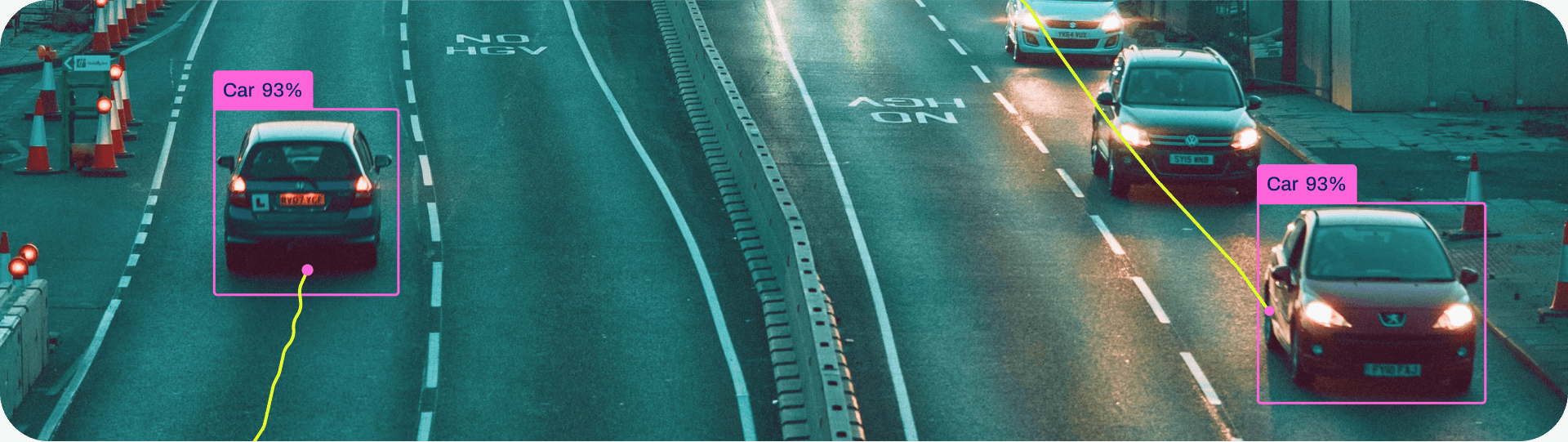 +
+[Object tracking](https://www.ultralytics.com/glossary/object-tracking), a key aspect of [video analytics](https://en.wikipedia.org/wiki/Video_content_analysis), involves identifying the location and class of objects within video frames and assigning a unique ID to each detected object as it moves. This capability enables a wide range of applications, from surveillance and security systems to [real-time](https://www.ultralytics.com/glossary/real-time-inference) sports analysis and autonomous vehicle navigation. Learn more about tracking on our [tracking documentation page](https://docs.ultralytics.com/modes/track).
+
+## 🎯 Why Choose Ultralytics YOLO for Object Tracking?
+
+Ultralytics YOLO trackers provide output consistent with standard [object detection](https://docs.ultralytics.com/tasks/detect) but add persistent object IDs. This simplifies the process of tracking objects in video streams and performing subsequent analyses. Here’s why Ultralytics YOLO is an excellent choice for your object tracking needs:
+
+- **Efficiency:** Process video streams in real-time without sacrificing accuracy.
+- **Flexibility:** Supports multiple robust tracking algorithms and configurations.
+- **Ease of Use:** Offers straightforward [Python API](https://docs.ultralytics.com/usage/python) and [CLI](https://docs.ultralytics.com/usage/cli) options for rapid integration and deployment.
+- **Customizability:** Easily integrates with [custom-trained YOLO models](https://docs.ultralytics.com/modes/train), enabling deployment in specialized, domain-specific applications.
+
+**Watch:** Object Detection and Tracking with Ultralytics YOLO26.
+
+[](https://www.youtube.com/watch?v=hHyHmOtmEgs)
+
+## ✨ Features at a Glance
+
+Ultralytics YOLO extends its powerful object detection features to deliver robust and versatile object tracking:
+
+- **Real-Time Tracking:** Seamlessly track objects in high-frame-rate videos.
+- **Multiple Tracker Support:** Choose from a selection of established tracking algorithms.
+- **Customizable Tracker Configurations:** Adapt the tracking algorithm to specific requirements by adjusting various parameters.
+
+## 🛠️ Available Trackers
+
+Ultralytics YOLO supports the following tracking algorithms. Enable them by passing the relevant YAML configuration file, such as `tracker=bytetrack.yaml`:
+
+- **BoT-SORT:** Use [`botsort.yaml`](https://github.com/ultralytics/ultralytics/blob/main/ultralytics/cfg/trackers/botsort.yaml) to enable this tracker. Based on the [BoT-SORT paper](https://arxiv.org/abs/2206.14651) and its official [code implementation](https://github.com/NirAharon/BoT-SORT).
+- **ByteTrack:** Use [`bytetrack.yaml`](https://github.com/ultralytics/ultralytics/blob/main/ultralytics/cfg/trackers/bytetrack.yaml) to enable this tracker. Based on the [ByteTrack paper](https://arxiv.org/abs/2110.06864) and its official [code implementation](https://github.com/FoundationVision/ByteTrack).
+- **OC-SORT:** Use [`ocsort.yaml`](https://github.com/ultralytics/ultralytics/blob/main/ultralytics/cfg/trackers/ocsort.yaml) to enable this tracker. Based on the [OC-SORT paper](https://arxiv.org/abs/2203.14360) (observation-centric SORT with ORU/OCM/OCR).
+- **Deep OC-SORT:** Use [`deepocsort.yaml`](https://github.com/ultralytics/ultralytics/blob/main/ultralytics/cfg/trackers/deepocsort.yaml) to enable this tracker. Based on the [Deep OC-SORT paper](https://arxiv.org/abs/2302.11813), adding adaptive ReID appearance fusion and camera motion compensation on top of OC-SORT.
+- **FastTracker:** Use [`fasttrack.yaml`](https://github.com/ultralytics/ultralytics/blob/main/ultralytics/cfg/trackers/fasttrack.yaml) to enable this tracker. Based on the [FastTracker paper](https://arxiv.org/abs/2508.14370): occlusion-aware ByteTrack variant with Kalman rollback and init-IoU suppression.
+- **TrackTrack:** Use [`tracktrack.yaml`](https://github.com/ultralytics/ultralytics/blob/main/ultralytics/cfg/trackers/tracktrack.yaml) to enable this tracker. Based on the [TrackTrack paper](https://openaccess.thecvf.com/content/CVPR2025/papers/Shim_Focusing_on_Tracks_for_Online_Multi-Object_Tracking_CVPR_2025_paper.pdf) (CVPR 2025) — multi-cue iterative association with Track-Aware Initialization.
+
+The default tracker is **BoT-SORT**.
+
+## ⚙️ Usage
+
+To run the tracker on video streams, use a trained Detect, Segment, Pose, or OBB model like [Ultralytics YOLO26n](https://docs.ultralytics.com/models/yolo26), YOLO26n-seg, YOLO26n-pose, or YOLO26n-obb.
+
+```python
+# Python
+from ultralytics import YOLO
+
+# Load an official or custom model
+model = YOLO("yolo26n.pt") # Load an official Detect model
+# model = YOLO("yolo26n-seg.pt") # Load an official Segment model
+# model = YOLO("yolo26n-pose.pt") # Load an official Pose model
+# model = YOLO("path/to/best.pt") # Load a custom trained model
+
+# Perform tracking with the model
+results = model.track(source="https://youtu.be/LNwODJXcvt4", show=True) # Tracking with default tracker
+# results = model.track(source="https://youtu.be/LNwODJXcvt4", show=True, tracker="bytetrack.yaml") # Tracking with ByteTrack tracker
+```
+
+```bash
+# CLI
+# Perform tracking with various models using the command line interface
+yolo track model=yolo26n.pt source="https://youtu.be/LNwODJXcvt4" # Official Detect model
+# yolo track model=yolo26n-seg.pt source="https://youtu.be/LNwODJXcvt4" # Official Segment model
+# yolo track model=yolo26n-pose.pt source="https://youtu.be/LNwODJXcvt4" # Official Pose model
+# yolo track model=path/to/best.pt source="https://youtu.be/LNwODJXcvt4" # Custom trained model
+
+# Track using ByteTrack tracker
+# yolo track model=path/to/best.pt tracker="bytetrack.yaml"
+```
+
+As shown above, tracking is available for all [Detect](https://docs.ultralytics.com/tasks/detect), [Segment](https://docs.ultralytics.com/tasks/segment), and [Pose](https://docs.ultralytics.com/tasks/pose) models when run on videos or streaming sources.
+
+## 🔧 Configuration
+
+### Tracking Arguments
+
+Tracking configuration shares properties with the Predict mode, such as `conf` (confidence threshold), `iou` ([Intersection over Union](https://www.ultralytics.com/glossary/intersection-over-union-iou) threshold), and `show` (display results). For additional configurations, refer to the [Predict mode documentation](https://docs.ultralytics.com/modes/predict).
+
+```python
+# Python
+from ultralytics import YOLO
+
+# Configure the tracking parameters and run the tracker
+model = YOLO("yolo26n.pt")
+results = model.track(source="https://youtu.be/LNwODJXcvt4", conf=0.1, iou=0.7, show=True)
+```
+
+```bash
+# CLI
+# Configure tracking parameters and run the tracker using the command line interface
+yolo track model=yolo26n.pt source="https://youtu.be/LNwODJXcvt4" conf=0.1 iou=0.7 show
+```
+
+### Tracker Selection
+
+Ultralytics allows you to use a modified tracker configuration file. Create a copy of a tracker config file (e.g., `custom_tracker.yaml`) from [ultralytics/cfg/trackers](https://github.com/ultralytics/ultralytics/tree/main/ultralytics/cfg/trackers) and adjust any configurations (except `tracker_type`) according to your needs.
+
+```python
+# Python
+from ultralytics import YOLO
+
+# Load the model and run the tracker with a custom configuration file
+model = YOLO("yolo26n.pt")
+results = model.track(source="https://youtu.be/LNwODJXcvt4", tracker="custom_tracker.yaml")
+```
+
+```bash
+# CLI
+# Load the model and run the tracker with a custom configuration file using the command line interface
+yolo track model=yolo26n.pt source="https://youtu.be/LNwODJXcvt4" tracker='custom_tracker.yaml'
+```
+
+For a comprehensive list of tracking arguments, consult the [Tracking Configuration files](https://github.com/ultralytics/ultralytics/tree/main/ultralytics/cfg/trackers) in the repository.
+
+## 🐍 Python Examples
+
+### Persisting Tracks Loop
+
+This Python script uses [OpenCV (`cv2`)](https://opencv.org/) and Ultralytics YOLO26 to perform object tracking on video frames. Ensure you have installed the necessary packages (`opencv-python` and `ultralytics`). The [`persist=True`](https://docs.ultralytics.com/modes/predict#tracking) argument indicates that the current frame is the next in a sequence, allowing the tracker to maintain track continuity from the previous frame.
+
+```python
+# Python
+import cv2
+
+from ultralytics import YOLO
+
+# Load the YOLO26 model
+model = YOLO("yolo26n.pt")
+
+# Open the video file
+video_path = "path/to/video.mp4"
+cap = cv2.VideoCapture(video_path)
+
+# Loop through the video frames
+while cap.isOpened():
+ # Read a frame from the video
+ success, frame = cap.read()
+
+ if success:
+ # Run YOLO26 tracking on the frame, persisting tracks between frames
+ results = model.track(frame, persist=True)
+
+ # Visualize the results on the frame
+ annotated_frame = results[0].plot()
+
+ # Display the annotated frame
+ cv2.imshow("YOLO26 Tracking", annotated_frame)
+
+ # Break the loop if 'q' is pressed
+ if cv2.waitKey(1) & 0xFF == ord("q"):
+ break
+ else:
+ # Break the loop if the end of the video is reached
+ break
+
+# Release the video capture object and close the display window
+cap.release()
+cv2.destroyAllWindows()
+```
+
+Note the use of `model.track(frame)` instead of `model(frame)`, which specifically enables object tracking. This script processes each video frame, visualizes the tracking results, and displays them. Press 'q' to exit the loop.
+
+### Plotting Tracks Over Time
+
+Visualizing object tracks across consecutive frames offers valuable insights into movement patterns within a video. Ultralytics YOLO26 makes plotting these tracks efficient.
+
+The following example demonstrates how to use YOLO26's tracking capabilities to plot the movement of detected objects. The script opens a video, reads it frame by frame, and uses the YOLO model built on [PyTorch](https://pytorch.org/) to identify and track objects. By storing the center points of the detected [bounding boxes](https://www.ultralytics.com/glossary/bounding-box) and connecting them, we can draw lines representing the paths of tracked objects using [NumPy](https://numpy.org/) for numerical operations.
+
+```python
+# Python
+from collections import defaultdict
+
+import cv2
+import numpy as np
+
+from ultralytics import YOLO
+
+# Load the YOLO26 model
+model = YOLO("yolo26n.pt")
+
+# Open the video file
+video_path = "path/to/video.mp4"
+cap = cv2.VideoCapture(video_path)
+
+# Store the track history
+track_history = defaultdict(lambda: [])
+
+# Loop through the video frames
+while cap.isOpened():
+ # Read a frame from the video
+ success, frame = cap.read()
+
+ if success:
+ # Run YOLO26 tracking on the frame, persisting tracks between frames
+ result = model.track(frame, persist=True)[0]
+
+ # Get the boxes and track IDs
+ if result.boxes and result.boxes.is_track:
+ boxes = result.boxes.xywh.cpu()
+ track_ids = result.boxes.id.int().cpu().tolist()
+
+ # Visualize the result on the frame
+ frame = result.plot()
+
+ # Plot the tracks
+ for box, track_id in zip(boxes, track_ids):
+ x, y, w, h = box
+ track = track_history[track_id]
+ track.append((float(x), float(y))) # x, y center point
+ if len(track) > 30: # retain 30 tracks for 30 frames
+ track.pop(0)
+
+ # Draw the tracking lines
+ points = np.hstack(track).astype(np.int32).reshape((-1, 1, 2))
+ cv2.polylines(frame, [points], isClosed=False, color=(230, 230, 230), thickness=10)
+
+ # Display the annotated frame
+ cv2.imshow("YOLO26 Tracking", frame)
+
+ # Break the loop if 'q' is pressed
+ if cv2.waitKey(1) & 0xFF == ord("q"):
+ break
+ else:
+ # Break the loop if the end of the video is reached
+ break
+
+# Release the video capture object and close the display window
+cap.release()
+cv2.destroyAllWindows()
+```
+
+### Multithreaded Tracking
+
+Multithreaded tracking allows running object tracking on multiple video streams simultaneously, which is highly beneficial for systems handling inputs from several cameras, improving efficiency through concurrent processing.
+
+This Python script utilizes Python's [`threading`](https://docs.python.org/3/library/threading.html) module for concurrent tracker execution. Each thread manages tracking for a single video file.
+
+The `run_tracker_in_thread` function accepts a model name and a video source. It loads the model and runs the tracker in streaming mode, consuming results as they are produced.
+
+This example uses two models, `yolo26n.pt` and `yolo26n-seg.pt`, each tracking objects from a different source in the `SOURCES` list.
+
+Setting `daemon=True` in `threading.Thread` ensures threads exit when the main program finishes. Threads are started with `start()` and the main thread waits for their completion using `join()`.
+
+Finally, `cv2.destroyAllWindows()` closes all OpenCV windows after the threads finish.
+
+```python
+# Python
+import threading
+
+import cv2
+
+from ultralytics import YOLO
+
+# Define model names and video sources
+MODEL_NAMES = ["yolo26n.pt", "yolo26n-seg.pt"]
+SOURCES = ["path/to/video.mp4", "0"] # local video, 0 for webcam
+
+
+def run_tracker_in_thread(model_name, filename):
+ """Run YOLO tracker in its own thread for concurrent processing.
+
+ Args:
+ model_name (str): Model name or path that will be loaded inside the thread.
+ filename (str): Local path, device index, or URL that acts as the tracker source.
+ """
+ model = YOLO(model_name)
+ results = model.track(filename, save=True, stream=True)
+ for r in results:
+ pass
+
+
+# Create and start tracker threads using a for loop
+tracker_threads = []
+for video_file, model_name in zip(SOURCES, MODEL_NAMES):
+ thread = threading.Thread(target=run_tracker_in_thread, args=(model_name, video_file), daemon=True)
+ tracker_threads.append(thread)
+ thread.start()
+
+# Wait for all tracker threads to finish
+for thread in tracker_threads:
+ thread.join()
+
+# Clean up and close windows
+cv2.destroyAllWindows()
+```
+
+This setup can be easily scaled to handle more video streams by creating additional threads following the same pattern. Explore more applications in our [blog post on object tracking](https://www.ultralytics.com/blog/object-detection-and-tracking-with-ultralytics-yolov8).
+
+## 🤝 Contribute New Trackers
+
+Are you experienced in multi-object tracking and have implemented or adapted an algorithm with Ultralytics YOLO? We encourage you to contribute to our Trackers section in [ultralytics/cfg/trackers](https://github.com/ultralytics/ultralytics/tree/main/ultralytics/cfg/trackers)! Your contributions can help expand the tracking solutions available within the Ultralytics [ecosystem](https://docs.ultralytics.com/).
+
+To contribute, please review our [Contributing Guide](https://docs.ultralytics.com/help/contributing) for instructions on submitting a [Pull Request (PR)](https://docs.github.com/en/pull-requests/collaborating-with-pull-requests/proposing-changes-to-your-work-with-pull-requests/about-pull-requests) 🛠️. We look forward to your contributions!
+
+Let's work together to enhance the tracking capabilities of Ultralytics YOLO and provide more powerful tools for the [computer vision](https://www.ultralytics.com/glossary/computer-vision-cv) and [deep learning](https://www.ultralytics.com/glossary/deep-learning-dl) community 🙏!
diff --git a/models_related/ultralytics/ultralytics/trackers/__init__.py b/models_related/ultralytics/ultralytics/trackers/__init__.py
new file mode 100644
index 0000000000000000000000000000000000000000..77ad699d51ac3a06349af3862b15290f562c996d
--- /dev/null
+++ b/models_related/ultralytics/ultralytics/trackers/__init__.py
@@ -0,0 +1,19 @@
+# Ultralytics 🚀 AGPL-3.0 License - https://ultralytics.com/license
+
+from .bot_sort import BOTSORT
+from .byte_tracker import BYTETracker
+from .deep_oc_sort import DeepOCSORT
+from .fast_tracker import FASTTracker
+from .oc_sort import OCSORT
+from .track import register_tracker
+from .track_tracker import TRACKTRACK
+
+__all__ = (
+ "BOTSORT",
+ "OCSORT",
+ "TRACKTRACK",
+ "BYTETracker",
+ "DeepOCSORT",
+ "FASTTracker",
+ "register_tracker",
+) # allow simpler import
diff --git a/models_related/ultralytics/ultralytics/trackers/basetrack.py b/models_related/ultralytics/ultralytics/trackers/basetrack.py
new file mode 100644
index 0000000000000000000000000000000000000000..1c5158801cbcfe45e49517b2adb2c5efc940974d
--- /dev/null
+++ b/models_related/ultralytics/ultralytics/trackers/basetrack.py
@@ -0,0 +1,102 @@
+# Ultralytics 🚀 AGPL-3.0 License - https://ultralytics.com/license
+"""Module defines the base classes and structures for object tracking in YOLO."""
+
+from typing import Any
+
+
+class TrackState:
+ """Enumeration class representing the possible states of an object being tracked.
+
+ Attributes:
+ New (int): State when the object is newly detected.
+ Tracked (int): State when the object is successfully tracked in subsequent frames.
+ Lost (int): State when the object is no longer tracked.
+ Removed (int): State when the object is removed from tracking.
+
+ Examples:
+ >>> state = TrackState.New
+ >>> if state == TrackState.New:
+ ... print("Object is newly detected.")
+ """
+
+ New = 0
+ Tracked = 1
+ Lost = 2
+ Removed = 3
+
+
+class BaseTrack:
+ """Base class for object tracking, providing foundational attributes and methods.
+
+ Attributes:
+ _count (int): Class-level counter for unique track IDs.
+ track_id (int): Unique identifier for the track.
+ is_activated (bool): Flag indicating whether the track is currently active.
+ state (TrackState): Current state of the track.
+ score (float): The confidence score of the tracking.
+ start_frame (int): The frame number where tracking started.
+ frame_id (int): The most recent frame ID processed by the track.
+
+ Methods:
+ end_frame: Returns the ID of the last frame where the object was tracked.
+ next_id: Increments and returns the next global track ID.
+ activate: Abstract method to activate the track.
+ predict: Abstract method to predict the next state of the track.
+ update: Abstract method to update the track with new data.
+ mark_lost: Marks the track as lost.
+ mark_removed: Marks the track as removed.
+ reset_id: Resets the global track ID counter.
+
+ Examples:
+ Initialize a new track and mark it as lost:
+ >>> track = BaseTrack()
+ >>> track.mark_lost()
+ >>> print(track.state) # Output: 2 (TrackState.Lost)
+ """
+
+ _count = 0
+
+ def __init__(self):
+ """Initialize a new track with a unique ID and foundational tracking attributes."""
+ self.track_id = 0
+ self.is_activated = False
+ self.state = TrackState.New
+ self.score = 0
+ self.start_frame = 0
+ self.frame_id = 0
+
+ @property
+ def end_frame(self) -> int:
+ """Return the ID of the most recent frame where the object was tracked."""
+ return self.frame_id
+
+ @staticmethod
+ def next_id() -> int:
+ """Increment and return the next unique global track ID for object tracking."""
+ BaseTrack._count += 1
+ return BaseTrack._count
+
+ def activate(self, *args: Any) -> None:
+ """Activate the track with provided arguments, initializing necessary attributes for tracking."""
+ raise NotImplementedError
+
+ def predict(self) -> None:
+ """Predict the next state of the track based on the current state and tracking model."""
+ raise NotImplementedError
+
+ def update(self, *args: Any, **kwargs: Any) -> None:
+ """Update the track with new observations and data, modifying its state and attributes accordingly."""
+ raise NotImplementedError
+
+ def mark_lost(self) -> None:
+ """Mark the track as lost by updating its state to TrackState.Lost."""
+ self.state = TrackState.Lost
+
+ def mark_removed(self) -> None:
+ """Mark the track as removed by setting its state to TrackState.Removed."""
+ self.state = TrackState.Removed
+
+ @staticmethod
+ def reset_id() -> None:
+ """Reset the global track ID counter to its initial value."""
+ BaseTrack._count = 0
diff --git a/models_related/ultralytics/ultralytics/trackers/bot_sort.py b/models_related/ultralytics/ultralytics/trackers/bot_sort.py
new file mode 100644
index 0000000000000000000000000000000000000000..b0d0e9974619cf01a28d9178594eacdac8fc7bc2
--- /dev/null
+++ b/models_related/ultralytics/ultralytics/trackers/bot_sort.py
@@ -0,0 +1,211 @@
+# Ultralytics 🚀 AGPL-3.0 License - https://ultralytics.com/license
+
+from __future__ import annotations
+
+from typing import Any
+
+import numpy as np
+
+from .basetrack import TrackState
+from .byte_tracker import BYTETracker, STrack
+from .utils import matching
+from .utils.gmc import GMC
+from .utils.kalman_filter import KalmanFilterXYWH
+from .utils.reid import build_encoder, smooth_feature
+from .utils.stracks import parse_bboxes
+
+
+class BOTrack(STrack):
+ """An extended version of the STrack class for YOLO, adding object tracking features.
+
+ This class extends the STrack class to include additional functionalities for object tracking, such as feature
+ smoothing, Kalman filter prediction, and reactivation of tracks.
+
+ Attributes:
+ shared_kalman (KalmanFilterXYWH): A shared Kalman filter for all instances of BOTrack.
+ smooth_feat (np.ndarray): Smoothed feature vector.
+ curr_feat (np.ndarray): Current feature vector.
+ alpha (float): Smoothing factor for the exponential moving average of features.
+ mean (np.ndarray): The mean state of the Kalman filter.
+ covariance (np.ndarray): The covariance matrix of the Kalman filter.
+
+ Methods:
+ update_features: Update features vector and smooth it using exponential moving average.
+ predict: Predict the mean and covariance using Kalman filter.
+ re_activate: Reactivate a track with updated features and optionally new ID.
+ update: Update the track with new detection and frame ID.
+ tlwh: Property that gets the current position in tlwh format `(top left x, top left y, width, height)`.
+ multi_predict: Predict the mean and covariance of multiple object tracks using shared Kalman filter.
+ convert_coords: Convert tlwh bounding box coordinates to xywh format.
+ tlwh_to_xywh: Convert bounding box to xywh format `(center x, center y, width, height)`.
+
+ Examples:
+ Create a BOTrack instance and update its features
+ >>> bo_track = BOTrack(xywh=np.array([100, 50, 80, 40, 0]), score=0.9, cls=1, feat=np.random.rand(128))
+ >>> bo_track.predict()
+ >>> new_track = BOTrack(xywh=np.array([110, 60, 80, 40, 0]), score=0.85, cls=1, feat=np.random.rand(128))
+ >>> bo_track.update(new_track, frame_id=2)
+ """
+
+ shared_kalman = KalmanFilterXYWH()
+
+ def __init__(self, xywh: np.ndarray, score: float, cls: int, feat: np.ndarray | None = None):
+ """Initialize a BOTrack object with feature-smoothing state and a Kalman filter.
+
+ Args:
+ xywh (np.ndarray): Bounding box in `(x, y, w, h, idx)` or `(x, y, w, h, angle, idx)` format, where (x, y) is
+ the center, (w, h) are width and height, and `idx` is the detection index.
+ score (float): Confidence score of the detection.
+ cls (int): Class ID of the detected object.
+ feat (np.ndarray, optional): Feature vector associated with the detection.
+ """
+ super().__init__(xywh, score, cls)
+
+ self.smooth_feat = None
+ self.curr_feat = None
+ self.alpha = 0.9
+ if feat is not None:
+ self.update_features(feat)
+
+ def update_features(self, feat: np.ndarray) -> None:
+ """Update the current feature and its exponential-moving-average smoothed feature."""
+ curr, smooth = smooth_feature(feat, self.smooth_feat, self.alpha)
+ if curr is not None:
+ self.curr_feat, self.smooth_feat = curr, smooth
+
+ def predict(self) -> None:
+ """Predict the object's future state using the Kalman filter to update its mean and covariance."""
+ mean_state = self.mean.copy()
+ if self.state != TrackState.Tracked:
+ mean_state[6] = 0
+ mean_state[7] = 0
+
+ self.mean, self.covariance = self.kalman_filter.predict(mean_state, self.covariance)
+
+ def re_activate(self, new_track: BOTrack, frame_id: int, new_id: bool = False) -> None:
+ """Reactivate a track with updated features and optionally assign a new ID."""
+ if new_track.curr_feat is not None:
+ self.update_features(new_track.curr_feat)
+ super().re_activate(new_track, frame_id, new_id)
+
+ def update(self, new_track: BOTrack, frame_id: int) -> None:
+ """Update the track with new detection information and the current frame ID."""
+ if new_track.curr_feat is not None:
+ self.update_features(new_track.curr_feat)
+ super().update(new_track, frame_id)
+
+ @property
+ def tlwh(self) -> np.ndarray:
+ """Return the current bounding box position in `(top left x, top left y, width, height)` format."""
+ if self.mean is None:
+ return self._tlwh.copy()
+ ret = self.mean[:4].copy()
+ ret[:2] -= ret[2:] / 2
+ return ret
+
+ @staticmethod
+ def multi_predict(stracks: list[BOTrack]) -> None:
+ """Predict the mean and covariance for multiple object tracks using a shared Kalman filter."""
+ if not stracks:
+ return
+ multi_mean = np.asarray([st.mean.copy() for st in stracks])
+ multi_covariance = np.asarray([st.covariance for st in stracks])
+ for i, st in enumerate(stracks):
+ if st.state != TrackState.Tracked:
+ multi_mean[i][6] = 0
+ multi_mean[i][7] = 0
+ multi_mean, multi_covariance = BOTrack.shared_kalman.multi_predict(multi_mean, multi_covariance)
+ for i, (mean, cov) in enumerate(zip(multi_mean, multi_covariance)):
+ stracks[i].mean = mean
+ stracks[i].covariance = cov
+
+ def convert_coords(self, tlwh: np.ndarray) -> np.ndarray:
+ """Convert tlwh bounding box coordinates to xywh format."""
+ return self.tlwh_to_xywh(tlwh)
+
+ @staticmethod
+ def tlwh_to_xywh(tlwh: np.ndarray) -> np.ndarray:
+ """Convert bounding box from tlwh (top-left-width-height) to xywh (center-x-center-y-width-height) format."""
+ ret = np.asarray(tlwh).copy()
+ ret[:2] += ret[2:] / 2
+ return ret
+
+
+class BOTSORT(BYTETracker):
+ """An extended version of the BYTETracker class for YOLO, designed for object tracking with ReID and GMC algorithm.
+
+ Attributes:
+ proximity_thresh (float): Threshold for spatial proximity (IoU) between tracks and detections.
+ appearance_thresh (float): Threshold for appearance similarity (ReID embeddings) between tracks and detections.
+ encoder (Any): Object to handle ReID embeddings, set to None if ReID is not enabled.
+ gmc (GMC): An instance of the GMC algorithm for data association.
+ args (Any): Parsed command-line arguments containing tracking parameters.
+
+ Methods:
+ get_kalmanfilter: Return an instance of KalmanFilterXYWH for object tracking.
+ init_track: Initialize track with detection results and optional image for ReID.
+ get_dists: Get distances between tracks and detections using IoU and (optionally) ReID.
+ multi_predict: Predict the mean and covariance of multiple object tracks using a shared Kalman filter.
+ reset: Reset the BOTSORT tracker to its initial state.
+
+ Examples:
+ Initialize BOTSORT and process detections
+ >>> bot_sort = BOTSORT(args)
+ >>> bot_sort.init_track(results, img)
+ >>> bot_sort.multi_predict(tracks)
+
+ Notes:
+ The class is designed to work with a YOLO object detection model and supports ReID only if enabled via args.
+ """
+
+ def __init__(self, args: Any):
+ """Initialize BOTSORT object with ReID module and GMC algorithm.
+
+ Args:
+ args (Any): Parsed command-line arguments containing tracking parameters.
+ """
+ super().__init__(args)
+ self.gmc = GMC(method=args.gmc_method)
+
+ # ReID module
+ self.proximity_thresh = args.proximity_thresh
+ self.appearance_thresh = args.appearance_thresh
+ self.encoder = build_encoder(args.with_reid, args.model)
+
+ def get_kalmanfilter(self) -> KalmanFilterXYWH:
+ """Return an instance of KalmanFilterXYWH for predicting and updating object states in the tracking process."""
+ return KalmanFilterXYWH()
+
+ def init_track(self, results, img: np.ndarray | None = None) -> list[BOTrack]:
+ """Initialize object tracks using detection bounding boxes, scores, class labels, and optional ReID features."""
+ if len(results) == 0:
+ return []
+ bboxes = parse_bboxes(results)
+ if self.args.with_reid and self.encoder is not None:
+ features_keep = self.encoder(img, bboxes)
+ return [BOTrack(xywh, s, c, f) for (xywh, s, c, f) in zip(bboxes, results.conf, results.cls, features_keep)]
+ return [BOTrack(xywh, s, c) for (xywh, s, c) in zip(bboxes, results.conf, results.cls)]
+
+ def get_dists(self, tracks: list[BOTrack], detections: list[BOTrack]) -> np.ndarray:
+ """Calculate distances between tracks and detections using IoU and optionally ReID embeddings."""
+ dists = matching.iou_distance(tracks, detections)
+ dists_mask = dists > (1 - self.proximity_thresh)
+
+ if self.args.fuse_score:
+ dists = matching.fuse_score(dists, detections)
+
+ if self.args.with_reid and self.encoder is not None:
+ emb_dists = matching.embedding_distance(tracks, detections) / 2.0
+ emb_dists[emb_dists > (1 - self.appearance_thresh)] = 1.0
+ emb_dists[dists_mask] = 1.0
+ dists = np.minimum(dists, emb_dists)
+ return dists
+
+ def multi_predict(self, tracks: list[BOTrack]) -> None:
+ """Predict the mean and covariance of multiple object tracks using a shared Kalman filter."""
+ BOTrack.multi_predict(tracks)
+
+ def reset(self) -> None:
+ """Reset the BOTSORT tracker to its initial state, clearing all tracked objects and internal states."""
+ super().reset()
+ self.gmc.reset_params()
diff --git a/models_related/ultralytics/ultralytics/trackers/byte_tracker.py b/models_related/ultralytics/ultralytics/trackers/byte_tracker.py
new file mode 100644
index 0000000000000000000000000000000000000000..708db8960a56990d36e6e91cccb16b6a51576323
--- /dev/null
+++ b/models_related/ultralytics/ultralytics/trackers/byte_tracker.py
@@ -0,0 +1,521 @@
+# Ultralytics 🚀 AGPL-3.0 License - https://ultralytics.com/license
+
+from __future__ import annotations
+
+from typing import Any
+
+import numpy as np
+
+from ..utils import LOGGER
+from ..utils.ops import xywh2ltwh
+from .basetrack import BaseTrack, TrackState
+from .utils import matching
+from .utils.kalman_filter import KalmanFilterXYAH
+from .utils.stracks import joint_stracks, merge_track_pools, multi_gmc, parse_bboxes
+
+
+class STrack(BaseTrack):
+ """Single object tracking representation that uses Kalman filtering for state estimation.
+
+ This class is responsible for storing all the information regarding individual tracklets and performs state updates
+ and predictions based on Kalman filter.
+
+ Attributes:
+ shared_kalman (KalmanFilterXYAH): Shared Kalman filter used across all STrack instances for prediction.
+ _tlwh (np.ndarray): Private attribute to store top-left corner coordinates and width and height of bounding box.
+ kalman_filter (KalmanFilterXYAH): Instance of Kalman filter used for this particular object track.
+ mean (np.ndarray): Mean state estimate vector.
+ covariance (np.ndarray): Covariance of state estimate.
+ is_activated (bool): Boolean flag indicating if the track has been activated.
+ score (float): Confidence score of the track.
+ tracklet_len (int): Length of the tracklet.
+ cls (Any): Class label for the object.
+ idx (int): Index or identifier for the object.
+ frame_id (int): Current frame ID.
+ start_frame (int): Frame where the object was first detected.
+ angle (float | None): Optional angle information for oriented bounding boxes.
+
+ Methods:
+ predict: Predict the next state of the object using Kalman filter.
+ multi_predict: Predict the next states for multiple tracks.
+ activate: Activate a new tracklet.
+ re_activate: Reactivate a previously lost tracklet.
+ update: Update the state of a matched track.
+ convert_coords: Convert bounding box to x-y-aspect-height format.
+ tlwh_to_xyah: Convert tlwh bounding box to xyah format.
+
+ Examples:
+ Initialize and activate a new track
+ >>> track = STrack(xywh=[100, 200, 50, 80, 0], score=0.9, cls="person")
+ >>> track.activate(kalman_filter=KalmanFilterXYAH(), frame_id=1)
+ """
+
+ shared_kalman = KalmanFilterXYAH()
+
+ def __init__(self, xywh: np.ndarray, score: float, cls: Any):
+ """Initialize a new STrack instance.
+
+ Args:
+ xywh (np.ndarray): Bounding box in `(x, y, w, h, idx)` or `(x, y, w, h, angle, idx)` format, where (x, y) is
+ the center, (w, h) are width and height, and `idx` is the detection index.
+ score (float): Confidence score of the detection.
+ cls (Any): Class label for the detected object.
+ """
+ super().__init__()
+ # xywh+idx or xywha+idx
+ assert len(xywh) in {5, 6}, f"expected 5 or 6 values but got {len(xywh)}"
+ self._tlwh = np.asarray(xywh2ltwh(xywh[:4]), dtype=np.float32)
+ self.kalman_filter = None
+ self.mean, self.covariance = None, None
+ self.is_activated = False
+
+ self.score = score
+ self.tracklet_len = 0
+ self.cls = cls
+ self.idx = xywh[-1]
+ self.angle = xywh[4] if len(xywh) == 6 else None
+
+ def predict(self):
+ """Predict the next state (mean and covariance) of the object using the Kalman filter."""
+ mean_state = self.mean.copy()
+ if self.state != TrackState.Tracked:
+ mean_state[7] = 0
+ self.mean, self.covariance = self.kalman_filter.predict(mean_state, self.covariance)
+
+ @staticmethod
+ def multi_predict(stracks: list[STrack]):
+ """Perform multi-object predictive tracking using Kalman filter for the provided list of STrack instances."""
+ if not stracks:
+ return
+ multi_mean = np.asarray([st.mean.copy() for st in stracks])
+ multi_covariance = np.asarray([st.covariance for st in stracks])
+ for i, st in enumerate(stracks):
+ if st.state != TrackState.Tracked:
+ multi_mean[i][7] = 0
+ multi_mean, multi_covariance = STrack.shared_kalman.multi_predict(multi_mean, multi_covariance)
+ for i, (mean, cov) in enumerate(zip(multi_mean, multi_covariance)):
+ stracks[i].mean = mean
+ stracks[i].covariance = cov
+
+ def activate(self, kalman_filter: KalmanFilterXYAH, frame_id: int):
+ """Activate a new tracklet using the provided Kalman filter and initialize its state and covariance."""
+ self.kalman_filter = kalman_filter
+ self.track_id = self.next_id()
+ self.mean, self.covariance = self.kalman_filter.initiate(self.convert_coords(self._tlwh))
+
+ self.tracklet_len = 0
+ self.state = TrackState.Tracked
+ if frame_id == 1:
+ self.is_activated = True
+ self.frame_id = frame_id
+ self.start_frame = frame_id
+
+ def re_activate(self, new_track: STrack, frame_id: int, new_id: bool = False):
+ """Reactivate a previously lost track using new detection data and update its state and attributes."""
+ self.mean, self.covariance = self.kalman_filter.update(
+ self.mean, self.covariance, self.convert_coords(new_track.tlwh)
+ )
+ self.tracklet_len = 0
+ self.state = TrackState.Tracked
+ self.is_activated = True
+ self.frame_id = frame_id
+ if new_id:
+ self.track_id = self.next_id()
+ self.score = new_track.score
+ self.cls = new_track.cls
+ self.angle = new_track.angle
+ self.idx = new_track.idx
+
+ def update(self, new_track: STrack, frame_id: int):
+ """Update the state of a matched track.
+
+ Args:
+ new_track (STrack): The new track containing updated information.
+ frame_id (int): The ID of the current frame.
+
+ Examples:
+ Update the state of a track with new detection information
+ >>> track = STrack([100, 200, 50, 80, 0], score=0.9, cls=0)
+ >>> new_track = STrack([105, 205, 55, 85, 0], score=0.95, cls=0)
+ >>> track.update(new_track, 2)
+ """
+ self.frame_id = frame_id
+ self.tracklet_len += 1
+
+ new_tlwh = new_track.tlwh
+ self.mean, self.covariance = self.kalman_filter.update(
+ self.mean, self.covariance, self.convert_coords(new_tlwh)
+ )
+ self.state = TrackState.Tracked
+ self.is_activated = True
+
+ self.score = new_track.score
+ self.cls = new_track.cls
+ self.angle = new_track.angle
+ self.idx = new_track.idx
+
+ def convert_coords(self, tlwh: np.ndarray) -> np.ndarray:
+ """Convert a bounding box's top-left-width-height format to its x-y-aspect-height equivalent."""
+ return self.tlwh_to_xyah(tlwh)
+
+ @property
+ def tlwh(self) -> np.ndarray:
+ """Get the bounding box in top-left-width-height format from the current state estimate."""
+ if self.mean is None:
+ return self._tlwh.copy()
+ ret = self.mean[:4].copy()
+ ret[2] *= ret[3]
+ ret[:2] -= ret[2:] / 2
+ return ret
+
+ @property
+ def xyxy(self) -> np.ndarray:
+ """Convert bounding box from (top left x, top left y, width, height) to (min x, min y, max x, max y) format."""
+ ret = self.tlwh.copy()
+ ret[2:] += ret[:2]
+ return ret
+
+ @staticmethod
+ def tlwh_to_xyah(tlwh: np.ndarray) -> np.ndarray:
+ """Convert bounding box from tlwh format to center-x-center-y-aspect-height (xyah) format."""
+ ret = np.asarray(tlwh).copy()
+ ret[:2] += ret[2:] / 2
+ ret[2] /= ret[3]
+ return ret
+
+ @property
+ def xywh(self) -> np.ndarray:
+ """Get the current position of the bounding box in (center x, center y, width, height) format."""
+ ret = np.asarray(self.tlwh).copy()
+ ret[:2] += ret[2:] / 2
+ return ret
+
+ @property
+ def xywha(self) -> np.ndarray:
+ """Get position in (center x, center y, width, height, angle) format, warning if angle is missing."""
+ if self.angle is None:
+ LOGGER.warning("`angle` attr not found, returning `xywh` instead.")
+ return self.xywh
+ return np.concatenate([self.xywh, self.angle[None]])
+
+ @property
+ def result(self) -> list[float]:
+ """Get the current tracking results in the appropriate bounding box format."""
+ coords = self.xyxy if self.angle is None else self.xywha
+ return [*coords.tolist(), self.track_id, self.score, self.cls, self.idx]
+
+ def __repr__(self) -> str:
+ """Return a string representation of the STrack object including start frame, end frame, and track ID."""
+ return f"OT_{self.track_id}_({self.start_frame}-{self.end_frame})"
+
+
+class BYTETracker:
+ """BYTETracker: A tracking algorithm built on top of YOLO for object detection and tracking.
+
+ This class encapsulates the functionality for initializing, updating, and managing the tracks for detected objects
+ in a video sequence. It maintains the state of tracked, lost, and removed tracks over frames, utilizes Kalman
+ filtering for predicting the new object locations, and performs data association.
+
+ Attributes:
+ tracked_stracks (list[STrack]): List of successfully activated tracks.
+ lost_stracks (list[STrack]): List of lost tracks.
+ removed_stracks (list[STrack]): List of removed tracks.
+ frame_id (int): The current frame ID.
+ args (Namespace): Command-line arguments.
+ max_frames_lost (int): The maximum frames for a track to be considered as 'lost'.
+ kalman_filter (KalmanFilterXYAH): Kalman Filter object.
+
+ Methods:
+ update: Update object tracker with new detections.
+ get_kalmanfilter: Return a Kalman filter object for tracking bounding boxes.
+ init_track: Initialize object tracking with detections.
+ get_dists: Calculate the distance between tracks and detections.
+ multi_predict: Predict the location of tracks.
+ reset_id: Reset the ID counter of STrack.
+ reset: Reset the tracker by clearing all tracks.
+ joint_stracks: Combine two lists of stracks.
+ sub_stracks: Filter out the stracks present in the second list from the first list.
+ remove_duplicate_stracks: Remove duplicate stracks based on IoU.
+
+ Examples:
+ Initialize BYTETracker and update with detection results
+ >>> tracker = BYTETracker(args)
+ >>> results = yolo_model.detect(image)
+ >>> tracked_objects = tracker.update(results)
+ """
+
+ track_class = STrack
+
+ def __init__(self, args):
+ """Initialize a BYTETracker instance for object tracking.
+
+ Args:
+ args (Namespace): Command-line arguments containing tracking parameters.
+ """
+ self.tracked_stracks: list[STrack] = []
+ self.lost_stracks: list[STrack] = []
+ self.removed_stracks: list[STrack] = []
+
+ self.frame_id = 0
+ self.args = args
+ self.max_frames_lost = args.track_buffer
+ self.kalman_filter = self.get_kalmanfilter()
+ self.reset_id()
+
+ def update(self, results, img: np.ndarray | None = None, feats: np.ndarray | None = None, **kwargs) -> np.ndarray:
+ """Update the tracker with new detections and return the current list of tracked objects."""
+ self.frame_id += 1
+ activated_stracks = []
+ refind_stracks = []
+ lost_stracks = []
+ removed_stracks = []
+
+ results_high, results_low, mask_high, mask_low = self._split_detections(results)
+ detections = self.init_track(results_high, self._input_for(img, feats, mask_high))
+ detections_second = self.init_track(results_low, self._input_for(img, feats, mask_low))
+
+ unconfirmed, tracked_stracks = self._split_tracked()
+ strack_pool = joint_stracks(tracked_stracks, self.lost_stracks)
+ self.multi_predict(strack_pool)
+ self._pre_first_associate(strack_pool, unconfirmed, img, results_high)
+
+ u_track, u_detection = self._first_association(strack_pool, detections, activated_stracks, refind_stracks)
+ u_track, u_detection = self._post_first_association(
+ strack_pool, detections, u_track, u_detection, activated_stracks, refind_stracks
+ )
+ self._second_association(
+ strack_pool, u_track, detections_second, activated_stracks, refind_stracks, lost_stracks
+ )
+ u_detection, detections = self._unconfirmed_association(
+ unconfirmed, u_detection, detections, activated_stracks, removed_stracks
+ )
+ self._init_new_tracks(u_detection, detections, activated_stracks, refind_stracks)
+ self._remove_stale_lost(removed_stracks)
+
+ merge_track_pools(self, activated_stracks, refind_stracks, lost_stracks, removed_stracks)
+ return self._format_output()
+
+ def _split_detections(self, results: Any) -> tuple[Any, Any, np.ndarray, np.ndarray]:
+ """Split detections into high-confidence and low-confidence subsets.
+
+ Args:
+ results (Any): Results-like object with ``conf`` attribute supporting boolean indexing.
+
+ Returns:
+ (tuple[Any, Any, np.ndarray, np.ndarray]): High-confidence results, low-confidence results, high mask, and
+ low mask.
+ """
+ scores = results.conf
+ remain_inds = scores >= self.args.track_high_thresh
+ inds_low = scores > self.args.track_low_thresh
+ inds_below_high = scores < self.args.track_high_thresh
+ return results[remain_inds], results[inds_low & inds_below_high], remain_inds, inds_low & inds_below_high
+
+ def _input_for(self, img: np.ndarray | None, feats: np.ndarray | None, mask: np.ndarray) -> Any:
+ """Return the per-detection auxiliary input for ``init_track``.
+
+ Default behavior preserves the legacy flow: when ``feats`` is provided it is sliced by the
+ detection mask, otherwise the raw frame ``img`` is passed through.
+
+ Args:
+ img (np.ndarray | None): Current BGR frame.
+ feats (np.ndarray | None): Optional per-detection features.
+ mask (np.ndarray): Boolean mask used to slice ``feats``.
+
+ Returns:
+ (Any): The auxiliary payload (features or image) to hand to ``init_track``.
+ """
+ if feats is not None and len(feats):
+ return feats[mask]
+ return img
+
+ def _split_tracked(self) -> tuple[list[STrack], list[STrack]]:
+ """Separate ``self.tracked_stracks`` into confirmed and unconfirmed lists.
+
+ Returns:
+ (tuple[list[STrack], list[STrack]]): ``(unconfirmed, tracked)`` where ``unconfirmed`` holds tracks whose
+ ``is_activated`` flag is False.
+ """
+ unconfirmed, tracked = [], []
+ for track in self.tracked_stracks:
+ (unconfirmed if not track.is_activated else tracked).append(track)
+ return unconfirmed, tracked
+
+ def _pre_first_associate(
+ self, strack_pool: list[STrack], unconfirmed: list[STrack], img: np.ndarray | None, results_high: Any
+ ) -> None:
+ """Hook called after Kalman predict, before first-stage assignment. Default: GMC if available."""
+ if hasattr(self, "gmc") and img is not None:
+ try:
+ warp = self.gmc.apply(img, results_high.xyxy)
+ except Exception as e:
+ LOGGER.warning(f"GMC failed, falling back to identity: {e}")
+ warp = np.eye(2, 3)
+ multi_gmc(strack_pool, warp)
+ multi_gmc(unconfirmed, warp)
+
+ def _first_association(
+ self, strack_pool: list[STrack], detections: list[STrack], activated: list[STrack], refind: list[STrack]
+ ) -> tuple[list[int], list[int]]:
+ """First-stage association between track pool and high-score detections.
+
+ Returns:
+ (tuple[list[int], list[int]]): Unmatched track indices and unmatched detection indices.
+ """
+ dists = self.get_dists(strack_pool, detections)
+ matches, u_track, u_detection = matching.linear_assignment(dists, thresh=self.args.match_thresh)
+ self._apply_matches(matches, strack_pool, detections, activated, refind)
+ return u_track, u_detection
+
+ def _post_first_association(
+ self,
+ strack_pool: list[STrack],
+ detections: list[STrack],
+ u_track: list[int],
+ u_detection: list[int],
+ activated: list[STrack],
+ refind: list[STrack],
+ ) -> tuple[list[int], list[int]]:
+ """Hook executed after the first association stage and before the second.
+
+ Returns:
+ (tuple[list[int], list[int]]): Potentially modified unmatched track and detection indices.
+ """
+ return u_track, u_detection
+
+ def _apply_matches(
+ self,
+ matches: list[list[int]] | np.ndarray,
+ pool: list[STrack],
+ detections: list[STrack],
+ activated: list[STrack],
+ refind: list[STrack],
+ ) -> None:
+ """Apply a list of matched (track, detection) pairs from an association stage."""
+ for itracked, idet in matches:
+ self._apply_match(pool[itracked], detections[idet], activated, refind)
+
+ def _apply_match(self, track: STrack, det: STrack, activated: list[STrack], refind: list[STrack]) -> None:
+ """Update or re-activate a single track with its matched detection."""
+ if track.state == TrackState.Tracked:
+ track.update(det, self.frame_id)
+ activated.append(track)
+ else:
+ track.re_activate(det, self.frame_id, new_id=False)
+ refind.append(track)
+
+ def _second_association(
+ self,
+ strack_pool: list[STrack],
+ u_track: list[int],
+ detections_second: list[STrack],
+ activated: list[STrack],
+ refind: list[STrack],
+ lost: list[STrack],
+ ) -> None:
+ """Second-stage association between remaining tracked tracks and low-score detections."""
+ r_tracked_stracks = [strack_pool[i] for i in u_track if strack_pool[i].state == TrackState.Tracked]
+ if r_tracked_stracks and detections_second:
+ dists = matching.iou_distance(r_tracked_stracks, detections_second)
+ if self.args.fuse_score:
+ dists = matching.fuse_score(dists, detections_second)
+ matches, u_track, _ = matching.linear_assignment(dists, thresh=0.5)
+ self._apply_matches(matches, r_tracked_stracks, detections_second, activated, refind)
+ else:
+ u_track = list(range(len(r_tracked_stracks)))
+
+ for it in u_track:
+ track = r_tracked_stracks[it]
+ if track.state != TrackState.Lost:
+ track.mark_lost()
+ lost.append(track)
+
+ def _unconfirmed_association(
+ self,
+ unconfirmed: list[STrack],
+ u_detection: list[int],
+ detections: list[STrack],
+ activated: list[STrack],
+ removed: list[STrack],
+ ) -> tuple[list[int], list[STrack]]:
+ """Associate unconfirmed tracks with leftover high-score detections.
+
+ Returns:
+ (tuple[list[int], list[STrack]]): Unmatched detection indices after association, and the filtered detection
+ list those indices refer to.
+ """
+ detections = [detections[i] for i in u_detection]
+ if not unconfirmed:
+ return list(range(len(detections))), detections
+ dists = self.get_dists(unconfirmed, detections)
+ matches, u_unconfirmed, u_detection = matching.linear_assignment(dists, thresh=0.7)
+ for itracked, idet in matches:
+ unconfirmed[itracked].update(detections[idet], self.frame_id)
+ activated.append(unconfirmed[itracked])
+ for it in u_unconfirmed:
+ track = unconfirmed[it]
+ track.mark_removed()
+ removed.append(track)
+ return u_detection, detections
+
+ def _init_new_tracks(
+ self,
+ u_detection: list[int],
+ detections: list[STrack],
+ activated: list[STrack],
+ refind: list[STrack] | None = None,
+ ) -> None:
+ """Activate new tracks from detections that survived all association stages."""
+ for inew in u_detection:
+ track = detections[inew]
+ if track.score < self.args.new_track_thresh:
+ continue
+ track.activate(self.kalman_filter, self.frame_id)
+ activated.append(track)
+
+ def _remove_stale_lost(self, removed: list[STrack]) -> None:
+ """Remove lost tracks that have exceeded the maximum allowed frames."""
+ for track in self.lost_stracks:
+ if self.frame_id - track.end_frame > self.max_frames_lost:
+ track.mark_removed()
+ removed.append(track)
+
+ def _format_output(self) -> np.ndarray:
+ """Format the current tracked objects into the output array."""
+ return np.asarray([x.result for x in self.tracked_stracks if x.is_activated], dtype=np.float32)
+
+ def get_kalmanfilter(self) -> KalmanFilterXYAH:
+ """Return a Kalman filter object for tracking bounding boxes using KalmanFilterXYAH."""
+ return KalmanFilterXYAH()
+
+ def init_track(self, results, img: np.ndarray | None = None) -> list[STrack]:
+ """Initialize object tracking with given detections, scores, and class labels as STrack instances."""
+ if len(results) == 0:
+ return []
+ bboxes = parse_bboxes(results)
+ return [self.track_class(xywh, s, c) for (xywh, s, c) in zip(bboxes, results.conf, results.cls)]
+
+ def get_dists(self, tracks: list[STrack], detections: list[STrack]) -> np.ndarray:
+ """Calculate the distance between tracks and detections using IoU and optionally fuse scores."""
+ dists = matching.iou_distance(tracks, detections)
+ if self.args.fuse_score:
+ dists = matching.fuse_score(dists, detections)
+ return dists
+
+ def multi_predict(self, tracks: list[STrack]):
+ """Predict the next states for multiple tracks using Kalman filter."""
+ STrack.multi_predict(tracks)
+
+ @staticmethod
+ def reset_id():
+ """Reset the ID counter for STrack instances to ensure unique track IDs across tracking sessions."""
+ STrack.reset_id()
+
+ def reset(self):
+ """Reset the tracker by clearing all tracked, lost, and removed tracks and reinitializing the Kalman filter."""
+ self.tracked_stracks = []
+ self.lost_stracks = []
+ self.removed_stracks = []
+ self.frame_id = 0
+ self.kalman_filter = self.get_kalmanfilter()
+ self.reset_id()
diff --git a/models_related/ultralytics/ultralytics/trackers/deep_oc_sort.py b/models_related/ultralytics/ultralytics/trackers/deep_oc_sort.py
new file mode 100644
index 0000000000000000000000000000000000000000..5749bc3900c5bf19eb07a637983fc1391f0189f7
--- /dev/null
+++ b/models_related/ultralytics/ultralytics/trackers/deep_oc_sort.py
@@ -0,0 +1,275 @@
+# Ultralytics 🚀 AGPL-3.0 License - https://ultralytics.com/license
+
+from __future__ import annotations
+
+from typing import Any
+
+import numpy as np
+
+from .byte_tracker import STrack
+from .oc_sort import OCSORT, OCSortTrack
+from .utils import matching
+from .utils.gmc import GMC
+from .utils.reid import build_encoder, smooth_feature
+from .utils.stracks import parse_bboxes
+
+
+class DeepOCSortTrack(OCSortTrack):
+ """Track object for Deep OC-SORT with appearance features and observation-centric state management.
+
+ Extends OCSortTrack with ReID embedding storage and exponential moving average smoothing, plus confidence-adaptive
+ embedding update rates.
+
+ Attributes:
+ smooth_feat (np.ndarray | None): Smoothed feature vector via EMA.
+ curr_feat (np.ndarray | None): Current frame's feature vector.
+ alpha_fixed_emb (float): Base EMA factor for embedding updates.
+ det_thresh (float): Confidence threshold below which a new embedding is ignored rather than blended.
+ """
+
+ def __init__(
+ self,
+ xywh: np.ndarray,
+ score: float,
+ cls: Any,
+ delta_t: int = 3,
+ feat: np.ndarray | None = None,
+ alpha_fixed_emb: float = 0.95,
+ det_thresh: float = 0.25,
+ ):
+ """Initialize a `DeepOCSortTrack` with optional appearance features.
+
+ Args:
+ xywh (np.ndarray): Bounding box in `(x, y, w, h, idx)` or `(x, y, w, h, angle, idx)` format.
+ score (float): Detection confidence in `[0, 1]`.
+ cls (Any): Class label for the detection.
+ delta_t (int): Temporal window for OCM velocity direction computation.
+ feat (np.ndarray | None): Optional appearance feature vector for this detection.
+ alpha_fixed_emb (float): Base EMA factor for embedding updates; higher = slower updates.
+ det_thresh (float): Detection-confidence threshold below which the embedding is replaced rather than
+ blended.
+ """
+ super().__init__(xywh, score, cls, delta_t)
+ self.smooth_feat = None
+ self.curr_feat = None
+ self.alpha_fixed_emb = alpha_fixed_emb
+ self.det_thresh = det_thresh
+ if feat is not None:
+ self.update_features(feat, score)
+
+ def update_features(self, feat: np.ndarray, score: float | None = None) -> None:
+ """Blend a new appearance feature into `smooth_feat` with confidence-adaptive EMA.
+
+ When `score` exceeds `det_thresh`, the EMA factor `alpha = alpha_fixed_emb + (1 - alpha_fixed_emb) * (1 - trust)`
+ with `trust = (score - det_thresh) / (1 - det_thresh)`, so a high-confidence detection blends in more strongly.
+ At or below `det_thresh`, `alpha = 1.0` so the existing `smooth_feat` is kept and the new (low-trust) feature is
+ ignored — same behavior used by the reference Deep OC-SORT implementation.
+
+ Args:
+ feat (np.ndarray): New (un-normalized) appearance feature vector.
+ score (float | None): Detection confidence used to modulate the EMA factor.
+ """
+ if score is not None and score > self.det_thresh:
+ trust = (score - self.det_thresh) / max(1 - self.det_thresh, 1e-9)
+ alpha = self.alpha_fixed_emb + (1 - self.alpha_fixed_emb) * (1 - trust)
+ else:
+ alpha = 1.0 # keep the existing smooth_feat for low-trust detections
+ curr, smooth = smooth_feature(feat, self.smooth_feat, alpha)
+ if curr is not None:
+ self.curr_feat, self.smooth_feat = curr, smooth
+
+ def update(self, new_track: STrack, frame_id: int) -> None:
+ """Update track state with a matched detection and refresh appearance features.
+
+ Args:
+ new_track (STrack): Matched detection for this frame, with optional `curr_feat`.
+ frame_id (int): Current frame id.
+ """
+ if new_track.curr_feat is not None:
+ self.update_features(new_track.curr_feat, new_track.score)
+ super().update(new_track, frame_id)
+
+ def re_activate(self, new_track: STrack, frame_id: int, new_id: bool = False) -> None:
+ """Re-activate a lost track and refresh appearance features.
+
+ Args:
+ new_track (STrack): Detection used to revive this track.
+ frame_id (int): Current frame id.
+ new_id (bool): If True, assign a fresh track id instead of reusing the old one.
+ """
+ if new_track.curr_feat is not None:
+ self.update_features(new_track.curr_feat, new_track.score)
+ super().re_activate(new_track, frame_id, new_id)
+
+ @staticmethod
+ def multi_gmc(stracks: list[DeepOCSortTrack], H: np.ndarray) -> None:
+ """Apply global motion compensation correctly for the XYAH Kalman state.
+
+ The standard `multi_gmc` helper from `utils.stracks` would rotate `(a, h)` along with
+ `(x, y)`, which is wrong for an aspect-ratio dim. This variant only rotates the
+ position `(x, y)` and the velocity `(vx, vy)` blocks, leaves `(a, h)` and `(va, vh)`
+ untouched, and also rotates the stored `last_observation` so OCR/ORU stay consistent.
+
+ Args:
+ stracks (list[DeepOCSortTrack]): Tracks to warp in place.
+ H (np.ndarray): 2x3 affine homography mapping the previous frame to the current one.
+ """
+ if not stracks:
+ return
+ multi_mean = np.asarray([st.mean.copy() for st in stracks])
+ multi_covariance = np.asarray([st.covariance for st in stracks])
+
+ R = H[:2, :2]
+ t = H[:2, 2]
+
+ # Build 8x8 transform: rotate (x,y) and (vx,vy), identity for (a,h) and (va,vh)
+ R8x8 = np.eye(8, dtype=np.float32)
+ R8x8[:2, :2] = R # rotate position (x, y)
+ R8x8[4:6, 4:6] = R # rotate velocity (vx, vy)
+ # indices 2,3 (a,h) and 6,7 (va,vh) remain identity
+
+ for i, (mean, cov) in enumerate(zip(multi_mean, multi_covariance)):
+ mean = R8x8.dot(mean)
+ mean[:2] += t
+ cov = R8x8.dot(cov).dot(R8x8.transpose())
+ stracks[i].mean = mean
+ stracks[i].covariance = cov
+
+ # Also transform stored observations for OCR/ORU consistency
+ if stracks[i].last_observation[0] >= 0:
+ obs = stracks[i].last_observation
+ # Transform xyxy observation centers
+ cx, cy = (obs[0] + obs[2]) / 2, (obs[1] + obs[3]) / 2
+ w, h = obs[2] - obs[0], obs[3] - obs[1]
+ new_c = R @ np.array([cx, cy]) + t
+ stracks[i].last_observation = np.array(
+ [
+ new_c[0] - w / 2,
+ new_c[1] - h / 2,
+ new_c[0] + w / 2,
+ new_c[1] + h / 2,
+ ],
+ dtype=np.float32,
+ )
+
+
+class DeepOCSORT(OCSORT):
+ """Deep OC-SORT: OC-SORT enhanced with appearance features, GMC, and adaptive weighting.
+
+ Fixes over naive integration:
+ - GMC correctly handles XYAH state (rotates only x,y positions, not aspect ratio/height)
+ - Cost combination uses min(IoU, appearance) following BOTSORT's proven approach
+ - OCR recovery pass also uses appearance features
+ - ByteTrack-style low-confidence second pass disabled by default
+ """
+
+ def __init__(self, args: Any):
+ """Initialize Deep OC-SORT tracker.
+
+ Args:
+ args (Namespace | IterableSimpleNamespace): Parsed tracker config providing the OC-SORT keys plus
+ `gmc_method`, `proximity_thresh`, `appearance_thresh`, `alpha_fixed_emb`, `with_reid`, and `model`.
+ """
+ super().__init__(args)
+
+ # GMC for camera motion compensation
+ self.gmc = GMC(method=getattr(args, "gmc_method", "sparseOptFlow"))
+
+ # Appearance parameters
+ self.proximity_thresh = getattr(args, "proximity_thresh", 0.5)
+ self.appearance_thresh = getattr(args, "appearance_thresh", 0.75)
+ self.alpha_fixed_emb = getattr(args, "alpha_fixed_emb", 0.95)
+
+ self.encoder = build_encoder(getattr(args, "with_reid", False), getattr(args, "model", "auto"))
+
+ def init_track(self, results, img: np.ndarray | None = None) -> list[DeepOCSortTrack]:
+ """Build `DeepOCSortTrack` instances, attaching ReID features when enabled.
+
+ When `with_reid=True` and `model="auto"`, `img` should already be a list of native
+ backbone features (one per detection); for any other `model`, `img` is the source frame
+ and the configured external ReID encoder is invoked on detection crops.
+
+ Args:
+ results (Any): Object exposing `xywh` (or `xywhr`), `conf`, and `cls`.
+ img (np.ndarray | None): Either the BGR frame or pre-extracted feature tensors, depending on the ReID
+ configuration.
+
+ Returns:
+ (list[DeepOCSortTrack]): One track per detection, empty if no detections.
+ """
+ if len(results) == 0:
+ return []
+ bboxes = parse_bboxes(results)
+
+ if self.encoder is not None and img is not None:
+ features = self.encoder(img, bboxes)
+ return [
+ DeepOCSortTrack(
+ xywh,
+ s,
+ c,
+ self.delta_t,
+ feat=f,
+ alpha_fixed_emb=self.alpha_fixed_emb,
+ det_thresh=self.args.track_high_thresh,
+ )
+ for (xywh, s, c, f) in zip(bboxes, results.conf, results.cls, features)
+ ]
+ return [
+ DeepOCSortTrack(
+ xywh, s, c, self.delta_t, alpha_fixed_emb=self.alpha_fixed_emb, det_thresh=self.args.track_high_thresh
+ )
+ for (xywh, s, c) in zip(bboxes, results.conf, results.cls)
+ ]
+
+ def _input_for(self, img: np.ndarray | None, feats: np.ndarray | None, mask: np.ndarray) -> np.ndarray | None:
+ """Return what `init_track` should receive.
+
+ For `model="auto"` (native-features mode) the encoder iterates a per-detection feature
+ tensor, so we must hand it `feats[mask]`. If the upstream pipeline didn't populate
+ `feats` (e.g. user-supplied detections), return None so `init_track` falls back
+ to the no-encoding path instead of feeding a BGR frame into the auto encoder. For
+ external ReID models, `init_track` always wants the BGR frame.
+ """
+ use_native = self.encoder is not None and getattr(self.args, "model", "auto") == "auto"
+ if use_native:
+ return feats[mask] if (feats is not None and len(feats)) else None
+ return img
+
+ def _pre_first_associate(
+ self,
+ strack_pool: list[DeepOCSortTrack],
+ unconfirmed: list[DeepOCSortTrack],
+ img: np.ndarray | None,
+ results_high: Any,
+ ) -> None:
+ """Apply GMC warp to Kalman state before first-stage association."""
+ if img is None:
+ return
+ try:
+ warp = self.gmc.apply(img, results_high.xyxy if len(results_high) else np.empty((0, 4)))
+ except Exception:
+ warp = np.eye(2, 3)
+ DeepOCSortTrack.multi_gmc(strack_pool, warp)
+ DeepOCSortTrack.multi_gmc(unconfirmed, warp)
+
+ def _fuse_appearance(
+ self,
+ dists: np.ndarray,
+ tracks: list[DeepOCSortTrack],
+ detections: list[DeepOCSortTrack],
+ iou_dists: np.ndarray | None = None,
+ ) -> np.ndarray:
+ """Min-fuse appearance distance into the motion cost (BoT-SORT-style)."""
+ if self.encoder is None or not tracks or not detections:
+ return dists
+ emb_dists = matching.embedding_distance(tracks, detections) / 2.0
+ emb_dists[emb_dists > (1 - self.appearance_thresh)] = 1.0
+ if iou_dists is not None:
+ emb_dists[iou_dists > (1 - self.proximity_thresh)] = 1.0
+ return np.minimum(dists, emb_dists)
+
+ def reset(self) -> None:
+ """Reset the Deep OC-SORT tracker, also clearing the GMC warp state."""
+ super().reset()
+ self.gmc.reset_params()
diff --git a/models_related/ultralytics/ultralytics/trackers/fast_tracker.py b/models_related/ultralytics/ultralytics/trackers/fast_tracker.py
new file mode 100644
index 0000000000000000000000000000000000000000..88a629f6fed68824477f4f4fa7011b14a50e0107
--- /dev/null
+++ b/models_related/ultralytics/ultralytics/trackers/fast_tracker.py
@@ -0,0 +1,348 @@
+# Ultralytics 🚀 AGPL-3.0 License - https://ultralytics.com/license
+
+from __future__ import annotations
+
+from collections import deque
+from typing import Any
+
+import numpy as np
+
+from models_related.ultralytics.ultralytics.utils.metrics import bbox_ioa
+
+from .basetrack import TrackState
+from .byte_tracker import BYTETracker, STrack
+from .utils import matching
+from .utils.stracks import parse_bboxes
+
+
+class FastSTrack(STrack):
+ """Single-object track for FastTracker with occlusion-aware state.
+
+ Extends `STrack` with a bounded ring-buffer of recent Kalman means and per-track occlusion
+ bookkeeping. The history buffer enables rolling the Kalman state back to a pre-occlusion frame
+ when a neighbor suddenly covers the target. The buffer is a fixed-size `collections.deque`, so memory stays bounded
+ regardless of track lifetime.
+
+ Attributes:
+ mean_history (collections.deque): Bounded ring-buffer of recent ``(mean, covariance)`` snapshots, newest last,
+ capped at ``history_len`` entries. Rolling back both together keeps the Kalman state internally consistent
+ when a track is restored after an occlusion gap.
+ not_matched (int): Consecutive frames this track has failed to match a detection.
+ is_occluded (bool): True while the track is hidden behind another target.
+ occluded_len (int): Consecutive frames the track has been continuously occluded.
+ last_occluded_frame (int): Frame id when occlusion was last detected, or -1 if never occluded.
+ was_recently_occluded (bool): Sticky flag kept for ``occ_reappear_window`` frames, used by `FASTTracker` to
+ extend the re-find window for tracks that went lost while occluded.
+
+ Examples:
+ >>> from ultralytics.trackers.utils.kalman_filter import KalmanFilterXYAH
+ >>> t = FastSTrack([100, 200, 50, 80, 0], score=0.9, cls=0, history_len=8)
+ >>> t.activate(KalmanFilterXYAH(), frame_id=1)
+ >>> len(t.mean_history)
+ 1
+ """
+
+ def __init__(self, xywh: np.ndarray, score: float, cls: Any, history_len: int = 16):
+ """Initialize a FastSTrack.
+
+ Args:
+ xywh (np.ndarray): Bounding box in ``(x, y, w, h, idx)`` or ``(x, y, w, h, angle, idx)`` format.
+ score (float): Detection confidence in `[0, 1]`.
+ cls (Any): Class label for the detection.
+ history_len (int): Maximum number of past Kalman mean vectors kept for occlusion rollback.
+ """
+ super().__init__(xywh, score, cls)
+ self.mean_history: deque = deque(maxlen=history_len)
+ self.not_matched = 0
+ self.is_occluded = False
+ self.occluded_len = 0
+ self.last_occluded_frame = -1
+ self.was_recently_occluded = False
+
+ def _push_history(self):
+ """Append `(mean, covariance)` copies of the current Kalman state to the bounded buffer."""
+ if self.mean is not None:
+ self.mean_history.append((self.mean.copy(), self.covariance.copy()))
+
+ def activate(self, kalman_filter, frame_id: int):
+ """Activate the track and seed its mean history.
+
+ Args:
+ kalman_filter (KalmanFilterXYAH): Shared Kalman filter instance.
+ frame_id (int): Frame id at which the track is created.
+ """
+ super().activate(kalman_filter, frame_id)
+ self._push_history()
+
+ def re_activate(self, new_track, frame_id: int, new_id: bool = False):
+ """Re-activate a previously lost track and clear any stale occlusion bookkeeping.
+
+ Args:
+ new_track (FastSTrack): Detection used to revive this track.
+ frame_id (int): Current frame id.
+ new_id (bool): If True, assign a fresh track id instead of reusing the old one.
+ """
+ super().re_activate(new_track, frame_id, new_id=new_id)
+ self.is_occluded = False
+ self.occluded_len = 0
+ self.not_matched = 0
+ self.was_recently_occluded = False
+ self.last_occluded_frame = -1
+ self._push_history()
+
+ def update(self, new_track, frame_id: int):
+ """Update the track with a newly matched detection.
+
+ Args:
+ new_track (FastSTrack): Matched detection for this frame.
+ frame_id (int): Current frame id.
+ """
+ super().update(new_track, frame_id)
+ self._push_history()
+
+
+class FASTTracker(BYTETracker):
+ """Occlusion-aware ByteTrack-style multi-object tracker.
+
+ Adapted from the reference implementation in the FastTracker paper (arXiv:2508.14370). FastTracker extends
+ `BYTETracker` with lightweight mechanisms that reduce ID switches through crowd occlusions without sacrificing
+ throughput. Unmatched tracks whose area is strongly covered by an active neighbor are flagged as occluded and their
+ Kalman state is rolled back to a pre-occlusion frame, with a one-shot bbox enlargement and dampened motion so they
+ survive the occlusion. An occluded track is kept alive for an extra grace window before being marked lost, and once
+ lost it stays re-findable for an extended window beyond the regular ``track_buffer``. New detections that strongly
+ overlap an already-active track are suppressed at spawn time to prevent ghost IDs.
+
+ All added work uses vectorized IoU / coverage matrices and only runs on unmatched tracks, so the per-frame overhead
+ over `BYTETracker` stays on the order of a few hundred microseconds.
+
+ Attributes:
+ reset_velocity_offset_occ (int): Number of frames to look back when restoring Kalman velocity at occlusion
+ onset.
+ reset_pos_offset_occ (int): Number of frames to look back when restoring Kalman position at occlusion onset.
+ enlarge_bbox_occ (float): One-shot multiplier applied to the bbox height when occlusion is first detected.
+ dampen_motion_occ (float): Multiplier in `[0, 1]` applied to Kalman velocity during occlusion.
+ active_occ_to_lost_thresh (int): Maximum consecutive occluded frames before a track is marked lost anyway.
+ init_iou_suppress (float): IoU threshold above which a new detection is prevented from spawning a fresh track.
+ Set to 1.0 to disable suppression.
+ occ_cover_thresh (float): Fraction of a track's area that must be covered by another active track to declare
+ occlusion.
+ occ_reappear_window (int): Frames a recently-occluded lost track stays re-findable beyond the regular
+ ``track_buffer``.
+
+ Methods:
+ update: Consume a frame's detections and return the currently-tracked objects.
+ init_track: Build `FastSTrack` instances from a ``Results``-like object.
+
+ Examples:
+ Plug FastTracker into a YOLO model via the bundled config:
+ >>> from ultralytics import YOLO
+ >>> model = YOLO("yolo26s.pt")
+ >>> model.track("video.mp4", tracker="fasttrack.yaml")
+
+ Drive FastTracker directly with your own detections:
+ >>> from ultralytics.trackers import FASTTracker
+ >>> from ultralytics.utils import YAML, IterableSimpleNamespace
+ >>> cfg = IterableSimpleNamespace(**YAML.load("ultralytics/cfg/trackers/fasttrack.yaml"))
+ >>> tracker = FASTTracker(cfg)
+ >>> tracks = tracker.update(detections)
+ """
+
+ track_class = FastSTrack
+
+ def __init__(self, args):
+ """Initialize FastTracker with tunables read from ``args``.
+
+ Any FastTracker-specific key missing on ``args`` falls back to a sensible default, so
+ FastTracker can also be driven by a plain ByteTrack config.
+
+ Args:
+ args (Namespace | IterableSimpleNamespace): Parsed tracker config. Must provide the BYTETracker keys
+ (``track_high_thresh``, ``track_low_thresh``, ``new_track_thresh``, ``track_buffer``, ``match_thresh``,
+ ``fuse_score``) and may provide the FastTracker-specific keys described in the class docstring.
+ """
+ super().__init__(args)
+ # Occlusion-handling knobs (fall back to sensible defaults if absent on args)
+ self.reset_velocity_offset_occ = int(getattr(args, "reset_velocity_offset_occ", 5))
+ self.reset_pos_offset_occ = int(getattr(args, "reset_pos_offset_occ", 3))
+ self.enlarge_bbox_occ = float(getattr(args, "enlarge_bbox_occ", 1.1))
+ self.dampen_motion_occ = float(getattr(args, "dampen_motion_occ", 0.5))
+ self.active_occ_to_lost_thresh = int(getattr(args, "active_occ_to_lost_thresh", 10))
+ self.init_iou_suppress = float(getattr(args, "init_iou_suppress", 0.7))
+ self.occ_cover_thresh = float(getattr(args, "occ_cover_thresh", 0.7))
+ self.occ_reappear_window = int(getattr(args, "occ_reappear_window", 40))
+ # Cap history to the max rollback we'll need + small slack.
+ self._history_len = max(self.reset_velocity_offset_occ, self.reset_pos_offset_occ) + 4
+
+ def init_track(self, results, img: np.ndarray | None = None) -> list[FastSTrack]:
+ """Build `FastSTrack` instances from a ``Results``-like object.
+
+ Args:
+ results (Any): Object exposing ``xywh`` (or ``xywhr``), ``conf``, and ``cls``.
+ img (np.ndarray | None): Current BGR frame. Unused by FastTracker; accepted for signature parity with other
+ trackers.
+
+ Returns:
+ (list[FastSTrack]): One `FastSTrack` per detection, empty if no detections.
+ """
+ if len(results) == 0:
+ return []
+ bboxes = parse_bboxes(results)
+ return [
+ FastSTrack(xywh, s, c, history_len=self._history_len)
+ for (xywh, s, c) in zip(bboxes, results.conf, results.cls)
+ ]
+
+ def _apply_match(self, track: STrack, det: STrack, activated: list[STrack], refind: list[STrack]) -> None:
+ """Update or re-activate a track and clear any occlusion bookkeeping on a successful match."""
+ super()._apply_match(track, det, activated, refind)
+ track.is_occluded = False
+ track.not_matched = 0
+ track.occluded_len = 0
+
+ def _second_association(
+ self,
+ strack_pool: list[STrack],
+ u_track: list[int],
+ detections_second: list[STrack],
+ activated: list[STrack],
+ refind: list[STrack],
+ lost: list[STrack],
+ ) -> None:
+ """Second-stage association + occlusion handling (replaces base mark-lost loop)."""
+ r_tracked_stracks = [strack_pool[i] for i in u_track if strack_pool[i].state == TrackState.Tracked]
+ if r_tracked_stracks and detections_second:
+ dists = matching.iou_distance(r_tracked_stracks, detections_second)
+ if self.args.fuse_score:
+ dists = matching.fuse_score(dists, detections_second)
+ matches, u_track, _ = matching.linear_assignment(dists, thresh=0.5)
+ self._apply_matches(matches, r_tracked_stracks, detections_second, activated, refind)
+ else:
+ u_track = list(range(len(r_tracked_stracks)))
+ self._handle_occlusions(r_tracked_stracks, u_track, activated, lost)
+
+ def _init_new_tracks(
+ self,
+ u_detection: list[int],
+ detections: list[STrack],
+ activated: list[STrack],
+ refind: list[STrack] | None = None,
+ ) -> None:
+ """Activate new tracks, suppressing detections that heavily overlap already-active tracks."""
+ active_boxes = [t.xyxy for t in activated if t.is_activated]
+ if refind:
+ active_boxes.extend(t.xyxy for t in refind if t.is_activated)
+ active_boxes.extend(t.xyxy for t in self.tracked_stracks if t.state == TrackState.Tracked)
+ suppress_on = self.init_iou_suppress < 1.0
+ active_stack = (
+ np.asarray(active_boxes, dtype=np.float32) if active_boxes else np.empty((0, 4), dtype=np.float32)
+ )
+ for inew in u_detection:
+ det = detections[inew]
+ if det.score < self.args.new_track_thresh:
+ continue
+ if suppress_on and len(active_stack):
+ if bbox_ioa(det.xyxy[None, :], active_stack, iou=True).max() >= self.init_iou_suppress:
+ continue
+ det.activate(self.kalman_filter, self.frame_id)
+ activated.append(det)
+ active_stack = np.concatenate([active_stack, det.xyxy[None, :]], axis=0)
+
+ def _remove_stale_lost(self, removed: list[STrack]) -> None:
+ """Remove lost tracks, with a grace window for recently-occluded ones."""
+ for track in self.lost_stracks:
+ recently_occluded = track.was_recently_occluded and (
+ self.frame_id - track.last_occluded_frame <= self.occ_reappear_window
+ )
+ if not recently_occluded and (self.frame_id - track.end_frame > self.max_frames_lost):
+ track.mark_removed()
+ removed.append(track)
+
+ def _format_output(self) -> np.ndarray:
+ """Only emit tracks updated this frame to avoid stale ``idx`` values."""
+ return np.asarray(
+ [x.result for x in self.tracked_stracks if x.is_activated and x.frame_id == self.frame_id],
+ dtype=np.float32,
+ )
+
+ def _handle_occlusions(self, r_tracked, u_track, activated_stracks, lost_stracks):
+ """Flag unmatched tracked tracks as occluded when covered by an active neighbor.
+
+ For each unmatched track, computes the fraction of its area covered by any currently-active
+ track. If coverage exceeds ``occ_cover_thresh``, the track is marked occluded, its Kalman
+ state is rolled back using the ring-buffer history (velocity from ``reset_velocity_offset_occ``
+ frames ago, position from ``reset_pos_offset_occ`` frames ago), the bbox height is scaled by
+ ``enlarge_bbox_occ`` once, and velocity is dampened by ``dampen_motion_occ``. Tracks that
+ remain unmatched for more than two frames are transitioned to Lost, except while they are
+ within the ``active_occ_to_lost_thresh`` occluded-grace window.
+
+ Args:
+ r_tracked (list[FastSTrack]): Candidate track pool.
+ u_track (list[int] | np.ndarray): Indices into ``r_tracked`` of tracks still unmatched.
+ activated_stracks (list[FastSTrack]): Tracks already matched this frame; used as the pool of potential
+ occluders.
+ lost_stracks (list[FastSTrack]): Output list; tracks transitioned to Lost are appended.
+ """
+ if len(u_track) == 0:
+ return
+
+ # Build active-track box array once (vectorized cover check).
+ active = [t for t in activated_stracks if t.is_activated and not t.is_occluded]
+ if len(active):
+ active_boxes = np.asarray([t.xyxy for t in active], dtype=np.float32)
+ active_ids = np.asarray([t.track_id for t in active])
+ else:
+ active_boxes = np.empty((0, 4), dtype=np.float32)
+ active_ids = np.empty((0,), dtype=np.int64)
+
+ unmatched = [r_tracked[i] for i in u_track]
+ unmatched_boxes = (
+ np.asarray([t.xyxy for t in unmatched], dtype=np.float32)
+ if unmatched
+ else np.empty((0, 4), dtype=np.float32)
+ )
+
+ if active_boxes.size and unmatched_boxes.size:
+ cov = bbox_ioa(active_boxes, unmatched_boxes) # (A, U) = intersection / unmatched-track area
+ # Avoid self-match: zero out entries that correspond to the same track id.
+ unm_ids = np.asarray([t.track_id for t in unmatched])
+ same = active_ids[:, None] == unm_ids[None, :]
+ cov[same] = 0.0
+ max_cov = cov.max(axis=0) # per unmatched track, max fraction of its area covered by an active track
+ else:
+ max_cov = np.zeros(len(unmatched), dtype=np.float32)
+
+ for i, track in enumerate(unmatched):
+ track.not_matched += 1
+
+ if max_cov[i] > self.occ_cover_thresh and not track.is_occluded and track.state == TrackState.Tracked:
+ track.is_occluded = True
+ track.occluded_len = 1
+ track.last_occluded_frame = self.frame_id
+ track.was_recently_occluded = True
+
+ hist = track.mean_history
+ if track.mean is not None and hist:
+ if len(hist) >= self.reset_velocity_offset_occ:
+ prev_mean, _ = hist[-self.reset_velocity_offset_occ]
+ track.mean[4:8] = prev_mean[4:8]
+ if len(hist) >= self.reset_pos_offset_occ:
+ prev_mean, prev_cov = hist[-self.reset_pos_offset_occ]
+ track.mean[0:4] = prev_mean[0:4]
+ track.covariance = prev_cov.copy()
+ # Enlarge height once to expand search region (XYAH state: a is held, so
+ # scaling h proportionally scales w via w = a * h).
+ track.mean[3] *= self.enlarge_bbox_occ
+ track.mean[4:8] *= self.dampen_motion_occ
+ elif track.is_occluded:
+ track.occluded_len += 1
+
+ if track.was_recently_occluded and (self.frame_id - track.last_occluded_frame > self.occ_reappear_window):
+ track.was_recently_occluded = False
+
+ if track.state != TrackState.Lost:
+ # Give occluded tracks a grace period before marking lost.
+ if track.not_matched > 2 and (
+ not track.is_occluded or track.occluded_len > self.active_occ_to_lost_thresh
+ ):
+ track.mark_lost()
+ lost_stracks.append(track)
diff --git a/models_related/ultralytics/ultralytics/trackers/oc_sort.py b/models_related/ultralytics/ultralytics/trackers/oc_sort.py
new file mode 100644
index 0000000000000000000000000000000000000000..d2b0f4bafa1c5613f756e8af28d8d84789869cd9
--- /dev/null
+++ b/models_related/ultralytics/ultralytics/trackers/oc_sort.py
@@ -0,0 +1,361 @@
+# Ultralytics 🚀 AGPL-3.0 License - https://ultralytics.com/license
+
+from __future__ import annotations
+
+from typing import Any
+
+import numpy as np
+
+from .basetrack import TrackState
+from .byte_tracker import BYTETracker, STrack
+from .utils import matching
+from .utils.stracks import parse_bboxes
+
+
+class OCSortTrack(STrack):
+ """Track object for OC-SORT with observation-centric state management.
+
+ Extends STrack with storage of real detector observations and velocity computation, enabling the three OC-SORT
+ components: ORU, OCM, and OCR.
+
+ Attributes:
+ last_observation (np.ndarray): Last real detection in xyxy format.
+ observations (dict): Maps frame_id to xyxy observation arrays.
+ velocity (np.ndarray | None): Observation-centric velocity direction vector (dx, dy).
+ delta_t (int): Temporal window for velocity computation.
+ """
+
+ def __init__(self, xywh: np.ndarray, score: float, cls: Any, delta_t: int = 3):
+ """Initialize an OCSortTrack with observation storage.
+
+ Args:
+ xywh (np.ndarray): Bounding box in `(x, y, w, h, idx)` or `(x, y, w, h, angle, idx)` format.
+ score (float): Detection confidence in `[0, 1]`.
+ cls (Any): Class label for the detection.
+ delta_t (int): Temporal window (in frames) used for velocity direction computation.
+ """
+ super().__init__(xywh, score, cls)
+ self.last_observation = np.array([-1, -1, -1, -1], dtype=np.float32)
+ self.observations: dict[int, np.ndarray] = {}
+ self.velocity: np.ndarray | None = None
+ self.delta_t = delta_t
+ self._saved_mean: np.ndarray | None = None
+ self._saved_covariance: np.ndarray | None = None
+
+ def activate(self, kalman_filter, frame_id: int) -> None:
+ """Activate a new tracklet and seed its observation history.
+
+ Args:
+ kalman_filter (KalmanFilterXYAH): Shared Kalman filter instance.
+ frame_id (int): Frame id at which the track is created.
+ """
+ super().activate(kalman_filter, frame_id)
+ self.last_observation = self.xyxy.copy()
+ self.observations[frame_id] = self.xyxy.copy()
+ self._saved_mean = self.mean.copy()
+ self._saved_covariance = self.covariance.copy()
+
+ def update(self, new_track: STrack, frame_id: int) -> None:
+ """Update the track with a matched detection and record the observation.
+
+ Args:
+ new_track (STrack): Matched detection for this frame.
+ frame_id (int): Current frame id.
+ """
+ obs = new_track.xyxy.copy()
+ self.last_observation = obs
+ self.observations[frame_id] = obs
+ self._prune_observations()
+ super().update(new_track, frame_id)
+ self._saved_mean = self.mean.copy()
+ self._saved_covariance = self.covariance.copy()
+ self.velocity = self._compute_velocity()
+
+ def re_activate(self, new_track: STrack, frame_id: int, new_id: bool = False) -> None:
+ """Re-activate a previously lost track with a new detection.
+
+ Args:
+ new_track (STrack): Detection used to revive this track.
+ frame_id (int): Current frame id.
+ new_id (bool): If True, assign a fresh track id instead of reusing the old one.
+ """
+ obs = new_track.xyxy.copy()
+ self.last_observation = obs
+ self.observations[frame_id] = obs
+ super().re_activate(new_track, frame_id, new_id)
+ self._saved_mean = self.mean.copy()
+ self._saved_covariance = self.covariance.copy()
+ self.velocity = self._compute_velocity()
+
+ @staticmethod
+ def _xyxy_center(xyxy: np.ndarray) -> np.ndarray:
+ """Return `(cx, cy)` center of an xyxy bounding box."""
+ return np.array([(xyxy[0] + xyxy[2]) / 2, (xyxy[1] + xyxy[3]) / 2])
+
+ def _prune_observations(self) -> None:
+ """Drop old observations beyond `delta_t + 2` to bound memory while keeping enough for velocity."""
+ max_keep = self.delta_t + 2
+ if len(self.observations) <= max_keep:
+ return
+ sorted_frames = sorted(self.observations.keys())
+ for frame in sorted_frames[:-max_keep]:
+ del self.observations[frame]
+
+ def _compute_velocity(self) -> np.ndarray | None:
+ """Compute the observation-centric velocity direction from stored observations.
+
+ Returns:
+ (np.ndarray | None): Normalized `(dx, dy)` direction vector, or None if there are fewer than two usable
+ observations.
+ """
+ if len(self.observations) < 2:
+ return None
+
+ current_frame = max(self.observations.keys())
+ current_center = self._xyxy_center(self.observations[current_frame])
+
+ # Find the most recent observation at least delta_t frames before current
+ prev_obs = None
+ for frame in sorted(self.observations.keys(), reverse=True):
+ if frame < current_frame - self.delta_t + 1:
+ prev_obs = self.observations[frame]
+ break
+
+ # Fallback: use the earliest observation if nothing is delta_t frames back
+ if prev_obs is None:
+ earliest_frame = min(self.observations.keys())
+ if earliest_frame == current_frame:
+ return None
+ prev_obs = self.observations[earliest_frame]
+
+ direction = current_center - self._xyxy_center(prev_obs)
+ norm = np.linalg.norm(direction)
+ if norm < 1e-6:
+ return np.zeros(2, dtype=np.float32)
+ return (direction / norm).astype(np.float32)
+
+ def apply_oru(self, new_observation_xyxy: np.ndarray, current_frame_id: int) -> None:
+ """Repair Kalman state across an occlusion gap by replaying predict-updates on virtual observations."""
+ if self._saved_mean is None or not self.observations:
+ return
+
+ last_frame = max(self.observations.keys())
+ gap = current_frame_id - last_frame
+ if gap <= 1:
+ return
+
+ # Restore Kalman state to last observation point
+ self.mean = self._saved_mean.copy()
+ self.covariance = self._saved_covariance.copy()
+
+ last_obs = self.observations[last_frame]
+
+ # Replay with virtual observations
+ for t in range(1, gap):
+ alpha = t / gap
+ virtual_xyxy = (1 - alpha) * last_obs + alpha * new_observation_xyxy
+ # Convert xyxy to tlwh then to xyah for Kalman measurement
+ virtual_tlwh = np.array(
+ [
+ virtual_xyxy[0],
+ virtual_xyxy[1],
+ virtual_xyxy[2] - virtual_xyxy[0],
+ virtual_xyxy[3] - virtual_xyxy[1],
+ ]
+ )
+ virtual_xyah = self.tlwh_to_xyah(virtual_tlwh)
+ self.mean, self.covariance = self.kalman_filter.predict(self.mean, self.covariance)
+ self.mean, self.covariance = self.kalman_filter.update(self.mean, self.covariance, virtual_xyah)
+
+ # Final predict to reach current frame
+ self.mean, self.covariance = self.kalman_filter.predict(self.mean, self.covariance)
+
+
+class OCSORT(BYTETracker):
+ """OC-SORT multi-object tracker with observation-centric association.
+
+ Implements three key components on top of BYTETracker:
+ - Observation-Centric Re-Update (ORU): repairs Kalman state after occlusion
+ - Observation-Centric Momentum (OCM): velocity direction consistency cost
+ - Observation-Centric Recovery (OCR): re-association using last observation position
+
+ Attributes:
+ delta_t (int): Temporal window for velocity direction computation.
+ inertia (float): Weight of velocity consistency cost in association.
+ use_byte (bool): Whether to use ByteTrack-style low-confidence second pass.
+ """
+
+ track_class = OCSortTrack
+
+ def __init__(self, args: Any):
+ """Initialize OC-SORT tracker.
+
+ Args:
+ args (Namespace | IterableSimpleNamespace): Parsed tracker config providing the BYTE keys plus `delta_t`,
+ `inertia`, and `use_byte`.
+ """
+ super().__init__(args)
+ self.delta_t = getattr(args, "delta_t", 3)
+ self.inertia = getattr(args, "inertia", 0.2)
+ self.use_byte = getattr(args, "use_byte", False)
+
+ def init_track(self, results, img: np.ndarray | None = None) -> list[OCSortTrack]:
+ """Build `OCSortTrack` instances from a `Results`-like object."""
+ if len(results) == 0:
+ return []
+ bboxes = parse_bboxes(results)
+ return [OCSortTrack(xywh, s, c, self.delta_t) for (xywh, s, c) in zip(bboxes, results.conf, results.cls)]
+
+ def _fuse_appearance(
+ self,
+ dists: np.ndarray,
+ tracks: list[OCSortTrack],
+ detections: list[OCSortTrack],
+ iou_dists: np.ndarray | None = None,
+ ) -> np.ndarray:
+ """Hook combining motion cost with appearance cost. Default: pass-through (no ReID)."""
+ return dists
+
+ def get_dists(self, tracks: list[OCSortTrack], detections: list[OCSortTrack]) -> np.ndarray:
+ """Cost matrix = IoU (+score-fuse) + inertia·OCM (+ optional appearance, via hook)."""
+ iou_dists = matching.iou_distance(tracks, detections)
+ dists = matching.fuse_score(iou_dists, detections) if self.args.fuse_score else iou_dists.copy()
+ dists = dists + self.inertia * self._velocity_direction_cost(tracks, detections)
+ return self._fuse_appearance(dists, tracks, detections, iou_dists=iou_dists)
+
+ def _ocr_associate(
+ self,
+ tracks: list[OCSortTrack],
+ dets: list[OCSortTrack],
+ activated: list[OCSortTrack],
+ refind: list[OCSortTrack],
+ ) -> tuple[list[int], list[int]]:
+ """Run one OCR (last-observation IoU) pass, applying matches in place.
+
+ Returns:
+ (tuple[list[int], list[int]]): Local indices of unmatched ``tracks`` and unmatched ``dets``.
+ """
+ if not tracks or not dets:
+ return list(range(len(tracks))), list(range(len(dets)))
+ ocr_dists = self._ocr_distance(tracks, dets)
+ if self.args.fuse_score:
+ ocr_dists = matching.fuse_score(ocr_dists, dets)
+ ocr_dists = self._fuse_appearance(ocr_dists, tracks, dets)
+ matches, u_track, u_det = matching.linear_assignment(ocr_dists, thresh=self.args.match_thresh)
+ for itracked, idet in matches:
+ track, det = tracks[itracked], dets[idet]
+ if track.state == TrackState.Tracked:
+ track.update(det, self.frame_id)
+ activated.append(track)
+ else:
+ track.apply_oru(det.xyxy, self.frame_id)
+ track.re_activate(det, self.frame_id, new_id=False)
+ refind.append(track)
+ return list(u_track), list(u_det)
+
+ def _post_first_association(
+ self,
+ strack_pool: list[OCSortTrack],
+ detections: list[OCSortTrack],
+ u_track: list[int],
+ u_detection: list[int],
+ activated: list[OCSortTrack],
+ refind: list[OCSortTrack],
+ ) -> tuple[list[int], list[int]]:
+ """Observation-Centric Recovery (OCR) pass after first-stage association.
+
+ Runs OCR for still-Tracked unmatched tracks first to preserve active-track matching priority, then for
+ Lost tracks on the detections still unmatched, so a recently-lost track cannot outbid an active one.
+ """
+ ocr_dets = [detections[i] for i in u_detection]
+ if not ocr_dets:
+ return u_track, u_detection
+
+ tracked = [i for i in u_track if strack_pool[i].state == TrackState.Tracked]
+ other = [i for i in u_track if strack_pool[i].state != TrackState.Tracked]
+
+ u_t1, u_d1 = self._ocr_associate([strack_pool[i] for i in tracked], ocr_dets, activated, refind)
+ remaining = [ocr_dets[j] for j in u_d1]
+ u_t2, u_d2 = self._ocr_associate([strack_pool[i] for i in other], remaining, activated, refind)
+
+ u_track = [tracked[i] for i in u_t1] + [other[i] for i in u_t2]
+ u_detection = [u_detection[u_d1[j]] for j in u_d2]
+ return u_track, u_detection
+
+ def _second_association(
+ self,
+ strack_pool: list[OCSortTrack],
+ u_track: list[int],
+ detections_second: list[OCSortTrack],
+ activated: list[OCSortTrack],
+ refind: list[OCSortTrack],
+ lost: list[OCSortTrack],
+ ) -> None:
+ """Run ByteTrack-style second pass only when ``use_byte`` is enabled."""
+ if not self.use_byte:
+ for i in u_track:
+ track = strack_pool[i]
+ if track.state == TrackState.Tracked:
+ track.mark_lost()
+ lost.append(track)
+ return
+ super()._second_association(strack_pool, u_track, detections_second, activated, refind, lost)
+
+ def _velocity_direction_cost(self, tracks: list[OCSortTrack], detections: list[OCSortTrack]) -> np.ndarray:
+ """Compute OCM velocity direction consistency cost matrix (vectorized).
+
+ For each track-detection pair, measures the angular difference between
+ the track's historical motion direction and the direction to the candidate detection.
+
+ Args:
+ tracks (list[OCSortTrack]): List of tracks.
+ detections (list[OCSortTrack]): List of detections.
+
+ Returns:
+ (np.ndarray): Cost matrix of shape (len(tracks), len(detections)).
+ """
+ cost = np.zeros((len(tracks), len(detections)), dtype=np.float32)
+ if cost.size == 0:
+ return cost
+
+ # Pre-extract detection centers as (M, 2) array
+ det_centers = np.array([OCSortTrack._xyxy_center(det.xyxy) for det in detections], dtype=np.float32)
+
+ for i, track in enumerate(tracks):
+ if track.velocity is None or track.last_observation[0] < 0:
+ continue
+ track_center = OCSortTrack._xyxy_center(track.last_observation)
+ directions = det_centers - track_center # (M, 2)
+ norms = np.linalg.norm(directions, axis=1) # (M,)
+ valid = norms > 1e-6
+ if not valid.any():
+ continue
+ directions[valid] /= norms[valid, None]
+ dots = np.clip(directions[valid] @ track.velocity, -1.0, 1.0)
+ cost[i, valid] = np.arccos(dots) / np.pi
+
+ return cost
+
+ def _ocr_distance(self, tracks: list[OCSortTrack], detections: list[OCSortTrack]) -> np.ndarray:
+ """Compute IoU distance using tracks' last observation positions instead of Kalman predictions.
+
+ Args:
+ tracks (list[OCSortTrack]): List of tracks with last_observation attributes.
+ detections (list[OCSortTrack]): List of detections.
+
+ Returns:
+ (np.ndarray): Cost matrix based on IoU with last observations (or xywha for OBB).
+
+ Notes:
+ `last_observation` is stored in xyxy form. For oriented (OBB) tracks no oriented
+ last-observation is kept, so this method falls back to the Kalman-predicted `xywha`
+ and the OCR pass degenerates to standard IoU on the predicted box. Standard
+ (axis-aligned) tracking gets the full OCR benefit.
+ """
+ if tracks and tracks[0].angle is not None:
+ atlbrs = [t.xywha for t in tracks]
+ btlbrs = [d.xywha for d in detections]
+ else:
+ atlbrs = [t.last_observation if t.last_observation[0] >= 0 else t.xyxy for t in tracks]
+ btlbrs = [d.xyxy for d in detections]
+ return matching.iou_distance(atlbrs, btlbrs)
diff --git a/models_related/ultralytics/ultralytics/trackers/track.py b/models_related/ultralytics/ultralytics/trackers/track.py
new file mode 100644
index 0000000000000000000000000000000000000000..b5539b96aa8f9794d51d32f567a1b6c98fe059d1
--- /dev/null
+++ b/models_related/ultralytics/ultralytics/trackers/track.py
@@ -0,0 +1,143 @@
+# Ultralytics 🚀 AGPL-3.0 License - https://ultralytics.com/license
+
+from functools import partial
+from pathlib import Path
+
+import torch
+
+from models_related.ultralytics.ultralytics.utils import YAML, IterableSimpleNamespace
+from models_related.ultralytics.ultralytics.utils.checks import check_yaml
+
+from .bot_sort import BOTSORT
+from .byte_tracker import BYTETracker
+from .deep_oc_sort import DeepOCSORT
+from .fast_tracker import FASTTracker
+from .oc_sort import OCSORT
+from .track_tracker import TRACKTRACK
+
+# A mapping of tracker types to corresponding tracker classes
+TRACKER_MAP = {
+ "bytetrack": BYTETracker,
+ "botsort": BOTSORT,
+ "tracktrack": TRACKTRACK,
+ "fasttrack": FASTTracker,
+ "ocsort": OCSORT,
+ "deepocsort": DeepOCSORT,
+}
+
+
+def on_predict_start(predictor: object, persist: bool = False) -> None:
+ """Initialize trackers for object tracking during prediction.
+
+ Args:
+ predictor (ultralytics.engine.predictor.BasePredictor): The predictor object to initialize trackers for.
+ persist (bool, optional): Whether to reuse existing trackers if they are already attached.
+
+ Examples:
+ Initialize trackers for a predictor object
+ >>> predictor = SomePredictorClass()
+ >>> on_predict_start(predictor, persist=True)
+ """
+ if predictor.args.task == "classify":
+ raise ValueError("❌ Classification doesn't support 'mode=track'")
+
+ if hasattr(predictor, "trackers") and persist:
+ return
+
+ tracker = check_yaml(predictor.args.tracker)
+ cfg = IterableSimpleNamespace(**YAML.load(tracker))
+
+ if cfg.tracker_type not in TRACKER_MAP:
+ raise AssertionError(f"Only {sorted(TRACKER_MAP)} are supported for now, but got '{cfg.tracker_type}'")
+
+ predictor._feats = None # reset ReID pre-hook state
+ if hasattr(predictor, "_hook"):
+ predictor._hook.remove()
+ if hasattr(predictor, "_orig_postprocess"): # restore any raw-preds wrapper left by a prior TRACKTRACK run
+ predictor.postprocess = predictor._orig_postprocess
+ del predictor._orig_postprocess
+ if cfg.tracker_type in {"botsort", "tracktrack", "deepocsort"} and cfg.with_reid and cfg.model == "auto":
+ from models_related.ultralytics.ultralytics.nn.modules.head import Detect
+
+ if not (
+ isinstance(predictor.model.model, torch.nn.Module)
+ and isinstance(predictor.model.model.model[-1], Detect)
+ and not predictor.model.model.model[-1].end2end
+ ):
+ cfg.model = "yolo26n-cls.pt"
+ else:
+ # Register hook to extract input of Detect layer
+ def pre_hook(module, input):
+ predictor._feats = list(input[0]) # unroll to new list to avoid mutation in forward
+
+ predictor._hook = predictor.model.model.model[-1].register_forward_pre_hook(pre_hook)
+
+ trackers = []
+ for _ in range(predictor.dataset.bs):
+ tracker = TRACKER_MAP[cfg.tracker_type](args=cfg)
+ trackers.append(tracker)
+ if predictor.dataset.mode != "stream": # non-stream modes reuse a single tracker
+ break
+ predictor.trackers = trackers
+ predictor.vid_path = [None] * predictor.dataset.bs # used to reset the tracker when switching videos
+
+ tracker_cls = TRACKER_MAP[cfg.tracker_type]
+ if hasattr(tracker_cls, "setup_predictor"):
+ tracker_cls.setup_predictor(predictor)
+
+
+def on_predict_postprocess_end(predictor: object, persist: bool = False) -> None:
+ """Postprocess detected boxes and update with object tracking.
+
+ Args:
+ predictor (object): The predictor object containing the predictions.
+ persist (bool, optional): Whether to persist the trackers if they already exist.
+
+ Examples:
+ Postprocess predictions and update with tracking
+ >>> predictor = YourPredictorClass()
+ >>> on_predict_postprocess_end(predictor, persist=True)
+ """
+ is_obb = predictor.args.task == "obb"
+ is_stream = predictor.dataset.mode == "stream"
+
+ tracker_cls = type(predictor.trackers[0])
+ dets_del_list = (
+ tracker_cls.compute_frame_extras(predictor) if hasattr(tracker_cls, "compute_frame_extras") else None
+ )
+
+ for i, result in enumerate(predictor.results):
+ tracker = predictor.trackers[i if is_stream else 0]
+ vid_path = predictor.save_dir / Path(result.path).name
+ if not persist and predictor.vid_path[i if is_stream else 0] != vid_path:
+ tracker.reset()
+ predictor.vid_path[i if is_stream else 0] = vid_path
+
+ det = (result.obb if is_obb else result.boxes).cpu().numpy()
+ kwargs = {"feats": getattr(result, "feats", None)}
+ if dets_del_list is not None:
+ kwargs["dets_del"] = dets_del_list[i]
+ tracks = tracker.update(det, result.orig_img, **kwargs)
+ if len(tracks) == 0:
+ continue
+ idx = tracks[:, -1].astype(int)
+ predictor.results[i] = result[idx]
+
+ update_args = {"obb" if is_obb else "boxes": torch.as_tensor(tracks[:, :-1])}
+ predictor.results[i].update(**update_args)
+
+
+def register_tracker(model: object, persist: bool) -> None:
+ """Register tracking callbacks to the model for object tracking during prediction.
+
+ Args:
+ model (object): The model object to register tracking callbacks for.
+ persist (bool): Whether to persist the trackers if they already exist.
+
+ Examples:
+ Register tracking callbacks to a YOLO model
+ >>> model = YOLOModel()
+ >>> register_tracker(model, persist=True)
+ """
+ model.add_callback("on_predict_start", partial(on_predict_start, persist=persist))
+ model.add_callback("on_predict_postprocess_end", partial(on_predict_postprocess_end, persist=persist))
diff --git a/models_related/ultralytics/ultralytics/trackers/track_tracker.py b/models_related/ultralytics/ultralytics/trackers/track_tracker.py
new file mode 100644
index 0000000000000000000000000000000000000000..1e8dfd1331b5f5c547362b8a0e1c3d53a0dd7811
--- /dev/null
+++ b/models_related/ultralytics/ultralytics/trackers/track_tracker.py
@@ -0,0 +1,585 @@
+# Ultralytics 🚀 AGPL-3.0 License - https://ultralytics.com/license
+
+from __future__ import annotations
+
+from collections import deque
+from functools import wraps
+from typing import Any
+
+import numpy as np
+import scipy.linalg
+import torch
+
+from models_related.ultralytics.ultralytics.utils.metrics import bbox_ioa
+
+from ..utils import LOGGER
+from .basetrack import TrackState
+from .bot_sort import BOTrack
+from .utils.gmc import GMC
+from .utils.kalman_filter import KalmanFilterXYWH
+from .utils.reid import smooth_feature
+from .utils.stracks import joint_stracks, merge_track_pools, multi_gmc, parse_bboxes
+
+# Corner index arrays (LT, LB, RT, RB of an (x1,y1,x2,y2) box) for angle-distance vectorization.
+_CORNER_DX_IDX = np.array([0, 0, 2, 2])
+_CORNER_DY_IDX = np.array([1, 3, 1, 3])
+
+_LOOSE_NMS_IOU = 0.95 # looser NMS IoU used to recover detections the tight NMS dropped
+_LOOSE_NMS_DEDUP_IOU = 0.97 # IoU threshold to consider duplicate detections as "new"
+
+
+def _nsa_kalman_update(
+ kf: KalmanFilterXYWH, mean: np.ndarray, covariance: np.ndarray, measurement: np.ndarray, confidence: float
+) -> tuple[np.ndarray, np.ndarray]:
+ """Run a NSA-Kalman update (StrongSORT) that scales the measurement noise by (1 - confidence)."""
+ w = max(1.0 - float(confidence), 0.05)
+ std = kf._std_weight_position * mean[2:4]
+ R = np.diag(np.square(np.r_[std, std])) * w
+ H = kf._update_mat
+ projected_mean = H @ mean
+ projected_cov = np.linalg.multi_dot((H, covariance, H.T)) + R
+
+ chol, low = scipy.linalg.cho_factor(projected_cov, lower=True, check_finite=False)
+ gain = scipy.linalg.cho_solve((chol, low), np.dot(covariance, H.T).T, check_finite=False).T
+ innovation = measurement - projected_mean
+ new_mean = mean + innovation @ gain.T
+ new_cov = covariance - np.linalg.multi_dot((gain, projected_cov, gain.T))
+ return new_mean, new_cov
+
+
+def _hmiou_distance(tracks_a: list[TTSTrack], tracks_b: list[TTSTrack]) -> tuple[np.ndarray, np.ndarray]:
+ """Return (iou_sim, 1 - HMIoU) where HMIoU = HIoU * IoU and HIoU is vertical-overlap / vertical-union."""
+ n, m = len(tracks_a), len(tracks_b)
+ if n == 0 or m == 0:
+ return np.zeros((n, m), dtype=np.float32), np.ones((n, m), dtype=np.float32)
+ boxes_a = np.ascontiguousarray([track.xyxy for track in tracks_a], dtype=np.float32)
+ boxes_b = np.ascontiguousarray([track.xyxy for track in tracks_b], dtype=np.float32)
+ iou_sim = bbox_ioa(boxes_a, boxes_b, iou=True)
+ h_over = np.minimum(boxes_a[:, 3:4], boxes_b[:, 3:4].T) - np.maximum(boxes_a[:, 1:2], boxes_b[:, 1:2].T)
+ h_union = np.maximum(boxes_a[:, 3:4], boxes_b[:, 3:4].T) - np.minimum(boxes_a[:, 1:2], boxes_b[:, 1:2].T)
+ h_iou = np.clip(h_over / (h_union + 1e-9), 0, 1)
+ return iou_sim, 1.0 - h_iou * iou_sim
+
+
+def _angle_distance(tracks: list[TTSTrack], dets: list[TTSTrack], frame_id: int, delta_t: int = 3) -> np.ndarray:
+ """Return angle distance between each track's corner velocities and the track-to-detection direction."""
+ if len(tracks) == 0 or len(dets) == 0:
+ return np.ones((len(tracks), len(dets)), dtype=np.float32)
+ track_boxes = np.stack([track.get_history_box(frame_id, delta_t) for track in tracks]) # (N, 4)
+ det_boxes = np.stack([det.xyxy for det in dets]) # (M, 4)
+ deltas = det_boxes[None] - track_boxes[:, None] # (N, M, 4)
+ dx = deltas[:, :, _CORNER_DX_IDX]
+ dy = deltas[:, :, _CORNER_DY_IDX]
+ norms = np.sqrt(dx * dx + dy * dy) + 1e-5
+ dx /= norms
+ dy /= norms
+ track_velocities = np.stack([track.velocity for track in tracks]) # (N, 4, 2)
+ dot = track_velocities[:, None, :, 0] * dx + track_velocities[:, None, :, 1] * dy
+ dist = np.abs(np.arccos(np.clip(dot, -1, 1))).mean(axis=-1) / np.pi # (N, M)
+ return dist * np.array([det.score for det in dets])[None]
+
+
+def _confidence_distance(tracks: list[TTSTrack], dets: list[TTSTrack]) -> np.ndarray:
+ """Absolute difference between each track's projected score and each detection's confidence."""
+ if len(tracks) == 0 or len(dets) == 0:
+ return np.ones((len(tracks), len(dets)), dtype=np.float32)
+ track_prev_scores = np.array([track.prev_score for track in tracks])
+ track_curr_scores = np.array([track.score for track in tracks])
+ track_proj_scores = track_curr_scores + (track_curr_scores - track_prev_scores) # first-order extrapolation
+ det_scores = np.array([det.score for det in dets])
+ return np.abs(track_proj_scores[:, None] - det_scores[None])
+
+
+def _iterative_associate(cost: np.ndarray, match_thr: float, reduce_step: float = 0.05) -> tuple[list]:
+ """Greedy mutually-nearest matching with a threshold that shrinks each iteration.
+
+ Returns (matches, unmatched_tracks, unmatched_dets).
+ """
+ matches = []
+ cost = cost.copy()
+ while cost.shape[0] > 0 and cost.shape[1] > 0:
+ nearest_det = np.argmin(cost, axis=1)
+ nearest_track = np.argmin(cost, axis=0)
+ new_matches = [
+ [track_idx, nearest_det[track_idx]]
+ for track_idx in range(cost.shape[0])
+ if nearest_track[nearest_det[track_idx]] == track_idx
+ and cost[track_idx, nearest_det[track_idx]] < match_thr
+ ]
+ if not new_matches:
+ break
+ matches.extend(new_matches)
+ for track_idx, det_idx in new_matches:
+ cost[track_idx, :] = np.inf
+ cost[:, det_idx] = np.inf
+ match_thr -= reduce_step
+ matched_tracks = {track_idx for track_idx, _ in matches}
+ matched_dets = {det_idx for _, det_idx in matches}
+ unmatched_tracks = [i for i in range(cost.shape[0]) if i not in matched_tracks]
+ unmatched_dets = [i for i in range(cost.shape[1]) if i not in matched_dets]
+ return matches, unmatched_tracks, unmatched_dets
+
+
+def _track_aware_nms(
+ tracks: list[TTSTrack], dets: list[TTSTrack], tai_thr: float, new_track_thresh: float
+) -> list[bool]:
+ """TAI NMS: suppress detections that heavily overlap an existing track or a stronger detection."""
+ if not dets:
+ return []
+ scores = np.array([det.score for det in dets])
+ allow = scores > new_track_thresh
+ n_tracks, n_dets = len(tracks), len(dets)
+ if n_tracks + n_dets < 2:
+ return allow.tolist()
+ boxes = np.ascontiguousarray([obj.xyxy for obj in tracks + dets], dtype=np.float32)
+ iou = bbox_ioa(boxes, boxes, iou=True)
+
+ if n_tracks:
+ allow &= iou[n_tracks:, :n_tracks].max(axis=1) <= tai_thr
+
+ det_iou = iou[n_tracks:, n_tracks:]
+ order = scores.argsort()[::-1]
+ for i in order:
+ if not allow[i]:
+ continue
+ suppress = det_iou[i] > tai_thr
+ suppress[i] = False
+ allow[suppress] = False
+
+ return allow.tolist()
+
+
+def attach_raw_preds_hook(predictor) -> None:
+ """Wrap `predictor.postprocess` to capture raw pre-NMS predictions and inputs (idempotent)."""
+ if hasattr(predictor, "_orig_postprocess"):
+ return
+ orig = predictor.postprocess
+
+ @wraps(orig)
+ def _wrapped(preds, img, orig_imgs, *args, **kwargs):
+ # copy=True so the in-place NMS xywh->xyxy conversion can't mutate this captured tensor (CPU aliasing)
+ predictor._raw_preds = preds.detach().to("cpu", copy=True) if isinstance(preds, torch.Tensor) else preds
+ predictor._postprocess_im = img
+ predictor._postprocess_im0s = orig_imgs
+ return orig(preds, img, orig_imgs, *args, **kwargs)
+
+ predictor._orig_postprocess = orig
+ predictor.postprocess = _wrapped
+
+
+def compute_dets_del(predictor) -> list | None:
+ """Return per-batch `(xywh, conf, cls)` tuples for detections the tight NMS dropped, or None if unavailable."""
+ raw = getattr(predictor, "_raw_preds", None)
+ if raw is None or not isinstance(raw, torch.Tensor):
+ return None
+ from models_related.ultralytics.ultralytics.utils import ops
+ from models_related.ultralytics.ultralytics.utils.metrics import box_iou
+
+ loose_results = predictor._orig_postprocess(
+ raw, predictor._postprocess_im, predictor._postprocess_im0s, iou=_LOOSE_NMS_IOU
+ )
+
+ is_obb = predictor.args.task == "obb"
+ out = []
+ for loose, tight in zip(loose_results, predictor.results):
+ tight_boxes = tight.obb if is_obb else tight.boxes
+ loose_boxes = loose.obb if is_obb else loose.boxes
+ if len(loose_boxes) == 0 or len(tight_boxes) == 0:
+ out.append(None)
+ continue
+ max_iou = box_iou(loose_boxes.xyxy, tight_boxes.xyxy).max(dim=1).values
+ mask = max_iou < _LOOSE_NMS_DEDUP_IOU
+ if not mask.any():
+ out.append(None)
+ continue
+ dels = loose_boxes.data[mask].cpu()
+ if is_obb:
+ xywh = dels[:, :5].numpy() # xywhr
+ out.append((xywh, dels[:, 5].numpy(), dels[:, 6].numpy()))
+ else:
+ xywh = ops.xyxy2xywh(dels[:, :4]).numpy()
+ out.append((xywh, dels[:, 4].numpy(), dels[:, 5].numpy()))
+
+ predictor._raw_preds = None
+ return out
+
+
+def _cosine_distance(tracks: list[TTSTrack], dets: list[TTSTrack]) -> np.ndarray:
+ """Cosine distance in `[0, 1]` between track and detection embeddings; NaN where either side has no feature.
+
+ A NaN entry signals "no appearance evidence for this pair" so the caller falls back to motion rather than treating a
+ missing/occlusion-suppressed embedding as maximally dissimilar (which would penalize true matches).
+ """
+ if not tracks or not dets:
+ return np.ones((len(tracks), len(dets)), dtype=np.float32)
+ tfeat = [t.smooth_feat if t.smooth_feat is not None else t.curr_feat for t in tracks]
+ dfeat = [d.curr_feat for d in dets]
+ dim = next((f.shape[0] for f in (*tfeat, *dfeat) if f is not None), 128)
+ zeros = np.zeros(dim, dtype=np.float32)
+ T = np.stack([f if f is not None else zeros for f in tfeat])
+ D = np.stack([f if f is not None else zeros for f in dfeat])
+ valid = np.array([f is not None for f in tfeat])[:, None] & np.array([f is not None for f in dfeat])[None, :]
+ return np.where(valid, np.clip(1 - T @ D.T, 0, 1), np.nan).astype(np.float32)
+
+
+class TTSTrack(BOTrack):
+ """Single-object track for TrackTrack with corner velocity, score history, and ReID features.
+
+ Extends `BOTrack` (XYWH Kalman state and EMA ReID smoothing), adding corner-velocity motion, score history, and
+ score-adaptive feature smoothing.
+
+ Attributes:
+ min_track_len (int): Class-level default; overridden by TRACKTRACK from config.
+ kalman_filter (KalmanFilterXYWH): Per-track Kalman filter used after activation.
+ mean (np.ndarray): Mean state vector.
+ covariance (np.ndarray): Covariance matrix.
+ score (float): Current detection confidence.
+ prev_score (float): Confidence from the previous update (for score projection).
+ tracklet_len (int): Successful updates since activation.
+ velocity (np.ndarray): Per-corner (4,2) unit velocity vectors.
+ smooth_feat (np.ndarray | None): EMA-smoothed ReID embedding.
+ curr_feat (np.ndarray | None): Raw ReID embedding from the current frame.
+
+ Examples:
+ Create and activate a new track
+ >>> track = TTSTrack([100, 200, 50, 80, 0], score=0.9, cls="person")
+ >>> track.activate(KalmanFilterXYWH(), frame_id=1)
+ """
+
+ min_track_len = 3
+ _alpha = 0.95
+ _delta_t = 3
+
+ def __init__(self, xywh: np.ndarray, score: float, cls: Any, feat: np.ndarray | None = None):
+ """Initialize a TTSTrack from a detection bounding box.
+
+ Args:
+ xywh (np.ndarray): `(x, y, w, h, idx)` or `(x, y, w, h, angle, idx)`, center-based with detection index.
+ score (float): Detection confidence.
+ cls (Any): Class label.
+ feat (np.ndarray | None): Optional ReID feature vector.
+ """
+ super().__init__(xywh, score, cls) # BOTrack sets smooth_feat/curr_feat and the XYWH Kalman state
+ self.prev_score = score
+ self.velocity = np.zeros((4, 2), dtype=np.float32)
+ self._history: deque[tuple[int, np.ndarray]] = deque(maxlen=self._delta_t + 1)
+ if feat is not None:
+ self.update_features(feat)
+
+ def update_features(self, feat: np.ndarray) -> None:
+ """Normalize `feat` and blend it into `smooth_feat` via score-adaptive EMA."""
+ beta = self._alpha + (1 - self._alpha) * (1 - self.score)
+ curr, smooth = smooth_feature(feat, self.smooth_feat, beta)
+ if curr is not None:
+ self.curr_feat, self.smooth_feat = curr, smooth
+
+ def get_history_box(self, frame_id: int, dt: int) -> np.ndarray:
+ """Return the box from `dt` frames back, or the most recent box, or the current box."""
+ target = frame_id - dt
+ for fid, box in self._history:
+ if fid == target:
+ return box.copy()
+ if self._history:
+ return self._history[-1][1].copy()
+ return self.xyxy.copy()
+
+ def activate(self, kalman_filter: KalmanFilterXYWH, frame_id: int) -> None:
+ """Initialize Kalman state and promote to New state."""
+ self.kalman_filter = kalman_filter
+ self.track_id = self.next_id()
+ self.mean, self.covariance = kalman_filter.initiate(self.convert_coords(self._tlwh))
+ self._history.append((frame_id, self.xyxy.copy()))
+ self.tracklet_len = 0
+ self.state = TrackState.New
+ if frame_id == 1:
+ self.is_activated = True
+ self.frame_id = self.start_frame = frame_id
+
+ def re_activate(self, new_track, frame_id: int, new_id: bool = False) -> None:
+ """Rebind a lost track to a fresh detection via NSA-Kalman."""
+ self.prev_score = self.score
+ self.mean, self.covariance = _nsa_kalman_update(
+ self.kalman_filter, self.mean, self.covariance, self.convert_coords(new_track.tlwh), new_track.score
+ )
+ self._history.append((frame_id, self.xyxy.copy()))
+ self.score = new_track.score # set before update_features so the EMA weight uses the current confidence
+ if new_track.curr_feat is not None:
+ self.update_features(new_track.curr_feat)
+ self.tracklet_len = 0
+ self.state = TrackState.Tracked
+ self.is_activated = True
+ self.frame_id = frame_id
+ if new_id:
+ self.track_id = self.next_id()
+ self.cls, self.angle, self.idx = new_track.cls, new_track.angle, new_track.idx
+
+ def update(self, new_track, frame_id: int) -> None:
+ """Update a matched track with a new detection; promote to Tracked after min_track_len."""
+ self.frame_id = frame_id
+ self.tracklet_len += 1
+ self.prev_score = self.score
+ self.mean, self.covariance = _nsa_kalman_update(
+ self.kalman_filter, self.mean, self.covariance, self.convert_coords(new_track.tlwh), new_track.score
+ )
+ self._history.append((frame_id, new_track.xyxy.copy()))
+
+ velocity = np.zeros((4, 2), dtype=np.float32)
+ curr_box = new_track.xyxy
+ for dt in range(1, self._delta_t + 1):
+ delta = curr_box - self.get_history_box(frame_id, dt)
+ dx, dy = delta[_CORNER_DX_IDX], delta[_CORNER_DY_IDX]
+ norm = np.sqrt(dx * dx + dy * dy) + 1e-5
+ velocity += np.stack([dx / norm, dy / norm], axis=-1) / dt
+ self.velocity = velocity / self._delta_t
+
+ self.score = new_track.score # set before update_features so the EMA weight uses the current confidence
+ if new_track.curr_feat is not None:
+ self.update_features(new_track.curr_feat)
+
+ if self.state == TrackState.Tracked or self.tracklet_len >= self.min_track_len:
+ self.state = TrackState.Tracked
+ self.is_activated = True
+ self.cls, self.angle, self.idx = new_track.cls, new_track.angle, new_track.idx
+
+ def __repr__(self) -> str:
+ """Short string representation of the track."""
+ return f"TT_{self.track_id}_({self.start_frame}-{self.end_frame})"
+
+
+class TRACKTRACK:
+ """Multi-object tracker implementing Track-Perspective Association and Track-Aware Initialization.
+
+ Detections are partitioned into high, low, and deleted (loose-NMS recovered) sets, then matched against the union of
+ tracked and lost tracks using a multi-cue cost (HMIoU + cosine ReID + confidence + angle distance) solved with
+ iterative assignment. Unmatched still-Lost tracks may optionally be re-associated against leftover detections in a
+ relaxed second pass, and surviving leftover detections spawn new tracks via track-aware NMS.
+
+ Attributes:
+ tracked_stracks (list[TTSTrack]): Currently tracked tracks.
+ lost_stracks (list[TTSTrack]): Tracks that lost their detection but remain within the buffer window.
+ frame_id (int): Current frame index.
+ args (Any): Parsed tracker configuration.
+ max_time_lost (int): Frame budget before a lost track is removed (scaled to source frame rate).
+ kalman_filter (KalmanFilterXYWH): Kalman filter for new-track initialization.
+ match_thr (float): Cost gate for the main iterative assignment.
+ lost_match_thr (float): Cost gate for the optional relaxed lost-rebind pass; 0 disables it.
+ gmc (GMC): Global motion compensation for camera-motion warping.
+ encoder (Any): ReID encoder, or None when ReID is disabled.
+
+ Methods:
+ update: Advance the tracker by one frame and return per-object tracking results.
+ reset: Clear all tracker state.
+
+ Examples:
+ Initialize and run on a single frame
+ >>> tracker = TRACKTRACK(args)
+ >>> tracked_objects = tracker.update(yolo_results, img=image)
+ """
+
+ def __init__(self, args):
+ """Initialize TRACKTRACK from a tracker config (see `ultralytics/cfg/trackers/tracktrack.yaml`).
+
+ Args:
+ args (Any): Parsed tracker configuration. All knobs are read with `getattr(..., default)` so legacy YAMLs
+ missing recently added keys still load.
+ """
+ self.tracked_stracks: list[TTSTrack] = []
+ self.lost_stracks: list[TTSTrack] = []
+ self.removed_stracks: list[TTSTrack] = []
+ self.frame_id = 0
+ self.args = args
+ self.max_time_lost = args.track_buffer
+ self.kalman_filter = KalmanFilterXYWH()
+
+ self.match_thr = getattr(args, "match_thresh", 0.7)
+ self.lost_match_thr = getattr(args, "lost_match_thr", 0.0)
+ self.penalty_p = getattr(args, "penalty_p", 0.2)
+ self.penalty_q = getattr(args, "penalty_q", 0.4)
+ self.reduce_step = getattr(args, "reduce_step", 0.05)
+ self.iou_weight = getattr(args, "iou_weight", 0.5)
+ self.reid_weight = getattr(args, "reid_weight", 0.5)
+ self.conf_weight = getattr(args, "conf_weight", 0.1)
+ self.angle_weight = getattr(args, "angle_weight", 0.05)
+ self.tai_thr = getattr(args, "tai_thr", 0.55)
+ self.new_track_thresh = getattr(args, "new_track_thresh", 0.7)
+ self.min_track_len = getattr(args, "min_track_len", 3)
+
+ self.gmc = GMC(method=getattr(args, "gmc_method", "sparseOptFlow"))
+
+ from .utils.reid import build_encoder
+
+ self.encoder = build_encoder(getattr(args, "with_reid", False), getattr(args, "model", "auto"))
+
+ @classmethod
+ def setup_predictor(cls, predictor):
+ """Attach the raw-predictions hook for Track-Aware Initialization (detect/obb only).
+
+ Recovered (loose-NMS) detections are box-only and have no row in the post-NMS Results, so on segment/pose
+ tasks they cannot carry mask/keypoint data and would mis-index downstream; skip recovery (and its
+ per-frame overhead) for those tasks.
+ """
+ if predictor.args.task in {"detect", "obb"}:
+ attach_raw_preds_hook(predictor)
+
+ @classmethod
+ def compute_frame_extras(cls, predictor):
+ """Return per-batch ``(xywh, conf, cls)`` tuples for detections dropped by tight NMS."""
+ return compute_dets_del(predictor)
+
+ def _cost_matrix(self, tracks: list[TTSTrack], dets: list[TTSTrack]) -> np.ndarray:
+ """Return the multi-cue cost matrix (HMIoU + ReID + confidence + angle), gated by IoU support."""
+ iou_sim, hmiou_dist = _hmiou_distance(tracks, dets)
+ if self.encoder is not None:
+ cos = _cosine_distance(tracks, dets)
+ # Where appearance is missing (NaN: new track, or occlusion-suppressed detection), fall back to
+ # pure motion cost for that pair so the embedding neither helps nor penalizes it.
+ cost = np.where(np.isnan(cos), hmiou_dist, self.iou_weight * hmiou_dist + self.reid_weight * cos)
+ else:
+ cost = hmiou_dist
+ cost += self.conf_weight * _confidence_distance(tracks, dets)
+ cost += self.angle_weight * _angle_distance(tracks, dets, self.frame_id)
+ if iou_sim.size > 0:
+ cost[iou_sim <= 0.10] = 1.0
+ return np.clip(cost, 0, 1)
+
+ def _apply_gmc(self, img: np.ndarray, detections: list, pools: list[list[TTSTrack]]) -> None:
+ """Warp `pools` in place by the current GMC affine."""
+ try:
+ warp = self.gmc.apply(img, [det.xyxy for det in detections])
+ except Exception as e:
+ LOGGER.warning(f"GMC failed, falling back to identity: {e}")
+ warp = np.eye(2, 3)
+ for pool in pools:
+ multi_gmc(pool, warp)
+
+ def update(self, results, img: np.ndarray | None = None, dets_del=None, **kwargs) -> np.ndarray:
+ """Advance the tracker by one frame and return an `(N, 8)` array of `[x1, y1, x2, y2, id, score, cls, idx]`."""
+ self.frame_id += 1
+ activated, refind, lost, removed = [], [], [], []
+
+ scores = results.conf
+ boxes = parse_bboxes(results)
+ high_mask = scores >= self.args.track_high_thresh
+ low_mask = (scores > self.args.track_low_thresh) & (scores < self.args.track_high_thresh)
+
+ def _new_track(box, score, cls, feat=None):
+ track = TTSTrack(box, score, cls, feat) if feat is not None else TTSTrack(box, score, cls)
+ track.min_track_len = self.min_track_len
+ return track
+
+ high_boxes, high_scores, high_cls = boxes[high_mask], scores[high_mask], results.cls[high_mask]
+ feats = kwargs.get("feats")
+ use_native = getattr(self.args, "model", "auto") == "auto"
+ encoder_input = None
+ if self.encoder is not None and len(high_boxes) > 0:
+ if use_native:
+ encoder_input = feats[high_mask] if (feats is not None and len(feats)) else None
+ elif img is not None:
+ encoder_input = img
+
+ if encoder_input is not None:
+ features = self.encoder(encoder_input, high_boxes)
+ dets_high = [_new_track(b, s, c, f) for b, s, c, f in zip(high_boxes, high_scores, high_cls, features)]
+ else:
+ dets_high = [_new_track(b, s, c) for b, s, c in zip(high_boxes, high_scores, high_cls)]
+ dets_low = [_new_track(b, s, c) for b, s, c in zip(boxes[low_mask], scores[low_mask], results.cls[low_mask])]
+
+ dets_recovered: list[TTSTrack] = []
+ if dets_del is not None:
+ del_xywh, del_conf, del_cls = dets_del
+ mask = del_conf > self.args.track_high_thresh
+ if mask.any():
+ del_boxes = np.concatenate([del_xywh[mask], -np.ones((mask.sum(), 1))], axis=-1)
+ dets_recovered = [_new_track(b, s, c) for b, s, c in zip(del_boxes, del_conf[mask], del_cls[mask])]
+
+ unconfirmed, tracked = [], []
+ for track in self.tracked_stracks:
+ (unconfirmed if not track.is_activated else tracked).append(track)
+ pool = joint_stracks(tracked, self.lost_stracks)
+
+ if img is not None:
+ self._apply_gmc(img, dets_high, [pool, unconfirmed])
+ TTSTrack.multi_predict(pool)
+
+ # Main association: pool vs (high + low + recovered) detections, with per-bucket cost penalties.
+ all_dets = dets_high + dets_low + dets_recovered
+ n_high, n_low = len(dets_high), len(dets_low)
+ cost = self._cost_matrix(pool, all_dets)
+ if cost.shape[1] > n_high:
+ cost[:, n_high : n_high + n_low] += self.penalty_p
+ if dets_recovered:
+ cost[:, n_high + n_low :] += self.penalty_q
+ cost = np.clip(cost, 0, 1)
+
+ matches, unmatched_tracks, unmatched_dets = _iterative_associate(cost, self.match_thr, self.reduce_step)
+ for track_idx, det_idx in matches:
+ track, det = pool[track_idx], all_dets[det_idx]
+ if track.state == TrackState.Tracked:
+ track.update(det, self.frame_id)
+ activated.append(track)
+ else:
+ track.re_activate(det, self.frame_id, new_id=False)
+ refind.append(track)
+ for track_idx in unmatched_tracks:
+ track = pool[track_idx]
+ if track.state != TrackState.Lost:
+ track.mark_lost()
+ lost.append(track)
+
+ # Second association: unconfirmed tracks vs leftover high-confidence detections.
+ leftover = [all_dets[i] for i in unmatched_dets if i < n_high]
+ if unconfirmed and leftover:
+ uc_cost = self._cost_matrix(unconfirmed, leftover)
+ uc_matches, uc_unmatched_tracks, uc_unmatched_dets = _iterative_associate(
+ uc_cost, self.match_thr, self.reduce_step
+ )
+ for track_idx, det_idx in uc_matches:
+ unconfirmed[track_idx].update(leftover[det_idx], self.frame_id)
+ activated.append(unconfirmed[track_idx])
+ for track_idx in uc_unmatched_tracks:
+ unconfirmed[track_idx].mark_removed()
+ removed.append(unconfirmed[track_idx])
+ leftover = [leftover[i] for i in uc_unmatched_dets]
+ else:
+ for track in unconfirmed:
+ track.mark_removed()
+ removed.append(track)
+
+ # Optional relaxed rebind: still-Lost tracks vs leftover detections (disabled when lost_match_thr <= 0).
+ if self.lost_match_thr > 0 and leftover:
+ unmatched_lost = [t for t in pool if t.state == TrackState.Lost and t not in lost]
+ if unmatched_lost:
+ lost_cost = self._cost_matrix(unmatched_lost, leftover)
+ lost_matches, _, lost_unmatched = _iterative_associate(lost_cost, self.lost_match_thr, self.reduce_step)
+ for track_idx, det_idx in lost_matches:
+ unmatched_lost[track_idx].re_activate(leftover[det_idx], self.frame_id, new_id=False)
+ refind.append(unmatched_lost[track_idx])
+ leftover = [leftover[i] for i in lost_unmatched]
+
+ # TAI: spawn new tracks from leftover detections that survive NMS against existing tracks.
+ active = [track for track in self.tracked_stracks if track.state == TrackState.Tracked] + activated
+ for det, ok in zip(leftover, _track_aware_nms(active, leftover, self.tai_thr, self.new_track_thresh)):
+ if ok:
+ det.activate(self.kalman_filter, self.frame_id)
+ activated.append(det)
+
+ for track in self.lost_stracks:
+ if self.frame_id - track.end_frame > self.max_time_lost:
+ track.mark_removed()
+ removed.append(track)
+
+ merge_track_pools(self, activated, refind, lost, removed)
+ return np.asarray(
+ [track.result for track in self.tracked_stracks if track.is_activated and track.frame_id == self.frame_id],
+ dtype=np.float32,
+ )
+
+ def reset(self) -> None:
+ """Clear all tracker state including GMC warp history and the global ID counter."""
+ self.tracked_stracks = []
+ self.lost_stracks = []
+ self.removed_stracks = []
+ self.frame_id = 0
+ self.kalman_filter = KalmanFilterXYWH()
+ TTSTrack.reset_id()
+ self.gmc.reset_params()
diff --git a/models_related/ultralytics/ultralytics/trackers/utils/__init__.py b/models_related/ultralytics/ultralytics/trackers/utils/__init__.py
new file mode 100644
index 0000000000000000000000000000000000000000..77a19dcf0f8093de419453747db2e7e719f96349
--- /dev/null
+++ b/models_related/ultralytics/ultralytics/trackers/utils/__init__.py
@@ -0,0 +1 @@
+# Ultralytics 🚀 AGPL-3.0 License - https://ultralytics.com/license
diff --git a/models_related/ultralytics/ultralytics/trackers/utils/gmc.py b/models_related/ultralytics/ultralytics/trackers/utils/gmc.py
new file mode 100644
index 0000000000000000000000000000000000000000..875356d28b45571ee900bd3ab8c84bdf436f2ac4
--- /dev/null
+++ b/models_related/ultralytics/ultralytics/trackers/utils/gmc.py
@@ -0,0 +1,339 @@
+# Ultralytics 🚀 AGPL-3.0 License - https://ultralytics.com/license
+
+from __future__ import annotations
+
+import copy
+
+import cv2
+import numpy as np
+
+from models_related.ultralytics.ultralytics.utils import LOGGER
+
+
+class GMC:
+ """Generalized Motion Compensation (GMC) class for tracking and object detection in video frames.
+
+ This class provides methods for tracking and detecting objects based on several tracking algorithms including ORB,
+ SIFT, ECC, and Sparse Optical Flow. It also supports downscaling of frames for computational efficiency.
+
+ Attributes:
+ method (str | None): The tracking method to use. Options include 'orb', 'sift', 'ecc', 'sparseOptFlow', None.
+ downscale (int): Factor by which to downscale the frames for processing.
+ prevFrame (np.ndarray | None): Previous frame for tracking.
+ prevKeyPoints (tuple | np.ndarray | None): Keypoints from the previous frame.
+ prevDescriptors (np.ndarray | None): Descriptors from the previous frame.
+ initializedFirstFrame (bool): Flag indicating if the first frame has been processed.
+
+ Methods:
+ apply: Apply the chosen method to a raw frame and optionally use provided detections.
+ apply_ecc: Apply the ECC algorithm to a raw frame.
+ apply_features: Apply feature-based methods like ORB or SIFT to a raw frame.
+ apply_sparseoptflow: Apply the Sparse Optical Flow method to a raw frame.
+ reset_params: Reset the internal parameters of the GMC object.
+
+ Examples:
+ Create a GMC object and apply it to a frame
+ >>> gmc = GMC(method="sparseOptFlow", downscale=2)
+ >>> frame = np.random.randint(0, 255, (480, 640, 3), dtype=np.uint8)
+ >>> warp = gmc.apply(frame)
+ >>> print(warp.shape)
+ (2, 3)
+ """
+
+ def __init__(self, method: str = "sparseOptFlow", downscale: int = 2) -> None:
+ """Initialize a Generalized Motion Compensation (GMC) object with tracking method and downscale factor.
+
+ Args:
+ method (str): The tracking method to use. Options include 'orb', 'sift', 'ecc', 'sparseOptFlow', 'none'.
+ downscale (int): Downscale factor for processing frames.
+ """
+ super().__init__()
+
+ self.method = method
+ self.downscale = max(1, downscale)
+
+ if self.method == "orb":
+ self.detector = cv2.FastFeatureDetector_create(20)
+ self.extractor = cv2.ORB_create()
+ self.matcher = cv2.BFMatcher(cv2.NORM_HAMMING)
+
+ elif self.method == "sift":
+ self.detector = cv2.SIFT_create(nOctaveLayers=3, contrastThreshold=0.02, edgeThreshold=20)
+ self.extractor = cv2.SIFT_create(nOctaveLayers=3, contrastThreshold=0.02, edgeThreshold=20)
+ self.matcher = cv2.BFMatcher(cv2.NORM_L2)
+
+ elif self.method == "ecc":
+ number_of_iterations = 5000
+ termination_eps = 1e-6
+ self.warp_mode = cv2.MOTION_EUCLIDEAN
+ self.criteria = (cv2.TERM_CRITERIA_EPS | cv2.TERM_CRITERIA_COUNT, number_of_iterations, termination_eps)
+
+ elif self.method == "sparseOptFlow":
+ self.feature_params = dict(
+ maxCorners=1000, qualityLevel=0.01, minDistance=1, blockSize=3, useHarrisDetector=False, k=0.04
+ )
+
+ elif self.method in {"none", "None", None}:
+ self.method = None
+ else:
+ raise ValueError(f"Unknown GMC method: {method}")
+
+ self.prevFrame = None
+ self.prevKeyPoints = None
+ self.prevDescriptors = None
+ self.initializedFirstFrame = False
+
+ def apply(self, raw_frame: np.ndarray, detections: list | None = None) -> np.ndarray:
+ """Estimate a 2×3 motion compensation warp for a frame.
+
+ Args:
+ raw_frame (np.ndarray): The raw frame to be processed, with shape (H, W, C).
+ detections (list, optional): List of detections to be used in the processing.
+
+ Returns:
+ (np.ndarray): Transformation matrix with shape (2, 3).
+
+ Examples:
+ >>> gmc = GMC(method="sparseOptFlow")
+ >>> raw_frame = np.random.rand(480, 640, 3)
+ >>> transformation_matrix = gmc.apply(raw_frame)
+ >>> print(transformation_matrix.shape)
+ (2, 3)
+ """
+ if self.method in {"orb", "sift"}:
+ return self.apply_features(raw_frame, detections)
+ elif self.method == "ecc":
+ return self.apply_ecc(raw_frame)
+ elif self.method == "sparseOptFlow":
+ return self.apply_sparseoptflow(raw_frame)
+ else:
+ return np.eye(2, 3)
+
+ def apply_ecc(self, raw_frame: np.ndarray) -> np.ndarray:
+ """Apply the ECC (Enhanced Correlation Coefficient) algorithm to a raw frame for motion compensation.
+
+ Args:
+ raw_frame (np.ndarray): The raw frame to be processed, with shape (H, W, C).
+
+ Returns:
+ (np.ndarray): Transformation matrix with shape (2, 3).
+
+ Examples:
+ >>> gmc = GMC(method="ecc")
+ >>> processed_frame = gmc.apply_ecc(np.array([[[1, 2, 3], [4, 5, 6]], [[7, 8, 9], [10, 11, 12]]]))
+ >>> print(processed_frame)
+ [[1. 0. 0.]
+ [0. 1. 0.]]
+ """
+ height, width, c = raw_frame.shape
+ frame = cv2.cvtColor(raw_frame, cv2.COLOR_BGR2GRAY) if c == 3 else raw_frame
+ H = np.eye(2, 3, dtype=np.float32)
+
+ # Downscale image for computational efficiency
+ if self.downscale > 1.0:
+ frame = cv2.GaussianBlur(frame, (3, 3), 1.5)
+ frame = cv2.resize(frame, (width // self.downscale, height // self.downscale))
+
+ # Handle first frame initialization
+ if not self.initializedFirstFrame:
+ self.prevFrame = frame.copy()
+ self.initializedFirstFrame = True
+ return H
+
+ # Run the ECC algorithm to find transformation matrix
+ try:
+ (_, H) = cv2.findTransformECC(self.prevFrame, frame, H, self.warp_mode, self.criteria, None, 1)
+ except Exception as e:
+ LOGGER.warning(f"findTransformECC failed; using identity warp. {e}")
+
+ return H
+
+ def apply_features(self, raw_frame: np.ndarray, detections: list | None = None) -> np.ndarray:
+ """Apply feature-based methods like ORB or SIFT to a raw frame.
+
+ Args:
+ raw_frame (np.ndarray): The raw frame to be processed, with shape (H, W, C).
+ detections (list, optional): List of detections to be used in the processing.
+
+ Returns:
+ (np.ndarray): Transformation matrix with shape (2, 3).
+
+ Examples:
+ >>> gmc = GMC(method="orb")
+ >>> raw_frame = np.random.randint(0, 255, (480, 640, 3), dtype=np.uint8)
+ >>> transformation_matrix = gmc.apply_features(raw_frame)
+ >>> print(transformation_matrix.shape)
+ (2, 3)
+ """
+ height, width, c = raw_frame.shape
+ frame = cv2.cvtColor(raw_frame, cv2.COLOR_BGR2GRAY) if c == 3 else raw_frame
+ H = np.eye(2, 3)
+
+ # Downscale image for computational efficiency
+ if self.downscale > 1.0:
+ frame = cv2.resize(frame, (width // self.downscale, height // self.downscale))
+ width = width // self.downscale
+ height = height // self.downscale
+
+ # Create mask for keypoint detection, excluding border regions
+ mask = np.zeros_like(frame)
+ mask[int(0.02 * height) : int(0.98 * height), int(0.02 * width) : int(0.98 * width)] = 255
+
+ # Exclude detection regions from mask to avoid tracking detected objects
+ if detections is not None:
+ for det in detections:
+ tlbr = (det[:4] / self.downscale).astype(np.int_)
+ mask[tlbr[1] : tlbr[3], tlbr[0] : tlbr[2]] = 0
+
+ # Find keypoints and compute descriptors
+ keypoints = self.detector.detect(frame, mask)
+ keypoints, descriptors = self.extractor.compute(frame, keypoints)
+
+ # Handle first frame initialization
+ if not self.initializedFirstFrame:
+ self.prevFrame = frame.copy()
+ self.prevKeyPoints = copy.copy(keypoints)
+ self.prevDescriptors = copy.copy(descriptors)
+ self.initializedFirstFrame = True
+ return H
+
+ # Match descriptors between previous and current frame
+ knnMatches = self.matcher.knnMatch(self.prevDescriptors, descriptors, 2)
+
+ # Filter matches based on spatial distance constraints
+ matches = []
+ spatialDistances = []
+ maxSpatialDistance = 0.25 * np.array([width, height])
+
+ # Handle empty matches case
+ if len(knnMatches) == 0:
+ self.prevFrame = frame.copy()
+ self.prevKeyPoints = copy.copy(keypoints)
+ self.prevDescriptors = copy.copy(descriptors)
+ return H
+
+ # Apply Lowe's ratio test and spatial distance filtering
+ for m, n in knnMatches:
+ if m.distance < 0.9 * n.distance:
+ prevKeyPointLocation = self.prevKeyPoints[m.queryIdx].pt
+ currKeyPointLocation = keypoints[m.trainIdx].pt
+
+ spatialDistance = (
+ prevKeyPointLocation[0] - currKeyPointLocation[0],
+ prevKeyPointLocation[1] - currKeyPointLocation[1],
+ )
+
+ if (np.abs(spatialDistance[0]) < maxSpatialDistance[0]) and (
+ np.abs(spatialDistance[1]) < maxSpatialDistance[1]
+ ):
+ spatialDistances.append(spatialDistance)
+ matches.append(m)
+
+ # Filter outliers using statistical analysis
+ meanSpatialDistances = np.mean(spatialDistances, 0)
+ stdSpatialDistances = np.std(spatialDistances, 0)
+ inliers = (spatialDistances - meanSpatialDistances) < 2.5 * stdSpatialDistances
+
+ # Extract good matches and corresponding points
+ goodMatches = []
+ prevPoints = []
+ currPoints = []
+ for i in range(len(matches)):
+ if inliers[i, 0] and inliers[i, 1]:
+ goodMatches.append(matches[i])
+ prevPoints.append(self.prevKeyPoints[matches[i].queryIdx].pt)
+ currPoints.append(keypoints[matches[i].trainIdx].pt)
+
+ prevPoints = np.array(prevPoints)
+ currPoints = np.array(currPoints)
+
+ # Estimate transformation matrix using RANSAC
+ if prevPoints.shape[0] > 4:
+ H, inliers = cv2.estimateAffinePartial2D(prevPoints, currPoints, cv2.RANSAC)
+
+ # Scale translation components back to original resolution
+ if self.downscale > 1.0:
+ H[0, 2] *= self.downscale
+ H[1, 2] *= self.downscale
+ else:
+ LOGGER.warning("not enough matching points")
+
+ # Store current frame data for next iteration
+ self.prevFrame = frame.copy()
+ self.prevKeyPoints = copy.copy(keypoints)
+ self.prevDescriptors = copy.copy(descriptors)
+
+ return H
+
+ def apply_sparseoptflow(self, raw_frame: np.ndarray) -> np.ndarray:
+ """Apply Sparse Optical Flow method to a raw frame.
+
+ Args:
+ raw_frame (np.ndarray): The raw frame to be processed, with shape (H, W, C).
+
+ Returns:
+ (np.ndarray): Transformation matrix with shape (2, 3).
+
+ Examples:
+ >>> gmc = GMC()
+ >>> result = gmc.apply_sparseoptflow(np.array([[[1, 2, 3], [4, 5, 6]], [[7, 8, 9], [10, 11, 12]]]))
+ >>> print(result)
+ [[1. 0. 0.]
+ [0. 1. 0.]]
+ """
+ height, width, c = raw_frame.shape
+ frame = cv2.cvtColor(raw_frame, cv2.COLOR_BGR2GRAY) if c == 3 else raw_frame
+ H = np.eye(2, 3)
+
+ # Downscale image for computational efficiency
+ if self.downscale > 1.0:
+ frame = cv2.resize(frame, (width // self.downscale, height // self.downscale))
+
+ # Find good features to track
+ keypoints = cv2.goodFeaturesToTrack(frame, mask=None, **self.feature_params)
+
+ # Handle first frame initialization
+ if not self.initializedFirstFrame or self.prevKeyPoints is None:
+ self.prevFrame = frame.copy()
+ self.prevKeyPoints = copy.copy(keypoints)
+ self.initializedFirstFrame = True
+ return H
+
+ # Calculate optical flow using Lucas-Kanade method
+ matchedKeypoints, status, _ = cv2.calcOpticalFlowPyrLK(self.prevFrame, frame, self.prevKeyPoints, None)
+
+ # Extract successfully tracked points
+ prevPoints = []
+ currPoints = []
+
+ for i in range(len(status)):
+ if status[i]:
+ prevPoints.append(self.prevKeyPoints[i])
+ currPoints.append(matchedKeypoints[i])
+
+ prevPoints = np.array(prevPoints)
+ currPoints = np.array(currPoints)
+
+ # Estimate transformation matrix using RANSAC
+ if (prevPoints.shape[0] > 4) and (prevPoints.shape[0] == currPoints.shape[0]):
+ H, _ = cv2.estimateAffinePartial2D(prevPoints, currPoints, cv2.RANSAC)
+
+ # Scale translation components back to original resolution
+ if self.downscale > 1.0:
+ H[0, 2] *= self.downscale
+ H[1, 2] *= self.downscale
+ else:
+ LOGGER.warning("not enough matching points")
+
+ # Store current frame data for next iteration
+ self.prevFrame = frame.copy()
+ self.prevKeyPoints = copy.copy(keypoints)
+
+ return H
+
+ def reset_params(self) -> None:
+ """Reset the internal parameters including previous frame, keypoints, and descriptors."""
+ self.prevFrame = None
+ self.prevKeyPoints = None
+ self.prevDescriptors = None
+ self.initializedFirstFrame = False
diff --git a/models_related/ultralytics/ultralytics/trackers/utils/kalman_filter.py b/models_related/ultralytics/ultralytics/trackers/utils/kalman_filter.py
new file mode 100644
index 0000000000000000000000000000000000000000..49f44f7a7a52cc444031198500a5d80d92e2c675
--- /dev/null
+++ b/models_related/ultralytics/ultralytics/trackers/utils/kalman_filter.py
@@ -0,0 +1,476 @@
+# Ultralytics 🚀 AGPL-3.0 License - https://ultralytics.com/license
+
+import numpy as np
+
+
+class KalmanFilterXYAH:
+ """A KalmanFilterXYAH class for tracking bounding boxes in image space using a Kalman filter.
+
+ Implements a simple Kalman filter for tracking bounding boxes in image space. The 8-dimensional state space (x, y,
+ a, h, vx, vy, va, vh) contains the bounding box center position (x, y), aspect ratio a, height h, and their
+ respective velocities. Object motion follows a constant velocity model, and bounding box location (x, y, a, h) is
+ taken as a direct observation of the state space (linear observation model).
+
+ Attributes:
+ _motion_mat (np.ndarray): The motion matrix for the Kalman filter.
+ _update_mat (np.ndarray): The update matrix for the Kalman filter.
+ _std_weight_position (float): Standard deviation weight for position.
+ _std_weight_velocity (float): Standard deviation weight for velocity.
+
+ Methods:
+ initiate: Create a track from an unassociated measurement.
+ predict: Run the Kalman filter prediction step.
+ project: Project the state distribution to measurement space.
+ multi_predict: Run the Kalman filter prediction step (vectorized version).
+ update: Run the Kalman filter correction step.
+ gating_distance: Compute the gating distance between state distribution and measurements.
+
+ Examples:
+ Initialize the Kalman filter and create a track from a measurement
+ >>> kf = KalmanFilterXYAH()
+ >>> measurement = np.array([100, 200, 1.5, 50])
+ >>> mean, covariance = kf.initiate(measurement)
+ >>> print(mean)
+ >>> print(covariance)
+ """
+
+ def __init__(self):
+ """Initialize Kalman filter model matrices with motion and observation uncertainty weights.
+
+ The Kalman filter is initialized with an 8-dimensional state space (x, y, a, h, vx, vy, va, vh), where (x, y)
+ represents the bounding box center position, 'a' is the aspect ratio, 'h' is the height, and their respective
+ velocities are (vx, vy, va, vh). The filter uses a constant velocity model for object motion and a linear
+ observation model for bounding box location.
+ """
+ ndim, dt = 4, 1.0
+
+ # Create Kalman filter model matrices
+ self._motion_mat = np.eye(2 * ndim, 2 * ndim)
+ for i in range(ndim):
+ self._motion_mat[i, ndim + i] = dt
+ self._update_mat = np.eye(ndim, 2 * ndim)
+
+ # Motion and observation uncertainty are chosen relative to the current state estimate
+ self._std_weight_position = 1.0 / 20
+ self._std_weight_velocity = 1.0 / 160
+
+ def initiate(self, measurement: np.ndarray):
+ """Create a track from an unassociated measurement.
+
+ Args:
+ measurement (np.ndarray): Bounding box coordinates (x, y, a, h) with center position (x, y), aspect ratio a,
+ and height h.
+
+ Returns:
+ mean (np.ndarray): Mean vector (8-dimensional) of the new track. Unobserved velocities are initialized to 0.
+ covariance (np.ndarray): Covariance matrix (8x8 dimensional) of the new track.
+
+ Examples:
+ >>> kf = KalmanFilterXYAH()
+ >>> measurement = np.array([100, 50, 1.5, 200])
+ >>> mean, covariance = kf.initiate(measurement)
+ """
+ mean_pos = measurement
+ mean_vel = np.zeros_like(mean_pos)
+ mean = np.r_[mean_pos, mean_vel]
+
+ std = [
+ 2 * self._std_weight_position * measurement[3],
+ 2 * self._std_weight_position * measurement[3],
+ 1e-2,
+ 2 * self._std_weight_position * measurement[3],
+ 10 * self._std_weight_velocity * measurement[3],
+ 10 * self._std_weight_velocity * measurement[3],
+ 1e-5,
+ 10 * self._std_weight_velocity * measurement[3],
+ ]
+ covariance = np.diag(np.square(std))
+ return mean, covariance
+
+ def predict(self, mean: np.ndarray, covariance: np.ndarray):
+ """Run Kalman filter prediction step.
+
+ Args:
+ mean (np.ndarray): The 8-dimensional mean vector of the object state at the previous time step.
+ covariance (np.ndarray): The 8x8-dimensional covariance matrix of the object state at the previous time
+ step.
+
+ Returns:
+ mean (np.ndarray): Mean vector of the predicted state.
+ covariance (np.ndarray): Covariance matrix of the predicted state.
+
+ Examples:
+ >>> kf = KalmanFilterXYAH()
+ >>> mean = np.array([0, 0, 1, 1, 0, 0, 0, 0])
+ >>> covariance = np.eye(8)
+ >>> predicted_mean, predicted_covariance = kf.predict(mean, covariance)
+ """
+ std_pos = [
+ self._std_weight_position * mean[3],
+ self._std_weight_position * mean[3],
+ 1e-2,
+ self._std_weight_position * mean[3],
+ ]
+ std_vel = [
+ self._std_weight_velocity * mean[3],
+ self._std_weight_velocity * mean[3],
+ 1e-5,
+ self._std_weight_velocity * mean[3],
+ ]
+ motion_cov = np.diag(np.square(np.r_[std_pos, std_vel]))
+
+ mean = np.dot(mean, self._motion_mat.T)
+ covariance = np.linalg.multi_dot((self._motion_mat, covariance, self._motion_mat.T)) + motion_cov
+
+ return mean, covariance
+
+ def project(self, mean: np.ndarray, covariance: np.ndarray):
+ """Project state distribution to measurement space.
+
+ Args:
+ mean (np.ndarray): The state's mean vector (8 dimensional array).
+ covariance (np.ndarray): The state's covariance matrix (8x8 dimensional).
+
+ Returns:
+ mean (np.ndarray): Projected mean of the given state estimate.
+ covariance (np.ndarray): Projected covariance matrix of the given state estimate.
+
+ Examples:
+ >>> kf = KalmanFilterXYAH()
+ >>> mean = np.array([0, 0, 1, 1, 0, 0, 0, 0])
+ >>> covariance = np.eye(8)
+ >>> projected_mean, projected_covariance = kf.project(mean, covariance)
+ """
+ std = [
+ self._std_weight_position * mean[3],
+ self._std_weight_position * mean[3],
+ 1e-1,
+ self._std_weight_position * mean[3],
+ ]
+ innovation_cov = np.diag(np.square(std))
+
+ mean = np.dot(self._update_mat, mean)
+ covariance = np.linalg.multi_dot((self._update_mat, covariance, self._update_mat.T))
+ return mean, covariance + innovation_cov
+
+ def multi_predict(self, mean: np.ndarray, covariance: np.ndarray):
+ """Run Kalman filter prediction step for multiple object states (Vectorized version).
+
+ Args:
+ mean (np.ndarray): The Nx8 dimensional mean matrix of the object states at the previous time step.
+ covariance (np.ndarray): The Nx8x8 covariance matrix of the object states at the previous time step.
+
+ Returns:
+ mean (np.ndarray): Mean matrix of the predicted states with shape (N, 8).
+ covariance (np.ndarray): Covariance matrix of the predicted states with shape (N, 8, 8).
+
+ Examples:
+ >>> kf = KalmanFilterXYAH()
+ >>> mean = np.random.rand(10, 8) # 10 object states
+ >>> covariance = np.random.rand(10, 8, 8) # Covariance matrices for 10 object states
+ >>> predicted_mean, predicted_covariance = kf.multi_predict(mean, covariance)
+ """
+ std_pos = [
+ self._std_weight_position * mean[:, 3],
+ self._std_weight_position * mean[:, 3],
+ 1e-2 * np.ones_like(mean[:, 3]),
+ self._std_weight_position * mean[:, 3],
+ ]
+ std_vel = [
+ self._std_weight_velocity * mean[:, 3],
+ self._std_weight_velocity * mean[:, 3],
+ 1e-5 * np.ones_like(mean[:, 3]),
+ self._std_weight_velocity * mean[:, 3],
+ ]
+ sqr = np.square(np.r_[std_pos, std_vel]).T
+
+ motion_cov = [np.diag(sqr[i]) for i in range(len(mean))]
+ motion_cov = np.asarray(motion_cov)
+
+ mean = np.dot(mean, self._motion_mat.T)
+ left = np.dot(self._motion_mat, covariance).transpose((1, 0, 2))
+ covariance = np.dot(left, self._motion_mat.T) + motion_cov
+
+ return mean, covariance
+
+ def update(self, mean: np.ndarray, covariance: np.ndarray, measurement: np.ndarray):
+ """Run Kalman filter correction step.
+
+ Args:
+ mean (np.ndarray): The predicted state's mean vector (8 dimensional).
+ covariance (np.ndarray): The state's covariance matrix (8x8 dimensional).
+ measurement (np.ndarray): The 4 dimensional measurement vector (x, y, a, h), where (x, y) is the center
+ position, a the aspect ratio, and h the height of the bounding box.
+
+ Returns:
+ new_mean (np.ndarray): Measurement-corrected state mean.
+ new_covariance (np.ndarray): Measurement-corrected state covariance.
+
+ Examples:
+ >>> kf = KalmanFilterXYAH()
+ >>> mean = np.array([0, 0, 1, 1, 0, 0, 0, 0])
+ >>> covariance = np.eye(8)
+ >>> measurement = np.array([1, 1, 1, 1])
+ >>> new_mean, new_covariance = kf.update(mean, covariance, measurement)
+ """
+ projected_mean, projected_cov = self.project(mean, covariance)
+
+ kalman_gain = np.linalg.solve(projected_cov, np.dot(covariance, self._update_mat.T).T).T
+ innovation = measurement - projected_mean
+
+ new_mean = mean + np.dot(innovation, kalman_gain.T)
+ new_covariance = covariance - np.linalg.multi_dot((kalman_gain, projected_cov, kalman_gain.T))
+ return new_mean, new_covariance
+
+ def gating_distance(
+ self,
+ mean: np.ndarray,
+ covariance: np.ndarray,
+ measurements: np.ndarray,
+ only_position: bool = False,
+ metric: str = "maha",
+ ) -> np.ndarray:
+ """Compute gating distance between state distribution and measurements.
+
+ A suitable distance threshold can be obtained from `chi2inv95`. If `only_position` is False, the chi-square
+ distribution has 4 degrees of freedom, otherwise 2.
+
+ Args:
+ mean (np.ndarray): Mean vector over the state distribution (8 dimensional).
+ covariance (np.ndarray): Covariance of the state distribution (8x8 dimensional).
+ measurements (np.ndarray): An (N, 4) matrix of N measurements, each in format (x, y, a, h) where (x, y) is
+ the bounding box center position, a the aspect ratio, and h the height.
+ only_position (bool, optional): If True, distance computation is done with respect to box center position
+ only.
+ metric (str, optional): The metric to use for calculating the distance. Options are 'gaussian' for the
+ squared Euclidean distance and 'maha' for the squared Mahalanobis distance.
+
+ Returns:
+ (np.ndarray): Returns an array of length N, where the i-th element contains the squared distance between
+ (mean, covariance) and `measurements[i]`.
+
+ Examples:
+ Compute gating distance using Mahalanobis metric:
+ >>> kf = KalmanFilterXYAH()
+ >>> mean = np.array([0, 0, 1, 1, 0, 0, 0, 0])
+ >>> covariance = np.eye(8)
+ >>> measurements = np.array([[1, 1, 1, 1], [2, 2, 1, 1]])
+ >>> distances = kf.gating_distance(mean, covariance, measurements, only_position=False, metric="maha")
+ """
+ mean, covariance = self.project(mean, covariance)
+ if only_position:
+ mean, covariance = mean[:2], covariance[:2, :2]
+ measurements = measurements[:, :2]
+
+ d = measurements - mean
+ if metric == "gaussian":
+ return np.sum(d * d, axis=1)
+ elif metric == "maha":
+ cholesky_factor = np.linalg.cholesky(covariance)
+ z = np.linalg.solve(cholesky_factor, d.T)
+ return np.sum(z * z, axis=0) # square maha
+ else:
+ raise ValueError("Invalid distance metric")
+
+
+class KalmanFilterXYWH(KalmanFilterXYAH):
+ """A KalmanFilterXYWH class for tracking bounding boxes in image space using a Kalman filter.
+
+ Implements a Kalman filter for tracking bounding boxes with state space (x, y, w, h, vx, vy, vw, vh), where (x, y)
+ is the center position, w is the width, h is the height, and vx, vy, vw, vh are their respective velocities. The
+ object motion follows a constant velocity model, and the bounding box location (x, y, w, h) is taken as a direct
+ observation of the state space (linear observation model).
+
+ Attributes:
+ _motion_mat (np.ndarray): The motion matrix for the Kalman filter.
+ _update_mat (np.ndarray): The update matrix for the Kalman filter.
+ _std_weight_position (float): Standard deviation weight for position.
+ _std_weight_velocity (float): Standard deviation weight for velocity.
+
+ Methods:
+ initiate: Create a track from an unassociated measurement.
+ predict: Run the Kalman filter prediction step.
+ project: Project the state distribution to measurement space.
+ multi_predict: Run the Kalman filter prediction step in a vectorized manner.
+ update: Run the Kalman filter correction step.
+
+ Examples:
+ Create a Kalman filter and initialize a track
+ >>> kf = KalmanFilterXYWH()
+ >>> measurement = np.array([100, 50, 20, 40])
+ >>> mean, covariance = kf.initiate(measurement)
+ >>> print(mean)
+ >>> print(covariance)
+ """
+
+ def initiate(self, measurement: np.ndarray):
+ """Create track from unassociated measurement.
+
+ Args:
+ measurement (np.ndarray): Bounding box coordinates (x, y, w, h) with center position (x, y), width, and
+ height.
+
+ Returns:
+ mean (np.ndarray): Mean vector (8 dimensional) of the new track. Unobserved velocities are initialized to 0.
+ covariance (np.ndarray): Covariance matrix (8x8 dimensional) of the new track.
+
+ Examples:
+ >>> kf = KalmanFilterXYWH()
+ >>> measurement = np.array([100, 50, 20, 40])
+ >>> mean, covariance = kf.initiate(measurement)
+ >>> print(mean)
+ [100. 50. 20. 40. 0. 0. 0. 0.]
+ >>> print(covariance)
+ [[ 4. 0. 0. 0. 0. 0. 0. 0. ]
+ [ 0. 16. 0. 0. 0. 0. 0. 0. ]
+ [ 0. 0. 4. 0. 0. 0. 0. 0. ]
+ [ 0. 0. 0. 16. 0. 0. 0. 0. ]
+ [ 0. 0. 0. 0. 1.5625 0. 0. 0. ]
+ [ 0. 0. 0. 0. 0. 6.25 0. 0. ]
+ [ 0. 0. 0. 0. 0. 0. 1.5625 0. ]
+ [ 0. 0. 0. 0. 0. 0. 0. 6.25 ]]
+ """
+ mean_pos = measurement
+ mean_vel = np.zeros_like(mean_pos)
+ mean = np.r_[mean_pos, mean_vel]
+
+ std = [
+ 2 * self._std_weight_position * measurement[2],
+ 2 * self._std_weight_position * measurement[3],
+ 2 * self._std_weight_position * measurement[2],
+ 2 * self._std_weight_position * measurement[3],
+ 10 * self._std_weight_velocity * measurement[2],
+ 10 * self._std_weight_velocity * measurement[3],
+ 10 * self._std_weight_velocity * measurement[2],
+ 10 * self._std_weight_velocity * measurement[3],
+ ]
+ covariance = np.diag(np.square(std))
+ return mean, covariance
+
+ def predict(self, mean: np.ndarray, covariance: np.ndarray):
+ """Run Kalman filter prediction step.
+
+ Args:
+ mean (np.ndarray): The 8-dimensional mean vector of the object state at the previous time step.
+ covariance (np.ndarray): The 8x8-dimensional covariance matrix of the object state at the previous time
+ step.
+
+ Returns:
+ mean (np.ndarray): Mean vector of the predicted state.
+ covariance (np.ndarray): Covariance matrix of the predicted state.
+
+ Examples:
+ >>> kf = KalmanFilterXYWH()
+ >>> mean = np.array([0, 0, 1, 1, 0, 0, 0, 0])
+ >>> covariance = np.eye(8)
+ >>> predicted_mean, predicted_covariance = kf.predict(mean, covariance)
+ """
+ std_pos = [
+ self._std_weight_position * mean[2],
+ self._std_weight_position * mean[3],
+ self._std_weight_position * mean[2],
+ self._std_weight_position * mean[3],
+ ]
+ std_vel = [
+ self._std_weight_velocity * mean[2],
+ self._std_weight_velocity * mean[3],
+ self._std_weight_velocity * mean[2],
+ self._std_weight_velocity * mean[3],
+ ]
+ motion_cov = np.diag(np.square(np.r_[std_pos, std_vel]))
+
+ mean = np.dot(mean, self._motion_mat.T)
+ covariance = np.linalg.multi_dot((self._motion_mat, covariance, self._motion_mat.T)) + motion_cov
+
+ return mean, covariance
+
+ def project(self, mean: np.ndarray, covariance: np.ndarray):
+ """Project state distribution to measurement space.
+
+ Args:
+ mean (np.ndarray): The state's mean vector (8 dimensional array).
+ covariance (np.ndarray): The state's covariance matrix (8x8 dimensional).
+
+ Returns:
+ mean (np.ndarray): Projected mean of the given state estimate.
+ covariance (np.ndarray): Projected covariance matrix of the given state estimate.
+
+ Examples:
+ >>> kf = KalmanFilterXYWH()
+ >>> mean = np.array([0, 0, 1, 1, 0, 0, 0, 0])
+ >>> covariance = np.eye(8)
+ >>> projected_mean, projected_cov = kf.project(mean, covariance)
+ """
+ std = [
+ self._std_weight_position * mean[2],
+ self._std_weight_position * mean[3],
+ self._std_weight_position * mean[2],
+ self._std_weight_position * mean[3],
+ ]
+ innovation_cov = np.diag(np.square(std))
+
+ mean = np.dot(self._update_mat, mean)
+ covariance = np.linalg.multi_dot((self._update_mat, covariance, self._update_mat.T))
+ return mean, covariance + innovation_cov
+
+ def multi_predict(self, mean: np.ndarray, covariance: np.ndarray):
+ """Run Kalman filter prediction step (Vectorized version).
+
+ Args:
+ mean (np.ndarray): The Nx8 dimensional mean matrix of the object states at the previous time step.
+ covariance (np.ndarray): The Nx8x8 covariance matrix of the object states at the previous time step.
+
+ Returns:
+ mean (np.ndarray): Mean matrix of the predicted states with shape (N, 8).
+ covariance (np.ndarray): Covariance matrix of the predicted states with shape (N, 8, 8).
+
+ Examples:
+ >>> mean = np.random.rand(5, 8) # 5 objects with 8-dimensional state vectors
+ >>> covariance = np.random.rand(5, 8, 8) # 5 objects with 8x8 covariance matrices
+ >>> kf = KalmanFilterXYWH()
+ >>> predicted_mean, predicted_covariance = kf.multi_predict(mean, covariance)
+ """
+ std_pos = [
+ self._std_weight_position * mean[:, 2],
+ self._std_weight_position * mean[:, 3],
+ self._std_weight_position * mean[:, 2],
+ self._std_weight_position * mean[:, 3],
+ ]
+ std_vel = [
+ self._std_weight_velocity * mean[:, 2],
+ self._std_weight_velocity * mean[:, 3],
+ self._std_weight_velocity * mean[:, 2],
+ self._std_weight_velocity * mean[:, 3],
+ ]
+ sqr = np.square(np.r_[std_pos, std_vel]).T
+
+ motion_cov = [np.diag(sqr[i]) for i in range(len(mean))]
+ motion_cov = np.asarray(motion_cov)
+
+ mean = np.dot(mean, self._motion_mat.T)
+ left = np.dot(self._motion_mat, covariance).transpose((1, 0, 2))
+ covariance = np.dot(left, self._motion_mat.T) + motion_cov
+
+ return mean, covariance
+
+ def update(self, mean: np.ndarray, covariance: np.ndarray, measurement: np.ndarray):
+ """Run Kalman filter correction step.
+
+ Args:
+ mean (np.ndarray): The predicted state's mean vector (8 dimensional).
+ covariance (np.ndarray): The state's covariance matrix (8x8 dimensional).
+ measurement (np.ndarray): The 4 dimensional measurement vector (x, y, w, h), where (x, y) is the center
+ position, w the width, and h the height of the bounding box.
+
+ Returns:
+ new_mean (np.ndarray): Measurement-corrected state mean.
+ new_covariance (np.ndarray): Measurement-corrected state covariance.
+
+ Examples:
+ >>> kf = KalmanFilterXYWH()
+ >>> mean = np.array([0, 0, 1, 1, 0, 0, 0, 0])
+ >>> covariance = np.eye(8)
+ >>> measurement = np.array([0.5, 0.5, 1.2, 1.2])
+ >>> new_mean, new_covariance = kf.update(mean, covariance, measurement)
+ """
+ return super().update(mean, covariance, measurement)
diff --git a/models_related/ultralytics/ultralytics/trackers/utils/matching.py b/models_related/ultralytics/ultralytics/trackers/utils/matching.py
new file mode 100644
index 0000000000000000000000000000000000000000..7624af3a45195b52abb07df97af7f58a9ae7d9b0
--- /dev/null
+++ b/models_related/ultralytics/ultralytics/trackers/utils/matching.py
@@ -0,0 +1,173 @@
+# Ultralytics 🚀 AGPL-3.0 License - https://ultralytics.com/license
+
+import numpy as np
+
+from models_related.ultralytics.ultralytics.utils.metrics import batch_probiou, bbox_ioa
+
+try:
+ import lap # for linear_assignment
+
+ assert lap.__version__ # verify package is not directory
+except (ImportError, AssertionError, AttributeError):
+ from models_related.ultralytics.ultralytics.utils.checks import check_requirements
+
+ check_requirements("lap>=0.5.12") # https://github.com/gatagat/lap
+ import lap
+
+
+def linear_assignment(cost_matrix: np.ndarray, thresh: float, use_lap: bool = True):
+ """Perform linear assignment using either the scipy or lap.lapjv method.
+
+ Args:
+ cost_matrix (np.ndarray): The matrix containing cost values for assignments, with shape (N, M).
+ thresh (float): Threshold for considering an assignment valid.
+ use_lap (bool): Use lap.lapjv for the assignment. If False, scipy.optimize.linear_sum_assignment is used.
+
+ Returns:
+ matched_indices (list[list[int]] | np.ndarray): Matched indices of shape (K, 2), where K is the number of
+ matches.
+ unmatched_a (tuple | list | np.ndarray): Unmatched indices from the first set.
+ unmatched_b (tuple | list | np.ndarray): Unmatched indices from the second set.
+
+ Examples:
+ >>> cost_matrix = np.array([[1, 2, 3], [4, 5, 6], [7, 8, 9]])
+ >>> thresh = 5.0
+ >>> matched_indices, unmatched_a, unmatched_b = linear_assignment(cost_matrix, thresh, use_lap=True)
+ """
+ if cost_matrix.size == 0:
+ return np.empty((0, 2), dtype=int), tuple(range(cost_matrix.shape[0])), tuple(range(cost_matrix.shape[1]))
+
+ if use_lap:
+ # Use lap.lapjv
+ # https://github.com/gatagat/lap
+ _, x, y = lap.lapjv(cost_matrix, extend_cost=True, cost_limit=thresh)
+ matches = [[ix, mx] for ix, mx in enumerate(x) if mx >= 0]
+ unmatched_a = np.where(x < 0)[0]
+ unmatched_b = np.where(y < 0)[0]
+ else:
+ # Use scipy.optimize.linear_sum_assignment
+ # https://docs.scipy.org/doc/scipy/reference/generated/scipy.optimize.linear_sum_assignment.html
+ from scipy.optimize import linear_sum_assignment
+
+ x, y = linear_sum_assignment(cost_matrix) # row x, col y
+ matches = np.asarray([[x[i], y[i]] for i in range(len(x)) if cost_matrix[x[i], y[i]] <= thresh])
+ if len(matches) == 0:
+ unmatched_a = list(np.arange(cost_matrix.shape[0]))
+ unmatched_b = list(np.arange(cost_matrix.shape[1]))
+ else:
+ unmatched_a = list(frozenset(np.arange(cost_matrix.shape[0])) - frozenset(matches[:, 0]))
+ unmatched_b = list(frozenset(np.arange(cost_matrix.shape[1])) - frozenset(matches[:, 1]))
+
+ return matches, unmatched_a, unmatched_b
+
+
+def iou_distance(atracks: list, btracks: list) -> np.ndarray:
+ """Compute cost based on Intersection over Union (IoU) between tracks.
+
+ Args:
+ atracks (list[STrack] | list[np.ndarray]): List of tracks 'a' or bounding boxes.
+ btracks (list[STrack] | list[np.ndarray]): List of tracks 'b' or bounding boxes.
+
+ Returns:
+ (np.ndarray): Cost matrix computed based on IoU with shape (len(atracks), len(btracks)).
+
+ Examples:
+ Compute IoU distance between two sets of tracks
+ >>> atracks = [np.array([0, 0, 10, 10]), np.array([20, 20, 30, 30])]
+ >>> btracks = [np.array([5, 5, 15, 15]), np.array([25, 25, 35, 35])]
+ >>> cost_matrix = iou_distance(atracks, btracks)
+ """
+ if (atracks and isinstance(atracks[0], np.ndarray)) or (btracks and isinstance(btracks[0], np.ndarray)):
+ atlbrs = atracks
+ btlbrs = btracks
+ else:
+ atlbrs = [track.xywha if track.angle is not None else track.xyxy for track in atracks]
+ btlbrs = [track.xywha if track.angle is not None else track.xyxy for track in btracks]
+
+ ious = np.zeros((len(atlbrs), len(btlbrs)), dtype=np.float32)
+ if len(atlbrs) and len(btlbrs):
+ if len(atlbrs[0]) == 5 and len(btlbrs[0]) == 5:
+ ious = batch_probiou(
+ np.ascontiguousarray(atlbrs, dtype=np.float32),
+ np.ascontiguousarray(btlbrs, dtype=np.float32),
+ ).numpy()
+ else:
+ ious = bbox_ioa(
+ np.ascontiguousarray(atlbrs, dtype=np.float32),
+ np.ascontiguousarray(btlbrs, dtype=np.float32),
+ iou=True,
+ )
+ return 1 - ious # cost matrix
+
+
+def embedding_distance(tracks: list, detections: list, metric: str = "cosine") -> np.ndarray:
+ """Compute distance between tracks and detections based on embeddings.
+
+ Args:
+ tracks (list[BOTrack]): List of tracks, where each track contains embedding features.
+ detections (list[BOTrack]): List of detections, where each detection contains embedding features.
+ metric (str): Metric for distance computation. Supported metrics include 'cosine', 'euclidean', etc.
+
+ Returns:
+ (np.ndarray): Cost matrix computed based on embeddings with shape (N, M), where N is the number of tracks and M
+ is the number of detections.
+
+ Examples:
+ Compute the embedding distance between tracks and detections using cosine metric
+ >>> tracks = [BOTrack(...), BOTrack(...)] # List of track objects with embedding features
+ >>> detections = [BOTrack(...), BOTrack(...)] # List of detection objects with embedding features
+ >>> cost_matrix = embedding_distance(tracks, detections, metric="cosine")
+ """
+ cost_matrix = np.zeros((len(tracks), len(detections)), dtype=np.float32)
+ if cost_matrix.size == 0:
+ return cost_matrix
+ # A zero-norm embedding is skipped upstream, leaving curr_feat/smooth_feat None. Stack a zero placeholder so the
+ # array isn't ragged, then (below) force any missing-feature pair to the maximum distance so callers ignore
+ # appearance and fall back to motion/IoU rather than crashing or treating it as a partial match.
+ track_feats = [t.smooth_feat for t in tracks]
+ det_feats = [d.curr_feat for d in detections]
+ feat_dim = next((len(f) for f in (*track_feats, *det_feats) if f is not None), 0)
+ zeros = np.zeros(feat_dim, dtype=np.float32)
+ track_features = np.asarray([f if f is not None else zeros for f in track_feats], dtype=np.float32)
+ det_features = np.asarray([f if f is not None else zeros for f in det_feats], dtype=np.float32)
+ if metric == "cosine":
+ track_norm = np.linalg.norm(track_features, axis=1, keepdims=True)
+ det_norm = np.linalg.norm(det_features, axis=1, keepdims=True).T
+ cost_matrix = 1 - track_features @ det_features.T / np.maximum(track_norm * det_norm, np.finfo(float).eps)
+ else:
+ from scipy.spatial.distance import cdist
+
+ cost_matrix = cdist(track_features, det_features, metric)
+ cost_matrix = np.maximum(0.0, cost_matrix) # Normalized features
+ missing_t = [i for i, f in enumerate(track_feats) if f is None]
+ missing_d = [j for j, f in enumerate(det_feats) if f is None]
+ if missing_t:
+ cost_matrix[missing_t] = 2.0 # max cosine distance -> caller's /2 then appearance gate ignores the pair
+ if missing_d:
+ cost_matrix[:, missing_d] = 2.0
+ return cost_matrix
+
+
+def fuse_score(cost_matrix: np.ndarray, detections: list) -> np.ndarray:
+ """Fuse cost matrix with detection scores to produce a single cost matrix.
+
+ Args:
+ cost_matrix (np.ndarray): The matrix containing cost values for assignments, with shape (N, M).
+ detections (list[BaseTrack]): List of detections, each containing a score attribute.
+
+ Returns:
+ (np.ndarray): Fused cost matrix with shape (N, M).
+
+ Examples:
+ Fuse a cost matrix with detection scores
+ >>> cost_matrix = np.random.rand(5, 10) # 5 tracks and 10 detections
+ >>> detections = [BaseTrack(score=np.random.rand()) for _ in range(10)]
+ >>> fused_matrix = fuse_score(cost_matrix, detections)
+ """
+ if cost_matrix.size == 0:
+ return cost_matrix
+ iou_sim = 1 - cost_matrix
+ det_scores = np.array([det.score for det in detections])
+ det_scores = det_scores[None].repeat(cost_matrix.shape[0], axis=0)
+ fuse_sim = iou_sim * det_scores
+ return 1 - fuse_sim # fuse_cost
diff --git a/models_related/ultralytics/ultralytics/trackers/utils/reid.py b/models_related/ultralytics/ultralytics/trackers/utils/reid.py
new file mode 100644
index 0000000000000000000000000000000000000000..cdd5c753bafeafc08e3e4f21bc238ee1e85a6cb9
--- /dev/null
+++ b/models_related/ultralytics/ultralytics/trackers/utils/reid.py
@@ -0,0 +1,165 @@
+# Ultralytics 🚀 AGPL-3.0 License - https://ultralytics.com/license
+"""Shared ReID encoder used by BoT-SORT, Deep OC-SORT, and TrackTrack.
+
+* `.pt` YOLO checkpoints — loaded via `YOLO()`; embeddings are pulled from the second-to-last
+layer through the predictor's `embed=[...]` argument (works with classification and ReID
+backbones).
+* Any other extension (`.torchscript`, `.onnx`, `.engine`, `.openvino`, …) — loaded via
+`AutoBackend`; the model is expected to output the embedding tensor directly.
+"""
+
+from __future__ import annotations
+
+import numpy as np
+import torch
+
+from models_related.ultralytics.ultralytics.nn.autobackend import AutoBackend
+from models_related.ultralytics.ultralytics.utils.ops import xywh2xyxy
+from models_related.ultralytics.ultralytics.utils.plotting import save_one_box
+
+REID_ASSETS = frozenset(f"yolo26{k}-reid.onnx" for k in "nsmlx")
+
+
+class ReID:
+ """ReID encoder. Routes `.pt` to the YOLO predictor path; everything else to `AutoBackend`."""
+
+ def __init__(self, model: str, imgsz: int = 224, device: str | torch.device | None = None, fp16: bool = False):
+ """Initialize encoder for re-identification.
+
+ Args:
+ model (str): Path to a ReID model. `.pt` runs through the YOLO predictor (embed-layer extraction); other
+ extensions go through `AutoBackend`.
+ imgsz (int): Square input size used for crop preprocessing on the AutoBackend path. Overridden by the
+ model's own static input size when one is detected.
+ device (str | torch.device | None): Inference device; defaults to CUDA if available.
+ fp16 (bool): Use half precision when the backend supports it.
+ """
+ self.imgsz = imgsz
+ self.batch_size = None
+ self.device = (
+ torch.device(device) if device is not None else torch.device("cuda" if torch.cuda.is_available() else "cpu")
+ )
+ self.is_pt = str(model).endswith(".pt")
+
+ if self.is_pt:
+ from models_related.ultralytics.ultralytics import YOLO
+
+ self.model = YOLO(model)
+ # Initialize predictor with embed=[idx] so subsequent calls return embeddings.
+ self.model(embed=[len(self.model.model.model) - 2], verbose=False, save=False)
+ self.fp16 = False
+ else:
+ from pathlib import Path
+
+ if Path(str(model)).name in REID_ASSETS:
+ from models_related.ultralytics.ultralytics.utils.downloads import attempt_download_asset
+
+ model = attempt_download_asset(str(model))
+ self.model = AutoBackend(str(model), device=self.device, fp16=fp16, verbose=False)
+ self.fp16 = self.model.fp16
+
+ # Get model's input size for a fixed batch and crop size or detect dynamic batch and crop sizes.
+ session = getattr(self.model, "session", None)
+ shape = session.get_inputs()[0].shape if session is not None else ()
+ if len(shape) == 4:
+ if isinstance(shape[0], int) and shape[0] > 0:
+ self.batch_size = shape[0]
+ if isinstance(shape[2], int) and shape[2] > 0:
+ self.imgsz = shape[2]
+
+ @staticmethod
+ def _crop_detections(img: np.ndarray, dets: np.ndarray) -> list[np.ndarray]:
+ """Crop detection regions from image, converting xywh to xyxy first.
+
+ Args:
+ img (np.ndarray): BGR image.
+ dets (np.ndarray): Detections in xywh format (first 4 columns used).
+
+ Returns:
+ (list[np.ndarray]): Cropped image patches.
+ """
+ return [save_one_box(det, img, save=False) for det in xywh2xyxy(torch.from_numpy(dets[:, :4]))]
+
+ def _crops_to_tensor(self, img: np.ndarray, dets: np.ndarray) -> torch.Tensor:
+ """Crop detections from img and stack into a normalized BCHW float tensor at self.imgsz."""
+ crops = self._crop_detections(img, dets)
+ batch = torch.empty(len(crops), 3, self.imgsz, self.imgsz, dtype=torch.float32)
+ for i, c in enumerate(crops):
+ t = torch.from_numpy(np.ascontiguousarray(c[..., ::-1])).permute(2, 0, 1).unsqueeze(0).float() / 255.0
+ batch[i] = torch.nn.functional.interpolate(
+ t, size=(self.imgsz, self.imgsz), mode="bilinear", align_corners=False
+ )[0]
+ batch = batch.to(self.device)
+ return batch.half() if self.fp16 else batch
+
+ @torch.no_grad()
+ def __call__(self, img: np.ndarray, dets: np.ndarray) -> list[np.ndarray]:
+ """Extract embeddings for detected objects."""
+ if self.is_pt:
+ crops = self._crop_detections(img, dets)
+ feats = self.model.predictor(crops)
+ if len(feats) != dets.shape[0] and feats[0].shape[0] == dets.shape[0]:
+ feats = feats[0] # batched prediction with non-PyTorch backend
+ return [f.cpu().numpy() for f in feats]
+ batch = self._crops_to_tensor(img, dets)
+ bs, n = self.batch_size, batch.shape[0]
+ if bs is None or n == bs:
+ feats = self.model(batch)
+ else: # fixed-batch model (e.g. static ONNX): run in chunks of bs, padding the last partial chunk
+ outs = []
+ for s in range(0, n, bs):
+ chunk = batch[s : s + bs]
+ if chunk.shape[0] < bs:
+ chunk = torch.cat([chunk, chunk[-1:].expand(bs - chunk.shape[0], *chunk.shape[1:])], 0)
+ outs.append(self.model(chunk))
+ feats = torch.cat(outs, 0)[:n]
+ return [f.cpu().numpy() for f in feats]
+
+
+def build_encoder(with_reid: bool, model: str | None):
+ """Return a ReID encoder, the native-features pass-through, or None.
+
+ Args:
+ with_reid (bool): Whether ReID is enabled at all.
+ model (str | None): `"auto"` returns a callable that converts pre-extracted backbone features to numpy arrays;
+ any other value loads a `ReID` model from that path. Ignored when `with_reid` is False.
+
+ Returns:
+ (Callable | None): A `(img, dets) -> list[np.ndarray]` encoder, or None when ReID is disabled.
+ """
+ if not with_reid:
+ return None
+ if model == "auto":
+
+ def _auto_encoder(feats, _dets):
+ if isinstance(feats, np.ndarray):
+ return [f for f in feats]
+ return [f.cpu().numpy() for f in feats]
+
+ return _auto_encoder
+ return ReID(model)
+
+
+def smooth_feature(
+ feat: np.ndarray, smooth: np.ndarray | None, alpha: float
+) -> tuple[np.ndarray | None, np.ndarray | None]:
+ """L2-normalize `feat` and blend it into `smooth` via exponential moving average.
+
+ Args:
+ feat (np.ndarray): New (un-normalized) appearance feature.
+ smooth (np.ndarray | None): Current smoothed feature, or None on the first update.
+ alpha (float): EMA weight on the existing `smooth` (``1.0`` keeps it unchanged).
+
+ Returns:
+ curr (np.ndarray | None): The normalized current feature, or None when `feat` is zero-norm (carries no
+ appearance information, so the caller should leave its features unchanged).
+ smooth (np.ndarray | None): The updated, renormalized smoothed feature.
+ """
+ norm = np.linalg.norm(feat)
+ if norm < 1e-12: # zero-norm feature has no appearance info; signal the caller to keep its current features
+ return None, smooth
+ feat = feat / norm
+ if smooth is None:
+ return feat, feat.copy()
+ smooth = alpha * smooth + (1 - alpha) * feat
+ return feat, smooth / np.linalg.norm(smooth)
diff --git a/models_related/ultralytics/ultralytics/trackers/utils/stracks.py b/models_related/ultralytics/ultralytics/trackers/utils/stracks.py
new file mode 100644
index 0000000000000000000000000000000000000000..5c1ceaee1638061bef30e522d9bd55bb0535f0df
--- /dev/null
+++ b/models_related/ultralytics/ultralytics/trackers/utils/stracks.py
@@ -0,0 +1,175 @@
+# Ultralytics 🚀 AGPL-3.0 License - https://ultralytics.com/license
+"""Shared helpers for operating on lists of track objects across trackers.
+
+These functions are intentionally generic: they only touch attributes that every track
+implementation exposes (`track_id`, `frame_id`, `start_frame`, `xyxy`, `mean`, `covariance`).
+"""
+
+from __future__ import annotations
+
+__all__ = ("joint_stracks", "merge_track_pools", "multi_gmc", "parse_bboxes", "remove_duplicate_stracks", "sub_stracks")
+
+import numpy as np
+
+from ..basetrack import TrackState
+from . import matching
+
+
+def merge_track_pools(
+ tracker,
+ activated: list,
+ refind: list,
+ lost: list,
+ removed: list,
+ removed_buffer: int = 1000,
+) -> None:
+ """Apply the standard end-of-frame bookkeeping to a tracker's persistent pools in place.
+
+ Merges newly activated and re-found tracks into `tracker.tracked_stracks`, moves the transitioned tracks into
+ `tracker.lost_stracks`, dedups by IoU, appends removals to `tracker.removed_stracks`, and trims the removed buffer
+ to `removed_buffer` entries.
+
+ Args:
+ tracker (Any): Object exposing `tracked_stracks`, `lost_stracks`, `removed_stracks` lists.
+ activated (list): Tracks updated from the Tracked state this frame.
+ refind (list): Tracks re-activated from the Lost state this frame.
+ lost (list): Tracks transitioned to Lost this frame.
+ removed (list): Tracks transitioned to Removed this frame.
+ removed_buffer (int): Maximum number of historical removed tracks to retain.
+
+ Examples:
+ Run end-of-frame bookkeeping inside a tracker's `update` method
+ >>> merge_track_pools(self, activated_stracks, refind_stracks, lost_stracks, removed_stracks)
+ """
+ tracker.tracked_stracks = [t for t in tracker.tracked_stracks if t.state == TrackState.Tracked]
+ tracker.tracked_stracks = joint_stracks(tracker.tracked_stracks, activated)
+ tracker.tracked_stracks = joint_stracks(tracker.tracked_stracks, refind)
+ tracker.lost_stracks = sub_stracks(tracker.lost_stracks, tracker.tracked_stracks)
+ tracker.lost_stracks.extend(lost)
+ tracker.lost_stracks = sub_stracks(tracker.lost_stracks, tracker.removed_stracks)
+ tracker.tracked_stracks, tracker.lost_stracks = remove_duplicate_stracks(
+ tracker.tracked_stracks, tracker.lost_stracks
+ )
+ tracker.removed_stracks.extend(removed)
+ if len(tracker.removed_stracks) > removed_buffer:
+ tracker.removed_stracks = tracker.removed_stracks[-removed_buffer:]
+
+
+def parse_bboxes(results) -> np.ndarray:
+ """Return detection bounding boxes with appended indices from a Results-like object.
+
+ Args:
+ results (Any): Object exposing ``xywh`` (or ``xywhr``), ``conf``, and ``cls``.
+
+ Returns:
+ (np.ndarray): Array of shape ``(N, 5)`` for ``xywh`` or ``(N, 6)`` for ``xywhr``, with the last column
+ containing the original detection index.
+ """
+ bboxes = results.xywhr if hasattr(results, "xywhr") else results.xywh
+ return np.concatenate([bboxes, np.arange(len(bboxes)).reshape(-1, 1)], axis=-1)
+
+
+def joint_stracks(atracks: list, btracks: list) -> list:
+ """Combine two track lists into one, de-duplicating by `track_id`.
+
+ Args:
+ atracks (list[STrack]): First list of tracks; entries win on `track_id` collisions.
+ btracks (list[STrack]): Second list of tracks.
+
+ Returns:
+ (list[STrack]): Union of `atracks` and `btracks` with duplicate `track_id`s removed.
+
+ Examples:
+ Merge the currently tracked pool with newly activated tracks
+ >>> merged = joint_stracks(tracked_stracks, activated_stracks)
+ """
+ a_ids = {t.track_id for t in atracks}
+ return atracks + [t for t in btracks if t.track_id not in a_ids]
+
+
+def sub_stracks(atracks: list, btracks: list) -> list:
+ """Filter out tracks from `atracks` whose `track_id` appears in `btracks`.
+
+ Args:
+ atracks (list[STrack]): Source list of tracks to filter.
+ btracks (list[STrack]): Tracks whose `track_id`s should be excluded from the output.
+
+ Returns:
+ (list[STrack]): Elements of `atracks` whose `track_id` is not present in `btracks`.
+
+ Examples:
+ Remove any re-tracked objects from the lost pool
+ >>> lost_stracks = sub_stracks(lost_stracks, tracked_stracks)
+ """
+ btrack_ids = {t.track_id for t in btracks}
+ return [t for t in atracks if t.track_id not in btrack_ids]
+
+
+def remove_duplicate_stracks(atracks: list, btracks: list, dup_thresh: float = 0.15) -> tuple[list, list]:
+ """Remove duplicate tracks across two lists based on Intersection over Union (IoU) distance.
+
+ Track pairs with IoU distance < `dup_thresh` (IoU > `1 - dup_thresh`) are treated as duplicates of the same
+ object. The shorter-lived track (smaller `frame_id - start_frame`) is dropped; ties drop
+ from `atracks`.
+
+ Args:
+ atracks (list[STrack]): First list of tracks; entries must expose `xyxy`, `frame_id`, and `start_frame`.
+ btracks (list[STrack]): Second list of tracks with the same attribute requirements.
+ dup_thresh (float): IoU-distance ceiling for treating two tracks as duplicates. Default 0.15 (IoU > 0.85).
+
+ Returns:
+ resa (list[STrack]): `atracks` with duplicate tracks removed.
+ resb (list[STrack]): `btracks` with duplicate tracks removed.
+
+ Examples:
+ De-duplicate the tracked and lost pools at the end of a frame
+ >>> tracked, lost = remove_duplicate_stracks(tracked_stracks, lost_stracks)
+ """
+ pdist = matching.iou_distance(atracks, btracks)
+ pairs = np.where(pdist < dup_thresh)
+ dupa, dupb = [], []
+ for p, q in zip(*pairs):
+ timep = atracks[p].frame_id - atracks[p].start_frame
+ timeq = btracks[q].frame_id - btracks[q].start_frame
+ if timep > timeq:
+ dupb.append(q)
+ else:
+ dupa.append(p)
+ dupa_set, dupb_set = set(dupa), set(dupb)
+ resa = [t for i, t in enumerate(atracks) if i not in dupa_set]
+ resb = [t for i, t in enumerate(btracks) if i not in dupb_set]
+ return resa, resb
+
+
+def multi_gmc(stracks: list, H: np.ndarray) -> None:
+ """Update multiple track positions and covariances using a 2x3 affine homography.
+
+ The Kalman state is assumed to be laid out as `(*box, *box_velocity)` with the box center `(x, y)` in the first two
+ dims. `R8x8` rotates all four 2-d pairs block-diagonally; the translation `t` is applied only to the position.
+ This assumes the state layout is four spatial/velocity pairs (e.g. XYWH); XYAH trackers must override this.
+
+ Args:
+ stracks (list[STrack]): Tracks to warp in place; each must expose `mean` (shape (8,)) and `covariance` (shape
+ (8, 8)).
+ H (np.ndarray): 2x3 affine homography mapping the previous frame to the current one.
+
+ Examples:
+ Apply camera-motion compensation to the active track pool
+ >>> warp = gmc.apply(frame, detection_boxes)
+ >>> multi_gmc(tracked_stracks, warp)
+ """
+ if not stracks:
+ return
+ multi_mean = np.asarray([st.mean.copy() for st in stracks])
+ multi_covariance = np.asarray([st.covariance for st in stracks])
+
+ R = H[:2, :2]
+ R8x8 = np.kron(np.eye(4, dtype=np.float32), R)
+ t = H[:2, 2]
+
+ for i, (mean, cov) in enumerate(zip(multi_mean, multi_covariance)):
+ mean = R8x8.dot(mean)
+ mean[:2] += t
+ cov = R8x8.dot(cov).dot(R8x8.transpose())
+ stracks[i].mean = mean
+ stracks[i].covariance = cov
diff --git a/models_related/ultralytics/ultralytics/utils/__init__.py b/models_related/ultralytics/ultralytics/utils/__init__.py
new file mode 100644
index 0000000000000000000000000000000000000000..2a99af46090fa393f63cdcc41ebf444dd8953f3d
--- /dev/null
+++ b/models_related/ultralytics/ultralytics/utils/__init__.py
@@ -0,0 +1,1497 @@
+# Ultralytics 🚀 AGPL-3.0 License - https://ultralytics.com/license
+
+from __future__ import annotations
+
+import contextlib
+import importlib.metadata
+import inspect
+import json
+import logging
+import os
+import platform
+import re
+import socket
+import sys
+import threading
+import time
+import warnings
+from functools import lru_cache
+from pathlib import Path
+from threading import Lock
+from types import SimpleNamespace
+from urllib.parse import unquote
+
+import cv2
+import numpy as np
+import torch
+
+from models_related.ultralytics.ultralytics import __version__
+from models_related.ultralytics.ultralytics.utils.git import GitRepo
+from models_related.ultralytics.ultralytics.utils.patches import imread, imshow, imwrite, torch_save # for patches
+from models_related.ultralytics.ultralytics.utils.tqdm import TQDM # noqa
+
+# PyTorch Multi-GPU DDP Constants
+RANK = int(os.getenv("RANK", -1))
+LOCAL_RANK = int(os.getenv("LOCAL_RANK", -1)) # https://pytorch.org/docs/stable/elastic/run.html
+
+# Other Constants
+ARGV = sys.argv or ["", ""] # sometimes sys.argv = []
+FILE = Path(__file__).resolve()
+ROOT = FILE.parents[1] # YOLO
+ASSETS = ROOT / "assets" # default images
+ASSETS_URL = "https://github.com/ultralytics/assets/releases/download/v0.0.0" # assets GitHub URL
+DEFAULT_CFG_PATH = ROOT / "cfg/default.yaml"
+NUM_THREADS = min(8, max(1, os.cpu_count() - 1)) # number of YOLO multiprocessing threads
+AUTOINSTALL = str(os.getenv("YOLO_AUTOINSTALL", True)).lower() == "true" # global auto-install mode
+VERBOSE = str(os.getenv("YOLO_VERBOSE", True)).lower() == "true" # global verbose mode
+SAFE_LOAD = str(os.getenv("ULTRALYTICS_SAFE_LOAD", False)).lower() == "true" # opt-in weights_only model loading
+LOGGING_NAME = "ultralytics"
+MACOS, LINUX, WINDOWS = (platform.system() == x for x in ["Darwin", "Linux", "Windows"]) # environment booleans
+MACOS_VERSION = platform.mac_ver()[0] if MACOS else None
+NOT_MACOS14 = not (MACOS and MACOS_VERSION.startswith("14."))
+ARM64 = platform.machine() in {"arm64", "aarch64"} # ARM64 booleans
+PYTHON_VERSION = platform.python_version()
+TORCH_VERSION = str(torch.__version__) # Normalize torch.__version__ (PyTorch>1.9 returns TorchVersion objects)
+TORCHVISION_VERSION = importlib.metadata.version("torchvision") # faster than importing torchvision
+IS_VSCODE = os.environ.get("TERM_PROGRAM", False) == "vscode"
+RKNN_CHIPS = frozenset(
+ {
+ "rk3588",
+ "rk3576",
+ "rk3566",
+ "rk3568",
+ "rk3562",
+ "rv1103",
+ "rv1106",
+ "rv1103b",
+ "rv1106b",
+ "rk2118",
+ "rv1126b",
+ }
+) # Rockchip processors available for export
+QNN_HTP_ARCHS = frozenset(
+ {
+ "68", # Snapdragon 888
+ "69", # Snapdragon 8 Gen 1
+ "73", # Snapdragon 8 Gen 2 / X Elite
+ "75", # Snapdragon 8 Gen 3
+ "79", # Snapdragon 8 Elite
+ "81", # Snapdragon 8 Elite Gen 5
+ }
+) # Qualcomm Hexagon HTP architecture versions available for QNN export
+HELP_MSG = """
+ Examples for running Ultralytics:
+
+ 1. Install the ultralytics package:
+
+ pip install ultralytics
+
+ 2. Use the Python SDK:
+
+ from ultralytics import YOLO
+
+ # Load a model
+ model = YOLO("yolo26n.yaml") # build a new model from scratch
+ model = YOLO("yolo26n.pt") # load a pretrained model (recommended for training)
+
+ # Use the model
+ results = model.train(data="coco8.yaml", epochs=3) # train the model
+ results = model.val() # evaluate model performance on the validation set
+ results = model("https://ultralytics.com/images/bus.jpg") # predict on an image
+ success = model.export(format="onnx") # export the model to ONNX format
+
+ 3. Use the command line interface (CLI):
+
+ Ultralytics 'yolo' CLI commands use the following syntax:
+
+ yolo TASK MODE ARGS
+
+ Where TASK (optional) is one of [detect, segment, semantic, classify, pose, obb]
+ MODE (required) is one of [train, val, predict, export, track, benchmark]
+ ARGS (optional) are any number of custom "arg=value" pairs like "imgsz=320" that override defaults.
+ See all ARGS at https://docs.ultralytics.com/usage/cfg or with "yolo cfg"
+
+ - Train a detection model for 10 epochs with an initial learning_rate of 0.01
+ yolo detect train data=coco8.yaml model=yolo26n.pt epochs=10 lr0=0.01
+
+ - Predict a YouTube video using a pretrained segmentation model at image size 320:
+ yolo segment predict model=yolo26n-seg.pt source='https://youtu.be/LNwODJXcvt4' imgsz=320
+
+ - Val a pretrained detection model at batch-size 1 and image size 640:
+ yolo detect val model=yolo26n.pt data=coco8.yaml batch=1 imgsz=640
+
+ - Export a YOLO26n classification model to ONNX format at image size 224 by 128 (no TASK required)
+ yolo export model=yolo26n-cls.pt format=onnx imgsz=224,128
+
+ - Run special commands:
+ yolo help
+ yolo checks
+ yolo version
+ yolo settings
+ yolo copy-cfg
+ yolo cfg
+
+ Docs: https://docs.ultralytics.com
+ Community: https://community.ultralytics.com
+ GitHub: https://github.com/ultralytics/ultralytics
+ """
+
+# Settings and Environment Variables
+torch.set_printoptions(linewidth=320, precision=4, profile="default")
+np.set_printoptions(linewidth=320, formatter=dict(float_kind="{:11.5g}".format)) # format short g, %precision=5
+cv2.setNumThreads(0) # prevent OpenCV from multithreading (incompatible with PyTorch DataLoader)
+os.environ["NUMEXPR_MAX_THREADS"] = str(NUM_THREADS) # NumExpr max threads
+os.environ["TF_CPP_MIN_LOG_LEVEL"] = "3" # suppress verbose TF compiler warnings in Colab
+os.environ["TORCH_CPP_LOG_LEVEL"] = "ERROR" # suppress "NNPACK.cpp could not initialize NNPACK" warnings
+os.environ["KINETO_LOG_LEVEL"] = "5" # suppress verbose PyTorch profiler output when computing FLOPs
+
+# Centralized warning suppression
+warnings.filterwarnings("ignore", message="torch.distributed.reduce_op is deprecated") # PyTorch deprecation
+warnings.filterwarnings("ignore", message="The figure layout has changed to tight") # matplotlib>=3.7.2
+warnings.filterwarnings("ignore", category=FutureWarning, module="timm") # mobileclip timm.layers deprecation
+warnings.filterwarnings("ignore", category=torch.jit.TracerWarning) # ONNX/TorchScript export tracer warnings
+warnings.filterwarnings("ignore", category=UserWarning, message=".*prim::Constant.*") # ONNX shape warning
+warnings.filterwarnings("ignore", category=DeprecationWarning, module="coremltools") # CoreML np.bool deprecation
+logging.getLogger("coremltools").setLevel(logging.ERROR) # Suppress native binary load failures on non-macOS
+
+# Precompiled type tuples for faster isinstance() checks
+FLOAT_OR_INT = (float, int)
+STR_OR_PATH = (str, Path)
+
+
+class DataExportMixin:
+ """Mixin class for exporting validation metrics or prediction results in various formats.
+
+ This class provides utilities to export performance metrics (e.g., mAP, precision, recall) or prediction results
+ from classification, object detection, segmentation, or pose estimation tasks into various formats: Polars
+ DataFrame, CSV, and JSON.
+
+ Methods:
+ to_df: Convert summary to a Polars DataFrame.
+ to_csv: Export results as a CSV string.
+ to_json: Export results as a JSON string.
+ tojson: Deprecated alias for `to_json()`.
+
+ Examples:
+ >>> model = YOLO("yolo26n.pt")
+ >>> results = model("image.jpg")
+ >>> df = results.to_df()
+ >>> print(df)
+ >>> csv_data = results.to_csv()
+ """
+
+ def to_df(self, normalize=False, decimals=5):
+ """Create a Polars DataFrame from the prediction results summary or validation metrics.
+
+ Args:
+ normalize (bool, optional): Normalize numerical values for easier comparison.
+ decimals (int, optional): Decimal places to round floats.
+
+ Returns:
+ (polars.DataFrame): Polars DataFrame containing the summary data.
+ """
+ import polars as pl # scope for faster 'import ultralytics'
+
+ return pl.DataFrame(self.summary(normalize=normalize, decimals=decimals))
+
+ def to_csv(self, normalize=False, decimals=5):
+ """Export results or metrics to CSV string format.
+
+ Args:
+ normalize (bool, optional): Normalize numeric values.
+ decimals (int, optional): Decimal precision.
+
+ Returns:
+ (str): CSV content as string.
+ """
+ import polars as pl
+
+ df = self.to_df(normalize=normalize, decimals=decimals)
+
+ try:
+ return df.write_csv()
+ except Exception:
+ # Minimal string conversion for any remaining complex types
+ def _to_str_simple(v):
+ if v is None:
+ return ""
+ elif isinstance(v, (dict, list, tuple, set)):
+ return repr(v)
+ else:
+ return str(v)
+
+ df_str = df.select(
+ [pl.col(c).map_elements(_to_str_simple, return_dtype=pl.String).alias(c) for c in df.columns]
+ )
+ return df_str.write_csv()
+
+ def to_json(self, normalize=False, decimals=5):
+ """Export results to JSON format.
+
+ Args:
+ normalize (bool, optional): Normalize numeric values.
+ decimals (int, optional): Decimal precision.
+
+ Returns:
+ (str): JSON-formatted string of the results.
+ """
+ return self.to_df(normalize=normalize, decimals=decimals).write_json()
+
+
+class SimpleClass:
+ """A simple base class for creating objects with string representations of their attributes.
+
+ This class provides a foundation for creating objects that can be easily printed or represented as strings, showing
+ all their non-callable attributes. It's useful for debugging and introspection of object states.
+
+ Methods:
+ __str__: Return a human-readable string representation of the object.
+ __repr__: Return a machine-readable string representation of the object.
+ __getattr__: Provide a custom attribute access error message with helpful information.
+
+ Examples:
+ >>> class MyClass(SimpleClass):
+ ... def __init__(self):
+ ... self.x = 10
+ ... self.y = "hello"
+ >>> obj = MyClass()
+ >>> print(obj)
+ __main__.MyClass object with attributes:
+
+ x: 10
+ y: 'hello'
+
+ Notes:
+ - This class is designed to be subclassed. It provides a convenient way to inspect object attributes.
+ - The string representation includes the module and class name of the object.
+ - Callable attributes and attributes starting with an underscore are excluded from the string representation.
+ """
+
+ def __str__(self):
+ """Return a human-readable string representation of the object."""
+ attr = []
+ for a in dir(self):
+ v = getattr(self, a)
+ if not callable(v) and not a.startswith("_"):
+ if isinstance(v, SimpleClass):
+ # Display only the module and class name for subclasses
+ s = f"{a}: {v.__module__}.{v.__class__.__name__} object"
+ else:
+ s = f"{a}: {v!r}"
+ attr.append(s)
+ return f"{self.__module__}.{self.__class__.__name__} object with attributes:\n\n" + "\n".join(attr)
+
+ def __repr__(self):
+ """Return a machine-readable string representation of the object."""
+ return self.__str__()
+
+ def __getattr__(self, attr):
+ """Provide a custom attribute access error message with helpful information."""
+ name = self.__class__.__name__
+ raise AttributeError(f"'{name}' object has no attribute '{attr}'. See valid attributes below.\n{self.__doc__}")
+
+
+class IterableSimpleNamespace(SimpleNamespace):
+ """An iterable SimpleNamespace class that provides enhanced functionality for attribute access and iteration.
+
+ This class extends the SimpleNamespace class with additional methods for iteration, string representation, and
+ attribute access. It is designed to be used as a convenient container for storing and accessing configuration
+ parameters.
+
+ Methods:
+ __iter__: Return an iterator of key-value pairs from the namespace's attributes.
+ __str__: Return a human-readable string representation of the object.
+ __getattr__: Provide a custom attribute access error message with helpful information.
+ get: Retrieve the value of a specified key, or a default value if the key doesn't exist.
+
+ Examples:
+ >>> cfg = IterableSimpleNamespace(a=1, b=2, c=3)
+ >>> for k, v in cfg:
+ ... print(f"{k}: {v}")
+ a: 1
+ b: 2
+ c: 3
+ >>> print(cfg)
+ a=1
+ b=2
+ c=3
+ >>> cfg.get("b")
+ 2
+ >>> cfg.get("d", "default")
+ 'default'
+
+ Notes:
+ This class is particularly useful for storing configuration parameters in a more accessible
+ and iterable format compared to a standard dictionary.
+ """
+
+ def __iter__(self):
+ """Return an iterator of key-value pairs from the namespace's attributes."""
+ return iter(vars(self).items())
+
+ def __str__(self):
+ """Return a human-readable string representation of the object."""
+ return "\n".join(f"{k}={v}" for k, v in vars(self).items())
+
+ def __getattr__(self, attr):
+ """Provide a custom attribute access error message with helpful information."""
+ name = self.__class__.__name__
+ raise AttributeError(
+ f"""
+ '{name}' object has no attribute '{attr}'. This may be caused by a modified or out of date ultralytics
+ 'default.yaml' file.\nPlease update your code with 'pip install -U ultralytics' and if necessary replace
+ {DEFAULT_CFG_PATH} with the latest version from
+ https://github.com/ultralytics/ultralytics/blob/main/ultralytics/cfg/default.yaml
+ """
+ )
+
+ def get(self, key, default=None):
+ """Return the value of the specified key if it exists; otherwise, return the default value."""
+ return getattr(self, key, default)
+
+
+def plt_settings(rcparams=None, backend="Agg"):
+ """Decorator to temporarily set rc parameters and the backend for a plotting function.
+
+ Args:
+ rcparams (dict, optional): Dictionary of rc parameters to set.
+ backend (str, optional): Name of the backend to use.
+
+ Returns:
+ (Callable): Decorated function with temporarily set rc parameters and backend.
+
+ Examples:
+ >>> @plt_settings({"font.size": 12})
+ ... def plot_function():
+ ... plt.figure()
+ ... plt.plot([1, 2, 3])
+ ... plt.show()
+
+ >>> with plt_settings({"font.size": 12}):
+ ... plt.figure()
+ ... plt.plot([1, 2, 3])
+ ... plt.show()
+ """
+ if rcparams is None:
+ rcparams = {"font.size": 11}
+
+ def decorator(func):
+ """Decorator to apply temporary rc parameters and backend to a function."""
+
+ def wrapper(*args, **kwargs):
+ """Set rc parameters and backend, call the original function, and restore the settings."""
+ import matplotlib.pyplot as plt # scope for faster 'import ultralytics'
+
+ # Prepend Arial Unicode for non-Latin text (CJK, Arabic, etc.); matplotlib falls back if missing
+ if "font.sans-serif" not in rcparams and not wrapper._fonts_registered:
+ from matplotlib import font_manager
+
+ # Register any fonts in Ultralytics config dir (e.g. Arial.Unicode.ttf) with matplotlib
+ known = {f.fname for f in font_manager.fontManager.ttflist}
+ for f in USER_CONFIG_DIR.glob("*.ttf"):
+ if str(f) not in known:
+ font_manager.fontManager.addfont(str(f))
+ wrapper._fonts_registered = True
+ rc = (
+ rcparams
+ if "font.sans-serif" in rcparams
+ else {**rcparams, "font.sans-serif": ["Arial Unicode MS", *plt.rcParams.get("font.sans-serif", [])]}
+ )
+
+ original_backend = plt.get_backend()
+ switch = backend.lower() != original_backend.lower()
+ if switch:
+ plt.close("all") # auto-close()ing of figures upon backend switching is deprecated since 3.8
+ plt.switch_backend(backend)
+
+ # Plot with backend and always revert to original backend
+ try:
+ with plt.rc_context(rc):
+ result = func(*args, **kwargs)
+ finally:
+ if switch:
+ plt.close("all")
+ plt.switch_backend(original_backend)
+ return result
+
+ wrapper._fonts_registered = False
+ return wrapper
+
+ return decorator
+
+
+def set_logging(name="LOGGING_NAME", verbose=True):
+ """Set up logging with UTF-8 encoding and configurable verbosity.
+
+ This function configures logging for the Ultralytics library, setting the appropriate logging level and formatter
+ based on the verbosity flag and the current process rank. It handles special cases for Windows environments where
+ UTF-8 encoding might not be the default.
+
+ Args:
+ name (str): Name of the logger.
+ verbose (bool): Flag to set logging level to INFO if True, ERROR otherwise.
+
+ Returns:
+ (logging.Logger): Configured logger object.
+
+ Examples:
+ >>> set_logging(name="ultralytics", verbose=True)
+ >>> logger = logging.getLogger("ultralytics")
+ >>> logger.info("This is an info message")
+
+ Notes:
+ - On Windows, this function attempts to reconfigure stdout to use UTF-8 encoding if possible.
+ - If reconfiguration is not possible, it falls back to a custom formatter that handles non-UTF-8 environments.
+ - The function sets up a StreamHandler with the appropriate formatter and level.
+ - The logger's propagate flag is set to False to prevent duplicate logging in parent loggers.
+ """
+ level = logging.INFO if verbose and RANK in {-1, 0} else logging.ERROR # rank in world for Multi-GPU trainings
+
+ class PrefixFormatter(logging.Formatter):
+ def format(self, record):
+ """Format log records with prefixes based on level."""
+ # Apply prefixes based on log level
+ if record.levelno == logging.WARNING:
+ prefix = "WARNING" if WINDOWS else "WARNING ⚠️"
+ record.msg = f"{prefix} {record.msg}"
+ elif record.levelno == logging.ERROR:
+ prefix = "ERROR" if WINDOWS else "ERROR ❌"
+ record.msg = f"{prefix} {record.msg}"
+
+ # Handle emojis in message based on platform
+ formatted_message = super().format(record)
+ return emojis(formatted_message)
+
+ formatter = PrefixFormatter("%(message)s")
+
+ # Handle Windows UTF-8 encoding issues
+ if WINDOWS and hasattr(sys.stdout, "encoding") and sys.stdout.encoding != "utf-8":
+ with contextlib.suppress(Exception):
+ # Attempt to reconfigure stdout to use UTF-8 encoding if possible
+ if hasattr(sys.stdout, "reconfigure"):
+ sys.stdout.reconfigure(encoding="utf-8")
+ # For environments where reconfigure is not available, wrap stdout in a TextIOWrapper
+ elif hasattr(sys.stdout, "buffer"):
+ import io
+
+ sys.stdout = io.TextIOWrapper(sys.stdout.buffer, encoding="utf-8")
+
+ # Create and configure the StreamHandler with the appropriate formatter and level
+ stream_handler = logging.StreamHandler(sys.stdout)
+ stream_handler.setFormatter(formatter)
+ stream_handler.setLevel(level)
+
+ # Set up the logger
+ logger = logging.getLogger(name)
+ logger.setLevel(level)
+ logger.addHandler(stream_handler)
+ logger.propagate = False
+ return logger
+
+
+# Set logger
+LOGGER = set_logging(LOGGING_NAME, verbose=VERBOSE) # define globally (used in train.py, val.py, predict.py, etc.)
+logging.getLogger("sentry_sdk").setLevel(logging.CRITICAL + 1)
+
+
+def emojis(string=""):
+ """Return platform-dependent emoji-safe version of string."""
+ return string.encode().decode("ascii", "ignore") if WINDOWS else string
+
+
+class ThreadingLocked:
+ """A decorator class for ensuring thread-safe execution of a function or method.
+
+ This class can be used as a decorator to make sure that if the decorated function is called from multiple threads,
+ only one thread at a time will be able to execute the function.
+
+ Attributes:
+ lock (threading.Lock): A lock object used to manage access to the decorated function.
+
+ Examples:
+ >>> from ultralytics.utils import ThreadingLocked
+ >>> @ThreadingLocked()
+ ... def my_function():
+ ... # Your code here
+ """
+
+ def __init__(self):
+ """Initialize the decorator class with a threading lock."""
+ self.lock = threading.Lock()
+
+ def __call__(self, f):
+ """Run thread-safe execution of function or method."""
+ from functools import wraps
+
+ @wraps(f)
+ def decorated(*args, **kwargs):
+ """Apply thread-safety to the decorated function or method."""
+ with self.lock:
+ return f(*args, **kwargs)
+
+ return decorated
+
+
+class YAML:
+ """YAML utility class for efficient file operations with automatic C-implementation detection.
+
+ This class provides optimized YAML loading and saving operations using PyYAML's fastest available implementation
+ (C-based when possible). It implements a singleton pattern with lazy initialization, allowing direct class method
+ usage without explicit instantiation. The class handles file path creation, validation, and character encoding
+ issues automatically.
+
+ The implementation prioritizes performance through:
+ - Automatic C-based loader/dumper selection when available
+ - Singleton pattern to reuse the same instance
+ - Lazy initialization to defer import costs until needed
+ - Fallback mechanisms for handling problematic YAML content
+
+ Attributes:
+ _instance: Internal singleton instance storage.
+ yaml: Reference to the PyYAML module.
+ SafeLoader: Best available YAML loader (CSafeLoader if available).
+ SafeDumper: Best available YAML dumper (CSafeDumper if available).
+
+ Examples:
+ >>> data = YAML.load("config.yaml")
+ >>> data["new_value"] = 123
+ >>> YAML.save("updated_config.yaml", data)
+ >>> YAML.print(data)
+ """
+
+ _instance = None
+
+ @classmethod
+ def _get_instance(cls):
+ """Initialize singleton instance on first use."""
+ if cls._instance is None:
+ cls._instance = cls()
+ return cls._instance
+
+ def __init__(self):
+ """Initialize with optimal YAML implementation (C-based when available)."""
+ import yaml
+
+ self.yaml = yaml
+ # Use C-based implementation if available for better performance
+ try:
+ self.SafeLoader = yaml.CSafeLoader
+ self.SafeDumper = yaml.CSafeDumper
+ except (AttributeError, ImportError):
+ self.SafeLoader = yaml.SafeLoader
+ self.SafeDumper = yaml.SafeDumper
+
+ @classmethod
+ def save(cls, file="data.yaml", data=None, header=""):
+ """Save Python object as YAML file.
+
+ Args:
+ file (str | Path): Path to save YAML file.
+ data (dict | None): Dict or compatible object to save.
+ header (str): Optional string to add at file beginning.
+ """
+ instance = cls._get_instance()
+ if data is None:
+ data = {}
+
+ # Create parent directories if needed
+ file = Path(file)
+ file.parent.mkdir(parents=True, exist_ok=True)
+
+ # Convert non-serializable objects to strings
+ valid_types = int, float, str, bool, list, tuple, dict, type(None)
+ for k, v in data.items():
+ if not isinstance(v, valid_types):
+ data[k] = str(v)
+
+ # Write YAML file
+ with open(file, "w", errors="ignore", encoding="utf-8") as f:
+ if header:
+ f.write(header)
+ instance.yaml.dump(data, f, sort_keys=False, allow_unicode=True, Dumper=instance.SafeDumper)
+
+ @classmethod
+ def load(cls, file="data.yaml", append_filename=False):
+ """Load YAML file to Python object with robust error handling.
+
+ Args:
+ file (str | Path): Path to YAML file.
+ append_filename (bool): Whether to add filename to returned dict.
+
+ Returns:
+ (dict): Loaded YAML content.
+ """
+ instance = cls._get_instance()
+ assert str(file).endswith((".yaml", ".yml")), f"Not a YAML file: {file}"
+
+ # Read file content
+ with open(file, errors="ignore", encoding="utf-8") as f:
+ s = f.read()
+
+ # Try loading YAML with fallback for problematic characters
+ try:
+ data = instance.yaml.load(s, Loader=instance.SafeLoader) or {}
+ except Exception as e:
+ # Remove problematic characters and retry
+ s = re.sub(r"[^\x09\x0A\x0D\x20-\x7E\x85\xA0-\uD7FF\uE000-\uFFFD\U00010000-\U0010ffff]+", "", s)
+ try:
+ data = instance.yaml.load(s, Loader=instance.SafeLoader) or {}
+ except Exception:
+ raise ValueError(
+ f"YAML syntax error in '{file}': {e}\nVerify YAML with https://ray.run/tools/yaml-formatter"
+ ) from None
+
+ # Check for accidental user-error None strings (should be 'null' in YAML)
+ if "None" in data.values():
+ data = {k: None if v == "None" else v for k, v in data.items()}
+
+ if append_filename:
+ data["yaml_file"] = str(file)
+ return data
+
+ @classmethod
+ def print(cls, yaml_file):
+ """Pretty print YAML file or object to console.
+
+ Args:
+ yaml_file (str | Path | dict): Path to YAML file or dict to print.
+ """
+ instance = cls._get_instance()
+
+ # Load file if path provided
+ yaml_dict = cls.load(yaml_file) if isinstance(yaml_file, (str, Path)) else yaml_file
+
+ # Use -1 for unlimited width in C implementation
+ dump = instance.yaml.dump(yaml_dict, sort_keys=False, allow_unicode=True, width=-1, Dumper=instance.SafeDumper)
+
+ LOGGER.info(f"Printing '{colorstr('bold', 'black', yaml_file)}'\n\n{dump}")
+
+
+# Default configuration
+DEFAULT_CFG_DICT = YAML.load(DEFAULT_CFG_PATH)
+DEFAULT_CFG_KEYS = DEFAULT_CFG_DICT.keys()
+DEFAULT_CFG = IterableSimpleNamespace(**DEFAULT_CFG_DICT)
+
+
+def read_device_model() -> str:
+ """Read the device model information from the system.
+
+ Returns:
+ (str): Platform release string in lowercase, used to identify device models like Jetson or Raspberry Pi.
+ """
+ return platform.release().lower()
+
+
+def is_ubuntu() -> bool:
+ """Check if the OS is Ubuntu.
+
+ Returns:
+ (bool): True if OS is Ubuntu, False otherwise.
+ """
+ try:
+ with open("/etc/os-release") as f:
+ return "ID=ubuntu" in f.read()
+ except FileNotFoundError:
+ return False
+
+
+def is_debian(codenames: list[str] | None | str = None) -> list[bool] | bool:
+ """Check if the OS is Debian.
+
+ Args:
+ codenames (list[str] | None | str): Specific Debian codename to check for (e.g., 'buster', 'bullseye'). If None,
+ only checks for Debian.
+
+ Returns:
+ (list[bool] | bool): List of booleans indicating if OS matches each Debian codename, or a single boolean if no
+ codenames provided.
+ """
+ try:
+ with open("/etc/os-release") as f:
+ content = f.read()
+ if codenames is None:
+ return "ID=debian" in content
+ if isinstance(codenames, str):
+ codenames = [codenames]
+ return [
+ f"VERSION_CODENAME={codename}" in content if codename else "ID=debian" in content
+ for codename in codenames
+ ]
+ except FileNotFoundError:
+ return [False] * len(codenames) if codenames else False
+
+
+def is_colab():
+ """Check if the current script is running inside a Google Colab notebook.
+
+ Returns:
+ (bool): True if running inside a Colab notebook, False otherwise.
+ """
+ return "COLAB_RELEASE_TAG" in os.environ or "COLAB_BACKEND_VERSION" in os.environ
+
+
+def is_kaggle():
+ """Check if the current script is running inside a Kaggle kernel.
+
+ Returns:
+ (bool): True if running inside a Kaggle kernel, False otherwise.
+ """
+ return os.environ.get("PWD") == "/kaggle/working" and os.environ.get("KAGGLE_URL_BASE") == "https://www.kaggle.com"
+
+
+def is_jupyter():
+ """Check if the current script is running inside a Jupyter Notebook.
+
+ Returns:
+ (bool): True if running inside a Jupyter Notebook, False otherwise.
+
+ Notes:
+ - Only works on Colab and Kaggle, other environments like Jupyterlab and Paperspace are not reliably detectable.
+ - "get_ipython" in globals() method suffers false positives when IPython package installed manually.
+ """
+ return IS_COLAB or IS_KAGGLE
+
+
+def is_runpod():
+ """Check if the current script is running inside a RunPod container.
+
+ Returns:
+ (bool): True if running in RunPod, False otherwise.
+ """
+ return "RUNPOD_POD_ID" in os.environ
+
+
+def is_docker() -> bool:
+ """Determine if the script is running inside a Docker container.
+
+ Returns:
+ (bool): True if the script is running inside a Docker container, False otherwise.
+ """
+ try:
+ return os.path.exists("/.dockerenv")
+ except Exception:
+ return False
+
+
+def is_raspberrypi() -> bool:
+ """Determine if the Python environment is running on a Raspberry Pi.
+
+ Returns:
+ (bool): True if running on a Raspberry Pi, False otherwise.
+ """
+ return "rpi" in DEVICE_MODEL
+
+
+@lru_cache(maxsize=3)
+def is_jetson(jetpack=None) -> bool:
+ """Determine if the Python environment is running on an NVIDIA Jetson device.
+
+ Args:
+ jetpack (int | None): If specified, check for specific JetPack version (4, 5, 6).
+
+ Returns:
+ (bool): True if running on an NVIDIA Jetson device, False otherwise.
+ """
+ jetson = "tegra" in DEVICE_MODEL
+ if jetson and jetpack:
+ try:
+ content = open("/etc/nv_tegra_release").read()
+ version_map = {4: "R32", 5: "R35", 6: "R36", 7: "R38"} # JetPack to L4T major version mapping
+ return jetpack in version_map and version_map[jetpack] in content
+ except Exception:
+ return False
+ return jetson
+
+
+def is_dgx() -> bool:
+ """Check if the current script is running inside a DGX (NVIDIA Data Center GPU), DGX-Ready or DGX Spark system.
+
+ Returns:
+ (bool): True if running in a DGX or DGX-Ready or DGX Spark system, False otherwise.
+ """
+ try:
+ with open("/etc/dgx-release") as f:
+ return "DGX" in f.read()
+ except FileNotFoundError:
+ return False
+
+
+def is_online() -> bool:
+ """Fast online check using DNS (v4/v6) resolution (Cloudflare + Google).
+
+ Returns:
+ (bool): True if connection is successful, False otherwise.
+ """
+ if str(os.getenv("YOLO_OFFLINE", "")).lower() == "true":
+ return False
+
+ for host in ("one.one.one.one", "dns.google"):
+ try:
+ socket.getaddrinfo(host, 0, socket.AF_UNSPEC, 0, 0, socket.AI_ADDRCONFIG)
+ return True
+ except OSError:
+ continue
+ return False
+
+
+def is_pip_package(filepath: str = __name__) -> bool:
+ """Determine if the file at the given filepath is part of a pip package.
+
+ Args:
+ filepath (str): The filepath to check.
+
+ Returns:
+ (bool): True if the file is part of a pip package, False otherwise.
+ """
+ import importlib.util
+
+ # Get the spec for the module
+ spec = importlib.util.find_spec(filepath)
+
+ # Return whether the spec is not None and the origin is not None (indicating it is a package)
+ return spec is not None and spec.origin is not None
+
+
+def is_dir_writeable(dir_path: str | Path) -> bool:
+ """Check if a directory is writable.
+
+ Args:
+ dir_path (str | Path): The path to the directory.
+
+ Returns:
+ (bool): True if the directory is writable, False otherwise.
+ """
+ return os.access(str(dir_path), os.W_OK)
+
+
+def is_pytest_running():
+ """Determine whether pytest is currently running or not.
+
+ Returns:
+ (bool): True if pytest is running, False otherwise.
+ """
+ return ("PYTEST_CURRENT_TEST" in os.environ) or ("pytest" in sys.modules) or ("pytest" in Path(ARGV[0]).stem)
+
+
+def is_github_action_running() -> bool:
+ """Determine if the current environment is a GitHub Actions runner.
+
+ Returns:
+ (bool): True if the current environment is a GitHub Actions runner, False otherwise.
+ """
+ return "GITHUB_ACTIONS" in os.environ and "GITHUB_WORKFLOW" in os.environ and "RUNNER_OS" in os.environ
+
+
+def get_default_args(func):
+ """Return a dictionary of default arguments for a function.
+
+ Args:
+ func (callable): The function to inspect.
+
+ Returns:
+ (dict): A dictionary where each key is a parameter name, and each value is the default value of that parameter.
+ """
+ signature = inspect.signature(func)
+ return {k: v.default for k, v in signature.parameters.items() if v.default is not inspect.Parameter.empty}
+
+
+def get_ubuntu_version():
+ """Retrieve the Ubuntu version if the OS is Ubuntu.
+
+ Returns:
+ (str): Ubuntu version or None if not an Ubuntu OS.
+ """
+ if is_ubuntu():
+ try:
+ with open("/etc/os-release") as f:
+ return re.search(r'VERSION_ID="(\d+\.\d+)"', f.read())[1]
+ except (FileNotFoundError, AttributeError):
+ return None
+
+
+def get_user_config_dir(sub_dir="Ultralytics"):
+ """Return a writable config dir, preferring YOLO_CONFIG_DIR and being OS-aware.
+
+ Args:
+ sub_dir (str): The name of the subdirectory to create.
+
+ Returns:
+ (Path): The path to the user config directory.
+ """
+ if env_dir := os.getenv("YOLO_CONFIG_DIR"):
+ p = Path(env_dir).expanduser() / sub_dir
+ elif LINUX:
+ p = Path(os.getenv("XDG_CONFIG_HOME", Path.home() / ".config")) / sub_dir
+ elif WINDOWS:
+ p = Path.home() / "AppData" / "Roaming" / sub_dir
+ elif MACOS:
+ p = Path.home() / "Library" / "Application Support" / sub_dir
+ else:
+ raise ValueError(f"Unsupported operating system: {platform.system()}")
+
+ if p.exists(): # already created → trust it
+ return p
+ if is_dir_writeable(p.parent): # create if possible
+ p.mkdir(parents=True, exist_ok=True)
+ return p
+
+ # Fallbacks for Docker, GCP/AWS functions where only /tmp is writable
+ for alt in [Path("/tmp") / sub_dir, Path.cwd() / sub_dir]:
+ if alt.exists():
+ return alt
+ if is_dir_writeable(alt.parent):
+ alt.mkdir(parents=True, exist_ok=True)
+ LOGGER.warning(
+ f"user config directory '{p}' is not writable, using '{alt}'. Set YOLO_CONFIG_DIR to override."
+ )
+ return alt
+
+ # Last fallback → CWD
+ p = Path.cwd() / sub_dir
+ p.mkdir(parents=True, exist_ok=True)
+ return p
+
+
+# Define constants (required below)
+DEVICE_MODEL = read_device_model() # is_jetson() and is_raspberrypi() depend on this constant
+ONLINE = is_online()
+IS_COLAB = is_colab()
+IS_KAGGLE = is_kaggle()
+IS_DOCKER = is_docker()
+IS_JETSON = is_jetson()
+IS_JUPYTER = is_jupyter()
+IS_PIP_PACKAGE = is_pip_package()
+IS_RASPBERRYPI = is_raspberrypi()
+IS_DEBIAN, IS_DEBIAN_BOOKWORM, IS_DEBIAN_TRIXIE = is_debian([None, "bookworm", "trixie"])
+IS_UBUNTU = is_ubuntu()
+GIT = GitRepo()
+USER_CONFIG_DIR = get_user_config_dir() # Ultralytics settings dir
+SETTINGS_FILE = USER_CONFIG_DIR / "settings.json"
+
+
+def colorstr(*input):
+ r"""Color a string based on the provided color and style arguments using ANSI escape codes.
+
+ This function can be called in two ways:
+ - colorstr('color', 'style', 'your string')
+ - colorstr('your string')
+
+ In the second form, 'blue' and 'bold' will be applied by default.
+
+ Args:
+ *input (str | Path): A sequence of strings where the first n-1 strings are color and style arguments, and the
+ last string is the one to be colored.
+
+ Returns:
+ (str): The input string wrapped with ANSI escape codes for the specified color and style.
+
+ Examples:
+ >>> colorstr("blue", "bold", "hello world")
+ "\033[34m\033[1mhello world\033[0m"
+
+ Notes:
+ Supported Colors and Styles:
+ - Basic Colors: 'black', 'red', 'green', 'yellow', 'blue', 'magenta', 'cyan', 'white'
+ - Bright Colors: 'bright_black', 'bright_red', 'bright_green', 'bright_yellow',
+ 'bright_blue', 'bright_magenta', 'bright_cyan', 'bright_white'
+ - Misc: 'end', 'bold', 'underline'
+
+ References:
+ https://en.wikipedia.org/wiki/ANSI_escape_code
+ """
+ *args, string = input if len(input) > 1 else ("blue", "bold", input[0]) # color arguments, string
+ colors = {
+ "black": "\033[30m", # basic colors
+ "red": "\033[31m",
+ "green": "\033[32m",
+ "yellow": "\033[33m",
+ "blue": "\033[34m",
+ "magenta": "\033[35m",
+ "cyan": "\033[36m",
+ "white": "\033[37m",
+ "bright_black": "\033[90m", # bright colors
+ "bright_red": "\033[91m",
+ "bright_green": "\033[92m",
+ "bright_yellow": "\033[93m",
+ "bright_blue": "\033[94m",
+ "bright_magenta": "\033[95m",
+ "bright_cyan": "\033[96m",
+ "bright_white": "\033[97m",
+ "end": "\033[0m", # misc
+ "bold": "\033[1m",
+ "underline": "\033[4m",
+ }
+ return "".join(colors[x] for x in args) + f"{string}" + colors["end"]
+
+
+def remove_colorstr(input_string):
+ """Remove ANSI escape codes from a string, effectively un-coloring it.
+
+ Args:
+ input_string (str): The string to remove color and style from.
+
+ Returns:
+ (str): A new string with all ANSI escape codes removed.
+
+ Examples:
+ >>> remove_colorstr(colorstr("blue", "bold", "hello world"))
+ "hello world"
+ """
+ ansi_escape = re.compile(r"\x1B\[[0-9;]*[A-Za-z]")
+ return ansi_escape.sub("", input_string)
+
+
+class TryExcept(contextlib.ContextDecorator):
+ """Ultralytics TryExcept class for handling exceptions gracefully.
+
+ This class can be used as a decorator or context manager to catch exceptions and optionally print warning messages.
+ It allows code to continue execution even when exceptions occur, which is useful for non-critical operations.
+
+ Attributes:
+ msg (str): Optional message to display when an exception occurs.
+ verbose (bool): Whether to print the exception message.
+
+ Examples:
+ As a decorator:
+ >>> @TryExcept(msg="Error occurred in func", verbose=True)
+ ... def func():
+ ... # Function logic here
+ ... pass
+
+ As a context manager:
+ >>> with TryExcept(msg="Error occurred in block", verbose=True):
+ ... # Code block here
+ ... pass
+ """
+
+ def __init__(self, msg="", verbose=True):
+ """Initialize TryExcept class with optional message and verbosity settings."""
+ self.msg = msg
+ self.verbose = verbose
+
+ def __enter__(self):
+ """Execute when entering TryExcept context, initialize instance."""
+ pass
+
+ def __exit__(self, exc_type, value, traceback):
+ """Define behavior when exiting a 'with' block, print error message if necessary."""
+ if self.verbose and value:
+ LOGGER.warning(f"{self.msg}{': ' if self.msg else ''}{value}")
+ return True
+
+
+class Retry(contextlib.ContextDecorator):
+ """Retry class for function execution with exponential backoff.
+
+ This decorator can be used to retry a function on exceptions, up to a specified number of times with an
+ exponentially increasing delay between retries. It's useful for handling transient failures in network operations or
+ other unreliable processes.
+
+ Attributes:
+ times (int): Maximum number of retry attempts.
+ delay (int): Initial delay between retries in seconds.
+
+ Examples:
+ Example usage as a decorator:
+ >>> @Retry(times=3, delay=2)
+ ... def test_func():
+ ... # Replace with function logic that may raise exceptions
+ ... return True
+ """
+
+ def __init__(self, times=3, delay=2):
+ """Initialize Retry class with specified number of retries and delay."""
+ self.times = times
+ self.delay = delay
+ self._attempts = 0
+
+ def __call__(self, func):
+ """Decorator implementation for Retry with exponential backoff."""
+
+ def wrapped_func(*args, **kwargs):
+ """Apply retries to the decorated function or method."""
+ self._attempts = 0
+ while self._attempts < self.times:
+ try:
+ return func(*args, **kwargs)
+ except Exception as e:
+ self._attempts += 1
+ LOGGER.warning(f"Retry {self._attempts}/{self.times} failed: {e}")
+ if self._attempts >= self.times:
+ raise e
+ time.sleep(self.delay * (2**self._attempts)) # exponential backoff delay
+
+ return wrapped_func
+
+
+def threaded(func):
+ """Multi-thread a target function by default and return the thread or function result.
+
+ This decorator provides flexible execution of the target function, either in a separate thread or synchronously. By
+ default, the function runs in a thread, but this can be controlled via the 'threaded=False' keyword argument which
+ is removed from kwargs before calling the function.
+
+ Args:
+ func (callable): The function to be potentially executed in a separate thread.
+
+ Returns:
+ (callable): A wrapper function that either returns a daemon thread or the direct function result.
+
+ Examples:
+ >>> @threaded
+ ... def process_data(data):
+ ... return data
+ >>>
+ >>> thread = process_data(my_data) # Runs in background thread
+ >>> result = process_data(my_data, threaded=False) # Runs synchronously, returns function result
+ """
+
+ def wrapper(*args, **kwargs):
+ """Multi-thread a given function based on 'threaded' kwarg and return the thread or function result."""
+ if kwargs.pop("threaded", True): # run in thread
+ thread = threading.Thread(target=func, args=args, kwargs=kwargs, daemon=True)
+ thread.start()
+ return thread
+ else:
+ return func(*args, **kwargs)
+
+ return wrapper
+
+
+def set_sentry():
+ """Initialize the Sentry SDK for error tracking and reporting.
+
+ Only used if sentry_sdk package is installed and sync=True in settings. Run 'yolo settings' to see and update
+ settings.
+
+ Conditions required to send errors (ALL conditions must be met or no errors will be reported):
+ - sentry_sdk package is installed
+ - sync=True in YOLO settings
+ - pytest is not running
+ - running in a pip package installation
+ - running in a non-git directory
+ - running with rank -1 or 0
+ - online environment
+ - CLI used to run package (checked with 'yolo' as the name of the main CLI command)
+ """
+ if (
+ not SETTINGS["sync"]
+ or RANK not in {-1, 0}
+ or Path(ARGV[0]).name != "yolo"
+ or TESTS_RUNNING
+ or not ONLINE
+ or not IS_PIP_PACKAGE
+ or GIT.is_repo
+ ):
+ return
+ # If sentry_sdk package is not installed then return and do not use Sentry
+ try:
+ import sentry_sdk
+ except ImportError:
+ return
+
+ def before_send(event, hint):
+ """Modify the event before sending it to Sentry based on specific exception types and messages.
+
+ Args:
+ event (dict): The event dictionary containing information about the error.
+ hint (dict): A dictionary containing additional information about the error.
+
+ Returns:
+ (dict | None): The modified event or None if the event should not be sent to Sentry.
+ """
+ if "exc_info" in hint:
+ exc_type, exc_value, _ = hint["exc_info"]
+ if exc_type in {KeyboardInterrupt, FileNotFoundError} or "out of memory" in str(exc_value):
+ return None # do not send event
+
+ event["tags"] = {
+ "sys_argv": ARGV[0],
+ "sys_argv_name": Path(ARGV[0]).name,
+ "install": "git" if GIT.is_repo else "pip" if IS_PIP_PACKAGE else "other",
+ "os": ENVIRONMENT,
+ }
+ return event
+
+ sentry_sdk.init(
+ dsn="https://888e5a0778212e1d0314c37d4b9aae5d@o4504521589325824.ingest.us.sentry.io/4504521592406016",
+ debug=False,
+ auto_enabling_integrations=False,
+ traces_sample_rate=1.0,
+ release=__version__,
+ environment="runpod" if is_runpod() else "production",
+ before_send=before_send,
+ ignore_errors=[KeyboardInterrupt, FileNotFoundError],
+ )
+ sentry_sdk.set_user({"id": SETTINGS["uuid"]}) # SHA-256 anonymized UUID hash
+
+
+class JSONDict(dict):
+ """A dictionary-like class that provides JSON persistence for its contents.
+
+ This class extends the built-in dictionary to automatically save its contents to a JSON file whenever they are
+ modified. It ensures thread-safe operations using a lock and handles JSON serialization of Path objects.
+
+ Attributes:
+ file_path (Path): The path to the JSON file used for persistence.
+ lock (threading.Lock): A lock object to ensure thread-safe operations.
+
+ Methods:
+ _load: Load the data from the JSON file into the dictionary.
+ _save: Save the current state of the dictionary to the JSON file.
+ __setitem__: Store a key-value pair and persist it to disk.
+ __delitem__: Remove an item and update the persistent storage.
+ update: Update the dictionary and persist changes.
+ clear: Clear all entries and update the persistent storage.
+
+ Examples:
+ >>> json_dict = JSONDict("data.json")
+ >>> json_dict["key"] = "value"
+ >>> print(json_dict["key"])
+ value
+ >>> del json_dict["key"]
+ >>> json_dict.update({"new_key": "new_value"})
+ >>> json_dict.clear()
+ """
+
+ def __init__(self, file_path: str | Path = "data.json"):
+ """Initialize a JSONDict object with a specified file path for JSON persistence."""
+ super().__init__()
+ self.file_path = Path(file_path)
+ self.lock = Lock()
+ self._load()
+
+ def _load(self):
+ """Load the data from the JSON file into the dictionary."""
+ try:
+ if self.file_path.exists():
+ with open(self.file_path) as f:
+ # Use the base dict update to avoid persisting during reads
+ super().update(json.load(f))
+ except json.JSONDecodeError:
+ LOGGER.warning(f"Error decoding JSON from {self.file_path}. Starting with an empty dictionary.")
+ except Exception as e:
+ LOGGER.error(f"Error reading from {self.file_path}: {e}")
+
+ def _save(self):
+ """Save the current state of the dictionary to the JSON file."""
+ try:
+ self.file_path.parent.mkdir(parents=True, exist_ok=True)
+ with open(self.file_path, "w", encoding="utf-8") as f:
+ json.dump(dict(self), f, indent=2, default=self._json_default)
+ except Exception as e:
+ LOGGER.error(f"Error writing to {self.file_path}: {e}")
+
+ @staticmethod
+ def _json_default(obj):
+ """Handle JSON serialization of Path objects."""
+ if isinstance(obj, Path):
+ return str(obj)
+ raise TypeError(f"Object of type {type(obj).__name__} is not JSON serializable")
+
+ def __setitem__(self, key, value):
+ """Store a key-value pair and persist to disk."""
+ with self.lock:
+ super().__setitem__(key, value)
+ self._save()
+
+ def __delitem__(self, key):
+ """Remove an item and update the persistent storage."""
+ with self.lock:
+ super().__delitem__(key)
+ self._save()
+
+ def __str__(self):
+ """Return a pretty-printed JSON string representation of the dictionary."""
+ contents = json.dumps(dict(self), indent=2, ensure_ascii=False, default=self._json_default)
+ return f'JSONDict("{self.file_path}"):\n{contents}'
+
+ def update(self, *args, **kwargs):
+ """Update the dictionary and persist changes."""
+ with self.lock:
+ super().update(*args, **kwargs)
+ self._save()
+
+ def clear(self):
+ """Clear all entries and update the persistent storage."""
+ with self.lock:
+ super().clear()
+ self._save()
+
+
+class SettingsManager(JSONDict):
+ """SettingsManager class for managing and persisting Ultralytics settings.
+
+ This class extends JSONDict to provide JSON persistence for settings, ensuring thread-safe operations and default
+ values. It validates settings on initialization and provides methods to update or reset settings. The settings
+ include directories for datasets, weights, and runs, as well as various integration flags.
+
+ Attributes:
+ file (Path): The path to the JSON file used for persistence.
+ version (str): The version of the settings schema.
+ defaults (dict): A dictionary containing default settings.
+ help_msg (str): A help message for users on how to view and update settings.
+
+ Methods:
+ _validate_settings: Validate the current settings and reset if necessary.
+ update: Update settings, validating keys and types.
+ reset: Reset the settings to default and save them.
+
+ Examples:
+ Initialize and update settings:
+ >>> settings = SettingsManager()
+ >>> settings.update(runs_dir="/new/runs/dir")
+ >>> print(settings["runs_dir"])
+ /new/runs/dir
+ """
+
+ def __init__(self, file=SETTINGS_FILE, version="0.0.6"):
+ """Initialize the SettingsManager with default settings and load user settings."""
+ import hashlib
+ import uuid
+
+ from models_related.ultralytics.ultralytics.utils.torch_utils import torch_distributed_zero_first
+
+ root = GIT.root or Path()
+ datasets_root = (root.parent if GIT.root and is_dir_writeable(root.parent) else root).resolve()
+
+ self.file = Path(file)
+ self.version = version
+ self.defaults = {
+ "settings_version": version, # Settings schema version
+ "datasets_dir": str(datasets_root / "datasets"), # Datasets directory
+ "weights_dir": str(root / "weights"), # Model weights directory
+ "runs_dir": str(root / "runs"), # Experiment runs directory
+ "uuid": hashlib.sha256(str(uuid.getnode()).encode()).hexdigest(), # SHA-256 anonymized UUID hash
+ "sync": True, # Enable synchronization
+ "api_key": "", # Ultralytics API Key
+ "openai_api_key": "", # OpenAI API Key
+ "clearml": True, # ClearML integration
+ "comet": True, # Comet integration
+ "dvc": True, # DVC integration
+ "hub": True, # Ultralytics HUB integration
+ "mlflow": True, # MLflow integration
+ "neptune": True, # Neptune integration
+ "raytune": True, # Ray Tune integration
+ "tensorboard": False, # TensorBoard logging
+ "wandb": False, # Weights & Biases logging
+ "vscode_msg": True, # VSCode message
+ "openvino_msg": True, # OpenVINO export on Intel CPU message
+ }
+
+ self.help_msg = (
+ f"\nView Ultralytics Settings with 'yolo settings' or at '{self.file}'"
+ "\nUpdate Settings with 'yolo settings key=value', i.e. 'yolo settings runs_dir=path/to/dir'. "
+ "For help see https://docs.ultralytics.com/quickstart/#ultralytics-settings."
+ )
+
+ with torch_distributed_zero_first(LOCAL_RANK):
+ super().__init__(self.file)
+
+ if not self.file.exists() or not self: # Check if file doesn't exist or is empty
+ LOGGER.info(f"Creating new Ultralytics Settings v{version} file ✅ {self.help_msg}")
+ self.reset()
+
+ self._validate_settings()
+
+ def _validate_settings(self):
+ """Validate the current settings and reset if necessary."""
+ correct_keys = frozenset(self.keys()) == frozenset(self.defaults.keys())
+ correct_types = all(isinstance(self.get(k), type(v)) for k, v in self.defaults.items())
+ correct_version = self.get("settings_version", "") == self.version
+
+ if not (correct_keys and correct_types and correct_version):
+ LOGGER.warning(
+ "Ultralytics settings reset to default values. This may be due to a possible problem "
+ f"with your settings or a recent ultralytics package update. {self.help_msg}"
+ )
+ self.reset()
+
+ if self.get("datasets_dir") == self.get("runs_dir"):
+ LOGGER.warning(
+ f"Ultralytics setting 'datasets_dir: {self.get('datasets_dir')}' "
+ f"must be different than 'runs_dir: {self.get('runs_dir')}'. "
+ f"Please change one to avoid possible issues during training. {self.help_msg}"
+ )
+
+ def __setitem__(self, key, value):
+ """Update one key: value pair."""
+ self.update({key: value})
+
+ def update(self, *args, **kwargs):
+ """Update settings, validating keys and types."""
+ for arg in args:
+ if isinstance(arg, dict):
+ kwargs.update(arg)
+ for k, v in kwargs.items():
+ if k not in self.defaults:
+ raise KeyError(f"No Ultralytics setting '{k}'. {self.help_msg}")
+ t = type(self.defaults[k])
+ if not isinstance(v, t):
+ raise TypeError(
+ f"Ultralytics setting '{k}' must be '{t.__name__}' type, not '{type(v).__name__}'. {self.help_msg}"
+ )
+ super().update(*args, **kwargs)
+
+ def reset(self):
+ """Reset the settings to default and save them."""
+ self.clear()
+ self.update(self.defaults)
+
+
+def deprecation_warn(arg, new_arg=None):
+ """Issue a deprecation warning when a deprecated argument is used, suggesting an updated argument."""
+ msg = f"'{arg}' is deprecated and will be removed in the future."
+ if new_arg is not None:
+ msg += f" Use '{new_arg}' instead."
+ LOGGER.warning(msg)
+
+
+def clean_url(url):
+ """Strip auth from URL, i.e. `https://example.com/path/file.txt?auth` -> `https://example.com/path/file.txt`."""
+ url = Path(url).as_posix().replace(":/", "://") # Pathlib turns :// -> :/, as_posix() for Windows
+ return unquote(url).split("?", 1)[0] # '%2F' to '/', split authentication query strings
+
+
+def url2file(url):
+ """Convert URL to filename, i.e. `https://example.com/path/file.txt?auth` -> `file.txt`."""
+ return Path(clean_url(url)).name or "download"
+
+
+def vscode_msg(ext="ultralytics.ultralytics-snippets") -> str:
+ """Display a message to install Ultralytics-Snippets for VS Code if not already installed."""
+ path = (USER_CONFIG_DIR.parents[2] if WINDOWS else USER_CONFIG_DIR.parents[1]) / ".vscode/extensions"
+ obs_file = path / ".obsolete" # file tracks uninstalled extensions, while source directory remains
+ installed = any(path.glob(f"{ext}*")) and ext not in (obs_file.read_text("utf-8") if obs_file.exists() else "")
+ url = "https://docs.ultralytics.com/integrations/vscode"
+ return "" if installed else f"{colorstr('VS Code:')} view Ultralytics VS Code Extension ⚡ at {url}"
+
+
+# Run below code on utils init ------------------------------------------------------------------------------------
+
+# Check first-install steps
+PREFIX = colorstr("Ultralytics: ")
+SETTINGS = SettingsManager() # initialize settings
+PERSISTENT_CACHE = JSONDict(USER_CONFIG_DIR / "persistent_cache.json") # initialize persistent cache
+DATASETS_DIR = Path(SETTINGS["datasets_dir"]) # global datasets directory
+WEIGHTS_DIR = Path(SETTINGS["weights_dir"]) # global weights directory
+RUNS_DIR = Path(SETTINGS["runs_dir"]) # global runs directory
+ENVIRONMENT = (
+ "Colab"
+ if IS_COLAB
+ else "Kaggle"
+ if IS_KAGGLE
+ else "Jupyter"
+ if IS_JUPYTER
+ else "Docker"
+ if IS_DOCKER
+ else platform.system()
+)
+TESTS_RUNNING = is_pytest_running() or is_github_action_running()
+set_sentry()
+
+# Apply monkey patches
+torch.save = torch_save
+if WINDOWS:
+ # Apply cv2 patches for non-ASCII and non-UTF characters in image paths
+ cv2.imread, cv2.imwrite, cv2.imshow = imread, imwrite, imshow
diff --git a/models_related/ultralytics/ultralytics/utils/autobatch.py b/models_related/ultralytics/ultralytics/utils/autobatch.py
new file mode 100644
index 0000000000000000000000000000000000000000..ba750636676ad03e406d2046240673468beafeda
--- /dev/null
+++ b/models_related/ultralytics/ultralytics/utils/autobatch.py
@@ -0,0 +1,131 @@
+# Ultralytics 🚀 AGPL-3.0 License - https://ultralytics.com/license
+"""Functions for estimating the best YOLO batch size to use a fraction of the available CUDA memory in PyTorch."""
+
+from __future__ import annotations
+
+import os
+from copy import deepcopy
+
+import numpy as np
+import torch
+
+from models_related.ultralytics.ultralytics.utils import DEFAULT_CFG, LOGGER, colorstr
+from models_related.ultralytics.ultralytics.utils.torch_utils import autocast, profile_ops
+
+
+def check_train_batch_size(
+ model: torch.nn.Module,
+ imgsz: int = 640,
+ amp: bool = True,
+ batch: int | float = -1,
+ max_num_obj: int = 1,
+ dataset_size: int = 0,
+) -> int:
+ """Compute optimal YOLO training batch size using the autobatch() function.
+
+ Args:
+ model (torch.nn.Module): YOLO model to check batch size for.
+ imgsz (int, optional): Image size used for training.
+ amp (bool, optional): Use automatic mixed precision if True.
+ batch (int | float, optional): Fraction of GPU memory to use. If -1, use default.
+ max_num_obj (int, optional): The maximum number of objects from dataset.
+ dataset_size (int, optional): Total number of training images. If > 0, batch size will not exceed this value.
+
+ Returns:
+ (int): Optimal batch size computed using the autobatch() function.
+
+ Notes:
+ If 0.0 < batch < 1.0, it's used as the fraction of GPU memory to use.
+ Otherwise, a default fraction of 0.6 is used.
+ """
+ with autocast(enabled=amp):
+ return autobatch(
+ deepcopy(model).train(),
+ imgsz,
+ fraction=batch if 0.0 < batch < 1.0 else 0.6,
+ max_num_obj=max_num_obj,
+ dataset_size=dataset_size,
+ )
+
+
+def autobatch(
+ model: torch.nn.Module,
+ imgsz: int = 640,
+ fraction: float = 0.60,
+ batch_size: int = DEFAULT_CFG.batch,
+ max_num_obj: int = 1,
+ dataset_size: int = 0,
+) -> int:
+ """Automatically estimate the best YOLO batch size to use a fraction of the available CUDA memory.
+
+ Args:
+ model (torch.nn.Module): YOLO model to compute batch size for.
+ imgsz (int, optional): The image size used as input for the YOLO model.
+ fraction (float, optional): The fraction of available CUDA memory to use.
+ batch_size (int, optional): The default batch size to use if an error is detected.
+ max_num_obj (int, optional): The maximum number of objects from dataset.
+ dataset_size (int, optional): Total number of training images. If > 0, batch size will not exceed this value.
+
+ Returns:
+ (int): The optimal batch size.
+ """
+ # Check device
+ prefix = colorstr("AutoBatch: ")
+ LOGGER.info(f"{prefix}Computing optimal batch size for imgsz={imgsz} at {fraction * 100}% CUDA memory utilization.")
+ device = next(model.parameters()).device # get model device
+ if device.type in {"cpu", "mps"}:
+ LOGGER.warning(f"{prefix}intended for CUDA devices, using default batch-size {batch_size}")
+ return batch_size
+ if torch.backends.cudnn.benchmark:
+ LOGGER.warning(f"{prefix}Requires torch.backends.cudnn.benchmark=False, using default batch-size {batch_size}")
+ return batch_size
+
+ # Inspect CUDA memory
+ gb = 1 << 30 # bytes to GiB (1024 ** 3)
+ d = f"CUDA:{os.getenv('CUDA_VISIBLE_DEVICES', '0').strip()[0]}" # 'CUDA:0'
+ properties = torch.cuda.get_device_properties(device) # device properties
+ t = properties.total_memory / gb # GiB total
+ r = torch.cuda.memory_reserved(device) / gb # GiB reserved
+ a = torch.cuda.memory_allocated(device) / gb # GiB allocated
+ f = t - (r + a) # GiB free
+ LOGGER.info(f"{prefix}{d} ({properties.name}) {t:.2f}G total, {r:.2f}G reserved, {a:.2f}G allocated, {f:.2f}G free")
+
+ # Profile batch sizes
+ batch_sizes = [1, 2, 4, 8, 16] if t < 16 else [1, 2, 4, 8, 16, 32, 64]
+ if dataset_size > 0:
+ batch_sizes = [b for b in batch_sizes if b <= dataset_size]
+ ch = model.yaml.get("channels", 3)
+ try:
+ img = [torch.empty(b, ch, imgsz, imgsz) for b in batch_sizes]
+ results = profile_ops(img, model, n=1, device=device, max_num_obj=max_num_obj)
+
+ # Fit a solution
+ xy = [
+ [x, y[2]]
+ for i, (x, y) in enumerate(zip(batch_sizes, results))
+ if y # valid result
+ and isinstance(y[2], (int, float)) # is numeric
+ and 0 < y[2] < t # between 0 and GPU limit
+ and (i == 0 or not results[i - 1] or y[2] > results[i - 1][2]) # first item or increasing memory
+ ]
+ fit_x, fit_y = zip(*xy) if xy else ([], [])
+ p = np.polyfit(fit_x, fit_y, deg=1) # first-degree (linear) polynomial fit
+ b = int((round(f * fraction) - p[1]) / p[0]) # y intercept (optimal batch size)
+ if None in results: # some sizes failed
+ i = results.index(None) # first fail index
+ if b >= batch_sizes[i]: # y intercept above failure point
+ b = batch_sizes[max(i - 1, 0)] # select prior safe point
+ if b < 1 or b > 1024: # b outside of safe range
+ LOGGER.warning(f"{prefix}batch={b} outside safe range, using default batch-size {batch_size}.")
+ b = batch_size
+ if dataset_size > 0:
+ b = min(b, dataset_size)
+
+ fraction = (np.polyval(p, b) + r + a) / t # predicted fraction
+ LOGGER.info(f"{prefix}Using batch-size {b} for {d} {t * fraction:.2f}G/{t:.2f}G ({fraction * 100:.0f}%) ✅")
+ return b
+ except Exception as e:
+ LOGGER.warning(f"{prefix}error detected: {e}, using default batch-size {batch_size}.")
+ return batch_size
+ finally:
+ torch.cuda.empty_cache()
diff --git a/models_related/ultralytics/ultralytics/utils/autodevice.py b/models_related/ultralytics/ultralytics/utils/autodevice.py
new file mode 100644
index 0000000000000000000000000000000000000000..e656ba1d196a99535425483cf075447aa353fde3
--- /dev/null
+++ b/models_related/ultralytics/ultralytics/utils/autodevice.py
@@ -0,0 +1,207 @@
+# Ultralytics 🚀 AGPL-3.0 License - https://ultralytics.com/license
+
+from __future__ import annotations
+
+import random
+from typing import Any
+
+from models_related.ultralytics.ultralytics.utils import LOGGER
+
+
+class GPUInfo:
+ """Manages NVIDIA GPU information via pynvml with robust error handling.
+
+ Provides methods to query detailed GPU statistics (utilization, memory, temp, power) and select the most idle GPUs
+ based on configurable criteria. It safely handles the absence or initialization failure of the pynvml library by
+ logging warnings and disabling related features, preventing application crashes.
+
+ Includes fallback logic using `torch.cuda` for basic device counting if NVML is unavailable during GPU
+ selection. Manages NVML initialization and shutdown internally.
+
+ Attributes:
+ pynvml (module | None): The `pynvml` module if successfully imported and initialized, otherwise `None`.
+ nvml_available (bool): Indicates if `pynvml` is ready for use. True if `nvmlInit()` succeeded, False otherwise.
+ gpu_stats (list[dict[str, Any]]): A list of dictionaries, each holding stats for one GPU, populated on
+ initialization and by `refresh_stats()`. Keys include: 'index', 'name', 'utilization' (%), 'memory_used' (MiB),
+ 'memory_total' (MiB), 'memory_free' (MiB), 'temperature' (C), 'power_draw' (W), 'power_limit' (W or 'N/A').
+ Empty if NVML is unavailable or queries fail.
+
+ Methods:
+ refresh_stats: Refresh the internal gpu_stats list by querying NVML.
+ print_status: Print GPU status in a compact table format using current stats.
+ select_idle_gpu: Select the most idle GPUs based on utilization and free memory.
+ shutdown: Shut down NVML if it was initialized.
+
+ Examples:
+ Initialize GPUInfo and print status
+ >>> gpu_info = GPUInfo()
+ >>> gpu_info.print_status()
+
+ Select idle GPUs with minimum memory requirements
+ >>> selected = gpu_info.select_idle_gpu(count=2, min_memory_fraction=0.2)
+ >>> print(f"Selected GPU indices: {selected}")
+ """
+
+ def __init__(self):
+ """Initialize GPUInfo, attempting to import and initialize pynvml."""
+ self.pynvml: Any | None = None
+ self.nvml_available: bool = False
+ self.gpu_stats: list[dict[str, Any]] = []
+
+ try:
+ import pynvml # scoped as slow import
+
+ self.pynvml = pynvml
+ pynvml.nvmlInit()
+ self.nvml_available = True
+ self.refresh_stats()
+ except Exception as e:
+ LOGGER.warning(f"Failed to initialize pynvml, GPU stats disabled: {e}")
+
+ def __del__(self):
+ """Ensure NVML is shut down when the object is garbage collected."""
+ self.shutdown()
+
+ def shutdown(self):
+ """Shut down NVML if it was initialized."""
+ if self.nvml_available and self.pynvml:
+ try:
+ self.pynvml.nvmlShutdown()
+ except Exception:
+ pass
+ self.nvml_available = False
+
+ def refresh_stats(self):
+ """Refresh the internal gpu_stats list by querying NVML."""
+ self.gpu_stats = []
+ if not self.nvml_available or not self.pynvml:
+ return
+
+ try:
+ device_count = self.pynvml.nvmlDeviceGetCount()
+ self.gpu_stats.extend(self._get_device_stats(i) for i in range(device_count))
+ except Exception as e:
+ LOGGER.warning(f"Error during device query: {e}")
+ self.gpu_stats = []
+
+ def _get_device_stats(self, index: int) -> dict[str, Any]:
+ """Get stats for a single GPU device."""
+ handle = self.pynvml.nvmlDeviceGetHandleByIndex(index)
+ memory = self.pynvml.nvmlDeviceGetMemoryInfo(handle)
+ util = self.pynvml.nvmlDeviceGetUtilizationRates(handle)
+
+ def safe_get(func, *args, default=-1, divisor=1):
+ try:
+ val = func(*args)
+ return val // divisor if divisor != 1 and isinstance(val, (int, float)) else val
+ except Exception:
+ return default
+
+ temp_type = getattr(self.pynvml, "NVML_TEMPERATURE_GPU", -1)
+
+ return {
+ "index": index,
+ "name": self.pynvml.nvmlDeviceGetName(handle),
+ "utilization": util.gpu if util else -1,
+ "memory_used": memory.used >> 20 if memory else -1, # Convert bytes to MiB
+ "memory_total": memory.total >> 20 if memory else -1,
+ "memory_free": memory.free >> 20 if memory else -1,
+ "temperature": safe_get(self.pynvml.nvmlDeviceGetTemperature, handle, temp_type),
+ "power_draw": safe_get(self.pynvml.nvmlDeviceGetPowerUsage, handle, divisor=1000), # Convert mW to W
+ "power_limit": safe_get(self.pynvml.nvmlDeviceGetEnforcedPowerLimit, handle, divisor=1000),
+ }
+
+ def print_status(self):
+ """Print GPU status in a compact table format using current stats."""
+ self.refresh_stats()
+ if not self.gpu_stats:
+ LOGGER.warning("No GPU stats available.")
+ return
+
+ stats = self.gpu_stats
+ name_len = max(len(gpu.get("name", "N/A")) for gpu in stats)
+ hdr = f"{'Idx':<3} {'Name':<{name_len}} {'Util':>6} {'Mem (MiB)':>15} {'Temp':>5} {'Pwr (W)':>10}"
+ LOGGER.info(f"\n--- GPU Status ---\n{hdr}\n{'-' * len(hdr)}")
+
+ for gpu in stats:
+ u = f"{gpu['utilization']:>5}%" if gpu["utilization"] >= 0 else " N/A "
+ m = f"{gpu['memory_used']:>6}/{gpu['memory_total']:<6}" if gpu["memory_used"] >= 0 else " N/A / N/A "
+ t = f"{gpu['temperature']}C" if gpu["temperature"] >= 0 else " N/A "
+ p = f"{gpu['power_draw']:>3}/{gpu['power_limit']:<3}" if gpu["power_draw"] >= 0 else " N/A "
+
+ LOGGER.info(f"{gpu.get('index'):<3d} {gpu.get('name', 'N/A'):<{name_len}} {u:>6} {m:>15} {t:>5} {p:>10}")
+
+ LOGGER.info(f"{'-' * len(hdr)}\n")
+
+ def select_idle_gpu(
+ self, count: int = 1, min_memory_fraction: float = 0, min_util_fraction: float = 0
+ ) -> list[int]:
+ """Select the most idle GPUs based on utilization and free memory.
+
+ Args:
+ count (int): The number of idle GPUs to select.
+ min_memory_fraction (float): Minimum free memory required as a fraction of total memory.
+ min_util_fraction (float): Minimum free utilization rate required from 0.0 - 1.0.
+
+ Returns:
+ (list[int]): Indices of the selected GPUs, sorted by idleness (lowest utilization first).
+
+ Notes:
+ Returns fewer than 'count' if not enough qualify or exist.
+ Returns empty list if NVML stats are unavailable or no GPUs meet the criteria.
+ """
+ assert min_memory_fraction <= 1.0, f"min_memory_fraction must be <= 1.0, got {min_memory_fraction}"
+ assert min_util_fraction <= 1.0, f"min_util_fraction must be <= 1.0, got {min_util_fraction}"
+ criteria = (
+ f"free memory >= {min_memory_fraction * 100:.1f}% and free utilization >= {min_util_fraction * 100:.1f}%"
+ )
+ LOGGER.info(f"Searching for {count} idle GPUs with {criteria}...")
+
+ if count <= 0:
+ return []
+
+ self.refresh_stats()
+ if not self.gpu_stats:
+ LOGGER.warning("NVML stats unavailable.")
+ return []
+
+ # Filter and sort eligible GPUs
+ eligible_gpus = [
+ gpu
+ for gpu in self.gpu_stats
+ if gpu.get("memory_free", 0) / gpu.get("memory_total", 1) >= min_memory_fraction
+ and (100 - gpu.get("utilization", 100)) >= min_util_fraction * 100
+ ]
+ # Random tiebreaker prevents race conditions when multiple processes start simultaneously
+ # and all GPUs appear equally idle (same utilization and free memory)
+ eligible_gpus.sort(key=lambda x: (x.get("utilization", 101), -x.get("memory_free", 0), random.random()))
+
+ # Select top 'count' indices
+ selected = [gpu["index"] for gpu in eligible_gpus[:count]]
+
+ if selected:
+ if len(selected) < count:
+ LOGGER.warning(f"Requested {count} GPUs but only {len(selected)} met the idle criteria.")
+ LOGGER.info(f"Selected idle CUDA devices {selected}")
+ else:
+ LOGGER.warning(f"No GPUs met criteria ({criteria}).")
+
+ return selected
+
+
+if __name__ == "__main__":
+ required_free_mem_fraction = 0.2 # Require 20% free VRAM
+ required_free_util_fraction = 0.2 # Require 20% free utilization
+ num_gpus_to_select = 1
+
+ gpu_info = GPUInfo()
+ gpu_info.print_status()
+
+ if selected := gpu_info.select_idle_gpu(
+ count=num_gpus_to_select,
+ min_memory_fraction=required_free_mem_fraction,
+ min_util_fraction=required_free_util_fraction,
+ ):
+ print(f"\n==> Using selected GPU indices: {selected}")
+ devices = [f"cuda:{idx}" for idx in selected]
+ print(f" Target devices: {devices}")
diff --git a/models_related/ultralytics/ultralytics/utils/benchmarks.py b/models_related/ultralytics/ultralytics/utils/benchmarks.py
new file mode 100644
index 0000000000000000000000000000000000000000..016655e49bd08ca04ca3b891d72efac469093758
--- /dev/null
+++ b/models_related/ultralytics/ultralytics/utils/benchmarks.py
@@ -0,0 +1,769 @@
+# Ultralytics 🚀 AGPL-3.0 License - https://ultralytics.com/license
+"""
+Benchmark YOLO model formats for speed and accuracy.
+
+Usage:
+ from ultralytics.utils.benchmarks import ProfileModels, benchmark
+ ProfileModels(['yolo26n.yaml', 'yolov8s.yaml']).run()
+ benchmark(model='yolo26n.pt', imgsz=160)
+
+Format | `format=argument` | Model
+--- | --- | ---
+PyTorch | - | yolo26n.pt
+TorchScript | `torchscript` | yolo26n.torchscript
+ONNX | `onnx` | yolo26n.onnx
+OpenVINO | `openvino` | yolo26n_openvino_model/
+TensorRT | `engine` | yolo26n.engine
+CoreML | `coreml` | yolo26n.mlpackage
+TensorFlow SavedModel | `saved_model` | yolo26n_saved_model/
+TensorFlow GraphDef | `pb` | yolo26n.pb
+TensorFlow Lite | `tflite` | yolo26n.tflite
+TensorFlow Edge TPU | `edgetpu` | yolo26n_edgetpu.tflite
+TensorFlow.js | `tfjs` | yolo26n_web_model/
+PaddlePaddle | `paddle` | yolo26n_paddle_model/
+MNN | `mnn` | yolo26n.mnn
+NCNN | `ncnn` | yolo26n_ncnn_model/
+IMX | `imx` | yolo26n_imx_model/
+RKNN | `rknn` | yolo26n_rknn_model/
+ExecuTorch | `executorch` | yolo26n_executorch_model/
+Axelera AI | `axelera` | yolo26n_axelera_model/
+"""
+
+from __future__ import annotations
+
+import glob
+import os
+import platform
+import re
+import shutil
+import time
+from copy import deepcopy
+from pathlib import Path
+
+import numpy as np
+import torch.cuda
+
+from models_related.ultralytics.ultralytics import YOLO, YOLOWorld
+from models_related.ultralytics.ultralytics.cfg import TASK2DATA, TASK2METRIC
+from models_related.ultralytics.ultralytics.engine.exporter import export_formats
+from models_related.ultralytics.ultralytics.nn.modules import Segment26
+from models_related.ultralytics.ultralytics.utils import (
+ ARM64,
+ ASSETS,
+ ASSETS_URL,
+ IS_DOCKER,
+ IS_JETSON,
+ LINUX,
+ LOGGER,
+ MACOS,
+ TQDM,
+ WEIGHTS_DIR,
+ YAML,
+)
+from models_related.ultralytics.ultralytics.utils.checks import IS_PYTHON_MINIMUM_3_13, check_imgsz, check_requirements, check_yolo, is_rockchip
+from models_related.ultralytics.ultralytics.utils.downloads import safe_download
+from models_related.ultralytics.ultralytics.utils.files import file_size
+from models_related.ultralytics.ultralytics.utils.torch_utils import get_cpu_info, select_device
+
+
+def benchmark(
+ model=WEIGHTS_DIR / "yolo26n.pt",
+ data=None,
+ imgsz=160,
+ half=False,
+ int8=False,
+ device="cpu",
+ verbose=False,
+ eps=1e-3,
+ format="",
+ **kwargs,
+):
+ """Benchmark a YOLO model across different formats for speed and accuracy.
+
+ Args:
+ model (str | Path): Path to the model file or directory.
+ data (str | None): Dataset to evaluate on, inherited from TASK2DATA if not passed.
+ imgsz (int): Image size for the benchmark.
+ half (bool): Use half-precision for the model if True.
+ int8 (bool): Use int8-precision for the model if True.
+ device (str): Device to run the benchmark on, either 'cpu' or 'cuda'.
+ verbose (bool | float): If True or a float, assert benchmarks pass with given metric.
+ eps (float): Epsilon value for divide by zero prevention.
+ format (str): Export format for benchmarking. If not supplied all formats are benchmarked.
+ **kwargs (Any): Additional keyword arguments for exporter.
+
+ Returns:
+ (polars.DataFrame): A Polars DataFrame with benchmark results for each format, including file size, metric, and
+ inference time.
+
+ Examples:
+ Benchmark a YOLO model with default settings:
+ >>> from ultralytics.utils.benchmarks import benchmark
+ >>> benchmark(model="yolo26n.pt", imgsz=640)
+ """
+ imgsz = check_imgsz(imgsz)
+ assert imgsz[0] == imgsz[1] if isinstance(imgsz, list) else True, "benchmark() only supports square imgsz."
+
+ import polars as pl # scope for faster 'import ultralytics'
+
+ pl.Config.set_tbl_cols(-1) # Show all columns
+ pl.Config.set_tbl_rows(-1) # Show all rows
+ pl.Config.set_tbl_width_chars(-1) # No width limit
+ pl.Config.set_tbl_hide_column_data_types(True) # Hide data types
+ pl.Config.set_tbl_hide_dataframe_shape(True) # Hide shape info
+ pl.Config.set_tbl_formatting("ASCII_BORDERS_ONLY_CONDENSED")
+
+ device = select_device(device, verbose=False)
+ if isinstance(model, (str, Path)):
+ model = YOLO(model)
+ data = data or TASK2DATA[model.task] # task to dataset, i.e. coco8.yaml for task=detect
+ key = TASK2METRIC[model.task] # task to metric, i.e. metrics/mAP50-95(B) for task=detect
+
+ y = []
+ t0 = time.time()
+
+ format_arg = format.lower()
+ if format_arg:
+ formats = frozenset(export_formats()["Argument"])
+ assert format in formats, f"Expected format to be one of {formats}, but got '{format_arg}'."
+ for name, format, suffix, cpu, gpu, valid_args, _ in zip(*export_formats().values()):
+ emoji, filename = "❌", None # export defaults
+ try:
+ if format_arg and format_arg != format:
+ continue
+ if (
+ IS_PYTHON_MINIMUM_3_13
+ and not format_arg
+ and format in {"saved_model", "pb", "tflite", "edgetpu", "tfjs"}
+ ):
+ continue
+
+ # Checks
+ if format == "pb":
+ assert model.task != "obb", "TensorFlow GraphDef not supported for OBB task"
+ elif format == "edgetpu":
+ assert LINUX and not ARM64, "Edge TPU export only supported on non-aarch64 Linux"
+ assert shutil.which("edgetpu_compiler"), "Edge TPU benchmark requires edgetpu_compiler"
+ elif format == "tfjs":
+ assert not (LINUX and ARM64), "TF.js export not supported on ARM64 Linux"
+ elif format == "coreml":
+ assert MACOS or (LINUX and not ARM64), "CoreML export only supported on macOS and non-aarch64 Linux"
+ # coremltools deadlocks after OpenVINO on macOS Python 3.13 (conflicting OpenMP runtimes); CoreML
+ # is still benchmarked on non-aarch64 Linux Python 3.13.
+ assert not (MACOS and IS_PYTHON_MINIMUM_3_13), (
+ "CoreML not benchmarked on macOS Python>=3.13 (coremltools/OpenVINO OpenMP deadlock)"
+ )
+ if format in {"saved_model", "pb", "tflite", "edgetpu", "tfjs"}:
+ assert not isinstance(model, YOLOWorld), "YOLOWorldv2 TensorFlow exports not supported by onnx2tf yet"
+ # assert not IS_PYTHON_MINIMUM_3_12, "TFLite exports not supported on Python>=3.12 yet"
+ if format == "paddle":
+ assert not isinstance(model, YOLOWorld), "YOLOWorldv2 Paddle exports not supported yet"
+ assert model.task != "obb", "Paddle OBB bug https://github.com/PaddlePaddle/Paddle/issues/72024"
+ assert (LINUX and not IS_JETSON) or MACOS, "Windows and Jetson Paddle exports not supported yet"
+ # PaddlePaddle export works standalone on Python 3.13 but its native protobuf clashes with the
+ # protobuf>=6.31.1 that TensorFlow loads earlier in this shared benchmark process, causing a segfault.
+ assert not IS_PYTHON_MINIMUM_3_13, (
+ "PaddlePaddle not benchmarked on Python>=3.13 (protobuf ABI conflict with TensorFlow)"
+ )
+ if format == "mnn":
+ assert not isinstance(model, YOLOWorld), "YOLOWorldv2 MNN exports not supported yet"
+ # MNN export works standalone on Python 3.13 but its ONNX-parsing protobuf clashes with the
+ # protobuf>=6.31.1 that TensorFlow loads earlier in this shared benchmark process, aborting the run.
+ assert not IS_PYTHON_MINIMUM_3_13, (
+ "MNN not benchmarked on Python>=3.13 (protobuf ABI conflict with TensorFlow)"
+ )
+ if format == "ncnn":
+ assert not isinstance(model, YOLOWorld), "YOLOWorldv2 NCNN exports not supported yet"
+ if format == "imx":
+ assert not isinstance(model, YOLOWorld), "YOLOWorldv2 IMX exports not supported"
+ assert model.task in {"detect", "classify", "pose", "segment"}, (
+ "IMX export is only supported for detection, classification, pose estimation and segmentation tasks"
+ )
+ assert "C2f" in model.__str__(), "IMX only supported for YOLOv8n and YOLO11n"
+ if format == "rknn":
+ assert not isinstance(model, YOLOWorld), "YOLOWorldv2 RKNN exports not supported yet"
+ assert LINUX, "RKNN only supported on Linux"
+ assert not is_rockchip(), "RKNN Inference only supported on Rockchip devices"
+ if format == "executorch":
+ assert not isinstance(model, YOLOWorld), "YOLOWorldv2 ExecuTorch exports not supported yet"
+ if format == "axelera":
+ assert not isinstance(model, YOLOWorld), "YOLOWorldv2 Axelera exports not supported"
+ assert LINUX and not (ARM64 and IS_DOCKER), (
+ "export is only supported on Linux and is not supported on ARM64 Docker."
+ )
+ assert not (model.task == "segment" and any(isinstance(m, Segment26) for m in model.model.modules())), (
+ "Axelera export does not currently support YOLO26 segmentation models"
+ )
+ if "cpu" in device.type:
+ assert cpu, "inference not supported on CPU"
+ if "cuda" in device.type:
+ assert gpu, "inference not supported on GPU"
+
+ # Export
+ if format == "-":
+ filename = model.pt_path or model.ckpt_path or model.model_name
+ exported_model = deepcopy(model) # PyTorch format
+ else:
+ export_data = data if "data" in valid_args else None
+ filename = deepcopy(model).export(
+ imgsz=imgsz,
+ format=format,
+ half=half,
+ int8=int8,
+ data=export_data,
+ device=device,
+ verbose=False,
+ **kwargs,
+ )
+ exported_model = YOLO(filename, task=model.task)
+ assert suffix in str(filename), "export failed"
+ emoji = "❎" # indicates export succeeded
+
+ # Predict
+ assert model.task != "pose" or format != "pb", "GraphDef Pose inference is not supported"
+ assert format not in {"edgetpu", "tfjs"}, "inference not supported"
+ assert format != "coreml" or platform.system() == "Darwin", "inference only supported on macOS>=10.13"
+ assert format != "axelera", "inference only supported on Axelera hardware"
+ exported_model.predict(ASSETS / "bus.jpg", imgsz=imgsz, device=device, half=half, verbose=False)
+
+ # Validate
+ results = exported_model.val(
+ data=data,
+ batch=1,
+ imgsz=imgsz,
+ plots=False,
+ device=device,
+ half=half,
+ int8=int8,
+ verbose=False,
+ conf=0.001, # all the pre-set benchmark mAP values are based on conf=0.001
+ )
+ metric, speed = results.results_dict[key], results.speed["inference"]
+ fps = round(1000 / (speed + eps), 2) # frames per second
+ y.append([name, "✅", round(file_size(filename), 1), round(metric, 4), round(speed, 2), fps])
+ except Exception as e:
+ if verbose:
+ assert type(e) is AssertionError, f"Benchmark failure for {name}: {e}"
+ LOGGER.error(f"Benchmark failure for {name}: {e}")
+ y.append([name, emoji, round(file_size(filename), 1), None, None, None]) # mAP, t_inference
+
+ # Print results
+ check_yolo(device=device) # print system info
+ df = pl.DataFrame(y, schema=["Format", "Status❔", "Size (MB)", key, "Inference time (ms/im)", "FPS"], orient="row")
+ df = df.with_row_index(" ", offset=1) # add index info
+ df_display = df.with_columns(pl.all().cast(pl.String).fill_null("-"))
+
+ name = model.model_name
+ dt = time.time() - t0
+ legend = "Benchmarks legend: - ✅ Success - ❎ Export passed but validation failed - ❌️ Export failed"
+ s = f"\nBenchmarks complete for {name} on {data} at imgsz={imgsz} ({dt:.2f}s)\n{legend}\n{df_display}\n"
+ LOGGER.info(s)
+ with open("benchmarks.log", "a", errors="ignore", encoding="utf-8") as f:
+ f.write(s)
+
+ if verbose and isinstance(verbose, float):
+ metrics = df[key].to_numpy() # values to compare to floor
+ floor = verbose # minimum metric floor to pass, i.e. = 0.29 mAP for YOLOv5n
+ assert all(x > floor for x in metrics if not np.isnan(x)), f"Benchmark failure: metric(s) < floor {floor}"
+
+ return df_display
+
+
+class RF100Benchmark:
+ """Benchmark YOLO model performance on the RF100 dataset collection.
+
+ This class provides functionality to download, process, and evaluate YOLO models on the RF100 datasets.
+
+ Attributes:
+ ds_names (list[str]): Names of datasets used for benchmarking.
+ ds_cfg_list (list[Path]): List of paths to dataset configuration files.
+ rf (Roboflow | None): Roboflow instance for accessing datasets.
+ val_metrics (list[str]): Metrics used for validation.
+
+ Methods:
+ set_key: Set Roboflow API key for accessing datasets.
+ parse_dataset: Parse dataset links and download datasets.
+ fix_yaml: Fix train and validation paths in YAML files.
+ evaluate: Evaluate model performance on validation results.
+ """
+
+ def __init__(self):
+ """Initialize the RF100Benchmark class for benchmarking YOLO model performance on RF100 datasets."""
+ self.ds_names = []
+ self.ds_cfg_list = []
+ self.rf = None
+ self.val_metrics = ["class", "images", "targets", "precision", "recall", "map50", "map95"]
+
+ def set_key(self, api_key: str):
+ """Set Roboflow API key for processing.
+
+ Args:
+ api_key (str): The API key.
+
+ Examples:
+ Set the Roboflow API key for accessing datasets:
+ >>> benchmark = RF100Benchmark()
+ >>> benchmark.set_key("your_roboflow_api_key")
+ """
+ check_requirements("roboflow")
+ from roboflow import Roboflow
+
+ self.rf = Roboflow(api_key=api_key)
+
+ def parse_dataset(self, ds_link_txt: str = "datasets_links.txt"):
+ """Parse dataset links and download datasets.
+
+ Args:
+ ds_link_txt (str): Path to the file containing dataset links.
+
+ Returns:
+ (tuple[list[str], list[Path]]): List of dataset names and list of paths to dataset configuration files.
+
+ Examples:
+ >>> benchmark = RF100Benchmark()
+ >>> benchmark.set_key("api_key")
+ >>> benchmark.parse_dataset("datasets_links.txt")
+ """
+ (shutil.rmtree("rf-100"), os.mkdir("rf-100")) if os.path.exists("rf-100") else os.mkdir("rf-100")
+ os.chdir("rf-100")
+ os.mkdir("ultralytics-benchmarks")
+ safe_download(f"{ASSETS_URL}/datasets_links.txt")
+
+ with open(ds_link_txt, encoding="utf-8") as file:
+ for line in file:
+ try:
+ _, _url, workspace, project, version = re.split("/+", line.strip())
+ self.ds_names.append(project)
+ proj_version = f"{project}-{version}"
+ if not Path(proj_version).exists():
+ self.rf.workspace(workspace).project(project).version(version).download("yolov8")
+ else:
+ LOGGER.info("Dataset already downloaded.")
+ self.ds_cfg_list.append(Path.cwd() / proj_version / "data.yaml")
+ except Exception:
+ continue
+
+ return self.ds_names, self.ds_cfg_list
+
+ @staticmethod
+ def fix_yaml(path: Path):
+ """Fix the train and validation paths in a given YAML file."""
+ yaml_data = YAML.load(path)
+ yaml_data["train"] = "train/images"
+ yaml_data["val"] = "valid/images"
+ YAML.save(path, yaml_data)
+
+ def evaluate(self, yaml_path: str, val_log_file: str, eval_log_file: str, list_ind: int):
+ """Evaluate model performance on validation results.
+
+ Args:
+ yaml_path (str): Path to the YAML configuration file.
+ val_log_file (str): Path to the validation log file.
+ eval_log_file (str): Path to the evaluation log file.
+ list_ind (int): Index of the current dataset in the list.
+
+ Returns:
+ (float): The mean average precision (mAP) value for the evaluated model.
+
+ Examples:
+ Evaluate a model on a specific dataset
+ >>> benchmark = RF100Benchmark()
+ >>> benchmark.evaluate("path/to/data.yaml", "path/to/val_log.txt", "path/to/eval_log.txt", 0)
+ """
+ skip_symbols = ["🚀", "⚠️", "💡", "❌"]
+ class_names = YAML.load(yaml_path)["names"]
+ with open(val_log_file, encoding="utf-8") as f:
+ lines = f.readlines()
+ eval_lines = []
+ for line in lines:
+ if any(symbol in line for symbol in skip_symbols):
+ continue
+ entries = line.split(" ")
+ entries = list(filter(lambda val: val != "", entries))
+ entries = [e.strip("\n") for e in entries]
+ eval_lines.extend(
+ {
+ "class": entries[0],
+ "images": entries[1],
+ "targets": entries[2],
+ "precision": entries[3],
+ "recall": entries[4],
+ "map50": entries[5],
+ "map95": entries[6],
+ }
+ for e in entries
+ if e in class_names or (e == "all" and "(AP)" not in entries and "(AR)" not in entries)
+ )
+ map_val = 0.0
+ if len(eval_lines) > 1:
+ LOGGER.info("Multiple dicts found")
+ for lst in eval_lines:
+ if lst["class"] == "all":
+ map_val = lst["map50"]
+ else:
+ LOGGER.info("Single dict found")
+ map_val = next(res["map50"] for res in eval_lines)
+
+ with open(eval_log_file, "a", encoding="utf-8") as f:
+ f.write(f"{self.ds_names[list_ind]}: {map_val}\n")
+
+ return float(map_val)
+
+
+class ProfileModels:
+ """ProfileModels class for profiling different models on ONNX and TensorRT.
+
+ This class profiles the performance of different models, returning results such as model speed and FLOPs.
+
+ Attributes:
+ paths (list[str]): Paths of the models to profile.
+ num_timed_runs (int): Number of timed runs for the profiling.
+ num_warmup_runs (int): Number of warmup runs before profiling.
+ min_time (float): Minimum number of seconds to profile for.
+ imgsz (int): Image size used in the models.
+ half (bool): Flag to indicate whether to use FP16 half-precision for TensorRT profiling.
+ trt (bool): Flag to indicate whether to profile using TensorRT.
+ device (torch.device): Device used for profiling.
+
+ Methods:
+ run: Profile YOLO models for speed and accuracy across various formats.
+ get_files: Get all relevant model files.
+ get_onnx_model_info: Extract metadata from an ONNX model.
+ iterative_sigma_clipping: Apply sigma clipping to remove outliers.
+ profile_tensorrt_model: Profile a TensorRT model.
+ profile_onnx_model: Profile an ONNX model.
+ generate_table_row: Generate a table row with model metrics.
+ generate_results_dict: Generate a dictionary of profiling results.
+ print_table: Print a formatted table of results.
+
+ Examples:
+ Profile models and print results
+ >>> from ultralytics.utils.benchmarks import ProfileModels
+ >>> profiler = ProfileModels(["yolo26n.yaml", "yolov8s.yaml"], imgsz=640)
+ >>> profiler.run()
+ """
+
+ def __init__(
+ self,
+ paths: list[str],
+ num_timed_runs: int = 100,
+ num_warmup_runs: int = 10,
+ min_time: float = 60,
+ imgsz: int = 640,
+ half: bool = True,
+ trt: bool = True,
+ device: torch.device | str | None = None,
+ ):
+ """Initialize the ProfileModels class for profiling models.
+
+ Args:
+ paths (list[str]): List of paths of the models to be profiled.
+ num_timed_runs (int): Number of timed runs for the profiling.
+ num_warmup_runs (int): Number of warmup runs before the actual profiling starts.
+ min_time (float): Minimum time in seconds for profiling a model.
+ imgsz (int): Size of the image used during profiling.
+ half (bool): Flag to indicate whether to use FP16 half-precision for TensorRT profiling.
+ trt (bool): Flag to indicate whether to profile using TensorRT.
+ device (torch.device | str | None): Device used for profiling. If None, it is determined automatically.
+
+ Notes:
+ FP16 'half' argument option removed for ONNX as slower on CPU than FP32.
+ """
+ self.paths = paths
+ self.num_timed_runs = num_timed_runs
+ self.num_warmup_runs = num_warmup_runs
+ self.min_time = min_time
+ self.imgsz = imgsz
+ self.half = half
+ self.trt = trt # run TensorRT profiling
+ self.device = device if isinstance(device, torch.device) else select_device(device)
+
+ def run(self):
+ """Profile YOLO models for speed and accuracy across various formats including ONNX and TensorRT.
+
+ Returns:
+ (list[dict]): List of dictionaries containing profiling results for each model.
+
+ Examples:
+ Profile models and print results
+ >>> from ultralytics.utils.benchmarks import ProfileModels
+ >>> profiler = ProfileModels(["yolo26n.yaml", "yolo11s.yaml"])
+ >>> results = profiler.run()
+ """
+ files = self.get_files()
+
+ if not files:
+ LOGGER.warning("No matching *.pt or *.onnx files found.")
+ return []
+
+ table_rows = []
+ output = []
+ for file in files:
+ engine_file = file.with_suffix(".engine")
+ if file.suffix in {".pt", ".yaml", ".yml"}:
+ model = YOLO(str(file))
+ model.fuse() # to report correct params and GFLOPs in model.info()
+ model_info = model.info(imgsz=self.imgsz)
+ if self.trt and self.device.type != "cpu" and not engine_file.is_file():
+ engine_file = model.export(
+ format="engine",
+ half=self.half,
+ imgsz=self.imgsz,
+ device=self.device,
+ verbose=False,
+ )
+ onnx_file = model.export(
+ format="onnx",
+ imgsz=self.imgsz,
+ device=self.device,
+ verbose=False,
+ )
+ elif file.suffix == ".onnx":
+ model_info = self.get_onnx_model_info(file)
+ onnx_file = file
+ else:
+ continue
+
+ t_engine = self.profile_tensorrt_model(str(engine_file))
+ t_onnx = self.profile_onnx_model(str(onnx_file))
+ table_rows.append(self.generate_table_row(file.stem, t_onnx, t_engine, model_info))
+ output.append(self.generate_results_dict(file.stem, t_onnx, t_engine, model_info))
+
+ self.print_table(table_rows)
+ return output
+
+ def get_files(self):
+ """Return a list of paths for all relevant model files given by the user.
+
+ Returns:
+ (list[Path]): List of Path objects for the model files.
+ """
+ files = []
+ for path in self.paths:
+ path = Path(path)
+ if path.is_dir():
+ extensions = ["*.pt", "*.onnx", "*.yaml"]
+ files.extend([file for ext in extensions for file in glob.glob(str(path / ext))])
+ elif path.suffix in {".pt", ".yaml", ".yml"}: # add non-existing
+ files.append(str(path))
+ else:
+ files.extend(glob.glob(str(path)))
+
+ LOGGER.info(f"Profiling: {sorted(files)}")
+ return [Path(file) for file in sorted(files)]
+
+ @staticmethod
+ def get_onnx_model_info(onnx_file: str):
+ """Extract metadata from an ONNX model file including layers, parameters, gradients, and FLOPs."""
+ return 0.0, 0.0, 0.0, 0.0 # return (num_layers, num_params, num_gradients, num_flops)
+
+ @staticmethod
+ def iterative_sigma_clipping(data: np.ndarray, sigma: float = 2, max_iters: int = 3):
+ """Apply iterative sigma clipping to data to remove outliers.
+
+ Args:
+ data (np.ndarray): Input data array.
+ sigma (float): Number of standard deviations to use for clipping.
+ max_iters (int): Maximum number of iterations for the clipping process.
+
+ Returns:
+ (np.ndarray): Clipped data array with outliers removed.
+ """
+ data = np.array(data)
+ for _ in range(max_iters):
+ mean, std = np.mean(data), np.std(data)
+ clipped_data = data[(data > mean - sigma * std) & (data < mean + sigma * std)]
+ if len(clipped_data) == len(data):
+ break
+ data = clipped_data
+ return data
+
+ def profile_tensorrt_model(self, engine_file: str, eps: float = 1e-3):
+ """Profile YOLO model performance with TensorRT, measuring average run time and standard deviation.
+
+ Args:
+ engine_file (str): Path to the TensorRT engine file.
+ eps (float): Small epsilon value to prevent division by zero.
+
+ Returns:
+ (tuple[float, float]): Mean and standard deviation of inference time in milliseconds.
+ """
+ if not self.trt or not Path(engine_file).is_file():
+ return 0.0, 0.0
+
+ # Model and input
+ model = YOLO(engine_file)
+ input_data = np.zeros((self.imgsz, self.imgsz, 3), dtype=np.uint8) # use uint8 for Classify
+
+ # Warmup runs
+ elapsed = 0.0
+ for _ in range(3):
+ start_time = time.time()
+ for _ in range(self.num_warmup_runs):
+ model(input_data, imgsz=self.imgsz, verbose=False)
+ elapsed = time.time() - start_time
+
+ # Compute number of runs as higher of min_time or num_timed_runs
+ num_runs = max(round(self.min_time / (elapsed + eps) * self.num_warmup_runs), self.num_timed_runs * 50)
+
+ # Timed runs
+ run_times = []
+ for _ in TQDM(range(num_runs), desc=engine_file):
+ results = model(input_data, imgsz=self.imgsz, verbose=False)
+ run_times.append(results[0].speed["inference"]) # Convert to milliseconds
+
+ run_times = self.iterative_sigma_clipping(np.array(run_times), sigma=2, max_iters=3) # sigma clipping
+ return np.mean(run_times), np.std(run_times)
+
+ @staticmethod
+ def check_dynamic(tensor_shape):
+ """Check whether the tensor shape in the ONNX model is dynamic."""
+ return not all(isinstance(dim, int) and dim >= 0 for dim in tensor_shape)
+
+ def profile_onnx_model(self, onnx_file: str, eps: float = 1e-3):
+ """Profile an ONNX model, measuring average inference time and standard deviation across multiple runs.
+
+ Args:
+ onnx_file (str): Path to the ONNX model file.
+ eps (float): Small epsilon value to prevent division by zero.
+
+ Returns:
+ (tuple[float, float]): Mean and standard deviation of inference time in milliseconds.
+ """
+ check_requirements([("onnxruntime", "onnxruntime-gpu")]) # either package meets requirements
+ import onnxruntime as ort
+
+ # Session with either 'TensorrtExecutionProvider', 'CUDAExecutionProvider', 'CPUExecutionProvider'
+ sess_options = ort.SessionOptions()
+ sess_options.graph_optimization_level = ort.GraphOptimizationLevel.ORT_ENABLE_ALL
+ sess_options.intra_op_num_threads = 8 # Limit the number of threads
+ sess = ort.InferenceSession(onnx_file, sess_options, providers=["CPUExecutionProvider"])
+
+ input_data_dict = {}
+ for input_tensor in sess.get_inputs():
+ input_type = input_tensor.type
+ if self.check_dynamic(input_tensor.shape):
+ if len(input_tensor.shape) != 4 and self.check_dynamic(input_tensor.shape[1:]):
+ raise ValueError(f"Unsupported dynamic shape {input_tensor.shape} of {input_tensor.name}")
+ input_shape = (
+ (1, 3, self.imgsz, self.imgsz) if len(input_tensor.shape) == 4 else (1, *input_tensor.shape[1:])
+ )
+ else:
+ input_shape = input_tensor.shape
+
+ # Mapping ONNX datatype to numpy datatype
+ if "float16" in input_type:
+ input_dtype = np.float16
+ elif "float" in input_type:
+ input_dtype = np.float32
+ elif "double" in input_type:
+ input_dtype = np.float64
+ elif "int64" in input_type:
+ input_dtype = np.int64
+ elif "int32" in input_type:
+ input_dtype = np.int32
+ else:
+ raise ValueError(f"Unsupported ONNX datatype {input_type}")
+
+ input_data = np.random.rand(*input_shape).astype(input_dtype)
+ input_name = input_tensor.name
+ input_data_dict[input_name] = input_data
+
+ output_name = sess.get_outputs()[0].name
+
+ # Warmup runs
+ elapsed = 0.0
+ for _ in range(3):
+ start_time = time.time()
+ for _ in range(self.num_warmup_runs):
+ sess.run([output_name], input_data_dict)
+ elapsed = time.time() - start_time
+
+ # Compute number of runs as higher of min_time or num_timed_runs
+ num_runs = max(round(self.min_time / (elapsed + eps) * self.num_warmup_runs), self.num_timed_runs)
+
+ # Timed runs
+ run_times = []
+ for _ in TQDM(range(num_runs), desc=onnx_file):
+ start_time = time.time()
+ sess.run([output_name], input_data_dict)
+ run_times.append((time.time() - start_time) * 1000) # Convert to milliseconds
+
+ run_times = self.iterative_sigma_clipping(np.array(run_times), sigma=2, max_iters=5) # sigma clipping
+ return np.mean(run_times), np.std(run_times)
+
+ def generate_table_row(
+ self,
+ model_name: str,
+ t_onnx: tuple[float, float],
+ t_engine: tuple[float, float],
+ model_info: tuple[float, float, float, float],
+ ):
+ """Generate a table row string with model performance metrics.
+
+ Args:
+ model_name (str): Name of the model.
+ t_onnx (tuple): ONNX model inference time statistics (mean, std).
+ t_engine (tuple): TensorRT engine inference time statistics (mean, std).
+ model_info (tuple): Model information (layers, params, gradients, flops).
+
+ Returns:
+ (str): Formatted table row string with model metrics.
+ """
+ _layers, params, _gradients, flops = model_info
+ return (
+ f"| {model_name:18s} | {self.imgsz} | - | {t_onnx[0]:.1f}±{t_onnx[1]:.1f} ms | {t_engine[0]:.1f}±"
+ f"{t_engine[1]:.1f} ms | {params / 1e6:.1f} | {flops:.1f} |"
+ )
+
+ @staticmethod
+ def generate_results_dict(
+ model_name: str,
+ t_onnx: tuple[float, float],
+ t_engine: tuple[float, float],
+ model_info: tuple[float, float, float, float],
+ ):
+ """Generate a dictionary of profiling results.
+
+ Args:
+ model_name (str): Name of the model.
+ t_onnx (tuple): ONNX model inference time statistics (mean, std).
+ t_engine (tuple): TensorRT engine inference time statistics (mean, std).
+ model_info (tuple): Model information (layers, params, gradients, flops).
+
+ Returns:
+ (dict): Dictionary containing profiling results.
+ """
+ _layers, params, _gradients, flops = model_info
+ return {
+ "model/name": model_name,
+ "model/parameters": params,
+ "model/GFLOPs": round(flops, 3),
+ "model/speed_ONNX(ms)": round(t_onnx[0], 3),
+ "model/speed_TensorRT(ms)": round(t_engine[0], 3),
+ }
+
+ @staticmethod
+ def print_table(table_rows: list[str]):
+ """Print a formatted table of model profiling results.
+
+ Args:
+ table_rows (list[str]): List of formatted table row strings.
+ """
+ gpu = torch.cuda.get_device_name(0) if torch.cuda.is_available() else "GPU"
+ headers = [
+ "Model",
+ "size