| {"year": "2016", "tier": "T2", "problem_label": "1", "problem_type": null, "exam": "EGMO", "problem": "Let $n$ be an odd positive integer, and let $x_{1}, x_{2}, \\ldots, x_{n}$ be non-negative real numbers. Show that\n\n$$\n\\min _{i=1, \\ldots, n}\\left(x_{i}^{2}+x_{i+1}^{2}\\right) \\leq \\max _{j=1, \\ldots, n}\\left(2 x_{j} x_{j+1}\\right)\n$$\n\nwhere $x_{n+1}=x_{1}$.", "solution": "In what follows, indices are reduced modulo $n$. Consider the $n$ differences $x_{k+1}-x_{k}, k=1, \\ldots, n$. Since $n$ is odd, there exists an index $j$ such that $\\left(x_{j+1}-x_{j}\\right)\\left(x_{j+2}-x_{j+1}\\right) \\geq 0$. Without loss of generality, we may and will assume both factors non-negative, so $x_{j} \\leq x_{j+1} \\leq x_{j+2}$. Consequently,\n\n$$\n\\min _{k=1, \\ldots, n}\\left(x_{k}^{2}+x_{k+1}^{2}\\right) \\leq x_{j}^{2}+x_{j+1}^{2} \\leq 2 x_{j+1}^{2} \\leq 2 x_{j+1} x_{j+2} \\leq \\max _{k=1, \\ldots, n}\\left(2 x_{k} x_{k+1}\\right)\n$$\n\nRemark. If $n \\geq 3$ is odd, and one of the $x_{k}$ is negative, then the conclusion may no longer hold. This is the case if, for instance, $x_{1}=-b$, and $x_{2 k}=a$, $x_{2 k+1}=b, k=1, \\ldots,(n-1) / 2$, where $0 \\leq a<b$, so the string of numbers is\n\n$$\n-b, b, a, b, a, \\ldots, b, a\n$$\n\nIf $n$ is even, the conclusion may again no longer hold, as shown by any string of alternate real numbers: $a, b, a, b, \\ldots, a, b$, where $a \\neq b$.", "metadata": {"resource_path": "EGMO/segmented/en-2016-solutions.jsonl", "problem_match": "\nProblem 1.", "solution_match": "\nSolution."}} |
| {"year": "2016", "tier": "T2", "problem_label": "2", "problem_type": null, "exam": "EGMO", "problem": "Let $A B C D$ be a cyclic quadrilateral, and let diagonals $A C$ and $B D$ intersect at $X$. Let $C_{1}, D_{1}$ and $M$ be the midpoints of segments $C X$, $D X$ and $C D$, respectively. Lines $A D_{1}$ and $B C_{1}$ intersect at $Y$, and line $M Y$ intersects diagonals $A C$ and $B D$ at different points $E$ and $F$, respectively. Prove that line $X Y$ is tangent to the circle through $E, F$ and $X$.\n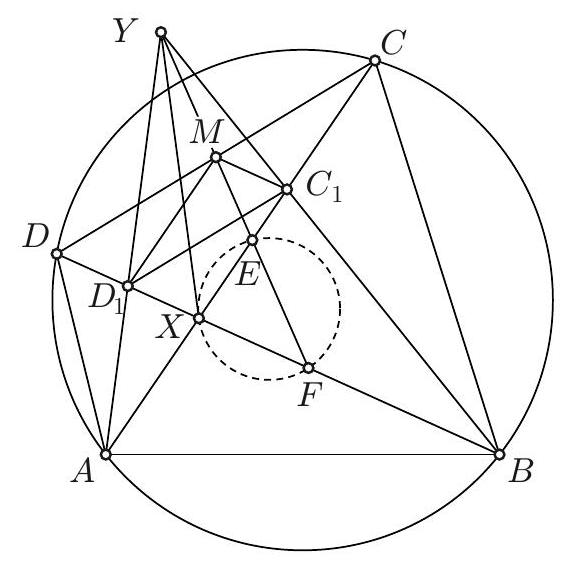", "solution": "We are to prove that $\\angle E X Y=\\angle E F X$; alternatively, but equivalently, $\\angle A Y X+\\angle X A Y=\\angle B Y F+\\angle X B Y$.\n\nSince the quadrangle $A B C D$ is cyclic, the triangles $X A D$ and $X B C$ are similar, and since $A D_{1}$ and $B C_{1}$ are corresponding medians in these triangles, it follows that $\\angle X A Y=\\angle X A D_{1}=\\angle X B C_{1}=\\angle X B Y$.\n\nFinally, $\\angle A Y X=\\angle B Y F$, since $X$ and $M$ are corresponding points in the similar triangles $A B Y$ and $C_{1} D_{1} Y$ : indeed, $\\angle X A B=\\angle X D C=\\angle M C_{1} D_{1}$, and $\\angle X B A=\\angle X C D=\\angle M D_{1} C_{1}$.", "metadata": {"resource_path": "EGMO/segmented/en-2016-solutions.jsonl", "problem_match": "\nProblem 2.", "solution_match": "\nSolution."}} |
| {"year": "2016", "tier": "T2", "problem_label": "3", "problem_type": null, "exam": "EGMO", "problem": "Let $m$ be a positive integer. Consider a $4 m \\times 4 m$ array of square unit cells. Two different cells are related to each other if they are in either the same row or in the same column. No cell is related to itself. Some cells are coloured blue, such that every cell is related to at least two blue cells. Determine the minimum number of blue cells.", "solution": "The required minimum is 6 m and is achieved by a diagonal string of $m 4 \\times 4$ blocks of the form below (bullets mark centres of blue cells):\n\nIn particular, this configuration shows that the required minimum does not exceed 6 m .\n\nWe now show that any configuration of blue cells satisfying the condition in the statement has cardinality at least 6 m .\n\nFix such a configuration and let $m_{1}^{r}$ be the number of blue cells in rows containing exactly one such, let $m_{2}^{r}$ be the number of blue cells in rows containing exactly two such, and let $m_{3}^{r}$ be the number of blue cells in rows containing at least three such; the numbers $m_{1}^{c}, m_{2}^{c}$ and $m_{3}^{c}$ are defined similarly.\n\nBegin by noticing that $m_{3}^{c} \\geq m_{1}^{r}$ and, similarly, $m_{3}^{r} \\geq m_{1}^{c}$. Indeed, if a blue cell is alone in its row, respectively column, then there are at least two other blue cells in its column, respectively row, and the claim follows.\n\nSuppose now, if possible, the total number of blue cells is less than 6 m . We will show that $m_{1}^{r}>m_{3}^{r}$ and $m_{1}^{c}>m_{3}^{c}$, and reach a contradiction by the preceding: $m_{1}^{r}>m_{3}^{r} \\geq m_{1}^{c}>m_{3}^{c} \\geq m_{1}^{r}$.\n\nWe prove the first inequality; the other one is dealt with similarly. To this end, notice that there are no empty rows - otherwise, each column would contain at least two blue cells, whence a total of at least $8 m>6 m$ blue cells, which is a contradiction. Next, count rows to get $m_{1}^{r}+m_{2}^{r} / 2+m_{3}^{r} / 3 \\geq 4 m$,\nand count blue cells to get $m_{1}^{r}+m_{2}^{r}+m_{3}^{r}<6 m$. Subtraction of the latter from the former multiplied by $3 / 2$ yields $m_{1}^{r}-m_{3}^{r}>m_{2}^{r} / 2 \\geq 0$, and the conclusion follows.", "metadata": {"resource_path": "EGMO/segmented/en-2016-solutions.jsonl", "problem_match": "\nProblem 3.", "solution_match": "\nSolution 1 (Israel)."}} |
| {"year": "2016", "tier": "T2", "problem_label": "3", "problem_type": null, "exam": "EGMO", "problem": "Let $m$ be a positive integer. Consider a $4 m \\times 4 m$ array of square unit cells. Two different cells are related to each other if they are in either the same row or in the same column. No cell is related to itself. Some cells are coloured blue, such that every cell is related to at least two blue cells. Determine the minimum number of blue cells.", "solution": "To prove that a minimal configuration of blue cells satisfying the condition in the statement has cardinality at least 6 m , consider a bipartite graph whose vertex parts are the rows and the columns of the array, respectively, a row and a column being joined by an edge if and only if the two cross at a blue cell. Clearly, the number of blue cells is equal to the number of edges of this graph, and the relationship condition in the statement reads: for every row $r$ and every column $c$, $\\operatorname{deg} r+\\operatorname{deg} c-\\epsilon(r, c) \\geq 2$, where $\\epsilon(r, c)=2$ if $r$ and $c$ are joined by an edge, and $\\epsilon(r, c)=0$ otherwise.\n\nNotice that there are no empty rows/columns, so the graph has no isolated vertices. By the preceding, the cardinality of every connected component of the graph is at least 4 , so there are at most $2 \\cdot 4 m / 4=2 m$ such and, consequently, the graph has at least $8 m-2 m=6 m$ edges. This completes the proof.\n\nRemarks. The argument in the first solution shows that equality to 6 m is possible only if $m_{1}^{r}=m_{3}^{r}=m_{1}^{c}=m_{3}^{c}=3 m, m_{2}^{r}=m_{2}^{c}=0$, and there are no rows, respectively columns, containing four blue cells or more.\n\nConsider the same problem for an $n \\times n$ array. The argument in the second solution shows that the corresponding minimum is $3 n / 2$ if $n$ is divisible by 4 , and $3 n / 2+1 / 2$ if $n$ is odd; if $n \\equiv 2(\\bmod 4)$, the minimum in question is $3 n / 2+1$. To describe corresponding minimal configurations $C_{n}$, refer to the minimal configurations $C_{2}, C_{3}, C_{4}, C_{5}$ below:\n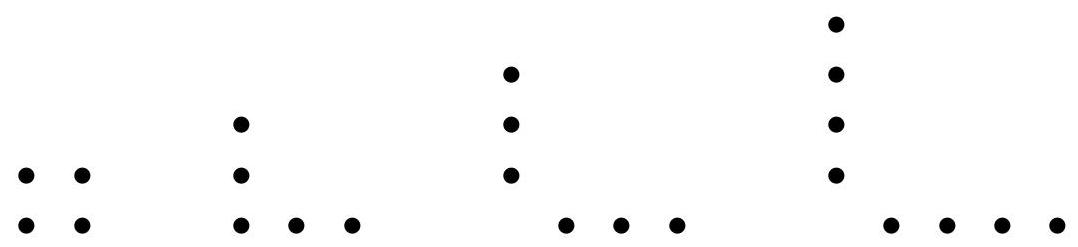\n\nThe case $n \\equiv 0(\\bmod 4)$ was dealt with above: a $C_{n}$ consists of a diagonal string of $n / 4$ blocks $C_{4}$. If $n \\equiv r(\\bmod 4), r=2,3$, a $C_{n}$ consists of a diagonal string of $\\lfloor n / 4\\rfloor$ blocks $C_{4}$ followed by a $C_{r}$, and if $n \\equiv 1(\\bmod 4)$, a $C_{n}$ consists of a diagonal string of $\\lfloor n / 4\\rfloor-1$ blocks $C_{4}$ followed by a $C_{5}$.\n\nMinimal configurations are not necessarily unique (two configurations being equivalent if one is obtained from the other by permuting the rows and/or the columns). For instance, if $n=6$, the configurations below are both minimal:\n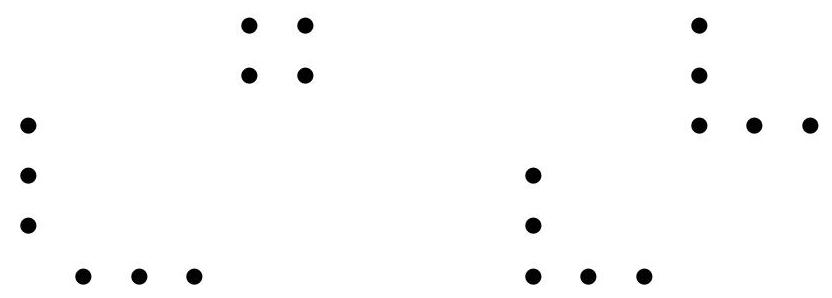\n\n## EGMO 2016, Day 2 - Solutions", "metadata": {"resource_path": "EGMO/segmented/en-2016-solutions.jsonl", "problem_match": "\nProblem 3.", "solution_match": "\nSolution 2. "}} |
| {"year": "2016", "tier": "T2", "problem_label": "4", "problem_type": null, "exam": "EGMO", "problem": "Two circles, $\\omega_{1}$ and $\\omega_{2}$, of equal radius intersect at different points $X_{1}$ and $X_{2}$. Consider a circle $\\omega$ externally tangent to $\\omega_{1}$ at a point $T_{1}$, and internally tangent to $\\omega_{2}$ at a point $T_{2}$. Prove that lines $X_{1} T_{1}$ and $X_{2} T_{2}$ intersect at a point lying on $\\omega$.", "solution": "Let the line $X_{k} T_{k}$ and $\\omega$ meet again at $X_{k}^{\\prime}, k=1,2$, and notice that the tangent $t_{k}$ to $\\omega_{k}$ at $X_{k}$ and the tangent $t_{k}^{\\prime}$ to $\\omega$ at $X_{k}^{\\prime}$ are parallel. Since the $\\omega_{k}$ have equal radii, the $t_{k}$ are parallel, so the $t_{k}^{\\prime}$ are parallel, and consequently the points $X_{1}^{\\prime}$ and $X_{2}^{\\prime}$ coincide (they are not antipodal, since they both lie on the same side of the line $T_{1} T_{2}$ ). The conclusion follows.", "metadata": {"resource_path": "EGMO/segmented/en-2016-solutions.jsonl", "problem_match": "\nProblem 4.", "solution_match": "\nSolution 1. "}} |
| {"year": "2016", "tier": "T2", "problem_label": "4", "problem_type": null, "exam": "EGMO", "problem": "Two circles, $\\omega_{1}$ and $\\omega_{2}$, of equal radius intersect at different points $X_{1}$ and $X_{2}$. Consider a circle $\\omega$ externally tangent to $\\omega_{1}$ at a point $T_{1}$, and internally tangent to $\\omega_{2}$ at a point $T_{2}$. Prove that lines $X_{1} T_{1}$ and $X_{2} T_{2}$ intersect at a point lying on $\\omega$.", "solution": "The circle $\\omega$ is the image of $\\omega_{k}$ under a homothety $h_{k}$ centred at $T_{k}, k=1,2$. The tangent to $\\omega$ at $X_{k}^{\\prime}=h_{k}\\left(X_{k}\\right)$ is therefore parallel to the tangent $t_{k}$ to $\\omega_{k}$ at $X_{k}$. Since the $\\omega_{k}$ have equal radii, the $t_{k}$ are parallel, so $X_{1}^{\\prime}=X_{2}^{\\prime}$; and since the points $X_{k}, T_{k}$ and $X_{k}^{\\prime}$ are collinear, the conclusion follows.\n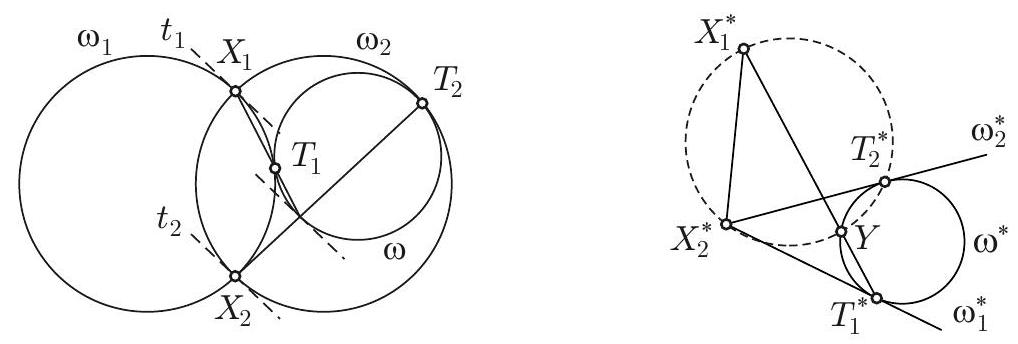", "metadata": {"resource_path": "EGMO/segmented/en-2016-solutions.jsonl", "problem_match": "\nProblem 4.", "solution_match": "\nSolution 2. "}} |
| {"year": "2016", "tier": "T2", "problem_label": "4", "problem_type": null, "exam": "EGMO", "problem": "Two circles, $\\omega_{1}$ and $\\omega_{2}$, of equal radius intersect at different points $X_{1}$ and $X_{2}$. Consider a circle $\\omega$ externally tangent to $\\omega_{1}$ at a point $T_{1}$, and internally tangent to $\\omega_{2}$ at a point $T_{2}$. Prove that lines $X_{1} T_{1}$ and $X_{2} T_{2}$ intersect at a point lying on $\\omega$.", "solution": "Invert from $X_{1}$ and use an asterisk to denote images under this inversion. Notice that $\\omega_{k}^{*}$ is the tangent from $X_{2}^{*}$ to $\\omega^{*}$ at $T_{k}^{*}$, and the pole $X_{1}$ lies on the bisectrix of the angle formed by the $\\omega_{k}^{*}$, not containing $\\omega^{*}$. Letting $X_{1} T_{1}^{*}$ and $\\omega^{*}$ meet again at $Y$, standard angle chase shows that $Y$ lies on the circle $X_{1} X_{2}^{*} T_{2}^{*}$, and the conclusion follows.\n\nRemarks. The product $h_{1} h_{2}$ of the two homotheties in the first solution is reflexion across the midpoint of the segment $X_{1} X_{2}$, which lies on the line $T_{1} T_{2}$ 。\n\nVarious arguments, involving similarities, radical axes, and the like, work equally well to prove the required result.", "metadata": {"resource_path": "EGMO/segmented/en-2016-solutions.jsonl", "problem_match": "\nProblem 4.", "solution_match": "\nSolution 3. "}} |
| {"year": "2016", "tier": "T2", "problem_label": "5", "problem_type": null, "exam": "EGMO", "problem": "Let $k$ and $n$ be integers such that $k \\geq 2$ and $k \\leq n \\leq 2 k-1$. Place rectangular tiles, each of size $1 \\times k$ or $k \\times 1$, on an $n \\times n$ chessboard so that each tile covers exactly $k$ cells, and no two tiles overlap. Do this until\nno further tile can be placed in this way. For each such $k$ and $n$, determine the minimum number of tiles that such an arrangement may contain.", "solution": "The required minimum is $n$ if $n=k$, and it is $\\min (n, 2 n-2 k+2)$ if $k<n<2 k$.\n\nThe case $n=k$ being clear, assume henceforth $k<n<2 k$. Begin by describing maximal arrangements on the board $[0, n] \\times[0, n]$, having the above mentioned cardinalities.\n\nIf $k<n<2 k-1$, then $\\min (n, 2 n-2 k+2)=2 n-2 k+2$. To obtain a maximal arrangement of this cardinality, place four tiles, $[0, k] \\times[0,1]$, $[0,1] \\times[1, k+1],[1, k+1] \\times[k, k+1]$ and $[k, k+1] \\times[0, k]$ in the square $[0, k] \\times[0, k]$, stack $n-k-1$ horizontal tiles in the rectangle $[1, k+1] \\times[k+1, n]$, and erect $n-k-1$ vertical tiles in the rectangle $[k+1, n] \\times[1, k+1]$.\n\nIf $n=2 k-1$, then $\\min (n, 2 n-2 k+2)=n=2 k-1$. A maximal arrangement of $2 k-1$ tiles is obtained by stacking $k-1$ horizontal tiles in the rectangle $[0, k] \\times[0, k-1]$, another $k-1$ horizontal tiles in the rectangle $[0, k] \\times[k, 2 k-1]$, and adding the horizontal tile $[k-1,2 k-1] \\times[k-1, k]$.\n\nThe above examples show that the required minimum does not exceed the mentioned values.\n\nTo prove the reverse inequality, consider a maximal arrangement and let $r$, respectively $c$, be the number of rows, respectively columns, not containing a tile.\n\nIf $r=0$ or $c=0$, the arrangement clearly contains at least $n$ tiles.\nIf $r$ and $c$ are both positive, we show that the arrangement contains at least $2 n-2 k+2$ tiles. To this end, we will prove that the rows, respectively columns, not containing a tile are consecutive. Assume this for the moment, to notice that these $r$ rows and $c$ columns cross to form an $r \\times c$ rectangular array containing no tile at all, so $r<k$ and $c<k$ by maximality. Consequently, there are $n-r \\geq n-k+1$ rows containing at least one horizontal tile each, and $n-c \\geq n-k+1$ columns containing at least one vertical tile each, whence a total of at least $2 n-2 k+2$ tiles.\n\nWe now show that the rows not containing a tile are consecutive; columns are dealt with similarly. Consider a horizontal tile $T$. Since $n<2 k$, the nearest horizontal side of the board is at most $k-1$ rows away from the row containing $T$. These rows, if any, cross the $k$ columns $T$ crosses to form a rectangular array no vertical tile fits in. Maximality forces each of these rows to contain a horizontal tile and the claim follows.\n\nConsequently, the cardinality of every maximal arrangement is at least $\\min (n, 2 n-2 k+2)$, and the conclusion follows.\n\nRemarks. (1) If $k \\geq 3$ and $n=2 k$, the minimum is $n+1=2 k+1$\nand is achieved, for instance, by the maximal arrangement consisting of the vertical tile $[0,1] \\times[1, k+1]$ along with $k-1$ horizontal tiles stacked in $[1, k+1] \\times[0, k-1]$, another $k-1$ horizontal tiles stacked in $[1, k+1] \\times[k+1,2 k]$, and two horizontal tiles stacked in $[k, 2 k] \\times[k-1, k+1]$. This example shows that the corresponding minimum does not exceed $n+1<2 n-2 k+2$. The argument in the solution also applies to the case $n=2 k$ to infer that for a maximal arrangement of minimal cardinality either $r=0$ or $c=0$, and the cardinality is at least $n$. Clearly, we may and will assume $r=0$. Suppose, if possible, such an arrangement contains exactly $n$ tiles. Then each row contains exactly one tile, and there are no vertical tiles. Since there is no room left for an additional tile, some tile $T$ must cover a cell of the leftmost column, so it covers the $k$ leftmost cells along its row, and there is then room for another tile along that row - a contradiction.\n(2) For every pair $(r, c)$ of integers in the range $2 k-n, \\ldots, k-1$, at least one of which is positive, say $c>0$, there exists a maximal arrangement of cardinality $2 n-r-c$.\n\nUse again the board $[0, n] \\times[0, n]$ to stack $k-r$ horizontal tiles in each of the rectangles $[0, k] \\times[0, k-r]$ and $[k-c, 2 k-c] \\times[k, 2 k-r]$, erect $k-c$ vertical tiles in each of the rectangles $[0, k-c] \\times[k-r, 2 k-r]$ and $[k, 2 k-c] \\times[0, k]$, then stack $n-2 k+r$ horizontal tiles in the rectangle $[k-c, 2 k-c] \\times[2 k-r, n]$, and erect $n-2 k+c$ vertical tiles in the rectangle $[2 k-c, n] \\times[1, k+1]$.", "metadata": {"resource_path": "EGMO/segmented/en-2016-solutions.jsonl", "problem_match": "\nProblem 5.", "solution_match": "\nSolution."}} |
| {"year": "2016", "tier": "T2", "problem_label": "6", "problem_type": null, "exam": "EGMO", "problem": "Let $S$ be the set of all positive integers $n$ such that $n^{4}$ has a divisor in the range $n^{2}+1, n^{2}+2, \\ldots, n^{2}+2 n$. Prove that there are infinitely many elements of $S$ of each of the forms $7 m, 7 m+1,7 m+2,7 m+5,7 m+6$ and no elements of $S$ of the form $7 m+3$ or $7 m+4$, where $m$ is an integer.", "solution": "The conclusion is a consequence of the lemma below which actually provides a recursive description of $S$. The proof of the lemma is at the end of the solution.\n\nLemma. The fourth power of a positive integer $n$ has a divisor in the range $n^{2}+1, n^{2}+2, \\ldots, n^{2}+2 n$ if and only if at least one of the numbers $2 n^{2}+1$ and $12 n^{2}+9$ is a perfect square.\n\nConsequently, a positive integer $n$ is a member of $S$ if and only if $m^{2}-$ $2 n^{2}=1$ or $m^{2}-12 n^{2}=9$ for some positive integer $m$.\n\nThe former is a Pell equation whose solutions are $\\left(m_{1}, n_{1}\\right)=(3,2)$ and\n\n$$\n\\left(m_{k+1}, n_{k+1}\\right)=\\left(3 m_{k}+4 n_{k}, 2 m_{k}+3 n_{k}\\right), \\quad k=1,2,3, \\ldots\n$$\n\nIn what follows, all congruences are modulo 7. Iteration shows that $\\left(m_{k+3}, n_{k+3}\\right) \\equiv\\left(m_{k}, n_{k}\\right)$. Since $\\left(m_{1}, n_{1}\\right) \\equiv(3,2),\\left(m_{2}, n_{2}\\right) \\equiv(3,-2)$, and\n$\\left(m_{3}, n_{3}\\right) \\equiv(1,0)$, it follows that $S$ contains infinitely many integers from each of the residue classes 0 and $\\pm 2$ modulo 7 .\n\nThe other equation is easily transformed into a Pell equation, $m^{\\prime 2}-$ $12 n^{\\prime 2}=1$, by noticing that $m$ and $n$ are both divisible by 3 , say $m=3 m^{\\prime}$ and $n=3 n^{\\prime}$. In this case, the solutions are $\\left(m_{1}, n_{1}\\right)=(21,6)$ and\n\n$$\n\\left(m_{k+1}, n_{k+1}\\right)=\\left(7 m_{k}+24 n_{k}, 2 m_{k}+7 n_{k}\\right), \\quad k=1,2,3, \\ldots\n$$\n\nThis time iteration shows that $\\left(m_{k+4}, n_{k+4}\\right) \\equiv\\left(m_{k}, n_{k}\\right)$. Since $\\left(m_{1}, n_{1}\\right) \\equiv$ $(0,-1),\\left(m_{2}, n_{2}\\right) \\equiv(-3,0),\\left(m_{3}, n_{3}\\right) \\equiv(0,1)$, and $\\left(m_{4}, n_{4}\\right) \\equiv(3,0)$, it follows that $S$ contains infinitely many integers from each of the residue classes 0 and $\\pm 1$ modulo 7 .\n\nFinally, since the $n_{k}$ from the two sets of formulae exhaust $S$, by the preceding no integer in the residue classes $\\pm 3$ modulo 7 is a member of $S$.\n\nWe now turn to the proof of the lemma. Let $n$ be a member of $S$, and let $d=n^{2}+m$ be a divisor of $n^{4}$ in the range $n^{2}+1, n^{2}+2, \\ldots, n^{2}+2 n$, so $1 \\leq m \\leq 2 n$. Consideration of the square of $n^{2}=d-m$ shows $m^{2}$ divisible by $d$, so $m^{2} / d$ is a positive integer. Since $n^{2}<d<(n+1)^{2}$, it follows that $d$ is not a square; in particular, $m^{2} / d \\neq 1$, so $m^{2} / d \\geq 2$. On the other hand, $1 \\leq m \\leq 2 n$, so $m^{2} / d=m^{2} /\\left(n^{2}+m\\right) \\leq 4 n^{2} /\\left(n^{2}+1\\right)<4$. Consequently, $m^{2} / d=2$ or $m^{2} / d=3$; that is, $m^{2} /\\left(n^{2}+m\\right)=2$ or $m^{2} /\\left(n^{2}+m\\right)=3$. In the former case, $2 n^{2}+1=(m-1)^{2}$, and in the latter, $12 n^{2}+9=(2 m-3)^{2}$.\n\nConversely, if $2 n^{2}+1=m^{2}$ for some positive integer $m$, then $1<m^{2}<$ $4 n^{2}$, so $1<m<2 n$, and $n^{4}=\\left(n^{2}+m+1\\right)\\left(n^{2}-m+1\\right)$, so the first factor is the desired divisor.\n\nSimilarly, if $12 n^{2}+9=m^{2}$ for some positive integer $m$, then $m$ is odd, $n \\geq 6$, and $n^{4}=\\left(n^{2}+m / 2+3 / 2\\right)\\left(n^{2}-m / 2+3 / 2\\right)$, and again the first factor is the desired divisor.", "metadata": {"resource_path": "EGMO/segmented/en-2016-solutions.jsonl", "problem_match": "\nProblem 6.", "solution_match": "\nSolution."}} |
|
|


