| {"year": "2015", "tier": "T0", "problem_label": "A1", "problem_type": "Algebra", "exam": "IMO-SL", "problem": "Suppose that a sequence $a_{1}, a_{2}, \\ldots$ of positive real numbers satisfies $$ a_{k+1} \\geqslant \\frac{k a_{k}}{a_{k}^{2}+(k-1)} $$ for every positive integer $k$. Prove that $a_{1}+a_{2}+\\cdots+a_{n} \\geqslant n$ for every $n \\geqslant 2$.", "solution": "From the constraint (1), it can be seen that $$ \\frac{k}{a_{k+1}} \\leqslant \\frac{a_{k}^{2}+(k-1)}{a_{k}}=a_{k}+\\frac{k-1}{a_{k}} $$ and so $$ a_{k} \\geqslant \\frac{k}{a_{k+1}}-\\frac{k-1}{a_{k}} . $$ Summing up the above inequality for $k=1, \\ldots, m$, we obtain $$ a_{1}+a_{2}+\\cdots+a_{m} \\geqslant\\left(\\frac{1}{a_{2}}-\\frac{0}{a_{1}}\\right)+\\left(\\frac{2}{a_{3}}-\\frac{1}{a_{2}}\\right)+\\cdots+\\left(\\frac{m}{a_{m+1}}-\\frac{m-1}{a_{m}}\\right)=\\frac{m}{a_{m+1}} $$ Now we prove the problem statement by induction on $n$. The case $n=2$ can be done by applying (1) to $k=1$ : $$ a_{1}+a_{2} \\geqslant a_{1}+\\frac{1}{a_{1}} \\geqslant 2 $$ For the induction step, assume that the statement is true for some $n \\geqslant 2$. If $a_{n+1} \\geqslant 1$, then the induction hypothesis yields $$ \\left(a_{1}+\\cdots+a_{n}\\right)+a_{n+1} \\geqslant n+1 $$ Otherwise, if $a_{n+1}<1$ then apply (2) as $$ \\left(a_{1}+\\cdots+a_{n}\\right)+a_{n+1} \\geqslant \\frac{n}{a_{n+1}}+a_{n+1}=\\frac{n-1}{a_{n+1}}+\\left(\\frac{1}{a_{n+1}}+a_{n+1}\\right)>(n-1)+2 $$ That completes the solution. Comment 1. It can be seen easily that having equality in the statement requires $a_{1}=a_{2}=1$ in the base case $n=2$, and $a_{n+1}=1$ in (3). So the equality $a_{1}+\\cdots+a_{n}=n$ is possible only in the trivial case $a_{1}=\\cdots=a_{n}=1$. Comment 2. After obtaining (2), there are many ways to complete the solution. We outline three such possibilities. - With defining $s_{n}=a_{1}+\\cdots+a_{n}$, the induction step can be replaced by $$ s_{n+1}=s_{n}+a_{n+1} \\geqslant s_{n}+\\frac{n}{s_{n}} \\geqslant n+1 $$ because the function $x \\mapsto x+\\frac{n}{x}$ increases on $[n, \\infty)$. - By applying the AM-GM inequality to the numbers $a_{1}+\\cdots+a_{k}$ and $k a_{k+1}$, we can conclude $$ a_{1}+\\cdots+a_{k}+k a_{k+1} \\geqslant 2 k $$ and sum it up for $k=1, \\ldots, n-1$. - We can derive the symmetric estimate $$ \\sum_{1 \\leqslant i<j \\leqslant n} a_{i} a_{j}=\\sum_{j=2}^{n}\\left(a_{1}+\\cdots+a_{j-1}\\right) a_{j} \\geqslant \\sum_{j=2}^{n}(j-1)=\\frac{n(n-1)}{2} $$ and combine it with the AM-QM inequality.", "metadata": {"resource_path": "IMO_SL/segmented/en-IMO2015SL.jsonl"}} |
| {"year": "2015", "tier": "T0", "problem_label": "A2", "problem_type": "Algebra", "exam": "IMO-SL", "problem": "Determine all functions $f: \\mathbb{Z} \\rightarrow \\mathbb{Z}$ with the property that $$ f(x-f(y))=f(f(x))-f(y)-1 $$ holds for all $x, y \\in \\mathbb{Z}$. (Croatia)", "solution": "It is immediately checked that both functions mentioned in the answer are as desired. Now let $f$ denote any function satisfying (1) for all $x, y \\in \\mathbb{Z}$. Substituting $x=0$ and $y=f(0)$ into (1) we learn that the number $z=-f(f(0))$ satisfies $f(z)=-1$. So by plugging $y=z$ into (1) we deduce that $$ f(x+1)=f(f(x)) $$ holds for all $x \\in \\mathbb{Z}$. Thereby (1) simplifies to $$ f(x-f(y))=f(x+1)-f(y)-1 $$ We now work towards showing that $f$ is linear by contemplating the difference $f(x+1)-f(x)$ for any $x \\in \\mathbb{Z}$. By applying (3) with $y=x$ and (2) in this order, we obtain $$ f(x+1)-f(x)=f(x-f(x))+1=f(f(x-1-f(x)))+1 $$ Since (3) shows $f(x-1-f(x))=f(x)-f(x)-1=-1$, this simplifies to $$ f(x+1)=f(x)+A, $$ where $A=f(-1)+1$ is some absolute constant. Now a standard induction in both directions reveals that $f$ is indeed linear and that in fact we have $f(x)=A x+B$ for all $x \\in \\mathbb{Z}$, where $B=f(0)$. Substituting this into (2) we obtain that $$ A x+(A+B)=A^{2} x+(A B+B) $$ holds for all $x \\in \\mathbb{Z}$; applying this to $x=0$ and $x=1$ we infer $A+B=A B+B$ and $A^{2}=A$. The second equation leads to $A=0$ or $A=1$. In case $A=1$, the first equation gives $B=1$, meaning that $f$ has to be the successor function. If $A=0$, then $f$ is constant and (1) shows that its constant value has to be -1 . Thereby the solution is complete. Comment. After (2) and (3) have been obtained, there are several other ways to combine them so as to obtain linearity properties of $f$. For instance, using (2) thrice in a row and then (3) with $x=f(y)$ one may deduce that $$ f(y+2)=f(f(y+1))=f(f(f(y)))=f(f(y)+1)=f(y)+f(0)+1 $$ holds for all $y \\in \\mathbb{Z}$. It follows that $f$ behaves linearly on the even numbers and on the odd numbers separately, and moreover that the slopes of these two linear functions coincide. From this point, one may complete the solution with some straightforward case analysis. A different approach using the equations (2) and (3) will be presented in Solution 2. To show that it is also possible to start in a completely different way, we will also present a third solution that avoids these equations entirely.", "metadata": {"resource_path": "IMO_SL/segmented/en-IMO2015SL.jsonl"}} |
| {"year": "2015", "tier": "T0", "problem_label": "A2", "problem_type": "Algebra", "exam": "IMO-SL", "problem": "Determine all functions $f: \\mathbb{Z} \\rightarrow \\mathbb{Z}$ with the property that $$ f(x-f(y))=f(f(x))-f(y)-1 $$ holds for all $x, y \\in \\mathbb{Z}$. (Croatia)", "solution": "We commence by deriving (2) and (3) as in the first solution. Now provided that $f$ is injective, (2) tells us that $f$ is the successor function. Thus we may assume from now on that $f$ is not injective, i.e., that there are two integers $a>b$ with $f(a)=f(b)$. A straightforward induction using (2) in the induction step reveals that we have $f(a+n)=f(b+n)$ for all nonnegative integers $n$. Consequently, the sequence $\\gamma_{n}=f(b+n)$ is periodic and thus in particular bounded, which means that the numbers $$ \\varphi=\\min _{n \\geqslant 0} \\gamma_{n} \\quad \\text { and } \\quad \\psi=\\max _{n \\geqslant 0} \\gamma_{n} $$ exist. Let us pick any integer $y$ with $f(y)=\\varphi$ and then an integer $x \\geqslant a$ with $f(x-f(y))=\\varphi$. Due to the definition of $\\varphi$ and (3) we have $$ \\varphi \\leqslant f(x+1)=f(x-f(y))+f(y)+1=2 \\varphi+1 $$ whence $\\varphi \\geqslant-1$. The same reasoning applied to $\\psi$ yields $\\psi \\leqslant-1$. Since $\\varphi \\leqslant \\psi$ holds trivially, it follows that $\\varphi=\\psi=-1$, or in other words that we have $f(t)=-1$ for all integers $t \\geqslant a$. Finally, if any integer $y$ is given, we may find an integer $x$ which is so large that $x+1 \\geqslant a$ and $x-f(y) \\geqslant a$ hold. Due to (3) and the result from the previous paragraph we get $$ f(y)=f(x+1)-f(x-f(y))-1=(-1)-(-1)-1=-1 . $$ Thereby the problem is solved.", "metadata": {"resource_path": "IMO_SL/segmented/en-IMO2015SL.jsonl"}} |
| {"year": "2015", "tier": "T0", "problem_label": "A2", "problem_type": "Algebra", "exam": "IMO-SL", "problem": "Determine all functions $f: \\mathbb{Z} \\rightarrow \\mathbb{Z}$ with the property that $$ f(x-f(y))=f(f(x))-f(y)-1 $$ holds for all $x, y \\in \\mathbb{Z}$. (Croatia)", "solution": "Set $d=f(0)$. By plugging $x=f(y)$ into (1) we obtain $$ f^{3}(y)=f(y)+d+1 $$ for all $y \\in \\mathbb{Z}$, where the left-hand side abbreviates $f(f(f(y)))$. When we replace $x$ in (1) by $f(x)$ we obtain $f(f(x)-f(y))=f^{3}(x)-f(y)-1$ and as a consequence of (4) this simplifies to $$ f(f(x)-f(y))=f(x)-f(y)+d $$ Now we consider the set $$ E=\\{f(x)-d \\mid x \\in \\mathbb{Z}\\} $$ Given two integers $a$ and $b$ from $E$, we may pick some integers $x$ and $y$ with $f(x)=a+d$ and $f(y)=b+d$; now (5) tells us that $f(a-b)=(a-b)+d$, which means that $a-b$ itself exemplifies $a-b \\in E$. Thus, $$ E \\text { is closed under taking differences. } $$ Also, the definitions of $d$ and $E$ yield $0 \\in E$. If $E=\\{0\\}$, then $f$ is a constant function and (1) implies that the only value attained by $f$ is indeed -1 . So let us henceforth suppose that $E$ contains some number besides zero. It is known that in this case (6) entails $E$ to be the set of all integer multiples of some positive integer $k$. Indeed, this holds for $$ k=\\min \\{|x| \\mid x \\in E \\text { and } x \\neq 0\\} $$ as one may verify by an argument based on division with remainder. Thus we have $$ \\{f(x) \\mid x \\in \\mathbb{Z}\\}=\\{k \\cdot t+d \\mid t \\in \\mathbb{Z}\\} $$ Due to (5) and (7) we get $$ f(k \\cdot t)=k \\cdot t+d $$ for all $t \\in \\mathbb{Z}$, whence in particular $f(k)=k+d$. So by comparing the results of substituting $y=0$ and $y=k$ into (1) we learn that $$ f(z+k)=f(z)+k $$ holds for all integers $z$. In plain English, this means that on any residue class modulo $k$ the function $f$ is linear with slope 1. Now by (7) the set of all values attained by $f$ is such a residue class. Hence, there exists an absolute constant $c$ such that $f(f(x))=f(x)+c$ holds for all $x \\in \\mathbb{Z}$. Thereby (1) simplifies to $$ f(x-f(y))=f(x)-f(y)+c-1 $$ On the other hand, considering (1) modulo $k$ we obtain $d \\equiv-1(\\bmod k)$ because of (7). So by (7) again, $f$ attains the value -1 . Thus we may apply (9) to some integer $y$ with $f(y)=-1$, which gives $f(x+1)=f(x)+c$. So $f$ is a linear function with slope $c$. Hence, (8) leads to $c=1$, wherefore there is an absolute constant $d^{\\prime}$ with $f(x)=x+d^{\\prime}$ for all $x \\in \\mathbb{Z}$. Using this for $x=0$ we obtain $d^{\\prime}=d$ and finally (4) discloses $d=1$, meaning that $f$ is indeed the successor function.", "metadata": {"resource_path": "IMO_SL/segmented/en-IMO2015SL.jsonl"}} |
| {"year": "2015", "tier": "T0", "problem_label": "A3", "problem_type": "Algebra", "exam": "IMO-SL", "problem": "Let $n$ be a fixed positive integer. Find the maximum possible value of $$ \\sum_{1 \\leqslant r<s \\leqslant 2 n}(s-r-n) x_{r} x_{s} $$ where $-1 \\leqslant x_{i} \\leqslant 1$ for all $i=1,2, \\ldots, 2 n$.", "solution": "Let $Z$ be the expression to be maximized. Since this expression is linear in every variable $x_{i}$ and $-1 \\leqslant x_{i} \\leqslant 1$, the maximum of $Z$ will be achieved when $x_{i}=-1$ or 1 . Therefore, it suffices to consider only the case when $x_{i} \\in\\{-1,1\\}$ for all $i=1,2, \\ldots, 2 n$. For $i=1,2, \\ldots, 2 n$, we introduce auxiliary variables $$ y_{i}=\\sum_{r=1}^{i} x_{r}-\\sum_{r=i+1}^{2 n} x_{r} $$ Taking squares of both sides, we have $$ \\begin{aligned} y_{i}^{2} & =\\sum_{r=1}^{2 n} x_{r}^{2}+\\sum_{r<s \\leqslant i} 2 x_{r} x_{s}+\\sum_{i<r<s} 2 x_{r} x_{s}-\\sum_{r \\leqslant i<s} 2 x_{r} x_{s} \\\\ & =2 n+\\sum_{r<s \\leqslant i} 2 x_{r} x_{s}+\\sum_{i<r<s} 2 x_{r} x_{s}-\\sum_{r \\leqslant i<s} 2 x_{r} x_{s}, \\end{aligned} $$ where the last equality follows from the fact that $x_{r} \\in\\{-1,1\\}$. Notice that for every $r<s$, the coefficient of $x_{r} x_{s}$ in (1) is 2 for each $i=1, \\ldots, r-1, s, \\ldots, 2 n$, and this coefficient is -2 for each $i=r, \\ldots, s-1$. This implies that the coefficient of $x_{r} x_{s}$ in $\\sum_{i=1}^{2 n} y_{i}^{2}$ is $2(2 n-s+r)-2(s-r)=$ $4(n-s+r)$. Therefore, summing (1) for $i=1,2, \\ldots, 2 n$ yields $$ \\sum_{i=1}^{2 n} y_{i}^{2}=4 n^{2}+\\sum_{1 \\leqslant r<s \\leqslant 2 n} 4(n-s+r) x_{r} x_{s}=4 n^{2}-4 Z $$ Hence, it suffices to find the minimum of the left-hand side. Since $x_{r} \\in\\{-1,1\\}$, we see that $y_{i}$ is an even integer. In addition, $y_{i}-y_{i-1}=2 x_{i}= \\pm 2$, and so $y_{i-1}$ and $y_{i}$ are consecutive even integers for every $i=2,3, \\ldots, 2 n$. It follows that $y_{i-1}^{2}+y_{i}^{2} \\geqslant 4$, which implies $$ \\sum_{i=1}^{2 n} y_{i}^{2}=\\sum_{j=1}^{n}\\left(y_{2 j-1}^{2}+y_{2 j}^{2}\\right) \\geqslant 4 n $$ Combining (2) and (3), we get $$ 4 n \\leqslant \\sum_{i=1}^{2 n} y_{i}^{2}=4 n^{2}-4 Z $$ Hence, $Z \\leqslant n(n-1)$. If we set $x_{i}=1$ for odd indices $i$ and $x_{i}=-1$ for even indices $i$, then we obtain equality in (3) (and thus in (4)). Therefore, the maximum possible value of $Z$ is $n(n-1)$, as desired. Comment 1. $Z=n(n-1)$ can be achieved by several other examples. In particular, $x_{i}$ needs not be $\\pm 1$. For instance, setting $x_{i}=(-1)^{i}$ for all $2 \\leqslant i \\leqslant 2 n$, we find that the coefficient of $x_{1}$ in $Z$ is 0 . Therefore, $x_{1}$ can be chosen arbitrarily in the interval $[-1,1]$. Nevertheless, if $x_{i} \\in\\{-1,1\\}$ for all $i=1,2, \\ldots, 2 n$, then the equality $Z=n(n-1)$ holds only when $\\left(y_{1}, y_{2}, \\ldots, y_{2 n}\\right)=(0, \\pm 2,0, \\pm 2, \\ldots, 0, \\pm 2)$ or $( \\pm 2,0, \\pm 2,0, \\ldots, \\pm 2,0)$. In each case, we can reconstruct $x_{i}$ accordingly. The sum $\\sum_{i=1}^{2 n} x_{i}$ in the optimal cases needs not be 0 , but it must equal 0 or $\\pm 2$. Comment 2. Several variations in setting up the auxiliary variables are possible. For instance, one may let $x_{2 n+i}=-x_{i}$ and $y_{i}^{\\prime}=x_{i}+x_{i+1}+\\cdots+x_{i+n-1}$ for any $1 \\leqslant i \\leqslant 2 n$. Similarly to Solution 1 , we obtain $Y:=y_{1}^{\\prime 2}+y_{2}^{\\prime 2}+\\cdots+y_{2 n}^{\\prime 2}=2 n^{2}-2 Z$. Then, it suffices to show that $Y \\geqslant 2 n$. If $n$ is odd, then each $y_{i}^{\\prime}$ is odd, and so $y_{i}^{\\prime 2} \\geqslant 1$. If $n$ is even, then each $y_{i}^{\\prime}$ is even. We can check that at least one of $y_{i}^{\\prime}, y_{i+1}^{\\prime}, y_{n+i}^{\\prime}$, and $y_{n+i+1}^{\\prime}$ is nonzero, so that $y_{i}^{\\prime 2}+y_{i+1}^{\\prime 2}+y_{n+i}^{\\prime 2}+y_{n+i+1}^{\\prime 2} \\geqslant 4$; summing these up for $i=1,3, \\ldots, n-1$ yields $Y \\geqslant 2 n$.", "metadata": {"resource_path": "IMO_SL/segmented/en-IMO2015SL.jsonl"}} |
| {"year": "2015", "tier": "T0", "problem_label": "A3", "problem_type": "Algebra", "exam": "IMO-SL", "problem": "Let $n$ be a fixed positive integer. Find the maximum possible value of $$ \\sum_{1 \\leqslant r<s \\leqslant 2 n}(s-r-n) x_{r} x_{s} $$ where $-1 \\leqslant x_{i} \\leqslant 1$ for all $i=1,2, \\ldots, 2 n$.", "solution": "We present a different method of obtaining the bound $Z \\leqslant n(n-1)$. As in the previous solution, we reduce the problem to the case $x_{i} \\in\\{-1,1\\}$. For brevity, we use the notation $[2 n]=\\{1,2, \\ldots, 2 n\\}$. Consider any $x_{1}, x_{2}, \\ldots, x_{2 n} \\in\\{-1,1\\}$. Let $$ A=\\left\\{i \\in[2 n]: x_{i}=1\\right\\} \\quad \\text { and } \\quad B=\\left\\{i \\in[2 n]: x_{i}=-1\\right\\} $$ For any subsets $X$ and $Y$ of [2n] we define $$ e(X, Y)=\\sum_{r<s, r \\in X, s \\in Y}(s-r-n) $$ One may observe that $$ e(A, A)+e(A, B)+e(B, A)+e(B, B)=e([2 n],[2 n])=\\sum_{1 \\leqslant r<s \\leqslant 2 n}(s-r-n)=-\\frac{(n-1) n(2 n-1)}{3} . $$ Therefore, we have $$ Z=e(A, A)-e(A, B)-e(B, A)+e(B, B)=2(e(A, A)+e(B, B))+\\frac{(n-1) n(2 n-1)}{3} . $$ Thus, we need to maximize $e(A, A)+e(B, B)$, where $A$ and $B$ form a partition of [2n]. Due to the symmetry, we may assume that $|A|=n-p$ and $|B|=n+p$, where $0 \\leqslant p \\leqslant n$. From now on, we fix the value of $p$ and find an upper bound for $Z$ in terms of $n$ and $p$. Let $a_{1}<a_{2}<\\cdots<a_{n-p}$ and $b_{1}<b_{2}<\\cdots<b_{n+p}$ list all elements of $A$ and $B$, respectively. Then $$ e(A, A)=\\sum_{1 \\leqslant i<j \\leqslant n-p}\\left(a_{j}-a_{i}-n\\right)=\\sum_{i=1}^{n-p}(2 i-1-n+p) a_{i}-\\binom{n-p}{2} \\cdot n $$ and similarly $$ e(B, B)=\\sum_{i=1}^{n+p}(2 i-1-n-p) b_{i}-\\binom{n+p}{2} \\cdot n $$ Thus, now it suffices to maximize the value of $$ M=\\sum_{i=1}^{n-p}(2 i-1-n+p) a_{i}+\\sum_{i=1}^{n+p}(2 i-1-n-p) b_{i} $$ In order to get an upper bound, we will apply the rearrangement inequality to the sequence $a_{1}, a_{2}, \\ldots, a_{n-p}, b_{1}, b_{2}, \\ldots, b_{n+p}$ (which is a permutation of $1,2, \\ldots, 2 n$ ), together with the sequence of coefficients of these numbers in (8). The coefficients of $a_{i}$ form the sequence $$ n-p-1, n-p-3, \\ldots, 1-n+p $$ and those of $b_{i}$ form the sequence $$ n+p-1, n+p-3, \\ldots, 1-n-p $$ Altogether, these coefficients are, in descending order: - $n+p+1-2 i$, for $i=1,2, \\ldots, p$; - $n-p+1-2 i$, counted twice, for $i=1,2, \\ldots, n-p$; and - $-(n+p+1-2 i)$, for $i=p, p-1, \\ldots, 1$. Thus, the rearrangement inequality yields $$ \\begin{aligned} & M \\leqslant \\sum_{i=1}^{p}(n+p+1-2 i)(2 n+1-i) \\\\ & \\quad+\\sum_{i=1}^{n-p}(n-p+1-2 i)((2 n+2-p-2 i)+(2 n+1-p-2 i)) \\\\ & \\quad-\\sum_{i=1}^{p}(n+p+1-2 i) i \\end{aligned} $$ Finally, combining the information from (5), (6), (7), and (9), we obtain $$ \\begin{aligned} Z \\leqslant & \\frac{(n-1) n(2 n-1)}{3}-2 n\\left(\\binom{n-p}{2}+\\binom{n+p}{2}\\right) \\\\ & +2 \\sum_{i=1}^{p}(n+p+1-2 i)(2 n+1-2 i)+2 \\sum_{i=1}^{n-p}(n-p+1-2 i)(4 n-2 p+3-4 i), \\end{aligned} $$ which can be simplified to $$ Z \\leqslant n(n-1)-\\frac{2}{3} p(p-1)(p+1) $$ Since $p$ is a nonnegative integer, this yields $Z \\leqslant n(n-1)$.", "metadata": {"resource_path": "IMO_SL/segmented/en-IMO2015SL.jsonl"}} |
| {"year": "2015", "tier": "T0", "problem_label": "A4", "problem_type": "Algebra", "exam": "IMO-SL", "problem": "Find all functions $f: \\mathbb{R} \\rightarrow \\mathbb{R}$ satisfying the equation $$ f(x+f(x+y))+f(x y)=x+f(x+y)+y f(x) $$ for all real numbers $x$ and $y$.", "solution": "Clearly, each of the functions $x \\mapsto x$ and $x \\mapsto 2-x$ satisfies (1). It suffices now to show that they are the only solutions to the problem. Suppose that $f$ is any function satisfying (1). Then setting $y=1$ in (1), we obtain $$ f(x+f(x+1))=x+f(x+1) $$ in other words, $x+f(x+1)$ is a fixed point of $f$ for every $x \\in \\mathbb{R}$. We distinguish two cases regarding the value of $f(0)$. Case 1. $\\quad f(0) \\neq 0$. By letting $x=0$ in (1), we have $$ f(f(y))+f(0)=f(y)+y f(0) $$ So, if $y_{0}$ is a fixed point of $f$, then substituting $y=y_{0}$ in the above equation we get $y_{0}=1$. Thus, it follows from (2) that $x+f(x+1)=1$ for all $x \\in \\mathbb{R}$. That is, $f(x)=2-x$ for all $x \\in \\mathbb{R}$. Case 2. $\\quad f(0)=0$. By letting $y=0$ and replacing $x$ by $x+1$ in (1), we obtain $$ f(x+f(x+1)+1)=x+f(x+1)+1 $$ From (1), the substitution $x=1$ yields $$ f(1+f(y+1))+f(y)=1+f(y+1)+y f(1) $$ By plugging $x=-1$ into (2), we see that $f(-1)=-1$. We then plug $y=-1$ into (4) and deduce that $f(1)=1$. Hence, (4) reduces to $$ f(1+f(y+1))+f(y)=1+f(y+1)+y $$ Accordingly, if both $y_{0}$ and $y_{0}+1$ are fixed points of $f$, then so is $y_{0}+2$. Thus, it follows from (2) and (3) that $x+f(x+1)+2$ is a fixed point of $f$ for every $x \\in \\mathbb{R}$; i.e., $$ f(x+f(x+1)+2)=x+f(x+1)+2 $$ Replacing $x$ by $x-2$ simplifies the above equation to $$ f(x+f(x-1))=x+f(x-1) $$ On the other hand, we set $y=-1$ in (1) and get $$ f(x+f(x-1))=x+f(x-1)-f(x)-f(-x) $$ Therefore, $f(-x)=-f(x)$ for all $x \\in \\mathbb{R}$. Finally, we substitute $(x, y)$ by $(-1,-y)$ in (1) and use the fact that $f(-1)=-1$ to get $$ f(-1+f(-y-1))+f(y)=-1+f(-y-1)+y $$ Since $f$ is an odd function, the above equation becomes $$ -f(1+f(y+1))+f(y)=-1-f(y+1)+y $$ By adding this equation to (5), we conclude that $f(y)=y$ for all $y \\in \\mathbb{R}$.", "metadata": {"resource_path": "IMO_SL/segmented/en-IMO2015SL.jsonl"}} |
| {"year": "2015", "tier": "T0", "problem_label": "A5", "problem_type": "Algebra", "exam": "IMO-SL", "problem": "Let $2 \\mathbb{Z}+1$ denote the set of odd integers. Find all functions $f: \\mathbb{Z} \\rightarrow 2 \\mathbb{Z}+1$ satisfying $$ f(x+f(x)+y)+f(x-f(x)-y)=f(x+y)+f(x-y) $$ for every $x, y \\in \\mathbb{Z}$.", "solution": "Throughout the solution, all functions are assumed to map integers to integers. For any function $g$ and any nonzero integer $t$, define $$ \\Delta_{t} g(x)=g(x+t)-g(x) $$ For any nonzero integers $a$ and $b$, notice that $\\Delta_{a} \\Delta_{b} g=\\Delta_{b} \\Delta_{a} g$. Moreover, if $\\Delta_{a} g=0$ and $\\Delta_{b} g=0$, then $\\Delta_{a+b} g=0$ and $\\Delta_{a t} g=0$ for all nonzero integers $t$. We say that $g$ is $t$-quasiperiodic if $\\Delta_{t} g$ is a constant function (in other words, if $\\Delta_{1} \\Delta_{t} g=0$, or $\\Delta_{1} g$ is $t$-periodic). In this case, we call $t$ a quasi-period of $g$. We say that $g$ is quasi-periodic if it is $t$-quasi-periodic for some nonzero integer $t$. Notice that a quasi-period of $g$ is a period of $\\Delta_{1} g$. So if $g$ is quasi-periodic, then its minimal positive quasi-period $t$ divides all its quasi-periods. We now assume that $f$ satisfies (1). First, by setting $a=x+y$, the problem condition can be rewritten as $$ \\Delta_{f(x)} f(a)=\\Delta_{f(x)} f(2 x-a-f(x)) \\quad \\text { for all } x, a \\in \\mathbb{Z} $$ Let $b$ be an arbitrary integer and let $k$ be an arbitrary positive integer. Applying (2) when $a$ is substituted by $b, b+f(x), \\ldots, b+(k-1) f(x)$ and summing up all these equations, we get $$ \\Delta_{k f(x)} f(b)=\\Delta_{k f(x)} f(2 x-b-k f(x)) $$ Notice that a similar argument works when $k$ is negative, so that $$ \\Delta_{M} f(b)=\\Delta_{M} f(2 x-b-M) \\quad \\text { for any nonzero integer } M \\text { such that } f(x) \\mid M $$ We now prove two lemmas. Lemma 1. For any distinct integers $x$ and $y$, the function $\\Delta_{\\operatorname{lcm}(f(x), f(y))} f$ is $2(y-x)$-periodic. Proof. Denote $L=\\operatorname{lcm}(f(x), f(y))$. Applying (3) twice, we obtain $$ \\Delta_{L} f(b)=\\Delta_{L} f(2 x-b-L)=\\Delta_{L} f(2 y-(b+2(y-x))-L)=\\Delta_{L} f(b+2(y-x)) $$ Thus, the function $\\Delta_{L} f$ is $2(y-x)$-periodic, as required. Lemma 2. Let $g$ be a function. If $t$ and $s$ are nonzero integers such that $\\Delta_{t s} g=0$ and $\\Delta_{t} \\Delta_{t} g=0$, then $\\Delta_{t} g=0$. Proof. Assume, without loss of generality, that $s$ is positive. Let $a$ be an arbitrary integer. Since $\\Delta_{t} \\Delta_{t} g=0$, we have $$ \\Delta_{t} g(a)=\\Delta_{t} g(a+t)=\\cdots=\\Delta_{t} g(a+(s-1) t) $$ The sum of these $s$ equal numbers is $\\Delta_{t s} g(a)=0$, so each of them is zero, as required. We now return to the solution. Step 1. We prove that $f$ is quasi-periodic. Let $Q=\\operatorname{lcm}(f(0), f(1))$. Applying Lemma 1, we get that the function $g=\\Delta_{Q} f$ is 2-periodic. In other words, the values of $g$ are constant on even numbers and on odd numbers separately. Moreover, setting $M=Q$ and $x=b=0$ in (3), we get $g(0)=g(-Q)$. Since 0 and $-Q$ have different parities, the value of $g$ at even numbers is the same as that at odd numbers. Thus, $g$ is constant, which means that $Q$ is a quasi-period of $f$. Step 2. Denote the minimal positive quasi-period of $f$ by $T$. We prove that $T \\mid f(x)$ for all integers $x$. Since an odd number $Q$ is a quasi-period of $f$, the number $T$ is also odd. Now suppose, to the contrary, that there exist an odd prime $p$, a positive integer $\\alpha$, and an integer $u$ such that $p^{\\alpha} \\mid T$ but $p^{\\alpha} \\nmid f(u)$. Setting $x=u$ and $y=0$ in (1), we have $2 f(u)=f(u+f(u))+f(u-f(u))$, so $p^{\\alpha}$ does not divide the value of $f$ at one of the points $u+f(u)$ or $u-f(u)$. Denote this point by $v$. Let $L=\\operatorname{lcm}(f(u), f(v))$. Since $|u-v|=f(u)$, from Lemma 1 we get $\\Delta_{2 f(u)} \\Delta_{L} f=0$. Hence the function $\\Delta_{L} f$ is $2 f(u)$-periodic as well as $T$-periodic, so it is $\\operatorname{gcd}(T, 2 f(u))$-periodic, or $\\Delta_{\\operatorname{gcd}(T, 2 f(u))} \\Delta_{L} f=0$. Similarly, observe that the function $\\Delta_{\\operatorname{gcd}(T, 2 f(u))} f$ is $L$-periodic as well as $T$-periodic, so we may conclude that $\\Delta_{\\operatorname{gcd}(T, L)} \\Delta_{\\operatorname{gcd}(T, 2 f(u))} f=0$. Since $p^{\\alpha} \\nmid L$, both $\\operatorname{gcd}(T, 2 f(u))$ and $\\operatorname{gcd}(T, L)$ divide $T / p$. We thus obtain $\\Delta_{T / p} \\Delta_{T / p} f=0$, which yields $$ \\Delta_{T / p} \\Delta_{T / p} \\Delta_{1} f=0 $$ Since $\\Delta_{T} \\Delta_{1} f=0$, we can apply Lemma 2 to the function $\\Delta_{1} f$, obtaining $\\Delta_{T / p} \\Delta_{1} f=0$. However, this means that $f$ is $(T / p)$-quasi-periodic, contradicting the minimality of $T$. Our claim is proved.", "metadata": {"resource_path": "IMO_SL/segmented/en-IMO2015SL.jsonl"}} |
| {"year": "2015", "tier": "T0", "problem_label": "A6", "problem_type": "Algebra", "exam": "IMO-SL", "problem": "Let $n$ be a fixed integer with $n \\geqslant 2$. We say that two polynomials $P$ and $Q$ with real coefficients are block-similar if for each $i \\in\\{1,2, \\ldots, n\\}$ the sequences $$ \\begin{aligned} & P(2015 i), P(2015 i-1), \\ldots, P(2015 i-2014) \\quad \\text { and } \\\\ & Q(2015 i), Q(2015 i-1), \\ldots, Q(2015 i-2014) \\end{aligned} $$ are permutations of each other. (a) Prove that there exist distinct block-similar polynomials of degree $n+1$. (b) Prove that there do not exist distinct block-similar polynomials of degree $n$.", "solution": "For convenience, we set $k=2015=2 \\ell+1$. Part (a). Consider the following polynomials of degree $n+1$ : $$ P(x)=\\prod_{i=0}^{n}(x-i k) \\quad \\text { and } \\quad Q(x)=\\prod_{i=0}^{n}(x-i k-1) $$ Since $Q(x)=P(x-1)$ and $P(0)=P(k)=P(2 k)=\\cdots=P(n k)$, these polynomials are block-similar (and distinct). Part (b). For every polynomial $F(x)$ and every nonnegative integer $m$, define $\\Sigma_{F}(m)=$ $\\sum_{i=1}^{m} F(i)$; in particular, $\\Sigma_{F}(0)=0$. It is well-known that for every nonnegative integer $d$ the sum $\\sum_{i=1}^{m} i^{d}$ is a polynomial in $m$ of degree $d+1$. Thus $\\Sigma_{F}$ may also be regarded as a real polynomial of degree $\\operatorname{deg} F+1$ (with the exception that if $F=0$, then $\\Sigma_{F}=0$ as well). This allows us to consider the values of $\\Sigma_{F}$ at all real points (where the initial definition does not apply). Assume for the sake of contradiction that there exist two distinct block-similar polynomials $P(x)$ and $Q(x)$ of degree $n$. Then both polynomials $\\Sigma_{P-Q}(x)$ and $\\Sigma_{P^{2}-Q^{2}}(x)$ have roots at the points $0, k, 2 k, \\ldots, n k$. This motivates the following lemma, where we use the special polynomial $$ T(x)=\\prod_{i=0}^{n}(x-i k) $$ Lemma. Assume that $F(x)$ is a nonzero polynomial such that $0, k, 2 k, \\ldots, n k$ are among the roots of the polynomial $\\Sigma_{F}(x)$. Then $\\operatorname{deg} F \\geqslant n$, and there exists a polynomial $G(x)$ such that $\\operatorname{deg} G=\\operatorname{deg} F-n$ and $F(x)=T(x) G(x)-T(x-1) G(x-1)$. Proof. If $\\operatorname{deg} F<n$, then $\\Sigma_{F}(x)$ has at least $n+1$ roots, while its degree is less than $n+1$. Therefore, $\\Sigma_{F}(x)=0$ and hence $F(x)=0$, which is impossible. Thus $\\operatorname{deg} F \\geqslant n$. The lemma condition yields that $\\Sigma_{F}(x)=T(x) G(x)$ for some polynomial $G(x)$ such that $\\operatorname{deg} G=\\operatorname{deg} \\Sigma_{F}-(n+1)=\\operatorname{deg} F-n$. Now, let us define $F_{1}(x)=T(x) G(x)-T(x-1) G(x-1)$. Then for every positive integer $n$ we have $$ \\Sigma_{F_{1}}(n)=\\sum_{i=1}^{n}(T(x) G(x)-T(x-1) G(x-1))=T(n) G(n)-T(0) G(0)=T(n) G(n)=\\Sigma_{F}(n) $$ so the polynomial $\\Sigma_{F-F_{1}}(x)=\\Sigma_{F}(x)-\\Sigma_{F_{1}}(x)$ has infinitely many roots. This means that this polynomial is zero, which in turn yields $F(x)=F_{1}(x)$, as required. First, we apply the lemma to the nonzero polynomial $R_{1}(x)=P(x)-Q(x)$. Since the degree of $R_{1}(x)$ is at most $n$, we conclude that it is exactly $n$. Moreover, $R_{1}(x)=\\alpha \\cdot(T(x)-T(x-1))$ for some nonzero constant $\\alpha$. Our next aim is to prove that the polynomial $S(x)=P(x)+Q(x)$ is constant. Assume the contrary. Then, notice that the polynomial $R_{2}(x)=P(x)^{2}-Q(x)^{2}=R_{1}(x) S(x)$ is also nonzero and satisfies the lemma condition. Since $n<\\operatorname{deg} R_{1}+\\operatorname{deg} S=\\operatorname{deg} R_{2} \\leqslant 2 n$, the lemma yields $$ R_{2}(x)=T(x) G(x)-T(x-1) G(x-1) $$ with some polynomial $G(x)$ with $0<\\operatorname{deg} G \\leqslant n$. Since the polynomial $R_{1}(x)=\\alpha(T(x)-T(x-1))$ divides the polynomial $$ R_{2}(x)=T(x)(G(x)-G(x-1))+G(x-1)(T(x)-T(x-1)) $$ we get $R_{1}(x) \\mid T(x)(G(x)-G(x-1))$. On the other hand, $$ \\operatorname{gcd}\\left(T(x), R_{1}(x)\\right)=\\operatorname{gcd}(T(x), T(x)-T(x-1))=\\operatorname{gcd}(T(x), T(x-1))=1 $$ since both $T(x)$ and $T(x-1)$ are the products of linear polynomials, and their roots are distinct. Thus $R_{1}(x) \\mid G(x)-G(x-1)$. However, this is impossible since $G(x)-G(x-1)$ is a nonzero polynomial of degree less than $n=\\operatorname{deg} R_{1}$. Thus, our assumption is wrong, and $S(x)$ is a constant polynomial, say $S(x)=\\beta$. Notice that the polynomials $(2 P(x)-\\beta) / \\alpha$ and $(2 Q(x)-\\beta) / \\alpha$ are also block-similar and distinct. So we may replace the initial polynomials by these ones, thus obtaining two block-similar polynomials $P(x)$ and $Q(x)$ with $P(x)=-Q(x)=T(x)-T(x-1)$. It remains to show that this is impossible. For every $i=1,2 \\ldots, n$, the values $T(i k-k+1)$ and $T(i k-1)$ have the same sign. This means that the values $P(i k-k+1)=T(i k-k+1)$ and $P(i k)=-T(i k-1)$ have opposite signs, so $P(x)$ has a root in each of the $n$ segments $[i k-k+1, i k]$. Since $\\operatorname{deg} P=n$, it must have exactly one root in each of them. Thus, the sequence $P(1), P(2), \\ldots, P(k)$ should change sign exactly once. On the other hand, since $P(x)$ and $-P(x)$ are block-similar, this sequence must have as many positive terms as negative ones. Since $k=2 \\ell+1$ is odd, this shows that the middle term of the sequence above must be zero, so $P(\\ell+1)=0$, or $T(\\ell+1)=T(\\ell)$. However, this is not true since $$ |T(\\ell+1)|=|\\ell+1| \\cdot|\\ell| \\cdot \\prod_{i=2}^{n}|\\ell+1-i k|<|\\ell| \\cdot|\\ell+1| \\cdot \\prod_{i=2}^{n}|\\ell-i k|=|T(\\ell)| $$ where the strict inequality holds because $n \\geqslant 2$. We come to the final contradiction. Comment 1. In the solution above, we used the fact that $k>1$ is odd. One can modify the arguments of the last part in order to work for every (not necessarily odd) sufficiently large value of $k$; namely, when $k$ is even, one may show that the sequence $P(1), P(2), \\ldots, P(k)$ has different numbers of positive and negative terms. On the other hand, the problem statement with $k$ replaced by 2 is false, since the polynomials $P(x)=T(x)-T(x-1)$ and $Q(x)=T(x-1)-T(x)$ are block-similar in this case, due to the fact that $P(2 i-1)=-P(2 i)=Q(2 i)=-Q(2 i-1)=T(2 i-1)$ for all $i=1,2, \\ldots, n$. Thus, every complete solution should use the relation $k>2$. One may easily see that the condition $n \\geqslant 2$ is also substantial, since the polynomials $x$ and $k+1-x$ become block-similar if we set $n=1$. It is easily seen from the solution that the result still holds if we assume that the polynomials have degree at most $n$.", "metadata": {"resource_path": "IMO_SL/segmented/en-IMO2015SL.jsonl"}} |
| {"year": "2015", "tier": "T0", "problem_label": "A6", "problem_type": "Algebra", "exam": "IMO-SL", "problem": "Let $n$ be a fixed integer with $n \\geqslant 2$. We say that two polynomials $P$ and $Q$ with real coefficients are block-similar if for each $i \\in\\{1,2, \\ldots, n\\}$ the sequences $$ \\begin{aligned} & P(2015 i), P(2015 i-1), \\ldots, P(2015 i-2014) \\quad \\text { and } \\\\ & Q(2015 i), Q(2015 i-1), \\ldots, Q(2015 i-2014) \\end{aligned} $$ are permutations of each other. (a) Prove that there exist distinct block-similar polynomials of degree $n+1$. (b) Prove that there do not exist distinct block-similar polynomials of degree $n$.", "solution": "We provide an alternative argument for part (b). Assume again that there exist two distinct block-similar polynomials $P(x)$ and $Q(x)$ of degree $n$. Let $R(x)=P(x)-Q(x)$ and $S(x)=P(x)+Q(x)$. For brevity, we also denote the segment $[(i-1) k+1, i k]$ by $I_{i}$, and the set $\\{(i-1) k+1,(i-1) k+2, \\ldots, i k\\}$ of all integer points in $I_{i}$ by $Z_{i}$. Step 1. We prove that $R(x)$ has exactly one root in each segment $I_{i}, i=1,2, \\ldots, n$, and all these roots are simple. Indeed, take any $i \\in\\{1,2, \\ldots, n\\}$ and choose some points $p^{-}, p^{+} \\in Z_{i}$ so that $$ P\\left(p^{-}\\right)=\\min _{x \\in Z_{i}} P(x) \\quad \\text { and } \\quad P\\left(p^{+}\\right)=\\max _{x \\in Z_{i}} P(x) $$ Since the sequences of values of $P$ and $Q$ in $Z_{i}$ are permutations of each other, we have $R\\left(p^{-}\\right)=P\\left(p^{-}\\right)-Q\\left(p^{-}\\right) \\leqslant 0$ and $R\\left(p^{+}\\right)=P\\left(p^{+}\\right)-Q\\left(p^{+}\\right) \\geqslant 0$. Since $R(x)$ is continuous, there exists at least one root of $R(x)$ between $p^{-}$and $p^{+}$- thus in $I_{i}$. So, $R(x)$ has at least one root in each of the $n$ disjoint segments $I_{i}$ with $i=1,2, \\ldots, n$. Since $R(x)$ is nonzero and its degree does not exceed $n$, it should have exactly one root in each of these segments, and all these roots are simple, as required.", "metadata": {"resource_path": "IMO_SL/segmented/en-IMO2015SL.jsonl"}} |
| {"year": "2015", "tier": "T0", "problem_label": "C1", "problem_type": "Combinatorics", "exam": "IMO-SL", "problem": "In Lineland there are $n \\geqslant 1$ towns, arranged along a road running from left to right. Each town has a left bulldozer (put to the left of the town and facing left) and a right bulldozer (put to the right of the town and facing right). The sizes of the $2 n$ bulldozers are distinct. Every time when a right and a left bulldozer confront each other, the larger bulldozer pushes the smaller one off the road. On the other hand, the bulldozers are quite unprotected at their rears; so, if a bulldozer reaches the rear-end of another one, the first one pushes the second one off the road, regardless of their sizes. Let $A$ and $B$ be two towns, with $B$ being to the right of $A$. We say that town $A$ can sweep town $B$ away if the right bulldozer of $A$ can move over to $B$ pushing off all bulldozers it meets. Similarly, $B$ can sweep $A$ away if the left bulldozer of $B$ can move to $A$ pushing off all bulldozers of all towns on its way. Prove that there is exactly one town which cannot be swept away by any other one. (Estonia)", "solution": "Let $T_{1}, T_{2}, \\ldots, T_{n}$ be the towns enumerated from left to right. Observe first that, if town $T_{i}$ can sweep away town $T_{j}$, then $T_{i}$ also can sweep away every town located between $T_{i}$ and $T_{j}$. We prove the problem statement by strong induction on $n$. The base case $n=1$ is trivial. For the induction step, we first observe that the left bulldozer in $T_{1}$ and the right bulldozer in $T_{n}$ are completely useless, so we may forget them forever. Among the other $2 n-2$ bulldozers, we choose the largest one. Without loss of generality, it is the right bulldozer of some town $T_{k}$ with $k<n$. Surely, with this large bulldozer $T_{k}$ can sweep away all the towns to the right of it. Moreover, none of these towns can sweep $T_{k}$ away; so they also cannot sweep away any town to the left of $T_{k}$. Thus, if we remove the towns $T_{k+1}, T_{k+2}, \\ldots, T_{n}$, none of the remaining towns would change its status of being (un)sweepable away by the others. Applying the induction hypothesis to the remaining towns, we find a unique town among $T_{1}, T_{2}, \\ldots, T_{k}$ which cannot be swept away. By the above reasons, it is also the unique such town in the initial situation. Thus the induction step is established.", "metadata": {"resource_path": "IMO_SL/segmented/en-IMO2015SL.jsonl"}} |
| {"year": "2015", "tier": "T0", "problem_label": "C1", "problem_type": "Combinatorics", "exam": "IMO-SL", "problem": "In Lineland there are $n \\geqslant 1$ towns, arranged along a road running from left to right. Each town has a left bulldozer (put to the left of the town and facing left) and a right bulldozer (put to the right of the town and facing right). The sizes of the $2 n$ bulldozers are distinct. Every time when a right and a left bulldozer confront each other, the larger bulldozer pushes the smaller one off the road. On the other hand, the bulldozers are quite unprotected at their rears; so, if a bulldozer reaches the rear-end of another one, the first one pushes the second one off the road, regardless of their sizes. Let $A$ and $B$ be two towns, with $B$ being to the right of $A$. We say that town $A$ can sweep town $B$ away if the right bulldozer of $A$ can move over to $B$ pushing off all bulldozers it meets. Similarly, $B$ can sweep $A$ away if the left bulldozer of $B$ can move to $A$ pushing off all bulldozers of all towns on its way. Prove that there is exactly one town which cannot be swept away by any other one. (Estonia)", "solution": "We start with the same enumeration and the same observation as in Clearly, there is no town which can sweep $T_{n}$ away from the right. Then we may choose the leftmost town $T_{k}$ which cannot be swept away from the right. One can observe now that no town $T_{i}$ with $i>k$ may sweep away some town $T_{j}$ with $j<k$, for otherwise $T_{i}$ would be able to sweep $T_{k}$ away as well. Now we prove two claims, showing together that $T_{k}$ is the unique town which cannot be swept away, and thus establishing the problem statement. Claim 1. $T_{k}$ also cannot be swept away from the left. Proof. Let $T_{m}$ be some town to the left of $T_{k}$. By the choice of $T_{k}$, town $T_{m}$ can be swept away from the right by some town $T_{p}$ with $p>m$. As we have already observed, $p$ cannot be greater than $k$. On the other hand, $T_{m}$ cannot sweep $T_{p}$ away, so a fortiori it cannot sweep $T_{k}$ away. Claim 2. Any town $T_{m}$ with $m \\neq k$ can be swept away by some other town. Proof. If $m<k$, then $T_{m}$ can be swept away from the right due to the choice of $T_{k}$. In the remaining case we have $m>k$. Let $T_{p}$ be a town among $T_{k}, T_{k+1}, \\ldots, T_{m-1}$ having the largest right bulldozer. We claim that $T_{p}$ can sweep $T_{m}$ away. If this is not the case, then $r_{p}<\\ell_{q}$ for some $q$ with $p<q \\leqslant m$. But this means that $\\ell_{q}$ is greater than all the numbers $r_{i}$ with $k \\leqslant i \\leqslant m-1$, so $T_{q}$ can sweep $T_{k}$ away. This contradicts the choice of $T_{k}$. Comment 1. One may employ the same ideas within the inductive approach. Here we sketch such a solution. Assume that the problem statement holds for the collection of towns $T_{1}, T_{2}, \\ldots, T_{n-1}$, so that there is a unique town $T_{i}$ among them which cannot be swept away by any other of them. Thus we need to prove that in the full collection $T_{1}, T_{2}, \\ldots, T_{n}$, exactly one of the towns $T_{i}$ and $T_{n}$ cannot be swept away. If $T_{n}$ cannot sweep $T_{i}$ away, then it remains to prove that $T_{n}$ can be swept away by some other town. This can be established as in the second paragraph of the proof of Claim 2. If $T_{n}$ can sweep $T_{i}$ away, then it remains to show that $T_{n}$ cannot be swept away by any other town. Since $T_{n}$ can sweep $T_{i}$ away, it also can sweep all the towns $T_{i}, T_{i+1}, \\ldots, T_{n-1}$ away, so $T_{n}$ cannot be swept away by any of those. On the other hand, none of the remaining towns $T_{1}, T_{2}, \\ldots, T_{i-1}$ can sweep $T_{i}$ away, so that they cannot sweep $T_{n}$ away as well. Comment 2. Here we sketch yet another inductive approach. Assume that $n>1$. Firstly, we find a town which can be swept away by each of its neighbors (each town has two neighbors, except for the bordering ones each of which has one); we call such town a loser. Such a town exists, because there are $n-1$ pairs of neighboring towns, and in each of them there is only one which can sweep the other away; so there exists a town which is a winner in none of these pairs. Notice that a loser can be swept away, but it cannot sweep any other town away (due to its neighbors' protection). Now we remove a loser, and suggest its left bulldozer to its right neighbor (if it exists), and its right bulldozer to a left one (if it exists). Surely, a town accepts a suggestion if a suggested bulldozer is larger than the town's one of the same orientation. Notice that suggested bulldozers are useless in attack (by the definition of a loser), but may serve for defensive purposes. Moreover, each suggested bulldozer's protection works for the same pairs of remaining towns as before the removal. By the induction hypothesis, the new configuration contains exactly one town which cannot be swept away. The arguments above show that the initial one also satisfies this property.", "metadata": {"resource_path": "IMO_SL/segmented/en-IMO2015SL.jsonl"}} |
| {"year": "2015", "tier": "T0", "problem_label": "C1", "problem_type": "Combinatorics", "exam": "IMO-SL", "problem": "In Lineland there are $n \\geqslant 1$ towns, arranged along a road running from left to right. Each town has a left bulldozer (put to the left of the town and facing left) and a right bulldozer (put to the right of the town and facing right). The sizes of the $2 n$ bulldozers are distinct. Every time when a right and a left bulldozer confront each other, the larger bulldozer pushes the smaller one off the road. On the other hand, the bulldozers are quite unprotected at their rears; so, if a bulldozer reaches the rear-end of another one, the first one pushes the second one off the road, regardless of their sizes. Let $A$ and $B$ be two towns, with $B$ being to the right of $A$. We say that town $A$ can sweep town $B$ away if the right bulldozer of $A$ can move over to $B$ pushing off all bulldozers it meets. Similarly, $B$ can sweep $A$ away if the left bulldozer of $B$ can move to $A$ pushing off all bulldozers of all towns on its way. Prove that there is exactly one town which cannot be swept away by any other one. (Estonia)", "solution": "We separately prove that $(i)$ there exists a town which cannot be swept away, and that (ii) there is at most one such town. We also make use of the two observations from the previous solutions. To prove ( $i$ ), assume contrariwise that every town can be swept away. Let $t_{1}$ be the leftmost town; next, for every $k=1,2, \\ldots$ we inductively choose $t_{k+1}$ to be some town which can sweep $t_{k}$ away. Now we claim that for every $k=1,2, \\ldots$, the town $t_{k+1}$ is to the right of $t_{k}$; this leads to the contradiction, since the number of towns is finite. Induction on $k$. The base case $k=1$ is clear due to the choice of $t_{1}$. Assume now that for all $j$ with $1 \\leqslant j<k$, the town $t_{j+1}$ is to the right of $t_{j}$. Suppose that $t_{k+1}$ is situated to the left of $t_{k}$; then it lies between $t_{j}$ and $t_{j+1}$ (possibly coinciding with $t_{j}$ ) for some $j<k$. Therefore, $t_{k+1}$ can be swept away by $t_{j+1}$, which shows that it cannot sweep $t_{j+1}$ away - so $t_{k+1}$ also cannot sweep $t_{k}$ away. This contradiction proves the induction step. To prove (ii), we also argue indirectly and choose two towns $A$ and $B$ neither of which can be swept away, with $A$ being to the left of $B$. Consider the largest bulldozer $b$ between them (taking into consideration the right bulldozer of $A$ and the left bulldozer of $B$ ). Without loss of generality, $b$ is a left bulldozer; then it is situated in some town to the right of $A$, and this town may sweep $A$ away since nothing prevents it from doing that. A contradiction. Comment 3. The Problem Selection Committee decided to reformulate this problem. The original formulation was as follows. Let $n$ be a positive integer. There are $n$ cards in a deck, enumerated from bottom to top with numbers $1,2, \\ldots, n$. For each $i=1,2, \\ldots, n$, an even number $a_{i}$ is printed on the lower side and an odd number $b_{i}$ is printed on the upper side of the $i^{\\text {th }}$ card. We say that the $i^{\\text {th }}$ card opens the $j^{\\text {th }}$ card, if $i<j$ and $b_{i}<a_{k}$ for every $k=i+1, i+2, \\ldots, j$. Similarly, we say that the $i^{\\text {th }}$ card closes the $j^{\\text {th }}$ card, if $i>j$ and $a_{i}<b_{k}$ for every $k=i-1, i-2, \\ldots, j$. Prove that the deck contains exactly one card which is neither opened nor closed by any other card.", "metadata": {"resource_path": "IMO_SL/segmented/en-IMO2015SL.jsonl"}} |
| {"year": "2015", "tier": "T0", "problem_label": "C2", "problem_type": "Combinatorics", "exam": "IMO-SL", "problem": "Let $\\mathcal{V}$ be a finite set of points in the plane. We say that $\\mathcal{V}$ is balanced if for any two distinct points $A, B \\in \\mathcal{V}$, there exists a point $C \\in \\mathcal{V}$ such that $A C=B C$. We say that $\\mathcal{V}$ is center-free if for any distinct points $A, B, C \\in \\mathcal{V}$, there does not exist a point $P \\in \\mathcal{V}$ such that $P A=P B=P C$. (a) Show that for all $n \\geqslant 3$, there exists a balanced set consisting of $n$ points. (b) For which $n \\geqslant 3$ does there exist a balanced, center-free set consisting of $n$ points? (Netherlands)", "solution": "Part ( $\\boldsymbol{a}$ ). Assume that $n$ is odd. Consider a regular $n$-gon. Label the vertices of the $n$-gon as $A_{1}, A_{2}, \\ldots, A_{n}$ in counter-clockwise order, and set $\\mathcal{V}=\\left\\{A_{1}, \\ldots, A_{n}\\right\\}$. We check that $\\mathcal{V}$ is balanced. For any two distinct vertices $A_{i}$ and $A_{j}$, let $k \\in\\{1,2, \\ldots, n\\}$ be the solution of $2 k \\equiv i+j(\\bmod n)$. Then, since $k-i \\equiv j-k(\\bmod n)$, we have $A_{i} A_{k}=A_{j} A_{k}$, as required. Now assume that $n$ is even. Consider a regular $(3 n-6)$-gon, and let $O$ be its circumcenter. Again, label its vertices as $A_{1}, \\ldots, A_{3 n-6}$ in counter-clockwise order, and choose $\\mathcal{V}=$ $\\left\\{O, A_{1}, A_{2}, \\ldots, A_{n-1}\\right\\}$. We check that $\\mathcal{V}$ is balanced. For any two distinct vertices $A_{i}$ and $A_{j}$, we always have $O A_{i}=O A_{j}$. We now consider the vertices $O$ and $A_{i}$. First note that the triangle $O A_{i} A_{n / 2-1+i}$ is equilateral for all $i \\leqslant \\frac{n}{2}$. Hence, if $i \\leqslant \\frac{n}{2}$, then we have $O A_{n / 2-1+i}=A_{i} A_{n / 2-1+i}$; otherwise, if $i>\\frac{n}{2}$, then we have $O A_{i-n / 2+1}=A_{i} A_{i-n / 2+1}$. This completes the proof. An example of such a construction when $n=10$ is shown in Figure 1.  Figure 1 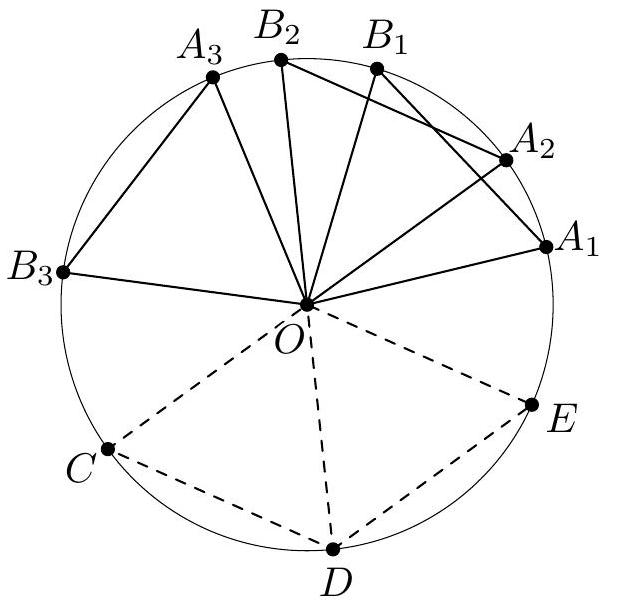 Figure 2 Comment (a). There are many ways to construct an example by placing equilateral triangles in a circle. Here we present one general method. Let $O$ be the center of a circle and let $A_{1}, B_{1}, \\ldots, A_{k}, B_{k}$ be distinct points on the circle such that the triangle $O A_{i} B_{i}$ is equilateral for each $i$. Then $\\mathcal{V}=\\left\\{O, A_{1}, B_{1}, \\ldots, A_{k}, B_{k}\\right\\}$ is balanced. To construct a set of even cardinality, put extra points $C, D, E$ on the circle such that triangles $O C D$ and $O D E$ are equilateral (see Figure 2). Then $\\mathcal{V}=\\left\\{O, A_{1}, B_{1}, \\ldots, A_{k}, B_{k}, C, D, E\\right\\}$ is balanced. Part (b). We now show that there exists a balanced, center-free set containing $n$ points for all odd $n \\geqslant 3$, and that one does not exist for any even $n \\geqslant 3$. If $n$ is odd, then let $\\mathcal{V}$ be the set of vertices of a regular $n$-gon. We have shown in part ( $a$ ) that $\\mathcal{V}$ is balanced. We claim that $\\mathcal{V}$ is also center-free. Indeed, if $P$ is a point such that $P A=P B=P C$ for some three distinct vertices $A, B$ and $C$, then $P$ is the circumcenter of the $n$-gon, which is not contained in $\\mathcal{V}$. Now suppose that $\\mathcal{V}$ is a balanced, center-free set of even cardinality $n$. We will derive a contradiction. For a pair of distinct points $A, B \\in \\mathcal{V}$, we say that a point $C \\in \\mathcal{V}$ is associated with the pair $\\{A, B\\}$ if $A C=B C$. Since there are $\\frac{n(n-1)}{2}$ pairs of points, there exists a point $P \\in \\mathcal{V}$ which is associated with at least $\\left\\lceil\\frac{n(n-1)}{2} / n\\right\\rceil=\\frac{n}{2}$ pairs. Note that none of these $\\frac{n}{2}$ pairs can contain $P$, so that the union of these $\\frac{n}{2}$ pairs consists of at most $n-1$ points. Hence there exist two such pairs that share a point. Let these two pairs be $\\{A, B\\}$ and $\\{A, C\\}$. Then $P A=P B=P C$, which is a contradiction. Comment (b). We can rephrase the argument in graph theoretic terms as follows. Let $\\mathcal{V}$ be a balanced, center-free set consisting of $n$ points. For any pair of distinct vertices $A, B \\in \\mathcal{V}$ and for any $C \\in \\mathcal{V}$ such that $A C=B C$, draw directed edges $A \\rightarrow C$ and $B \\rightarrow C$. Then all pairs of vertices generate altogether at least $n(n-1)$ directed edges; since the set is center-free, these edges are distinct. So we must obtain a graph in which any two vertices are connected in both directions. Now, each vertex has exactly $n-1$ incoming edges, which means that $n-1$ is even. Hence $n$ is odd.", "metadata": {"resource_path": "IMO_SL/segmented/en-IMO2015SL.jsonl"}} |
| {"year": "2015", "tier": "T0", "problem_label": "C3", "problem_type": "Combinatorics", "exam": "IMO-SL", "problem": "For a finite set $A$ of positive integers, we call a partition of $A$ into two disjoint nonempty subsets $A_{1}$ and $A_{2}$ good if the least common multiple of the elements in $A_{1}$ is equal to the greatest common divisor of the elements in $A_{2}$. Determine the minimum value of $n$ such that there exists a set of $n$ positive integers with exactly 2015 good partitions. (Ukraine)", "solution": "Let $A=\\left\\{a_{1}, a_{2}, \\ldots, a_{n}\\right\\}$, where $a_{1}<a_{2}<\\cdots<a_{n}$. For a finite nonempty set $B$ of positive integers, denote by $\\operatorname{lcm} B$ and $\\operatorname{gcd} B$ the least common multiple and the greatest common divisor of the elements in $B$, respectively. Consider any good partition $\\left(A_{1}, A_{2}\\right)$ of $A$. By definition, $\\operatorname{lcm} A_{1}=d=\\operatorname{gcd} A_{2}$ for some positive integer $d$. For any $a_{i} \\in A_{1}$ and $a_{j} \\in A_{2}$, we have $a_{i} \\leqslant d \\leqslant a_{j}$. Therefore, we have $A_{1}=\\left\\{a_{1}, a_{2}, \\ldots, a_{k}\\right\\}$ and $A_{2}=\\left\\{a_{k+1}, a_{k+2}, \\ldots, a_{n}\\right\\}$ for some $k$ with $1 \\leqslant k<n$. Hence, each good partition is determined by an element $a_{k}$, where $1 \\leqslant k<n$. We call such $a_{k}$ partitioning. It is convenient now to define $\\ell_{k}=\\operatorname{lcm}\\left(a_{1}, a_{2}, \\ldots, a_{k}\\right)$ and $g_{k}=\\operatorname{gcd}\\left(a_{k+1}, a_{k+2}, \\ldots, a_{n}\\right)$ for $1 \\leqslant k \\leqslant n-1$. So $a_{k}$ is partitioning exactly when $\\ell_{k}=g_{k}$. We proceed by proving some properties of partitioning elements, using the following claim. Claim. If $a_{k-1}$ and $a_{k}$ are partitioning where $2 \\leqslant k \\leqslant n-1$, then $g_{k-1}=g_{k}=a_{k}$. Proof. Assume that $a_{k-1}$ and $a_{k}$ are partitioning. Since $\\ell_{k-1}=g_{k-1}$, we have $\\ell_{k-1} \\mid a_{k}$. Therefore, $g_{k}=\\ell_{k}=\\operatorname{lcm}\\left(\\ell_{k-1}, a_{k}\\right)=a_{k}$, and $g_{k-1}=\\operatorname{gcd}\\left(a_{k}, g_{k}\\right)=a_{k}$, as desired.  Proof. Suppose, to the contrary, that all three numbers $a_{k-1}, a_{k}$, and $a_{k+1}$ are partitioning. The claim yields that $a_{k+1}=g_{k}=a_{k}$, a contradiction. Property 2. The elements $a_{1}$ and $a_{2}$ cannot be simultaneously partitioning. Also, $a_{n-2}$ and $\\overline{a_{n-1} \\text { cannot be simultaneously partitioning }}$ Proof. Assume that $a_{1}$ and $a_{2}$ are partitioning. By the claim, it follows that $a_{2}=g_{1}=\\ell_{1}=$ $\\operatorname{lcm}\\left(a_{1}\\right)=a_{1}$, a contradiction. Similarly, assume that $a_{n-2}$ and $a_{n-1}$ are partitioning. The claim yields that $a_{n-1}=g_{n-1}=$ $\\operatorname{gcd}\\left(a_{n}\\right)=a_{n}$, a contradiction. Now let $A$ be an $n$-element set with exactly 2015 good partitions. Clearly, we have $n \\geqslant 5$. Using Property 2, we find that there is at most one partitioning element in each of $\\left\\{a_{1}, a_{2}\\right\\}$ and $\\left\\{a_{n-2}, a_{n-1}\\right\\}$. By Property 1 , there are at least $\\left\\lfloor\\frac{n-5}{3}\\right\\rfloor$ non-partitioning elements in $\\left\\{a_{3}, a_{4}, \\ldots, a_{n-3}\\right\\}$. Therefore, there are at most $(n-1)-2-\\left\\lfloor\\frac{n-5}{3}\\right\\rfloor=\\left\\lceil\\frac{2(n-2)}{3}\\right\\rceil$ partitioning elements in $A$. Thus, $\\left\\lceil\\frac{2(n-2)}{3}\\right\\rceil \\geqslant 2015$, which implies that $n \\geqslant 3024$. Finally, we show that there exists a set of 3024 positive integers with exactly 2015 partitioning elements. Indeed, in the set $A=\\left\\{2 \\cdot 6^{i}, 3 \\cdot 6^{i}, 6^{i+1} \\mid 0 \\leqslant i \\leqslant 1007\\right\\}$, each element of the form $3 \\cdot 6^{i}$ or $6^{i}$, except $6^{1008}$, is partitioning. Therefore, the minimum possible value of $n$ is 3024 . Comment. Here we will work out the general case when 2015 is replaced by an arbitrary positive integer $m$. Note that the bound $\\left\\lceil\\frac{2(n-2)}{3}\\right\\rceil \\geqslant m$ obtained in the solution is, in fact, true for any positive integers $m$ and $n$. Using this bound, one can find that $n \\geqslant\\left\\lceil\\frac{3 m}{2}\\right\\rceil+1$. To show that the bound is sharp, one constructs a set of $\\left\\lceil\\frac{3 m}{2}\\right\\rceil+1$ elements with exactly $m$ good partitions. Indeed, the minimum is attained on the set $\\left\\{6^{i}, 2 \\cdot 6^{i}, 3 \\cdot 6^{i} \\mid 0 \\leqslant i \\leqslant t-1\\right\\} \\cup\\left\\{6^{t}\\right\\}$ for every even $m=2 t$, and $\\left\\{2 \\cdot 6^{i}, 3 \\cdot 6^{i}, 6^{i+1} \\mid 0 \\leqslant i \\leqslant t-1\\right\\}$ for every odd $m=2 t-1$.", "metadata": {"resource_path": "IMO_SL/segmented/en-IMO2015SL.jsonl"}} |
| {"year": "2015", "tier": "T0", "problem_label": "C4", "problem_type": "Combinatorics", "exam": "IMO-SL", "problem": "Let $n$ be a positive integer. Two players $A$ and $B$ play a game in which they take turns choosing positive integers $k \\leqslant n$. The rules of the game are: (i) A player cannot choose a number that has been chosen by either player on any previous turn. (ii) A player cannot choose a number consecutive to any of those the player has already chosen on any previous turn. (iii) The game is a draw if all numbers have been chosen; otherwise the player who cannot choose a number anymore loses the game. The player $A$ takes the first turn. Determine the outcome of the game, assuming that both players use optimal strategies. (Finland)", "solution": "For brevity, we denote by $[n]$ the set $\\{1,2, \\ldots, n\\}$. Firstly, we show that $B$ wins whenever $n \\neq 1,2,4,6$. For this purpose, we provide a strategy which guarantees that $B$ can always make a move after $A$ 's move, and also guarantees that the game does not end in a draw. We begin with an important observation. Lemma. Suppose that $B$ 's first pick is $n$ and that $A$ has made the $k^{\\text {th }}$ move where $k \\geqslant 2$. Then $B$ can also make the $k^{\\text {th }}$ move. Proof. Let $\\mathcal{S}$ be the set of the first $k$ numbers chosen by $A$. Since $\\mathcal{S}$ does not contain consecutive integers, we see that the set $[n] \\backslash \\mathcal{S}$ consists of $k$ \"contiguous components\" if $1 \\in \\mathcal{S}$, and $k+1$ components otherwise. Since $B$ has chosen only $k-1$ numbers, there is at least one component of $[n] \\backslash \\mathcal{S}$ consisting of numbers not yet picked by $B$. Hence, $B$ can choose a number from this component. We will now describe a winning strategy for $B$, when $n \\neq 1,2,4,6$. By symmetry, we may assume that $A$ 's first choice is a number not exceeding $\\frac{n+1}{2}$. So $B$ can pick the number $n$ in $B$ 's first turn. We now consider two cases. Case 1. $n$ is odd and $n \\geqslant 3$. The only way the game ends in a draw is that $A$ eventually picks all the odd numbers from the set $[n]$. However, $B$ has already chosen $n$, so this cannot happen. Thus $B$ can continue to apply the lemma until $A$ cannot make a move. Case 2. $n$ is even and $n \\geqslant 8$. Since $B$ has picked $n$, the game is a draw only if $A$ can eventually choose all the odd numbers from the set $[n-1]$. So $B$ picks a number from the set $\\{1,3,5, \\ldots, n-3\\}$ not already chosen by $A$, on $B$ 's second move. This is possible since the set consists of $\\frac{n-2}{2} \\geqslant 3$ numbers and $A$ has chosen only 2 numbers. Hereafter $B$ can apply the lemma until $A$ cannot make a move. Hence, in both cases $A$ loses. We are left with the cases $n=1,2,4,6$. The game is trivially a draw when $n=1,2$. When $n=4, A$ has to first pick 1 to avoid losing. Similarly, $B$ has to choose 4 as well. It then follows that the game ends in a draw. When $n=6, B$ gets at least a draw by the lemma or by using a mirror strategy. On the other hand, $A$ may also get at least a draw in the following way. In the first turn, $A$ chooses 1. After $B$ 's response by a number $b, A$ finds a neighbor $c$ of $b$ which differs from 1 and 2 , and reserves $c$ for $A$ 's third move. Now, clearly $A$ can make the second move by choosing a number different from $1,2, c-1, c, c+1$. Therefore $A$ will not lose. Comment 1. We present some explicit winning strategies for $B$. We start with the case $n$ is odd and $n \\geqslant 3 . B$ starts by picking $n$ in the first turn. On the $k^{\\text {th }}$ move for $k \\geqslant 2, B$ chooses the number exactly 1 less than $A$ 's $k^{\\text {th }}$ pick. The only special case is when $A$ 's $k^{\\text {th }}$ choice is 1 . In this situation, $A^{\\prime}$ 's first pick was a number $a>1$ and $B$ can respond by choosing $a-1$ on the $k^{\\text {th }}$ move instead. We now give an alternative winning strategy in the case $n$ is even and $n \\geqslant 8$. We first present a winning strategy for the case when $A$ 's first pick is 1 . We consider two cases depending on $A$ 's second move. Case 1. A's second pick is 3 . Then $B$ chooses $n-3$ on the second move. On the $k^{\\text {th }}$ move, $B$ chooses the number exactly 1 less than $A^{\\prime}$ 's $k^{\\text {th }}$ pick except that $B$ chooses 2 if $A$ 's $k^{\\text {th }}$ pick is $n-2$ or $n-1$. Case 2. A's second pick is $a>3$. Then $B$ chooses $a-2$ on the second move. Afterwards on the $k^{\\text {th }}$ move, $B$ picks the number exactly 1 less than $A^{\\text {'s }} k^{\\text {th }}$ pick. One may easily see that this strategy guarantees $B$ 's victory, when $A$ 's first pick is 1 . The following claim shows how to extend the strategy to the general case. Claim. Assume that $B$ has an explicit strategy leading to a victory after $A$ picks 1 on the first move. Then $B$ also has an explicit strategy leading to a victory after any first moves of $A$. Proof. Let $S$ be an optimal strategy of $B$ after $A$ picks 1 on the first move. Assume that $A$ picks some number $a>1$ on this move; we show how $B$ can make use of $S$ in order to win in this case. In parallel to the real play, $B$ starts an imaginary play. The positions in these plays differ by flipping the segment $[1, a]$; so, if a player chooses some number $x$ in the real play, then the same player chooses a number $x$ or $a+1-x$ in the imaginary play, depending on whether $x>a$ or $x \\leqslant a$. Thus $A$ 's first pick in the imaginary play is 1. Clearly, a number is chosen in the real play exactly if the corresponding number is chosen in the imaginary one. Next, if an unchosen number is neighboring to one chosen by $A$ in the imaginary play, then the corresponding number also has this property in the real play, so $A$ also cannot choose it. One can easily see that a similar statement with real and imaginary plays interchanged holds for $B$ instead of $A$. Thus, when $A$ makes some move in the real play, $B$ may imagine the corresponding legal move in the imaginary one. Then $B$ chooses the response according to $S$ in the imaginary game and makes the corresponding legal move in the real one. Acting so, $B$ wins the imaginary game, thus $B$ will also win the real one. Hence, $B$ has a winning strategy for all even $n$ greater or equal to 8 . Notice that the claim can also be used to simplify the argument when $n$ is odd. Comment 2. One may also employ symmetry when $n$ is odd. In particular, $B$ could use a mirror strategy. However, additional ideas are required to modify the strategy after $A$ picks $\\frac{n+1}{2}$.", "metadata": {"resource_path": "IMO_SL/segmented/en-IMO2015SL.jsonl"}} |
| {"year": "2015", "tier": "T0", "problem_label": "C5", "problem_type": "Combinatorics", "exam": "IMO-SL", "problem": "Consider an infinite sequence $a_{1}, a_{2}, \\ldots$ of positive integers with $a_{i} \\leqslant 2015$ for all $i \\geqslant 1$. Suppose that for any two distinct indices $i$ and $j$ we have $i+a_{i} \\neq j+a_{j}$. Prove that there exist two positive integers $b$ and $N$ such that $$ \\left|\\sum_{i=m+1}^{n}\\left(a_{i}-b\\right)\\right| \\leqslant 1007^{2} $$ whenever $n>m \\geqslant N$.", "solution": "We visualize the set of positive integers as a sequence of points. For each $n$ we draw an arrow emerging from $n$ that points to $n+a_{n}$; so the length of this arrow is $a_{n}$. Due to the condition that $m+a_{m} \\neq n+a_{n}$ for $m \\neq n$, each positive integer receives at most one arrow. There are some positive integers, such as 1 , that receive no arrows; these will be referred to as starting points in the sequel. When one starts at any of the starting points and keeps following the arrows, one is led to an infinite path, called its ray, that visits a strictly increasing sequence of positive integers. Since the length of any arrow is at most 2015, such a ray, say with starting point $s$, meets every interval of the form $[n, n+2014]$ with $n \\geqslant s$ at least once. Suppose for the sake of contradiction that there would be at least 2016 starting points. Then we could take an integer $n$ that is larger than the first 2016 starting points. But now the interval $[n, n+2014]$ must be met by at least 2016 rays in distinct points, which is absurd. We have thereby shown that the number $b$ of starting points satisfies $1 \\leqslant b \\leqslant 2015$. Let $N$ denote any integer that is larger than all starting points. We contend that $b$ and $N$ are as required. To see this, let any two integers $m$ and $n$ with $n>m \\geqslant N$ be given. The sum $\\sum_{i=m+1}^{n} a_{i}$ gives the total length of the arrows emerging from $m+1, \\ldots, n$. Taken together, these arrows form $b$ subpaths of our rays, some of which may be empty. Now on each ray we look at the first number that is larger than $m$; let $x_{1}, \\ldots, x_{b}$ denote these numbers, and let $y_{1}, \\ldots, y_{b}$ enumerate in corresponding order the numbers defined similarly with respect to $n$. Then the list of differences $y_{1}-x_{1}, \\ldots, y_{b}-x_{b}$ consists of the lengths of these paths and possibly some zeros corresponding to empty paths. Consequently, we obtain $$ \\sum_{i=m+1}^{n} a_{i}=\\sum_{j=1}^{b}\\left(y_{j}-x_{j}\\right) $$ whence $$ \\sum_{i=m+1}^{n}\\left(a_{i}-b\\right)=\\sum_{j=1}^{b}\\left(y_{j}-n\\right)-\\sum_{j=1}^{b}\\left(x_{j}-m\\right) . $$ Now each of the $b$ rays meets the interval $[m+1, m+2015]$ at some point and thus $x_{1}-$ $m, \\ldots, x_{b}-m$ are $b$ distinct members of the set $\\{1,2, \\ldots, 2015\\}$. Moreover, since $m+1$ is not a starting point, it must belong to some ray; so 1 has to appear among these numbers, wherefore $$ 1+\\sum_{j=1}^{b-1}(j+1) \\leqslant \\sum_{j=1}^{b}\\left(x_{j}-m\\right) \\leqslant 1+\\sum_{j=1}^{b-1}(2016-b+j) $$ The same argument applied to $n$ and $y_{1}, \\ldots, y_{b}$ yields $$ 1+\\sum_{j=1}^{b-1}(j+1) \\leqslant \\sum_{j=1}^{b}\\left(y_{j}-n\\right) \\leqslant 1+\\sum_{j=1}^{b-1}(2016-b+j) $$ So altogether we get $$ \\begin{aligned} \\left|\\sum_{i=m+1}^{n}\\left(a_{i}-b\\right)\\right| & \\leqslant \\sum_{j=1}^{b-1}((2016-b+j)-(j+1))=(b-1)(2015-b) \\\\ & \\leqslant\\left(\\frac{(b-1)+(2015-b)}{2}\\right)^{2}=1007^{2}, \\end{aligned} $$ as desired.", "metadata": {"resource_path": "IMO_SL/segmented/en-IMO2015SL.jsonl"}} |
| {"year": "2015", "tier": "T0", "problem_label": "C5", "problem_type": "Combinatorics", "exam": "IMO-SL", "problem": "Consider an infinite sequence $a_{1}, a_{2}, \\ldots$ of positive integers with $a_{i} \\leqslant 2015$ for all $i \\geqslant 1$. Suppose that for any two distinct indices $i$ and $j$ we have $i+a_{i} \\neq j+a_{j}$. Prove that there exist two positive integers $b$ and $N$ such that $$ \\left|\\sum_{i=m+1}^{n}\\left(a_{i}-b\\right)\\right| \\leqslant 1007^{2} $$ whenever $n>m \\geqslant N$.", "solution": "Set $s_{n}=n+a_{n}$ for all positive integers $n$. By our assumptions, we have $$ n+1 \\leqslant s_{n} \\leqslant n+2015 $$ for all $n \\in \\mathbb{Z}_{>0}$. The members of the sequence $s_{1}, s_{2}, \\ldots$ are distinct. We shall investigate the set $$ M=\\mathbb{Z}_{>0} \\backslash\\left\\{s_{1}, s_{2}, \\ldots\\right\\} $$ Claim. At most 2015 numbers belong to $M$. Proof. Otherwise let $m_{1}<m_{2}<\\cdots<m_{2016}$ be any 2016 distinct elements from $M$. For $n=m_{2016}$ we have $$ \\left\\{s_{1}, \\ldots, s_{n}\\right\\} \\cup\\left\\{m_{1}, \\ldots, m_{2016}\\right\\} \\subseteq\\{1,2, \\ldots, n+2015\\} $$ where on the left-hand side we have a disjoint union containing altogether $n+2016$ elements. But the set on the right-hand side has only $n+2015$ elements. This contradiction proves our claim. Now we work towards proving that the positive integers $b=|M|$ and $N=\\max (M)$ are as required. Recall that we have just shown $b \\leqslant 2015$. Let us consider any integer $r \\geqslant N$. As in the proof of the above claim, we see that $$ B_{r}=M \\cup\\left\\{s_{1}, \\ldots, s_{r}\\right\\} $$ is a subset of $[1, r+2015] \\cap \\mathbb{Z}$ with precisely $b+r$ elements. Due to the definitions of $M$ and $N$, we also know $[1, r+1] \\cap \\mathbb{Z} \\subseteq B_{r}$. It follows that there is a set $C_{r} \\subseteq\\{1,2, \\ldots, 2014\\}$ with $\\left|C_{r}\\right|=b-1$ and $$ B_{r}=([1, r+1] \\cap \\mathbb{Z}) \\cup\\left\\{r+1+x \\mid x \\in C_{r}\\right\\} $$ For any finite set of integers $J$ we denote the sum of its elements by $\\sum J$. Now the equations (1) and (2) give rise to two ways of computing $\\sum B_{r}$ and the comparison of both methods leads to $$ \\sum M+\\sum_{i=1}^{r} s_{i}=\\sum_{i=1}^{r} i+b(r+1)+\\sum C_{r} $$ or in other words to $$ \\sum M+\\sum_{i=1}^{r}\\left(a_{i}-b\\right)=b+\\sum C_{r} $$ After this preparation, we consider any two integers $m$ and $n$ with $n>m \\geqslant N$. Plugging $r=n$ and $r=m$ into (3) and subtracting the estimates that result, we deduce $$ \\sum_{i=m+1}^{n}\\left(a_{i}-b\\right)=\\sum C_{n}-\\sum C_{m} $$ Since $C_{n}$ and $C_{m}$ are subsets of $\\{1,2, \\ldots, 2014\\}$ with $\\left|C_{n}\\right|=\\left|C_{m}\\right|=b-1$, it is clear that the absolute value of the right-hand side of the above inequality attains its largest possible value if either $C_{m}=\\{1,2, \\ldots, b-1\\}$ and $C_{n}=\\{2016-b, \\ldots, 2014\\}$, or the other way around. In these two cases we have $$ \\left|\\sum C_{n}-\\sum C_{m}\\right|=(b-1)(2015-b) $$ so in the general case we find $$ \\left|\\sum_{i=m+1}^{n}\\left(a_{i}-b\\right)\\right| \\leqslant(b-1)(2015-b) \\leqslant\\left(\\frac{(b-1)+(2015-b)}{2}\\right)^{2}=1007^{2} $$ as desired. Comment. The sets $C_{n}$ may be visualized by means of the following process: Start with an empty blackboard. For $n \\geqslant 1$, the following happens during the $n^{\\text {th }}$ step. The number $a_{n}$ gets written on the blackboard, then all numbers currently on the blackboard are decreased by 1 , and finally all zeros that have arisen get swept away. It is not hard to see that the numbers present on the blackboard after $n$ steps are distinct and form the set $C_{n}$. Moreover, it is possible to complete a solution based on this idea.", "metadata": {"resource_path": "IMO_SL/segmented/en-IMO2015SL.jsonl"}} |
| {"year": "2015", "tier": "T0", "problem_label": "C6", "problem_type": "Combinatorics", "exam": "IMO-SL", "problem": "Let $S$ be a nonempty set of positive integers. We say that a positive integer $n$ is clean if it has a unique representation as a sum of an odd number of distinct elements from $S$. Prove that there exist infinitely many positive integers that are not clean.", "solution": "Define an odd (respectively, even) representation of $n$ to be a representation of $n$ as a sum of an odd (respectively, even) number of distinct elements of $S$. Let $\\mathbb{Z}_{>0}$ denote the set of all positive integers. Suppose, to the contrary, that there exist only finitely many positive integers that are not clean. Therefore, there exists a positive integer $N$ such that every integer $n>N$ has exactly one odd representation. Clearly, $S$ is infinite. We now claim the following properties of odd and even representations. $\\underline{P r o p e r t y}$ 1. Any positive integer $n$ has at most one odd and at most one even representation. Proof. We first show that every integer $n$ has at most one even representation. Since $S$ is infinite, there exists $x \\in S$ such that $x>\\max \\{n, N\\}$. Then, the number $n+x$ must be clean, and $x$ does not appear in any even representation of $n$. If $n$ has more than one even representation, then we obtain two distinct odd representations of $n+x$ by adding $x$ to the even representations of $n$, which is impossible. Therefore, $n$ can have at most one even representation. Similarly, there exist two distinct elements $y, z \\in S$ such that $y, z>\\max \\{n, N\\}$. If $n$ has more than one odd representation, then we obtain two distinct odd representations of $n+y+z$ by adding $y$ and $z$ to the odd representations of $n$. This is again a contradiction. Property 2. Fix $s \\in S$. Suppose that a number $n>N$ has no even representation. Then $n+2 a s$ has an even representation containing $s$ for all integers $a \\geqslant 1$. Proof. It is sufficient to prove the following statement: If $n$ has no even representation without $s$, then $n+2 s$ has an even representation containing $s$ (and hence no even representation without $s$ by Property 1). Notice that the odd representation of $n+s$ does not contain $s$; otherwise, we have an even representation of $n$ without $s$. Then, adding $s$ to this odd representation of $n+s$, we get that $n+2 s$ has an even representation containing $s$, as desired. Property 3. Every sufficiently large integer has an even representation. Proof. Fix any $s \\in S$, and let $r$ be an arbitrary element in $\\{1,2, \\ldots, 2 s\\}$. Then, Property 2 implies that the set $Z_{r}=\\{r+2 a s: a \\geqslant 0\\}$ contains at most one number exceeding $N$ with no even representation. Therefore, $Z_{r}$ contains finitely many positive integers with no even representation, and so does $\\mathbb{Z}_{>0}=\\bigcup_{r=1}^{2 s} Z_{r}$. In view of Properties 1 and 3 , we may assume that $N$ is chosen such that every $n>N$ has exactly one odd and exactly one even representation. In particular, each element $s>N$ of $S$ has an even representation. Property 4. For any $s, t \\in S$ with $N<s<t$, the even representation of $t$ contains $s$. Proof. Suppose the contrary. Then, $s+t$ has at least two odd representations: one obtained by adding $s$ to the even representation of $t$ and one obtained by adding $t$ to the even representation of $s$. Since the latter does not contain $s$, these two odd representations of $s+t$ are distinct, a contradiction. Let $s_{1}<s_{2}<\\cdots$ be all the elements of $S$, and set $\\sigma_{n}=\\sum_{i=1}^{n} s_{i}$ for each nonnegative integer $n$. Fix an integer $k$ such that $s_{k}>N$. Then, Property 4 implies that for every $i>k$ the even representation of $s_{i}$ contains all the numbers $s_{k}, s_{k+1}, \\ldots, s_{i-1}$. Therefore, $$ s_{i}=s_{k}+s_{k+1}+\\cdots+s_{i-1}+R_{i}=\\sigma_{i-1}-\\sigma_{k-1}+R_{i} $$ where $R_{i}$ is a sum of some of $s_{1}, \\ldots, s_{k-1}$. In particular, $0 \\leqslant R_{i} \\leqslant s_{1}+\\cdots+s_{k-1}=\\sigma_{k-1}$. Let $j_{0}$ be an integer satisfying $j_{0}>k$ and $\\sigma_{j_{0}}>2 \\sigma_{k-1}$. Then (1) shows that, for every $j>j_{0}$, $$ s_{j+1} \\geqslant \\sigma_{j}-\\sigma_{k-1}>\\sigma_{j} / 2 . $$ Next, let $p>j_{0}$ be an index such that $R_{p}=\\min _{i>j_{0}} R_{i}$. Then, $$ s_{p+1}=s_{k}+s_{k+1}+\\cdots+s_{p}+R_{p+1}=\\left(s_{p}-R_{p}\\right)+s_{p}+R_{p+1} \\geqslant 2 s_{p} $$ Therefore, there is no element of $S$ larger than $s_{p}$ but smaller than $2 s_{p}$. It follows that the even representation $\\tau$ of $2 s_{p}$ does not contain any element larger than $s_{p}$. On the other hand, inequality (2) yields $2 s_{p}>s_{1}+\\cdots+s_{p-1}$, so $\\tau$ must contain a term larger than $s_{p-1}$. Thus, it must contain $s_{p}$. After removing $s_{p}$ from $\\tau$, we have that $s_{p}$ has an odd representation not containing $s_{p}$, which contradicts Property 1 since $s_{p}$ itself also forms an odd representation of $s_{p}$.", "metadata": {"resource_path": "IMO_SL/segmented/en-IMO2015SL.jsonl"}} |
| {"year": "2015", "tier": "T0", "problem_label": "C6", "problem_type": "Combinatorics", "exam": "IMO-SL", "problem": "Let $S$ be a nonempty set of positive integers. We say that a positive integer $n$ is clean if it has a unique representation as a sum of an odd number of distinct elements from $S$. Prove that there exist infinitely many positive integers that are not clean.", "solution": "We will also use Property 1 from We first define some terminology and notations used in this solution. Let $\\mathbb{Z}_{\\geqslant 0}$ denote the set of all nonnegative integers. All sums mentioned are regarded as sums of distinct elements of $S$. Moreover, a sum is called even or odd depending on the parity of the number of terms in it. All closed or open intervals refer to sets of all integers inside them, e.g., $[a, b]=\\{x \\in \\mathbb{Z}: a \\leqslant x \\leqslant b\\}$. Again, let $s_{1}<s_{2}<\\cdots$ be all elements of $S$, and denote $\\sigma_{n}=\\sum_{i=1}^{n} s_{i}$ for each positive integer $n$. Let $O_{n}$ (respectively, $E_{n}$ ) be the set of numbers representable as an odd (respectively, even) sum of elements of $\\left\\{s_{1}, \\ldots, s_{n}\\right\\}$. Set $E=\\bigcup_{n=1}^{\\infty} E_{n}$ and $O=\\bigcup_{n=1}^{\\infty} O_{n}$. We assume that $0 \\in E_{n}$ since 0 is representable as a sum of 0 terms. We now proceed to our proof. Assume, to the contrary, that there exist only finitely many positive integers that are not clean and denote the number of non-clean positive integers by $m-1$. Clearly, $S$ is infinite. By Property 1 from Solution 1 , every positive integer $n$ has at most one odd and at most one even representation. Step 1. We estimate $s_{n+1}$ and $\\sigma_{n+1}$. Upper bounds: Property 1 yields $\\left|O_{n}\\right|=\\left|E_{n}\\right|=2^{n-1}$, so $\\left|\\left[1,2^{n-1}+m\\right] \\backslash O_{n}\\right| \\geqslant m$. Hence, there exists a clean integer $x_{n} \\in\\left[1,2^{n-1}+m\\right] \\backslash O_{n}$. The definition of $O_{n}$ then yields that the odd representation of $x_{n}$ contains a term larger than $s_{n}$. Therefore, $s_{n+1} \\leqslant x_{n} \\leqslant 2^{n-1}+m$ for every positive integer $n$. Moreover, since $s_{1}$ is the smallest clean number, we get $\\sigma_{1}=s_{1} \\leqslant m$. Then, $$ \\sigma_{n+1}=\\sum_{i=2}^{n+1} s_{i}+s_{1} \\leqslant \\sum_{i=2}^{n+1}\\left(2^{i-2}+m\\right)+m=2^{n}-1+(n+1) m $$ for every positive integer $n$. Notice that this estimate also holds for $n=0$. Lower bounds: Since $O_{n+1} \\subseteq\\left[1, \\sigma_{n+1}\\right]$, we have $\\sigma_{n+1} \\geqslant\\left|O_{n+1}\\right|=2^{n}$ for all positive integers $n$. Then, $$ s_{n+1}=\\sigma_{n+1}-\\sigma_{n} \\geqslant 2^{n}-\\left(2^{n-1}-1+n m\\right)=2^{n-1}+1-n m $$ for every positive integer $n$. Combining the above inequalities, we have $$ 2^{n-1}+1-n m \\leqslant s_{n+1} \\leqslant 2^{n-1}+m \\quad \\text { and } \\quad 2^{n} \\leqslant \\sigma_{n+1} \\leqslant 2^{n}-1+(n+1) m $$ for every positive integer $n$. Step 2. We prove Property 3 from Solution 1. For every integer $x$ and set of integers $Y$, define $x \\pm Y=\\{x \\pm y: y \\in Y\\}$. In view of Property 1, we get $$ E_{n+1}=E_{n} \\sqcup\\left(s_{n+1}+O_{n}\\right) \\quad \\text { and } \\quad O_{n+1}=O_{n} \\sqcup\\left(s_{n+1}+E_{n}\\right), $$ where $\\sqcup$ denotes the disjoint union operator. Notice also that $s_{n+2} \\geqslant 2^{n}+1-(n+1) m>$ $2^{n-1}-1+n m \\geqslant \\sigma_{n}$ for every sufficiently large $n$. We now claim the following. Claim 1. $\\left(\\sigma_{n}-s_{n+1}, s_{n+2}-s_{n+1}\\right) \\subseteq E_{n}$ for every sufficiently large $n$. Proof. For sufficiently large $n$, all elements of $\\left(\\sigma_{n}, s_{n+2}\\right)$ are clean. Clearly, the elements of $\\left(\\sigma_{n}, s_{n+2}\\right)$ can be in neither $O_{n}$ nor $O \\backslash O_{n+1}$. So, $\\left(\\sigma_{n}, s_{n+2}\\right) \\subseteq O_{n+1} \\backslash O_{n}=s_{n+1}+E_{n}$, which yields the claim. Now, Claim 1 together with inequalities (3) implies that, for all sufficiently large $n$, $$ E \\supseteq E_{n} \\supseteq\\left(\\sigma_{n}-s_{n+1}, s_{n+2}-s_{n+1}\\right) \\supseteq\\left(2 n m, 2^{n-1}-(n+2) m\\right) . $$ This easily yields that $\\mathbb{Z}_{\\geqslant 0} \\backslash E$ is also finite. Since $\\mathbb{Z}_{\\geqslant 0} \\backslash O$ is also finite, by Property 1 , there exists a positive integer $N$ such that every integer $n>N$ has exactly one even and one odd representation. Step 3. We investigate the structures of $E_{n}$ and $O_{n}$. Suppose that $z \\in E_{2 n}$. Since $z$ can be represented as an even sum using $\\left\\{s_{1}, s_{2}, \\ldots, s_{2 n}\\right\\}$, so can its complement $\\sigma_{2 n}-z$. Thus, we get $E_{2 n}=\\sigma_{2 n}-E_{2 n}$. Similarly, we have $$ E_{2 n}=\\sigma_{2 n}-E_{2 n}, \\quad O_{2 n}=\\sigma_{2 n}-O_{2 n}, \\quad E_{2 n+1}=\\sigma_{2 n+1}-O_{2 n+1}, \\quad O_{2 n+1}=\\sigma_{2 n+1}-E_{2 n+1} $$ Claim 2. For every sufficiently large $n$, we have $$ \\left[0, \\sigma_{n}\\right] \\supseteq O_{n} \\supseteq\\left(N, \\sigma_{n}-N\\right) \\quad \\text { and } \\quad\\left[0, \\sigma_{n}\\right] \\supseteq E_{n} \\supseteq\\left(N, \\sigma_{n}-N\\right) $$ Proof. Clearly $O_{n}, E_{n} \\subseteq\\left[0, \\sigma_{n}\\right]$ for every positive integer $n$. We now prove $O_{n}, E_{n} \\supseteq\\left(N, \\sigma_{n}-N\\right)$. Taking $n$ sufficiently large, we may assume that $s_{n+1} \\geqslant 2^{n-1}+1-n m>\\frac{1}{2}\\left(2^{n-1}-1+n m\\right) \\geqslant \\sigma_{n} / 2$. Therefore, the odd representation of every element of ( $\\left.N, \\sigma_{n} / 2\\right]$ cannot contain a term larger than $s_{n}$. Thus, $\\left(N, \\sigma_{n} / 2\\right] \\subseteq O_{n}$. Similarly, since $s_{n+1}+s_{1}>\\sigma_{n} / 2$, we also have $\\left(N, \\sigma_{n} / 2\\right] \\subseteq E_{n}$. Equations (4) then yield that, for sufficiently large $n$, the interval $\\left(N, \\sigma_{n}-N\\right)$ is a subset of both $O_{n}$ and $E_{n}$, as desired. Step 4. We obtain a final contradiction. Notice that $0 \\in \\mathbb{Z}_{\\geqslant 0} \\backslash O$ and $1 \\in \\mathbb{Z}_{\\geqslant 0} \\backslash E$. Therefore, the sets $\\mathbb{Z}_{\\geqslant 0} \\backslash O$ and $\\mathbb{Z}_{\\geqslant 0} \\backslash E$ are nonempty. Denote $o=\\max \\left(\\mathbb{Z}_{\\geqslant 0} \\backslash O\\right)$ and $e=\\max \\left(\\mathbb{Z}_{\\geqslant 0} \\backslash E\\right)$. Observe also that $e, o \\leqslant N$. Taking $k$ sufficiently large, we may assume that $\\sigma_{2 k}>2 N$ and that Claim 2 holds for all $n \\geqslant 2 k$. Due to (4) and Claim 2, we have that $\\sigma_{2 k}-e$ is the minimal number greater than $N$ which is not in $E_{2 k}$, i.e., $\\sigma_{2 k}-e=s_{2 k+1}+s_{1}$. Similarly, $$ \\sigma_{2 k}-o=s_{2 k+1}, \\quad \\sigma_{2 k+1}-e=s_{2 k+2}, \\quad \\text { and } \\quad \\sigma_{2 k+1}-o=s_{2 k+2}+s_{1} $$ Therefore, we have $$ \\begin{aligned} s_{1} & =\\left(s_{2 k+1}+s_{1}\\right)-s_{2 k+1}=\\left(\\sigma_{2 k}-e\\right)-\\left(\\sigma_{2 k}-o\\right)=o-e \\\\ & =\\left(\\sigma_{2 k+1}-e\\right)-\\left(\\sigma_{2 k+1}-o\\right)=s_{2 k+2}-\\left(s_{2 k+2}+s_{1}\\right)=-s_{1} \\end{aligned} $$ which is impossible since $s_{1}>0$.", "metadata": {"resource_path": "IMO_SL/segmented/en-IMO2015SL.jsonl"}} |
| {"year": "2015", "tier": "T0", "problem_label": "C7", "problem_type": "Combinatorics", "exam": "IMO-SL", "problem": "In a company of people some pairs are enemies. A group of people is called unsociable if the number of members in the group is odd and at least 3 , and it is possible to arrange all its members around a round table so that every two neighbors are enemies. Given that there are at most 2015 unsociable groups, prove that it is possible to partition the company into 11 parts so that no two enemies are in the same part.", "solution": "Let $G=(V, E)$ be a graph where $V$ is the set of people in the company and $E$ is the set of the enemy pairs - the edges of the graph. In this language, partitioning into 11 disjoint enemy-free subsets means properly coloring the vertices of this graph with 11 colors. We will prove the following more general statement. Claim. Let $G$ be a graph with chromatic number $k \\geqslant 3$. Then $G$ contains at least $2^{k-1}-k$ unsociable groups. Recall that the chromatic number of $G$ is the least $k$ such that a proper coloring $$ V=V_{1} \\sqcup \\cdots \\sqcup V_{k} $$ exists. In view of $2^{11}-12>2015$, the claim implies the problem statement. Let $G$ be a graph with chromatic number $k$. We say that a proper coloring (1) of $G$ is leximinimal, if the $k$-tuple $\\left(\\left|V_{1}\\right|,\\left|V_{2}\\right|, \\ldots,\\left|V_{k}\\right|\\right)$ is lexicographically minimal; in other words, the following conditions are satisfied: the number $n_{1}=\\left|V_{1}\\right|$ is minimal; the number $n_{2}=\\left|V_{2}\\right|$ is minimal, subject to the previously chosen value of $n_{1} ; \\ldots$; the number $n_{k-1}=\\left|V_{k-1}\\right|$ is minimal, subject to the previously chosen values of $n_{1}, \\ldots, n_{k-2}$. The following lemma is the core of the proof. Lemma 1. Suppose that $G=(V, E)$ is a graph with odd chromatic number $k \\geqslant 3$, and let (1) be one of its leximinimal colorings. Then $G$ contains an odd cycle which visits all color classes $V_{1}, V_{2}, \\ldots, V_{k}$. Proof of Lemma 1. Let us call a cycle colorful if it visits all color classes. Due to the definition of the chromatic number, $V_{1}$ is nonempty. Choose an arbitrary vertex $v \\in V_{1}$. We construct a colorful odd cycle that has only one vertex in $V_{1}$, and this vertex is $v$. We draw a subgraph of $G$ as follows. Place $v$ in the center, and arrange the sets $V_{2}, V_{3}, \\ldots, V_{k}$ in counterclockwise circular order around it. For convenience, let $V_{k+1}=V_{2}$. We will draw arrows to add direction to some edges of $G$, and mark the vertices these arrows point to. First we draw arrows from $v$ to all its neighbors in $V_{2}$, and mark all those neighbors. If some vertex $u \\in V_{i}$ with $i \\in\\{2,3, \\ldots, k\\}$ is already marked, we draw arrows from $u$ to all its neighbors in $V_{i+1}$ which are not marked yet, and we mark all of them. We proceed doing this as long as it is possible. The process of marking is exemplified in Figure 1. Notice that by the rules of our process, in the final state, marked vertices in $V_{i}$ cannot have unmarked neighbors in $V_{i+1}$. Moreover, $v$ is connected to all marked vertices by directed paths. Now move each marked vertex to the next color class in circular order (see an example in Figure 3). In view of the arguments above, the obtained coloring $V_{1} \\sqcup W_{2} \\sqcup \\cdots \\sqcup W_{k}$ is proper. Notice that $v$ has a neighbor $w \\in W_{2}$, because otherwise $$ \\left(V_{1} \\backslash\\{v\\}\\right) \\sqcup\\left(W_{2} \\cup\\{v\\}\\right) \\sqcup W_{3} \\sqcup \\cdots \\sqcup W_{k} $$ would be a proper coloring lexicographically smaller than (1). If $w$ was unmarked, i.e., $w$ was an element of $V_{2}$, then it would be marked at the beginning of the process and thus moved to $V_{3}$, which did not happen. Therefore, $w$ is marked and $w \\in V_{k}$. 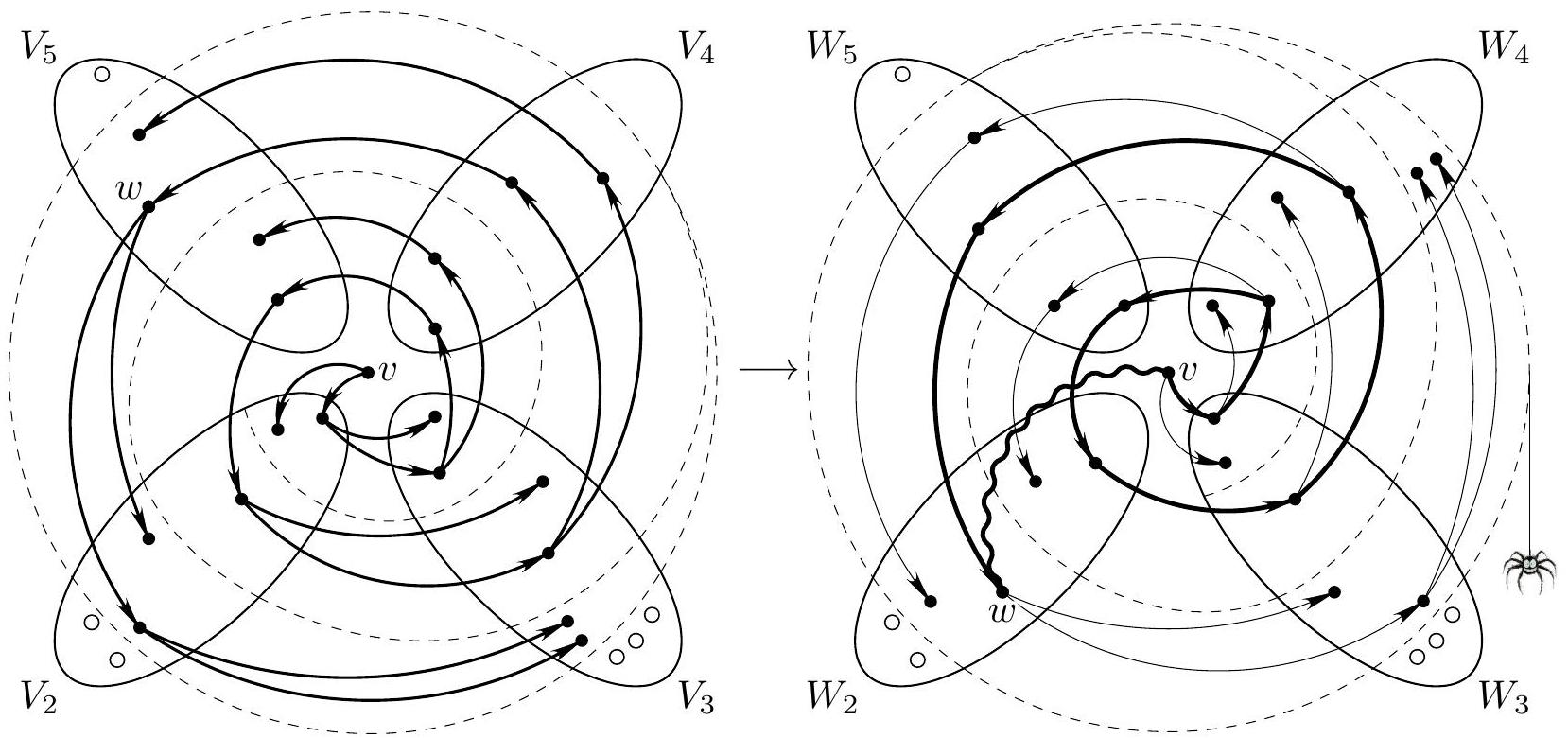 Figure 1 Figure 2 Since $w$ is marked, there exists a directed path from $v$ to $w$. This path moves through the sets $V_{2}, \\ldots, V_{k}$ in circular order, so the number of edges in it is divisible by $k-1$ and thus even. Closing this path by the edge $w \\rightarrow v$, we get a colorful odd cycle, as required. Proof of the claim. Let us choose a leximinimal coloring (1) of $G$. For every set $C \\subseteq\\{1,2, \\ldots, k\\}$ such that $|C|$ is odd and greater than 1 , we will provide an odd cycle visiting exactly those color classes whose indices are listed in the set $C$. This property ensures that we have different cycles for different choices of $C$, and it proves the claim because there are $2^{k-1}-k$ choices for the set $C$. Let $V_{C}=\\bigcup_{c \\in C} V_{c}$, and let $G_{C}$ be the induced subgraph of $G$ on the vertex set $V_{C}$. We also have the induced coloring of $V_{C}$ with $|C|$ colors; this coloring is of course proper. Notice further that the induced coloring is leximinimal: if we had a lexicographically smaller coloring $\\left(W_{c}\\right)_{c \\in C}$ of $G_{C}$, then these classes, together the original color classes $V_{i}$ for $i \\notin C$, would provide a proper coloring which is lexicographically smaller than (1). Hence Lemma 1, applied to the subgraph $G_{C}$ and its leximinimal coloring $\\left(V_{c}\\right)_{c \\in C}$, provides an odd cycle that visits exactly those color classes that are listed in the set $C$.", "metadata": {"resource_path": "IMO_SL/segmented/en-IMO2015SL.jsonl"}} |
| {"year": "2015", "tier": "T0", "problem_label": "C7", "problem_type": "Combinatorics", "exam": "IMO-SL", "problem": "In a company of people some pairs are enemies. A group of people is called unsociable if the number of members in the group is odd and at least 3 , and it is possible to arrange all its members around a round table so that every two neighbors are enemies. Given that there are at most 2015 unsociable groups, prove that it is possible to partition the company into 11 parts so that no two enemies are in the same part.", "solution": "We provide a different proof of the claim from the previous solution. We say that a graph is critical if deleting any vertex from the graph decreases the graph's chromatic number. Obviously every graph contains a critical induced subgraph with the same chromatic number. Lemma 2. Suppose that $G=(V, E)$ is a critical graph with chromatic number $k \\geqslant 3$. Then every vertex $v$ of $G$ is contained in at least $2^{k-2}-1$ unsociable groups. Proof. For every set $X \\subseteq V$, denote by $n(X)$ the number of neighbors of $v$ in the set $X$. Since $G$ is critical, there exists a proper coloring of $G \\backslash\\{v\\}$ with $k-1$ colors, so there exists a proper coloring $V=V_{1} \\sqcup V_{2} \\sqcup \\cdots \\sqcup V_{k}$ of $G$ such that $V_{1}=\\{v\\}$. Among such colorings, take one for which the sequence $\\left(n\\left(V_{2}\\right), n\\left(V_{3}\\right), \\ldots, n\\left(V_{k}\\right)\\right)$ is lexicographically minimal. Clearly, $n\\left(V_{i}\\right)>0$ for every $i=2,3, \\ldots, k$; otherwise $V_{2} \\sqcup \\ldots \\sqcup V_{i-1} \\sqcup\\left(V_{i} \\cup V_{1}\\right) \\sqcup V_{i+1} \\sqcup \\ldots V_{k}$ would be a proper coloring of $G$ with $k-1$ colors. We claim that for every $C \\subseteq\\{2,3, \\ldots, k\\}$ with $|C| \\geqslant 2$ being even, $G$ contains an unsociable group so that the set of its members' colors is precisely $C \\cup\\{1\\}$. Since the number of such sets $C$ is $2^{k-2}-1$, this proves the lemma. Denote the elements of $C$ by $c_{1}, \\ldots, c_{2 \\ell}$ in increasing order. For brevity, let $U_{i}=V_{c_{i}}$. Denote by $N_{i}$ the set of neighbors of $v$ in $U_{i}$. We show that for every $i=1, \\ldots, 2 \\ell-1$ and $x \\in N_{i}$, the subgraph induced by $U_{i} \\cup U_{i+1}$ contains a path that connects $x$ with another point in $N_{i+1}$. For the sake of contradiction, suppose that no such path exists. Let $S$ be the set of vertices that lie in the connected component of $x$ in the subgraph induced by $U_{i} \\cup U_{i+1}$, and let $P=U_{i} \\cap S$, and $Q=U_{i+1} \\cap S$ (see Figure 3). Since $x$ is separated from $N_{i+1}$, the sets $Q$ and $N_{i+1}$ are disjoint. So, if we re-color $G$ by replacing $U_{i}$ and $U_{i+1}$ by $\\left(U_{i} \\cup Q\\right) \\backslash P$ and $\\left(U_{i+1} \\cup P\\right) \\backslash Q$, respectively, we obtain a proper coloring such that $n\\left(U_{i}\\right)=n\\left(V_{c_{i}}\\right)$ is decreased and only $n\\left(U_{i+1}\\right)=n\\left(V_{c_{i+1}}\\right)$ is increased. That contradicts the lexicographical minimality of $\\left(n\\left(V_{2}\\right), n\\left(V_{3}\\right), \\ldots, n\\left(V_{k}\\right)\\right)$. 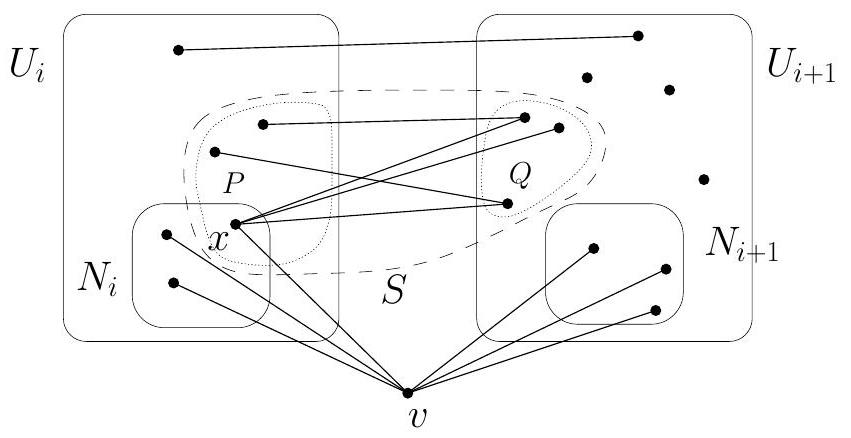 Figure 3 Next, we build a path through $U_{1}, U_{2}, \\ldots, U_{2 \\ell}$ as follows. Let the starting point of the path be an arbitrary vertex $v_{1}$ in the set $N_{1}$. For $i \\leqslant 2 \\ell-1$, if the vertex $v_{i} \\in N_{i}$ is already defined, connect $v_{i}$ to some vertex in $N_{i+1}$ in the subgraph induced by $U_{i} \\cup U_{i+1}$, and add these edges to the path. Denote the new endpoint of the path by $v_{i+1}$; by the construction we have $v_{i+1} \\in N_{i+1}$ again, so the process can be continued. At the end we have a path that starts at $v_{1} \\in N_{1}$ and ends at some $v_{2 \\ell} \\in N_{2 \\ell}$. Moreover, all edges in this path connect vertices in neighboring classes: if a vertex of the path lies in $U_{i}$, then the next vertex lies in $U_{i+1}$ or $U_{i-1}$. Notice that the path is not necessary simple, so take a minimal subpath of it. The minimal subpath is simple and connects the same endpoints $v_{1}$ and $v_{2 \\ell}$. The property that every edge steps to a neighboring color class (i.e., from $U_{i}$ to $U_{i+1}$ or $U_{i-1}$ ) is preserved. So the resulting path also visits all of $U_{1}, \\ldots, U_{2 \\ell}$, and its length must be odd. Closing the path with the edges $v v_{1}$ and $v_{2 \\ell} v$ we obtain the desired odd cycle (see Figure 4). 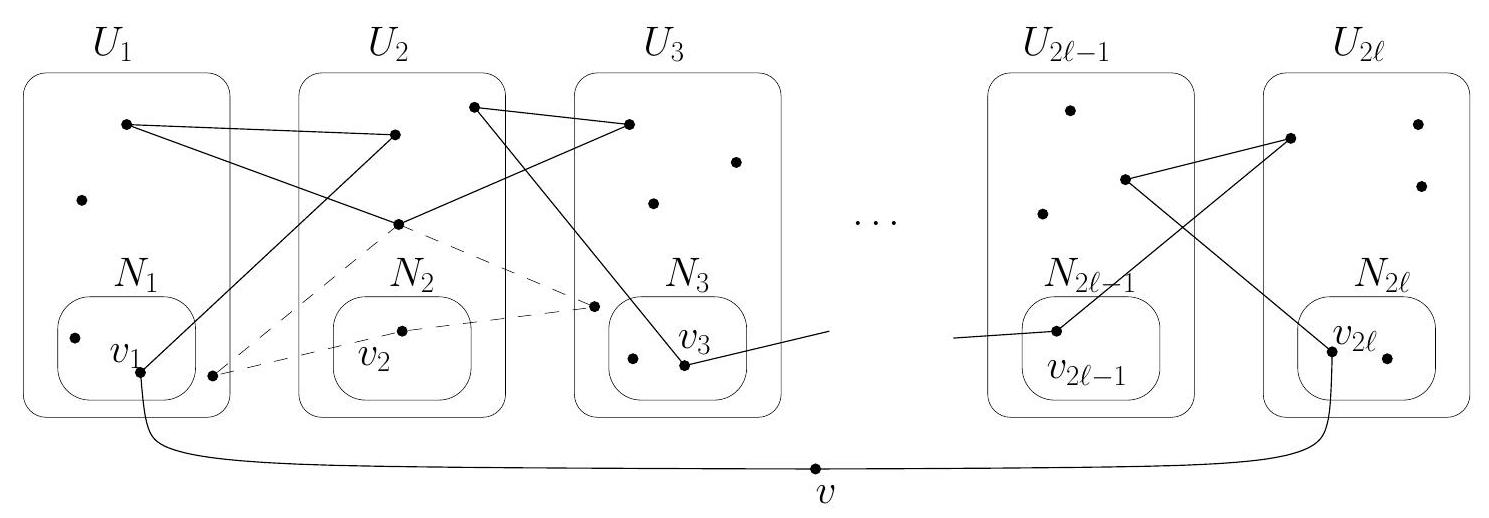 Figure 4 Now we prove the claim by induction on $k \\geqslant 3$. The base case $k=3$ holds by applying Lemma 2 to a critical subgraph. For the induction step, let $G_{0}$ be a critical $k$-chromatic subgraph of $G$, and let $v$ be an arbitrary vertex of $G_{0}$. By Lemma 2, $G_{0}$ has at least $2^{k-2}-1$ unsociable groups containing $v$. On the other hand, the graph $G_{0} \\backslash\\{v\\}$ has chromatic number $k-1$, so it contains at least $2^{k-2}-(k-1)$ unsociable groups by the induction hypothesis. Altogether, this gives $2^{k-2}-1+2^{k-2}-(k-1)=2^{k-1}-k$ distinct unsociable groups in $G_{0}$ (and thus in $G$ ). Comment 1. The claim we proved is sharp. The complete graph with $k$ vertices has chromatic number $k$ and contains exactly $2^{k-1}-k$ unsociable groups. Comment 2. The proof of Lemma 2 works for odd values of $|C| \\geqslant 3$ as well. Hence, the second solution shows the analogous statement that the number of even sized unsociable groups is at least $2^{k}-1-\\binom{k}{2}$.", "metadata": {"resource_path": "IMO_SL/segmented/en-IMO2015SL.jsonl"}} |
| {"year": "2015", "tier": "T0", "problem_label": "G1", "problem_type": "Geometry", "exam": "IMO-SL", "problem": "Let $A B C$ be an acute triangle with orthocenter $H$. Let $G$ be the point such that the quadrilateral $A B G H$ is a parallelogram. Let $I$ be the point on the line $G H$ such that $A C$ bisects $H I$. Suppose that the line $A C$ intersects the circumcircle of the triangle $G C I$ at $C$ and $J$. Prove that $I J=A H$. (Australia)", "solution": "Since $H G \\| A B$ and $B G \\| A H$, we have $B G \\perp B C$ and $C H \\perp G H$. Therefore, the quadrilateral $B G C H$ is cyclic. Since $H$ is the orthocenter of the triangle $A B C$, we have $\\angle H A C=90^{\\circ}-\\angle A C B=\\angle C B H$. Using that $B G C H$ and $C G J I$ are cyclic quadrilaterals, we get $$ \\angle C J I=\\angle C G H=\\angle C B H=\\angle H A C . $$ Let $M$ be the intersection of $A C$ and $G H$, and let $D \\neq A$ be the point on the line $A C$ such that $A H=H D$. Then $\\angle M J I=\\angle H A C=\\angle M D H$. Since $\\angle M J I=\\angle M D H, \\angle I M J=\\angle H M D$, and $I M=M H$, the triangles $I M J$ and $H M D$ are congruent, and thus $I J=H D=A H$. 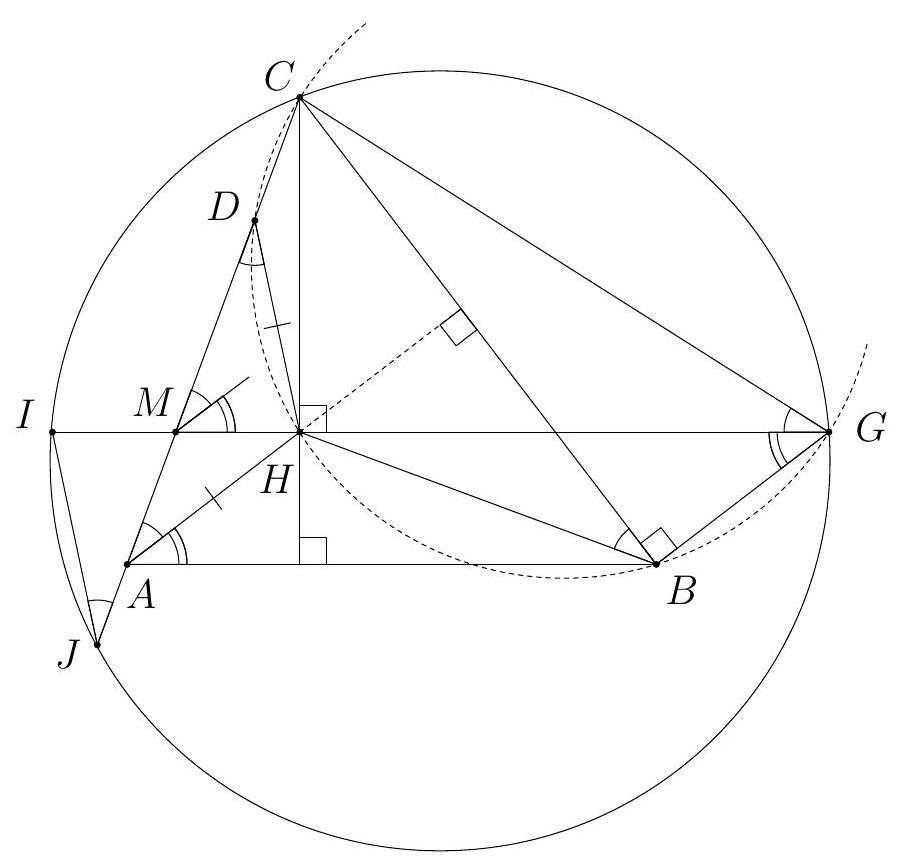 Comment. Instead of introducing the point $D$, one can complete the solution by using the law of sines in the triangles $I J M$ and $A M H$, yielding $$ \\frac{I J}{I M}=\\frac{\\sin \\angle I M J}{\\sin \\angle M J I}=\\frac{\\sin \\angle A M H}{\\sin \\angle H A M}=\\frac{A H}{M H}=\\frac{A H}{I M} . $$", "metadata": {"resource_path": "IMO_SL/segmented/en-IMO2015SL.jsonl"}} |
| {"year": "2015", "tier": "T0", "problem_label": "G1", "problem_type": "Geometry", "exam": "IMO-SL", "problem": "Let $A B C$ be an acute triangle with orthocenter $H$. Let $G$ be the point such that the quadrilateral $A B G H$ is a parallelogram. Let $I$ be the point on the line $G H$ such that $A C$ bisects $H I$. Suppose that the line $A C$ intersects the circumcircle of the triangle $G C I$ at $C$ and $J$. Prove that $I J=A H$. (Australia)", "solution": "Obtain $\\angle C G H=\\angle H A C$ as in the previous solution. In the parallelogram $A B G H$ we have $\\angle B A H=\\angle H G B$. It follows that $$ \\angle H M C=\\angle B A C=\\angle B A H+\\angle H A C=\\angle H G B+\\angle C G H=\\angle C G B . $$ So the right triangles $C M H$ and $C G B$ are similar. Also, in the circumcircle of triangle $G C I$ we have similar triangles $M I J$ and $M C G$. Therefore, $$ \\frac{I J}{C G}=\\frac{M I}{M C}=\\frac{M H}{M C}=\\frac{G B}{G C}=\\frac{A H}{C G} $$ Hence $I J=A H$.", "metadata": {"resource_path": "IMO_SL/segmented/en-IMO2015SL.jsonl"}} |
| {"year": "2015", "tier": "T0", "problem_label": "G2", "problem_type": "Geometry", "exam": "IMO-SL", "problem": "Let $A B C$ be a triangle inscribed into a circle $\\Omega$ with center $O$. A circle $\\Gamma$ with center $A$ meets the side $B C$ at points $D$ and $E$ such that $D$ lies between $B$ and $E$. Moreover, let $F$ and $G$ be the common points of $\\Gamma$ and $\\Omega$. We assume that $F$ lies on the arc $A B$ of $\\Omega$ not containing $C$, and $G$ lies on the arc $A C$ of $\\Omega$ not containing $B$. The circumcircles of the triangles $B D F$ and $C E G$ meet the sides $A B$ and $A C$ again at $K$ and $L$, respectively. Suppose that the lines $F K$ and $G L$ are distinct and intersect at $X$. Prove that the points $A, X$, and $O$ are collinear. (Greece)", "solution": "It suffices to prove that the lines $F K$ and $G L$ are symmetric about $A O$. Now the segments $A F$ and $A G$, being chords of $\\Omega$ with the same length, are clearly symmetric with respect to $A O$. Hence it is enough to show $$ \\angle K F A=\\angle A G L . $$ Let us denote the circumcircles of $B D F$ and $C E G$ by $\\omega_{B}$ and $\\omega_{C}$, respectively. To prove (1), we start from $$ \\angle K F A=\\angle D F G+\\angle G F A-\\angle D F K $$ In view of the circles $\\omega_{B}, \\Gamma$, and $\\Omega$, this may be rewritten as $$ \\angle K F A=\\angle C E G+\\angle G B A-\\angle D B K=\\angle C E G-\\angle C B G . $$ Due to the circles $\\omega_{C}$ and $\\Omega$, we obtain $\\angle K F A=\\angle C L G-\\angle C A G=\\angle A G L$. Thereby the problem is solved. 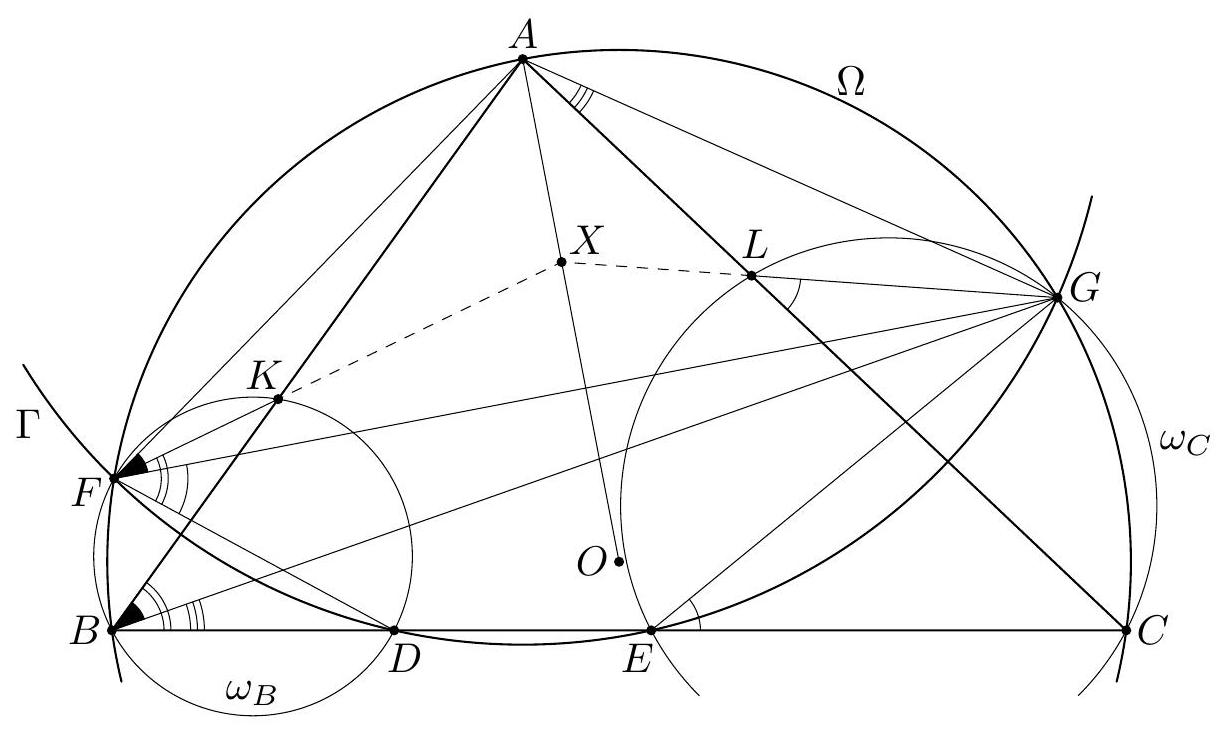 Figure 1", "metadata": {"resource_path": "IMO_SL/segmented/en-IMO2015SL.jsonl"}} |
| {"year": "2015", "tier": "T0", "problem_label": "G2", "problem_type": "Geometry", "exam": "IMO-SL", "problem": "Let $A B C$ be a triangle inscribed into a circle $\\Omega$ with center $O$. A circle $\\Gamma$ with center $A$ meets the side $B C$ at points $D$ and $E$ such that $D$ lies between $B$ and $E$. Moreover, let $F$ and $G$ be the common points of $\\Gamma$ and $\\Omega$. We assume that $F$ lies on the arc $A B$ of $\\Omega$ not containing $C$, and $G$ lies on the arc $A C$ of $\\Omega$ not containing $B$. The circumcircles of the triangles $B D F$ and $C E G$ meet the sides $A B$ and $A C$ again at $K$ and $L$, respectively. Suppose that the lines $F K$ and $G L$ are distinct and intersect at $X$. Prove that the points $A, X$, and $O$ are collinear. (Greece)", "solution": "Again, we denote the circumcircle of $B D K F$ by $\\omega_{B}$. In addition, we set $\\alpha=$ $\\angle B A C, \\varphi=\\angle A B F$, and $\\psi=\\angle E D A=\\angle A E D$ (see Figure 2). Notice that $A F=A G$ entails $\\varphi=\\angle G C A$, so all three of $\\alpha, \\varphi$, and $\\psi$ respect the \"symmetry\" between $B$ and $C$ of our configuration. Again, we reduce our task to proving (1). This time, we start from $$ 2 \\angle K F A=2(\\angle D F A-\\angle D F K) . $$ Since the triangle $A F D$ is isosceles, we have $$ \\angle D F A=\\angle A D F=\\angle E D F-\\psi=\\angle B F D+\\angle E B F-\\psi . $$ Moreover, because of the circle $\\omega_{B}$ we have $\\angle D F K=\\angle C B A$. Altogether, this yields $$ 2 \\angle K F A=\\angle D F A+(\\angle B F D+\\angle E B F-\\psi)-2 \\angle C B A, $$ which simplifies to $$ 2 \\angle K F A=\\angle B F A+\\varphi-\\psi-\\angle C B A . $$ Now the quadrilateral $A F B C$ is cyclic, so this entails $2 \\angle K F A=\\alpha+\\varphi-\\psi$. Due to the \"symmetry\" between $B$ and $C$ alluded to above, this argument also shows that $2 \\angle A G L=\\alpha+\\varphi-\\psi$. This concludes the proof of (1). 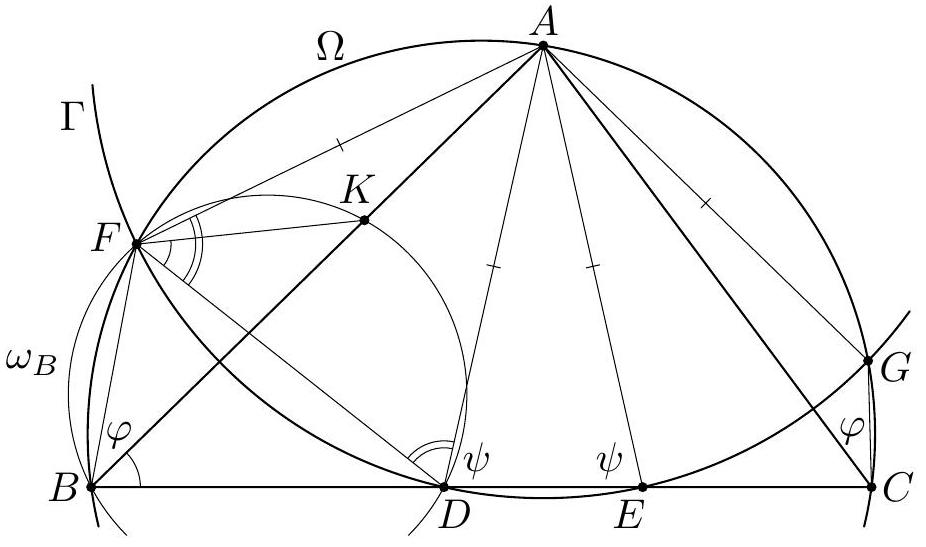 Figure 2 Comment 1. As the first solution shows, the assumption that $A$ be the center of $\\Gamma$ may be weakened to the following one: The center of $\\Gamma$ lies on the line $O A$. The second solution may be modified to yield the same result. Comment 2. It might be interesting to remark that $\\angle G D K=90^{\\circ}$. To prove this, let $G^{\\prime}$ denote the point on $\\Gamma$ diametrically opposite to $G$. Because of $\\angle K D F=\\angle K B F=\\angle A G F=\\angle G^{\\prime} D F$, the points $D, K$, and $G^{\\prime}$ are collinear, which leads to the desired result. Notice that due to symmetry we also have $\\angle L E F=90^{\\circ}$. Moreover, a standard argument shows that the triangles $A G L$ and $B G E$ are similar. By symmetry again, also the triangles $A F K$ and $C D F$ are similar. There are several ways to derive a solution from these facts. For instance, one may argue that $$ \\begin{aligned} \\angle K F A & =\\angle B F A-\\angle B F K=\\angle B F A-\\angle E D G^{\\prime}=\\left(180^{\\circ}-\\angle A G B\\right)-\\left(180^{\\circ}-\\angle G^{\\prime} G E\\right) \\\\ & =\\angle A G E-\\angle A G B=\\angle B G E=\\angle A G L . \\end{aligned} $$ Comment 3. The original proposal did not contain the point $X$ in the assumption and asked instead to prove that the lines $F K, G L$, and $A O$ are concurrent. This differs from the version given above only insofar as it also requires to show that these lines cannot be parallel. The Problem Selection Committee removed this part from the problem intending to make it thus more suitable for the Olympiad. For the sake of completeness, we would still like to sketch one possibility for proving $F K \\nVdash A O$ here. As the points $K$ and $O$ lie in the angular region $\\angle F A G$, it suffices to check $\\angle K F A+\\angle F A O<180^{\\circ}$. Multiplying by 2 and making use of the formulae from the second solution, we see that this is equivalent to $(\\alpha+\\varphi-\\psi)+\\left(180^{\\circ}-2 \\varphi\\right)<360^{\\circ}$, which in turn is an easy consequence of $\\alpha<180^{\\circ}$.", "metadata": {"resource_path": "IMO_SL/segmented/en-IMO2015SL.jsonl"}} |
| {"year": "2015", "tier": "T0", "problem_label": "G3", "problem_type": "Geometry", "exam": "IMO-SL", "problem": "Let $A B C$ be a triangle with $\\angle C=90^{\\circ}$, and let $H$ be the foot of the altitude from $C$. A point $D$ is chosen inside the triangle $C B H$ so that $C H$ bisects $A D$. Let $P$ be the intersection point of the lines $B D$ and $C H$. Let $\\omega$ be the semicircle with diameter $B D$ that meets the segment $C B$ at an interior point. A line through $P$ is tangent to $\\omega$ at $Q$. Prove that the lines $C Q$ and $A D$ meet on $\\omega$. (Georgia)", "solution": "Let $K$ be the projection of $D$ onto $A B$; then $A H=H K$ (see Figure 1). Since $P H \\| D K$, we have $$ \\frac{P D}{P B}=\\frac{H K}{H B}=\\frac{A H}{H B} $$ Let $L$ be the projection of $Q$ onto $D B$. Since $P Q$ is tangent to $\\omega$ and $\\angle D Q B=\\angle B L Q=$ $90^{\\circ}$, we have $\\angle P Q D=\\angle Q B P=\\angle D Q L$. Therefore, $Q D$ and $Q B$ are respectively the internal and the external bisectors of $\\angle P Q L$. By the angle bisector theorem, we obtain $$ \\frac{P D}{D L}=\\frac{P Q}{Q L}=\\frac{P B}{B L} $$ The relations (1) and (2) yield $\\frac{A H}{H B}=\\frac{P D}{P B}=\\frac{D L}{L B}$. So, the spiral similarity $\\tau$ centered at $B$ and sending $A$ to $D$ maps $H$ to $L$. Moreover, $\\tau$ sends the semicircle with diameter $A B$ passing through $C$ to $\\omega$. Due to $C H \\perp A B$ and $Q L \\perp D B$, it follows that $\\tau(C)=Q$. Hence, the triangles $A B D$ and $C B Q$ are similar, so $\\angle A D B=\\angle C Q B$. This means that the lines $A D$ and $C Q$ meet at some point $T$, and this point satisfies $\\angle B D T=\\angle B Q T$. Therefore, $T$ lies on $\\omega$, as needed.  Figure 1 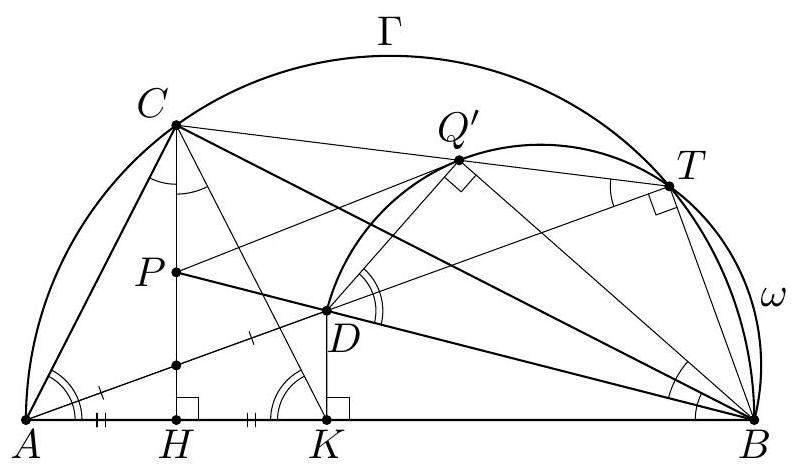 Figure 2 Comment 1. Since $\\angle B A D=\\angle B C Q$, the point $T$ lies also on the circumcircle of the triangle $A B C$.", "metadata": {"resource_path": "IMO_SL/segmented/en-IMO2015SL.jsonl"}} |
| {"year": "2015", "tier": "T0", "problem_label": "G3", "problem_type": "Geometry", "exam": "IMO-SL", "problem": "Let $A B C$ be a triangle with $\\angle C=90^{\\circ}$, and let $H$ be the foot of the altitude from $C$. A point $D$ is chosen inside the triangle $C B H$ so that $C H$ bisects $A D$. Let $P$ be the intersection point of the lines $B D$ and $C H$. Let $\\omega$ be the semicircle with diameter $B D$ that meets the segment $C B$ at an interior point. A line through $P$ is tangent to $\\omega$ at $Q$. Prove that the lines $C Q$ and $A D$ meet on $\\omega$. (Georgia)", "solution": "Let $\\Gamma$ be the circumcircle of $A B C$, and let $A D$ meet $\\omega$ at $T$. Then $\\angle A T B=$ $\\angle A C B=90^{\\circ}$, so $T$ lies on $\\Gamma$ as well. As in the previous solution, let $K$ be the projection of $D$ onto $A B$; then $A H=H K$ (see Figure 2). Our goal now is to prove that the points $C, Q$, and $T$ are collinear. Let $C T$ meet $\\omega$ again at $Q^{\\prime}$. Then, it suffices to show that $P Q^{\\prime}$ is tangent to $\\omega$, or that $\\angle P Q^{\\prime} D=\\angle Q^{\\prime} B D$. Since the quadrilateral $B D Q^{\\prime} T$ is cyclic and the triangles $A H C$ and $K H C$ are congruent, we have $\\angle Q^{\\prime} B D=\\angle Q^{\\prime} T D=\\angle C T A=\\angle C B A=\\angle A C H=\\angle H C K$. Hence, the right triangles $C H K$ and $B Q^{\\prime} D$ are similar. This implies that $\\frac{H K}{C K}=\\frac{Q^{\\prime} D}{B D}$, and thus $H K \\cdot B D=C K \\cdot Q^{\\prime} D$. Notice that $P H \\| D K$; therefore, we have $\\frac{P D}{B D}=\\frac{H K}{B K}$, and so $P D \\cdot B K=H K \\cdot B D$. Consequently, $P D \\cdot B K=H K \\cdot B D=C K \\cdot Q^{\\prime} D$, which yields $\\frac{P D}{Q^{\\prime} D}=\\frac{C K}{B K}$. Since $\\angle C K A=\\angle K A C=\\angle B D Q^{\\prime}$, the triangles $C K B$ and $P D Q^{\\prime}$ are similar, so $\\angle P Q^{\\prime} D=$ $\\angle C B A=\\angle Q^{\\prime} B D$, as required. Comment 2. There exist several other ways to prove that $P Q^{\\prime}$ is tangent to $\\omega$. For instance, one may compute $\\frac{P D}{P B}$ and $\\frac{P Q^{\\prime}}{P B}$ in terms of $A H$ and $H B$ to verify that $P Q^{\\prime 2}=P D \\cdot P B$, concluding that $P Q^{\\prime}$ is tangent to $\\omega$. Another possible approach is the following. As in Solution 2, we introduce the points $T$ and $Q^{\\prime}$ and mention that the triangles $A B C$ and $D B Q^{\\prime}$ are similar (see Figure 3). Let $M$ be the midpoint of $A D$, and let $L$ be the projection of $Q^{\\prime}$ onto $A B$. Construct $E$ on the line $A B$ so that $E P$ is parallel to $A D$. Projecting from $P$, we get $(A, B ; H, E)=(A, D ; M, \\infty)=-1$. Since $\\frac{E A}{A B}=\\frac{P D}{D B}$, the point $P$ is the image of $E$ under the similarity transform mapping $A B C$ to $D B Q^{\\prime}$. Therefore, we have $(D, B ; L, P)=(A, B ; H, E)=-1$, which means that $Q^{\\prime} D$ and $Q^{\\prime} B$ are respectively the internal and the external bisectors of $\\angle P Q^{\\prime} L$. This implies that $P Q^{\\prime}$ is tangent to $\\omega$, as required. 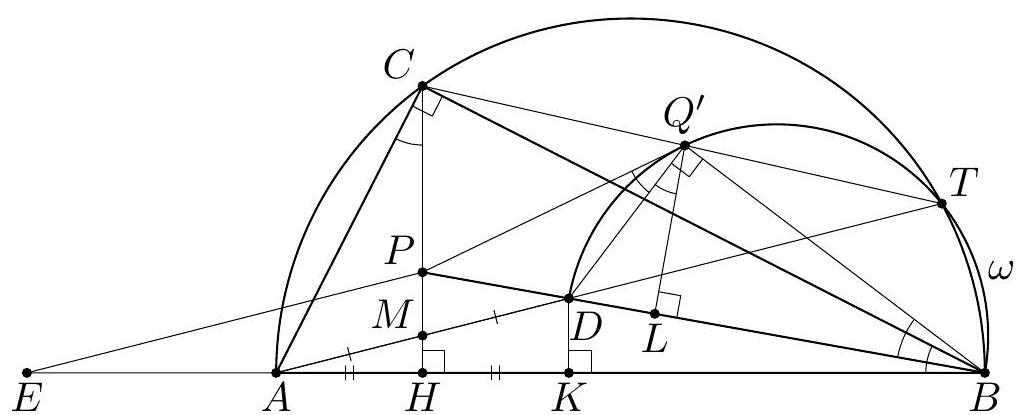 Figure 3", "metadata": {"resource_path": "IMO_SL/segmented/en-IMO2015SL.jsonl"}} |
| {"year": "2015", "tier": "T0", "problem_label": "G3", "problem_type": "Geometry", "exam": "IMO-SL", "problem": "Let $A B C$ be a triangle with $\\angle C=90^{\\circ}$, and let $H$ be the foot of the altitude from $C$. A point $D$ is chosen inside the triangle $C B H$ so that $C H$ bisects $A D$. Let $P$ be the intersection point of the lines $B D$ and $C H$. Let $\\omega$ be the semicircle with diameter $B D$ that meets the segment $C B$ at an interior point. A line through $P$ is tangent to $\\omega$ at $Q$. Prove that the lines $C Q$ and $A D$ meet on $\\omega$. (Georgia)", "solution": "Introduce the points $T$ and $Q^{\\prime}$ as in the previous solution. Note that $T$ lies on the circumcircle of $A B C$. Here we present yet another proof that $P Q^{\\prime}$ is tangent to $\\omega$. Let $\\Omega$ be the circle completing the semicircle $\\omega$. Construct a point $F$ symmetric to $C$ with respect to $A B$. Let $S \\neq T$ be the second intersection point of $F T$ and $\\Omega$ (see Figure 4). 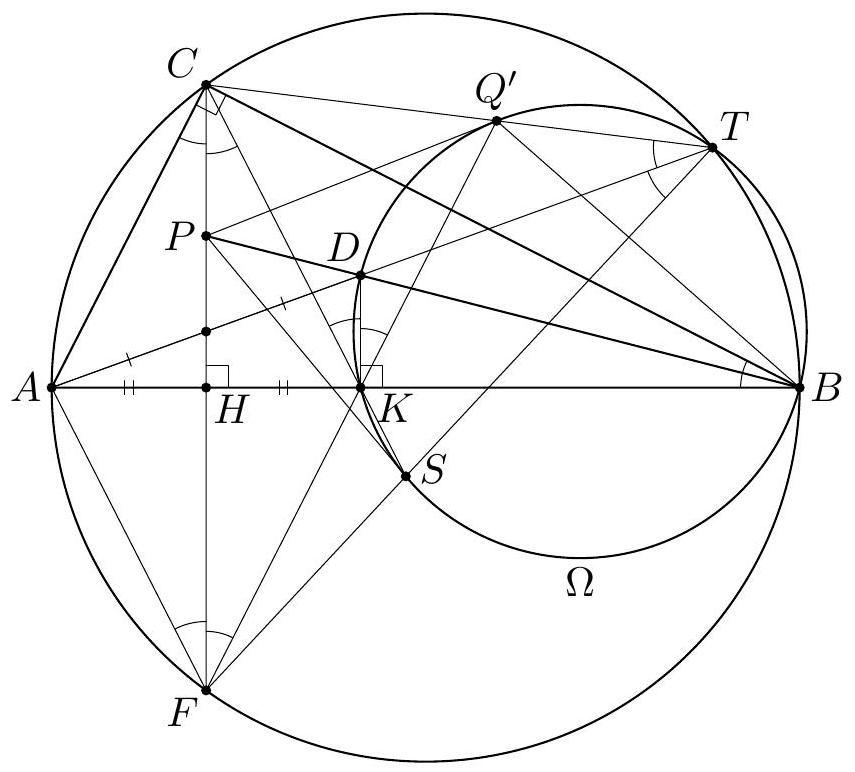 Figure 4 Since $A C=A F$, we have $\\angle D K C=\\angle H C K=\\angle C B A=\\angle C T A=\\angle D T S=180^{\\circ}-$ $\\angle S K D$. Thus, the points $C, K$, and $S$ are collinear. Notice also that $\\angle Q^{\\prime} K D=\\angle Q^{\\prime} T D=$ $\\angle H C K=\\angle K F H=180^{\\circ}-\\angle D K F$. This implies that the points $F, K$, and $Q^{\\prime}$ are collinear. Applying PASCAL's theorem to the degenerate hexagon $K Q^{\\prime} Q^{\\prime} T S S$, we get that the tangents to $\\Omega$ passing through $Q^{\\prime}$ and $S$ intersect on $C F$. The relation $\\angle Q^{\\prime} T D=\\angle D T S$ yields that $Q^{\\prime}$ and $S$ are symmetric with respect to $B D$. Therefore, the two tangents also intersect on $B D$. Thus, the two tangents pass through $P$. Hence, $P Q^{\\prime}$ is tangent to $\\omega$, as needed.", "metadata": {"resource_path": "IMO_SL/segmented/en-IMO2015SL.jsonl"}} |
| {"year": "2015", "tier": "T0", "problem_label": "G4", "problem_type": "Geometry", "exam": "IMO-SL", "problem": "Let $A B C$ be an acute triangle, and let $M$ be the midpoint of $A C$. A circle $\\omega$ passing through $B$ and $M$ meets the sides $A B$ and $B C$ again at $P$ and $Q$, respectively. Let $T$ be the point such that the quadrilateral $B P T Q$ is a parallelogram. Suppose that $T$ lies on the circumcircle of the triangle $A B C$. Determine all possible values of $B T / B M$. (Russia)", "solution": "Let $S$ be the center of the parallelogram $B P T Q$, and let $B^{\\prime} \\neq B$ be the point on the ray $B M$ such that $B M=M B^{\\prime}$ (see Figure 1). It follows that $A B C B^{\\prime}$ is a parallelogram. Then, $\\angle A B B^{\\prime}=\\angle P Q M$ and $\\angle B B^{\\prime} A=\\angle B^{\\prime} B C=\\angle M P Q$, and so the triangles $A B B^{\\prime}$ and $M Q P$ are similar. It follows that $A M$ and $M S$ are corresponding medians in these triangles. Hence, $$ \\angle S M P=\\angle B^{\\prime} A M=\\angle B C A=\\angle B T A . $$ Since $\\angle A C T=\\angle P B T$ and $\\angle T A C=\\angle T B C=\\angle B T P$, the triangles $T C A$ and $P B T$ are similar. Again, as $T M$ and $P S$ are corresponding medians in these triangles, we have $$ \\angle M T A=\\angle T P S=\\angle B Q P=\\angle B M P . $$ Now we deal separately with two cases. Case 1. $\\quad S$ does not lie on $B M$. Since the configuration is symmetric between $A$ and $C$, we may assume that $S$ and $A$ lie on the same side with respect to the line $B M$. Applying (1) and (2), we get $$ \\angle B M S=\\angle B M P-\\angle S M P=\\angle M T A-\\angle B T A=\\angle M T B, $$ and so the triangles $B S M$ and $B M T$ are similar. We now have $B M^{2}=B S \\cdot B T=B T^{2} / 2$, so $B T=\\sqrt{2} B M$. Case 2. $\\quad S$ lies on $B M$. It follows from (2) that $\\angle B C A=\\angle M T A=\\angle B Q P=\\angle B M P$ (see Figure 2). Thus, $P Q \\| A C$ and $P M \\| A T$. Hence, $B S / B M=B P / B A=B M / B T$, so $B T^{2}=2 B M^{2}$ and $B T=\\sqrt{2} B M$. 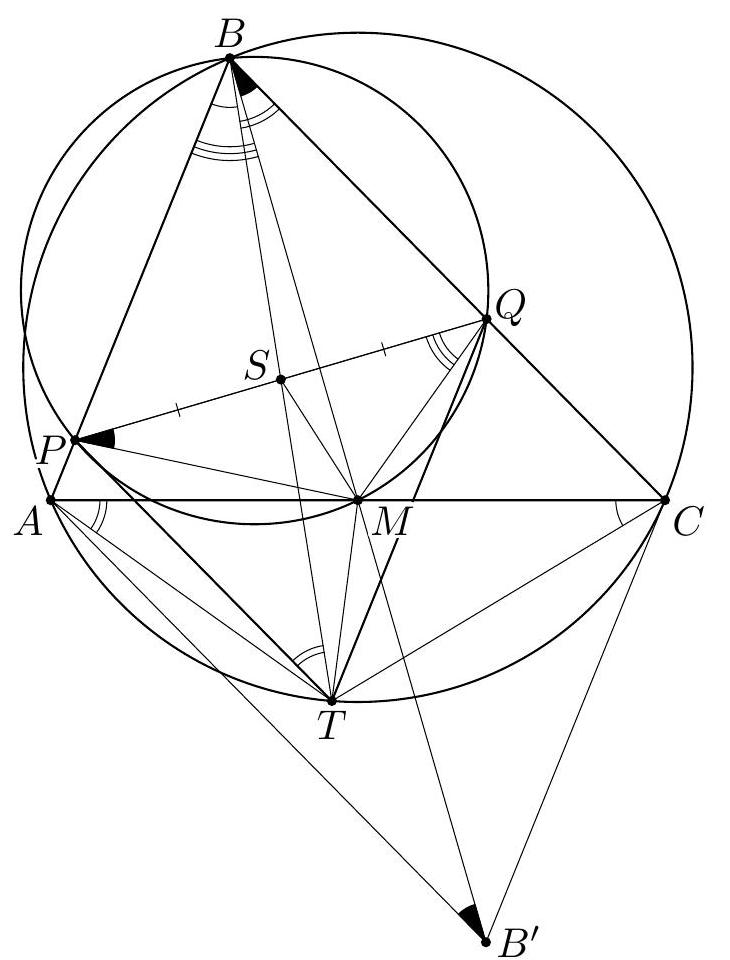 Figure 1 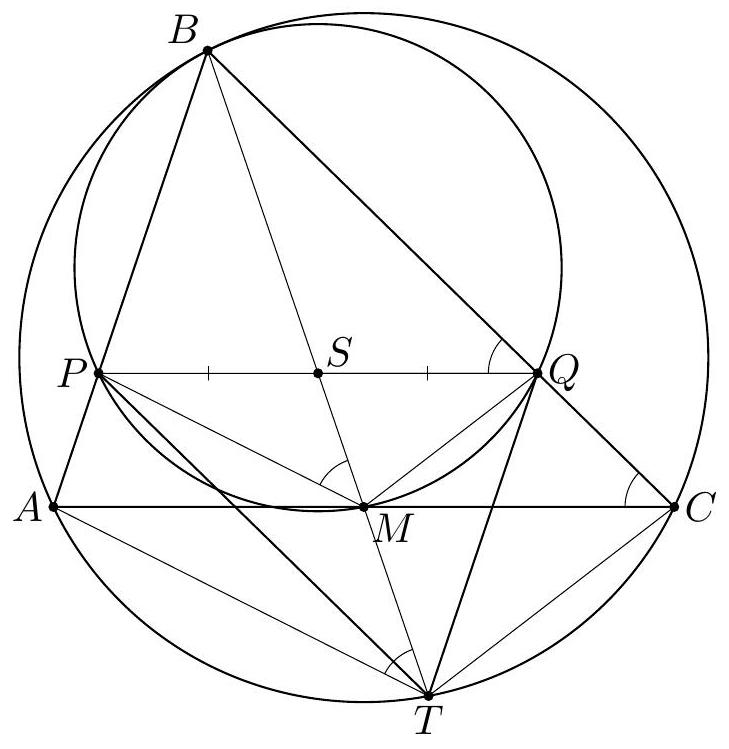 Figure 2 Comment 1. Here is another way to show that the triangles $B S M$ and $B M T$ are similar. Denote by $\\Omega$ the circumcircle of the triangle $A B C$. Let $R$ be the second point of intersection of $\\omega$ and $\\Omega$, and let $\\tau$ be the spiral similarity centered at $R$ mapping $\\omega$ to $\\Omega$. Then, one may show that $\\tau$ maps each point $X$ on $\\omega$ to a point $Y$ on $\\Omega$ such that $B, X$, and $Y$ are collinear (see Figure 3). If we let $K$ and $L$ be the second points of intersection of $B M$ with $\\Omega$ and of $B T$ with $\\omega$, respectively, then it follows that the triangle $M K T$ is the image of $S M L$ under $\\tau$. We now obtain $\\angle B S M=\\angle T M B$, which implies the desired result. 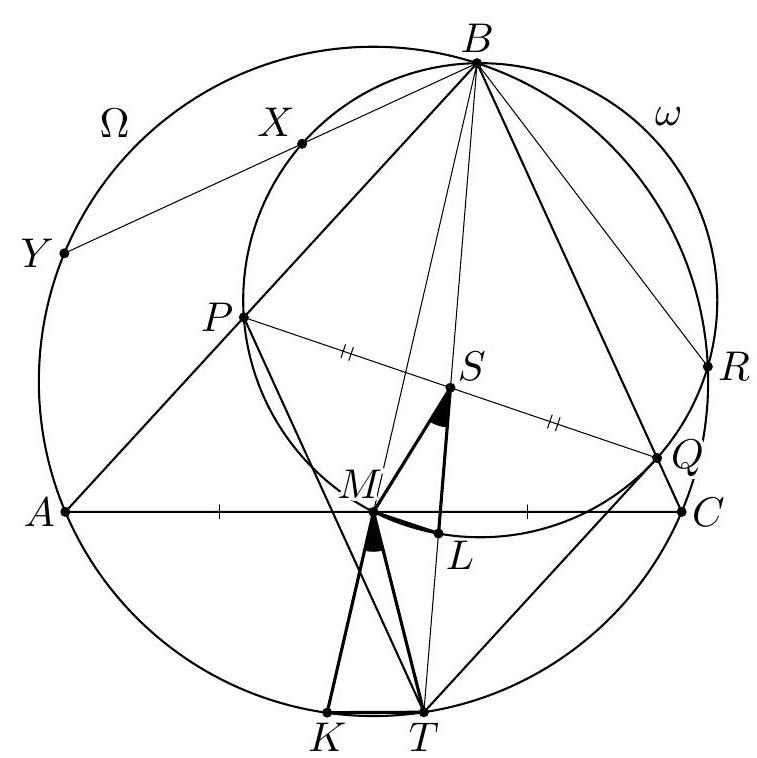 Figure 3 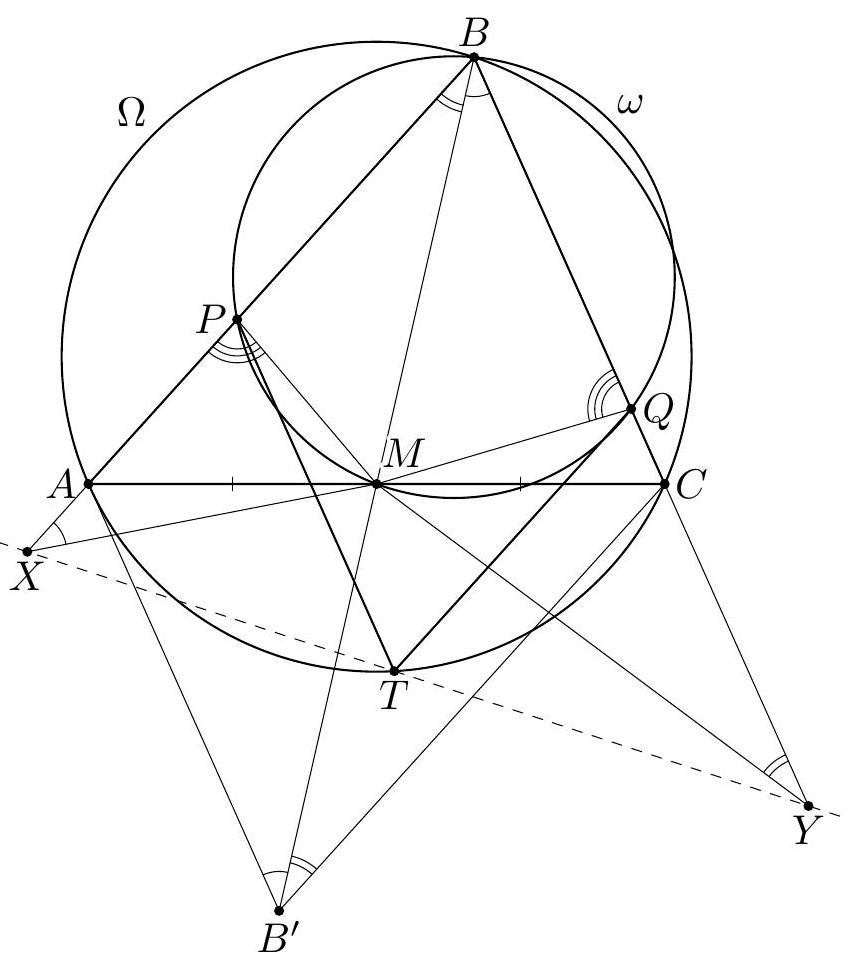 Figure 4", "metadata": {"resource_path": "IMO_SL/segmented/en-IMO2015SL.jsonl"}} |
| {"year": "2015", "tier": "T0", "problem_label": "G4", "problem_type": "Geometry", "exam": "IMO-SL", "problem": "Let $A B C$ be an acute triangle, and let $M$ be the midpoint of $A C$. A circle $\\omega$ passing through $B$ and $M$ meets the sides $A B$ and $B C$ again at $P$ and $Q$, respectively. Let $T$ be the point such that the quadrilateral $B P T Q$ is a parallelogram. Suppose that $T$ lies on the circumcircle of the triangle $A B C$. Determine all possible values of $B T / B M$. (Russia)", "solution": "Again, we denote by $\\Omega$ the circumcircle of the triangle $A B C$. Choose the points $X$ and $Y$ on the rays $B A$ and $B C$ respectively, so that $\\angle M X B=\\angle M B C$ and $\\angle B Y M=\\angle A B M$ (see Figure 4). Then the triangles $B M X$ and $Y M B$ are similar. Since $\\angle X P M=\\angle B Q M$, the points $P$ and $Q$ correspond to each other in these triangles. So, if $\\overrightarrow{B P}=\\mu \\cdot \\overrightarrow{B X}$, then $\\overrightarrow{B Q}=(1-\\mu) \\cdot \\overrightarrow{B Y}$. Thus $$ \\overrightarrow{B T}=\\overrightarrow{B P}+\\overrightarrow{B Q}=\\overrightarrow{B Y}+\\mu \\cdot(\\overrightarrow{B X}-\\overrightarrow{B Y})=\\overrightarrow{B Y}+\\mu \\cdot \\overrightarrow{Y X} $$ which means that $T$ lies on the line $X Y$. Let $B^{\\prime} \\neq B$ be the point on the ray $B M$ such that $B M=M B^{\\prime}$. Then $\\angle M B^{\\prime} A=$ $\\angle M B C=\\angle M X B$ and $\\angle C B^{\\prime} M=\\angle A B M=\\angle B Y M$. This means that the triangles $B M X$, $B A B^{\\prime}, Y M B$, and $B^{\\prime} C B$ are all similar; hence $B A \\cdot B X=B M \\cdot B B^{\\prime}=B C \\cdot B Y$. Thus there exists an inversion centered at $B$ which swaps $A$ with $X, M$ with $B^{\\prime}$, and $C$ with $Y$. This inversion then swaps $\\Omega$ with the line $X Y$, and hence it preserves $T$. Therefore, we have $B T^{2}=B M \\cdot B B^{\\prime}=2 B M^{2}$, and $B T=\\sqrt{2} B M$.", "metadata": {"resource_path": "IMO_SL/segmented/en-IMO2015SL.jsonl"}} |
| {"year": "2015", "tier": "T0", "problem_label": "G4", "problem_type": "Geometry", "exam": "IMO-SL", "problem": "Let $A B C$ be an acute triangle, and let $M$ be the midpoint of $A C$. A circle $\\omega$ passing through $B$ and $M$ meets the sides $A B$ and $B C$ again at $P$ and $Q$, respectively. Let $T$ be the point such that the quadrilateral $B P T Q$ is a parallelogram. Suppose that $T$ lies on the circumcircle of the triangle $A B C$. Determine all possible values of $B T / B M$. (Russia)", "solution": "We begin with the following lemma. Lemma. Let $A B C T$ be a cyclic quadrilateral. Let $P$ and $Q$ be points on the sides $B A$ and $B C$ respectively, such that $B P T Q$ is a parallelogram. Then $B P \\cdot B A+B Q \\cdot B C=B T^{2}$. Proof. Let the circumcircle of the triangle $Q T C$ meet the line $B T$ again at $J$ (see Figure 5). The power of $B$ with respect to this circle yields $$ B Q \\cdot B C=B J \\cdot B T $$ We also have $\\angle T J Q=180^{\\circ}-\\angle Q C T=\\angle T A B$ and $\\angle Q T J=\\angle A B T$, and so the triangles $T J Q$ and $B A T$ are similar. We now have $T J / T Q=B A / B T$. Therefore, $$ T J \\cdot B T=T Q \\cdot B A=B P \\cdot B A $$ Combining (3) and (4) now yields the desired result. Let $X$ and $Y$ be the midpoints of $B A$ and $B C$ respectively (see Figure 6). Applying the lemma to the cyclic quadrilaterals $P B Q M$ and $A B C T$, we obtain $$ B X \\cdot B P+B Y \\cdot B Q=B M^{2} $$ and $$ B P \\cdot B A+B Q \\cdot B C=B T^{2} $$ Since $B A=2 B X$ and $B C=2 B Y$, we have $B T^{2}=2 B M^{2}$, and so $B T=\\sqrt{2} B M$. 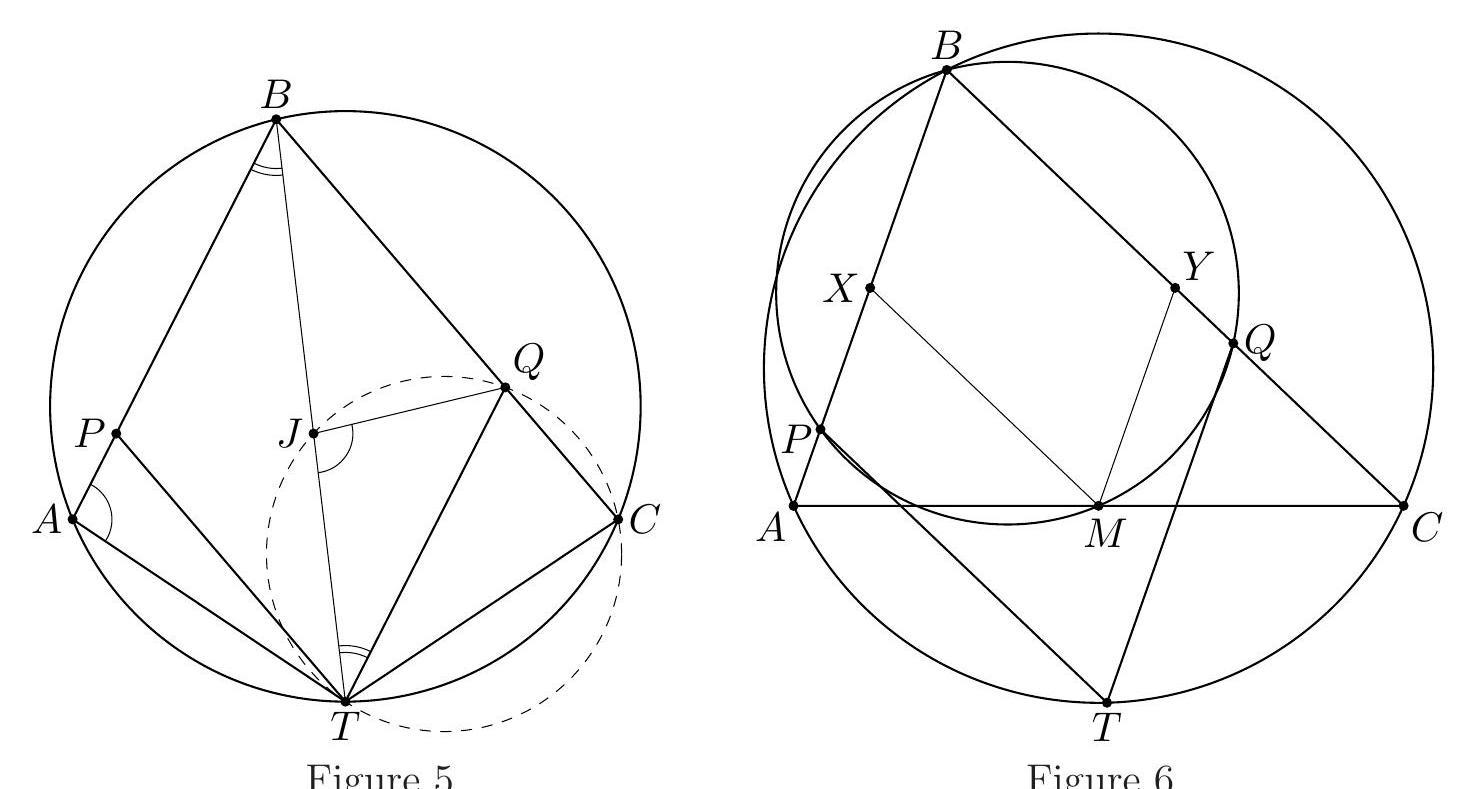 Comment 2. Here we give another proof of the lemma using Ptolemy's theorem. We readily have $$ T C \\cdot B A+T A \\cdot B C=A C \\cdot B T $$ The lemma now follows from $$ \\frac{B P}{T C}=\\frac{B Q}{T A}=\\frac{B T}{A C}=\\frac{\\sin \\angle B C T}{\\sin \\angle A B C} $$", "metadata": {"resource_path": "IMO_SL/segmented/en-IMO2015SL.jsonl"}} |
| {"year": "2015", "tier": "T0", "problem_label": "G5", "problem_type": "Geometry", "exam": "IMO-SL", "problem": "Let $A B C$ be a triangle with $C A \\neq C B$. Let $D, F$, and $G$ be the midpoints of the sides $A B, A C$, and $B C$, respectively. A circle $\\Gamma$ passing through $C$ and tangent to $A B$ at $D$ meets the segments $A F$ and $B G$ at $H$ and $I$, respectively. The points $H^{\\prime}$ and $I^{\\prime}$ are symmetric to $H$ and $I$ about $F$ and $G$, respectively. The line $H^{\\prime} I^{\\prime}$ meets $C D$ and $F G$ at $Q$ and $M$, respectively. The line $C M$ meets $\\Gamma$ again at $P$. Prove that $C Q=Q P$. (El Salvador)", "solution": "We may assume that $C A>C B$. Observe that $H^{\\prime}$ and $I^{\\prime}$ lie inside the segments $C F$ and $C G$, respectively. Therefore, $M$ lies outside $\\triangle A B C$ (see Figure 1). Due to the powers of points $A$ and $B$ with respect to the circle $\\Gamma$, we have $$ C H^{\\prime} \\cdot C A=A H \\cdot A C=A D^{2}=B D^{2}=B I \\cdot B C=C I^{\\prime} \\cdot C B $$ Therefore, $C H^{\\prime} \\cdot C F=C I^{\\prime} \\cdot C G$. Hence, the quadrilateral $H^{\\prime} I^{\\prime} G F$ is cyclic, and so $\\angle I^{\\prime} H^{\\prime} C=$ $\\angle C G F$. Let $D F$ and $D G$ meet $\\Gamma$ again at $R$ and $S$, respectively. We claim that the points $R$ and $S$ lie on the line $H^{\\prime} I^{\\prime}$. Observe that $F H^{\\prime} \\cdot F A=F H \\cdot F C=F R \\cdot F D$. Thus, the quadrilateral $A D H^{\\prime} R$ is cyclic, and hence $\\angle R H^{\\prime} F=\\angle F D A=\\angle C G F=\\angle I^{\\prime} H^{\\prime} C$. Therefore, the points $R, H^{\\prime}$, and $I^{\\prime}$ are collinear. Similarly, the points $S, H^{\\prime}$, and $I^{\\prime}$ are also collinear, and so all the points $R, H^{\\prime}, Q, I^{\\prime}, S$, and $M$ are all collinear. 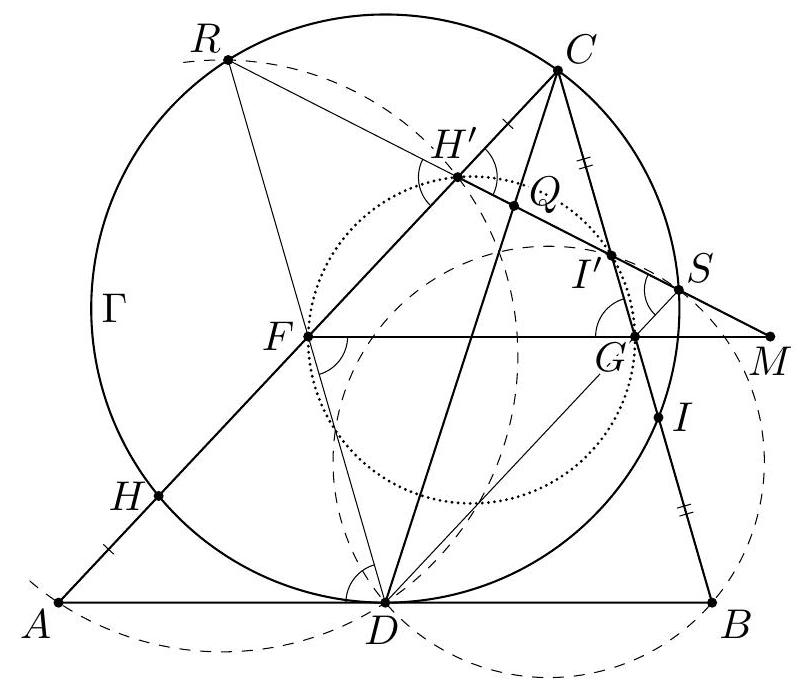 Figure 1 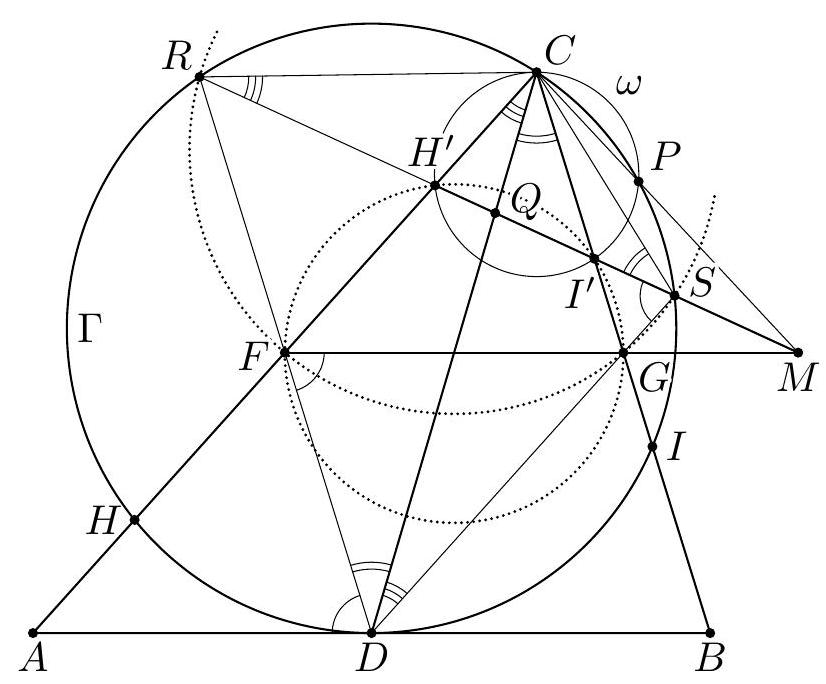 Figure 2 Then, $\\angle R S D=\\angle R D A=\\angle D F G$. Hence, the quadrilateral $R S G F$ is cyclic (see Figure 2). Therefore, $M H^{\\prime} \\cdot M I^{\\prime}=M F \\cdot M G=M R \\cdot M S=M P \\cdot M C$. Thus, the quadrilateral $C P I^{\\prime} H^{\\prime}$ is also cyclic. Let $\\omega$ be its circumcircle. Notice that $\\angle H^{\\prime} C Q=\\angle S D C=\\angle S R C$ and $\\angle Q C I^{\\prime}=\\angle C D R=\\angle C S R$. Hence, $\\triangle C H^{\\prime} Q \\sim \\triangle R C Q$ and $\\triangle C I^{\\prime} Q \\sim \\triangle S C Q$, and therefore $Q H^{\\prime} \\cdot Q R=Q C^{2}=Q I^{\\prime} \\cdot Q S$. We apply the inversion with center $Q$ and radius $Q C$. Observe that the points $R, C$, and $S$ are mapped to $H^{\\prime}, C$, and $I^{\\prime}$, respectively. Therefore, the circumcircle $\\Gamma$ of $\\triangle R C S$ is mapped to the circumcircle $\\omega$ of $\\triangle H^{\\prime} C I^{\\prime}$. Since $P$ and $C$ belong to both circles and the point $C$ is preserved by the inversion, we have that $P$ is also mapped to itself. We then get $Q P^{2}=Q C^{2}$. Hence, $Q P=Q C$. Comment 1. The problem statement still holds when $\\Gamma$ intersects the sides $C A$ and $C B$ outside segments $A F$ and $B G$, respectively.", "metadata": {"resource_path": "IMO_SL/segmented/en-IMO2015SL.jsonl"}} |
| {"year": "2015", "tier": "T0", "problem_label": "G5", "problem_type": "Geometry", "exam": "IMO-SL", "problem": "Let $A B C$ be a triangle with $C A \\neq C B$. Let $D, F$, and $G$ be the midpoints of the sides $A B, A C$, and $B C$, respectively. A circle $\\Gamma$ passing through $C$ and tangent to $A B$ at $D$ meets the segments $A F$ and $B G$ at $H$ and $I$, respectively. The points $H^{\\prime}$ and $I^{\\prime}$ are symmetric to $H$ and $I$ about $F$ and $G$, respectively. The line $H^{\\prime} I^{\\prime}$ meets $C D$ and $F G$ at $Q$ and $M$, respectively. The line $C M$ meets $\\Gamma$ again at $P$. Prove that $C Q=Q P$. (El Salvador)", "solution": "Let $X=H I \\cap A B$, and let the tangent to $\\Gamma$ at $C$ meet $A B$ at $Y$. Let $X C$ meet $\\Gamma$ again at $X^{\\prime}$ (see Figure 3). Projecting from $C, X$, and $C$ again, we have $(X, A ; D, B)=$ $\\left(X^{\\prime}, H ; D, I\\right)=(C, I ; D, H)=(Y, B ; D, A)$. Since $A$ and $B$ are symmetric about $D$, it follows that $X$ and $Y$ are also symmetric about $D$. Now, Menelaus' theorem applied to $\\triangle A B C$ with the line $H I X$ yields $$ 1=\\frac{C H}{H A} \\cdot \\frac{B I}{I C} \\cdot \\frac{A X}{X B}=\\frac{A H^{\\prime}}{H^{\\prime} C} \\cdot \\frac{C I^{\\prime}}{I^{\\prime} B} \\cdot \\frac{B Y}{Y A} . $$ By the converse of Menelaus' theorem applied to $\\triangle A B C$ with points $H^{\\prime}, I^{\\prime}, Y$, we get that the points $H^{\\prime}, I^{\\prime}, Y$ are collinear. 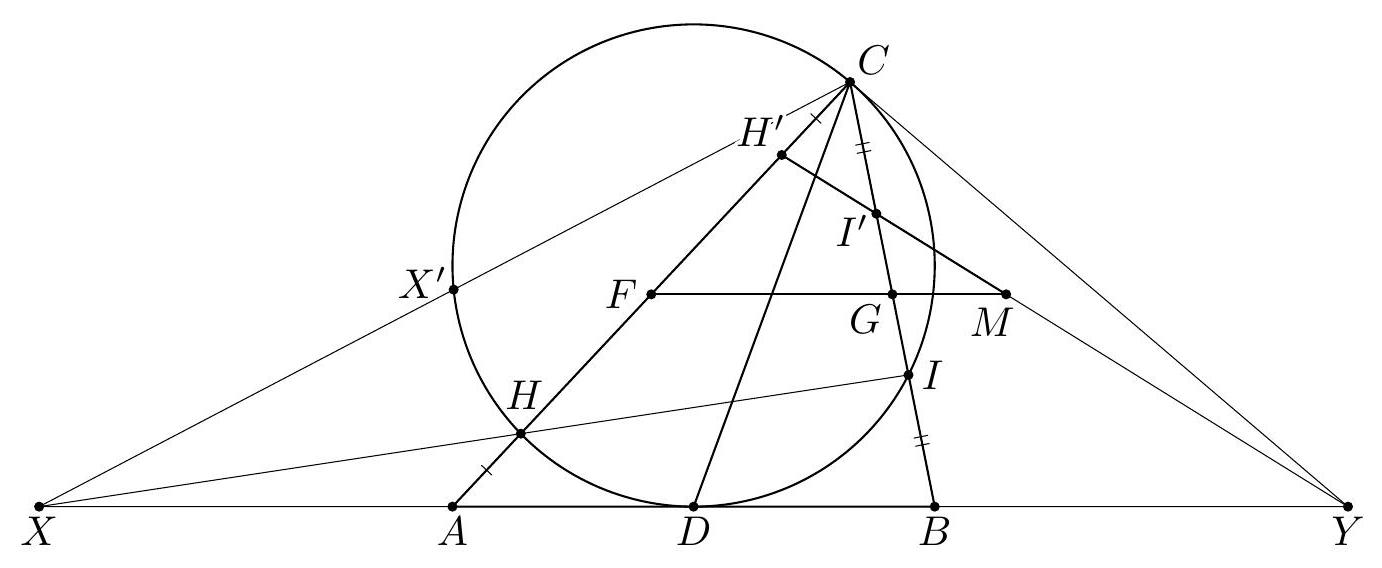 Figure 3 Let $T$ be the midpoint of $C D$, and let $O$ be the center of $\\Gamma$. Let $C M$ meet $T Y$ at $N$. To avoid confusion, we clean some superfluous details out of the picture (see Figure 4). Let $V=M T \\cap C Y$. Since $M T \\| Y D$ and $D T=T C$, we get $C V=V Y$. Then CevA's theorem applied to $\\triangle C T Y$ with the point $M$ yields $$ 1=\\frac{T Q}{Q C} \\cdot \\frac{C V}{V Y} \\cdot \\frac{Y N}{N T}=\\frac{T Q}{Q C} \\cdot \\frac{Y N}{N T} $$ Therefore, $\\frac{T Q}{Q C}=\\frac{T N}{N Y}$. So, $N Q \\| C Y$, and thus $N Q \\perp O C$. Note that the points $O, N, T$, and $Y$ are collinear. Therefore, $C Q \\perp O N$. So, $Q$ is the orthocenter of $\\triangle O C N$, and hence $O Q \\perp C P$. Thus, $Q$ lies on the perpendicular bisector of $C P$, and therefore $C Q=Q P$, as required. 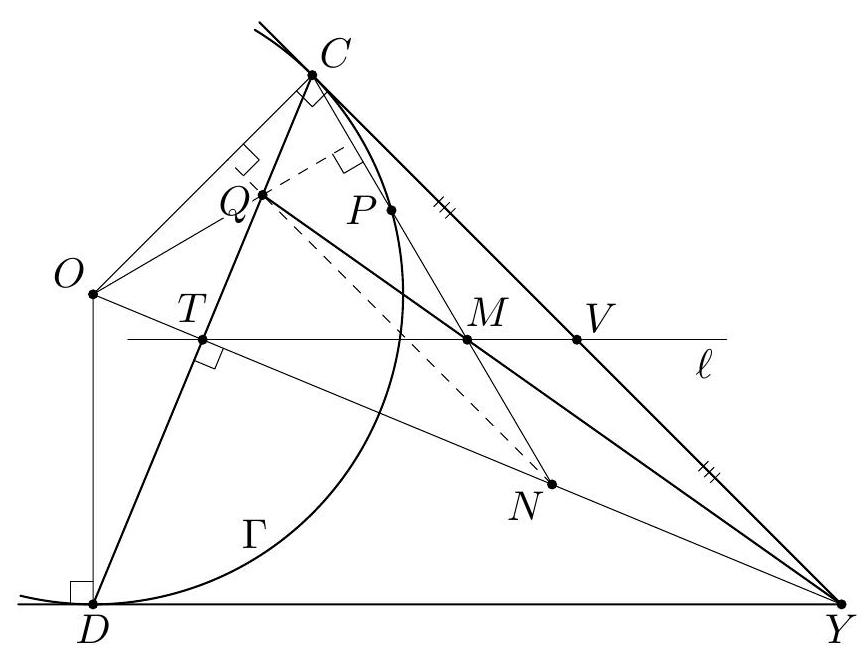 Figure 4 Comment 2. The second part of Solution 2 provides a proof of the following more general statement, which does not involve a specific choice of $Q$ on $C D$. Let $Y C$ and $Y D$ be two tangents to a circle $\\Gamma$ with center $O$ (see Figure 4). Let $\\ell$ be the midline of $\\triangle Y C D$ parallel to $Y D$. Let $Q$ and $M$ be two points on $C D$ and $\\ell$, respectively, such that the line $Q M$ passes through $Y$. Then $O Q \\perp C M$.", "metadata": {"resource_path": "IMO_SL/segmented/en-IMO2015SL.jsonl"}} |
| {"year": "2015", "tier": "T0", "problem_label": "G6", "problem_type": "Geometry", "exam": "IMO-SL", "problem": "Let $A B C$ be an acute triangle with $A B>A C$, and let $\\Gamma$ be its circumcircle. Let $H$, $M$, and $F$ be the orthocenter of the triangle, the midpoint of $B C$, and the foot of the altitude from $A$, respectively. Let $Q$ and $K$ be the two points on $\\Gamma$ that satisfy $\\angle A Q H=90^{\\circ}$ and $\\angle Q K H=90^{\\circ}$. Prove that the circumcircles of the triangles $K Q H$ and $K F M$ are tangent to each other. (Ukraine)", "solution": "Let $A^{\\prime}$ be the point diametrically opposite to $A$ on $\\Gamma$. Since $\\angle A Q A^{\\prime}=90^{\\circ}$ and $\\angle A Q H=90^{\\circ}$, the points $Q, H$, and $A^{\\prime}$ are collinear. Similarly, if $Q^{\\prime}$ denotes the point on $\\Gamma$ diametrically opposite to $Q$, then $K, H$, and $Q^{\\prime}$ are collinear. Let the line $A H F$ intersect $\\Gamma$ again at $E$; it is known that $M$ is the midpoint of the segment $H A^{\\prime}$ and that $F$ is the midpoint of $H E$. Let $J$ be the midpoint of $H Q^{\\prime}$. Consider any point $T$ such that $T K$ is tangent to the circle $K Q H$ at $K$ with $Q$ and $T$ lying on different sides of $K H$ (see Figure 1). Then $\\angle H K T=\\angle H Q K$ and we are to prove that $\\angle M K T=\\angle C F K$. Thus it remains to show that $\\angle H Q K=\\angle C F K+\\angle H K M$. Due to $\\angle H Q K=90^{\\circ}-\\angle Q^{\\prime} H A^{\\prime}$ and $\\angle C F K=90^{\\circ}-\\angle K F A$, this means the same as $\\angle Q^{\\prime} H A^{\\prime}=$ $\\angle K F A-\\angle H K M$. Now, since the triangles $K H E$ and $A H Q^{\\prime}$ are similar with $F$ and $J$ being the midpoints of corresponding sides, we have $\\angle K F A=\\angle H J A$, and analogously one may obtain $\\angle H K M=\\angle J Q H$. Thereby our task is reduced to verifying $$ \\angle Q^{\\prime} H A^{\\prime}=\\angle H J A-\\angle J Q H $$ 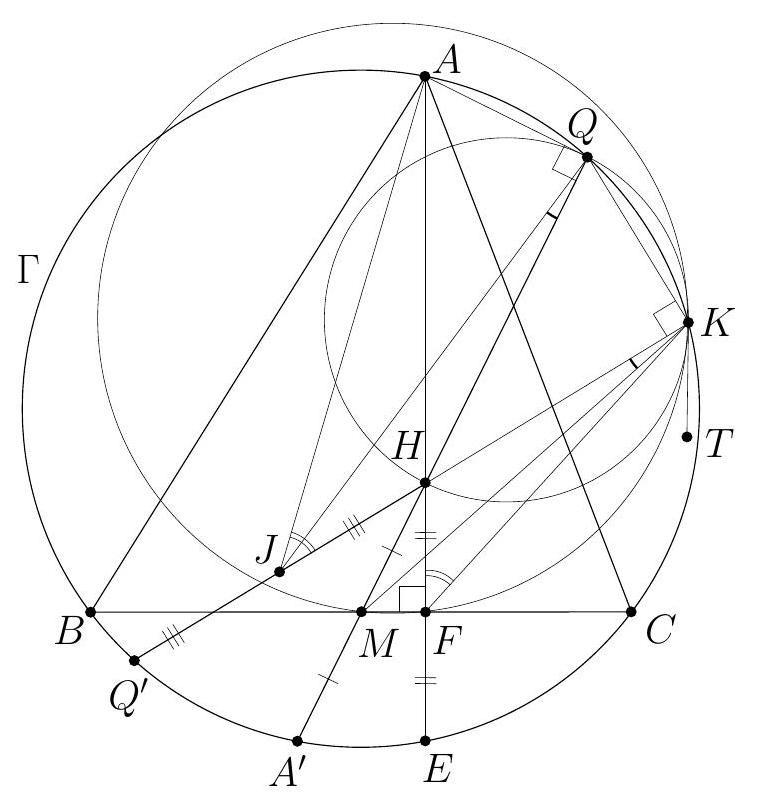 Figure 1 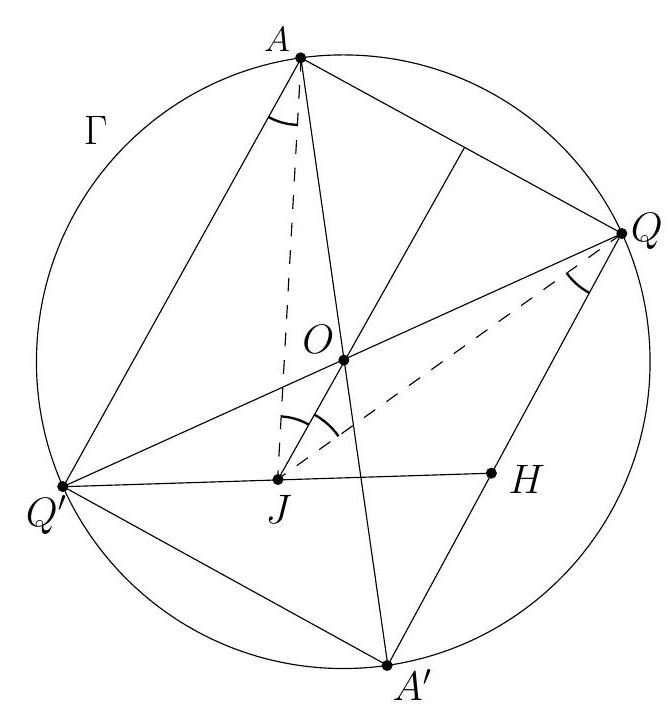 Figure 2 To avoid confusion, let us draw a new picture at this moment (see Figure 2). Owing to $\\angle Q^{\\prime} H A^{\\prime}=\\angle J Q H+\\angle H J Q$ and $\\angle H J A=\\angle Q J A+\\angle H J Q$, we just have to show that $2 \\angle J Q H=\\angle Q J A$. To this end, it suffices to remark that $A Q A^{\\prime} Q^{\\prime}$ is a rectangle and that $J$, being defined to be the midpoint of $H Q^{\\prime}$, has to lie on the mid parallel of $Q A^{\\prime}$ and $Q^{\\prime} A$.", "metadata": {"resource_path": "IMO_SL/segmented/en-IMO2015SL.jsonl"}} |
| {"year": "2015", "tier": "T0", "problem_label": "G6", "problem_type": "Geometry", "exam": "IMO-SL", "problem": "Let $A B C$ be an acute triangle with $A B>A C$, and let $\\Gamma$ be its circumcircle. Let $H$, $M$, and $F$ be the orthocenter of the triangle, the midpoint of $B C$, and the foot of the altitude from $A$, respectively. Let $Q$ and $K$ be the two points on $\\Gamma$ that satisfy $\\angle A Q H=90^{\\circ}$ and $\\angle Q K H=90^{\\circ}$. Prove that the circumcircles of the triangles $K Q H$ and $K F M$ are tangent to each other. (Ukraine)", "solution": "We define the points $A^{\\prime}$ and $E$ and prove that the ray $M H$ passes through $Q$ in the same way as in the first solution. Notice that the points $A^{\\prime}$ and $E$ can play analogous roles to the points $Q$ and $K$, respectively: point $A^{\\prime}$ is the second intersection of the line $M H$ with $\\Gamma$, and $E$ is the point on $\\Gamma$ with the property $\\angle H E A^{\\prime}=90^{\\circ}$ (see Figure 3). In the circles $K Q H$ and $E A^{\\prime} H$, the line segments $H Q$ and $H A^{\\prime}$ are diameters, respectively; so, these circles have a common tangent $t$ at $H$, perpendicular to $M H$. Let $R$ be the radical center of the circles $A B C, K Q H$ and $E A^{\\prime} H$. Their pairwise radical axes are the lines $Q K$, $A^{\\prime} E$ and the line $t$; they all pass through $R$. Let $S$ be the midpoint of $H R$; by $\\angle Q K H=$ 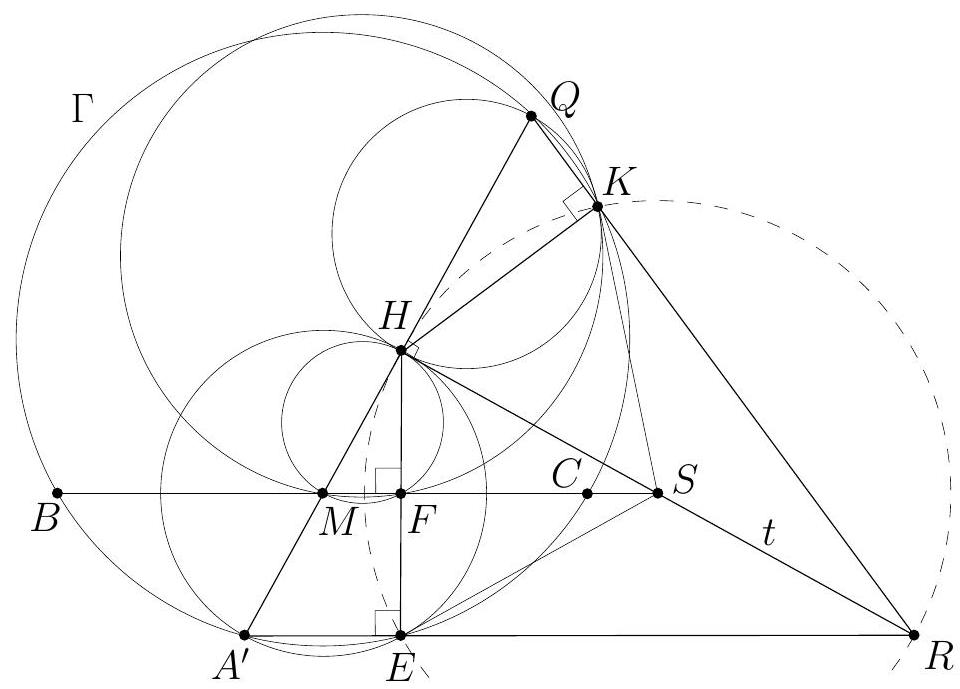 Figure 3 $\\angle H E A^{\\prime}=90^{\\circ}$, the quadrilateral $H E R K$ is cyclic and its circumcenter is $S$; hence we have $S K=S E=S H$. The line $B C$, being the perpendicular bisector of $H E$, passes through $S$. The circle $H M F$ also is tangent to $t$ at $H$; from the power of $S$ with respect to the circle $H M F$ we have $$ S M \\cdot S F=S H^{2}=S K^{2} $$ So, the power of $S$ with respect to the circles $K Q H$ and $K F M$ is $S K^{2}$. Therefore, the line segment $S K$ is tangent to both circles at $K$.", "metadata": {"resource_path": "IMO_SL/segmented/en-IMO2015SL.jsonl"}} |
| {"year": "2015", "tier": "T0", "problem_label": "G7", "problem_type": "Geometry", "exam": "IMO-SL", "problem": "Let $A B C D$ be a convex quadrilateral, and let $P, Q, R$, and $S$ be points on the sides $A B, B C, C D$, and $D A$, respectively. Let the line segments $P R$ and $Q S$ meet at $O$. Suppose that each of the quadrilaterals $A P O S, B Q O P, C R O Q$, and $D S O R$ has an incircle. Prove that the lines $A C, P Q$, and $R S$ are either concurrent or parallel to each other. (Bulgaria)", "solution": "Denote by $\\gamma_{A}, \\gamma_{B}, \\gamma_{C}$, and $\\gamma_{D}$ the incircles of the quadrilaterals $A P O S, B Q O P$, $C R O Q$, and $D S O R$, respectively. We start with proving that the quadrilateral $A B C D$ also has an incircle which will be referred to as $\\Omega$. Denote the points of tangency as in Figure 1. It is well-known that $Q Q_{1}=O O_{1}$ (if $B C \\| P R$, this is obvious; otherwise, one may regard the two circles involved as the incircle and an excircle of the triangle formed by the lines $O Q, P R$, and $B C$ ). Similarly, $O O_{1}=P P_{1}$. Hence we have $Q Q_{1}=P P_{1}$. The other equalities of segment lengths marked in Figure 1 can be proved analogously. These equalities, together with $A P_{1}=A S_{1}$ and similar ones, yield $A B+C D=A D+B C$, as required. 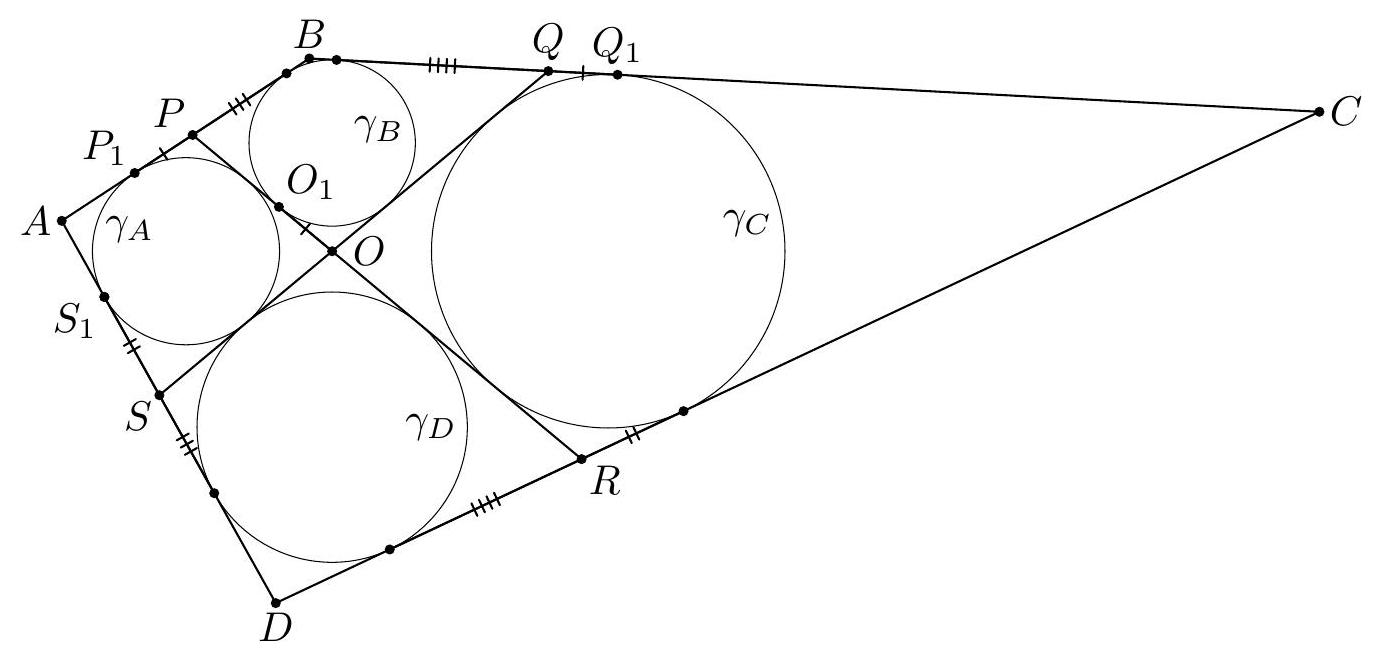 Figure 1 Next, let us draw the lines parallel to $Q S$ through $P$ and $R$, and also draw the lines parallel to $P R$ through $Q$ and $S$. These lines form a parallelogram; denote its vertices by $A^{\\prime}, B^{\\prime}, C^{\\prime}$, and $D^{\\prime}$ as shown in Figure 2. Since the quadrilateral $A P O S$ has an incircle, we have $A P-A S=O P-O S=A^{\\prime} S-A^{\\prime} P$. It is well-known that in this case there also exists a circle $\\omega_{A}$ tangent to the four rays $A P$, $A S, A^{\\prime} P$, and $A^{\\prime} S$. It is worth mentioning here that in case when, say, the lines $A B$ and $A^{\\prime} B^{\\prime}$ coincide, the circle $\\omega_{A}$ is just tangent to $A B$ at $P$. We introduce the circles $\\omega_{B}, \\omega_{C}$, and $\\omega_{D}$ in a similar manner. Assume that the radii of the circles $\\omega_{A}$ and $\\omega_{C}$ are different. Let $X$ be the center of the homothety having a positive scale factor and mapping $\\omega_{A}$ to $\\omega_{C}$. Now, Monge's theorem applied to the circles $\\omega_{A}, \\Omega$, and $\\omega_{C}$ shows that the points $A, C$, and $X$ are collinear. Applying the same theorem to the circles $\\omega_{A}, \\omega_{B}$, and $\\omega_{C}$, we see that the points $P, Q$, and $X$ are also collinear. Similarly, the points $R, S$, and $X$ are collinear, as required. If the radii of $\\omega_{A}$ and $\\omega_{C}$ are equal but these circles do not coincide, then the degenerate version of the same theorem yields that the three lines $A C, P Q$, and $R S$ are parallel to the line of centers of $\\omega_{A}$ and $\\omega_{C}$. Finally, we need to say a few words about the case when $\\omega_{A}$ and $\\omega_{C}$ coincide (and thus they also coincide with $\\Omega, \\omega_{B}$, and $\\omega_{D}$ ). It may be regarded as the limit case in the following manner. 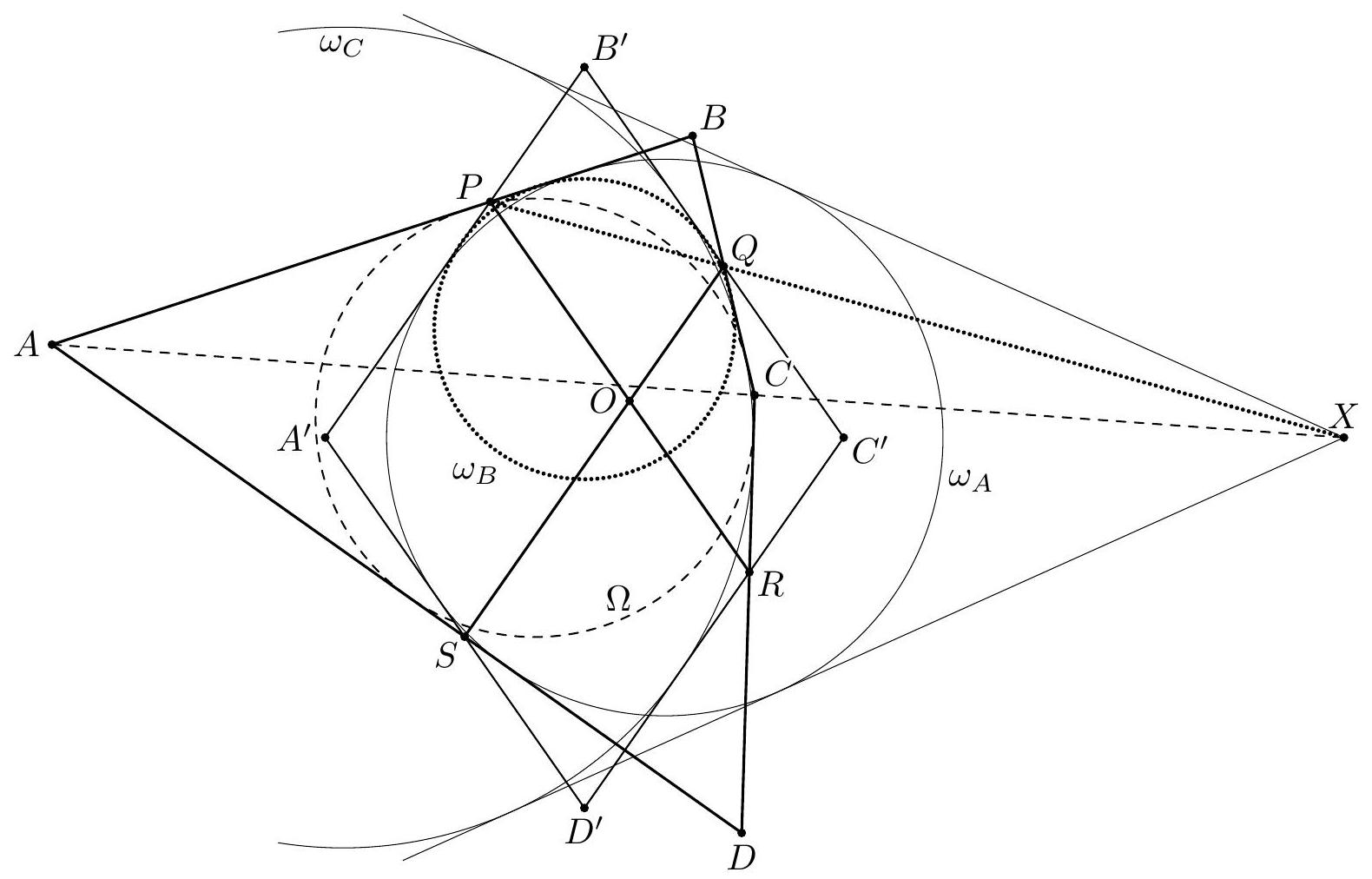 Figure 2 Let us fix the positions of $A, P, O$, and $S$ (thus we also fix the circles $\\omega_{A}, \\gamma_{A}, \\gamma_{B}$, and $\\gamma_{D}$ ). Now we vary the circle $\\gamma_{C}$ inscribed into $\\angle Q O R$; for each of its positions, one may reconstruct the lines $B C$ and $C D$ as the external common tangents to $\\gamma_{B}, \\gamma_{C}$ and $\\gamma_{C}, \\gamma_{D}$ different from $P R$ and $Q S$, respectively. After such variation, the circle $\\Omega$ changes, so the result obtained above may be applied.", "metadata": {"resource_path": "IMO_SL/segmented/en-IMO2015SL.jsonl"}} |
| {"year": "2015", "tier": "T0", "problem_label": "G7", "problem_type": "Geometry", "exam": "IMO-SL", "problem": "Let $A B C D$ be a convex quadrilateral, and let $P, Q, R$, and $S$ be points on the sides $A B, B C, C D$, and $D A$, respectively. Let the line segments $P R$ and $Q S$ meet at $O$. Suppose that each of the quadrilaterals $A P O S, B Q O P, C R O Q$, and $D S O R$ has an incircle. Prove that the lines $A C, P Q$, and $R S$ are either concurrent or parallel to each other. (Bulgaria)", "solution": "Applying Menelaus' theorem to $\\triangle A B C$ with the line $P Q$ and to $\\triangle A C D$ with the line $R S$, we see that the line $A C$ meets $P Q$ and $R S$ at the same point (possibly at infinity) if and only if $$ \\frac{A P}{P B} \\cdot \\frac{B Q}{Q C} \\cdot \\frac{C R}{R D} \\cdot \\frac{D S}{S A}=1 $$ So, it suffices to prove (1). We start with the following result. Lemma 1. Let $E F G H$ be a circumscribed quadrilateral, and let $M$ be its incenter. Then $$ \\frac{E F \\cdot F G}{G H \\cdot H E}=\\frac{F M^{2}}{H M^{2}} $$ Proof. Notice that $\\angle E M H+\\angle G M F=\\angle F M E+\\angle H M G=180^{\\circ}, \\angle F G M=\\angle M G H$, and $\\angle H E M=\\angle M E F$ (see Figure 3). By the law of sines, we get $$ \\frac{E F}{F M} \\cdot \\frac{F G}{F M}=\\frac{\\sin \\angle F M E \\cdot \\sin \\angle G M F}{\\sin \\angle M E F \\cdot \\sin \\angle F G M}=\\frac{\\sin \\angle H M G \\cdot \\sin \\angle E M H}{\\sin \\angle M G H \\cdot \\sin \\angle H E M}=\\frac{G H}{H M} \\cdot \\frac{H E}{H M} . $$ 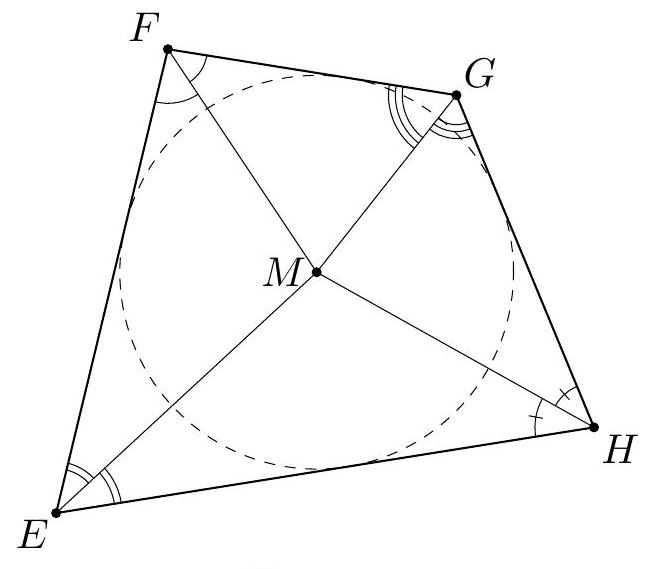 Figure 3 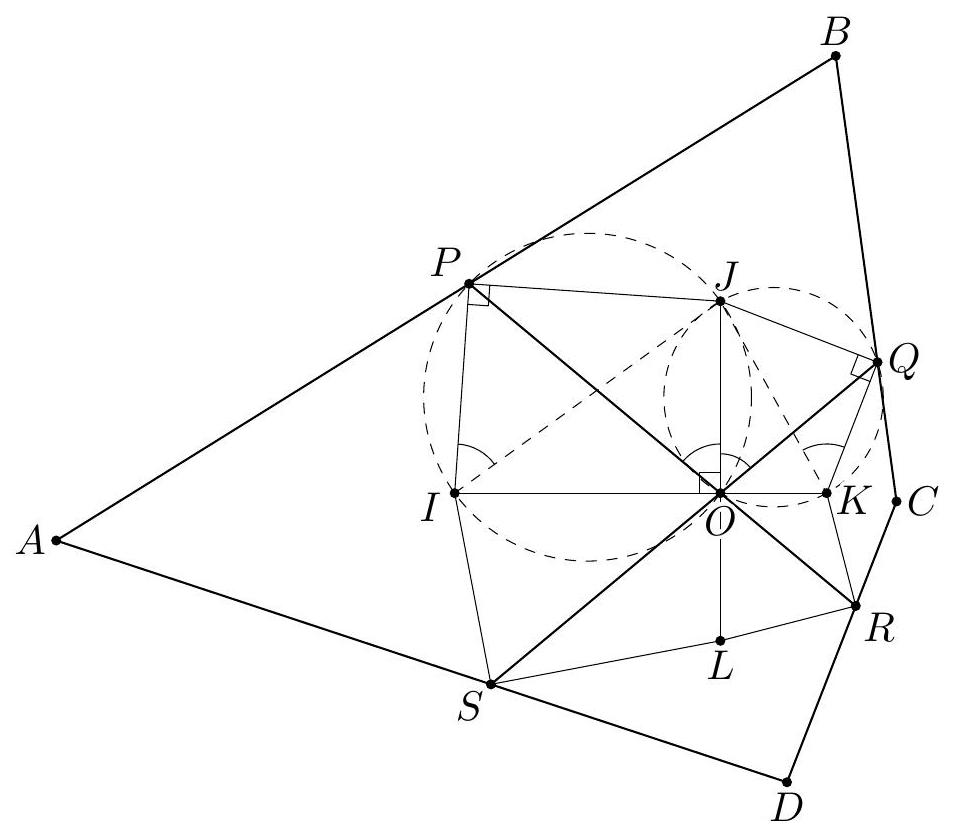 Figure 4 We denote by $I, J, K$, and $L$ the incenters of the quadrilaterals $A P O S, B Q O P, C R O Q$, and $D S O R$, respectively. Applying Lemma 1 to these four quadrilaterals we get $$ \\frac{A P \\cdot P O}{O S \\cdot S A} \\cdot \\frac{B Q \\cdot Q O}{O P \\cdot P B} \\cdot \\frac{C R \\cdot R O}{O Q \\cdot Q C} \\cdot \\frac{D S \\cdot S O}{O R \\cdot R D}=\\frac{P I^{2}}{S I^{2}} \\cdot \\frac{Q J^{2}}{P J^{2}} \\cdot \\frac{R K^{2}}{Q K^{2}} \\cdot \\frac{S L^{2}}{R L^{2}} $$ which reduces to $$ \\frac{A P}{P B} \\cdot \\frac{B Q}{Q C} \\cdot \\frac{C R}{R D} \\cdot \\frac{D S}{S A}=\\frac{P I^{2}}{P J^{2}} \\cdot \\frac{Q J^{2}}{Q K^{2}} \\cdot \\frac{R K^{2}}{R L^{2}} \\cdot \\frac{S L^{2}}{S I^{2}} $$ Next, we have $\\angle I P J=\\angle J O I=90^{\\circ}$, and the line $O P$ separates $I$ and $J$ (see Figure 4). This means that the quadrilateral $I P J O$ is cyclic. Similarly, we get that the quadrilateral $J Q K O$ is cyclic with $\\angle J Q K=90^{\\circ}$. Thus, $\\angle Q K J=\\angle Q O J=\\angle J O P=\\angle J I P$. Hence, the right triangles $I P J$ and $K Q J$ are similar. Therefore, $\\frac{P I}{P J}=\\frac{Q K}{Q J}$. Likewise, we obtain $\\frac{R K}{R L}=\\frac{S I}{S L}$. These two equations together with (2) yield (1). Comment. Instead of using the sine law, one may prove Lemma 1 by the following approach. 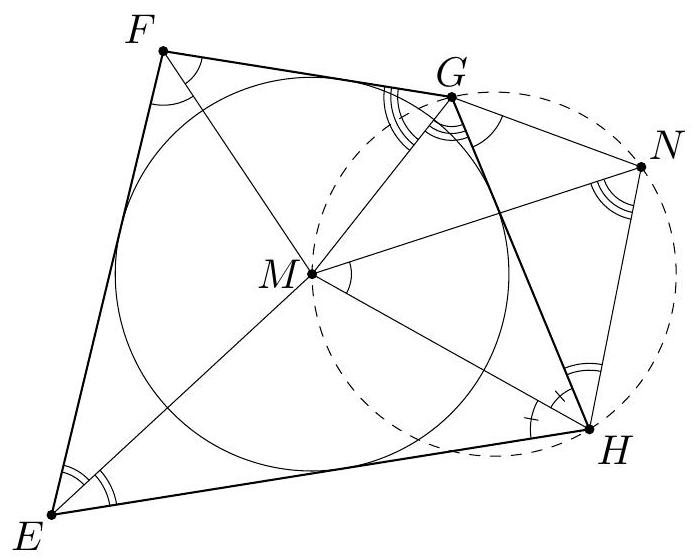 Figure 5 Let $N$ be the point such that $\\triangle N H G \\sim \\triangle M E F$ and such that $N$ and $M$ lie on different sides of the line $G H$, as shown in Figure 5. Then $\\angle G N H+\\angle H M G=\\angle F M E+\\angle H M G=180^{\\circ}$. So, the quadrilateral $G N H M$ is cyclic. Thus, $\\angle M N H=\\angle M G H=\\angle F G M$ and $\\angle H M N=\\angle H G N=$ $\\angle E F M=\\angle M F G$. Hence, $\\triangle H M N \\sim \\triangle M F G$. Therefore, $\\frac{H M}{H G}=\\frac{H M}{H N} \\cdot \\frac{H N}{H G}=\\frac{M F}{M G} \\cdot \\frac{E M}{E F}$. Similarly, we obtain $\\frac{H M}{H E}=\\frac{M F}{M E} \\cdot \\frac{G M}{G F}$. By multiplying these two equations, we complete the proof.", "metadata": {"resource_path": "IMO_SL/segmented/en-IMO2015SL.jsonl"}} |
| {"year": "2015", "tier": "T0", "problem_label": "G7", "problem_type": "Geometry", "exam": "IMO-SL", "problem": "Let $A B C D$ be a convex quadrilateral, and let $P, Q, R$, and $S$ be points on the sides $A B, B C, C D$, and $D A$, respectively. Let the line segments $P R$ and $Q S$ meet at $O$. Suppose that each of the quadrilaterals $A P O S, B Q O P, C R O Q$, and $D S O R$ has an incircle. Prove that the lines $A C, P Q$, and $R S$ are either concurrent or parallel to each other. (Bulgaria)", "solution": "We present another approach for showing (1) from Lemma 2. Let $E F G H$ and $E^{\\prime} F^{\\prime} G^{\\prime} H^{\\prime}$ be circumscribed quadrilaterals such that $\\angle E+\\angle E^{\\prime}=$ $\\angle F+\\angle F^{\\prime}=\\angle G+\\angle G^{\\prime}=\\angle H+\\angle H^{\\prime}=180^{\\circ}$. Then $$ \\frac{E F \\cdot G H}{F G \\cdot H E}=\\frac{E^{\\prime} F^{\\prime} \\cdot G^{\\prime} H^{\\prime}}{F^{\\prime} G^{\\prime} \\cdot H^{\\prime} E^{\\prime}} $$ Proof. Let $M$ and $M^{\\prime}$ be the incenters of $E F G H$ and $E^{\\prime} F^{\\prime} G^{\\prime} H^{\\prime}$, respectively. We use the notation [XYZ] for the area of a triangle $X Y Z$. Taking into account the relation $\\angle F M E+\\angle F^{\\prime} M^{\\prime} E^{\\prime}=180^{\\circ}$ together with the analogous ones, we get $$ \\begin{aligned} \\frac{E F \\cdot G H}{F G \\cdot H E} & =\\frac{[M E F] \\cdot[M G H]}{[M F G] \\cdot[M H E]}=\\frac{M E \\cdot M F \\cdot \\sin \\angle F M E \\cdot M G \\cdot M H \\cdot \\sin \\angle H M G}{M F \\cdot M G \\cdot \\sin \\angle G M F \\cdot M H \\cdot M E \\cdot \\sin \\angle E M H} \\\\ & =\\frac{M^{\\prime} E^{\\prime} \\cdot M^{\\prime} F^{\\prime} \\cdot \\sin \\angle F^{\\prime} M^{\\prime} E^{\\prime} \\cdot M^{\\prime} G^{\\prime} \\cdot M^{\\prime} H^{\\prime} \\cdot \\sin \\angle H^{\\prime} M^{\\prime} G^{\\prime}}{M^{\\prime} F^{\\prime} \\cdot M^{\\prime} G^{\\prime} \\cdot \\sin \\angle G^{\\prime} M^{\\prime} F^{\\prime} \\cdot M^{\\prime} H^{\\prime} \\cdot M^{\\prime} E^{\\prime} \\cdot \\sin \\angle E^{\\prime} M^{\\prime} H^{\\prime}}=\\frac{E^{\\prime} F^{\\prime} \\cdot G^{\\prime} H^{\\prime}}{F^{\\prime} G^{\\prime} \\cdot H^{\\prime} E^{\\prime}} . \\end{aligned} $$ 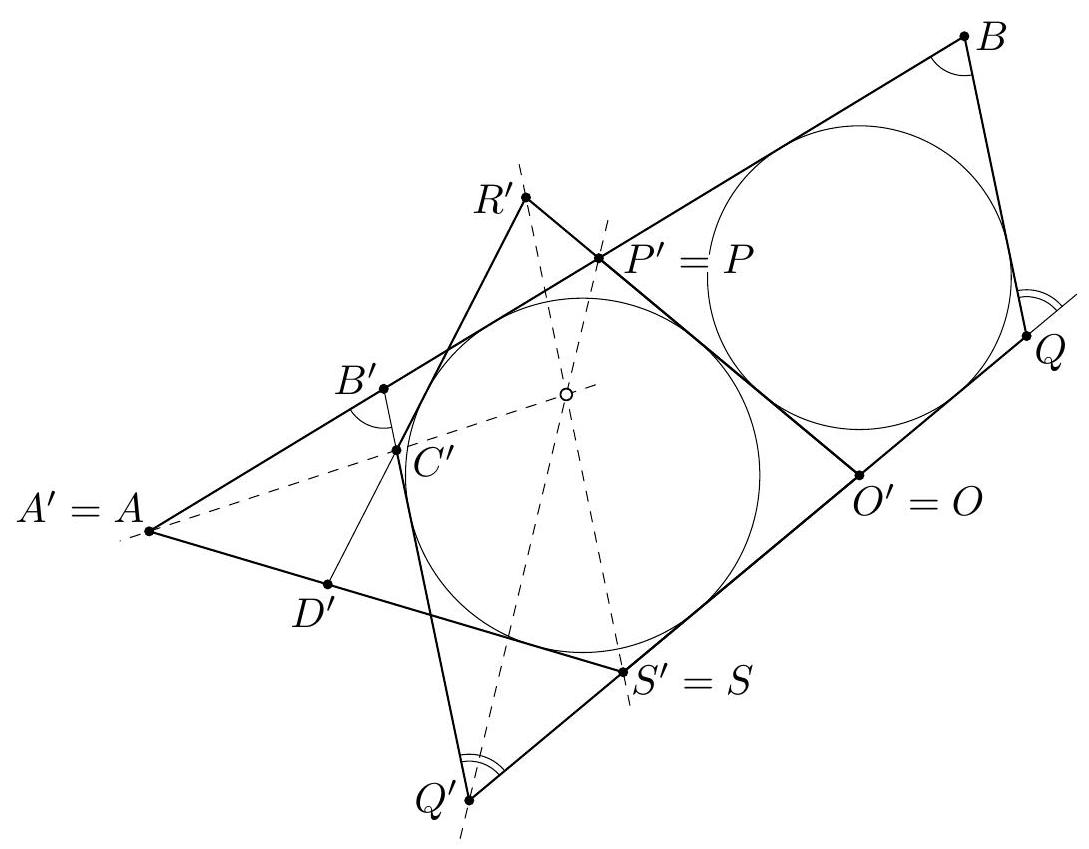 Figure 6 Denote by $h$ the homothety centered at $O$ that maps the incircle of $C R O Q$ to the incircle of $A P O S$. Let $Q^{\\prime}=h(Q), C^{\\prime}=h(C), R^{\\prime}=h(R), O^{\\prime}=O, S^{\\prime}=S, A^{\\prime}=A$, and $P^{\\prime}=P$. Furthermore, define $B^{\\prime}=A^{\\prime} P^{\\prime} \\cap C^{\\prime} Q^{\\prime}$ and $D^{\\prime}=A^{\\prime} S^{\\prime} \\cap C^{\\prime} R^{\\prime}$ as shown in Figure 6. Then $$ \\frac{A P \\cdot O S}{P O \\cdot S A}=\\frac{A^{\\prime} P^{\\prime} \\cdot O^{\\prime} S^{\\prime}}{P^{\\prime} O^{\\prime} \\cdot S^{\\prime} A^{\\prime}} $$ holds trivially. We also have $$ \\frac{C R \\cdot O Q}{R O \\cdot Q C}=\\frac{C^{\\prime} R^{\\prime} \\cdot O^{\\prime} Q^{\\prime}}{R^{\\prime} O^{\\prime} \\cdot Q^{\\prime} C^{\\prime}} $$ by the similarity of the quadrilaterals $C R O Q$ and $C^{\\prime} R^{\\prime} O^{\\prime} Q^{\\prime}$. Next, consider the circumscribed quadrilaterals $B Q O P$ and $B^{\\prime} Q^{\\prime} O^{\\prime} P^{\\prime}$ whose incenters lie on different sides of the quadrilaterals' shared side line $O P=O^{\\prime} P^{\\prime}$. Observe that $B Q \\| B^{\\prime} Q^{\\prime}$ and that $B^{\\prime}$ and $Q^{\\prime}$ lie on the lines $B P$ and $Q O$, respectively. It is now easy to see that the two quadrilaterals satisfy the hypotheses of Lemma 2. Thus, we deduce $$ \\frac{B Q \\cdot O P}{Q O \\cdot P B}=\\frac{B^{\\prime} Q^{\\prime} \\cdot O^{\\prime} P^{\\prime}}{Q^{\\prime} O^{\\prime} \\cdot P^{\\prime} B^{\\prime}} $$ Similarly, we get $$ \\frac{D S \\cdot O R}{S O \\cdot R D}=\\frac{D^{\\prime} S^{\\prime} \\cdot O^{\\prime} R^{\\prime}}{S^{\\prime} O^{\\prime} \\cdot R^{\\prime} D^{\\prime}} $$ Multiplying these four equations, we obtain $$ \\frac{A P}{P B} \\cdot \\frac{B Q}{Q C} \\cdot \\frac{C R}{R D} \\cdot \\frac{D S}{S A}=\\frac{A^{\\prime} P^{\\prime}}{P^{\\prime} B^{\\prime}} \\cdot \\frac{B^{\\prime} Q^{\\prime}}{Q^{\\prime} C^{\\prime}} \\cdot \\frac{C^{\\prime} R^{\\prime}}{R^{\\prime} D^{\\prime}} \\cdot \\frac{D^{\\prime} S^{\\prime}}{S^{\\prime} A^{\\prime}} $$ Finally, we apply BRIANChon's theorem to the circumscribed hexagon $A^{\\prime} P^{\\prime} R^{\\prime} C^{\\prime} Q^{\\prime} S^{\\prime}$ and deduce that the lines $A^{\\prime} C^{\\prime}, P^{\\prime} Q^{\\prime}$, and $R^{\\prime} S^{\\prime}$ are either concurrent or parallel to each other. So, by Menelaus' theorem, we obtain $$ \\frac{A^{\\prime} P^{\\prime}}{P^{\\prime} B^{\\prime}} \\cdot \\frac{B^{\\prime} Q^{\\prime}}{Q^{\\prime} C^{\\prime}} \\cdot \\frac{C^{\\prime} R^{\\prime}}{R^{\\prime} D^{\\prime}} \\cdot \\frac{D^{\\prime} S^{\\prime}}{S^{\\prime} A^{\\prime}}=1 $$ This equation together with (3) yield (1).", "metadata": {"resource_path": "IMO_SL/segmented/en-IMO2015SL.jsonl"}} |
| {"year": "2015", "tier": "T0", "problem_label": "G8", "problem_type": "Geometry", "exam": "IMO-SL", "problem": "A triangulation of a convex polygon $\\Pi$ is a partitioning of $\\Pi$ into triangles by diagonals having no common points other than the vertices of the polygon. We say that a triangulation is a Thaiangulation if all triangles in it have the same area. Prove that any two different Thaiangulations of a convex polygon $\\Pi$ differ by exactly two triangles. (In other words, prove that it is possible to replace one pair of triangles in the first Thaiangulation with a different pair of triangles so as to obtain the second Thaiangulation.) (Bulgaria)", "solution": "We denote by [S] the area of a polygon $S$. Recall that each triangulation of a convex $n$-gon has exactly $n-2$ triangles. This means that all triangles in any two Thaiangulations of a convex polygon $\\Pi$ have the same area. Let $\\mathcal{T}$ be a triangulation of a convex polygon $\\Pi$. If four vertices $A, B, C$, and $D$ of $\\Pi$ form a parallelogram, and $\\mathcal{T}$ contains two triangles whose union is this parallelogram, then we say that $\\mathcal{T}$ contains parallelogram $A B C D$. Notice here that if two Thaiangulations $\\mathcal{T}_{1}$ and $\\mathcal{T}_{2}$ of $\\Pi$ differ by two triangles, then the union of these triangles is a quadrilateral each of whose diagonals bisects its area, i.e., a parallelogram. We start with proving two properties of triangulations. Lemma 1. A triangulation of a convex polygon $\\Pi$ cannot contain two parallelograms. Proof. Arguing indirectly, assume that $P_{1}$ and $P_{2}$ are two parallelograms contained in some triangulation $\\mathcal{T}$. If they have a common triangle in $\\mathcal{T}$, then we may assume that $P_{1}$ consists of triangles $A B C$ and $A D C$ of $\\mathcal{T}$, while $P_{2}$ consists of triangles $A D C$ and $C D E$ (see Figure 1). But then $B C\\|A D\\| C E$, so the three vertices $B, C$, and $E$ of $\\Pi$ are collinear, which is absurd. Assume now that $P_{1}$ and $P_{2}$ contain no common triangle. Let $P_{1}=A B C D$. The sides $A B$, $B C, C D$, and $D A$ partition $\\Pi$ into several parts, and $P_{2}$ is contained in one of them; we may assume that this part is cut off from $P_{1}$ by $A D$. Then one may label the vertices of $P_{2}$ by $X$, $Y, Z$, and $T$ so that the polygon $A B C D X Y Z T$ is convex (see Figure 2; it may happen that $D=X$ and/or $T=A$, but still this polygon has at least six vertices). But the sum of the external angles of this polygon at $B, C, Y$, and $Z$ is already $360^{\\circ}$, which is impossible. A final contradiction. 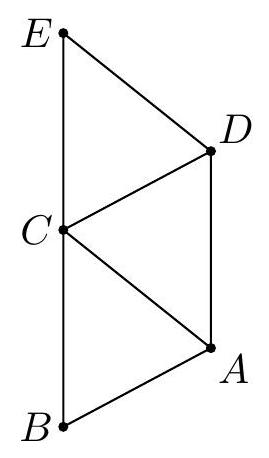 Figure 1 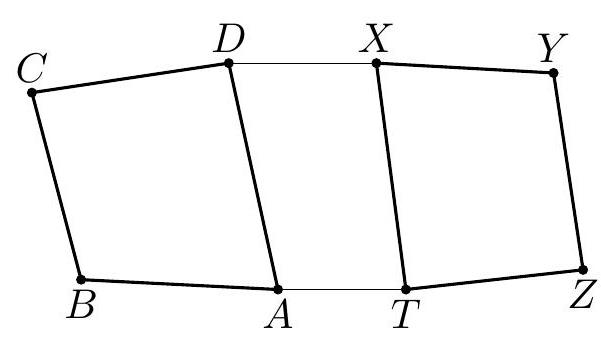 Figure 2 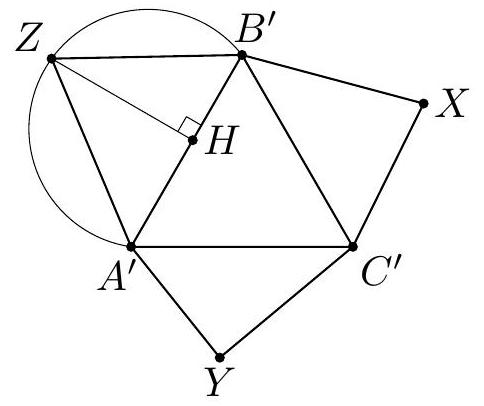 Figure 3 Lemma 2. Every triangle in a Thaiangulation $\\mathcal{T}$ of $\\Pi$ contains a side of $\\Pi$. Proof. Let $A B C$ be a triangle in $\\mathcal{T}$. Apply an affine transform such that $A B C$ maps to an equilateral triangle; let $A^{\\prime} B^{\\prime} C^{\\prime}$ be the image of this triangle, and $\\Pi^{\\prime}$ be the image of $\\Pi$. Clearly, $\\mathcal{T}$ maps into a Thaiangulation $\\mathcal{T}^{\\prime}$ of $\\Pi^{\\prime}$. Assume that none of the sides of $\\triangle A^{\\prime} B^{\\prime} C^{\\prime}$ is a side of $\\Pi^{\\prime}$. Then $\\mathcal{T}^{\\prime}$ contains some other triangles with these sides, say, $A^{\\prime} B^{\\prime} Z, C^{\\prime} A^{\\prime} Y$, and $B^{\\prime} C^{\\prime} X$; notice that $A^{\\prime} Z B^{\\prime} X C^{\\prime} Y$ is a convex hexagon (see Figure 3). The sum of its external angles at $X, Y$, and $Z$ is less than $360^{\\circ}$. So one of these angles (say, at $Z$ ) is less than $120^{\\circ}$, hence $\\angle A^{\\prime} Z B^{\\prime}>60^{\\circ}$. Then $Z$ lies on a circular arc subtended by $A^{\\prime} B^{\\prime}$ and having angular measure less than $240^{\\circ}$; consequently, the altitude $Z H$ of $\\triangle A^{\\prime} B^{\\prime} Z$ is less than $\\sqrt{3} A^{\\prime} B^{\\prime} / 2$. Thus $\\left[A^{\\prime} B^{\\prime} Z\\right]<\\left[A^{\\prime} B^{\\prime} C^{\\prime}\\right]$, and $\\mathcal{T}^{\\prime}$ is not a Thaiangulation. A contradiction. Now we pass to the solution. We say that a triangle in a triangulation of $\\Pi$ is an ear if it contains two sides of $\\Pi$. Note that each triangulation of a polygon contains some ear. Arguing indirectly, we choose a convex polygon $\\Pi$ with the least possible number of sides such that some two Thaiangulations $\\mathcal{T}_{1}$ and $\\mathcal{T}_{2}$ of $\\Pi$ violate the problem statement (thus $\\Pi$ has at least five sides). Consider now any ear $A B C$ in $\\mathcal{T}_{1}$, with $A C$ being a diagonal of $\\Pi$. If $\\mathcal{T}_{2}$ also contains $\\triangle A B C$, then one may cut $\\triangle A B C$ off from $\\Pi$, getting a polygon with a smaller number of sides which also violates the problem statement. This is impossible; thus $\\mathcal{T}_{2}$ does not contain $\\triangle A B C$. Next, $\\mathcal{T}_{1}$ contains also another triangle with side $A C$, say $\\triangle A C D$. By Lemma 2 , this triangle contains a side of $\\Pi$, so $D$ is adjacent to either $A$ or $C$ on the boundary of $\\Pi$. We may assume that $D$ is adjacent to $C$. Assume that $\\mathcal{T}_{2}$ does not contain the triangle $B C D$. Then it contains two different triangles $B C X$ and $C D Y$ (possibly, with $X=Y$ ); since these triangles have no common interior points, the polygon $A B C D Y X$ is convex (see Figure 4). But, since $[A B C]=[B C X]=$ $[A C D]=[C D Y]$, we get $A X \\| B C$ and $A Y \\| C D$ which is impossible. Thus $\\mathcal{T}_{2}$ contains $\\triangle B C D$. Therefore, $[A B D]=[A B C]+[A C D]-[B C D]=[A B C]$, and $A B C D$ is a parallelogram contained in $\\mathcal{T}_{1}$. Let $\\mathcal{T}^{\\prime}$ be the Thaiangulation of $\\Pi$ obtained from $\\mathcal{T}_{1}$ by replacing the diagonal $A C$ with $B D$; then $\\mathcal{T}^{\\prime}$ is distinct from $\\mathcal{T}_{2}$ (otherwise $\\mathcal{T}_{1}$ and $\\mathcal{T}_{2}$ would differ by two triangles). Moreover, $\\mathcal{T}^{\\prime}$ shares a common ear $B C D$ with $\\mathcal{T}_{2}$. As above, cutting this ear away we obtain that $\\mathcal{T}_{2}$ and $\\mathcal{T}^{\\prime}$ differ by two triangles forming a parallelogram different from $A B C D$. Thus $\\mathcal{T}^{\\prime}$ contains two parallelograms, which contradicts Lemma 1. 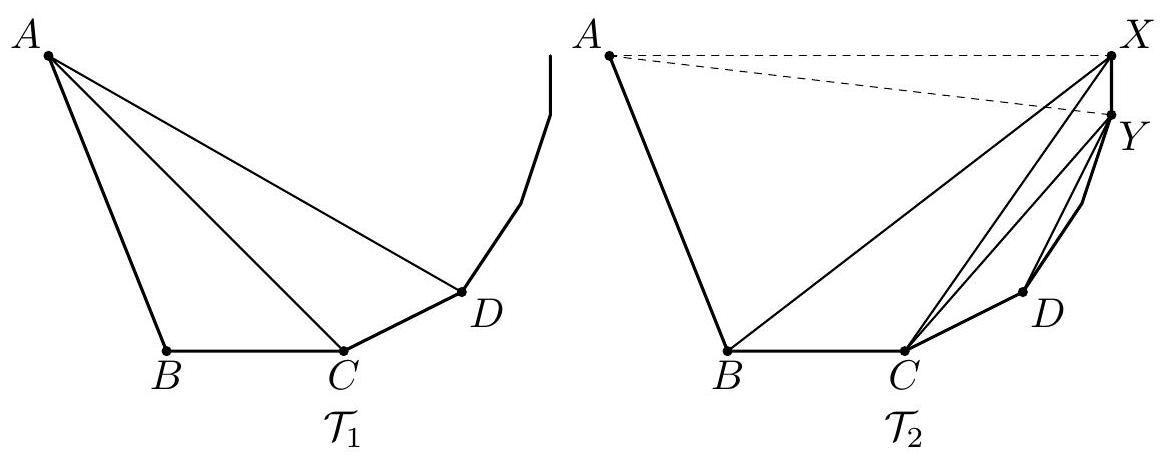 Figure 4 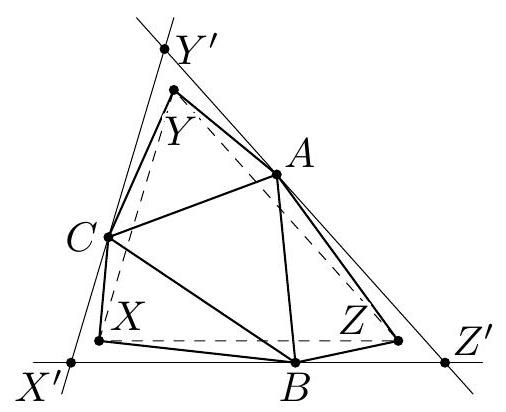 Figure 5 Comment 1. Lemma 2 is equivalent to the well-known Erdős-Debrunner inequality stating that for any triangle $P Q R$ and any points $A, B, C$ lying on the sides $Q R, R P$, and $P Q$, respectively, we have $$ [A B C] \\geqslant \\min \\{[A B R],[B C P],[C A Q]\\} $$ To derive this inequality from Lemma 2, one may assume that (1) does not hold, and choose some points $X, Y$, and $Z$ inside the triangles $B C P, C A Q$, and $A B R$, respectively, so that $[A B C]=$ $[A B Z]=[B C X]=[C A Y]$. Then a convex hexagon $A Z B X C Y$ has a Thaiangulation containing $\\triangle A B C$, which contradicts Lemma 2. Conversely, assume that a Thaiangulation $\\mathcal{T}$ of $\\Pi$ contains a triangle $A B C$ none of whose sides is a side of $\\Pi$, and let $A B Z, A Y C$, and $X B C$ be other triangles in $\\mathcal{T}$ containing the corresponding sides. Then $A Z B X C Y$ is a convex hexagon. Consider the lines through $A, B$, and $C$ parallel to $Y Z, Z X$, and $X Y$, respectively. They form a triangle $X^{\\prime} Y^{\\prime} Z^{\\prime}$ similar to $\\triangle X Y Z$ (see Figure 5). By (1) we have $$ [A B C] \\geqslant \\min \\left\\{\\left[A B Z^{\\prime}\\right],\\left[B C X^{\\prime}\\right],\\left[C A Y^{\\prime}\\right]\\right\\}>\\min \\{[A B Z],[B C X],[C A Y]\\}, $$ so $\\mathcal{T}$ is not a Thaiangulation.", "metadata": {"resource_path": "IMO_SL/segmented/en-IMO2015SL.jsonl"}} |
| {"year": "2015", "tier": "T0", "problem_label": "G8", "problem_type": "Geometry", "exam": "IMO-SL", "problem": "A triangulation of a convex polygon $\\Pi$ is a partitioning of $\\Pi$ into triangles by diagonals having no common points other than the vertices of the polygon. We say that a triangulation is a Thaiangulation if all triangles in it have the same area. Prove that any two different Thaiangulations of a convex polygon $\\Pi$ differ by exactly two triangles. (In other words, prove that it is possible to replace one pair of triangles in the first Thaiangulation with a different pair of triangles so as to obtain the second Thaiangulation.) (Bulgaria)", "solution": "We will make use of the preliminary observations from Arguing indirectly, we choose a convex polygon $\\Pi$ with the least possible number of sides such that some two Thaiangulations $\\mathcal{T}_{1}$ and $\\mathcal{T}_{2}$ of $\\Pi$ violate the statement (thus $\\Pi$ has at least five sides). Assume that $\\mathcal{T}_{1}$ and $\\mathcal{T}_{2}$ share a diagonal $d$ splitting $\\Pi$ into two smaller polygons $\\Pi_{1}$ and $\\Pi_{2}$. Since the problem statement holds for any of them, the induced Thaiangulations of each of $\\Pi_{i}$ differ by two triangles forming a parallelogram (the Thaiangulations induced on $\\Pi_{i}$ by $\\mathcal{T}_{1}$ and $T_{2}$ may not coincide, otherwise $\\mathcal{T}_{1}$ and $\\mathcal{T}_{2}$ would differ by at most two triangles). But both these parallelograms are contained in $\\mathcal{T}_{1}$; this contradicts Lemma 1. Therefore, $\\mathcal{T}_{1}$ and $\\mathcal{T}_{2}$ share no diagonal. Hence they also share no triangle. We consider two cases. Case 1. Assume that some vertex $B$ of $\\Pi$ is an endpoint of some diagonal in $\\mathcal{T}_{1}$, as well as an endpoint of some diagonal in $\\mathcal{T}_{2}$. Let $A$ and $C$ be the vertices of $\\Pi$ adjacent to $B$. Then $\\mathcal{T}_{1}$ contains some triangles $A B X$ and $B C Y$, while $\\mathcal{T}_{2}$ contains some triangles $A B X^{\\prime}$ and $B C Y^{\\prime}$. Here, some of the points $X$, $X^{\\prime}, Y$, and $Y^{\\prime}$ may coincide; however, in view of our assumption together with the fact that $\\mathcal{T}_{1}$ and $\\mathcal{T}_{2}$ share no triangle, all four triangles $A B X, B C Y, A B X^{\\prime}$, and $B C Y^{\\prime}$ are distinct. Since $[A B X]=[B C Y]=\\left[A B X^{\\prime}\\right]=\\left[B C Y^{\\prime}\\right]$, we have $X X^{\\prime} \\| A B$ and $Y Y^{\\prime} \\| B C$. Now, if $X=Y$, then $X^{\\prime}$ and $Y^{\\prime}$ lie on different lines passing through $X$ and are distinct from that point, so that $X^{\\prime} \\neq Y^{\\prime}$. In this case, we may switch the two Thaiangulations. So, hereafter we assume that $X \\neq Y$. In the convex pentagon $A B C Y X$ we have either $\\angle B A X+\\angle A X Y>180^{\\circ}$ or $\\angle X Y C+$ $\\angle Y C B>180^{\\circ}$ (or both); due to the symmetry, we may assume that the first inequality holds. Let $r$ be the ray emerging from $X$ and co-directed with $\\overrightarrow{A B}$; our inequality shows that $r$ points to the interior of the pentagon (and thus to the interior of $\\Pi$ ). Therefore, the ray opposite to $r$ points outside $\\Pi$, so $X^{\\prime}$ lies on $r$; moreover, $X^{\\prime}$ lies on the \"arc\" $C Y$ of $\\Pi$ not containing $X$. So the segments $X X^{\\prime}$ and $Y B$ intersect (see Figure 6). Let $O$ be the intersection point of the rays $r$ and $B C$. Since the triangles $A B X^{\\prime}$ and $B C Y^{\\prime}$ have no common interior points, $Y^{\\prime}$ must lie on the \"arc\" $C X^{\\prime}$ which is situated inside the triangle $X B O$. Therefore, the line $Y Y^{\\prime}$ meets two sides of $\\triangle X B O$, none of which may be $X B$ (otherwise the diagonals $X B$ and $Y Y^{\\prime}$ would share a common point). Thus $Y Y^{\\prime}$ intersects $B O$, which contradicts $Y Y^{\\prime} \\| B C$. 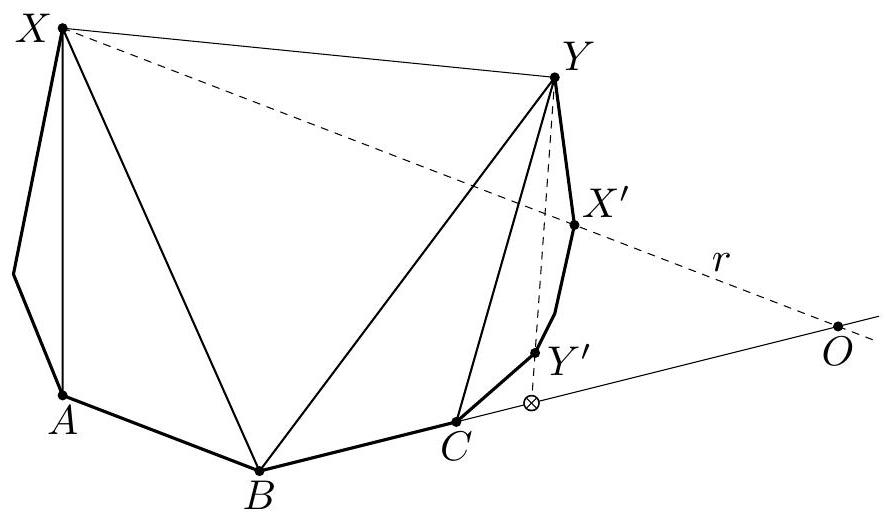 Figure 6 Case 2. In the remaining case, each vertex of $\\Pi$ is an endpoint of a diagonal in at most one of $\\mathcal{T}_{1}$ and $\\mathcal{T}_{2}$. On the other hand, a triangulation cannot contain two consecutive vertices with no diagonals from each. Therefore, the vertices of $\\Pi$ alternatingly emerge diagonals in $\\mathcal{T}_{1}$ and in $\\mathcal{T}_{2}$. In particular, $\\Pi$ has an even number of sides. Next, we may choose five consecutive vertices $A, B, C, D$, and $E$ of $\\Pi$ in such a way that $$ \\angle A B C+\\angle B C D>180^{\\circ} \\text { and } \\angle B C D+\\angle C D E>180^{\\circ} . $$ In order to do this, it suffices to choose three consecutive vertices $B, C$, and $D$ of $\\Pi$ such that the sum of their external angles is at most $180^{\\circ}$. This is possible, since $\\Pi$ has at least six sides. 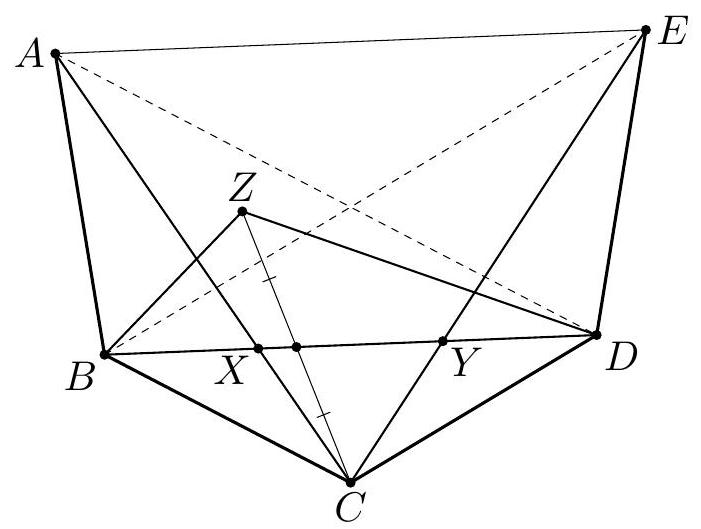 Figure 7 We may assume that $\\mathcal{T}_{1}$ has no diagonals from $B$ and $D$ (and thus contains the triangles $A B C$ and $C D E$ ), while $\\mathcal{T}_{2}$ has no diagonals from $A, C$, and $E$ (and thus contains the triangle $B C D)$. Now, since $[A B C]=[B C D]=[C D E]$, we have $A D \\| B C$ and $B E \\| C D$ (see Figure 7). By (2) this yields that $A D>B C$ and $B E>C D$. Let $X=A C \\cap B D$ and $Y=C E \\cap B D$; then the inequalities above imply that $A X>C X$ and $E Y>C Y$. Finally, $\\mathcal{T}_{2}$ must also contain some triangle $B D Z$ with $Z \\neq C$; then the ray $C Z$ lies in the angle $A C E$. Since $[B C D]=[B D Z]$, the diagonal $B D$ bisects $C Z$. Together with the inequalities above, this yields that $Z$ lies inside the triangle $A C E$ (but $Z$ is distinct from $A$ and $E$ ), which is impossible. The final contradiction. Comment 2. Case 2 may also be accomplished with the use of Lemma 2. Indeed, since each triangulation of an $n$-gon contains $n-2$ triangles neither of which may contain three sides of $\\Pi$, Lemma 2 yields that each Thaiangulation contains exactly two ears. But each vertex of $\\Pi$ is a vertex of an ear either in $\\mathcal{T}_{1}$ or in $\\mathcal{T}_{2}$, so $\\Pi$ cannot have more than four vertices.", "metadata": {"resource_path": "IMO_SL/segmented/en-IMO2015SL.jsonl"}} |
| {"year": "2015", "tier": "T0", "problem_label": "N1", "problem_type": "Number Theory", "exam": "IMO-SL", "problem": "Determine all positive integers $M$ for which the sequence $a_{0}, a_{1}, a_{2}, \\ldots$, defined by $a_{0}=\\frac{2 M+1}{2}$ and $a_{k+1}=a_{k}\\left\\lfloor a_{k}\\right\\rfloor$ for $k=0,1,2, \\ldots$, contains at least one integer term. (Luxembourg)", "solution": "Define $b_{k}=2 a_{k}$ for all $k \\geqslant 0$. Then $$ b_{k+1}=2 a_{k+1}=2 a_{k}\\left\\lfloor a_{k}\\right\\rfloor=b_{k}\\left\\lfloor\\frac{b_{k}}{2}\\right\\rfloor . $$ Since $b_{0}$ is an integer, it follows that $b_{k}$ is an integer for all $k \\geqslant 0$. Suppose that the sequence $a_{0}, a_{1}, a_{2}, \\ldots$ does not contain any integer term. Then $b_{k}$ must be an odd integer for all $k \\geqslant 0$, so that $$ b_{k+1}=b_{k}\\left\\lfloor\\frac{b_{k}}{2}\\right\\rfloor=\\frac{b_{k}\\left(b_{k}-1\\right)}{2} $$ Hence $$ b_{k+1}-3=\\frac{b_{k}\\left(b_{k}-1\\right)}{2}-3=\\frac{\\left(b_{k}-3\\right)\\left(b_{k}+2\\right)}{2} $$ for all $k \\geqslant 0$. Suppose that $b_{0}-3>0$. Then equation (2) yields $b_{k}-3>0$ for all $k \\geqslant 0$. For each $k \\geqslant 0$, define $c_{k}$ to be the highest power of 2 that divides $b_{k}-3$. Since $b_{k}-3$ is even for all $k \\geqslant 0$, the number $c_{k}$ is positive for every $k \\geqslant 0$. Note that $b_{k}+2$ is an odd integer. Therefore, from equation (2), we have that $c_{k+1}=c_{k}-1$. Thus, the sequence $c_{0}, c_{1}, c_{2}, \\ldots$ of positive integers is strictly decreasing, a contradiction. So, $b_{0}-3 \\leqslant 0$, which implies $M=1$. For $M=1$, we can check that the sequence is constant with $a_{k}=\\frac{3}{2}$ for all $k \\geqslant 0$. Therefore, the answer is $M \\geqslant 2$.", "metadata": {"resource_path": "IMO_SL/segmented/en-IMO2015SL.jsonl"}} |
| {"year": "2015", "tier": "T0", "problem_label": "N1", "problem_type": "Number Theory", "exam": "IMO-SL", "problem": "Determine all positive integers $M$ for which the sequence $a_{0}, a_{1}, a_{2}, \\ldots$, defined by $a_{0}=\\frac{2 M+1}{2}$ and $a_{k+1}=a_{k}\\left\\lfloor a_{k}\\right\\rfloor$ for $k=0,1,2, \\ldots$, contains at least one integer term. (Luxembourg)", "solution": "We provide an alternative way to show $M=1$ once equation (1) has been reached. We claim that $b_{k} \\equiv 3\\left(\\bmod 2^{m}\\right)$ for all $k \\geqslant 0$ and $m \\geqslant 1$. If this is true, then we would have $b_{k}=3$ for all $k \\geqslant 0$ and hence $M=1$. To establish our claim, we proceed by induction on $m$. The base case $b_{k} \\equiv 3(\\bmod 2)$ is true for all $k \\geqslant 0$ since $b_{k}$ is odd. Now suppose that $b_{k} \\equiv 3\\left(\\bmod 2^{m}\\right)$ for all $k \\geqslant 0$. Hence $b_{k}=2^{m} d_{k}+3$ for some integer $d_{k}$. We have $$ 3 \\equiv b_{k+1} \\equiv\\left(2^{m} d_{k}+3\\right)\\left(2^{m-1} d_{k}+1\\right) \\equiv 3 \\cdot 2^{m-1} d_{k}+3 \\quad\\left(\\bmod 2^{m}\\right) $$ so that $d_{k}$ must be even. This implies that $b_{k} \\equiv 3\\left(\\bmod 2^{m+1}\\right)$, as required. Comment. The reason the number 3 which appears in both solutions is important, is that it is a nontrivial fixed point of the recurrence relation for $b_{k}$.", "metadata": {"resource_path": "IMO_SL/segmented/en-IMO2015SL.jsonl"}} |
| {"year": "2015", "tier": "T0", "problem_label": "N2", "problem_type": "Number Theory", "exam": "IMO-SL", "problem": "Let $a$ and $b$ be positive integers such that $a!b$ ! is a multiple of $a!+b!$. Prove that $3 a \\geqslant 2 b+2$. (United Kingdom)", "solution": "If $a>b$, we immediately get $3 a \\geqslant 2 b+2$. In the case $a=b$, the required inequality is equivalent to $a \\geqslant 2$, which can be checked easily since $(a, b)=(1,1)$ does not satisfy $a!+b!\\mid a!b!$. We now assume $a<b$ and denote $c=b-a$. The required inequality becomes $a \\geqslant 2 c+2$. Suppose, to the contrary, that $a \\leqslant 2 c+1$. Define $M=\\frac{b!}{a!}=(a+1)(a+2) \\cdots(a+c)$. Since $a!+b!\\mid a!b!$ implies $1+M \\mid a!M$, we obtain $1+M \\mid a!$. Note that we must have $c<a$; otherwise $1+M>a$ !, which is impossible. We observe that $c!\\mid M$ since $M$ is a product of $c$ consecutive integers. Thus $\\operatorname{gcd}(1+M, c!)=1$, which implies $$ 1+M \\left\\lvert\\, \\frac{a!}{c!}=(c+1)(c+2) \\cdots a\\right. $$ If $a \\leqslant 2 c$, then $\\frac{a!}{c!}$ is a product of $a-c \\leqslant c$ integers not exceeding $a$ whereas $M$ is a product of $c$ integers exceeding $a$. Therefore, $1+M>\\frac{a!}{c!}$, which is a contradiction. It remains to exclude the case $a=2 c+1$. Since $a+1=2(c+1)$, we have $c+1 \\mid M$. Hence, we can deduce from (1) that $1+M \\mid(c+2)(c+3) \\cdots a$. Now $(c+2)(c+3) \\cdots a$ is a product of $a-c-1=c$ integers not exceeding $a$; thus it is smaller than $1+M$. Again, we arrive at a contradiction. Comment 1. One may derive a weaker version of (1) and finish the problem as follows. After assuming $a \\leqslant 2 c+1$, we have $\\left\\lfloor\\frac{a}{2}\\right\\rfloor \\leqslant c$, so $\\left.\\left\\lfloor\\frac{a}{2}\\right\\rfloor!\\right\\rvert\\, M$. Therefore, $$ 1+M \\left\\lvert\\,\\left(\\left\\lfloor\\frac{a}{2}\\right\\rfloor+1\\right)\\left(\\left\\lfloor\\frac{a}{2}\\right\\rfloor+2\\right) \\cdots a\\right. $$ Observe that $\\left(\\left\\lfloor\\frac{a}{2}\\right\\rfloor+1\\right)\\left(\\left\\lfloor\\frac{a}{2}\\right\\rfloor+2\\right) \\cdots a$ is a product of $\\left\\lceil\\frac{a}{2}\\right\\rceil$ integers not exceeding $a$. This leads to a contradiction when $a$ is even since $\\left\\lceil\\frac{a}{2}\\right\\rceil=\\frac{a}{2} \\leqslant c$ and $M$ is a product of $c$ integers exceeding $a$. When $a$ is odd, we can further deduce that $1+M \\left\\lvert\\,\\left(\\frac{a+3}{2}\\right)\\left(\\frac{a+5}{2}\\right) \\cdots a\\right.$ since $\\left.\\left\\lfloor\\frac{a}{2}\\right\\rfloor+1=\\frac{a+1}{2} \\right\\rvert\\, a+1$. Now $\\left(\\frac{a+3}{2}\\right)\\left(\\frac{a+5}{2}\\right) \\cdots a$ is a product of $\\frac{a-1}{2} \\leqslant c$ numbers not exceeding $a$, and we get a contradiction.", "metadata": {"resource_path": "IMO_SL/segmented/en-IMO2015SL.jsonl"}} |
| {"year": "2015", "tier": "T0", "problem_label": "N2", "problem_type": "Number Theory", "exam": "IMO-SL", "problem": "Let $a$ and $b$ be positive integers such that $a!b$ ! is a multiple of $a!+b!$. Prove that $3 a \\geqslant 2 b+2$. (United Kingdom)", "solution": "As in $$ N=1+(a+1)(a+2) \\cdots(a+c) \\mid(a+c)! $$ which implies that all prime factors of $N$ are at most $a+c$. Let $p$ be a prime factor of $N$. If $p \\leqslant c$ or $p \\geqslant a+1$, then $p$ divides one of $a+1, \\ldots, a+c$ which is impossible. Hence $a \\geqslant p \\geqslant c+1$. Furthermore, we must have $2 p>a+c$; otherwise, $a+1 \\leqslant 2 c+2 \\leqslant 2 p \\leqslant a+c$ so $p \\mid N-1$, again impossible. Thus, we have $p \\in\\left(\\frac{a+c}{2}, a\\right]$, and $p^{2} \\nmid(a+c)$ ! since $2 p>a+c$. Therefore, $p^{2} \\nmid N$ as well. If $a \\leqslant c+2$, then the interval $\\left(\\frac{a+c}{2}, a\\right]$ contains at most one integer and hence at most one prime number, which has to be $a$. Since $p^{2} \\nmid N$, we must have $N=p=a$ or $N=1$, which is absurd since $N>a \\geqslant 1$. Thus, we have $a \\geqslant c+3$, and so $\\frac{a+c+1}{2} \\geqslant c+2$. It follows that $p$ lies in the interval $[c+2, a]$. Thus, every prime appearing in the prime factorization of $N$ lies in the interval $[c+2, a]$, and its exponent is exactly 1 . So we must have $N \\mid(c+2)(c+3) \\cdots a$. However, $(c+2)(c+3) \\cdots a$ is a product of $a-c-1 \\leqslant c$ numbers not exceeding $a$, so it is less than $N$. This is a contradiction. Comment 2. The original problem statement also asks to determine when the equality $3 a=2 b+2$ holds. It can be checked that the answer is $(a, b)=(2,2),(4,5)$.", "metadata": {"resource_path": "IMO_SL/segmented/en-IMO2015SL.jsonl"}} |
| {"year": "2015", "tier": "T0", "problem_label": "N3", "problem_type": "Number Theory", "exam": "IMO-SL", "problem": "Let $m$ and $n$ be positive integers such that $m>n$. Define $x_{k}=(m+k) /(n+k)$ for $k=$ $1,2, \\ldots, n+1$. Prove that if all the numbers $x_{1}, x_{2}, \\ldots, x_{n+1}$ are integers, then $x_{1} x_{2} \\cdots x_{n+1}-1$ is divisible by an odd prime. (Austria)", "solution": "Assume that $x_{1}, x_{2}, \\ldots, x_{n+1}$ are integers. Define the integers $$ a_{k}=x_{k}-1=\\frac{m+k}{n+k}-1=\\frac{m-n}{n+k}>0 $$ for $k=1,2, \\ldots, n+1$. Let $P=x_{1} x_{2} \\cdots x_{n+1}-1$. We need to prove that $P$ is divisible by an odd prime, or in other words, that $P$ is not a power of 2 . To this end, we investigate the powers of 2 dividing the numbers $a_{k}$. Let $2^{d}$ be the largest power of 2 dividing $m-n$, and let $2^{c}$ be the largest power of 2 not exceeding $2 n+1$. Then $2 n+1 \\leqslant 2^{c+1}-1$, and so $n+1 \\leqslant 2^{c}$. We conclude that $2^{c}$ is one of the numbers $n+1, n+2, \\ldots, 2 n+1$, and that it is the only multiple of $2^{c}$ appearing among these numbers. Let $\\ell$ be such that $n+\\ell=2^{c}$. Since $\\frac{m-n}{n+\\ell}$ is an integer, we have $d \\geqslant c$. Therefore, $2^{d-c+1} \\nmid a_{\\ell}=\\frac{m-n}{n+\\ell}$, while $2^{d-c+1} \\mid a_{k}$ for all $k \\in\\{1, \\ldots, n+1\\} \\backslash\\{\\ell\\}$. Computing modulo $2^{d-c+1}$, we get $$ P=\\left(a_{1}+1\\right)\\left(a_{2}+1\\right) \\cdots\\left(a_{n+1}+1\\right)-1 \\equiv\\left(a_{\\ell}+1\\right) \\cdot 1^{n}-1 \\equiv a_{\\ell} \\not \\equiv 0 \\quad\\left(\\bmod 2^{d-c+1}\\right) $$ Therefore, $2^{d-c+1} \\nmid P$. On the other hand, for any $k \\in\\{1, \\ldots, n+1\\} \\backslash\\{\\ell\\}$, we have $2^{d-c+1} \\mid a_{k}$. So $P \\geqslant a_{k} \\geqslant 2^{d-c+1}$, and it follows that $P$ is not a power of 2 . Comment. Instead of attempting to show that $P$ is not a power of 2 , one may try to find an odd factor of $P$ (greater than 1) as follows: From $a_{k}=\\frac{m-n}{n+k} \\in \\mathbb{Z}_{>0}$, we get that $m-n$ is divisible by $n+1, n+2, \\ldots, 2 n+1$, and thus it is also divisible by their least common multiple $L$. So $m-n=q L$ for some positive integer $q$; hence $x_{k}=q \\cdot \\frac{L}{n+k}+1$. Then, since $n+1 \\leqslant 2^{c}=n+\\ell \\leqslant 2 n+1 \\leqslant 2^{c+1}-1$, we have $2^{c} \\mid L$, but $2^{c+1} \\nmid L$. So $\\frac{L}{n+\\ell}$ is odd, while $\\frac{L}{n+k}$ is even for $k \\neq \\ell$. Computing modulo $2 q$ yields $$ x_{1} x_{2} \\cdots x_{n+1}-1 \\equiv(q+1) \\cdot 1^{n}-1 \\equiv q \\quad(\\bmod 2 q) $$ Thus, $x_{1} x_{2} \\cdots x_{n+1}-1=2 q r+q=q(2 r+1)$ for some integer $r$. Since $x_{1} x_{2} \\cdots x_{n+1}-1 \\geqslant x_{1} x_{2}-1 \\geqslant(q+1)^{2}-1>q$, we have $r \\geqslant 1$. This implies that $x_{1} x_{2} \\cdots x_{n+1}-1$ is divisible by an odd prime.", "metadata": {"resource_path": "IMO_SL/segmented/en-IMO2015SL.jsonl"}} |
| {"year": "2015", "tier": "T0", "problem_label": "N4", "problem_type": "Number Theory", "exam": "IMO-SL", "problem": "Suppose that $a_{0}, a_{1}, \\ldots$ and $b_{0}, b_{1}, \\ldots$ are two sequences of positive integers satisfying $a_{0}, b_{0} \\geqslant 2$ and $$ a_{n+1}=\\operatorname{gcd}\\left(a_{n}, b_{n}\\right)+1, \\quad b_{n+1}=\\operatorname{lcm}\\left(a_{n}, b_{n}\\right)-1 $$ for all $n \\geqslant 0$. Prove that the sequence $\\left(a_{n}\\right)$ is eventually periodic; in other words, there exist integers $N \\geqslant 0$ and $t>0$ such that $a_{n+t}=a_{n}$ for all $n \\geqslant N$. (France)", "solution": "Let $s_{n}=a_{n}+b_{n}$. Notice that if $a_{n} \\mid b_{n}$, then $a_{n+1}=a_{n}+1, b_{n+1}=b_{n}-1$ and $s_{n+1}=s_{n}$. So, $a_{n}$ increases by 1 and $s_{n}$ does not change until the first index is reached with $a_{n} \\nmid s_{n}$. Define $$ W_{n}=\\left\\{m \\in \\mathbb{Z}_{>0}: m \\geqslant a_{n} \\text { and } m \\nmid s_{n}\\right\\} \\quad \\text { and } \\quad w_{n}=\\min W_{n} $$ Claim 1. The sequence $\\left(w_{n}\\right)$ is non-increasing. Proof. If $a_{n} \\mid b_{n}$ then $a_{n+1}=a_{n}+1$. Due to $a_{n} \\mid s_{n}$, we have $a_{n} \\notin W_{n}$. Moreover $s_{n+1}=s_{n}$; therefore, $W_{n+1}=W_{n}$ and $w_{n+1}=w_{n}$. Otherwise, if $a_{n} \\nmid b_{n}$, then $a_{n} \\nmid s_{n}$, so $a_{n} \\in W_{n}$ and thus $w_{n}=a_{n}$. We show that $a_{n} \\in W_{n+1}$; this implies $w_{n+1} \\leqslant a_{n}=w_{n}$. By the definition of $W_{n+1}$, we need that $a_{n} \\geqslant a_{n+1}$ and $a_{n} \\nmid s_{n+1}$. The first relation holds because of $\\operatorname{gcd}\\left(a_{n}, b_{n}\\right)<a_{n}$. For the second relation, observe that in $s_{n+1}=\\operatorname{gcd}\\left(a_{n}, b_{n}\\right)+\\operatorname{lcm}\\left(a_{n}, b_{n}\\right)$, the second term is divisible by $a_{n}$, but the first term is not. So $a_{n} \\nmid s_{n+1}$; that completes the proof of the claim. Let $w=\\min _{n} w_{n}$ and let $N$ be an index with $w=w_{N}$. Due to Claim 1, we have $w_{n}=w$ for all $n \\geqslant N$. Let $g_{n}=\\operatorname{gcd}\\left(w, s_{n}\\right)$. As we have seen, starting from an arbitrary index $n \\geqslant N$, the sequence $a_{n}, a_{n+1}, \\ldots$ increases by 1 until it reaches $w$, which is the first value not dividing $s_{n}$; then it drops to $\\operatorname{gcd}\\left(w, s_{n}\\right)+1=g_{n}+1$. Claim 2. The sequence $\\left(g_{n}\\right)$ is constant for $n \\geqslant N$. Proof. If $a_{n} \\mid b_{n}$, then $s_{n+1}=s_{n}$ and hence $g_{n+1}=g_{n}$. Otherwise we have $a_{n}=w$, $$ \\begin{aligned} \\operatorname{gcd}\\left(a_{n}, b_{n}\\right) & =\\operatorname{gcd}\\left(a_{n}, s_{n}\\right)=\\operatorname{gcd}\\left(w, s_{n}\\right)=g_{n} \\\\ s_{n+1} & =\\operatorname{gcd}\\left(a_{n}, b_{n}\\right)+\\operatorname{lcm}\\left(a_{n}, b_{n}\\right)=g_{n}+\\frac{a_{n} b_{n}}{g_{n}}=g_{n}+\\frac{w\\left(s_{n}-w\\right)}{g_{n}} \\end{aligned} $$ and $\\quad g_{n+1}=\\operatorname{gcd}\\left(w, s_{n+1}\\right)=\\operatorname{gcd}\\left(w, g_{n}+\\frac{s_{n}-w}{g_{n}} w\\right)=\\operatorname{gcd}\\left(w, g_{n}\\right)=g_{n}$. Let $g=g_{N}$. We have proved that the sequence $\\left(a_{n}\\right)$ eventually repeats the following cycle: $$ g+1 \\mapsto g+2 \\mapsto \\ldots \\mapsto w \\mapsto g+1 $$", "metadata": {"resource_path": "IMO_SL/segmented/en-IMO2015SL.jsonl"}} |
| {"year": "2015", "tier": "T0", "problem_label": "N4", "problem_type": "Number Theory", "exam": "IMO-SL", "problem": "Suppose that $a_{0}, a_{1}, \\ldots$ and $b_{0}, b_{1}, \\ldots$ are two sequences of positive integers satisfying $a_{0}, b_{0} \\geqslant 2$ and $$ a_{n+1}=\\operatorname{gcd}\\left(a_{n}, b_{n}\\right)+1, \\quad b_{n+1}=\\operatorname{lcm}\\left(a_{n}, b_{n}\\right)-1 $$ for all $n \\geqslant 0$. Prove that the sequence $\\left(a_{n}\\right)$ is eventually periodic; in other words, there exist integers $N \\geqslant 0$ and $t>0$ such that $a_{n+t}=a_{n}$ for all $n \\geqslant N$. (France)", "solution": "By Claim 1 in the first solution, we have $a_{n} \\leqslant w_{n} \\leqslant w_{0}$, so the sequence $\\left(a_{n}\\right)$ is bounded, and hence it has only finitely many values. Let $M=\\operatorname{lcm}\\left(a_{1}, a_{2}, \\ldots\\right)$, and consider the sequence $b_{n}$ modulo $M$. Let $r_{n}$ be the remainder of $b_{n}$, divided by $M$. For every index $n$, since $a_{n}|M| b_{n}-r_{n}$, we have $\\operatorname{gcd}\\left(a_{n}, b_{n}\\right)=\\operatorname{gcd}\\left(a_{n}, r_{n}\\right)$, and therefore $$ a_{n+1}=\\operatorname{gcd}\\left(a_{n}, r_{n}\\right)+1 $$ Moreover, $$ \\begin{aligned} r_{n+1} & \\equiv b_{n+1}=\\operatorname{lcm}\\left(a_{n}, b_{n}\\right)-1=\\frac{a_{n}}{\\operatorname{gcd}\\left(a_{n}, b_{n}\\right)} b_{n}-1 \\\\ & =\\frac{a_{n}}{\\operatorname{gcd}\\left(a_{n}, r_{n}\\right)} b_{n}-1 \\equiv \\frac{a_{n}}{\\operatorname{gcd}\\left(a_{n}, r_{n}\\right)} r_{n}-1 \\quad(\\bmod M) \\end{aligned} $$ Hence, the pair $\\left(a_{n}, r_{n}\\right)$ uniquely determines the pair $\\left(a_{n+1}, r_{n+1}\\right)$. Since there are finitely many possible pairs, the sequence of pairs $\\left(a_{n}, r_{n}\\right)$ is eventually periodic; in particular, the sequence $\\left(a_{n}\\right)$ is eventually periodic. Comment. We show that there are only four possibilities for $g$ and $w$ (as defined in Solution 1), namely $$ (w, g) \\in\\{(2,1),(3,1),(4,2),(5,1)\\} $$ This means that the sequence $\\left(a_{n}\\right)$ eventually repeats one of the following cycles: $$ (2), \\quad(2,3), \\quad(3,4), \\quad \\text { or } \\quad(2,3,4,5) $$ Using the notation of Solution 1 , for $n \\geqslant N$ the sequence $\\left(a_{n}\\right)$ has a cycle $(g+1, g+2, \\ldots, w)$ such that $g=\\operatorname{gcd}\\left(w, s_{n}\\right)$. By the observations in the proof of Claim 2, the numbers $g+1, \\ldots, w-1$ all divide $s_{n}$; so the number $L=\\operatorname{lcm}(g+1, g+2, \\ldots, w-1)$ also divides $s_{n}$. Moreover, $g$ also divides $w$. Now choose any $n \\geqslant N$ such that $a_{n}=w$. By (1), we have $$ s_{n+1}=g+\\frac{w\\left(s_{n}-w\\right)}{g}=s_{n} \\cdot \\frac{w}{g}-\\frac{w^{2}-g^{2}}{g} . $$ Since $L$ divides both $s_{n}$ and $s_{n+1}$, it also divides the number $T=\\frac{w^{2}-g^{2}}{g}$. Suppose first that $w \\geqslant 6$, which yields $g+1 \\leqslant \\frac{w}{2}+1 \\leqslant w-2$. Then $(w-2)(w-1)|L| T$, so we have either $w^{2}-g^{2} \\geqslant 2(w-1)(w-2)$, or $g=1$ and $w^{2}-g^{2}=(w-1)(w-2)$. In the former case we get $(w-1)(w-5)+\\left(g^{2}-1\\right) \\leqslant 0$ which is false by our assumption. The latter equation rewrites as $3 w=3$, so $w=1$, which is also impossible. Now we are left with the cases when $w \\leqslant 5$ and $g \\mid w$. The case $(w, g)=(4,1)$ violates the condition $L \\left\\lvert\\, \\frac{w^{2}-g^{2}}{g}\\right.$; all other such pairs are listed in (2). In the table below, for each pair $(w, g)$, we provide possible sequences $\\left(a_{n}\\right)$ and $\\left(b_{n}\\right)$. That shows that the cycles shown in (3) are indeed possible. $$ \\begin{array}{llll} w=2 & g=1 & a_{n}=2 & b_{n}=2 \\cdot 2^{n}+1 \\\\ w=3 & g=1 & \\left(a_{2 k}, a_{2 k+1}\\right)=(2,3) & \\left(b_{2 k}, b_{2 k+1}\\right)=\\left(6 \\cdot 3^{k}+2,6 \\cdot 3^{k}+1\\right) \\\\ w=4 & g=2 & \\left(a_{2 k}, a_{2 k+1}\\right)=(3,4) & \\left(b_{2 k}, b_{2 k+1}\\right)=\\left(12 \\cdot 2^{k}+3,12 \\cdot 2^{k}+2\\right) \\\\ w=5 & g=1 & \\left(a_{4 k}, \\ldots, a_{4 k+3}\\right)=(2,3,4,5) & \\left(b_{4 k}, \\ldots, b_{4 k+3}\\right)=\\left(6 \\cdot 5^{k}+4, \\ldots, 6 \\cdot 5^{k}+1\\right) \\end{array} $$ $$ b_{n}=2 \\cdot 2^{n}+1 $$", "metadata": {"resource_path": "IMO_SL/segmented/en-IMO2015SL.jsonl"}} |
| {"year": "2015", "tier": "T0", "problem_label": "N5", "problem_type": "Number Theory", "exam": "IMO-SL", "problem": "Determine all triples $(a, b, c)$ of positive integers for which $a b-c, b c-a$, and $c a-b$ are powers of 2 . Explanation: A power of 2 is an integer of the form $2^{n}$, where $n$ denotes some nonnegative integer. (Serbia)", "solution": "It can easily be verified that these sixteen triples are as required. Now let ( $a, b, c$ ) be any triple with the desired property. If we would have $a=1$, then both $b-c$ and $c-b$ were powers of 2 , which is impossible since their sum is zero; because of symmetry, this argument shows $a, b, c \\geqslant 2$. Case 1. Among $a, b$, and $c$ there are at least two equal numbers. Without loss of generality we may suppose that $a=b$. Then $a^{2}-c$ and $a(c-1)$ are powers of 2 . The latter tells us that actually $a$ and $c-1$ are powers of 2 . So there are nonnegative integers $\\alpha$ and $\\gamma$ with $a=2^{\\alpha}$ and $c=2^{\\gamma}+1$. Since $a^{2}-c=2^{2 \\alpha}-2^{\\gamma}-1$ is a power of 2 and thus incongruent to -1 modulo 4 , we must have $\\gamma \\leqslant 1$. Moreover, each of the terms $2^{2 \\alpha}-2$ and $2^{2 \\alpha}-3$ can only be a power of 2 if $\\alpha=1$. It follows that the triple $(a, b, c)$ is either $(2,2,2)$ or $(2,2,3)$. Case 2. The numbers $a, b$, and $c$ are distinct. Due to symmetry we may suppose that $$ 2 \\leqslant a<b<c . $$ We are to prove that the triple $(a, b, c)$ is either $(2,6,11)$ or $(3,5,7)$. By our hypothesis, there exist three nonnegative integers $\\alpha, \\beta$, and $\\gamma$ such that $$ \\begin{aligned} b c-a & =2^{\\alpha}, \\\\ a c-b & =2^{\\beta}, \\\\ \\text { and } \\quad a b-c & =2^{\\gamma} . \\end{aligned} $$ Evidently we have $$ \\alpha>\\beta>\\gamma . $$ Depending on how large $a$ is, we divide the argument into two further cases. Case 2.1. $\\quad a=2$. We first prove that $\\gamma=0$. Assume for the sake of contradiction that $\\gamma>0$. Then $c$ is even by (4) and, similarly, $b$ is even by (5) and (3). So the left-hand side of (2) is congruent to 2 modulo 4 , which is only possible if $b c=4$. As this contradicts (1), we have thereby shown that $\\gamma=0$, i.e., that $c=2 b-1$. Now (3) yields $3 b-2=2^{\\beta}$. Due to $b>2$ this is only possible if $\\beta \\geqslant 4$. If $\\beta=4$, then we get $b=6$ and $c=2 \\cdot 6-1=11$, which is a solution. It remains to deal with the case $\\beta \\geqslant 5$. Now (2) implies $$ 9 \\cdot 2^{\\alpha}=9 b(2 b-1)-18=(3 b-2)(6 b+1)-16=2^{\\beta}\\left(2^{\\beta+1}+5\\right)-16 $$ and by $\\beta \\geqslant 5$ the right-hand side is not divisible by 32 . Thus $\\alpha \\leqslant 4$ and we get a contradiction to (5). Case 2.2. $\\quad a \\geqslant 3$. Pick an integer $\\vartheta \\in\\{-1,+1\\}$ such that $c-\\vartheta$ is not divisible by 4 . Now $$ 2^{\\alpha}+\\vartheta \\cdot 2^{\\beta}=\\left(b c-a \\vartheta^{2}\\right)+\\vartheta(c a-b)=(b+a \\vartheta)(c-\\vartheta) $$ is divisible by $2^{\\beta}$ and, consequently, $b+a \\vartheta$ is divisible by $2^{\\beta-1}$. On the other hand, $2^{\\beta}=a c-b>$ $(a-1) c \\geqslant 2 c$ implies in view of (1) that $a$ and $b$ are smaller than $2^{\\beta-1}$. All this is only possible if $\\vartheta=1$ and $a+b=2^{\\beta-1}$. Now (3) yields $$ a c-b=2(a+b) $$ whence $4 b>a+3 b=a(c-1) \\geqslant a b$, which in turn yields $a=3$. So (6) simplifies to $c=b+2$ and (2) tells us that $b(b+2)-3=(b-1)(b+3)$ is a power of 2 . Consequently, the factors $b-1$ and $b+3$ are powers of 2 themselves. Since their difference is 4 , this is only possible if $b=5$ and thus $c=7$. Thereby the solution is complete.", "metadata": {"resource_path": "IMO_SL/segmented/en-IMO2015SL.jsonl"}} |
| {"year": "2015", "tier": "T0", "problem_label": "N5", "problem_type": "Number Theory", "exam": "IMO-SL", "problem": "Determine all triples $(a, b, c)$ of positive integers for which $a b-c, b c-a$, and $c a-b$ are powers of 2 . Explanation: A power of 2 is an integer of the form $2^{n}$, where $n$ denotes some nonnegative integer. (Serbia)", "solution": "As in the beginning of the first solution, we observe that $a, b, c \\geqslant 2$. Depending on the parities of $a, b$, and $c$ we distinguish three cases. Case 1. The numbers $a, b$, and $c$ are even. Let $2^{A}, 2^{B}$, and $2^{C}$ be the largest powers of 2 dividing $a, b$, and $c$ respectively. We may assume without loss of generality that $1 \\leqslant A \\leqslant B \\leqslant C$. Now $2^{B}$ is the highest power of 2 dividing $a c-b$, whence $a c-b=2^{B} \\leqslant b$. Similarly, we deduce $b c-a=2^{A} \\leqslant a$. Adding both estimates we get $(a+b) c \\leqslant 2(a+b)$, whence $c \\leqslant 2$. So $c=2$ and thus $A=B=C=1$; moreover, we must have had equality throughout, i.e., $a=2^{A}=2$ and $b=2^{B}=2$. We have thereby found the solution $(a, b, c)=(2,2,2)$. Case 2. The numbers $a, b$, and $c$ are odd. If any two of these numbers are equal, say $a=b$, then $a c-b=a(c-1)$ has a nontrivial odd divisor and cannot be a power of 2 . Hence $a, b$, and $c$ are distinct. So we may assume without loss of generality that $a<b<c$. Let $\\alpha$ and $\\beta$ denote the nonnegative integers for which $b c-a=2^{\\alpha}$ and $a c-b=2^{\\beta}$ hold. Clearly, we have $\\alpha>\\beta$, and thus $2^{\\beta}$ divides $$ a \\cdot 2^{\\alpha}-b \\cdot 2^{\\beta}=a(b c-a)-b(a c-b)=b^{2}-a^{2}=(b+a)(b-a) $$ Since $a$ is odd, it is not possible that both factors $b+a$ and $b-a$ are divisible by 4 . Consequently, one of them has to be a multiple of $2^{\\beta-1}$. Hence one of the numbers $2(b+a)$ and $2(b-a)$ is divisible by $2^{\\beta}$ and in either case we have $$ a c-b=2^{\\beta} \\leqslant 2(a+b) $$ This in turn yields $(a-1) b<a c-b<4 b$ and thus $a=3$ (recall that $a$ is odd and larger than 1). Substituting this back into (7) we learn $c \\leqslant b+2$. But due to the parity $b<c$ entails that $b+2 \\leqslant c$ holds as well. So we get $c=b+2$ and from $b c-a=(b-1)(b+3)$ being a power of 2 it follows that $b=5$ and $c=7$. Case 3. Among $a, b$, and $c$ both parities occur. Without loss of generality, we suppose that $c$ is odd and that $a \\leqslant b$. We are to show that $(a, b, c)$ is either $(2,2,3)$ or $(2,6,11)$. As at least one of $a$ and $b$ is even, the expression $a b-c$ is odd; since it is also a power of 2 , we obtain $$ a b-c=1 $$ If $a=b$, then $c=a^{2}-1$, and from $a c-b=a\\left(a^{2}-2\\right)$ being a power of 2 it follows that both $a$ and $a^{2}-2$ are powers of 2 , whence $a=2$. This gives rise to the solution $(2,2,3)$. We may suppose $a<b$ from now on. As usual, we let $\\alpha>\\beta$ denote the integers satisfying $$ 2^{\\alpha}=b c-a \\quad \\text { and } \\quad 2^{\\beta}=a c-b $$ If $\\beta=0$ it would follow that $a c-b=a b-c=1$ and hence that $b=c=1$, which is absurd. So $\\beta$ and $\\alpha$ are positive and consequently $a$ and $b$ are even. Substituting $c=a b-1$ into (9) we obtain $$ \\begin{aligned} 2^{\\alpha} & =a b^{2}-(a+b), \\\\ \\text { and } \\quad 2^{\\beta} & =a^{2} b-(a+b) . \\end{aligned} $$ The addition of both equation yields $2^{\\alpha}+2^{\\beta}=(a b-2)(a+b)$. Now $a b-2$ is even but not divisible by 4 , so the highest power of 2 dividing $a+b$ is $2^{\\beta-1}$. For this reason, the equations (10) and (11) show that the highest powers of 2 dividing either of the numbers $a b^{2}$ and $a^{2} b$ is likewise $2^{\\beta-1}$. Thus there is an integer $\\tau \\geqslant 1$ together with odd integers $A, B$, and $C$ such that $a=2^{\\tau} A, b=2^{\\tau} B, a+b=2^{3 \\tau} C$, and $\\beta=1+3 \\tau$. Notice that $A+B=2^{2 \\tau} C \\geqslant 4 C$. Moreover, (11) entails $A^{2} B-C=2$. Thus $8=$ $4 A^{2} B-4 C \\geqslant 4 A^{2} B-A-B \\geqslant A^{2}(3 B-1)$. Since $A$ and $B$ are odd with $A<B$, this is only possible if $A=1$ and $B=3$. Finally, one may conclude $C=1, \\tau=1, a=2, b=6$, and $c=11$. We have thereby found the triple $(2,6,11)$. This completes the discussion of the third case, and hence the solution. Comment. In both solutions, there are many alternative ways to proceed in each of its cases. Here we present a different treatment of the part \" $a<b$ \" of Case 3 in Solution 2, assuming that (8) and (9) have already been written down: Put $d=\\operatorname{gcd}(a, b)$ and define the integers $p$ and $q$ by $a=d p$ and $b=d q$; notice that $p<q$ and $\\operatorname{gcd}(p, q)=1$. Now (8) implies $c=d^{2} p q-1$ and thus we have $$ \\begin{aligned} & 2^{\\alpha} \\\\ & =d\\left(d^{2} p q^{2}-p-q\\right) \\\\ \\text { and } \\quad 2^{\\beta} & =d\\left(d^{2} p^{2} q-p-q\\right) . \\end{aligned} $$ Now $2^{\\beta}$ divides $2^{\\alpha}-2^{\\beta}=d^{3} p q(q-p)$ and, as $p$ and $q$ are easily seen to be coprime to $d^{2} p^{2} q-p-q$, it follows that $$ \\left(d^{2} p^{2} q-p-q\\right) \\mid d^{2}(q-p) $$ In particular, we have $d^{2} p^{2} q-p-q \\leqslant d^{2}(q-p)$, i.e., $d^{2}\\left(p^{2} q+p-q\\right) \\leqslant p+q$. As $p^{2} q+p-q>0$, this may be weakened to $p^{2} q+p-q \\leqslant p+q$. Hence $p^{2} q \\leqslant 2 q$, which is only possible if $p=1$. Going back to (13), we get $$ \\left(d^{2} q-q-1\\right) \\mid d^{2}(q-1) $$ Now $2\\left(d^{2} q-q-1\\right) \\leqslant d^{2}(q-1)$ would entail $d^{2}(q+1) \\leqslant 2(q+1)$ and thus $d=1$. But this would tell us that $a=d p=1$, which is absurd. This argument proves $2\\left(d^{2} q-q-1\\right)>d^{2}(q-1)$ and in the light of (14) it follows that $d^{2} q-q-1=d^{2}(q-1)$, i.e., $q=d^{2}-1$. Plugging this together with $p=1$ into (12) we infer $2^{\\beta}=d^{3}\\left(d^{2}-2\\right)$. Hence $d$ and $d^{2}-2$ are powers of 2 . Consequently, $d=2, q=3$, $a=2, b=6$, and $c=11$, as desired.", "metadata": {"resource_path": "IMO_SL/segmented/en-IMO2015SL.jsonl"}} |
| {"year": "2015", "tier": "T0", "problem_label": "N6", "problem_type": "Number Theory", "exam": "IMO-SL", "problem": "Let $\\mathbb{Z}_{>0}$ denote the set of positive integers. Consider a function $f: \\mathbb{Z}_{>0} \\rightarrow \\mathbb{Z}_{>0}$. For any $m, n \\in \\mathbb{Z}_{>0}$ we write $f^{n}(m)=\\underbrace{f(f(\\ldots f}_{n}(m) \\ldots))$. Suppose that $f$ has the following two properties: (i) If $m, n \\in \\mathbb{Z}_{>0}$, then $\\frac{f^{n}(m)-m}{n} \\in \\mathbb{Z}_{>0}$; (ii) The set $\\mathbb{Z}_{>0} \\backslash\\left\\{f(n) \\mid n \\in \\mathbb{Z}_{>0}\\right\\}$ is finite. Prove that the sequence $f(1)-1, f(2)-2, f(3)-3, \\ldots$ is periodic. (Singapore)", "solution": "We split the solution into three steps. In the first of them, we show that the function $f$ is injective and explain how this leads to a useful visualization of $f$. Then comes the second step, in which most of the work happens: its goal is to show that for any $n \\in \\mathbb{Z}_{>0}$ the sequence $n, f(n), f^{2}(n), \\ldots$ is an arithmetic progression. Finally, in the third step we put everything together, thus solving the problem. $\\underline{\\text { Step 1. We commence by checking that } f \\text { is injective. For this purpose, we consider any }}$ $m, k \\in \\mathbb{Z}_{>0}$ with $f(m)=f(k)$. By $(i)$, every positive integer $n$ has the property that $$ \\frac{k-m}{n}=\\frac{f^{n}(m)-m}{n}-\\frac{f^{n}(k)-k}{n} $$ is a difference of two integers and thus integral as well. But for $n=|k-m|+1$ this is only possible if $k=m$. Thereby, the injectivity of $f$ is established. Now recall that due to condition (ii) there are finitely many positive integers $a_{1}, \\ldots, a_{k}$ such that $\\mathbb{Z}_{>0}$ is the disjoint union of $\\left\\{a_{1}, \\ldots, a_{k}\\right\\}$ and $\\left\\{f(n) \\mid n \\in \\mathbb{Z}_{>0}\\right\\}$. Notice that by plugging $n=1$ into condition $(i)$ we get $f(m)>m$ for all $m \\in \\mathbb{Z}_{>0}$. We contend that every positive integer $n$ may be expressed uniquely in the form $n=f^{j}\\left(a_{i}\\right)$ for some $j \\geqslant 0$ and $i \\in\\{1, \\ldots, k\\}$. The uniqueness follows from the injectivity of $f$. The existence can be proved by induction on $n$ in the following way. If $n \\in\\left\\{a_{1}, \\ldots, a_{k}\\right\\}$, then we may take $j=0$; otherwise there is some $n^{\\prime}<n$ with $f\\left(n^{\\prime}\\right)=n$ to which the induction hypothesis may be applied. The result of the previous paragraph means that every positive integer appears exactly once in the following infinite picture, henceforth referred to as \"the Table\": | $a_{1}$ | $f\\left(a_{1}\\right)$ | $f^{2}\\left(a_{1}\\right)$ | $f^{3}\\left(a_{1}\\right)$ | $\\ldots$ | | :---: | :---: | :---: | :---: | :---: | | $a_{2}$ | $f\\left(a_{2}\\right)$ | $f^{2}\\left(a_{2}\\right)$ | $f^{3}\\left(a_{2}\\right)$ | $\\ldots$ | | $\\vdots$ | $\\vdots$ | $\\vdots$ | $\\vdots$ | | | $a_{k}$ | $f\\left(a_{k}\\right)$ | $f^{2}\\left(a_{k}\\right)$ | $f^{3}\\left(a_{k}\\right)$ | $\\ldots$ | The Table Step 2. Our next goal is to prove that each row of the Table is an arithmetic progression. Assume contrariwise that the number $t$ of rows which are arithmetic progressions would satisfy $0 \\leqslant t<k$. By permuting the rows if necessary we may suppose that precisely the first $t$ rows are arithmetic progressions, say with steps $T_{1}, \\ldots, T_{t}$. Our plan is to find a further row that is \"not too sparse\" in an asymptotic sense, and then to prove that such a row has to be an arithmetic progression as well. Let us write $T=\\operatorname{lcm}\\left(T_{1}, T_{2}, \\ldots, T_{t}\\right)$ and $A=\\max \\left\\{a_{1}, a_{2}, \\ldots, a_{t}\\right\\}$ if $t>0$; and $T=1$ and $A=0$ if $t=0$. For every integer $n \\geqslant A$, the interval $\\Delta_{n}=[n+1, n+T]$ contains exactly $T / T_{i}$ elements of the $i^{\\text {th }}$ row $(1 \\leqslant i \\leqslant t)$. Therefore, the number of elements from the last $(k-t)$ rows of the Table contained in $\\Delta_{n}$ does not depend on $n \\geqslant A$. It is not possible that none of these intervals $\\Delta_{n}$ contains an element from the $k-t$ last rows, because infinitely many numbers appear in these rows. It follows that for each $n \\geqslant A$ the interval $\\Delta_{n}$ contains at least one member from these rows. This yields that for every positive integer $d$, the interval $[A+1, A+(d+1)(k-t) T]$ contains at least $(d+1)(k-t)$ elements from the last $k-t$ rows; therefore, there exists an index $x$ with $t+1 \\leqslant x \\leqslant k$, possibly depending on $d$, such that our interval contains at least $d+1$ elements from the $x^{\\text {th }}$ row. In this situation we have $$ f^{d}\\left(a_{x}\\right) \\leqslant A+(d+1)(k-t) T . $$ Finally, since there are finitely many possibilities for $x$, there exists an index $x \\geqslant t+1$ such that the set $$ X=\\left\\{d \\in \\mathbb{Z}_{>0} \\mid f^{d}\\left(a_{x}\\right) \\leqslant A+(d+1)(k-t) T\\right\\} $$ is infinite. Thereby we have found the \"dense row\" promised above. By assumption $(i)$, for every $d \\in X$ the number $$ \\beta_{d}=\\frac{f^{d}\\left(a_{x}\\right)-a_{x}}{d} $$ is a positive integer not exceeding $$ \\frac{A+(d+1)(k-t) T}{d} \\leqslant \\frac{A d+2 d(k-t) T}{d}=A+2(k-t) T $$ This leaves us with finitely many choices for $\\beta_{d}$, which means that there exists a number $T_{x}$ such that the set $$ Y=\\left\\{d \\in X \\mid \\beta_{d}=T_{x}\\right\\} $$ is infinite. Notice that we have $f^{d}\\left(a_{x}\\right)=a_{x}+d \\cdot T_{x}$ for all $d \\in Y$. Now we are prepared to prove that the numbers in the $x^{\\text {th }}$ row form an arithmetic progression, thus coming to a contradiction with our assumption. Let us fix any positive integer $j$. Since the set $Y$ is infinite, we can choose a number $y \\in Y$ such that $y-j>\\left|f^{j}\\left(a_{x}\\right)-\\left(a_{x}+j T_{x}\\right)\\right|$. Notice that both numbers $$ f^{y}\\left(a_{x}\\right)-f^{j}\\left(a_{x}\\right)=f^{y-j}\\left(f^{j}\\left(a_{x}\\right)\\right)-f^{j}\\left(a_{x}\\right) \\quad \\text { and } \\quad f^{y}\\left(a_{x}\\right)-\\left(a_{x}+j T_{x}\\right)=(y-j) T_{x} $$ are divisible by $y-j$. Thus, the difference between these numbers is also divisible by $y-j$. Since the absolute value of this difference is less than $y-j$, it has to vanish, so we get $f^{j}\\left(a_{x}\\right)=$ $a_{x}+j \\cdot T_{x}$. Hence, it is indeed true that all rows of the Table are arithmetic progressions. Step 3. Keeping the above notation in force, we denote the step of the $i^{\\text {th }}$ row of the table by $T_{i}$. Now we claim that we have $f(n)-n=f(n+T)-(n+T)$ for all $n \\in \\mathbb{Z}_{>0}$, where $$ T=\\operatorname{lcm}\\left(T_{1}, \\ldots, T_{k}\\right) $$ To see this, let any $n \\in \\mathbb{Z}_{>0}$ be given and denote the index of the row in which it appears in the Table by $i$. Then we have $f^{j}(n)=n+j \\cdot T_{i}$ for all $j \\in \\mathbb{Z}_{>0}$, and thus indeed $$ f(n+T)-f(n)=f^{1+T / T_{i}}(n)-f(n)=\\left(n+T+T_{i}\\right)-\\left(n+T_{i}\\right)=T $$ This concludes the solution. Comment 1. There are some alternative ways to complete the second part once the index $x$ corresponding to a \"dense row\" is found. For instance, one may show that for some integer $T_{x}^{*}$ the set $$ Y^{*}=\\left\\{j \\in \\mathbb{Z}_{>0} \\mid f^{j+1}\\left(a_{x}\\right)-f^{j}\\left(a_{x}\\right)=T_{x}^{*}\\right\\} $$ is infinite, and then one may conclude with a similar divisibility argument. Comment 2. It may be checked that, conversely, any way to fill out the Table with finitely many arithmetic progressions so that each positive integer appears exactly once, gives rise to a function $f$ satisfying the two conditions mentioned in the problem. For example, we may arrange the positive integers as follows: | 2 | 4 | 6 | 8 | 10 | $\\ldots$ | | :---: | :---: | :---: | :---: | :---: | :---: | | 1 | 5 | 9 | 13 | 17 | $\\ldots$ | | 3 | 7 | 11 | 15 | 19 | $\\ldots$ | This corresponds to the function $$ f(n)= \\begin{cases}n+2 & \\text { if } n \\text { is even } \\\\ n+4 & \\text { if } n \\text { is odd }\\end{cases} $$ As this example shows, it is not true that the function $n \\mapsto f(n)-n$ has to be constant.", "metadata": {"resource_path": "IMO_SL/segmented/en-IMO2015SL.jsonl"}} |
| {"year": "2015", "tier": "T0", "problem_label": "N7", "problem_type": "Number Theory", "exam": "IMO-SL", "problem": "Let $\\mathbb{Z}_{>0}$ denote the set of positive integers. For any positive integer $k$, a function $f: \\mathbb{Z}_{>0} \\rightarrow \\mathbb{Z}_{>0}$ is called $k$-good if $\\operatorname{gcd}(f(m)+n, f(n)+m) \\leqslant k$ for all $m \\neq n$. Find all $k$ such that there exists a $k$-good function. (Canada)", "solution": "For any function $f: \\mathbb{Z}_{>0} \\rightarrow \\mathbb{Z}_{>0}$, let $G_{f}(m, n)=\\operatorname{gcd}(f(m)+n, f(n)+m)$. Note that a $k$-good function is also $(k+1)$-good for any positive integer $k$. Hence, it suffices to show that there does not exist a 1-good function and that there exists a 2-good function. We first show that there is no 1 -good function. Suppose that there exists a function $f$ such that $G_{f}(m, n)=1$ for all $m \\neq n$. Now, if there are two distinct even numbers $m$ and $n$ such that $f(m)$ and $f(n)$ are both even, then $2 \\mid G_{f}(m, n)$, a contradiction. A similar argument holds if there are two distinct odd numbers $m$ and $n$ such that $f(m)$ and $f(n)$ are both odd. Hence we can choose an even $m$ and an odd $n$ such that $f(m)$ is odd and $f(n)$ is even. This also implies that $2 \\mid G_{f}(m, n)$, a contradiction. We now construct a 2-good function. Define $f(n)=2^{g(n)+1}-n-1$, where $g$ is defined recursively by $g(1)=1$ and $g(n+1)=\\left(2^{g(n)+1}\\right)!$. For any positive integers $m>n$, set $$ A=f(m)+n=2^{g(m)+1}-m+n-1, \\quad B=f(n)+m=2^{g(n)+1}-n+m-1 $$ We need to show that $\\operatorname{gcd}(A, B) \\leqslant 2$. First, note that $A+B=2^{g(m)+1}+2^{g(n)+1}-2$ is not divisible by 4 , so that $4 \\nmid \\operatorname{gcd}(A, B)$. Now we suppose that there is an odd prime $p$ for which $p \\mid \\operatorname{gcd}(A, B)$ and derive a contradiction. We first claim that $2^{g(m-1)+1} \\geqslant B$. This is a rather weak bound; one way to prove it is as follows. Observe that $g(k+1)>g(k)$ and hence $2^{g(k+1)+1} \\geqslant 2^{g(k)+1}+1$ for every positive integer $k$. By repeatedly applying this inequality, we obtain $2^{g(m-1)+1} \\geqslant 2^{g(n)+1}+(m-1)-n=B$. Now, since $p \\mid B$, we have $p-1<B \\leqslant 2^{g(m-1)+1}$, so that $p-1 \\mid\\left(2^{g(m-1)+1}\\right)!=g(m)$. Hence $2^{g(m)} \\equiv 1(\\bmod p)$, which yields $A+B \\equiv 2^{g(n)+1}(\\bmod p)$. However, since $p \\mid A+B$, this implies that $p=2$, a contradiction.", "metadata": {"resource_path": "IMO_SL/segmented/en-IMO2015SL.jsonl"}} |
| {"year": "2015", "tier": "T0", "problem_label": "N7", "problem_type": "Number Theory", "exam": "IMO-SL", "problem": "Let $\\mathbb{Z}_{>0}$ denote the set of positive integers. For any positive integer $k$, a function $f: \\mathbb{Z}_{>0} \\rightarrow \\mathbb{Z}_{>0}$ is called $k$-good if $\\operatorname{gcd}(f(m)+n, f(n)+m) \\leqslant k$ for all $m \\neq n$. Find all $k$ such that there exists a $k$-good function. (Canada)", "solution": "We provide an alternative construction of a 2 -good function $f$. Let $\\mathcal{P}$ be the set consisting of 4 and all odd primes. For every $p \\in \\mathcal{P}$, we say that a number $a \\in\\{0,1, \\ldots, p-1\\}$ is $p$-useful if $a \\not \\equiv-a(\\bmod p)$. Note that a residue modulo $p$ which is neither 0 nor 2 is $p$-useful (the latter is needed only when $p=4$ ). We will construct $f$ recursively; in some steps, we will also define a $p$-useful number $a_{p}$. After the $m^{\\text {th }}$ step, the construction will satisfy the following conditions: ( $i$ ) The values of $f(n)$ have already been defined for all $n \\leqslant m$, and $p$-useful numbers $a_{p}$ have already been defined for all $p \\leqslant m+2$; (ii) If $n \\leqslant m$ and $p \\leqslant m+2$, then $f(n)+n \\not \\equiv a_{p}(\\bmod p)$; (iii) $\\operatorname{gcd}\\left(f\\left(n_{1}\\right)+n_{2}, f\\left(n_{2}\\right)+n_{1}\\right) \\leqslant 2$ for all $n_{1}<n_{2} \\leqslant m$. If these conditions are satisfied, then $f$ will be a 2 -good function.   Defining $f(m)$. Let $X_{m}=\\{p \\in \\mathcal{P}: p \\mid f(n)+m$ for some $n<m\\}$. We will determine $f(m) \\bmod p$ for all $p \\in X_{m}$ and then choose $f(m)$ using the Chinese Remainder Theorem. Take any $p \\in X_{m}$. If $p \\leqslant m+1$, then we define $f(m) \\equiv-a_{p}-m(\\bmod p)$. Otherwise, if $p \\geqslant m+2$, then we define $f(m) \\equiv 0(\\bmod p)$. Defining $a_{m+2}$. Now let $p=m+2$ and suppose that $p \\in \\mathcal{P}$. We choose $a_{p}$ to be a residue modulo $p$ that is not congruent to 0,2 , or $f(n)+n$ for any $n \\leqslant m$. Since $f(1)+1=2$, there are at most $m+1<p$ residues to avoid, so we can always choose a remaining residue. We first check that $(i i)$ is satisfied. We only need to check it if $p=m+2$ or $n=m$. In the former case, we have $f(n)+n \\not \\equiv a_{p}(\\bmod p)$ by construction. In the latter case, if $n=m$ and $p \\leqslant m+1$, then we have $f(m)+m \\equiv-a_{p} \\not \\equiv a_{p}(\\bmod p)$, where we make use of the fact that $a_{p}$ is $p$-useful. Now we check that (iii) holds. Suppose, to the contrary, that $p \\mid \\operatorname{gcd}(f(n)+m, f(m)+n)$ for some $n<m$. Then $p \\in X_{m}$ and $p \\mid f(m)+n$. If $p \\geqslant m+2$, then $0 \\equiv f(m)+n \\equiv n(\\bmod p)$, which is impossible since $n<m<p$. Otherwise, if $p \\leqslant m+1$, then $$ 0 \\equiv(f(m)+n)+(f(n)+m) \\equiv(f(n)+n)+(f(m)+m) \\equiv(f(n)+n)-a_{p} \\quad(\\bmod p) $$ This implies that $f(n)+n \\equiv a_{p}(\\bmod p)$, a contradiction with $(i i)$. Comment 1. For any $p \\in \\mathcal{P}$, we may also define $a_{p}$ at step $m$ for an arbitrary $m \\leqslant p-2$. The construction will work as long as we define a finite number of $a_{p}$ at each step. Comment 2. When attempting to construct a 2 -good function $f$ recursively, the following way seems natural. Start with setting $f(1)=1$. Next, for each integer $m>1$, introduce the set $X_{m}$ like in Solution 2 and define $f(m)$ so as to satisfy $$ \\begin{array}{rll} f(m) \\equiv f(m-p) & (\\bmod p) & \\text { for all } p \\in X_{m} \\text { with } p<m, \\quad \\text { and } \\\\ f(m) \\equiv 0 & (\\bmod p) & \\text { for all } p \\in X_{m} \\text { with } p \\geqslant m \\end{array} $$ This construction might seem to work. Indeed, consider a fixed $p \\in \\mathcal{P}$, and suppose that $p$ divides $\\operatorname{gcd}(f(n)+m, f(m)+n)$ for some $n<m$. Choose such $m$ and $n$ so that $\\max (m, n)$ is minimal. Then $p \\in X_{m}$. We can check that $p<m$, so that the construction implies that $p$ divides $\\operatorname{gcd}(f(n)+(m-p), f(m-p)+n)$. Since $\\max (n, m-p)<\\max (m, n)$, this almost leads to a contradiction - the only trouble is the possibility that $n=m-p$. However, this flaw may happen to be not so easy to fix. We will present one possible way to repair this argument in the next comment. Comment 3. There are many recursive constructions for a 2 -good function $f$. Here we sketch one general approach which may be specified in different ways. For convenience, we denote by $\\mathbb{Z}_{p}$ the set of residues modulo $p$; all operations on elements of $\\mathbb{Z}_{p}$ are also performed modulo $p$. The general structure is the same as in Solution 2, i.e. using the Chinese Remainder Theorem to successively determine $f(m)$. But instead of designating a common \"safe\" residue $a_{p}$ for future steps, we act as follows. For every $p \\in \\mathcal{P}$, in some step of the process we define $p$ subsets $B_{p}^{(1)}, B_{p}^{(2)}, \\ldots, B_{p}^{(p)} \\subset \\mathbb{Z}_{p}$. The meaning of these sets is that $f(m)+m$ should be congruent to some element in $B_{p}^{(i)}$ whenever $m \\equiv i(\\bmod p)$ for $i \\in \\mathbb{Z}_{p}$. Moreover, in every such subset we specify a safe element $b_{p}^{(i)} \\in B_{p}^{(i)}$. The meaning now is that in future steps, it is safe to set $f(m)+m \\equiv b_{p}^{(i)}(\\bmod p)$ whenever $m \\equiv i(\\bmod p)$. In view of $(1)$, this safety will follow from the condition that $p \\nmid \\operatorname{gcd}\\left(b_{p}^{(i)}+(j-i), c^{(j)}-(j-i)\\right)$ for all $j \\in \\mathbb{Z}_{p}$ and all $c^{(j)} \\in B_{p}^{(j)}$. In turn, this condition can be rewritten as $$ -b_{p}^{(i)} \\notin B_{p}^{(j)}, \\quad \\text { where } \\quad j \\equiv i-b_{p}^{(i)} \\quad(\\bmod p) $$ The construction in Solution 2 is equivalent to setting $b_{p}^{(i)}=-a_{p}$ and $B_{p}^{(i)}=\\mathbb{Z}_{p} \\backslash\\left\\{a_{p}\\right\\}$ for all $i$. However, there are different, more technical specifications of our approach. One may view the (incomplete) construction in Comment 2 as defining $B_{p}^{(i)}$ and $b_{p}^{(i)}$ at step $p-1$ by setting $B_{p}^{(0)}=\\left\\{b_{p}^{(0)}\\right\\}=\\{0\\}$ and $B_{p}^{(i)}=\\left\\{b_{p}^{(i)}\\right\\}=\\{f(i)+i \\bmod p\\}$ for every $i=1,2, \\ldots, p-1$. However, this construction violates (2) as soon as some number of the form $f(i)+i$ is divisible by some $p$ with $i+2 \\leqslant p \\in \\mathcal{P}$, since then $-b_{p}^{(i)}=b_{p}^{(i)} \\in B_{p}^{(i)}$. Here is one possible way to repair this construction. For all $p \\in \\mathcal{P}$, we define the sets $B_{p}^{(i)}$ and the elements $b_{p}^{(i)}$ at step $(p-2)$ as follows. Set $B_{p}^{(1)}=\\left\\{b_{p}^{(1)}\\right\\}=\\{2\\}$ and $B_{p}^{(-1)}=B_{p}^{(0)}=\\left\\{b_{p}^{(-1)}\\right\\}=\\left\\{b_{p}^{(0)}\\right\\}=$ $\\{-1\\}$. Next, for all $i=2, \\ldots, p-2$, define $B_{p}^{(i)}=\\{i, f(i)+i \\bmod p\\}$ and $b_{p}^{(i)}=i$. One may see that these definitions agree with both (1) and (2).", "metadata": {"resource_path": "IMO_SL/segmented/en-IMO2015SL.jsonl"}} |
| {"year": "2015", "tier": "T0", "problem_label": "N8", "problem_type": "Number Theory", "exam": "IMO-SL", "problem": "For every positive integer $n$ with prime factorization $n=\\prod_{i=1}^{k} p_{i}^{\\alpha_{i}}$, define $$ \\mho(n)=\\sum_{i: p_{i}>10^{100}} \\alpha_{i} . $$ That is, $\\mho(n)$ is the number of prime factors of $n$ greater than $10^{100}$, counted with multiplicity. Find all strictly increasing functions $f: \\mathbb{Z} \\rightarrow \\mathbb{Z}$ such that $$ \\mho(f(a)-f(b)) \\leqslant \\mho(a-b) \\quad \\text { for all integers } a \\text { and } b \\text { with } a>b . $$", "solution": "A straightforward check shows that all the functions listed in the answer satisfy the problem condition. It remains to show the converse. Assume that $f$ is a function satisfying the problem condition. Notice that the function $g(x)=f(x)-f(0)$ also satisfies this condition. Replacing $f$ by $g$, we assume from now on that $f(0)=0$; then $f(n)>0$ for any positive integer $n$. Thus, we aim to prove that there exists a positive integer $a$ with $\\mho(a)=0$ such that $f(n)=a n$ for all $n \\in \\mathbb{Z}$. We start by introducing some notation. Set $N=10^{100}$. We say that a prime $p$ is large if $p>N$, and $p$ is small otherwise; let $\\mathcal{S}$ be the set of all small primes. Next, we say that a positive integer is large or small if all its prime factors are such (thus, the number 1 is the unique number which is both large and small). For a positive integer $k$, we denote the greatest large divisor of $k$ and the greatest small divisor of $k$ by $L(k)$ and $S(k)$, respectively; thus, $k=L(k) S(k)$. We split the proof into three steps. Step 1. We prove that for every large $k$, we have $k|f(a)-f(b) \\Longleftrightarrow k| a-b$. In other words, $L(f(a)-f(b))=L(a-b)$ for all integers $a$ and $b$ with $a>b$. We use induction on $k$. The base case $k=1$ is trivial. For the induction step, assume that $k_{0}$ is a large number, and that the statement holds for all large numbers $k$ with $k<k_{0}$. Claim 1. For any integers $x$ and $y$ with $0<x-y<k_{0}$, the number $k_{0}$ does not divide $f(x)-f(y)$. Proof. Assume, to the contrary, that $k_{0} \\mid f(x)-f(y)$. Let $\\ell=L(x-y)$; then $\\ell \\leqslant x-y<k_{0}$. By the induction hypothesis, $\\ell \\mid f(x)-f(y)$, and thus $\\operatorname{lcm}\\left(k_{0}, \\ell\\right) \\mid f(x)-f(y)$. Notice that $\\operatorname{lcm}\\left(k_{0}, \\ell\\right)$ is large, and $\\operatorname{lcm}\\left(k_{0}, \\ell\\right) \\geqslant k_{0}>\\ell$. But then $$ \\mho(f(x)-f(y)) \\geqslant \\mho\\left(\\operatorname{lcm}\\left(k_{0}, \\ell\\right)\\right)>\\mho(\\ell)=\\mho(x-y), $$ which is impossible. Now we complete the induction step. By Claim 1, for every integer $a$ each of the sequences $$ f(a), f(a+1), \\ldots, f\\left(a+k_{0}-1\\right) \\quad \\text { and } \\quad f(a+1), f(a+2), \\ldots, f\\left(a+k_{0}\\right) $$ forms a complete residue system modulo $k_{0}$. This yields $f(a) \\equiv f\\left(a+k_{0}\\right)\\left(\\bmod k_{0}\\right)$. Thus, $f(a) \\equiv f(b)\\left(\\bmod k_{0}\\right)$ whenever $a \\equiv b\\left(\\bmod k_{0}\\right)$. Finally, if $a \\not \\equiv b\\left(\\bmod k_{0}\\right)$ then there exists an integer $b^{\\prime}$ such that $b^{\\prime} \\equiv b\\left(\\bmod k_{0}\\right)$ and $\\left|a-b^{\\prime}\\right|<k_{0}$. Then $f(b) \\equiv f\\left(b^{\\prime}\\right) \\not f(a)\\left(\\bmod k_{0}\\right)$. The induction step is proved. Step 2. We prove that for some small integer a there exist infinitely many integers $n$ such that $\\overline{f(n)}=$ an. In other words, $f$ is linear on some infinite set. We start with the following general statement. Claim 2. There exists a constant $c$ such that $f(t)<c t$ for every positive integer $t>N$. Proof. Let $d$ be the product of all small primes, and let $\\alpha$ be a positive integer such that $2^{\\alpha}>f(N)$. Then, for every $p \\in \\mathcal{S}$ the numbers $f(0), f(1), \\ldots, f(N)$ are distinct modulo $p^{\\alpha}$. Set $P=d^{\\alpha}$ and $c=P+f(N)$. Choose any integer $t>N$. Due to the choice of $\\alpha$, for every $p \\in \\mathcal{S}$ there exists at most one nonnegative integer $i \\leqslant N$ with $p^{\\alpha} \\mid f(t)-f(i)$. Since $|\\mathcal{S}|<N$, we can choose a nonnegative integer $j \\leqslant N$ such that $p^{\\alpha} \\nmid f(t)-f(j)$ for all $p \\in \\mathcal{S}$. Therefore, $S(f(t)-f(j))<P$. On the other hand, Step 1 shows that $L(f(t)-f(j))=L(t-j) \\leqslant t-j$. Since $0 \\leqslant j \\leqslant N$, this yields $$ f(t)=f(j)+L(f(t)-f(j)) \\cdot S(f(t)-f(j))<f(N)+(t-j) P \\leqslant(P+f(N)) t=c t . $$ Now let $\\mathcal{T}$ be the set of large primes. For every $t \\in \\mathcal{T}$, Step 1 implies $L(f(t))=t$, so the ratio $f(t) / t$ is an integer. Now Claim 2 leaves us with only finitely many choices for this ratio, which means that there exists an infinite subset $\\mathcal{T}^{\\prime} \\subseteq \\mathcal{T}$ and a positive integer $a$ such that $f(t)=a t$ for all $t \\in \\mathcal{T}^{\\prime}$, as required. Since $L(t)=L(f(t))=L(a) L(t)$ for all $t \\in \\mathcal{T}^{\\prime}$, we get $L(a)=1$, so the number $a$ is small. Step 3. We show that $f(x)=$ ax for all $x \\in \\mathbb{Z}$. Let $R_{i}=\\{x \\in \\mathbb{Z}: x \\equiv i(\\bmod N!)\\}$ denote the residue class of $i$ modulo $N!$. Claim 3. Assume that for some $r$, there are infinitely many $n \\in R_{r}$ such that $f(n)=a n$. Then $f(x)=a x$ for all $x \\in R_{r+1}$. Proof. Choose any $x \\in R_{r+1}$. By our assumption, we can select $n \\in R_{r}$ such that $f(n)=a n$ and $|n-x|>|f(x)-a x|$. Since $n-x \\equiv r-(r+1)=-1(\\bmod N!)$, the number $|n-x|$ is large. Therefore, by Step 1 we have $f(x) \\equiv f(n)=a n \\equiv a x(\\bmod n-x)$, so $n-x \\mid f(x)-a x$. Due to the choice of $n$, this yields $f(x)=a x$. To complete Step 3, notice that the set $\\mathcal{T}^{\\prime}$ found in Step 2 contains infinitely many elements of some residue class $R_{i}$. Applying Claim 3, we successively obtain that $f(x)=a x$ for all $x \\in R_{i+1}, R_{i+2}, \\ldots, R_{i+N!}=R_{i}$. This finishes the solution. Comment 1. As the proposer also mentions, one may also consider the version of the problem where the condition (1) is replaced by the condition that $L(f(a)-f(b))=L(a-b)$ for all integers $a$ and $b$ with $a>b$. This allows to remove of Step 1 from the solution. Comment 2. Step 2 is the main step of the solution. We sketch several different approaches allowing to perform this step using statements which are weaker than Claim 2. Approach 1. Let us again denote the product of all small primes by $d$. We focus on the values $f\\left(d^{i}\\right)$, $i \\geqslant 0$. In view of Step 1, we have $L\\left(f\\left(d^{i}\\right)-f\\left(d^{k}\\right)\\right)=L\\left(d^{i}-d^{k}\\right)=d^{i-k}-1$ for all $i>k \\geqslant 0$. Acting similarly to the beginning of the proof of Claim 2, one may choose a number $\\alpha \\geqslant 0$ such that the residues of the numbers $f\\left(d^{i}\\right), i=0,1, \\ldots, N$, are distinct modulo $p^{\\alpha}$ for each $p \\in \\mathcal{S}$. Then, for every $i>N$, there exists an exponent $k=k(i) \\leqslant N$ such that $S\\left(f\\left(d^{i}\\right)-f\\left(d^{k}\\right)\\right)<P=d^{\\alpha}$. Since there are only finitely many options for $k(i)$, as well as for the corresponding numbers $S\\left(f\\left(d^{i}\\right)-f\\left(d^{k}\\right)\\right)$, there exists an infinite set $I$ of exponents $i>N$ such that $k(i)$ attains the same value $k_{0}$ for all $i \\in I$, and such that, moreover, $S\\left(f\\left(d^{i}\\right)-f\\left(d^{k_{0}}\\right)\\right)$ attains the same value $s_{0}$ for all $i \\in I$. Therefore, for all such $i$ we have $$ f\\left(d^{i}\\right)=f\\left(d^{k_{0}}\\right)+L\\left(f\\left(d^{i}\\right)-f\\left(d^{k_{0}}\\right)\\right) \\cdot S\\left(f\\left(d^{i}\\right)-f\\left(d^{k_{0}}\\right)\\right)=f\\left(d^{k_{0}}\\right)+\\left(d^{i-k_{0}}-1\\right) s_{0}, $$ which means that $f$ is linear on the infinite set $\\left\\{d^{i}: i \\in I\\right\\}$ (although with rational coefficients). Finally, one may implement the relation $f\\left(d^{i}\\right) \\equiv f(1)\\left(\\bmod d^{i}-1\\right)$ in order to establish that in fact $f\\left(d^{i}\\right) / d^{i}$ is a (small and fixed) integer for all $i \\in I$. Approach 2. Alternatively, one may start with the following lemma. Lemma. There exists a positive constant $c$ such that $$ L\\left(\\prod_{i=1}^{3 N}(f(k)-f(i))\\right)=\\prod_{i=1}^{3 N} L(f(k)-f(i)) \\geqslant c(f(k))^{2 N} $$ for all $k>3 N$. Proof. Let $k$ be an integer with $k>3 N$. Set $\\Pi=\\prod_{i=1}^{3 N}(f(k)-f(i))$. Notice that for every prime $p \\in \\mathcal{S}$, at most one of the numbers in the set $$ \\mathcal{H}=\\{f(k)-f(i): 1 \\leqslant i \\leqslant 3 N\\} $$ is divisible by a power of $p$ which is greater than $f(3 N)$; we say that such elements of $\\mathcal{H}$ are bad. Now, for each element $h \\in \\mathcal{H}$ which is not bad we have $S(h) \\leqslant f(3 N)^{N}$, while the bad elements do not exceed $f(k)$. Moreover, there are less than $N$ bad elements in $\\mathcal{H}$. Therefore, $$ S(\\Pi)=\\prod_{h \\in \\mathcal{H}} S(h) \\leqslant(f(3 N))^{3 N^{2}} \\cdot(f(k))^{N} . $$ This easily yields the lemma statement in view of the fact that $L(\\Pi) S(\\Pi)=\\Pi \\geqslant \\mu(f(k))^{3 N}$ for some absolute constant $\\mu$. As a corollary of the lemma, one may get a weaker version of Claim 2 stating that there exists a positive constant $C$ such that $f(k) \\leqslant C k^{3 / 2}$ for all $k>3 N$. Indeed, from Step 1 we have $$ k^{3 N} \\geqslant \\prod_{i=1}^{3 N} L(k-i)=\\prod_{i=1}^{3 N} L(f(k)-f(i)) \\geqslant c(f(k))^{2 N} $$ so $f(k) \\leqslant c^{-1 /(2 N)} k^{3 / 2}$. To complete Step 2 now, set $a=f(1)$. Due to the estimates above, we may choose a positive integer $n_{0}$ such that $|f(n)-a n|<\\frac{n(n-1)}{2}$ for all $n \\geqslant n_{0}$. Take any $n \\geqslant n_{0}$ with $n \\equiv 2(\\bmod N!)$. Then $L(f(n)-f(0))=L(n)=n / 2$ and $L(f(n)-f(1))=$ $L(n-1)=n-1$; these relations yield $f(n) \\equiv f(0)=0 \\equiv a n(\\bmod n / 2)$ and $f(n) \\equiv f(1)=a \\equiv a n$ $(\\bmod n-1)$, respectively. Thus, $\\left.\\frac{n(n-1)}{2} \\right\\rvert\\, f(n)-a n$, which shows that $f(n)=a n$ in view of the estimate above. Comment 3. In order to perform Step 3, it suffices to establish the equality $f(n)=a n$ for any infinite set of values of $n$. However, if this set has some good structure, then one may find easier ways to complete this step. For instance, after showing, as in Approach 2 , that $f(n)=$ an for all $n \\geqslant n_{0}$ with $n \\equiv 2(\\bmod N!)$, one may proceed as follows. Pick an arbitrary integer $x$ and take any large prime $p$ which is greater than $|f(x)-a x|$. By the Chinese Remainder Theorem, there exists a positive integer $n>\\max \\left(x, n_{0}\\right)$ such that $n \\equiv 2(\\bmod N!)$ and $n \\equiv x(\\bmod p)$. By Step 1 , we have $f(x) \\equiv f(n)=a n \\equiv a x(\\bmod p)$. Due to the choice of $p$, this is possible only if $f(x)=a x$.", "metadata": {"resource_path": "IMO_SL/segmented/en-IMO2015SL.jsonl"}} |
| {"year": "2015", "tier": "T0", "problem_label": "A2", "problem_type": "Algebra", "exam": "IMO-SL", "problem": "Determine all functions $f: \\mathbb{Z} \\rightarrow \\mathbb{Z}$ with the property that $$ f(x-f(y))=f(f(x))-f(y)-1 $$ holds for all $x, y \\in \\mathbb{Z}$. (Croatia) Answer. There are two such functions, namely the constant function $x \\mapsto-1$ and the successor function $x \\mapsto x+1$.", "solution": "It is immediately checked that both functions mentioned in the answer are as desired. Now let $f$ denote any function satisfying (1) for all $x, y \\in \\mathbb{Z}$. Substituting $x=0$ and $y=f(0)$ into (1) we learn that the number $z=-f(f(0))$ satisfies $f(z)=-1$. So by plugging $y=z$ into (1) we deduce that $$ f(x+1)=f(f(x)) $$ holds for all $x \\in \\mathbb{Z}$. Thereby (1) simplifies to $$ f(x-f(y))=f(x+1)-f(y)-1 $$ We now work towards showing that $f$ is linear by contemplating the difference $f(x+1)-f(x)$ for any $x \\in \\mathbb{Z}$. By applying (3) with $y=x$ and (2) in this order, we obtain $$ f(x+1)-f(x)=f(x-f(x))+1=f(f(x-1-f(x)))+1 $$ Since (3) shows $f(x-1-f(x))=f(x)-f(x)-1=-1$, this simplifies to $$ f(x+1)=f(x)+A, $$ where $A=f(-1)+1$ is some absolute constant. Now a standard induction in both directions reveals that $f$ is indeed linear and that in fact we have $f(x)=A x+B$ for all $x \\in \\mathbb{Z}$, where $B=f(0)$. Substituting this into (2) we obtain that $$ A x+(A+B)=A^{2} x+(A B+B) $$ holds for all $x \\in \\mathbb{Z}$; applying this to $x=0$ and $x=1$ we infer $A+B=A B+B$ and $A^{2}=A$. The second equation leads to $A=0$ or $A=1$. In case $A=1$, the first equation gives $B=1$, meaning that $f$ has to be the successor function. If $A=0$, then $f$ is constant and (1) shows that its constant value has to be -1 . Thereby the solution is complete. Comment. After (2) and (3) have been obtained, there are several other ways to combine them so as to obtain linearity properties of $f$. For instance, using (2) thrice in a row and then (3) with $x=f(y)$ one may deduce that $$ f(y+2)=f(f(y+1))=f(f(f(y)))=f(f(y)+1)=f(y)+f(0)+1 $$ holds for all $y \\in \\mathbb{Z}$. It follows that $f$ behaves linearly on the even numbers and on the odd numbers separately, and moreover that the slopes of these two linear functions coincide. From this point, one may complete the solution with some straightforward case analysis. A different approach using the equations (2) and (3) will be presented in Solution 2. To show that it is also possible to start in a completely different way, we will also present a third solution that avoids these equations entirely.", "metadata": {"resource_path": "IMO_SL/segmented/en-IMO2015SL.jsonl"}} |
| {"year": "2015", "tier": "T0", "problem_label": "A2", "problem_type": "Algebra", "exam": "IMO-SL", "problem": "Determine all functions $f: \\mathbb{Z} \\rightarrow \\mathbb{Z}$ with the property that $$ f(x-f(y))=f(f(x))-f(y)-1 $$ holds for all $x, y \\in \\mathbb{Z}$. (Croatia) Answer. There are two such functions, namely the constant function $x \\mapsto-1$ and the successor function $x \\mapsto x+1$.", "solution": "We commence by deriving (2) and (3) as in the first solution. Now provided that $f$ is injective, (2) tells us that $f$ is the successor function. Thus we may assume from now on that $f$ is not injective, i.e., that there are two integers $a>b$ with $f(a)=f(b)$. A straightforward induction using (2) in the induction step reveals that we have $f(a+n)=f(b+n)$ for all nonnegative integers $n$. Consequently, the sequence $\\gamma_{n}=f(b+n)$ is periodic and thus in particular bounded, which means that the numbers $$ \\varphi=\\min _{n \\geqslant 0} \\gamma_{n} \\quad \\text { and } \\quad \\psi=\\max _{n \\geqslant 0} \\gamma_{n} $$ exist. Let us pick any integer $y$ with $f(y)=\\varphi$ and then an integer $x \\geqslant a$ with $f(x-f(y))=\\varphi$. Due to the definition of $\\varphi$ and (3) we have $$ \\varphi \\leqslant f(x+1)=f(x-f(y))+f(y)+1=2 \\varphi+1 $$ whence $\\varphi \\geqslant-1$. The same reasoning applied to $\\psi$ yields $\\psi \\leqslant-1$. Since $\\varphi \\leqslant \\psi$ holds trivially, it follows that $\\varphi=\\psi=-1$, or in other words that we have $f(t)=-1$ for all integers $t \\geqslant a$. Finally, if any integer $y$ is given, we may find an integer $x$ which is so large that $x+1 \\geqslant a$ and $x-f(y) \\geqslant a$ hold. Due to (3) and the result from the previous paragraph we get $$ f(y)=f(x+1)-f(x-f(y))-1=(-1)-(-1)-1=-1 . $$ Thereby the problem is solved.", "metadata": {"resource_path": "IMO_SL/segmented/en-IMO2015SL.jsonl"}} |
| {"year": "2015", "tier": "T0", "problem_label": "A2", "problem_type": "Algebra", "exam": "IMO-SL", "problem": "Determine all functions $f: \\mathbb{Z} \\rightarrow \\mathbb{Z}$ with the property that $$ f(x-f(y))=f(f(x))-f(y)-1 $$ holds for all $x, y \\in \\mathbb{Z}$. (Croatia) Answer. There are two such functions, namely the constant function $x \\mapsto-1$ and the successor function $x \\mapsto x+1$.", "solution": "Set $d=f(0)$. By plugging $x=f(y)$ into (1) we obtain $$ f^{3}(y)=f(y)+d+1 $$ for all $y \\in \\mathbb{Z}$, where the left-hand side abbreviates $f(f(f(y)))$. When we replace $x$ in (1) by $f(x)$ we obtain $f(f(x)-f(y))=f^{3}(x)-f(y)-1$ and as a consequence of (4) this simplifies to $$ f(f(x)-f(y))=f(x)-f(y)+d $$ Now we consider the set $$ E=\\{f(x)-d \\mid x \\in \\mathbb{Z}\\} $$ Given two integers $a$ and $b$ from $E$, we may pick some integers $x$ and $y$ with $f(x)=a+d$ and $f(y)=b+d$; now (5) tells us that $f(a-b)=(a-b)+d$, which means that $a-b$ itself exemplifies $a-b \\in E$. Thus, $$ E \\text { is closed under taking differences. } $$ Also, the definitions of $d$ and $E$ yield $0 \\in E$. If $E=\\{0\\}$, then $f$ is a constant function and (1) implies that the only value attained by $f$ is indeed -1 . So let us henceforth suppose that $E$ contains some number besides zero. It is known that in this case (6) entails $E$ to be the set of all integer multiples of some positive integer $k$. Indeed, this holds for $$ k=\\min \\{|x| \\mid x \\in E \\text { and } x \\neq 0\\} $$ as one may verify by an argument based on division with remainder. Thus we have $$ \\{f(x) \\mid x \\in \\mathbb{Z}\\}=\\{k \\cdot t+d \\mid t \\in \\mathbb{Z}\\} $$ Due to (5) and (7) we get $$ f(k \\cdot t)=k \\cdot t+d $$ for all $t \\in \\mathbb{Z}$, whence in particular $f(k)=k+d$. So by comparing the results of substituting $y=0$ and $y=k$ into (1) we learn that $$ f(z+k)=f(z)+k $$ holds for all integers $z$. In plain English, this means that on any residue class modulo $k$ the function $f$ is linear with slope 1. Now by (7) the set of all values attained by $f$ is such a residue class. Hence, there exists an absolute constant $c$ such that $f(f(x))=f(x)+c$ holds for all $x \\in \\mathbb{Z}$. Thereby (1) simplifies to $$ f(x-f(y))=f(x)-f(y)+c-1 $$ On the other hand, considering (1) modulo $k$ we obtain $d \\equiv-1(\\bmod k)$ because of (7). So by (7) again, $f$ attains the value -1 . Thus we may apply (9) to some integer $y$ with $f(y)=-1$, which gives $f(x+1)=f(x)+c$. So $f$ is a linear function with slope $c$. Hence, (8) leads to $c=1$, wherefore there is an absolute constant $d^{\\prime}$ with $f(x)=x+d^{\\prime}$ for all $x \\in \\mathbb{Z}$. Using this for $x=0$ we obtain $d^{\\prime}=d$ and finally (4) discloses $d=1$, meaning that $f$ is indeed the successor function.", "metadata": {"resource_path": "IMO_SL/segmented/en-IMO2015SL.jsonl"}} |
| {"year": "2015", "tier": "T0", "problem_label": "A3", "problem_type": "Algebra", "exam": "IMO-SL", "problem": "Let $n$ be a fixed positive integer. Find the maximum possible value of $$ \\sum_{1 \\leqslant r<s \\leqslant 2 n}(s-r-n) x_{r} x_{s}, $$ where $-1 \\leqslant x_{i} \\leqslant 1$ for all $i=1,2, \\ldots, 2 n$. (Austria) Answer. $n(n-1)$.", "solution": "Let $Z$ be the expression to be maximized. Since this expression is linear in every variable $x_{i}$ and $-1 \\leqslant x_{i} \\leqslant 1$, the maximum of $Z$ will be achieved when $x_{i}=-1$ or 1 . Therefore, it suffices to consider only the case when $x_{i} \\in\\{-1,1\\}$ for all $i=1,2, \\ldots, 2 n$. For $i=1,2, \\ldots, 2 n$, we introduce auxiliary variables $$ y_{i}=\\sum_{r=1}^{i} x_{r}-\\sum_{r=i+1}^{2 n} x_{r} $$ Taking squares of both sides, we have $$ \\begin{aligned} y_{i}^{2} & =\\sum_{r=1}^{2 n} x_{r}^{2}+\\sum_{r<s \\leqslant i} 2 x_{r} x_{s}+\\sum_{i<r<s} 2 x_{r} x_{s}-\\sum_{r \\leqslant i<s} 2 x_{r} x_{s} \\\\ & =2 n+\\sum_{r<s \\leqslant i} 2 x_{r} x_{s}+\\sum_{i<r<s} 2 x_{r} x_{s}-\\sum_{r \\leqslant i<s} 2 x_{r} x_{s}, \\end{aligned} $$ where the last equality follows from the fact that $x_{r} \\in\\{-1,1\\}$. Notice that for every $r<s$, the coefficient of $x_{r} x_{s}$ in (1) is 2 for each $i=1, \\ldots, r-1, s, \\ldots, 2 n$, and this coefficient is -2 for each $i=r, \\ldots, s-1$. This implies that the coefficient of $x_{r} x_{s}$ in $\\sum_{i=1}^{2 n} y_{i}^{2}$ is $2(2 n-s+r)-2(s-r)=$ $4(n-s+r)$. Therefore, summing (1) for $i=1,2, \\ldots, 2 n$ yields $$ \\sum_{i=1}^{2 n} y_{i}^{2}=4 n^{2}+\\sum_{1 \\leqslant r<s \\leqslant 2 n} 4(n-s+r) x_{r} x_{s}=4 n^{2}-4 Z $$ Hence, it suffices to find the minimum of the left-hand side. Since $x_{r} \\in\\{-1,1\\}$, we see that $y_{i}$ is an even integer. In addition, $y_{i}-y_{i-1}=2 x_{i}= \\pm 2$, and so $y_{i-1}$ and $y_{i}$ are consecutive even integers for every $i=2,3, \\ldots, 2 n$. It follows that $y_{i-1}^{2}+y_{i}^{2} \\geqslant 4$, which implies $$ \\sum_{i=1}^{2 n} y_{i}^{2}=\\sum_{j=1}^{n}\\left(y_{2 j-1}^{2}+y_{2 j}^{2}\\right) \\geqslant 4 n $$ Combining (2) and (3), we get $$ 4 n \\leqslant \\sum_{i=1}^{2 n} y_{i}^{2}=4 n^{2}-4 Z $$ Hence, $Z \\leqslant n(n-1)$. If we set $x_{i}=1$ for odd indices $i$ and $x_{i}=-1$ for even indices $i$, then we obtain equality in (3) (and thus in (4)). Therefore, the maximum possible value of $Z$ is $n(n-1)$, as desired. Comment 1. $Z=n(n-1)$ can be achieved by several other examples. In particular, $x_{i}$ needs not be $\\pm 1$. For instance, setting $x_{i}=(-1)^{i}$ for all $2 \\leqslant i \\leqslant 2 n$, we find that the coefficient of $x_{1}$ in $Z$ is 0 . Therefore, $x_{1}$ can be chosen arbitrarily in the interval $[-1,1]$. Nevertheless, if $x_{i} \\in\\{-1,1\\}$ for all $i=1,2, \\ldots, 2 n$, then the equality $Z=n(n-1)$ holds only when $\\left(y_{1}, y_{2}, \\ldots, y_{2 n}\\right)=(0, \\pm 2,0, \\pm 2, \\ldots, 0, \\pm 2)$ or $( \\pm 2,0, \\pm 2,0, \\ldots, \\pm 2,0)$. In each case, we can reconstruct $x_{i}$ accordingly. The sum $\\sum_{i=1}^{2 n} x_{i}$ in the optimal cases needs not be 0 , but it must equal 0 or $\\pm 2$. Comment 2. Several variations in setting up the auxiliary variables are possible. For instance, one may let $x_{2 n+i}=-x_{i}$ and $y_{i}^{\\prime}=x_{i}+x_{i+1}+\\cdots+x_{i+n-1}$ for any $1 \\leqslant i \\leqslant 2 n$. Similarly to Solution 1 , we obtain $Y:=y_{1}^{\\prime 2}+y_{2}^{\\prime 2}+\\cdots+y_{2 n}^{\\prime 2}=2 n^{2}-2 Z$. Then, it suffices to show that $Y \\geqslant 2 n$. If $n$ is odd, then each $y_{i}^{\\prime}$ is odd, and so $y_{i}^{\\prime 2} \\geqslant 1$. If $n$ is even, then each $y_{i}^{\\prime}$ is even. We can check that at least one of $y_{i}^{\\prime}, y_{i+1}^{\\prime}, y_{n+i}^{\\prime}$, and $y_{n+i+1}^{\\prime}$ is nonzero, so that $y_{i}^{\\prime 2}+y_{i+1}^{\\prime 2}+y_{n+i}^{\\prime 2}+y_{n+i+1}^{\\prime 2} \\geqslant 4$; summing these up for $i=1,3, \\ldots, n-1$ yields $Y \\geqslant 2 n$.", "metadata": {"resource_path": "IMO_SL/segmented/en-IMO2015SL.jsonl"}} |
| {"year": "2015", "tier": "T0", "problem_label": "A3", "problem_type": "Algebra", "exam": "IMO-SL", "problem": "Let $n$ be a fixed positive integer. Find the maximum possible value of $$ \\sum_{1 \\leqslant r<s \\leqslant 2 n}(s-r-n) x_{r} x_{s}, $$ where $-1 \\leqslant x_{i} \\leqslant 1$ for all $i=1,2, \\ldots, 2 n$. (Austria) Answer. $n(n-1)$.", "solution": "We present a different method of obtaining the bound $Z \\leqslant n(n-1)$. As in the previous solution, we reduce the problem to the case $x_{i} \\in\\{-1,1\\}$. For brevity, we use the notation $[2 n]=\\{1,2, \\ldots, 2 n\\}$. Consider any $x_{1}, x_{2}, \\ldots, x_{2 n} \\in\\{-1,1\\}$. Let $$ A=\\left\\{i \\in[2 n]: x_{i}=1\\right\\} \\quad \\text { and } \\quad B=\\left\\{i \\in[2 n]: x_{i}=-1\\right\\} $$ For any subsets $X$ and $Y$ of [2n] we define $$ e(X, Y)=\\sum_{r<s, r \\in X, s \\in Y}(s-r-n) $$ One may observe that $$ e(A, A)+e(A, B)+e(B, A)+e(B, B)=e([2 n],[2 n])=\\sum_{1 \\leqslant r<s \\leqslant 2 n}(s-r-n)=-\\frac{(n-1) n(2 n-1)}{3} . $$ Therefore, we have $$ Z=e(A, A)-e(A, B)-e(B, A)+e(B, B)=2(e(A, A)+e(B, B))+\\frac{(n-1) n(2 n-1)}{3} . $$ Thus, we need to maximize $e(A, A)+e(B, B)$, where $A$ and $B$ form a partition of [2n]. Due to the symmetry, we may assume that $|A|=n-p$ and $|B|=n+p$, where $0 \\leqslant p \\leqslant n$. From now on, we fix the value of $p$ and find an upper bound for $Z$ in terms of $n$ and $p$. Let $a_{1}<a_{2}<\\cdots<a_{n-p}$ and $b_{1}<b_{2}<\\cdots<b_{n+p}$ list all elements of $A$ and $B$, respectively. Then $$ e(A, A)=\\sum_{1 \\leqslant i<j \\leqslant n-p}\\left(a_{j}-a_{i}-n\\right)=\\sum_{i=1}^{n-p}(2 i-1-n+p) a_{i}-\\binom{n-p}{2} \\cdot n $$ and similarly $$ e(B, B)=\\sum_{i=1}^{n+p}(2 i-1-n-p) b_{i}-\\binom{n+p}{2} \\cdot n $$ Thus, now it suffices to maximize the value of $$ M=\\sum_{i=1}^{n-p}(2 i-1-n+p) a_{i}+\\sum_{i=1}^{n+p}(2 i-1-n-p) b_{i} $$ In order to get an upper bound, we will apply the rearrangement inequality to the sequence $a_{1}, a_{2}, \\ldots, a_{n-p}, b_{1}, b_{2}, \\ldots, b_{n+p}$ (which is a permutation of $1,2, \\ldots, 2 n$ ), together with the sequence of coefficients of these numbers in (8). The coefficients of $a_{i}$ form the sequence $$ n-p-1, n-p-3, \\ldots, 1-n+p $$ and those of $b_{i}$ form the sequence $$ n+p-1, n+p-3, \\ldots, 1-n-p $$ Altogether, these coefficients are, in descending order: - $n+p+1-2 i$, for $i=1,2, \\ldots, p$; - $n-p+1-2 i$, counted twice, for $i=1,2, \\ldots, n-p$; and - $-(n+p+1-2 i)$, for $i=p, p-1, \\ldots, 1$. Thus, the rearrangement inequality yields $$ \\begin{aligned} & M \\leqslant \\sum_{i=1}^{p}(n+p+1-2 i)(2 n+1-i) \\\\ & \\quad+\\sum_{i=1}^{n-p}(n-p+1-2 i)((2 n+2-p-2 i)+(2 n+1-p-2 i)) \\\\ & \\quad-\\sum_{i=1}^{p}(n+p+1-2 i) i \\end{aligned} $$ Finally, combining the information from (5), (6), (7), and (9), we obtain $$ \\begin{aligned} Z \\leqslant & \\frac{(n-1) n(2 n-1)}{3}-2 n\\left(\\binom{n-p}{2}+\\binom{n+p}{2}\\right) \\\\ & +2 \\sum_{i=1}^{p}(n+p+1-2 i)(2 n+1-2 i)+2 \\sum_{i=1}^{n-p}(n-p+1-2 i)(4 n-2 p+3-4 i), \\end{aligned} $$ which can be simplified to $$ Z \\leqslant n(n-1)-\\frac{2}{3} p(p-1)(p+1) $$ Since $p$ is a nonnegative integer, this yields $Z \\leqslant n(n-1)$.", "metadata": {"resource_path": "IMO_SL/segmented/en-IMO2015SL.jsonl"}} |
| {"year": "2015", "tier": "T0", "problem_label": "A4", "problem_type": "Algebra", "exam": "IMO-SL", "problem": "Find all functions $f: \\mathbb{R} \\rightarrow \\mathbb{R}$ satisfying the equation $$ f(x+f(x+y))+f(x y)=x+f(x+y)+y f(x) $$ for all real numbers $x$ and $y$. (Albania) Answer. There are two such functions, namely the identity function and $x \\mapsto 2-x$.", "solution": "Clearly, each of the functions $x \\mapsto x$ and $x \\mapsto 2-x$ satisfies (1). It suffices now to show that they are the only solutions to the problem. Suppose that $f$ is any function satisfying (1). Then setting $y=1$ in (1), we obtain $$ f(x+f(x+1))=x+f(x+1) $$ in other words, $x+f(x+1)$ is a fixed point of $f$ for every $x \\in \\mathbb{R}$. We distinguish two cases regarding the value of $f(0)$. Case 1. $\\quad f(0) \\neq 0$. By letting $x=0$ in (1), we have $$ f(f(y))+f(0)=f(y)+y f(0) $$ So, if $y_{0}$ is a fixed point of $f$, then substituting $y=y_{0}$ in the above equation we get $y_{0}=1$. Thus, it follows from (2) that $x+f(x+1)=1$ for all $x \\in \\mathbb{R}$. That is, $f(x)=2-x$ for all $x \\in \\mathbb{R}$. Case 2. $\\quad f(0)=0$. By letting $y=0$ and replacing $x$ by $x+1$ in (1), we obtain $$ f(x+f(x+1)+1)=x+f(x+1)+1 $$ From (1), the substitution $x=1$ yields $$ f(1+f(y+1))+f(y)=1+f(y+1)+y f(1) $$ By plugging $x=-1$ into (2), we see that $f(-1)=-1$. We then plug $y=-1$ into (4) and deduce that $f(1)=1$. Hence, (4) reduces to $$ f(1+f(y+1))+f(y)=1+f(y+1)+y $$ Accordingly, if both $y_{0}$ and $y_{0}+1$ are fixed points of $f$, then so is $y_{0}+2$. Thus, it follows from (2) and (3) that $x+f(x+1)+2$ is a fixed point of $f$ for every $x \\in \\mathbb{R}$; i.e., $$ f(x+f(x+1)+2)=x+f(x+1)+2 $$ Replacing $x$ by $x-2$ simplifies the above equation to $$ f(x+f(x-1))=x+f(x-1) $$ On the other hand, we set $y=-1$ in (1) and get $$ f(x+f(x-1))=x+f(x-1)-f(x)-f(-x) $$ Therefore, $f(-x)=-f(x)$ for all $x \\in \\mathbb{R}$. Finally, we substitute $(x, y)$ by $(-1,-y)$ in (1) and use the fact that $f(-1)=-1$ to get $$ f(-1+f(-y-1))+f(y)=-1+f(-y-1)+y $$ Since $f$ is an odd function, the above equation becomes $$ -f(1+f(y+1))+f(y)=-1-f(y+1)+y $$ By adding this equation to (5), we conclude that $f(y)=y$ for all $y \\in \\mathbb{R}$.", "metadata": {"resource_path": "IMO_SL/segmented/en-IMO2015SL.jsonl"}} |
| {"year": "2015", "tier": "T0", "problem_label": "A5", "problem_type": "Algebra", "exam": "IMO-SL", "problem": "Let $2 \\mathbb{Z}+1$ denote the set of odd integers. Find all functions $f: \\mathbb{Z} \\rightarrow 2 \\mathbb{Z}+1$ satisfying $$ f(x+f(x)+y)+f(x-f(x)-y)=f(x+y)+f(x-y) $$ for every $x, y \\in \\mathbb{Z}$. Answer. Fix an odd positive integer $d$, an integer $k$, and odd integers $\\ell_{0}, \\ell_{1}, \\ldots, \\ell_{d-1}$. Then the function defined as $$ f(m d+i)=2 k m d+\\ell_{i} d \\quad(m \\in \\mathbb{Z}, \\quad i=0,1, \\ldots, d-1) $$ satisfies the problem requirements, and these are all such functions.", "solution": "Throughout the solution, all functions are assumed to map integers to integers. For any function $g$ and any nonzero integer $t$, define $$ \\Delta_{t} g(x)=g(x+t)-g(x) $$ For any nonzero integers $a$ and $b$, notice that $\\Delta_{a} \\Delta_{b} g=\\Delta_{b} \\Delta_{a} g$. Moreover, if $\\Delta_{a} g=0$ and $\\Delta_{b} g=0$, then $\\Delta_{a+b} g=0$ and $\\Delta_{a t} g=0$ for all nonzero integers $t$. We say that $g$ is $t$-quasiperiodic if $\\Delta_{t} g$ is a constant function (in other words, if $\\Delta_{1} \\Delta_{t} g=0$, or $\\Delta_{1} g$ is $t$-periodic). In this case, we call $t$ a quasi-period of $g$. We say that $g$ is quasi-periodic if it is $t$-quasi-periodic for some nonzero integer $t$. Notice that a quasi-period of $g$ is a period of $\\Delta_{1} g$. So if $g$ is quasi-periodic, then its minimal positive quasi-period $t$ divides all its quasi-periods. We now assume that $f$ satisfies (1). First, by setting $a=x+y$, the problem condition can be rewritten as $$ \\Delta_{f(x)} f(a)=\\Delta_{f(x)} f(2 x-a-f(x)) \\quad \\text { for all } x, a \\in \\mathbb{Z} $$ Let $b$ be an arbitrary integer and let $k$ be an arbitrary positive integer. Applying (2) when $a$ is substituted by $b, b+f(x), \\ldots, b+(k-1) f(x)$ and summing up all these equations, we get $$ \\Delta_{k f(x)} f(b)=\\Delta_{k f(x)} f(2 x-b-k f(x)) $$ Notice that a similar argument works when $k$ is negative, so that $$ \\Delta_{M} f(b)=\\Delta_{M} f(2 x-b-M) \\quad \\text { for any nonzero integer } M \\text { such that } f(x) \\mid M $$ We now prove two lemmas. Lemma 1. For any distinct integers $x$ and $y$, the function $\\Delta_{\\operatorname{lcm}(f(x), f(y))} f$ is $2(y-x)$-periodic. Proof. Denote $L=\\operatorname{lcm}(f(x), f(y))$. Applying (3) twice, we obtain $$ \\Delta_{L} f(b)=\\Delta_{L} f(2 x-b-L)=\\Delta_{L} f(2 y-(b+2(y-x))-L)=\\Delta_{L} f(b+2(y-x)) $$ Thus, the function $\\Delta_{L} f$ is $2(y-x)$-periodic, as required. Lemma 2. Let $g$ be a function. If $t$ and $s$ are nonzero integers such that $\\Delta_{t s} g=0$ and $\\Delta_{t} \\Delta_{t} g=0$, then $\\Delta_{t} g=0$. Proof. Assume, without loss of generality, that $s$ is positive. Let $a$ be an arbitrary integer. Since $\\Delta_{t} \\Delta_{t} g=0$, we have $$ \\Delta_{t} g(a)=\\Delta_{t} g(a+t)=\\cdots=\\Delta_{t} g(a+(s-1) t) $$ The sum of these $s$ equal numbers is $\\Delta_{t s} g(a)=0$, so each of them is zero, as required. We now return to the solution. Step 1. We prove that $f$ is quasi-periodic. Let $Q=\\operatorname{lcm}(f(0), f(1))$. Applying Lemma 1, we get that the function $g=\\Delta_{Q} f$ is 2-periodic. In other words, the values of $g$ are constant on even numbers and on odd numbers separately. Moreover, setting $M=Q$ and $x=b=0$ in (3), we get $g(0)=g(-Q)$. Since 0 and $-Q$ have different parities, the value of $g$ at even numbers is the same as that at odd numbers. Thus, $g$ is constant, which means that $Q$ is a quasi-period of $f$. Step 2. Denote the minimal positive quasi-period of $f$ by $T$. We prove that $T \\mid f(x)$ for all integers $x$. Since an odd number $Q$ is a quasi-period of $f$, the number $T$ is also odd. Now suppose, to the contrary, that there exist an odd prime $p$, a positive integer $\\alpha$, and an integer $u$ such that $p^{\\alpha} \\mid T$ but $p^{\\alpha} \\nmid f(u)$. Setting $x=u$ and $y=0$ in (1), we have $2 f(u)=f(u+f(u))+f(u-f(u))$, so $p^{\\alpha}$ does not divide the value of $f$ at one of the points $u+f(u)$ or $u-f(u)$. Denote this point by $v$. Let $L=\\operatorname{lcm}(f(u), f(v))$. Since $|u-v|=f(u)$, from Lemma 1 we get $\\Delta_{2 f(u)} \\Delta_{L} f=0$. Hence the function $\\Delta_{L} f$ is $2 f(u)$-periodic as well as $T$-periodic, so it is $\\operatorname{gcd}(T, 2 f(u))$-periodic, or $\\Delta_{\\operatorname{gcd}(T, 2 f(u))} \\Delta_{L} f=0$. Similarly, observe that the function $\\Delta_{\\operatorname{gcd}(T, 2 f(u))} f$ is $L$-periodic as well as $T$-periodic, so we may conclude that $\\Delta_{\\operatorname{gcd}(T, L)} \\Delta_{\\operatorname{gcd}(T, 2 f(u))} f=0$. Since $p^{\\alpha} \\nmid L$, both $\\operatorname{gcd}(T, 2 f(u))$ and $\\operatorname{gcd}(T, L)$ divide $T / p$. We thus obtain $\\Delta_{T / p} \\Delta_{T / p} f=0$, which yields $$ \\Delta_{T / p} \\Delta_{T / p} \\Delta_{1} f=0 $$ Since $\\Delta_{T} \\Delta_{1} f=0$, we can apply Lemma 2 to the function $\\Delta_{1} f$, obtaining $\\Delta_{T / p} \\Delta_{1} f=0$. However, this means that $f$ is $(T / p)$-quasi-periodic, contradicting the minimality of $T$. Our claim is proved.", "metadata": {"resource_path": "IMO_SL/segmented/en-IMO2015SL.jsonl"}} |
| {"year": "2015", "tier": "T0", "problem_label": "A6", "problem_type": "Step 3. We describe all functions $f$.", "exam": "IMO-SL", "problem": "Let $n$ be a fixed integer with $n \\geqslant 2$. We say that two polynomials $P$ and $Q$ with real coefficients are block-similar if for each $i \\in\\{1,2, \\ldots, n\\}$ the sequences $$ \\begin{aligned} & P(2015 i), P(2015 i-1), \\ldots, P(2015 i-2014) \\quad \\text { and } \\\\ & Q(2015 i), Q(2015 i-1), \\ldots, Q(2015 i-2014) \\end{aligned} $$ are permutations of each other. (a) Prove that there exist distinct block-similar polynomials of degree $n+1$. (b) Prove that there do not exist distinct block-similar polynomials of degree $n$. (Canada)", "solution": "For convenience, we set $k=2015=2 \\ell+1$. Part (a). Consider the following polynomials of degree $n+1$ : $$ P(x)=\\prod_{i=0}^{n}(x-i k) \\quad \\text { and } \\quad Q(x)=\\prod_{i=0}^{n}(x-i k-1) $$ Since $Q(x)=P(x-1)$ and $P(0)=P(k)=P(2 k)=\\cdots=P(n k)$, these polynomials are block-similar (and distinct). Part (b). For every polynomial $F(x)$ and every nonnegative integer $m$, define $\\Sigma_{F}(m)=$ $\\sum_{i=1}^{m} F(i)$; in particular, $\\Sigma_{F}(0)=0$. It is well-known that for every nonnegative integer $d$ the sum $\\sum_{i=1}^{m} i^{d}$ is a polynomial in $m$ of degree $d+1$. Thus $\\Sigma_{F}$ may also be regarded as a real polynomial of degree $\\operatorname{deg} F+1$ (with the exception that if $F=0$, then $\\Sigma_{F}=0$ as well). This allows us to consider the values of $\\Sigma_{F}$ at all real points (where the initial definition does not apply). Assume for the sake of contradiction that there exist two distinct block-similar polynomials $P(x)$ and $Q(x)$ of degree $n$. Then both polynomials $\\Sigma_{P-Q}(x)$ and $\\Sigma_{P^{2}-Q^{2}}(x)$ have roots at the points $0, k, 2 k, \\ldots, n k$. This motivates the following lemma, where we use the special polynomial $$ T(x)=\\prod_{i=0}^{n}(x-i k) $$ Lemma. Assume that $F(x)$ is a nonzero polynomial such that $0, k, 2 k, \\ldots, n k$ are among the roots of the polynomial $\\Sigma_{F}(x)$. Then $\\operatorname{deg} F \\geqslant n$, and there exists a polynomial $G(x)$ such that $\\operatorname{deg} G=\\operatorname{deg} F-n$ and $F(x)=T(x) G(x)-T(x-1) G(x-1)$. Proof. If $\\operatorname{deg} F<n$, then $\\Sigma_{F}(x)$ has at least $n+1$ roots, while its degree is less than $n+1$. Therefore, $\\Sigma_{F}(x)=0$ and hence $F(x)=0$, which is impossible. Thus $\\operatorname{deg} F \\geqslant n$. The lemma condition yields that $\\Sigma_{F}(x)=T(x) G(x)$ for some polynomial $G(x)$ such that $\\operatorname{deg} G=\\operatorname{deg} \\Sigma_{F}-(n+1)=\\operatorname{deg} F-n$. Now, let us define $F_{1}(x)=T(x) G(x)-T(x-1) G(x-1)$. Then for every positive integer $n$ we have $$ \\Sigma_{F_{1}}(n)=\\sum_{i=1}^{n}(T(x) G(x)-T(x-1) G(x-1))=T(n) G(n)-T(0) G(0)=T(n) G(n)=\\Sigma_{F}(n) $$ so the polynomial $\\Sigma_{F-F_{1}}(x)=\\Sigma_{F}(x)-\\Sigma_{F_{1}}(x)$ has infinitely many roots. This means that this polynomial is zero, which in turn yields $F(x)=F_{1}(x)$, as required. First, we apply the lemma to the nonzero polynomial $R_{1}(x)=P(x)-Q(x)$. Since the degree of $R_{1}(x)$ is at most $n$, we conclude that it is exactly $n$. Moreover, $R_{1}(x)=\\alpha \\cdot(T(x)-T(x-1))$ for some nonzero constant $\\alpha$. Our next aim is to prove that the polynomial $S(x)=P(x)+Q(x)$ is constant. Assume the contrary. Then, notice that the polynomial $R_{2}(x)=P(x)^{2}-Q(x)^{2}=R_{1}(x) S(x)$ is also nonzero and satisfies the lemma condition. Since $n<\\operatorname{deg} R_{1}+\\operatorname{deg} S=\\operatorname{deg} R_{2} \\leqslant 2 n$, the lemma yields $$ R_{2}(x)=T(x) G(x)-T(x-1) G(x-1) $$ with some polynomial $G(x)$ with $0<\\operatorname{deg} G \\leqslant n$. Since the polynomial $R_{1}(x)=\\alpha(T(x)-T(x-1))$ divides the polynomial $$ R_{2}(x)=T(x)(G(x)-G(x-1))+G(x-1)(T(x)-T(x-1)) $$ we get $R_{1}(x) \\mid T(x)(G(x)-G(x-1))$. On the other hand, $$ \\operatorname{gcd}\\left(T(x), R_{1}(x)\\right)=\\operatorname{gcd}(T(x), T(x)-T(x-1))=\\operatorname{gcd}(T(x), T(x-1))=1 $$ since both $T(x)$ and $T(x-1)$ are the products of linear polynomials, and their roots are distinct. Thus $R_{1}(x) \\mid G(x)-G(x-1)$. However, this is impossible since $G(x)-G(x-1)$ is a nonzero polynomial of degree less than $n=\\operatorname{deg} R_{1}$. Thus, our assumption is wrong, and $S(x)$ is a constant polynomial, say $S(x)=\\beta$. Notice that the polynomials $(2 P(x)-\\beta) / \\alpha$ and $(2 Q(x)-\\beta) / \\alpha$ are also block-similar and distinct. So we may replace the initial polynomials by these ones, thus obtaining two block-similar polynomials $P(x)$ and $Q(x)$ with $P(x)=-Q(x)=T(x)-T(x-1)$. It remains to show that this is impossible. For every $i=1,2 \\ldots, n$, the values $T(i k-k+1)$ and $T(i k-1)$ have the same sign. This means that the values $P(i k-k+1)=T(i k-k+1)$ and $P(i k)=-T(i k-1)$ have opposite signs, so $P(x)$ has a root in each of the $n$ segments $[i k-k+1, i k]$. Since $\\operatorname{deg} P=n$, it must have exactly one root in each of them. Thus, the sequence $P(1), P(2), \\ldots, P(k)$ should change sign exactly once. On the other hand, since $P(x)$ and $-P(x)$ are block-similar, this sequence must have as many positive terms as negative ones. Since $k=2 \\ell+1$ is odd, this shows that the middle term of the sequence above must be zero, so $P(\\ell+1)=0$, or $T(\\ell+1)=T(\\ell)$. However, this is not true since $$ |T(\\ell+1)|=|\\ell+1| \\cdot|\\ell| \\cdot \\prod_{i=2}^{n}|\\ell+1-i k|<|\\ell| \\cdot|\\ell+1| \\cdot \\prod_{i=2}^{n}|\\ell-i k|=|T(\\ell)| $$ where the strict inequality holds because $n \\geqslant 2$. We come to the final contradiction. Comment 1. In the solution above, we used the fact that $k>1$ is odd. One can modify the arguments of the last part in order to work for every (not necessarily odd) sufficiently large value of $k$; namely, when $k$ is even, one may show that the sequence $P(1), P(2), \\ldots, P(k)$ has different numbers of positive and negative terms. On the other hand, the problem statement with $k$ replaced by 2 is false, since the polynomials $P(x)=T(x)-T(x-1)$ and $Q(x)=T(x-1)-T(x)$ are block-similar in this case, due to the fact that $P(2 i-1)=-P(2 i)=Q(2 i)=-Q(2 i-1)=T(2 i-1)$ for all $i=1,2, \\ldots, n$. Thus, every complete solution should use the relation $k>2$. One may easily see that the condition $n \\geqslant 2$ is also substantial, since the polynomials $x$ and $k+1-x$ become block-similar if we set $n=1$. It is easily seen from the solution that the result still holds if we assume that the polynomials have degree at most $n$.", "metadata": {"resource_path": "IMO_SL/segmented/en-IMO2015SL.jsonl"}} |
| {"year": "2015", "tier": "T0", "problem_label": "A6", "problem_type": "Step 3. We describe all functions $f$.", "exam": "IMO-SL", "problem": "Let $n$ be a fixed integer with $n \\geqslant 2$. We say that two polynomials $P$ and $Q$ with real coefficients are block-similar if for each $i \\in\\{1,2, \\ldots, n\\}$ the sequences $$ \\begin{aligned} & P(2015 i), P(2015 i-1), \\ldots, P(2015 i-2014) \\quad \\text { and } \\\\ & Q(2015 i), Q(2015 i-1), \\ldots, Q(2015 i-2014) \\end{aligned} $$ are permutations of each other. (a) Prove that there exist distinct block-similar polynomials of degree $n+1$. (b) Prove that there do not exist distinct block-similar polynomials of degree $n$. (Canada)", "solution": "We provide an alternative argument for part (b). Assume again that there exist two distinct block-similar polynomials $P(x)$ and $Q(x)$ of degree $n$. Let $R(x)=P(x)-Q(x)$ and $S(x)=P(x)+Q(x)$. For brevity, we also denote the segment $[(i-1) k+1, i k]$ by $I_{i}$, and the set $\\{(i-1) k+1,(i-1) k+2, \\ldots, i k\\}$ of all integer points in $I_{i}$ by $Z_{i}$. Step 1. We prove that $R(x)$ has exactly one root in each segment $I_{i}, i=1,2, \\ldots, n$, and all these roots are simple. Indeed, take any $i \\in\\{1,2, \\ldots, n\\}$ and choose some points $p^{-}, p^{+} \\in Z_{i}$ so that $$ P\\left(p^{-}\\right)=\\min _{x \\in Z_{i}} P(x) \\quad \\text { and } \\quad P\\left(p^{+}\\right)=\\max _{x \\in Z_{i}} P(x) $$ Since the sequences of values of $P$ and $Q$ in $Z_{i}$ are permutations of each other, we have $R\\left(p^{-}\\right)=P\\left(p^{-}\\right)-Q\\left(p^{-}\\right) \\leqslant 0$ and $R\\left(p^{+}\\right)=P\\left(p^{+}\\right)-Q\\left(p^{+}\\right) \\geqslant 0$. Since $R(x)$ is continuous, there exists at least one root of $R(x)$ between $p^{-}$and $p^{+}$- thus in $I_{i}$. So, $R(x)$ has at least one root in each of the $n$ disjoint segments $I_{i}$ with $i=1,2, \\ldots, n$. Since $R(x)$ is nonzero and its degree does not exceed $n$, it should have exactly one root in each of these segments, and all these roots are simple, as required.", "metadata": {"resource_path": "IMO_SL/segmented/en-IMO2015SL.jsonl"}} |
| {"year": "2015", "tier": "T0", "problem_label": "C2", "problem_type": "Combinatorics", "exam": "IMO-SL", "problem": "Let $\\mathcal{V}$ be a finite set of points in the plane. We say that $\\mathcal{V}$ is balanced if for any two distinct points $A, B \\in \\mathcal{V}$, there exists a point $C \\in \\mathcal{V}$ such that $A C=B C$. We say that $\\mathcal{V}$ is center-free if for any distinct points $A, B, C \\in \\mathcal{V}$, there does not exist a point $P \\in \\mathcal{V}$ such that $P A=P B=P C$. (a) Show that for all $n \\geqslant 3$, there exists a balanced set consisting of $n$ points. (b) For which $n \\geqslant 3$ does there exist a balanced, center-free set consisting of $n$ points? (Netherlands) Answer for part (b). All odd integers $n \\geqslant 3$.", "solution": "Part ( $\\boldsymbol{a}$ ). Assume that $n$ is odd. Consider a regular $n$-gon. Label the vertices of the $n$-gon as $A_{1}, A_{2}, \\ldots, A_{n}$ in counter-clockwise order, and set $\\mathcal{V}=\\left\\{A_{1}, \\ldots, A_{n}\\right\\}$. We check that $\\mathcal{V}$ is balanced. For any two distinct vertices $A_{i}$ and $A_{j}$, let $k \\in\\{1,2, \\ldots, n\\}$ be the solution of $2 k \\equiv i+j(\\bmod n)$. Then, since $k-i \\equiv j-k(\\bmod n)$, we have $A_{i} A_{k}=A_{j} A_{k}$, as required. Now assume that $n$ is even. Consider a regular $(3 n-6)$-gon, and let $O$ be its circumcenter. Again, label its vertices as $A_{1}, \\ldots, A_{3 n-6}$ in counter-clockwise order, and choose $\\mathcal{V}=$ $\\left\\{O, A_{1}, A_{2}, \\ldots, A_{n-1}\\right\\}$. We check that $\\mathcal{V}$ is balanced. For any two distinct vertices $A_{i}$ and $A_{j}$, we always have $O A_{i}=O A_{j}$. We now consider the vertices $O$ and $A_{i}$. First note that the triangle $O A_{i} A_{n / 2-1+i}$ is equilateral for all $i \\leqslant \\frac{n}{2}$. Hence, if $i \\leqslant \\frac{n}{2}$, then we have $O A_{n / 2-1+i}=A_{i} A_{n / 2-1+i}$; otherwise, if $i>\\frac{n}{2}$, then we have $O A_{i-n / 2+1}=A_{i} A_{i-n / 2+1}$. This completes the proof. An example of such a construction when $n=10$ is shown in Figure 1.  Figure 1  Figure 2 Comment (a). There are many ways to construct an example by placing equilateral triangles in a circle. Here we present one general method. Let $O$ be the center of a circle and let $A_{1}, B_{1}, \\ldots, A_{k}, B_{k}$ be distinct points on the circle such that the triangle $O A_{i} B_{i}$ is equilateral for each $i$. Then $\\mathcal{V}=\\left\\{O, A_{1}, B_{1}, \\ldots, A_{k}, B_{k}\\right\\}$ is balanced. To construct a set of even cardinality, put extra points $C, D, E$ on the circle such that triangles $O C D$ and $O D E$ are equilateral (see Figure 2). Then $\\mathcal{V}=\\left\\{O, A_{1}, B_{1}, \\ldots, A_{k}, B_{k}, C, D, E\\right\\}$ is balanced. Part (b). We now show that there exists a balanced, center-free set containing $n$ points for all odd $n \\geqslant 3$, and that one does not exist for any even $n \\geqslant 3$. If $n$ is odd, then let $\\mathcal{V}$ be the set of vertices of a regular $n$-gon. We have shown in part ( $a$ ) that $\\mathcal{V}$ is balanced. We claim that $\\mathcal{V}$ is also center-free. Indeed, if $P$ is a point such that $P A=P B=P C$ for some three distinct vertices $A, B$ and $C$, then $P$ is the circumcenter of the $n$-gon, which is not contained in $\\mathcal{V}$. Now suppose that $\\mathcal{V}$ is a balanced, center-free set of even cardinality $n$. We will derive a contradiction. For a pair of distinct points $A, B \\in \\mathcal{V}$, we say that a point $C \\in \\mathcal{V}$ is associated with the pair $\\{A, B\\}$ if $A C=B C$. Since there are $\\frac{n(n-1)}{2}$ pairs of points, there exists a point $P \\in \\mathcal{V}$ which is associated with at least $\\left\\lceil\\frac{n(n-1)}{2} / n\\right\\rceil=\\frac{n}{2}$ pairs. Note that none of these $\\frac{n}{2}$ pairs can contain $P$, so that the union of these $\\frac{n}{2}$ pairs consists of at most $n-1$ points. Hence there exist two such pairs that share a point. Let these two pairs be $\\{A, B\\}$ and $\\{A, C\\}$. Then $P A=P B=P C$, which is a contradiction. Comment (b). We can rephrase the argument in graph theoretic terms as follows. Let $\\mathcal{V}$ be a balanced, center-free set consisting of $n$ points. For any pair of distinct vertices $A, B \\in \\mathcal{V}$ and for any $C \\in \\mathcal{V}$ such that $A C=B C$, draw directed edges $A \\rightarrow C$ and $B \\rightarrow C$. Then all pairs of vertices generate altogether at least $n(n-1)$ directed edges; since the set is center-free, these edges are distinct. So we must obtain a graph in which any two vertices are connected in both directions. Now, each vertex has exactly $n-1$ incoming edges, which means that $n-1$ is even. Hence $n$ is odd.", "metadata": {"resource_path": "IMO_SL/segmented/en-IMO2015SL.jsonl"}} |
| {"year": "2015", "tier": "T0", "problem_label": "C3", "problem_type": "Combinatorics", "exam": "IMO-SL", "problem": "For a finite set $A$ of positive integers, we call a partition of $A$ into two disjoint nonempty subsets $A_{1}$ and $A_{2}$ good if the least common multiple of the elements in $A_{1}$ is equal to the greatest common divisor of the elements in $A_{2}$. Determine the minimum value of $n$ such that there exists a set of $n$ positive integers with exactly 2015 good partitions. (Ukraine) Answer. 3024.", "solution": "Let $A=\\left\\{a_{1}, a_{2}, \\ldots, a_{n}\\right\\}$, where $a_{1}<a_{2}<\\cdots<a_{n}$. For a finite nonempty set $B$ of positive integers, denote by $\\operatorname{lcm} B$ and $\\operatorname{gcd} B$ the least common multiple and the greatest common divisor of the elements in $B$, respectively. Consider any good partition $\\left(A_{1}, A_{2}\\right)$ of $A$. By definition, $\\operatorname{lcm} A_{1}=d=\\operatorname{gcd} A_{2}$ for some positive integer $d$. For any $a_{i} \\in A_{1}$ and $a_{j} \\in A_{2}$, we have $a_{i} \\leqslant d \\leqslant a_{j}$. Therefore, we have $A_{1}=\\left\\{a_{1}, a_{2}, \\ldots, a_{k}\\right\\}$ and $A_{2}=\\left\\{a_{k+1}, a_{k+2}, \\ldots, a_{n}\\right\\}$ for some $k$ with $1 \\leqslant k<n$. Hence, each good partition is determined by an element $a_{k}$, where $1 \\leqslant k<n$. We call such $a_{k}$ partitioning. It is convenient now to define $\\ell_{k}=\\operatorname{lcm}\\left(a_{1}, a_{2}, \\ldots, a_{k}\\right)$ and $g_{k}=\\operatorname{gcd}\\left(a_{k+1}, a_{k+2}, \\ldots, a_{n}\\right)$ for $1 \\leqslant k \\leqslant n-1$. So $a_{k}$ is partitioning exactly when $\\ell_{k}=g_{k}$. We proceed by proving some properties of partitioning elements, using the following claim. Claim. If $a_{k-1}$ and $a_{k}$ are partitioning where $2 \\leqslant k \\leqslant n-1$, then $g_{k-1}=g_{k}=a_{k}$. Proof. Assume that $a_{k-1}$ and $a_{k}$ are partitioning. Since $\\ell_{k-1}=g_{k-1}$, we have $\\ell_{k-1} \\mid a_{k}$. Therefore, $g_{k}=\\ell_{k}=\\operatorname{lcm}\\left(\\ell_{k-1}, a_{k}\\right)=a_{k}$, and $g_{k-1}=\\operatorname{gcd}\\left(a_{k}, g_{k}\\right)=a_{k}$, as desired.  Proof. Suppose, to the contrary, that all three numbers $a_{k-1}, a_{k}$, and $a_{k+1}$ are partitioning. The claim yields that $a_{k+1}=g_{k}=a_{k}$, a contradiction. Property 2. The elements $a_{1}$ and $a_{2}$ cannot be simultaneously partitioning. Also, $a_{n-2}$ and $\\overline{a_{n-1} \\text { cannot be simultaneously partitioning }}$ Proof. Assume that $a_{1}$ and $a_{2}$ are partitioning. By the claim, it follows that $a_{2}=g_{1}=\\ell_{1}=$ $\\operatorname{lcm}\\left(a_{1}\\right)=a_{1}$, a contradiction. Similarly, assume that $a_{n-2}$ and $a_{n-1}$ are partitioning. The claim yields that $a_{n-1}=g_{n-1}=$ $\\operatorname{gcd}\\left(a_{n}\\right)=a_{n}$, a contradiction. Now let $A$ be an $n$-element set with exactly 2015 good partitions. Clearly, we have $n \\geqslant 5$. Using Property 2, we find that there is at most one partitioning element in each of $\\left\\{a_{1}, a_{2}\\right\\}$ and $\\left\\{a_{n-2}, a_{n-1}\\right\\}$. By Property 1 , there are at least $\\left\\lfloor\\frac{n-5}{3}\\right\\rfloor$ non-partitioning elements in $\\left\\{a_{3}, a_{4}, \\ldots, a_{n-3}\\right\\}$. Therefore, there are at most $(n-1)-2-\\left\\lfloor\\frac{n-5}{3}\\right\\rfloor=\\left\\lceil\\frac{2(n-2)}{3}\\right\\rceil$ partitioning elements in $A$. Thus, $\\left\\lceil\\frac{2(n-2)}{3}\\right\\rceil \\geqslant 2015$, which implies that $n \\geqslant 3024$. Finally, we show that there exists a set of 3024 positive integers with exactly 2015 partitioning elements. Indeed, in the set $A=\\left\\{2 \\cdot 6^{i}, 3 \\cdot 6^{i}, 6^{i+1} \\mid 0 \\leqslant i \\leqslant 1007\\right\\}$, each element of the form $3 \\cdot 6^{i}$ or $6^{i}$, except $6^{1008}$, is partitioning. Therefore, the minimum possible value of $n$ is 3024 . Comment. Here we will work out the general case when 2015 is replaced by an arbitrary positive integer $m$. Note that the bound $\\left\\lceil\\frac{2(n-2)}{3}\\right\\rceil \\geqslant m$ obtained in the solution is, in fact, true for any positive integers $m$ and $n$. Using this bound, one can find that $n \\geqslant\\left\\lceil\\frac{3 m}{2}\\right\\rceil+1$. To show that the bound is sharp, one constructs a set of $\\left\\lceil\\frac{3 m}{2}\\right\\rceil+1$ elements with exactly $m$ good partitions. Indeed, the minimum is attained on the set $\\left\\{6^{i}, 2 \\cdot 6^{i}, 3 \\cdot 6^{i} \\mid 0 \\leqslant i \\leqslant t-1\\right\\} \\cup\\left\\{6^{t}\\right\\}$ for every even $m=2 t$, and $\\left\\{2 \\cdot 6^{i}, 3 \\cdot 6^{i}, 6^{i+1} \\mid 0 \\leqslant i \\leqslant t-1\\right\\}$ for every odd $m=2 t-1$.", "metadata": {"resource_path": "IMO_SL/segmented/en-IMO2015SL.jsonl"}} |
| {"year": "2015", "tier": "T0", "problem_label": "C4", "problem_type": "Combinatorics", "exam": "IMO-SL", "problem": "Let $n$ be a positive integer. Two players $A$ and $B$ play a game in which they take turns choosing positive integers $k \\leqslant n$. The rules of the game are: (i) A player cannot choose a number that has been chosen by either player on any previous turn. (ii) A player cannot choose a number consecutive to any of those the player has already chosen on any previous turn. (iii) The game is a draw if all numbers have been chosen; otherwise the player who cannot choose a number anymore loses the game. The player $A$ takes the first turn. Determine the outcome of the game, assuming that both players use optimal strategies. (Finland) Answer. The game ends in a draw when $n=1,2,4,6$; otherwise $B$ wins.", "solution": "For brevity, we denote by $[n]$ the set $\\{1,2, \\ldots, n\\}$. Firstly, we show that $B$ wins whenever $n \\neq 1,2,4,6$. For this purpose, we provide a strategy which guarantees that $B$ can always make a move after $A$ 's move, and also guarantees that the game does not end in a draw. We begin with an important observation. Lemma. Suppose that $B$ 's first pick is $n$ and that $A$ has made the $k^{\\text {th }}$ move where $k \\geqslant 2$. Then $B$ can also make the $k^{\\text {th }}$ move. Proof. Let $\\mathcal{S}$ be the set of the first $k$ numbers chosen by $A$. Since $\\mathcal{S}$ does not contain consecutive integers, we see that the set $[n] \\backslash \\mathcal{S}$ consists of $k$ \"contiguous components\" if $1 \\in \\mathcal{S}$, and $k+1$ components otherwise. Since $B$ has chosen only $k-1$ numbers, there is at least one component of $[n] \\backslash \\mathcal{S}$ consisting of numbers not yet picked by $B$. Hence, $B$ can choose a number from this component. We will now describe a winning strategy for $B$, when $n \\neq 1,2,4,6$. By symmetry, we may assume that $A$ 's first choice is a number not exceeding $\\frac{n+1}{2}$. So $B$ can pick the number $n$ in $B$ 's first turn. We now consider two cases. Case 1. $n$ is odd and $n \\geqslant 3$. The only way the game ends in a draw is that $A$ eventually picks all the odd numbers from the set $[n]$. However, $B$ has already chosen $n$, so this cannot happen. Thus $B$ can continue to apply the lemma until $A$ cannot make a move. Case 2. $n$ is even and $n \\geqslant 8$. Since $B$ has picked $n$, the game is a draw only if $A$ can eventually choose all the odd numbers from the set $[n-1]$. So $B$ picks a number from the set $\\{1,3,5, \\ldots, n-3\\}$ not already chosen by $A$, on $B$ 's second move. This is possible since the set consists of $\\frac{n-2}{2} \\geqslant 3$ numbers and $A$ has chosen only 2 numbers. Hereafter $B$ can apply the lemma until $A$ cannot make a move. Hence, in both cases $A$ loses. We are left with the cases $n=1,2,4,6$. The game is trivially a draw when $n=1,2$. When $n=4, A$ has to first pick 1 to avoid losing. Similarly, $B$ has to choose 4 as well. It then follows that the game ends in a draw. When $n=6, B$ gets at least a draw by the lemma or by using a mirror strategy. On the other hand, $A$ may also get at least a draw in the following way. In the first turn, $A$ chooses 1. After $B$ 's response by a number $b, A$ finds a neighbor $c$ of $b$ which differs from 1 and 2 , and reserves $c$ for $A$ 's third move. Now, clearly $A$ can make the second move by choosing a number different from $1,2, c-1, c, c+1$. Therefore $A$ will not lose. Comment 1. We present some explicit winning strategies for $B$. We start with the case $n$ is odd and $n \\geqslant 3 . B$ starts by picking $n$ in the first turn. On the $k^{\\text {th }}$ move for $k \\geqslant 2, B$ chooses the number exactly 1 less than $A$ 's $k^{\\text {th }}$ pick. The only special case is when $A$ 's $k^{\\text {th }}$ choice is 1 . In this situation, $A^{\\prime}$ 's first pick was a number $a>1$ and $B$ can respond by choosing $a-1$ on the $k^{\\text {th }}$ move instead. We now give an alternative winning strategy in the case $n$ is even and $n \\geqslant 8$. We first present a winning strategy for the case when $A$ 's first pick is 1 . We consider two cases depending on $A$ 's second move. Case 1. A's second pick is 3 . Then $B$ chooses $n-3$ on the second move. On the $k^{\\text {th }}$ move, $B$ chooses the number exactly 1 less than $A^{\\prime}$ 's $k^{\\text {th }}$ pick except that $B$ chooses 2 if $A$ 's $k^{\\text {th }}$ pick is $n-2$ or $n-1$. Case 2. A's second pick is $a>3$. Then $B$ chooses $a-2$ on the second move. Afterwards on the $k^{\\text {th }}$ move, $B$ picks the number exactly 1 less than $A^{\\text {'s }} k^{\\text {th }}$ pick. One may easily see that this strategy guarantees $B$ 's victory, when $A$ 's first pick is 1 . The following claim shows how to extend the strategy to the general case. Claim. Assume that $B$ has an explicit strategy leading to a victory after $A$ picks 1 on the first move. Then $B$ also has an explicit strategy leading to a victory after any first moves of $A$. Proof. Let $S$ be an optimal strategy of $B$ after $A$ picks 1 on the first move. Assume that $A$ picks some number $a>1$ on this move; we show how $B$ can make use of $S$ in order to win in this case. In parallel to the real play, $B$ starts an imaginary play. The positions in these plays differ by flipping the segment $[1, a]$; so, if a player chooses some number $x$ in the real play, then the same player chooses a number $x$ or $a+1-x$ in the imaginary play, depending on whether $x>a$ or $x \\leqslant a$. Thus $A$ 's first pick in the imaginary play is 1. Clearly, a number is chosen in the real play exactly if the corresponding number is chosen in the imaginary one. Next, if an unchosen number is neighboring to one chosen by $A$ in the imaginary play, then the corresponding number also has this property in the real play, so $A$ also cannot choose it. One can easily see that a similar statement with real and imaginary plays interchanged holds for $B$ instead of $A$. Thus, when $A$ makes some move in the real play, $B$ may imagine the corresponding legal move in the imaginary one. Then $B$ chooses the response according to $S$ in the imaginary game and makes the corresponding legal move in the real one. Acting so, $B$ wins the imaginary game, thus $B$ will also win the real one. Hence, $B$ has a winning strategy for all even $n$ greater or equal to 8 . Notice that the claim can also be used to simplify the argument when $n$ is odd. Comment 2. One may also employ symmetry when $n$ is odd. In particular, $B$ could use a mirror strategy. However, additional ideas are required to modify the strategy after $A$ picks $\\frac{n+1}{2}$.", "metadata": {"resource_path": "IMO_SL/segmented/en-IMO2015SL.jsonl"}} |
| {"year": "2015", "tier": "T0", "problem_label": "C5", "problem_type": "Combinatorics", "exam": "IMO-SL", "problem": "Consider an infinite sequence $a_{1}, a_{2}, \\ldots$ of positive integers with $a_{i} \\leqslant 2015$ for all $i \\geqslant 1$. Suppose that for any two distinct indices $i$ and $j$ we have $i+a_{i} \\neq j+a_{j}$. Prove that there exist two positive integers $b$ and $N$ such that $$ \\left|\\sum_{i=m+1}^{n}\\left(a_{i}-b\\right)\\right| \\leqslant 1007^{2} $$ whenever $n>m \\geqslant N$. (Australia)", "solution": "We visualize the set of positive integers as a sequence of points. For each $n$ we draw an arrow emerging from $n$ that points to $n+a_{n}$; so the length of this arrow is $a_{n}$. Due to the condition that $m+a_{m} \\neq n+a_{n}$ for $m \\neq n$, each positive integer receives at most one arrow. There are some positive integers, such as 1 , that receive no arrows; these will be referred to as starting points in the sequel. When one starts at any of the starting points and keeps following the arrows, one is led to an infinite path, called its ray, that visits a strictly increasing sequence of positive integers. Since the length of any arrow is at most 2015, such a ray, say with starting point $s$, meets every interval of the form $[n, n+2014]$ with $n \\geqslant s$ at least once. Suppose for the sake of contradiction that there would be at least 2016 starting points. Then we could take an integer $n$ that is larger than the first 2016 starting points. But now the interval $[n, n+2014]$ must be met by at least 2016 rays in distinct points, which is absurd. We have thereby shown that the number $b$ of starting points satisfies $1 \\leqslant b \\leqslant 2015$. Let $N$ denote any integer that is larger than all starting points. We contend that $b$ and $N$ are as required. To see this, let any two integers $m$ and $n$ with $n>m \\geqslant N$ be given. The sum $\\sum_{i=m+1}^{n} a_{i}$ gives the total length of the arrows emerging from $m+1, \\ldots, n$. Taken together, these arrows form $b$ subpaths of our rays, some of which may be empty. Now on each ray we look at the first number that is larger than $m$; let $x_{1}, \\ldots, x_{b}$ denote these numbers, and let $y_{1}, \\ldots, y_{b}$ enumerate in corresponding order the numbers defined similarly with respect to $n$. Then the list of differences $y_{1}-x_{1}, \\ldots, y_{b}-x_{b}$ consists of the lengths of these paths and possibly some zeros corresponding to empty paths. Consequently, we obtain $$ \\sum_{i=m+1}^{n} a_{i}=\\sum_{j=1}^{b}\\left(y_{j}-x_{j}\\right) $$ whence $$ \\sum_{i=m+1}^{n}\\left(a_{i}-b\\right)=\\sum_{j=1}^{b}\\left(y_{j}-n\\right)-\\sum_{j=1}^{b}\\left(x_{j}-m\\right) . $$ Now each of the $b$ rays meets the interval $[m+1, m+2015]$ at some point and thus $x_{1}-$ $m, \\ldots, x_{b}-m$ are $b$ distinct members of the set $\\{1,2, \\ldots, 2015\\}$. Moreover, since $m+1$ is not a starting point, it must belong to some ray; so 1 has to appear among these numbers, wherefore $$ 1+\\sum_{j=1}^{b-1}(j+1) \\leqslant \\sum_{j=1}^{b}\\left(x_{j}-m\\right) \\leqslant 1+\\sum_{j=1}^{b-1}(2016-b+j) $$ The same argument applied to $n$ and $y_{1}, \\ldots, y_{b}$ yields $$ 1+\\sum_{j=1}^{b-1}(j+1) \\leqslant \\sum_{j=1}^{b}\\left(y_{j}-n\\right) \\leqslant 1+\\sum_{j=1}^{b-1}(2016-b+j) $$ So altogether we get $$ \\begin{aligned} \\left|\\sum_{i=m+1}^{n}\\left(a_{i}-b\\right)\\right| & \\leqslant \\sum_{j=1}^{b-1}((2016-b+j)-(j+1))=(b-1)(2015-b) \\\\ & \\leqslant\\left(\\frac{(b-1)+(2015-b)}{2}\\right)^{2}=1007^{2}, \\end{aligned} $$ as desired.", "metadata": {"resource_path": "IMO_SL/segmented/en-IMO2015SL.jsonl"}} |
| {"year": "2015", "tier": "T0", "problem_label": "C5", "problem_type": "Combinatorics", "exam": "IMO-SL", "problem": "Consider an infinite sequence $a_{1}, a_{2}, \\ldots$ of positive integers with $a_{i} \\leqslant 2015$ for all $i \\geqslant 1$. Suppose that for any two distinct indices $i$ and $j$ we have $i+a_{i} \\neq j+a_{j}$. Prove that there exist two positive integers $b$ and $N$ such that $$ \\left|\\sum_{i=m+1}^{n}\\left(a_{i}-b\\right)\\right| \\leqslant 1007^{2} $$ whenever $n>m \\geqslant N$. (Australia)", "solution": "Set $s_{n}=n+a_{n}$ for all positive integers $n$. By our assumptions, we have $$ n+1 \\leqslant s_{n} \\leqslant n+2015 $$ for all $n \\in \\mathbb{Z}_{>0}$. The members of the sequence $s_{1}, s_{2}, \\ldots$ are distinct. We shall investigate the set $$ M=\\mathbb{Z}_{>0} \\backslash\\left\\{s_{1}, s_{2}, \\ldots\\right\\} $$ Claim. At most 2015 numbers belong to $M$. Proof. Otherwise let $m_{1}<m_{2}<\\cdots<m_{2016}$ be any 2016 distinct elements from $M$. For $n=m_{2016}$ we have $$ \\left\\{s_{1}, \\ldots, s_{n}\\right\\} \\cup\\left\\{m_{1}, \\ldots, m_{2016}\\right\\} \\subseteq\\{1,2, \\ldots, n+2015\\} $$ where on the left-hand side we have a disjoint union containing altogether $n+2016$ elements. But the set on the right-hand side has only $n+2015$ elements. This contradiction proves our claim. Now we work towards proving that the positive integers $b=|M|$ and $N=\\max (M)$ are as required. Recall that we have just shown $b \\leqslant 2015$. Let us consider any integer $r \\geqslant N$. As in the proof of the above claim, we see that $$ B_{r}=M \\cup\\left\\{s_{1}, \\ldots, s_{r}\\right\\} $$ is a subset of $[1, r+2015] \\cap \\mathbb{Z}$ with precisely $b+r$ elements. Due to the definitions of $M$ and $N$, we also know $[1, r+1] \\cap \\mathbb{Z} \\subseteq B_{r}$. It follows that there is a set $C_{r} \\subseteq\\{1,2, \\ldots, 2014\\}$ with $\\left|C_{r}\\right|=b-1$ and $$ B_{r}=([1, r+1] \\cap \\mathbb{Z}) \\cup\\left\\{r+1+x \\mid x \\in C_{r}\\right\\} $$ For any finite set of integers $J$ we denote the sum of its elements by $\\sum J$. Now the equations (1) and (2) give rise to two ways of computing $\\sum B_{r}$ and the comparison of both methods leads to $$ \\sum M+\\sum_{i=1}^{r} s_{i}=\\sum_{i=1}^{r} i+b(r+1)+\\sum C_{r} $$ or in other words to $$ \\sum M+\\sum_{i=1}^{r}\\left(a_{i}-b\\right)=b+\\sum C_{r} $$ After this preparation, we consider any two integers $m$ and $n$ with $n>m \\geqslant N$. Plugging $r=n$ and $r=m$ into (3) and subtracting the estimates that result, we deduce $$ \\sum_{i=m+1}^{n}\\left(a_{i}-b\\right)=\\sum C_{n}-\\sum C_{m} $$ Since $C_{n}$ and $C_{m}$ are subsets of $\\{1,2, \\ldots, 2014\\}$ with $\\left|C_{n}\\right|=\\left|C_{m}\\right|=b-1$, it is clear that the absolute value of the right-hand side of the above inequality attains its largest possible value if either $C_{m}=\\{1,2, \\ldots, b-1\\}$ and $C_{n}=\\{2016-b, \\ldots, 2014\\}$, or the other way around. In these two cases we have $$ \\left|\\sum C_{n}-\\sum C_{m}\\right|=(b-1)(2015-b) $$ so in the general case we find $$ \\left|\\sum_{i=m+1}^{n}\\left(a_{i}-b\\right)\\right| \\leqslant(b-1)(2015-b) \\leqslant\\left(\\frac{(b-1)+(2015-b)}{2}\\right)^{2}=1007^{2} $$ as desired. Comment. The sets $C_{n}$ may be visualized by means of the following process: Start with an empty blackboard. For $n \\geqslant 1$, the following happens during the $n^{\\text {th }}$ step. The number $a_{n}$ gets written on the blackboard, then all numbers currently on the blackboard are decreased by 1 , and finally all zeros that have arisen get swept away. It is not hard to see that the numbers present on the blackboard after $n$ steps are distinct and form the set $C_{n}$. Moreover, it is possible to complete a solution based on this idea.", "metadata": {"resource_path": "IMO_SL/segmented/en-IMO2015SL.jsonl"}} |
| {"year": "2015", "tier": "T0", "problem_label": "C7", "problem_type": "Combinatorics", "exam": "IMO-SL", "problem": "In a company of people some pairs are enemies. A group of people is called unsociable if the number of members in the group is odd and at least 3, and it is possible to arrange all its members around a round table so that every two neighbors are enemies. Given that there are at most 2015 unsociable groups, prove that it is possible to partition the company into 11 parts so that no two enemies are in the same part. (Russia)", "solution": "Let $G=(V, E)$ be a graph where $V$ is the set of people in the company and $E$ is the set of the enemy pairs - the edges of the graph. In this language, partitioning into 11 disjoint enemy-free subsets means properly coloring the vertices of this graph with 11 colors. We will prove the following more general statement. Claim. Let $G$ be a graph with chromatic number $k \\geqslant 3$. Then $G$ contains at least $2^{k-1}-k$ unsociable groups. Recall that the chromatic number of $G$ is the least $k$ such that a proper coloring $$ V=V_{1} \\sqcup \\cdots \\sqcup V_{k} $$ exists. In view of $2^{11}-12>2015$, the claim implies the problem statement. Let $G$ be a graph with chromatic number $k$. We say that a proper coloring (1) of $G$ is leximinimal, if the $k$-tuple $\\left(\\left|V_{1}\\right|,\\left|V_{2}\\right|, \\ldots,\\left|V_{k}\\right|\\right)$ is lexicographically minimal; in other words, the following conditions are satisfied: the number $n_{1}=\\left|V_{1}\\right|$ is minimal; the number $n_{2}=\\left|V_{2}\\right|$ is minimal, subject to the previously chosen value of $n_{1} ; \\ldots$; the number $n_{k-1}=\\left|V_{k-1}\\right|$ is minimal, subject to the previously chosen values of $n_{1}, \\ldots, n_{k-2}$. The following lemma is the core of the proof. Lemma 1. Suppose that $G=(V, E)$ is a graph with odd chromatic number $k \\geqslant 3$, and let (1) be one of its leximinimal colorings. Then $G$ contains an odd cycle which visits all color classes $V_{1}, V_{2}, \\ldots, V_{k}$. Proof of Lemma 1. Let us call a cycle colorful if it visits all color classes. Due to the definition of the chromatic number, $V_{1}$ is nonempty. Choose an arbitrary vertex $v \\in V_{1}$. We construct a colorful odd cycle that has only one vertex in $V_{1}$, and this vertex is $v$. We draw a subgraph of $G$ as follows. Place $v$ in the center, and arrange the sets $V_{2}, V_{3}, \\ldots, V_{k}$ in counterclockwise circular order around it. For convenience, let $V_{k+1}=V_{2}$. We will draw arrows to add direction to some edges of $G$, and mark the vertices these arrows point to. First we draw arrows from $v$ to all its neighbors in $V_{2}$, and mark all those neighbors. If some vertex $u \\in V_{i}$ with $i \\in\\{2,3, \\ldots, k\\}$ is already marked, we draw arrows from $u$ to all its neighbors in $V_{i+1}$ which are not marked yet, and we mark all of them. We proceed doing this as long as it is possible. The process of marking is exemplified in Figure 1. Notice that by the rules of our process, in the final state, marked vertices in $V_{i}$ cannot have unmarked neighbors in $V_{i+1}$. Moreover, $v$ is connected to all marked vertices by directed paths. Now move each marked vertex to the next color class in circular order (see an example in Figure 3). In view of the arguments above, the obtained coloring $V_{1} \\sqcup W_{2} \\sqcup \\cdots \\sqcup W_{k}$ is proper. Notice that $v$ has a neighbor $w \\in W_{2}$, because otherwise $$ \\left(V_{1} \\backslash\\{v\\}\\right) \\sqcup\\left(W_{2} \\cup\\{v\\}\\right) \\sqcup W_{3} \\sqcup \\cdots \\sqcup W_{k} $$ would be a proper coloring lexicographically smaller than (1). If $w$ was unmarked, i.e., $w$ was an element of $V_{2}$, then it would be marked at the beginning of the process and thus moved to $V_{3}$, which did not happen. Therefore, $w$ is marked and $w \\in V_{k}$.  Figure 1 Figure 2 Since $w$ is marked, there exists a directed path from $v$ to $w$. This path moves through the sets $V_{2}, \\ldots, V_{k}$ in circular order, so the number of edges in it is divisible by $k-1$ and thus even. Closing this path by the edge $w \\rightarrow v$, we get a colorful odd cycle, as required. Proof of the claim. Let us choose a leximinimal coloring (1) of $G$. For every set $C \\subseteq\\{1,2, \\ldots, k\\}$ such that $|C|$ is odd and greater than 1 , we will provide an odd cycle visiting exactly those color classes whose indices are listed in the set $C$. This property ensures that we have different cycles for different choices of $C$, and it proves the claim because there are $2^{k-1}-k$ choices for the set $C$. Let $V_{C}=\\bigcup_{c \\in C} V_{c}$, and let $G_{C}$ be the induced subgraph of $G$ on the vertex set $V_{C}$. We also have the induced coloring of $V_{C}$ with $|C|$ colors; this coloring is of course proper. Notice further that the induced coloring is leximinimal: if we had a lexicographically smaller coloring $\\left(W_{c}\\right)_{c \\in C}$ of $G_{C}$, then these classes, together the original color classes $V_{i}$ for $i \\notin C$, would provide a proper coloring which is lexicographically smaller than (1). Hence Lemma 1, applied to the subgraph $G_{C}$ and its leximinimal coloring $\\left(V_{c}\\right)_{c \\in C}$, provides an odd cycle that visits exactly those color classes that are listed in the set $C$.", "metadata": {"resource_path": "IMO_SL/segmented/en-IMO2015SL.jsonl"}} |
| {"year": "2015", "tier": "T0", "problem_label": "C7", "problem_type": "Combinatorics", "exam": "IMO-SL", "problem": "In a company of people some pairs are enemies. A group of people is called unsociable if the number of members in the group is odd and at least 3, and it is possible to arrange all its members around a round table so that every two neighbors are enemies. Given that there are at most 2015 unsociable groups, prove that it is possible to partition the company into 11 parts so that no two enemies are in the same part. (Russia)", "solution": "We provide a different proof of the claim from the previous solution. We say that a graph is critical if deleting any vertex from the graph decreases the graph's chromatic number. Obviously every graph contains a critical induced subgraph with the same chromatic number. Lemma 2. Suppose that $G=(V, E)$ is a critical graph with chromatic number $k \\geqslant 3$. Then every vertex $v$ of $G$ is contained in at least $2^{k-2}-1$ unsociable groups. Proof. For every set $X \\subseteq V$, denote by $n(X)$ the number of neighbors of $v$ in the set $X$. Since $G$ is critical, there exists a proper coloring of $G \\backslash\\{v\\}$ with $k-1$ colors, so there exists a proper coloring $V=V_{1} \\sqcup V_{2} \\sqcup \\cdots \\sqcup V_{k}$ of $G$ such that $V_{1}=\\{v\\}$. Among such colorings, take one for which the sequence $\\left(n\\left(V_{2}\\right), n\\left(V_{3}\\right), \\ldots, n\\left(V_{k}\\right)\\right)$ is lexicographically minimal. Clearly, $n\\left(V_{i}\\right)>0$ for every $i=2,3, \\ldots, k$; otherwise $V_{2} \\sqcup \\ldots \\sqcup V_{i-1} \\sqcup\\left(V_{i} \\cup V_{1}\\right) \\sqcup V_{i+1} \\sqcup \\ldots V_{k}$ would be a proper coloring of $G$ with $k-1$ colors. We claim that for every $C \\subseteq\\{2,3, \\ldots, k\\}$ with $|C| \\geqslant 2$ being even, $G$ contains an unsociable group so that the set of its members' colors is precisely $C \\cup\\{1\\}$. Since the number of such sets $C$ is $2^{k-2}-1$, this proves the lemma. Denote the elements of $C$ by $c_{1}, \\ldots, c_{2 \\ell}$ in increasing order. For brevity, let $U_{i}=V_{c_{i}}$. Denote by $N_{i}$ the set of neighbors of $v$ in $U_{i}$. We show that for every $i=1, \\ldots, 2 \\ell-1$ and $x \\in N_{i}$, the subgraph induced by $U_{i} \\cup U_{i+1}$ contains a path that connects $x$ with another point in $N_{i+1}$. For the sake of contradiction, suppose that no such path exists. Let $S$ be the set of vertices that lie in the connected component of $x$ in the subgraph induced by $U_{i} \\cup U_{i+1}$, and let $P=U_{i} \\cap S$, and $Q=U_{i+1} \\cap S$ (see Figure 3). Since $x$ is separated from $N_{i+1}$, the sets $Q$ and $N_{i+1}$ are disjoint. So, if we re-color $G$ by replacing $U_{i}$ and $U_{i+1}$ by $\\left(U_{i} \\cup Q\\right) \\backslash P$ and $\\left(U_{i+1} \\cup P\\right) \\backslash Q$, respectively, we obtain a proper coloring such that $n\\left(U_{i}\\right)=n\\left(V_{c_{i}}\\right)$ is decreased and only $n\\left(U_{i+1}\\right)=n\\left(V_{c_{i+1}}\\right)$ is increased. That contradicts the lexicographical minimality of $\\left(n\\left(V_{2}\\right), n\\left(V_{3}\\right), \\ldots, n\\left(V_{k}\\right)\\right)$.  Figure 3 Next, we build a path through $U_{1}, U_{2}, \\ldots, U_{2 \\ell}$ as follows. Let the starting point of the path be an arbitrary vertex $v_{1}$ in the set $N_{1}$. For $i \\leqslant 2 \\ell-1$, if the vertex $v_{i} \\in N_{i}$ is already defined, connect $v_{i}$ to some vertex in $N_{i+1}$ in the subgraph induced by $U_{i} \\cup U_{i+1}$, and add these edges to the path. Denote the new endpoint of the path by $v_{i+1}$; by the construction we have $v_{i+1} \\in N_{i+1}$ again, so the process can be continued. At the end we have a path that starts at $v_{1} \\in N_{1}$ and ends at some $v_{2 \\ell} \\in N_{2 \\ell}$. Moreover, all edges in this path connect vertices in neighboring classes: if a vertex of the path lies in $U_{i}$, then the next vertex lies in $U_{i+1}$ or $U_{i-1}$. Notice that the path is not necessary simple, so take a minimal subpath of it. The minimal subpath is simple and connects the same endpoints $v_{1}$ and $v_{2 \\ell}$. The property that every edge steps to a neighboring color class (i.e., from $U_{i}$ to $U_{i+1}$ or $U_{i-1}$ ) is preserved. So the resulting path also visits all of $U_{1}, \\ldots, U_{2 \\ell}$, and its length must be odd. Closing the path with the edges $v v_{1}$ and $v_{2 \\ell} v$ we obtain the desired odd cycle (see Figure 4).  Figure 4 Now we prove the claim by induction on $k \\geqslant 3$. The base case $k=3$ holds by applying Lemma 2 to a critical subgraph. For the induction step, let $G_{0}$ be a critical $k$-chromatic subgraph of $G$, and let $v$ be an arbitrary vertex of $G_{0}$. By Lemma 2, $G_{0}$ has at least $2^{k-2}-1$ unsociable groups containing $v$. On the other hand, the graph $G_{0} \\backslash\\{v\\}$ has chromatic number $k-1$, so it contains at least $2^{k-2}-(k-1)$ unsociable groups by the induction hypothesis. Altogether, this gives $2^{k-2}-1+2^{k-2}-(k-1)=2^{k-1}-k$ distinct unsociable groups in $G_{0}$ (and thus in $G$ ). Comment 1. The claim we proved is sharp. The complete graph with $k$ vertices has chromatic number $k$ and contains exactly $2^{k-1}-k$ unsociable groups. Comment 2. The proof of Lemma 2 works for odd values of $|C| \\geqslant 3$ as well. Hence, the second solution shows the analogous statement that the number of even sized unsociable groups is at least $2^{k}-1-\\binom{k}{2}$.", "metadata": {"resource_path": "IMO_SL/segmented/en-IMO2015SL.jsonl"}} |
| {"year": "2015", "tier": "T0", "problem_label": "G4", "problem_type": "Geometry", "exam": "IMO-SL", "problem": "Let $A B C$ be an acute triangle, and let $M$ be the midpoint of $A C$. A circle $\\omega$ passing through $B$ and $M$ meets the sides $A B$ and $B C$ again at $P$ and $Q$, respectively. Let $T$ be the point such that the quadrilateral $B P T Q$ is a parallelogram. Suppose that $T$ lies on the circumcircle of the triangle $A B C$. Determine all possible values of $B T / B M$. (Russia) Answer. $\\sqrt{2}$.", "solution": "Let $S$ be the center of the parallelogram $B P T Q$, and let $B^{\\prime} \\neq B$ be the point on the ray $B M$ such that $B M=M B^{\\prime}$ (see Figure 1). It follows that $A B C B^{\\prime}$ is a parallelogram. Then, $\\angle A B B^{\\prime}=\\angle P Q M$ and $\\angle B B^{\\prime} A=\\angle B^{\\prime} B C=\\angle M P Q$, and so the triangles $A B B^{\\prime}$ and $M Q P$ are similar. It follows that $A M$ and $M S$ are corresponding medians in these triangles. Hence, $$ \\angle S M P=\\angle B^{\\prime} A M=\\angle B C A=\\angle B T A . $$ Since $\\angle A C T=\\angle P B T$ and $\\angle T A C=\\angle T B C=\\angle B T P$, the triangles $T C A$ and $P B T$ are similar. Again, as $T M$ and $P S$ are corresponding medians in these triangles, we have $$ \\angle M T A=\\angle T P S=\\angle B Q P=\\angle B M P . $$ Now we deal separately with two cases. Case 1. $\\quad S$ does not lie on $B M$. Since the configuration is symmetric between $A$ and $C$, we may assume that $S$ and $A$ lie on the same side with respect to the line $B M$. Applying (1) and (2), we get $$ \\angle B M S=\\angle B M P-\\angle S M P=\\angle M T A-\\angle B T A=\\angle M T B, $$ and so the triangles $B S M$ and $B M T$ are similar. We now have $B M^{2}=B S \\cdot B T=B T^{2} / 2$, so $B T=\\sqrt{2} B M$. Case 2. $\\quad S$ lies on $B M$. It follows from (2) that $\\angle B C A=\\angle M T A=\\angle B Q P=\\angle B M P$ (see Figure 2). Thus, $P Q \\| A C$ and $P M \\| A T$. Hence, $B S / B M=B P / B A=B M / B T$, so $B T^{2}=2 B M^{2}$ and $B T=\\sqrt{2} B M$.  Figure 1  Figure 2 Comment 1. Here is another way to show that the triangles $B S M$ and $B M T$ are similar. Denote by $\\Omega$ the circumcircle of the triangle $A B C$. Let $R$ be the second point of intersection of $\\omega$ and $\\Omega$, and let $\\tau$ be the spiral similarity centered at $R$ mapping $\\omega$ to $\\Omega$. Then, one may show that $\\tau$ maps each point $X$ on $\\omega$ to a point $Y$ on $\\Omega$ such that $B, X$, and $Y$ are collinear (see Figure 3). If we let $K$ and $L$ be the second points of intersection of $B M$ with $\\Omega$ and of $B T$ with $\\omega$, respectively, then it follows that the triangle $M K T$ is the image of $S M L$ under $\\tau$. We now obtain $\\angle B S M=\\angle T M B$, which implies the desired result.  Figure 3  Figure 4", "metadata": {"resource_path": "IMO_SL/segmented/en-IMO2015SL.jsonl"}} |
| {"year": "2015", "tier": "T0", "problem_label": "G4", "problem_type": "Geometry", "exam": "IMO-SL", "problem": "Let $A B C$ be an acute triangle, and let $M$ be the midpoint of $A C$. A circle $\\omega$ passing through $B$ and $M$ meets the sides $A B$ and $B C$ again at $P$ and $Q$, respectively. Let $T$ be the point such that the quadrilateral $B P T Q$ is a parallelogram. Suppose that $T$ lies on the circumcircle of the triangle $A B C$. Determine all possible values of $B T / B M$. (Russia) Answer. $\\sqrt{2}$.", "solution": "Again, we denote by $\\Omega$ the circumcircle of the triangle $A B C$. Choose the points $X$ and $Y$ on the rays $B A$ and $B C$ respectively, so that $\\angle M X B=\\angle M B C$ and $\\angle B Y M=\\angle A B M$ (see Figure 4). Then the triangles $B M X$ and $Y M B$ are similar. Since $\\angle X P M=\\angle B Q M$, the points $P$ and $Q$ correspond to each other in these triangles. So, if $\\overrightarrow{B P}=\\mu \\cdot \\overrightarrow{B X}$, then $\\overrightarrow{B Q}=(1-\\mu) \\cdot \\overrightarrow{B Y}$. Thus $$ \\overrightarrow{B T}=\\overrightarrow{B P}+\\overrightarrow{B Q}=\\overrightarrow{B Y}+\\mu \\cdot(\\overrightarrow{B X}-\\overrightarrow{B Y})=\\overrightarrow{B Y}+\\mu \\cdot \\overrightarrow{Y X} $$ which means that $T$ lies on the line $X Y$. Let $B^{\\prime} \\neq B$ be the point on the ray $B M$ such that $B M=M B^{\\prime}$. Then $\\angle M B^{\\prime} A=$ $\\angle M B C=\\angle M X B$ and $\\angle C B^{\\prime} M=\\angle A B M=\\angle B Y M$. This means that the triangles $B M X$, $B A B^{\\prime}, Y M B$, and $B^{\\prime} C B$ are all similar; hence $B A \\cdot B X=B M \\cdot B B^{\\prime}=B C \\cdot B Y$. Thus there exists an inversion centered at $B$ which swaps $A$ with $X, M$ with $B^{\\prime}$, and $C$ with $Y$. This inversion then swaps $\\Omega$ with the line $X Y$, and hence it preserves $T$. Therefore, we have $B T^{2}=B M \\cdot B B^{\\prime}=2 B M^{2}$, and $B T=\\sqrt{2} B M$.", "metadata": {"resource_path": "IMO_SL/segmented/en-IMO2015SL.jsonl"}} |
| {"year": "2015", "tier": "T0", "problem_label": "G4", "problem_type": "Geometry", "exam": "IMO-SL", "problem": "Let $A B C$ be an acute triangle, and let $M$ be the midpoint of $A C$. A circle $\\omega$ passing through $B$ and $M$ meets the sides $A B$ and $B C$ again at $P$ and $Q$, respectively. Let $T$ be the point such that the quadrilateral $B P T Q$ is a parallelogram. Suppose that $T$ lies on the circumcircle of the triangle $A B C$. Determine all possible values of $B T / B M$. (Russia) Answer. $\\sqrt{2}$.", "solution": "We begin with the following lemma. Lemma. Let $A B C T$ be a cyclic quadrilateral. Let $P$ and $Q$ be points on the sides $B A$ and $B C$ respectively, such that $B P T Q$ is a parallelogram. Then $B P \\cdot B A+B Q \\cdot B C=B T^{2}$. Proof. Let the circumcircle of the triangle $Q T C$ meet the line $B T$ again at $J$ (see Figure 5). The power of $B$ with respect to this circle yields $$ B Q \\cdot B C=B J \\cdot B T $$ We also have $\\angle T J Q=180^{\\circ}-\\angle Q C T=\\angle T A B$ and $\\angle Q T J=\\angle A B T$, and so the triangles $T J Q$ and $B A T$ are similar. We now have $T J / T Q=B A / B T$. Therefore, $$ T J \\cdot B T=T Q \\cdot B A=B P \\cdot B A $$ Combining (3) and (4) now yields the desired result. Let $X$ and $Y$ be the midpoints of $B A$ and $B C$ respectively (see Figure 6). Applying the lemma to the cyclic quadrilaterals $P B Q M$ and $A B C T$, we obtain $$ B X \\cdot B P+B Y \\cdot B Q=B M^{2} $$ and $$ B P \\cdot B A+B Q \\cdot B C=B T^{2} $$ Since $B A=2 B X$ and $B C=2 B Y$, we have $B T^{2}=2 B M^{2}$, and so $B T=\\sqrt{2} B M$.  Comment 2. Here we give another proof of the lemma using Ptolemy's theorem. We readily have $$ T C \\cdot B A+T A \\cdot B C=A C \\cdot B T $$ The lemma now follows from $$ \\frac{B P}{T C}=\\frac{B Q}{T A}=\\frac{B T}{A C}=\\frac{\\sin \\angle B C T}{\\sin \\angle A B C} $$", "metadata": {"resource_path": "IMO_SL/segmented/en-IMO2015SL.jsonl"}} |
| {"year": "2015", "tier": "T0", "problem_label": "N1", "problem_type": "Number Theory", "exam": "IMO-SL", "problem": "Determine all positive integers $M$ for which the sequence $a_{0}, a_{1}, a_{2}, \\ldots$, defined by $a_{0}=\\frac{2 M+1}{2}$ and $a_{k+1}=a_{k}\\left\\lfloor a_{k}\\right\\rfloor$ for $k=0,1,2, \\ldots$, contains at least one integer term. (Luxembourg) Answer. All integers $M \\geqslant 2$.", "solution": "Define $b_{k}=2 a_{k}$ for all $k \\geqslant 0$. Then $$ b_{k+1}=2 a_{k+1}=2 a_{k}\\left\\lfloor a_{k}\\right\\rfloor=b_{k}\\left\\lfloor\\frac{b_{k}}{2}\\right\\rfloor . $$ Since $b_{0}$ is an integer, it follows that $b_{k}$ is an integer for all $k \\geqslant 0$. Suppose that the sequence $a_{0}, a_{1}, a_{2}, \\ldots$ does not contain any integer term. Then $b_{k}$ must be an odd integer for all $k \\geqslant 0$, so that $$ b_{k+1}=b_{k}\\left\\lfloor\\frac{b_{k}}{2}\\right\\rfloor=\\frac{b_{k}\\left(b_{k}-1\\right)}{2} $$ Hence $$ b_{k+1}-3=\\frac{b_{k}\\left(b_{k}-1\\right)}{2}-3=\\frac{\\left(b_{k}-3\\right)\\left(b_{k}+2\\right)}{2} $$ for all $k \\geqslant 0$. Suppose that $b_{0}-3>0$. Then equation (2) yields $b_{k}-3>0$ for all $k \\geqslant 0$. For each $k \\geqslant 0$, define $c_{k}$ to be the highest power of 2 that divides $b_{k}-3$. Since $b_{k}-3$ is even for all $k \\geqslant 0$, the number $c_{k}$ is positive for every $k \\geqslant 0$. Note that $b_{k}+2$ is an odd integer. Therefore, from equation (2), we have that $c_{k+1}=c_{k}-1$. Thus, the sequence $c_{0}, c_{1}, c_{2}, \\ldots$ of positive integers is strictly decreasing, a contradiction. So, $b_{0}-3 \\leqslant 0$, which implies $M=1$. For $M=1$, we can check that the sequence is constant with $a_{k}=\\frac{3}{2}$ for all $k \\geqslant 0$. Therefore, the answer is $M \\geqslant 2$.", "metadata": {"resource_path": "IMO_SL/segmented/en-IMO2015SL.jsonl"}} |
| {"year": "2015", "tier": "T0", "problem_label": "N1", "problem_type": "Number Theory", "exam": "IMO-SL", "problem": "Determine all positive integers $M$ for which the sequence $a_{0}, a_{1}, a_{2}, \\ldots$, defined by $a_{0}=\\frac{2 M+1}{2}$ and $a_{k+1}=a_{k}\\left\\lfloor a_{k}\\right\\rfloor$ for $k=0,1,2, \\ldots$, contains at least one integer term. (Luxembourg) Answer. All integers $M \\geqslant 2$.", "solution": "We provide an alternative way to show $M=1$ once equation (1) has been reached. We claim that $b_{k} \\equiv 3\\left(\\bmod 2^{m}\\right)$ for all $k \\geqslant 0$ and $m \\geqslant 1$. If this is true, then we would have $b_{k}=3$ for all $k \\geqslant 0$ and hence $M=1$. To establish our claim, we proceed by induction on $m$. The base case $b_{k} \\equiv 3(\\bmod 2)$ is true for all $k \\geqslant 0$ since $b_{k}$ is odd. Now suppose that $b_{k} \\equiv 3\\left(\\bmod 2^{m}\\right)$ for all $k \\geqslant 0$. Hence $b_{k}=2^{m} d_{k}+3$ for some integer $d_{k}$. We have $$ 3 \\equiv b_{k+1} \\equiv\\left(2^{m} d_{k}+3\\right)\\left(2^{m-1} d_{k}+1\\right) \\equiv 3 \\cdot 2^{m-1} d_{k}+3 \\quad\\left(\\bmod 2^{m}\\right) $$ so that $d_{k}$ must be even. This implies that $b_{k} \\equiv 3\\left(\\bmod 2^{m+1}\\right)$, as required. Comment. The reason the number 3 which appears in both solutions is important, is that it is a nontrivial fixed point of the recurrence relation for $b_{k}$.", "metadata": {"resource_path": "IMO_SL/segmented/en-IMO2015SL.jsonl"}} |
| {"year": "2015", "tier": "T0", "problem_label": "N5", "problem_type": "Number Theory", "exam": "IMO-SL", "problem": "Determine all triples $(a, b, c)$ of positive integers for which $a b-c, b c-a$, and $c a-b$ are powers of 2 . Explanation: A power of 2 is an integer of the form $2^{n}$, where $n$ denotes some nonnegative integer. (Serbia) Answer. There are sixteen such triples, namely $(2,2,2)$, the three permutations of $(2,2,3)$, and the six permutations of each of $(2,6,11)$ and $(3,5,7)$.", "solution": "It can easily be verified that these sixteen triples are as required. Now let ( $a, b, c$ ) be any triple with the desired property. If we would have $a=1$, then both $b-c$ and $c-b$ were powers of 2 , which is impossible since their sum is zero; because of symmetry, this argument shows $a, b, c \\geqslant 2$. Case 1. Among $a, b$, and $c$ there are at least two equal numbers. Without loss of generality we may suppose that $a=b$. Then $a^{2}-c$ and $a(c-1)$ are powers of 2 . The latter tells us that actually $a$ and $c-1$ are powers of 2 . So there are nonnegative integers $\\alpha$ and $\\gamma$ with $a=2^{\\alpha}$ and $c=2^{\\gamma}+1$. Since $a^{2}-c=2^{2 \\alpha}-2^{\\gamma}-1$ is a power of 2 and thus incongruent to -1 modulo 4 , we must have $\\gamma \\leqslant 1$. Moreover, each of the terms $2^{2 \\alpha}-2$ and $2^{2 \\alpha}-3$ can only be a power of 2 if $\\alpha=1$. It follows that the triple $(a, b, c)$ is either $(2,2,2)$ or $(2,2,3)$. Case 2. The numbers $a, b$, and $c$ are distinct. Due to symmetry we may suppose that $$ 2 \\leqslant a<b<c . $$ We are to prove that the triple $(a, b, c)$ is either $(2,6,11)$ or $(3,5,7)$. By our hypothesis, there exist three nonnegative integers $\\alpha, \\beta$, and $\\gamma$ such that $$ \\begin{aligned} b c-a & =2^{\\alpha}, \\\\ a c-b & =2^{\\beta}, \\\\ \\text { and } \\quad a b-c & =2^{\\gamma} . \\end{aligned} $$ Evidently we have $$ \\alpha>\\beta>\\gamma . $$ Depending on how large $a$ is, we divide the argument into two further cases. Case 2.1. $\\quad a=2$. We first prove that $\\gamma=0$. Assume for the sake of contradiction that $\\gamma>0$. Then $c$ is even by (4) and, similarly, $b$ is even by (5) and (3). So the left-hand side of (2) is congruent to 2 modulo 4 , which is only possible if $b c=4$. As this contradicts (1), we have thereby shown that $\\gamma=0$, i.e., that $c=2 b-1$. Now (3) yields $3 b-2=2^{\\beta}$. Due to $b>2$ this is only possible if $\\beta \\geqslant 4$. If $\\beta=4$, then we get $b=6$ and $c=2 \\cdot 6-1=11$, which is a solution. It remains to deal with the case $\\beta \\geqslant 5$. Now (2) implies $$ 9 \\cdot 2^{\\alpha}=9 b(2 b-1)-18=(3 b-2)(6 b+1)-16=2^{\\beta}\\left(2^{\\beta+1}+5\\right)-16 $$ and by $\\beta \\geqslant 5$ the right-hand side is not divisible by 32 . Thus $\\alpha \\leqslant 4$ and we get a contradiction to (5). Case 2.2. $\\quad a \\geqslant 3$. Pick an integer $\\vartheta \\in\\{-1,+1\\}$ such that $c-\\vartheta$ is not divisible by 4 . Now $$ 2^{\\alpha}+\\vartheta \\cdot 2^{\\beta}=\\left(b c-a \\vartheta^{2}\\right)+\\vartheta(c a-b)=(b+a \\vartheta)(c-\\vartheta) $$ is divisible by $2^{\\beta}$ and, consequently, $b+a \\vartheta$ is divisible by $2^{\\beta-1}$. On the other hand, $2^{\\beta}=a c-b>$ $(a-1) c \\geqslant 2 c$ implies in view of (1) that $a$ and $b$ are smaller than $2^{\\beta-1}$. All this is only possible if $\\vartheta=1$ and $a+b=2^{\\beta-1}$. Now (3) yields $$ a c-b=2(a+b) $$ whence $4 b>a+3 b=a(c-1) \\geqslant a b$, which in turn yields $a=3$. So (6) simplifies to $c=b+2$ and (2) tells us that $b(b+2)-3=(b-1)(b+3)$ is a power of 2 . Consequently, the factors $b-1$ and $b+3$ are powers of 2 themselves. Since their difference is 4 , this is only possible if $b=5$ and thus $c=7$. Thereby the solution is complete.", "metadata": {"resource_path": "IMO_SL/segmented/en-IMO2015SL.jsonl"}} |
| {"year": "2015", "tier": "T0", "problem_label": "N5", "problem_type": "Number Theory", "exam": "IMO-SL", "problem": "Determine all triples $(a, b, c)$ of positive integers for which $a b-c, b c-a$, and $c a-b$ are powers of 2 . Explanation: A power of 2 is an integer of the form $2^{n}$, where $n$ denotes some nonnegative integer. (Serbia) Answer. There are sixteen such triples, namely $(2,2,2)$, the three permutations of $(2,2,3)$, and the six permutations of each of $(2,6,11)$ and $(3,5,7)$.", "solution": "As in the beginning of the first solution, we observe that $a, b, c \\geqslant 2$. Depending on the parities of $a, b$, and $c$ we distinguish three cases. Case 1. The numbers $a, b$, and $c$ are even. Let $2^{A}, 2^{B}$, and $2^{C}$ be the largest powers of 2 dividing $a, b$, and $c$ respectively. We may assume without loss of generality that $1 \\leqslant A \\leqslant B \\leqslant C$. Now $2^{B}$ is the highest power of 2 dividing $a c-b$, whence $a c-b=2^{B} \\leqslant b$. Similarly, we deduce $b c-a=2^{A} \\leqslant a$. Adding both estimates we get $(a+b) c \\leqslant 2(a+b)$, whence $c \\leqslant 2$. So $c=2$ and thus $A=B=C=1$; moreover, we must have had equality throughout, i.e., $a=2^{A}=2$ and $b=2^{B}=2$. We have thereby found the solution $(a, b, c)=(2,2,2)$. Case 2. The numbers $a, b$, and $c$ are odd. If any two of these numbers are equal, say $a=b$, then $a c-b=a(c-1)$ has a nontrivial odd divisor and cannot be a power of 2 . Hence $a, b$, and $c$ are distinct. So we may assume without loss of generality that $a<b<c$. Let $\\alpha$ and $\\beta$ denote the nonnegative integers for which $b c-a=2^{\\alpha}$ and $a c-b=2^{\\beta}$ hold. Clearly, we have $\\alpha>\\beta$, and thus $2^{\\beta}$ divides $$ a \\cdot 2^{\\alpha}-b \\cdot 2^{\\beta}=a(b c-a)-b(a c-b)=b^{2}-a^{2}=(b+a)(b-a) $$ Since $a$ is odd, it is not possible that both factors $b+a$ and $b-a$ are divisible by 4 . Consequently, one of them has to be a multiple of $2^{\\beta-1}$. Hence one of the numbers $2(b+a)$ and $2(b-a)$ is divisible by $2^{\\beta}$ and in either case we have $$ a c-b=2^{\\beta} \\leqslant 2(a+b) $$ This in turn yields $(a-1) b<a c-b<4 b$ and thus $a=3$ (recall that $a$ is odd and larger than 1). Substituting this back into (7) we learn $c \\leqslant b+2$. But due to the parity $b<c$ entails that $b+2 \\leqslant c$ holds as well. So we get $c=b+2$ and from $b c-a=(b-1)(b+3)$ being a power of 2 it follows that $b=5$ and $c=7$. Case 3. Among $a, b$, and $c$ both parities occur. Without loss of generality, we suppose that $c$ is odd and that $a \\leqslant b$. We are to show that $(a, b, c)$ is either $(2,2,3)$ or $(2,6,11)$. As at least one of $a$ and $b$ is even, the expression $a b-c$ is odd; since it is also a power of 2 , we obtain $$ a b-c=1 $$ If $a=b$, then $c=a^{2}-1$, and from $a c-b=a\\left(a^{2}-2\\right)$ being a power of 2 it follows that both $a$ and $a^{2}-2$ are powers of 2 , whence $a=2$. This gives rise to the solution $(2,2,3)$. We may suppose $a<b$ from now on. As usual, we let $\\alpha>\\beta$ denote the integers satisfying $$ 2^{\\alpha}=b c-a \\quad \\text { and } \\quad 2^{\\beta}=a c-b $$ If $\\beta=0$ it would follow that $a c-b=a b-c=1$ and hence that $b=c=1$, which is absurd. So $\\beta$ and $\\alpha$ are positive and consequently $a$ and $b$ are even. Substituting $c=a b-1$ into (9) we obtain $$ \\begin{aligned} 2^{\\alpha} & =a b^{2}-(a+b), \\\\ \\text { and } \\quad 2^{\\beta} & =a^{2} b-(a+b) . \\end{aligned} $$ The addition of both equation yields $2^{\\alpha}+2^{\\beta}=(a b-2)(a+b)$. Now $a b-2$ is even but not divisible by 4 , so the highest power of 2 dividing $a+b$ is $2^{\\beta-1}$. For this reason, the equations (10) and (11) show that the highest powers of 2 dividing either of the numbers $a b^{2}$ and $a^{2} b$ is likewise $2^{\\beta-1}$. Thus there is an integer $\\tau \\geqslant 1$ together with odd integers $A, B$, and $C$ such that $a=2^{\\tau} A, b=2^{\\tau} B, a+b=2^{3 \\tau} C$, and $\\beta=1+3 \\tau$. Notice that $A+B=2^{2 \\tau} C \\geqslant 4 C$. Moreover, (11) entails $A^{2} B-C=2$. Thus $8=$ $4 A^{2} B-4 C \\geqslant 4 A^{2} B-A-B \\geqslant A^{2}(3 B-1)$. Since $A$ and $B$ are odd with $A<B$, this is only possible if $A=1$ and $B=3$. Finally, one may conclude $C=1, \\tau=1, a=2, b=6$, and $c=11$. We have thereby found the triple $(2,6,11)$. This completes the discussion of the third case, and hence the solution. Comment. In both solutions, there are many alternative ways to proceed in each of its cases. Here we present a different treatment of the part \" $a<b$ \" of Case 3 in Solution 2, assuming that (8) and (9) have already been written down: Put $d=\\operatorname{gcd}(a, b)$ and define the integers $p$ and $q$ by $a=d p$ and $b=d q$; notice that $p<q$ and $\\operatorname{gcd}(p, q)=1$. Now (8) implies $c=d^{2} p q-1$ and thus we have $$ \\begin{aligned} & 2^{\\alpha} \\\\ & =d\\left(d^{2} p q^{2}-p-q\\right) \\\\ \\text { and } \\quad 2^{\\beta} & =d\\left(d^{2} p^{2} q-p-q\\right) . \\end{aligned} $$ Now $2^{\\beta}$ divides $2^{\\alpha}-2^{\\beta}=d^{3} p q(q-p)$ and, as $p$ and $q$ are easily seen to be coprime to $d^{2} p^{2} q-p-q$, it follows that $$ \\left(d^{2} p^{2} q-p-q\\right) \\mid d^{2}(q-p) $$ In particular, we have $d^{2} p^{2} q-p-q \\leqslant d^{2}(q-p)$, i.e., $d^{2}\\left(p^{2} q+p-q\\right) \\leqslant p+q$. As $p^{2} q+p-q>0$, this may be weakened to $p^{2} q+p-q \\leqslant p+q$. Hence $p^{2} q \\leqslant 2 q$, which is only possible if $p=1$. Going back to (13), we get $$ \\left(d^{2} q-q-1\\right) \\mid d^{2}(q-1) $$ Now $2\\left(d^{2} q-q-1\\right) \\leqslant d^{2}(q-1)$ would entail $d^{2}(q+1) \\leqslant 2(q+1)$ and thus $d=1$. But this would tell us that $a=d p=1$, which is absurd. This argument proves $2\\left(d^{2} q-q-1\\right)>d^{2}(q-1)$ and in the light of (14) it follows that $d^{2} q-q-1=d^{2}(q-1)$, i.e., $q=d^{2}-1$. Plugging this together with $p=1$ into (12) we infer $2^{\\beta}=d^{3}\\left(d^{2}-2\\right)$. Hence $d$ and $d^{2}-2$ are powers of 2 . Consequently, $d=2, q=3$, $a=2, b=6$, and $c=11$, as desired.", "metadata": {"resource_path": "IMO_SL/segmented/en-IMO2015SL.jsonl"}} |
| {"year": "2015", "tier": "T0", "problem_label": "N7", "problem_type": "Number Theory", "exam": "IMO-SL", "problem": "Let $\\mathbb{Z}_{>0}$ denote the set of positive integers. For any positive integer $k$, a function $f: \\mathbb{Z}_{>0} \\rightarrow \\mathbb{Z}_{>0}$ is called $k$-good if $\\operatorname{gcd}(f(m)+n, f(n)+m) \\leqslant k$ for all $m \\neq n$. Find all $k$ such that there exists a $k$-good function. (Canada) Answer. $k \\geqslant 2$.", "solution": "For any function $f: \\mathbb{Z}_{>0} \\rightarrow \\mathbb{Z}_{>0}$, let $G_{f}(m, n)=\\operatorname{gcd}(f(m)+n, f(n)+m)$. Note that a $k$-good function is also $(k+1)$-good for any positive integer $k$. Hence, it suffices to show that there does not exist a 1-good function and that there exists a 2-good function. We first show that there is no 1 -good function. Suppose that there exists a function $f$ such that $G_{f}(m, n)=1$ for all $m \\neq n$. Now, if there are two distinct even numbers $m$ and $n$ such that $f(m)$ and $f(n)$ are both even, then $2 \\mid G_{f}(m, n)$, a contradiction. A similar argument holds if there are two distinct odd numbers $m$ and $n$ such that $f(m)$ and $f(n)$ are both odd. Hence we can choose an even $m$ and an odd $n$ such that $f(m)$ is odd and $f(n)$ is even. This also implies that $2 \\mid G_{f}(m, n)$, a contradiction. We now construct a 2-good function. Define $f(n)=2^{g(n)+1}-n-1$, where $g$ is defined recursively by $g(1)=1$ and $g(n+1)=\\left(2^{g(n)+1}\\right)!$. For any positive integers $m>n$, set $$ A=f(m)+n=2^{g(m)+1}-m+n-1, \\quad B=f(n)+m=2^{g(n)+1}-n+m-1 $$ We need to show that $\\operatorname{gcd}(A, B) \\leqslant 2$. First, note that $A+B=2^{g(m)+1}+2^{g(n)+1}-2$ is not divisible by 4 , so that $4 \\nmid \\operatorname{gcd}(A, B)$. Now we suppose that there is an odd prime $p$ for which $p \\mid \\operatorname{gcd}(A, B)$ and derive a contradiction. We first claim that $2^{g(m-1)+1} \\geqslant B$. This is a rather weak bound; one way to prove it is as follows. Observe that $g(k+1)>g(k)$ and hence $2^{g(k+1)+1} \\geqslant 2^{g(k)+1}+1$ for every positive integer $k$. By repeatedly applying this inequality, we obtain $2^{g(m-1)+1} \\geqslant 2^{g(n)+1}+(m-1)-n=B$. Now, since $p \\mid B$, we have $p-1<B \\leqslant 2^{g(m-1)+1}$, so that $p-1 \\mid\\left(2^{g(m-1)+1}\\right)!=g(m)$. Hence $2^{g(m)} \\equiv 1(\\bmod p)$, which yields $A+B \\equiv 2^{g(n)+1}(\\bmod p)$. However, since $p \\mid A+B$, this implies that $p=2$, a contradiction.", "metadata": {"resource_path": "IMO_SL/segmented/en-IMO2015SL.jsonl"}} |
| {"year": "2015", "tier": "T0", "problem_label": "N7", "problem_type": "Number Theory", "exam": "IMO-SL", "problem": "Let $\\mathbb{Z}_{>0}$ denote the set of positive integers. For any positive integer $k$, a function $f: \\mathbb{Z}_{>0} \\rightarrow \\mathbb{Z}_{>0}$ is called $k$-good if $\\operatorname{gcd}(f(m)+n, f(n)+m) \\leqslant k$ for all $m \\neq n$. Find all $k$ such that there exists a $k$-good function. (Canada) Answer. $k \\geqslant 2$.", "solution": "We provide an alternative construction of a 2 -good function $f$. Let $\\mathcal{P}$ be the set consisting of 4 and all odd primes. For every $p \\in \\mathcal{P}$, we say that a number $a \\in\\{0,1, \\ldots, p-1\\}$ is $p$-useful if $a \\not \\equiv-a(\\bmod p)$. Note that a residue modulo $p$ which is neither 0 nor 2 is $p$-useful (the latter is needed only when $p=4$ ). We will construct $f$ recursively; in some steps, we will also define a $p$-useful number $a_{p}$. After the $m^{\\text {th }}$ step, the construction will satisfy the following conditions: ( $i$ ) The values of $f(n)$ have already been defined for all $n \\leqslant m$, and $p$-useful numbers $a_{p}$ have already been defined for all $p \\leqslant m+2$; (ii) If $n \\leqslant m$ and $p \\leqslant m+2$, then $f(n)+n \\not \\equiv a_{p}(\\bmod p)$; (iii) $\\operatorname{gcd}\\left(f\\left(n_{1}\\right)+n_{2}, f\\left(n_{2}\\right)+n_{1}\\right) \\leqslant 2$ for all $n_{1}<n_{2} \\leqslant m$. If these conditions are satisfied, then $f$ will be a 2 -good function.   Defining $f(m)$. Let $X_{m}=\\{p \\in \\mathcal{P}: p \\mid f(n)+m$ for some $n<m\\}$. We will determine $f(m) \\bmod p$ for all $p \\in X_{m}$ and then choose $f(m)$ using the Chinese Remainder Theorem. Take any $p \\in X_{m}$. If $p \\leqslant m+1$, then we define $f(m) \\equiv-a_{p}-m(\\bmod p)$. Otherwise, if $p \\geqslant m+2$, then we define $f(m) \\equiv 0(\\bmod p)$. Defining $a_{m+2}$. Now let $p=m+2$ and suppose that $p \\in \\mathcal{P}$. We choose $a_{p}$ to be a residue modulo $p$ that is not congruent to 0,2 , or $f(n)+n$ for any $n \\leqslant m$. Since $f(1)+1=2$, there are at most $m+1<p$ residues to avoid, so we can always choose a remaining residue. We first check that $(i i)$ is satisfied. We only need to check it if $p=m+2$ or $n=m$. In the former case, we have $f(n)+n \\not \\equiv a_{p}(\\bmod p)$ by construction. In the latter case, if $n=m$ and $p \\leqslant m+1$, then we have $f(m)+m \\equiv-a_{p} \\not \\equiv a_{p}(\\bmod p)$, where we make use of the fact that $a_{p}$ is $p$-useful. Now we check that (iii) holds. Suppose, to the contrary, that $p \\mid \\operatorname{gcd}(f(n)+m, f(m)+n)$ for some $n<m$. Then $p \\in X_{m}$ and $p \\mid f(m)+n$. If $p \\geqslant m+2$, then $0 \\equiv f(m)+n \\equiv n(\\bmod p)$, which is impossible since $n<m<p$. Otherwise, if $p \\leqslant m+1$, then $$ 0 \\equiv(f(m)+n)+(f(n)+m) \\equiv(f(n)+n)+(f(m)+m) \\equiv(f(n)+n)-a_{p} \\quad(\\bmod p) $$ This implies that $f(n)+n \\equiv a_{p}(\\bmod p)$, a contradiction with $(i i)$. Comment 1. For any $p \\in \\mathcal{P}$, we may also define $a_{p}$ at step $m$ for an arbitrary $m \\leqslant p-2$. The construction will work as long as we define a finite number of $a_{p}$ at each step. Comment 2. When attempting to construct a 2 -good function $f$ recursively, the following way seems natural. Start with setting $f(1)=1$. Next, for each integer $m>1$, introduce the set $X_{m}$ like in Solution 2 and define $f(m)$ so as to satisfy $$ \\begin{array}{rll} f(m) \\equiv f(m-p) & (\\bmod p) & \\text { for all } p \\in X_{m} \\text { with } p<m, \\quad \\text { and } \\\\ f(m) \\equiv 0 & (\\bmod p) & \\text { for all } p \\in X_{m} \\text { with } p \\geqslant m \\end{array} $$ This construction might seem to work. Indeed, consider a fixed $p \\in \\mathcal{P}$, and suppose that $p$ divides $\\operatorname{gcd}(f(n)+m, f(m)+n)$ for some $n<m$. Choose such $m$ and $n$ so that $\\max (m, n)$ is minimal. Then $p \\in X_{m}$. We can check that $p<m$, so that the construction implies that $p$ divides $\\operatorname{gcd}(f(n)+(m-p), f(m-p)+n)$. Since $\\max (n, m-p)<\\max (m, n)$, this almost leads to a contradiction - the only trouble is the possibility that $n=m-p$. However, this flaw may happen to be not so easy to fix. We will present one possible way to repair this argument in the next comment. Comment 3. There are many recursive constructions for a 2 -good function $f$. Here we sketch one general approach which may be specified in different ways. For convenience, we denote by $\\mathbb{Z}_{p}$ the set of residues modulo $p$; all operations on elements of $\\mathbb{Z}_{p}$ are also performed modulo $p$. The general structure is the same as in Solution 2, i.e. using the Chinese Remainder Theorem to successively determine $f(m)$. But instead of designating a common \"safe\" residue $a_{p}$ for future steps, we act as follows. For every $p \\in \\mathcal{P}$, in some step of the process we define $p$ subsets $B_{p}^{(1)}, B_{p}^{(2)}, \\ldots, B_{p}^{(p)} \\subset \\mathbb{Z}_{p}$. The meaning of these sets is that $f(m)+m$ should be congruent to some element in $B_{p}^{(i)}$ whenever $m \\equiv i(\\bmod p)$ for $i \\in \\mathbb{Z}_{p}$. Moreover, in every such subset we specify a safe element $b_{p}^{(i)} \\in B_{p}^{(i)}$. The meaning now is that in future steps, it is safe to set $f(m)+m \\equiv b_{p}^{(i)}(\\bmod p)$ whenever $m \\equiv i(\\bmod p)$. In view of $(1)$, this safety will follow from the condition that $p \\nmid \\operatorname{gcd}\\left(b_{p}^{(i)}+(j-i), c^{(j)}-(j-i)\\right)$ for all $j \\in \\mathbb{Z}_{p}$ and all $c^{(j)} \\in B_{p}^{(j)}$. In turn, this condition can be rewritten as $$ -b_{p}^{(i)} \\notin B_{p}^{(j)}, \\quad \\text { where } \\quad j \\equiv i-b_{p}^{(i)} \\quad(\\bmod p) $$ The construction in Solution 2 is equivalent to setting $b_{p}^{(i)}=-a_{p}$ and $B_{p}^{(i)}=\\mathbb{Z}_{p} \\backslash\\left\\{a_{p}\\right\\}$ for all $i$. However, there are different, more technical specifications of our approach. One may view the (incomplete) construction in Comment 2 as defining $B_{p}^{(i)}$ and $b_{p}^{(i)}$ at step $p-1$ by setting $B_{p}^{(0)}=\\left\\{b_{p}^{(0)}\\right\\}=\\{0\\}$ and $B_{p}^{(i)}=\\left\\{b_{p}^{(i)}\\right\\}=\\{f(i)+i \\bmod p\\}$ for every $i=1,2, \\ldots, p-1$. However, this construction violates (2) as soon as some number of the form $f(i)+i$ is divisible by some $p$ with $i+2 \\leqslant p \\in \\mathcal{P}$, since then $-b_{p}^{(i)}=b_{p}^{(i)} \\in B_{p}^{(i)}$. Here is one possible way to repair this construction. For all $p \\in \\mathcal{P}$, we define the sets $B_{p}^{(i)}$ and the elements $b_{p}^{(i)}$ at step $(p-2)$ as follows. Set $B_{p}^{(1)}=\\left\\{b_{p}^{(1)}\\right\\}=\\{2\\}$ and $B_{p}^{(-1)}=B_{p}^{(0)}=\\left\\{b_{p}^{(-1)}\\right\\}=\\left\\{b_{p}^{(0)}\\right\\}=$ $\\{-1\\}$. Next, for all $i=2, \\ldots, p-2$, define $B_{p}^{(i)}=\\{i, f(i)+i \\bmod p\\}$ and $b_{p}^{(i)}=i$. One may see that these definitions agree with both (1) and (2).", "metadata": {"resource_path": "IMO_SL/segmented/en-IMO2015SL.jsonl"}} |
| {"year": "2015", "tier": "T0", "problem_label": "N8", "problem_type": "Number Theory", "exam": "IMO-SL", "problem": "For every positive integer $n$ with prime factorization $n=\\prod_{i=1}^{k} p_{i}^{\\alpha_{i}}$, define $$ \\mathcal{W}(n)=\\sum_{i: p_{i}>10^{100}} \\alpha_{i} . $$ That is, $\\mho(n)$ is the number of prime factors of $n$ greater than $10^{100}$, counted with multiplicity. Find all strictly increasing functions $f: \\mathbb{Z} \\rightarrow \\mathbb{Z}$ such that $$ \\mho(f(a)-f(b)) \\leqslant \\mho(a-b) \\quad \\text { for all integers } a \\text { and } b \\text { with } a>b . $$ (Brazil) Answer. $f(x)=a x+b$, where $b$ is an arbitrary integer, and $a$ is an arbitrary positive integer with $\\mho(a)=0$.", "solution": "A straightforward check shows that all the functions listed in the answer satisfy the problem condition. It remains to show the converse. Assume that $f$ is a function satisfying the problem condition. Notice that the function $g(x)=f(x)-f(0)$ also satisfies this condition. Replacing $f$ by $g$, we assume from now on that $f(0)=0$; then $f(n)>0$ for any positive integer $n$. Thus, we aim to prove that there exists a positive integer $a$ with $\\mho(a)=0$ such that $f(n)=a n$ for all $n \\in \\mathbb{Z}$. We start by introducing some notation. Set $N=10^{100}$. We say that a prime $p$ is large if $p>N$, and $p$ is small otherwise; let $\\mathcal{S}$ be the set of all small primes. Next, we say that a positive integer is large or small if all its prime factors are such (thus, the number 1 is the unique number which is both large and small). For a positive integer $k$, we denote the greatest large divisor of $k$ and the greatest small divisor of $k$ by $L(k)$ and $S(k)$, respectively; thus, $k=L(k) S(k)$. We split the proof into three steps. Step 1. We prove that for every large $k$, we have $k|f(a)-f(b) \\Longleftrightarrow k| a-b$. In other words, $L(f(a)-f(b))=L(a-b)$ for all integers $a$ and $b$ with $a>b$. We use induction on $k$. The base case $k=1$ is trivial. For the induction step, assume that $k_{0}$ is a large number, and that the statement holds for all large numbers $k$ with $k<k_{0}$. Claim 1. For any integers $x$ and $y$ with $0<x-y<k_{0}$, the number $k_{0}$ does not divide $f(x)-f(y)$. Proof. Assume, to the contrary, that $k_{0} \\mid f(x)-f(y)$. Let $\\ell=L(x-y)$; then $\\ell \\leqslant x-y<k_{0}$. By the induction hypothesis, $\\ell \\mid f(x)-f(y)$, and thus $\\operatorname{lcm}\\left(k_{0}, \\ell\\right) \\mid f(x)-f(y)$. Notice that $\\operatorname{lcm}\\left(k_{0}, \\ell\\right)$ is large, and $\\operatorname{lcm}\\left(k_{0}, \\ell\\right) \\geqslant k_{0}>\\ell$. But then $$ \\mho(f(x)-f(y)) \\geqslant \\mho\\left(\\operatorname{lcm}\\left(k_{0}, \\ell\\right)\\right)>\\mho(\\ell)=\\mho(x-y), $$ which is impossible. Now we complete the induction step. By Claim 1, for every integer $a$ each of the sequences $$ f(a), f(a+1), \\ldots, f\\left(a+k_{0}-1\\right) \\quad \\text { and } \\quad f(a+1), f(a+2), \\ldots, f\\left(a+k_{0}\\right) $$ forms a complete residue system modulo $k_{0}$. This yields $f(a) \\equiv f\\left(a+k_{0}\\right)\\left(\\bmod k_{0}\\right)$. Thus, $f(a) \\equiv f(b)\\left(\\bmod k_{0}\\right)$ whenever $a \\equiv b\\left(\\bmod k_{0}\\right)$. Finally, if $a \\not \\equiv b\\left(\\bmod k_{0}\\right)$ then there exists an integer $b^{\\prime}$ such that $b^{\\prime} \\equiv b\\left(\\bmod k_{0}\\right)$ and $\\left|a-b^{\\prime}\\right|<k_{0}$. Then $f(b) \\equiv f\\left(b^{\\prime}\\right) \\not f(a)\\left(\\bmod k_{0}\\right)$. The induction step is proved. Step 2. We prove that for some small integer a there exist infinitely many integers $n$ such that $\\overline{f(n)}=$ an. In other words, $f$ is linear on some infinite set. We start with the following general statement. Claim 2. There exists a constant $c$ such that $f(t)<c t$ for every positive integer $t>N$. Proof. Let $d$ be the product of all small primes, and let $\\alpha$ be a positive integer such that $2^{\\alpha}>f(N)$. Then, for every $p \\in \\mathcal{S}$ the numbers $f(0), f(1), \\ldots, f(N)$ are distinct modulo $p^{\\alpha}$. Set $P=d^{\\alpha}$ and $c=P+f(N)$. Choose any integer $t>N$. Due to the choice of $\\alpha$, for every $p \\in \\mathcal{S}$ there exists at most one nonnegative integer $i \\leqslant N$ with $p^{\\alpha} \\mid f(t)-f(i)$. Since $|\\mathcal{S}|<N$, we can choose a nonnegative integer $j \\leqslant N$ such that $p^{\\alpha} \\nmid f(t)-f(j)$ for all $p \\in \\mathcal{S}$. Therefore, $S(f(t)-f(j))<P$. On the other hand, Step 1 shows that $L(f(t)-f(j))=L(t-j) \\leqslant t-j$. Since $0 \\leqslant j \\leqslant N$, this yields $$ f(t)=f(j)+L(f(t)-f(j)) \\cdot S(f(t)-f(j))<f(N)+(t-j) P \\leqslant(P+f(N)) t=c t . $$ Now let $\\mathcal{T}$ be the set of large primes. For every $t \\in \\mathcal{T}$, Step 1 implies $L(f(t))=t$, so the ratio $f(t) / t$ is an integer. Now Claim 2 leaves us with only finitely many choices for this ratio, which means that there exists an infinite subset $\\mathcal{T}^{\\prime} \\subseteq \\mathcal{T}$ and a positive integer $a$ such that $f(t)=a t$ for all $t \\in \\mathcal{T}^{\\prime}$, as required. Since $L(t)=L(f(t))=L(a) L(t)$ for all $t \\in \\mathcal{T}^{\\prime}$, we get $L(a)=1$, so the number $a$ is small. Step 3. We show that $f(x)=$ ax for all $x \\in \\mathbb{Z}$. Let $R_{i}=\\{x \\in \\mathbb{Z}: x \\equiv i(\\bmod N!)\\}$ denote the residue class of $i$ modulo $N!$. Claim 3. Assume that for some $r$, there are infinitely many $n \\in R_{r}$ such that $f(n)=a n$. Then $f(x)=a x$ for all $x \\in R_{r+1}$. Proof. Choose any $x \\in R_{r+1}$. By our assumption, we can select $n \\in R_{r}$ such that $f(n)=a n$ and $|n-x|>|f(x)-a x|$. Since $n-x \\equiv r-(r+1)=-1(\\bmod N!)$, the number $|n-x|$ is large. Therefore, by Step 1 we have $f(x) \\equiv f(n)=a n \\equiv a x(\\bmod n-x)$, so $n-x \\mid f(x)-a x$. Due to the choice of $n$, this yields $f(x)=a x$. To complete Step 3, notice that the set $\\mathcal{T}^{\\prime}$ found in Step 2 contains infinitely many elements of some residue class $R_{i}$. Applying Claim 3, we successively obtain that $f(x)=a x$ for all $x \\in R_{i+1}, R_{i+2}, \\ldots, R_{i+N!}=R_{i}$. This finishes the solution. Comment 1. As the proposer also mentions, one may also consider the version of the problem where the condition (1) is replaced by the condition that $L(f(a)-f(b))=L(a-b)$ for all integers $a$ and $b$ with $a>b$. This allows to remove of Step 1 from the solution. Comment 2. Step 2 is the main step of the solution. We sketch several different approaches allowing to perform this step using statements which are weaker than Claim 2. Approach 1. Let us again denote the product of all small primes by $d$. We focus on the values $f\\left(d^{i}\\right)$, $i \\geqslant 0$. In view of Step 1, we have $L\\left(f\\left(d^{i}\\right)-f\\left(d^{k}\\right)\\right)=L\\left(d^{i}-d^{k}\\right)=d^{i-k}-1$ for all $i>k \\geqslant 0$. Acting similarly to the beginning of the proof of Claim 2, one may choose a number $\\alpha \\geqslant 0$ such that the residues of the numbers $f\\left(d^{i}\\right), i=0,1, \\ldots, N$, are distinct modulo $p^{\\alpha}$ for each $p \\in \\mathcal{S}$. Then, for every $i>N$, there exists an exponent $k=k(i) \\leqslant N$ such that $S\\left(f\\left(d^{i}\\right)-f\\left(d^{k}\\right)\\right)<P=d^{\\alpha}$. Since there are only finitely many options for $k(i)$, as well as for the corresponding numbers $S\\left(f\\left(d^{i}\\right)-f\\left(d^{k}\\right)\\right)$, there exists an infinite set $I$ of exponents $i>N$ such that $k(i)$ attains the same value $k_{0}$ for all $i \\in I$, and such that, moreover, $S\\left(f\\left(d^{i}\\right)-f\\left(d^{k_{0}}\\right)\\right)$ attains the same value $s_{0}$ for all $i \\in I$. Therefore, for all such $i$ we have $$ f\\left(d^{i}\\right)=f\\left(d^{k_{0}}\\right)+L\\left(f\\left(d^{i}\\right)-f\\left(d^{k_{0}}\\right)\\right) \\cdot S\\left(f\\left(d^{i}\\right)-f\\left(d^{k_{0}}\\right)\\right)=f\\left(d^{k_{0}}\\right)+\\left(d^{i-k_{0}}-1\\right) s_{0}, $$ which means that $f$ is linear on the infinite set $\\left\\{d^{i}: i \\in I\\right\\}$ (although with rational coefficients). Finally, one may implement the relation $f\\left(d^{i}\\right) \\equiv f(1)\\left(\\bmod d^{i}-1\\right)$ in order to establish that in fact $f\\left(d^{i}\\right) / d^{i}$ is a (small and fixed) integer for all $i \\in I$. Approach 2. Alternatively, one may start with the following lemma. Lemma. There exists a positive constant $c$ such that $$ L\\left(\\prod_{i=1}^{3 N}(f(k)-f(i))\\right)=\\prod_{i=1}^{3 N} L(f(k)-f(i)) \\geqslant c(f(k))^{2 N} $$ for all $k>3 N$. Proof. Let $k$ be an integer with $k>3 N$. Set $\\Pi=\\prod_{i=1}^{3 N}(f(k)-f(i))$. Notice that for every prime $p \\in \\mathcal{S}$, at most one of the numbers in the set $$ \\mathcal{H}=\\{f(k)-f(i): 1 \\leqslant i \\leqslant 3 N\\} $$ is divisible by a power of $p$ which is greater than $f(3 N)$; we say that such elements of $\\mathcal{H}$ are bad. Now, for each element $h \\in \\mathcal{H}$ which is not bad we have $S(h) \\leqslant f(3 N)^{N}$, while the bad elements do not exceed $f(k)$. Moreover, there are less than $N$ bad elements in $\\mathcal{H}$. Therefore, $$ S(\\Pi)=\\prod_{h \\in \\mathcal{H}} S(h) \\leqslant(f(3 N))^{3 N^{2}} \\cdot(f(k))^{N} . $$ This easily yields the lemma statement in view of the fact that $L(\\Pi) S(\\Pi)=\\Pi \\geqslant \\mu(f(k))^{3 N}$ for some absolute constant $\\mu$. As a corollary of the lemma, one may get a weaker version of Claim 2 stating that there exists a positive constant $C$ such that $f(k) \\leqslant C k^{3 / 2}$ for all $k>3 N$. Indeed, from Step 1 we have $$ k^{3 N} \\geqslant \\prod_{i=1}^{3 N} L(k-i)=\\prod_{i=1}^{3 N} L(f(k)-f(i)) \\geqslant c(f(k))^{2 N} $$ so $f(k) \\leqslant c^{-1 /(2 N)} k^{3 / 2}$. To complete Step 2 now, set $a=f(1)$. Due to the estimates above, we may choose a positive integer $n_{0}$ such that $|f(n)-a n|<\\frac{n(n-1)}{2}$ for all $n \\geqslant n_{0}$. Take any $n \\geqslant n_{0}$ with $n \\equiv 2(\\bmod N!)$. Then $L(f(n)-f(0))=L(n)=n / 2$ and $L(f(n)-f(1))=$ $L(n-1)=n-1$; these relations yield $f(n) \\equiv f(0)=0 \\equiv a n(\\bmod n / 2)$ and $f(n) \\equiv f(1)=a \\equiv a n$ $(\\bmod n-1)$, respectively. Thus, $\\left.\\frac{n(n-1)}{2} \\right\\rvert\\, f(n)-a n$, which shows that $f(n)=a n$ in view of the estimate above. Comment 3. In order to perform Step 3, it suffices to establish the equality $f(n)=a n$ for any infinite set of values of $n$. However, if this set has some good structure, then one may find easier ways to complete this step. For instance, after showing, as in Approach 2 , that $f(n)=$ an for all $n \\geqslant n_{0}$ with $n \\equiv 2(\\bmod N!)$, one may proceed as follows. Pick an arbitrary integer $x$ and take any large prime $p$ which is greater than $|f(x)-a x|$. By the Chinese Remainder Theorem, there exists a positive integer $n>\\max \\left(x, n_{0}\\right)$ such that $n \\equiv 2(\\bmod N!)$ and $n \\equiv x(\\bmod p)$. By Step 1 , we have $f(x) \\equiv f(n)=a n \\equiv a x(\\bmod p)$. Due to the choice of $p$, this is possible only if $f(x)=a x$.", "metadata": {"resource_path": "IMO_SL/segmented/en-IMO2015SL.jsonl"}} |
|
|


