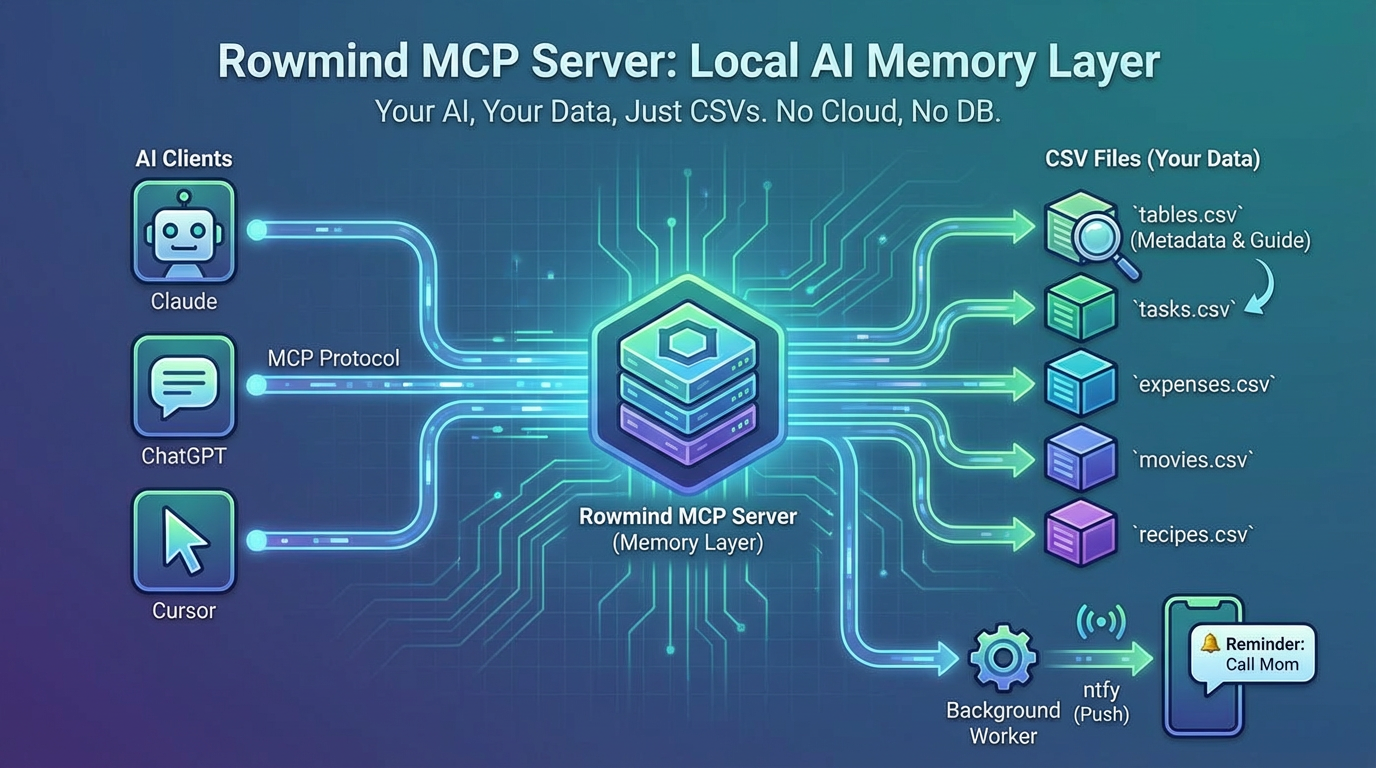
import os from typing import List, Dict import gradio as gr from dotenv import load_dotenv from cron import start_scheduler, is_scheduler_running from helper import ( get_csv_path, get_current_time_epoch, read_csv_as_dicts, list_csv_files, save_csv_file, check_duplicate_files, delete_csv_file, execute_sql_query, ) from tools import ( append_row, build_datetime_epoch, list_tables, list_tasks, run_sql_query, update_row, ) def load_csv_data() -> tuple[List[Dict], List[Dict], List[Dict]]: """Load data for the dashboard tables.""" conversations = read_csv_as_dicts(get_csv_path("conversations")) tasks = read_csv_as_dicts(get_csv_path("tasks")) memories = read_csv_as_dicts(get_csv_path("memories")) return conversations, tasks, memories def get_all_files(): """Get all CSV files for the file downloader.""" return list_csv_files() def handle_file_upload(files): """Handle file upload. Blocks if duplicates are found.""" if not files: return get_all_files(), "" duplicates = check_duplicate_files(files) if duplicates: error_msg = "❌ Files already exist:\n" + "\n".join( [f" • {dup}" for dup in duplicates] ) error_msg += "\n\nDelete them first before uploading." return get_all_files(), error_msg saved_paths = [] for file_path in files: saved_paths.append(save_csv_file(file_path)) return get_all_files(), f"✓ Uploaded {len(saved_paths)} file(s)" def handle_deletion(filename): """Handle file deletion.""" if not filename: return get_all_files(), "", "Select a file to delete" success, message = delete_csv_file(filename) return get_all_files(), "", message with gr.Blocks(title="Rowmind MCP Server") as demo: gr.Markdown("# Rowmind MCP Server & Dashboard") with gr.Tabs(): with gr.Tab("About"): gr.HTML("""
Rowmind Hero
""") gr.Markdown(""" > ## ⚠️ CLONE REQUIRED FOR TESTING > > **This is a single-user, private-instance project.** The public demo is limited because exposing CSV files would let anyone delete or corrupt data. > > **To test properly:** Clone the repo → Run locally or as a private Space → Connect your MCP client. > > This design ensures **your data stays yours**. --- ## What is this? Rowmind is a small "memory layer" for your AI chat client. You talk to Claude, ChatGPT, Cursor... and they can save stuff for you. Tasks, expenses, random notes, whatever you want. The twist? **Everything is stored in plain CSV files.** No fancy database. No cloud sync. Just files you can open with Excel or any text editor. ### Why CSV? - **You own your data** — it's right there, on your disk - **Easy to backup** — just copy the folder - **Easy to debug** — open the file and see what's inside - **Works offline** — no internet needed for storage - **Hackable** — add columns, edit rows, do whatever --- ### How it works """) # Placeholder for architecture diagram gr.Markdown(""" ``` ┌─────────────────┐ ┌─────────────────┐ ┌─────────────────┐ │ Your Chat │ MCP │ Rowmind │ R/W │ CSV Files │ │ Client │ <------> │ Server │ <------> │ (your data) │ │ (Claude, etc) │ Protocol │ (this app) │ │ │ └─────────────────┘ └─────────────────┘ └─────────────────┘ ``` *[TODO: Add nicer diagram image here]* """) gr.Markdown(""" The AI uses **MCP protocol** to talk to this server. When you say "remind me to call mom tomorrow", the AI: 1. Calls `list_tables()` to see what tables exist 2. Picks the right one (probably `tasks`) 3. Calls `append_row()` to save it --- ### The dynamic part (this is the cool thing) You can upload **any CSV** and the AI will automatically know how to use it. How? There's a special `tables.csv` that stores metadata about each table: ``` ┌─────────────────────────────────────────────────────────────────────────┐ │ tables.csv │ ├─────────────┬─────────────────┬─────────────────────────────────────────┤ │ table_name │ description │ example_sentence │ ├─────────────┼─────────────────┼─────────────────────────────────────────┤ │ expenses │ Daily spending │ "I spent 15 dollars on lunch" │ │ movies │ Films to watch │ "Add Inception to my movie list" │ │ mood │ How I feel │ "Today I'm feeling tired" │ │ recipes │ Cooking ideas │ "Save this pasta recipe" │ │ ... │ ... │ ... │ └─────────────┴─────────────────┴─────────────────────────────────────────┘ ↓ AI reads this and understands: "oh, when user talks about money → expenses.csv" "when user mentions films → movies.csv" ``` So when you say "I spent 20 bucks on coffee", the AI: 1. Checks `tables.csv` to see what tables exist 2. Matches your message to the right table (expenses, because of the money context) 3. Appends a row to `expenses.csv` > ## 🎯 **You can track _anything_.** > > Workouts, books, habits, dreams, whatever. Just upload a CSV with your columns and add a description. **The AI figures out the rest.** --- ### Features | What | How | |------|-----| | **Tasks & Reminders** | Schedule one-time or recurring reminders. Get push notifications via ntfy | | **Custom Tables** | Create any table you want — expenses, mood tracker, whatever | | **SQL Queries** | Query your CSVs with DuckDB. Yes, real SQL on CSV files | | **Table Metadata** | Add descriptions so the AI knows what each table is for | --- ### The notification thing """) # Placeholder for notification flow diagram gr.Markdown(""" ``` ┌─────────────┐ ┌─────────────┐ ┌─────────────┐ │ tasks.csv │ --> │ Background │ --> │ ntfy │ --> 📱 Phone │ (pending) │ │ Worker │ │ (push) │ └─────────────┘ └─────────────┘ └─────────────┘ ``` """) gr.Markdown(""" A background job checks every minute for due tasks and sends push notifications through [ntfy](https://ntfy.sh). No Firebase, no Apple stuff, just HTTP requests. --- ### Demo Videos See Rowmind in action: """) gr.HTML("""

📊 Dynamic CSV Tables

Upload any CSV and the AI automatically learns how to use it. Query with SQL, append rows, update fields — all through natural conversation.

⏰ Tasks & Push Notifications

Schedule one-time or recurring reminders. A background worker monitors due tasks and sends push notifications via ntfy — no Firebase needed.

""") gr.Markdown(""" --- ### Privacy note This demo on Hugging Face is **public** — anyone can see the data. For real use, duplicate this Space and make it private. Or run locally. The whole point is that YOUR data stays with YOU. --- ### Twitter 📢 [Original announcement on Twitter](https://x.com/turbopila/status/1991677115910222157) --- *Built for the Gradio MCP Hackathon 🚀* """) with gr.Tab("Dashboard"): refresh_btn = gr.Button("Refresh Data") @gr.render(triggers=[refresh_btn.click, demo.load]) def render_dashboard(): files = list_csv_files() if not files: gr.Markdown("No CSV files found in /data") return # Sort files for consistent order files.sort() # Create a grid layout (2 columns) for i in range(0, len(files), 2): with gr.Row(): for j in range(2): if i + j < len(files): file_path = files[i + j] filename = os.path.basename(file_path) try: # Read CSV with DuckDB for better handling # Use table name (filename without extension) since execute_sql_query now loads tables table_name = os.path.splitext(filename)[0] data = execute_sql_query( f"SELECT * FROM {table_name}" ) # Convert list of dicts to list of lists for Gradio if data: headers = list(data[0].keys()) values = [ [row.get(col) for col in headers] for row in data ] else: headers = [] values = [] with gr.Column(): gr.Markdown(f"### {filename}") gr.Dataframe( value=values, headers=headers, interactive=False, wrap=True, label=filename, ) except Exception as e: with gr.Column(): gr.Markdown(f"### {filename} (Error)") gr.Markdown(f"Error reading file: {e}") with gr.Tab("Data Management"): gr.Markdown("### Manage CSV Files") gr.Markdown( "Upload new CSV files or download existing ones. All files are saved in the `/data` directory." ) gr.Markdown( "⚠️ **Note:** You cannot upload a file that already exists. Delete the existing file first." ) # Status message box status_message = gr.Textbox( label="Status", interactive=False, lines=3, visible=True ) with gr.Row(): with gr.Column(): file_upload = gr.File( label="Upload CSV", file_count="multiple", file_types=[".csv"] ) upload_btn = gr.Button("Upload & Refresh") with gr.Column(): file_download = gr.File( label="Download CSVs", file_count="multiple", interactive=False, ) with gr.Row(): refresh_files_btn = gr.Button("Refresh File List") # File deletion section gr.Markdown("---") gr.Markdown("### Delete Files") gr.Markdown("Protected: tables.csv, tasks.csv") with gr.Row(): delete_dropdown = gr.Dropdown( label="Select file to delete", choices=[], interactive=True ) delete_btn = gr.Button("Delete", variant="stop") def get_deletable_files(): all_files = list_csv_files() filenames = [os.path.basename(f) for f in all_files] protected = ["tables.csv", "tasks.csv"] deletable = [f for f in filenames if f not in protected] return gr.Dropdown(choices=deletable) demo.load(get_all_files, outputs=[file_download], show_api=False) demo.load(get_deletable_files, outputs=[delete_dropdown], show_api=False) upload_btn.click( handle_file_upload, inputs=[file_upload], outputs=[file_download, status_message], show_api=False, ).then(get_deletable_files, outputs=[delete_dropdown], show_api=False) refresh_files_btn.click( get_all_files, outputs=[file_download], show_api=False, ).then(get_deletable_files, outputs=[delete_dropdown], show_api=False) file_upload.upload( handle_file_upload, inputs=[file_upload], outputs=[file_download, status_message], show_api=False, ).then(get_deletable_files, outputs=[delete_dropdown], show_api=False) delete_btn.click( handle_deletion, inputs=[delete_dropdown], outputs=[file_download, delete_dropdown, status_message], show_api=False, ).then(get_deletable_files, outputs=[delete_dropdown], show_api=False) # Metadata section gr.Markdown("---") gr.Markdown("### Table Metadata") gr.Markdown( "Add descriptions and examples to help the LLM understand your tables." ) with gr.Row(): with gr.Column(): meta_table_dropdown = gr.Dropdown( label="Select Table", choices=[], interactive=True ) meta_description = gr.Textbox( label="Description", placeholder="e.g., 'Personal expense tracking'", lines=2, ) meta_example = gr.Textbox( label="Example Sentence", placeholder="e.g., 'Today I spent 20 dollars on groceries'", lines=2, ) meta_columns_display = gr.Textbox( label="Columns", interactive=False, placeholder="Columns will appear here", ) save_metadata_btn = gr.Button("Save Metadata", variant="primary") metadata_status = gr.Textbox(label="Status", interactive=False) def refresh_table_list(): from helper import list_csv_files files = list_csv_files() tables = [os.path.basename(f).replace(".csv", "") for f in files] tables = [t for t in tables if t != "tables"] return gr.Dropdown(choices=tables) def load_table_metadata(table_name): if not table_name: return "", "", "", "" from helper import get_table_metadata, get_csv_columns columns = get_csv_columns(table_name) columns_str = ", ".join(columns) if columns else "No columns found" metadata = get_table_metadata(table_name) if metadata: return ( metadata.get("description", ""), metadata.get("example_sentence", ""), columns_str, "", ) else: return "", "", columns_str, "" def save_metadata(table_name, description, example): if not table_name: return "Please select a table" from helper import save_table_metadata success = save_table_metadata(table_name, description, example) if success: return f"✓ Metadata saved for '{table_name}'" else: return "✗ Error saving metadata" demo.load(refresh_table_list, outputs=[meta_table_dropdown], show_api=False) upload_btn.click(lambda: None, outputs=None, show_api=False).then( refresh_table_list, outputs=[meta_table_dropdown], show_api=False ) meta_table_dropdown.change( load_table_metadata, inputs=[meta_table_dropdown], outputs=[ meta_description, meta_example, meta_columns_display, metadata_status, ], show_api=False, ) save_metadata_btn.click( save_metadata, inputs=[meta_table_dropdown, meta_description, meta_example], outputs=[metadata_status], show_api=False, ) with gr.Tab("Task Tools"): gr.Markdown("Task-specific tools exposed to MCP.") with gr.Tab("List Tasks"): status_dd = gr.Dropdown( choices=["pending", "done", ""], value="", label="Status", info="Leave empty to return all statuses.", ) limit_slider = gr.Slider(1, 1000, value=10, step=1, label="Limit") tasks_out = gr.JSON(label="Tasks") gr.Button("List Tasks", variant="primary").click( fn=list_tasks, inputs=[status_dd, limit_slider], outputs=tasks_out, api_name="list_tasks", ) with gr.Tab("Tools"): gr.Markdown( "Each tool below is a Gradio interface. Launching this app with `mcp_server=True` " "automatically exposes every interface as an MCP tool." ) with gr.Tabs(): with gr.Tab("Current Time"): time_btn = gr.Button("Get Current Time", variant="primary") time_out = gr.Number(label="Current time (epoch, seconds)") time_btn.click( fn=get_current_time_epoch, inputs=[], outputs=time_out, api_name="current_time", ) with gr.Tab("Build Epoch"): year = gr.Number(label="Year", value=2025) month = gr.Number(label="Month", value=1) day = gr.Number(label="Day", value=1) hour = gr.Number(label="Hour (0-23)", value=0) minute = gr.Number(label="Minute (0-59)", value=0) epoch_out = gr.Number(label="Epoch UTC (seconds)") gr.Button("Build Epoch", variant="primary").click( fn=build_datetime_epoch, inputs=[year, month, day, hour, minute], outputs=epoch_out, api_name="build_datetime_epoch", ) with gr.Tab("List Tables"): list_tables_btn = gr.Button("List Tables", variant="primary") tables_out = gr.JSON(label="Schemas") list_tables_btn.click( fn=list_tables, inputs=[], outputs=tables_out, api_name="list_tables", ) with gr.Tab("Append Row"): table_name_in = gr.Textbox(label="Table Name", placeholder="tasks") row_json_in = gr.Textbox( label="Row Data (JSON object)", placeholder='{"description": "Buy milk", "status": "pending"}', lines=6, ) append_out = gr.JSON(label="Result") gr.Button("Append Row", variant="primary").click( fn=append_row, inputs=[table_name_in, row_json_in], outputs=append_out, api_name="append_row", ) with gr.Tab("Run SQL Query"): sql_query = gr.Textbox( label="SQL Query", placeholder="SELECT * FROM expenses WHERE amount > 100", lines=3, info="READ-ONLY. You can query any CSV file in /data using its name (e.g. 'expenses'). Do not use for INSERT/UPDATE.", ) qt_out = gr.JSON(label="Result") gr.Button("Run Query", variant="primary").click( fn=run_sql_query, inputs=[sql_query], outputs=qt_out, api_name="run_sql_query", ) with gr.Tab("Update Row"): table_name_up = gr.Textbox(label="Table Name", placeholder="tasks") row_id_up = gr.Number( label="Row ID", value=0, precision=0, info="The 0-based row index (rowid).", ) field_up = gr.Textbox(label="Field to Update", placeholder="status") new_val_up = gr.Textbox(label="New Value", placeholder="done") update_out = gr.Textbox(label="Result") gr.Button("Update Row", variant="primary").click( fn=update_row, inputs=[ table_name_up, row_id_up, field_up, new_val_up, ], outputs=update_out, api_name="update_row", ) # Load environment variables load_dotenv() if __name__ == "__main__": # Start the background cron scheduler for task notifications if not is_scheduler_running(): start_scheduler() demo.launch(mcp_server=True)