

File size: 19,683 Bytes
17461d1 f5270e9 17461d1 f5270e9 17461d1 | 1 2 3 4 5 6 7 8 9 10 11 12 13 14 15 16 17 18 19 20 21 22 23 24 25 26 27 28 29 30 31 32 33 34 35 36 37 38 39 40 41 42 43 44 45 46 47 48 49 50 51 52 53 54 55 56 57 58 59 60 61 62 63 64 65 66 67 68 69 70 71 72 73 74 75 76 77 78 79 80 81 82 83 84 85 86 87 88 89 90 91 92 93 94 95 96 97 98 99 100 101 102 103 104 105 106 107 108 109 110 111 112 113 114 115 116 117 118 119 120 121 122 123 124 125 126 127 128 129 130 131 132 133 134 135 136 137 138 139 140 141 142 143 144 145 146 147 148 149 150 151 152 153 154 155 156 157 158 159 160 161 162 163 164 165 166 167 168 169 170 171 172 173 174 175 176 177 178 179 180 181 182 183 184 185 186 187 188 189 190 191 192 193 194 195 196 197 198 199 200 201 202 203 204 205 206 207 208 209 210 211 212 213 214 215 216 217 218 219 220 221 222 223 224 225 226 227 228 229 230 231 232 233 234 235 236 237 238 239 240 241 242 243 244 245 246 247 248 249 250 251 252 253 254 255 256 257 258 259 260 261 262 263 264 265 266 267 268 269 270 271 272 273 274 275 276 277 278 279 280 281 282 283 284 285 286 287 288 289 290 291 292 293 294 295 296 297 298 299 300 301 302 303 304 305 306 307 308 309 310 311 312 313 314 315 316 317 318 319 320 321 322 323 324 325 326 327 328 329 330 331 332 333 334 335 336 337 338 339 340 341 342 343 344 345 346 347 348 349 350 351 352 353 354 355 356 357 358 359 360 361 362 363 364 365 366 367 368 369 370 371 372 373 374 375 376 377 378 379 380 381 382 383 384 385 386 387 388 389 390 391 392 393 394 395 396 397 398 399 400 401 402 403 404 405 406 407 408 409 410 411 412 413 414 415 416 417 418 419 420 421 422 423 424 425 426 427 428 429 430 431 432 433 434 435 436 437 438 439 440 441 442 443 444 445 446 447 448 449 450 451 452 453 454 455 456 457 458 459 460 461 462 463 464 465 466 467 468 469 470 471 472 473 474 475 476 477 478 479 480 481 482 483 484 485 486 487 488 489 490 491 492 493 494 495 496 497 498 499 500 501 502 503 504 505 506 507 508 509 510 511 512 513 514 515 516 517 518 519 520 521 522 523 524 525 526 527 528 529 530 531 532 533 534 535 536 537 538 539 540 541 542 543 544 545 546 547 548 549 550 551 552 553 554 555 556 557 558 559 560 561 562 563 | # llmpm — LLM Package Manager
> Command-line package manager for open-sourced large language models. Download and run 10,000+ models, and share LLMs with a single command.
`llmpm` is a CLI package manager for large language models, inspired by pip and npm. Your command line hub for open-source LLMs. We’ve done the heavy lifting so you can discover, install, and run models instantly.
Models are sourced from [HuggingFace Hub](https://huggingface.co), [Ollama](https://ollama.com/search) & [Mistral AI](https://docs.mistral.ai/getting-started/models).
**Explore a Suite of Models at [llmpm.co](https://llmpm.co/models) →**
Supports:
- Text generation (GGUF via llama.cpp and Transformer checkpoints)
- Image generation (Diffusion models)
- Vision models
- Speech-to-text (ASR)
- Text-to-speech (TTS)
---
## Installation
### via pip (recommended)
```sh
pip install llmpm
```
The pip install is intentionally lightweight — it only installs the CLI tools needed to bootstrap. On first run, `llmpm` automatically creates an isolated environment at `~/.llmpm/venv` and installs all ML backends into it, keeping your system Python untouched.
### via npm
```sh
npm install -g llmpm
```
The npm package finds Python on your PATH, creates `~/.llmpm/venv`, and installs all backends into it during `postinstall`.
### Environment isolation
All `llmpm` commands always run inside `~/.llmpm/venv`.
Set `LLPM_NO_VENV=1` to bypass this (useful in CI or Docker where isolation is already provided).
---
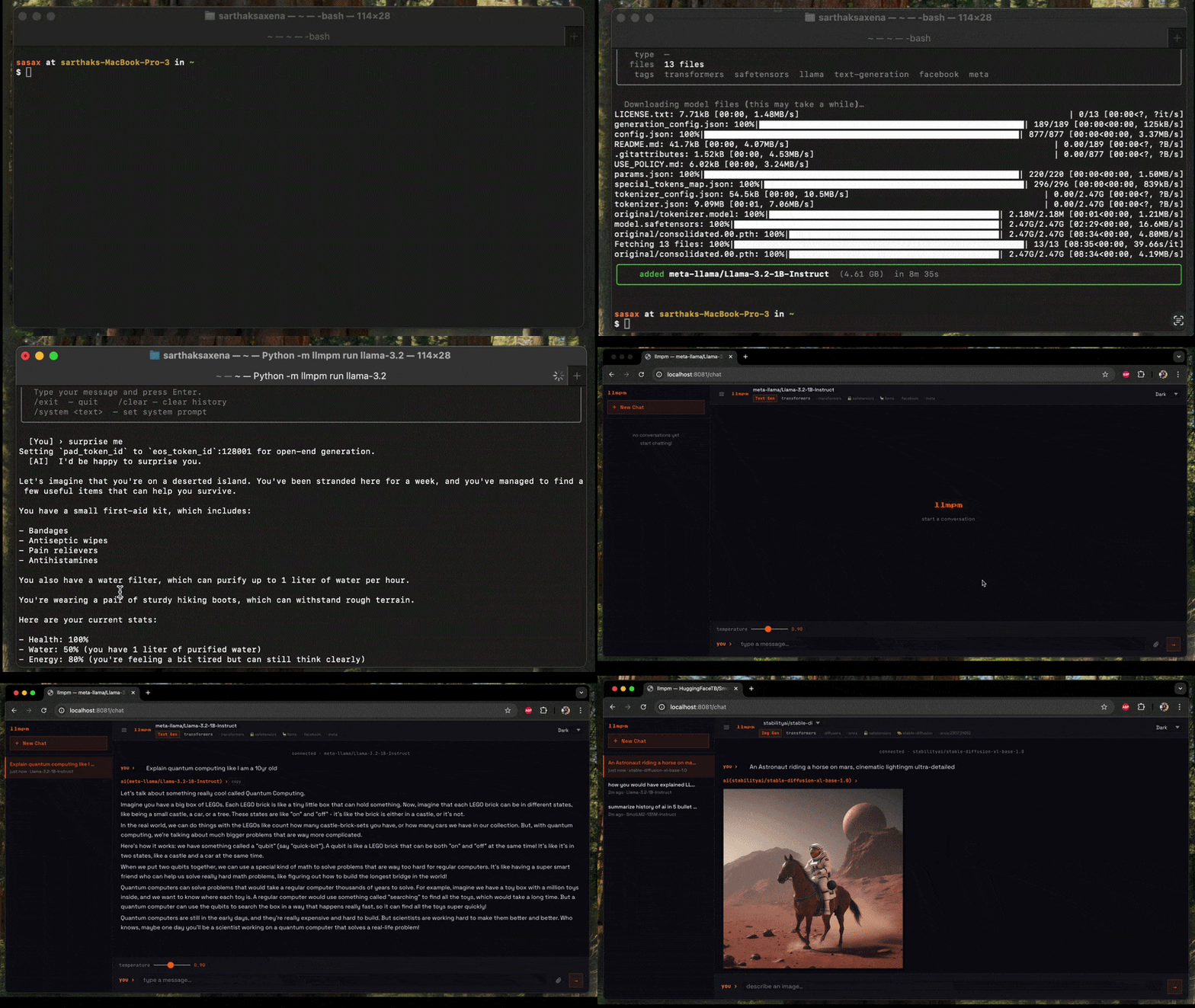
## Quick start
```sh
# Install a model
llmpm install meta-llama/Llama-3.2-3B-Instruct
# Run it
llmpm run meta-llama/Llama-3.2-3B-Instruct
llmpm serve meta-llama/Llama-3.2-3B-Instruct
```
---
## Commands
| Command | Description |
| ------------------------------- | --------------------------------------------------------------- |
| `llmpm init` | Initialise a `llmpm.json` in the current directory |
| `llmpm install` | Install all models listed in `llmpm.json` |
| `llmpm install <repo>` | Download and install a model from HuggingFace, Ollama & Mistral |
| `llmpm run <repo>` | Run an installed model (interactive chat) |
| `llmpm serve [repo] [repo] ...` | Serve one or more models as an OpenAI-compatible API |
| `llmpm serve` | Serve every installed model on a single HTTP server |
| `llmpm push <repo>` | Upload a model to HuggingFace Hub |
| `llmpm list` | Show all installed models |
| `llmpm info <repo>` | Show details about a model |
| `llmpm uninstall <repo>` | Uninstall a model |
| `llmpm clean` | Remove the managed environment (`~/.llmpm/venv`) |
| `llmpm clean --all` | Remove environment + all downloaded models and registry |
---
## Local vs global mode
`llmpm` works in two modes depending on whether a `llmpm.json` file is present.
### Global mode (default)
All models are stored in `~/.llmpm/models/` and the registry lives at
`~/.llmpm/registry.json`. This is the default when no `llmpm.json` is found.
### Local mode
When a `llmpm.json` exists in the current directory (or any parent), llmpm
switches to **local mode**: models are stored in `.llmpm/models/` next to the
manifest file. This keeps project models isolated from your global environment.
```
my-project/
├── llmpm.json ← manifest
└── .llmpm/ ← local model store (auto-created)
├── registry.json
└── models/
```
All commands (`install`, `run`, `serve`, `list`, `info`, `uninstall`) automatically
detect the mode and operate on the correct store — no flags required.
---
## `llmpm init`
Initialise a new project manifest in the current directory.
```sh
llmpm init # interactive prompts for name & description
llmpm init --yes # skip prompts, use directory name as package name
```
This creates a `llmpm.json`:
```json
{
"name": "my-project",
"description": "",
"dependencies": {}
}
```
Models are listed under `dependencies` without version pins — llmpm models
don't use semver. The value is always `"*"`.
---
## `llmpm install`
```sh
# Install a Transformer model
llmpm install meta-llama/Llama-3.2-3B-Instruct
# Install a GGUF model (interactive quantisation picker)
llmpm install unsloth/Llama-3.2-3B-Instruct-GGUF
# Install a specific GGUF quantisation
llmpm install unsloth/Llama-3.2-3B-Instruct-GGUF --quant Q4_K_M
# Install a single specific file
llmpm install unsloth/Llama-3.2-3B-Instruct-GGUF --file Llama-3.2-3B-Instruct-Q4_K_M.gguf
# Skip prompts (pick best default)
llmpm install meta-llama/Llama-3.2-3B-Instruct --no-interactive
# Install and record in llmpm.json (local projects)
llmpm install meta-llama/Llama-3.2-3B-Instruct --save
# Install all models listed in llmpm.json (like npm install)
llmpm install
```
In **global mode** models are stored in `~/.llmpm/models/`.
In **local mode** (when `llmpm.json` is present) they go into `.llmpm/models/`.
### `llmpm install` options
| Option | Description |
| ------------------ | -------------------------------------------------------------- |
| `--quant` / `-q` | GGUF quantisation to download (e.g. `Q4_K_M`) |
| `--file` / `-f` | Download a specific file from the repo |
| `--no-interactive` | Never prompt; pick the best default quantisation automatically |
| `--save` | Add the model to `llmpm.json` dependencies after installing |
---
## `llmpm run`
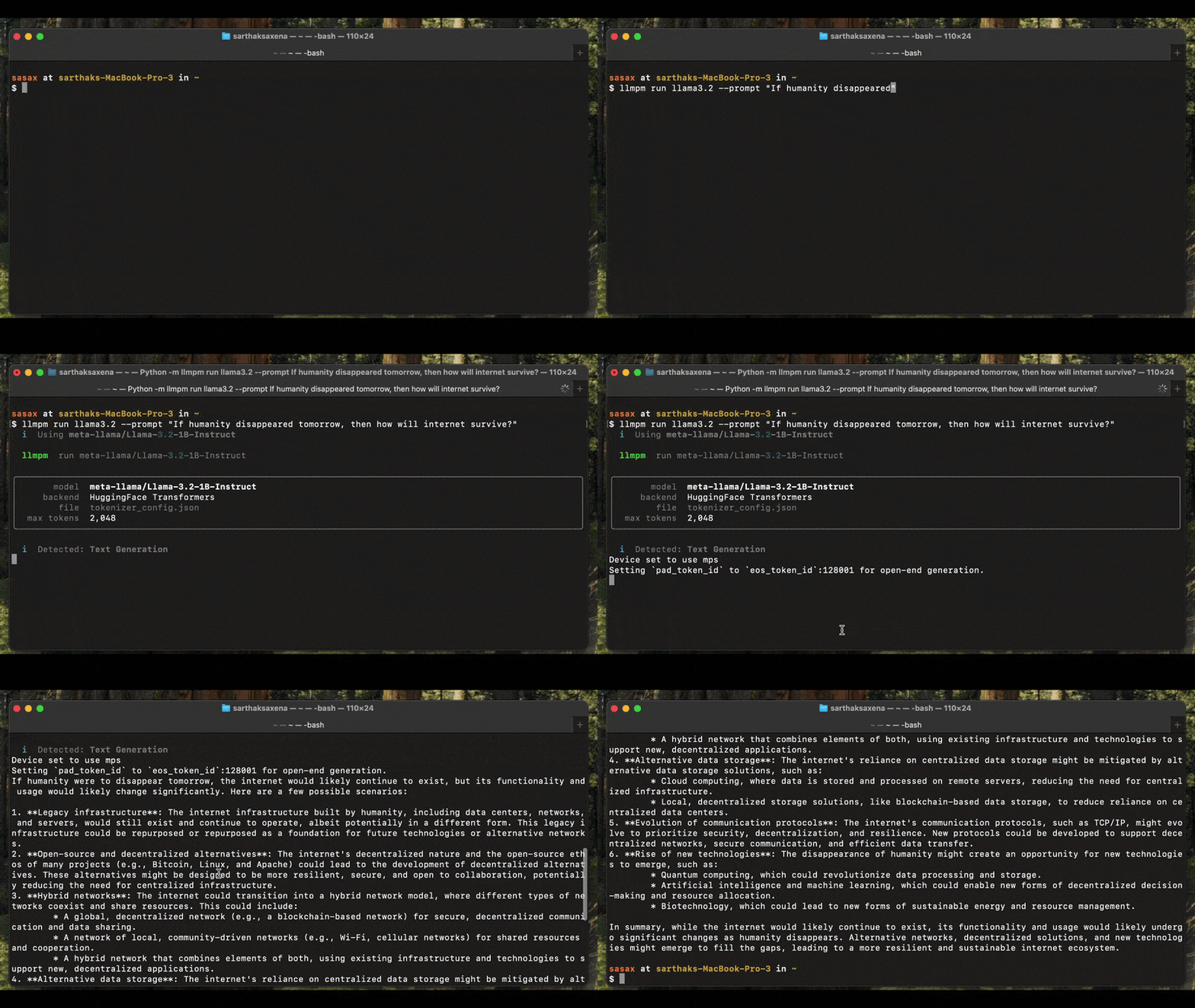
`llmpm run` auto-detects the model type and launches the appropriate interactive session. It supports text generation, image generation, vision, speech-to-text (ASR), and text-to-speech (TTS) models.
### Text generation (GGUF & Transformers)
```sh
# Interactive chat
llmpm run meta-llama/Llama-3.2-3B-Instruct
# Single-turn inference
llmpm run meta-llama/Llama-3.2-3B-Instruct --prompt "Explain quantum computing"
# With a system prompt
llmpm run meta-llama/Llama-3.2-3B-Instruct --system "You are a helpful pirate."
# Limit response length
llmpm run meta-llama/Llama-3.2-3B-Instruct --max-tokens 512
# GGUF model — tune context window and GPU layers
llmpm run unsloth/Llama-3.2-3B-Instruct-GGUF --ctx 8192 --gpu-layers 32
```
### Image generation (Diffusion)
Generates an image from a text prompt and saves it as a PNG on your Desktop.
```sh
# Single prompt → saves llmpm_<timestamp>.png to ~/Desktop
llmpm run amused/amused-256 --prompt "a cyberpunk city at sunset"
# Interactive session (type a prompt, get an image each time)
llmpm run amused/amused-256
```
In interactive mode type your prompt and press Enter. The output path is printed after each generation. Type `/exit` to quit.
> Requires: `pip install diffusers torch accelerate`
### Vision (image-to-text)
Describe or answer questions about an image. Pass the image file path via `--prompt`.
```sh
# Single image description
llmpm run Salesforce/blip-image-captioning-base --prompt /path/to/photo.jpg
# Interactive session: type an image path at each prompt
llmpm run Salesforce/blip-image-captioning-base
```
> Requires: `pip install transformers torch Pillow`
### Speech-to-text / ASR
Transcribe an audio file. Pass the audio file path via `--prompt`.
```sh
# Transcribe a single file
llmpm run openai/whisper-base --prompt recording.wav
# Interactive: enter an audio file path at each prompt
llmpm run openai/whisper-base
```
Supported formats depend on your installed audio libraries (wav, flac, mp3, …).
> Requires: `pip install transformers torch`
### Text-to-speech / TTS
Convert text to speech. The output WAV file is saved to your Desktop.
```sh
# Single utterance → saves llmpm_<timestamp>.wav to ~/Desktop
llmpm run suno/bark-small --prompt "Hello, how are you today?"
# Interactive session
llmpm run suno/bark-small
```
> Requires: `pip install transformers torch`
### `llmpm run` options
| Option | Default | Description |
| ----------------- | -------- | ------------------------------------------------------- |
| `--prompt` / `-p` | — | Single-turn prompt or input file path (non-interactive) |
| `--system` / `-s` | — | System prompt (text generation only) |
| `--max-tokens` | `128000` | Maximum tokens to generate per response |
| `--ctx` | `128000` | Context window size (GGUF only) |
| `--gpu-layers` | `-1` | GPU layers to offload, `-1` = all (GGUF only) |
| `--verbose` | off | Show model loading output |
### Interactive session commands
These commands work in any interactive session:
| Command | Action |
| ---------------- | ------------------------------------------ |
| `/exit` | End the session |
| `/clear` | Clear conversation history (text gen only) |
| `/system <text>` | Update the system prompt (text gen only) |
### Model type detection
`llmpm run` reads `config.json` / `model_index.json` from the installed model to determine the pipeline type before loading any weights. The detected type is printed at startup:
```
Detected: Image Generation (Diffusion)
Loading model… ✓
```
If detection is ambiguous the model falls back to the text-generation backend.
---
## `llmpm serve`
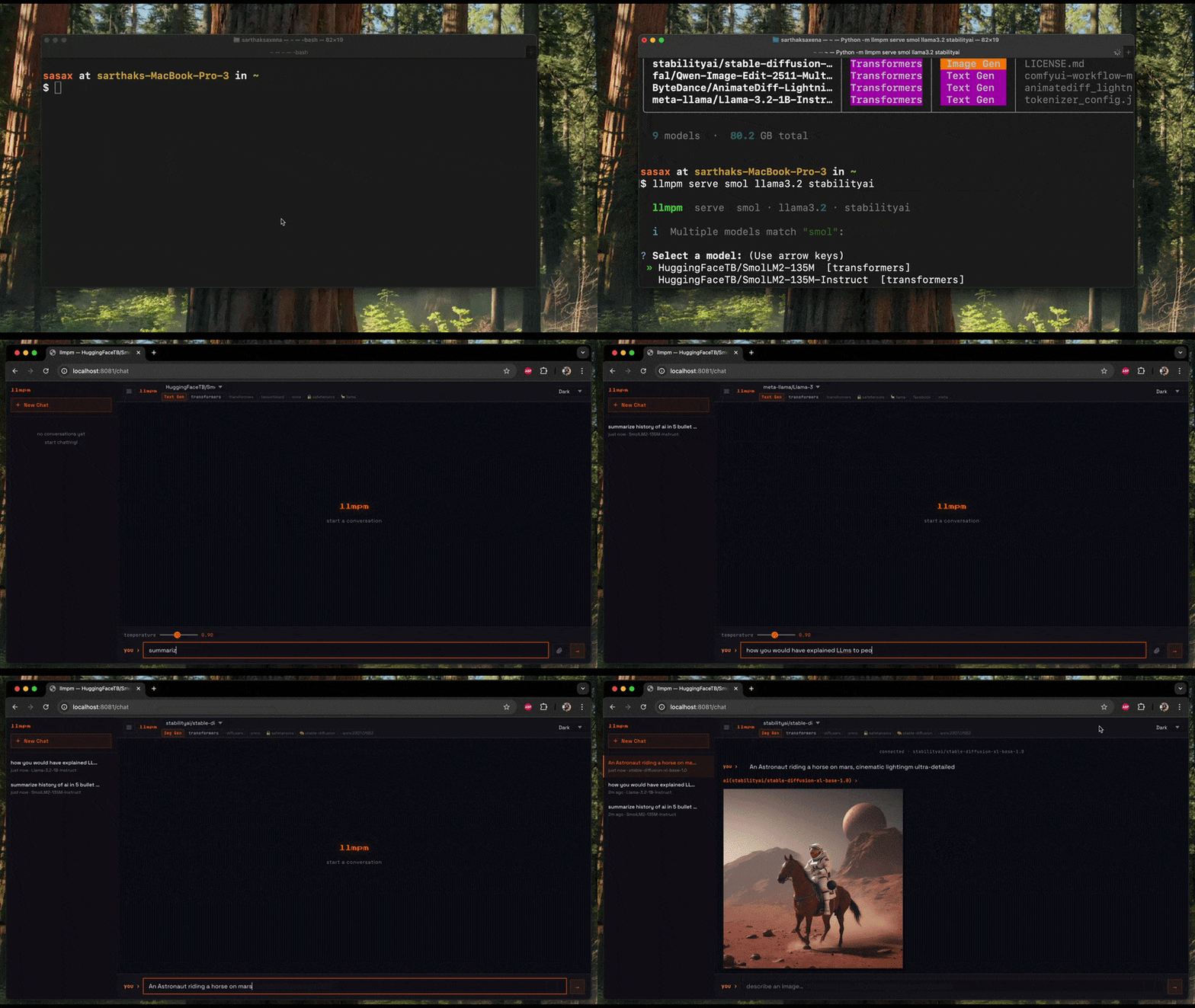
Start a **single** local HTTP server exposing one or more models as an OpenAI-compatible REST API.
A browser-based chat UI is available at `/chat`.
```sh
# Serve a single model on the default port (8080)
llmpm serve meta-llama/Llama-3.2-3B-Instruct
# Serve multiple models on one server
llmpm serve meta-llama/Llama-3.2-3B-Instruct amused/amused-256
# Serve ALL installed models automatically
llmpm serve
# Custom port and host
llmpm serve meta-llama/Llama-3.2-3B-Instruct --port 9000 --host 0.0.0.0
# Set the default max tokens (clients may override per-request)
llmpm serve meta-llama/Llama-3.2-3B-Instruct --max-tokens 2048
# GGUF model — tune context window and GPU layers
llmpm serve unsloth/Llama-3.2-3B-Instruct-GGUF --ctx 8192 --gpu-layers 32
```
Fuzzy model-name matching is applied to each argument — if multiple installed models match you will be prompted to pick one.
### `llmpm serve` options
| Option | Default | Description |
| --------------- | ----------- | --------------------------------------------------------- |
| `--port` / `-p` | `8080` | Port to listen on (auto-increments if busy) |
| `--host` / `-H` | `localhost` | Host/address to bind to |
| `--max-tokens` | `128000` | Default max tokens per response (overridable per-request) |
| `--ctx` | `128000` | Context window size (GGUF only) |
| `--gpu-layers` | `-1` | GPU layers to offload, `-1` = all (GGUF only) |
### Multi-model routing
When multiple models are loaded, POST endpoints accept an optional `"model"` field in the JSON body.
If omitted, the first loaded model is used.
```sh
# Target a specific model when multiple are loaded
curl -X POST http://localhost:8080/v1/chat/completions \
-H "Content-Type: application/json" \
-d '{"model": "meta-llama/Llama-3.2-3B-Instruct",
"messages": [{"role": "user", "content": "Hello!"}]}'
```
The chat UI at `/chat` shows a model dropdown when more than one model is loaded.
Switching models resets the conversation and adapts the UI to the new model's category.
### Endpoints
| Method | Path | Description |
| ------ | -------------------------- | -------------------------------------------------------------------- |
| `GET` | `/chat` | Browser chat / image-gen UI (model dropdown for multi-model serving) |
| `GET` | `/health` | `{"status":"ok","models":["id1","id2",…]}` |
| `GET` | `/v1/models` | List all loaded models with id, category, created |
| `GET` | `/v1/models/<id>` | Info for a specific loaded model |
| `POST` | `/v1/chat/completions` | OpenAI-compatible chat inference (SSE streaming supported) |
| `POST` | `/v1/completions` | Legacy text completion |
| `POST` | `/v1/embeddings` | Text embeddings |
| `POST` | `/v1/images/generations` | Text-to-image; pass `"image"` (base64) for image-to-image |
| `POST` | `/v1/audio/transcriptions` | Speech-to-text |
| `POST` | `/v1/audio/speech` | Text-to-speech |
All POST endpoints accept `"model": "<id>"` to target a specific loaded model.
### Example API calls
```sh
# Text generation (streaming)
curl -X POST http://localhost:8080/v1/chat/completions \
-H "Content-Type: application/json" \
-d '{"messages": [{"role": "user", "content": "Hello!"}],
"max_tokens": 256, "stream": true}'
# Target a specific model when multiple are loaded
curl -X POST http://localhost:8080/v1/chat/completions \
-H "Content-Type: application/json" \
-d '{"model": "meta-llama/Llama-3.2-1B-Instruct",
"messages": [{"role": "user", "content": "Hello!"}]}'
# List all loaded models
curl http://localhost:8080/v1/models
# Text-to-image
curl -X POST http://localhost:8080/v1/images/generations \
-H "Content-Type: application/json" \
-d '{"prompt": "a cat in a forest", "n": 1}'
# Image-to-image (include the source image as base64 in the same endpoint)
IMAGE_B64=$(base64 -i input.png)
curl -X POST http://localhost:8080/v1/images/generations \
-H "Content-Type: application/json" \
-d "{\"prompt\": \"turn it into a painting\", \"image\": \"$IMAGE_B64\"}"
# Speech-to-text
curl -X POST http://localhost:8080/v1/audio/transcriptions \
-H "Content-Type: application/octet-stream" \
--data-binary @recording.wav
# Text-to-speech
curl -X POST http://localhost:8080/v1/audio/speech \
-H "Content-Type: application/json" \
-d '{"input": "Hello world"}' \
--output speech.wav
```
Response shape for chat completions (non-streaming):
```json
{
"object": "chat.completion",
"model": "<model-id>",
"choices": [{
"index": 0,
"message": { "role": "assistant", "content": "<text>" },
"finish_reason": "stop"
}],
"usage": { "prompt_tokens": 0, "completion_tokens": 0, "total_tokens": 0 }
}
```
Response shape for chat completions (streaming SSE):
Each chunk:
```json
{
"object": "chat.completion.chunk",
"model": "<model-id>",
"choices": [{
"index": 0,
"delta": { "content": "<token>" },
"finish_reason": null
}]
}
```
Followed by a final `data: [DONE]` sentinel.
Response shape for image generation:
```json
{
"created": 1234567890,
"data": [{ "b64_json": "<base64-png>" }]
}
```
---
## `llmpm push`
```sh
# Push an already-installed model
llmpm push my-org/my-fine-tune
# Push a local directory
llmpm push my-org/my-fine-tune --path ./my-model-dir
# Push as private repository
llmpm push my-org/my-fine-tune --private
# Custom commit message
llmpm push my-org/my-fine-tune -m "Add Q4_K_M quantisation"
```
Requires a HuggingFace token (run `huggingface-cli login` or set `HF_TOKEN`).
---
## Backends
All backends (torch, transformers, diffusers, llama-cpp-python, …) are included in `pip install llmpm` by default and are installed into the managed `~/.llmpm/venv`.
| Model type | Pipeline | Backend |
| ----------------------- | ---------------- | ------------------------------ |
| `.gguf` files | Text generation | llama.cpp via llama-cpp-python |
| `.safetensors` / `.bin` | Text generation | HuggingFace Transformers |
| Diffusion models | Image generation | HuggingFace Diffusers |
| Vision models | Image-to-text | HuggingFace Transformers |
| Whisper / ASR models | Speech-to-text | HuggingFace Transformers |
| TTS models | Text-to-speech | HuggingFace Transformers |
### Selective backend install
If you only need one backend (e.g. on a headless server), install without defaults and add just what you need:
```sh
pip install llmpm --no-deps # CLI only (no ML backends)
pip install llmpm[gguf] # + GGUF / llama.cpp
pip install llmpm[transformers] # + text generation
pip install llmpm[diffusion] # + image generation
pip install llmpm[vision] # + vision / image-to-text
pip install llmpm[audio] # + ASR + TTS
```
---
## Configuration
| Variable | Default | Description |
| -------------- | ---------- | ------------------------------------------------------------ |
| `LLMPM_HOME` | `~/.llmpm` | Root directory for models and registry |
| `HF_TOKEN` | — | HuggingFace API token for gated models |
| `LLPM_PYTHON` | `python3` | Python binary used by the npm shim (fallback only) |
| `LLPM_NO_VENV` | — | Set to `1` to skip venv isolation (CI / Docker / containers) |
### Configuration examples
**Use a HuggingFace token for gated models:**
```sh
HF_TOKEN=hf_your_token llmpm install meta-llama/Llama-3.2-3B-Instruct
# or export for the session
export HF_TOKEN=hf_your_token
llmpm install meta-llama/Llama-3.2-3B-Instruct
```
**Skip venv isolation (CI / Docker):**
```sh
# Inline — single command
LLPM_NO_VENV=1 llmpm serve meta-llama/Llama-3.2-3B-Instruct
# Exported — all subsequent commands skip the venv
export LLPM_NO_VENV=1
llmpm install meta-llama/Llama-3.2-3B-Instruct
llmpm serve meta-llama/Llama-3.2-3B-Instruct
```
> When using `LLPM_NO_VENV=1`, install all backends first: `pip install llmpm[all]`
**Custom model storage location:**
```sh
LLMPM_HOME=/mnt/models llmpm install meta-llama/Llama-3.2-3B-Instruct
LLMPM_HOME=/mnt/models llmpm serve meta-llama/Llama-3.2-3B-Instruct
```
**Use a specific Python binary (npm installs):**
```sh
LLPM_PYTHON=/usr/bin/python3.11 llmpm run meta-llama/Llama-3.2-3B-Instruct
```
**Combining variables:**
```sh
HF_TOKEN=hf_your_token LLMPM_HOME=/data/models LLPM_NO_VENV=1 \
llmpm install meta-llama/Llama-3.2-3B-Instruct
```
**Docker / CI example:**
```dockerfile
ENV LLPM_NO_VENV=1
ENV HF_TOKEN=hf_your_token
RUN pip install llmpm[all]
RUN llmpm install meta-llama/Llama-3.2-3B-Instruct
CMD ["llmpm", "serve", "meta-llama/Llama-3.2-3B-Instruct", "--host", "0.0.0.0"]
```
---
## License
MIT
|