# App.py import os import io import math import zipfile import tempfile import streamlit.components.v1 as components from textwrap import dedent from pathlib import Path from typing import Optional, List, Dict import numpy as np import pandas as pd import nibabel as nib import tensorflow as tf from tensorflow import keras import matplotlib.pyplot as plt from matplotlib import animation from PIL import Image from skimage.measure import label as cc_label, regionprops import streamlit as st from textwrap import dedent import base64 # kept for reference; not required when using st.download_button # ---- Custom layer used by model from utils.layer_util import ResizeAndConcatenate # ========================= # Config / paths # ========================= os.environ["CUDA_DEVICE_ORDER"] = "PCI_BUS_ID" # Uncomment next line to force CPU only # os.environ["CUDA_VISIBLE_DEVICES"] = "" MODEL_PATH = "./models_final/SEG459.h5" OUTPUT_ROOT = "/tmp/NIFTI_OUTPUTS" GIFS_DIR = os.path.join(OUTPUT_ROOT, "GIFs") CSV_DIR = os.path.join(OUTPUT_ROOT, "CSV") os.makedirs(GIFS_DIR, exist_ok=True) os.makedirs(CSV_DIR, exist_ok=True) # Inference & metrics settings SIZE_X, SIZE_Y = 256, 256 TARGET_HW = (SIZE_Y, SIZE_X) N_CLASSES = 3 BATCH_SIZE = 16 MYO_DENSITY = 1.05 # g/mL → mg via mm^3 * g/mL # Island removal (3D) ENABLE_ISLAND_REMOVAL = True ISLAND_MIN_SLICE_SPAN = 2 ISLAND_MIN_AREA_PER_SLICE = 10 ISLAND_CENTROID_DIST_THRESH = 40 # Orientation / display ORIENT_TARGET = None # None (keep native), "LPS", or "RAS" DISPLAY_MATCH_DICOM = False DISPLAY_RULES = { 'LPS': dict(rot90_cw=True, flip_ud=True, flip_lr=False), 'RAS': dict(rot90_cw=True, flip_ud=False, flip_lr=True), None: dict(rot90_cw=False, flip_ud=False, flip_lr=False), } CURRENT_DISPLAY_ORIENT = ORIENT_TARGET # ED/ES robust selection (mid-slices subset) USE_MID_SLICES_FOR_ED_ES = True MID_K = 4 MID_MIN_VALID_FRAC = 0.7 MID_A_BLOOD_MIN = 30 MID_A_MYO_MIN = 30 GIF_FPS = 2 GIF_DPI = 300 # ========================= # Branding / UI # ========================= LOGO_URL = "https://raw.githubusercontent.com/whanisa/Segmentation/main/icon/logo.png" LOGO_LINK = "https://github.com/whanisa/Segmentation" LOGO_HEIGHT_PX = 120 SAFE_INSET_PX = 18 # --- CSS def _inject_layout_css(): # Tune these three knobs as needed CONTENT_MEASURE_PX = 920 # width of the hero + paragraphs column LEFT_OFFSET_PX = 40 # push BOTH text and uploader to the right (aligns with left gutter) UPLOAD_WIDTH_PX = 420 # make uploader column narrower st.markdown(f""" """, unsafe_allow_html=True) # ========================= # Small utilities # ========================= def log(msg: str): print(f"[INFO] {msg}") def normalize_images(x): x = tf.convert_to_tensor(x, dtype=tf.float32) mn = tf.reduce_min(x, axis=[1, 2], keepdims=True) mx = tf.reduce_max(x, axis=[1, 2], keepdims=True) rng = mx - mn x_norm = tf.where(rng > 0.0, (x - mn) / rng, tf.zeros_like(x)) return x_norm.numpy() def _tf_resize_bilinear(img, *, target_h=SIZE_Y, target_w=SIZE_X): arr = img[np.newaxis, ..., np.newaxis].astype(np.float32) out = tf.image.resize(arr, [target_h, target_w], method='bilinear', antialias=True) return np.squeeze(out.numpy()).astype(np.float32) def _resize_nn(img, new_h, new_w): arr = img[None, ..., None].astype(np.float32) out = tf.image.resize(arr, [new_h, new_w], method='nearest') return np.squeeze(out.numpy()).astype(img.dtype) def display_xform(img2d, orient_target=None, enable=DISPLAY_MATCH_DICOM): if orient_target is None: orient_target = CURRENT_DISPLAY_ORIENT if not enable: return img2d rule = DISPLAY_RULES.get(orient_target, DISPLAY_RULES[None]) out = img2d if rule.get('rot90_cw'): out = np.rot90(out, k=-1) if rule.get('flip_ud'): out = np.flipud(out) if rule.get('flip_lr'): out = np.fliplr(out) return out # ========================= # NIfTI I/O + spacing # ========================= def _reorient_nifti(img: nib.Nifti1Image, target: Optional[str]): if not target: return img, None tgt = target.upper() if tgt not in ("LPS", "RAS"): raise ValueError("ORIENT_TARGET must be None, 'LPS', or 'RAS'") cur = nib.orientations.io_orientation(img.affine) wanted = nib.orientations.axcodes2ornt(tuple(tgt)) xfm = nib.orientations.ornt_transform(cur, wanted) if np.allclose(xfm, np.array([[0,1],[1,1],[2,1]])): return img, xfm data = img.get_fdata() data_re = nib.orientations.apply_orientation(data, xfm) aff_re = img.affine @ nib.orientations.inv_ornt_aff(xfm, img.shape) return nib.Nifti1Image(data_re, aff_re, header=img.header), xfm def load_nifti_4d(path, orient_target: Optional[str] = ORIENT_TARGET): img_native = nib.load(path) img, _ = _reorient_nifti(img_native, orient_target) data = img.get_fdata(dtype=np.float32) # (X,Y,Z[,T]) if data.ndim == 3: data = data[..., None] data_4d = np.transpose(data, (1, 0, 2, 3)).astype(np.float32) # -> (H,W,S,F) zooms = img.header.get_zooms() col_mm = float(zooms[0]) if len(zooms) > 0 else 1.0 row_mm = float(zooms[1]) if len(zooms) > 1 else 1.0 slice_thickness_mm = float(zooms[2]) if len(zooms) > 2 else 1.0 frame_time_ms = float(zooms[3]) if len(zooms) > 3 else None spacing = dict( row_mm=row_mm, col_mm=col_mm, slice_thickness_mm=slice_thickness_mm, frame_time_ms=frame_time_ms ) return data_4d, spacing, img.affine # ========================= # Inference # ========================= def nifti_to_model_batches(data_4d): H, W, S, F = data_4d.shape batches, index = [], [] for f in range(F): for s in range(S): img = data_4d[..., s, f] img_resized = _tf_resize_bilinear(img, target_h=SIZE_Y, target_w=SIZE_X) batches.append(img_resized[..., None]) index.append((s, f)) x = np.stack(batches, axis=0).astype(np.float32) return x, index, (H, W, S, F) def _ensure_logits_last(preds): if isinstance(preds, (list, tuple)): preds = preds[-1] return preds def predict_nifti_4d(model, data_4d, batch_size=None): x, index, shape4d = nifti_to_model_batches(data_4d) x = normalize_images(x) preds = _ensure_logits_last(model.predict(x, verbose=0, batch_size=batch_size)) labels = np.argmax(preds, axis=-1).astype(np.uint8) # (N,256,256) S, F = shape4d[2], shape4d[3] preds_4d = np.zeros((SIZE_Y, SIZE_X, S, F), dtype=np.uint8) for k, (s, f) in enumerate(index): preds_4d[..., s, f] = labels[k] return preds_4d def resize_masks_to_native(preds_4d_256, native_h, native_w): Hm, Wm, S, F = preds_4d_256.shape out = np.zeros((native_h, native_w, S, F), dtype=preds_4d_256.dtype) for f in range(F): for s in range(S): out[..., s, f] = _resize_nn(preds_4d_256[..., s, f], native_h, native_w) return out # ========================= # Cleaning + ED/ES + metrics # ========================= def clean_predictions_per_frame_3d(mask_4d): H, W, S, F = mask_4d.shape out = mask_4d.copy() for f in range(F): vol_f = out[:, :, :, f] for cls in (1, 2): m = (vol_f == cls) if not m.any(): continue cc = cc_label(m, connectivity=1) props = regionprops(cc) if not props: continue dom = max(props, key=lambda r: r.area) dom_centroid = np.array(dom.centroid) keep = {dom.label} for r in props: if r.label == dom.label: continue zmin, zmax = r.bbox[2], r.bbox[5] slice_span = zmax - zmin areas = [np.count_nonzero(cc[:, :, z] == r.label) for z in range(zmin, zmax)] median_area = np.median(areas) if areas else 0 dist = np.linalg.norm(np.array(r.centroid) - dom_centroid) if (slice_span >= ISLAND_MIN_SLICE_SPAN) and (median_area >= ISLAND_MIN_AREA_PER_SLICE) and (dist <= ISLAND_CENTROID_DIST_THRESH): keep.add(r.label) drop = (cc > 0) & (~np.isin(cc, list(keep))) vol_f[drop] = 0 out[:, :, :, f] = vol_f return out def compute_per_frame_metrics(preds_4d, spacing, labels={"myo":1, "blood":2}): row_mm = float(spacing["row_mm"]); col_mm = float(spacing["col_mm"]); thk = float(spacing["slice_thickness_mm"]) voxel_mm3 = row_mm * col_mm * thk H, W, S, F = preds_4d.shape blood_counts = (preds_4d == labels["blood"]).sum(axis=(0,1,2)) myo_counts = (preds_4d == labels["myo"]).sum(axis=(0,1,2)) volume_uL = blood_counts * voxel_mm3 myo_mass_mg = myo_counts * voxel_mm3 * MYO_DENSITY return pd.DataFrame({"Frame": np.arange(F, dtype=int), "Volume_uL": volume_uL, "MyocardiumMass_mg": myo_mass_mg}) def slice_validity_matrix(preds_4d, A_blood_min=30, A_myo_min=30): H, W, S, F = preds_4d.shape blood = (preds_4d == 2) myo = (preds_4d == 1) areas_blood = blood.reshape(H*W, S, F).sum(axis=0) # (S,F) areas_myo = myo.reshape(H*W, S, F).sum(axis=0) has_blood = areas_blood >= A_blood_min has_myo = areas_myo >= A_myo_min return has_blood, has_myo, areas_blood, areas_myo def choose_mid_slices(has_blood, has_myo, K=4, min_frac=0.7): S, F = has_blood.shape valid_frac = ((has_blood & has_myo).sum(axis=1) / max(F,1)) target = int(S // 2) best = None for start in range(0, max(S - K + 1, 1)): block = list(range(start, min(start + K, S))) score = valid_frac[block].mean() - 0.01 * np.mean([abs(s - target) for s in block]) if best is None or score > best[0]: best = (score, block) _, chosen = best if np.mean(valid_frac[chosen]) < min_frac: order = np.argsort(-valid_frac) chosen = sorted(order[:K].tolist()) return chosen def frame_volumes_subset_uL(preds_4d, spacing, slice_indices): voxel = float(spacing["row_mm"]) * float(spacing["col_mm"]) * float(spacing["slice_thickness_mm"]) F = preds_4d.shape[3] vols = np.zeros(F, dtype=np.float32) for f in range(F): sub = preds_4d[:, :, slice_indices, f] vols[f] = (sub == 2).sum() * voxel return vols def pick_ed_es_from_volumes(vols_uL, prefer_frame0=True, rel_tol=0.05, min_sep=1): ed = int(np.argmax(vols_uL)) if prefer_frame0 and abs(vols_uL[0] - vols_uL[ed]) <= rel_tol * max(vols_uL[ed], 1e-6): ed = 0 es = int(np.argsort(vols_uL)[0]) for c in np.argsort(vols_uL): if abs(int(c) - ed) >= min_sep: es = int(c) break return ed, es # ========================= # GIF (ED vs ES) # ========================= def gif_animation_for_patient_pred_only(images_4d, preds_4d, patient_id, ed_idx, es_idx, output_dir): os.makedirs(output_dir, exist_ok=True) def overlay(ax, img, pred, alpha_myo=0.45, alpha_blood=0.45): base = display_xform(img) myo_mask = display_xform((pred == 1).astype(np.uint8)).astype(bool) blood_mask = display_xform((pred == 2).astype(np.uint8)).astype(bool) ax.imshow(base, cmap='gray', interpolation="none") if myo_mask.any(): ax.imshow(np.ma.masked_where(~myo_mask, myo_mask), cmap="Blues", alpha=alpha_myo, vmin=0, vmax=1, interpolation="none") if blood_mask.any(): ax.imshow(np.ma.masked_where(~blood_mask, blood_mask), cmap="jet", alpha=alpha_blood, vmin=0, vmax=1, interpolation="none") ax.axis('off') H, W, S, F = images_4d.shape fig, axarr = plt.subplots(1, 2, figsize=(8, 4)) plt.tight_layout(rect=[0, 0, 1, 0.92]) def update(slice_idx): axarr[0].clear() axarr[1].clear() overlay(axarr[0], images_4d[:, :, slice_idx, ed_idx], preds_4d[:, :, slice_idx, ed_idx]) axarr[0].set_title(f'ED (frame {ed_idx+1}) | Slice {slice_idx+1}') overlay(axarr[1], images_4d[:, :, slice_idx, es_idx], preds_4d[:, :, slice_idx, es_idx]) axarr[1].set_title(f'ES (frame {es_idx+1}) | Slice {slice_idx+1}') fig.suptitle(f'Mouse ID: {patient_id}', fontsize=14, y=0.98) anim = animation.FuncAnimation(fig, update, frames=S, interval=700) out_path = os.path.join(output_dir, f"{patient_id}_pred.gif") anim.save(out_path, writer='pillow', fps=GIF_FPS) plt.close(fig) return out_path # ========================= # CSV writer # ========================= def write_all_in_one_csv(rows, per_frame_rows, csv_dir): df_summary = pd.DataFrame(rows) # Ensure summary columns exist even if rows is empty (prevents KeyError) summary_cols = [ 'Patient_ID', 'EDV_uL', 'ESV_uL', 'SV_uL', 'EF_%', 'MyocardiumMass_ED_mg', 'MyocardiumMass_ES_mg', 'ED_frame_index', 'ES_frame_index', 'PixelSpacing_row_mm', 'PixelSpacing_col_mm', 'SliceThickness_mm' ] df_summary = df_summary.reindex(columns=summary_cols) if per_frame_rows: df_perframe = pd.concat(per_frame_rows, ignore_index=True) else: df_perframe = pd.DataFrame(columns=['Patient_ID','Frame','Volume_uL','MyocardiumMass_mg']) # Convert indices to 1-based for output if not df_perframe.empty: df_perframe["Frame"] = df_perframe["Frame"].astype(int) + 1 if not df_summary.empty: for c in ("ED_frame_index", "ES_frame_index"): if c in df_summary.columns: df_summary[c] = df_summary[c].astype('Int64') + 1 for c in ("EF_%", "EDV_uL", "ESV_uL", "SV_uL", "MyocardiumMass_ED_mg", "MyocardiumMass_ES_mg", "PixelSpacing_row_mm", "PixelSpacing_col_mm", "SliceThickness_mm"): if c in df_summary.columns: df_summary[c] = df_summary[c].astype(float).map(lambda x: f"{x:.2f}") for c in ("Volume_uL", "MyocardiumMass_mg"): if c in df_perframe.columns and not df_perframe.empty: df_perframe[c] = df_perframe[c].astype(float).map(lambda x: f"{x:.2f}") # Merge per-frame + summary (safe even if df_summary is empty) all_in_one = df_perframe.merge( df_summary[summary_cols], on='Patient_ID', how='left' )[ [ 'Patient_ID', 'ED_frame_index', 'ES_frame_index', 'EDV_uL', 'ESV_uL', 'SV_uL', 'EF_%', 'MyocardiumMass_ED_mg', 'MyocardiumMass_ES_mg', 'Frame', 'Volume_uL', 'MyocardiumMass_mg', 'PixelSpacing_row_mm', 'PixelSpacing_col_mm', 'SliceThickness_mm' ] ] os.makedirs(csv_dir, exist_ok=True) out_csv = os.path.join(csv_dir, 'Results.csv') all_in_one.to_csv(out_csv, index=False) log(f"CSV written: {out_csv}") return out_csv # ========================= # Same-tab download (no /media, no new tab) # Styled like Streamlit buttons # ========================= def _same_tab_download_button(label: str, data_bytes: bytes, file_name: str, mime: str = "text/csv", *, key: Optional[str] = None): """ Streamlit-like download button that: • hovers as white bg + red text/border • turns solid red with white text while pressed • downloads in the SAME TAB (Blob + programmatic click) """ import html, hashlib, base64 import streamlit as st import streamlit.components.v1 as components b64 = base64.b64encode(data_bytes).decode("ascii") btn_id = f"dl_{(key or file_name)}_{hashlib.sha256((key or file_name).encode()).hexdigest()[:8]}" # CSS: normal -> hover -> pressed (solid red) st.markdown(f""" """, unsafe_allow_html=True) # Render the button (no navigation in href) st.markdown( f'{html.escape(label)}', unsafe_allow_html=True ) # JS: add a temporary "pressed" class on mousedown/touch, then same-tab download via Blob components.html(f""" """, height=0) # ========================= # Per-file processing # ========================= def process_nifti_case(nifti_path: str, model, rows_acc: List[Dict], per_frame_rows_acc: List[pd.DataFrame]): pid = Path(nifti_path).stem log(f"Using NIfTI input: {nifti_path}") imgs_4d, spacing, final_aff = load_nifti_4d(nifti_path, orient_target=ORIENT_TARGET) # Decide display baseline for non-destructive on-screen transforms global CURRENT_DISPLAY_ORIENT if ORIENT_TARGET is None: try: axc = nib.aff2axcodes(final_aff) # affine -> axcodes if tuple(axc[:3]) == ('L','P','S'): CURRENT_DISPLAY_ORIENT = 'LPS' elif tuple(axc[:3]) == ('R','A','S'): CURRENT_DISPLAY_ORIENT = 'RAS' else: CURRENT_DISPLAY_ORIENT = 'LPS' except Exception: CURRENT_DISPLAY_ORIENT = 'LPS' else: CURRENT_DISPLAY_ORIENT = ORIENT_TARGET native_h, native_w, S, F = imgs_4d.shape # Predict (256x256) → resize back to native for metrics preds_4d_256 = predict_nifti_4d(model, imgs_4d, batch_size=BATCH_SIZE) preds_4d = resize_masks_to_native(preds_4d_256, native_h, native_w) # Clean islands if ENABLE_ISLAND_REMOVAL: preds_4d = clean_predictions_per_frame_3d(preds_4d) # Robust ED/ES via mid-slice subset; then full-stack EDV/ESV at those indices voxel_mm3 = spacing["row_mm"] * spacing["col_mm"] * spacing["slice_thickness_mm"] if USE_MID_SLICES_FOR_ED_ES: has_blood, has_myo, _, _ = slice_validity_matrix(preds_4d, A_blood_min=MID_A_BLOOD_MIN, A_myo_min=MID_A_MYO_MIN) mid_slices = choose_mid_slices(has_blood, has_myo, K=min(MID_K, preds_4d.shape[2]), min_frac=MID_MIN_VALID_FRAC) vols_subset = frame_volumes_subset_uL(preds_4d, spacing, mid_slices) ed_idx, es_idx = pick_ed_es_from_volumes(vols_subset, prefer_frame0=True, rel_tol=0.05, min_sep=1) vols_full = np.array([(preds_4d[..., f] == 2).sum() * voxel_mm3 for f in range(F)], dtype=np.float32) EDV_uL = float(vols_full[ed_idx]); ESV_uL = float(vols_full[es_idx]) else: vols_full = np.array([(preds_4d[..., f] == 2).sum() * voxel_mm3 for f in range(F)], dtype=np.float32) ed_idx, es_idx = pick_ed_es_from_volumes(vols_full, prefer_frame0=True, rel_tol=0.05, min_sep=1) EDV_uL = float(vols_full[ed_idx]); ESV_uL = float(vols_full[es_idx]) SV_uL = EDV_uL - ESV_uL EF_pct = (SV_uL / EDV_uL * 100.0) if EDV_uL > 0 else 0.0 # Per-frame myocardium mass (mg) per_frame_df = compute_per_frame_metrics(preds_4d, spacing) myo_mass_ED_mg = float(per_frame_df.loc[per_frame_df["Frame"] == ed_idx, "MyocardiumMass_mg"].values[0]) myo_mass_ES_mg = float(per_frame_df.loc[per_frame_df["Frame"] == es_idx, "MyocardiumMass_mg"].values[0]) per_frame_df.insert(0, "Patient_ID", pid) per_frame_rows_acc.append(per_frame_df) # -------- Append summary row BEFORE any UI drawing rows_acc.append({ 'Patient_ID': pid, 'EDV_uL': EDV_uL, 'ESV_uL': ESV_uL, 'SV_uL' : SV_uL, 'EF_%' : EF_pct, 'MyocardiumMass_ED_mg': myo_mass_ED_mg, 'MyocardiumMass_ES_mg': myo_mass_ES_mg, 'ED_frame_index': int(ed_idx), 'ES_frame_index': int(es_idx), 'SliceThickness_mm': spacing['slice_thickness_mm'], 'PixelSpacing_row_mm': spacing['row_mm'], 'PixelSpacing_col_mm': spacing['col_mm'], }) # GIF: ED vs ES (slices animate) gif_path = gif_animation_for_patient_pred_only(imgs_4d, preds_4d, pid, ed_idx, es_idx, GIFS_DIR) try: st.image(gif_path, caption="Generated GIF", use_column_width=True) except TypeError: st.image(gif_path, caption="Generated GIF") log(f"GIF saved: {gif_path}") # ========================= # UI # ========================= def main(): st.set_page_config(layout="wide", initial_sidebar_state="collapsed") _inject_layout_css() # ---- Fixed, far-left logo; spacer prevents overlap with tabs ---- st.markdown( f'''
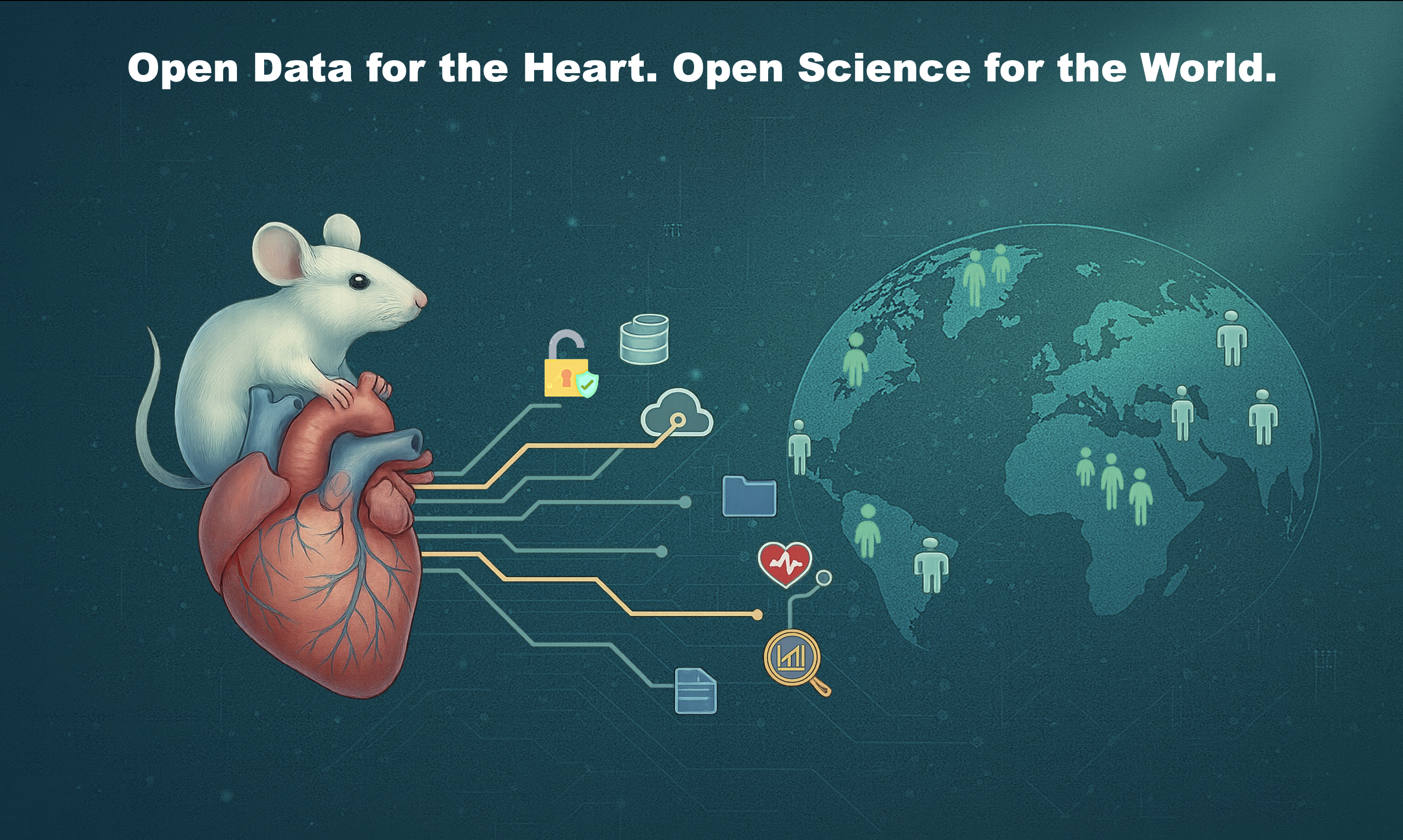
''', unsafe_allow_html=True, ) # ---------- REAL tabs ---------- tab1, tab2, tab3 = st.tabs(["Segmentation App", "Dataset", "NIfTI converter"]) # ===== Tab 1: Segmentation App ===== with tab1: # ---------- REMOVE PAPERCLIP ---------- st.markdown( """ """, unsafe_allow_html=True ) # ---------- HERO ---------- HERO_HTML = dedent("""\We present the first publicly-available pre-clinical cardiac MRI dataset, along with an open-source DL segmentation model (both available on GitHub: https://github.com/mrphys/Open-Source_Pre-Clinical_Segmentation.git) and this web-based interface for easy deployment.
The dataset comprises complete cine short-axis cardiac MRI images from 130 mice with diverse phenotypes. It also contains expert manual segmentations of left ventricular (LV) blood pool and myocardium at end-diastole, end-systole, as well as additional timeframes with artefacts to improve robustness.
Using this resource, we developed an open-source DL segmentation model based on the UNet3+ architecture.
This Streamlit application consists of the inference model to provide an easy-to-use interface for our DL segmentation model, without the need for local installation. The application requires the complete SAX cine image data to be uploaded in NIfTI format, as a ZIP file using the simple file browser below.
Pre-processing and inference are then performed on all 2D images. The resulting blood-pool and myocardial volumes are combined across all slices at each timeframe and output to a .csv file. The blood-pool volumes are used to identify ED and ES, and these volumes are displayed as a GIF with the segmentations overlaid.
(Note: This Hugging Face model was developed as part of a manuscript submitted to the Journal of Cardiovascular Magnetic Resonance)
We present the first publicly-available pre-clinical cardiac MRI dataset, along with an open-source DL segmentation model (both available on GitHub: # https://github.com/mrphys/Open-Source_Pre-Clinical_Segmentation.git) and this web-based interface for easy deployment.
#The dataset comprises complete cine short-axis cardiac MRI images from 130 mice with diverse phenotypes. It also contains expert manual segmentations of left ventricular (LV) blood pool and myocardium at end-diastole, end-systole, as well as additional timeframes with artefacts to improve robustness.
#Using this resource, we developed an open-source DL segmentation model based on the UNet3+ architecture.
#This Streamlit application consists of the inference model to provide an easy-to-use interface for our DL segmentation model, without the need for local installation. The application requires the complete SAX cine image data to be uploaded in NIfTI format, as a ZIP file using the simple file browser below.
#Pre-processing and inference are then performed on all 2D images. The resulting blood-pool and myocardial volumes are combined across all slices at each timeframe and output to a .csv file. The blood-pool volumes are used to identify ED and ES, and these volumes are displayed as a GIF with the segmentations overlaid.
#
# Pre-processing and inference are then performed on all 2D images. The resulting blood-pool and myocardial volumes are combined across all slices at each timeframe and output to a .csv file. The blood-pool volumes are used to identify ED and ES, and these volumes are displayed as a GIF with the segmentations overlaid.
#
# (Note: This Hugging Face model was developed as part of a manuscript submitted to the Journal of Cardiovascular Magnetic Resonance).
#
Or download our sample NIfTI dataset to try it out!
""", unsafe_allow_html=True ) st.markdown('
The first publicly-available pre-clinical cardiac MRI dataset,
with an open-source segmentation model and an easy-to-use web app.
GitHub: Open-Source_Pre-Clinical_Segmentation