
Spaces:
Paused
Paused
File size: 3,292 Bytes
3b38b6e 920471a fb2ef52 920471a fb2ef52 1feac69 920471a 2ab7cb8 920471a 2ab7cb8 d1aa2ae 2ab7cb8 d1aa2ae 2ab7cb8 d1aa2ae 2ab7cb8 1feac69 c0520a6 2ab7cb8 1feac69 2ab7cb8 c0520a6 2ab7cb8 1feac69 2ab7cb8 1feac69 2ab7cb8 1feac69 2ab7cb8 970d427 920471a d1aa2ae 1feac69 3b38b6e | 1 2 3 4 5 6 7 8 9 10 11 12 13 14 15 16 17 18 19 20 21 22 23 24 25 26 27 28 29 30 31 32 33 34 35 36 37 38 39 40 41 42 43 44 45 46 47 48 49 50 51 52 53 54 55 56 57 58 59 60 61 62 63 64 65 66 67 68 69 70 71 72 73 74 75 76 77 78 79 80 81 82 83 84 85 86 87 88 89 90 91 92 93 94 95 96 97 98 99 100 101 102 103 104 105 106 107 108 109 110 111 112 113 114 115 116 117 118 119 120 121 122 123 124 125 126 127 128 129 130 131 132 133 134 135 136 137 | import streamlit as st
import stpyvista.utils
if "IS_XVFB_RUNNING" not in st.session_state:
stpyvista.utils.start_xvfb()
st.session_state.IS_XVFB_RUNNING = True
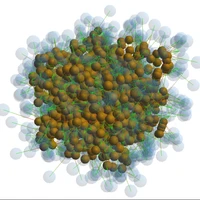
st.title("Sibernetic simple example")
import pyvista as pv
import numpy as np
import time
points = []
types = []
file = "position_buffer.txt"
colours = {1.1: "lightblue", 2.1: "green", 2.2: "turquoise", 3: "#eeeeee"}
colours = {1.1: "blue", 2.2: "turquoise"}
line_count = 0
pcount = 0
all_points = []
all_point_types = []
time_count = 0
logStep = None
include_boundary = False
for l in open(file):
ws = l.split()
#print(ws)
if line_count == 6:
numOfElasticP = int(ws[0])
if line_count == 7:
numOfLiquidP = int(ws[0])
if line_count == 8:
numOfBoundaryP = int(ws[0])
if line_count == 9:
timeStep = float(ws[0])
if line_count == 10:
logStep = int(ws[0])
if len(ws) == 4:
type = float(ws[3])
if not (type == 3 and not include_boundary):
points.append([float(ws[0]), float(ws[1]), float(ws[2])])
types.append(type)
if logStep is not None:
pcount+=1
if pcount==numOfBoundaryP+numOfElasticP+numOfLiquidP:
print('End of one batch of %i added, %i total points at line %i, time: %i'%(len(points),pcount, line_count, time_count))
all_points.append(points)
all_point_types.append(types)
points = []
types=[]
pcount = 0
numOfBoundaryP=0
time_count+=1
line_count += 1
#all_points_np = np.array(all_points)
print(f"Loaded positions with %i elastic, %i liquid and %i boundary points (%i total), %i lines"%(numOfElasticP,numOfLiquidP, numOfBoundaryP,numOfElasticP+numOfLiquidP+numOfBoundaryP, line_count))
print("Num of time points found: %i"%len(all_points))
pl = pv.Plotter(window_size=[800,600])
pl.set_background("lightgrey")
pl.camera.position = (300, 100, -100.0)
pl.camera.focal_point = (50,0,100)
pl.camera.up = (0.0, 1.0, 0.0)
#pl.add_axes_at_origin(labels_off=False)
#pl.add_mesh(pv.Cube(center=(50,0,50)))
last_mesh = None
def create_mesh(step):
step_count = step
value=step_count
global last_mesh
index = int(value)
print('Changing to time point: %s (%s) '%(index,value))
curr_points = all_points[index]
curr_types = all_point_types[index]
if last_mesh is None:
print('Adding mesh...')
last_mesh = pv.PolyData(curr_points)
last_mesh["types"] = curr_types
print(last_mesh)
mesh2 = pv.Cube(center=(0,0,0))
pl.add_mesh(mesh2)
last_actor = pl.add_mesh(
last_mesh,
render_points_as_spheres=True,
cmap=[c for c in colours.values()],
point_size=3,
)
else:
print('Updating mesh...')
last_mesh.points = curr_points
#pl.render()
time.sleep(0.1)
return
create_mesh(0)
max_time = len(all_points)-1
#pl.add_slider_widget(create_mesh, rng=[0,max_time], value=max_time, title='Time point')
#pl.add_timer_event( max_steps=len(all_points), duration=200, callback=create_mesh)
print('Ready...')
from stpyvista import stpyvista as spv
## Send to streamlit
spv(pl, key="pv_cube2")
|