

ESMFold2-Experimental-Fast-Cutoff2025
Model overview
Synthyra/ESMFold2-Experimental-Fast-Cutoff2025 packages the
biohub/ESMFold2-Experimental-Fast-Cutoff2025 checkpoint with the FastPLMs
runtime for Hugging Face Transformers. It accepts raw amino-acid sequences or
typed molecular-complex specifications; low-level forward accepts prepared
feature tensors.
The repository uses the standard Transformers loading interface with
trust_remote_code=True. See Technical details for each registered class and
whether its weights come from the checkpoint.
The sequence- and token-classification classes reuse the pretrained backbone, but their task heads are newly initialized. Fine-tune those heads before interpreting their logits as predictions.
Install and platform requirements
Install the direct dependencies published with this model:
python -m pip install -r \
  "https://huggingface.co/Synthyra/ESMFold2-Experimental-Fast-Cutoff2025/resolve/main/requirements.txt"
The FastPLMs implementation itself is embedded in the model repository.
Transformers loads it through trust_remote_code=True.
This model requires Python 3.11-3.14, PyTorch 2.13, and Transformers 5.13.
The artifact requirements include the structure dependencies.
The release contract requires a CUDA device. The current validated target is the exact NVIDIA GH200 on Linux aarch64. Linux x86-64, CPU-only, Windows, and macOS structure runs are not release evidence.
The Hub quick start needs network access for the first download. For an air-gapped run, build the manifest-pinned local artifact first and use the offline example.
Quick start
from transformers import AutoModel

model_id = "Synthyra/ESMFold2-Experimental-Fast-Cutoff2025"
model = AutoModel.from_pretrained(
    model_id,
    trust_remote_code=True,
    attn_implementation="sdpa",
).eval()
For offline validation, replace model_id with the manifest-built
dist/hub/ESMFold2-Experimental-Fast-Cutoff2025 path. Pass local_files_only=True.
Attention backends
The quick start uses sdpa.
Available backends are eager, sdpa, flex_attention. Requesting an
unavailable backend raises instead of silently changing implementation.
output_attentions=True can use the documented one-call eager fallback to
materialize attention tensors. The configured backend does not change.
Downstream prediction
The sequence and token prediction AutoClasses use the checkpoint backbone and
create a new, untrained classifier. Sequence labels have shape (b,).
Residue labels have shape (b, l) and use -100 outside biological positions.
The folding trunk is skipped. The classifier uses the checkpoint's learned pLM
state mixture and projection, followed by one trainable transformer probe.
import torch
from transformers import (
    AutoModelForSequenceClassification,
    AutoModelForTokenClassification,
)

model_id = "Synthyra/ESMFold2-Experimental-Fast-Cutoff2025"
sequence_model = AutoModelForSequenceClassification.from_pretrained(
    model_id, num_labels=2, trust_remote_code=True
).eval()
token_model = AutoModelForTokenClassification.from_pretrained(
    model_id, num_labels=3, trust_remote_code=True
).eval()
sequences = ["MSTNPKPQRKTKRNT", "MKTIIALSYIFCLVFA"]
batch = sequence_model.prepare_classifier_inputs(sequences)
biological = batch["attention_mask"].bool()

sequence_labels = torch.zeros(len(sequences), dtype=torch.long)
token_labels = torch.full_like(batch["input_ids"], -100)
token_labels[biological] = 0

with torch.inference_mode():
    sequence_output = sequence_model(**batch, labels=sequence_labels)
    token_output = token_model(**batch, labels=token_labels)
print(sequence_output.logits.shape)  # (b, 2)
print(token_output.logits.shape)     # (b, l, 3)
PEFT fine-tuning
Install the training dependencies. Then attach LoRA to the loaded checkpoint:
python -m pip install "datasets>=4.8,<5" "peft>=0.19,<0.20"
from peft import LoraConfig, TaskType, get_peft_model

peft_model = get_peft_model(
    sequence_model,
    LoraConfig(
        task_type=TaskType.SEQ_CLS,
        r=8,
        lora_alpha=16,
        target_modules="all-linear",
        modules_to_save=["classifier"],
    ),
)
This checkpoint advertises a classification head. Save the separately trained
classifier with the adapter.
All FastPLMs checkpoints follow the Transformers PreTrainedModel contract and
can use PEFT. The ESM2-specific shipped CLI is an example, not a
support boundary. Record the target modules, base revision, data identity, and
trainable parameter scope.
Alignment-conditioning contract
This 24-block Fast checkpoint is optimized for single-sequence inference. It
was trained without MSA conditioning. It rejects ProteinInput.msa and low-level
MSA-derived features. Typed multichain and multimolecule inputs remain supported
when every protein chain uses msa=None. Use the full ESMFold2 checkpoint for
MSA-conditioned inference. This follows the official Biohub architecture
description in Appendix A.2.1.
Protein folding
The single-protein helper returns typed structure and confidence outputs:
result = model.fold_protein(
    "MSTNPKPQRKTKRNT",
    num_loops=1,
    num_sampling_steps=200,
    num_diffusion_samples=1,
    seed=7,
)
pdb_text = model.result_to_pdb(result)
cif_text = model.result_to_cif(result)
print(result.ptm, result.plddt.mean().item())
No target structure is required. For complexes, construct the input from the types exposed by the loaded artifact:
types = model.input_types
complex_input = types.StructurePredictionInput(
    sequences=[
        types.ProteinInput(id="A", sequence="MSTNPKPQRKTKRNT"),
        types.ProteinInput(id="B", sequence="MKTIIALSYIFCLVFA"),
        types.DNAInput(id="C", sequence="ATGC"),
        types.LigandInput(id="L", smiles="O"),
    ]
)
complex_result = model.fold(
    complex_input,
    num_loops=1,
    num_sampling_steps=200,
    seed=7,
)
print(complex_result.ptm, complex_result.plddt.mean().item())
The typed interface also supports RNA, modifications, and covalent bonds.
Protein MSA inputs are not supported by this Fast checkpoint; every protein
chain must use msa=None. The public schema recognizes PocketConditioning and
DistogramConditioning, but the pinned official forward consumes neither. Its
feature builder hard-codes a zero pocket feature and constructs distogram tensors
that the released model ignores. FastPLMs therefore rejects non-null pocket and
distogram conditioning instead of silently ignoring scientific inputs. Prepared
ref_pos values are component reference geometries created during featurization,
not target coordinates.
Predicted coordinates and confidence scores are outputs and do not establish
biochemical activity.
Learned representation and ESMC precision
ESMFold2 applies its learned state mixture and projection as
H: (b, l, 81, 2560) -> Z: (b, l, 256). Retrieve Z through the public
embedding API:
representations = model.embed_dataset(
    ["MSTNPKPQRKTKRNT", "MKTIIALSYIFCLVFA"],
    batch_size=2,
    full_embeddings=True,
)
print(representations[0].tensor.shape)  # (sequence_length, 256)
model.embed_dataset(..., full_embeddings=True) returns one (l, 256) residue
tensor per single-chain input. It rejects complexes, ligands, MSAs,
chain-separated inputs, cls, and parti in the embedding path.
Set esmc_precision to auto, bf16, fp32, or fp8 when loading.
auto always resolves to BF16. Explicit FP8 is experimental, inference-only,
and strict:
model.reload_esmc(precision="fp8", device="cuda:0")
print(model.esmc_precision_status)
FP8 raises when the validated CUDA and Transformer Engine path is unavailable. Canonical BF16 weights are retained, and transient quantization state is never serialized.
The ESMC backbone uses SDPA as the recommended highest-fidelity path. Flex Attention is supported and non-experimental but can be numerically divergent; ESMFold2 does not advertise FlashAttention for the folding interface.
| Backend | Support | Measurement status |
|---|---|---|
sdpa |
Recommended fidelity path | Pending release measurement |
eager |
Supported | Pending release measurement |
flex_attention |
Supported, numerically divergent | Pending release measurement |
Detailed backend measurements, release guardrails, and the GH200 package compatibility exception are maintained in the attention backend guide and release evidence manifest.
Verified CCD runtime asset
Structure preparation requires ccd.pkl from
biohub/ESMFold2. The manifest pins its repository, revision, size, content
identity, and MIT terms. This is a trusted-deserialization boundary. FastPLMs
accepts only the pinned snapshot link inside the repository blob directory.
User-supplied asset and cache_dir symlinks are rejected. The loader verifies a
private temporary snapshot before deserialization, protecting against
path-replacement and in-place source-write races. Offline execution requires the
exact cached object and never downloads a replacement.
Test-time training
This experimental checkpoint does not expose folding TTT. Use the corresponding standard or Fast checkpoint when you need opt-in ESMC-backbone adaptation.
Binder-design research example
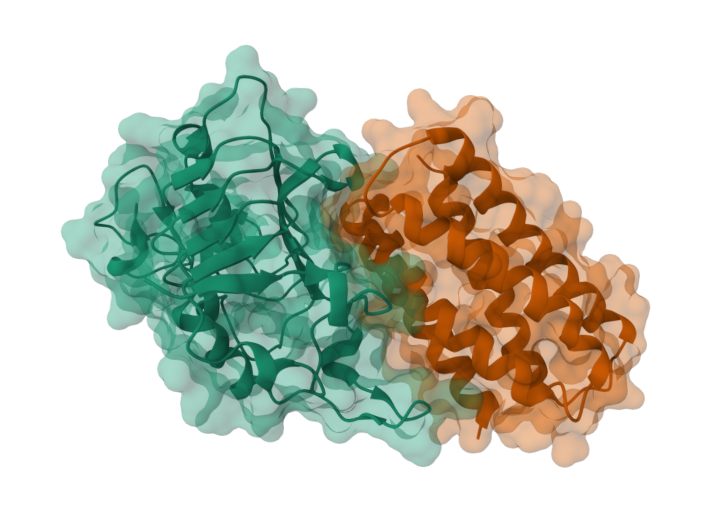
The FastPLMs binder-design workflow uses the experimental Fast Cutoff2025 checkpoint for differentiable inversion, both experimental Cutoff2025 checkpoints as critics, and ESM++ as the sequence prior:
python examples/binder_design_fastplms.py \
  --target-name pd-l1 \
  --binder-name minibinder \
  --batch-size 4 \
  --steps 150 \
  --output-dir artifacts/binder-design
The workflow ranks candidates by mean iPTM across the approved critics after the minibinder isoelectric-point filter. These are model-based prioritization signals, not experimental evidence of affinity or specificity. See the complete workflow.
Technical details
- Inputs: Raw amino-acid sequences or typed molecular-complex specifications; low-level forward accepts prepared feature tensors
- Transformers classes:
AutoConfig,AutoModel,AutoModelForSequenceClassification,AutoModelForTokenClassification - Checkpoint weights:
AutoConfig=FastPLMs extension,AutoModel=pretrained,AutoModelForSequenceClassification=base weights + untrained task head,AutoModelForTokenClassification=base weights + untrained task head - Attention backends:
eager,sdpa,flex_attention - Precision:
auto,fp32,bf16,fp8(experimental) - BF16 execution:
fp32_parameters_autocast - Generation contract:
not_applicable - Dependencies:
core + structure - Weight publication allowed:
true - Weight license status:
resolved - Redistributable:
true - Complete weight publication required:
false
Validation and provenance
FastPLMs pins the checkpoint, upstream source revisions, state transformation,
and required files in models.toml. Built artifacts record exact source
identities and conversion details in source-record.json.
- FastPLMs checkpoint:
Synthyra/ESMFold2-Experimental-Fast-Cutoff2025 - Runtime revision: recorded separately in the built artifact and published commit
- Runtime source identities: recorded in
source-record.json - Official checkpoint:
biohub/ESMFold2-Experimental-Fast-Cutoff2025 - Artifact source:
fast - State transform:
identity - Pinned upstreams:
biohub-esm,biohub-transformers,protein-ttt - Release tiers:
check,compliance,structure,feature,artifact,benchmark - Unresolved required file identities:
0
Release validation includes the compliance tier. Its evidence identifies the
checkpoint, backend, dtype, hardware, inputs, and reference revision.
Declared tiers compare configuration, tokenizer behavior, state, and representative inference with the pinned reference. A nonzero unresolved count blocks release. Metadata alone does not show that a build passed, that a backend is faster, or that an output is biologically valid.
License
Checkpoint terms: MIT. The Hub model-card identifier is
mit. The local artifact contains applicable source
licenses, notices, attribution, and conversion records. Review them before use.
- Downloads last month
- 207