|
|
--- |
|
|
license: other |
|
|
license_name: ngen-3-community-license |
|
|
license_link: https://tnsaai-builds.framer.website/community/licenses/ngen3 |
|
|
library_name: transformers |
|
|
model-index: |
|
|
- name: NGen-3-7B |
|
|
results: |
|
|
- task: |
|
|
type: text-generation |
|
|
dataset: |
|
|
name: TCorpus5 |
|
|
type: WebCorpus |
|
|
metrics: |
|
|
- name: MMLU |
|
|
type: accuracy |
|
|
value: 60.24 |
|
|
- name: PIQA |
|
|
type: accuracy |
|
|
value: 79.12 |
|
|
- name: Hellaswag |
|
|
type: accuracy |
|
|
value: 52.87 |
|
|
- name: Winogrande |
|
|
type: accuracy |
|
|
value: 68.35 |
|
|
pipeline_tag: text-generation |
|
|
datasets: |
|
|
- HuggingFaceH4/no_robots |
|
|
- Open-Orca/SlimOrca |
|
|
- Skylion007/openwebtext |
|
|
- HuggingFaceFW/fineweb |
|
|
- HuggingFaceTB/smoltalk |
|
|
|
|
|
extra_gated_prompt: | |
|
|
1. LICENSE DEFINITIONS & SCOPE |
|
|
1.1 Core Definitions |
|
|
1.1.1 "OpenWeight Models" means AI models where TNSA has made model weights, parameters, and architecture publicly available under open licensing terms. |
|
|
1.1.2 "Model Weights" means the learned parameters, coefficients, and numerical values that define the behavior and capabilities of an AI model. |
|
|
1.1.3 "Model Architecture" means the structural design, layer configuration, and computational framework of an AI model. |
|
|
1.1.4 "Training Code" means software, scripts, and procedures used to train, fine-tune, or modify AI models. |
|
|
1.1.5 "Inference Code" means software required to load, execute, and generate outputs from AI models. |
|
|
1.1.6 "Model Card" means documentation describing model capabilities, limitations, training data, and intended use cases. |
|
|
1.1.7 "Derivative Model" means any AI model created by modifying, fine-tuning, or building upon TNSA OpenWeight Models. |
|
|
1.1.8 "Commercial Use" means any use of OpenWeight Models for commercial purposes, including but not limited to revenue generation, business operations, or competitive advantage. |
|
|
1.1.9 "Research Use" means use for academic research, scientific investigation, or educational purposes without commercial intent. |
|
|
1.1.10 "Distribution" means making OpenWeight Models or derivatives available to third parties through any means. |
|
|
1.2 License Scope |
|
|
1.2.1 This license applies to all TNSA OpenWeight Models and associated materials made available under open licensing terms. |
|
|
1.2.2 The license covers model weights, architectures, training code, inference code, and documentation. |
|
|
1.2.3 Different license terms may apply to different model versions or releases. |
|
|
1.2.4 Supplemental terms may apply to specific models or use cases as indicated in model documentation. |
|
|
1.2.5 This license does not grant rights to TNSA trademarks, service marks, or proprietary branding. |
|
|
1.2.6 Training data used to create OpenWeight Models may be subject to separate licensing terms. |
|
|
1.2.7 Third-party components integrated into OpenWeight Models retain their original licensing terms. |
|
|
1.2.8 Geographic restrictions may apply based on export control laws and regulations. |
|
|
1.2.9 Temporal limitations may apply to certain license grants or model versions. |
|
|
1.2.10 Updates and modifications to licensing terms will be communicated through official TNSA channels. |
|
|
1.3 License Types |
|
|
1.3.1 "TNSA Open License" - Permissive license allowing broad commercial and research use with attribution. |
|
|
1.3.2 "TNSA Research License" - License restricted to non-commercial research and educational use. |
|
|
1.3.3 "TNSA Community License" - License for community-driven development with share-alike provisions. |
|
|
1.3.4 "TNSA Evaluation License" - Time-limited license for evaluation and testing purposes. |
|
|
1.3.5 "TNSA Custom License" - Negotiated license terms for specific use cases or organizations. |
|
|
2. COVERED MODEL CATEGORIES |
|
|
2.1 NGen Series Models |
|
|
2.1.1 NGen3 OpenWeight Models - Latest generation large language models with full commercial licensing. |
|
|
2.1.2 NGen2 OpenWeight Models - Previous generation models with continued support and licensing. |
|
|
2.1.3 NGen Base Models - Foundation models suitable for fine-tuning and specialization. |
|
|
2.1.4 NGen Instruct Models - Instruction-tuned variants optimized for conversational use. |
|
|
2.1.5 NGen Code Models - Specialized variants trained for code generation and programming tasks. |
|
|
2.1.6 NGen Reasoning Models - Enhanced variants with improved logical reasoning capabilities. |
|
|
2.1.7 NGen Multimodal Models - Models capable of processing text, images, and other modalities. |
|
|
2.1.8 NGen Domain Models - Specialized models for specific industries or use cases. |
|
|
2.1.9 NGen Efficient Models - Optimized variants for resource-constrained environments. |
|
|
2.1.10 NGen Experimental Models - Research variants with novel architectures or capabilities. |
|
|
2.2 IGen Series Models |
|
|
2.2.1 IGen 1 Nano Models - Compact image generation models for edge deployment. |
|
|
2.2.2 IGen Base Models - Foundation models for image synthesis and manipulation. |
|
|
2.2.3 IGen Style Models - Specialized models for artistic and stylistic image generation. |
|
|
2.2.4 IGen Photo Models - Photorealistic image generation models with high fidelity output. |
|
|
2.2.5 IGen Edit Models - Models specialized for image editing and modification tasks. |
|
|
2.2.6 IGen Upscale Models - Super-resolution models for image enhancement and upscaling. |
|
|
2.2.7 IGen Inpaint Models - Models for image inpainting and completion tasks. |
|
|
2.2.8 IGen Control Models - Models with enhanced controllability and conditioning options. |
|
|
2.2.9 IGen Fast Models - Optimized models for rapid image generation with reduced latency. |
|
|
2.2.10 IGen Research Models - Experimental image generation models for research purposes. |
|
|
2.3 Specialized Model Categories |
|
|
2.3.1 Stellar v2 Models - Advanced reasoning and analysis models for complex problem-solving. |
|
|
2.3.2 Audio Generation Models - Models for speech synthesis, music generation, and audio processing. |
|
|
2.3.3 Video Generation Models - Models for video synthesis, editing, and temporal content creation. |
|
|
2.3.4 Embedding Models - Models for generating vector representations of text, images, and other data. |
|
|
2.3.5 Classification Models - Models for content classification, sentiment analysis, and categorization. |
|
|
2.3.6 Translation Models - Models for language translation and cross-lingual understanding. |
|
|
2.3.7 Summarization Models - Models specialized for text summarization and content condensation. |
|
|
2.3.8 Question Answering Models - Models optimized for factual question answering and information retrieval. |
|
|
2.3.9 Safety Models - Models for content moderation, safety classification, and harm detection. |
|
|
2.3.10 Evaluation Models - Models for assessing quality, accuracy, and performance of other AI systems. |
|
|
3. GRANTED PERMISSIONS |
|
|
3.1 Usage Rights |
|
|
3.1.1 Use OpenWeight Models for inference, prediction, and output generation. |
|
|
3.1.2 Deploy models in production environments for commercial and non-commercial purposes. |
|
|
3.1.3 Integrate models into applications, services, and platforms. |
|
|
3.1.4 Process proprietary and confidential data through licensed models. |
|
|
3.1.5 Scale usage according to computational resources and business needs. |
|
|
3.1.6 Use models across multiple geographic regions and jurisdictions. |
|
|
3.1.7 Combine multiple TNSA models in integrated solutions. |
|
|
3.1.8 Use models for both batch processing and real-time inference. |
|
|
3.1.9 Implement custom inference optimizations and performance enhancements. |
|
|
3.1.10 Use models in research, development, and experimental applications. |
|
|
3.2 Modification Rights |
|
|
3.2.1 Fine-tune models on custom datasets for specialized applications. |
|
|
3.2.2 Modify model architectures for performance or efficiency improvements. |
|
|
3.2.3 Quantize, compress, or optimize models for specific hardware platforms. |
|
|
3.2.4 Merge or ensemble multiple models for enhanced capabilities. |
|
|
3.2.5 Extract and use individual model components or layers. |
|
|
3.2.6 Adapt models for different programming languages or frameworks. |
|
|
3.2.7 Create domain-specific variants through transfer learning. |
|
|
3.2.8 Implement custom training procedures and optimization techniques. |
|
|
3.2.9 Modify input/output interfaces and data preprocessing pipelines. |
|
|
3.2.10 Develop novel applications and use cases based on model capabilities. |
|
|
3.3 Distribution Rights |
|
|
3.3.1 Distribute unmodified OpenWeight Models with proper attribution. |
|
|
3.3.2 Share derivative models created through permitted modifications. |
|
|
3.3.3 Include models in open-source projects and repositories. |
|
|
3.3.4 Distribute models through academic and research channels. |
|
|
3.3.5 Package models with applications and commercial products. |
|
|
3.3.6 Provide models to customers, partners, and collaborators. |
|
|
3.3.7 Host models on cloud platforms and model repositories. |
|
|
3.3.8 Create and distribute model variants for different use cases. |
|
|
3.3.9 Share models within organizations and affiliated entities. |
|
|
3.3.10 Contribute models to community projects and initiatives. |
|
|
4. USAGE RESTRICTIONS |
|
|
4.1 Prohibited Uses |
|
|
4.1.1 Using models to generate illegal content or facilitate criminal activities. |
|
|
4.1.2 Creating deepfakes or synthetic media intended to deceive or harm individuals. |
|
|
4.1.3 Developing surveillance systems that violate privacy rights or human dignity. |
|
|
4.1.4 Training models on data obtained without proper consent or legal authorization. |
|
|
4.1.5 Using models to discriminate against protected groups or individuals. |
|
|
4.1.6 Generating content that promotes violence, hatred, or extremist ideologies. |
|
|
4.1.7 Creating systems designed to manipulate democratic processes or elections. |
|
|
4.1.8 Using models for military weapons development or autonomous weapons systems. |
|
|
4.1.9 Developing applications that could cause mass harm or societal disruption. |
|
|
4.1.10 Reverse engineering models to extract proprietary training data or methodologies. |
|
|
4.2 Technical Restrictions |
|
|
4.2.1 Removing or obscuring attribution notices, copyright statements, or license information. |
|
|
4.2.2 Circumventing built-in safety measures, content filters, or usage monitoring. |
|
|
4.2.3 Attempting to extract or reconstruct training data from model weights. |
|
|
4.2.4 Using models in ways that exceed specified computational or usage limits. |
|
|
4.2.5 Modifying models to remove safety guardrails or ethical constraints. |
|
|
4.2.6 Distributing models without required documentation or safety information. |
|
|
4.2.7 Using models in safety-critical applications without proper validation. |
|
|
4.2.8 Combining models with malicious code or harmful software components. |
|
|
4.2.9 Implementing models in ways that violate applicable privacy regulations. |
|
|
4.2.10 Using models to create competing AI services that directly replicate TNSA offerings. |
|
|
4.3 Commercial Restrictions |
|
|
4.3.1 Certain models may require separate commercial licensing for revenue-generating use. |
|
|
4.3.2 High-volume commercial usage may be subject to additional terms and fees. |
|
|
4.3.3 Reselling unmodified models as standalone products is prohibited. |
|
|
4.3.4 Using TNSA trademarks or branding without explicit permission is forbidden. |
|
|
4.3.5 Creating derivative works that compete directly with TNSA services may be restricted. |
|
|
extra_gated_fields: |
|
|
First Name: text |
|
|
Last Name: text |
|
|
Date of birth: date_picker |
|
|
Country: country |
|
|
Affiliation: text |
|
|
Job title: |
|
|
type: select |
|
|
options: |
|
|
- Student |
|
|
- Research Graduate |
|
|
- AI researcher |
|
|
- AI developer/engineer |
|
|
- Reporter |
|
|
- Other |
|
|
geo: ip_location |
|
|
By clicking Submit below I accept the terms of the NGen-3 Community License and acknowledge that the information I provide will be collected stored processed and shared in accordance with the TNSA Privacy Policy: checkbox |
|
|
extra_gated_description: >- |
|
|
The information you provide will be collected, stored, processed and shared in |
|
|
accordance with the [TNSA Privacy |
|
|
Policy](https://legal.tnsaai.com/legal/privacy). |
|
|
extra_gated_button_content: Submit |
|
|
extra_gated_heading: >- |
|
|
Please be sure to provide your full legal name, date of birth, and full |
|
|
organization name with all corporate identifiers. Avoid the use of acronyms |
|
|
and special characters. Failure to follow these instructions may prevent you |
|
|
from accessing this model and others. You will not have the ability to edit |
|
|
this form after submission, so please ensure all information is accurate. |
|
|
--- |
|
|
|
|
|
|
|
|
|
|
|
# NGen 3 - 7B-Instruct |
|
|
|
|
|
NGen3 is a production-level foundational language model inspired by state-of-the-art architectures such as GPT-4, Claude-3, and Llama 2. It is designed for both research and production and supports model variants ranging from 7M to 1B parameters. The model is built with a modular transformer decoder architecture and provides a comprehensive command-line interface (CLI) for tokenization, training, sampling, exporting, knowledge distillation, and fine-tuning on conversational data. |
|
|
|
|
|
.png) |
|
|
|
|
|
## Table of Contents |
|
|
|
|
|
- [Overview](#overview) |
|
|
- [Model Architecture](#model-architecture) |
|
|
- [Installation](#installation) |
|
|
- [Usage](#usage) |
|
|
- [Tokenization](#tokenization) |
|
|
- [Training](#training) |
|
|
- [Sampling](#sampling) |
|
|
- [Exporting](#exporting) |
|
|
- [Knowledge Distillation](#knowledge-distillation) |
|
|
- [Fine-Tuning](#fine-tuning) |
|
|
- [Local Fine-Tuning](#local-fine-tuning) |
|
|
- [Hugging Face Fine-Tuning](#hugging-face-fine-tuning) |
|
|
- [Hyperparameters](#hyperparameters) |
|
|
- [Acknowledgements](#acknowledgements) |
|
|
|
|
|
--- |
|
|
|
|
|
## Overview |
|
|
|
|
|
NGen3 is a flexible, self-contained implementation of a foundational language model built on a transformer decoder architecture. It enables users to: |
|
|
|
|
|
- **Tokenize** text from local files, URLs, or directly from Hugging Face datasets. |
|
|
- **Train** the model on tokenized datasets. |
|
|
- **Generate** text samples from trained models. |
|
|
- **Export** models (with minimal tokenizer configurations) to formats compatible with Hugging Face. |
|
|
- **Distill** knowledge from larger teacher models into smaller student models. |
|
|
- **Fine-Tune** on conversational datasets (using local files or datasets from Hugging Face). |
|
|
|
|
|
--- |
|
|
|
|
|
## Model Architecture |
|
|
|
|
|
NGen3 uses a decoder-only transformer design with the following components: |
|
|
|
|
|
- **Token & Positional Embeddings:** Learnable embeddings for tokens and their positions. |
|
|
- **Transformer Blocks:** A stack of blocks, each containing: |
|
|
- **Causal Self-Attention:** Multi-head attention with a lower-triangular mask to prevent attention to future tokens. |
|
|
- **Feed-Forward Network (MLP):** With GELU activation. |
|
|
- **Residual Connections & Layer Normalization:** To stabilize training. |
|
|
- **Final Projection Layer:** Projects the hidden states to logits over the vocabulary. |
|
|
|
|
|
The model comes in several variants: |
|
|
- **7M Variant:** 4 layers, 4 heads, 128-dimensional embeddings. |
|
|
- **120M Variant:** 12 layers, 8 heads, 512-dimensional embeddings. |
|
|
- **300M, 500M, 700M, and 1B Variants:** Increasing in depth and width. |
|
|
|
|
|
--- |
|
|
|
|
|
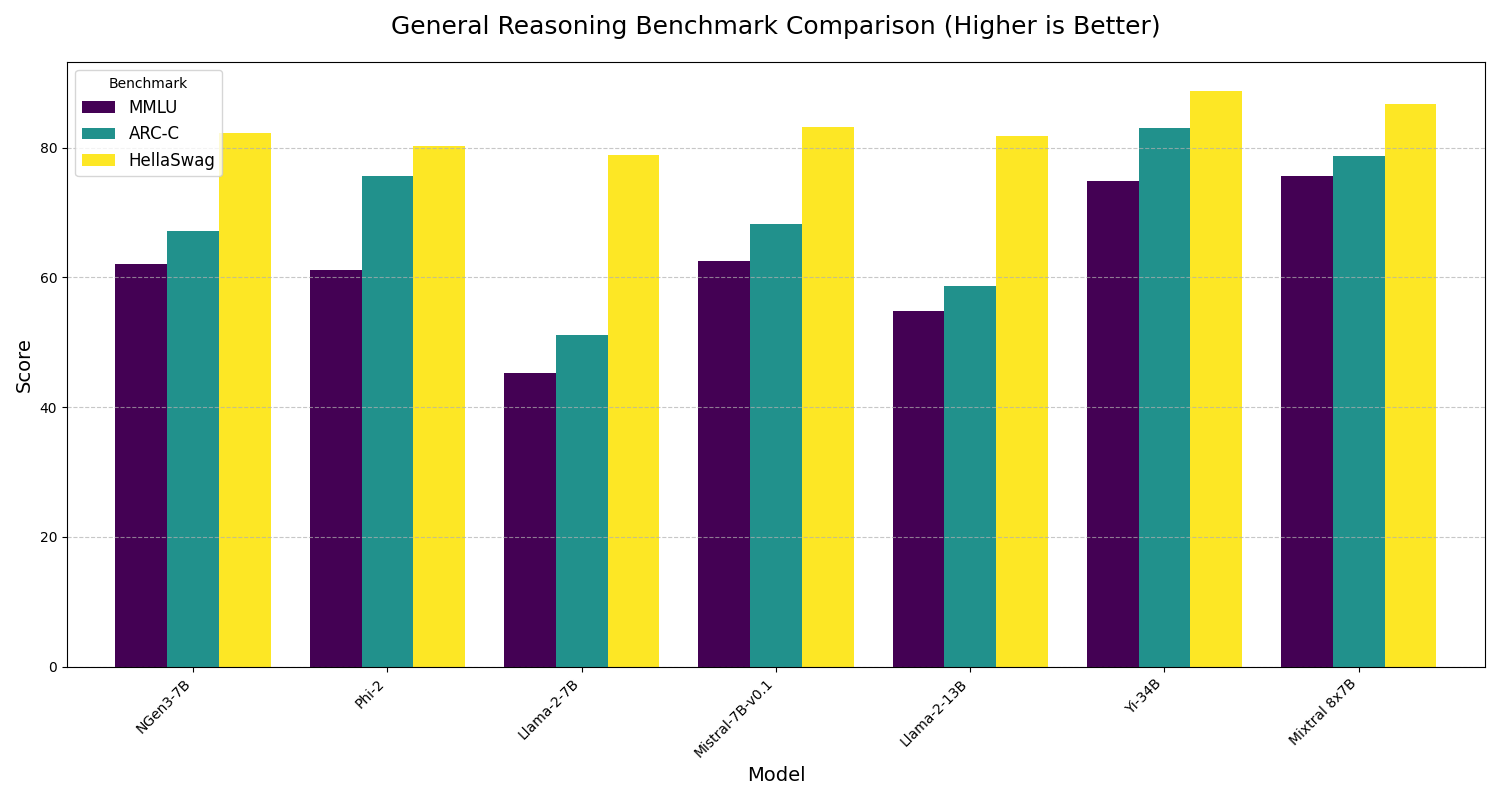
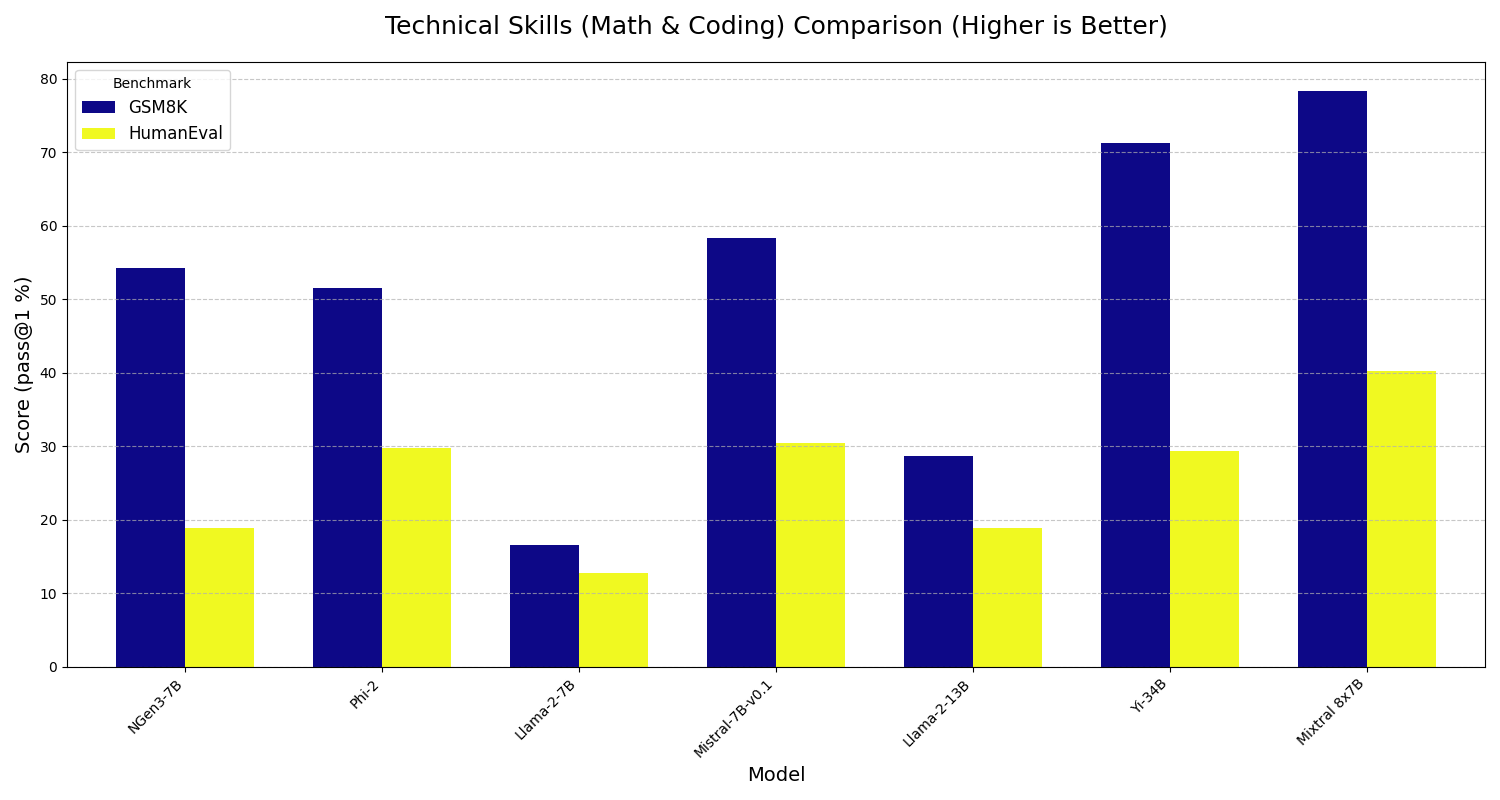
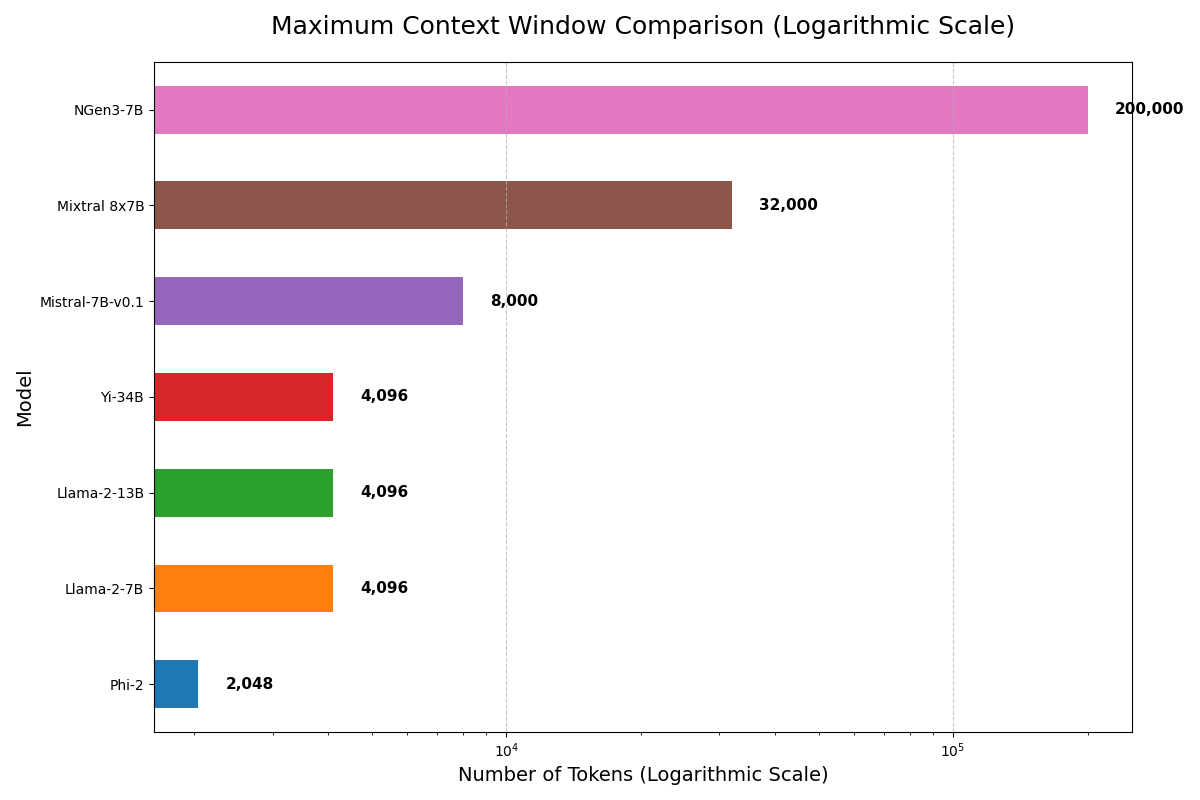
## Evaluation Results |
|
|
|
|
|
 |
|
|
 |
|
|
 |
|
|
|
|
|
## Installation |
|
|
|
|
|
Ensure you have Python 3.8+ installed and install the necessary dependencies: |
|
|
|
|
|
```bash |
|
|
pip install torch transformers datasets tqdm safetensors |
|
|
``` |
|
|
## Usage |
|
|
|
|
|
NGen3 is fully managed via a CLI. Below are examples for each command. |
|
|
Tokenization |
|
|
Local Text File or URL: |
|
|
```bash |
|
|
python _model_.py tokenize --dataset tinyshakespeare --txt "https://raw.githubusercontent.com/karpathy/char-rnn/master/data/tinyshakespeare/input.txt" |
|
|
``` |
|
|
|
|
|
Hugging Face Dataset: |
|
|
```bash |
|
|
python _model_.py hf_tokenize --hf_dataset roskoN/dailydialog --hf_split train --hf_text_column utterances --dataset dailydialog_train |
|
|
``` |
|
|
|
|
|
## Training |
|
|
Train a model variant (e.g., 7M): |
|
|
```bash |
|
|
python _model_.py train --variant 7M --data _data_tinyshakespeare_/data.bin |
|
|
``` |
|
|
|
|
|
## Sampling |
|
|
Generate text samples from a trained model: |
|
|
```bash |
|
|
python _model_.py sample --variant 7M --model_checkpoint 7M_model.pt --prompt "To be, or not to be" --length 100 --temperature 1.0 |
|
|
``` |
|
|
## Exporting |
|
|
Export a trained model (and its tokenizer configuration) for Hugging Face: |
|
|
|
|
|
```bash |
|
|
python _model_.py export --variant 7M --model_path 7M_model.pt --output_dir exported_7M |
|
|
``` |
|
|
|
|
|
## Knowledge Distillation |
|
|
Distill a larger teacher model (e.g., GPT-2 120M from HF) into a smaller student model (e.g., 7M): |
|
|
|
|
|
```bash |
|
|
python _model_.py distill --teacher_model_path hf --teacher_variant 120M --student_variant 7M --data _data_tinyshakespeare_/data.bin --temperature 2.0 --alpha 0.5 |
|
|
``` |
|
|
|
|
|
## Fine-Tuning |
|
|
Local Fine-Tuning on Conversational Data |
|
|
Fine-tune a distilled model using local conversation data: |
|
|
|
|
|
```bash |
|
|
|
|
|
python _model_.py finetune --variant 120M --model_checkpoint distilled_120M_model.pt --data _data_conversations_/data.bin --finetune_iters 1000 --prompt "Hello, how are you?" --sample_length 100 --sample_temperature 1.0 |
|
|
``` |
|
|
Hugging Face Fine-Tuning on a Conversational Dataset |
|
|
Fine-tune on a conversational dataset from Hugging Face (e.g., roskoN/dailydialog): |
|
|
|
|
|
```bash |
|
|
|
|
|
python _model_.py hf_finetune --variant 120M --model_checkpoint distilled_120M_model.pt --hf_dataset roskoN/dailydialog --hf_split train --hf_text_column utterances --finetune_iters 1000 --prompt "Hello, how are you?" --sample_length 100 --sample_temperature 1.0 |
|
|
``` |
|
|
|
|
|
## Sampling and Exporting Fine-Tuned Models |
|
|
After fine-tuning, you can sample from or export the fine-tuned model just as with any checkpoint. For example, if your fine-tuned model is saved as finetuned_120M_model.pt: |
|
|
|
|
|
Sampling: |
|
|
|
|
|
```bash |
|
|
python _model_.py sample --variant 120M --model_checkpoint finetuned_120M_model.pt --prompt "What do you think about AI?" --length 100 --temperature 1.0 |
|
|
``` |
|
|
Exporting: |
|
|
|
|
|
```bash |
|
|
python _model_.py export --variant 120M --model_path finetuned_120M_model.pt --output_dir exported_finetuned_120M |
|
|
``` |
|
|
## Hyperparameters |
|
|
Each model variant comes with predefined hyperparameters. For example: |
|
|
|
|
|
7M Variant: |
|
|
|
|
|
Layers: 4, Heads: 4, Embedding Dimension: 128 |
|
|
Block Size: 128, Batch Size: 16, Learning Rate: 3e-4 |
|
|
120M Variant: |
|
|
|
|
|
Layers: 12, Heads: 8, Embedding Dimension: 512 |
|
|
Block Size: 256, Batch Size: 32, Learning Rate: 3e-4 |
|
|
300M, 500M, 700M, 1B Variants: |
|
|
Increasing layers, heads, and embedding dimensions for better performance. |
|
|
|
|
|
Adjust ```max_iters```, ```log_interval```, and ```eval_interval``` to suit your dataset size and computational resources. |
|
|
|
|
|
|
|
|
## Acknowledgements |
|
|
NGen3 is inspired by leading models including GPT-4, Claude-3, and Llama 2. Special thanks to the open-source community for: |
|
|
|
|
|
- PyTorch |
|
|
- Hugging Face Transformers |
|
|
- Hugging Face Datasets |
|
|
- safetensors |