|
|
--- |
|
|
license: mit |
|
|
language: |
|
|
- en |
|
|
--- |
|
|
# Model Cards: Driver Drowsiness Detection System |
|
|
|
|
|
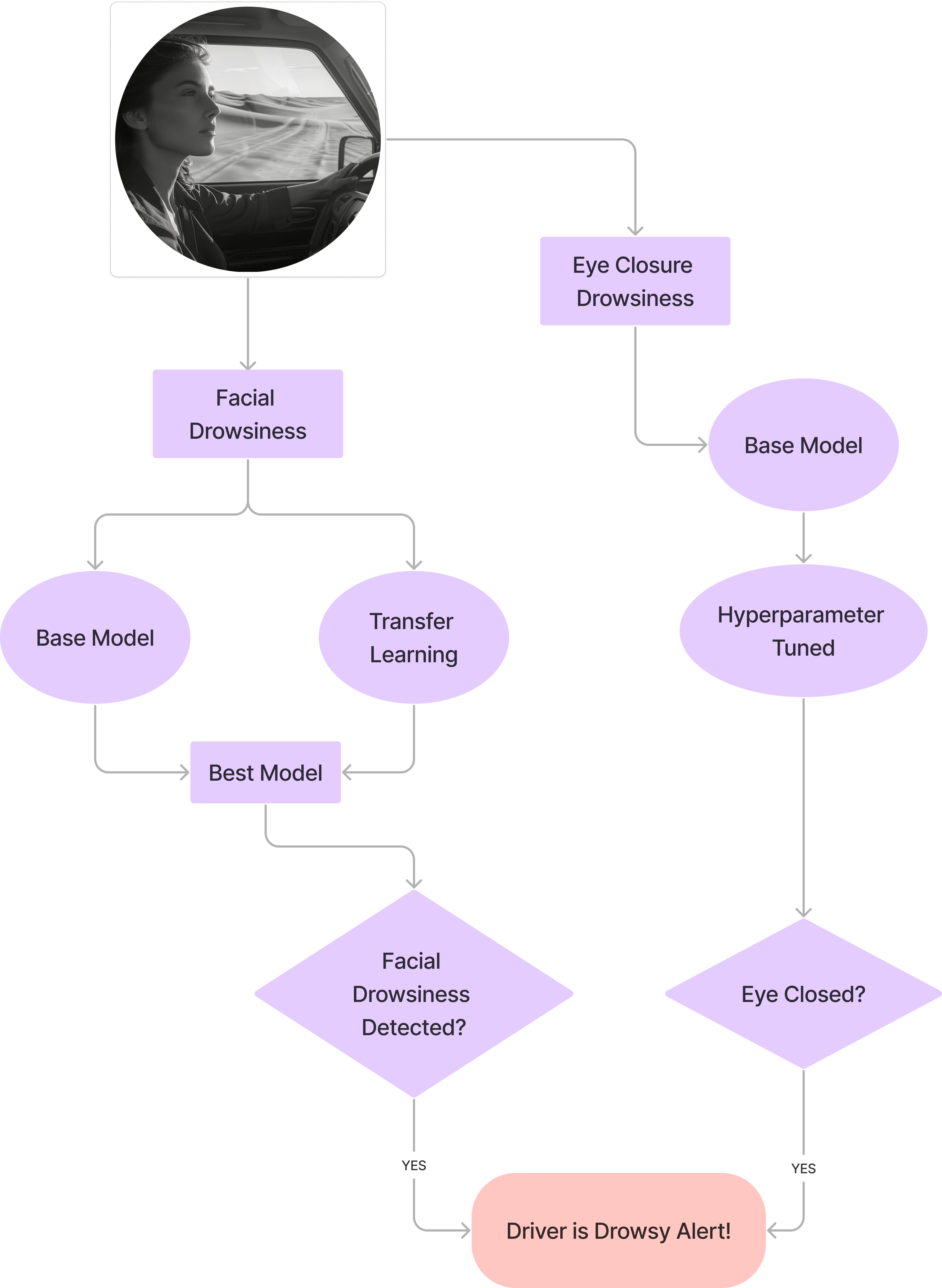
This repository contains models developed for the Driver Drowsiness Detection System project. The goal is to enhance vehicular safety by identifying signs of driver fatigue and drowsiness in real-time using deep learning. The system employs two main approaches: |
|
|
1. **Facial Features Drowsiness Detection (Dataset 1):** Analyzes overall facial images for signs of drowsiness (e.g., yawning, general expression). |
|
|
2. **Eye Closure Drowsiness Detection (Dataset 2):** Specifically focuses on detecting whether the driver's eyes are open or closed. |
|
|
|
|
|
The report suggests combining these approaches for a more robust system, potentially using MobileNetV2 for facial features and the tuned CNN for eye closure. |
|
|
|
|
|
--- |
|
|
|
|
|
|
|
|
 |
|
|
|
|
|
--- |
|
|
|
|
|
## Model Card: Facial Drowsiness Detection - Base CNN |
|
|
|
|
|
* **Model File:** `trained_model_weights_BASE_DATASET1.pth` |
|
|
|
|
|
### Model Details |
|
|
* **Description:** A custom Convolutional Neural Network (CNN) trained from scratch to classify facial images as 'Drowsy' or 'Natural' (alert). This is the initial baseline model for Dataset 1. |
|
|
* **Architecture:** `Model_OurArchitecture` (4 Conv2D layers: 1->32, 32->64, 64->128, 128->128; MaxPool2D after first 3 Conv layers; 1 FC layer: 128*6*6 -> 256; Output FC layer: 256 -> 1; ReLU activations; Single Dropout(0.5) layer before final output). |
|
|
* **Input:** 48x48 Grayscale images. |
|
|
* **Output:** Single logit predicting drowsiness (Binary Classification). |
|
|
* **Framework:** PyTorch. |
|
|
|
|
|
### Intended Use |
|
|
* Intended for detecting drowsiness based on static facial images. Serves as a baseline for comparison. |
|
|
* **Not recommended for deployment due to significant overfitting.** |
|
|
|
|
|
### Training Data |
|
|
* **Dataset:** Drowsy Detection Dataset ([Kaggle Link](https://www.kaggle.com/datasets/yasharjebraeily/drowsy-detection-dataset)) |
|
|
* **Classes:** DROWSY, NATURAL. |
|
|
* **Size:** 5,859 training images. |
|
|
* **Preprocessing:** Resize (48x48), Grayscale, ToTensor, Normalize (calculated mean/std from dataset), RandomHorizontalFlip. |
|
|
|
|
|
 |
|
|
|
|
|
### Evaluation Data |
|
|
* **Dataset:** Test split of the Drowsy Detection Dataset. |
|
|
* **Size:** 1,483 testing images. |
|
|
* **Preprocessing:** Resize (48x48), Grayscale, ToTensor, Normalize (same as training). |
|
|
|
|
|
### Quantitative Analyses |
|
|
* **Training Performance:** Accuracy: 99.51%, Loss: 0.0148 |
|
|
* **Evaluation Performance:** Accuracy: 86.24%, Loss: 0.9170 |
|
|
* **Metrics:** Accuracy, Binary Cross-Entropy with Logits Loss. |
|
|
|
|
|
### Limitations and Ethical Considerations |
|
|
* **Overfitting:** Shows significant overfitting (large gap between training and testing accuracy). Generalizes poorly to unseen data. |
|
|
* **Bias:** Performance may vary across different demographics, lighting conditions, camera angles, and accessories (e.g., glasses) not equally represented in the dataset. |
|
|
* **Misuse Potential:** Could be used for surveillance, though not designed for it. False negatives (missing drowsiness) could lead to accidents; false positives (incorrect alerts) could be annoying or lead to user distrust. |
|
|
|
|
|
--- |
|
|
|
|
|
## Model Card: Facial Drowsiness Detection - Base CNN + Dropout |
|
|
|
|
|
* **Model File:** `trained_model_weights_BASE_DROPOUT_DATASET1.pth` |
|
|
|
|
|
### Model Details |
|
|
* **Description:** The same custom CNN architecture as the base model (`Model_OurArchitecture`) but explicitly trained *with* the described dropout layer active to mitigate overfitting observed in the baseline. |
|
|
* **Architecture:** `Model_OurArchitecture` (As described above, including the Dropout(0.5) layer). |
|
|
* **Input:** 48x48 Grayscale images. |
|
|
* **Output:** Single logit predicting drowsiness. |
|
|
* **Framework:** PyTorch. |
|
|
|
|
|
### Intended Use |
|
|
* Intended for detecting drowsiness based on static facial images. Shows improvement over the baseline by using dropout for regularization. |
|
|
* Better generalization than the baseline, but transfer learning models performed better. |
|
|
|
|
|
### Training Data |
|
|
* Same as the Base CNN model (Dataset 1). |
|
|
|
|
|
### Evaluation Data |
|
|
* Same as the Base CNN model (Dataset 1). |
|
|
|
|
|
### Quantitative Analyses |
|
|
* **Training Performance:** Accuracy: 96.36%, Loss: 0.0960 |
|
|
* **Evaluation Performance:** Accuracy: 90.42%, Loss: 0.1969 |
|
|
* **Metrics:** Accuracy, BCEWithLogitsLoss. |
|
|
|
|
|
### Limitations and Ethical Considerations |
|
|
* **Overfitting Reduced:** Overfitting is reduced compared to the baseline, but a gap still exists. |
|
|
* **Bias:** Same potential biases as the base model regarding demographics, lighting, etc. |
|
|
* **Misuse Potential:** Same as the base model. |
|
|
|
|
|
--- |
|
|
|
|
|
## Model Card: Facial Drowsiness Detection - Base CNN + Dropout + Early Stopping |
|
|
|
|
|
* **Model File:** `trained_model_weights_BASE_DROPOUT_EARLYSTOPPING_DATASET1.pth` |
|
|
|
|
|
### Model Details |
|
|
* **Description:** The same custom CNN architecture (`Model_OurArchitecture` with dropout) trained using Dropout and Early Stopping (patience=5) to further prevent overfitting. Training stopped at epoch 9 out of 25 planned. |
|
|
* **Architecture:** `Model_OurArchitecture` (As described above, including the Dropout(0.5) layer). |
|
|
* **Input:** 48x48 Grayscale images. |
|
|
* **Output:** Single logit predicting drowsiness. |
|
|
* **Framework:** PyTorch. |
|
|
|
|
|
### Intended Use |
|
|
* Intended for detecting drowsiness based on static facial images. Represents the best-performing version of the custom CNN architecture due to regularization techniques. |
|
|
* Performance is closer between training and testing compared to previous versions. |
|
|
|
|
|
### Training Data |
|
|
* Same as the Base CNN model (Dataset 1). |
|
|
|
|
|
### Evaluation Data |
|
|
* Same as the Base CNN model (Dataset 1). |
|
|
|
|
|
### Quantitative Analyses |
|
|
* **Best Training Performance (at Epoch 9):** Accuracy: 97.87%, Loss: 0.0617 |
|
|
* **Evaluation Performance:** Accuracy: 91.64%, Loss: 0.1899 |
|
|
* **Metrics:** Accuracy, BCEWithLogitsLoss. |
|
|
|
|
|
### Limitations and Ethical Considerations |
|
|
* **Generalization:** While improved, may not perform as well as the best transfer learning models on diverse unseen data. |
|
|
* **Bias:** Same potential biases as the base model. |
|
|
* **Misuse Potential:** Same as the base model. |
|
|
|
|
|
--- |
|
|
|
|
|
## Model Card: Facial Drowsiness Detection - Fine-tuned VGG16 |
|
|
|
|
|
* **Model File:** `trained_model_weights_VGG16_DATASET1.pth` |
|
|
|
|
|
### Model Details |
|
|
* **Description:** A VGG16 model, pre-trained on ImageNet, fine-tuned for binary classification of facial images ('Drowsy' vs 'Natural') on Dataset 1. |
|
|
* **Architecture:** Standard VGG16 architecture with the final fully connected layer replaced by a single output unit for binary classification. |
|
|
* **Input:** 224x224 RGB images (Normalized using ImageNet stats). |
|
|
* **Output:** Single logit predicting drowsiness. |
|
|
* **Framework:** PyTorch. |
|
|
|
|
|
### Intended Use |
|
|
* Detecting drowsiness from facial images. Leverages transfer learning for potentially better feature extraction and generalization compared to the custom CNN. Good performance on the test set. |
|
|
|
|
|
### Training Data |
|
|
* **Dataset:** Drowsy Detection Dataset ([Kaggle Link](https://www.kaggle.com/datasets/yasharjebraeily/drowsy-detection-dataset)) |
|
|
* **Classes:** DROWSY, NATURAL. |
|
|
* **Size:** 5,859 training images. |
|
|
* **Preprocessing:** Resize (224x224), RandomHorizontalFlip, ToTensor, Normalize (ImageNet mean/std). |
|
|
|
|
|
### Evaluation Data |
|
|
* **Dataset:** Test split of the Drowsy Detection Dataset. |
|
|
* **Size:** 1,483 testing images. |
|
|
* **Preprocessing:** Resize (224x224), ToTensor, Normalize (ImageNet mean/std). |
|
|
|
|
|
### Quantitative Analyses |
|
|
* **Training Performance:** Accuracy: 96.69%, Loss: 0.1067 |
|
|
* **Evaluation Performance:** Accuracy: 97.51%, Loss: 0.1033 |
|
|
* **Metrics:** Accuracy, BCEWithLogitsLoss. |
|
|
|
|
|
### Limitations and Ethical Considerations |
|
|
* **Model Size:** VGG16 is relatively large, potentially impacting inference speed and deployment on resource-constrained devices. |
|
|
* **Bias:** Potential biases inherited from ImageNet pre-training and the fine-tuning dataset (demographics, lighting, etc.). |
|
|
* **Misuse Potential:** Same as the base model. |
|
|
|
|
|
--- |
|
|
|
|
|
## Model Card: Facial Drowsiness Detection - Fine-tuned ResNet18 |
|
|
|
|
|
* **Model File:** `trained_model_weights_RESNET18_DATASET1.pth` |
|
|
|
|
|
### Model Details |
|
|
* **Description:** A ResNet18 model, pre-trained on ImageNet, fine-tuned for binary classification of facial images ('Drowsy' vs 'Natural') on Dataset 1. |
|
|
* **Architecture:** Standard ResNet18 architecture with the final fully connected layer replaced by a single output unit. |
|
|
* **Input:** 224x224 RGB images (Normalized using ImageNet stats). |
|
|
* **Output:** Single logit predicting drowsiness. |
|
|
* **Framework:** PyTorch. |
|
|
|
|
|
### Intended Use |
|
|
* Detecting drowsiness from facial images using transfer learning. Offers a balance between performance and model size compared to VGG16. |
|
|
|
|
|
### Training Data |
|
|
* Same as the Fine-tuned VGG16 model (Dataset 1, 224x224 RGB, ImageNet Norm). |
|
|
|
|
|
### Evaluation Data |
|
|
* Same as the Fine-tuned VGG16 model (Dataset 1 Test Set). |
|
|
|
|
|
### Quantitative Analyses |
|
|
* **Training Performance:** Accuracy: 99.42%, Loss: 0.0197 |
|
|
* **Evaluation Performance:** Accuracy: 95.28%, Loss: 0.1118 |
|
|
* **Metrics:** Accuracy, BCEWithLogitsLoss. |
|
|
|
|
|
### Limitations and Ethical Considerations |
|
|
* **Overfitting:** Shows a slightly larger gap between training and test performance compared to VGG16/MobileNetV2 on this task, indicating some overfitting. |
|
|
* **Bias:** Potential biases from ImageNet and the fine-tuning dataset. |
|
|
* **Misuse Potential:** Same as the base model. |
|
|
|
|
|
--- |
|
|
|
|
|
## Model Card: Facial Drowsiness Detection - Fine-tuned MobileNetV2 (**Recommended for Facial Features**) |
|
|
|
|
|
* **Model File:** `trained_model_weights_MOBILENETV2_DATASET1.pth` |
|
|
|
|
|
### Model Details |
|
|
* **Description:** A MobileNetV2 model, pre-trained on ImageNet, fine-tuned for binary classification of facial images ('Drowsy' vs 'Natural') on Dataset 1. Achieved the highest test accuracy among models tested on Dataset 1. |
|
|
* **Architecture:** Standard MobileNetV2 architecture with the final classifier replaced for a single output unit. Designed for efficiency. |
|
|
* **Input:** 224x224 RGB images (Normalized using ImageNet stats). |
|
|
* **Output:** Single logit predicting drowsiness. |
|
|
* **Framework:** PyTorch. |
|
|
|
|
|
### Intended Use |
|
|
* **Recommended model for facial drowsiness detection.** Offers high accuracy and efficiency, suitable for real-time applications. |
|
|
|
|
|
### Training Data |
|
|
* Same as the Fine-tuned VGG16 model (Dataset 1, 224x224 RGB, ImageNet Norm). |
|
|
|
|
|
### Evaluation Data |
|
|
* Same as the Fine-tuned VGG16 model (Dataset 1 Test Set). |
|
|
|
|
|
### Quantitative Analyses |
|
|
* **Training Performance:** Accuracy: 99.61%, Loss: 0.0175 |
|
|
* **Evaluation Performance:** Accuracy: 98.99%, Loss: 0.0317 |
|
|
* **Metrics:** Accuracy, BCEWithLogitsLoss. |
|
|
|
|
|
### Limitations and Ethical Considerations |
|
|
* **Efficiency vs. Complexity:** While efficient, it might be less robust to extreme variations than larger models in some scenarios. |
|
|
* **Bias:** Potential biases from ImageNet and the fine-tuning dataset. |
|
|
* **Misuse Potential:** Same as the base model. Performance under challenging real-world conditions (e.g., poor lighting, partial occlusion) should be carefully validated. |
|
|
|
|
|
--- |
|
|
|
|
|
## Model Card: Eye Closure Detection - Tuned CNN (**Recommended for Eye Closure**) |
|
|
|
|
|
* **Model File:** `trained_model_weights_FINAL_DATASET2.pth` |
|
|
|
|
|
### Model Details |
|
|
* **Description:** A custom CNN (`Model_NewArchitecture`) trained to detect whether eyes are 'Open' or 'Closed'. This model is the result of hyperparameter tuning (Adam optimizer, Dropout rate 0.5) on the baseline architecture for Dataset 2. |
|
|
* **Architecture:** `Model_NewArchitecture` (4 Conv2D layers: 3->64, 64->128, 128->256, 256->256; MaxPool2D after first 3 Conv layers; 1 FC layer: 256*28*28 -> 512; Output FC layer: 512 -> 1; ReLU activations; Dropout(0.5) before final output). |
|
|
* **Input:** 224x224 Grayscale images (potentially replicated to 3 channels based on report's transform description, normalized using dataset stats). |
|
|
* **Output:** Single logit predicting eye closure (Binary Classification). |
|
|
* **Framework:** PyTorch. |
|
|
|
|
|
### Intended Use |
|
|
* **Recommended model for eye closure detection.** Specifically designed to classify eye state, intended to be used alongside the facial feature model for a more robust drowsiness detection system. |
|
|
|
|
|
### Training Data |
|
|
* **Dataset:** Openned Closed Eyes Dataset ([Kaggle Link](https://www.kaggle.com/datasets/hazemfahmy/openned-closed-eyes/data)) - UnityEyes synthetic data. |
|
|
* **Classes:** Opened, Closed. |
|
|
* **Size:** 5,807 training images. |
|
|
* **Preprocessing:** Resize (224x224), Grayscale (num_output_channels=3), Augmentations (RandomHorizontalFlip, RandomRotation(10), ColorJitter), ToTensor, Normalize (calculated mean/std from dataset). |
|
|
|
|
|
 |
|
|
|
|
|
### Evaluation Data |
|
|
* **Dataset:** Test split of the Openned Closed Eyes Dataset. |
|
|
* **Size:** 4,232 testing images. |
|
|
* **Preprocessing:** Resize (224x224), Grayscale (num_output_channels=3), ToTensor, Normalize (same as training). |
|
|
|
|
|
### Quantitative Analyses (Hyperparameter Tuned Model: Adam, Dropout 0.5) |
|
|
* **Final Training Performance:** Accuracy: 95.52%, Loss: 0.1303 (from table pg 23) |
|
|
* **Evaluation Performance:** Accuracy: 96.79%, Loss: 0.0935 (from table pg 23) |
|
|
* **Metrics:** Accuracy, BCEWithLogitsLoss. |
|
|
|
|
|
### Limitations and Ethical Considerations |
|
|
* **Synthetic Data:** Trained primarily on synthetic eye images (UnityEyes). Performance on diverse real-world eyes (different ethnicities, lighting, glasses, occlusions, extreme angles) needs validation. Domain gap might exist. |
|
|
* **Bias:** Potential biases related to the distribution of eye types/states in the synthetic dataset. |
|
|
* **Misuse Potential:** Could be part of a surveillance system monitoring eye state. False negatives/positives have safety implications as described for other models. |
|
|
|
|
|
--- |