
Buckets:


| # Build an embedding pipeline with datasets | |
| This tutorial will guide you through deploying an embedding endpoint and building a Python script to efficiently process datasets with embeddings. We'll use the powerful [Qwen/Qwen3-Embedding-4B](https://huggingface.co/Qwen/Qwen3-Embedding-4B) model to create high-quality embeddings for your data. | |
| <Tip> | |
| This tutorial focuses on creating a production-ready script that can process any dataset and add embeddings using the **Text Embeddings Inference (TEI)** engine for optimized performance. | |
| </Tip> | |
| ## Create your embedding Endpoint | |
| First, we need to create an Inference Endpoint optimized for embeddings. | |
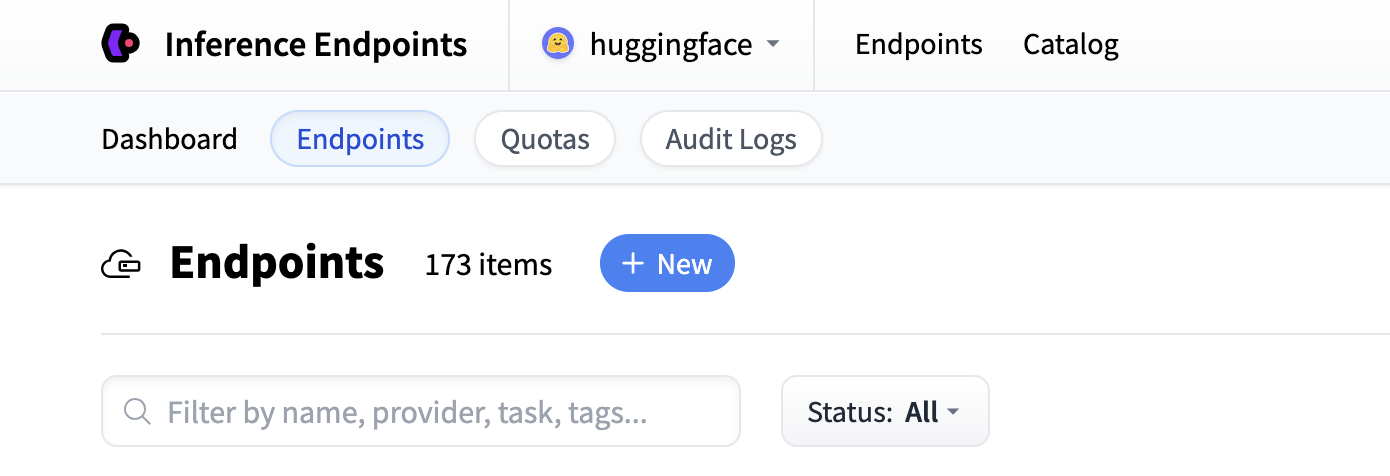
| Start by navigating to the Inference Endpoints UI, and once you have logged in you should see a button for creating a new Inference | |
| Endpoint. Click the "New" button. | |
|  | |
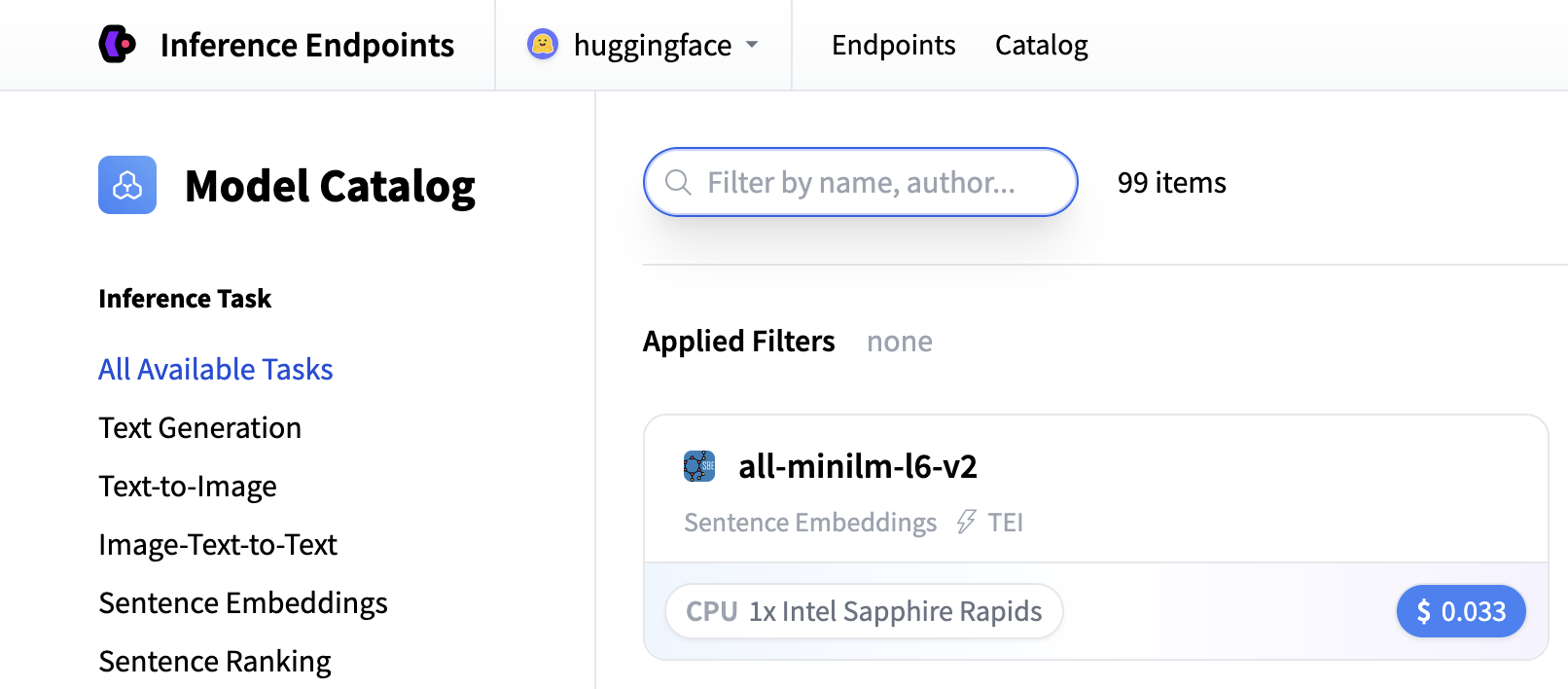
| From there you'll be directed to the catalog. The Model Catalog consists of popular models which have tuned configurations to work as one-click | |
| deploys. You can search for embedding models or create a custom endpoint. | |
|  | |
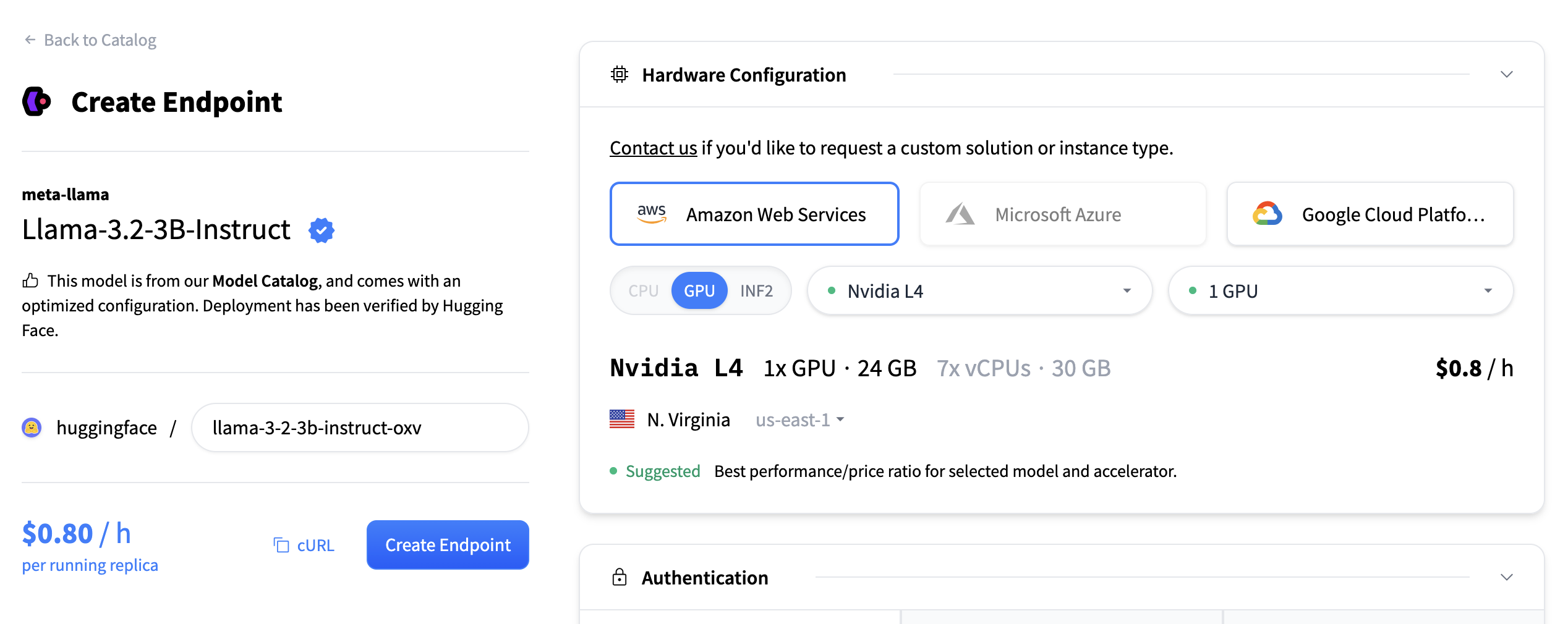
| For this tutorial, we'll use the Qwen3-Embedding-4B model available in the Inference Endpoints Model Catalog. Note if it's ever not in the catalog, you can deploy a model as a custom Endpoint from the Hugging Face Hub by entering the model repository ID `Qwen/Qwen3-Embedding-4B`. | |
| For embedding models, we recommend: | |
| - **GPU**: NVIDIA, T4, L4 or A10G for good performance. | |
| - **Instance Size**: x1 (sufficient for most embedding workloads) | |
| - **Auto-scaling**: Enable scale-to-zero to save costs by switching the endpoint to a paused state when it's not in use. | |
| - **Timeout**: Set a timeout of 10 minutes to avoid long-running requests. You should define a timeout based on how you expect your endpoint to be used. | |
| <Tip> | |
| If you're looking for a model with less compute requirements, you can use the [sentence-transformers/all-MiniLM-L6-v2](https://huggingface.co/sentence-transformers/all-MiniLM-L6-v2) model. | |
| </Tip> | |
| The Qwen3-Embedding-4B model will automatically use the **Text Embeddings Inference (TEI)** engine, which provides optimized inference and automatic batching. | |
| Click "Create Endpoint" to deploy your embedding service. | |
|  | |
| This may take about 5 minutes to initialize. | |
| ## Test your Endpoint | |
| Once your Inference Endpoint is running, you can test it directly in the playground. It accepts text input and returns high-dimensional vectors. | |
| 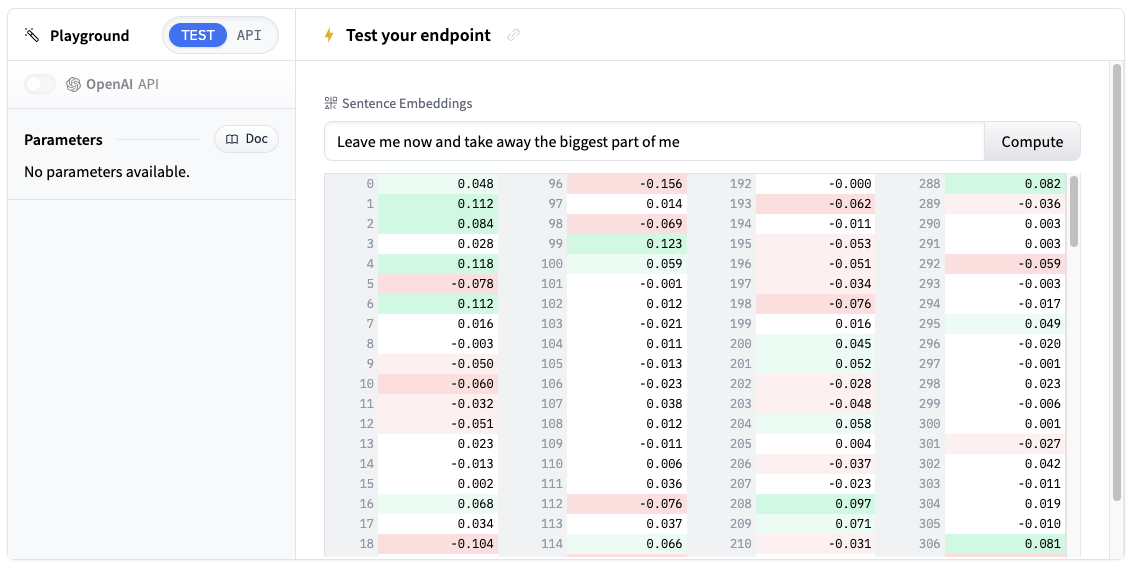 | |
| Try entering some sample text like "Machine learning is transforming how we process data" and see the embedding output. | |
| ## Get your Endpoint's details | |
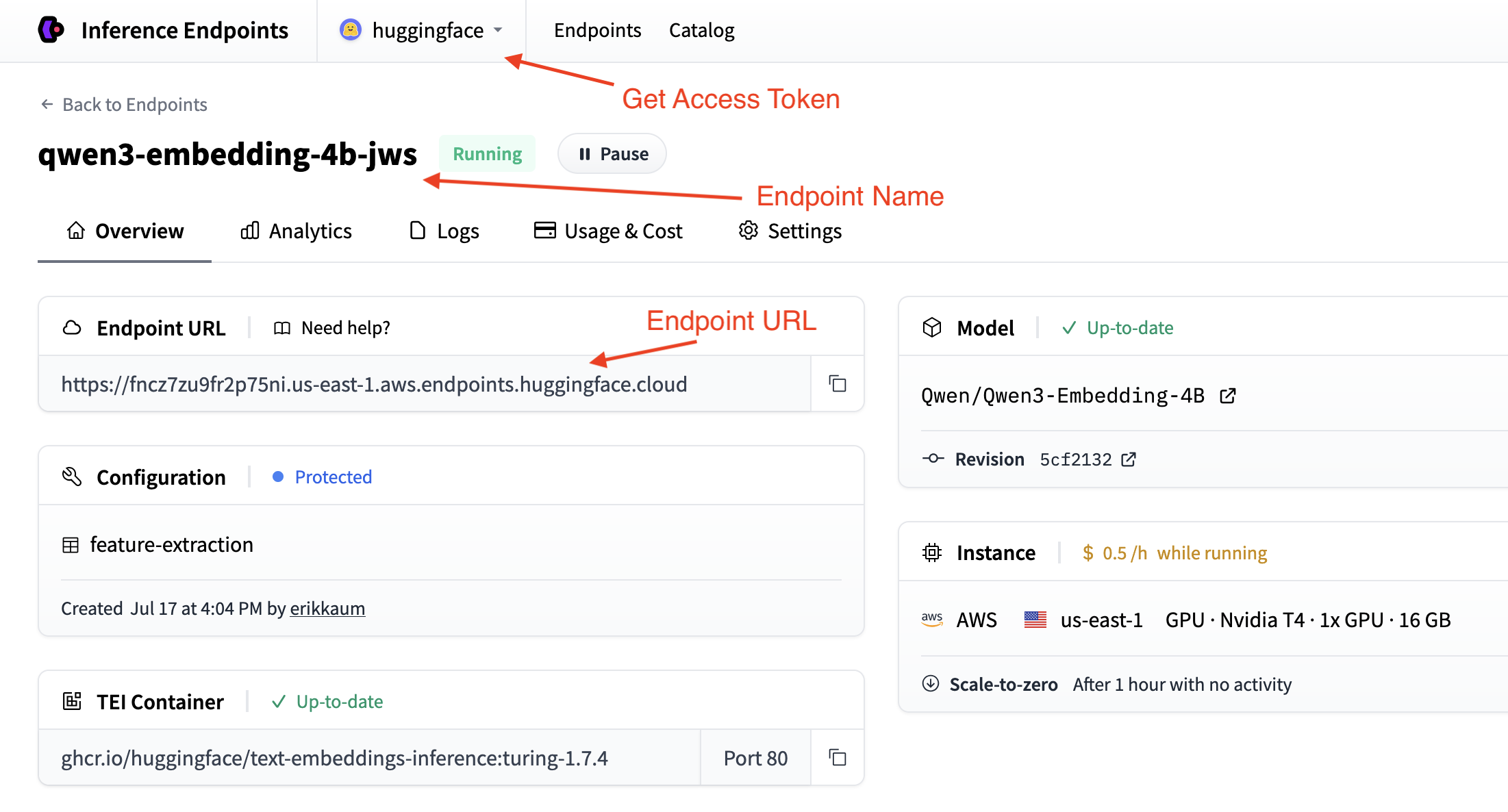
| To use your endpoint programmatically, you'll need these details from the Endpoint's [Overview](https://endpoints.huggingface.co/): | |
| - **Base URL**: `https://<endpoint-name>.endpoints.huggingface.cloud/v1/` | |
| - **Model name**: The name of your endpoint | |
| - **Token**: Your HF token from [settings](https://huggingface.co/settings/tokens) | |
|  | |
| ## Building the embedding script | |
| Now let's build a script step by step to process datasets with embeddings. We'll break it down into logical blocks. | |
| ### Step 1: Set up dependencies and imports | |
| We'll use the OpenAI client to connect to the endpoint and the datasets library to load and process the dataset. So let's install the required packages: | |
| ```bash | |
| pip install datasets openai | |
| ``` | |
| Then, set up your imports in a new Python file: | |
| ```python | |
| import os | |
| from datasets import load_dataset | |
| from openai import OpenAI | |
| ``` | |
| ### Step 2: Configure the connection | |
| Set up the configuration to connect to your Inference Endpoint based on the details you collected in the previous step. | |
| ```python | |
| # Configuration | |
| ENDPOINT_URL = "https://your-endpoint-name.endpoints.huggingface.cloud/v1/" # Endpoint URL + version | |
| HF_TOKEN = os.getenv("HF_TOKEN") # Your Hugging Face Hub token from hf.co/settings/tokens | |
| # Initialize OpenAI client for your endpoint | |
| client = OpenAI( | |
| base_url=ENDPOINT_URL, | |
| api_key=HF_TOKEN, | |
| ) | |
| ``` | |
| Your OpenAI client is now configured to connect to your Inference Endpoint. For further reading you can check out the client documentation on text embeddings <a href="https://platform.openai.com/docs/api-reference/embeddings" target="_blank" rel="noopener noreferrer">here</a>. | |
| ### Step 3: Create the embedding function | |
| Next, we'll create a function to process batches of text and return embeddings. | |
| ```python | |
| def get_embeddings(examples): | |
| """Get embeddings for a batch of texts.""" | |
| response = client.embeddings.create( | |
| model="your-endpoint-name", # Replace with your actual endpoint name | |
| input=examples["context"], # In the squad dataset, the text is in the "context" column | |
| ) | |
| # Extract embeddings from response objects | |
| embeddings = [sample.embedding for sample in response.data] | |
| return {"embeddings": embeddings} # datasets expects a dictionary with a key "embeddings" and a value of a list of embeddings | |
| ``` | |
| <Tip> | |
| The `datasets` library will pass our function a batch of examples from the dataset, as a dictionary of batch values. The key will be the name of the column we want to embed, and the value will be a list of values from that column. | |
| </Tip> | |
| ### Step 4: Load and process your dataset | |
| Load your dataset and apply the embedding function: | |
| ```python | |
| # Load a sample dataset (you can replace this with your own) | |
| dataset = load_dataset("squad", split="train[:100]") # Using first 100 examples for demo | |
| # Process the dataset with embeddings | |
| dataset_with_embeddings = dataset.map( | |
| get_embeddings, | |
| batched=True, | |
| batch_size=10, # Process in small batches to avoid timeouts | |
| desc="Adding embeddings", | |
| ) | |
| ``` | |
| <Tip> | |
| The `datasets` library's `map` function is optimized for performance and will automatically batch the rows for us. Inference Endpoints can also scale to meet the demand of the batch size, so to get the best performance, you should calibrate the batch size with your Inference Endpoints's configuration. | |
| For example, select the highest possible batch size for you model and synchronize the batch size with your Inference Endpoint's configuration in `max_concurrent_requests`. | |
| </Tip> | |
| ### Step 5: Save and Share your results | |
| Finally, let's save our embedded dataset locally or push it to the Hugging Face Hub: | |
| ```python | |
| # Save the processed dataset locally | |
| dataset_with_embeddings.save_to_disk("./embedded_dataset") | |
| # Or push directly to Hugging Face Hub | |
| dataset_with_embeddings.push_to_hub("your-username/squad-embeddings") | |
| ``` | |
| ## Next steps | |
| Nice work! You've now built an embedding pipeline that can process any dataset. Here's the complete script: | |
| <details> | |
| <summary>Click to view the complete script</summary> | |
| ```python | |
| import os | |
| from datasets import load_dataset | |
| from dotenv import load_dotenv | |
| from openai import OpenAI | |
| load_dotenv() | |
| # Configuration | |
| ENDPOINT_URL = "https://your-endpoint-name.endpoints.huggingface.cloud/v1/" | |
| HF_TOKEN = os.getenv("HF_TOKEN") | |
| # Initialize OpenAI client for your endpoint | |
| client = OpenAI( | |
| base_url=ENDPOINT_URL, | |
| api_key=HF_TOKEN, | |
| ) | |
| def get_embeddings(examples): | |
| """Get embeddings for a batch of texts.""" | |
| response = client.embeddings.create( | |
| model="your-endpoint-name", # Replace with your actual endpoint name | |
| input=examples["context"], | |
| ) | |
| # Extract embeddings from response | |
| embeddings = [sample.embedding for sample in response.data] | |
| return {"embeddings": embeddings} | |
| # Load a sample dataset (you can replace this with your own) | |
| print("Loading dataset...") | |
| dataset = load_dataset("squad", split="train[:1000]") # Using first 1000 examples for demo | |
| # Process the dataset with embeddings | |
| print("Processing dataset with embeddings...") | |
| dataset_with_embeddings = dataset.map( | |
| get_embeddings, | |
| batched=True, | |
| batch_size=10, # Process in small batches to avoid timeouts | |
| desc="Adding embeddings", | |
| ) | |
| # Save the processed dataset locally | |
| print("Saving processed dataset...") | |
| dataset_with_embeddings.save_to_disk("./embedded_dataset") | |
| # Or push directly to Hugging Face Hub | |
| print("Pushing to Hugging Face Hub...") | |
| dataset_with_embeddings.push_to_hub("your-username/squad-embeddings") | |
| print("Dataset processing complete!") | |
| ``` | |
| </details> | |
| Here are some ways to extend your script: | |
| - **Process multiple datasets**: Modify the script to handle different dataset sources | |
| - **Add error handling**: Implement retry logic for failed API calls | |
| - **Optimize batch sizes**: Experiment with different batch sizes for better performance | |
| - **Add validation**: Check embedding quality and dimensions | |
| - **Custom preprocessing**: Add text cleaning or normalization steps | |
| - **Build a Semantic Search Application**: Use the embeddings to build a semantic search application. | |
| Your embedded datasets are now ready for downstream tasks like semantic search, recommendation systems, or RAG applications! | |
| <EditOnGithub source="https://github.com/huggingface/hf-endpoints-documentation/blob/main/docs/source/tutorials/embedding.md" /> |
Xet Storage Details
- Size:
- 9.61 kB
- Xet hash:
- 60d0b63598b6e34faa16b5a64fbcc6608660a742eb0c83da47e5e78af00c26eb
·
Xet efficiently stores files, intelligently splitting them into unique chunks and accelerating uploads and downloads. More info.