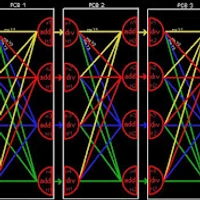
We are excited to share that SKT-NRS is now live on Hugging Face. We’ve developed a Neural Reasoning System (NRS) designed to enhance the capabilities of foundation models — giving them stronger reasoning, improved performance, and more reliable outputs across a wide range of tasks.
Our goal is to bring meaningful quality improvements to both new and existing models. You’ll start seeing boosted versions of various models released here soon, each refined with our NRS approach.
**What to Expect* ❤️🩹
Regular releases of Neural Reasoning-enhanced models Clear focus on better reasoning and overall model quality Ongoing improvements based on community feedback
If you’d like to stay updated, feel free to follow this space — we’ll be posting the first boosted models very soon.
**Community Requests**
Have a specific model you’d like us to work on? Looking for improvements on an existing model, or have any other requests? We’re happy to hear from you. Please share your suggestions here:
NEW RELEASE: Esper 4 is here for Qwen 3.6 27b, along with our new datasets!
- NEW DATASET: Titanium 4 maximizes DevOps and architecture helpfulness, powered by high-difficulty agentic-focused DevOps and architecture data generated with DeepSeek-V4-Pro! - NEW DATASET: Mitakihara 2 brings AI coding and expertise data for AI development, research, deployment, interpretability, operation and experimentation! - Improved coding performance: challenging agentic coding queries from Tachibana 4 allow Esper 4 to tackle harder coding tasks across a variety of languages!
We've been working hard on Esper 4 - it's so exciting to finally bring it to everyone! We hope it helps you build.
We'll be expanding Esper 4 to more models as funding allows - donate for more, faster, better models and datasets: sequelbox/SupportOpenSource
The revolution is coming - we're here to fight for AI you can use and build on your own computer, not a giant corporation charging you for access at their discretion. We've seen what OpenAI, Anthropic, and the ultra-rich taking charge of the AI future looks like, and it's already very clear you won't like living in it. Choose a different future while you still can.
Excited to open-source the VisDrone Aerial Object Detection Model Zoo on Hugging Face.
The collection includes multiple YOLO variants trained and evaluated on the VisDrone benchmark for aerial object detection, with accompanying documentation and performance metrics.
If you're working on drones, aerial surveillance, robotics, or small-object detection, I hope these models save you some time.
Our preprint is out! We attempt to model human teaching behaviors into agents yielding a unified framework that enables adaptive personalized learning experiences: LectūraAgents addresses the prevailing limitations in current AI learning systems with three essential capabilities: (1) a hierarchical multi-agent architecture modeled on academic standards. we observe that agents collaborating across hierarchies yield better personalized learning outcomes. (2) an adaptive embodied teaching mechanism, in which the instructor agent executes visible and pedagogically motivated teaching actions (e.g. handwrite, highlight, circle etc) on contents in a teaching environment while speaking. (3) to achieve this we propose a novel teaching action-speech alignment algorithm (TASA) that dynamically aligns speech with visual teaching actions: specifically, TASA temporally chops up speech segments into word-level tokens, performs salience heuristics analysis on learning contents (texts, images etc) then identifies relevant regions to apply pedagogical teaching actions that guide attention and augment understanding.
We conducted several experiments to assess these capabilities: starting with pedagogical evaluation of the various components under frontier models, comparative analysis with existing frameworks and an efficacy study with real students.
Results show consistent gains in standard instructional metrics (curated by expert educators) spanning lecture content quality, embodied teaching quality, assessment, and personalization over baseline systems, positioning LectūraAgents as a pedagogically grounded framework for personalized learning at scale.