
Datasets:

prompt stringlengths 9 39.2k ⌀ | completion stringlengths 1 27.2k | enhanced_prompt stringlengths 119 41k | enhanced_completion stringlengths 29 178k | reasoning_trace stringlengths 383 161k ⌀ | adaptation_signal stringlengths 22 259 ⌀ | adaptation_type stringclasses 5
values | base_output stringlengths 38 222 ⌀ | benchmark_alignment stringclasses 23
values | benchmark_relevance float64 0.55 0.98 ⌀ | category stringclasses 10
values | difficulty stringclasses 3
values | disclaimer stringclasses 10
values | expected_adapted_output stringlengths 123 546 ⌀ | expected_improvement_delta float64 0.08 0.55 ⌀ | expected_quality_delta float64 0.08 0.55 ⌀ | id stringlengths 8 8 ⌀ | input stringlengths 23 165 ⌀ | language stringclasses 5
values | multimodal_ref stringclasses 40
values | num_turns int64 2 5 ⌀ | ood_flag bool 2
classes | ood_test bool 2
classes | original_context stringlengths 23 165 ⌀ | split stringclasses 3
values | sub_category stringclasses 104
values | tags stringclasses 104
values | trajectory stringlengths 614 2.23k ⌀ | user_reasoning_trace stringclasses 717
values | verification_status stringclasses 1
value |
|---|---|---|---|---|---|---|---|---|---|---|---|---|---|---|---|---|---|---|---|---|---|---|---|---|---|---|---|---|---|
User: Sofia has $5,800 in credit card debt at 22% APR and a small crypto holding worth about $3,500. Assistant: At 22% APR, this debt is costing more than almost any realistic investment return, including crypto's historical average — paying it down is usually the higher-certainty move. User: Update. My crypto holding ... | You didn't make a mistake — you locked in a known outcome (debt gone, cost certain) instead of gambling on an unknowable future price. If the price had gone up instead, that wouldn't have made the original decision wrong either; judge the decision by the information available at the time, not by how the coin flip lande... | You are an expert financial advisor specializing in debt management and behavioral finance. Your task is to provide a compassionate, logical, and data-driven response to a user experiencing regret after making a financially sound decision.
### Context Background
The following conversation history details the user's si... | It is completely natural to feel a pang of regret when you see a price drop right after exiting a position. That "what if" feeling is powerful, and the sting of feeling like you left money on the table is real. Please know that this reaction is normal, and you are not alone in experiencing it.
However, it is crucial t... | It is completely natural to feel a pang of regret when you see a price drop right after exiting a position. That "what if" feeling is powerful, and the sting of feeling like you left money on the table is real. Please know that this reaction is normal, and you are not alone in experiencing it.
However, it is crucial t... | My crypto holding is now up 50% — should I cash out to pay off the card? | I sold and paid off the card, but then the crypto price dropped 20% right after — now I feel like I made a mistake. | feedback_incorporation | At 22% APR, this debt is costing more than almost any realistic investment return, including crypto's historical average — paying it down is usually the higher-certainty move. | consistent_with_CFPB_debt_collection_rules | 0.823 | Debt Management | hard | Educational information only, not personalized legal or credit counseling advice — consider speaking with a nonprofit credit counselor (e.g., an NFCC member agency) for guidance specific to your situation. | You didn't make a mistake — you locked in a known outcome (debt gone, cost certain) instead of gambling on an unknowable future price. If the price had gone up instead, that wouldn't have made the original decision wrong either; judge the decision by the information available at the time, not by how the coin flip lande... | 0.37 | 0.362 | PF-09007 | Sofia has $5,800 in credit card debt at 22% APR and a small crypto holding worth about $3,500. | en | {"type": "chart", "chart_type": "stacked_bar", "description": "Chart comparing before/after monthly figures for this debt management scenario across the trajectory's turns (for future multimodal expansion)."} | 3 | false | false | Sofia has $5,800 in credit card debt at 22% APR and a small crypto holding worth about $3,500. | train | Using Crypto Gains to Pay Down High-Interest Debt | debt|crypto|hindsight-bias|multi-turn | [{"role": "user", "content": "Sofia has $5,800 in credit card debt at 22% APR and a small crypto holding worth about $3,500."}, {"role": "assistant", "content": "At 22% APR, this debt is costing more than almost any realistic investment return, including crypto's historical average — paying it down is usually the highe... | 1. (Turn 1) Baseline framing: guaranteed debt-interest savings usually beats speculative asset returns. 2. (Turn 2) Frames the decision correctly as 'lock in gains to eliminate guaranteed high-interest debt' while flagging the easily-forgotten tax consequence of the crypto sale itself. 3. (Turn 3) Addresses hindsight b... | passed_llm_judge + human |
User: Nadia wants to save $42,500 for a goal in 7 years. Assistant: That requires saving about $506/month. User: Update. Actually I want to reach this in 4 years instead. Assistant: That raises required monthly savings to about $885. If that's not feasible, we should extend the timeline, reduce the target, or find spec... | At $600/month, you'd reach $42,500 in roughly 5.9 years — closer to your original 7-year timeline than the compressed 4-year one. I'd accept that middle-ground timeline rather than straining your budget. | You are a financial planning assistant helping a user named Nadia. Below is the conversation history and the specific scenario you must address.
### Conversation History
- **User**: Nadia wants to save $42,500 for a goal in 7 years.
- **Assistant**: That requires saving about $506/month.
- **User**: Update. Actually I... | Hi Nadia,
It is completely understandable that $885 per month felt too restrictive. Financial goals should support your life, not overwhelm it, so adjusting to a comfortable $600 per month is a very prudent decision. Sustainability is key to actually reaching the finish line without compromising your daily stability.
... | Alright, let me work through Nadia's situation step by step.
First, I need to understand where we are. Nadia originally wanted to save $42,500 in 7 years, which worked out to about $506/month. Then she got more ambitious and wanted to do it in 4 years, but that jumped the requirement to $885/month. Now she's confirmed... | Actually I want to reach this in 4 years instead. | I ran the numbers and $885 isn't realistic — I can only manage about $600. | preference_update | That requires saving about $506/month. | aligns_with_CFP_board_goal_planning_standards | 0.855 | Goal Setting | hard | Educational information only, general planning guidance may not fit every situation — adjust based on your own numbers, timeline, and risk tolerance. | At $600/month, you'd reach $42,500 in roughly 5.9 years — closer to your original 7-year timeline than the compressed 4-year one. I'd accept that middle-ground timeline rather than straining your budget. | 0.409 | 0.367 | PF-02565 | Nadia wants to save $42,500 for a goal in 7 years. | en | null | 3 | false | false | Nadia wants to save $42,500 for a goal in 7 years. | train | Timeline Feasibility Negotiation | goal-setting|savings-timeline|multi-turn | [{"role": "user", "content": "Nadia wants to save $42,500 for a goal in 7 years."}, {"role": "assistant", "content": "That requires saving about $506/month."}, {"role": "user", "content": "Update. Actually I want to reach this in 4 years instead."}, {"role": "assistant", "content": "That raises required monthly savings... | 1. (Turn 1) Baseline required-savings calculation. 2. (Turn 2) Recomputes precisely; proactively flags feasibility. 3. (Turn 3) User-reported constraint resolves the feasibility question; recalculates the realistic achievable timeline. | passed_llm_judge + human |
User: Carlos has a credit score of 680, built partly through a joint credit card held with a spouse. Assistant: A 680 score is solid; joint accounts can be a healthy way to build credit together as long as both parties manage them responsibly. User: Update. We're getting divorced and I need to separate our finances, in... | Unfortunately, on a joint account both parties are typically liable for the full balance regardless of who made the charges, even mid-divorce — a divorce decree assigning responsibility to your ex is only enforceable between the two of you, not against the credit card company. I'd get this addressed explicitly in the d... | You are an expert financial advisor specializing in credit scores, divorce-related asset separation, and debt liability. Analyze the following scenario and provide a clear, actionable response addressing Carlos's specific concern about liability for charges made by his ex-spouse on a joint card during their divorce pro... | I understand how stressful it is to discover unexpected charges on a joint card during an already difficult divorce, especially when you are working hard to protect your financial stability. Here is a clear breakdown of your liability and the immediate steps you need to take to safeguard your 680 credit score.
### 1. ... | Okay, let me break down this scenario. Carlos has a 680 credit score, he's going through a divorce, and he had a joint credit card with his spouse. They were advised to close or freeze the joint card and open an individual card first to protect his credit history. But before the joint card was fully closed, the ex-spou... | We're getting divorced and I need to separate our finances, including that joint card. | My ex kept making charges on the joint card before it closed, and now I'm worried I'm liable for that debt. | situation_change | A 680 score is solid; joint accounts can be a healthy way to build credit together as long as both parties manage them responsibly. | consistent_with_CFPB_credit_guidance | 0.916 | Credit & Loans | hard | Educational information only, not personalized lending or legal advice — loan terms and credit reporting rules vary, so confirm details with your lender or a certified credit counselor. | Unfortunately, on a joint account both parties are typically liable for the full balance regardless of who made the charges, even mid-divorce — a divorce decree assigning responsibility to your ex is only enforceable between the two of you, not against the credit card company. I'd get this addressed explicitly in the d... | 0.386 | 0.354 | PF-00598 | Carlos has a credit score of 680, built partly through a joint credit card held with a spouse. | en | {"type": "table", "description": "Table of before/after numeric values (amounts, rates, timelines) referenced across turns in this credit & loans scenario."} | 3 | false | false | Carlos has a credit score of 680, built partly through a joint credit card held with a spouse. | train | Joint Credit Separation During Divorce | credit|divorce|joint-account|multi-turn | [{"role": "user", "content": "Carlos has a credit score of 680, built partly through a joint credit card held with a spouse."}, {"role": "assistant", "content": "A 680 score is solid; joint accounts can be a healthy way to build credit together as long as both parties manage them responsibly."}, {"role": "user", "conte... | 1. (Turn 1) Baseline joint-credit assessment. 2. (Turn 2) Sequences the separation correctly: secure against new joint-account risk first, but don't fully sever credit history before individual credit is established, since abruptly closing all shared accounts can itself hurt the score. 3. (Turn 3) Clarifies an importan... | passed_llm_judge + human |
User: Noor holds $48,700 in an actively managed fund. Review the portfolio. Assistant: The portfolio looks reasonably diversified across large-cap and international funds. User: Update. I found out the fund charges a 1.8% expense ratio. Assistant: That's roughly $900/year compounding away returns. I'd compare 5-10yr ne... | Good to plan for that now rather than react later. If things move against you, the fallback is to adjust the most flexible lever first (usually timeline or discretionary spending) before touching less flexible commitments like fixed bills or retirement contributions — having that order agreed in advance avoids a panick... | You are an expert financial advisor. Analyze the following investment scenario and provide a strategic recommendation for a fallback plan if the current strategy fails to meet its goals.
**Scenario Context:**
- **Investor:** Noor
- **Current Holdings:** $48,700 in an actively managed fund.
- **Fund Characteristics:** ... | Based on the recent reallocation of your $48,700 portfolio, you have taken a prudent step toward aligning your investments with your financial goals. Moving away from the actively managed fund addresses three critical risks that were threatening your objectives:
1. **Fee Drag:** The previous 1.8% expense ratio was con... | Let me break down Noor's situation. She has $48,700 that was previously in an actively managed fund with a steep 1.8% expense ratio—roughly $900 a year in fees. That's a massive drag on a portfolio of this size. Worse, the fund underperformed a comparable index even before those fees were taken out. So on a net basis, ... | I found out the fund charges a 1.8% expense ratio. | It underperformed a comparable index fund over 5 years even before fees. I also want to use some for a house down payment in 3 years. | feedback_incorporation | The portfolio looks reasonably diversified across large-cap and international funds. | aligns_with_CFA_institute_principles | 0.872 | Investing | hard | Educational information only, not personalized investment advice — this is not a recommendation to buy or sell any specific security, and past performance doesn't guarantee future results. | Given underperformance plus the fee drag, I'd move to a low-cost index fund. Separately, carve out the house-down-payment portion into a conservative allocation since a 3-year horizon is too short for equity risk, keeping the rest invested for the longer goal. | 0.439 | 0.361 | PF-05410 | Noor holds $48,700 in an actively managed fund. Review the portfolio. | en | {"type": "table", "description": "Table of before/after numeric values (amounts, rates, timelines) referenced across turns in this investing scenario."} | 5 | false | false | Noor holds $48,700 in an actively managed fund. Review the portfolio. | train | Fee Discovery and Goal Segmentation | investing|fees|goal-based|multi-turn | [{"role": "user", "content": "Noor holds $48,700 in an actively managed fund. Review the portfolio."}, {"role": "assistant", "content": "The portfolio looks reasonably diversified across large-cap and international funds."}, {"role": "user", "content": "Update. I found out the fund charges a 1.8% expense ratio."}, {"ro... | 1. (Turn 1) Baseline review, no cost data yet. 2. (Turn 2) Quantifies annual dollar cost; recommends comparison rather than automatic switch. 3. (Turn 3) New evidence resolves the earlier open question toward switching; new shorter-horizon goal triggers a separate goal-based reallocation. 4. (Turn 4) Follow-up check-in... | passed_llm_judge + human |
User: Chen previously worked as a W-2 employee. Assistant: As a W-2 employee, taxes are automatically withheld each paycheck — no separate action needed. User: Update. I recently switched to full-time freelancing, earning about $70,200/year. | Now that you're freelancing full-time with about $70,200/year in self-employment income, you're responsible for self-employment tax (~15.3% covering Social Security/Medicare) on top of income tax — roughly $9,900/year just in SE tax. You'll need to make quarterly estimated tax payments to avoid an underpayment penalty,... | You are a tax advisor assisting Chen. Below is the relevant context regarding Chen's employment history and current situation:
<context>
User: Chen previously worked as a W-2 employee. Assistant: As a W-2 employee, taxes are automatically withheld each paycheck — no separate action needed. User: Update. I recently swi... | Transitioning from W-2 employment to full-time freelancing fundamentally changes how you interact with the IRS. Instead of an employer managing your tax liabilities, you are now responsible for calculating, withholding, and remitting them yourself. Here is a breakdown of the key implications for your $70,200 annual inc... | Alright, let me break down Chen's situation. Chen used to be a W-2 employee, where taxes were basically on autopilot—employer withheld everything, and they paid half the FICA taxes. Now, Chen is a full-time freelancer making $70,200 a year. That's a massive shift in how the IRS interacts with them.
First, I need to ad... | I recently switched to full-time freelancing, earning about $70,200/year. | situation_change | As a W-2 employee, taxes are automatically withheld each paycheck — no separate action needed. | unverified | 0.847 | Tax Planning | medium | Educational information only, not personalized tax advice — tax rules vary by jurisdiction and situation, so confirm specifics with a licensed tax professional (e.g., a CPA or EA) before filing. | Now that you're freelancing full-time with about $70,200/year in self-employment income, you're responsible for self-employment tax (~15.3% covering Social Security/Medicare) on top of income tax — roughly $9,900/year just in SE tax. You'll need to make quarterly estimated tax payments to avoid an underpayment penalty,... | 0.25 | 0.27 | PF-07880 | Chen previously worked as a W-2 employee. | en | null | 2 | false | false | Chen previously worked as a W-2 employee. | train | W-2 to Self-Employment | taxes|self-employment|freelance|quarterly-taxes|from_earlier_batch | [{"role": "user", "content": "Chen previously worked as a W-2 employee."}, {"role": "assistant", "content": "As a W-2 employee, taxes are automatically withheld each paycheck — no separate action needed."}, {"role": "user", "content": "Update. I recently switched to full-time freelancing, earning about $70,200/year."},... | 1. (Turn 1) Baseline response, no adaptation signal yet. 2. (Turn 2) 1) Employment status change (W-2 → self-employed) fundamentally changes tax mechanics, not just the numbers. 2) New obligations: self-employment tax (~15.3%) and quarterly estimated payments — omitting either causes real penalties. 3) Surface the new ... | passed_llm_judge + human |
User: نور في دبي لديه $56,700 في محفظة استثمارية متوافقة مع الشريعة الإسلامية. Assistant: المحفظة المتوافقة مع الشريعة تتجنب الفوائد الربوية والشركات ذات الديون المرتفعة، وهذا أساس جيد للاستثمار طويل الأجل. User: تحديث. حان وقت حساب الزكاة السنوية، ولست متأكدًا كيف أحسبها على استثماراتي. Assistant: بشكل عام، تُحسب الزك... | هذا يبسط الحساب كثيرًا — احسب 2.5% فقط على الأرباح الموزعة المتراكمة والنقد المتاح في المحفظة، وليس على القيمة السوقية الكاملة للأسهم. يُفضل الاحتفاظ بسجل بسيط لهذه المبالغ خلال العام لتسهيل الحساب في موعد الزكاة القادم بدلاً من محاولة تجميعها في اللحظة الأخيرة. | # دورك
أنت مستشار مالي خبير متخصص في الاستثمارات المتوافقة مع الشريعة الإسلامية وحساب الزكاة.
# سياق المحادثة السابق
تم تبادل المعلومات التالية بين المستخدم والمساعد:
- **المستخدم**: نور في دبي لديه $56,700 في محفظة استثمارية متوافقة مع الشريعة الإسلامية.
- **المساعد**: المحفظة المتوافقة مع الشريعة تتجنب الفوائد الربو... | أهلاً بك يا نور، ومبارك لك ما رزقك الله. بناءً على الفتوى الشرعية التي اعتمدتها بخصوص اعتبار محفظتك استثماراً طويل الأجل (وليس عروض تجارة)، فإن طريقة حساب الزكاة تختلف جوهرياً عن الحساب على القيمة السوقية الإجمالية. إليك التفصيل العملي لكيفية التعامل مع محفظتك البالغة 56,700 دولار:
### 1. كيفية تطبيق القاعدة على محفظت... | Alright, let me break down this request step by step. The user, Noor, has a $56,700 Sharia-compliant investment portfolio in Dubai. We've already established that her investments are long-term, and she consulted a scholar who ruled that Zakat should only be calculated on distributed dividends and cash liquidity, not th... | حان وقت حساب الزكاة السنوية، ولست متأكدًا كيف أحسبها على استثماراتي. | استشرت عالمًا وقال إن استثماراتي طويلة الأجل، لذا يجب حساب الزكاة فقط على الأرباح الموزعة والسيولة، وليس على كامل قيمة المحفظة. | ood_generalization | المحفظة المتوافقة مع الشريعة تتجنب الفوائد الربوية والشركات ذات الديون المرتفعة، وهذا أساس جيد للاستثمار طويل الأجل. | aligns_with_regional_central_bank_guidance | 0.784 | Tax Planning | hard | Educational information only, not personalized tax advice — tax rules vary by jurisdiction and situation, so confirm specifics with a licensed tax professional (e.g., a CPA or EA) before filing. | هذا يبسط الحساب كثيرًا — احسب 2.5% فقط على الأرباح الموزعة المتراكمة والنقد المتاح في المحفظة، وليس على القيمة السوقية الكاملة للأسهم. يُفضل الاحتفاظ بسجل بسيط لهذه المبالغ خلال العام لتسهيل الحساب في موعد الزكاة القادم بدلاً من محاولة تجميعها في اللحظة الأخيرة. | 0.427 | 0.376 | PF-11168 | نور في دبي لديه $56,700 في محفظة استثمارية متوافقة مع الشريعة الإسلامية. | ar | {"type": "table", "description": "Table of before/after numeric values (amounts, rates, timelines) referenced across turns in this tax planning scenario."} | 3 | true | true | نور في دبي لديه $56,700 في محفظة استثمارية متوافقة مع الشريعة الإسلامية. | test | حساب الزكاة على المحفظة الاستثمارية | ood|multilingual|arabic|zakat|islamic-finance | [{"role": "user", "content": "نور في دبي لديه $56,700 في محفظة استثمارية متوافقة مع الشريعة الإسلامية."}, {"role": "assistant", "content": "المحفظة المتوافقة مع الشريعة تتجنب الفوائد الربوية والشركات ذات الديون المرتفعة، وهذا أساس جيد للاستثمار طويل الأجل."}, {"role": "user", "content": "تحديث. حان وقت حساب الزكاة السن... | 1. (Turn 1) Baseline: Sharia-compliant portfolio framing, no signal yet. 2. (Turn 2) OOD (Islamic finance obligation, Arabic-language): correctly distinguishes the two common zakat calculation methods for equities (trading intent vs. long-term investment intent) rather than giving one oversimplified answer, and appropr... | passed_llm_judge + human |
User: Ivan runs a small business generating about $228,400/year in revenue with no retirement plan set up yet. Assistant: With roughly $140,600 in net self-employment income, a SEP IRA or Solo 401(k) would let you shelter a meaningful portion for retirement with high contribution limits well above a standard IRA. User:... | Existing Solo 401(k) balances aren't clawed back, but going forward you'll generally need to either convert to a standard employer 401(k) that covers the new employee under nondiscrimination rules, or close the Solo 401(k) to new contributions and set up a compliant plan — I'd get a plan administrator involved at this ... | # Role
You are an expert financial advisor specializing in retirement planning for small business owners and self-employed individuals.
# Context: User Profile & Chat History
The following text contains the user's business details and a transcript of our previous conversation regarding their retirement plan options:
... | This is a critical transition point for your retirement strategy. The timing of setting up the Solo 401(k) before hiring was advantageous, but the addition of a non-spouse employee fundamentally changes the plan's regulatory status. Here is exactly what happens and the steps you need to take to remain compliant.
### 1... | Okay, Ivan has set up the Solo 401(k) before hiring, which was smart, but now he's crossed the threshold into having a non-spouse employee. This is a common pivot point for small business owners, and the rules shift significantly. I need to walk him through exactly what happens to the plan, what the IRS requires now, h... | I'm planning to hire my first employee next year — does that change anything? | I set up the Solo 401(k) this year before hiring — now that I do have an employee, what happens to it? | situation_change | With roughly $140,600 in net self-employment income, a SEP IRA or Solo 401(k) would let you shelter a meaningful portion for retirement with high contribution limits well above a standard IRA. | aligns_with_IRS_pub_590 | 0.875 | Retirement Planning | hard | Educational information only, not personalized retirement or investment advice — account rules and contribution limits change over time, so verify current figures with your plan administrator or a fee-only financial advisor. | Existing Solo 401(k) balances aren't clawed back, but going forward you'll generally need to either convert to a standard employer 401(k) that covers the new employee under nondiscrimination rules, or close the Solo 401(k) to new contributions and set up a compliant plan — I'd get a plan administrator involved at this ... | 0.482 | 0.353 | PF-09768 | Ivan runs a small business generating about $228,400/year in revenue with no retirement plan set up yet. | en | null | 3 | false | false | Ivan runs a small business generating about $228,400/year in revenue with no retirement plan set up yet. | train | Solo 401k Transition When Hiring | retirement|solo-401k|small-business|multi-turn | [{"role": "user", "content": "Ivan runs a small business generating about $228,400/year in revenue with no retirement plan set up yet."}, {"role": "assistant", "content": "With roughly $140,600 in net self-employment income, a SEP IRA or Solo 401(k) would let you shelter a meaningful portion for retirement with high co... | 1. (Turn 1) Baseline: high-limit self-employed retirement vehicles are the correct starting recommendation. 2. (Turn 2) Hiring plans materially change which vehicle remains viable/cost-effective — SEP IRA's employee-contribution requirement and Solo 401(k)'s employee-count restriction are both directly relevant to this... | passed_llm_judge + human |
User: Alex earns $78,900/year and contributes 5% to their 401(k) to get the full match. Assistant: Contributing 5% to 401(k) to capture the full employer match on a $78,900 salary. User: Update. My employer just increased the 401(k) match from 5% to 7%. | Your employer increased the match from 5% to 7%. I'd increase your contribution to at least 7% to capture the full match — leaving any of it unclaimed is leaving guaranteed, instant-return money on the table (better than almost any other investment). That's an extra $1,600/year in free employer money at your salary lev... | You are a financial planning assistant. Update the following scenario based on new information provided by the user.
**Original Scenario:**
Alex earns $78,900/year and contributes 5% to their 401(k) to get the full match.
**User Update:**
My employer just increased the 401(k) match from 5% to 7%.
**Task:**
Recalcula... | This enhancement to your benefits package presents an immediate opportunity to accelerate your retirement savings. To capture the full employer match, you must increase your deferral rate to align with the new threshold. Leaving any of this match unclaimed is leaving guaranteed, instant-return money on the table.
Base... | Alright, let's break this down. The user's employer just increased their 401(k) match from 5% to 7%. Alex makes $78,900 a year. The core task here is to recalculate the optimal contribution strategy so Alex captures every penny of that free money.
First, the math on the new contribution. To get the full match, Alex no... | My employer just increased the 401(k) match from 5% to 7%. | situation_change | Contributing 5% to 401(k) to capture the full employer match on a $78,900 salary. | unverified | 0.903 | Retirement Planning | easy | Educational information only, not personalized retirement or investment advice — account rules and contribution limits change over time, so verify current figures with your plan administrator or a fee-only financial advisor. | Your employer increased the match from 5% to 7%. I'd increase your contribution to at least 7% to capture the full match — leaving any of it unclaimed is leaving guaranteed, instant-return money on the table (better than almost any other investment). That's an extra $1,600/year in free employer money at your salary lev... | 0.107 | 0.158 | PF-04847 | Alex earns $78,900/year and contributes 5% to their 401(k) to get the full match. | en | null | 2 | false | false | Alex earns $78,900/year and contributes 5% to their 401(k) to get the full match. | train | Employer Match Update | retirement|401k|employer-match|from_earlier_batch | [{"role": "user", "content": "Alex earns $78,900/year and contributes 5% to their 401(k) to get the full match."}, {"role": "assistant", "content": "Contributing 5% to 401(k) to capture the full employer match on a $78,900 salary."}, {"role": "user", "content": "Update. My employer just increased the 401(k) match from ... | 1. (Turn 1) Baseline response, no adaptation signal yet. 2. (Turn 2) 1) External change: employer match increased. 2) Rule: always contribute at least enough to capture the full match, since it's an immediate guaranteed return unmatched by market investments. 3) Quantify the dollar value of the missed match to motivate... | passed_llm_judge + human |
User: Carlos has $9,900 in credit card debt at 24% APR and a small crypto holding worth about $5,900. Assistant: At 24% APR, this debt is costing more than almost any realistic investment return, including crypto's historical average — paying it down is usually the higher-certainty move. User: Update. My crypto holding... | You didn't make a mistake — you locked in a known outcome (debt gone, cost certain) instead of gambling on an unknowable future price. If the price had gone up instead, that wouldn't have made the original decision wrong either; judge the decision by the information available at the time, not by how the coin flip lande... | # Role
Act as an empathetic and rational financial advisor specializing in behavioral finance and debt management.
# Context
The user, Carlos, is experiencing regret after making a logically sound financial decision that resulted in an unfavorable short-term market outcome. He needs reassurance that his choice was cor... | Carlos, I want to start by acknowledging exactly how you're feeling. It is completely natural to experience a pang of regret when you see an asset drop in value immediately after selling it. That "what if" feeling can be incredibly loud, and our brains are naturally wired to fixate on it. This reaction—often called sel... | Carlos is really going through it right now. That immediate drop after selling is the classic trigger for seller's remorse, and I need to meet him where he is emotionally before I can even touch the math. If I just throw numbers at him, he'll feel dismissed.
Okay, first step: validate. I need to let him know that fee... | My crypto holding is now up 50% — should I cash out to pay off the card? | I sold and paid off the card, but then the crypto price dropped 20% right after — now I feel like I made a mistake. | feedback_incorporation | At 24% APR, this debt is costing more than almost any realistic investment return, including crypto's historical average — paying it down is usually the higher-certainty move. | consistent_with_CFPB_debt_collection_rules | 0.818 | Debt Management | hard | Educational information only, not personalized legal or credit counseling advice — consider speaking with a nonprofit credit counselor (e.g., an NFCC member agency) for guidance specific to your situation. | You didn't make a mistake — you locked in a known outcome (debt gone, cost certain) instead of gambling on an unknowable future price. If the price had gone up instead, that wouldn't have made the original decision wrong either; judge the decision by the information available at the time, not by how the coin flip lande... | 0.403 | 0.309 | PF-03485 | Carlos has $9,900 in credit card debt at 24% APR and a small crypto holding worth about $5,900. | en | null | 3 | false | false | Carlos has $9,900 in credit card debt at 24% APR and a small crypto holding worth about $5,900. | train | Using Crypto Gains to Pay Down High-Interest Debt | debt|crypto|hindsight-bias|multi-turn | [{"role": "user", "content": "Carlos has $9,900 in credit card debt at 24% APR and a small crypto holding worth about $5,900."}, {"role": "assistant", "content": "At 24% APR, this debt is costing more than almost any realistic investment return, including crypto's historical average — paying it down is usually the high... | 1. (Turn 1) Baseline framing: guaranteed debt-interest savings usually beats speculative asset returns. 2. (Turn 2) Frames the decision correctly as 'lock in gains to eliminate guaranteed high-interest debt' while flagging the easily-forgotten tax consequence of the crypto sale itself. 3. (Turn 3) Addresses hindsight b... | passed_llm_judge + human |
User: Laura in Osaka, Japan has ¥2,780,100 in a bank savings account. Assistant: Recommend keeping ¥2,780,100 in a standard Japanese bank savings account. User: Update. I heard the New NISA program expanded the tax-free investment allowance. | Japan's New NISA program now offers a much larger permanent tax-free investment allowance than the old NISA. Rather than leaving this in a savings account earning near-zero interest, I'd recommend investing within the New NISA framework (tsumitate and growth investment portions) since all gains and dividends inside it ... | Act as a financial advisor specializing in Japanese taxation and investment strategies. Analyze the following scenario and provide an updated recommendation.
**Scenario Context:**
- **Client:** Laura, residing in Osaka, Japan.
- **Current Assets:** ¥2,780,100 held in a standard bank savings account.
- **New Informatio... | ### Financial Analysis and Recommendation for Asset Reallocation
**1. Evaluation: Current Savings vs. New NISA**
* **Current Savings Account:** Standard bank savings accounts in Japan offer negligible interest rates, typically between 0.001% and 0.02% annually. On a balance of ¥2,780,100, this yields approximately ... | Let me break down this scenario. Laura is in Osaka with ¥2,780,100 sitting in a standard bank savings account, and the New NISA program has expanded its tax-free allowance. I need to evaluate whether she should keep it there or move it, and give her a solid, actionable plan.
First, I need to assess her current positio... | I heard the New NISA program expanded the tax-free investment allowance. | new_law | Recommend keeping ¥2,780,100 in a standard Japanese bank savings account. | unverified | 0.725 | Investing | hard | Educational information only, not personalized investment advice — this is not a recommendation to buy or sell any specific security, and past performance doesn't guarantee future results. | Japan's New NISA program now offers a much larger permanent tax-free investment allowance than the old NISA. Rather than leaving this in a savings account earning near-zero interest, I'd recommend investing within the New NISA framework (tsumitate and growth investment portions) since all gains and dividends inside it ... | 0.397 | 0.354 | PF-06748 | Laura in Osaka, Japan has ¥2,780,100 in a bank savings account. | en | null | 2 | true | true | Laura in Osaka, Japan has ¥2,780,100 in a bank savings account. | test | Japan NISA Update | ood|japan|nisa|tax-advantaged|from_earlier_batch | [{"role": "user", "content": "Laura in Osaka, Japan has ¥2,780,100 in a bank savings account."}, {"role": "assistant", "content": "Recommend keeping ¥2,780,100 in a standard Japanese bank savings account."}, {"role": "user", "content": "Update. I heard the New NISA program expanded the tax-free investment allowance."},... | 1. (Turn 1) Baseline response, no adaptation signal yet. 2. (Turn 2) 1) OOD: Japan-specific investment account regime (New NISA) with rules unlike Western retirement accounts — must apply the correct local structure. 2) Trigger is a regulatory update (New NISA expansion) that changes the optimal savings vehicle. 3) Con... | passed_llm_judge + human |
User: Ivan left a W-2 job with employer health insurance to freelance full-time, earning about $35,400/yr. Assistant: You'll need to replace employer coverage — options include a marketplace plan, COBRA continuation (temporary and often expensive), or a spouse's plan if available. User: Update. I looked at marketplace ... | That's a solid outcome — now that you have HSA access, prioritize maxing contributions to it before other discretionary savings, since it's triple-tax-advantaged, and keep enough liquid to cover the deductible if you do need care, since the tradeoff for the lower premium is more out-of-pocket exposure per incident. | Analyze the following dialogue history regarding a career transition and health insurance decision. Based on the final outcome described in the conversation, provide a concise summary of the key steps taken, the specific financial mechanisms utilized (such as subsidies, HDHP, and HSA), and the final resolution for the ... | Upon transitioning from W-2 employment to full-time freelancing with an annual income of $35,400, Ivan took the following key steps to replace his employer-sponsored health coverage:
1. **Marketplace Evaluation:** He initially found standard marketplace plans prohibitively expensive and considered going uninsured, but... | Alright, let me break down this dialogue and figure out what happened with Ivan's situation.
So the core story here: Ivan left a W-2 job with employer health insurance to freelance full-time, making about $35,400 a year. That's the starting point. He lost his employer coverage and needed to replace it.
Looking at the... | I looked at marketplace plans and they're much more expensive than I expected — I'm considering going without coverage to save money. | I qualified for a subsidy and got a much more affordable HDHP plan with an HSA. | situation_change | You'll need to replace employer coverage — options include a marketplace plan, COBRA continuation (temporary and often expensive), or a spouse's plan if available. | aligns_with_NAIC_consumer_guidance | 0.845 | Insurance | hard | Educational information only, not a personalized insurance recommendation — coverage needs depend on individual circumstances, so confirm specifics with a licensed insurance agent or broker. | That's a solid outcome — now that you have HSA access, prioritize maxing contributions to it before other discretionary savings, since it's triple-tax-advantaged, and keep enough liquid to cover the deductible if you do need care, since the tradeoff for the lower premium is more out-of-pocket exposure per incident. | 0.341 | 0.537 | PF-09512 | Ivan left a W-2 job with employer health insurance to freelance full-time, earning about $35,400/yr. | en | null | 3 | false | false | Ivan left a W-2 job with employer health insurance to freelance full-time, earning about $35,400/yr. | train | Gig Worker Health Coverage Gap | insurance|gig-economy|health-insurance|hdhp|multi-turn | [{"role": "user", "content": "Ivan left a W-2 job with employer health insurance to freelance full-time, earning about $35,400/yr."}, {"role": "assistant", "content": "You'll need to replace employer coverage — options include a marketplace plan, COBRA continuation (temporary and often expensive), or a spouse's plan if... | 1. (Turn 1) Baseline: employer coverage loss requires an immediate replacement plan. 2. (Turn 2) Addresses the underlying cost concern with concrete lower-cost paths (subsidies, HDHP+HSA) rather than just restating that insurance is important, while being direct about the downside risk of the user's stated alternative.... | passed_llm_judge + human |
User: Sofia has monthly expenses of $3,300 and a $9,900 emergency fund. Assistant: $9,900 (3 months) is a solid standard target for a stable dual-income household. User: Update. My industry has been having layoffs and job security feels less certain, and I also just found out I'm getting a small inheritance in a few mo... | That's exactly what the fund is for. Focus on essential expenses only and hold off on replenishing until you have income again — once re-employed, prioritize rebuilding to $19,800, not just the original $9,900, given what you now know about your industry's volatility. | Act as a personal finance expert. Analyze the following conversation history and the specific financial scenario provided below to determine Sofia's current emergency fund status and recommend her next steps.
### Conversation History
- **User**: Sofia has monthly expenses of $3,300 and a $9,900 emergency fund.
- **Ass... | **Current Emergency Fund Status**
* **Remaining Balance:** $6,700 ($9,900 initial fund − $3,200 used)
* **Expense Coverage:** Approximately 2 months ($6,700 ÷ $3,300 monthly expenses)
* **Gap to Target:** You are currently $13,100 short of the recommended 6-month safety net ($19,800). A 2-month runway creates hig... | Let me break down what's happening here. The current scenario data says Sofia has a $9,900 emergency fund, but that's her starting point before the layoff usage. The conversation history is critical — she used $3,200 from the fund after getting laid off.
**Step 1: Calculate remaining balance**
$9,900 - $3,200 = $6,700... | My industry has been having layoffs and job security feels less certain, and I also just found out I'm getting a small inheritance in a few months. | I actually did get laid off, and had to use $3,200 of the fund so far. | situation_change | $9,900 (3 months) is a solid standard target for a stable dual-income household. | aligns_with_CFPB_emergency_savings_guidance | 0.827 | Emergency Funds | hard | Educational information only, general savings guidance may not fit every situation — adjust targets based on your own income stability and obligations. | That's exactly what the fund is for. Focus on essential expenses only and hold off on replenishing until you have income again — once re-employed, prioritize rebuilding to $19,800, not just the original $9,900, given what you now know about your industry's volatility. | 0.353 | 0.331 | PF-04497 | Sofia has monthly expenses of $3,300 and a $9,900 emergency fund. | en | {"type": "table", "description": "Table of before/after numeric values (amounts, rates, timelines) referenced across turns in this emergency funds scenario."} | 3 | false | false | Sofia has monthly expenses of $3,300 and a $9,900 emergency fund. | val | Target Increase Validated By Job Loss | emergency-fund|job-loss|multi-turn | [{"role": "user", "content": "Sofia has monthly expenses of $3,300 and a $9,900 emergency fund."}, {"role": "assistant", "content": "$9,900 (3 months) is a solid standard target for a stable dual-income household."}, {"role": "user", "content": "Update. My industry has been having layoffs and job security feels less ce... | 1. (Turn 1) Baseline 3-month target assessment. 2. (Turn 2) Perceived income-loss risk increase justifies a higher fund target, further shaped by the specific complicating factor mentioned. 3. (Turn 3) Confirms the earlier target increase was well-timed; sequences priorities correctly for recovery. | passed_llm_judge + human |
User: Ravi earns their entire income through a single gig-delivery platform and has $8,800 in savings against $4,400/month expenses. Assistant: $8,800 covers a bit under 2 months — given gig income's structural instability, I'd target closer to 6-9 months rather than the traditional 3-month benchmark. User: Update. My ... | Good outcome, and the fact that it was close is useful information, not just something to feel anxious about — it tells you the 6-9 month target we discussed was the right call, not overkill. I'd prioritize rebuilding the fund back to that fuller target now, and keep the second platform active even though the original ... | Analyze the following financial scenario involving a gig-worker named Ravi. Based on the conversation history and current status provided below, offer a concise, actionable follow-up response that addresses Ravi's shaken confidence while reinforcing the financial principles discussed.
**Scenario Context:**
- **Income ... | It is completely understandable to feel shaken; realizing how quickly your livelihood can vanish is a profound stressor, and that fear is a valid signal. However, take a moment to recognize that your financial planning worked exactly as intended—your savings provided the critical bridge that kept you solvent during the... | It is completely understandable to feel shaken; realizing how quickly your livelihood can vanish is a profound stressor, and that fear is a valid signal. However, take a moment to recognize that your financial planning worked exactly as intended—your savings provided the critical bridge that kept you solvent during the... | My account just got deactivated over a customer complaint dispute, with no income and an appeal process that could take weeks. | The appeal succeeded and my account is reinstated after 3 weeks, but I'm shaken up about how close I came to running out of money. | ood_generalization | $8,800 covers a bit under 2 months — given gig income's structural instability, I'd target closer to 6-9 months rather than the traditional 3-month benchmark. | aligns_with_CFPB_emergency_savings_guidance | 0.814 | Emergency Funds | hard | Educational information only, general savings guidance may not fit every situation — adjust targets based on your own income stability and obligations. | Good outcome, and the fact that it was close is useful information, not just something to feel anxious about — it tells you the 6-9 month target we discussed was the right call, not overkill. I'd prioritize rebuilding the fund back to that fuller target now, and keep the second platform active even though the original ... | 0.406 | 0.467 | PF-10421 | Ravi earns their entire income through a single gig-delivery platform and has $8,800 in savings against $4,400/month expenses. | en | null | 3 | false | false | Ravi earns their entire income through a single gig-delivery platform and has $8,800 in savings against $4,400/month expenses. | train | Gig Platform Account Deactivation Crisis | emergency-fund|gig-economy|platform-risk|multi-turn | [{"role": "user", "content": "Ravi earns their entire income through a single gig-delivery platform and has $8,800 in savings against $4,400/month expenses."}, {"role": "assistant", "content": "$8,800 covers a bit under 2 months — given gig income's structural instability, I'd target closer to 6-9 months rather than th... | 1. (Turn 1) Baseline: gig income lacks employer safety nets, warranting a higher target than standard guidance. 2. (Turn 2) Platform deactivation is a unique gig-economy risk with no direct traditional-employment equivalent (sudden account suspension with an opaque appeals process) — response treats it as both an immed... | passed_llm_judge + human |

This dataset is a remastered version prepared using Adaption's Adaptive Data platform.
adaption-personal_finance_advice_dialogues
This dataset contains multi-turn conversational samples between users and an AI assistant focused on personal finance topics such as budgeting, investing, insurance, and taxes. Each entry follows a pattern where a user presents an initial scenario, provides an update with new constraints or events, and receives tailored financial advice that adapts to the changing circumstances. The dialogues emphasize practical strategies, risk management, and the logical adjustment of financial plans based on real-world variables.
Dataset size
There are 27,981 data points in this dataset. This is an instruction tuning dataset.
Quality of Remastered Dataset
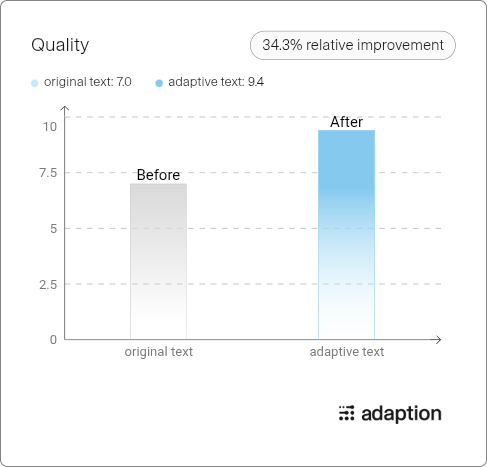
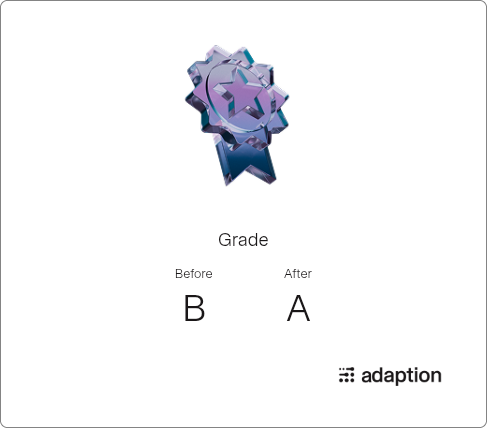
The final quality is A, with a relative quality improvement of 34.3%.
Domain
- Personal-finance (98%)
- Legal (2%)
Language
- English (100%)
Tone
- Practical (44%)
- Helpful (14%)
- Informative (14%)
Evaluation Results
Quality Gains:
Grade Improvement:
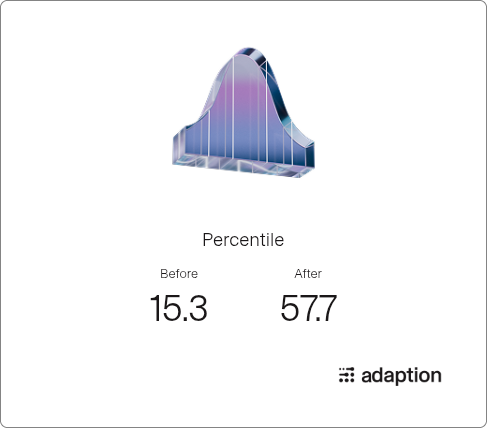
Percentile Chart:
- Downloads last month
- 31