
Datasets:

annotations_creators:
  - no-annotation
language:
  - en
language_creators:
  - expert-generated
license:
  - mit
multilinguality:
  - monolingual
pretty_name: >-
  Lipogram-e from Most Language Models can be Poets too: An AI Writing Assistant
  and Constrained Text Generation Studio
size_categories:
  - 100K<n<1M
source_datasets:
  - original
tags:
  - ctgs
  - CTGS
  - constrained-text-generation
  - lipogram
  - i-hate-the-letter-e
task_categories:
  - text-generation
  - fill-mask
task_ids:
  - language-modeling
  - masked-language-modeling
Dataset Card for Lipogram-e
Table of Contents
- Table of Contents
- Dataset Description
- Dataset Structure
- Dataset Creation
- Considerations for Using the Data
- Additional Information
Dataset Description
- Homepage: https://github.com/Hellisotherpeople/Constrained-Text-Generation-Studio
- Repository: https://github.com/Hellisotherpeople/Constrained-Text-Generation-Studio
- Paper Most Language Models can be Poets too: An AI Writing Assistant and Constrained Text Generation Studio
- Leaderboard: https://github.com/Hellisotherpeople/Constrained-Text-Generation-Studio
- Point of Contact: https://www.linkedin.com/in/allen-roush-27721011b/
Dataset Summary

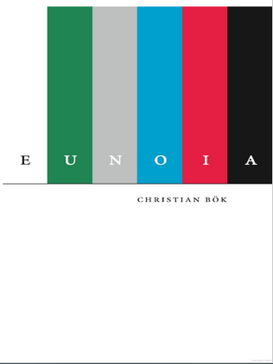

This is a dataset of 3 English books which do not contain the letter "e" in them. This dataset includes all of "Gadsby" by Ernest Vincent Wright, all of "A Void" by Georges Perec, and almost all of "Eunoia" by Christian Bok (except for the single chapter that uses the letter "e" in it)
This dataset is contributed as part of a paper titled "Most Language Models can be Poets too: An AI Writing Assistant and Constrained Text Generation Studio" to appear at COLING 2022.
This dataset and the works within them are examples of Lipograms, which are works where a letter or string is systematically omitted. Lipograms are an example of hard-constrained writing.
Supported Tasks and Leaderboards
The main task for this dataset is Constrained Text Generation - but all types of language modeling are suitable.
Languages
English
Dataset Structure
Data Instances
Each is extracted directly from the available pdf or epub documents converted to txt using pandoc.
Data Fields
Text. The name of each work appears before the work starts and again at the end, so the books can be trivially split again if necessary.
Data Splits
None given. The way I do so in the paper is to extract the final 20% of each book, and concatenate these together. This may not be the most ideal way to do a train/test split, but I couldn't think of a better way. I did not believe randomly sampling was appropriate, but I could be wrong.
Dataset Creation
Curation Rationale
One way that we could extract text from datasets that doesn't use the letter "e" in it would be to simply computationally parse through large existing datasets for blocks or sentences which don't have the letter "e" in them. Unfortunately, this is extremely unlikely to lead to coherent or meaningful text. Doing so over increasingly large blocks or spans is likely to result in fewer and fewer examples. While the preparation of such a dataset would be fascinating in its own right - it is more interesting from the perspective of fine-tuning language models to have large scale prose narratives which fulfill the given constraint. This constraint of omitting the letter "e" is attractive because several book length works exist which do this.
Source Data
Initial Data Collection and Normalization
Project Gutenberg
Who are the source language producers?
Ernest Vincent Wright Georges Perec Christian Bok
Annotations
Annotation process
None
Who are the annotators?
n/a
Personal and Sensitive Information
None
Considerations for Using the Data
There may be conversion artifacts. I noticed 3 cases of the letter "e" being hallucinated from the pdf conversion of "a void" that I had to fix manually. They were reading special characters as the letter "e", and were not due to the authors making mistakes themselves. This implies that at least a few OCR errors exist.
Social Impact of Dataset
These books have existed for a awhile now, so it's unlikely that this will have dramatic Social Impact.
Discussion of Biases
This dataset is 100% biased against the letter "e". There may be biases present in contents of these works. It's recommended to read the books before using this in any non research application to verify that they are not problematic.
Other Known Limitations
It's possible that more works exist but were not well known enough for the authors to find them and include them. Finding such inclusions would be grounds for iteration of this dataset (e.g. a version 1.1 would be released). The goal of this project is to eventually encompass all book length english language "e" lipograms.
Additional Information
n/a
Dataset Curators
Allen Roush
Licensing Information
MIT
Citation Information
TBA
Contributions
Thanks to @Hellisotherpeople for adding this dataset.