

The full dataset viewer is not available (click to read why). Only showing a preview of the rows.
Error code:   DatasetGenerationError
Exception:    TypeError
Message:      Couldn't cast array of type string to null
Traceback:    Traceback (most recent call last):
                File "/usr/local/lib/python3.14/site-packages/datasets/builder.py", line 1816, in _prepare_split_single
                  for key, table in generator:
                                    ^^^^^^^^^
                File "/src/services/worker/src/worker/job_runners/config/parquet_and_info.py", line 613, in wrapped
                  for item in generator(*args, **kwargs):
                              ~~~~~~~~~^^^^^^^^^^^^^^^^^
                File "/usr/local/lib/python3.14/site-packages/datasets/packaged_modules/json/json.py", line 343, in _generate_tables
                  self._cast_table(pa_table, json_field_paths=json_field_paths),
                  ~~~~~~~~~~~~~~~~^^^^^^^^^^^^^^^^^^^^^^^^^^^^^^^^^^^^^^^^^^^^^
                File "/usr/local/lib/python3.14/site-packages/datasets/packaged_modules/json/json.py", line 132, in _cast_table
                  pa_table = table_cast(pa_table, self.info.features.arrow_schema)
                File "/usr/local/lib/python3.14/site-packages/datasets/table.py", line 2369, in table_cast
                  return cast_table_to_schema(table, schema)
                File "/usr/local/lib/python3.14/site-packages/datasets/table.py", line 2303, in cast_table_to_schema
                  cast_array_to_feature(
                  ~~~~~~~~~~~~~~~~~~~~~^
                      table[name] if name in table_column_names else pa.array([None] * len(table), type=schema.field(name).type),
                      ^^^^^^^^^^^^^^^^^^^^^^^^^^^^^^^^^^^^^^^^^^^^^^^^^^^^^^^^^^^^^^^^^^^^^^^^^^^^^^^^^^^^^^^^^^^^^^^^^^^^^^^^^^^
                      feature,
                      ^^^^^^^^
                  )
                  ^
                File "/usr/local/lib/python3.14/site-packages/datasets/table.py", line 1852, in wrapper
                  return pa.chunked_array([func(chunk, *args, **kwargs) for chunk in array.chunks])
                                           ~~~~^^^^^^^^^^^^^^^^^^^^^^^^
                File "/usr/local/lib/python3.14/site-packages/datasets/table.py", line 2143, in cast_array_to_feature
                  return array_cast(
                      array,
                  ...<2 lines>...
                      allow_decimal_to_str=allow_decimal_to_str,
                  )
                File "/usr/local/lib/python3.14/site-packages/datasets/table.py", line 1854, in wrapper
                  return func(array, *args, **kwargs)
                File "/usr/local/lib/python3.14/site-packages/datasets/table.py", line 2005, in array_cast
                  raise TypeError(f"Couldn't cast array of type {_short_str(array.type)} to {_short_str(pa_type)}")
              TypeError: Couldn't cast array of type string to null

              The above exception was the direct cause of the following exception:

              Traceback (most recent call last):
                File "/src/services/worker/src/worker/job_runners/config/parquet_and_info.py", line 1369, in compute_config_parquet_and_info_response
                  parquet_operations, partial, estimated_dataset_info = stream_convert_to_parquet(
                                                                        ~~~~~~~~~~~~~~~~~~~~~~~~~^
                      builder, max_dataset_size_bytes=max_dataset_size_bytes
                      ^^^^^^^^^^^^^^^^^^^^^^^^^^^^^^^^^^^^^^^^^^^^^^^^^^^^^^
                  )
                  ^
                File "/src/services/worker/src/worker/job_runners/config/parquet_and_info.py", line 948, in stream_convert_to_parquet
                  builder._prepare_split(split_generator=splits_generators[split], file_format="parquet")
                  ~~~~~~~~~~~~~~~~~~~~~~^^^^^^^^^^^^^^^^^^^^^^^^^^^^^^^^^^^^^^^^^^^^^^^^^^^^^^^^^^^^^^^^^
                File "/usr/local/lib/python3.14/site-packages/datasets/builder.py", line 1683, in _prepare_split
                  for job_id, done, content in self._prepare_split_single(
                                               ~~~~~~~~~~~~~~~~~~~~~~~~~~^
                      gen_kwargs=gen_kwargs, job_id=job_id, **_prepare_split_args
                      ^^^^^^^^^^^^^^^^^^^^^^^^^^^^^^^^^^^^^^^^^^^^^^^^^^^^^^^^^^^
                  ):
                  ^
                File "/usr/local/lib/python3.14/site-packages/datasets/builder.py", line 1869, in _prepare_split_single
                  raise DatasetGenerationError("An error occurred while generating the dataset") from e
              datasets.exceptions.DatasetGenerationError: An error occurred while generating the dataset
Need help to make the dataset viewer work? Make sure to review how to configure the dataset viewer, and open a discussion for direct support.
prompt string | completion string | enhanced_prompt null | enhanced_completion string | reasoning_trace string |
|---|---|---|---|---|
Reason through this ambiguous crop and region-specific field problem by combining growth stage, weather, and observations rather than matching one clue: Spring wheat in Minnesota at late tillering is growing on a low-organic-matter field shoulder after above-normal early-season precipitation. The crop shows uniform pal... | Best-supported answer: Sulfur deficiency is better supported than nitrogen deficiency in this case. The decision depends on the combination of conditions rather than one symptom, because no single clue is decisive. The symptom pattern—uniform paleness including young upper leaves—fits sulfur deficiency because younger ... | null | Based on the integration of growth stage, environmental conditions, and specific symptomology, the pattern **favors Sulfur (S) deficiency**, though a co-deficiency with Nitrogen (N) is possible. The grower's assumption that "pale equals Nitrogen" is a common diagnostic error in this specific scenario.
Here is the reas... | Okay, let me think through this carefully. We've got spring wheat in Minnesota, late tillering stage, growing on a low-organic-matter field shoulder, and there was above-normal early-season precipitation. The crop is uniformly pale, including the young upper leaves. The grower thinks it's nitrogen deficiency because "p... |
A grower reports interacting crop, region, stage, weather, and field conditions: Corn in eastern Nebraska experienced saturated soil during rapid vegetative growth. The field now contains pale plants, but a second group has wet discolored tissue inside the lower stalk, an unpleasant rotting odor, and lodging after the ... | Most likely conclusion: The collapsing plants should be treated as a probable stalk-rot problem, not as plants that will recover from additional nitrogen. This is more likely because three interacting clues align. Localized wet discolored tissue inside the lower stalk together with an unpleasant rotting odor is a discr... | null | **No, additional nitrogen will not address the collapsing plants.** The symptoms indicate two distinct but related issues driven by the saturated soil conditions, meaning a single field-wide nitrogen application would be economically wasteful and agronomically ineffective.
### 1. The Collapsing Plants: Stalk Rot (Not ... | Okay, let me work through this agronomic problem step by step.
The grower is describing corn in eastern Nebraska that went through saturated soil conditions during rapid vegetative growth. Now they're seeing two distinct groups of symptoms:
1. Pale plants — this sounds like classic nitrogen deficiency. Saturated soil... |
Field scenario with crop, region, growth stage, weather, and field evidence: A moderately susceptible wheat variety in central Saskatchewan is at the start of flowering. The crop experienced ten dry days and warm afternoons, then received a brief but widespread rainfall event; the forecast is drier after one humid day.... | Assessment: The rain increases concern, but it does not make a severe Fusarium head blight outbreak inevitable. The conclusion is better supported because the combined clues point in the same direction. The crop is at the start of flowering, so its position relative to heading and flowering materially affects vulnerabi... | null | **Advisory Response**
**Direct Answer:**
**No, severe Fusarium Head Blight (FHB) is not inevitable.** While the timing of the rain event at the start of flowering (anthesis) elevates risk, the brief duration of the moisture and the forecasted drying trend significantly limit the potential for a severe epidemic.
**Ris... | Okay, let me work through this scenario carefully. The question is asking whether a rain event at the start of flowering makes severe FHB inevitable, and how to judge near-term risk. Let me break this down.
First, let me parse the scenario:
- Moderately susceptible wheat variety (not highly susceptible — that matters)... |
Field scenario with crop, region, growth stage, weather, and field evidence: A banana block in Colombia has cultivar status described as susceptible to Fusarium wilt and recently introduced planting material. Plants show progressive yellowing and wilt that does not recover overnight, and a carefully cut suspect pseudos... | Assessment: The severe plants should be treated as possible Panama disease and escalated through local biosecurity channels rather than assumed to have ordinary water stress. The conclusion is better supported because the combined clues point in the same direction. The persistent external pattern—progressive yellowing ... | null | **Advisory Decision: Treat as a Possible Panama Disease (Fusarium Wilt) Biosecurity Event**
Do **not** treat the severe plants as ordinary water stress. The combination of persistent wilt, continuous vascular discoloration, a susceptible cultivar, and recently introduced planting material in Colombia presents a high-p... | Okay, let me work through this scenario carefully. A banana block in Colombia, susceptible cultivar, recently introduced planting material, progressive yellowing and wilt that doesn't recover overnight, continuous vascular discoloration in the pseudostem, and nearby plants showing only transient midday wilt. The questi... |
Reason through this ambiguous crop and region-specific field problem by combining growth stage, weather, and observations rather than matching one clue: Corn in eastern Nebraska experienced flooding followed by hot weather. The field now contains pale plants, but a second group has soft darkened lower-stalk tissue, a s... | Best-supported answer: The collapsing plants should be treated as a probable stalk-rot problem, not as plants that will recover from additional nitrogen. The decision depends on the combination of conditions rather than one symptom, because no single clue is decisive. Localized soft darkened lower-stalk tissue together... | null | ### Step 1 — Compare
**Content accuracy & completeness:** All four responses correctly identify that the collapsing plants are suffering from bacterial stalk rot, not nitrogen deficiency, and that a field-wide nitrogen application is flawed. Responses 0, 1, and 2 provide excellent agronomic depth, detailing the mechan... | Okay, let me break down this problem. We're dealing with corn in eastern Nebraska that went through flooding and then hot weather. Now there are two distinct symptom groups: pale plants, and plants with soft darkened lower stalks, foul odor, and collapse. The grower wants to do one field-wide nitrogen application. I ne... |
Reason through this ambiguous crop and region-specific field problem by combining growth stage, weather, and observations rather than matching one clue: Tomatoes in northern India are at midseason fruiting after root-zone drying followed by saturation and a heat wave. Fruit show a flattened tan patch at the blossom end... | Best-supported answer: The pattern supports blossom-end rot, a physiological calcium-delivery disorder, rather than a primary infection or automatic proof of low soil calcium. The decision depends on the combination of conditions rather than one symptom, because no single clue is decisive. The fruit location and appear... | null | **Recommendation: Neither.** The grower should not treat this primarily as an infectious fruit rot, nor should they automatically add calcium to the soil.
By synthesizing the growth stage, environmental history, and soil data, the evidence points decisively to **Blossom End Rot (BER)**—a physiological disorder caused... | Okay, let me think through this carefully. The question is asking me to figure out what's going on with these tomatoes, and I need to synthesize multiple clues rather than just latching onto one.
So let me break down what I know:
1. **Crop and location**: Tomatoes in northern India. Northern India has hot summers, mo... |
Use crop stage, field pattern, position, and weather together in this case: Tomatoes in Minnesota are at midseason fruiting after root-zone drying followed by saturation and warm windy afternoons. Fruit show a dark leathery blossom-end lesion; a soil test reports adequate calcium. Should the grower treat this primarily... | Recommendation and justification: The pattern supports blossom-end rot, a physiological calcium-delivery disorder, rather than a primary infection or automatic proof of low soil calcium. This answer is better supported because the field pattern, crop condition, and environmental history interact. The fruit location and... | null | **Recommendation:** The grower should **neither** treat this as an infectious fruit rot **nor** automatically add calcium to the soil.
This is a classic case of **Blossom End Rot (BER)**, a physiological disorder caused by calcium transport failure, not a pathogen or a true soil deficiency. Applying fungicides is ine... | Let me think through this carefully. The question is asking me to use four specific factors—crop stage, field pattern, position, and weather—together to diagnose what's happening with these tomatoes and advise the grower.
Let me break down what I'm given:
- Crop: Tomatoes in Minnesota
- Crop stage: Midseason fruiting
... |
A grower reports interacting crop, region, stage, weather, and field conditions: Cotton in Texas at peak flowering received furrow irrigation followed by heavy rain on a sodic slow-draining soil. Plants are slow-growing with weak roots along the tail drain, and recent weather has been cloudy with low radiation. The gro... | Most likely conclusion: Waterlogging and oxygen-limited roots should control the immediate response; yellow color alone does not justify an immediate nitrogen decision. This is more likely because three interacting clues align. The furrow irrigation followed by heavy rain on a sodic slow-draining soil creates a direct ... | null | **Waterlogging and soil hypoxia must control the immediate response.** Nitrogen shortage is likely a secondary symptom—physiological rather than a true soil deficiency—and applying nitrogen now is agronomically unsound, ineffective, and potentially harmful.
### 1. Diagnosis: The "False" Nitrogen Deficiency
The yellowi... | Okay, let me work through this systematically. The grower has a cotton crop in Texas at peak flowering. They've got furrow irrigation followed by heavy rain on sodic, slow-draining soil. Plants are slow-growing with weak roots along the tail drain, cloudy weather with low radiation, and the crop is yellow. The grower w... |
Use crop stage, field pattern, position, and weather together in this case: Tomatoes in Minnesota have had warm weather and prolonged leaf wetness and frequent overhead irrigation. Leaves show many small circular brown spots with yellow halos and no concentric rings; plants are closely spaced with limited airflow. The ... | Recommendation and justification: Bacterial spot is better supported than early blight. This answer is better supported because the field pattern, crop condition, and environmental history interact. The lesion pattern—many small circular brown spots with yellow halos and no concentric rings—fits bacterial spot and lack... | null | Based on the combination of symptoms, environmental conditions, and field management described, the evidence **strongly favors Bacterial Spot** over Early Blight. Managing the field as Early Blight would likely be ineffective.
Here is the breakdown of the evidence using the four requested factors:
### 1. Symptomatol... | Okay, let me work through this systematically. The grower is seeing small circular brown spots with yellow halos, no concentric rings, on closely spaced tomatoes in Minnesota with warm weather, prolonged leaf wetness, and frequent overhead irrigation. They think it's early blight. I need to evaluate whether that diagno... |
Reason through this ambiguous crop and region-specific field problem by combining growth stage, weather, and observations rather than matching one clue: Spring wheat in southern Manitoba at jointing is growing on a sandy upper slope with low organic matter after low temperatures followed by repeated showers. The crop s... | Best-supported answer: Sulfur deficiency is better supported than nitrogen deficiency in this case. The decision depends on the combination of conditions rather than one symptom, because no single clue is decisive. The symptom pattern—pale new growth while lower leaves are not selectively dying—fits sulfur deficiency b... | null | Based on the synthesis of plant physiology, soil characteristics, weather conditions, and specific symptomology, the pattern **favors Sulfur (S) deficiency** over Nitrogen (N) deficiency. While the environmental conditions create a "perfect storm" for both nutrients, the specific distribution of chlorosis on the plant ... | Okay, let me work through this systematically. Spring wheat, southern Manitoba, jointing stage, sandy upper slope, low organic matter, low temps then repeated showers, pale new growth, lower leaves not dying, grower thinks it's nitrogen. I need to figure out S vs N and how to check.
First, let me think about what each... |
Reason through this ambiguous crop and region-specific field problem by combining growth stage, weather, and observations rather than matching one clue: A soybean crop in the southeastern United States at early pod fill has had high humidity and frequent dew. The lower canopy shows small underside pustules with opening... | Best-supported answer: Soybean rust is better supported because the underside pustules open and release visible spore masses. The decision depends on the combination of conditions rather than one symptom, because no single clue is decisive. The observation of small underside pustules with openings and tan spores distin... | null | Based on a synthesis of growth stage, environmental conditions, regional context, and symptom morphology, the evidence strongly favors **Soybean Rust (SBR)** over Bacterial Pustule.
Here is the reasoning based on the convergence of factors rather than a single symptom:
### 1. Symptom Morphology (The Biological Clinc... | Okay, let me break this down. We've got a soybean crop in the southeastern US, early pod fill stage, high humidity and frequent dew, lower canopy showing small underside pustules with openings and tan spores, and regional rust evidence confirmed in nearby counties. The question is whether this favors soybean rust or ba... |
A grower reports interacting crop, region, stage, weather, and field conditions: Cassava in Uganda is four months old. Plants from farmer-shared planting stems show irregular chlorotic mosaics plus narrowed leaf blades, and symptoms appeared in clusters; whiteflies are present on young leaves. Does the evidence favor c... | Most likely conclusion: Cassava mosaic disease is the stronger diagnosis. This is more likely because three interacting clues align. The leaves show irregular chlorotic mosaics plus narrowed leaf blades, combining mosaic color breaks with distortion rather than uniform whole-leaf yellowing. The crop is four months old,... | null | Yes, the evidence strongly favors **Cassava Mosaic Disease (CMD)** over a uniform nutrient problem or mite injury.
Here is the breakdown of why the evidence points to CMD and rules out the alternatives:
### 1. Evidence Supporting Cassava Mosaic Disease (CMD)
* **Symptom Specificity:** The combination of irregular ... | Okay, let me work through this cassava problem step by step. The grower is describing a situation in Uganda with cassava plants that are four months old. They're seeing irregular chlorotic mosaics and narrowed leaf blades, symptoms appeared in clusters, and there are whiteflies on young leaves. The planting material ca... |
Consider this crop-advisory case by weighing region, growth stage, weather, and field evidence. In central Iowa, corn at early V4 has been exposed to persistent cloudy weather and waterlogged topsoil for one week. Plants are pale wherever emergence was otherwise uniform, but older leaves do not show a clear V-shaped ye... | The evidence favors this interpretation: Transient cool-wet root stress is better supported than an established nitrogen deficiency at this stage. The comparison is supported because the following factors must be considered together. At early V4, young corn is still establishing its nodal root system, so persistent clo... | null | Based on the variables provided, **nitrogen (N) deficiency is not currently the best diagnosis.** Applying more fertilizer immediately would be premature and potentially wasteful.
While the plants are pale, the evidence points to **environmental stress restricting nutrient uptake** rather than a true lack of soil nitr... | Okay, let me think through this carefully. We've got corn in central Iowa at V4 stage, and the grower is seeing pale plants. The question is whether this is nitrogen deficiency and whether they should add more fertilizer. Let me break this down piece by piece.
First, the symptoms. The plants are pale, but there's no V... |
This dataset is a remastered version prepared using Adaption's Adaptive Data platform.
adaption-crop_disease_reasoning
This dataset contains prompt-completion pairs for multi-constraint agricultural reasoning. Each case requires weighing crop, region, growth stage, season, recent weather, field distribution, and observed symptoms to compare plausible disease, nutrient, environmental, and management-related explanations. Preserve ambiguity where evidence is incomplete. Completions should identify the best-supported working diagnosis, explain how multiple variables interact, discuss the strongest competing explanation, recommend practical diagnostic or monitoring steps, and state what evidence would change the conclusion. Do not introduce facts absent from the case or supported source material. Avoid definitive diagnoses, named chemical treatments, application rates, invented thresholds, or region-specific claims unless explicitly provided. Keep recommendations concise, conditional, diagnostic-first, and safety-conscious.
Dataset size
There are 34,695 data points in this dataset. This is an instruction tuning dataset.
Quality of Remastered Dataset
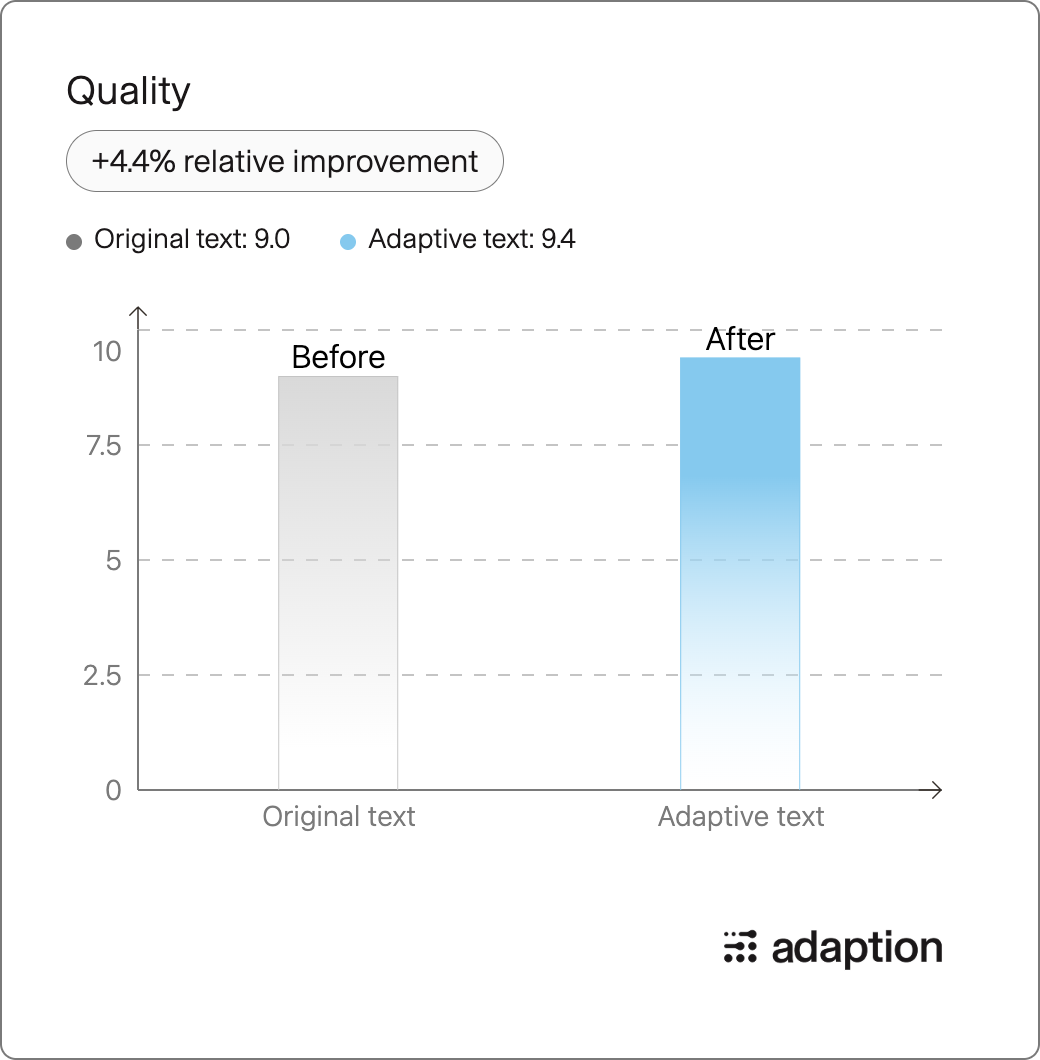
The final quality is A, with a relative quality improvement of 4.4%.
Domain
- Agriculture (100%)
Language
- English (100%)
Tone
- Analytical (96%)
- Urgent (4%)
Evaluation Results
Quality Gains:
Grade Improvement:

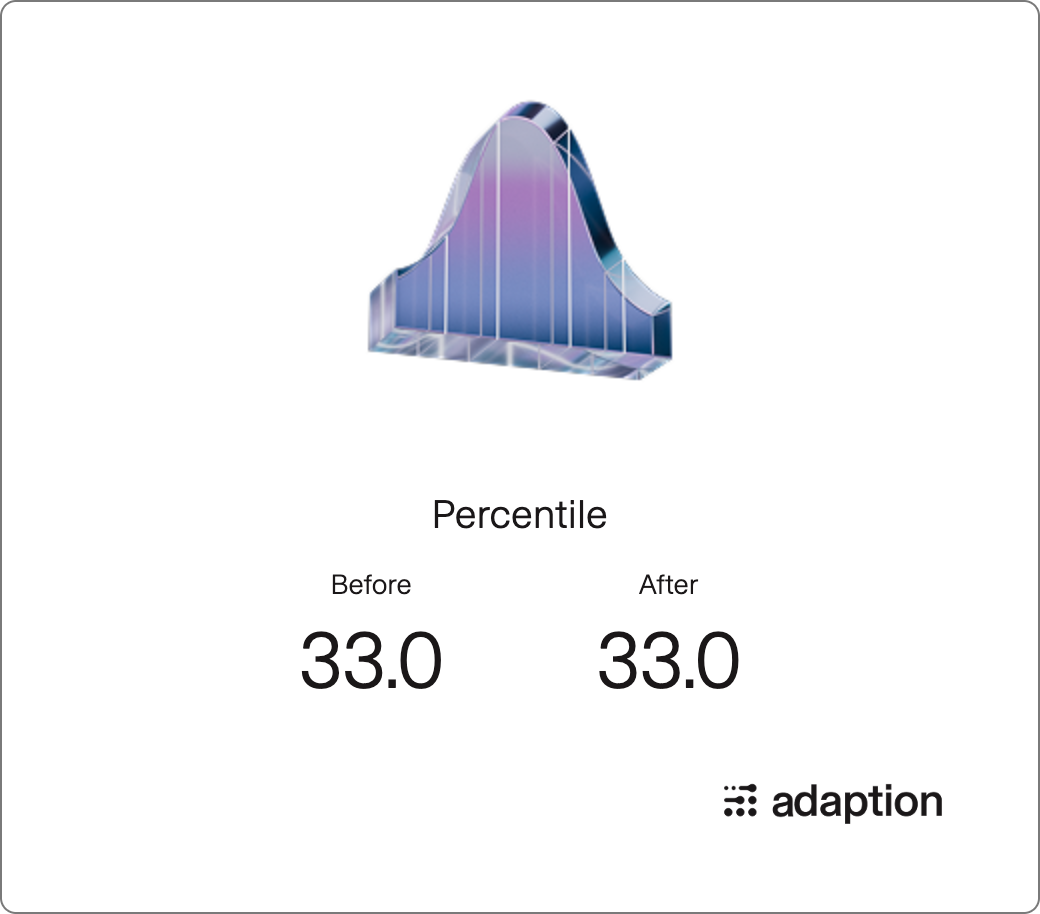
Percentile Chart:
- Downloads last month
- 13