
_id stringlengths 1 6 | title stringlengths 15 150 | text stringlengths 30 20.1k | instruction_seed stringlengths 58 1.47k | __original_row_idx int64 0 38.3k | _source stringclasses 1
value |
|---|---|---|---|---|---|
26574 | Are we capable of discovering planets in the Andromeda galaxy? | I just watched this SpaceRip video on YouTube which shows pictures taken by Hubble while looking into the disk of the Andromeda galaxy to study a certain type of variable star. It occurred to me that if we can study individual stars in Andromeda, we must be able to use most of our methods of exoplanet detection on them... | What are the primary challenges and limitations associated with detecting exoplanets in the Andromeda galaxy compared to those within our own Milky Way galaxy, and what advancements in technology would be necessary to overcome these challenges? | 21,965 | cqadupstack-physics |
13488 | To construct an action from a given two-point function | This is really a basic question whose answer I guess may have to do with the way we construct Feynman rules and diagrams. The question is: Suppose I have been given a two-point function (found in some other ways, say for example some gauge/gravity duality or some symmetry in the theory). How can we construct the Lagran... | Given a two-point function in a quantum field theory, how can one construct the corresponding Lagrangian density? Please provide a systematic method or general rule for this derivation and cite relevant references that outline these steps. | 1,155 | cqadupstack-physics |
57035 | Formulation of the Three-Body Newtonian problem | I am trying to understand three body problem in Newtonian space. I want to make formulation of differential equations for known initial conditions for the case with: 1. Identical three masses 2. Periodic solution 3. Zero Angular momentum The equations in vector form are: $$\frac{d^2 \overset{\rightharpoonup }{r... | What are the initial conditions needed to establish a periodic solution for the three-body problem in a Newtonian framework, given that the three bodies have identical masses and the total angular momentum is zero? | 1,957 | cqadupstack-physics |
101046 | What are characteristic ranges of time, distance, energy regions for physics and chemistry? | I've constructed such table from many different sources for my thesis introduction:  I'm trying to make a bit of philosophy it the thesis first chapter. Are they realistic or not? Could you make any comments on the ranges presented here. I'm not trying ... | What is the minimum time duration for a chemical reaction to occur, and how does it compare to the time scales typically observed in physics? Specifically, could you provide examples or references for fast chemical reactions that happen on the order of femtoseconds? | 22,684 | cqadupstack-physics |
98214 | Same U(1) charge for the SU(2) doublet | Consider the symmetry $SU_L(2)\otimes U_Y(1)$. The entries of $SU_L(2)$ doublet will have same U(1)-charge. How can this be shown mathematically? | Given the symmetry group \( SU_L(2) \otimes U_Y(1) \) and the property that the entries of an \( SU_L(2) \) doublet have the same \( U(1) \)-charge, what is the mathematical relationship that expresses this condition? Specifically, can you derive a formula or equation that demonstrates that the \( U(1) \)-charges of th... | 30,545 | cqadupstack-physics |
117059 | Of all the electrical energy used in a home, is there any portion that won't eventually become thermal energy in the home? | Considering all of the appliances that the average home uses--microwaves, light bulbs, dishwashers, refrigerators--is it safe to say that all of the electrical energy in a home will be converted to thermal energy inside the home? If you think about the resistance going through wires, that is converted to heat. The phot... | In a typical household, if all electrical appliances use 1000 kWh of energy in a month, how much of that energy, expressed as a percentage, is ultimately converted to thermal energy within the home, considering factors such as energy loss in wires, heat produced by appliances, and light energy conversion? | 13,423 | cqadupstack-physics |
65316 | Kinetic energy when $F(t)$ graph is given |  The very basic problem here is that the point where this graph ends is ambiguous. I mean, what is the corresponding $y$-value for the point whose $x$-valu is $4.5s$? Then I think we should find the area, then that will be the momentum, so use $\frac{p^... | Given a velocity-time graph where the value of time reaches \(x = 4.5 \, s\), how can you determine the corresponding \(y\)-value representing velocity at this point? After finding this \(y\)-value, calculate the momentum of the object if its mass is \(m\) kilograms, using the formula \(p = mv\). If the mass is \(2 \, ... | 19,530 | cqadupstack-physics |
54779 | A 0.1kg ball of dough is thrown up with a velocity of 15m/s. What is the momentum halfway up? | I know that $p=mv$ and (0.1kg)(15m/s)=1.5 kg m/s and the momentum at the vertex is 0, but what is the momentum halfway up? | If an object with a mass of 0.1 kg is thrown vertically upward with an initial velocity of 15 m/s, what is its momentum halfway to its highest point? | 25,990 | cqadupstack-physics |
127672 | Jumping sewer lid - WHY? | **Intro:** Few hours ago, there was a storm. We heard some constant banging which couldn't be explained by thundering. Then we found out, it was a sewer lid jumping. Maybe it's normal in other parts of the world, but for me it was like the first time in my life. I've captured the video. **The question** is what was cau... | What conditions would create sufficient air pressure in a sewer to lift a heavy metal lid, and how can these conditions be quantitatively analyzed or measured? | 23,248 | cqadupstack-physics |
38400 | Rigid body/moment of inertia problem | I have a homework assignment about rigid body dynamics. Take a disc of radius $r=2m$ with uniform mass density $\rho=1$ $kg/m^2$ in the x-y plane, resting in an inertial frame. At some instant, a force of $F = (0,0,1)kN$ is applied at the point $A=(0,r,0)$. What's the acceleration of the point $A$ at that instant? This... | What is the acceleration of point \( A = (0, r, 0) \) on the disc with radius \( r = 2 \, m \) and uniform mass density \( \rho = 1 \, kg/m^2 \) when a force of \( F = (0, 0, 1) \, kN \) is applied at that point, and how does it relate to the translational and angular accelerations of the disc? | 37,698 | cqadupstack-physics |
28782 | How can/does calculus describe the movement of a particle? | I was talking to Roger Penrose about calculus in the appendix in his book _Cycles Of Time_ and he said I'd need a good understanding of calculus if I wanted to read his book in great depth. He said I even need calculus to understand the movement of a particle in depth. What is the calculus that describes the movement o... | What is the mathematical formulation used in calculus to describe the motion of a particle, and how do you derive the equations of motion from it? | 7,374 | cqadupstack-physics |
29802 | If I lift a submerged hose over 35 feet above the water's surface, what's in the top foot? | I've been arguing with a friend about the whole "perfect vacuum" concept. He and I agree that the most powerful vacuum pump in the world couldn't pump water more than ~34 feet above the surface of a regular elevation lake. I changed the problem slightly, and I'm not sure what would happen. 1. Submerge a hose such tha... | If you cap one end of a hose filled with water and pull it out of the water until 40 feet of the hose is above the water's surface, what will be in the top 6 feet of the hose? Will it be a perfect vacuum, gaseous water, or liquid water, and why? | 32,851 | cqadupstack-physics |
116628 | Explicit form of the entropy production in hydrodynamics | I'm trying to understand how hydrodynamics arise from a precise, mathematical formulation of thermodynamics, learning mostly from Landau's "Hydrodynamics". So Landau starts from formulating the dynamical equations for the non viscous fluid, 5 equations, because there are 5 variables (pressure, density and a 3-component... | Given the expression for the rate of change of kinetic energy in a viscous fluid flow, $$ \frac{dE_{kin}}{dt} = -\frac{\eta}{2} \int \left( \frac{\partial v_i}{\partial x_k}+ \frac{\partial v_k}{\partial x_i}\right)^2 dV $$, how can we relate this dissipation of kinetic energy to an increase in entropy, and what would ... | 30,270 | cqadupstack-physics |
24189 | Why aren't stratospheric balloons compressing their helium to descent? | I can't find a reference of a working stratospheric balloon mounted with a compressor to control its altitude. Is there a big physical difficulty (such as compressor weight/power ratio, or power source availability) which prevents this, or just no one as an interest in it ? | What are the key physical limitations, such as weight-to-power ratio or energy requirements, that would affect the feasibility of using a compressor mounted on a stratospheric balloon to control its altitude? | 31,944 | cqadupstack-physics |
130534 | Can a transformer transfer all power? | How can the transformer transfer exact power from primary winding to secondary winding if there are core losses, eddy current losses and hysteresis losses? | What is the efficiency of a transformer given that it experiences core losses of 10 W, eddy current losses of 5 W, and hysteresis losses of 3 W, if the input power to the primary winding is 100 W? | 3,246 | cqadupstack-physics |
131761 | How to understand "the speed of propagation of the condition of constant phase"? | I still can't understand that the phase can be a constant until now. If the phase is constant, from the $$y(x,t) = a \times \sin(phase)$$ the shape of wave will be a line parallel to x-axis.But I know that I am wrong,how to explain it? | If a wave described by the equation \( y(x,t) = a \times \sin(kx - \omega t) \) has a constant phase, what is the condition for the wave to maintain a constant shape, and how does it relate to the wave's propagation characteristics? | 994 | cqadupstack-physics |
109726 | Microscopic source of pressure in an incompressible fluid | The pressure of a fluid can be explained microscopically in terms of molecules bouncing off the walls of a container. The molecules have a certain mass and speed, so when they bounce they transfer a certain momentum to the wall; and since a certain number of bounces occur per unit area and time, the averaged- out resul... | If a piston exerts a force on an incompressible fluid and causes a slight increase in pressure, how does this change in pressure relate to the microscopic behavior of the fluid molecules, particularly in terms of momentum transfer and density changes? Quantitatively, what relation can be expressed between the applied f... | 16,379 | cqadupstack-physics |
48174 | Qubit, one or two complex numbers? | I'm currently reading up on quantum computing and it seems like I have found some contradiction about how to represent qubits. It is often stated that a qubit is represented as $a|0\rangle + b|1\rangle = (a, b)$ with both a and b being complex numbers. However, it is stated just as often, that there is only one complex... | Given a normalized qubit represented as \( |\psi\rangle = a|0\rangle + b|1\rangle \), where \( a \) and \( b \) are complex numbers that satisfy the condition \( |a|^2 + |b|^2 = 1 \), what is the relationship between the values of \( a \) and \( b \) if we ignore the global phase shift such that \( a \) can be assumed ... | 23,348 | cqadupstack-physics |
132114 | Can a human size object move so fast that it ceases to be observable? | In many anime, comics, movies, etc, we see a lot of super human beings moving and fighting at such high speeds that a regular human being cannot see that they are fighting or moving pass by. In particular, in the first battle between Goku and Piccolo, those two are able to fight in a confined environment (when Piccolo ... | Is it physically possible for a human-sized object to move in a confined space of \(20\,\text{m} \times 20\,\text{m} \times 10\,\text{m}\) at such a speed that a normal person would be unable to clearly see it, and if so, what would be the minimum speed required for this to happen, taking into account that the object c... | 28,617 | cqadupstack-physics |
57859 | Is there a relation between supersymmetry and entropy? | Considering that entropy denotes the level of order/disorder in a system, would it be possible for entropy and supersymmetry to exist at the same time? Or, are they entirely unrelated? | If a system has high entropy, which indicates greater disorder, how would you quantitatively describe the relationship between entropy and supersymmetry in terms of their influence on the state of a physical system? | 35,388 | cqadupstack-physics |
133300 | How to model an apartment's airconditioning? | **Background:** This reminds situation reminds be of an episode from the _The Big Bang Theory_ , although it is quite different from it. My roommate and I have similar temperature preferences and also share the objective of saving money on electricity. The optimal solution towards this objective is what we have diffe... | What is a first-order mathematical model for the heating and cooling dynamics of a typical apartment that incorporates factors like heat exchange from the air conditioning, the thermal properties of the apartment as a heat sink, and the surrounding environment, assuming a constant cost of electricity? Please provide th... | 13,931 | cqadupstack-physics |
31608 | What will be the goal of (V)LHC after receiving upgrades? | If I understood correctly, the LHC will be shut down at the end of 2012 to prepare for the full-power, 14 TeV collisions in 2014. I also remember reading about a proposed luminosity upgrade some time in 2019 and also about a preliminary plan for VLHC, which should, when fully operational, achieve about 175-200 TeV. My ... | What are the specific research goals and expected experiments planned for particle collisions in the 175-200 TeV range, particularly in relation to discovering new physics phenomena beyond the TeV scale, and how do they contribute to our understanding of Supersymmetry (SUSY) and the potential gap to the Grand Unified T... | 24,257 | cqadupstack-physics |
11041 | Limit on geothermal energy that could be extracted before the earth's magnetic field collapsed? | This is more of a theoretical thought-experiment question. Basically, how much geothermal energy can we extract before the loss of the magnetic field makes it a terribly bad idea? Will the geothermal energy inside the earth now, which is lost through "natural processes", last until the end of the Sun (say, another 5bil... | Given the following parameters:
a) A = total thermal energy available within the Earth's core, measured in joules.
b) B = the threshold at which the Earth's core ceases to produce a magnetic field, linked to core temperature and state (solid vs. molten).
c) C = the annual rate of heat radiated from the Earth, in ... | 13,944 | cqadupstack-physics |
60519 | Can space expand with unlimited speed? | At the beginning, right after the Big Bang, the universe was the size of a coin. One millionth of a second after the universe was the size of the Solar System (acording to http://www.esa.int/Our_Activities/Space_Science/So_how_did_everything_start), which is much much faster than speed of light. Can space expand with u... | What is the approximate diameter of the universe one millionth of a second after the Big Bang, given that it was the size of the Solar System at that time? | 16,922 | cqadupstack-physics |
59905 | Is this statement about quantum mechanics valid? | In _Philosophy of Language_ by William G. Lycan, there are the lines: > _Even apparent truths of logic, such as truths of the form "Either P or not > P", might be abandoned in light of suitably weird phenomena in quantum > mechanics._ I really don't know much about quantum mechanics, is this statement valid? | In the context of quantum mechanics, under what circumstances could the principle of excluded middle ("Either P or not P") be considered invalid? Provide an example of a quantum phenomenon that challenges this logical principle. | 3,457 | cqadupstack-physics |
94628 | equation of motion for the scalar field via variational principle in general relativity | I would like to find the equation of motion for the scalar field $\phi$ by varying the following action in General Relativity. Special Relativity: $$ S = -\tfrac{1}{2}\int d^4\xi\, \eta^{ab} \partial_a \phi\partial_b\phi $$ General Relativity: $$ S = -\tfrac{1}{2}\int d^4x \sqrt{g}\, g^{\mu\nu} \partial_{\mu} \phi\part... | Given the action for a scalar field in General Relativity
$$ S = -\tfrac{1}{2}\int d^4x \sqrt{g}\, g^{\mu\nu} \partial_{\mu} \phi \partial_{\nu} \phi, $$
determine the equation of motion for the scalar field $\phi$ by performing a variation of this action with respect to $\phi$. Show your work in deriving the result... | 977 | cqadupstack-physics |
90568 | Quantum Field Theory and the Hartree-Fock approximation | I'm currently reviewing some of my notes on Quantum Field Theory (the version of Greiner) and I was wondering if QFT always works in the Hartree-Fock approximation ? Or at least that's what it seems to me! We have our field-operators $\hat{\psi}(\vec{r},t)$ and $\hat{\psi}^\dagger(\vec{r},t)$ which annihilate or create... | In Quantum Field Theory, when dealing with interacting systems, to what extent does the Hartree-Fock approximation accurately predict the properties of systems compared to more advanced methods, particularly in many-body interactions? Can you compare the results quantitatively for a specific system, such as electrons i... | 28,782 | cqadupstack-physics |
45587 | What are some fields where physics is leading mathematics? | I know developments in physics and mathematics often nourish each other, and at different points in history, physics and math have taken turns leading each other. An example of a physicist "inventing" the required mathematics is Newton and his calculus. At other times, the mathematics have been discovered as a curiosit... | In modern science, what are three specific examples of how developments in physics have led to new areas of mathematical research or concepts? Provide a brief explanation for each example. | 16,260 | cqadupstack-physics |
74344 | What's the altitude of the flat base of Cumulus clouds? | Is there a formula that describes the altitude of clouds with respect to the local temperature? I think of the _flat bases_ of Cumulus clouds. Thanks... | What is the relationship between the altitude of cumulus clouds and the local temperature, and is there a specific formula that quantifies this relationship? | 27,188 | cqadupstack-physics |
15191 | Flow behind a plate causes pressure drop? | I've done an experiment where we direct an air jet from a fan onto a set of electronic scales. By measuring the velocity of the air jet at the exit of the fan nozzle, and applying the conservation of linear momentum, I've found the force the jet exerts on the scales, and found this agrees pretty well with the reading o... | How does the addition of a wooden plate behind a set of electronic scales alter the pressure dynamics between the scales and the plate, ultimately leading to an increased reading on the scales due to changes in air flow and pressure? Additionally, how can the presence of this plate influence the direction of air flow u... | 10,163 | cqadupstack-physics |
18345 | How to determine the field of view for a pinhole camera with given parameters? | I am reviewing some old material I learned years ago and am having trouble figuring this one out. Can somebody confirm that I have done my math correctly, and tell me how I can recover the field of view from these parameters? I have a $3.6$(height) by $4.8$(width) mm sensor, which displays as $640\ by\ 480$ pixels. I t... | I need to calculate the field of view (FOV) based on the parameters provided. Given a sensor size of \(3.6 \, \text{mm} \times 4.8 \, \text{mm}\), a focal length of \(0.299 \, \text{mm}\), and an object distance of \(10 \, \text{m}\), how can I determine the horizontal and vertical field of view? What are the exact val... | 16,953 | cqadupstack-physics |
29829 | Calculating the Uncertainty for an Average Value | How would I calculate the uncertainty for the average of this set? $32.5 \pm 0.1$ $32.0 \pm 0.1$ $32.3 \pm 0.1$ | What is the calculated uncertainty for the average of the following set of measurements: $32.5 \pm 0.1$, $32.0 \pm 0.1$, and $32.3 \pm 0.1$? | 23,141 | cqadupstack-physics |
30769 | Fracture because of high-speed rotation | I was watching a rerun of an early MythBusters episode, where they look at whether CDs in high-speed drives can explode / fail simply because of being rotated too fast. The following are some calculations I did: Let the thickness of the CD be $t$, made of material with density $\rho$. Consider a small element of the CD... | What is the maximum angular velocity (in RPM) that a standard CD made of polycarbonate can safely withstand without fracturing, given that its density is approximately 1.22 g/cm³ and its ultimate tensile strength is around 75 MPa, assuming a central spindle hole radius of 7.5 mm and an outer radius of 60 mm? | 20,678 | cqadupstack-physics |
46877 | Does a particle in a spherically symmetric infinite square well potential exert a force on the inner and outer shell barrier? | For a particle in the potential: $$V(r) = \begin{cases} 0 & \text{a < r < b}\\\ \infty & \text{otherwise.} \end{cases}$$ Does this guy in the ground-state exert a force on the shells a and b? I don't think so because at ground-state both the centrifugal term of the radial equation and the angular momentum of the partic... | In a one-dimensional infinite potential well defined by the potential $$V(r) = \begin{cases} 0 & \text{for } a < r < b \\ \infty & \text{otherwise,} \end{cases}$$ calculate the ground-state energy of a particle confined between the walls at positions \( r = a \) and \( r = b \). What is the expression for this energy i... | 23,659 | cqadupstack-physics |
68923 | Why do electrons drift in an ideal conductor, since there's no field? | Suppose a simple circuit with a **DC voltage** source and a **resistor**. The voltage of the source will be situated over the resistor. So the **electric field** (which is the gradient of the potential) will be constant in the resistor (if you assume a linear potential function in the resistor), and will be equal to **... | In a simple circuit with a DC voltage source connected to a resistor, if the voltage across the resistor is 12 V and the resistance is 4 Ω, what is the current flowing through the circuit? Additionally, how does the lack of resistance in the connecting wires affect the behavior of electrons once they leave the resistor... | 25,408 | cqadupstack-physics |
28568 | Getting from $E^2 - p^2c^2 = m^2c^4$ to $E = \gamma mc^2$ | What is each mathematical step (in detail) that one would take to get from: $E^2 - p^2c^2 = m^2c^4$ to $E = \gamma mc^2$, where $\gamma$ is the relativistic dilation factor. This is for an object in motion. NOTE: in the answer, I would like full explanation. E.g. when explaining how to derive $x$ from $\frac{x+2}{2}=4$... | Can you provide a detailed step-by-step derivation that shows how to transform the equation $E^2 - p^2c^2 = m^2c^4$ into the form $E = \gamma mc^2$, where $\gamma$ is the relativistic dilation factor? Please explain each mathematical operation clearly. | 30,920 | cqadupstack-physics |
71470 | 2 particles collision - deriving the equation for an energy which can become mass of new particles! | **Q1:** Lets say a particle with mass $m_1$ and kinetic energy $W_k$ colides with a particle of mass $m_2$ at rest. Can anyone explain why do both particless ($m_1$ and $m_2$) plus an aditionall mass $m$ still exist after the colission?  **Q2:** Are par... | A particle with mass \( m_1 \) and kinetic energy \( W_k \) collides with a stationary particle of mass \( m_2 \). Assuming the collision is perfectly inelastic and results in an additional mass \( m \), how can we calculate the available energy \( W_{av} \) that can be transformed into the mass \( m \) of the new part... | 26,616 | cqadupstack-physics |
130945 | How does a structureless particle decay? | As we know that particles having structure (quarks) decays to lighter products. We can show the decay of them by quark level Feynman diagram. But what about muon decays to electron, neutrino (muon type) and anti neutrino (electron type). Is there a way to make Feynman diagram of it? | How can you represent the decay of a muon into an electron, a muon neutrino, and an electron antineutrino using a Feynman diagram? Please describe the process and include the relevant interaction and particles involved. | 9,699 | cqadupstack-physics |
1756 | Interaction ranges in the Standard Model - Electrodynamics vs QCD | as you might know, the Standard Model of physics can be seen as a $U(1)\times SU(2)\times SU(3)$ gauge theory where each symmetry group accounts for different force fields. The behaviour for the force field of a "point" charge in the most simple cases of this model, the electromagnetic interaction expressed as an abeli... | What is the mathematical relationship that indicates the decay of the force fields associated with non-Abelian gauge theories, like those of the weak and strong interactions, compared to the $r^{-2}$ decay of the electromagnetic force field in an Abelian gauge theory? How does this relate to the range of these interact... | 30,740 | cqadupstack-physics |
90943 | Do Photons interfere when it passes through a slit (one)? | When a light (photons) goes through two slits it creates interference patterns. if the light goes through a "single" slit, does it create interference patterns or does it behave like particles (photons)? is the pattern same for both particles and light waves if it is a "single slit"? In the double slit experiment, if y... | In a single-slit experiment, what is the expected pattern observed on a screen: a single band of light or an interference pattern? Additionally, how does the resulting pattern differ when comparing the behavior of photons versus classical particles in this setup? | 11,416 | cqadupstack-physics |
69504 | Why do objects sometimes fall on their own? | I have observed sometimes that when I keep some objects precariously balanced, for e.g. some objects in a cupboard, they seem quite stable at the time when I place them there but after a certain period, maybe even 8 - 12 hours suddenly you hear a noise and you can see that they have fallen for what seems like no appare... | What are the primary physical forces and factors that can lead to the sudden instability and eventual collapse of precariously balanced objects over time, and how can one quantify the likelihood of failure based on the angle of inclination and center of mass? | 30,250 | cqadupstack-physics |
119108 | Wireless electricity through Wi-Fi power signal? | Could there be a method to obtain and send worldwide electricity through WiFi? I mean if we have internet everywhere and only need a WiFi device, can we apply the same to electricity technology? or electrons conducted by WiFi waves? | Is it theoretically possible to transmit electrical energy over WiFi frequencies using current technology, and if so, what is the maximum amount of power that could be transmitted over a distance of 100 meters? | 9,147 | cqadupstack-physics |
81277 | In Path Integrals, lagrangian or hamiltonian are fundamental? | When studying path-integrals one question arose to my mind... Which presentation is more fundamental to calculate the propagator? The one based on the Hamiltonian (phase space)? $$K(B|A) = \int \mathcal{D}[p]\mathcal{D}[q] \exp \\{ \frac{i}{\hbar} \int dt [ p \dot q - H(p,q) ] \\} $$ or the one based on the lagrangian ... | In the context of path integrals, can you provide a quantitative example or scenario where the Lagrangian formulation is more advantageous or yields clearer results compared to the Hamiltonian formulation in calculating the propagator? | 23,731 | cqadupstack-physics |
31451 | Adding rotation to internal coordinates | I'm optimizing the geometry of a system composed of several interacting masses (a molecule). The energy of the system depends on the relative position of the masses, and all velocities are zero. In a simple case, the energy is invariant with translation and rotation of the whole system, so I can optimized using interna... | What is the mathematical expression for the rotational coordinates needed to describe the orientation of the principal axes of inertia for a system of interacting masses, and how can I derive the corresponding derivatives with respect to the coordinates of the individual masses? | 6,021 | cqadupstack-physics |
56046 | Membrane that allows liquid to pass only when forced under pressure | Is it possible to have a membrane that will not let a liquid through it at normal pressures due to gravity, but pass that liquid when substantially pressurised? For instance, a few inches of water (say 0.1psi) would be blocked, but 100psi would pass through. | Given a hypothetical semipermeable membrane that can withstand a differential pressure of 0.1 psi without allowing a liquid to pass but can transmit that same liquid when the pressure increases to 100 psi, calculate the minimum thickness of the membrane required to maintain this behavior, assuming it follows the princi... | 15,347 | cqadupstack-physics |
21891 | Why are scattering matrices unitary? | In Griffith's QM book, he introduces scattering matrices as an end-of-the- chapter problem. For a Dirac-Delta potential $V(x) = \alpha \delta (x - x_0)$, I've derived the scattering matrix and observed that it is unitary $S^{-1} = S^{\dagger}$. I'm trying to explain why this is intuitively, but I don't really have an i... | How does the unitarity of the scattering matrix \( S \) for a Dirac-Delta potential \( V(x) = \alpha \delta (x - x_0) \) relate to the conservation of probability in quantum mechanics, and can you derive the explicit form of the scattering matrix \( S \) to illustrate this property? | 21,123 | cqadupstack-physics |
44578 | How to derive the divergence leading to Kohn anomalies? | I'm trying to understand the mathematical derivation given in the book "A Quantum Approach to Condensed Matter Physics" on page 215 (see 1), for explaining how the phonon-energy perturbed by phonon-electron interaction, namely $$\hbar\omega_q^{(p)} = \hbar\omega_q - \sum\limits_k 2 | M_{kk'}|^2 \langle n_k \rangle (\va... | Can you derive the expression for the logarithmic divergence that arises in the perturbation of phonon energy due to electron-phonon interaction when substituting for \(\varepsilon_{k-q}\) in the equation \(\hbar\omega_q^{(p)} = \hbar\omega_q - \sum\limits_k 2 | M_{kk'}|^2 \langle n_k \rangle (\varepsilon_{k'} - \varep... | 733 | cqadupstack-physics |
128332 | Critical size and Radioactive Nuclei | Nuclear fission requires the mass of the fissile material above the critical mass. So that the explosion takes place at least in the case of a nuclear bomb. But once a single nucleus got involved in the reaction, the reaction can't be stopped easily if I'm right. **A single nucleus how do know about the critical mass o... | How does a single fissile nucleus trigger a chain reaction in a nuclear fission event, and what role does critical mass play in sustaining that reaction? | 16,813 | cqadupstack-physics |
43099 | Basis transformation between eigenstates of harmonic oscillators with different frequency | Given two harmonic oscillators with frequencies $\Omega$ and $\Omega'$, the eigenstates themselves are exactly known. Let's call them $\Psi_n$ and $\Psi'_n$. Is there a compact expression for the basis transformation that relates the $\Psi_n$ to the $\Psi'_n$? For the ground state, I think I have an idea of how to do t... | What is the expression for the inner product $\langle \Psi'_n | \Psi_0 \rangle$ in terms of the oscillator frequencies $\Omega$ and $\Omega'$, and how would you express the matrix elements $\langle \Psi'_n | \Psi_m \rangle$ for all eigenstates $n$ and $m$ when transforming between two harmonic oscillators? | 11,827 | cqadupstack-physics |
17841 | Sparticles: Relationship to supersymmetry and dark matter? | I was attempting to read this paper after watching a show with Brian Greene. As I understand it, sparticles are a prediction of supersymetry, so I was wondering: * Wouldn't the discovery of supersymmetry lend validity to string theory? Isn't this a testable result, or is this type of supersymmetry predicted by most m... | What is the minimum energy required to potentially detect sparticles, and how does this energy compare to current particle collider capabilities? | 13,209 | cqadupstack-physics |
51275 | How does a hinge affect the amount of a submerged material? | Suppose I have a rod that has a density of $X <1$. If I were to submerge that rod in water (density 1), I would expect $X$ of the rod to be below water and $1-X$ of it to be above water (simple buoyancy). But here's the catch. Suppose I attach one corner of the rod to a frictionless hinge, suspended close to the water.... | If a rod with a density \( X < 1 \) is attached at one end to a frictionless hinge and submerged in water, what is the new percentage of the rod that remains above the water in equilibrium? Assume the hinge is positioned close to the water's surface and that the specific height of the hinge does not affect the buoyancy... | 2,587 | cqadupstack-physics |
44441 | What is the meaning of negative mass (in a SUSY spectrum)? | I was playing around with SuSpect to generate some SUSY mass spectrums and I'm often encountering situations where I get a negative neutralino mass. 1. What is the physical meaning of this negative mass I am getting? 2. Does this mean the parameters I am putting in is giving an unphysical spectrum? | What are the implications of obtaining a negative mass for a neutralino in a Supersymmetry mass spectrum calculation, and how can this result indicate whether the chosen parameters yield a physical or unphysical spectrum? | 28,194 | cqadupstack-physics |
60607 | Liquid oxygen how do they use it as fuel? | Rockets are said to be using liquid oxygen as fuel. How do they use liquid oxygen since it's just oxygen, it only helps in the combustion process. How can it be a fuel on its own? | What is the role of liquid oxygen in rocket propulsion, and how does it contribute to the combustion process in combination with fuel? | 36,767 | cqadupstack-physics |
122535 | How to explain in simple terms why Entanglement is more than just complicated hidden variables | I haven't taken a graduate level physics course on quantum mechanics so I get lost in the strange looking equasions. It's hard for me too see in any of the explanations of how quantum computers and entanglement work without thinking that it looks like a big parlor trick. It's like a magician taking a black and white ma... | Can you provide a simple experimental result from quantum mechanics that demonstrates the principle of superposition or entanglement in a way that the average person can understand, without relying on classical intuition? | 35,237 | cqadupstack-physics |
9109 | Is there a direct physical interpretation for the complex wavefunction? | The Schrodinger equation in non-relativistic quantum mechanics yields the time-evolution of the so-called wavefunction corresponding to the system concerned under the action of the associated Hamiltonian. And this wavefunction is, in general, complex, and its modulus squared yields the probabilities observed experiment... | Can quantum mechanics be formulated using only real numbers instead of complex numbers, and if so, what would be the implications for our understanding of phenomena like superposition and interference? | 14,030 | cqadupstack-physics |
8518 | Is there something similar to Noether's theorem for discrete symmetries? | Noether's theorem states that, for every _continuous_ symmetry of a system, there exists a conserved quantity, e.g. energy conservation for time invariance, charge conservation for $U(1)$. Is there any similar statement for _discrete_ symmetries? | What is the conserved quantity associated with the discrete symmetry of parity in a physical system, and how does this conservation principle manifest in particle interactions? | 5,657 | cqadupstack-physics |
91747 | Why does a "speed of sound" exist? | I've recently read that wind cannot be faster than the speed of sound (german source). But why is there a speed of sound? I understand (well, mostly accept to be honest) that the speed of light in vacuum is a maximal speed for all matter. And I understand that you need more energy the more you accelerate particles. But... | What factors determine the speed of sound in a medium, and why is it not possible for wind (or any sound wave) to exceed this speed? | 28,511 | cqadupstack-physics |
48646 | How to construct the Hamiltonian matrix? | I'm trying to understand if there's a more systematic approach to build the matrix associated with the Hamiltonian in a quantum system of finite dimension. For example, I know that for the ammonia molecule (which has two states based on the position of the nitrogen), it should be: $$ \begin{pmatrix} E & -A \\\ -A & E \... | What systematic method can be applied to construct the Hamiltonian matrix for a quantum system with n states, ensuring that the matrix reflects the symmetries of the system? Specifically, can you derive the Hamiltonian matrix for a molecule with two degenerate states that differ in energy by A and contextually explain ... | 2,109 | cqadupstack-physics |
101184 | $\cos^{2}(\phi)$ in the kinetic energy term of the Lagrangian is one? | I'm doing some homework in Classical Mechanics, and is about to write out the Lagrangian of a system. But, when I check the answer from my teacher, something is missing. The kinetic energy I'm using is given by: $$T =\frac{1}{2}m\dot{x_{m}}^{2},$$ where $$\dot{x_{m}} = \dot{x}+L \cos(\phi)\dot{\phi}$$ Now, when I want ... | In the context of the Lagrangian mechanics you are studying, under what conditions can the term \( \cos^2(\phi) \) be approximated or simplified to 1, and how does this simplification affect the expression for kinetic energy in the Lagrangian formulation? | 27,402 | cqadupstack-physics |
3576 | How to mathematically formulate the Two Slit Experiment in Special Relativity? | How to mathematically formulate the Two Slit Experiment in a Lorentz invariant framework. Is there a paper about this? | What is the mathematical formulation of the Two Slit Experiment in a Lorentz invariant framework, and can you provide a reference to a relevant paper on this topic? | 14,898 | cqadupstack-physics |
105404 | Can temperature be objectively related to energy? | Temperature is disordered kinetic energy, with 0K being 0 Joules disordered kinetic energy, if I"m not mistaken. So, given required parameters(temperature, number of particles, mass of each particle, whatever is required) can you find the disordered kinetic energy of each particle? | Given a system of \( N \) particles, each with a mass \( m \) at a temperature \( T \), what is the total disordered kinetic energy of the system, and how would you calculate the average kinetic energy per particle? Please express your answer in terms of \( N \), \( m \), and \( T \). | 9,801 | cqadupstack-physics |
34035 | Is this paragraph on probabilities of sub atomic partials accurate? | I am working on a concept for something and i want to make sure i understand something clearly before i start on everything else. Note, my project is more about the interactions of elements of complex systems rather than physics. Im just using this paragraph as an example, not doing a project on quantum mechanics. Is t... | What is the probability that a specific arrangement of subatomic particles will result in the stability of an atom, given that changes to the environment or particle interactions could disrupt that arrangement? | 18,658 | cqadupstack-physics |
91599 | Red Shift Effects | I dong know much about physics, but I was curious about the red shift effect. I think I have the basic idea of it down in that as an object 1 accelerates from object 2 the light from object 1 will appear more red to object 2 because it stretches the light between them. My question is how fast is the red shift effect? I... | If two objects are one light year apart and one object suddenly accelerates away from the other at a significant fraction of the speed of light, how long would it take for the observer at the original stationary object to perceive the redshift of light from the accelerating object? Additionally, what formula would be u... | 21,476 | cqadupstack-physics |
74219 | Orbit reversal in a gravitational well | A friend recently asked me this, and without wishing to spend a huge time thinking about it, I wondered if anyone knew the answer (or at least had an informed guess), or was familiar enough with these sorts of calculations to figure it out efficiently (rather than painfully, which is how I would end up doing it). > Wha... | What is the least amount of energy required to reverse the velocity vector of an object in a circular orbit around a spherical gravitational well, considering options such as maneuvering at apoapsis or performing a 180-degree plane change? | 21,540 | cqadupstack-physics |
44973 | Electromagnetism for Mathematician | I am trying to find a book on electromagnetism for mathematician (so it has to be rigorous). Preferably a book that extensively uses Stoke's theorem for Maxwell's equations (unlike other books that on point source charge, they take Stoke's theorem on $B-\\{0\\}$ with $B$ being closed ball of radius 1, but this does not... | What rigorous book on electromagnetism suitable for a mathematician extensively incorporates Stokes' theorem in the context of Maxwell's equations, discusses the Dirac delta function as a distribution, and avoids the limitations of applying Stokes' theorem in non-compact domains? | 13,325 | cqadupstack-physics |
4071 | Popular depictions of electromagnetic wave: is there an error? | Here are some depictions of electromagnetic wave, similar to the depictions in other places:  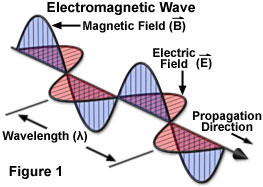  My actual problem statement says: "Suppose a diagram in our toy model for the Feynman Calculus h... | Given that the masses of the particles satisfy the condition \( m_A > m_B + m_C \), determine the general rule for allowed reactions involving spinless particles \( A \), \( B \), and \( C \) such that if there are \( N_A \) external \( A \) lines, \( N_B \) external \( B \) lines, and \( N_C \) external \( C \) lines,... | 26,609 | cqadupstack-physics |
60370 | Navier-Stokes system | I have to study this system which name is Navier-Stokes. Can you explain please what means that $p$, $u$ and $(u \cdot \nabla)u$. What represents in reality? Tell me please, how should I read the factor: $(u \cdot \nabla)u$? "$u$ multiplied with gradient applied to $u$ " ? $ (N-S)\begin{cases} -\mu \Delta u +(u \cdot \... | What does the term \((u \cdot \nabla) u\) represent in the Navier-Stokes equations, and how would the behavior of the fluid change if this term equals zero? Additionally, can you explain the concepts of "stationary" and "slow" in the context of incompressible viscous fluid motion described by these equations? | 8,118 | cqadupstack-physics |
45927 | How Scientist Came to Know the Shape of our own galaxy without going out of it? | As far as I know, scientists have been able to see a lot of differently shaped galaxies in our visible universe through modern age telescopes. But I was wondering how it was possible to know how our own galaxy looked like without going out of it to see it's shape? | How do astronomers determine the shape of our Milky Way galaxy if we cannot exit it to observe it directly? | 35,612 | cqadupstack-physics |
52305 | Scattering from a box potential of width $L$ doesn't reproduce a step potential in the limit $L \rightarrow \infty$ | Consider the scattering of a quantum particle in one dimension, caused by a step in the potential (this appears in many undergrad level QM books): $$ V(x) = \begin{cases} V_1 & x<0 \\\ V_2 & x>0\end{cases}. $$ The particle is incident from the left, so it's wavefunction is: $$ \psi(x) = \begin{cases} e^{i k_1 x} + r e^... | What is the expression for the reflection coefficient \( r \) when a quantum particle scatters off a potential step with \( V(x) = V_1 \) for \( x < 0 \) and \( V_2 \) for \( x > 0 \)? Also, explain why the reflection coefficient \( r \) does not tend to the same value as the two-step potential becomes an infinite pote... | 26,322 | cqadupstack-physics |
41331 | Will the siphoning effect help a system pump water upwards if the water's entry and exit points are at the same height? | I am looking to pump water from a pool up to a roof for solar heating (black plastic tubing) and then back into the pool with the original source water. Does the gravitational force of the water flowing back down the pipe into the pool assist the pump and therefore decrease the pumps required strength? I have been told... | If I need to pump water from a pool to a roof that is 10 meters high and then back into the pool, how does the height difference affect the power required by the pump, considering the gravitational force acting on the water? Specifically, what is the difference in power required if the water is pumped directly to a tan... | 25,785 | cqadupstack-physics |
74771 | Weather forecasting with coffee bubbles | The other day I saw this life-hack:  And I was wondering how true it is. First of all, I always thought(listening to weather forecasts) that low-pressure atmosphere is what correlates with rain; although I never learned the argument behind it. Anyway, e... | How does a change in atmospheric pressure influence the behavior of bubbles in a cup of coffee, and can this relationship be used to create a sensitive barometer based on bubble dynamics? | 21,726 | cqadupstack-physics |
41795 | When and How far out will the Voyager twins come to a full-stop? | So space is mostly, but not entirely, empty. Every few (dunno the order) cubic metres of space there is some cosmic dust. Assuming that * Cosmic dust exerts some friction on passing bodies, * The Voyager twins are merely coasting along and * Not subject to capture by any known bodies in their path How far out ... | Given that cosmic dust exerts a frictional force on the Voyager spacecraft, estimate the distance one of the Voyager spacecraft would need to travel before its velocity is reduced to 0 m/s due to this frictional effect. How long might this take, and will either spacecraft reach the nearest star in their path before tha... | 12,507 | cqadupstack-physics |
76426 | Expand metric $g_{ij}$ about flat space | I expand metric $g_{ij}$ about flat space $\delta_{ij}$ $$g_{ij}=\delta_{ij}+h_{ij}$$ where $|h_{ij}|\ll 1$. I would like to find $R_{ij}$, to linear order, in terms of $h_{ij}$, but I dont know what terms are negligible. Which $\partial h \partial h$, $\partial h$, $hh, h \partial h $, $\partial \partial h$ are neglig... | Given the expansion of the metric \( g_{ij} = \delta_{ij} + h_{ij} \) where \( |h_{ij}| \ll 1 \), can you explain which terms in the expression for the Riemann curvature tensor \( R_{ij} \) are negligible when considering linear order in \( h_{ij} \)? Specifically, identify the negligible contributions among \( \partia... | 24,394 | cqadupstack-physics |
60919 | Correlated three-particle Green Function | I know the relationship between normal and correlated two-particle Green Functions for fermions: $$G_c(1,2,3,4)=\Gamma(1,2,3,4)=G(1,2,3,4)+G(1,3)G(2,4)-G(1,4)G(2,3)$$ Also known as irreducible n-particle Green function or n-particle vertex (there are many definitions so I'm confused). Definitions for G also vary, I use... | Can you verify if the three-particle Green function relationship given by the formula
$$ \Gamma(1,2,3,4,5,6) = G(1, 2, 3, 4, 5, 6) - 2 G(1, 4) G(2, 5) G(3, 6) + 2 G(1, 4) G(2, 6) G(3, 5) - 2 G(1, 5) G(2, 6) G(3, 4) + 2 G(1, 5) G(2, 4) G(3, 6) - 2 G(1, 6) G(2, 4) G(3, 5) + 2 G(1, 6) G(2, 5) G(3, 4) - G(1, 4) G(2, 3, 5... | 3,624 | cqadupstack-physics |
94212 | how to find last position given a time | I found this formula (I dont know its name) and I'm trying to apply it in order to find the last position given a time and velocity. $ s = s_0 + v_0 \cdot t + \frac{1}{2} \cdot a \cdot t² $ given $ t = 3h $ $ v = 100km/h $ $ a= \frac{v}{t} $ results $ s = 0 + 0 \cdot 3 + \frac{1}{2} \cdot \frac{100}{3} \cdot 3²\\\ s = ... | If a vehicle travels at a constant velocity of 100 km/h for 3 hours, what is the total distance covered by the vehicle? How does this differ from the distance calculated using the formula \( s = s_0 + v_0 \cdot t + \frac{1}{2} \cdot a \cdot t^2 \) if acceleration \( a \) is not zero? | 9,711 | cqadupstack-physics |
109927 | Solving non-linear ODE for divalent solution at a 1-D surface boudary | I am trying to solve the following equation for a positively charged plane with charge density $\sigma$ at $z = 0$. $$ \phi''(z)=-\frac{e}{\epsilon \epsilon_0} \big(z_+n_{+} e^{-\beta z_+ e\phi}-z_{-} n_{-} e^{\beta z_- e\phi} \big) $$ So far I have determined that the electric field and potential must go to zero at in... | Given the equation for the potential \(\phi(z)\) near a positively charged plane at \(z = 0\):
\[
\phi''(z) = -\frac{e}{\epsilon \epsilon_0} \left(z_+ n_{+} e^{-\beta z_+ e\phi} - z_{-} n_{-} e^{\beta z_- e\phi}\right),
\]
and the boundary condition \(\phi'(0) = -\frac{\sigma}{\epsilon \epsilon_0}\), how can I analy... | 16,296 | cqadupstack-physics |
54638 | Dynamic structure factor | Dynamic structure factor is the spatial and temporal Fourier transform of Van Hoves time dependent pair correlation function. It is written as $$ S(k,\omega)= \frac{1}{2\pi}\int F(k,t)\exp(i\omega t)dt $$ $F(k,t)$ is intermediate scattering function. My question is how did we use spatial and temporal Fourier Transform ... | What is the mathematical expression for the dynamic structure factor \( S(k,\omega) \) in terms of Van Hove's time-dependent pair correlation function, and can you explain the significance of the spatial and temporal Fourier transform in this context? | 33,642 | cqadupstack-physics |
86246 | Sliding ruler on table top | I've got a standard foot-long flat plastic ruler (about an inch wide) and a desk with a smooth formica-like surface. When idly passing time reading on the computer, I will pick up one side of the ruler (keeping one of the four edges still leaning on the table) and drop it to see how far it will slide. It can travel abo... | What factors influence the distance that a standard plastic ruler will slide on a smooth surface after being dropped, and how do these factors relate to the concepts of friction and air resistance? | 37,534 | cqadupstack-physics |
133970 | Average acceleration when more than two different velocities occur | > Suppose a car travels at 5m/s north for 5 seconds, it then turn east and > travel at 7m/s for 10 seconds, finally it turns north east and travel at 10 > m/s for 20 seconds. What is the average acceleration over these 35 seconds? I know acceleration average is the change in velocity over the change in time. If there w... | What is the average acceleration of a car that travels north at 5 m/s for 5 seconds, then turns east and travels at 7 m/s for 10 seconds, and finally turns northeast to travel at 10 m/s for 20 seconds? | 24,534 | cqadupstack-physics |
79423 | The physical interpretation of limit of ratio of two functions | Imagine we have two different differentiable functions $f(t)$ and $g(t)$ where $t$ generally represents the time, if there exists the following limit as $$ \lim\limits_{t\rightarrow \infty } \frac{\| \dot{f}(t) \|}{\|\dot{g}(t)\|}=c$$ Then, is there any appropriate physical explanation for this limit ? If ignore the li... | If two differentiable functions \( f(t) \) and \( g(t) \) represent the position of two different objects over time, and it is known that
\[
\lim\limits_{t\rightarrow \infty } \frac{\| \dot{f}(t) \|}{\|\dot{g}(t)\|}=c
\]
where \( c \) is a constant, what physical interpretation can be drawn from this limit in terms ... | 10,729 | cqadupstack-physics |
Subsets and Splits
No community queries yet
The top public SQL queries from the community will appear here once available.