
instruction stringlengths 15 21.8k |
|---|
What do s, m, w, m-w, and w-s mean in the context of infrared spectroscopy? |
- Is chlorine in vinyl chloride sp$^2$ or sp$^3$ hybridized?
Calculating using steric number it is found to be sp$^3$ hybridized. But according to Finar organic chemistry vol 1 it is sp$^2$.
Please clarify |
Is chlorine in vinyl chloride sp$^2$ or sp$^3$ hybridized?
Calculating using steric number it is found to be sp$^3$ hybridized. But according to Finar Organic Chemistry vol 1 it is sp$^2$. |
I'm currently working through past exam papers in preparation for my upcoming Inorganic Chemistry exam and I got to this question. We really haven't looked at DSC graphs, so I'm not completely sure how to answer this. I've shown my attempt, but am looking for someone to confirm if I'm right, if not, where I went wrong.... |
I'm currently working through past exam papers in preparation for my upcoming Inorganic Chemistry exam and I got to this question. We really haven't looked at DSC graphs, so I'm not completely sure how to answer this. I've shown my attempt, but am looking for someone to confirm if I'm right, if not, where I went wrong.... |
Just wanted to ask since this question is really confusing me.
What is the [HPO42-] of a solution labeled "0.10 M Phosphoric Acid"? Given the Ka values of 7.1x10^-3, 6.3x10^-8 and 4.2x10^-13 for the first, second and third ionizations, respectively.
Some sources have shown that the answer is 6.3x10^-8, but follow... |
You can understand this well by thinking about why a liquid boils in the first place. Imagine you have a pot of water, and it's just sitting there in your kitchen. Intermolecular forces (specifically hydrogen bonding for H20 molecules) keep the water in liquid state. The air molecules zipping around the pot and abov... |
Just wanted to ask since this question is really confusing me.
What is the $\ce{[HPO4^{2-}]}$ of a solution labeled "$0.10$ M Phosphoric Acid"? Given the $K_a$ values of $7.1 \times 10^{-3}$, $6.3 \times 10^{-8}$ and $4.2 \times 10^{-13}$ for the first, second and third ionizations, respectively.
Some sources hav... |
How do manufacturers remove oxygen from metal during melting? I melt aluminium with nichrome wires and during melting it, it forms lots of slag (aluminium oxide) and I have to remove it manually. |
How do manufacturer remove oxygen from metal during melting? |
I've been reviewing redox reactions and have been using the OIL RIG acronym to classify oxidations vs. reductions. Generally this makes sense, and many resources I've looked at repeat the "***O**xidation **I**s **L**oss - **R**eduction **I**s **G**ain of electrons*" statement.
But, I also know that aldehydes can be ... |
Oxidation of an aldehyde - how is this a loss of electrons? |
I want to know the procedure to calculate the Lennard-Jones potential for a metal-halogen pair (specifically vanadium-chlorine). Is it possible to calculate using any QM packages like Mopac, NWChem, or Gaussian?
I am specifically looking for values of [A and B in the 12-6 potential][1].
[1]: https://en.wikipedi... |
Yes, this is technically possible. A basic tutorial for this is in the excellent [Psi4Numpy project](https://github.com/psi4/psi4numpy/blob/master/Tutorials/01_Psi4NumPy-Basics/1b_molecule.ipynb), which I'll reproduce here with minor modifications. Their example fits the counterpoise-corrected MP2/aug-cc-pVDZ _total_ i... |
Generally speaking, manufacturers remove oxygen from metal by using oxidizers. For instance, a manufacturer will melt steel, and pour liquid aluminum (or various other viable substances) into the liquid steel. This aluminum will oxidize with the oxygen in the steel to form aluminum oxide (Al2O3). Because the oxide i... |
As I understand organic chemistry there is no simple generalization that allows us to predict reaction outcomes- rather we transform molecules using a sequence of known reactions.
This has me wondering how these known reactions came to be known. My first guess would be that the structure was empirically observed bef... |
[![Reaction scheme][1]][1]
What is the mechanism for the above reaction?
[1]: https://i.stack.imgur.com/5oqiw.png |
Just wanted to ask since this question is really confusing me.
What is the $\ce{[HPO4^{2-}]}$ of a solution labeled "$0.10$ M Phosphoric Acid"? Given the $K_a$ values of $7.1 \times 10^{-3}$, $6.3 \times 10^{-8}$ and $4.2 \times 10^{-13}$ for the first, second and third ionizations, respectively.
Some sources hav... |
Good morning,
I recently started to do computational chemistry and am now trying to write some basic inputs for important calculations. One, which I guess is quite important to me would be to predict UV-VIS spectra of molecules. So I looked for a basic input file on the net, and although my tutor warned me about usi... |
I am looking for a material with the same properties than the silicone (flexible, easy to manipulate, soft, etc.) but **without being thermally insulating**.
I need this material to do the junction between a temperature sensor and the human skin (this is why I need it to be soft).
So far I've used the [ELASTOSIL®... |
I am looking for a material with the same properties of silicon (flexible, easy to manipulate, soft, etc.) but **without being a thermal isolate**.
I need this material to do the junction between a temperature sensor and the human skin (this is why I need it to be soft).
So far I've used the [ELASTOSIL® E43][1] b... |
I am looking for a material with the same properties of silicone (flexible, easy to manipulate, soft, etc.) but **without being a thermal isolate**.
I need this material to do the junction between a temperature sensor and the human skin (this is why I need it to be soft).
So far I've used the [ELASTOSIL® E43][1] ... |
> Which oxygen will form a stronger hydrogen bond , the one in water or the one in hydrogen peroxide ??
According to me , the one in peroxide will form the stronger H bond as the O here being less electronegative will be more willing to donate lone pair to an incoming dipole .
|
Which oxygen will form a better hydrogen bond? |
Would you still call neutral and positively-charged molecular metal oxides [polyoxometalates][1], or do you know a better/proper way to name this class of compounds (Polyoxometalloids/Polyoxometallic species/Polyoxometallides/...)?
This question occured on the premise of an interesting paragraph in the paper [[2]] r... |
Would you still call neutral and positively-charged molecular metal oxides [polyoxometalates][1], or do you know a better/proper way to name this class of compounds (Polyoxometalloids/Polyoxometallic species/Polyoxometallides/...)?
This question occured on the premise of an interesting paragraph in the paper [(1)][2... |
[Atomic number](https://en.m.wikipedia.org/wiki/Atomic_number) is the number of protons a certain atom has. It's the defining attribute of a certain element. But, How right is that?
From the viewpoint of chemistry, the definition is right. Because, for a certain chemical reaction, isotopes of a certain element will ... |
How right is defining elements with the number of protons? |
Single crystal x-ray diffraction stands among the most complex yet trustworthy analytical techniques when it comes to structure determination of solids. But how hard it would be to simulate(fake) the entire raw dataset, including all reflections, possible artifacts, experiment strategy etc. in order to fit a certain gi... |
[Atomic number](https://en.m.wikipedia.org/wiki/Atomic_number) is the number of protons a certain atom has. It's the defining attribute of a certain element. But, How right is that?
From the viewpoint of chemistry, the definition is right. Because, for a certain chemical reaction, isotopes of a certain element will ... |
Is chlorine in vinyl chloride sp<sup>2</sup> or sp<sup>3</sup> hybridized?
Calculating using steric number it is found to be sp<sup>3</sup> hybridized. But according to I. L. Finar<sup>*</sup> it is sp<sup>2</sup>.
<sup>*</sup>I.L. Finar: *Organic chemistry Vol.1 Fundamental principles.* Sixth Edition. Orient Lo... |
What is the hybridization of chlorine in vinyl chloride? |
*Disclaimer*: An important point to remember is, that hybridisation always follows the molecular structure, it is never the cause for a certain structure. As such, hybridisation is an interpretation tool, nothing more.
---
As a rule of thumb, **terminal atoms** (excluding hydrogen) **are almost always** (maximally)... |
Structure determination by X-ray diffraction, regardless if powder diffraction, or single crystal diffraction analysis, is a spatial mapping of electron density. After *solving* a crystallographic structure (phase problem), the subsequent *structure refinement* includes steps to complete the crystallographic model, an... |
According to me , the Cl—Se—Cl bond angle should be greater than Cl —Se—O
bond angle because since oxygen is more electronegative than Cl , the orbital directed towards O will have more p character hence, the bond angle should be less than Cl— Se— Cl bond angle.
But in my book its written that the Cl— Se— O bond ang... |
Structure determination by X-ray diffraction, regardless if powder diffraction, or single crystal diffraction analysis, is a spatial mapping of electron density. After *solving* a crystallographic structure (phase problem), the subsequent *structure refinement* includes steps to complete the crystallographic model, an... |
According to me , the Cl—Se—Cl bond angle should be greater than Cl —Se—O
bond angle because since oxygen is more electronegative than Cl , the orbital directed towards O will have more p character hence, the bond angle should be less than Cl— Se— Cl bond angle.
But in my book its written that the Cl— Se— O bond ... |
It is a famous reaction that used to be a teaching lab experiment, but is now banned in Germany, because it is too dangerous. To quote-translate quite liberally from the German [www.seilnacht.com](http://www.seilnacht.com/chemiker/chesta.html):
> In a stone quarry near Zurich, Hermann Staudinger attempted to artific... |
What did actually happen when Staudinger tried to synthesise diamond? |
Sulfonyl azides, $\ce{RSO2N3}$, are capable of acting as sources of electrophilic azide ("$\ce{N3+}$"), but are also capable of effecting diazo transfer, as shown in the scheme below, taken from ref 1:
[![ArSO2N3 + enolate with Evans auxiliary][1]][1]
In 1990, Evans and coworkers<sup>1</sup> showed that the aryl ... |
Sulfonyl azides: diazo or azide transfer? |
I'm trying to understand the gains phosphorus has from forming P4O10. The [molecular structure](https://upload.wikimedia.org/wikipedia/commons/5/59/Phosphorus-pentoxide-2D-dimensions.png) is such that every oxygen atom forms two bonds (either two with one phosphorus atom, or one with two), while every phosphorus atom f... |
How does P4O10 make sense? |
in this picture, why the Mn orbitals energy are higher than the Ni ones ?![![Ni-Mn banding and antibonding states][1]][1]
[1]: https://i.stack.imgur.com/LoZWV.png |
hybride orbital Energie? |
In this MO diagram, why are the Mn 3d orbitals higher in energy than the Ni 3d orbitals?
![![Ni-Mn banding and antibonding states][1]][1]
[1]: https://i.stack.imgur.com/LoZWV.png |
In this picture, why are the Mn orbitals higher in energy than the Ni ones?
![Ni-Mn bonding and antibonding states][1][1]
[1]: https://i.stack.imgur.com/LoZWV.png |
In this MO diagram, why are the Mn 3d orbitals higher in energy than the Ni 3d orbitals?
![![Ni-Mn banding and antibonding states][1]][1]
[1]: https://i.stack.imgur.com/LoZWV.png |
In this MO diagram, why are the Mn 3d orbitals higher in energy than the Ni 3d orbitals?
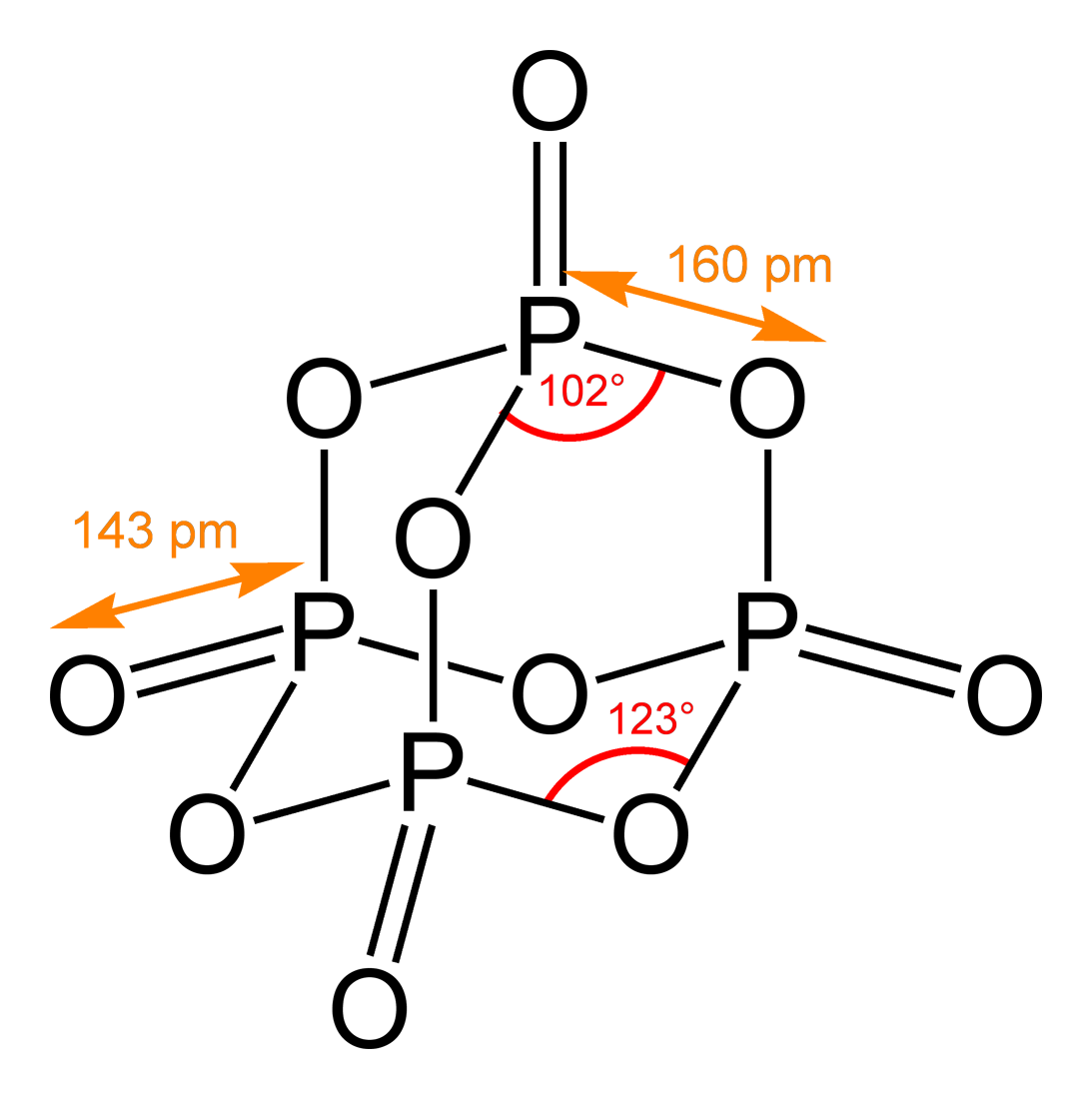 is such that every oxygen atom forms two bonds (either two with one phosphorus atom, or one with two), while every phosphorus... |
PLA (polylactic acid) plastic is commonly used for 3D printing, and I would like to create a 3D printed part that can be used in an experiment with methane ($\ce{CH4}$) and carbon dioxide ($\ce{CO2}$) gas sensors. Does $\ce{CH4}$ or $\ce{CO2}$ gas react with PLA plastic? What are the long-term effects of these gases ... |
"ionic bonds can be regarded as an extreme form of covalent bonds." They "can be regarded" as magic, too. What's your point? In what *specific* context is such regard useful? (I'm not questioning that there may be some *specific context* that you could regard them that way, rather I AM saying that it is not *generally*... |
The standard Gibbs free energy of formation for CuO is $\Delta G_f$(298.15K,1 bar)= -129.7 $kJ\ mol^{-1}$.
How can I get the limit value of $\Delta G_f$(0K,0 bar) ?
I want to compare it with the approximate value obtained by Density Functional theory calculations: $\Delta G_f$(0K,0 bar)$\approx E^{Total}_{CuO}-E^... |
How do I get a $\Delta G_f$(0K,0 bar)? |
The standard Gibbs free energy of formation for copper(II) oxide, $\ce{CuO}$, is $\Delta_\mathrm fG (\pu{298.15 K},\pu{1 bar}) = \pu{-129.7 kJ mol-1}$.
How can I get $\Delta_\mathrm fG (\pu{0 K},\pu{0 bar})$, the limiting value of this?
I want to compare it with the approximate value obtained by density functiona... |
How do I get a value of the Gibbs energy of formation at 0 K and 0 bar? |
The way I know to tell whether alkene is E or Z is to look at the coupling constant of the protons across the doible bond. Large value (16 Hz) indicates an E bond where as smaller values (11 Hz) usually indicate Z.
In my project I've been doing a CM between two alkenes which gives me a tri-substituted alkene which ... |
The way I know to tell whether an alkene is *E* or *Z* -is to look at the coupling constant of the protons across the doble bond. Large value (16 Hz) indicates an (*E*)-alkene where as smaller values (11 Hz) usually indicate a (*Z*)-alkene.
In my project I've been doing a cross metathesis between two alkenes which g... |
$\ce{MgB2}$ is 1 gram-molecule of $\ce{MgB2}$ but 3 gram-atoms of $\ce{MgB2}$.
Why is this so? Let us consider this problem in the familiar mole:
If we were asked how many moles of the substance (molecule) were in this, we would state 1 mole, if there were $\pu{45.3 g}$ of substance. However, if we were asked how... |
[The Wikipedia article on the mole](https://en.wikipedia.org/wiki/Mole_(unit)) states:
> The term **gram-atom** (abbreviated gat.) has been used for a related but distinct concept, namely a quantity of a substance that contains Avogadro's number of atoms, whether isolated or combined in molecules. Thus, for example... |
I am reading that cellulose may be broken down into glucose. This is usually done with some sort of solvent.
Is there any way to 'rebuild' these cellulose molecules from glucose?
Thank you |
Can Cellulose Molecules be Synthesized from Glucose? |
I am reading that cellulose may be broken down into glucose. This is usually done with some sort of solvent.
Is there any way to 'rebuild' these cellulose molecules from glucose?
|
Generally speaking, manufacturers remove oxygen from metal by using deoxidizers. For instance, a manufacturer will melt steel, and pour liquid aluminum (or various other viable substances that act as reducing agents) into the liquid steel. This aluminum will react with the oxygen in the steel to form aluminum oxide (... |
Will the Concentration of any dissolvable substance be uniformly distributed in any type of liquid?
I am willing to read more about this topic , so if you have good suggestions for helpful books , please share it with us
|
So, i understand that, in this case, the partial positive charge its on the Hydrogen. And that his electronic configuration is H = 1s^1
How this fact will explain the strength of the Hydrogen bonding?
Is it because we are talking about an 1s orbital, that is much smaller, and closer to the nucleus?
Help on this... |
How the electronic configuration of Hydrogen can explain the strength of the Hydrogen bonding? |
What are the plastic connectors called (for glassware)? |
They are called Keck clamps.
Here's a link to the page for ChemGlass: http://www.chemglass.com/product_view.asp?pnr=CG-145 |
So, i understand that, in this case, the partial positive charge its on the Hydrogen. And that his electronic configuration is H = 1s^1
How this fact will explain the strength of the Hydrogen bonding?
Is it because we are talking about an 1s orbital, that is much smaller, and closer to the nucleus? Or is it because ... |
What is the difference between calcination and pyrolysis?
I understand they both involve heat treatment but each under a different type of atmosphere, which leads to some sort of reduction reaction? What are the differences in underlying mechanisms?
|
In [this](https://chemistry.stackexchange.com/questions/4877/is-it-actually-possible-to-dispose-of-a-body-with-hydrofluoric-acid/4915#4915) question, the answer given discusses that flourine has a good orbital overlap with hydrogen and also that flourine is not very polarizable. However, is it always true that strong b... |
What determines "polarizability" of an element? |
PLA (polylactic acid) plastic is commonly used for 3D printing, and I would like to create a 3D printed part that can be used in an experiment with methane ($\ce{CH4}$) and carbon dioxide ($\ce{CO2}$) gas sensors. Does $\ce{CH4}$ or $\ce{CO2}$ gas react with PLA plastic? What are the long-term effects of these gases ... |
Single crystal x-ray diffraction stands among the most complex yet trustworthy analytical techniques when it comes to structure determination of solids. But how hard it would be to simulate(fake) the entire raw dataset, including all reflections, possible artifacts, experiment strategy etc. in order to fit a certain gi... |
In [this](https://chemistry.stackexchange.com/questions/4877/is-it-actually-possible-to-dispose-of-a-body-with-hydrofluoric-acid/4915#4915) question, the answer given discusses that fluorine has a good orbital overlap with hydrogen and also that fluorine is not very polarizable. However, is it always true that strong b... |
They do try to escape planarity if possible. As a simple example, consider cyclooctatetraene. It has 8 electrons, which is a non-Huckel number, considering it's a multiple of four, and would correspond to an antiaromatic system, if the ring was planar, and allowed delocalization. However, cyclooctatetraene isn't planar... |
What is the maximum possible density of water at room temperature?
The density of the water in the Dead Sea at 37 Celsius is 1.24. Would it be possible to increase the density using salts we add to our food, or possibly by using different salts than are present in the sea? |
What is the maximum possible density of water at room temperature?
The density of the water in the Dead Sea at 37°C is 1.24. Would it be possible to increase the density using salts we add to our food, or possibly by using different salts than are present in the sea? |
I came across this exercise:
![react][1]
[1]: https://i.stack.imgur.com/HNKgg.png
> Why do we need THF?
> How the THF influence the mechanism?
I couldn't find any link or external explanation, if you do please share.
Thanks in advance. |
I would also say A.{PINNACOL PINNACOLON REARRANGEMENT)
First H+ can create carbocation at any one of the carbon and then methyl shift(CH3-) from other carbon can occur and we would get positive charge on carbon attached directly with OH , and then OH can share its lone pair and form double bond O. So ketone o... |
I want to figure out a way how to determine the products of a redox-reaction by looking at the documented Standard electrode potential (for example [here][1]). But with my "way" I have some trouble/contradictions with common redox reaction, in my case the reduction of $\ce{MnO4-}.
Here is my procedure for the reduct... |
Concentrated sulfuric acid is often used as a catalyst in Fischer esterification reactions. To my knowledge, the role it plays in the reaction is not as a reducing agent or dehydrating agent but only serves the role of creating an acidic environment, as seen in the mechanism. [![enter image description here][1]][1]
... |
why the band structure Up and down in a half metal haven't the same form ? |
why the band structure Up and down in a half metal haven't the same form? |
**Premise of my question**:
I was just wondering about this as I was writing a response to the question (linked here: https://chemistry.stackexchange.com/questions/76504/bicarbonate-decomposition-and-pka/76515?noredirect=1#comment135892_76515): Is it possible for partially positively-charged atoms participating in cov... |
Regarding triboelectric effect, you've probably heard of the commonly given example, **rubbing a glass rod with silk**. The glass rod becomes positively charged, and the silk rod becomes negatively charged.
But why? That's your question I believe, and for that we need to zoom in a little further, until we can see th... |
You got it reversed: it is not a half-metal properties that make band structure different but it is the band structure that gives rise to half-metal properties.
That said, the proper question would be: why band structure may be different for electrons with different spin orientation?
The answer is that electrons ... |
why the band structure Up and down in a [half metal][1] haven't the same form ?
[1]: https://en.wikipedia.org/wiki/Half-metal |
You got it reversed: it is not a half-metal properties that make band structure different but it is the band structure that gives rise to half-metal properties.
That said, the proper question would be: why band structure may be different for electrons with different spin orientation?
The answer is that electrons ... |
To smoothen 3D printed PLA parts I need ethyl acetate. This is a pretty cheap solvent to synthesize but still to expensive to buy, so I would like to make it myself.
I have seen that ethanol and acetic acid are combined in a Fischer esterification with sulfuric acid as catalyst, then the solution gets distilled afte... |
I know metals like copper, silver and gold for example have vapor pressures at high temperature but do their vapor pressures still exist at standard temperatures (290 kelvin) and pressures (100 kilopascals)? |
So regarding Koopman's theorem I found the the explanation that you should not use it to find the ionization potential of localized orbitals because, much unlike canonical orbitals they will not be stationary towards small orbital changes. So any minor perturbation will cause a big difference in energy.
Usually I wo... |
Canonical vs localized orbitals - stationary towards changes? |
Let's list what's going on here. Orthophosphoric acid dissociates stepwise:
$$\ce{H3PO4 + H2O <=>[$K_1$] H3O+ + H2PO4–}$$
$$\ce{H2PO4- + H2O <=>[$K_2$] H3O+ + HPO4^2–}$$
$$\ce{HPO4^2- + H2O <=>[$K_3$] H3O+ + PO4^3–}$$
Mass balances for protons and phosporous, respectively:
$$C_\ce{H} = [\ce{H3O+}] + [\ce{HPO... |
Why the band structure for up and down spin in a [half metal][1] does not have the same form?
[1]: https://en.wikipedia.org/wiki/Half-metal |
Just wanted to ask since this question is really confusing me.
>What is the $\ce{[HPO4^{2-}]}$ of a solution labeled "$0.10$ M Phosphoric Acid"? Given the $K_a$ values of $7.1 \times 10^{-3}$, $6.3 \times 10^{-8}$ and $4.2 \times 10^{-13}$ for the first, second and third ionizations, respectively.
Some sources ha... |
Let's list what's going on here. Orthophosphoric acid dissociates stepwise:
$$\ce{H3PO4 + H2O <=>[$K_1$] H3O+ + H2PO4–}$$
$$\ce{H2PO4- + H2O <=>[$K_2$] H3O+ + HPO4^2–}$$
$$\ce{HPO4^2- + H2O <=>[$K_3$] H3O+ + PO4^3–}$$
Mass balances for protons and phosporous, respectively:
$$C_\ce{H} = [\ce{H3O+}] + [\ce{HPO... |
Subsets and Splits
No community queries yet
The top public SQL queries from the community will appear here once available.