
instruction stringlengths 15 21.8k |
|---|
How strong of a solvent is Pine Sol? Is it relatively benign like Isopropyl Alcohol, stronger like Acetone, or ridiculous like TCE? |
How strong is Pine Sol as a solvent? |
> Atomic number: the number of protons in the nucleus of an atom, which is characteristic of a chemical element and determines its place in the periodic table.
Beta Emission ([Source][2])
[![enter image description here][1]][1]
**Why does emission of an electron increase the atomic number, when the atomic n... |
If the atomic number is # of protons, why does emission of a beta (electron) particle increase the atomic number? |
How "strong" of a solvent is Pine Sol? Is it relatively benign like Isopropyl Alcohol, stronger like Acetone, or ridiculous like TCE?
Without a background in chemistry (mine is electrical engineering), I'm trying to get a "feel" for what materials I can use what solvents on.
For example, *"strong"* solvents shoul... |
How "strong" is Pine Sol as a solvent? |
So I'm looking at heat of formation for branched and straight alkanes and I've noticed a few odd trends I'm having trouble explaining. For straight-chained alkanes the addition of carbon atoms to the main chain seems to consistently decrease the value of $\Delta H_\mathrm f$. This seemed logical as the compounds become... |
I have always been told that the 'heat' from chillies came from capsaicin which is oil based. Recently I began wondering how environmentally frinely chilli based isecticide/repellent sprays could work if they are water based. A chemist friend confirmed for me that capsaicin is not soluble in water.
I minced a chilli... |
If capsaicin is insoluble in water, what makes chilli water taste spicy? |
I have always been told that the 'heat' from chillies came from capsaicin which is oil based. Recently I began wondering how environmentally friendly chilli based isecticide/repellent sprays could work if they are water based. A chemist friend confirmed for me that capsaicin is not soluble in water.
I minced a chill... |
[![enter image description here][1]][1]
Why do the methylene protons that are attached to the beta carbon for the ester group have a chemical shift of +0.6 from oxygen, whereas the methyl protons attached to the beta carbon for the ester group have a chemical shift of +0.5 from oxygen? In other words, why is the oxyge... |
I came across the Trouton's rule that predicts the entropy of vaporization of most molecules to be around 85~88kJ/mol. It is said to fail when there is hydrogen bond between molecules.
When I checked the entropy of vaporization for linear alkanes, it increases with molecular mass which looks reasonable to me becaus... |
IF we know the wavelength of ejected electron, why we use momentum equation (Ek=p^2/2m, wavelength = h/p). why can't we use mv^2/2 instead, using c/wavelength = velocity. Is it something related with particle-like or wave-like? Actually I dont know pretty well about physics so... |
in the phtoelectric effect, why we use momentum to caculate kinetic energy? |
Why is Ka constant when volume is increased? |
The following graph shows $\ce{Ka}$ vs ${V}$ (Volume) at constant temperature, as ethanoic acid is diluted:
[![enter image description here][1]][1]
**However, I thought it would instead produce the following graph (see below).**
$\ce{Ka=[H3O+]*[A-]/[HA]}$
As ${V}$ increases, I would think all of $\ce{[... |
The reactivity of halogenation in sunlight is as follows:
> F<sub>2</sub>> Cl<sub>2</sub> >Br<sub>2</sub> >I<sub>2</sub>
so why does we often label chlorine as most reactive halogen towards halogenation reaction? |
I was doing lewis structures and i came across a question asking the structure of POCl3. Here, the answer is a tetrahedral shape with P as central atom connected to 3Cl atoms by a single bond and 1 oxygen atom by a double bond. The valency of P is 3. So, it needs 3 electrons to get the nobel gas configuration and becom... |
What if one or both electrodes are in gas phase? Use PV=nRT? Also the definition of hydrogen electrode gets a little sketchy if we use PV=nRT to write it's concentration, the electrode potential doesn't come out 0 that way. |
I know the Maillard reaction to cook at 140–160 °C. I know the low temperature cooking reaction to cook at 70 °C. But which is the reaction that allow us cooking meat or fish with vinegar or lemon juice? |
How to write equations for dissociation of ionic compounds in water? |
Attached is an ESI-MS/MS spectrum of product ion scan of rosmarinic acid (m/z 359.10) ([source][1]). I'm trying to figure out the structure of the fragment m/z 161. It's not clear to me what the structure should be. Does a triple bond form perhaps?
[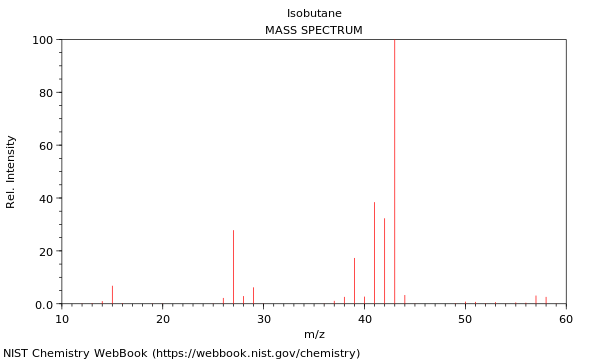
Clearly the peak at $\mathrm{m/z} = 27$ corresponds to the species $\ce{C2H3+}$, the "protonated acetylene".
I am interested in possible formations for its formation from the molecular ion $\ce{t-Bu... |
In the photoelectric effect, why we use momentum to calculate kinetic energy? |
If we know the wavelength of an ejected electron, why do we use the momentum equation ($Ek=\frac{p^2}{2m}$, wavelength = h/p). why can't we use $\frac{1}{2}mv^2$ instead, using $C/\lambda = v$?
Does it have something to do with particle-like or wave-like behavior? |
If we know the wavelength of an ejected electron, why do we use the momentum equation ($E_\mathrm k=\frac{p^2}{2m}$, $\lambda = h/p$). Why can't we use $\frac{1}{2}mv^2$ instead, using $c/\lambda = v$?
Does it have something to do with particle-like or wave-like behavior? |
> Atomic number: the number of protons in the nucleus of an atom, which is characteristic of a chemical element and determines its place in the periodic table.
Beta emission:
$$\ce{^14_6C -> ^14_7N + ^0_{-1}\beta}$$
**Why does emission of an electron increase the atomic number, when the atomic number is the nu... |
Why is solid sodium chloride white - and for that matter, why are the majority of salts white in solid form? |
Why is Sodium Chloride White? |
I have this reaction : $$\ce{K2SO4.Al2(SO4)3.24H2O -> K2SO4 + Al2O3 + 24H2O}$$
And I notice that while $\ce{Al2(SO4)3}$ becomes $\ce{Al2O3}$ it doesn't happen so with $\ce{K2SO4}$. Why ? |
I have this reaction:
$$\ce{K2SO4.Al2(SO4)3.24H2O -> K2SO4 + Al2O3 + 24H2O}$$
And I notice that while $\ce{Al2(SO4)3}$ becomes $\ce{Al2O3}$ it doesn't happen so with $\ce{K2SO4}$. Why? |
I have this reaction : $$\ce{K2SO4.Al2(SO4)3.24H2O -> K2SO4 + Al2O3 + 24H2O}$$
And I notice that while $\ce{Al2(SO4)3}$ becomes $\ce{Al2O3}$ it doesn't happen so with $\ce{K2SO4}$. Why ?
I guessed that it would have to do something with the oxygen affinity of K.
As $\ce{K2O}$ has less oxygen than $\ce{K2SO4}$
Am I... |
There's a problem from an old exam that I was trying to do. The original structure is given on the left and they want all the possible resonance forms that have closed-shell atoms (octet for S) and formal charges of -1, 0, or +1 on all atoms. There's then a bold note that says, "As always, you should remember that line... |
There's a problem from an old exam that I was trying to do. The original structure is given on the left and they want all the possible resonance forms that have closed-shell atoms (octet for S) and formal charges of -1, 0, or +1 on all atoms. There's then a bold note that says, "As always, you should remember that line... |
On the Standard Reduction Potentials of Half-Cells table, why does the Oxidizing agent have to be higher than Reducing agent for a redox reaction to spontaneously occur? |
Why does the Oxidizing agent have to be higher than Reducing agent for a redox reaction to spontaneously occur? |
There are no unpaired electrons in ZnO, making ZnO diamagnetic, but Aluminium has an unpaired electron, which would mean it is paramagnetic, so will ZnO become paramagnetic after it is doped with Aluminium?
|
Is ZnO still diamagnetic after you dope it with aluminium? |
Comprehensive Organic Synthesis, 2nd ed. writes (emphasis mine)<sup>1</sup>
> The reduction of oximes or oxime ethers and esters to primary amines is a useful synthetic transformation that is used as a substitute for direct reductive amination to convert ketones or aldehydes to primary amines. **The reaction involve... |
As I already noted in the comments, you should *always* and *consistently* use *correct* units. And also, the typography of the question itself was *terrible* but that’s not something you can influence. Anyway to get to answering the question …
---
I’m assuming that ‘grams of $\ce{MgBr2}$ t’ is supposed to mean s... |
The question goes:
> p-cresol (*4-methylphenol*), on reacting with chloroform
> ($\ce{CHCl3}$) in alkaline medium, gives [Riemer-Tiemann reaction][1].
> Which of the following is correct regarding the products and their
> abundance, i.e. mention the major and the minor product.
>A. 2-hydroxy-5-methyl be... |
The question goes:
> _p_-cresol (4-methylphenol), on reacting with chloroform ($\ce{CHCl3}$) in alkaline medium, gives [Riemer-Tiemann reaction][1]. Which of the following is correct regarding the products and their abundance, i.e. mention the major and the minor product.
>A. 2-hydroxy-5-methylbenzene-1,3-... |
> [![enter image description here][1]][1]
**My Attempt**
First a primary carbonation is formed and then methyl shift occurs to form a more stable secondary carbocation hence making (C) the major product, consequently I also arrived at answer (D) via hydride shift, and also option (A) would anyway be a possi... |
Hydrolysis of 4-chloro-3,3-dimethylbut-1-ene forms which products much faster than primary alkyl halides? |
There are no unpaired electrons in $\ce{ZnO}$, making $\ce{ZnO}$ diamagnetic, but Aluminium has an unpaired electron, which would mean it is paramagnetic, so will $\ce{ZnO}$ become paramagnetic after it is doped with Aluminium?
|
There are no unpaired electrons in $\ce{ZnO}$, making $\ce{ZnO}$ diamagnetic.
Aluminium has an unpaired electron, which would mean it is paramagnetic.
**Will $\ce{ZnO}$ become paramagnetic after it is doped with aluminium?**
|
I know we are supposed to use SI units and I know they are defined very well.
But does that mean that Imperial units of length/volume arent exact? AKA they dont have infinite significant figures in equations?
I couldint find it in the SI brochure
http://www.bipm.org/en/publications/si-brochure/table6.html
Im ... |
In Chemistry, is the amount of cubic inches in a cubic foot exact? |
The source you link to says that the spectrum was acquired in _negative mode_.
>The CID experiment on $\ce{[M - H]-}$ ion at m/z 359.08 identified as rosmarinic acid gave the two main constituents of rosmarinic acid, namely caffeic acid at m/z, 179.0 and the 2-hydroxy derivative of hydrocaffeic acid at m/z
197.0 as... |
I know we are supposed to use SI units and I know they are defined very well.
But does that mean that Imperial units of length/volume aren't exact? Don't they have infinite significant figures in the equations?
I couldn't find it in the [SI brochure](http://www.bipm.org/en/publications/si-brochure/table6.html).
... |
Is the amount of cubic inches in a cubic foot exact? |
Is my Chemistry book wrong on the significant figures in this exercise?
Why did they round to 0.16 instead of 0.1580 ?
>[![enter image description here][1]][1]
Also why did they round down the means?
>[![enter image description here][2]][2]
[1]: https://i.stack.imgur.com/rjjtG.jpg
[2]: https://i.stack.i... |
How to round correctly when calculating the average and standard deviation? |
Why would a metal corrode more in a lower concentration of nitric acid compared to a higher concentration sulphuric acid? Isn't sulphuric acid suppose to be a stronger acid compared to nitric acid? |
[![enter image description here][1]][1]
[1]: https://i.stack.imgur.com/Xojw0.jpg
In the reaction where the book says that concentrated $H_2SO_4$ at temperature $413$ K is used as catalyst, won't the primary alcohol dehydrate to form alkene? Concentrated sulphuric acid is a strong dehydrating agent, and is u... |
Formation of symmetrical ether or dehydration of primary alcohol? |
>Why is $\ce{NH_3}$ more electronegative than $\ce{CH3CN}$?
I tried to reason it out with the hybridization of Nitrogen in both the molecules. In $\ce{NH_3}$ nitrogen is $sp^3$ hybridized while in $\ce{CH3CN}$ nitrogen is $sp$ hybridized. Hence it follows that nitrogen in $\ce{CH3CN}$ is more electronegative as... |
I understand the problem of basis set superposition error (BSSE) and I know how the counterpoise correction for single point energies is calculated.
Today I found out that many software packages allow for counterpoise correction during optimization calculations, but how does this actually work, especially for metho... |
How is a counterpoise corrected geometry optimization done? |
>Why is $\ce{NH_3}$ more basic than $\ce{CH3CN}$?
I tried to reason it out with the hybridization of Nitrogen in both the molecules. In $\ce{NH_3}$ nitrogen is $sp^3$ hybridized while in $\ce{CH3CN}$ nitrogen is $sp$ hybridized. Hence it follows that nitrogen in $\ce{CH3CN}$ is more electronegative as compared ... |
[![enter image description here][1]][1]
[1]: https://i.stack.imgur.com/Xojw0.jpg
In the reaction where the book says that concentrated $\ce{H2SO4}$ at temperature $413\ \mathrm K$ is used as catalyst, won't the primary alcohol dehydrate to form alkene? Concentrated sulphuric acid is a strong dehydrating age... |
>Why is $\ce{NH_3}$ more basic than $\ce{CH3CN}$?
I tried to reason it out with the hybridization of Nitrogen in both the molecules. In $\ce{NH_3}$ nitrogen is $\mathrm{sp^3}$ hybridized while in $\ce{CH3CN}$ nitrogen is $\mathrm{sp}$ hybridized. Hence it follows that nitrogen in $\ce{CH3CN}$ is more electroneg... |
In what is known as the Riley oxidation, **alkenes** undergo oxidation with selenium dioxide to furnish either an allylic alcohol or an α,β-unsaturated carbonyl compound. The use of acetic acid as solvent stops the reaction at the allylic alcohol stage due to the formation of acetate esters.
One way to stop the furt... |
Why doesn't the SeO2 oxidation of ketones stop at the hydroxyketone stage? |
My textbook gives the formation of diethyl ether from dehydration of ethyl alcohol:
> $\ce{\underset{\text{ethyl alcohol}}{2C2H5-OH} ->[\text{conc.} H2SO4][413~K] \underset{\text{diethyl ether}}{C2H5-O-C2H5} + H2O}$
In the reaction where it is said that concentrated $\ce{H2SO4}$ at temperature $413~\mathrm K$ is ... |
In what is known as the Riley oxidation, **alkenes** undergo oxidation with selenium dioxide to furnish either an allylic alcohol or an α,β-unsaturated carbonyl compound. The use of acetic acid as solvent stops the reaction at the allylic alcohol stage due to the formation of acetate esters.
One way to stop the furt... |
Is this Newman projection energy profile correct? |
In what is known as the Riley oxidation, **alkenes** undergo oxidation with selenium dioxide to furnish either an allylic alcohol or an α,β-unsaturated carbonyl compound. The use of acetic acid as solvent stops the reaction at the allylic alcohol stage due to the formation of acetate esters.
One way to stop the furt... |
>Why is $\ce{NH_3}$ more basic than $\ce{CH3CN}$?
I tried to reason it out with the hybridization of nitrogen in both the molecules. In $\ce{NH_3}$ nitrogen is $\mathrm{sp^3}$ hybridized while in $\ce{CH3CN}$ nitrogen is $\mathrm{sp}$ hybridized. Hence it follows that nitrogen in $\ce{CH3CN}$ is more electroneg... |
Is this Newman projection energy profile for 2,3-dihydroxypropanal correct? |
In the following peptide:
[![enter image description here][1]][1]
I want to know the net charge of the peptide at pH=1.
According to me the as the solution is acidic so every nitrogen will get protonated.
Hence the number of charge = number of Nitrogen atom
Am I doing it in correct way?
[1]: htt... |
My chemistry books details out both the oxidizing and reducing properties of Hydrogen Peroxide($H_{2}O_{2}$)
For e.g.
*Reducing Properties* :
- It reduces CL to HCL
- It reduces $Ag_{2}O$ to $Ag$
- It reduces Pot. Ferricyanide to FerroCyanide
etc...
***General Reducing EQN:***
In **acidic** med... |
When shall Hydrogen Peroxide acts as either Reducing agent or Oxidising Agent? |
How To find which organic compound gives effervescence when reacts with NaHCO3 ? Specially in case of phenols which one reacts and which does not? According to my prof. All Acids stronger than H2CO3 evolve CO2 when treated with NaHCO3. But I didn't get it . How to Find which acid is stronger than H2CO3. Specially when ... |
This is a continuation of [this question][1] because the first thing that came in my mind is that why potassium phosphate in this reaction is $\ce{KH2PO4}$ and not $\ce{K3PO4}$?
In the wikipedia article of [phosphate ion ($\ce{PO4^3-}$)][2], it is written that:
> Aqueous phosphate exists in four forms. In strongl... |
When does hydrogen peroxide acts as a reducing agent and when does it act as an oxidising agent? |
How To find which organic compound gives effervescence when reacts with $\ce{NaHCO3}$? Specially in case of phenols, which one reacts and which does not? According to my professor, all acids stronger than $\ce{H2CO3}$ evolve $\ce{CO2}$ when treated with $\ce{NaHCO3}$. But I do not understand how to find which acid is s... |
When optical activity is taught it is done in terms of single molecules. But when it is actually measured it is done on a large collection of such molecules. So, how does the asymmetry manifest itself as the rotation of plane polarised light. Is it a collective effect of all the molecules put together in a sample or do... |
Is optical activity of a given compound a statistical picture? |
This is a follow up of [this question][1](*though unanswered*).
Chromyl chloride test is by far the best test to determine the presence of chloride ions in a salt because no analogous compounds are formed with fluorides, bromides, iodides and cyanides, so this test is therefore specific for chlorides. This test is c... |
How To find which organic compound gives effervescence when reacts with $\ce{NaHCO3}$? Specially in case of phenols, which one reacts and which does not? According to my professor, all acids stronger than $\ce{H2CO3}$ evolve $\ce{CO2}$ when treated with $\ce{NaHCO3}$. But I do not understand how to find which acid is s... |
I read that completety discharging an Li-Ion-Battery is a very bad idea, because it will lose plenty of capacity. But why?
I know that the reaction (fot the LiFePO4 battery) is:
$$ \ce{LiFePO4 + C6 <=>[1 e-] FePO4 + LiC6 } $$
So at a complete discharge, we only have our electrodes made of $\ce{LiFePO4}$ and $\ce... |
Why does a complete discharge destroy a Li-Ion-Battery? |
Solubility of which among the following substances in **water** increases slightly with rise in temperature?
(a)$\ce{KBr}$
(b)$\ce{KCl}$
(c)$\ce{KNO3}$
(d)$\ce{NaNO3}$
Answer is (b).
I don't know why.
According to me if temperature is increased then Bonds between any of these four must be broken due to supplied ... |
Whose solubility increases with increase in temperature? |
I know there are more questions about this on the forum, but I was just wondering: when we mix both solutions, would we have to consider the equilibriums corresponding to *$pKa_1$* and *$pKa_2$*, or just the latter? |
Calculating the pH of a mixture of Na2HPO4 and Na3PO4? |
Which chemical reaction to use to remove charbon/peat from sieved earth/gravel? |
I know there are more questions about this on the forum, but I was just wondering: when we mix both solutions, would we have to consider the equilibriums corresponding to *$pKa_2$* and *$pKa_3$*, or just the latter? |
Example question: m*l*=+5 what is the lowest value of n?
I can't seem to remember the easy trick to finding the relationship if someone could explain that would be great. -Thank you in advance. |
What is the relationship between the values of n and ml? |
I know there are more questions about this on the forum, but I was just wondering: when we mix both solutions, would we have to consider the equilibria corresponding to $\mathrm{p}K_\mathrm{a2}$ and $\mathrm{p}K_\mathrm{a3}$, or just the latter? |
I have a `.car` file that contains dimensions for the unit-cell of a crystal material I'm working with:
`PBC 27.1979 27.1979 15.4999 90.0000 90.0000 120.0000 (P1)
`
That's the a,b,c lengths and angles.
I need to convert this information into basis vectors in cartesian space, e.g.
`basis1 27.1979... |
Subsets and Splits
No community queries yet
The top public SQL queries from the community will appear here once available.