
instruction stringlengths 15 21.8k |
|---|
In my book there's a question:
>> Does $\ce{H2}$ shows allotropy ? Enlist its allotropes and their application?
I pondered over different way Hydrogen can be arranged(I don't know but I have weak intuition that hydrogen bonding can play a role) but to no resolute
After awhile I googled to find different answe... |
In my book there's a question:
> Does $\ce{H2}$ shows allotropy ? Enlist its allotropes and their application?
I pondered over different way Hydrogen can be arranged(I don't know but I have weak intuition that hydrogen bonding can play a role) but to no resolute
After awhile I googled to find different answer... |
I am watching videos on Khan Academy in order to go over redox reactions (a really weak area for me.) In Sal's video, "[Oxidation state trends in periodic table][1]" at 7:10, he says:
> If you had to pretend this was an ionic bond, then maybe this hydrogen
> would fully lose an electron, so it would get an oxidatio... |
I know that [anthocyanins][1] are a class of compounds responsible for the purple colors found in flower petals.
> Anthocyanins (also anthocyans; from Greek: ἀνθός (anthos) = flower + κυανός (kyanos) = blue) are water-soluble vacuolar pigments that may appear red, purple, or blue depending on the pH. (same referenc... |
[Here][1] is a link to the full *Standard Methods for the Examination of Water and Wastewater* method 3500-Fe for determining ferrous, ferric and total iron in aqueous solutions.
Here is an excerpt describing the principle of the procedure:
> "Principle:
Iron is brought into solution, reduced to the ferro... |
How do i find the percentage yield for this reaction? |
A general acid-base reaction is one of the kind $(1)$.
$$\ce{\underset{\text{acid}}{HA} + \underset{\text{base}}{B} <=> \underset{\text{conj. acid}}{HB+} + \underset{\text{conj. base}}{A-}}\tag{1}$$
All that the acid needs to react as an acid is some hydrogen atom bonded to something, and all that the base needs ... |
In the wikipedia article ["Step-growth Polymerization/Kinetics][1]", it is stated that:
> The simple esterification is an acid-catalyzed process in which the
> protonation of the acid is followed by interaction with the alcohol to
> produce an ester and water
My question is: How are acids even protonated? Are... |
How or why can carboxylic acids be protonated? |
The yield is typically calculated according to equation $(1)$.
$$\text{yield} = \frac{\text{actual amount of substance obtained}}{\text{theoretical amount of substance to be obtained}}\tag{1}$$
(Whether it is given in percent or as a fractional number is not important, but percentages are the usual value.) So for... |
How do I find the percentage yield for this reaction? |
Preamble:
Now, I am aware that directly editing the inchikey is, generally speaking, a bad idea, but...
Can I just change the 2nd block of an inchikey to "UHFFFAOY" to get the correct main-layer-only version of the inchikey of that molecule?
example where this seems to be the case (from pubchem):
BSAIUMLZVGU... |
I am working on error analysis of some of my measurements and have stumbled upon an issue with the propagation of error. According to this reading,
> The uncertainty of the average acidity ($\Delta_\text{acid}H_\text{avg}$) was calculated as the root sum square of the random and systematic errors. For example, for t... |
Bolt head corrosion in soup. Toxic? Zinc? Cadmium? |
I am a bit confused on buffers:
If I have a solution with a weak acid (say $\ce{NH4}$) and its conjugate weak base ($\ce{NH3}$), I have a buffer solution (in $\ce{H2O}$).
> $$\ce{NH4 <--> NH3 + H+}$$
But now If I add a strong base to my solution ($\ce{OH-}$ for example) **I get that my pH will go up but I don'... |
As @Amritansh Singhal said, $\ce{H2}$ would be produced at the cathode from the electrolysis of both the water and some from the acetic acid (main ingredient of vinegar after water) and $\ce{O2}$ would accordingly be produced at the anode.
The question in your comment "Would it create ethane?" is where some more i... |
[You can test for cadmium at home][1], but the ~US$30 price for the test kit (with 1,5-diphenylcarbazone) is probably more than the soup is worth, and the test might not be sensitive enough to detect sub-acute toxic amounts of Cd.
Considering the [highly toxic nature of the metal][2], you might check with your famil... |
- What do you want?
If you're just looking for a source of potassium ions you could just buy $\ce{KCl}$ or some other compound, they're relatively cheap if not pro analysis. If you actually want to test for $\ce{K+}$:
- What else do you know about the product?
Tests are completely different for different amou... |
This may not be quite the right forum for this question, but please help me if you can.
I recently repaired the lid of my grandma's crockpot using a bolt I found in a miscellaneous fastener box in the garage. I've been using the crockpot quite a lot since then, and I just noticed that the bolt head is corroding with... |
Is the bond Cs-F more polar or C-F? I am not sure because I thought Cs-F is classified as an ionic bond, and C-F as a polar covalent one. Based on electro negativity values, Cs-F has the highest electronegativity difference, so would that be the most polar bond? |
What is more polar? |
I tried reacting Copper Sulfate with Sodium Hydroxide to get Copper Hydroxide, which should precipitate. In terms of an equation: $$\ce{2NaOH + CuSO4 -> Cu(OH)2(s) + Na2SO4}$$ I looked on Google Images, and the color of Copper Hydroxide is light-blue, but something interesting happened when I mixed these two solutions:... |
Is the bond $\ce{Cs-F}$ more polar or $\ce{C-F}$ ? I am not sure because I thought $\ce{Cs-F}$ is classified as an ionic bond, and $\ce{C-F}$ as a polar covalent one. Based on electronegativity values, $\ce{Cs-F}$ has the highest electronegativity difference, so would that be the most polar bond? |
I have been teaching my cousin grade 10 science.
Unfortunately, I have never taken chemistry before and am unsure how to do these type of questions.
How does one go about approaching this question? |
Why do hydrogen and helium have different emission spectra? I thought that emission spectra were the result of electrons 'jumping' from one energy level to the next - since hydrogen and helium both have electrons on n=1, l=0 and only there, why are their emission spectra different? |
Emission Spectrum of Hydrogen and Helium? |
I'm currently trying to make incense paper. I've been instructed to mix ethanol 90% with potassium nitrate ($\ce{KNO3}$). As ethanol 90% is hard to get where I'm located I'm currently using methylated spirits (95% alcohol) as an alternative. The $\ce{KNO3}$ however is insoluble with the this. If I dissolve the $\ce... |
I am studying biochemistry and I have been asked by my teacher to find a procedure for separating cellulose, starch, the peptide oxytocin (9 a.a) and palmitic acid ($\ce{C16}$) using gel filtration chromatography. I have some ideas about using Fehling's test to tell the cellulose from the starch and the peptide since t... |
I am studying biochemistry and I have been asked by my teacher to find a procedure for separating cellulose, starch, the peptide oxytocin (9 a.a) and palmitic acid ($\ce{C16}$) using gel filtration chromatography. I have some ideas about using Fehling's test to tell the cellulose from the starch and the peptide since t... |
I'm using calcium carbonate ($\ce{CaCO3}$) in apple juice to reduce the acidity of the juice. Once the $\ce{CaCO3}$ reacts with the apple juice and raises the pH, the juice is left cloudy in color BUT has the desired pH of 3.4. I need a way to extract (separate) the $\ce{CaCO3}$ precipitate from the apple juice which... |
I'm using calcium carbonate ($\ce{CaCO3}$) in apple juice to reduce the acidity of the juice. Once the $\ce{CaCO3}$ reacts with the apple juice and raises the pH, the juice is left cloudy in color BUT has the desired pH of 3.4. I need a way to extract (separate) the $\ce{CaCO3}$ precipitate from the apple juice which... |
We were estimating dissolved $\ce{CO2}$ in water by [American Public Health Association (APHA) method][1]. It was a titrimetric method using phenolpthalein indicator.
Titrant used was $\ce{NaOH}$ and analyte was sample water.
Reactions involved:
$\ce{CO2 g ⇌ CO2 aq}$
$\ce{CO2 aq + H2O ⇌ H2CO3 ⇌ H+ + HCO3^2-... |
Sorry for deleting a similar question few minutes ago.
My question is when η1 $\ce{C5H5-}$ acts as a ligand, whether the donor carbon becomes $sp^3$ hybridized and it would be sigma donor through sigma orbitals. Or, it is $sp^2$ and the lone pair is donated through a pi orbital, it would be a sigma donor through pi or... |
Sorry for deleting a similar question few minutes ago.
When $\eta_1$ $\ce{C5H5-}$ acts as a ligand, does the donor carbon become $sp^3$ hybridized, and would this be a sigma donor through sigma orbitals? Or, is it $sp^2$ where the lone pair is donated through a pi orbital, making it a sigma donor through a pi orbital?... |
I tried reacting copper sulfate with sodium hydroxide to get copper hydroxide, which should precipitate, according to the following equation:
$$\ce{2NaOH + CuSO4 -> Cu(OH)2(s) + Na2SO4}$$
I looked on Google Images, and the color of copper hydroxide is light-blue, but something interesting happened when I mixed thes... |
What reactions occur when mixing copper sulfate and sodium hydroxide? |
When $\ce{\eta^1-C5H5-}$ acts as a ligand, does the donor carbon become $sp^3$ hybridized, and would this be a sigma donor through sigma orbitals? Or, is it $sp^2$ where the lone pair is donated through a pi orbital, making it a sigma donor through a pi orbital?
The second option seems much more likely as the ligand... |
It's surprisingly hard to find an answer to this. One book I found referenced a method wherein one would simply mix (with a mortar I assume?) equal (another source said 40:60) portions of Al2O3 and KF and that's it. |
What gives it that salty taste? I'm wondering if it's the $\ce{Na+}$ or the $\ce{Cl-}$. I know that [$\ce{KCl}$ also tastes salty, and other salts have different flavours][1], but where does the saltiness in $\ce{NaCl}$ come from? I mean, it makes sense that it's the $\ce{Cl-}$ ion, but it could also be that $\ce{K+}$... |
Were were estimating dissolved $\ce{CO2}$ in water by American Public Health Association method. It was a titrimetric method using phenolphthalein indicator.
Titrant used was $\ce{NaOH}$ and analyte was sample water.
Our instructor said that on adding phenolpthalein if the water sample turns pink prior to the e... |
This was a question which came in a objective type examination.
Which of the following have $\lambda^\infty$( molar conductivity at infinite dilution )more than $\ce{KCl}$?
A)$\ce{CH_3COOH}$
B)$\ce{HCL}$
C)$\ce{NaOH}$
D)None of the above
I was not provided any experimental data to arrive at the answ... |
Aditya is right that calcium is $\ce{Ca^{2+}}$ in both salts so calcium isn't changing its oxidation number. In fact there is no redox reaction at all. The reaction is:
$\ce{Ca3(PO4)2 + 2H^+ -> 2CaHPO4 + Ca^{2+}}$
So for one mole of the $\ce{Ca3(PO4)2}$ reacts with 2 moles of $\ce{H+}$ so 1/2 mole of $\ce{Ca3(P... |
Let's say we need to measure the standard electrode potential of a zinc electrode dipped in an aqueous solution of $\ce{ZnSO4}$. To do this, we use the standard hydrogen electrode(SHE)-the reference electrode-as the anode and the zinc electrode as the cathode, and measure the emf of the cell.
The electrolyte corresp... |
In a reaction, calcium phosphate is producing calcium hydrogen phosphate. Then we have to find the equivalent weight of calcium phosphate in this process.
I tried as:
Oxidation number of calcium in calcium phosphate is $\frac43$ and in calcium hydrogen phosphate it is $1.$
So the equivalents of calcium phos... |
Some texts suggest Sodium hydroxide as the group reagent for zero group.
Some says there's no group reagent for zero group
[![NCERT Lab Manual XII][1]][1]
[1]: https://i.stack.imgur.com/MXLGb.png
What is correct? |
What is the group reagent for zero group in salt analysis? |
I want to model a reaction catalysed by periclase ($\ce{MgO}$) using DFT.
I have a good guess on the transition state (TS) of the reaction that goes in gas phase/solvent (produced using [MOPAC][1]).
The proposal for this reaction goes by the [Eley–Rideal mechanism][2] and I have a good guess on how the reactant ads... |
Recently, I have been wondering about justifying the notion on how some common acids (e.g. carboxylic acids) are themselves weaker bases than water to the point that we don't usually consider them to act as base. To begin, we use the formula for $pK_b$ and consider for example acetic acid
$$pk_b=-log \left(\frac{a_{... |
Recently, I have been wondering about justifying the notion on how some common acids (e.g. carboxylic acids) are themselves weaker bases than water to the point that we don't usually consider them to act as base. To begin, we use the formula for $\mathrm{p}K_\mathrm{b}$ and consider for example acetic acid
$$\mathrm... |
The "Group reagent" is a cocktail of reagents that serves as a *prima facie* indication of a particular cation, characterized by the **formation of a precipitate** during a *positive* test/result and...well... no precipitation in the event of a negative test/result.
You often come across use of "Group reagents" in ... |
Some texts suggest sodium hydroxide is the group reagent for the zero group.
However, some say there's *no* group reagent for zero group
[![NCERT Lab Manual XII][1]][1]
[1]: https://i.stack.imgur.com/MXLGb.png
So which one's right? |
What is the group reagent for the zero group (ammonium cation) in inorganic salt analysis? |
My textbook (Chapter: *The d- and f- Block Elements*) makes an interesting assertion, however, without any reason to back it up.
> Paramagnetism arises from the presence of unpaired electons, each such electron having a magnetic moment associated with its spin angular momentum and orbital angular momentum. **For the... |
Why isn't the orbital angular momentum also considered while calculating the magnetic moments 3d transition elements? |
*Aqua regia* (Latin: *Royal Water*) is one of the strongest acids known in Chemistry, and is capable of dissolving gold and platinum.
My copy of the *Oxford* science dictionary goes on to say (under the entry: Aqua regia) that metallic silver does **not** dissolve in aqua regia. It does not mention any *other* exam... |
What metals can't aqua regia dissolve? |
We were estimating dissolved $\ce{CO2}$ in water by [American Public Health Association (APHA) method][1]. It was a titrimetric method using phenolpthalein indicator.
Titrant used was $\ce{NaOH}$ and analyte was sample water.
Reactions involved:
$\ce{CO2 g ⇌ CO2 aq}$
$\ce{CO2 aq + H2O ⇌ H2CO3 ⇌ H+ + HCO3^2-... |
I want to create some Boric Acid with Borax in the following reaction:
$$\ce{Na2B4O7·10H2O + 2 HCl → 4 BH3O3 + 2 NaCl + 5 H2O}$$
However as you can see, the leftover solution will contain a mixture of Boric Acid, Sodium Chloride and Water. Both chemicals are soluble in cold water so neither will want to immediat... |
*Aqua regia* (Latin: *Royal Water*) is one of the strongest acids known in Chemistry, and is capable of dissolving gold and platinum.
My copy of the *Oxford* science dictionary goes on to say (under the entry: Aqua regia) that metallic silver does **not** dissolve in aqua regia. It does not mention any *other* exam... |
Even though depictions of $\eta^1$-coordination might suggest a $\mathrm{sp^3}$-carbon donating, there is little evidence, that it actually is. Taking the example you have presented in your answer from Casey *et. al.*\[1\] I have run a geometry optimisation to obtain molecular orbitals at the DF-BP86/def2-SVP leve... |
> 1. What metals (elemental, forget alloys) are neither attacked by nor dissolved in (freshly prepared) aqua regia?
[Wikipedia article of aqua regia][1] gives the answer (thank you @Ian Bush):
> However, aqua regia does not dissolve or corrode silver, titanium,
> iridium, ruthenium, rhenium, tantalum, niobium, h... |
*Aqua regia* (Latin: *Royal Water*) is one of the strongest acids known in Chemistry, and is capable of dissolving gold and platinum.
My copy of the *Oxford* science dictionary goes on to say (under the entry: Aqua regia) that metallic silver does **not** dissolve in aqua regia. Morever it does not mention any *oth... |
`what helps a sliced fruit or vegetables oxidize slower ?`
`A need of chemical compound to use for the slowing of oxidation.. we have tried using a lemon juice it actually helped by 15 mins.however it change the quality of the vegetable after being dip for 10 mins and ` **the problem is how do we slow down the oxid... |
what helps a sliced fruit or vegetables oxidize slower? |
I want to model a reaction catalysed by periclase ($\ce{MgO}$) using DFT.
I have a good guess on the transition state (TS) of the reaction that goes in gas phase/solvent (produced using [MOPAC][1]).
The proposal for this reaction goes by the [Eley–Rideal mechanism][2] and I have a good guess on how the reactant ads... |
I want to create some boric acid with borax in the following reaction:
$$\ce{Na2B4O7·10H2O + 2 HCl → 4 BH3O3 + 2 NaCl + 5 H2O}$$
However as you can see, the leftover solution will contain a mixture of boric acid, sodium chloride and water. Both chemicals are soluble in cold water so neither will want to immediat... |
What helps a sliced fruit or vegetables oxidize slower ?
A need of chemical compound to use for the slowing of oxidation.. we have tried using a lemon juice it actually helped by 15 mins.However it change the quality of the vegetable after being dip for 10 mins and (*the problem is how do we slow down the oxidatio... |
What helps a sliced fruit or vegetables oxidize slower ?
A need of chemical compound to use for the slowing of oxidation... we have tried using a lemon juice it actually helped by 15 mins. However it change the quality of the vegetable after being dip for 10 mins and (*the problem is how do we slow down the oxidatio... |
What helps a sliced fruit or vegetables oxidize slower? |
So, my book says that transition elements have higher enthalpies of atomization than other elements (say s- or p- block) because of stronger metallic bonding, primarily due to large number of unpaired electrons in the d-orbitals.
Now, if that is the case, then the atom. energy for nickel should be less than Fe... |
Keep in mind
=
The answer will depend upon the reaction conditions. Most importantly,
- physical state of the metal: porosity, degree of comminution;
- temperature;
- mechanical aggravation of metal surface during reaction.
Often times a chemistry text mentions that *no reaction occurs*. The reaction mig... |
[You can test for cadmium at home][1], but the ~US$30 price for the test kit (with 1,5-diphenylcarbazone) is probably more than the soup is worth, and the test might not be sensitive enough to detect sub-acute toxic amounts of Cd.
Considering the [highly toxic nature of the metal][2], you might check with your famil... |
[![NAD+ to NADH][1]][1]
[1]: https://i.stack.imgur.com/78PWu.jpg
During reduction the pie electrons shift such that the N+ is reduced to N and a '+'ve charge grows on carbon 3 (as labelled) to which an H+ along with 2 electrons are added. Thus we get an NADH molecule as shown in the picture.If this is how the r... |
[![NAD+ to NADH][1]][1]
During reduction the pi electrons shift such that the N+ is reduced to N and a '+'ve charge grows on carbon 3 (as labelled) to which an H+ along with 2 electrons are added. Thus we get an NADH molecule as shown in the picture. If this is how the reaction happens, then why doesn't the hydrog... |
If we have reactants A and B and the reaction havent started yet, are those reactants our "system" ? and after the reaction takes place, our products are also the system ? Basically the term system refers to all the chemicals we have in a reaction, am i right ? |
What exactly does a "system" include in chemistry? |
Can using isopropyl alcohol to clean a zirconium oxide ceramic knife harm or dissolve/degrade it? |
Can using isopropyl alcohol on a zirconium oxide ceramic knife harm or dissolve/degrade it? |
This [page][1], which depicts the molecular term symbols for the $\ce{O2}$ and *$\ce{O2-}$ (Edit: Mistaken on $\ce{O2-}$)* molecules, perhaps best summarizes the full scope of my questions. In general, I don't understand how a specific electron configuration relates to either +,- or both reflections.
1. Why does the... |
[![NAD+ to NADH][1]][1]
During reduction the pi electrons shift such that the $\ce{N+}$ is reduced to $\ce{N}$ and a '+'ve charge grows on carbon 3 (as labelled) to which an $\ce{H+}$ along with 2 electrons are added. Thus we get an NADH molecule as shown in the picture. If this is how the reaction happens, then w... |
So, my book says that transition elements have higher enthalpies of atomization than other elements (say s- or p- block) because of stronger metallic bonding, primarily due to large number of unpaired electrons in the d-orbitals.
Now, if that is the case, then the atomization energy for $\ce{Ni}$ should be les... |
Keep in mind
=
The answer will depend upon the reaction conditions. Most importantly,
- physical state of the metal: porosity, degree of comminution;
- temperature;
- mechanical aggravation of metal surface during reaction.
Often times a chemistry text mentions that *no reaction occurs*. The reaction mig... |
Here is the somewhat weak explanation given by [Wikipedia][1]:
> Sodium sulfate is a neutral salt: its aqueous solutions exhibit a pH
> of 7. The neutrality of such solutions reflects the fact that sulfate
> is derived, formally, from the strong acid sulfuric acid. Furthermore,
> the Na+ ion, with only a single ... |
I was reading an article about a chemical reaction, and I came across the phrase:
> The oxygen atom at this point has three bonds and has a net positive charge
How can this happen? Oxygen has 2 missing electrons in the valence shell. Therefore it can only form 2 bonds at the most, if both are sigma bonds.
Doe... |
How can oxygen have three bonds? |
Are these Anti aromatic/aromatic or non aromatic?
1.
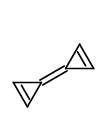
Here, if we were to consider the resonating structure(s) with charge separation
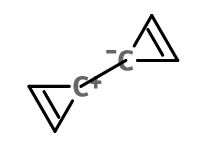
One ring is aro... |
> How can i determine if there will be a reorganization of the substract to stabilize the C+ in a organic reaction?
Consider an Sn1 or E1 organic reaction, when there is a formation of a C+ during the process. Sometimes, the molecule will reorganize (like one hydrogen will "jump" to another carbon, or a CH3 will do it... |
How can i determine if there will be a reorganization in OR? |
> How can I determine if there will be a reorganization of the substrate to stabilize the $\ce{C+}$ in a organic reaction?
Consider an S$_N$1 or E1 organic reaction, when there is a formation of a $\ce{C+}$ during the process. Sometimes, the molecule will reorganize (like one hydrogen will "jump" to another carbon, ... |
How can I determine if there will be a reorganization in organic reaction? |
How can I remove crystals of potassium chloride from a mineral composed of manganese dioxides?
Hey, i'm a high school student trying to do a good cryptomelane sample to use in my scientific project.
I was able to develop the cryptomelane, but after some necessary processes, the mineral was crusted with crystals of p... |
I know charcoal can smoulder in an incomplete combustion to produce carbon monoxide so I assume diamond also can. If it's heated to a sufficiently high temperature, will the reaction produce enough heat to sustain the full combustion reaction all the way to carbon dioxide even in air that's only 21°C. If so, does the r... |
Can diamond undergo a self sustaining combustion reaction all the way to carbon dioxide? |
I am trying to do a dilution where I know I have 0.749 g/ mL and I want to use this concentration to calculate the grams of aspirin in each 100 mL solution. I am specifically worried about the units. I want grams out. Is it valid to do the following?
One:
$$C1V1=C2V2$$
$$(0.749 g)(1 mL)=(C2 g)(100mL)$$
$$C2=0.0074... |
How to use C1V1=C2V2 How do the units work? |
Subsets and Splits
No community queries yet
The top public SQL queries from the community will appear here once available.