
instruction stringlengths 15 21.8k |
|---|
Can someone explain what reaction is going on here?
I looked in my list of mechanisms learnt: I find nothing related!
<a href="https://i.stack.imgur.com/4LfQD.jpg"><img src="https://i.stack.imgur.com/iMRqb.png" title="Hosted by imgur.com" /></a> |
I was looking at substances that produce the highest flame temperatures upon combustion. I note that the equations for combustion are producing carbon monoxide rather than carbon dioxide.
[1]: http://oxygen.atomistry.com/cyanogen_flame.html
$\ce{(CN)2 + O2 = 2CO + N2}$
Why isn't carbon dioxide produced? Wh... |
Why is carbon monoxide the product in reactions that produce high flame temperatures? |
You need to enforce the boundary conditions of your problem to evaluate the integral. I think that might be the material point here.
But let's start at the beginning: You have the rate equation
\begin{align}
- \frac{\mathrm{d}c_{\mathrm{A}}}{\mathrm{d}t} = k c_{\mathrm{A}} c_{\mathrm{B}} \ .
\end{align}
... |
The fundamental misunderstandings here are related to two concepts:
1. Conservation (atoms are conserved, molecules are not)
2. A mole is just a number (like the chemist's dozen)
I would start with conservation, then move on to moles.
**Explaining why atoms are conserved, but not moles**
For second-graders... |
Let's say a room is filled with butane, I then throw a cigarette into the room. What happens to the atoms/molecules of the butane when they are in contact with the heat from the cigarette? |
What really happens atomically in an explosion? |
I found a sentence in book which states the reverse step of this reaction ( I forgot what was it!) has the faster step as rate determining .
Even [Rate determining step-Wikipedia](http://en.wikipedia.org/wiki/Rate-determining_step) states:
>In chemical kinetics, the rate (or velocity) of a reaction mechanism ... |
Can in any case the faster step of the reaction be rate determining? |
I am told that because of the poor overlap between a chlorine atom and a carbon atom and chlorine's relatively high electronegativity, there is a strong partial positive character on the central carbon in an acyl chloride molecule.
This makes sense. I am then told that because of this high partial positive characte... |
i hope i can get some help from experts doing calculation in my chemical experiment since unfortunately i don't have chemical background.
the measurement is for gold nano rods in solution that we ordered from company. in the product sheet it was mentioned that the single nano rods dimensions is: 40 nm length, 10 nm d... |
chemical calculation? |
What is a ballpark figure for the difference in energy for an atom that follows Hund's rule vs one that has two electrons with opposite spins? I'd be interested to know carbon and nitrogen. Is there a bigger difference when there are two electrons with one spin and one electron with the opposite spin vs two electrons... |
What is the magnitude of coupling energy? |
Can ionic character also be construed as a poor sharing of electrons rather than simply as the taking of electrons? For example, NaCl is ionic, and that's because the chlorine takes sodium's one valence electron. On the other hand, C-Br and C-I are sometimes referred to as ionic (at least informally).
Is it proper ... |
Let's consider a typical agarose gel electrophoresis experiment. An appropriate quantity (not so much that it is overloaded, but not so little that it cannot be visualized) of linear DNA pieces with identical sequence and chemical structure is loaded onto the gel, and constant voltage is applied for a given time. I sus... |
What is the formula for migration rate of DNA in agarose gel electrophoresis? |
I'm starting to prepare for my research project on photoelectrochemical (PEC) splitting of water into H and O using (F doped) titanium dioxide as the photoanode. I've been unsuccessfully searching in the literature for any particular reason(s) which could make PEC better than other methods of photocatalytic water split... |
For a solution such as:
Luria-Bertani (LB) Broth:
10g tryptone
5g yeast extract
10g of NaCl (mw 58.44)
q.s. to 1L, pH to 7.2, autoclave.
I would like to make a bulk amount of premixed powder, ie combine 1kg tryptone, 500g yeast extract and 1kg NaCl in a big bottle, shake it and keep it on shelf. Whenever ... |
I am trying to find visual ways to demonstrate water contaminants. For example, chlorine reacts to N,N-diethyl-p-phenyldiamine (DPD), forming a magenta color. The chemical doesn't need to be accurate, as this is more of pass-fail test of the water. **What reacts with fluoride to provide similar results?** |
There are as classified in the Atkins textbook 4 different timescales on material characterization:
a)Time during which a quantum of radiation or a particle can interact with a molecule.
b)Lifetime of excited state of a molecule.
c)Minimum lifetime species must have to be seen as a distinct species.
d)Total time of... |
how to determine timescale with characterization methods? |
> Primary Cells - pH changes during discharge
**`Alkaline Cell:`**
**Manganese Dioxide Zinc Alkaline Cell**
**Anode (-)**
Zn(s) + 2OH−(aq) → ZnO(s) + H2O(l) + 2e−
**Cathode (+)**
2MnO2(s) + H2O(l) + 2e− → Mn2O3(s) + 2OH−(aq)
**Overall**
Zn(s) + 2MnO2(s) → ZnO(s) + Mn2O3(s)
- OH- ions are consum... |
> Primary Cells - pH changes during discharge
**`Alkaline Cell:`**
**Manganese Dioxide Zinc Alkaline Cell**
**Anode (-)**
$\ce {Zn(s) + 2OH^{−}(aq) → ZnO(s) + H2O(l) + 2e^{−}}$
**Cathode (+)**
$\ce {2MnO2(s) + H2O(l) + 2e^{−} → Mn2O3(s) + 2OH^{−}(aq)}$
**Overall**
$\ce {Zn(s) + 2MnO2(s) → ZnO(s) + Mn... |
Do attributes such as heat of formation have to be found through experimentation or can they be calculated based on the attributes of the bonds and the atoms involved? |
Can the thermodynamic information of a compound be calculated or must it be found emperically? |
The equation to measure work is $$w=F\cdot D$$
However, the equation for force is $$F=(-P \cdot A)$$
Plugging this into the work equation we have:
$$w=-P\cdot A\cdot D$$
My question is, why is pressure negative in force? |
How to photolyze anything? |
Do Dark Lines on Porcelain Dishes Indicate Usage of Aluminium for the Color? |
What amount of oxidization is required to refer to some coal as oxidized coal, and how long does it take for coal to become oxidized?
I have found a research paper from 1940 that I don't have access to [here.][1]
[1]: http://pubs.acs.org/doi/abs/10.1021/ie50362a021?journalCode=iechad
But other than that, I... |
What amount of oxidization is required to refer to some coal as oxidized coal, and how long does it take for coal to become oxidized in temperatures of roughly 25-40C?
I have found a research paper from 1940 that I don't have access to [here.][1]
[1]: http://pubs.acs.org/doi/abs/10.1021/ie50362a021?journalCod... |
Imagine the police (or army or whoever's job is that) found out that some maniac placed a lot of primary explosives under a building. They have evacuated the building and deactivated the trigger.
What now? You have a barrel full of Acetone peroxide (terrorist's favourite explosive). You move it - it might blow.
E... |
How do we get rid of dangerous explosive acetone peroxide and nitroglycerine? |
All the element with atomic number more than 100 are given temporary name by IUPAC according to nomenclature rules. (101 was temporarily named as Unnilunium) and then they give permanent name (101 is now known as Mendelevium).
But why IUPAC give temporary name to elements?
|
According to the [source][1] mentioned in the comments to your question, the first step is indeed nucleophilic substitution of the OH group by $\ce{I-}$, faciliated by protonation of the alcohol. For the second step ($\ce{HI}$ reduction), a radical species was found as an intermediate, and therefore a reduction by sing... |
I know that in an oxide oxygen's oxidation number is -2,in a peroxide oxygen's oxidation number is -1 and in a superoxide oxygen's oxidation number is -1/2. So, how will I be able to detect that any compound is oxide or peroxide or superoxide?
For example, to get the oxidation number of **Mn** in **KMnO4** how will ... |
Is there any way to determine if the compound is oxide or peroxide or superoxide? |
Well, according to proton-electron ratio O- should be bigger than F- . But what about the charge/electron density in F . Will it not affect the size of atom of F- ?? |
Who is bigger guy F- or O-? |
You need to enforce the boundary conditions of your problem to evaluate the integral. I think that might be the material point here.
But let's start at the beginning: You have the rate equation
\begin{align}
- \frac{\mathrm{d}c_{\mathrm{A}}}{\mathrm{d}t} = k c_{\mathrm{A}} c_{\mathrm{B}} \ .
\end{align}
... |
I’m an undergraduate Chemistry student and I’m currently writing my dissertation about semi-empirical methods, particularly PM7, applied to protein structure refinement from X-ray structure. Could you recommend me any book/article about it?
Thanks in advance! |
I don`t know much about analytical chemistry but I need to determine the chemical structure of a water soluble polysaccharide which is not pure and may have D-glucose and fructose....How do I actually know it`s chemical structure and also the percentage of glucose in it? |
I don't know much about analytical chemistry, but I need to determine the chemical structure of a water soluble polysaccharide which is not pure and may have D-glucose and fructose. How do I actually know its chemical structure and also the percentage of glucose in it? |
This is my synthetic pathway. For one, is it plausible? For another, is it efficient?
1) Reduction of 1-octyne with hydrogen gas and Lindlar's catalyst to 1-octene.
2) Oxymercuration to install a hydroxyl group at the most substituted carbon. This creates 2-octanol.
3) Reaction with tosyl chloride and pyrid... |
A slightly bruised apple will rot extensively in about 3.5 days at room temperature (22.0 degrees Celsius). If it is kept in the refrigerator at 0.5 degrees Celsius, the same extent of rotting takes about 12 days. What is the activation energy for the rotting reaction? |
To be IR active, the vibration of a bond must result in a substantial change in dipole moment. Since trans-2-butene is symmetrical, will the C=C stretch show up on IR?
Something tells me no because if the C=C bond vibrates, there will be no net change in the bond dipole moment, unlike in cis-2-butene. Any polarizat... |
Is trans-2-butene IR active with regard to its C=C bond? |
In para-Toluenesulfonylchloride, there are 5 pi bonds and 1 ring. This suggests a IHD of 6. However, the actual IHD is 4. How come?
Is it because the formula IHD = rings + pi bonds does not apply to compounds containing sulfur? If not, what formula do I use? |
In para-Toluenesulfonylchloride, there are 5 pi bonds and 1 ring. This suggests a IHD of 6. However, the actual IHD is 4. How come?
Is it because the formula IHD = rings + pi bonds does not apply to compounds containing sulfur? If not, what formula do I use? I have this formula:
$IHD = \frac{2C + N - X - H + 2}{... |
All the elements with an atomic number more than 100 are given temporary names by IUPAC according to nomenclature rules. For example, element 101 was temporarily named "Unnilunium" until they give it a permanent name (101 is now known as Mendelevium).
But why does the IUPAC give a temporary name to elements?
|
Why is a temporary name given to an element with an atomic number above 100? |
Well, according to the proton-electron ratio $\ce{O-}$ should be bigger than $\ce{F-}$
What about the charge/electron density in $\ce{F}$? Will it not affect the size of the atom of $\ce{F-}$? |
Which is the bigger ion, F- or O-? |
Is working in the chemistry lab hazardous to health in the long term? |
I know that in an oxide oxygen's oxidation number is $-2$, in a peroxide oxygen's oxidation number is $-1$ and in a superoxide oxygen's oxidation number is $-\frac12$. So, how will I be able to detect that any compound is oxide or peroxide or superoxide?
For example, to get the oxidation number of $\ce{Mn}$ in $\ce{... |
I don't know much about analytical chemistry, but I need to determine the chemical structure of a water soluble polysaccharide which is not pure and may have D-glucose, mannose and fructose. How do I actually know its chemical structure?
it`s from a plant and I know it has fructan and a random polysaccharide which con... |
The [systematic element names][1] refer to a temporary name and symbol for hypothetical and newly synthesized elements. Because of naming controversies in the past, these names were introduced by the IUPAC to discuss the elements without ambiguity. After the discovery is confirmed, they receive a permanent name.
The... |
I don't know much about analytical chemistry, but I need to determine the chemical structure of a water soluble polysaccharide which is not pure and may have D-glucose, mannose and fructose. How do I actually know its chemical structure?
It's from a plant and I know it has fructan and a random polysaccharide which c... |
I just went camping and someone brought a game from Australia. There was a wooden box with the top made of a thin, soft sheet lead with a whole in. The participants are then throw coins at the box, and getting the coin inside gives some points, while landing a coin on top gives a little less. I've been looking online, ... |
Toxicity of a sheet of lead? |
Only count the lone pairs/ pi-bonds/ groups which are participating in conjugation and ignore them in all other cases.
**Like in example D, there are two lone pairs on sulphur between which only one is partcipating in conjugation and the other two pi-bonds. So this is having 6-pi electrons, therefore, it is an aroma... |
While I was looking at the periodic table today, I realised that there were gases that were much lighter than Helium such as Hydrogen. If Hydrogen is lighter than Helium, why do we insist on using Helium in balloons? |
Why do we use helium in balloons? |
There are a lot of questions in this one post which is probably why there has not yet been an attempt to answer this post.
**1.) What is the Schrödinger wave equation?**
The wave equation (i.e. wave function) is a function which contains all the information about a chemical system. With an appropriate operator, ... |
I just went camping and someone brought a game from Australia. There was a wooden box with the top made of a thin, soft sheet of lead with a whole in it. The participants are then throw coins at the box, and getting the coin inside gives some points, while landing a coin on top gives a little less. I've been looking on... |
There are a lot of questions in this one post which is probably why there has not yet been an attempt to answer this post.
**1.) What is the Schrödinger wave equation?**
The wave equation (i.e. wave function) is a function which contains all the information about a chemical system. With an appropriate operator, ... |
I am learning about zwitterions and am confused about the following:
1. From what I understand, when amino acids are in their solid form, they exist as zwitterions which is why they have such a high melting point and are so soluble in polar solvents.
2. Then when placed in a solution with pH lower than their isoe... |
What happens to the amino acid when it is in a solution with the pH of its isoelectric point? (zwitterions) |
I have got some confusion .
In the Ncert Chemistry Tb , it is given in bold that **delta H is negative for exothermic reactions which evolve heat during the reaction and delta H is positive for endothermic reactions which absorb heat from the surrondings .**
In Enthalpy change video lesson which I got access to o... |
Is sign convention for delta H and enthapy change of a solution different !!!? |
How does alkaline hydrolysis of peptides occur? |
Is sign convention for delta H and enthapy change of a solution different? |
I have got some confusion .
In the Ncert Chemistry Tb , it is given in bold that **$\Delta H$ is negative for exothermic reactions which evolve heat during the reaction and $\Delta H$ is positive for endothermic reactions which absorb heat from the surrondings .**
In Enthalpy change video lesson which I got acces... |
You need to enforce the boundary conditions of your problem to evaluate the integral. I think that might be the material point here.
But let's start at the beginning: You have the rate equation
\begin{align}
- \frac{\mathrm{d}c_{\mathrm{A}}}{\mathrm{d}t} = k c_{\mathrm{A}} c_{\mathrm{B}} \ .
\end{align}
... |
## Preludium ##
In chemistry we often use some techniques to factorize the (quite complicated) many-particle ground state of atoms and molecules into a series of one-particle states that have to fullfil certain requirements; examples are Hartree-Fock-Theory or Kohn-Sham-Density-Functional-Theory. These one-particle ... |
Why is hydrated carbon dioxide - the predominant form of acid that one gets upon dissolution of carbon dioxide in solution - so unstable?
Is the below rationale valid?
1. Carbon in carbon dioxide has two empty p-orbitals and bears a strong partial positive charge.
2. Oxygen's lone pair can attack an empty p-... |
Why is hydrated carbon dioxide - the predominant form of acid that one gets upon dissolution of carbon dioxide in solution - so unstable?
Is the below rationale valid?
1. Carbon in carbon dioxide has two (empty? no, but still vulnerable to attack) p-orbitals and bears a strong partial positive charge.
2. Oxy... |
I was introduced to this thing today, and saw a graph showing the detection of ions with different relative abundances.
Just as a example here, Br2 is shown a detection chart. And at 160 m/z the ion at the highest relative abundance. But WHY? Since the m/z ratio is just the mass, for z is always +1, the one which is... |
I asked this question today and my professor was unable to provide any rationale.
I know that sodium hydroxide is hygroscopic, but why not magnesium hydroxide (at least to the same extent as NaOH)? Could it be that Mg(OH)2 has a higher lattice energy; the hydroxide is more closely associated with the magnesium ion ... |
Why is magnesium hydroxide not hygroscopic? |
How much energy does it cost to have electron configurations that are not in accordance with Hund's rules? |
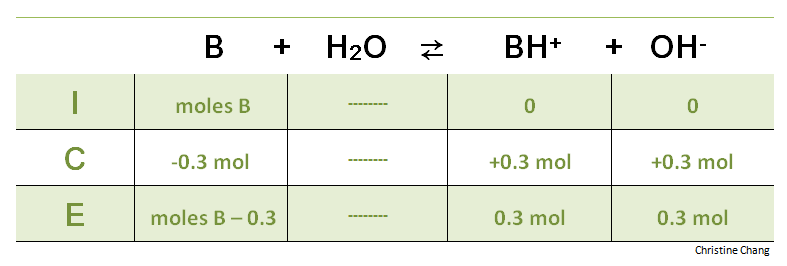
Pure solids and liquids have a value of one in the equilibrium expression but when we create an ice table, why is the $H_{2}O$ column empty? Should ... |
How does it damage proteins/lipids/DNA? There seems to be surprisingly little literature on its toxicity. |
What is the molecular mechanism of ammonia's toxicity? |
It has the catechol group, and it's the oxidation of the catechol group that makes dopamine produce ROS.
Hydroxytyrosol isn't that different from dopamine (the distal N being replaced with an OH). I'm not sure if that really affects anything. Yet - it's often sold as an antioxidant.
Couldn't it have the same ROS ... |
Does hydroxytyrosol have the same neurotoxicity potential as dopamine? |
BHT has two tert-butyl groups that can stabilize a free radical. BHA doesn't, though it has the 4-substituted methoxy group (I'm not sure what that does).
What is the stronger antioxidant? |
What has stronger antioxidant potential: BHT or BHA? |
I am unable to understand why are d-d electronic transition forbidden? why are they weakly absorbing and apart from that why do they occur at all? |
reason for d-d electronic transition forbidden, weakly absorbing and why do they occur at all? |
[Butyl Hydroxy Toluene (BHT)][1] has two tert-butyl groups that can stabilize a free radical. [Butyl Hydroxy Anisol (BHA)][2] doesn't, though it has the 4-substituted methoxy group (I'm not sure what that does).
What is the stronger antioxidant?
[1]: http://en.wikipedia.org/wiki/Butylated_hydroxytoluene
[2... |
It has the [catechol][1] group, and it's the oxidation of the catechol group that makes dopamine produce [reactive oxygen species (ROS)][2].
[Hydroxytyrosol][3] isn't that different from [dopamine][4] (the distal N being replaced with an OH). I'm not sure if that really affects anything. Yet - it's often sold as an ... |
In the ICE table pure solids and liquids have a value of one in the equilibrium expression but when we create an ICE table, why is the $\ce{H_{2}O}$ column empty? Should it not have a value of one?
 is a catechol, it lacks the amine of dopamine. Dopamine gets metabolized to an aldehyde, this aldehyde can form schiff bases with amines on proteins. The catechol can also react with thiols on proteins. So in addition to dopamine's oxidative d... |
I was introduced to this thing today, and saw a graph showing the detection of ions with different relative abundances.
Just as an example here, $\ce{Br2}$ is shown a detection chart. And at $160~\mathrm{m/z}$ the ion has the highest relative abundance, but why? Since the $\mathrm{m/z}$ ratio is just the mass, for $... |
What is the highest relative abundance for dibrom? |
I have water contaminated with dissolved chlorine:
$\ce{H2O + Cl2 <=>HCl + HOCl}$
During electrolysis, this is an issue. These are my products:
$\ce{NaCl + H2O ->T[electrolysis] NaOH + Cl2 + O2 + H2 }$
However, $\ce{NaOH}$ will be neutralised by $\ce{HCl}$:
$\ce{NaOH + HCl-> NaCl + H2O}$
I guess this ... |
Subsets and Splits
No community queries yet
The top public SQL queries from the community will appear here once available.