
instruction stringlengths 15 21.8k |
|---|
You are drawing very nice $\mathrm{p}_x$, $\mathrm{p}_y$ and $\mathrm{p}_z$ orbitals onto that piece of paper. But if you take an isolated atom, which direction is $x$? Which is $y$? The coordinate system you’re seeing the atom in is just something we planted over its top because humans like things nice and organised. ... |
There are efforts underway to develop ionic liquids for the purpose of reducing bauxite using exotic intermediates such as aluminum fluoride. However, the aqueous $\ce{Al^3+}$ ion is tantalizingly close to pure aluminum. What prevents it from being reduced? |
Why can't Al3+ be reduced to solid, pure aluminum? |
[![enter image description here][1]][1]
[1]: https://i.stack.imgur.com/eH1hZ.png
So, I'm having trouble with this problem. We're given this incomplete lewis structure and asked to find the hybridization of 3 of the atoms.
I figured that the labelled Cl would be sp3 because of it's 1 single bond and the 3 l... |
I had a doubt in part b) of the following question.
a) When 0.527 g of platinum is heated in fluorine, 0.732 g of a dark red volatile solid forms. What is the empirical formula of this product?
b) Suppose fluorine was a limiting reagent, such that 0.155 g of platinum remains after all the fluorine has been consum... |
Well you have probably heard about saltpeter.I don't know if it is a myth or not that it is used to reduce men's libido by adding to food especially in boarding schools and remote military campuses.
I didn't know that before but because I studied at boarding school , this topic and its alleged test intrigued me.Acco... |
Why does soup turn purple when lemon juice and salt are added? |
Well you have probably heard about salpeter. I don't know if it is a myth or not that it is used to reduce men's libido by adding to food especially in boarding schools and remote military campuses.
I didn't know that before but because I studied at boarding school, this topic and its alleged test intrigued me. Acco... |
I2Cl6 is a dimer of ICl3. ICl3 is T-shaped, with I being sp3d and having 2 lone pairs.
I read here : https://books.google.co.in/books?id=jGvRKef2pZIC&pg=PA128&lpg=PA128&dq=ICl3,+dimer&source=bl&ots=qD4HxCeNXX&sig=k3tNAMXrYVmaOixMCIFmit4-OQU&hl=en&sa=X&ei=uH-fUfzFOe3G0gHlmYGQCg#v=onepage&q=ICl3%2C%20dimer&f=false
t... |
For analytical chem lab, our group did a titration in which we got the same exact value every single time. As a result, our standard deviation was 0 and our instructor says to report answer using real rule of sig figs (our last significant figure should be the first digit in the uncertainty measurement) I am not sure w... |
For analytical chem lab, our group did a titration in which we got the same exact value every single time. As a result, our standard deviation was 0 and our instructor says to report answer using real rule of sig figs (our last significant figure should be the first digit in the uncertainty measurement) I am not sure w... |
$\ce{I2Cl6}$ is a dimer of $\ce{ICl3}$. $\ce{ICl3}$ is T-shaped, with I being $sp^3d$ and having 2 lone pairs.
I read [here][1] that $\ce{ICl6}$ is formed by the extra 2 $\ce{Cl-I}$ bridge bonds. What I don't understand is, why does the bridge bond form? And is it a coordinate bond or something like a banana bond (... |
I've been reading [this book](http://ncert.nic.in/ncerts/textbook/textbook.htm?fesc1=15-16), page 149. In chapter 15 the following experiment is suggested,
> Fix a candle in a container. Fill the container with water. Light the candle and then cover it with an inverted glass.
[![enter image description here][1]][... |
How much $CO_2$ is produced in burning of a candle? |
I've been reading [this book](http://ncert.nic.in/ncerts/textbook/textbook.htm?fesc1=15-16), page 149. In chapter 15 the following experiment is suggested,
> Fix a candle in a container. Fill the container with water. Light the candle and then cover it with an inverted glass.
[![enter image description here][1]][... |
How much CO2 is produced in burning of a candle? |
$\ce{I2Cl6}$ is a dimer of $\ce{ICl3}$. $\ce{ICl3}$ is T-shaped, with $\ce{I}$ being $\mathrm{sp^3d}$ and having two lone pairs.
I read [in Inorganic Reaction Mechanisms by R. K. Sharma][1] that $\ce{ICl6}$ is formed by the extra 2 $\ce{Cl-I}$ bridge bonds. What I don't understand is, why does the bridge bond form?... |
How to rationalyze the planar structre of I2Cl6? |
The ideal gas equation (or the van der Waals equation, for this matter) states that holding volume and temperature constant, increasing the number of moles of particles in the container will increase the total pressure exerted by the gas mixture. That’s all well and good, but when it comes to looking at chemical reacti... |
I have wonders regarding the titration curve of the titration of sulphuric acid, or any diprotic acid, with a strong base. I am aware of the fact that a diprotic acid is protolysed in two steps but, how does this affect the titration curve? |
MaxW's comment linked to the [relevant Wikipedia page](https://en.wikipedia.org/wiki/Nicotine#Overdose):
> Nicotine is regarded as a potentially lethal poison.[17] The LD50 of nicotine is 50 mg/kg for rats and 3 mg/kg for mice. 30–60 mg (0.5–1.0 mg/kg) can be a lethal dosage for adult humans.[11][56] However the wid... |
In my book it is said that in cold weather fog appears. This fog is nothing but water droplets. After a hot day if the night is cold then the moister in air starts to condense. What I do not understand is why does water condenses heavily on specific places like grass and iron objects only? I first thought that since ir... |
Why does water condense on grass and iron grills in cold weather? |
Consider the reaction scheme:
$$\ce{S + E ->[k_1] C1} \qquad \ce{C1 ->[k_2] E + P} \qquad \ce{S + C1 <=>[k_3][k_4]C2}$$
where $\ce{S}$ is the substrate, $\ce{E}$ is the enzyme, $\ce{P}$ is the product, $\ce{C1}$ and $\ce{C2}$ are enzyme substrate complexes. Let $[\ce{S}] = s$, $[\ce{E}] = e$, $[\ce{C1}] = c_1$, $... |
Benzene logP = 2.13 (logP=log([benzene in octan-1-ol]/[benzene in water]))
Fluorobenzene logP = 2.27 (slight increase, slightly more hydrophobic)
Chlorobenzene logP = 2.84
Bromobenzene logP = 2.99
So as we go down group 7, logP or hydrophobicity increases. What can explain these trends? Furthermore on aliphatic c... |
Normally, directing effects of substituent groups on aromatics are explained by drawing resonance structures of the Kekule representation of the compound. My question is that since the Kekule representation is in fact incorrect but rather there is equal electron density in all parts of the pi cloud in benzene, I am not... |
I recently encountered a problem on a test. It was a standard synth problem, "Provide reagents to produce y from x". The starting material was DHA and the ending molecule was a branched pentose. (I included an image of the solution I came up with). In my solution I use acetaldehyde under basic conditions to form the... |
Can hemi-acetal rings form under basic conditions? |
Normally, directing effects of substituent groups on aromatics are explained by drawing resonance structures of the Kekule representation of the compound. My question is that since the Kekule representation is in fact incorrect but rather there is equal electron density in all parts of the pi cloud in benzene, I am not... |
a) The reactant concentration in a zero-order reaction was 7.00×10⁻² M after 160 s and 2.50×10⁻² M after 345 s . What is the rate constant for this reaction?
b) What was the initial reactant concentration for the reaction described in Part A?
c) The reactant concentration in a first-order reaction was 7.70×10... |
Is it safe to drink out of a bottle that use to contain Dichloromethane? What should I use to clean a bottle of Dichloromethane? Is there any chemicals that I could use to dissolve the Dichloromethane and make it safe to drink out of?
More info:
So if I had a glass bottle containing >= 99.5% Dichloromethane... |
Let's say in a reaction, unimolecular (SN1), we have $\ce{CH3-CH(CH3)-CH2+}$ carbocation, and a nucleophile $\ce{Nu-}$. Generally the carbocation is first rearranged and then there is attack of $\ce{Nu-}$, but can't it be that a very strong nucleophile, strongly attracted towards the cation, attacks the cation befor it... |
Are rearrangement faster than nucleophilic attack? |
Can nucleophilic attack be faster than rearrangement? |
Consider the reaction scheme:
$$\ce{S + E ->[k_1] C1} \qquad \ce{C1 ->[k_2] E + P} \qquad \ce{S + C1 <=>[k_3][k_4]C2}$$
where $\ce{S}$ is the substrate, $\ce{E}$ is the enzyme, $\ce{P}$ is the product, $\ce{C1}$ and $\ce{C2}$ are enzyme substrate complexes. Let $[\ce{S}] = s$, $[\ce{E}] = e$, $[\ce{C1}] = c_1$, $... |
Here is a chart of the solubility of the species in water and the log of the partition coefficient you noted.
solubility solubility
MW g/100ml water moles/liter log(P)
Benzene 78.11 0.179 (1) 0.0229 2.13
F... |
>1. The reactant concentration in a zero-order reaction was $7.00×10^{−2}~\mathrm{M}$ after $160~\mathrm{s}$ and $2.50×10^{−2}~\mathrm{M}$ after $345~\mathrm{s}$. What is the rate constant for this reaction?
>2. What was the initial reactant concentration for the reaction described in part one?
>3. The reactant ... |
How to calculate the rate constant of a zero-th order reaction? |
Here is a chart of the solubility of the species in water and the log of the partition coefficient you noted.
solubility solubility
MW g/100ml water moles/liter log(P)
Benzene 78.11 0.179 (1) 0.0229 2.13
F... |
>> If a solution of $\ce{HNO3}$ has a molarity of 16 and a density of
>> $1.42\rm{g/mL}$, what is the molality of the solution?
[Molarity][1] is an old word for amount concentration and it is defined by the [IUPAC Goldbook][2] as
> Amount of a constituent divided by the volume of the mixture. Also called amount-of... |
> If a solution of $\ce{HNO3}$ has a molarity of 16 and a density of
> $1.42\ \rm{g/mL}$, what is the molality of the solution?
Well, a molarity of 16 means that there are 16 moles of solute for every liter of solution.
Based on density, if we have 1000 milliliters, we have 1420 grams of solution.
To calculat... |
1-Cyclopropylethyne has a triple bond and hence it must give the unsaturation test with bromine water but my book states the opposite.
This may be due to steric crowdance on the C atom containg cyclopropyl ring but I'm not too sure about it.
What is the exact reason? |
Why doesn't 1-Cyclopropylethyne doesn't give the unsaturation test with bromine water? |
If I react the following with Ni/H2, [![enter image description here][1]][1]
[1]: https://i.stack.imgur.com/4OHpb.png
Then I am getting a meso compound, as I the H- anion will have anti addition, right. One H will attack on right C from bottom and the other on the left C from the top. That makes it a meso. Bu... |
Thanks for the interesting question. Before we get into the details, let me note a few things:
1. Your system is a model of [substrate inhibition](http://www.ncbi.nlm.nih.gov/pubmed/20414900), a phenomenon where higher-than-optimal concentrations of a substrate for an enzyme _decrease_ its own rate of conversion to... |
Consider the reaction scheme:
$$\ce{S + E ->[k_1] C1} \qquad \ce{C1 ->[k_2] E + P} \qquad \ce{S + C1 <=>[k_3][k_4]C2}$$
where $\ce{S}$ is the substrate, $\ce{E}$ is the enzyme, $\ce{P}$ is the product, $\ce{C1}$ and $\ce{C2}$ are enzyme substrate complexes. Let $[\ce{S}] = s$, $[\ce{E}] = e$, $[\ce{C1}] = c_1$, $... |
If I react the following with Ni/H2, [![enter image description here][1]][1]
[1]: https://i.stack.imgur.com/4OHpb.png
Then I am getting a meso compound, as I the $H-$ anion will have anti addition, right. One $H$ will attack on right $C$ from bottom and the other on the left $C$ from the top. That makes it a ... |
If I react the following with $\ce{Ni/H2}$, [![enter image description here][1]][1]
[1]: https://i.stack.imgur.com/4OHpb.png
Then I am getting a meso compound, as I the $\ce{H-}$ anion will have anti addition, right. One $\ce{H}$ will attack on right $\ce{C}$ from bottom and the other on the left $\ce{C}$ fro... |
How mass spec formate and acetate adducts masses are calculated? |
If I look at any tables or calculators, I find that negative ion formate adduct has a monoisotopic mass of `+44.9982` units. If I try to calculate myself, I get slightly different result:
H + C + O + O =
1.007825 + 12.0107 + 15.9994 + 15.9994 =
45.017325
The difference is `0.019`, what is already ... |
In BH4- ion what bonds are present between Boron and Hydrogen?
**Is 3 covalent bonds are present between B and 3 H and other Hydrogen acts as an Hydrogen ion (H-) and forms coordinate bond with Boron with its 2 electrons**?
B*(5) - 1s2 2s1 2px1 2py1 2pz0 ; 3 Hydrogen shares their 1s1 electron with Boron's 2s1 2... |
What type of bond(s) are present in BH4 - ion? |
I have the following question: Assume that you have two solutions. One of 50cm3 HCl pH = 1,3 and one of 150cm3 Ba(OH)2 pH = 12,3. If we mix these two solutions what will the pH of the mixture be?
I have done the following:
pH = 1,3 => [H+] = 10^-1,3 = 0,05... M => n = 0.05...* 0.05 = 0.0025...
pH = 12,3 => pOH = ... |
I have the following question: Assume that you have two solutions. One of $50\ \mathrm{cm^3}$ $\ce{HCl}$ $\mathrm{pH} = 1.3$ and one of $150\ \mathrm{cm^3}$ $\ce{Ba(OH)2}$ $\mathrm{pH} = 12.3$. If we mix these two solutions what will the $\mathrm{pH}$ of the mixture be?
I have done the following:
$\mathrm{pH} = ... |
How to change color of water based on its acidity? |
Thanks for the interesting question. Before we get into the details, let me note a few things:
1. Your system is a model of [substrate inhibition](http://www.ncbi.nlm.nih.gov/pubmed/20414900), a phenomenon where higher-than-optimal concentrations of a substrate for an enzyme _decrease_ its own rate of conversion to... |
![Borohydride ion][1]
You are quite correct, the boron forms covalent bonding with three Hydrogens, and then a coordinate bond with H- ion (1s2)
Extra info:
This ion is fairly water soluble and acts as a ligand, using bridging hydrogens as three-centre two-electron donor atoms, forming complexes like Al(BH4... |
I was wondering, as you go down a group, the atoms get bigger... This means that the electrons in the outer shell are further away from the nucleus, and so the attraction decreases, and it is easier for the atom to lose electron, thus becoming more reactive, as is the case for group 1 (the alkali metals). However, as y... |
If the reactivity of group 1 elements increases down the group, why is this not the case for halogens? |
Thanks for the interesting question. Before we get into the details, let me note a few things:
1. Your system is a model of [substrate inhibition](http://www.ncbi.nlm.nih.gov/pubmed/20414900), a phenomenon where higher-than-optimal concentrations of a substrate for an enzyme _decrease_ its own rate of conversion to... |
I am currently reading [this German paper][1] on the dissolution of phosphates by acids and chelants.
The authors do a "fast-test" of the dissolving power of different acids which goes as follows:
> For each test, increasing quantities (10-50ml) of 0.1 n acids are
> added to 100 mg of tricalcium phosphate and ag... |
I know a lot of chemists like to quote $\mathrm{p}K_\mathrm{a}$ values and subtract them to reinforce some notion about some acid-base reaction being highly favorable or highly unfavorable or whatnot.
For example, the $\mathrm{p}K_\mathrm{a}$ of acetic acid is about 5 and the $\mathrm{p}K_\mathrm{a}$ of LDA's conju... |
What is the $K_\mathrm{a}$ of $\ce{OH^-}$ and $K_\mathrm{b}$ of $\ce{H_3O^+}$? Have these constants been determined? |
I was wondering, as you go down a group, the atoms get bigger... This means that the electrons in the outer shell are further away from the nucleus, and so the attraction decreases and it is easier for the atom to lose electron, thus becoming more reactive, as is the case for group 1 (the alkali metals).
However, as... |
In Section 2.3.6 of Szabo&Ostlund's [*Modern Quantum Chemistry*][1], the exchange integral has the form of
$$\int d\mathbf{r}_1 d\mathbf{r}_2 \psi_a^*(\mathbf{r}_1)
\psi_b(\mathbf{r}_1)\frac{1}{r_{12}}
\psi^*_b(\mathbf{r}_2) \psi_b(\mathbf{r}_2)
$$
or $\langle ij|ji\rangle$ in physicist's notation. According to ... |
Why does the two-electron exchange integral in Hartree-Fock theory have positive values? |
If I react the following with Raney nickel and $\ce{H2}$,
$\hspace{65 mm}$![alkene][1]
then I am getting a meso compound, as the $\ce{H-}$ anion will have anti addition, right? One $\ce{H}$ will attack on right $\ce{C}$ from bottom and the other on the left $\ce{C}$ from the top. That makes it a meso. But in the ... |
I started doing IR spectroscopy a few months ago and have run into the following problem: Here's the IR background that everyone knows and loves:[![Typical Background][1]][1]
CO2 peaks in the middle, water lines on either side. I get that. But what about those lines in the CH-stretch region? They are obviously very... |
In Section 2.3.6 of Szabo&Ostlund's [*Modern Quantum Chemistry*][1], the exchange integral has the form of
$$\int d\mathbf{r}_1 d\mathbf{r}_2 \psi_a^*(\mathbf{r}_1)
\psi_b(\mathbf{r}_1)\frac{1}{r_{12}}
\psi^*_a(\mathbf{r}_2) \psi_b(\mathbf{r}_2)
$$
or $\langle ab|ba\rangle$ in physicist's notation. According to ... |
If an alloy is place in an acid where selective leaching is occurring, will the alloy act as both anode cathode?
If the alloy does act as both anode and cathode then will the potential difference be zero as the cathode and anode are shorted together? |
The standard enthalpy of reaction is given as $$\Delta_r H = \sum\nu\; H_m(\text{products})- \sum\nu\;H_m(\text{reactants}).$$
Peter Atkins in his book _Elements of Physical Chemistry_ then writes regarding this equation:
>The problem with this eqn, is that we have __no way of knowing the absolute enthalpies of ... |
Why are absolute enthalpies of reactants not available? |
Gibbs energy is usually defined as the maximum useful work that a system can do on its surroundings. So what's the main difference between Gibbs energy and work? |
What's the difference between Gibbs Energy and Work? |
if the universe is always trying to find a more stable energy state, then how do endothermic reactions take place e.g. the formation of ammonia form extremely stable diatomic N2 atoms? |
why do some chemical reactions lead to less stable state? |
As we go down Group 15, the sizes of atoms increase and these are the central atoms in their corresponding hydrides. Shouldn't the large size of central atom (in case of $\ce{Bi}$) actually help the lone pair inside the $\ce{sp^3}$ hybrid orbital to easily be donated and thus increase the basic character down the group... |
Why does basicity go down along the group 15 hydrides? |
If the universe is always trying to find a more stable energy state, then how do endothermic reactions take place e.g. the formation of ammonia from extremely stable diatomic $\ce{N2}$ atoms? |
Why do some chemical reactions lead to less stable state? |
If the universe is always trying to find a more stable energy state, then how do endothermic reactions take place e.g. the formation of ammonia from extremely stable diatomic $\ce{N2}$ molecules? |
Problem 4. A synthesis of azetidine is shown below. Provide a mechanism for all the steps. Why does the formation of azetidine in the last step require high temperature?
[![enter image description here][1]][1]
My working is thus:
[![enter image description here][2]][2]
[![enter image description here][3]][3]
... |
What are weak acids? My chemistry and biology classes skimmed over them briefly but nothing in depth. I understand that an acid is weak if it partially dissociates and breaks down into ionic compounds, but they never stated why.
So my question is why do weak acids break down in water? Do strong acids dissociate at a... |
Why do transition metals element make colored compounds both in solid form and in solution? Is it related to their electrons? |
N2 has 2 lone pairs but why it is not a Lewis base?
|
N2 has 2 Lone pairs.so it should have lewis basicity.but why it doesn't have? |
In my organic chemistry lab, we recently had an experiment where we were given a mixture of 50:50 ethanol & ethylene glycol. We were supposed to perform a simple distillation to calculate the percent recovery. Based on my readings, I found that the ethanol has a lower boiling point than ethylene glycol and concluded th... |
$\ce{N2}$ has $2$ lone pairs but why is it not a Lewis base?
|
> A sample of $\ce{CaCl2}$ is placed in the flame of a Bunsen burner. The component of the substance which is responsible for the production of the flame colour is:
> 1. $\ce{Ca^2+}$
> 2. $\ce{Ca}$
> 3. $\ce{Cl-}$
> 4. $\ce{Cl}$
Why is the textbook answer $\ce{Ca}$ and not $\ce{Ca^2+}$ ? |
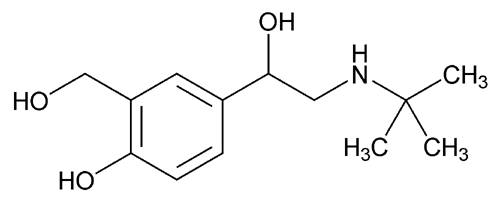
My question is apart from the C in the straight chain with -OH group, should N be counted as chirality center since it also has tetrahedral geometry and all different substituents?
There are more such examples. |

My question is apart from the C in the straight chain with $\ce{-OH}$ group, should $\ce{N}$ be counted as chirality center since it also has tetrahedral geometry and all different substituents?
There are more such examples. |
In my organic chemistry lab, we recently had an experiment where we were given a mixture of 50:50 ethanol & ethylene glycol. We were supposed to perform a simple distillation to calculate the percent recovery. Based on my readings, I found that the ethanol has a lower boiling point than ethylene glycol and concluded th... |
I have picked up a [textbook][1] on mass spectrometry, and I am finding it did not clearly distinguish between total *ion chromatogram* (TIC) and *total ion current chromatogram* (TICC) in the section (1.3 Ion Chromatograms) I just read. I suspect there was some sort of typo, but I don't have the experience to tell yet... |
What is the difference between TIC and TICC? |
Subsets and Splits
No community queries yet
The top public SQL queries from the community will appear here once available.