
instruction stringlengths 15 21.8k |
|---|
I am working with ultra high vacuum equipment made out of stainless steel that has been contaminated with a number of metals, but in particular Antimony. We'd like to do some machining of the equipment but this requires cleaning prior. The amount of contamination is only a few hundred nanometers, but needs to be remo... |
Is there an chemical that will etch antimony but not stainless steel? |
$\ce{Fe^{2+} -> Fe^{3+} + e^-}$ , for this reaction the oxidation potential which I found on internet is $-0.77 \,V$. But how can it be negative? Negative oxidation potential means oxidation tendency is very less or we can say negative oxidation potential means $\ce{Fe^{2+}}$ has very less tendency to lose electrons. B... |
Experimental wavelength for this molecule is 425 nm
We are supposed to estimate this wavelength theoretically using this equation (energy change in a 1D box), where N is the number of pi electrons
$$\Delta E=\frac{h^2(N+1)}{8m_eL^2}$$
L is given as 11.84 angstroms.
I'm getting a wavelength of 272 nm. Seems ... |
$\ce{Fe^{2+} -> Fe^{3+} + e^-}$ , for this reaction the oxidation potential which I found on internet is $-0.77 \,\mathrm{V}$. But how can it be negative? Negative oxidation potential means oxidation tendency is very less or we can say negative oxidation potential means $\ce{Fe^{2+}}$ has very less tendency to lose ele... |
I found [this article][1] that sheds some light on deprotonation mechanism - it differs significantly from presented in the question and although it's for acetonitrile not crotonitrile it still provides some useful information.
Lithium amide exists as $\ce{(LiNH2)2}$ dimers which tend to coordinate to nitrile group... |
Textile fabrics are made out of cellulose fibres, that can be derived from cotton or bamboo. As far as I know all grasses contain cellulose, so why are only a few grasses used? What makes them so special? Why could you not use for example gamba grass/andropogon gayanus for that, which contains 30% cellulose and 21% he... |
What chemical properties make some grasses usable for producing textile fabrics? |
Naively attaching hydrogens to a nitrogen atom's electron orbitals results in a picture like this:
[![Naive Ammonium Ion Drawing][1]][1]
However, there are two problems with this drawing that I can see.
First, I have heard that the ammonium ion has a tetrahedral geometry so the hydrogens would have to be moved... |
How are the hydrogens attached to the nitrogen atom in the ammonium ion? |
Is there a potential reaction that would occur between ethanol and aluminum ? and if so would it potentially create anything toxic |
Is there a reaction between ethanol and aluminum? |
When is the Assumption that Enthalpy is Constant over Temperature Change Invalid? |
Experimental wavelength for this molecule is 425 nm
We are supposed to estimate this wavelength theoretically using this equation (energy change in a 1D box), where N is the number of pi electrons
$$\Delta E=\frac{h^2(N+1)}{8m_eL^2}$$
L is given as 11.84 angstroms.
I'm getting a wavelength of 200 nm. Seems ... |
It's given in my book that $\ce{Fe^3+}$ ion reacts with potassium hexacyanidoferrate(III) to give brown colour.
$$\ce{Fe^3+ + [Fe(CN)6]^3- -> Fe[Fe(CN)6]}$$
Both the reactants have the same oxidation states.
**My question is, can I use the same test for $\ce{Fe^2+}$?**
First, the hexacyanidoferrate(III) will ox... |
I am working with ultra high vacuum equipment made out of stainless steel that has been contaminated with a number of metals, but in particular Antimony. We'd like to do some machining of the equipment but this requires cleaning prior. The amount of contamination is only a few hundred nanometers, but needs to be remo... |
Is there a chemical that will etch antimony but not stainless steel? |
I have a pH 10 NaOH solution. I need to bring down the pH to 9. So I used the $C_1V_1 = C_2V_2$ approach.
$C_1 = \mathrm{0.0001~mol/L}$
$V1$ is the necessary amount to produce 10 L of pH9
$C_2 = \mathrm{0.00001~mol/L}$
$V_2 = \mathrm{10~L}$
$$C_1V_1 = C_2V_2$$
$$0.0001~\mathrm{mol/L}\times(V_1) = ... |
I have a pH 10 NaOH solution. I need to bring down the pH to 9. So I used the $C_1V_1 = C_2V_2$ approach.
$C_1 = \mathrm{0.0001~mol/L}$
$V1$ is the necessary amount to produce 10 L of pH9
$C_2 = \mathrm{0.00001~mol/L}$
$V_2 = \mathrm{10~L}$
\begin{align}
C_1V_1 &= C_2V_2\\
0.0001~\mathrm{mol/L}\c... |
To quote Erik Rakovský · 30.73 · 54.96 · Comenius University in Bratislava
Shannon published simultaneously two sets of ionic radii.
So called "effective ionic radii" were made consistent with Pauling's r(O2-)=140 pm.
"Crystal radii" are using Shannon's value r(O2-)=126 pm.
https://dx.doi.org/10.1107%2FS056773... |
Does [Pt(CH3-CH(NH2)(COO-))2] show geometrical and optical isomerism?
According to me Pt should be dsp2 hybridised giving a square planar geometry. So it is of the form M(aa)2 type. The ligand itself has a chiral carbon. Hence it can show optical isomerism. But can it show geometrical isomerism? |
First of all, the compound is not <b>M(aa)<sub>2</sub></b> type.<b>M(aa)<sub>2</sub></b> shows no kind of isomerism (with normal ligands). Since the donor atoms on a ligand are different, it would be <b>M(ab)<sub>2</sub></b>. And square planar structures show only geometrical isomerism and not optical isomers, as you t... |
I came across [this][1] article on electrochomic displays. It mentions Ethyl Viologen as an electochromic chemical. I would like to attempt an experiment to showcase it's electrochomic properties but don't really know where to start.
First off, where to get some. Googling I came across [these][2], [three][3], [pages... |
It's given in my book that $\ce{Fe^3+}$ ion reacts with potassium hexacyanidoferrate(III) to give brown colour.
$$\ce{Fe^3+ + [Fe(CN)6]^3- -> Fe[Fe(CN)6]}$$
Both the reactants have the same oxidation states.
**My question is, can I use the same test for $\ce{Fe^2+}$?**
First, the hexacyanidoferrate(III) will ox... |
This is a question given in our exam.
In the reaction,
[![enter image description here][1]][1]
[1]: https://i.stack.imgur.com/ut3dU.png
Find the reagents X and Y required for steps(ii) and (iii) are _______ and ________ respectively.
I have tried in this way but I have stuck in second step. The given compou... |
$\ce{CuCl2}$ is green in colour while $\ce{CuCl}$ is white. What is the reason for this? Is it because the first compound exists as a complex ion and has d-d transitions? |
You're right: The reaction of the alkene with perbenzoic acid forms an oxirane.
My suggestion for the next step is:
1. Draw the epoxide.
2. Draw the final product.
3. Map the atoms: **Count and assign the carbon atoms**. Do you spot any difference?
Supposed that the oxygen atom of $\ce{OH}$ group in th... |
Does [Co(h2o)3Br3] show geometrical and optical isomerism?
According to me Co should be sp3d3 hybridised giving a octahedral geometry. It is of the form Ma3b3 type. I know it can show geometrical isomerism, fac and mer. But can it show optical isomerism?
|
Does [Co(h2o)3Br3] show geometrical and optical isomerism?
According to me Co should be sp3d2 hybridised giving a octahedral geometry. It is of the form Ma3b3 type. I know it can show geometrical isomerism, fac and mer. But can it show optical isomerism?
|
It's my understanding that for a particle in a 1-D box, the change in energy from the HOMO to LUMO can be approximated with the following equation:
$$\Delta E=\frac{h^2 ( N + 1 )}{8 m_\mathrm{e} L^2}$$
I am told that $N$ represents the number of π electrons in the molecule.
If you're studying a molecule like th... |
How to identify the number of pi electrons in a conjugated system to calculate the HOMO-LUMO gap with the particle in the box approach? |
This is a question given in our exam.
In the reaction,
[![enter image description here][1]][1]
[1]: https://i.stack.imgur.com/ut3dU.png
Find the reagents X and Y required for steps(ii) and (iii) are _______ and ________ respectively.
I have tried in this way but I have stuck in second step. The given compou... |
The electronic configuration of thorium (Z=90) is 5 f to the power of 0 space end exponent 6 d to the power of 2 space end exponent 7 s squared. But according to aufbau principle, the electrons should first enter f subshell and not d subshell. This is also not a case of half filled subshell or full filled subshell like... |
The electronic configuration of thorium (Z=90) is 5f0 6d 7s. But according to aufbau principle, the electrons should first enter f subshell and not d subshell. This is also not a case of half filled subshell or full filled subshell like we see in the case of chromium and copper. Then why do we write the electronic conf... |
The electronic configuration of thorium ($Z=90$) is $5\mathrm f^0 6\mathrm d^2 7\mathrm s^2$. But, according to the aufbau principle, the electrons should first enter the $\mathrm f$ subshell and not the $\mathrm d$ subshell. This is not a special case of a half-filled subshell or a fully-filled subshell like we see in... |
You're right: The reaction of the alkene with perbenzoic acid forms an oxirane.
My suggestion for the next step is:
1. Draw the epoxide.
2. Draw the final product.
3. Map the atoms: **Count and assign the carbon atoms**. Do you spot any difference?
Supposed that the oxygen atom of $\ce{OH}$ group in th... |
How to convert an oxirane to an alkanol with one additional carbon atom? |
How to easily distinguish salts physically? Edit |
There is another rather more simple answer to the question:
$\ce{SnCl2}$ can be thought of as a salt to a much greater extent than $\ce{SnCl4}$. In fact, tin is so often thought of as a metal, that it takes some people time to understand that $\ce{SnCl4}$ is in fact not a salt but much more a molecule.
Then, when... |
The electronic configuration of thorium ($Z=90$) is $5\mathrm f^0 6\mathrm d^2 7\mathrm s^2$. But, according to the aufbau principle, the electrons should first enter the $\mathrm f$ subshell and not the $\mathrm d$ subshell. This is not a special case of a half-filled subshell or a fully-filled subshell like we see in... |
Suppose I had a monosaccharide, e.g. D-arabinose. Suppose I do a few synthetic steps with it, and end up with the compound methyl (2<i>S</i>,3<i>R</i>,4<i>R</i>)-3,5-dihydroxy-2,4-dimethoxypentanoate. (as labelled by ChemDraw. If that is not the PIN, please correct.)
<img src="https://i.stack.imgur.com/9ti3X.png" wi... |
How would I name O-methylations on sugars while retaining the sugar’s common name? |
I am trying to determine the density of a gas (oxygen). As the gas is a compressible fluid a modified version of the ideal gas equation is required. I have been given the following equation and I am struggling to interpret it. I would like advice on the unit conversions and whether this is the correct equation at all.
... |
Does [Co(h2o)3Br3] show geometrical and optical isomerism?
According to me Co should be sp3d2 hybridised giving an octahedral geometry. It is of the form Ma3b3 type. I know it can show geometrical isomerism, fac and mer. But can it show optical isomerism?
|
Does $\ce{[Co(H2O)3Br3]}$ show geometrical and optical isomerism?
According to me $\ce{Co}$ should be $\mathrm{sp^3d^2}$ hybridised giving an octahedral geometry. It is of the form $\ce{Ma3b3}$ type. I know it can show geometrical isomerism, *fac* and *mer*. But can it show optical isomerism?
|
> ...does the gradual sequestering of electrolytes at the electrodes decrease the electrolyte concentration in the middle (between the electrodes), and cause a decrease in conductivity?
In a word, no. But, it is actually very complicated. The electrolyte in most simple lab electrolytic cells for water is not very ... |
There are many resources online which talk about projects making bioplastic from egg shells. However none of these actually show or describe the procedure needed to make it. Does anyone know a site/paper which one could use to figure out how to do this for a science fair project? |
>"Water has 2 lone pairs on O, so can it donate both (one as a pi bond) just like those compounds? If not, why?"
As I posted:
"It is possible for pi-donating ligands, like $\ce{NH2^{-}}$ (amide anion), but not really possible for water (neutral, oxygen more electronegative)."
Pi-donation from water would lead... |
Here's the reaction:
2O-2(aq) + 2H+(aq) =====> H2O2(aq) + O2(g)
I see where some oxygen atoms have lost electrons, but I dont see what has gained electrons. On the reactant side, the superoxide has a -1 charge per oxygen atom, and on the product side, half the oxygen atoms ... |
When sodium acetate trihydrate hot packs are regenerated soon after activation, they regenerate to a clear liquid upon boiling (typically with an air bubble that was not present in the new pack)
On the other hand, when activated hot packs are stored in the crystallized form for a while, regeneration by boiling in ... |
What are the bubbles and crystals found in sodium acetate hot packs after use and storage in the solid form? |
I am trying to figure out if Dicyanoacetylene, aka carbon subnitride, aka C4N2, can have a similar reaction with air as gasoline, or if it only creates a lot of heat but not much expansion? As I understand it, the thing that makes gasoline useful is that when it combusts, the product has a much lower density than the ... |
Can carbon subnitride be used as a fuel with similar properties to gasoline? |
I am trying to figure out if Dicyanoacetylene, aka carbon subnitride, aka $\ce{C4N2}$, can have a similar reaction with air as gasoline, or if it only creates a lot of heat but not much expansion? As I understand it, the thing that makes gasoline useful is that when it combusts, the product has a much lower density th... |
Fractional distillation of a product differs from the components listed in the SDS. What am I doing wrong? |
Is there a material that turns from being electrically conductive to non-conductive irreversably upon exposure to some form of radiation? |
>While the ring isomer is predicted to be the most stable structure on the
hypersurface, the barrier to dissociation is most likely between 1 and 2 kcal mol-1 (including zero-point vibrational
energy [ZPVE], the existence of any barrier becomes questionable) making isolation theoretically possible but
experimentally... |
From [The Nitrosyl Azide Potential Energy Hypersurface: A
High-Energy-Density Boom or Bust?][1] J. Am. Chem. Soc. 1996, 118, 4860-4870 :
>[Abstract] ...While the ring isomer is predicted to be the most stable structure on the
hypersurface, the barrier to dissociation is most likely between 1 and 2 kcal mol-1 (incl... |
How do I figure out the amount of water (mL) and amount of Aluminum (g)? |
Here's the reaction:
H2SO4(aq) + CaCO3(s) ===> CaSO4(s) + H2O(L) + CO2(g)
I don't understand why calcium carbonate breaks down. It's not soluable in water. I could understand the hydrogen ions oxidizing the calcium, yet the reaction isnt a redox reaction; the oxidation states remain the same! Any help?
... |
I'm currently writing a narrative and hoping to include a world which is home to a sea of some form of 'nasty' substance.
The varieties of inhabitants of this world have evolved mostly on the lands and eventually built their cities right up to the shorelines of this acidic sea. (In some cases I may even have cities ... |
Which acid to choose when designing a world with acid seas? |
Much effort is put in putting together [(M)SDS documents][1]:
> Many companies offer the service of collecting, or writing and
> revising, data sheets to ensure they are up to date and available for
> their subscribers or users. Some jurisdictions impose an explicit
> duty of care that each SDS be regularly updat... |
Are there IP limitations on (M)SDS documents? |
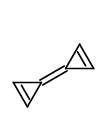
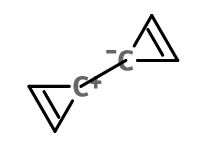
Are these Anti aromatic/aromatic or non aromatic?
1.
Here, if we were to consider the resonating structure(s) with charge separation
One ring is aromatic and other is anti aromatic,... |
From [The Nitrosyl Azide Potential Energy Hypersurface: A
High-Energy-Density Boom or Bust?][1] J. Am. Chem. Soc. 1996, 118, 4860-4870 :
>[Abstract] ...While the ring isomer is predicted to be the most stable structure on the
hypersurface, the barrier to dissociation is most likely between 1 and 2 kcal mol-1 (incl... |
I'm currently writing a narrative and hoping to include a world which is home to a sea of some form of 'nasty' substance (doesn't have to be acid).
The varieties of inhabitants of this world have evolved mostly on the lands and eventually built their cities right up to the shorelines of this acidic sea. (In some cas... |
Are these Anti aromatic/aromatic or non aromatic?
1.

Here, if we were to consider the resonating structure(s) with charge separation

One ring is aromatic and other is anti aromatic,... |
Are these Anti aromatic/aromatic or non aromatic?
1.

Here, if we were to consider the resonating structure(s) with charge separation

One ring is aromatic and other is anti aromatic,... |
What substances are edible for human consumption, but will not mix with alcohol? What is a substance that would block alcohol from mixing with its counterparts in a product?
For example: You make a cupcake and want an alcohol shot in that cupcake. What substance could the alcohol shot be contained in so it wouldn't di... |
What is insoluble in drinking alcohol, but edible? |
> According to me $\ce{Co}$ should be $\mathrm{sp^3d^2}$ hybridised giving an octahedral geometry.
No, please don’t do this. The most accurate description of cobalt here would be $\mathrm{d^5}$, maybe $\mathrm{d^5s}$. But don’t extend the hybridisation concept from main group elements to the transition metals; it do... |
I'm currently reviewing the Periana-Catalytica system and I have a question about one of the intermediates--namely, [(bpym)Pt(OSO$_{3}$H)$_{2}$]$^{+}$, which is found in [the following tutorial review][1]. How do the (OSO$_{3}$H)$_{2}$ ligands affect the oxidation state of the metal? If I count each of these ligands as... |
How do partially protonated sulfate ligands affect a metal's charge? |
background :
>As proved by rate of EAS, mesomeric or simply conjugated resonance is weaker for halogens than inductive and make them electron taking, with fluorine almost doing nothing due to strongest mesomeric and strongest inductive among halogens, So, halogens should take electrons away from any system if they ... |
> If we have a simple carbocation as shown in the chlorine and carbocation example, being right next to chlorine the inductive effect should overpower resonance/mesomeric but why does the opposite happen?
No, it shouldn’t. Remember that chlorine’s electronegativity — a measure for the strength of its inductive effec... |
I have been recently introduced to this new concept of amorphous solids, in particular, amorphous metals, and I came up with the following problems that could not be answered with my somewhat intensive search:
I gathered that many of amorphous solids are made by quickly cooling the liquid material, thereby giving it... |
I'm interested in ab initio computational chemistry. I'm trying to figure out what I should study. I know that I should study physical chemistry, mathematics, and programming.
However, I am not sure in what I should be focusing on. It seems to be a fairly new field and books on the topic are rather specific.
Can ... |
Here's the reaction:
$\ce{2O2^{-}(aq) + 2H+(aq) <=> H2O2(aq) + O2(g)}$
I see where some oxygen atoms have lost electrons, but I dont see what has gained electrons. On the reactant side, the superoxide has a -1 charge per oxygen atom, and on the product side, half the oxygen... |
Does $\ce{[Cr(NH3)6]^3+}$ have $sp^3d^2$ or $d^2sp^3$ hybridisation?
Oxidation state of $\ce{Cr}$ is $+3$. The electronic configuration is $3d^3$ and the $d$ electrons occupy $t_{2g}$ orbitals. If the electrons from the ligands were to occupy the $e_g$ orbitals the stability of the complex decreases. So shouldn't th... |
The energy level of the particle in a one-dimensional box are given by
$$E_n = \frac{n^2\hbar^2 \pi ^2}{2mL^2} = \frac{n^2 h^2}{8mL^2}.\tag1$$
We see that the energy is quantised and dependent on the quantum number $n$. We also see that the energy difference between those levels gets larger with $n$. The only variab... |
The experimental observed wavelength for this molecule is 425 nm.
We are supposed to estimate this wavelength theoretically using this equation (energy change in a 1D box), where $N$ is the number of pi electrons.
$$\Delta E=\frac{h^2(N+1)}{8m_\mathrm{e}L^2}$$
$L$ is given as 11.84 angstroms.
I'm getting a wa... |
How to explain the discrepancy between the calculated absorption wavelength within the particle in the box theory and the observed wavelength? |
In graham's law of diffusion most numericals I have seen assumes the formula
$$\frac{r_1}{r_2}=\frac{P_1}{P_2}\sqrt{ \frac {M_2}{M_1}}$$
Where they say $P_1,P_2$ are the partial pressures of the two gases receptively inside the container.But my question is should'nt it be the difference in partial pressures insi... |
Why isn't Graham's Law working here? |
Raoult's Law states that the partial vapor pressure of each component of an ideal mixture of liquids is equal to the vapor pressure of the pure component multiplied by its mole fraction in the mixture.
As we know that he liquid and vapour in a container are at dynamic equilibrium,
So the mole fraction which is me... |
If one sample of water has a certain concentration (g/L) of calcium ions, and another sample as that same concentration of magnesium ions, will one solution have a greater "hardness than the other"? In other words, does one ion have more influence over water hardness than the other? |
Is water "hardness" dependent more on calcium or magnesium? |
Raoult's Law states that the partial vapor pressure of each component of an ideal mixture of liquids is equal to the vapor pressure of the pure component multiplied by its mole fraction in the mixture.
As we know that the liquid and vapour in a container are at dynamic equilibrium,
So the mole fraction which is m... |
I am figuring out what chemicals to store with Ammonium hydroxide. At the moment a 2-shelf corrosive resistant fume hood cabinet will be used.
I have in mind storing the Ammonium hydroxide with Potassium hydroxide, Sodium hydroxide, and Calcium hydroxide on the lower shelf of the cabinet. Would this be okay?
And w... |
Sometimes I carry powdered soup mix (Knorr/Maggi) when I travel but they are way too salty. Is there an efficient and simple chemical process to lower the salt content?
I know sodium is super soluble and is hard to remove by precipitation, but is there a work around to perhaps only dissolving the salt and take them ... |
How to remove salt from powdered soup mix? |
I just read a [very entertaining Youtube comment thread](https://www.youtube.com/watch?v=hPwc2fDhuM4&lc=z134vl3wovbtu3wlv22qc1pwjtjlypxpn04) on a video where *TheBackyardScientist* melts tin on the stove in his (enclosed) kitchen, the proceeds to cook a steak on it.
According to the mass of commentaries (and votes),... |
As its observed that rate of C6D6 and C6H6 is same for Electrophilic Aromatic reactions {benzene}, as the deprotonation is not the rate limiting step but (carbocation as it usually is) is
Do iodination and sulphonation somehow do show different rates with benzene being the faster of the two obviously due to stronger... |
I'm currently reviewing the Periana-Catalytica system and I have a question about one of the intermediates, namely $\ce{[(bpym)Pt(OSO3H)2]^+}$, which is found in [the following tutorial review][1]. How do the $\ce{OSO3H}$ ligands affect the oxidation state of the metal? If I count each of these ligands as a monoanionic... |
It is observed that rate of reaction of two isotopologues of benzene, $\cf{C6D6}$ and $\cf{C6H6}$, is the same for electrophilic aromatic reactions, as the deprotonation is not the rate limiting step. Instead the carbocation is usually limiting.
Do iodination and sulphonation somehow do show different rates with th... |
I'm trying to make stock solution of 3M sucrose in water. In 25ml, this is 25.672g sucrose (FW 342.3). However, that mass of sucrose, in the powder, occupies a pretty substantial volume, such that if I add 25ml of water to it, I end up with a dissolved solution ~42ml in volume (it is fully dissolved). Puzzled by thi... |
Subsets and Splits
No community queries yet
The top public SQL queries from the community will appear here once available.