
instruction stringlengths 15 21.8k |
|---|
Is it easier to oxidise iron(II) to iron(III) in acidic or alkaline solution? |
If we already have $pV$ work included in the internal energy $U = q + w,$ then what is the $pV$ work in the equation for enthalpy $H = E + pV?$ |
Is it easier to oxidise $\ce{Fe^2+}$ to $\ce{Fe^3+}$ in acidic or alkaline solution?
$$
\begin{align}
\ce{Fe &-> Fe^2+(aq) -> Fe^3+(aq)}\\
\ce{Fe &-> Fe(OH)2 -> Fe(OH)3}
\end{align}
$$
In my textbook it is written that as soon as $Fe^{+2}$ changes to $Fe^{+3}$,it aquires $OH^{-}$ to form ppt. of $Fe(OH)_3$. ... |
Can work be done on a body when temperature and pressure are changed without changing its volume? |
Is it easier to oxidise $\ce{Fe^2+}$ to $\ce{Fe^3+}$ in acidic or alkaline solution?
$$
\begin{align}
\ce{Fe &-> Fe^2+(aq) -> Fe^3+(aq)}\\
\ce{Fe &-> Fe(OH)2 -> Fe(OH)3}
\end{align}
$$
In my textbook it is written that as soon as $\ce{Fe^{2+}}$ changes to $\ce{Fe^{3+}}$, it acquires $\ce{OH-}$ to form $\ce{F... |
The following amino acid is called "Lysine". I was asked to calculate its isoelectric point, with the given $\mathrm pK_\mathrm a$ values.
[![lysine][1]][1]
I've searched a lot, and the closest I found was [How do I calculate the isoelectric point of amino acids with more than two pKa's?](https://chemistry.stacke... |
How to properly calculate isoelectric point (pI) of amino acids? |
To determine the configurations of the bridgehead carbons is not obvious as you noted but here is how you do it. Structures **1** and **4** are enantiomers so their configurational assignments will be the opposite of one another. Let's focus on bromide **1** that has the numbering provided by ChemDraw. The configuratio... |
I am having trouble understanding one question "Which of the following compounds exhibits dipole-dipole forces as its strongest attraction between molecules?"
a) CO2
b) CH3NH2
c) Kr
d) H2
e) HBr
From what I understand is that CH3NH2 has h-bond and it's the strongest form of dipole-dipol... |
Is polar covalent bond a type of dipole-dipole? |
> Which of the following compounds exhibits dipole-dipole forces as its strongest attraction between molecules?
>
> a) $\ce{CO2}$
> b) $\ce{CH3NH2}$
> c) $\ce{Kr}$
> d) $\ce{H2}$
> e) $\ce{HBr}$
From what I understand, $\ce{CH3NH2}$ has an H-bond and it's the strongest form of dipole-dipole. So I thoug... |
Why HBr has stronger attraction between molecules than CH3NH2? |
The following amino acid is called "Lysine". I was asked to calculate its isoelectric point, with the given $\mathrm pK_\mathrm a$ values.
[![lysine-structure-with-pka-values][1]][1]
I've searched a lot, and the closest I found was [How do I calculate the isoelectric point of amino acids with more than two pKa's?... |
This might be a basic question but I am a little confused.
I have some lecture notes that says calcium phosphate $\ce{(Ca3(PO4)2)}$ reacts with calcium hydroxide $\ce{(Ca(OH)2)}$ to form Hydroxyapatite $\ce{(Ca10(PO4)6(OH)2)}$.
So, the chemical formula (even when unbalanced) should be:
$\ce{Ca3(PO4)2 + Ca(OH)2 =... |
To determine the configurations of the bridgehead carbons is not obvious as you noted but here is how you do it. Structures **1** and **4** are enantiomers so their configurational assignments will be the opposite of one another. Let's focus on bromide **1** that has the numbering provided by ChemDraw. The configuratio... |
The molecule 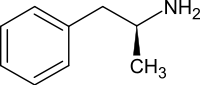 is labelled D-amphetamine.
( Image derived from https://commons.wikimedia.org/wiki/File:D-amphetamine.svg )
A Fischer projection of this molecule would contain, I think, the foll... |
I'm looking to plate some aluminum with silver using a basic solution.
My first attempt was to use sodium carbonate to make silver acetate. I sped up the process using hydrogen peroxide. I used the silver acetate as the ion source.
This simply did not work to plate any aluminum.
I concluded that this is because t... |
Proper method to electroplate aluminum? |
I have read that it is possible that in a reaction the entropy of both the system and surroundings increases. Could anyone please give me an example? |
In "why chemical reactions happen" the author says that "a process which leads to an increase in the entropy of the system can be ... exothermic." Could someone please give me an example of a process which is exothermic and increases the entropy of the system? |
A group of mountain climbers set up a camp at a $3$ km altitude and experience a barometric pressure of $0.69$ atm. They discover that pure water boils at $90^{\circ}$C and that it takes $300$ minutes to make a "three-minute" egg. What is the ratio of rate constants at $100^{\circ}$C and at $90^{\circ}$C i.e $\dfrac{k... |
[![Compound][1]][1]
[1]: https://i.stack.imgur.com/ThnlM.png
The book says that the name should have dimethylpropyl methyl nonane in that order. Shouldn't the methyl group come first since methyl comes before methylpropyl (in the alphabetic order)? Our prof told us to ignore prefixes such as mono, di, tri whe... |
Shouldn't this compound be called: 2-methyl-5-(1,2-Dimethylpropyl)nonane? |
Her is a source: [THE MECHANISM OF IRON CATALYSIS IN CERTAIN OXIDATIONS](https://www.jbc.org/content/90/1/251.full.pdf) that confirms Maurice's reported observations:
>It is well known that ferrous iron is comparatively stable in acid solution and that it is rapidly oxidized to the ferric state by the oxygen of the ... |
I am having trouble finding a synthesis route for the following product.
[![enter image description here][1]][1]
I was thinking of reacting methacrylic acid with a large excess of ethylene glycol (along with an acid catalyst), in accordance with Fischer esterification, to obtain the following structure.
[![e... |
How do I prepare the following compound from methacrylic acid? |
The following amino acid is called "Lysine". I was asked to calculate its isoelectric point, with the given $\mathrm pK_\mathrm a$ values.
[![lysine-structure-with-pka-values][1]][1]
I've searched a lot, and the most helpful post that I found was [How do I calculate the isoelectric point of amino acids with more ... |
Transition metal oxides (TMOs) have a lot of interesting properties, from ferroelectricity to battery applications. Often times you can change the properties with only slight changes of oxygen stoichiometry. For example, SrTiO$_3$ is an insulating paramagnet, but becomes ferroelectric and then metallic with slight chan... |
To determine the configurations of the bridgehead carbons is not obvious as you noted but here is how you do it. Structures **1** and **4** are enantiomers so their configurational assignments will be the opposite of one another. Let's focus on bromide **1** that has the numbering provided by ChemDraw. The configuratio... |
I saw the question, "[Is the strength of hydrogen bonding greater in hydrogen peroxide or water?][1]" and it made me think of a question on hydrogen bonding:
If an oxygen on a water has a hydrogen bond to another water (or anything else), would adding another hydrogen bond to that water (perhaps by introducing anoth... |
I want to make homemade "Milk of Magnesia" as a suspension containing only magnesium hydroxide and water.
I see that I can purchase a bag of magnesium hydroxide powder. Can I use this to make a suspension or is there a multi-step process? Thanks in advance. |
I have come across use of the terms *cis* and *trans* electrodes in the context of nanopores and driving charged biomolecules through a pore using an electric field \[[1](https://doi.org/10.1063/1.3495481)\]:
> [![Drawing of the cis negative electrode and trans positive electrode chambers][1]][1]
> FIG. 1. Drawin... |
I am having trouble finding a synthesis route for the following product.
[![enter image description here][1]][1]
I was thinking of reacting methacrylic acid with a large excess of ethylene glycol (along with an acid catalyst), in accordance with Fischer esterification, to obtain the following structure.
[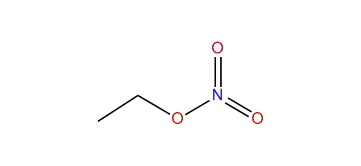
Firstly, $\ce{HNO3}$ and $\ce{H2SO4}$ reacts to form the $\ce{E+}$. As we know, the former is ... |
I want to make homemade "milk of magnesia" as a suspension containing only magnesium hydroxide and water.
I see that I can purchase a bag of magnesium hydroxide powder. Can I use this to make a suspension or is there a multi-step process? |
My Physics textbook gives the following definition of energy :
> The capacity of a body to do work is defined as the energy possessed by it
This was the definition that was used to derive $U_G = mgh$ and $\text{KE} = \dfrac{mv^2}{2}$
Now, consider the following statement
>Exothermic reactions release energy in ... |
What does it mean for chemical reactions to release energy? |
The following structural formula (source: [Wikimedia](https://commons.wikimedia.org/wiki/File:D-amphetamine.svg)) is labelled ᴅ-amphetamine:
> 
A Fischer projection of this molecule would con... |
Look energy has various forms, the formulas you listed are applicable to **macroscopic objects** and are due to position and the velocities they posses (for potential energy and the kinetic energy your'e talking about) respectively.
But when we zoom into the molecules and atoms the energies they posses are there ... |
You're going need a protection strategy to make this work.
Here is one possible route:
Start with 2-Chloro/bromo ethanol and protect the OH with a silyl ether, SiMe3 will do, but requires anhydrous workup.
React the protected halo-ethanol with the anion of 3-hydroxypropionate-t-butyl ester (commercially availa... |
You're going need a protection strategy to make this work. Here is one possible route:
1. Start with 2-Chloro/bromo ethanol and protect the OH with a silyl
ether, $\ce{SiMe3}$ will do, but requires anhydrous workup.
2. React the protected haloethanol with the anion of
3-hydroxypropionate-t-butyl ester ... |
The following amino acid is called *[lysine][1]*. I was asked to calculate its isoelectric point, with the given $\mathrm pK_\mathrm a$ values.
[![lysine-structure-with-pka-values][2]][2]
I've searched a lot, and the most helpful post that I found was [How do I calculate the isoelectric point of amino acids with ... |
How can I properly calculate the isoelectric point (pI) of amino acids? |
I am having some trouble finding a proper synthesis route for the following product.
[![2-(3-azido-3-oxopropoxy)ethyl 2-methylprop-2-enoate][1]][1]
Originally, I was thinking of reacting methacrylic acid with a large excess of ethylene glycol (along with an acid catalyst), in accordance with Fischer esterificat... |
How do I prepare 2-(3-azido-3-oxopropoxy)ethyl methacrylate from methacrylic acid? |
I am trying to calculate the gibbs free energy in an NVT simulation. Although, $$G = RTln(Q)$$
In my simulation, I can't calculate $$Q= \frac{[Products]}{[Reactants]}$$, because I cant determine the concentrations of reactants and products.
Hence, I am looking for a relationship between Q and U(potential energy),... |
Shouldn't this compound be called 2-methyl-5-(1,2-dimethylpropyl)nonane? |
I am trying to calculate the Gibbs free energy in an NVT simulation. Although
$$G = RT\ln Q,$$
in my simulation I can't calculate
$$Q = \frac{[\text{Products}]}{[\text{Reactants}]}$$
because I cant determine the concentrations of reactants and products.
Hence, I am looking for a relationship between reac... |
I was solving D.K. Singh's book of organic chemistry and stumbled across a question.
[![enter image description here][1]][1]
[1]: https://i.stack.imgur.com/KvrAs.png
The given answer is **B** and i don't get why...
Usual ester hydrolysis would've given A.
I somehow managed to know that the mechanism is SN2... |
I am trying to calculate the Gibbs free energy in an NVT simulation. Although
$$G = RT\ln Q,$$
in my simulation I can't calculate
$$Q = \frac{[\text{Products}]}{[\text{Reactants}]}$$
because I cant determine the concentrations of reactants and products.
Hence, I am looking for a relationship between reac... |
Her is a source: [THE MECHANISM OF IRON CATALYSIS IN CERTAIN OXIDATIONS](https://www.jbc.org/content/90/1/251.full.pdf) that confirms Maurice's reported observations:
>It is well known that ferrous iron is comparatively stable in acid solution and that it is rapidly oxidized to the ferric state by the oxygen of the ... |
I was solving D. K. Singh's book of organic chemistry and stumbled across a question:
> [![methyl 2,4,6‐trimethylbenzoate hydrolysis][1]][1]
[1]: https://i.stack.imgur.com/KvrAs.png
The given answer is **b** and I don't get why.
Usual ester hydrolysis would've given **a**.
I somehow managed to know tha... |
I am trying to calculate the Gibbs free energy in an NVT simulation. Although
$$\Delta G = -RT\ln Q,$$
in my simulation I can't calculate
$$Q = \frac{[\text{Products}]}{[\text{Reactants}]}$$
because I cant determine the concentrations of reactants and products.
Hence, I am looking for a relationship betw... |
I was solving "Conceptual Problems in Organic Chemsitry for Engineering and Medical Entrance examinations (3<sup>rd</sup> ed.)" by D.K. Singh and stumbled across a question:
> [![methyl 2,4,6‐trimethylbenzoate hydrolysis][1]][1]
[1]: https://i.stack.imgur.com/KvrAs.png
The given answer is **b** and I don't... |
When I was studying organic chemistry I came across a doubt related to SN1 , that is In an example of SN1 reaction i.e hydrolysis of tert-butyl bromide to form tert-butyl alcohol , It was given that
" C-Br" bond obtain energy from solvation of bromide ion with proton protic solvent "
What is it and How does ... |
How did C-Br bond obtain energy through solvation? |
When I was studying organic chemistry, I came across a question related to S<sub>N</sub>1 mechanism. In an example of S<sub>N</sub>1 reaction, i.e. hydrolysis of *tert*-butyl bromide to form *tert*-butyl alcohol, it was given that
> C−Br bond obtains energy from solvation of bromide ion with proton in protic solven... |
How does C−Br bond obtain energy through solvation? |
Problem 223 from *Conceptual Problems in Organic Chemsitry* by Singh \[1, p. 367\]:
> [![methyl 2,4,6‐trimethylbenzoate hydrolysis][1]][1]
The given answer is **b** and I don't get why.
Usual ester hydrolysis would've given **a**.
I somehow managed to know that the mechanism is S<sub>N</sub>2, but why?
Also,... |
When I was studying organic chemistry, I came across a question related to S<sub>N</sub>1 mechanism. In an example of S<sub>N</sub>1 reaction, i.e. hydrolysis of *tert*-butyl bromide to form *tert*-butyl alcohol, it was given that
> C−Br bond obtains energy from solvation of bromide ion with proton in protic solven... |
From an [article][1]:
> Reduced glutathione (GSH) is the major intracellular redox buffer and is essential in free radical scavenging, redox homeostasis, **maintenance of protein redox conformation** and regulation of redox sensitive enzyme activity.
What is "maintenance of **protein redox conformation**"? Is it... |
What is "protein redox conformation"? |
From an article by Frye et al. \[[1](https://doi.org/10.1016/j.spen.2020.100835)\]:
> Reduced glutathione (GSH) is the major intracellular redox buffer and is essential in free radical scavenging, redox homeostasis, **maintenance of protein redox conformation** and regulation of redox sensitive enzyme activity.
... |
The vapor pressure of water at $\pu{90 ^\circ C}$ is $\pu{525.8 torr}$, which is $\frac{\pu{1 atm}}{\pu{760 torr}} \times \pu{525.8 torr} \approx \pu{0.69 atm}$. Thus, it is true that water boils at $\pu{90 ^\circ C}$ at altitude with $\pu{0.69 atm}$ pressure. However, taking $\pu{300 min}$ to boil an egg in same altit... |
This question is troubling me since long.
My try: By 1,4 addition(as mentioned in question) Carbon-3 (taking carbon as carbon-1 of aldehyde group) will have $\ce SCH3$ added to it and oxygen must have $\ce H$ added to it. Where will $\ce CN-$ add now? Or is the number of carbons in chain 1 less than what it should be... |
A group of mountain climbers set up a camp at a $\pu{3 km}$ altitude and experience a barometric pressure of $\pu{0.69 atm}$. They discover that pure water boils at $\pu{90 ^\circ C}$ and that it takes $\pu{300 min}$ to make a "three-minute" egg. What is the ratio of rate constants at $\pu{100 ^\circ C}$ and at $\pu{9... |
[![taken from allen test][1]][1]
**My attempt:**
By 1,4-addition (as mentioned in question) of carbon-3 (taking carbon as carbon-1 of aldehyde group) will have $\ce{-SCH3}$ added to it and oxygen must have $\ce{-H}$ added to it. Where will $\ce{-CN}$ add now? Or is the number of carbons in chain 1 less than what ... |
> $$\ce{CH2=CH-CH=O ->[CH3SH][(1,4 addition)] Product (P_1) ->[(i) NaCN][(ii) NH3\\(iii) H3O+] Q_1}$$
>
> Correct statement regarding $\ce{Q_1}?$
> 1) $\ce{Q_1}$ is essential amino acid
> 2) $\ce{Q_1}$ is acidic amino acid
> 3) $\ce{Q_1}$ is nonessential amino acid
> 4) $\ce{Q_1}$ on Lassign test gives prus... |
I'm new to electrochemistry and I was wondering two things, sorry if these two problems are trivial but I just can't find anything close to this in the literature.
First, the following reaction is irreversible, right? an intermediate Q is formed:
$B + e^{-} \rightarrow Q$
and another reaction follows where i... |
Glass transition temperature of quartz glass is 1200°C. Does this mean it can be made by heating sand to 1200°C, or does the melting point of sio2 has to be reached (~1700°C)? |
What temperature is really required to make glass? |
> $$\ce{CH2=CH-CH=O ->[CH3SH][(1,4 addition)] Product (P_1) ->[(i) NaCN][(ii) NH3\\(iii) H3O+] Q_1}$$
>
> Correct statement regarding $\ce{Q_1}?$
> 1) $\ce{Q_1}$ is essential amino acid
> 2) $\ce{Q_1}$ is acidic amino acid
> 3) $\ce{Q_1}$ is nonessential amino acid
> 4) $\ce{Q_1}$ on Lassign test gives prus... |
The answer has **everything** to do with fluorine. Dunitz, in his early studies on fluorine interactions found that intermolecular $\ce{C-H..F}$ interactions can be solid-state structure (*e.g.,* crystal packing) directing. [In the case of fluorobenzene][1], the molecule adopts a solid-state structure that sacrifices... |
Glass transition temperature of quartz glass is 1200 °C. Does this mean it can be made by heating sand to 1200 °C, or does the melting point of $\ce{SiO2}$ has to be reached (~1700 °C)? |
The starting compound is an organic compound known as acrolein. $\ce{CH2=CH-CH=O}$
Now your first reaction would be:
$$\ce{CH2=CH-CH=O ->[CH3SH][1,4 addition]CH3-S-CH2-CH=CH-OH} $$
Now, this compound tautomerizes to form methional
$$\ce{CH3-S-CH2-CH=CH-OH <-> CH3-S-CH2-CH2-CH=O}$$
Now, the second step in yo... |
I'm new to electrochemistry and I was wondering two things, sorry if these two problems are trivial but I just can't find anything close to this in the literature.
First, the following reaction is irreversible, right? an intermediate Q is formed:
$B + e^{-} \rightarrow Q$
and another reaction follows where i... |
Since the conductivity of a solution changes linearly with the electrolyte concentration, during a conductometric titration the volume increases with each addition of the titrant aliquot. For this reason, each $\chi$ value should be corrected for the dilution effect.
Which of these two is the correct formula?
$$\be... |
> $$\ce{CH2=CH-CH=O ->[CH3SH][(1,4 addition)] Product (P_1) ->[(i) NaCN][(ii) NH3\\(iii) H3O+] Q_1}$$
>
> Correct statement regarding $\ce{Q_1}?$
> 1) $\ce{Q_1}$ is essential amino acid
> 2) $\ce{Q_1}$ is acidic amino acid
> 3) $\ce{Q_1}$ is nonessential amino acid
> 4) $\ce{Q_1}$ on Lassign test gives prus... |
Glass transition temperature of fused quartz is 1200 °C. Does this mean it can be made by heating sand to 1200 °C, or does the melting point of $\ce{SiO2}$ has to be reached (~1700 °C) for that to happen? |
What temperature is really required to make fused quartz? |
When I was studying organic chemistry, I came across a question related to S<sub>N</sub>1 mechanism. In an example of S<sub>N</sub>1 reaction, i.e. hydrolysis of *tert*-butyl bromide to form *tert*-butyl alcohol, it was given that
> It involves C-Br bond breaking for which the energy is obtained through solvation o... |
I found this question online on <https://www.jiskha.com/questions/1445722/explain-the-following-1-ethylene-c2h4-is-a-planar-molecule-but-hydrazine-n2h4-is-not> . My teachers says that most explosives are made of nitro compounds as abnormal expansion in N-O bond has been observed in nitro compounds above a certain tempe... |
(I know there are many related questions, so please tell me which posts can solve my doubts before you close this question, thank you.)
[![][1]][1]
**1.** For [CH2F]+, it is very unstable. This is because F is very electronegative, pulling the electron density from the already-electrophilic carbon (empty p orbi... |
I was going through some displacement reactions when this struck me:
>What is the position of the ammonium cation in the metal reactivity series?
I can find other positive ions like carbon and hydrogen in my textbook but not ammonium. I tried to look it up in google but the search results were not up to the mark.
I ... |
I found this question online on [Jiskha Homework Help](https://www.jiskha.com/questions/1445722):
> Of the compounds mercury(II) cyanate, $\ce{Hg(OCN)2},$ and mercury(II) fulminate, $\ce{Hg(CNO)2},$ one is highly explosive, the other is not. Explain.
My teachers says that most explosives are made of nitro compoun... |
I learnt that SiO2(Sulphur dioxide) doesn't react with any acid except HF. So What is special about HF? Why only HF reacts with SiO2 eventhough HF have very high bond energy compared to other acids in that group? |
I learnt that $\ce{SiO2}$(Silicon dioxide) doesn't react with any acid except $\ce{HF}$. So what is special about $\ce{HF}$?
Why does only $\ce{HF}$ reacts with $\ce{SiO2}$ even though $\ce{HF}$ has a very high bond energy compared to other acids in that group? |
This can be attributed to the formal charges of fulminate ion and cyanate ion. Structural stability of a compound sometimes depend on formal charge.
[![enter image description here][1]][1]
[![enter image description here][2]][2]
We observe that formal charges of fulminate ion is higher than cyanate ion for w... |
(I know there are many related questions, so please tell me which posts can solve my doubts before you close this question, thank you.)
[![][1]][1]
$1$. $\ce{^+CH2F}$ is very unstable. This is because $\ce{F}$ is very electronegative, pulling the electron density from the already electrophilic carbon (empty $\t... |
> What will be the major product when conjugated alkene (like 1,3-butadiene) is reacted with $\ce{HBr}$ in the presence of $\ce{R2O2}$?
>
> [![3‐chloro‐4‐ethenyl‐1‐methylcyclohexa‐1,4‐diene + HBr + R2O2][1]][1]
As we know, two products are formed when no $\ce{R2O2}$ is used because of conjugation in double bond an... |
Some months ago I was playing with $60\,\%$ $\ce{H2O2}$ and unknowingly I used a silver spoon to transfer the liquid from a container, and the peroxide immediately started bubbling (it did look and sound like violent boiling) around the spoon.
Are there solids or thick liquids available to an amateur that are even m... |
What are the most potent hydrogen peroxide decomposition catalysts available to an amateur? |
Is there any metal oxide (like aluminum oxide, titanium dioxide etc.), that can be put into a vacuum and hit with a heat source, like a laser and be converted into pure metal with a slightly weaker vacuum having oxygen in it?
From my understanding pure metals tend to oxidize at higher temperatures, however, since "n... |
Subsets and Splits
No community queries yet
The top public SQL queries from the community will appear here once available.