| # clack-errors |
|
|
| [](https://travis-ci.org/eudoxia0/clack-errors) |
| [](http://quickdocs.org/clack-errors/) |
|
|
|  |
|  |
|
|
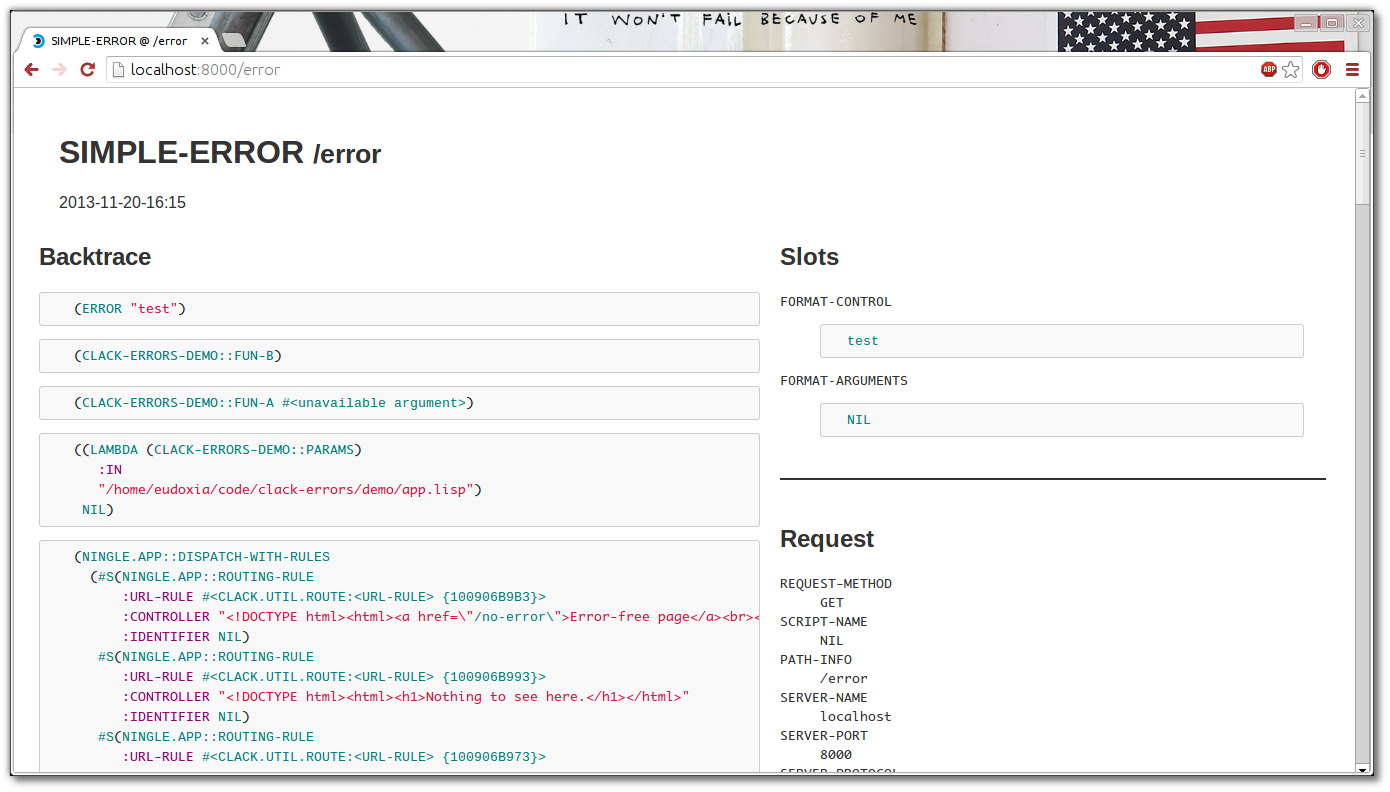
| A clone of [better_errors](https://github.com/charliesome/better_errors) |
| for [Clack](https://github.com/fukamachi/clack). |
|
|
| By default, when Clack throws an exception when rendering a page, the server |
| waits for the response until it times out while the exception waits in the |
| REPL. This isn't very useful. So now there's this. |
|
|
| # Usage |
|
|
| This, |
|
|
| ```lisp |
| (clack:clackup |
| (funcall clack-errors:*clack-error-middleware* |
| *my-clack-app* |
| :debug t) |
| :port 8000))) |
| ``` |
|
|
| will wrap your Clack up in the clack-errors middleware, start the server and |
| return a handler object. |
|
|
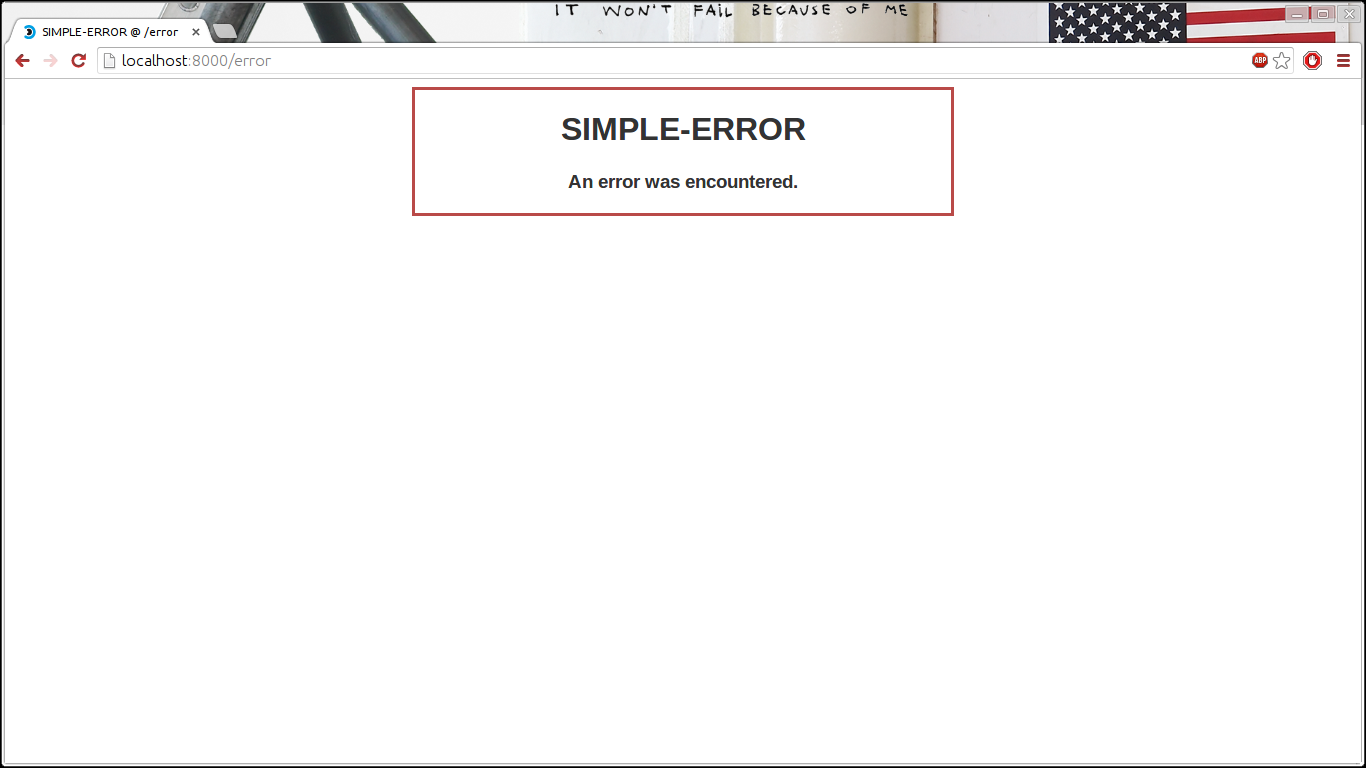
| By default, the middleware will show all information. In a production |
| environment, you'll want to initialize this with the `:debug` parameter set to |
| NIL. |
|
|
| ## Using a Custom Error Page |
|
|
| The middleware can be initialized with the `:fn` slot set to a lambda that takes |
| a condition as its argument and returns the HTML string to return to the client. |
|
|
| ```lisp |
| (clack:clackup |
| (funcall clack-errors:*clack-error-middleware* |
| *app* |
| :fn (lambda (condition) "500 Internal Server Error"))) |
| ``` |
|
|
| # License |
|
|
| Copyright (c) 2013–2019 Fernando Borretti (eudoxiahp@gmail.com) |
|
|
| Licensed under the LLGPL License. |
|
|

