| --- |
| base_model: PramaLLC/BEN2 |
| base_model_relation: quantized |
| license: mit |
| pipeline_tag: image-segmentation |
| library_name: onnx |
| tags: |
| - onnx |
| - moonbox |
| - ben2 |
| - background-removal |
| - image-segmentation |
| --- |
| |
| # BEN2 Base ONNX |
|
|
| ONNX builds of [BEN2 Base](https://huggingface.co/PramaLLC/BEN2), made by Moonbox for on-device use with ONNX Runtime (CUDA, DirectML, CPU). The |
| model is a single graph: each precision is one folder holding `model.onnx`. |
|
|
| ## Files |
|
|
| The last column is the benchmark: each precision's output against the fp32 graph's on the same eval pictures, and |
| its own score on the eval set (details under *How to run*). |
|
|
| | Precision | File | Size | sha256 | Benchmark | |
| |---|---|---|---|---| |
| | fp16 | [`fp16/model.onnx`](https://huggingface.co/moonbox-dev/BEN2-ONNX/blob/main/fp16/model.onnx) | 0.22 GB | `22cea62108ff` | MAE 0.0244, S 0.937, max F 0.943 | |
| | int8 | [`int8/model.onnx`](https://huggingface.co/moonbox-dev/BEN2-ONNX/blob/main/int8/model.onnx) | 0.13 GB | `dc60def496e0` | vs fp16: IoU 0.9965, MAE 0.0005; DIS5K MAE 0.0244, S 0.937 | |
| | int4 | [`int4/model.onnx`](https://huggingface.co/moonbox-dev/BEN2-ONNX/blob/main/int4/model.onnx) | 0.09 GB | `b98f199bde18` | vs fp16: IoU 0.9769, MAE 0.0037; DIS5K MAE 0.0248, S 0.936 | |
|
|
| ## How to run |
|
|
| BEN2 Base is the open (MIT) BEN2 model; PramaLLC's full BEN2 model is a separate commercial product and is not here. Made from the official `BEN2_Base.onnx` in this model's repository, which is fp16 (inputs and outputs fp32); we found no fp32 graph and BEN2's code does not export with torch.onnx as is, so fp16 is the reference here; output 0 is the matte. |
|
|
| **ONNX Runtime** (1024 x 1024 input, RGB in 0-1): |
|
|
| ```python |
| import numpy as np, onnxruntime as ort |
| from PIL import Image |
| |
| sess = ort.InferenceSession("int8/model.onnx", providers=["CUDAExecutionProvider", "CPUExecutionProvider"]) |
| img = Image.open("photo.jpg").convert("RGB") |
| x = np.asarray(img.resize((1024, 1024), Image.BILINEAR), np.float32) / 255 |
| x = x.transpose(2, 0, 1)[None] |
| matte = sess.run(None, {sess.get_inputs()[0].name: x})[0][0, 0] |
| matte = (matte - matte.min()) / (matte.max() - matte.min()) # as the original inference does |
| alpha = Image.fromarray((np.clip(matte, 0, 1) * 255).astype(np.uint8)).resize(img.size, Image.BILINEAR) |
| img.putalpha(alpha); img.save("cutout.png") |
| ``` |
|
|
| **Precisions.** fp16: weights and math in fp16, inputs and outputs fp32. int8: weights int8 per output channel behind DequantizeLinear, activations in float (weight-only: no calibration). int4: MatMul weights 4-bit (MatMulNBits, block 32), the remaining convolution weights int8 weight-only. bf16 is not made: ONNX Runtime's CUDA provider has no bf16 convolution. |
|
|
| **Benchmark.** [DIS5K](https://github.com/xuebinqin/DIS) test sets, 250 pictures (DIS-TE1..4 and DIS-VD, 50 each), ONNX Runtime 1.30 CUDA provider on an RTX 3080 Laptop GPU. The table's last column gives the |
| precision's agreement with the fp16 graph (IoU of the masks at 0.5, mean absolute difference) and its own MAE against the |
| ground truth. Scored with PySODMetrics on masks shrunk to at most 2048 px on the long side (DIS5K's largest are about |
| 6000 x 4000); HCE (human correction effort) is given for the reference precision. |
|
|
| | Precision | Size | vs fp16 (mask IoU, MAE) | MAE | S-measure | max F | Time / picture | Peak VRAM | |
| |---|---|---|---|---|---|---|---| |
| | fp16 | 223 MB | - | 0.0244 | 0.937 | 0.943 | 445 ms | 4.4 GB | |
| | int8 | 131 MB | IoU 0.9965, MAE 0.0005 | 0.0244 | 0.937 | 0.943 | 427 ms | 4.2 GB | |
| | int4 | 93 MB | IoU 0.9769, MAE 0.0037 | 0.0248 | 0.936 | 0.942 | 428 ms | 4.2 GB | |
|
|
| ## How these were made |
|
|
| From [BEN2 Base](https://huggingface.co/PramaLLC/BEN2) at revision `e48a20765f`, starting from an fp32 ONNX graph (where it came from is said above): |
| fp16 with onnxconverter-common (inputs and outputs kept fp32), int8 with ONNX Runtime static QDQ quantization |
| (per-channel int8 weights, uint8 activations, MinMax calibration on pictures outside the eval set), int4 with ONNX |
| Runtime's MatMulNBits (weight-only, block 32) where the graph is mostly matrix multiplications. bf16 is left out for |
| convolutional graphs: ONNX Runtime's CUDA provider has no bf16 convolution. Every graph was benchmarked before |
| upload; the `sha256` column above is what the files must hash to. |
|
|
| ## License |
|
|
| MIT. These files are a derivative of the original model and carry its license: it is copied in this |
| repository, and it governs your use of these files. The original model card follows unchanged. |
|
|
| --- |
|
|
| # Original model card |
|
|
| # BEN2: Background Erase Network |
|
|
| [](https://arxiv.org/abs/2501.06230) |
| [](https://github.com/PramaLLC/BEN2/) |
| [](https://backgrounderase.net) |
|
|
| ## Overview |
| BEN2 (Background Erase Network) introduces a novel approach to foreground segmentation through its innovative Confidence Guided Matting (CGM) pipeline. The architecture employs a refiner network that targets and processes pixels where the base model exhibits lower confidence levels, resulting in more precise and reliable matting results. This model is built on BEN: |
| [](https://paperswithcode.com/sota/dichotomous-image-segmentation-on-dis-vd?p=ben-using-confidence-guided-matting-for) |
|
|
|
|
|
|
|
|
| ## BEN2 access |
| BEN2 was trained on the DIS5k and our 22K proprietary segmentation dataset. Our enhanced model delivers superior performance in hair matting, 4K processing, object segmentation, and edge refinement. Our Base model is open source. To try the full model through our free web demo or integrate BEN2 into your project with our API: |
| - 🌐 [backgrounderase.com](https://backgrounderase.com) |
|
|
|
|
| ## Contact us |
| - For access to our commercial model email us at sales@backgrounderase.com |
| - Our website: https://backgrounderase.com/ |
| - Follow us on X: https://x.com/PramaResearch/ |
|
|
|
|
| ## Installation |
|
|
| ``` |
| pip install -e "git+https://github.com/PramaLLC/BEN2.git#egg=ben2" |
| ``` |
|
|
| ## Quick start code |
|
|
| ```python |
| from ben2 import BEN_Base |
| from PIL import Image |
| import torch |
| |
| |
| device = torch.device('cuda' if torch.cuda.is_available() else 'cpu') |
| |
| file = "./image.png" # input image |
| |
| model = BEN_Base.from_pretrained("PramaLLC/BEN2") |
| model.to(device).eval() |
| |
| image = Image.open(file) |
| foreground = model.inference(image, refine_foreground=False,) #Refine foreground is an extract postprocessing step that increases inference time but can improve matting edges. The default value is False. |
| |
| foreground.save("./foreground.png") |
| |
| ``` |
|
|
|
|
| ## Batch image processing |
|
|
| ```python |
| from ben2 import BEN_Base |
| from PIL import Image |
| import torch |
| |
| |
| device = torch.device('cuda' if torch.cuda.is_available() else 'cpu') |
| |
| |
| |
| model = BEN_Base.from_pretrained("PramaLLC/BEN2") |
| model.to(device).eval() |
| |
| |
| file1 = "./image1.png" # input image1 |
| file2 = "./image2.png" # input image2 |
| image1 = Image.open(file1) |
| image2 = Image.open(file2) |
| |
| |
| |
| foregrounds = model.inference([image1, image2]) # We recommend that the batch size not exceed 3 for consumer GPUs as there are minimal inference gains due to our custom batch processing for the MVANet decoding steps. |
| foregrounds[0].save("./foreground1.png") |
| foregrounds[1].save("./foreground2.png") |
| |
| ``` |
|
|
|
|
|
|
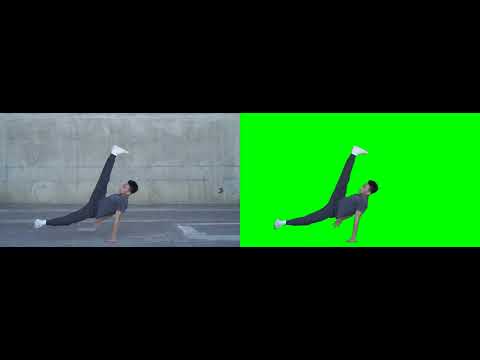
| # BEN2 video segmentation |
| [](https://www.youtube.com/watch?v=skEXiIHQcys) |
|
|
| ## Video Segmentation |
|
|
| ```bash |
| sudo apt update |
| sudo apt install ffmpeg |
| ``` |
|
|
| ```python |
| from ben2 import BEN_Base |
| from PIL import Image |
| import torch |
| |
| |
| device = torch.device('cuda' if torch.cuda.is_available() else 'cpu') |
| |
| video_path = "/path_to_your_video.mp4"# input video |
| |
| model = BEN_Base.from_pretrained("PramaLLC/BEN2") |
| model.to(device).eval() |
| |
| |
| model.segment_video( |
| video_path= video_path, |
| output_path="./", # Outputs will be saved as foreground.webm or foreground.mp4. The default value is "./" |
| fps=0, # If this is set to 0 CV2 will detect the fps in the original video. The default value is 0. |
| refine_foreground=False, #refine foreground is an extract postprocessing step that increases inference time but can improve matting edges. The default value is False. |
| batch=1, # We recommended that batch size not exceed 3 for consumer GPUs as there are minimal inference gains. The default value is 1. |
| print_frames_processed=True, #Informs you what frame is being processed. The default value is True. |
| webm = False, # This will output an alpha layer video but this defaults to mp4 when webm is false. The default value is False. |
| rgb_value= (0, 255, 0) # If you do not use webm this will be the RGB value of the resulting background only when webm is False. The default value is a green background (0,255,0). |
| ) |
| |
| |
| ``` |
|
|
|
|
|
|
| **# BEN2 evaluation** |
|  |
|
|
| RMBG 2.0 did not preserve the DIS 5k validation dataset |
|
|
|  |
|  |
|  |
|  |
|  |
|
|


