
Get trending papers in your email inbox once a day!
Get trending papers in your email inbox!
Subscribe

On Sampling with Approximate Transport Maps
Transport maps can ease the sampling of distributions with non-trivial geometries by transforming them into distributions that are easier to handle. The potential of this approach has risen with the development of Normalizing Flows (NF) which are maps parameterized with deep neural networks trained to push a reference distribution towards a target. NF-enhanced samplers recently proposed blend (Markov chain) Monte Carlo methods with either (i) proposal draws from the flow or (ii) a flow-based reparametrization. In both cases, the quality of the learned transport conditions performance. The present work clarifies for the first time the relative strengths and weaknesses of these two approaches. Our study concludes that multimodal targets can be reliably handled with flow-based proposals up to moderately high dimensions. In contrast, methods relying on reparametrization struggle with multimodality but are more robust otherwise in high-dimensional settings and under poor training. To further illustrate the influence of target-proposal adequacy, we also derive a new quantitative bound for the mixing time of the Independent Metropolis-Hastings sampler.
Test-time scaling of diffusions with flow maps
A common recipe to improve diffusion models at test-time so that samples score highly against a user-specified reward is to introduce the gradient of the reward into the dynamics of the diffusion itself. This procedure is often ill posed, as user-specified rewards are usually only well defined on the data distribution at the end of generation. While common workarounds to this problem are to use a denoiser to estimate what a sample would have been at the end of generation, we propose a simple solution to this problem by working directly with a flow map. By exploiting a relationship between the flow map and velocity field governing the instantaneous transport, we construct an algorithm, Flow Map Trajectory Tilting (FMTT), which provably performs better ascent on the reward than standard test-time methods involving the gradient of the reward. The approach can be used to either perform exact sampling via importance weighting or principled search that identifies local maximizers of the reward-tilted distribution. We demonstrate the efficacy of our approach against other look-ahead techniques, and show how the flow map enables engagement with complicated reward functions that make possible new forms of image editing, e.g. by interfacing with vision language models.
Towards Explaining Distribution Shifts
A distribution shift can have fundamental consequences such as signaling a change in the operating environment or significantly reducing the accuracy of downstream models. Thus, understanding distribution shifts is critical for examining and hopefully mitigating the effect of such a shift. Most prior work focuses on merely detecting if a shift has occurred and assumes any detected shift can be understood and handled appropriately by a human operator. We hope to aid in these manual mitigation tasks by explaining the distribution shift using interpretable transportation maps from the original distribution to the shifted one. We derive our interpretable mappings from a relaxation of optimal transport, where the candidate mappings are restricted to a set of interpretable mappings. We then inspect multiple quintessential use-cases of distribution shift in real-world tabular, text, and image datasets to showcase how our explanatory mappings provide a better balance between detail and interpretability than baseline explanations by both visual inspection and our PercentExplained metric.

Minimax estimation of discontinuous optimal transport maps: The semi-discrete case
We consider the problem of estimating the optimal transport map between two probability distributions, P and Q in mathbb R^d, on the basis of i.i.d. samples. All existing statistical analyses of this problem require the assumption that the transport map is Lipschitz, a strong requirement that, in particular, excludes any examples where the transport map is discontinuous. As a first step towards developing estimation procedures for discontinuous maps, we consider the important special case where the data distribution Q is a discrete measure supported on a finite number of points in mathbb R^d. We study a computationally efficient estimator initially proposed by Pooladian and Niles-Weed (2021), based on entropic optimal transport, and show in the semi-discrete setting that it converges at the minimax-optimal rate n^{-1/2}, independent of dimension. Other standard map estimation techniques both lack finite-sample guarantees in this setting and provably suffer from the curse of dimensionality. We confirm these results in numerical experiments, and provide experiments for other settings, not covered by our theory, which indicate that the entropic estimator is a promising methodology for other discontinuous transport map estimation problems.
Urban Spatio-Temporal Foundation Models for Climate-Resilient Housing: Scaling Diffusion Transformers for Disaster Risk Prediction
Climate hazards increasingly disrupt urban transportation and emergency-response operations by damaging housing stock, degrading infrastructure, and reducing network accessibility. This paper presents Skjold-DiT, a diffusion-transformer framework that integrates heterogeneous spatio-temporal urban data to forecast building-level climate-risk indicators while explicitly incorporating transportation-network structure and accessibility signals relevant to intelligent vehicles (e.g., emergency reachability and evacuation-route constraints). Concretely, Skjold-DiT enables hazard-conditioned routing constraints by producing calibrated, uncertainty-aware accessibility layers (reachability, travel-time inflation, and route redundancy) that can be consumed by intelligent-vehicle routing and emergency dispatch systems. Skjold-DiT combines: (1) Fjell-Prompt, a prompt-based conditioning interface designed to support cross-city transfer; (2) Norrland-Fusion, a cross-modal attention mechanism unifying hazard maps/imagery, building attributes, demographics, and transportation infrastructure into a shared latent representation; and (3) Valkyrie-Forecast, a counterfactual simulator for generating probabilistic risk trajectories under intervention prompts. We introduce the Baltic-Caspian Urban Resilience (BCUR) dataset with 847,392 building-level observations across six cities, including multi-hazard annotations (e.g., flood and heat indicators) and transportation accessibility features. Experiments evaluate prediction quality, cross-city generalization, calibration, and downstream transportation-relevant outcomes, including reachability and hazard-conditioned travel times under counterfactual interventions.


Quantum Theory and Application of Contextual Optimal Transport
Optimal Transport (OT) has fueled machine learning (ML) across many domains. When paired data measurements (mu, nu) are coupled to covariates, a challenging conditional distribution learning setting arises. Existing approaches for learning a global transport map parameterized through a potentially unseen context utilize Neural OT and largely rely on Brenier's theorem. Here, we propose a first-of-its-kind quantum computing formulation for amortized optimization of contextualized transportation plans. We exploit a direct link between doubly stochastic matrices and unitary operators thus unravelling a natural connection between OT and quantum computation. We verify our method (QontOT) on synthetic and real data by predicting variations in cell type distributions conditioned on drug dosage. Importantly we conduct a 24-qubit hardware experiment on a task challenging for classical computers and report a performance that cannot be matched with our classical neural OT approach. In sum, this is a first step toward learning to predict contextualized transportation plans through quantum computing.

Stochastic interpolants with data-dependent couplings
Generative models inspired by dynamical transport of measure -- such as flows and diffusions -- construct a continuous-time map between two probability densities. Conventionally, one of these is the target density, only accessible through samples, while the other is taken as a simple base density that is data-agnostic. In this work, using the framework of stochastic interpolants, we formalize how to couple the base and the target densities. This enables us to incorporate information about class labels or continuous embeddings to construct dynamical transport maps that serve as conditional generative models. We show that these transport maps can be learned by solving a simple square loss regression problem analogous to the standard independent setting. We demonstrate the usefulness of constructing dependent couplings in practice through experiments in super-resolution and in-painting.


Meta Optimal Transport
We study the use of amortized optimization to predict optimal transport (OT) maps from the input measures, which we call Meta OT. This helps repeatedly solve similar OT problems between different measures by leveraging the knowledge and information present from past problems to rapidly predict and solve new problems. Otherwise, standard methods ignore the knowledge of the past solutions and suboptimally re-solve each problem from scratch. We instantiate Meta OT models in discrete and continuous settings between grayscale images, spherical data, classification labels, and color palettes and use them to improve the computational time of standard OT solvers. Our source code is available at http://github.com/facebookresearch/meta-ot


Neural Conditional Transport Maps
We present a neural framework for learning conditional optimal transport (OT) maps between probability distributions. Our approach introduces a conditioning mechanism capable of processing both categorical and continuous conditioning variables simultaneously. At the core of our method lies a hypernetwork that generates transport layer parameters based on these inputs, creating adaptive mappings that outperform simpler conditioning methods. Comprehensive ablation studies demonstrate the superior performance of our method over baseline configurations. Furthermore, we showcase an application to global sensitivity analysis, offering high performance in computing OT-based sensitivity indices. This work advances the state-of-the-art in conditional optimal transport, enabling broader application of optimal transport principles to complex, high-dimensional domains such as generative modeling and black-box model explainability.
Monge, Bregman and Occam: Interpretable Optimal Transport in High-Dimensions with Feature-Sparse Maps
Optimal transport (OT) theory focuses, among all maps T:R^drightarrow R^d that can morph a probability measure onto another, on those that are the ``thriftiest'', i.e. such that the averaged cost c(x, T(x)) between x and its image T(x) be as small as possible. Many computational approaches have been proposed to estimate such Monge maps when c is the ell_2^2 distance, e.g., using entropic maps [Pooladian'22], or neural networks [Makkuva'20, Korotin'20]. We propose a new model for transport maps, built on a family of translation invariant costs c(x, y):=h(x-y), where h:=1{2}|cdot|_2^2+tau and tau is a regularizer. We propose a generalization of the entropic map suitable for h, and highlight a surprising link tying it with the Bregman centroids of the divergence D_h generated by h, and the proximal operator of tau. We show that choosing a sparsity-inducing norm for tau results in maps that apply Occam's razor to transport, in the sense that the displacement vectors Delta(x):= T(x)-x they induce are sparse, with a sparsity pattern that varies depending on x. We showcase the ability of our method to estimate meaningful OT maps for high-dimensional single-cell transcription data, in the 34000-d space of gene counts for cells, without using dimensionality reduction, thus retaining the ability to interpret all displacements at the gene level.
Displacement-Sparse Neural Optimal Transport
Optimal transport (OT) aims to find a map T that transports mass from one probability measure to another while minimizing a cost function. Recently, neural OT solvers have gained popularity in high dimensional biological applications such as drug perturbation, due to their superior computational and memory efficiency compared to traditional exact Sinkhorn solvers. However, the overly complex high dimensional maps learned by neural OT solvers often suffer from poor interpretability. Prior work addressed this issue in the context of exact OT solvers by introducing displacement-sparse maps via designed elastic cost, but such method failed to be applied to neural OT settings. In this work, we propose an intuitive and theoretically grounded approach to learning displacement-sparse maps within neural OT solvers. Building on our new formulation, we introduce a novel smoothed ell_0 regularizer that outperforms the ell_1 based alternative from prior work. Leveraging Input Convex Neural Network's flexibility, we further develop a heuristic framework for adaptively controlling sparsity intensity, an approach uniquely enabled by the neural OT paradigm. We demonstrate the necessity of this adaptive framework in large-scale, high-dimensional training, showing not only improved accuracy but also practical ease of use for downstream applications.

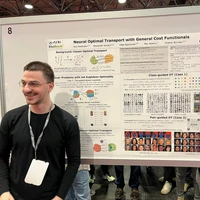
Neural Optimal Transport with General Cost Functionals
We introduce a novel neural network-based algorithm to compute optimal transport (OT) plans for general cost functionals. In contrast to common Euclidean costs, i.e., ell^1 or ell^2, such functionals provide more flexibility and allow using auxiliary information, such as class labels, to construct the required transport map. Existing methods for general costs are discrete and have limitations in practice, i.e. they do not provide an out-of-sample estimation. We address the challenge of designing a continuous OT approach for general costs that generalizes to new data points in high-dimensional spaces, such as images. Additionally, we provide the theoretical error analysis for our recovered transport plans. As an application, we construct a cost functional to map data distributions while preserving the class-wise structure.
DPM-OT: A New Diffusion Probabilistic Model Based on Optimal Transport
Sampling from diffusion probabilistic models (DPMs) can be viewed as a piecewise distribution transformation, which generally requires hundreds or thousands of steps of the inverse diffusion trajectory to get a high-quality image. Recent progress in designing fast samplers for DPMs achieves a trade-off between sampling speed and sample quality by knowledge distillation or adjusting the variance schedule or the denoising equation. However, it can't be optimal in both aspects and often suffer from mode mixture in short steps. To tackle this problem, we innovatively regard inverse diffusion as an optimal transport (OT) problem between latents at different stages and propose the DPM-OT, a unified learning framework for fast DPMs with a direct expressway represented by OT map, which can generate high-quality samples within around 10 function evaluations. By calculating the semi-discrete optimal transport map between the data latents and the white noise, we obtain an expressway from the prior distribution to the data distribution, while significantly alleviating the problem of mode mixture. In addition, we give the error bound of the proposed method, which theoretically guarantees the stability of the algorithm. Extensive experiments validate the effectiveness and advantages of DPM-OT in terms of speed and quality (FID and mode mixture), thus representing an efficient solution for generative modeling. Source codes are available at https://github.com/cognaclee/DPM-OT
The Monge Gap: A Regularizer to Learn All Transport Maps
Optimal transport (OT) theory has been been used in machine learning to study and characterize maps that can push-forward efficiently a probability measure onto another. Recent works have drawn inspiration from Brenier's theorem, which states that when the ground cost is the squared-Euclidean distance, the ``best'' map to morph a continuous measure in P(Rd) into another must be the gradient of a convex function. To exploit that result, [Makkuva+ 2020, Korotin+2020] consider maps T=nabla f_theta, where f_theta is an input convex neural network (ICNN), as defined by Amos+2017, and fit theta with SGD using samples. Despite their mathematical elegance, fitting OT maps with ICNNs raises many challenges, due notably to the many constraints imposed on theta; the need to approximate the conjugate of f_theta; or the limitation that they only work for the squared-Euclidean cost. More generally, we question the relevance of using Brenier's result, which only applies to densities, to constrain the architecture of candidate maps fitted on samples. Motivated by these limitations, we propose a radically different approach to estimating OT maps: Given a cost c and a reference measure rho, we introduce a regularizer, the Monge gap M^c_{rho}(T) of a map T. That gap quantifies how far a map T deviates from the ideal properties we expect from a c-OT map. In practice, we drop all architecture requirements for T and simply minimize a distance (e.g., the Sinkhorn divergence) between Tsharpmu and nu, regularized by M^c_rho(T). We study M^c_{rho}, and show how our simple pipeline outperforms significantly other baselines in practice.
AI-Augmented Density-Driven Optimal Control (D2OC) for Decentralized Environmental Mapping
This paper presents an AI-augmented decentralized framework for multi-agent (multi-robot) environmental mapping under limited sensing and communication. While conventional coverage formulations achieve effective spatial allocation when an accurate reference map is available, their performance deteriorates under uncertain or biased priors. The proposed method introduces an adaptive and self-correcting mechanism that enables agents to iteratively refine local density estimates within an optimal transport-based framework, ensuring theoretical consistency and scalability. A dual multilayer perceptron (MLP) module enhances adaptivity by inferring local mean-variance statistics and regulating virtual uncertainty for long-unvisited regions, mitigating stagnation around local minima. Theoretical analysis rigorously proves convergence under the Wasserstein metric, while simulation results demonstrate that the proposed AI-augmented Density-Driven Optimal Control consistently achieves robust and precise alignment with the ground-truth density, yielding substantially higher-fidelity reconstruction of complex multi-modal spatial distributions compared with conventional decentralized baselines.
Unbalancedness in Neural Monge Maps Improves Unpaired Domain Translation
In optimal transport (OT), a Monge map is known as a mapping that transports a source distribution to a target distribution in the most cost-efficient way. Recently, multiple neural estimators for Monge maps have been developed and applied in diverse unpaired domain translation tasks, e.g. in single-cell biology and computer vision. However, the classic OT framework enforces mass conservation, which makes it prone to outliers and limits its applicability in real-world scenarios. The latter can be particularly harmful in OT domain translation tasks, where the relative position of a sample within a distribution is explicitly taken into account. While unbalanced OT tackles this challenge in the discrete setting, its integration into neural Monge map estimators has received limited attention. We propose a theoretically grounded method to incorporate unbalancedness into any Monge map estimator. We improve existing estimators to model cell trajectories over time and to predict cellular responses to perturbations. Moreover, our approach seamlessly integrates with the OT flow matching (OT-FM) framework. While we show that OT-FM performs competitively in image translation, we further improve performance by incorporating unbalancedness (UOT-FM), which better preserves relevant features. We hence establish UOT-FM as a principled method for unpaired image translation.


Enhancing Online Road Network Perception and Reasoning with Standard Definition Maps
Autonomous driving for urban and highway driving applications often requires High Definition (HD) maps to generate a navigation plan. Nevertheless, various challenges arise when generating and maintaining HD maps at scale. While recent online mapping methods have started to emerge, their performance especially for longer ranges is limited by heavy occlusion in dynamic environments. With these considerations in mind, our work focuses on leveraging lightweight and scalable priors-Standard Definition (SD) maps-in the development of online vectorized HD map representations. We first examine the integration of prototypical rasterized SD map representations into various online mapping architectures. Furthermore, to identify lightweight strategies, we extend the OpenLane-V2 dataset with OpenStreetMaps and evaluate the benefits of graphical SD map representations. A key finding from designing SD map integration components is that SD map encoders are model agnostic and can be quickly adapted to new architectures that utilize bird's eye view (BEV) encoders. Our results show that making use of SD maps as priors for the online mapping task can significantly speed up convergence and boost the performance of the online centerline perception task by 30% (mAP). Furthermore, we show that the introduction of the SD maps leads to a reduction of the number of parameters in the perception and reasoning task by leveraging SD map graphs while improving the overall performance. Project Page: https://henryzhangzhy.github.io/sdhdmap/.

DiffSemanticFusion: Semantic Raster BEV Fusion for Autonomous Driving via Online HD Map Diffusion
Autonomous driving requires accurate scene understanding, including road geometry, traffic agents, and their semantic relationships. In online HD map generation scenarios, raster-based representations are well-suited to vision models but lack geometric precision, while graph-based representations retain structural detail but become unstable without precise maps. To harness the complementary strengths of both, we propose DiffSemanticFusion -- a fusion framework for multimodal trajectory prediction and planning. Our approach reasons over a semantic raster-fused BEV space, enhanced by a map diffusion module that improves both the stability and expressiveness of online HD map representations. We validate our framework on two downstream tasks: trajectory prediction and planning-oriented end-to-end autonomous driving. Experiments on real-world autonomous driving benchmarks, nuScenes and NAVSIM, demonstrate improved performance over several state-of-the-art methods. For the prediction task on nuScenes, we integrate DiffSemanticFusion with the online HD map informed QCNet, achieving a 5.1\% performance improvement. For end-to-end autonomous driving in NAVSIM, DiffSemanticFusion achieves state-of-the-art results, with a 15\% performance gain in NavHard scenarios. In addition, extensive ablation and sensitivity studies show that our map diffusion module can be seamlessly integrated into other vector-based approaches to enhance performance. All artifacts are available at https://github.com/SunZhigang7/DiffSemanticFusion.

Analyzing and Improving Optimal-Transport-based Adversarial Networks
Optimal Transport (OT) problem aims to find a transport plan that bridges two distributions while minimizing a given cost function. OT theory has been widely utilized in generative modeling. In the beginning, OT distance has been used as a measure for assessing the distance between data and generated distributions. Recently, OT transport map between data and prior distributions has been utilized as a generative model. These OT-based generative models share a similar adversarial training objective. In this paper, we begin by unifying these OT-based adversarial methods within a single framework. Then, we elucidate the role of each component in training dynamics through a comprehensive analysis of this unified framework. Moreover, we suggest a simple but novel method that improves the previously best-performing OT-based model. Intuitively, our approach conducts a gradual refinement of the generated distribution, progressively aligning it with the data distribution. Our approach achieves a FID score of 2.51 on CIFAR-10 and 5.99 on CelebA-HQ-256, outperforming unified OT-based adversarial approaches.
Generative Modeling with Optimal Transport Maps
With the discovery of Wasserstein GANs, Optimal Transport (OT) has become a powerful tool for large-scale generative modeling tasks. In these tasks, OT cost is typically used as the loss for training GANs. In contrast to this approach, we show that the OT map itself can be used as a generative model, providing comparable performance. Previous analogous approaches consider OT maps as generative models only in the latent spaces due to their poor performance in the original high-dimensional ambient space. In contrast, we apply OT maps directly in the ambient space, e.g., a space of high-dimensional images. First, we derive a min-max optimization algorithm to efficiently compute OT maps for the quadratic cost (Wasserstein-2 distance). Next, we extend the approach to the case when the input and output distributions are located in the spaces of different dimensions and derive error bounds for the computed OT map. We evaluate the algorithm on image generation and unpaired image restoration tasks. In particular, we consider denoising, colorization, and inpainting, where the optimality of the restoration map is a desired attribute, since the output (restored) image is expected to be close to the input (degraded) one.

Sparsity-Constrained Optimal Transport
Regularized optimal transport (OT) is now increasingly used as a loss or as a matching layer in neural networks. Entropy-regularized OT can be computed using the Sinkhorn algorithm but it leads to fully-dense transportation plans, meaning that all sources are (fractionally) matched with all targets. To address this issue, several works have investigated quadratic regularization instead. This regularization preserves sparsity and leads to unconstrained and smooth (semi) dual objectives, that can be solved with off-the-shelf gradient methods. Unfortunately, quadratic regularization does not give direct control over the cardinality (number of nonzeros) of the transportation plan. We propose in this paper a new approach for OT with explicit cardinality constraints on the transportation plan. Our work is motivated by an application to sparse mixture of experts, where OT can be used to match input tokens such as image patches with expert models such as neural networks. Cardinality constraints ensure that at most k tokens are matched with an expert, which is crucial for computational performance reasons. Despite the nonconvexity of cardinality constraints, we show that the corresponding (semi) dual problems are tractable and can be solved with first-order gradient methods. Our method can be thought as a middle ground between unregularized OT (recovered in the limit case k=1) and quadratically-regularized OT (recovered when k is large enough). The smoothness of the objectives increases as k increases, giving rise to a trade-off between convergence speed and sparsity of the optimal plan.

Mirror Sinkhorn: Fast Online Optimization on Transport Polytopes
Optimal transport is an important tool in machine learning, allowing to capture geometric properties of the data through a linear program on transport polytopes. We present a single-loop optimization algorithm for minimizing general convex objectives on these domains, utilizing the principles of Sinkhorn matrix scaling and mirror descent. The proposed algorithm is robust to noise, and can be used in an online setting. We provide theoretical guarantees for convex objectives and experimental results showcasing it effectiveness on both synthetic and real-world data.
Directed Diffusion: Direct Control of Object Placement through Attention Guidance
Text-guided diffusion models such as DALLE-2, IMAGEN, and Stable Diffusion are able to generate an effectively endless variety of images given only a short text prompt describing the desired image content. In many cases the images are very high quality as well. However, these models often struggle to compose scenes containing several key objects such as characters in specified positional relationships. Unfortunately, this capability to ``direct'' the placement of characters and objects both within and across images is crucial in storytelling, as recognized in the literature on film and animation theory. In this work we take a particularly straightforward approach to providing the needed direction, by injecting ``activation'' at desired positions in the cross-attention maps corresponding to the objects under control, while attenuating the remainder of the map. The resulting approach is a step toward generalizing the applicability of text-guided diffusion models beyond single images to collections of related images, as in storybooks. To the best of our knowledge, our Directed Diffusion method is the first diffusion technique that provides positional control over multiple objects, while making use of an existing pre-trained model and maintaining a coherent blend between the positioned objects and the background. Moreover, it requires only a few lines to implement.
Differentiable and Transportable Structure Learning
Directed acyclic graphs (DAGs) encode a lot of information about a particular distribution in their structure. However, compute required to infer these structures is typically super-exponential in the number of variables, as inference requires a sweep of a combinatorially large space of potential structures. That is, until recent advances made it possible to search this space using a differentiable metric, drastically reducing search time. While this technique -- named NOTEARS -- is widely considered a seminal work in DAG-discovery, it concedes an important property in favour of differentiability: transportability. To be transportable, the structures discovered on one dataset must apply to another dataset from the same domain. We introduce D-Struct which recovers transportability in the discovered structures through a novel architecture and loss function while remaining fully differentiable. Because D-Struct remains differentiable, our method can be easily adopted in existing differentiable architectures, as was previously done with NOTEARS. In our experiments, we empirically validate D-Struct with respect to edge accuracy and structural Hamming distance in a variety of settings.
Sparse Multilevel Roadmaps for High-Dimensional Robot Motion Planning
Sparse roadmaps are important to compactly represent state spaces, to determine problems to be infeasible and to terminate in finite time. However, sparse roadmaps do not scale well to high-dimensional planning problems. In prior work, we showed improved planning performance on high-dimensional planning problems by using multilevel abstractions to simplify state spaces. In this work, we generalize sparse roadmaps to multilevel abstractions by developing a novel algorithm, the sparse multilevel roadmap planner (SMLR). To this end, we represent multilevel abstractions using the language of fiber bundles, and generalize sparse roadmap planners by using the concept of restriction sampling with visibility regions. We argue SMLR to be probabilistically complete and asymptotically near-optimal by inheritance from sparse roadmap planners. In evaluations, we outperform sparse roadmap planners on challenging planning problems, in particular problems which are high-dimensional, contain narrow passages or are infeasible. We thereby demonstrate sparse multilevel roadmaps as an efficient tool for feasible and infeasible high-dimensional planning problems.
Shaded Route Planning Using Active Segmentation and Identification of Satellite Images
Heatwaves pose significant health risks, particularly due to prolonged exposure to high summer temperatures. Vulnerable groups, especially pedestrians and cyclists on sun-exposed sidewalks, motivate the development of a route planning method that incorporates somatosensory temperature effects through shade ratio consideration. This paper is the first to introduce a pipeline that utilizes segmentation foundation models to extract shaded areas from high-resolution satellite images. These areas are then integrated into a multi-layered road map, enabling users to customize routes based on a balance between distance and shade exposure, thereby enhancing comfort and health during outdoor activities. Specifically, we construct a graph-based representation of the road map, where links indicate connectivity and are updated with shade ratio data for dynamic route planning. This system is already implemented online, with a video demonstration, and will be specifically adapted to assist travelers during the 2024 Olympic Games in Paris.


Improving Mini-batch Optimal Transport via Partial Transportation
Mini-batch optimal transport (m-OT) has been widely used recently to deal with the memory issue of OT in large-scale applications. Despite their practicality, m-OT suffers from misspecified mappings, namely, mappings that are optimal on the mini-batch level but are partially wrong in the comparison with the optimal transportation plan between the original measures. Motivated by the misspecified mappings issue, we propose a novel mini-batch method by using partial optimal transport (POT) between mini-batch empirical measures, which we refer to as mini-batch partial optimal transport (m-POT). Leveraging the insight from the partial transportation, we explain the source of misspecified mappings from the m-OT and motivate why limiting the amount of transported masses among mini-batches via POT can alleviate the incorrect mappings. Finally, we carry out extensive experiments on various applications such as deep domain adaptation, partial domain adaptation, deep generative model, color transfer, and gradient flow to demonstrate the favorable performance of m-POT compared to current mini-batch methods.

D-AWSIM: Distributed Autonomous Driving Simulator for Dynamic Map Generation Framework
Autonomous driving systems have achieved significant advances, and full autonomy within defined operational design domains near practical deployment. Expanding these domains requires addressing safety assurance under diverse conditions. Information sharing through vehicle-to-vehicle and vehicle-to-infrastructure communication, enabled by a Dynamic Map platform built from vehicle and roadside sensor data, offers a promising solution. Real-world experiments with numerous infrastructure sensors incur high costs and regulatory challenges. Conventional single-host simulators lack the capacity for large-scale urban traffic scenarios. This paper proposes D-AWSIM, a distributed simulator that partitions its workload across multiple machines to support the simulation of extensive sensor deployment and dense traffic environments. A Dynamic Map generation framework on D-AWSIM enables researchers to explore information-sharing strategies without relying on physical testbeds. The evaluation shows that D-AWSIM increases throughput for vehicle count and LiDAR sensor processing substantially compared to a single-machine setup. Integration with Autoware demonstrates applicability for autonomous driving research.
Re-basin via implicit Sinkhorn differentiation
The recent emergence of new algorithms for permuting models into functionally equivalent regions of the solution space has shed some light on the complexity of error surfaces, and some promising properties like mode connectivity. However, finding the right permutation is challenging, and current optimization techniques are not differentiable, which makes it difficult to integrate into a gradient-based optimization, and often leads to sub-optimal solutions. In this paper, we propose a Sinkhorn re-basin network with the ability to obtain the transportation plan that better suits a given objective. Unlike the current state-of-art, our method is differentiable and, therefore, easy to adapt to any task within the deep learning domain. Furthermore, we show the advantage of our re-basin method by proposing a new cost function that allows performing incremental learning by exploiting the linear mode connectivity property. The benefit of our method is compared against similar approaches from the literature, under several conditions for both optimal transport finding and linear mode connectivity. The effectiveness of our continual learning method based on re-basin is also shown for several common benchmark datasets, providing experimental results that are competitive with state-of-art results from the literature.

2D Gaussians Spatial Transport for Point-supervised Density Regression
This paper introduces Gaussian Spatial Transport (GST), a novel framework that leverages Gaussian splatting to facilitate transport from the probability measure in the image coordinate space to the annotation map. We propose a Gaussian splatting-based method to estimate pixel-annotation correspondence, which is then used to compute a transport plan derived from Bayesian probability. To integrate the resulting transport plan into standard network optimization in typical computer vision tasks, we derive a loss function that measures discrepancy after transport. Extensive experiments on representative computer vision tasks, including crowd counting and landmark detection, validate the effectiveness of our approach. Compared to conventional optimal transport schemes, GST eliminates iterative transport plan computation during training, significantly improving efficiency. Code is available at https://github.com/infinite0522/GST.

The OPNV Data Collection: A Dataset for Infrastructure-Supported Perception Research with Focus on Public Transportation
This paper we present our vision and ongoing work for a novel dataset designed to advance research into the interoperability of intelligent vehicles and infrastructure, specifically aimed at enhancing cooperative perception and interaction in the realm of public transportation. Unlike conventional datasets centered on ego-vehicle data, this approach encompasses both a stationary sensor tower and a moving vehicle, each equipped with cameras, LiDARs, and GNSS, while the vehicle additionally includes an inertial navigation system. Our setup features comprehensive calibration and time synchronization, ensuring seamless and accurate sensor data fusion crucial for studying complex, dynamic scenes. Emphasizing public transportation, the dataset targets to include scenes like bus station maneuvers and driving on dedicated bus lanes, reflecting the specifics of small public buses. We introduce the open-source ".4mse" file format for the new dataset, accompanied by a research kit. This kit provides tools such as ego-motion compensation or LiDAR-to-camera projection enabling advanced research on intelligent vehicle-infrastructure integration. Our approach does not include annotations; however, we plan to implement automatically generated labels sourced from state-of-the-art public repositories. Several aspects are still up for discussion, and timely feedback from the community would be greatly appreciated. A sneak preview on one data frame will be available at a Google Colab Notebook. Moreover, we will use the related GitHub Repository to collect remarks and suggestions.
OpenSatMap: A Fine-grained High-resolution Satellite Dataset for Large-scale Map Construction
In this paper, we propose OpenSatMap, a fine-grained, high-resolution satellite dataset for large-scale map construction. Map construction is one of the foundations of the transportation industry, such as navigation and autonomous driving. Extracting road structures from satellite images is an efficient way to construct large-scale maps. However, existing satellite datasets provide only coarse semantic-level labels with a relatively low resolution (up to level 19), impeding the advancement of this field. In contrast, the proposed OpenSatMap (1) has fine-grained instance-level annotations; (2) consists of high-resolution images (level 20); (3) is currently the largest one of its kind; (4) collects data with high diversity. Moreover, OpenSatMap covers and aligns with the popular nuScenes dataset and Argoverse 2 dataset to potentially advance autonomous driving technologies. By publishing and maintaining the dataset, we provide a high-quality benchmark for satellite-based map construction and downstream tasks like autonomous driving.


Online Navigation Refinement: Achieving Lane-Level Guidance by Associating Standard-Definition and Online Perception Maps
Lane-level navigation is critical for geographic information systems and navigation-based tasks, offering finer-grained guidance than road-level navigation by standard definition (SD) maps. However, it currently relies on expansive global HD maps that cannot adapt to dynamic road conditions. Recently, online perception (OP) maps have become research hotspots, providing real-time geometry as an alternative, but lack the global topology needed for navigation. To address these issues, Online Navigation Refinement (ONR), a new mission is introduced that refines SD-map-based road-level routes into accurate lane-level navigation by associating SD maps with OP maps. The map-to-map association to handle many-to-one lane-to-road mappings under two key challenges: (1) no public dataset provides lane-to-road correspondences; (2) severe misalignment from spatial fluctuations, semantic disparities, and OP map noise invalidates traditional map matching. For these challenges, We contribute: (1) Online map association dataset (OMA), the first ONR benchmark with 30K scenarios and 2.6M annotated lane vectors; (2) MAT, a transformer with path-aware attention to aligns topology despite spatial fluctuations and semantic disparities and spatial attention for integrates noisy OP features via global context; and (3) NR P-R, a metric evaluating geometric and semantic alignment. Experiments show that MAT outperforms existing methods at 34 ms latency, enabling low-cost and up-to-date lane-level navigation.
Robo-taxi Fleet Coordination at Scale via Reinforcement Learning
Fleets of robo-taxis offering on-demand transportation services, commonly known as Autonomous Mobility-on-Demand (AMoD) systems, hold significant promise for societal benefits, such as reducing pollution, energy consumption, and urban congestion. However, orchestrating these systems at scale remains a critical challenge, with existing coordination algorithms often failing to exploit the systems' full potential. This work introduces a novel decision-making framework that unites mathematical modeling with data-driven techniques. In particular, we present the AMoD coordination problem through the lens of reinforcement learning and propose a graph network-based framework that exploits the main strengths of graph representation learning, reinforcement learning, and classical operations research tools. Extensive evaluations across diverse simulation fidelities and scenarios demonstrate the flexibility of our approach, achieving superior system performance, computational efficiency, and generalizability compared to prior methods. Finally, motivated by the need to democratize research efforts in this area, we release publicly available benchmarks, datasets, and simulators for network-level coordination alongside an open-source codebase designed to provide accessible simulation platforms and establish a standardized validation process for comparing methodologies. Code available at: https://github.com/StanfordASL/RL4AMOD



Driving with Prior Maps: Unified Vector Prior Encoding for Autonomous Vehicle Mapping
High-Definition Maps (HD maps) are essential for the precise navigation and decision-making of autonomous vehicles, yet their creation and upkeep present significant cost and timeliness challenges. The online construction of HD maps using on-board sensors has emerged as a promising solution; however, these methods can be impeded by incomplete data due to occlusions and inclement weather. This paper proposes the PriorDrive framework to addresses these limitations by harnessing the power of prior maps, significantly enhancing the robustness and accuracy of online HD map construction. Our approach integrates a variety of prior maps, such as OpenStreetMap's Standard Definition Maps (SD maps), outdated HD maps from vendors, and locally constructed maps from historical vehicle data. To effectively encode this prior information into online mapping models, we introduce a Hybrid Prior Representation (HPQuery) that standardizes the representation of diverse map elements. At the core of PriorDrive is the Unified Vector Encoder (UVE), which employs hybrid prior embedding and a dual encoding mechanism to process vector data. Furthermore, we propose a segment-level and point-level pre-training strategy that enables the UVE to learn the prior distribution of vector data, thereby improving the encoder's generalizability and performance. Through extensive testing on the nuScenes, Argoverse 2 and OpenLane-V2, we demonstrate that PriorDrive is highly compatible with various online mapping models and substantially improves map prediction capabilities. The integration of prior maps through the PriorDrive framework offers a robust solution to the challenges of single-perception data, paving the way for more reliable autonomous vehicle navigation.
Massively Scalable Inverse Reinforcement Learning in Google Maps
Inverse reinforcement learning (IRL) offers a powerful and general framework for learning humans' latent preferences in route recommendation, yet no approach has successfully addressed planetary-scale problems with hundreds of millions of states and demonstration trajectories. In this paper, we introduce scaling techniques based on graph compression, spatial parallelization, and improved initialization conditions inspired by a connection to eigenvector algorithms. We revisit classic IRL methods in the routing context, and make the key observation that there exists a trade-off between the use of cheap, deterministic planners and expensive yet robust stochastic policies. This insight is leveraged in Receding Horizon Inverse Planning (RHIP), a new generalization of classic IRL algorithms that provides fine-grained control over performance trade-offs via its planning horizon. Our contributions culminate in a policy that achieves a 16-24% improvement in route quality at a global scale, and to the best of our knowledge, represents the largest published study of IRL algorithms in a real-world setting to date. We conclude by conducting an ablation study of key components, presenting negative results from alternative eigenvalue solvers, and identifying opportunities to further improve scalability via IRL-specific batching strategies.
Model Context Protocols in Adaptive Transport Systems: A Survey
The rapid expansion of interconnected devices, autonomous systems, and AI applications has created severe fragmentation in adaptive transport systems, where diverse protocols and context sources remain isolated. This survey provides the first systematic investigation of the Model Context Protocol (MCP) as a unifying paradigm, highlighting its ability to bridge protocol-level adaptation with context-aware decision making. Analyzing established literature, we show that existing efforts have implicitly converged toward MCP-like architectures, signaling a natural evolution from fragmented solutions to standardized integration frameworks. We propose a five-category taxonomy covering adaptive mechanisms, context-aware frameworks, unification models, integration strategies, and MCP-enabled architectures. Our findings reveal three key insights: traditional transport protocols have reached the limits of isolated adaptation, MCP's client-server and JSON-RPC structure enables semantic interoperability, and AI-driven transport demands integration paradigms uniquely suited to MCP. Finally, we present a research roadmap positioning MCP as a foundation for next-generation adaptive, context-aware, and intelligent transport infrastructures.

Accelerating Online Mapping and Behavior Prediction via Direct BEV Feature Attention
Understanding road geometry is a critical component of the autonomous vehicle (AV) stack. While high-definition (HD) maps can readily provide such information, they suffer from high labeling and maintenance costs. Accordingly, many recent works have proposed methods for estimating HD maps online from sensor data. The vast majority of recent approaches encode multi-camera observations into an intermediate representation, e.g., a bird's eye view (BEV) grid, and produce vector map elements via a decoder. While this architecture is performant, it decimates much of the information encoded in the intermediate representation, preventing downstream tasks (e.g., behavior prediction) from leveraging them. In this work, we propose exposing the rich internal features of online map estimation methods and show how they enable more tightly integrating online mapping with trajectory forecasting. In doing so, we find that directly accessing internal BEV features yields up to 73% faster inference speeds and up to 29% more accurate predictions on the real-world nuScenes dataset.
Towards Data-centric Machine Learning on Directed Graphs: a Survey
In recent years, Graph Neural Networks (GNNs) have made significant advances in processing structured data. However, most of them primarily adopted a model-centric approach, which simplifies graphs by converting them into undirected formats and emphasizes model designs. This approach is inherently limited in real-world applications due to the unavoidable information loss in simple undirected graphs and the model optimization challenges that arise when exceeding the upper bounds of this sub-optimal data representational capacity. As a result, there has been a shift toward data-centric methods that prioritize improving graph quality and representation. Specifically, various types of graphs can be derived from naturally structured data, including heterogeneous graphs, hypergraphs, and directed graphs. Among these, directed graphs offer distinct advantages in topological systems by modeling causal relationships, and directed GNNs have been extensively studied in recent years. However, a comprehensive survey of this emerging topic is still lacking. Therefore, we aim to provide a comprehensive review of directed graph learning, with a particular focus on a data-centric perspective. Specifically, we first introduce a novel taxonomy for existing studies. Subsequently, we re-examine these methods from the data-centric perspective, with an emphasis on understanding and improving data representation. It demonstrates that a deep understanding of directed graphs and their quality plays a crucial role in model performance. Additionally, we explore the diverse applications of directed GNNs across 10+ domains, highlighting their broad applicability. Finally, we identify key opportunities and challenges within the field, offering insights that can guide future research and development in directed graph learning.

IntTravel: A Real-World Dataset and Generative Framework for Integrated Multi-Task Travel Recommendation
Next Point of Interest (POI) recommendation is essential for modern mobility and location-based services. To provide a smooth user experience, models must understand several components of a journey holistically: "when to depart", "how to travel", "where to go", and "what needs arise via the route". However, current research is limited by fragmented datasets that focus merely on next POI recommendation ("where to go"), neglecting the departure time, travel mode, and situational requirements along the journey. Furthermore, the limited scale of these datasets impedes accurate evaluation of performance. To bridge this gap, we introduce IntTravel, the first large-scale public dataset for integrated travel recommendation, including 4.1 billion interactions from 163 million users with 7.3 million POIs. Built upon this dataset, we introduce an end-to-end, decoder-only generative framework for multi-task recommendation. It incorporates information preservation, selection, and factorization to balance task collaboration with specialized differentiation, yielding substantial performance gains. The framework's generalizability is highlighted by its state-of-the-art performance across both IntTravel dataset and an additional non-travel benchmark. IntTravel has been successfully deployed on Amap serving hundreds of millions of users, leading to a 1.09% increase in CTR. IntTravel is available at https://github.com/AMAP-ML/IntTravel.
DIGRAC: Digraph Clustering Based on Flow Imbalance
Node clustering is a powerful tool in the analysis of networks. We introduce a graph neural network framework, named DIGRAC, to obtain node embeddings for directed networks in a self-supervised manner, including a novel probabilistic imbalance loss, which can be used for network clustering. Here, we propose directed flow imbalance measures, which are tightly related to directionality, to reveal clusters in the network even when there is no density difference between clusters. In contrast to standard approaches in the literature, in this paper, directionality is not treated as a nuisance, but rather contains the main signal. DIGRAC optimizes directed flow imbalance for clustering without requiring label supervision, unlike existing graph neural network methods, and can naturally incorporate node features, unlike existing spectral methods. Extensive experimental results on synthetic data, in the form of directed stochastic block models, and real-world data at different scales, demonstrate that our method, based on flow imbalance, attains state-of-the-art results on directed graph clustering when compared against 10 state-of-the-art methods from the literature, for a wide range of noise and sparsity levels, graph structures, and topologies, and even outperforms supervised methods.
IDD-3D: Indian Driving Dataset for 3D Unstructured Road Scenes
Autonomous driving and assistance systems rely on annotated data from traffic and road scenarios to model and learn the various object relations in complex real-world scenarios. Preparation and training of deploy-able deep learning architectures require the models to be suited to different traffic scenarios and adapt to different situations. Currently, existing datasets, while large-scale, lack such diversities and are geographically biased towards mainly developed cities. An unstructured and complex driving layout found in several developing countries such as India poses a challenge to these models due to the sheer degree of variations in the object types, densities, and locations. To facilitate better research toward accommodating such scenarios, we build a new dataset, IDD-3D, which consists of multi-modal data from multiple cameras and LiDAR sensors with 12k annotated driving LiDAR frames across various traffic scenarios. We discuss the need for this dataset through statistical comparisons with existing datasets and highlight benchmarks on standard 3D object detection and tracking tasks in complex layouts. Code and data available at https://github.com/shubham1810/idd3d_kit.git
Linear Optimal Partial Transport Embedding
Optimal transport (OT) has gained popularity due to its various applications in fields such as machine learning, statistics, and signal processing. However, the balanced mass requirement limits its performance in practical problems. To address these limitations, variants of the OT problem, including unbalanced OT, Optimal partial transport (OPT), and Hellinger Kantorovich (HK), have been proposed. In this paper, we propose the Linear optimal partial transport (LOPT) embedding, which extends the (local) linearization technique on OT and HK to the OPT problem. The proposed embedding allows for faster computation of OPT distance between pairs of positive measures. Besides our theoretical contributions, we demonstrate the LOPT embedding technique in point-cloud interpolation and PCA analysis.


A Benchmark for Vision-Centric HD Mapping by V2I Systems
Autonomous driving faces safety challenges due to a lack of global perspective and the semantic information of vectorized high-definition (HD) maps. Information from roadside cameras can greatly expand the map perception range through vehicle-to-infrastructure (V2I) communications. However, there is still no dataset from the real world available for the study on map vectorization onboard under the scenario of vehicle-infrastructure cooperation. To prosper the research on online HD mapping for Vehicle-Infrastructure Cooperative Autonomous Driving (VICAD), we release a real-world dataset, which contains collaborative camera frames from both vehicles and roadside infrastructures, and provides human annotations of HD map elements. We also present an end-to-end neural framework (i.e., V2I-HD) leveraging vision-centric V2I systems to construct vectorized maps. To reduce computation costs and further deploy V2I-HD on autonomous vehicles, we introduce a directionally decoupled self-attention mechanism to V2I-HD. Extensive experiments show that V2I-HD has superior performance in real-time inference speed, as tested by our real-world dataset. Abundant qualitative results also demonstrate stable and robust map construction quality with low cost in complex and various driving scenes. As a benchmark, both source codes and the dataset have been released at OneDrive for the purpose of further study.
VectorMapNet: End-to-end Vectorized HD Map Learning
Autonomous driving systems require High-Definition (HD) semantic maps to navigate around urban roads. Existing solutions approach the semantic mapping problem by offline manual annotation, which suffers from serious scalability issues. Recent learning-based methods produce dense rasterized segmentation predictions to construct maps. However, these predictions do not include instance information of individual map elements and require heuristic post-processing to obtain vectorized maps. To tackle these challenges, we introduce an end-to-end vectorized HD map learning pipeline, termed VectorMapNet. VectorMapNet takes onboard sensor observations and predicts a sparse set of polylines in the bird's-eye view. This pipeline can explicitly model the spatial relation between map elements and generate vectorized maps that are friendly to downstream autonomous driving tasks. Extensive experiments show that VectorMapNet achieve strong map learning performance on both nuScenes and Argoverse2 dataset, surpassing previous state-of-the-art methods by 14.2 mAP and 14.6mAP. Qualitatively, VectorMapNet is capable of generating comprehensive maps and capturing fine-grained details of road geometry. To the best of our knowledge, VectorMapNet is the first work designed towards end-to-end vectorized map learning from onboard observations. Our project website is available at https://tsinghua-mars-lab.github.io/vectormapnet/.
Sparse 3D Topological Graphs for Micro-Aerial Vehicle Planning
Micro-Aerial Vehicles (MAVs) have the advantage of moving freely in 3D space. However, creating compact and sparse map representations that can be efficiently used for planning for such robots is still an open problem. In this paper, we take maps built from noisy sensor data and construct a sparse graph containing topological information that can be used for 3D planning. We use a Euclidean Signed Distance Field, extract a 3D Generalized Voronoi Diagram (GVD), and obtain a thin skeleton diagram representing the topological structure of the environment. We then convert this skeleton diagram into a sparse graph, which we show is resistant to noise and changes in resolution. We demonstrate global planning over this graph, and the orders of magnitude speed-up it offers over other common planning methods. We validate our planning algorithm in real maps built onboard an MAV, using RGB-D sensing.
Sensor-based Multi-Robot Search and Coverage with Spatial Separation in Unstructured Environments
Multi-robot systems have increasingly become instrumental in tackling search and coverage problems. However, the challenge of optimizing task efficiency without compromising task success still persists, particularly in expansive, unstructured environments with dense obstacles. This paper presents an innovative, decentralized Voronoi-based approach for search and coverage to reactively navigate these complexities while maintaining safety. This approach leverages the active sensing capabilities of multi-robot systems to supplement GIS (Geographic Information System), offering a more comprehensive and real-time understanding of the environment. Based on point cloud data, which is inherently non-convex and unstructured, this method efficiently generates collision-free Voronoi regions using only local sensing information through spatial decomposition and spherical mirroring techniques. Then, deadlock-aware guided map integrated with a gradient-optimized, centroid Voronoi-based coverage control policy, is constructed to improve efficiency by avoiding exhaustive searches and local sensing pitfalls. The effectiveness of our algorithm has been validated through extensive numerical simulations in high-fidelity environments, demonstrating significant improvements in both task success rate, coverage ratio, and task execution time compared with others.
Parallel Bayesian Optimization of Agent-based Transportation Simulation
MATSim (Multi-Agent Transport Simulation Toolkit) is an open source large-scale agent-based transportation planning project applied to various areas like road transport, public transport, freight transport, regional evacuation, etc. BEAM (Behavior, Energy, Autonomy, and Mobility) framework extends MATSim to enable powerful and scalable analysis of urban transportation systems. The agents from the BEAM simulation exhibit 'mode choice' behavior based on multinomial logit model. In our study, we consider eight mode choices viz. bike, car, walk, ride hail, driving to transit, walking to transit, ride hail to transit, and ride hail pooling. The 'alternative specific constants' for each mode choice are critical hyperparameters in a configuration file related to a particular scenario under experimentation. We use the 'Urbansim-10k' BEAM scenario (with 10,000 population size) for all our experiments. Since these hyperparameters affect the simulation in complex ways, manual calibration methods are time consuming. We present a parallel Bayesian optimization method with early stopping rule to achieve fast convergence for the given multi-in-multi-out problem to its optimal configurations. Our model is based on an open source HpBandSter package. This approach combines hierarchy of several 1D Kernel Density Estimators (KDE) with a cheap evaluator (Hyperband, a single multidimensional KDE). Our model has also incorporated extrapolation based early stopping rule. With our model, we could achieve a 25% L1 norm for a large-scale BEAM simulation in fully autonomous manner. To the best of our knowledge, our work is the first of its kind applied to large-scale multi-agent transportation simulations. This work can be useful for surrogate modeling of scenarios with very large populations.
Control Map Distribution using Map Query Bank for Online Map Generation
Reliable autonomous driving systems require high-definition (HD) map that contains detailed map information for planning and navigation. However, pre-build HD map requires a large cost. Visual-based Online Map Generation (OMG) has become an alternative low-cost solution to build a local HD map. Query-based BEV Transformer has been a base model for this task. This model learns HD map predictions from an initial map queries distribution which is obtained by offline optimization on training set. Besides the quality of BEV feature, the performance of this model also highly relies on the capacity of initial map query distribution. However, this distribution is limited because the limited query number. To make map predictions optimal on each test sample, it is essential to generate a suitable initial distribution for each specific scenario. This paper proposes to decompose the whole HD map distribution into a set of point representations, namely map query bank (MQBank). To build specific map query initial distributions of different scenarios, low-cost standard definition map (SD map) data is introduced as a kind of prior knowledge. Moreover, each layer of map decoder network learns instance-level map query features, which will lose detailed information of each point. However, BEV feature map is a point-level dense feature. It is important to keep point-level information in map queries when interacting with BEV feature map. This can also be solved with map query bank method. Final experiments show a new insight on SD map prior and a new record on OpenLaneV2 benchmark with 40.5%, 45.7% mAP on vehicle lane and pedestrian area.
Color Transfer with Modulated Flows
In this work, we introduce Modulated Flows (ModFlows), a novel approach for color transfer between images based on rectified flows. The primary goal of the color transfer is to adjust the colors of a target image to match the color distribution of a reference image. Our technique is based on optimal transport and executes color transfer as an invertible transformation within the RGB color space. The ModFlows utilizes the bijective property of flows, enabling us to introduce a common intermediate color distribution and build a dataset of rectified flows. We train an encoder on this dataset to predict the weights of a rectified model for new images. After training on a set of optimal transport plans, our approach can generate plans for new pairs of distributions without additional fine-tuning. We additionally show that the trained encoder provides an image embedding, associated only with its color style. The presented method is capable of processing 4K images and achieves the state-of-the-art performance in terms of content and style similarity. Our source code is available at https://github.com/maria-larchenko/modflows

Exploiting Chain Rule and Bayes' Theorem to Compare Probability Distributions
To measure the difference between two probability distributions, referred to as the source and target, respectively, we exploit both the chain rule and Bayes' theorem to construct conditional transport (CT), which is constituted by both a forward component and a backward one. The forward CT is the expected cost of moving a source data point to a target one, with their joint distribution defined by the product of the source probability density function (PDF) and a source-dependent conditional distribution, which is related to the target PDF via Bayes' theorem. The backward CT is defined by reversing the direction. The CT cost can be approximated by replacing the source and target PDFs with their discrete empirical distributions supported on mini-batches, making it amenable to implicit distributions and stochastic gradient descent-based optimization. When applied to train a generative model, CT is shown to strike a good balance between mode-covering and mode-seeking behaviors and strongly resist mode collapse. On a wide variety of benchmark datasets for generative modeling, substituting the default statistical distance of an existing generative adversarial network with CT is shown to consistently improve the performance. PyTorch code is provided.

Topological Navigation Graph Framework
We focus on the utilisation of reactive trajectory imitation controllers for goal-directed mobile robot navigation. We propose a topological navigation graph (TNG) - an imitation-learning-based framework for navigating through environments with intersecting trajectories. The TNG framework represents the environment as a directed graph composed of deep neural networks. Each vertex of the graph corresponds to a trajectory and is represented by a trajectory identification classifier and a trajectory imitation controller. For trajectory following, we propose the novel use of neural object detection architectures. The edges of TNG correspond to intersections between trajectories and are all represented by a classifier. We provide empirical evaluation of the proposed navigation framework and its components in simulated and real-world environments, demonstrating that TNG allows us to utilise non-goal-directed, imitation-learning methods for goal-directed autonomous navigation.
TopoDiffuser: A Diffusion-Based Multimodal Trajectory Prediction Model with Topometric Maps
This paper introduces TopoDiffuser, a diffusion-based framework for multimodal trajectory prediction that incorporates topometric maps to generate accurate, diverse, and road-compliant future motion forecasts. By embedding structural cues from topometric maps into the denoising process of a conditional diffusion model, the proposed approach enables trajectory generation that naturally adheres to road geometry without relying on explicit constraints. A multimodal conditioning encoder fuses LiDAR observations, historical motion, and route information into a unified bird's-eye-view (BEV) representation. Extensive experiments on the KITTI benchmark demonstrate that TopoDiffuser outperforms state-of-the-art methods, while maintaining strong geometric consistency. Ablation studies further validate the contribution of each input modality, as well as the impact of denoising steps and the number of trajectory samples. To support future research, we publicly release our code at https://github.com/EI-Nav/TopoDiffuser.
Controlling Language and Diffusion Models by Transporting Activations
The increasing capabilities of large generative models and their ever more widespread deployment have raised concerns about their reliability, safety, and potential misuse. To address these issues, recent works have proposed to control model generation by steering model activations in order to effectively induce or prevent the emergence of concepts or behaviors in the generated output. In this paper we introduce Activation Transport (AcT), a general framework to steer activations guided by optimal transport theory that generalizes many previous activation-steering works. AcT is modality-agnostic and provides fine-grained control over the model behavior with negligible computational overhead, while minimally impacting model abilities. We experimentally show the effectiveness and versatility of our approach by addressing key challenges in large language models (LLMs) and text-to-image diffusion models (T2Is). For LLMs, we show that AcT can effectively mitigate toxicity, induce arbitrary concepts, and increase their truthfulness. In T2Is, we show how AcT enables fine-grained style control and concept negation.

3D Implicit Transporter for Temporally Consistent Keypoint Discovery
Keypoint-based representation has proven advantageous in various visual and robotic tasks. However, the existing 2D and 3D methods for detecting keypoints mainly rely on geometric consistency to achieve spatial alignment, neglecting temporal consistency. To address this issue, the Transporter method was introduced for 2D data, which reconstructs the target frame from the source frame to incorporate both spatial and temporal information. However, the direct application of the Transporter to 3D point clouds is infeasible due to their structural differences from 2D images. Thus, we propose the first 3D version of the Transporter, which leverages hybrid 3D representation, cross attention, and implicit reconstruction. We apply this new learning system on 3D articulated objects and nonrigid animals (humans and rodents) and show that learned keypoints are spatio-temporally consistent. Additionally, we propose a closed-loop control strategy that utilizes the learned keypoints for 3D object manipulation and demonstrate its superior performance. Codes are available at https://github.com/zhongcl-thu/3D-Implicit-Transporter.
Recovery Bounds on Class-Based Optimal Transport: A Sum-of-Norms Regularization Framework
We develop a novel theoretical framework for understating OT schemes respecting a class structure. For this purpose, we propose a convex OT program with a sum-of-norms regularization term, which provably recovers the underlying class structure under geometric assumptions. Furthermore, we derive an accelerated proximal algorithm with a closed-form projection and proximal operator scheme, thereby affording a more scalable algorithm for computing optimal transport plans. We provide a novel argument for the uniqueness of the optimum even in the absence of strong convexity. Our experiments show that the new regularizer not only results in a better preservation of the class structure in the data but also yields additional robustness to the data geometry, compared to previous regularizers.
Rectified Flow: A Marginal Preserving Approach to Optimal Transport
We present a flow-based approach to the optimal transport (OT) problem between two continuous distributions pi_0,pi_1 on R^d, of minimizing a transport cost E[c(X_1-X_0)] in the set of couplings (X_0,X_1) whose marginal distributions on X_0,X_1 equals pi_0,pi_1, respectively, where c is a cost function. Our method iteratively constructs a sequence of neural ordinary differentiable equations (ODE), each learned by solving a simple unconstrained regression problem, which monotonically reduce the transport cost while automatically preserving the marginal constraints. This yields a monotonic interior approach that traverses inside the set of valid couplings to decrease the transport cost, which distinguishes itself from most existing approaches that enforce the coupling constraints from the outside. The main idea of the method draws from rectified flow, a recent approach that simultaneously decreases the whole family of transport costs induced by convex functions c (and is hence multi-objective in nature), but is not tailored to minimize a specific transport cost. Our method is a single-object variant of rectified flow that guarantees to solve the OT problem for a fixed, user-specified convex cost function c.
Imitation-regularized Optimal Transport on Networks: Provable Robustness and Application to Logistics Planning
Network systems form the foundation of modern society, playing a critical role in various applications. However, these systems are at significant risk of being adversely affected by unforeseen circumstances, such as disasters. Considering this, there is a pressing need for research to enhance the robustness of network systems. Recently, in reinforcement learning, the relationship between acquiring robustness and regularizing entropy has been identified. Additionally, imitation learning is used within this framework to reflect experts' behavior. However, there are no comprehensive studies on the use of a similar imitation framework for optimal transport on networks. Therefore, in this study, imitation-regularized optimal transport (I-OT) on networks was investigated. It encodes prior knowledge on the network by imitating a given prior distribution. The I-OT solution demonstrated robustness in terms of the cost defined on the network. Moreover, we applied the I-OT to a logistics planning problem using real data. We also examined the imitation and apriori risk information scenarios to demonstrate the usefulness and implications of the proposed method.
DeepTravel: An End-to-End Agentic Reinforcement Learning Framework for Autonomous Travel Planning Agents
Travel planning (TP) agent has recently worked as an emerging building block to interact with external tools and resources for travel itinerary generation, ensuring enjoyable user experience. Despite its benefits, existing studies rely on hand craft prompt and fixed agent workflow, hindering more flexible and autonomous TP agent. This paper proposes DeepTravel, an end to end agentic reinforcement learning framework for building autonomous travel planning agent, capable of autonomously planning, executing tools, and reflecting on tool responses to explore, verify, and refine intermediate actions in multi step reasoning. To achieve this, we first construct a robust sandbox environment by caching transportation, accommodation and POI data, facilitating TP agent training without being constrained by real world APIs limitations (e.g., inconsistent outputs). Moreover, we develop a hierarchical reward modeling system, where a trajectory level verifier first checks spatiotemporal feasibility and filters unsatisfied travel itinerary, and then the turn level verifier further validate itinerary detail consistency with tool responses, enabling efficient and precise reward service. Finally, we propose the reply augmented reinforcement learning method that enables TP agent to periodically replay from a failures experience buffer, emerging notable agentic capacity. We deploy trained TP agent on DiDi Enterprise Solutions App and conduct comprehensive online and offline evaluations, demonstrating that DeepTravel enables small size LLMs (e.g., Qwen3 32B) to significantly outperform existing frontier LLMs such as OpenAI o1, o3 and DeepSeek R1 in travel planning tasks.

Random Network Distillation Based Deep Reinforcement Learning for AGV Path Planning
With the flourishing development of intelligent warehousing systems, the technology of Automated Guided Vehicle (AGV) has experienced rapid growth. Within intelligent warehousing environments, AGV is required to safely and rapidly plan an optimal path in complex and dynamic environments. Most research has studied deep reinforcement learning to address this challenge. However, in the environments with sparse extrinsic rewards, these algorithms often converge slowly, learn inefficiently or fail to reach the target. Random Network Distillation (RND), as an exploration enhancement, can effectively improve the performance of proximal policy optimization, especially enhancing the additional intrinsic rewards of the AGV agent which is in sparse reward environments. Moreover, most of the current research continues to use 2D grid mazes as experimental environments. These environments have insufficient complexity and limited action sets. To solve this limitation, we present simulation environments of AGV path planning with continuous actions and positions for AGVs, so that it can be close to realistic physical scenarios. Based on our experiments and comprehensive analysis of the proposed method, the results demonstrate that our proposed method enables AGV to more rapidly complete path planning tasks with continuous actions in our environments. A video of part of our experiments can be found at https://youtu.be/lwrY9YesGmw.
LSD-3D: Large-Scale 3D Driving Scene Generation with Geometry Grounding
Large-scale scene data is essential for training and testing in robot learning. Neural reconstruction methods have promised the capability of reconstructing large physically-grounded outdoor scenes from captured sensor data. However, these methods have baked-in static environments and only allow for limited scene control -- they are functionally constrained in scene and trajectory diversity by the captures from which they are reconstructed. In contrast, generating driving data with recent image or video diffusion models offers control, however, at the cost of geometry grounding and causality. In this work, we aim to bridge this gap and present a method that directly generates large-scale 3D driving scenes with accurate geometry, allowing for causal novel view synthesis with object permanence and explicit 3D geometry estimation. The proposed method combines the generation of a proxy geometry and environment representation with score distillation from learned 2D image priors. We find that this approach allows for high controllability, enabling the prompt-guided geometry and high-fidelity texture and structure that can be conditioned on map layouts -- producing realistic and geometrically consistent 3D generations of complex driving scenes.
TourPlanner: A Competitive Consensus Framework with Constraint-Gated Reinforcement Learning for Travel Planning
Travel planning is a sophisticated decision-making process that requires synthesizing multifaceted information to construct itineraries. However, existing travel planning approaches face several challenges: (1) Pruning candidate points of interest (POIs) while maintaining a high recall rate; (2) A single reasoning path restricts the exploration capability within the feasible solution space for travel planning; (3) Simultaneously optimizing hard constraints and soft constraints remains a significant difficulty. To address these challenges, we propose TourPlanner, a comprehensive framework featuring multi-path reasoning and constraint-gated reinforcement learning. Specifically, we first introduce a Personalized Recall and Spatial Optimization (PReSO) workflow to construct spatially-aware candidate POIs' set. Subsequently, we propose Competitive consensus Chain-of-Thought (CCoT), a multi-path reasoning paradigm that improves the ability of exploring the feasible solution space. To further refine the plan, we integrate a sigmoid-based gating mechanism into the reinforcement learning stage, which dynamically prioritizes soft-constraint satisfaction only after hard constraints are met. Experimental results on travel planning benchmarks demonstrate that TourPlanner achieves state-of-the-art performance, significantly surpassing existing methods in both feasibility and user-preference alignment.
Multimarginal generative modeling with stochastic interpolants
Given a set of K probability densities, we consider the multimarginal generative modeling problem of learning a joint distribution that recovers these densities as marginals. The structure of this joint distribution should identify multi-way correspondences among the prescribed marginals. We formalize an approach to this task within a generalization of the stochastic interpolant framework, leading to efficient learning algorithms built upon dynamical transport of measure. Our generative models are defined by velocity and score fields that can be characterized as the minimizers of simple quadratic objectives, and they are defined on a simplex that generalizes the time variable in the usual dynamical transport framework. The resulting transport on the simplex is influenced by all marginals, and we show that multi-way correspondences can be extracted. The identification of such correspondences has applications to style transfer, algorithmic fairness, and data decorruption. In addition, the multimarginal perspective enables an efficient algorithm for reducing the dynamical transport cost in the ordinary two-marginal setting. We demonstrate these capacities with several numerical examples.
SteeredMarigold: Steering Diffusion Towards Depth Completion of Largely Incomplete Depth Maps
Even if the depth maps captured by RGB-D sensors deployed in real environments are often characterized by large areas missing valid depth measurements, the vast majority of depth completion methods still assumes depth values covering all areas of the scene. To address this limitation, we introduce SteeredMarigold, a training-free, zero-shot depth completion method capable of producing metric dense depth, even for largely incomplete depth maps. SteeredMarigold achieves this by using the available sparse depth points as conditions to steer a denoising diffusion probabilistic model. Our method outperforms relevant top-performing methods on the NYUv2 dataset, in tests where no depth was provided for a large area, achieving state-of-art performance and exhibiting remarkable robustness against depth map incompleteness. Our code will be publicly available.

Generate Your Own Scotland: Satellite Image Generation Conditioned on Maps
Despite recent advancements in image generation, diffusion models still remain largely underexplored in Earth Observation. In this paper we show that state-of-the-art pretrained diffusion models can be conditioned on cartographic data to generate realistic satellite images. We provide two large datasets of paired OpenStreetMap images and satellite views over the region of Mainland Scotland and the Central Belt. We train a ControlNet model and qualitatively evaluate the results, demonstrating that both image quality and map fidelity are possible. Finally, we provide some insights on the opportunities and challenges of applying these models for remote sensing. Our model weights and code for creating the dataset are publicly available at https://github.com/miquel-espinosa/map-sat.

Distributional Preference Alignment of LLMs via Optimal Transport
Current LLM alignment techniques use pairwise human preferences at a sample level, and as such, they do not imply an alignment on the distributional level. We propose in this paper Alignment via Optimal Transport (AOT), a novel method for distributional preference alignment of LLMs. AOT aligns LLMs on unpaired preference data by making the reward distribution of the positive samples stochastically dominant in the first order on the distribution of negative samples. We introduce a convex relaxation of this first-order stochastic dominance and cast it as an optimal transport problem with a smooth and convex cost. Thanks to the one-dimensional nature of the resulting optimal transport problem and the convexity of the cost, it has a closed-form solution via sorting on empirical measures. We fine-tune LLMs with this AOT objective, which enables alignment by penalizing the violation of the stochastic dominance of the reward distribution of the positive samples on the reward distribution of the negative samples. We analyze the sample complexity of AOT by considering the dual of the OT problem and show that it converges at the parametric rate. Empirically, we show on a diverse set of alignment datasets and LLMs that AOT leads to state-of-the-art models in the 7B family of models when evaluated with Open LLM Benchmarks and AlpacaEval.
The Curse of Conditions: Analyzing and Improving Optimal Transport for Conditional Flow-Based Generation
Minibatch optimal transport coupling straightens paths in unconditional flow matching. This leads to computationally less demanding inference as fewer integration steps and less complex numerical solvers can be employed when numerically solving an ordinary differential equation at test time. However, in the conditional setting, minibatch optimal transport falls short. This is because the default optimal transport mapping disregards conditions, resulting in a conditionally skewed prior distribution during training. In contrast, at test time, we have no access to the skewed prior, and instead sample from the full, unbiased prior distribution. This gap between training and testing leads to a subpar performance. To bridge this gap, we propose conditional optimal transport C^2OT that adds a conditional weighting term in the cost matrix when computing the optimal transport assignment. Experiments demonstrate that this simple fix works with both discrete and continuous conditions in 8gaussians-to-moons, CIFAR-10, ImageNet-32x32, and ImageNet-256x256. Our method performs better overall compared to the existing baselines across different function evaluation budgets. Code is available at https://hkchengrex.github.io/C2OT

Producing and Leveraging Online Map Uncertainty in Trajectory Prediction
High-definition (HD) maps have played an integral role in the development of modern autonomous vehicle (AV) stacks, albeit with high associated labeling and maintenance costs. As a result, many recent works have proposed methods for estimating HD maps online from sensor data, enabling AVs to operate outside of previously-mapped regions. However, current online map estimation approaches are developed in isolation of their downstream tasks, complicating their integration in AV stacks. In particular, they do not produce uncertainty or confidence estimates. In this work, we extend multiple state-of-the-art online map estimation methods to additionally estimate uncertainty and show how this enables more tightly integrating online mapping with trajectory forecasting. In doing so, we find that incorporating uncertainty yields up to 50% faster training convergence and up to 15% better prediction performance on the real-world nuScenes driving dataset.
Generative AI in Map-Making: A Technical Exploration and Its Implications for Cartographers
Traditional map-making relies heavily on Geographic Information Systems (GIS), requiring domain expertise and being time-consuming, especially for repetitive tasks. Recent advances in generative AI (GenAI), particularly image diffusion models, offer new opportunities for automating and democratizing the map-making process. However, these models struggle with accurate map creation due to limited control over spatial composition and semantic layout. To address this, we integrate vector data to guide map generation in different styles, specified by the textual prompts. Our model is the first to generate accurate maps in controlled styles, and we have integrated it into a web application to improve its usability and accessibility. We conducted a user study with professional cartographers to assess the fidelity of generated maps, the usability of the web application, and the implications of ever-emerging GenAI in map-making. The findings have suggested the potential of our developed application and, more generally, the GenAI models in helping both non-expert users and professionals in creating maps more efficiently. We have also outlined further technical improvements and emphasized the new role of cartographers to advance the paradigm of AI-assisted map-making. The code and pre-trained models are available at https://github.com/claudaff/generative-ai-mapmaking/.
Watch and Match: Supercharging Imitation with Regularized Optimal Transport
Imitation learning holds tremendous promise in learning policies efficiently for complex decision making problems. Current state-of-the-art algorithms often use inverse reinforcement learning (IRL), where given a set of expert demonstrations, an agent alternatively infers a reward function and the associated optimal policy. However, such IRL approaches often require substantial online interactions for complex control problems. In this work, we present Regularized Optimal Transport (ROT), a new imitation learning algorithm that builds on recent advances in optimal transport based trajectory-matching. Our key technical insight is that adaptively combining trajectory-matching rewards with behavior cloning can significantly accelerate imitation even with only a few demonstrations. Our experiments on 20 visual control tasks across the DeepMind Control Suite, the OpenAI Robotics Suite, and the Meta-World Benchmark demonstrate an average of 7.8X faster imitation to reach 90% of expert performance compared to prior state-of-the-art methods. On real-world robotic manipulation, with just one demonstration and an hour of online training, ROT achieves an average success rate of 90.1% across 14 tasks.
The Principles of Diffusion Models
This monograph presents the core principles that have guided the development of diffusion models, tracing their origins and showing how diverse formulations arise from shared mathematical ideas. Diffusion modeling starts by defining a forward process that gradually corrupts data into noise, linking the data distribution to a simple prior through a continuum of intermediate distributions. The goal is to learn a reverse process that transforms noise back into data while recovering the same intermediates. We describe three complementary views. The variational view, inspired by variational autoencoders, sees diffusion as learning to remove noise step by step. The score-based view, rooted in energy-based modeling, learns the gradient of the evolving data distribution, indicating how to nudge samples toward more likely regions. The flow-based view, related to normalizing flows, treats generation as following a smooth path that moves samples from noise to data under a learned velocity field. These perspectives share a common backbone: a time-dependent velocity field whose flow transports a simple prior to the data. Sampling then amounts to solving a differential equation that evolves noise into data along a continuous trajectory. On this foundation, the monograph discusses guidance for controllable generation, efficient numerical solvers, and diffusion-motivated flow-map models that learn direct mappings between arbitrary times. It provides a conceptual and mathematically grounded understanding of diffusion models for readers with basic deep-learning knowledge.
Faithful Bi-Directional Model Steering via Distribution Matching and Distributed Interchange Interventions
Intervention-based model steering offers a lightweight and interpretable alternative to prompting and fine-tuning. However, by adapting strong optimization objectives from fine-tuning, current methods are susceptible to overfitting and often underperform, sometimes generating unnatural outputs. We hypothesize that this is because effective steering requires the faithful identification of internal model mechanisms, not the enforcement of external preferences. To this end, we build on the principles of distributed alignment search (DAS), the standard for causal variable localization, to propose a new steering method: Concept DAS (CDAS). While we adopt the core mechanism of DAS, distributed interchange intervention (DII), we introduce a novel distribution matching objective tailored for the steering task by aligning intervened output distributions with counterfactual distributions. CDAS differs from prior work in two main ways: first, it learns interventions via weak-supervised distribution matching rather than probability maximization; second, it uses DIIs that naturally enable bi-directional steering and allow steering factors to be derived from data, reducing the effort required for hyperparameter tuning and resulting in more faithful and stable control. On AxBench, a large-scale model steering benchmark, we show that CDAS does not always outperform preference-optimization methods but may benefit more from increased model scale. In two safety-related case studies, overriding refusal behaviors of safety-aligned models and neutralizing a chain-of-thought backdoor, CDAS achieves systematic steering while maintaining general model utility. These results indicate that CDAS is complementary to preference-optimization approaches and conditionally constitutes a robust approach to intervention-based model steering. Our code is available at https://github.com/colored-dye/concept_das.
Improved Training Technique for Shortcut Models
Shortcut models represent a promising, non-adversarial paradigm for generative modeling, uniquely supporting one-step, few-step, and multi-step sampling from a single trained network. However, their widespread adoption has been stymied by critical performance bottlenecks. This paper tackles the five core issues that held shortcut models back: (1) the hidden flaw of compounding guidance, which we are the first to formalize, causing severe image artifacts; (2) inflexible fixed guidance that restricts inference-time control; (3) a pervasive frequency bias driven by a reliance on low-level distances in the direct domain, which biases reconstructions toward low frequencies; (4) divergent self-consistency arising from a conflict with EMA training; and (5) curvy flow trajectories that impede convergence. To address these challenges, we introduce iSM, a unified training framework that systematically resolves each limitation. Our framework is built on four key improvements: Intrinsic Guidance provides explicit, dynamic control over guidance strength, resolving both compounding guidance and inflexibility. A Multi-Level Wavelet Loss mitigates frequency bias to restore high-frequency details. Scaling Optimal Transport (sOT) reduces training variance and learns straighter, more stable generative paths. Finally, a Twin EMA strategy reconciles training stability with self-consistency. Extensive experiments on ImageNet 256 x 256 demonstrate that our approach yields substantial FID improvements over baseline shortcut models across one-step, few-step, and multi-step generation, making shortcut models a viable and competitive class of generative models.
Flow Matching for Generative Modeling
We introduce a new paradigm for generative modeling built on Continuous Normalizing Flows (CNFs), allowing us to train CNFs at unprecedented scale. Specifically, we present the notion of Flow Matching (FM), a simulation-free approach for training CNFs based on regressing vector fields of fixed conditional probability paths. Flow Matching is compatible with a general family of Gaussian probability paths for transforming between noise and data samples -- which subsumes existing diffusion paths as specific instances. Interestingly, we find that employing FM with diffusion paths results in a more robust and stable alternative for training diffusion models. Furthermore, Flow Matching opens the door to training CNFs with other, non-diffusion probability paths. An instance of particular interest is using Optimal Transport (OT) displacement interpolation to define the conditional probability paths. These paths are more efficient than diffusion paths, provide faster training and sampling, and result in better generalization. Training CNFs using Flow Matching on ImageNet leads to consistently better performance than alternative diffusion-based methods in terms of both likelihood and sample quality, and allows fast and reliable sample generation using off-the-shelf numerical ODE solvers.
Challenging the Need for Packet Spraying in Large-Scale Distributed Training
Large-scale distributed training in production datacenters constitutes a challenging workload bottlenecked by network communication. In response, both major industry players (e.g., Ultra Ethernet Consortium) and parts of academia have surprisingly, and almost unanimously, agreed that packet spraying is necessary to improve the performance of large-scale distributed training workloads. In this paper, we challenge this prevailing belief and pose the question: How close can a singlepath transport approach an optimal multipath transport? We demonstrate that singlepath transport (from a NIC's perspective) is sufficient and can perform nearly as well as an ideal multipath transport with packet spraying, particularly in the context of distributed training in leaf-spine topologies. Our assertion is based on four key observations about workloads driven by collective communication patterns: (i) flows within a collective start almost simultaneously, (ii) flow sizes are nearly equal, (iii) the completion time of a collective is more crucial than individual flow completion times, and (iv) flows can be split upon arrival. We analytically prove that singlepath transport, using minimal flow splitting (at the application layer), is equivalent to an ideal multipath transport with packet spraying in terms of maximum congestion. Our preliminary evaluations support our claims. This paper suggests an alternative agenda for developing next-generation transport protocols tailored for large-scale distributed training.
Hitchhiking Rides Dataset: Two decades of crowd-sourced records on stochastic traveling
Hitchhiking, a spontaneous and decentralized mode of travel, has long eluded systematic study due to its informal nature. This paper presents and analyzes the largest known structured dataset of hitchhiking rides, comprising over 63,000 entries collected over nearly two decades through platforms associated with hitchwiki.org and lately on hitchmap.com. By leveraging crowd-sourced contributions, the dataset captures key spatiotemporal and strategic aspects of hitchhiking. This work documents the dataset's origins, evolution, and community-driven maintenance, highlighting its Europe-centric distribution, seasonal patterns, and reliance on a small number of highly active contributors. Through exploratory analyses, I examine waiting times, user behavior, and comment metadata, shedding light on the lived realities of hitchhikers. While the dataset has inherent biases and limitations - such as demographic skew and unverifiable entries it offers a rare and valuable window into an alternative form of mobility. I conclude by outlining future directions for enriching the dataset and advancing research on hitchhiking as both a transportation practice and cultural phenomenon.
"Does the cafe entrance look accessible? Where is the door?" Towards Geospatial AI Agents for Visual Inquiries
Interactive digital maps have revolutionized how people travel and learn about the world; however, they rely on pre-existing structured data in GIS databases (e.g., road networks, POI indices), limiting their ability to address geo-visual questions related to what the world looks like. We introduce our vision for Geo-Visual Agents--multimodal AI agents capable of understanding and responding to nuanced visual-spatial inquiries about the world by analyzing large-scale repositories of geospatial images, including streetscapes (e.g., Google Street View), place-based photos (e.g., TripAdvisor, Yelp), and aerial imagery (e.g., satellite photos) combined with traditional GIS data sources. We define our vision, describe sensing and interaction approaches, provide three exemplars, and enumerate key challenges and opportunities for future work.

Traffic Flow Optimisation for Lifelong Multi-Agent Path Finding
Multi-Agent Path Finding (MAPF) is a fundamental problem in robotics that asks us to compute collision-free paths for a team of agents, all moving across a shared map. Although many works appear on this topic, all current algorithms struggle as the number of agents grows. The principal reason is that existing approaches typically plan free-flow optimal paths, which creates congestion. To tackle this issue, we propose a new approach for MAPF where agents are guided to their destination by following congestion-avoiding paths. We evaluate the idea in two large-scale settings: one-shot MAPF, where each agent has a single destination, and lifelong MAPF, where agents are continuously assigned new destinations. Empirically, we report large improvements in solution quality for one-short MAPF and in overall throughput for lifelong MAPF.
ObjectReact: Learning Object-Relative Control for Visual Navigation
Visual navigation using only a single camera and a topological map has recently become an appealing alternative to methods that require additional sensors and 3D maps. This is typically achieved through an "image-relative" approach to estimating control from a given pair of current observation and subgoal image. However, image-level representations of the world have limitations because images are strictly tied to the agent's pose and embodiment. In contrast, objects, being a property of the map, offer an embodiment- and trajectory-invariant world representation. In this work, we present a new paradigm of learning "object-relative" control that exhibits several desirable characteristics: a) new routes can be traversed without strictly requiring to imitate prior experience, b) the control prediction problem can be decoupled from solving the image matching problem, and c) high invariance can be achieved in cross-embodiment deployment for variations across both training-testing and mapping-execution settings. We propose a topometric map representation in the form of a "relative" 3D scene graph, which is used to obtain more informative object-level global path planning costs. We train a local controller, dubbed "ObjectReact", conditioned directly on a high-level "WayObject Costmap" representation that eliminates the need for an explicit RGB input. We demonstrate the advantages of learning object-relative control over its image-relative counterpart across sensor height variations and multiple navigation tasks that challenge the underlying spatial understanding capability, e.g., navigating a map trajectory in the reverse direction. We further show that our sim-only policy is able to generalize well to real-world indoor environments. Code and supplementary material are accessible via project page: https://object-react.github.io/


Entering the Era of Discrete Diffusion Models: A Benchmark for Schrödinger Bridges and Entropic Optimal Transport
The Entropic Optimal Transport (EOT) problem and its dynamic counterpart, the Schrödinger bridge (SB) problem, play an important role in modern machine learning, linking generative modeling with optimal transport theory. While recent advances in discrete diffusion and flow models have sparked growing interest in applying SB methods to discrete domains, there is still no reliable way to evaluate how well these methods actually solve the underlying problem. We address this challenge by introducing a benchmark for SB on discrete spaces. Our construction yields pairs of probability distributions with analytically known SB solutions, enabling rigorous evaluation. As a byproduct of building this benchmark, we obtain two new SB algorithms, DLightSB and DLightSB-M, and additionally extend prior related work to construct the α-CSBM algorithm. We demonstrate the utility of our benchmark by evaluating both existing and new solvers in high-dimensional discrete settings. This work provides the first step toward proper evaluation of SB methods on discrete spaces, paving the way for more reproducible future studies.
Object Goal Navigation with Recursive Implicit Maps
Object goal navigation aims to navigate an agent to locations of a given object category in unseen environments. Classical methods explicitly build maps of environments and require extensive engineering while lacking semantic information for object-oriented exploration. On the other hand, end-to-end learning methods alleviate manual map design and predict actions using implicit representations. Such methods, however, lack an explicit notion of geometry and may have limited ability to encode navigation history. In this work, we propose an implicit spatial map for object goal navigation. Our implicit map is recursively updated with new observations at each step using a transformer. To encourage spatial reasoning, we introduce auxiliary tasks and train our model to reconstruct explicit maps as well as to predict visual features, semantic labels and actions. Our method significantly outperforms the state of the art on the challenging MP3D dataset and generalizes well to the HM3D dataset. We successfully deploy our model on a real robot and achieve encouraging object goal navigation results in real scenes using only a few real-world demonstrations. Code, trained models and videos are available at https://www.di.ens.fr/willow/research/onav_rim/.
Dynamic Neighborhood Construction for Structured Large Discrete Action Spaces
Large discrete action spaces (LDAS) remain a central challenge in reinforcement learning. Existing solution approaches can handle unstructured LDAS with up to a few million actions. However, many real-world applications in logistics, production, and transportation systems have combinatorial action spaces, whose size grows well beyond millions of actions, even on small instances. Fortunately, such action spaces exhibit structure, e.g., equally spaced discrete resource units. With this work, we focus on handling structured LDAS (SLDAS) with sizes that cannot be handled by current benchmarks: we propose Dynamic Neighborhood Construction (DNC), a novel exploitation paradigm for SLDAS. We present a scalable neighborhood exploration heuristic that utilizes this paradigm and efficiently explores the discrete neighborhood around the continuous proxy action in structured action spaces with up to 10^{73} actions. We demonstrate the performance of our method by benchmarking it against three state-of-the-art approaches designed for large discrete action spaces across two distinct environments. Our results show that DNC matches or outperforms state-of-the-art approaches while being computationally more efficient. Furthermore, our method scales to action spaces that so far remained computationally intractable for existing methodologies.
Co-Transport for Class-Incremental Learning
Traditional learning systems are trained in closed-world for a fixed number of classes, and need pre-collected datasets in advance. However, new classes often emerge in real-world applications and should be learned incrementally. For example, in electronic commerce, new types of products appear daily, and in a social media community, new topics emerge frequently. Under such circumstances, incremental models should learn several new classes at a time without forgetting. We find a strong correlation between old and new classes in incremental learning, which can be applied to relate and facilitate different learning stages mutually. As a result, we propose CO-transport for class Incremental Learning (COIL), which learns to relate across incremental tasks with the class-wise semantic relationship. In detail, co-transport has two aspects: prospective transport tries to augment the old classifier with optimal transported knowledge as fast model adaptation. Retrospective transport aims to transport new class classifiers backward as old ones to overcome forgetting. With these transports, COIL efficiently adapts to new tasks, and stably resists forgetting. Experiments on benchmark and real-world multimedia datasets validate the effectiveness of our proposed method.

GeoGuide: Geometric guidance of diffusion models
Diffusion models are among the most effective methods for image generation. This is in particular because, unlike GANs, they can be easily conditioned during training to produce elements with desired class or properties. However, guiding a pre-trained diffusion model to generate elements from previously unlabeled data is significantly more challenging. One of the possible solutions was given by the ADM-G guiding approach. Although ADM-G successfully generates elements from the given class, there is a significant quality gap compared to a model originally conditioned on this class. In particular, the FID score obtained by the ADM-G-guided diffusion model is nearly three times lower than the class-conditioned guidance. We demonstrate that this issue is partly due to ADM-G providing minimal guidance during the final stage of the denoising process. To address this problem, we propose GeoGuide, a guidance model based on tracing the distance of the diffusion model's trajectory from the data manifold. The main idea of GeoGuide is to produce normalized adjustments during the backward denoising process. As shown in the experiments, GeoGuide surpasses the probabilistic approach ADM-G with respect to both the FID scores and the quality of the generated images.

URB -- Urban Routing Benchmark for RL-equipped Connected Autonomous Vehicles
Connected Autonomous Vehicles (CAVs) promise to reduce congestion in future urban networks, potentially by optimizing their routing decisions. Unlike for human drivers, these decisions can be made with collective, data-driven policies, developed by machine learning algorithms. Reinforcement learning (RL) can facilitate the development of such collective routing strategies, yet standardized and realistic benchmarks are missing. To that end, we present : Urban Routing Benchmark for RL-equipped Connected Autonomous Vehicles. is a comprehensive benchmarking environment that unifies evaluation across 29 real-world traffic networks paired with realistic demand patterns. comes with a catalog of predefined tasks, four state-of-the-art multi-agent RL (MARL) algorithm implementations, three baseline methods, domain-specific performance metrics, and a modular configuration scheme. Our results suggest that, despite the lengthy and costly training, state-of-the-art MARL algorithms rarely outperformed humans. Experimental results reported in this paper initiate the first leaderboard for MARL in large-scale urban routing optimization and reveal that current approaches struggle to scale, emphasizing the urgent need for advancements in this domain.
Getting SMARTER for Motion Planning in Autonomous Driving Systems
Motion planning is a fundamental problem in autonomous driving and perhaps the most challenging to comprehensively evaluate because of the associated risks and expenses of real-world deployment. Therefore, simulations play an important role in efficient development of planning algorithms. To be effective, simulations must be accurate and realistic, both in terms of dynamics and behavior modeling, and also highly customizable in order to accommodate a broad spectrum of research frameworks. In this paper, we introduce SMARTS 2.0, the second generation of our motion planning simulator which, in addition to being highly optimized for large-scale simulation, provides many new features, such as realistic map integration, vehicle-to-vehicle (V2V) communication, traffic and pedestrian simulation, and a broad variety of sensor models. Moreover, we present a novel benchmark suite for evaluating planning algorithms in various highly challenging scenarios, including interactive driving, such as turning at intersections, and adaptive driving, in which the task is to closely follow a lead vehicle without any explicit knowledge of its intention. Each scenario is characterized by a variety of traffic patterns and road structures. We further propose a series of common and task-specific metrics to effectively evaluate the performance of the planning algorithms. At the end, we evaluate common motion planning algorithms using the proposed benchmark and highlight the challenges the proposed scenarios impose. The new SMARTS 2.0 features and the benchmark are publicly available at github.com/huawei-noah/SMARTS.
Sparsistency for Inverse Optimal Transport
Optimal Transport is a useful metric to compare probability distributions and to compute a pairing given a ground cost. Its entropic regularization variant (eOT) is crucial to have fast algorithms and reflect fuzzy/noisy matchings. This work focuses on Inverse Optimal Transport (iOT), the problem of inferring the ground cost from samples drawn from a coupling that solves an eOT problem. It is a relevant problem that can be used to infer unobserved/missing links, and to obtain meaningful information about the structure of the ground cost yielding the pairing. On one side, iOT benefits from convexity, but on the other side, being ill-posed, it requires regularization to handle the sampling noise. This work presents an in-depth theoretical study of the l1 regularization to model for instance Euclidean costs with sparse interactions between features. Specifically, we derive a sufficient condition for the robust recovery of the sparsity of the ground cost that can be seen as a far reaching generalization of the Lasso's celebrated Irrepresentability Condition. To provide additional insight into this condition, we work out in detail the Gaussian case. We show that as the entropic penalty varies, the iOT problem interpolates between a graphical Lasso and a classical Lasso, thereby establishing a connection between iOT and graph estimation, an important problem in ML.
Text2Street: Controllable Text-to-image Generation for Street Views
Text-to-image generation has made remarkable progress with the emergence of diffusion models. However, it is still a difficult task to generate images for street views based on text, mainly because the road topology of street scenes is complex, the traffic status is diverse and the weather condition is various, which makes conventional text-to-image models difficult to deal with. To address these challenges, we propose a novel controllable text-to-image framework, named Text2Street. In the framework, we first introduce the lane-aware road topology generator, which achieves text-to-map generation with the accurate road structure and lane lines armed with the counting adapter, realizing the controllable road topology generation. Then, the position-based object layout generator is proposed to obtain text-to-layout generation through an object-level bounding box diffusion strategy, realizing the controllable traffic object layout generation. Finally, the multiple control image generator is designed to integrate the road topology, object layout and weather description to realize controllable street-view image generation. Extensive experiments show that the proposed approach achieves controllable street-view text-to-image generation and validates the effectiveness of the Text2Street framework for street views.
Spatial-Temporal Transformer Networks for Traffic Flow Forecasting
Traffic forecasting has emerged as a core component of intelligent transportation systems. However, timely accurate traffic forecasting, especially long-term forecasting, still remains an open challenge due to the highly nonlinear and dynamic spatial-temporal dependencies of traffic flows. In this paper, we propose a novel paradigm of Spatial-Temporal Transformer Networks (STTNs) that leverages dynamical directed spatial dependencies and long-range temporal dependencies to improve the accuracy of long-term traffic forecasting. Specifically, we present a new variant of graph neural networks, named spatial transformer, by dynamically modeling directed spatial dependencies with self-attention mechanism to capture realtime traffic conditions as well as the directionality of traffic flows. Furthermore, different spatial dependency patterns can be jointly modeled with multi-heads attention mechanism to consider diverse relationships related to different factors (e.g. similarity, connectivity and covariance). On the other hand, the temporal transformer is utilized to model long-range bidirectional temporal dependencies across multiple time steps. Finally, they are composed as a block to jointly model the spatial-temporal dependencies for accurate traffic prediction. Compared to existing works, the proposed model enables fast and scalable training over a long range spatial-temporal dependencies. Experiment results demonstrate that the proposed model achieves competitive results compared with the state-of-the-arts, especially forecasting long-term traffic flows on real-world PeMS-Bay and PeMSD7(M) datasets.
Deep Reinforcement Learning for the Joint Control of Traffic Light Signaling and Vehicle Speed Advice
Traffic congestion in dense urban centers presents an economical and environmental burden. In recent years, the availability of vehicle-to-anything communication allows for the transmission of detailed vehicle states to the infrastructure that can be used for intelligent traffic light control. The other way around, the infrastructure can provide vehicles with advice on driving behavior, such as appropriate velocities, which can improve the efficacy of the traffic system. Several research works applied deep reinforcement learning to either traffic light control or vehicle speed advice. In this work, we propose a first attempt to jointly learn the control of both. We show this to improve the efficacy of traffic systems. In our experiments, the joint control approach reduces average vehicle trip delays, w.r.t. controlling only traffic lights, in eight out of eleven benchmark scenarios. Analyzing the qualitative behavior of the vehicle speed advice policy, we observe that this is achieved by smoothing out the velocity profile of vehicles nearby a traffic light. Learning joint control of traffic signaling and speed advice in the real world could help to reduce congestion and mitigate the economical and environmental repercussions of today's traffic systems.
Feedforward 3D Editing via Text-Steerable Image-to-3D
Recent progress in image-to-3D has opened up immense possibilities for design, AR/VR, and robotics. However, to use AI-generated 3D assets in real applications, a critical requirement is the capability to edit them easily. We present a feedforward method, Steer3D, to add text steerability to image-to-3D models, which enables editing of generated 3D assets with language. Our approach is inspired by ControlNet, which we adapt to image-to-3D generation to enable text steering directly in a forward pass. We build a scalable data engine for automatic data generation, and develop a two-stage training recipe based on flow-matching training and Direct Preference Optimization (DPO). Compared to competing methods, Steer3D more faithfully follows the language instruction and maintains better consistency with the original 3D asset, while being 2.4x to 28.5x faster. Steer3D demonstrates that it is possible to add a new modality (text) to steer the generation of pretrained image-to-3D generative models with 100k data. Project website: https://glab-caltech.github.io/steer3d/

GMD: Controllable Human Motion Synthesis via Guided Diffusion Models
Denoising diffusion models have shown great promise in human motion synthesis conditioned on natural language descriptions. However, integrating spatial constraints, such as pre-defined motion trajectories and obstacles, remains a challenge despite being essential for bridging the gap between isolated human motion and its surrounding environment. To address this issue, we propose Guided Motion Diffusion (GMD), a method that incorporates spatial constraints into the motion generation process. Specifically, we propose an effective feature projection scheme that manipulates motion representation to enhance the coherency between spatial information and local poses. Together with a new imputation formulation, the generated motion can reliably conform to spatial constraints such as global motion trajectories. Furthermore, given sparse spatial constraints (e.g. sparse keyframes), we introduce a new dense guidance approach to turn a sparse signal, which is susceptible to being ignored during the reverse steps, into denser signals to guide the generated motion to the given constraints. Our extensive experiments justify the development of GMD, which achieves a significant improvement over state-of-the-art methods in text-based motion generation while allowing control of the synthesized motions with spatial constraints.

FlowDrive: Energy Flow Field for End-to-End Autonomous Driving
Recent advances in end-to-end autonomous driving leverage multi-view images to construct BEV representations for motion planning. In motion planning, autonomous vehicles need considering both hard constraints imposed by geometrically occupied obstacles (e.g., vehicles, pedestrians) and soft, rule-based semantics with no explicit geometry (e.g., lane boundaries, traffic priors). However, existing end-to-end frameworks typically rely on BEV features learned in an implicit manner, lacking explicit modeling of risk and guidance priors for safe and interpretable planning. To address this, we propose FlowDrive, a novel framework that introduces physically interpretable energy-based flow fields-including risk potential and lane attraction fields-to encode semantic priors and safety cues into the BEV space. These flow-aware features enable adaptive refinement of anchor trajectories and serve as interpretable guidance for trajectory generation. Moreover, FlowDrive decouples motion intent prediction from trajectory denoising via a conditional diffusion planner with feature-level gating, alleviating task interference and enhancing multimodal diversity. Experiments on the NAVSIM v2 benchmark demonstrate that FlowDrive achieves state-of-the-art performance with an EPDMS of 86.3, surpassing prior baselines in both safety and planning quality. The project is available at https://astrixdrive.github.io/FlowDrive.github.io/.
TrajectoryCrafter: Redirecting Camera Trajectory for Monocular Videos via Diffusion Models
We present TrajectoryCrafter, a novel approach to redirect camera trajectories for monocular videos. By disentangling deterministic view transformations from stochastic content generation, our method achieves precise control over user-specified camera trajectories. We propose a novel dual-stream conditional video diffusion model that concurrently integrates point cloud renders and source videos as conditions, ensuring accurate view transformations and coherent 4D content generation. Instead of leveraging scarce multi-view videos, we curate a hybrid training dataset combining web-scale monocular videos with static multi-view datasets, by our innovative double-reprojection strategy, significantly fostering robust generalization across diverse scenes. Extensive evaluations on multi-view and large-scale monocular videos demonstrate the superior performance of our method.



Learn to Follow: Decentralized Lifelong Multi-agent Pathfinding via Planning and Learning
Multi-agent Pathfinding (MAPF) problem generally asks to find a set of conflict-free paths for a set of agents confined to a graph and is typically solved in a centralized fashion. Conversely, in this work, we investigate the decentralized MAPF setting, when the central controller that posses all the information on the agents' locations and goals is absent and the agents have to sequientially decide the actions on their own without having access to a full state of the environment. We focus on the practically important lifelong variant of MAPF, which involves continuously assigning new goals to the agents upon arrival to the previous ones. To address this complex problem, we propose a method that integrates two complementary approaches: planning with heuristic search and reinforcement learning through policy optimization. Planning is utilized to construct and re-plan individual paths. We enhance our planning algorithm with a dedicated technique tailored to avoid congestion and increase the throughput of the system. We employ reinforcement learning to discover the collision avoidance policies that effectively guide the agents along the paths. The policy is implemented as a neural network and is effectively trained without any reward-shaping or external guidance. We evaluate our method on a wide range of setups comparing it to the state-of-the-art solvers. The results show that our method consistently outperforms the learnable competitors, showing higher throughput and better ability to generalize to the maps that were unseen at the training stage. Moreover our solver outperforms a rule-based one in terms of throughput and is an order of magnitude faster than a state-of-the-art search-based solver.

SP^2OT: Semantic-Regularized Progressive Partial Optimal Transport for Imbalanced Clustering
Deep clustering, which learns representation and semantic clustering without labels information, poses a great challenge for deep learning-based approaches. Despite significant progress in recent years, most existing methods focus on uniformly distributed datasets, significantly limiting the practical applicability of their methods. In this paper, we propose a more practical problem setting named deep imbalanced clustering, where the underlying classes exhibit an imbalance distribution. To address this challenge, we introduce a novel optimal transport-based pseudo-label learning framework. Our framework formulates pseudo-label generation as a Semantic-regularized Progressive Partial Optimal Transport (SP^2OT) problem, which progressively transports each sample to imbalanced clusters under several prior distribution and semantic relation constraints, thus generating high-quality and imbalance-aware pseudo-labels. To solve SP^2OT, we develop a Majorization-Minimization-based optimization algorithm. To be more precise, we employ the strategy of majorization to reformulate the SP^2OT problem into a Progressive Partial Optimal Transport problem, which can be transformed into an unbalanced optimal transport problem with augmented constraints and can be solved efficiently by a fast matrix scaling algorithm. Experiments on various datasets, including a human-curated long-tailed CIFAR100, challenging ImageNet-R, and large-scale subsets of fine-grained iNaturalist2018 datasets, demonstrate the superiority of our method.

Audio Visual Language Maps for Robot Navigation
While interacting in the world is a multi-sensory experience, many robots continue to predominantly rely on visual perception to map and navigate in their environments. In this work, we propose Audio-Visual-Language Maps (AVLMaps), a unified 3D spatial map representation for storing cross-modal information from audio, visual, and language cues. AVLMaps integrate the open-vocabulary capabilities of multimodal foundation models pre-trained on Internet-scale data by fusing their features into a centralized 3D voxel grid. In the context of navigation, we show that AVLMaps enable robot systems to index goals in the map based on multimodal queries, e.g., textual descriptions, images, or audio snippets of landmarks. In particular, the addition of audio information enables robots to more reliably disambiguate goal locations. Extensive experiments in simulation show that AVLMaps enable zero-shot multimodal goal navigation from multimodal prompts and provide 50% better recall in ambiguous scenarios. These capabilities extend to mobile robots in the real world - navigating to landmarks referring to visual, audio, and spatial concepts. Videos and code are available at: https://avlmaps.github.io.
InfoOT: Information Maximizing Optimal Transport
Optimal transport aligns samples across distributions by minimizing the transportation cost between them, e.g., the geometric distances. Yet, it ignores coherence structure in the data such as clusters, does not handle outliers well, and cannot integrate new data points. To address these drawbacks, we propose InfoOT, an information-theoretic extension of optimal transport that maximizes the mutual information between domains while minimizing geometric distances. The resulting objective can still be formulated as a (generalized) optimal transport problem, and can be efficiently solved by projected gradient descent. This formulation yields a new projection method that is robust to outliers and generalizes to unseen samples. Empirically, InfoOT improves the quality of alignments across benchmarks in domain adaptation, cross-domain retrieval, and single-cell alignment.
ITINERA: Integrating Spatial Optimization with Large Language Models for Open-domain Urban Itinerary Planning
Citywalk, a recently popular form of urban travel, requires genuine personalization and understanding of fine-grained requests compared to traditional itinerary planning. In this paper, we introduce the novel task of Open-domain Urban Itinerary Planning (OUIP), which generates personalized urban itineraries from user requests in natural language. We then present ITINERA, an OUIP system that integrates spatial optimization with large language models to provide customized urban itineraries based on user needs. This involves decomposing user requests, selecting candidate points of interest (POIs), ordering the POIs based on cluster-aware spatial optimization, and generating the itinerary. Experiments on real-world datasets and the performance of the deployed system demonstrate our system's capacity to deliver personalized and spatially coherent itineraries compared to current solutions. Source codes of ITINERA are available at https://github.com/YihongT/ITINERA.



Families of Optimal Transport Kernels for Cell Complexes
Recent advances have discussed cell complexes as ideal learning representations. However, there is a lack of available machine learning methods suitable for learning on CW complexes. In this paper, we derive an explicit expression for the Wasserstein distance between cell complex signal distributions in terms of a Hodge-Laplacian matrix. This leads to a structurally meaningful measure to compare CW complexes and define the optimal transportation map. In order to simultaneously include both feature and structure information, we extend the Fused Gromov-Wasserstein distance to CW complexes. Finally, we introduce novel kernels over the space of probability measures on CW complexes based on the dual formulation of optimal transport.

Rethinking the "Heatmap + Monte Carlo Tree Search" Paradigm for Solving Large Scale TSP
The Travelling Salesman Problem (TSP) remains a fundamental challenge in combinatorial optimization, inspiring diverse algorithmic strategies. This paper revisits the "heatmap + Monte Carlo Tree Search (MCTS)" paradigm that has recently gained traction for learning-based TSP solutions. Within this framework, heatmaps encode the likelihood of edges forming part of the optimal tour, and MCTS refines this probabilistic guidance to discover optimal solutions. Contemporary approaches have predominantly emphasized the refinement of heatmap generation through sophisticated learning models, inadvertently sidelining the critical role of MCTS. Our extensive empirical analysis reveals two pivotal insights: 1) The configuration of MCTS strategies profoundly influences the solution quality, demanding meticulous tuning to leverage their full potential; 2) Our findings demonstrate that a rudimentary and parameter-free heatmap, derived from the intrinsic k-nearest nature of TSP, can rival or even surpass the performance of complicated heatmaps, with strong generalizability across various scales. Empirical evaluations across various TSP scales underscore the efficacy of our approach, achieving competitive results. These observations challenge the prevailing focus on heatmap sophistication, advocating a reevaluation of the paradigm to harness both components synergistically. Our code is available at: https://github.com/LOGO-CUHKSZ/rethink_mcts_tsp.
Extended vehicle energy dataset (eVED): an enhanced large-scale dataset for deep learning on vehicle trip energy consumption
This work presents an extended version of the Vehicle Energy Dataset (VED), which is a openly released large-scale dataset for vehicle energy consumption analysis. Compared with its original version, the extended VED (eVED) dataset is enhanced with accurate vehicle trip GPS coordinates, serving as a basis to associate the VED trip records with external information, e.g., road speed limit and intersections, from accessible map services to accumulate attributes that is essential in analyzing vehicle energy consumption. In particularly, we calibrate all the GPS trace records in the original VED data, upon which we associated the VED data with attributes extracted from the Geographic Information System (QGIS), the Overpass API, the Open Street Map API, and Google Maps API. The associated attributes include 12,609,170 records of road elevation, 12,203,044 of speed limit, 12,281,719 of speed limit with direction (in case the road is bi-directional), 584,551 of intersections, 429,638 of bus stop, 312,196 of crossings, 195,856 of traffic signals, 29,397 of stop signs, 5,848 of turning loops, 4,053 of railway crossings (level crossing), 3,554 of turning circles, and 2,938 of motorway junctions. With the accurate GPS coordinates and enriched features of the vehicle trip record, the obtained eVED dataset can provide a precise and abundant medium to feed a learning engine, especially a deep learning engine that is more demanding on data sufficiency and richness. Moreover, our software work for data calibration and enrichment can be reused to generate further vehicle trip datasets for specific user cases, contributing to deep insights into vehicle behaviors and traffic dynamics analyses. We anticipate that the eVED dataset and our data enrichment software can serve the academic and industrial automotive section as apparatus in developing future technologies.
DIRECT-3D: Learning Direct Text-to-3D Generation on Massive Noisy 3D Data
We present DIRECT-3D, a diffusion-based 3D generative model for creating high-quality 3D assets (represented by Neural Radiance Fields) from text prompts. Unlike recent 3D generative models that rely on clean and well-aligned 3D data, limiting them to single or few-class generation, our model is directly trained on extensive noisy and unaligned `in-the-wild' 3D assets, mitigating the key challenge (i.e., data scarcity) in large-scale 3D generation. In particular, DIRECT-3D is a tri-plane diffusion model that integrates two innovations: 1) A novel learning framework where noisy data are filtered and aligned automatically during the training process. Specifically, after an initial warm-up phase using a small set of clean data, an iterative optimization is introduced in the diffusion process to explicitly estimate the 3D pose of objects and select beneficial data based on conditional density. 2) An efficient 3D representation that is achieved by disentangling object geometry and color features with two separate conditional diffusion models that are optimized hierarchically. Given a prompt input, our model generates high-quality, high-resolution, realistic, and complex 3D objects with accurate geometric details in seconds. We achieve state-of-the-art performance in both single-class generation and text-to-3D generation. We also demonstrate that DIRECT-3D can serve as a useful 3D geometric prior of objects, for example to alleviate the well-known Janus problem in 2D-lifting methods such as DreamFusion. The code and models are available for research purposes at: https://github.com/qihao067/direct3d.
Text2Traffic: A Text-to-Image Generation and Editing Method for Traffic Scenes
With the rapid advancement of intelligent transportation systems, text-driven image generation and editing techniques have demonstrated significant potential in providing rich, controllable visual scene data for applications such as traffic monitoring and autonomous driving. However, several challenges remain, including insufficient semantic richness of generated traffic elements, limited camera viewpoints, low visual fidelity of synthesized images, and poor alignment between textual descriptions and generated content. To address these issues, we propose a unified text-driven framework for both image generation and editing, leveraging a controllable mask mechanism to seamlessly integrate the two tasks. Furthermore, we incorporate both vehicle-side and roadside multi-view data to enhance the geometric diversity of traffic scenes. Our training strategy follows a two-stage paradigm: first, we perform conceptual learning using large-scale coarse-grained text-image data; then, we fine-tune with fine-grained descriptive data to enhance text-image alignment and detail quality. Additionally, we introduce a mask-region-weighted loss that dynamically emphasizes small yet critical regions during training, thereby substantially enhancing the generation fidelity of small-scale traffic elements. Extensive experiments demonstrate that our method achieves leading performance in text-based image generation and editing within traffic scenes.
On Transportation of Mini-batches: A Hierarchical Approach
Mini-batch optimal transport (m-OT) has been successfully used in practical applications that involve probability measures with a very high number of supports. The m-OT solves several smaller optimal transport problems and then returns the average of their costs and transportation plans. Despite its scalability advantage, the m-OT does not consider the relationship between mini-batches which leads to undesirable estimation. Moreover, the m-OT does not approximate a proper metric between probability measures since the identity property is not satisfied. To address these problems, we propose a novel mini-batch scheme for optimal transport, named Batch of Mini-batches Optimal Transport (BoMb-OT), that finds the optimal coupling between mini-batches and it can be seen as an approximation to a well-defined distance on the space of probability measures. Furthermore, we show that the m-OT is a limit of the entropic regularized version of the BoMb-OT when the regularized parameter goes to infinity. Finally, we carry out experiments on various applications including deep generative models, deep domain adaptation, approximate Bayesian computation, color transfer, and gradient flow to show that the BoMb-OT can be widely applied and performs well in various applications.
Geometry-Aware Learning of Maps for Camera Localization
Maps are a key component in image-based camera localization and visual SLAM systems: they are used to establish geometric constraints between images, correct drift in relative pose estimation, and relocalize cameras after lost tracking. The exact definitions of maps, however, are often application-specific and hand-crafted for different scenarios (e.g. 3D landmarks, lines, planes, bags of visual words). We propose to represent maps as a deep neural net called MapNet, which enables learning a data-driven map representation. Unlike prior work on learning maps, MapNet exploits cheap and ubiquitous sensory inputs like visual odometry and GPS in addition to images and fuses them together for camera localization. Geometric constraints expressed by these inputs, which have traditionally been used in bundle adjustment or pose-graph optimization, are formulated as loss terms in MapNet training and also used during inference. In addition to directly improving localization accuracy, this allows us to update the MapNet (i.e., maps) in a self-supervised manner using additional unlabeled video sequences from the scene. We also propose a novel parameterization for camera rotation which is better suited for deep-learning based camera pose regression. Experimental results on both the indoor 7-Scenes dataset and the outdoor Oxford RobotCar dataset show significant performance improvement over prior work. The MapNet project webpage is https://goo.gl/mRB3Au.

Trace and Pace: Controllable Pedestrian Animation via Guided Trajectory Diffusion
We introduce a method for generating realistic pedestrian trajectories and full-body animations that can be controlled to meet user-defined goals. We draw on recent advances in guided diffusion modeling to achieve test-time controllability of trajectories, which is normally only associated with rule-based systems. Our guided diffusion model allows users to constrain trajectories through target waypoints, speed, and specified social groups while accounting for the surrounding environment context. This trajectory diffusion model is integrated with a novel physics-based humanoid controller to form a closed-loop, full-body pedestrian animation system capable of placing large crowds in a simulated environment with varying terrains. We further propose utilizing the value function learned during RL training of the animation controller to guide diffusion to produce trajectories better suited for particular scenarios such as collision avoidance and traversing uneven terrain. Video results are available on the project page at https://nv-tlabs.github.io/trace-pace .

GridRoute: A Benchmark for LLM-Based Route Planning with Cardinal Movement in Grid Environments
Recent advancements in Large Language Models (LLMs) have demonstrated their potential in planning and reasoning tasks, offering a flexible alternative to classical pathfinding algorithms. However, most existing studies focus on LLMs' independent reasoning capabilities and overlook the potential synergy between LLMs and traditional algorithms. To fill this gap, we propose a comprehensive evaluation benchmark GridRoute to assess how LLMs can take advantage of traditional algorithms. We also propose a novel hybrid prompting technique called Algorithm of Thought (AoT), which introduces traditional algorithms' guidance into prompting. Our benchmark evaluates six LLMs ranging from 7B to 72B parameters across various map sizes, assessing their performance in correctness, optimality, and efficiency in grid environments with varying sizes. Our results show that AoT significantly boosts performance across all model sizes, particularly in larger or more complex environments, suggesting a promising approach to addressing path planning challenges. Our code is open-sourced at https://github.com/LinChance/GridRoute.

Optimal Transport for Offline Imitation Learning
With the advent of large datasets, offline reinforcement learning (RL) is a promising framework for learning good decision-making policies without the need to interact with the real environment. However, offline RL requires the dataset to be reward-annotated, which presents practical challenges when reward engineering is difficult or when obtaining reward annotations is labor-intensive. In this paper, we introduce Optimal Transport Reward labeling (OTR), an algorithm that assigns rewards to offline trajectories, with a few high-quality demonstrations. OTR's key idea is to use optimal transport to compute an optimal alignment between an unlabeled trajectory in the dataset and an expert demonstration to obtain a similarity measure that can be interpreted as a reward, which can then be used by an offline RL algorithm to learn the policy. OTR is easy to implement and computationally efficient. On D4RL benchmarks, we show that OTR with a single demonstration can consistently match the performance of offline RL with ground-truth rewards.
MapGPT: Map-Guided Prompting for Unified Vision-and-Language Navigation
Embodied agents equipped with GPT as their brain have exhibited extraordinary thinking and decision-making abilities across various tasks. However, existing zero-shot agents for vision-and-language navigation (VLN) only prompt the GPT to handle excessive environmental information and select potential locations within localized environments, without constructing an effective ''global-view'' (e.g., a commonly-used map) for the agent to understand the overall environment. In this work, we present a novel map-guided GPT-based path-planning agent, dubbed MapGPT, for the zero-shot VLN task. Specifically, we convert a topological map constructed online into prompts to encourage map-guided global exploration, and require the agent to explicitly output and update multi-step path planning to avoid getting stuck in local exploration. Extensive experiments demonstrate that our MapGPT is effective, achieving impressive performance on both the R2R and REVERIE datasets (38.8% and 28.4% success rate, respectively) and showcasing the newly emerged global thinking and path planning capabilities of the GPT model. Unlike previous VLN agents, which require separate parameters fine-tuning or specific prompt design to accommodate various instruction styles across different datasets, our MapGPT is more unified as it can adapt to different instruction styles seamlessly, which is the first of its kind in this field.

Physics-informed Diffusion Generation for Geomagnetic Map Interpolation
Geomagnetic map interpolation aims to infer unobserved geomagnetic data at spatial points, yielding critical applications in navigation and resource exploration. However, existing methods for scattered data interpolation are not specifically designed for geomagnetic maps, which inevitably leads to suboptimal performance due to detection noise and the laws of physics. Therefore, we propose a Physics-informed Diffusion Generation framework~(PDG) to interpolate incomplete geomagnetic maps. First, we design a physics-informed mask strategy to guide the diffusion generation process based on a local receptive field, effectively eliminating noise interference. Second, we impose a physics-informed constraint on the diffusion generation results following the kriging principle of geomagnetic maps, ensuring strict adherence to the laws of physics. Extensive experiments and in-depth analyses on four real-world datasets demonstrate the superiority and effectiveness of each component of PDG.
Artificial Intelligence in Port Logistics: A Bibliometric Analysis of Technological Integration and Research Dynamics
The paper explores the transformation of port logistics operations with artificial intelligence during the port transformation into a smart port. The research integrates capabilities-based resource analysis and dynamic capabilities with sociotechnicalimplementations of technologies and resilience approaches of complex systems under disruptions. The system applies robustdata infrastructures to propel analytical and AI modules that become effective once integrated with sufficient governance systems and trained personnel and operational processes to transform planning and safety and sustainability operations.It applies Scopus bibliometric research to analyze 123 articles using a systematic approach with both a search protocol and a document screening and duplication verification. It incorporates annual behavior and distribution of author and country performance analysis with science mapping techniques that explore keyword relation and co-citation and bibliographic coupling and conceptual structuring tools that construct thematic maps and multiple correspondence analysis with community detection while applying explicit thresholding and robust tests.The research connects AI applications to smart port domains through specific data-to-impact pathways while providing a method for bibliometric analysis that enables future updates. The research presents a step-by-step approach for data readiness followed by predictive and optimization implementation and organizational integration. The paper supports public policy through recommendations for data sharing standards and complete environmental benefit assessments. The research proposes a future study plan whichcombines field-based testing with multiple port assessments to enhance both cause-effect understanding and research applicability.
RadioDiff-3D: A 3Dtimes3D Radio Map Dataset and Generative Diffusion Based Benchmark for 6G Environment-Aware Communication
Radio maps (RMs) serve as a critical foundation for enabling environment-aware wireless communication, as they provide the spatial distribution of wireless channel characteristics. Despite recent progress in RM construction using data-driven approaches, most existing methods focus solely on pathloss prediction in a fixed 2D plane, neglecting key parameters such as direction of arrival (DoA), time of arrival (ToA), and vertical spatial variations. Such a limitation is primarily due to the reliance on static learning paradigms, which hinder generalization beyond the training data distribution. To address these challenges, we propose UrbanRadio3D, a large-scale, high-resolution 3D RM dataset constructed via ray tracing in realistic urban environments. UrbanRadio3D is over 37times3 larger than previous datasets across a 3D space with 3 metrics as pathloss, DoA, and ToA, forming a novel 3Dtimes33D dataset with 7times3 more height layers than prior state-of-the-art (SOTA) dataset. To benchmark 3D RM construction, a UNet with 3D convolutional operators is proposed. Moreover, we further introduce RadioDiff-3D, a diffusion-model-based generative framework utilizing the 3D convolutional architecture. RadioDiff-3D supports both radiation-aware scenarios with known transmitter locations and radiation-unaware settings based on sparse spatial observations. Extensive evaluations on UrbanRadio3D validate that RadioDiff-3D achieves superior performance in constructing rich, high-dimensional radio maps under diverse environmental dynamics. This work provides a foundational dataset and benchmark for future research in 3D environment-aware communication. The dataset is available at https://github.com/UNIC-Lab/UrbanRadio3D.
DriVerse: Navigation World Model for Driving Simulation via Multimodal Trajectory Prompting and Motion Alignment
This paper presents DriVerse, a generative model for simulating navigation-driven driving scenes from a single image and a future trajectory. Previous autonomous driving world models either directly feed the trajectory or discrete control signals into the generation pipeline, leading to poor alignment between the control inputs and the implicit features of the 2D base generative model, which results in low-fidelity video outputs. Some methods use coarse textual commands or discrete vehicle control signals, which lack the precision to guide fine-grained, trajectory-specific video generation, making them unsuitable for evaluating actual autonomous driving algorithms. DriVerse introduces explicit trajectory guidance in two complementary forms: it tokenizes trajectories into textual prompts using a predefined trend vocabulary for seamless language integration, and converts 3D trajectories into 2D spatial motion priors to enhance control over static content within the driving scene. To better handle dynamic objects, we further introduce a lightweight motion alignment module, which focuses on the inter-frame consistency of dynamic pixels, significantly enhancing the temporal coherence of moving elements over long sequences. With minimal training and no need for additional data, DriVerse outperforms specialized models on future video generation tasks across both the nuScenes and Waymo datasets. The code and models will be released to the public.


Integrating Efficient Optimal Transport and Functional Maps For Unsupervised Shape Correspondence Learning
In the realm of computer vision and graphics, accurately establishing correspondences between geometric 3D shapes is pivotal for applications like object tracking, registration, texture transfer, and statistical shape analysis. Moving beyond traditional hand-crafted and data-driven feature learning methods, we incorporate spectral methods with deep learning, focusing on functional maps (FMs) and optimal transport (OT). Traditional OT-based approaches, often reliant on entropy regularization OT in learning-based framework, face computational challenges due to their quadratic cost. Our key contribution is to employ the sliced Wasserstein distance (SWD) for OT, which is a valid fast optimal transport metric in an unsupervised shape matching framework. This unsupervised framework integrates functional map regularizers with a novel OT-based loss derived from SWD, enhancing feature alignment between shapes treated as discrete probability measures. We also introduce an adaptive refinement process utilizing entropy regularized OT, further refining feature alignments for accurate point-to-point correspondences. Our method demonstrates superior performance in non-rigid shape matching, including near-isometric and non-isometric scenarios, and excels in downstream tasks like segmentation transfer. The empirical results on diverse datasets highlight our framework's effectiveness and generalization capabilities, setting new standards in non-rigid shape matching with efficient OT metrics and an adaptive refinement module.
Arch-Router: Aligning LLM Routing with Human Preferences
With the rapid proliferation of large language models (LLMs) -- each optimized for different strengths, style, or latency/cost profile -- routing has become an essential technique to operationalize the use of different models. However, existing LLM routing approaches are limited in two key ways: they evaluate performance using benchmarks that often fail to capture human preferences driven by subjective evaluation criteria, and they typically select from a limited pool of models. In this work, we propose a preference-aligned routing framework that guides model selection by matching queries to user-defined domains (e.g., travel) or action types (e.g., image editing) -- offering a practical mechanism to encode preferences in routing decisions. Specifically, we introduce Arch-Router, a compact 1.5B model that learns to map queries to domain-action preferences for model routing decisions. Our approach also supports seamlessly adding new models for routing without requiring retraining or architectural modifications. Experiments on conversational datasets demonstrate that our approach achieves state-of-the-art (SOTA) results in matching queries with human preferences, outperforming top proprietary models. Our approach captures subjective evaluation criteria and makes routing decisions more transparent and flexible. Our model is available at: https://huggingface.co/katanemo/Arch-Router-1.5B.



FlowEdit: Inversion-Free Text-Based Editing Using Pre-Trained Flow Models
Editing real images using a pre-trained text-to-image (T2I) diffusion/flow model often involves inverting the image into its corresponding noise map. However, inversion by itself is typically insufficient for obtaining satisfactory results, and therefore many methods additionally intervene in the sampling process. Such methods achieve improved results but are not seamlessly transferable between model architectures. Here, we introduce FlowEdit, a text-based editing method for pre-trained T2I flow models, which is inversion-free, optimization-free and model agnostic. Our method constructs an ODE that directly maps between the source and target distributions (corresponding to the source and target text prompts) and achieves a lower transport cost than the inversion approach. This leads to state-of-the-art results, as we illustrate with Stable Diffusion 3 and FLUX. Code and examples are available on the project's webpage.


LLMLight: Large Language Models as Traffic Signal Control Agents
Traffic Signal Control (TSC) is a crucial component in urban traffic management, aiming to optimize road network efficiency and reduce congestion. Traditional methods in TSC, primarily based on transportation engineering and reinforcement learning (RL), often exhibit limitations in generalization across varied traffic scenarios and lack interpretability. This paper presents LLMLight, a novel framework employing Large Language Models (LLMs) as decision-making agents for TSC. Specifically, the framework begins by instructing the LLM with a knowledgeable prompt detailing real-time traffic conditions. Leveraging the advanced generalization capabilities of LLMs, LLMLight engages a reasoning and decision-making process akin to human intuition for effective traffic control. Moreover, we build LightGPT, a specialized backbone LLM tailored for TSC tasks. By learning nuanced traffic patterns and control strategies, LightGPT enhances the LLMLight framework cost-effectively. Extensive experiments on nine real-world and synthetic datasets showcase the remarkable effectiveness, generalization ability, and interpretability of LLMLight against nine transportation-based and RL-based baselines.
Decentralized Vehicle Coordination: The Berkeley DeepDrive Drone Dataset and Consensus-Based Models
A significant portion of roads, particularly in densely populated developing countries, lacks explicitly defined right-of-way rules. These understructured roads pose substantial challenges for autonomous vehicle motion planning, where efficient and safe navigation relies on understanding decentralized human coordination for collision avoidance. This coordination, often termed "social driving etiquette," remains underexplored due to limited open-source empirical data and suitable modeling frameworks. In this paper, we present a novel dataset and modeling framework designed to study motion planning in these understructured environments. The dataset includes 20 aerial videos of representative scenarios, an image dataset for training vehicle detection models, and a development kit for vehicle trajectory estimation. We demonstrate that a consensus-based modeling approach can effectively explain the emergence of priority orders observed in our dataset, and is therefore a viable framework for decentralized collision avoidance planning.
