
Get trending papers in your email inbox once a day!
Get trending papers in your email inbox!
Subscribe
Deep Learning for Functional Data Analysis with Adaptive Basis Layers
Despite their widespread success, the application of deep neural networks to functional data remains scarce today. The infinite dimensionality of functional data means standard learning algorithms can be applied only after appropriate dimension reduction, typically achieved via basis expansions. Currently, these bases are chosen a priori without the information for the task at hand and thus may not be effective for the designated task. We instead propose to adaptively learn these bases in an end-to-end fashion. We introduce neural networks that employ a new Basis Layer whose hidden units are each basis functions themselves implemented as a micro neural network. Our architecture learns to apply parsimonious dimension reduction to functional inputs that focuses only on information relevant to the target rather than irrelevant variation in the input function. Across numerous classification/regression tasks with functional data, our method empirically outperforms other types of neural networks, and we prove that our approach is statistically consistent with low generalization error. Code is available at: https://github.com/jwyyy/AdaFNN.

FAME: Adaptive Functional Attention with Expert Routing for Function-on-Function Regression
Functional data play a pivotal role across science and engineering, yet their infinite-dimensional nature makes representation learning challenging. Conventional statistical models depend on pre-chosen basis expansions or kernels, limiting the flexibility of data-driven discovery, while many deep-learning pipelines treat functions as fixed-grid vectors, ignoring inherent continuity. In this paper, we introduce Functional Attention with a Mixture-of-Experts (FAME), an end-to-end, fully data-driven framework for function-on-function regression. FAME forms continuous attention by coupling a bidirectional neural controlled differential equation with MoE-driven vector fields to capture intra-functional continuity, and further fuses change to inter-functional dependencies via multi-head cross attention. Extensive experiments on synthetic and real-world functional-regression benchmarks show that FAME achieves state-of-the-art accuracy, strong robustness to arbitrarily sampled discrete observations of functions.
Cross-functional transferability in universal machine learning interatomic potentials
The rapid development of universal machine learning interatomic potentials (uMLIPs) has demonstrated the possibility for generalizable learning of the universal potential energy surface. In principle, the accuracy of uMLIPs can be further improved by bridging the model from lower-fidelity datasets to high-fidelity ones. In this work, we analyze the challenge of this transfer learning problem within the CHGNet framework. We show that significant energy scale shifts and poor correlations between GGA and r^2SCAN pose challenges to cross-functional data transferability in uMLIPs. By benchmarking different transfer learning approaches on the MP-r^2SCAN dataset of 0.24 million structures, we demonstrate the importance of elemental energy referencing in the transfer learning of uMLIPs. By comparing the scaling law with and without the pre-training on a low-fidelity dataset, we show that significant data efficiency can still be achieved through transfer learning, even with a target dataset of sub-million structures. We highlight the importance of proper transfer learning and multi-fidelity learning in creating next-generation uMLIPs on high-fidelity data.

Variational Autoencoding Neural Operators
Unsupervised learning with functional data is an emerging paradigm of machine learning research with applications to computer vision, climate modeling and physical systems. A natural way of modeling functional data is by learning operators between infinite dimensional spaces, leading to discretization invariant representations that scale independently of the sample grid resolution. Here we present Variational Autoencoding Neural Operators (VANO), a general strategy for making a large class of operator learning architectures act as variational autoencoders. For this purpose, we provide a novel rigorous mathematical formulation of the variational objective in function spaces for training. VANO first maps an input function to a distribution over a latent space using a parametric encoder and then decodes a sample from the latent distribution to reconstruct the input, as in classic variational autoencoders. We test VANO with different model set-ups and architecture choices for a variety of benchmarks. We start from a simple Gaussian random field where we can analytically track what the model learns and progressively transition to more challenging benchmarks including modeling phase separation in Cahn-Hilliard systems and real world satellite data for measuring Earth surface deformation.

Cluster-Specific Predictions with Multi-Task Gaussian Processes
A model involving Gaussian processes (GPs) is introduced to simultaneously handle multi-task learning, clustering, and prediction for multiple functional data. This procedure acts as a model-based clustering method for functional data as well as a learning step for subsequent predictions for new tasks. The model is instantiated as a mixture of multi-task GPs with common mean processes. A variational EM algorithm is derived for dealing with the optimisation of the hyper-parameters along with the hyper-posteriors' estimation of latent variables and processes. We establish explicit formulas for integrating the mean processes and the latent clustering variables within a predictive distribution, accounting for uncertainty on both aspects. This distribution is defined as a mixture of cluster-specific GP predictions, which enhances the performances when dealing with group-structured data. The model handles irregular grid of observations and offers different hypotheses on the covariance structure for sharing additional information across tasks. The performances on both clustering and prediction tasks are assessed through various simulated scenarios and real datasets. The overall algorithm, called MagmaClust, is publicly available as an R package.

Multi-property directed generative design of inorganic materials through Wyckoff-augmented transfer learning
Accelerated materials discovery is an urgent demand to drive advancements in fields such as energy conversion, storage, and catalysis. Property-directed generative design has emerged as a transformative approach for rapidly discovering new functional inorganic materials with multiple desired properties within vast and complex search spaces. However, this approach faces two primary challenges: data scarcity for functional properties and the multi-objective optimization required to balance competing tasks. Here, we present a multi-property-directed generative framework designed to overcome these limitations and enhance site symmetry-compliant crystal generation beyond P1 (translational) symmetry. By incorporating Wyckoff-position-based data augmentation and transfer learning, our framework effectively handles sparse and small functional datasets, enabling the generation of new stable materials simultaneously conditioned on targeted space group, band gap, and formation energy. Using this approach, we identified previously unknown thermodynamically and lattice-dynamically stable semiconductors in tetragonal, trigonal, and cubic systems, with bandgaps ranging from 0.13 to 2.20 eV, as validated by density functional theory (DFT) calculations. Additionally, we assessed their thermoelectric descriptors using DFT, indicating their potential suitability for thermoelectric applications. We believe our integrated framework represents a significant step forward in generative design of inorganic materials.
An ensemble of convolution-based methods for fault detection using vibration signals
This paper focuses on solving a fault detection problem using multivariate time series of vibration signals collected from planetary gearboxes in a test rig. Various traditional machine learning and deep learning methods have been proposed for multivariate time-series classification, including distance-based, functional data-oriented, feature-driven, and convolution kernel-based methods. Recent studies have shown using convolution kernel-based methods like ROCKET, and 1D convolutional neural networks with ResNet and FCN, have robust performance for multivariate time-series data classification. We propose an ensemble of three convolution kernel-based methods and show its efficacy on this fault detection problem by outperforming other approaches and achieving an accuracy of more than 98.8\%.
ProteinRPN: Towards Accurate Protein Function Prediction with Graph-Based Region Proposals
Protein function prediction is a crucial task in bioinformatics, with significant implications for understanding biological processes and disease mechanisms. While the relationship between sequence and function has been extensively explored, translating protein structure to function continues to present substantial challenges. Various models, particularly, CNN and graph-based deep learning approaches that integrate structural and functional data, have been proposed to address these challenges. However, these methods often fall short in elucidating the functional significance of key residues essential for protein functionality, as they predominantly adopt a retrospective perspective, leading to suboptimal performance. Inspired by region proposal networks in computer vision, we introduce the Protein Region Proposal Network (ProteinRPN) for accurate protein function prediction. Specifically, the region proposal module component of ProteinRPN identifies potential functional regions (anchors) which are refined through the hierarchy-aware node drop pooling layer favoring nodes with defined secondary structures and spatial proximity. The representations of the predicted functional nodes are enriched using attention mechanisms and subsequently fed into a Graph Multiset Transformer, which is trained with supervised contrastive (SupCon) and InfoNCE losses on perturbed protein structures. Our model demonstrates significant improvements in predicting Gene Ontology (GO) terms, effectively localizing functional residues within protein structures. The proposed framework provides a robust, scalable solution for protein function annotation, advancing the understanding of protein structure-function relationships in computational biology.

FGBench: A Dataset and Benchmark for Molecular Property Reasoning at Functional Group-Level in Large Language Models
Large language models (LLMs) have gained significant attention in chemistry. However, most existing datasets center on molecular-level property prediction and overlook the role of fine-grained functional group (FG) information. Incorporating FG-level data can provide valuable prior knowledge that links molecular structures with textual descriptions, which can be used to build more interpretable, structure-aware LLMs for reasoning on molecule-related tasks. Moreover, LLMs can learn from such fine-grained information to uncover hidden relationships between specific functional groups and molecular properties, thereby advancing molecular design and drug discovery. Here, we introduce FGBench, a dataset comprising 625K molecular property reasoning problems with functional group information. Functional groups are precisely annotated and localized within the molecule, which ensures the dataset's interoperability thereby facilitating further multimodal applications. FGBench includes both regression and classification tasks on 245 different functional groups across three categories for molecular property reasoning: (1) single functional group impacts, (2) multiple functional group interactions, and (3) direct molecular comparisons. In the benchmark of state-of-the-art LLMs on 7K curated data, the results indicate that current LLMs struggle with FG-level property reasoning, highlighting the need to enhance reasoning capabilities in LLMs for chemistry tasks. We anticipate that the methodology employed in FGBench to construct datasets with functional group-level information will serve as a foundational framework for generating new question-answer pairs, enabling LLMs to better understand fine-grained molecular structure-property relationships. The dataset and evaluation code are available at https://github.com/xuanliugit/FGBench.
ChemNLP: A Natural Language Processing based Library for Materials Chemistry Text Data
In this work, we present the ChemNLP library that can be used for 1) curating open access datasets for materials and chemistry literature, developing and comparing traditional machine learning, transformers and graph neural network models for 2) classifying and clustering texts, 3) named entity recognition for large-scale text-mining, 4) abstractive summarization for generating titles of articles from abstracts, 5) text generation for suggesting abstracts from titles, 6) integration with density functional theory dataset for identifying potential candidate materials such as superconductors, and 7) web-interface development for text and reference query. We primarily use the publicly available arXiv and Pubchem datasets but the tools can be used for other datasets as well. Moreover, as new models are developed, they can be easily integrated in the library. ChemNLP is available at the websites: https://github.com/usnistgov/chemnlp and https://jarvis.nist.gov/jarvischemnlp.
ECGNet: A generative adversarial network (GAN) approach to the synthesis of 12-lead ECG signals from single lead inputs
Electrocardiography (ECG) signal generation has been heavily explored using generative adversarial networks (GAN) because the implementation of 12-lead ECGs is not always feasible. The GAN models have achieved remarkable results in reproducing ECG signals but are only designed for multiple lead inputs and the features the GAN model preserves have not been identified-limiting the generated signals use in cardiovascular disease (CVD)-predictive models. This paper presents ECGNet which is a procedure that generates a complete set of 12-lead ECG signals from any single lead input using a GAN framework with a bidirectional long short-term memory (LSTM) generator and a convolutional neural network (CNN) discriminator. Cross and auto-correlation analysis performed on the generated signals identifies features conserved during the signal generation-i.e., features that can characterize the unique-nature of each signal and thus likely indicators of CVD. Finally, by using ECG signals annotated with the CVD-indicative features detailed by the correlation analysis as inputs for a CVD-onset-predictive CNN model, we overcome challenges preventing the prediction of multiple-CVD targets. Our models are experimented on 15s 12-lead ECG dataset recorded using MyoVista's wavECG. Functional outcome data for each patient is recorded and used in the CVD-predictive model. Our best GAN model achieves state-of-the-art accuracy with Frechet Distance (FD) scores of 4.73, 4.89, 5.18, 4.77, 4.71, and 5.55 on the V1-V6 pre-cordial leads respectively and shows strength in preserving the P-Q segments and R-peaks in the generated signals. To the best of our knowledge, ECGNet is the first to predict all of the remaining eleven leads from the input of any single lead.
Fast and Accurate Prediction of Material Properties with Three-Body Tight-Binding Model for the Periodic Table
Parameterized tight-binding models fit to first principles calculations can provide an efficient and accurate quantum mechanical method for predicting properties of molecules and solids. However, well-tested parameter sets are generally only available for a limited number of atom combinations, making routine use of this method difficult. Furthermore, most previous models consider only simple two-body interactions, which limits accuracy. To tackle these challenges, we develop a density functional theory database of nearly one million materials, which we use to fit a universal set of tight-binding parameters for 65 elements and their binary combinations. We include both two-body and three-body effective interaction terms in our model, plus self-consistent charge transfer, enabling our model to work for metallic, covalent, and ionic bonds with the same parameter set. To ensure predictive power, we adopt a learning framework where we repeatedly test the model on new low energy crystal structures and then add them to the fitting dataset, iterating until predictions improve. We distribute the materials database and tools developed in this work publicly.
Insights from Verification: Training a Verilog Generation LLM with Reinforcement Learning with Testbench Feedback
Large language models (LLMs) have shown strong performance in Verilog generation from natural language description. However, ensuring the functional correctness of the generated code remains a significant challenge. This paper introduces a method that integrates verification insights from testbench into the training of Verilog generation LLMs, aligning the training with the fundamental goal of hardware design: functional correctness. The main obstacle in using LLMs for Verilog code generation is the lack of sufficient functional verification data, particularly testbenches paired with design specifications and code. To address this problem, we introduce an automatic testbench generation pipeline that decomposes the process and uses feedback from the Verilog compiler simulator (VCS) to reduce hallucination and ensure correctness. We then use the testbench to evaluate the generated codes and collect them for further training, where verification insights are introduced. Our method applies reinforcement learning (RL), specifically direct preference optimization (DPO), to align Verilog code generation with functional correctness by training preference pairs based on testbench outcomes. In evaluations on VerilogEval-Machine, VerilogEval-Human, RTLLM v1.1, RTLLM v2, and VerilogEval v2, our approach consistently outperforms state-of-the-art baselines in generating functionally correct Verilog code. We open source all training code, data, and models at https://anonymous.4open.science/r/VeriPrefer-E88B.
A Generative Self-Supervised Framework using Functional Connectivity in fMRI Data
Deep neural networks trained on Functional Connectivity (FC) networks extracted from functional Magnetic Resonance Imaging (fMRI) data have gained popularity due to the increasing availability of data and advances in model architectures, including Graph Neural Network (GNN). Recent research on the application of GNN to FC suggests that exploiting the time-varying properties of the FC could significantly improve the accuracy and interpretability of the model prediction. However, the high cost of acquiring high-quality fMRI data and corresponding phenotypic labels poses a hurdle to their application in real-world settings, such that a model na\"ively trained in a supervised fashion can suffer from insufficient performance or a lack of generalization on a small number of data. In addition, most Self-Supervised Learning (SSL) approaches for GNNs to date adopt a contrastive strategy, which tends to lose appropriate semantic information when the graph structure is perturbed or does not leverage both spatial and temporal information simultaneously. In light of these challenges, we propose a generative SSL approach that is tailored to effectively harness spatio-temporal information within dynamic FC. Our empirical results, experimented with large-scale (>50,000) fMRI datasets, demonstrate that our approach learns valuable representations and enables the construction of accurate and robust models when fine-tuned for downstream tasks.

The Open Catalyst 2025 (OC25) Dataset and Models for Solid-Liquid Interfaces
Catalysis at solid-liquid interfaces plays a central role in the advancement of energy storage and sustainable chemical production technologies. By enabling accurate, long-time scale simulations, machine learning (ML) models have the potential to accelerate the discovery of (electro)catalysts. While prior Open Catalyst datasets (OC20 and OC22) have advanced the field by providing large-scale density functional theory (DFT) data of adsorbates on surfaces at solid-gas interfaces, they do not capture the critical role of solvent and electrolyte effects at solid-liquid interfaces. To bridge this gap, we introduce the Open Catalyst 2025 (OC25) dataset, consisting of 7,801,261 calculations across 1,511,270 unique explicit solvent environments. OC25 constitutes the largest and most diverse solid-liquid interface dataset that is currently available and provides configurational and elemental diversity: spanning 88 elements, commonly used solvents/ions, varying solvent layers, and off-equilibrium sampling. State-of-the-art models trained on the OC25 dataset exhibit energy, force, and solvation energy errors as low as 0.1 eV, 0.015 eV/A, and 0.04 eV, respectively; significantly lower than than the recently released Universal Models for Atoms (UMA-OC20). Additionally, we discuss the impact of the quality of DFT-calculated forces on model training and performance. The dataset and accompanying baseline models are made openly available for the community. We anticipate the dataset to facilitate large length-scale and long-timescale simulations of catalytic transformations at solid-liquid interfaces, advancing molecular-level insights into functional interfaces and enabling the discovery of next-generation energy storage and conversion technologies.

ClimaX: A foundation model for weather and climate
Most state-of-the-art approaches for weather and climate modeling are based on physics-informed numerical models of the atmosphere. These approaches aim to model the non-linear dynamics and complex interactions between multiple variables, which are challenging to approximate. Additionally, many such numerical models are computationally intensive, especially when modeling the atmospheric phenomenon at a fine-grained spatial and temporal resolution. Recent data-driven approaches based on machine learning instead aim to directly solve a downstream forecasting or projection task by learning a data-driven functional mapping using deep neural networks. However, these networks are trained using curated and homogeneous climate datasets for specific spatiotemporal tasks, and thus lack the generality of numerical models. We develop and demonstrate ClimaX, a flexible and generalizable deep learning model for weather and climate science that can be trained using heterogeneous datasets spanning different variables, spatio-temporal coverage, and physical groundings. ClimaX extends the Transformer architecture with novel encoding and aggregation blocks that allow effective use of available compute while maintaining general utility. ClimaX is pre-trained with a self-supervised learning objective on climate datasets derived from CMIP6. The pre-trained ClimaX can then be fine-tuned to address a breadth of climate and weather tasks, including those that involve atmospheric variables and spatio-temporal scales unseen during pretraining. Compared to existing data-driven baselines, we show that this generality in ClimaX results in superior performance on benchmarks for weather forecasting and climate projections, even when pretrained at lower resolutions and compute budgets.

Modality-Agnostic Variational Compression of Implicit Neural Representations
We introduce a modality-agnostic neural compression algorithm based on a functional view of data and parameterised as an Implicit Neural Representation (INR). Bridging the gap between latent coding and sparsity, we obtain compact latent representations non-linearly mapped to a soft gating mechanism. This allows the specialisation of a shared INR network to each data item through subnetwork selection. After obtaining a dataset of such latent representations, we directly optimise the rate/distortion trade-off in a modality-agnostic space using neural compression. Variational Compression of Implicit Neural Representations (VC-INR) shows improved performance given the same representational capacity pre quantisation while also outperforming previous quantisation schemes used for other INR techniques. Our experiments demonstrate strong results over a large set of diverse modalities using the same algorithm without any modality-specific inductive biases. We show results on images, climate data, 3D shapes and scenes as well as audio and video, introducing VC-INR as the first INR-based method to outperform codecs as well-known and diverse as JPEG 2000, MP3 and AVC/HEVC on their respective modalities.


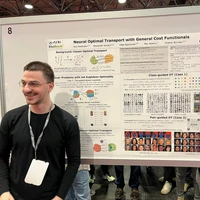
Neural Optimal Transport with General Cost Functionals
We introduce a novel neural network-based algorithm to compute optimal transport (OT) plans for general cost functionals. In contrast to common Euclidean costs, i.e., ell^1 or ell^2, such functionals provide more flexibility and allow using auxiliary information, such as class labels, to construct the required transport map. Existing methods for general costs are discrete and have limitations in practice, i.e. they do not provide an out-of-sample estimation. We address the challenge of designing a continuous OT approach for general costs that generalizes to new data points in high-dimensional spaces, such as images. Additionally, we provide the theoretical error analysis for our recovered transport plans. As an application, we construct a cost functional to map data distributions while preserving the class-wise structure.
The Topology and Geometry of Neural Representations
A central question for neuroscience is how to characterize brain representations of perceptual and cognitive content. An ideal characterization should distinguish different functional regions with robustness to noise and idiosyncrasies of individual brains that do not correspond to computational differences. Previous studies have characterized brain representations by their representational geometry, which is defined by the representational dissimilarity matrix (RDM), a summary statistic that abstracts from the roles of individual neurons (or responses channels) and characterizes the discriminability of stimuli. Here we explore a further step of abstraction: from the geometry to the topology of brain representations. We propose topological representational similarity analysis (tRSA), an extension of representational similarity analysis (RSA) that uses a family of geo-topological summary statistics that generalizes the RDM to characterize the topology while de-emphasizing the geometry. We evaluate this new family of statistics in terms of the sensitivity and specificity for model selection using both simulations and functional MRI (fMRI) data. In the simulations, the ground truth is a data-generating layer representation in a neural network model and the models are the same and other layers in different model instances (trained from different random seeds). In fMRI, the ground truth is a visual area and the models are the same and other areas measured in different subjects. Results show that topology-sensitive characterizations of population codes are robust to noise and interindividual variability and maintain excellent sensitivity to the unique representational signatures of different neural network layers and brain regions.
Functional Bayesian Tucker Decomposition for Continuous-indexed Tensor Data
Tucker decomposition is a powerful tensor model to handle multi-aspect data. It demonstrates the low-rank property by decomposing the grid-structured data as interactions between a core tensor and a set of object representations (factors). A fundamental assumption of such decomposition is that there are finite objects in each aspect or mode, corresponding to discrete indexes of data entries. However, real-world data is often not naturally posed in this setting. For example, geographic data is represented as continuous indexes of latitude and longitude coordinates, and cannot fit tensor models directly. To generalize Tucker decomposition to such scenarios, we propose Functional Bayesian Tucker Decomposition (FunBaT). We treat the continuous-indexed data as the interaction between the Tucker core and a group of latent functions. We use Gaussian processes (GP) as functional priors to model the latent functions. Then, we convert each GP into a state-space prior by constructing an equivalent stochastic differential equation (SDE) to reduce computational cost. An efficient inference algorithm is developed for scalable posterior approximation based on advanced message-passing techniques. The advantage of our method is shown in both synthetic data and several real-world applications. We release the code of FunBaT at https://github.com/xuangu-fang/Functional-Bayesian-Tucker-Decomposition.
Multivariate Functional Linear Discriminant Analysis for the Classification of Short Time Series with Missing Data
Functional linear discriminant analysis (FLDA) is a powerful tool that extends LDA-mediated multiclass classification and dimension reduction to univariate time-series functions. However, in the age of large multivariate and incomplete data, statistical dependencies between features must be estimated in a computationally tractable way, while also dealing with missing data. There is a need for a computationally tractable approach that considers the statistical dependencies between features and can handle missing values. We here develop a multivariate version of FLDA (MUDRA) to tackle this issue and describe an efficient expectation/conditional-maximization (ECM) algorithm to infer its parameters. We assess its predictive power on the "Articulary Word Recognition" data set and show its improvement over the state-of-the-art, especially in the case of missing data. MUDRA allows interpretable classification of data sets with large proportions of missing data, which will be particularly useful for medical or psychological data sets.

Towards Automated Functional Equation Proving: A Benchmark Dataset and A Domain-Specific In-Context Agent
Automated Theorem Proving (ATP) faces challenges due to its complexity and computational demands. Recent work has explored using Large Language Models (LLMs) for ATP action selection, but these methods can be resource-intensive. This study introduces FEAS, an agent that enhances the COPRA in-context learning framework within Lean. FEAS refines prompt generation, response parsing, and incorporates domain-specific heuristics for functional equations. It introduces FunEq, a curated dataset of functional equation problems with varying difficulty. FEAS outperforms baselines on FunEq, particularly with the integration of domain-specific heuristics. The results demonstrate FEAS's effectiveness in generating and formalizing high-level proof strategies into Lean proofs, showcasing the potential of tailored approaches for specific ATP challenges.
Functional Map of the World
We present a new dataset, Functional Map of the World (fMoW), which aims to inspire the development of machine learning models capable of predicting the functional purpose of buildings and land use from temporal sequences of satellite images and a rich set of metadata features. The metadata provided with each image enables reasoning about location, time, sun angles, physical sizes, and other features when making predictions about objects in the image. Our dataset consists of over 1 million images from over 200 countries. For each image, we provide at least one bounding box annotation containing one of 63 categories, including a "false detection" category. We present an analysis of the dataset along with baseline approaches that reason about metadata and temporal views. Our data, code, and pretrained models have been made publicly available.
FMB: a Functional Manipulation Benchmark for Generalizable Robotic Learning
In this paper, we propose a real-world benchmark for studying robotic learning in the context of functional manipulation: a robot needs to accomplish complex long-horizon behaviors by composing individual manipulation skills in functionally relevant ways. The core design principles of our Functional Manipulation Benchmark (FMB) emphasize a harmonious balance between complexity and accessibility. Tasks are deliberately scoped to be narrow, ensuring that models and datasets of manageable scale can be utilized effectively to track progress. Simultaneously, they are diverse enough to pose a significant generalization challenge. Furthermore, the benchmark is designed to be easily replicable, encompassing all essential hardware and software components. To achieve this goal, FMB consists of a variety of 3D-printed objects designed for easy and accurate replication by other researchers. The objects are procedurally generated, providing a principled framework to study generalization in a controlled fashion. We focus on fundamental manipulation skills, including grasping, repositioning, and a range of assembly behaviors. The FMB can be used to evaluate methods for acquiring individual skills, as well as methods for combining and ordering such skills to solve complex, multi-stage manipulation tasks. We also offer an imitation learning framework that includes a suite of policies trained to solve the proposed tasks. This enables researchers to utilize our tasks as a versatile toolkit for examining various parts of the pipeline. For example, researchers could propose a better design for a grasping controller and evaluate it in combination with our baseline reorientation and assembly policies as part of a pipeline for solving multi-stage tasks. Our dataset, object CAD files, code, and evaluation videos can be found on our project website: https://functional-manipulation-benchmark.github.io

Putnam-AXIOM: A Functional and Static Benchmark
Current mathematical reasoning benchmarks for large language models (LLMs) are approaching saturation, with some achieving > 90% accuracy, and are increasingly compromised by training-set contamination. We introduce Putnam-AXIOM, a benchmark of 522 university-level competition problems drawn from the prestigious William Lowell Putnam Mathematical Competition, and Putnam-AXIOM Variation, an unseen companion set of 100 functional variants generated by programmatically perturbing variables and constants. The variation protocol produces an unlimited stream of equally difficult, unseen instances -- yielding a contamination-resilient test bed. On the Original set, OpenAI's o1-preview -- the strongest evaluated model -- scores 41.9%, but its accuracy drops by 19.6% (46.8% relative decrease) on the paired Variations. The remaining eighteen models show the same downward trend, ten of them with non-overlapping 95% confidence intervals. These gaps suggest memorization and highlight the necessity of dynamic benchmarks. We complement "boxed" accuracy with Teacher-Forced Accuracy (TFA), a lightweight metric that directly scores reasoning traces and automates natural language proof evaluations. Putnam-AXIOM therefore provides a rigorous, contamination-resilient evaluation framework for assessing advanced mathematical reasoning of LLMs. Data and evaluation code are publicly available at https://github.com/brando90/putnam-axiom.
Functional Benchmarks for Robust Evaluation of Reasoning Performance, and the Reasoning Gap
We propose a framework for robust evaluation of reasoning capabilities of language models, using functional variants of benchmarks. Models that solve a reasoning test should exhibit no difference in performance over the static version of a problem compared to a snapshot of the functional variant. We have rewritten the relevant fragment of the MATH benchmark into its functional variant MATH(), with functionalization of other benchmarks to follow. When evaluating current state-of-the-art models over snapshots of MATH(), we find a reasoning gap -- the percentage difference between the static and functional accuracies. We find reasoning gaps from 58.35% to 80.31% among the state-of-the-art closed and open weights models that perform well on static benchmarks, with the caveat that the gaps are likely to be smaller with more sophisticated prompting strategies. Here we show that models which anecdotally have good reasoning performance over real-world tasks, have quantifiable lower gaps, motivating the open problem of building "gap 0" models. Code for evaluation and new evaluation datasets, three MATH() snapshots, are publicly available at https://github.com/consequentai/fneval/.

fMRI-3D: A Comprehensive Dataset for Enhancing fMRI-based 3D Reconstruction
Reconstructing 3D visuals from functional Magnetic Resonance Imaging (fMRI) data, introduced as Recon3DMind in our conference work, is of significant interest to both cognitive neuroscience and computer vision. To advance this task, we present the fMRI-3D dataset, which includes data from 15 participants and showcases a total of 4768 3D objects. The dataset comprises two components: fMRI-Shape, previously introduced and accessible at https://huggingface.co/datasets/Fudan-fMRI/fMRI-Shape, and fMRI-Objaverse, proposed in this paper and available at https://huggingface.co/datasets/Fudan-fMRI/fMRI-Objaverse. fMRI-Objaverse includes data from 5 subjects, 4 of whom are also part of the Core set in fMRI-Shape, with each subject viewing 3142 3D objects across 117 categories, all accompanied by text captions. This significantly enhances the diversity and potential applications of the dataset. Additionally, we propose MinD-3D, a novel framework designed to decode 3D visual information from fMRI signals. The framework first extracts and aggregates features from fMRI data using a neuro-fusion encoder, then employs a feature-bridge diffusion model to generate visual features, and finally reconstructs the 3D object using a generative transformer decoder. We establish new benchmarks by designing metrics at both semantic and structural levels to evaluate model performance. Furthermore, we assess our model's effectiveness in an Out-of-Distribution setting and analyze the attribution of the extracted features and the visual ROIs in fMRI signals. Our experiments demonstrate that MinD-3D not only reconstructs 3D objects with high semantic and spatial accuracy but also deepens our understanding of how human brain processes 3D visual information. Project page at: https://jianxgao.github.io/MinD-3D.

Continuous-Time Functional Diffusion Processes
We introduce Functional Diffusion Processes (FDPs), which generalize score-based diffusion models to infinite-dimensional function spaces. FDPs require a new mathematical framework to describe the forward and backward dynamics, and several extensions to derive practical training objectives. These include infinite-dimensional versions of Girsanov theorem, in order to be able to compute an ELBO, and of the sampling theorem, in order to guarantee that functional evaluations in a countable set of points are equivalent to infinite-dimensional functions. We use FDPs to build a new breed of generative models in function spaces, which do not require specialized network architectures, and that can work with any kind of continuous data. Our results on real data show that FDPs achieve high-quality image generation, using a simple MLP architecture with orders of magnitude fewer parameters than existing diffusion models.



Empowering Functional Neuroimaging: A Pre-trained Generative Framework for Unified Representation of Neural Signals
Multimodal functional neuroimaging enables systematic analysis of brain mechanisms and provides discriminative representations for brain-computer interface (BCI) decoding. However, its acquisition is constrained by high costs and feasibility limitations. Moreover, underrepresentation of specific groups undermines fairness of BCI decoding model. To address these challenges, we propose a unified representation framework for multimodal functional neuroimaging via generative artificial intelligence (AI). By mapping multimodal functional neuroimaging into a unified representation space, the proposed framework is capable of generating data for acquisition-constrained modalities and underrepresented groups. Experiments show that the framework can generate data consistent with real brain activity patterns, provide insights into brain mechanisms, and improve performance on downstream tasks. More importantly, it can enhance model fairness by augmenting data for underrepresented groups. Overall, the framework offers a new paradigm for decreasing the cost of acquiring multimodal functional neuroimages and enhancing the fairness of BCI decoding models.
Open Molecular Crystals 2025 (OMC25) Dataset and Models
The development of accurate and efficient machine learning models for predicting the structure and properties of molecular crystals has been hindered by the scarcity of publicly available datasets of structures with property labels. To address this challenge, we introduce the Open Molecular Crystals 2025 (OMC25) dataset, a collection of over 27 million molecular crystal structures containing 12 elements and up to 300 atoms in the unit cell. The dataset was generated from dispersion-inclusive density functional theory (DFT) relaxation trajectories of over 230,000 randomly generated molecular crystal structures of around 50,000 organic molecules. OMC25 comprises diverse chemical compounds capable of forming different intermolecular interactions and a wide range of crystal packing motifs. We provide detailed information on the dataset's construction, composition, structure, and properties. To demonstrate the quality and use cases of OMC25, we further trained and evaluated state-of-the-art open-source machine learning interatomic potentials. By making this dataset publicly available, we aim to accelerate the development of more accurate and efficient machine learning models for molecular crystals.
Predicting thermoelectric properties from crystal graphs and material descriptors - first application for functional materials
We introduce the use of Crystal Graph Convolutional Neural Networks (CGCNN), Fully Connected Neural Networks (FCNN) and XGBoost to predict thermoelectric properties. The dataset for the CGCNN is independent of Density Functional Theory (DFT) and only relies on the crystal and atomic information, while that for the FCNN is based on a rich attribute list mined from Materialsproject.org. The results show that the optimized FCNN is three layer deep and is able to predict the scattering-time independent thermoelectric powerfactor much better than the CGCNN (or XGBoost), suggesting that bonding and density of states descriptors informed from materials science knowledge obtained partially from DFT are vital to predict functional properties.
FARM: Functional Group-Aware Representations for Small Molecules
We introduce Functional Group-Aware Representations for Small Molecules (FARM), a novel foundation model designed to bridge the gap between SMILES, natural language, and molecular graphs. The key innovation of FARM lies in its functional group-aware tokenization, which incorporates functional group information directly into the representations. This strategic reduction in tokenization granularity in a way that is intentionally interfaced with key drivers of functional properties (i.e., functional groups) enhances the model's understanding of chemical language, expands the chemical lexicon, more effectively bridging SMILES and natural language, and ultimately advances the model's capacity to predict molecular properties. FARM also represents molecules from two perspectives: by using masked language modeling to capture atom-level features and by employing graph neural networks to encode the whole molecule topology. By leveraging contrastive learning, FARM aligns these two views of representations into a unified molecular embedding. We rigorously evaluate FARM on the MoleculeNet dataset, where it achieves state-of-the-art performance on 10 out of 12 tasks. These results highlight FARM's potential to improve molecular representation learning, with promising applications in drug discovery and pharmaceutical research.

Open-Vocabulary Functional 3D Scene Graphs for Real-World Indoor Spaces
We introduce the task of predicting functional 3D scene graphs for real-world indoor environments from posed RGB-D images. Unlike traditional 3D scene graphs that focus on spatial relationships of objects, functional 3D scene graphs capture objects, interactive elements, and their functional relationships. Due to the lack of training data, we leverage foundation models, including visual language models (VLMs) and large language models (LLMs), to encode functional knowledge. We evaluate our approach on an extended SceneFun3D dataset and a newly collected dataset, FunGraph3D, both annotated with functional 3D scene graphs. Our method significantly outperforms adapted baselines, including Open3DSG and ConceptGraph, demonstrating its effectiveness in modeling complex scene functionalities. We also demonstrate downstream applications such as 3D question answering and robotic manipulation using functional 3D scene graphs. See our project page at https://openfungraph.github.io


Lite-RVFL: A Lightweight Random Vector Functional-Link Neural Network for Learning Under Concept Drift
The change in data distribution over time, also known as concept drift, poses a significant challenge to the reliability of online learning methods. Existing methods typically require model retraining or drift detection, both of which demand high computational costs and are often unsuitable for real-time applications. To address these limitations, a lightweight, fast and efficient random vector functional-link network termed Lite-RVFL is proposed, capable of adapting to concept drift without drift detection and retraining. Lite-RVFL introduces a novel objective function that assigns weights exponentially increasing to new samples, thereby emphasizing recent data and enabling timely adaptation. Theoretical analysis confirms the feasibility of this objective function for drift adaptation, and an efficient incremental update rule is derived. Experimental results on a real-world safety assessment task validate the efficiency, effectiveness in adapting to drift, and potential to capture temporal patterns of Lite-RVFL. The source code is available at https://github.com/songqiaohu/Lite-RVFL.
F-INR: Functional Tensor Decomposition for Implicit Neural Representations
Implicit Neural Representation (INR) has emerged as a powerful tool for encoding discrete signals into continuous, differentiable functions using neural networks. However, these models often have an unfortunate reliance on monolithic architectures to represent high-dimensional data, leading to prohibitive computational costs as dimensionality grows. We propose F-INR, a framework that reformulates INR learning through functional tensor decomposition, breaking down high-dimensional tasks into lightweight, axis-specific sub-networks. Each sub-network learns a low-dimensional data component (e.g., spatial or temporal). Then, we combine these components via tensor operations, reducing forward pass complexity while improving accuracy through specialized learning. F-INR is modular and, therefore, architecture-agnostic, compatible with MLPs, SIREN, WIRE, or other state-of-the-art INR architecture. It is also decomposition-agnostic, supporting CP, TT, and Tucker modes with user-defined rank for speed-accuracy control. In our experiments, F-INR trains 100times faster than existing approaches on video tasks while achieving higher fidelity (+3.4 dB PSNR). Similar gains hold for image compression, physics simulations, and 3D geometry reconstruction. Through this, F-INR offers a new scalable, flexible solution for high-dimensional signal modeling.
Removing Bias in Multi-modal Classifiers: Regularization by Maximizing Functional Entropies
Many recent datasets contain a variety of different data modalities, for instance, image, question, and answer data in visual question answering (VQA). When training deep net classifiers on those multi-modal datasets, the modalities get exploited at different scales, i.e., some modalities can more easily contribute to the classification results than others. This is suboptimal because the classifier is inherently biased towards a subset of the modalities. To alleviate this shortcoming, we propose a novel regularization term based on the functional entropy. Intuitively, this term encourages to balance the contribution of each modality to the classification result. However, regularization with the functional entropy is challenging. To address this, we develop a method based on the log-Sobolev inequality, which bounds the functional entropy with the functional-Fisher-information. Intuitively, this maximizes the amount of information that the modalities contribute. On the two challenging multi-modal datasets VQA-CPv2 and SocialIQ, we obtain state-of-the-art results while more uniformly exploiting the modalities. In addition, we demonstrate the efficacy of our method on Colored MNIST.

Efficient and Scalable Density Functional Theory Hamiltonian Prediction through Adaptive Sparsity
Hamiltonian matrix prediction is pivotal in computational chemistry, serving as the foundation for determining a wide range of molecular properties. While SE(3) equivariant graph neural networks have achieved remarkable success in this domain, their substantial computational cost--driven by high-order tensor product (TP) operations--restricts their scalability to large molecular systems with extensive basis sets. To address this challenge, we introduce SPHNet, an efficient and scalable equivariant network, that incorporates adaptive SParsity into Hamiltonian prediction. SPHNet employs two innovative sparse gates to selectively constrain non-critical interaction combinations, significantly reducing tensor product computations while maintaining accuracy. To optimize the sparse representation, we develop a Three-phase Sparsity Scheduler, ensuring stable convergence and achieving high performance at sparsity rates of up to 70%. Extensive evaluations on QH9 and PubchemQH datasets demonstrate that SPHNet achieves state-of-the-art accuracy while providing up to a 7x speedup over existing models. Beyond Hamiltonian prediction, the proposed sparsification techniques also hold significant potential for improving the efficiency and scalability of other SE(3) equivariant networks, further broadening their applicability and impact. Our code can be found at https://github.com/microsoft/SPHNet.
MozzaVID: Mozzarella Volumetric Image Dataset
Influenced by the complexity of volumetric imaging, there is a shortage of established datasets useful for benchmarking volumetric deep-learning models. As a consequence, new and existing models are not easily comparable, limiting the development of architectures optimized specifically for volumetric data. To counteract this trend, we introduce MozzaVID - a large, clean, and versatile volumetric classification dataset. Our dataset contains X-ray computed tomography (CT) images of mozzarella microstructure and enables the classification of 25 cheese types and 149 cheese samples. We provide data in three different resolutions, resulting in three dataset instances containing from 591 to 37,824 images. While being general-purpose, the dataset also facilitates investigating mozzarella structure properties. The structure of food directly affects its functional properties and thus its consumption experience. Understanding food structure helps tune the production and mimicking it enables sustainable alternatives to animal-derived food products. The complex and disordered nature of food structures brings a unique challenge, where a choice of appropriate imaging method, scale, and sample size is not trivial. With this dataset we aim to address these complexities, contributing to more robust structural analysis models. The dataset can be downloaded from: https://archive.compute.dtu.dk/files/public/projects/MozzaVID/.

Integrating Efficient Optimal Transport and Functional Maps For Unsupervised Shape Correspondence Learning
In the realm of computer vision and graphics, accurately establishing correspondences between geometric 3D shapes is pivotal for applications like object tracking, registration, texture transfer, and statistical shape analysis. Moving beyond traditional hand-crafted and data-driven feature learning methods, we incorporate spectral methods with deep learning, focusing on functional maps (FMs) and optimal transport (OT). Traditional OT-based approaches, often reliant on entropy regularization OT in learning-based framework, face computational challenges due to their quadratic cost. Our key contribution is to employ the sliced Wasserstein distance (SWD) for OT, which is a valid fast optimal transport metric in an unsupervised shape matching framework. This unsupervised framework integrates functional map regularizers with a novel OT-based loss derived from SWD, enhancing feature alignment between shapes treated as discrete probability measures. We also introduce an adaptive refinement process utilizing entropy regularized OT, further refining feature alignments for accurate point-to-point correspondences. Our method demonstrates superior performance in non-rigid shape matching, including near-isometric and non-isometric scenarios, and excels in downstream tasks like segmentation transfer. The empirical results on diverse datasets highlight our framework's effectiveness and generalization capabilities, setting new standards in non-rigid shape matching with efficient OT metrics and an adaptive refinement module.
Massively Multilingual Corpus of Sentiment Datasets and Multi-faceted Sentiment Classification Benchmark
Despite impressive advancements in multilingual corpora collection and model training, developing large-scale deployments of multilingual models still presents a significant challenge. This is particularly true for language tasks that are culture-dependent. One such example is the area of multilingual sentiment analysis, where affective markers can be subtle and deeply ensconced in culture. This work presents the most extensive open massively multilingual corpus of datasets for training sentiment models. The corpus consists of 79 manually selected datasets from over 350 datasets reported in the scientific literature based on strict quality criteria. The corpus covers 27 languages representing 6 language families. Datasets can be queried using several linguistic and functional features. In addition, we present a multi-faceted sentiment classification benchmark summarizing hundreds of experiments conducted on different base models, training objectives, dataset collections, and fine-tuning strategies.

MindEye2: Shared-Subject Models Enable fMRI-To-Image With 1 Hour of Data
Reconstructions of visual perception from brain activity have improved tremendously, but the practical utility of such methods has been limited. This is because such models are trained independently per subject where each subject requires dozens of hours of expensive fMRI training data to attain high-quality results. The present work showcases high-quality reconstructions using only 1 hour of fMRI training data. We pretrain our model across 7 subjects and then fine-tune on minimal data from a new subject. Our novel functional alignment procedure linearly maps all brain data to a shared-subject latent space, followed by a shared non-linear mapping to CLIP image space. We then map from CLIP space to pixel space by fine-tuning Stable Diffusion XL to accept CLIP latents as inputs instead of text. This approach improves out-of-subject generalization with limited training data and also attains state-of-the-art image retrieval and reconstruction metrics compared to single-subject approaches. MindEye2 demonstrates how accurate reconstructions of perception are possible from a single visit to the MRI facility. All code is available on GitHub.





EnzyControl: Adding Functional and Substrate-Specific Control for Enzyme Backbone Generation
Designing enzyme backbones with substrate-specific functionality is a critical challenge in computational protein engineering. Current generative models excel in protein design but face limitations in binding data, substrate-specific control, and flexibility for de novo enzyme backbone generation. To address this, we introduce EnzyBind, a dataset with 11,100 experimentally validated enzyme-substrate pairs specifically curated from PDBbind. Building on this, we propose EnzyControl, a method that enables functional and substrate-specific control in enzyme backbone generation. Our approach generates enzyme backbones conditioned on MSA-annotated catalytic sites and their corresponding substrates, which are automatically extracted from curated enzyme-substrate data. At the core of EnzyControl is EnzyAdapter, a lightweight, modular component integrated into a pretrained motif-scaffolding model, allowing it to become substrate-aware. A two-stage training paradigm further refines the model's ability to generate accurate and functional enzyme structures. Experiments show that our EnzyControl achieves the best performance across structural and functional metrics on EnzyBind and EnzyBench benchmarks, with particularly notable improvements of 13\% in designability and 13\% in catalytic efficiency compared to the baseline models. The code is released at https://github.com/Vecteur-libre/EnzyControl.

Functional Diffusion
We propose a new class of generative diffusion models, called functional diffusion. In contrast to previous work, functional diffusion works on samples that are represented by functions with a continuous domain. Functional diffusion can be seen as an extension of classical diffusion models to an infinite-dimensional domain. Functional diffusion is very versatile as images, videos, audio, 3D shapes, deformations, \etc, can be handled by the same framework with minimal changes. In addition, functional diffusion is especially suited for irregular data or data defined in non-standard domains. In our work, we derive the necessary foundations for functional diffusion and propose a first implementation based on the transformer architecture. We show generative results on complicated signed distance functions and deformation functions defined on 3D surfaces.

Raw Data Is All You Need: Virtual Axle Detector with Enhanced Receptive Field
Rising maintenance costs of ageing infrastructure necessitate innovative monitoring techniques. This paper presents a new approach for axle detection, enabling real-time application of Bridge Weigh-In-Motion (BWIM) systems without dedicated axle detectors. The proposed method adapts the Virtual Axle Detector (VAD) model to handle raw acceleration data, which allows the receptive field to be increased. The proposed Virtual Axle Detector with Enhanced Receptive field (VADER) improves the \(F_1\) score by 73\% and spatial accuracy by 39\%, while cutting computational and memory costs by 99\% compared to the state-of-the-art VAD. VADER reaches a \(F_1\) score of 99.4\% and a spatial error of 4.13~cm when using a representative training set and functional sensors. We also introduce a novel receptive field (RF) rule for an object-size driven design of Convolutional Neural Network (CNN) architectures. Based on this rule, our results suggest that models using raw data could achieve better performance than those using spectrograms, offering a compelling reason to consider raw data as input.
Solving Data Quality Problems with Desbordante: a Demo
Data profiling is an essential process in modern data-driven industries. One of its critical components is the discovery and validation of complex statistics, including functional dependencies, data constraints, association rules, and others. However, most existing data profiling systems that focus on complex statistics do not provide proper integration with the tools used by contemporary data scientists. This creates a significant barrier to the adoption of these tools in the industry. Moreover, existing systems were not created with industrial-grade workloads in mind. Finally, they do not aim to provide descriptive explanations, i.e. why a given pattern is not found. It is a significant issue as it is essential to understand the underlying reasons for a specific pattern's absence to make informed decisions based on the data. Because of that, these patterns are effectively rest in thin air: their application scope is rather limited, they are rarely used by the broader public. At the same time, as we are going to demonstrate in this presentation, complex statistics can be efficiently used to solve many classic data quality problems. Desbordante is an open-source data profiler that aims to close this gap. It is built with emphasis on industrial application: it is efficient, scalable, resilient to crashes, and provides explanations. Furthermore, it provides seamless Python integration by offloading various costly operations to the C++ core, not only mining. In this demonstration, we show several scenarios that allow end users to solve different data quality problems. Namely, we showcase typo detection, data deduplication, and data anomaly detection scenarios.

FunkNN: Neural Interpolation for Functional Generation
Can we build continuous generative models which generalize across scales, can be evaluated at any coordinate, admit calculation of exact derivatives, and are conceptually simple? Existing MLP-based architectures generate worse samples than the grid-based generators with favorable convolutional inductive biases. Models that focus on generating images at different scales do better, but employ complex architectures not designed for continuous evaluation of images and derivatives. We take a signal-processing perspective and treat continuous image generation as interpolation from samples. Indeed, correctly sampled discrete images contain all information about the low spatial frequencies. The question is then how to extrapolate the spectrum in a data-driven way while meeting the above design criteria. Our answer is FunkNN -- a new convolutional network which learns how to reconstruct continuous images at arbitrary coordinates and can be applied to any image dataset. Combined with a discrete generative model it becomes a functional generator which can act as a prior in continuous ill-posed inverse problems. We show that FunkNN generates high-quality continuous images and exhibits strong out-of-distribution performance thanks to its patch-based design. We further showcase its performance in several stylized inverse problems with exact spatial derivatives.

Open Materials 2024 (OMat24) Inorganic Materials Dataset and Models
The ability to discover new materials with desirable properties is critical for numerous applications from helping mitigate climate change to advances in next generation computing hardware. AI has the potential to accelerate materials discovery and design by more effectively exploring the chemical space compared to other computational methods or by trial-and-error. While substantial progress has been made on AI for materials data, benchmarks, and models, a barrier that has emerged is the lack of publicly available training data and open pre-trained models. To address this, we present a Meta FAIR release of the Open Materials 2024 (OMat24) large-scale open dataset and an accompanying set of pre-trained models. OMat24 contains over 110 million density functional theory (DFT) calculations focused on structural and compositional diversity. Our EquiformerV2 models achieve state-of-the-art performance on the Matbench Discovery leaderboard and are capable of predicting ground-state stability and formation energies to an F1 score above 0.9 and an accuracy of 20 meV/atom, respectively. We explore the impact of model size, auxiliary denoising objectives, and fine-tuning on performance across a range of datasets including OMat24, MPtraj, and Alexandria. The open release of the OMat24 dataset and models enables the research community to build upon our efforts and drive further advancements in AI-assisted materials science.


Generating $π$-Functional Molecules Using STGG+ with Active Learning
Generating novel molecules with out-of-distribution properties is a major challenge in molecular discovery. While supervised learning methods generate high-quality molecules similar to those in a dataset, they struggle to generalize to out-of-distribution properties. Reinforcement learning can explore new chemical spaces but often conducts 'reward-hacking' and generates non-synthesizable molecules. In this work, we address this problem by integrating a state-of-the-art supervised learning method, STGG+, in an active learning loop. Our approach iteratively generates, evaluates, and fine-tunes STGG+ to continuously expand its knowledge. We denote this approach STGG+AL. We apply STGG+AL to the design of organic pi-functional materials, specifically two challenging tasks: 1) generating highly absorptive molecules characterized by high oscillator strength and 2) designing absorptive molecules with reasonable oscillator strength in the near-infrared (NIR) range. The generated molecules are validated and rationalized in-silico with time-dependent density functional theory. Our results demonstrate that our method is highly effective in generating novel molecules with high oscillator strength, contrary to existing methods such as reinforcement learning (RL) methods. We open-source our active-learning code along with our Conjugated-xTB dataset containing 2.9 million pi-conjugated molecules and the function for approximating the oscillator strength and absorption wavelength (based on sTDA-xTB).


HaGRID - HAnd Gesture Recognition Image Dataset
In this paper, we introduce an enormous dataset HaGRID (HAnd Gesture Recognition Image Dataset) for hand gesture recognition (HGR) systems. This dataset contains 552,992 samples divided into 18 classes of gestures. The annotations consist of bounding boxes of hands with gesture labels and markups of leading hands. The proposed dataset allows for building HGR systems, which can be used in video conferencing services, home automation systems, the automotive sector, services for people with speech and hearing impairments, etc. We are especially focused on interaction with devices to manage them. That is why all 18 chosen gestures are functional, familiar to the majority of people, and may be an incentive to take some action. In addition, we used crowdsourcing platforms to collect the dataset and took into account various parameters to ensure data diversity. We describe the challenges of using existing HGR datasets for our task and provide a detailed overview of them. Furthermore, the baselines for the hand detection and gesture classification tasks are proposed.
VeriCoder: Enhancing LLM-Based RTL Code Generation through Functional Correctness Validation
Recent advances in Large Language Models (LLMs) have sparked growing interest in applying them to Electronic Design Automation (EDA) tasks, particularly Register Transfer Level (RTL) code generation. While several RTL datasets have been introduced, most focus on syntactic validity rather than functional validation with tests, leading to training examples that compile but may not implement the intended behavior. We present VERICODER, a model for RTL code generation fine-tuned on a dataset validated for functional correctness. This fine-tuning dataset is constructed using a novel methodology that combines unit test generation with feedback-directed refinement. Given a natural language specification and an initial RTL design, we prompt a teacher model (GPT-4o-mini) to generate unit tests and iteratively revise the RTL design based on its simulation results using the generated tests. If necessary, the teacher model also updates the tests to ensure they comply with the natural language specification. As a result of this process, every example in our dataset is functionally validated, consisting of a natural language description, an RTL implementation, and passing tests. Fine-tuned on this dataset of over 125,000 examples, VERICODER achieves state-of-the-art metrics in functional correctness on VerilogEval and RTLLM, with relative gains of up to 71.7% and 27.4% respectively. An ablation study further shows that models trained on our functionally validated dataset outperform those trained on functionally non-validated datasets, underscoring the importance of high-quality datasets in RTL code generation.

AffordPose: A Large-scale Dataset of Hand-Object Interactions with Affordance-driven Hand Pose
How human interact with objects depends on the functional roles of the target objects, which introduces the problem of affordance-aware hand-object interaction. It requires a large number of human demonstrations for the learning and understanding of plausible and appropriate hand-object interactions. In this work, we present AffordPose, a large-scale dataset of hand-object interactions with affordance-driven hand pose. We first annotate the specific part-level affordance labels for each object, e.g. twist, pull, handle-grasp, etc, instead of the general intents such as use or handover, to indicate the purpose and guide the localization of the hand-object interactions. The fine-grained hand-object interactions reveal the influence of hand-centered affordances on the detailed arrangement of the hand poses, yet also exhibit a certain degree of diversity. We collect a total of 26.7K hand-object interactions, each including the 3D object shape, the part-level affordance label, and the manually adjusted hand poses. The comprehensive data analysis shows the common characteristics and diversity of hand-object interactions per affordance via the parameter statistics and contacting computation. We also conduct experiments on the tasks of hand-object affordance understanding and affordance-oriented hand-object interaction generation, to validate the effectiveness of our dataset in learning the fine-grained hand-object interactions. Project page: https://github.com/GentlesJan/AffordPose.
Executable Functional Abstractions: Inferring Generative Programs for Advanced Math Problems
Scientists often infer abstract procedures from specific instances of problems and use the abstractions to generate new, related instances. For example, programs encoding the formal rules and properties of a system have been useful in fields ranging from RL (procedural environments) to physics (simulation engines). These programs can be seen as functions which execute to different outputs based on their parameterizations (e.g., gridworld configuration or initial physical conditions). We introduce the term EFA (Executable Functional Abstraction) to denote such programs for math problems. EFA-like constructs have been shown to be useful for math reasoning as problem generators for stress-testing models. However, prior work has been limited to abstractions for grade-school math (whose simple rules are easy to encode in programs), while generating EFAs for advanced math has thus far required human engineering. We explore the automatic construction of EFAs for advanced math problems. We operationalize the task of automatically constructing EFAs as a program synthesis task, and develop EFAGen, which conditions an LLM on a seed math problem and its step-by-step solution to generate candidate EFA programs that are faithful to the generalized problem and solution class underlying the seed problem. Furthermore, we formalize properties any valid EFA must possess in terms of executable unit tests, and show how the tests can be used as verifiable rewards to train LLMs to become better writers of EFAs. We demonstrate that EFAs constructed by EFAGen behave rationally by remaining faithful to seed problems, produce learnable problem variations, and that EFAGen can infer EFAs across multiple diverse sources of competition-level math problems. Finally, we show downstream uses of model-written EFAs e.g. finding problem variations that are harder or easier for a learner to solve, as well as data generation.




Synthetic Data Generation Using Large Language Models: Advances in Text and Code
Large language models (LLMs) have unlocked new possibilities for generating synthetic training data in both natural language and code. By producing artificial but task-relevant examples, these models can significantly augment or even replace real-world datasets, especially when labeled data is scarce or sensitive. This paper surveys recent advances in using LLMs to create synthetic text and code, emphasizing prompt-based generation, retrieval-augmented pipelines, and iterative self-refinement. We show how these methods enrich low-resource tasks such as classification and question answering, as well as code-centric applications such as instruction tuning, code translation, and bug repair, by enabling automated verification of functional correctness. Alongside potential benefits like cost-effectiveness, broad coverage, and controllable diversity, we address challenges such as factual inaccuracies in generated text, lack of stylistic realism, and the risk of bias amplification. Proposed mitigations include filtering and weighting outputs and reinforcement learning with execution feedback for code. We conclude with open research directions like automated prompt engineering, cross-modal data synthesis, and robust evaluation frameworks, highlighting the importance of LLM-generated synthetic data in advancing AI while emphasizing ethical and quality safeguards.


Double Machine Learning meets Panel Data -- Promises, Pitfalls, and Potential Solutions
Estimating causal effect using machine learning (ML) algorithms can help to relax functional form assumptions if used within appropriate frameworks. However, most of these frameworks assume settings with cross-sectional data, whereas researchers often have access to panel data, which in traditional methods helps to deal with unobserved heterogeneity between units. In this paper, we explore how we can adapt double/debiased machine learning (DML) (Chernozhukov et al., 2018) for panel data in the presence of unobserved heterogeneity. This adaptation is challenging because DML's cross-fitting procedure assumes independent data and the unobserved heterogeneity is not necessarily additively separable in settings with nonlinear observed confounding. We assess the performance of several intuitively appealing estimators in a variety of simulations. While we find violations of the cross-fitting assumptions to be largely inconsequential for the accuracy of the effect estimates, many of the considered methods fail to adequately account for the presence of unobserved heterogeneity. However, we find that using predictive models based on the correlated random effects approach (Mundlak, 1978) within DML leads to accurate coefficient estimates across settings, given a sample size that is large relative to the number of observed confounders. We also show that the influence of the unobserved heterogeneity on the observed confounders plays a significant role for the performance of most alternative methods.
Bayesian Optimization through Gaussian Cox Process Models for Spatio-temporal Data
Bayesian optimization (BO) has established itself as a leading strategy for efficiently optimizing expensive-to-evaluate functions. Existing BO methods mostly rely on Gaussian process (GP) surrogate models and are not applicable to (doubly-stochastic) Gaussian Cox processes, where the observation process is modulated by a latent intensity function modeled as a GP. In this paper, we propose a novel maximum a posteriori inference of Gaussian Cox processes. It leverages the Laplace approximation and change of kernel technique to transform the problem into a new reproducing kernel Hilbert space, where it becomes more tractable computationally. It enables us to obtain both a functional posterior of the latent intensity function and the covariance of the posterior, thus extending existing works that often focus on specific link functions or estimating the posterior mean. Using the result, we propose a BO framework based on the Gaussian Cox process model and further develop a Nystr\"om approximation for efficient computation. Extensive evaluations on various synthetic and real-world datasets demonstrate significant improvement over state-of-the-art inference solutions for Gaussian Cox processes, as well as effective BO with a wide range of acquisition functions designed through the underlying Gaussian Cox process model.
A Functional Information Perspective on Model Interpretation
Contemporary predictive models are hard to interpret as their deep nets exploit numerous complex relations between input elements. This work suggests a theoretical framework for model interpretability by measuring the contribution of relevant features to the functional entropy of the network with respect to the input. We rely on the log-Sobolev inequality that bounds the functional entropy by the functional Fisher information with respect to the covariance of the data. This provides a principled way to measure the amount of information contribution of a subset of features to the decision function. Through extensive experiments, we show that our method surpasses existing interpretability sampling-based methods on various data signals such as image, text, and audio.

HateCheck: Functional Tests for Hate Speech Detection Models
Detecting online hate is a difficult task that even state-of-the-art models struggle with. Typically, hate speech detection models are evaluated by measuring their performance on held-out test data using metrics such as accuracy and F1 score. However, this approach makes it difficult to identify specific model weak points. It also risks overestimating generalisable model performance due to increasingly well-evidenced systematic gaps and biases in hate speech datasets. To enable more targeted diagnostic insights, we introduce HateCheck, a suite of functional tests for hate speech detection models. We specify 29 model functionalities motivated by a review of previous research and a series of interviews with civil society stakeholders. We craft test cases for each functionality and validate their quality through a structured annotation process. To illustrate HateCheck's utility, we test near-state-of-the-art transformer models as well as two popular commercial models, revealing critical model weaknesses.
An inorganic ABX3 perovskite materials dataset for target property prediction and classification using machine learning
The reliability with Machine Learning (ML) techniques in novel materials discovery often depend on the quality of the dataset, in addition to the relevant features used in describing the material. In this regard, the current study presents and validates a newly processed materials dataset that can be utilized for benchmark ML analysis, as it relates to the prediction and classification of deterministic target properties. Originally, the dataset was extracted from the Open Quantum Materials Database (OQMD) and contains a robust 16,323 samples of ABX3 inorganic perovskite structures. The dataset is tabular in form and is preprocessed to include sixty-one generalized input features that broadly describes the physicochemical, stability/geometrical, and Density Functional Theory (DFT) target properties associated with the elemental ionic sites in a three-dimensional ABX3 polyhedral. For validation, four different ML models are employed to predict three distinctive target properties, namely: formation energy, energy band gap, and crystal system. On experimentation, the best accuracy measurements are reported at 0.013 eV/atom MAE, 0.216 eV MAE, and 85% F1, corresponding to the formation energy prediction, band gap prediction and crystal system multi-classification, respectively. Moreover, the realized results are compared with previous literature and as such, affirms the resourcefulness of the current dataset for future benchmark materials analysis via ML techniques. The preprocessed dataset and source codes are openly available to download from github.com/chenebuah/ML_abx3_dataset.
RoboAfford++: A Generative AI-Enhanced Dataset for Multimodal Affordance Learning in Robotic Manipulation and Navigation
Robotic manipulation and navigation are fundamental capabilities of embodied intelligence, enabling effective robot interactions with the physical world. Achieving these capabilities requires a cohesive understanding of the environment, including object recognition to localize target objects, object affordances to identify potential interaction areas and spatial affordances to discern optimal areas for both object placement and robot movement. While Vision-Language Models (VLMs) excel at high-level task planning and scene understanding, they often struggle to infer actionable positions for physical interaction, such as functional grasping points and permissible placement regions. This limitation stems from the lack of fine-grained annotations for object and spatial affordances in their training datasets. To tackle this challenge, we introduce RoboAfford++, a generative AI-enhanced dataset for multimodal affordance learning for both robotic manipulation and navigation. Our dataset comprises 869,987 images paired with 2.0 million question answering (QA) annotations, covering three critical tasks: object affordance recognition to identify target objects based on attributes and spatial relationships, object affordance prediction to pinpoint functional parts for manipulation, and spatial affordance localization to identify free space for object placement and robot navigation. Complementing this dataset, we propose RoboAfford-Eval, a comprehensive benchmark for assessing affordance-aware prediction in real-world scenarios, featuring 338 meticulously annotated samples across the same three tasks. Extensive experimental results reveal the deficiencies of existing VLMs in affordance learning, while fine-tuning on the RoboAfford++ dataset significantly enhances their ability to reason about object and spatial affordances, validating the dataset's effectiveness.
Maximizing Efficiency of Dataset Compression for Machine Learning Potentials With Information Theory
Machine learning interatomic potentials (MLIPs) balance high accuracy and lower costs compared to density functional theory calculations, but their performance often depends on the size and diversity of training datasets. Large datasets improve model accuracy and generalization but are computationally expensive to produce and train on, while smaller datasets risk discarding rare but important atomic environments and compromising MLIP accuracy/reliability. Here, we develop an information-theoretical framework to quantify the efficiency of dataset compression methods and propose an algorithm that maximizes this efficiency. By framing atomistic dataset compression as an instance of the minimum set cover (MSC) problem over atom-centered environments, our method identifies the smallest subset of structures that contains as much information as possible from the original dataset while pruning redundant information. The approach is extensively demonstrated on the GAP-20 and TM23 datasets, and validated on 64 varied datasets from the ColabFit repository. Across all cases, MSC consistently retains outliers, preserves dataset diversity, and reproduces the long-tail distributions of forces even at high compression rates, outperforming other subsampling methods. Furthermore, MLIPs trained on MSC-compressed datasets exhibit reduced error for out-of-distribution data even in low-data regimes. We explain these results using an outlier analysis and show that such quantitative conclusions could not be achieved with conventional dimensionality reduction methods. The algorithm is implemented in the open-source QUESTS package and can be used for several tasks in atomistic modeling, from data subsampling, outlier detection, and training improved MLIPs at a lower cost.
Towards A Universally Transferable Acceleration Method for Density Functional Theory
Recently, sophisticated deep learning-based approaches have been developed for generating efficient initial guesses to accelerate the convergence of density functional theory (DFT) calculations. While the actual initial guesses are often density matrices (DM), quantities that can convert into density matrices also qualify as alternative forms of initial guesses. Hence, existing works mostly rely on the prediction of the Hamiltonian matrix for obtaining high-quality initial guesses. However, the Hamiltonian matrix is both numerically difficult to predict and intrinsically non-transferable, hindering the application of such models in real scenarios. In light of this, we propose a method that constructs DFT initial guesses by predicting the electron density in a compact auxiliary basis representation using E(3)-equivariant neural networks. Trained on small molecules with up to 20 atoms, our model is able to achieve an average 33.3% self-consistent field (SCF) step reduction on systems up to 60 atoms, substantially outperforming Hamiltonian-centric and DM-centric models. Critically, this acceleration remains nearly constant with increasing system sizes and exhibits strong transferring behaviors across orbital basis sets and exchange-correlation (XC) functionals. To the best of our knowledge, this work represents the first and robust candidate for a universally transferable DFT acceleration method. We are also releasing the SCFbench dataset and its accompanying code to facilitate future research in this promising direction.
Multimodal Sensor Dataset for Monitoring Older Adults Post Lower-Limb Fractures in Community Settings
Lower-Limb Fractures (LLF) are a major health concern for older adults, often leading to reduced mobility and prolonged recovery, potentially impairing daily activities and independence. During recovery, older adults frequently face social isolation and functional decline, complicating rehabilitation and adversely affecting physical and mental health. Multi-modal sensor platforms that continuously collect data and analyze it using machine-learning algorithms can remotely monitor this population and infer health outcomes. They can also alert clinicians to individuals at risk of isolation and decline. This paper presents a new publicly available multi-modal sensor dataset, MAISON-LLF, collected from older adults recovering from LLF in community settings. The dataset includes data from smartphone and smartwatch sensors, motion detectors, sleep-tracking mattresses, and clinical questionnaires on isolation and decline. The dataset was collected from ten older adults living alone at home for eight weeks each, totaling 560 days of 24-hour sensor data. For technical validation, supervised machine-learning and deep-learning models were developed using the sensor and clinical questionnaire data, providing a foundational comparison for the research community.
A Probabilistic Model for Aircraft in Climb using Monotonic Functional Gaussian Process Emulators
Ensuring vertical separation is a key means of maintaining safe separation between aircraft in congested airspace. Aircraft trajectories are modelled in the presence of significant epistemic uncertainty, leading to discrepancies between observed trajectories and the predictions of deterministic models, hampering the task of planning to ensure safe separation. In this paper a probabilistic model is presented, for the purpose of emulating the trajectories of aircraft in climb and bounding the uncertainty of the predicted trajectory. A monotonic, functional representation exploits the spatio-temporal correlations in the radar observations. Through the use of Gaussian Process Emulators, features that parameterise the climb are mapped directly to functional outputs, providing a fast approximation, while ensuring that the resulting trajectory is monotonic. The model was applied as a probabilistic digital twin for aircraft in climb and baselined against BADA, a deterministic model widely used in industry. When applied to an unseen test dataset, the probabilistic model was found to provide a mean prediction that was 21% more accurate, with a 34% sharper forecast.

The Open Catalyst 2020 (OC20) Dataset and Community Challenges
Catalyst discovery and optimization is key to solving many societal and energy challenges including solar fuels synthesis, long-term energy storage, and renewable fertilizer production. Despite considerable effort by the catalysis community to apply machine learning models to the computational catalyst discovery process, it remains an open challenge to build models that can generalize across both elemental compositions of surfaces and adsorbate identity/configurations, perhaps because datasets have been smaller in catalysis than related fields. To address this we developed the OC20 dataset, consisting of 1,281,040 Density Functional Theory (DFT) relaxations (~264,890,000 single point evaluations) across a wide swath of materials, surfaces, and adsorbates (nitrogen, carbon, and oxygen chemistries). We supplemented this dataset with randomly perturbed structures, short timescale molecular dynamics, and electronic structure analyses. The dataset comprises three central tasks indicative of day-to-day catalyst modeling and comes with pre-defined train/validation/test splits to facilitate direct comparisons with future model development efforts. We applied three state-of-the-art graph neural network models (CGCNN, SchNet, Dimenet++) to each of these tasks as baseline demonstrations for the community to build on. In almost every task, no upper limit on model size was identified, suggesting that even larger models are likely to improve on initial results. The dataset and baseline models are both provided as open resources, as well as a public leader board to encourage community contributions to solve these important tasks.

Code-Optimise: Self-Generated Preference Data for Correctness and Efficiency
Code Language Models have been trained to generate accurate solutions, typically with no regard for runtime. On the other hand, previous works that explored execution optimisation have observed corresponding drops in functional correctness. To that end, we introduce Code-Optimise, a framework that incorporates both correctness (passed, failed) and runtime (quick, slow) as learning signals via self-generated preference data. Our framework is both lightweight and robust as it dynamically selects solutions to reduce overfitting while avoiding a reliance on larger models for learning signals. Code-Optimise achieves significant improvements in pass@k while decreasing the competitive baseline runtimes by an additional 6% for in-domain data and up to 3% for out-of-domain data. As a byproduct, the average length of the generated solutions is reduced by up to 48% on MBPP and 23% on HumanEval, resulting in faster and cheaper inference. The generated data and codebase will be open-sourced at www.open-source.link.

Federated Causal Discovery from Heterogeneous Data
Conventional causal discovery methods rely on centralized data, which is inconsistent with the decentralized nature of data in many real-world situations. This discrepancy has motivated the development of federated causal discovery (FCD) approaches. However, existing FCD methods may be limited by their potentially restrictive assumptions of identifiable functional causal models or homogeneous data distributions, narrowing their applicability in diverse scenarios. In this paper, we propose a novel FCD method attempting to accommodate arbitrary causal models and heterogeneous data. We first utilize a surrogate variable corresponding to the client index to account for the data heterogeneity across different clients. We then develop a federated conditional independence test (FCIT) for causal skeleton discovery and establish a federated independent change principle (FICP) to determine causal directions. These approaches involve constructing summary statistics as a proxy of the raw data to protect data privacy. Owing to the nonparametric properties, FCIT and FICP make no assumption about particular functional forms, thereby facilitating the handling of arbitrary causal models. We conduct extensive experiments on synthetic and real datasets to show the efficacy of our method. The code is available at https://github.com/lokali/FedCDH.git.
Interpretable RNA Foundation Model from Unannotated Data for Highly Accurate RNA Structure and Function Predictions
Non-coding RNA structure and function are essential to understanding various biological processes, such as cell signaling, gene expression, and post-transcriptional regulations. These are all among the core problems in the RNA field. With the rapid growth of sequencing technology, we have accumulated a massive amount of unannotated RNA sequences. On the other hand, expensive experimental observatory results in only limited numbers of annotated data and 3D structures. Hence, it is still challenging to design computational methods for predicting their structures and functions. The lack of annotated data and systematic study causes inferior performance. To resolve the issue, we propose a novel RNA foundation model (RNA-FM) to take advantage of all the 23 million non-coding RNA sequences through self-supervised learning. Within this approach, we discover that the pre-trained RNA-FM could infer sequential and evolutionary information of non-coding RNAs without using any labels. Furthermore, we demonstrate RNA-FM's effectiveness by applying it to the downstream secondary/3D structure prediction, SARS-CoV-2 genome structure and evolution prediction, protein-RNA binding preference modeling, and gene expression regulation modeling. The comprehensive experiments show that the proposed method improves the RNA structural and functional modelling results significantly and consistently. Despite only being trained with unlabelled data, RNA-FM can serve as the foundational model for the field.

HANDAL: A Dataset of Real-World Manipulable Object Categories with Pose Annotations, Affordances, and Reconstructions
We present the HANDAL dataset for category-level object pose estimation and affordance prediction. Unlike previous datasets, ours is focused on robotics-ready manipulable objects that are of the proper size and shape for functional grasping by robot manipulators, such as pliers, utensils, and screwdrivers. Our annotation process is streamlined, requiring only a single off-the-shelf camera and semi-automated processing, allowing us to produce high-quality 3D annotations without crowd-sourcing. The dataset consists of 308k annotated image frames from 2.2k videos of 212 real-world objects in 17 categories. We focus on hardware and kitchen tool objects to facilitate research in practical scenarios in which a robot manipulator needs to interact with the environment beyond simple pushing or indiscriminate grasping. We outline the usefulness of our dataset for 6-DoF category-level pose+scale estimation and related tasks. We also provide 3D reconstructed meshes of all objects, and we outline some of the bottlenecks to be addressed for democratizing the collection of datasets like this one.



CTE: A Dataset for Contextualized Table Extraction
Relevant information in documents is often summarized in tables, helping the reader to identify useful facts. Most benchmark datasets support either document layout analysis or table understanding, but lack in providing data to apply both tasks in a unified way. We define the task of Contextualized Table Extraction (CTE), which aims to extract and define the structure of tables considering the textual context of the document. The dataset comprises 75k fully annotated pages of scientific papers, including more than 35k tables. Data are gathered from PubMed Central, merging the information provided by annotations in the PubTables-1M and PubLayNet datasets. The dataset can support CTE and adds new classes to the original ones. The generated annotations can be used to develop end-to-end pipelines for various tasks, including document layout analysis, table detection, structure recognition, and functional analysis. We formally define CTE and evaluation metrics, showing which subtasks can be tackled, describing advantages, limitations, and future works of this collection of data. Annotations and code will be accessible a https://github.com/AILab-UniFI/cte-dataset.



GQA: A New Dataset for Real-World Visual Reasoning and Compositional Question Answering
We introduce GQA, a new dataset for real-world visual reasoning and compositional question answering, seeking to address key shortcomings of previous VQA datasets. We have developed a strong and robust question engine that leverages scene graph structures to create 22M diverse reasoning questions, all come with functional programs that represent their semantics. We use the programs to gain tight control over the answer distribution and present a new tunable smoothing technique to mitigate question biases. Accompanying the dataset is a suite of new metrics that evaluate essential qualities such as consistency, grounding and plausibility. An extensive analysis is performed for baselines as well as state-of-the-art models, providing fine-grained results for different question types and topologies. Whereas a blind LSTM obtains mere 42.1%, and strong VQA models achieve 54.1%, human performance tops at 89.3%, offering ample opportunity for new research to explore. We strongly hope GQA will provide an enabling resource for the next generation of models with enhanced robustness, improved consistency, and deeper semantic understanding for images and language.
GeneAgent: Self-verification Language Agent for Gene Set Knowledge Discovery using Domain Databases
Gene set knowledge discovery is essential for advancing human functional genomics. Recent studies have shown promising performance by harnessing the power of Large Language Models (LLMs) on this task. Nonetheless, their results are subject to several limitations common in LLMs such as hallucinations. In response, we present GeneAgent, a first-of-its-kind language agent featuring self-verification capability. It autonomously interacts with various biological databases and leverages relevant domain knowledge to improve accuracy and reduce hallucination occurrences. Benchmarking on 1,106 gene sets from different sources, GeneAgent consistently outperforms standard GPT-4 by a significant margin. Moreover, a detailed manual review confirms the effectiveness of the self-verification module in minimizing hallucinations and generating more reliable analytical narratives. To demonstrate its practical utility, we apply GeneAgent to seven novel gene sets derived from mouse B2905 melanoma cell lines, with expert evaluations showing that GeneAgent offers novel insights into gene functions and subsequently expedites knowledge discovery.

CodeChemist: Functional Knowledge Transfer for Low-Resource Code Generation via Test-Time Scaling
Code Large Language Models (CodeLLMs) are increasingly used in code generation tasks across a wide range of applications. However, their performance is often inconsistent across different programming languages (PLs), with low-resource PLs suffering the most due to limited training data. In this paper, we present CodeChemist, a novel and efficient framework for test-time scaling that enables functional knowledge transfer from high-resource to low-resource PLs using generated test cases. CodeChemist first generates and executes code in high-resource PLs to create test cases that encapsulate functional knowledge. It then uses multi-temperature hedged sampling to generate code snippets in the low-resource PL and selects the best one based on the pass rate of the test cases. Our extensive experiments show that CodeChemist outperforms existing test-time scaling approaches, boosting the performance of code generation for low-resource PLs without requiring any model retraining.
A Foundational Potential Energy Surface Dataset for Materials
Accurate potential energy surface (PES) descriptions are essential for atomistic simulations of materials. Universal machine learning interatomic potentials (UMLIPs)^{1-3} offer a computationally efficient alternative to density functional theory (DFT)^4 for PES modeling across the periodic table. However, their accuracy today is fundamentally constrained due to a reliance on DFT relaxation data.^{5,6} Here, we introduce MatPES, a foundational PES dataset comprising sim 400,000 structures carefully sampled from 281 million molecular dynamics snapshots that span 16 billion atomic environments. We demonstrate that UMLIPs trained on the modestly sized MatPES dataset can rival, or even outperform, prior models trained on much larger datasets across a broad range of equilibrium, near-equilibrium, and molecular dynamics property benchmarks. We also introduce the first high-fidelity PES dataset based on the revised regularized strongly constrained and appropriately normed (r^2SCAN) functional^7 with greatly improved descriptions of interatomic bonding. The open source MatPES initiative emphasizes the importance of data quality over quantity in materials science and enables broad community-driven advancements toward more reliable, generalizable, and efficient UMLIPs for large-scale materials discovery and design.

FISBe: A real-world benchmark dataset for instance segmentation of long-range thin filamentous structures
Instance segmentation of neurons in volumetric light microscopy images of nervous systems enables groundbreaking research in neuroscience by facilitating joint functional and morphological analyses of neural circuits at cellular resolution. Yet said multi-neuron light microscopy data exhibits extremely challenging properties for the task of instance segmentation: Individual neurons have long-ranging, thin filamentous and widely branching morphologies, multiple neurons are tightly inter-weaved, and partial volume effects, uneven illumination and noise inherent to light microscopy severely impede local disentangling as well as long-range tracing of individual neurons. These properties reflect a current key challenge in machine learning research, namely to effectively capture long-range dependencies in the data. While respective methodological research is buzzing, to date methods are typically benchmarked on synthetic datasets. To address this gap, we release the FlyLight Instance Segmentation Benchmark (FISBe) dataset, the first publicly available multi-neuron light microscopy dataset with pixel-wise annotations. In addition, we define a set of instance segmentation metrics for benchmarking that we designed to be meaningful with regard to downstream analyses. Lastly, we provide three baselines to kick off a competition that we envision to both advance the field of machine learning regarding methodology for capturing long-range data dependencies, and facilitate scientific discovery in basic neuroscience.
ReTaSA: A Nonparametric Functional Estimation Approach for Addressing Continuous Target Shift
The presence of distribution shifts poses a significant challenge for deploying modern machine learning models in real-world applications. This work focuses on the target shift problem in a regression setting (Zhang et al., 2013; Nguyen et al., 2016). More specifically, the target variable y (also known as the response variable), which is continuous, has different marginal distributions in the training source and testing domain, while the conditional distribution of features x given y remains the same. While most literature focuses on classification tasks with finite target space, the regression problem has an infinite dimensional target space, which makes many of the existing methods inapplicable. In this work, we show that the continuous target shift problem can be addressed by estimating the importance weight function from an ill-posed integral equation. We propose a nonparametric regularized approach named ReTaSA to solve the ill-posed integral equation and provide theoretical justification for the estimated importance weight function. The effectiveness of the proposed method has been demonstrated with extensive numerical studies on synthetic and real-world datasets.
Multilingual HateCheck: Functional Tests for Multilingual Hate Speech Detection Models
Hate speech detection models are typically evaluated on held-out test sets. However, this risks painting an incomplete and potentially misleading picture of model performance because of increasingly well-documented systematic gaps and biases in hate speech datasets. To enable more targeted diagnostic insights, recent research has thus introduced functional tests for hate speech detection models. However, these tests currently only exist for English-language content, which means that they cannot support the development of more effective models in other languages spoken by billions across the world. To help address this issue, we introduce Multilingual HateCheck (MHC), a suite of functional tests for multilingual hate speech detection models. MHC covers 34 functionalities across ten languages, which is more languages than any other hate speech dataset. To illustrate MHC's utility, we train and test a high-performing multilingual hate speech detection model, and reveal critical model weaknesses for monolingual and cross-lingual applications.
Not All Features Deserve Attention: Graph-Guided Dependency Learning for Tabular Data Generation with Language Models
Large Language Models (LLMs) have shown strong potential for tabular data generation by modeling textualized feature-value pairs. However, tabular data inherently exhibits sparse feature-level dependencies, where many feature interactions are structurally insignificant. This creates a fundamental mismatch as LLMs' self-attention mechanism inevitably distributes focus across all pairs, diluting attention on critical relationships, particularly in datasets with complex dependencies or semantically ambiguous features. To address this limitation, we propose GraDe (Graph-Guided Dependency Learning), a novel method that explicitly integrates sparse dependency graphs into LLMs' attention mechanism. GraDe employs a lightweight dynamic graph learning module guided by externally extracted functional dependencies, prioritizing key feature interactions while suppressing irrelevant ones. Our experiments across diverse real-world datasets demonstrate that GraDe outperforms existing LLM-based approaches by up to 12% on complex datasets while achieving competitive results with state-of-the-art approaches in synthetic data quality. Our method is minimally intrusive yet effective, offering a practical solution for structure-aware tabular data modeling with LLMs.

Reasoning with Reinforced Functional Token Tuning
In this work, we propose Reinforced Functional Token Tuning (RFTT), a novel reinforced fine-tuning framework that empowers Large Language Models (LLMs) with self-play learn-to-reason capabilities. Unlike prior prompt-driven reasoning efforts, RFTT embeds a rich set of learnable functional tokens (e.g., <analyze>, <verify>, <refine>) directly into the model vocabulary, enabling chain-of-thought construction with diverse human-like reasoning behaviors. Specifically, RFTT comprises two phases: (1) supervised fine-tuning performs prompt-driven tree search to obtain self-generated training data annotated with functional tokens, which warms up the model to learn these tokens for reasoning; and (2) online reinforcement learning further allows the model to explore different reasoning pathways through functional token sampling without relying on prompts, thereby facilitating effective self-improvement for functional reasoning. Extensive experiments demonstrate the superiority of the proposed RFTT on mathematical benchmarks, significantly boosting Qwen-2.5-7B-Instruct (70.6% to 79.8%) and LLaMA-3.1-8B-Instruct (32.2% to 60.2%) on the MATH dataset. Moreover, the performance of RFTT consistently improves with more search rollouts at inference time. Our code is available at https://github.com/sastpg/RFTT.
ROMAS: A Role-Based Multi-Agent System for Database monitoring and Planning
In recent years, Large Language Models (LLMs) have demonstrated remarkable capabilities in data analytics when integrated with Multi-Agent Systems (MAS). However, these systems often struggle with complex tasks that involve diverse functional requirements and intricate data processing challenges, necessitating customized solutions that lack broad applicability. Furthermore, current MAS fail to emulate essential human-like traits such as self-planning, self-monitoring, and collaborative work in dynamic environments, leading to inefficiencies and resource wastage. To address these limitations, we propose ROMAS, a novel Role-Based M ulti-A gent System designed to adapt to various scenarios while enabling low code development and one-click deployment. ROMAS has been effectively deployed in DB-GPT [Xue et al., 2023a, 2024b], a well-known project utilizing LLM-powered database analytics, showcasing its practical utility in real-world scenarios. By integrating role-based collaborative mechanisms for self-monitoring and self-planning, and leveraging existing MAS capabilities to enhance database interactions, ROMAS offers a more effective and versatile solution. Experimental evaluations of ROMAS demonstrate its superiority across multiple scenarios, highlighting its potential to advance the field of multi-agent data analytics.
Unlocking the conversion of Web Screenshots into HTML Code with the WebSight Dataset
Using vision-language models (VLMs) in web development presents a promising strategy to increase efficiency and unblock no-code solutions: by providing a screenshot or a sketch of a UI, a VLM could generate the code to reproduce it, for instance in a language like HTML. Despite the advancements in VLMs for various tasks, the specific challenge of converting a screenshot into a corresponding HTML has been minimally explored. We posit that this is mainly due to the absence of a suitable, high-quality dataset. This work introduces WebSight, a synthetic dataset consisting of 2 million pairs of HTML codes and their corresponding screenshots. We fine-tune a foundational VLM on our dataset and show proficiency in converting webpage screenshots to functional HTML code. To accelerate the research in this area, we open-source WebSight.



The Open Molecules 2025 (OMol25) Dataset, Evaluations, and Models
Machine learning (ML) models hold the promise of transforming atomic simulations by delivering quantum chemical accuracy at a fraction of the computational cost. Realization of this potential would enable high-throughout, high-accuracy molecular screening campaigns to explore vast regions of chemical space and facilitate ab initio simulations at sizes and time scales that were previously inaccessible. However, a fundamental challenge to creating ML models that perform well across molecular chemistry is the lack of comprehensive data for training. Despite substantial efforts in data generation, no large-scale molecular dataset exists that combines broad chemical diversity with a high level of accuracy. To address this gap, Meta FAIR introduces Open Molecules 2025 (OMol25), a large-scale dataset composed of more than 100 million density functional theory (DFT) calculations at the omegaB97M-V/def2-TZVPD level of theory, representing billions of CPU core-hours of compute. OMol25 uniquely blends elemental, chemical, and structural diversity including: 83 elements, a wide-range of intra- and intermolecular interactions, explicit solvation, variable charge/spin, conformers, and reactive structures. There are ~83M unique molecular systems in OMol25 covering small molecules, biomolecules, metal complexes, and electrolytes, including structures obtained from existing datasets. OMol25 also greatly expands on the size of systems typically included in DFT datasets, with systems of up to 350 atoms. In addition to the public release of the data, we provide baseline models and a comprehensive set of model evaluations to encourage community engagement in developing the next-generation ML models for molecular chemistry.


CodeUltraFeedback: An LLM-as-a-Judge Dataset for Aligning Large Language Models to Coding Preferences
Evaluating the alignment of large language models (LLMs) with user-defined coding preferences is a challenging endeavour that requires a deep assessment of LLMs' outputs. Existing methods and benchmarks rely primarily on automated metrics and static analysis tools, which often fail to capture the nuances of user instructions and LLM outputs. To address this gap, we propose using the LLM-as-a-Judge methodology to evaluate the alignment of LLMs with coding preferences. Based on this approach, we present CodeUltraFeedback, a comprehensive dataset designed to facilitate the evaluation and improvement of LLM alignment. CodeUltraFeedback consists of 10,000 coding instructions, each annotated with four responses generated from a diverse pool of 14 LLMs. These responses are ranked based on five distinct coding preferences using GPT-3.5 as a judge, providing both numerical scores and detailed textual feedback. Our analysis of CodeUltraFeedback reveals that responses from GPT-3.5 and GPT-4 are generally preferred over those from open-weight LLMs, highlighting significant differences in alignment between closed and open-weight models. In turn, we explore the usage of CodeUltraFeedback as feedback data to fine-tune and align CodeLlama-7B-Instruct using supervised fine-tuning (SFT) and reinforcement learning from AI feedback (RLAIF) with direct preference optimization (DPO). The resulting aligned CodeLlama-7B-Instruct model outperforms larger LLMs in terms of alignment with coding preferences and shows improved functional correctness on the HumanEval+ benchmark compared to the original instruct model. Therefore, our contributions bridge the gap in preference tuning of LLMs for code and set the stage for further advancements in model alignment and RLAIF in automated software engineering.
GreenHyperSpectra: A multi-source hyperspectral dataset for global vegetation trait prediction
Plant traits such as leaf carbon content and leaf mass are essential variables in the study of biodiversity and climate change. However, conventional field sampling cannot feasibly cover trait variation at ecologically meaningful spatial scales. Machine learning represents a valuable solution for plant trait prediction across ecosystems, leveraging hyperspectral data from remote sensing. Nevertheless, trait prediction from hyperspectral data is challenged by label scarcity and substantial domain shifts (\eg across sensors, ecological distributions), requiring robust cross-domain methods. Here, we present GreenHyperSpectra, a pretraining dataset encompassing real-world cross-sensor and cross-ecosystem samples designed to benchmark trait prediction with semi- and self-supervised methods. We adopt an evaluation framework encompassing in-distribution and out-of-distribution scenarios. We successfully leverage GreenHyperSpectra to pretrain label-efficient multi-output regression models that outperform the state-of-the-art supervised baseline. Our empirical analyses demonstrate substantial improvements in learning spectral representations for trait prediction, establishing a comprehensive methodological framework to catalyze research at the intersection of representation learning and plant functional traits assessment. All code and data are available at: https://github.com/echerif18/HyspectraSSL.
How the Misuse of a Dataset Harmed Semantic Clone Detection
BigCloneBench is a well-known and widely used large-scale dataset for the evaluation of recall of clone detection tools. It has been beneficial for research on clone detection and has become a standard in evaluating the performance of clone detection tools. More recently, it has also been widely used as a dataset to evaluate machine learning approaches to semantic clone detection or code similarity detection for functional or semantic similarity. This paper demonstrates that BigCloneBench is problematic to use as ground truth for learning or evaluating semantic code similarity, and highlights the aspects of BigCloneBench that affect the ground truth quality. A manual investigation of a statistically significant random sample of 406 Weak Type-3/Type-4 clone pairs revealed that 93% of them do not have a similar functionality and are therefore mislabelled. In a literature review of 179 papers that use BigCloneBench as a dataset, we found 139 papers that used BigCloneBench to evaluate semantic clone detection and where the results are threatened in their validity by the mislabelling. As such, these papers often report high F1 scores (e.g., above 0.9), which indicates overfitting to dataset-specific artefacts rather than genuine semantic similarity detection. We emphasise that using BigCloneBench remains valid for the intended purpose of evaluating syntactic or textual clone detection of Type-1, Type-2, and Type-3 clones. We acknowledge the important contributions of BigCloneBench to two decades of traditional clone detection research. However, the usage of BigCloneBench beyond the intended purpose without careful consideration of its limitations has led to misleading results and conclusions, and potentially harmed the field of semantic clone detection.

Leveraging LLMs for User Stories in AI Systems: UStAI Dataset
AI systems are gaining widespread adoption across various sectors and domains. Creating high-quality AI system requirements is crucial for aligning the AI system with business goals and consumer values and for social responsibility. However, with the uncertain nature of AI systems and the heavy reliance on sensitive data, more research is needed to address the elicitation and analysis of AI systems requirements. With the proprietary nature of many AI systems, there is a lack of open-source requirements artifacts and technical requirements documents for AI systems, limiting broader research and investigation. With Large Language Models (LLMs) emerging as a promising alternative to human-generated text, this paper investigates the potential use of LLMs to generate user stories for AI systems based on abstracts from scholarly papers. We conducted an empirical evaluation using three LLMs and generated 1260 user stories from 42 abstracts from 26 domains. We assess their quality using the Quality User Story (QUS) framework. Moreover, we identify relevant non-functional requirements (NFRs) and ethical principles. Our analysis demonstrates that the investigated LLMs can generate user stories inspired by the needs of various stakeholders, offering a promising approach for generating user stories for research purposes and for aiding in the early requirements elicitation phase of AI systems. We have compiled and curated a collection of stories generated by various LLMs into a dataset (UStAI), which is now publicly available for use.
Soteria: Language-Specific Functional Parameter Steering for Multilingual Safety Alignment
Ensuring consistent safety across multiple languages remains a significant challenge for large language models (LLMs). We introduce Soteria, a lightweight yet powerful strategy that locates and minimally adjusts the "functional heads" most responsible for harmful content generation in each language. By altering only a fraction of parameters, Soteria drastically reduces policy violations without sacrificing overall model performance, even in low-resource settings. To rigorously evaluate our approach, we also present XThreatBench, a specialized multilingual dataset capturing fine-grained harmful behaviors drawn from real policy guidelines. Experiments with leading open-source LLMs (e.g., Llama, Qwen, Mistral) show that Soteria consistently improves safety metrics across high-, mid-, and low-resource languages. These findings highlight a promising path toward scalable, linguistically attuned, and ethically aligned LLMs worldwide.

ToolBridge: An Open-Source Dataset to Equip LLMs with External Tool Capabilities
Through the integration of external tools, large language models (LLMs) such as GPT-4o and Llama 3.1 significantly expand their functional capabilities, evolving from elementary conversational agents to general-purpose assistants. We argue that the primary drivers of these advancements are the quality and diversity of the training data. However, the existing LLMs with external tool integration provide only limited transparency regarding their datasets and data collection methods, which has led to the initiation of this research. Specifically, in this paper, our objective is to elucidate the detailed process involved in constructing datasets that empower LLMs to effectively learn how to utilize external tools and make this information available to the public through the introduction of ToolBridge. ToolBridge proposes to employ a collection of general open-access datasets as its raw dataset pool and applies a series of strategies to identify appropriate data entries from the pool for external tool API insertions. By supervised fine-tuning on these curated data entries, LLMs can invoke external tools in appropriate contexts to boost their predictive accuracy, particularly for basic functions including data processing, numerical computation, and factual retrieval. Our experiments rigorously isolates model architectures and training configurations, focusing exclusively on the role of data. The experimental results indicate that LLMs trained on ToolBridge demonstrate consistent performance improvements on both standard benchmarks and custom evaluation datasets. All the associated code and data will be open-source at https://github.com/CharlesPikachu/ToolBridge, promoting transparency and facilitating the broader community to explore approaches for equipping LLMs with external tools capabilities.

Most discriminative stimuli for functional cell type clustering
Identifying cell types and understanding their functional properties is crucial for unraveling the mechanisms underlying perception and cognition. In the retina, functional types can be identified by carefully selected stimuli, but this requires expert domain knowledge and biases the procedure towards previously known cell types. In the visual cortex, it is still unknown what functional types exist and how to identify them. Thus, for unbiased identification of the functional cell types in retina and visual cortex, new approaches are needed. Here we propose an optimization-based clustering approach using deep predictive models to obtain functional clusters of neurons using Most Discriminative Stimuli (MDS). Our approach alternates between stimulus optimization with cluster reassignment akin to an expectation-maximization algorithm. The algorithm recovers functional clusters in mouse retina, marmoset retina and macaque visual area V4. This demonstrates that our approach can successfully find discriminative stimuli across species, stages of the visual system and recording techniques. The resulting most discriminative stimuli can be used to assign functional cell types fast and on the fly, without the need to train complex predictive models or show a large natural scene dataset, paving the way for experiments that were previously limited by experimental time. Crucially, MDS are interpretable: they visualize the distinctive stimulus patterns that most unambiguously identify a specific type of neuron.

The Open DAC 2023 Dataset and Challenges for Sorbent Discovery in Direct Air Capture
New methods for carbon dioxide removal are urgently needed to combat global climate change. Direct air capture (DAC) is an emerging technology to capture carbon dioxide directly from ambient air. Metal-organic frameworks (MOFs) have been widely studied as potentially customizable adsorbents for DAC. However, discovering promising MOF sorbents for DAC is challenging because of the vast chemical space to explore and the need to understand materials as functions of humidity and temperature. We explore a computational approach benefiting from recent innovations in machine learning (ML) and present a dataset named Open DAC 2023 (ODAC23) consisting of more than 38M density functional theory (DFT) calculations on more than 8,400 MOF materials containing adsorbed CO_2 and/or H_2O. ODAC23 is by far the largest dataset of MOF adsorption calculations at the DFT level of accuracy currently available. In addition to probing properties of adsorbed molecules, the dataset is a rich source of information on structural relaxation of MOFs, which will be useful in many contexts beyond specific applications for DAC. A large number of MOFs with promising properties for DAC are identified directly in ODAC23. We also trained state-of-the-art ML models on this dataset to approximate calculations at the DFT level. This open-source dataset and our initial ML models will provide an important baseline for future efforts to identify MOFs for a wide range of applications, including DAC.

Learning from the Worst: Dynamically Generated Datasets to Improve Online Hate Detection
We present a human-and-model-in-the-loop process for dynamically generating datasets and training better performing and more robust hate detection models. We provide a new dataset of ~40,000 entries, generated and labelled by trained annotators over four rounds of dynamic data creation. It includes ~15,000 challenging perturbations and each hateful entry has fine-grained labels for the type and target of hate. Hateful entries make up 54% of the dataset, which is substantially higher than comparable datasets. We show that model performance is substantially improved using this approach. Models trained on later rounds of data collection perform better on test sets and are harder for annotators to trick. They also perform better on HateCheck, a suite of functional tests for online hate detection. We provide the code, dataset and annotation guidelines for other researchers to use. Accepted at ACL 2021.
Relational Transformer: Toward Zero-Shot Foundation Models for Relational Data
Pretrained transformers readily adapt to new sequence modeling tasks via zero-shot prompting, but relational domains still lack architectures that transfer across datasets and tasks. The core challenge is the diversity of relational data, with varying heterogeneous schemas, graph structures and functional dependencies. In this paper, we present the Relational Transformer (RT) architecture, which can be pretrained on diverse relational databases and directly applied to unseen datasets and tasks without task- or dataset-specific fine-tuning, or retrieval of in-context examples. RT (i) tokenizes cells with table/column metadata, (ii) is pretrained via masked token prediction, and (iii) utilizes a novel Relational Attention mechanism over columns, rows, and primary-foreign key links. Pretrained on RelBench datasets spanning tasks such as churn and sales forecasting, RT attains strong zero-shot performance, averaging 94% of fully supervised AUROC on binary classification tasks with a single forward pass of a 22M parameter model, as opposed to 84% for a 27B LLM. Fine-tuning yields state-of-the-art results with high sample efficiency. Our experiments show that RT's zero-shot transfer harnesses task-table context, relational attention patterns and schema semantics. Overall, RT provides a practical path toward foundation models for relational data.
Advancing vision-language models in front-end development via data synthesis
Modern front-end (FE) development, especially when leveraging the unique features of frameworks like React and Vue, presents distinctive challenges. These include managing modular architectures, ensuring synchronization between data and visual outputs for declarative rendering, and adapting reusable components to various scenarios. Such complexities make it particularly difficult for state-of-the-art large vision-language models (VLMs) to generate accurate and functional code directly from design images. To address these challenges, we propose a reflective agentic workflow that synthesizes high-quality image-text data to capture the diverse characteristics of FE development. This workflow automates the extraction of self-containedA \textbf{self-contained code snippet is one that encapsulates all necessary logic, styling, and dependencies, ensuring it functions independently without requiring external imports or context.} code snippets from real-world projects, renders the corresponding visual outputs, and generates detailed descriptions that link design elements to functional code. To further expand the scope and utility of the synthesis, we introduce three data synthesis strategies: Evolution-based synthesis, which enables scalable and diverse dataset expansion; Waterfall-Model-based synthesis, which generates logically coherent code derived from system requirements; and Additive Development synthesis, which iteratively increases the complexity of human-authored components. We build a large vision-language model, Flame, trained on the synthesized datasets and demonstrate its effectiveness in generating React code via the pass@k metric. Our results suggest that a code VLM trained to interpret images before code generation may achieve better performance.
DS-1000: A Natural and Reliable Benchmark for Data Science Code Generation
We introduce DS-1000, a code generation benchmark with a thousand data science problems spanning seven Python libraries, such as NumPy and Pandas. Compared to prior works, DS-1000 incorporates three core features. First, our problems reflect diverse, realistic, and practical use cases since we collected them from StackOverflow. Second, our automatic evaluation is highly specific (reliable) -- across all Codex-002-predicted solutions that our evaluation accept, only 1.8% of them are incorrect; we achieve this with multi-criteria metrics, checking both functional correctness by running test cases and surface-form constraints by restricting API usages or keywords. Finally, we proactively defend against memorization by slightly modifying our problems to be different from the original StackOverflow source; consequently, models cannot answer them correctly by memorizing the solutions from pre-training. The current best public system (Codex-002) achieves 43.3% accuracy, leaving ample room for improvement. We release our benchmark at https://ds1000-code-gen.github.io.

ResPlan: A Large-Scale Vector-Graph Dataset of 17,000 Residential Floor Plans
We introduce ResPlan, a large-scale dataset of 17,000 detailed, structurally rich, and realistic residential floor plans, created to advance spatial AI research. Each plan includes precise annotations of architectural elements (walls, doors, windows, balconies) and functional spaces (such as kitchens, bedrooms, and bathrooms). ResPlan addresses key limitations of existing datasets such as RPLAN (Wu et al., 2019) and MSD (van Engelenburg et al., 2024) by offering enhanced visual fidelity and greater structural diversity, reflecting realistic and non-idealized residential layouts. Designed as a versatile, general-purpose resource, ResPlan supports a wide range of applications including robotics, reinforcement learning, generative AI, virtual and augmented reality, simulations, and game development. Plans are provided in both geometric and graph-based formats, enabling direct integration into simulation engines and fast 3D conversion. A key contribution is an open-source pipeline for geometry cleaning, alignment, and annotation refinement. Additionally, ResPlan includes structured representations of room connectivity, supporting graph-based spatial reasoning tasks. Finally, we present comparative analyses with existing benchmarks and outline several open benchmark tasks enabled by ResPlan. Ultimately, ResPlan offers a significant advance in scale, realism, and usability, providing a robust foundation for developing and benchmarking next-generation spatial intelligence systems.
Grad DFT: a software library for machine learning enhanced density functional theory
Density functional theory (DFT) stands as a cornerstone method in computational quantum chemistry and materials science due to its remarkable versatility and scalability. Yet, it suffers from limitations in accuracy, particularly when dealing with strongly correlated systems. To address these shortcomings, recent work has begun to explore how machine learning can expand the capabilities of DFT; an endeavor with many open questions and technical challenges. In this work, we present Grad DFT: a fully differentiable JAX-based DFT library, enabling quick prototyping and experimentation with machine learning-enhanced exchange-correlation energy functionals. Grad DFT employs a pioneering parametrization of exchange-correlation functionals constructed using a weighted sum of energy densities, where the weights are determined using neural networks. Moreover, Grad DFT encompasses a comprehensive suite of auxiliary functions, notably featuring a just-in-time compilable and fully differentiable self-consistent iterative procedure. To support training and benchmarking efforts, we additionally compile a curated dataset of experimental dissociation energies of dimers, half of which contain transition metal atoms characterized by strong electronic correlations. The software library is tested against experimental results to study the generalization capabilities of a neural functional across potential energy surfaces and atomic species, as well as the effect of training data noise on the resulting model accuracy.
Qabas: An Open-Source Arabic Lexicographic Database
We present Qabas, a novel open-source Arabic lexicon designed for NLP applications. The novelty of Qabas lies in its synthesis of 110 lexicons. Specifically, Qabas lexical entries (lemmas) are assembled by linking lemmas from 110 lexicons. Furthermore, Qabas lemmas are also linked to 12 morphologically annotated corpora (about 2M tokens), making it the first Arabic lexicon to be linked to lexicons and corpora. Qabas was developed semi-automatically, utilizing a mapping framework and a web-based tool. Compared with other lexicons, Qabas stands as the most extensive Arabic lexicon, encompassing about 58K lemmas (45K nominal lemmas, 12.5K verbal lemmas, and 473 functional-word lemmas). Qabas is open-source and accessible online at https://sina.birzeit.edu/qabas.
Spatially and Spectrally Consistent Deep Functional Maps
Cycle consistency has long been exploited as a powerful prior for jointly optimizing maps within a collection of shapes. In this paper, we investigate its utility in the approaches of Deep Functional Maps, which are considered state-of-the-art in non-rigid shape matching. We first justify that under certain conditions, the learned maps, when represented in the spectral domain, are already cycle consistent. Furthermore, we identify the discrepancy that spectrally consistent maps are not necessarily spatially, or point-wise, consistent. In light of this, we present a novel design of unsupervised Deep Functional Maps, which effectively enforces the harmony of learned maps under the spectral and the point-wise representation. By taking advantage of cycle consistency, our framework produces state-of-the-art results in mapping shapes even under significant distortions. Beyond that, by independently estimating maps in both spectral and spatial domains, our method naturally alleviates over-fitting in network training, yielding superior generalization performance and accuracy within an array of challenging tests for both near-isometric and non-isometric datasets. Codes are available at https://github.com/rqhuang88/Spatiallyand-Spectrally-Consistent-Deep-Functional-Maps.
Designing High-Tc Superconductors with BCS-inspired Screening, Density Functional Theory and Deep-learning
We develop a multi-step workflow for the discovery of conventional superconductors, starting with a Bardeen Cooper Schrieffer inspired pre-screening of 1736 materials with high Debye temperature and electronic density of states. Next, we perform electron-phonon coupling calculations for 1058 of them to establish a large and systematic database of BCS superconducting properties. Using the McMillan-Allen-Dynes formula, we identify 105 dynamically stable materials with transition temperatures, Tc>5 K. Additionally, we analyze trends in our dataset and individual materials including MoN, VC, VTe, KB6, Ru3NbC, V3Pt, ScN, LaN2, RuO2, and TaC. We demonstrate that deep-learning(DL) models can predict superconductor properties faster than direct first principles computations. Notably, we find that by predicting the Eliashberg function as an intermediate quantity, we can improve model performance versus a direct DL prediction of Tc. We apply the trained models on the crystallographic open database and pre-screen candidates for further DFT calculations.
Can BERT eat RuCoLA? Topological Data Analysis to Explain
This paper investigates how Transformer language models (LMs) fine-tuned for acceptability classification capture linguistic features. Our approach uses the best practices of topological data analysis (TDA) in NLP: we construct directed attention graphs from attention matrices, derive topological features from them, and feed them to linear classifiers. We introduce two novel features, chordality, and the matching number, and show that TDA-based classifiers outperform fine-tuning baselines. We experiment with two datasets, CoLA and RuCoLA in English and Russian, typologically different languages. On top of that, we propose several black-box introspection techniques aimed at detecting changes in the attention mode of the LMs during fine-tuning, defining the LM's prediction confidences, and associating individual heads with fine-grained grammar phenomena. Our results contribute to understanding the behavior of monolingual LMs in the acceptability classification task, provide insights into the functional roles of attention heads, and highlight the advantages of TDA-based approaches for analyzing LMs. We release the code and the experimental results for further uptake.


Prompt Engineering for Transformer-based Chemical Similarity Search Identifies Structurally Distinct Functional Analogues
Chemical similarity searches are widely used in-silico methods for identifying new drug-like molecules. These methods have historically relied on structure-based comparisons to compute molecular similarity. Here, we use a chemical language model to create a vector-based chemical search. We extend implementations by creating a prompt engineering strategy that utilizes two different chemical string representation algorithms: one for the query and the other for the database. We explore this method by reviewing the search results from five drug-like query molecules (penicillin G, nirmatrelvir, zidovudine, lysergic acid diethylamide, and fentanyl) and three dye-like query molecules (acid blue 25, avobenzone, and 2-diphenylaminocarbazole). We find that this novel method identifies molecules that are functionally similar to the query, indicated by the associated patent literature, and that many of these molecules are structurally distinct from the query, making them unlikely to be found with traditional chemical similarity search methods. This method may aid in the discovery of novel structural classes of molecules that achieve target functionality.

Why Stop at One Error? Benchmarking LLMs as Data Science Code Debuggers for Multi-Hop and Multi-Bug Errors
LLMs are transforming software development, yet current code generation and code repair benchmarks mainly assess syntactic and functional correctness in simple, single-error cases. LLMs' capabilities to autonomously find and fix runtime logical errors in complex data science code remain largely unexplored. To address this gap, we introduce DSDBench: the Data Science Debugging Benchmark, the first benchmark for systematic evaluation of LLMs on multi-hop error tracing and multi-bug detection in data science code debugging. DSDBench adapts datasets from existing data science task benchmarks, such as DABench and MatPlotBench, featuring realistic data science debugging tasks with automatically synthesized multi-hop, multi-bug code snippets. DSDBench includes 1,117 annotated samples with 741 cause-effect error pairs and runtime error messages. Evaluations of state-of-the-art LLMs on DSDBench show significant performance gaps, highlighting challenges in debugging logical runtime errors in data science code. DSDBench offers a crucial resource to evaluate and improve LLMs' debugging and reasoning capabilities, enabling more reliable AI-assisted data science in the future. DSDBench is publicly available at github.com/KevinCL16/DSDBench.


GeneFEAST: the pivotal, gene-centric step in functional enrichment analysis interpretation
Summary: GeneFEAST, implemented in Python, is a gene-centric functional enrichment analysis summarisation and visualisation tool that can be applied to large functional enrichment analysis (FEA) results arising from upstream FEA pipelines. It produces a systematic, navigable HTML report, making it easy to identify sets of genes putatively driving multiple enrichments and to explore gene-level quantitative data first used to identify input genes. Further, GeneFEAST can compare FEA results from multiple studies, making it possible, for example, to highlight patterns of gene expression amongst genes commonly differentially expressed in two sets of conditions, and giving rise to shared enrichments under those conditions. GeneFEAST offers a novel, effective way to address the complexities of linking up many overlapping FEA results to their underlying genes and data, advancing gene-centric hypotheses, and providing pivotal information for downstream validation experiments. Availability: GeneFEAST is available at https://github.com/avigailtaylor/GeneFEAST Contact: avigail.taylor@well.ox.ac.uk
DiffuMatch: Category-Agnostic Spectral Diffusion Priors for Robust Non-rigid Shape Matching
Deep functional maps have recently emerged as a powerful tool for solving non-rigid shape correspondence tasks. Methods that use this approach combine the power and flexibility of the functional map framework, with data-driven learning for improved accuracy and generality. However, most existing methods in this area restrict the learning aspect only to the feature functions and still rely on axiomatic modeling for formulating the training loss or for functional map regularization inside the networks. This limits both the accuracy and the applicability of the resulting approaches only to scenarios where assumptions of the axiomatic models hold. In this work, we show, for the first time, that both in-network regularization and functional map training can be replaced with data-driven methods. For this, we first train a generative model of functional maps in the spectral domain using score-based generative modeling, built from a large collection of high-quality maps. We then exploit the resulting model to promote the structural properties of ground truth functional maps on new shape collections. Remarkably, we demonstrate that the learned models are category-agnostic, and can fully replace commonly used strategies such as enforcing Laplacian commutativity or orthogonality of functional maps. Our key technical contribution is a novel distillation strategy from diffusion models in the spectral domain. Experiments demonstrate that our learned regularization leads to better results than axiomatic approaches for zero-shot non-rigid shape matching. Our code is available at: https://github.com/daidedou/diffumatch/

ChaosMining: A Benchmark to Evaluate Post-Hoc Local Attribution Methods in Low SNR Environments
In this study, we examine the efficacy of post-hoc local attribution methods in identifying features with predictive power from irrelevant ones in domains characterized by a low signal-to-noise ratio (SNR), a common scenario in real-world machine learning applications. We developed synthetic datasets encompassing symbolic functional, image, and audio data, incorporating a benchmark on the {\it (Model \(\times\) Attribution\(\times\) Noise Condition)} triplet. By rigorously testing various classic models trained from scratch, we gained valuable insights into the performance of these attribution methods in multiple conditions. Based on these findings, we introduce a novel extension to the notable recursive feature elimination (RFE) algorithm, enhancing its applicability for neural networks. Our experiments highlight its strengths in prediction and feature selection, alongside limitations in scalability. Further details and additional minor findings are included in the appendix, with extensive discussions. The codes and resources are available at https://github.com/geshijoker/ChaosMining/{URL}.
How Do We Answer Complex Questions: Discourse Structure of Long-form Answers
Long-form answers, consisting of multiple sentences, can provide nuanced and comprehensive answers to a broader set of questions. To better understand this complex and understudied task, we study the functional structure of long-form answers collected from three datasets, ELI5, WebGPT and Natural Questions. Our main goal is to understand how humans organize information to craft complex answers. We develop an ontology of six sentence-level functional roles for long-form answers, and annotate 3.9k sentences in 640 answer paragraphs. Different answer collection methods manifest in different discourse structures. We further analyze model-generated answers -- finding that annotators agree less with each other when annotating model-generated answers compared to annotating human-written answers. Our annotated data enables training a strong classifier that can be used for automatic analysis. We hope our work can inspire future research on discourse-level modeling and evaluation of long-form QA systems.
Mapping Natural Language Commands to Web Elements
The web provides a rich, open-domain environment with textual, structural, and spatial properties. We propose a new task for grounding language in this environment: given a natural language command (e.g., "click on the second article"), choose the correct element on the web page (e.g., a hyperlink or text box). We collected a dataset of over 50,000 commands that capture various phenomena such as functional references (e.g. "find who made this site"), relational reasoning (e.g. "article by john"), and visual reasoning (e.g. "top-most article"). We also implemented and analyzed three baseline models that capture different phenomena present in the dataset.
Naturalistic Robot Arm Trajectory Generation via Representation Learning
The integration of manipulator robots in household environments suggests a need for more predictable and human-like robot motion. This holds especially true for wheelchair-mounted assistive robots that can support the independence of people with paralysis. One method of generating naturalistic motion trajectories is via the imitation of human demonstrators. This paper explores a self-supervised imitation learning method using an autoregressive spatio-temporal graph neural network for an assistive drinking task. We address learning from diverse human motion trajectory data that were captured via wearable IMU sensors on a human arm as the action-free task demonstrations. Observed arm motion data from several participants is used to generate natural and functional drinking motion trajectories for a UR5e robot arm.
Octopus v3: Technical Report for On-device Sub-billion Multimodal AI Agent
A multimodal AI agent is characterized by its ability to process and learn from various types of data, including natural language, visual, and audio inputs, to inform its actions. Despite advancements in large language models that incorporate visual data, such as GPT-4V, effectively translating image-based data into actionable outcomes for AI agents continues to be challenging. In this paper, we introduce a multimodal model that incorporates the concept of functional token specifically designed for AI agent applications. To ensure compatibility with edge devices, our model is optimized to a compact size of less than 1B parameters. Like GPT-4, our model can process both English and Chinese. We demonstrate that this model is capable of operating efficiently on a wide range of edge devices, including as constrained as a Raspberry Pi.
Pretraining is All You Need: A Multi-Atlas Enhanced Transformer Framework for Autism Spectrum Disorder Classification
Autism spectrum disorder (ASD) is a prevalent psychiatric condition characterized by atypical cognitive, emotional, and social patterns. Timely and accurate diagnosis is crucial for effective interventions and improved outcomes in individuals with ASD. In this study, we propose a novel Multi-Atlas Enhanced Transformer framework, METAFormer, ASD classification. Our framework utilizes resting-state functional magnetic resonance imaging data from the ABIDE I dataset, comprising 406 ASD and 476 typical control (TC) subjects. METAFormer employs a multi-atlas approach, where flattened connectivity matrices from the AAL, CC200, and DOS160 atlases serve as input to the transformer encoder. Notably, we demonstrate that self-supervised pretraining, involving the reconstruction of masked values from the input, significantly enhances classification performance without the need for additional or separate training data. Through stratified cross-validation, we evaluate the proposed framework and show that it surpasses state-of-the-art performance on the ABIDE I dataset, with an average accuracy of 83.7% and an AUC-score of 0.832. The code for our framework is available at https://github.com/Lugges991/METAFormer
Are Random Decompositions all we need in High Dimensional Bayesian Optimisation?
Learning decompositions of expensive-to-evaluate black-box functions promises to scale Bayesian optimisation (BO) to high-dimensional problems. However, the success of these techniques depends on finding proper decompositions that accurately represent the black-box. While previous works learn those decompositions based on data, we investigate data-independent decomposition sampling rules in this paper. We find that data-driven learners of decompositions can be easily misled towards local decompositions that do not hold globally across the search space. Then, we formally show that a random tree-based decomposition sampler exhibits favourable theoretical guarantees that effectively trade off maximal information gain and functional mismatch between the actual black-box and its surrogate as provided by the decomposition. Those results motivate the development of the random decomposition upper-confidence bound algorithm (RDUCB) that is straightforward to implement - (almost) plug-and-play - and, surprisingly, yields significant empirical gains compared to the previous state-of-the-art on a comprehensive set of benchmarks. We also confirm the plug-and-play nature of our modelling component by integrating our method with HEBO, showing improved practical gains in the highest dimensional tasks from Bayesmark.

OmniParser for Pure Vision Based GUI Agent
The recent success of large vision language models shows great potential in driving the agent system operating on user interfaces. However, we argue that the power multimodal models like GPT-4V as a general agent on multiple operating systems across different applications is largely underestimated due to the lack of a robust screen parsing technique capable of: 1) reliably identifying interactable icons within the user interface, and 2) understanding the semantics of various elements in a screenshot and accurately associate the intended action with the corresponding region on the screen. To fill these gaps, we introduce OmniParser, a comprehensive method for parsing user interface screenshots into structured elements, which significantly enhances the ability of GPT-4V to generate actions that can be accurately grounded in the corresponding regions of the interface. We first curated an interactable icon detection dataset using popular webpages and an icon description dataset. These datasets were utilized to fine-tune specialized models: a detection model to parse interactable regions on the screen and a caption model to extract the functional semantics of the detected elements. OmniParser significantly improves GPT-4V's performance on ScreenSpot benchmark. And on Mind2Web and AITW benchmark, OmniParser with screenshot only input outperforms the GPT-4V baselines requiring additional information outside of screenshot.



Intriguing Properties of Adversarial Examples
It is becoming increasingly clear that many machine learning classifiers are vulnerable to adversarial examples. In attempting to explain the origin of adversarial examples, previous studies have typically focused on the fact that neural networks operate on high dimensional data, they overfit, or they are too linear. Here we argue that the origin of adversarial examples is primarily due to an inherent uncertainty that neural networks have about their predictions. We show that the functional form of this uncertainty is independent of architecture, dataset, and training protocol; and depends only on the statistics of the logit differences of the network, which do not change significantly during training. This leads to adversarial error having a universal scaling, as a power-law, with respect to the size of the adversarial perturbation. We show that this universality holds for a broad range of datasets (MNIST, CIFAR10, ImageNet, and random data), models (including state-of-the-art deep networks, linear models, adversarially trained networks, and networks trained on randomly shuffled labels), and attacks (FGSM, step l.l., PGD). Motivated by these results, we study the effects of reducing prediction entropy on adversarial robustness. Finally, we study the effect of network architectures on adversarial sensitivity. To do this, we use neural architecture search with reinforcement learning to find adversarially robust architectures on CIFAR10. Our resulting architecture is more robust to white and black box attacks compared to previous attempts.
SemanticCite: Citation Verification with AI-Powered Full-Text Analysis and Evidence-Based Reasoning
Effective scientific communication depends on accurate citations that validate sources and guide readers to supporting evidence. Yet academic literature faces mounting challenges: semantic citation errors that misrepresent sources, AI-generated hallucinated references, and traditional citation formats that point to entire papers without indicating which sections substantiate specific claims. We introduce SemanticCite, an AI-powered system that verifies citation accuracy through full-text source analysis while providing rich contextual information via detailed reasoning and relevant text snippets. Our approach combines multiple retrieval methods with a four-class classification system (Supported, Partially Supported, Unsupported, Uncertain) that captures nuanced claim-source relationships and enables appropriate remedial actions for different error types. Our experiments show that fine-tuned lightweight language models achieve performance comparable to large commercial systems with significantly lower computational requirements, making large-scale citation verification practically feasible. The system provides transparent, evidence-based explanations that support user understanding and trust. We contribute a comprehensive dataset of over 1,000 citations with detailed alignments, functional classifications, semantic annotations, and bibliometric metadata across eight disciplines, alongside fine-tuned models and the complete verification framework as open-source software. SemanticCite addresses critical challenges in research integrity through scalable citation verification, streamlined peer review, and quality control for AI-generated content, providing an open-source foundation for maintaining citation accuracy at scale.
ParaStudent: Generating and Evaluating Realistic Student Code by Teaching LLMs to Struggle
Large Language Models (LLMs) have shown strong performance on programming tasks, but can they generate student-like code like real students - imperfect, iterative, and stylistically diverse? We present ParaStudent, a systematic study of LLM-based "student-like" code generation in an introductory programming course setting. Using a dataset of timestamped student submissions across multiple semesters, we design low- and high-resolution experiments to model student progress and evaluate code outputs along semantic, functional, and stylistic dimensions. Our results show that fine-tuning significantly improves alignment with real student trajectories and captures error patterns, incremental improvements, and stylistic variations more faithfully. This study shows that modeling realistic student code requires capturing learning dynamics through context-aware generation, temporal modeling, and multi-dimensional evaluation. Code for experiments and evaluation is available at https://github.com/mmiroyan/ParaStudent.

Brain Diffusion for Visual Exploration: Cortical Discovery using Large Scale Generative Models
A long standing goal in neuroscience has been to elucidate the functional organization of the brain. Within higher visual cortex, functional accounts have remained relatively coarse, focusing on regions of interest (ROIs) and taking the form of selectivity for broad categories such as faces, places, bodies, food, or words. Because the identification of such ROIs has typically relied on manually assembled stimulus sets consisting of isolated objects in non-ecological contexts, exploring functional organization without robust a priori hypotheses has been challenging. To overcome these limitations, we introduce a data-driven approach in which we synthesize images predicted to activate a given brain region using paired natural images and fMRI recordings, bypassing the need for category-specific stimuli. Our approach -- Brain Diffusion for Visual Exploration ("BrainDiVE") -- builds on recent generative methods by combining large-scale diffusion models with brain-guided image synthesis. Validating our method, we demonstrate the ability to synthesize preferred images with appropriate semantic specificity for well-characterized category-selective ROIs. We then show that BrainDiVE can characterize differences between ROIs selective for the same high-level category. Finally we identify novel functional subdivisions within these ROIs, validated with behavioral data. These results advance our understanding of the fine-grained functional organization of human visual cortex, and provide well-specified constraints for further examination of cortical organization using hypothesis-driven methods.


Continued domain-specific pre-training of protein language models for pMHC-I binding prediction
Predicting peptide--major histocompatibility complex I (pMHC-I) binding affinity remains challenging due to extreme allelic diversity (sim30,000 HLA alleles), severe data scarcity for most alleles, and noisy experimental measurements. Current methods particularly struggle with underrepresented alleles and quantitative binding prediction. We test whether domain-specific continued pre-training of protein language models is beneficial for their application to pMHC-I binding affinity prediction. Starting from ESM Cambrian (300M parameters), we perform masked-language modeling (MLM)-based continued pre-training on HLA-associated peptides (epitopes), testing two input formats: epitope sequences alone versus epitopes concatenated with HLA heavy chain sequences. We then fine-tune for functional IC_{50} binding affinity prediction using only high-quality quantitative data, avoiding mass spectrometry biases that are inherited by existing methods.

Controllable Mind Visual Diffusion Model
Brain signal visualization has emerged as an active research area, serving as a critical interface between the human visual system and computer vision models. Although diffusion models have shown promise in analyzing functional magnetic resonance imaging (fMRI) data, including reconstructing high-quality images consistent with original visual stimuli, their accuracy in extracting semantic and silhouette information from brain signals remains limited. In this regard, we propose a novel approach, referred to as Controllable Mind Visual Diffusion Model (CMVDM). CMVDM extracts semantic and silhouette information from fMRI data using attribute alignment and assistant networks. Additionally, a residual block is incorporated to capture information beyond semantic and silhouette features. We then leverage a control model to fully exploit the extracted information for image synthesis, resulting in generated images that closely resemble the visual stimuli in terms of semantics and silhouette. Through extensive experimentation, we demonstrate that CMVDM outperforms existing state-of-the-art methods both qualitatively and quantitatively.


ReMatching: Low-Resolution Representations for Scalable Shape Correspondence
We introduce ReMatching, a novel shape correspondence solution based on the functional maps framework. Our method, by exploiting a new and appropriate re-meshing paradigm, can target shape-matching tasks even on meshes counting millions of vertices, where the original functional maps does not apply or requires a massive computational cost. The core of our procedure is a time-efficient remeshing algorithm which constructs a low-resolution geometry while acting conservatively on the original topology and metric. These properties allow translating the functional maps optimization problem on the resulting low-resolution representation, thus enabling efficient computation of correspondences with functional map approaches. Finally, we propose an efficient technique for extending the estimated correspondence to the original meshes. We show that our method is more efficient and effective through quantitative and qualitative comparisons, outperforming state-of-the-art pipelines in quality and computational cost.
Deep Learning Meets Sparse Regularization: A Signal Processing Perspective
Deep learning has been wildly successful in practice and most state-of-the-art machine learning methods are based on neural networks. Lacking, however, is a rigorous mathematical theory that adequately explains the amazing performance of deep neural networks. In this article, we present a relatively new mathematical framework that provides the beginning of a deeper understanding of deep learning. This framework precisely characterizes the functional properties of neural networks that are trained to fit to data. The key mathematical tools which support this framework include transform-domain sparse regularization, the Radon transform of computed tomography, and approximation theory, which are all techniques deeply rooted in signal processing. This framework explains the effect of weight decay regularization in neural network training, the use of skip connections and low-rank weight matrices in network architectures, the role of sparsity in neural networks, and explains why neural networks can perform well in high-dimensional problems.