

File size: 4,752 Bytes
be3cf9f | 1 2 3 4 5 6 7 8 9 10 11 12 13 14 15 16 17 18 19 20 21 22 23 24 25 26 27 28 29 30 31 32 33 34 35 36 37 38 39 40 41 42 43 44 45 46 47 48 49 50 51 52 53 54 55 56 57 58 59 60 61 62 63 64 65 66 67 68 69 70 71 72 73 74 75 76 77 78 79 80 81 82 83 84 85 86 87 88 89 90 91 92 93 94 95 96 97 | ---
library_name: pytorch
license: other
tags:
- generative_ai
- android
pipeline_tag: robotics
---
# Pi0.5: Optimized for Qualcomm Devices
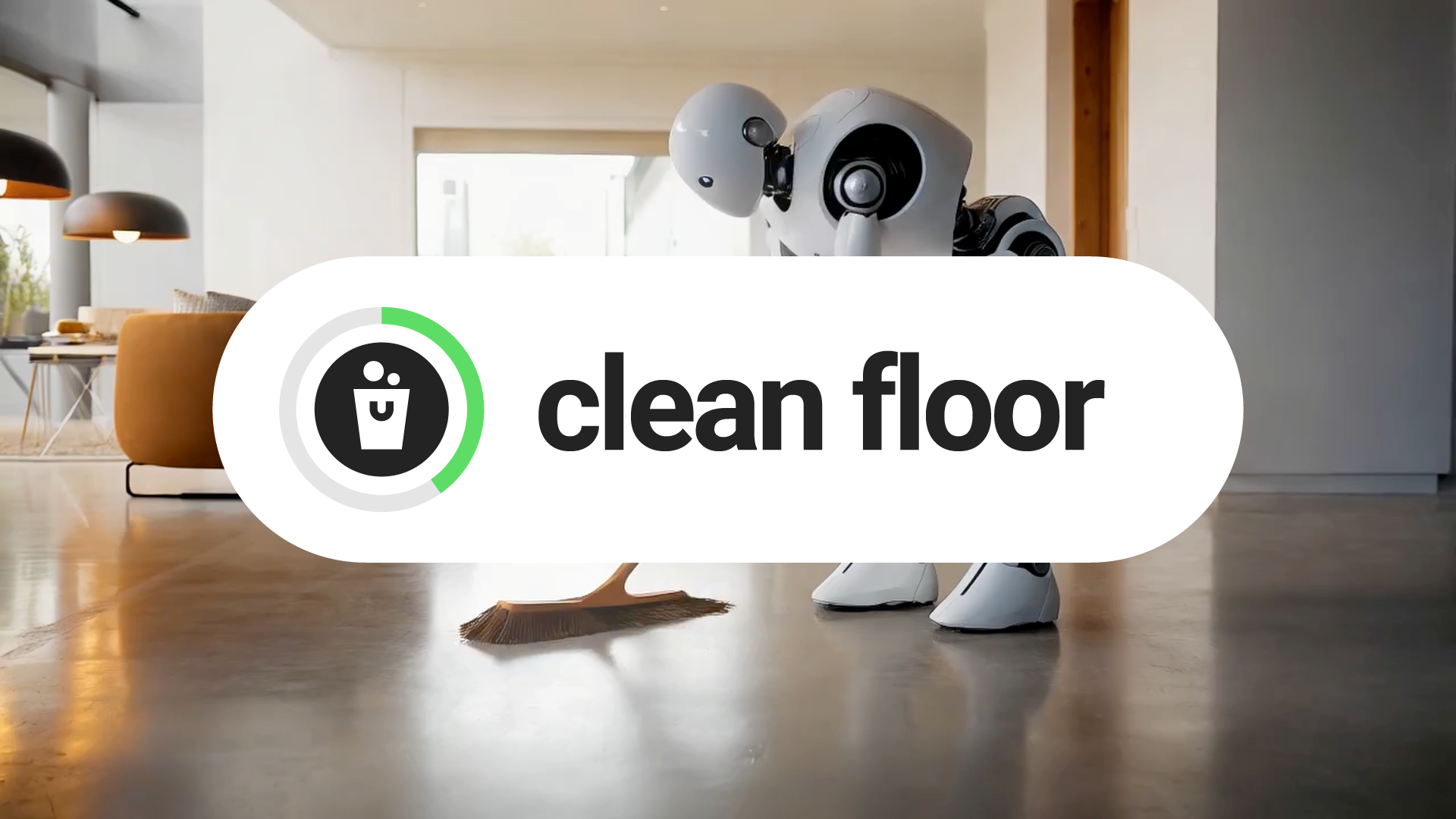
Pi0.5 is a vision-language-action model that co-trains on diverse data sources (robot demos, web data, semantic subtasks) to enable open-world generalization for long-horizon robotic manipulation.
This is based on the implementation of Pi0.5 found [here](https://github.com/Physical-Intelligence/openpi).
This repository contains pre-exported model files optimized for Qualcomm® devices. You can use the [Qualcomm® AI Hub Models](https://github.com/qualcomm/ai-hub-models/blob/main/src/qai_hub_models/models/pi05) library to export with custom configurations. More details on model performance across various devices, can be found [here](#performance-summary).
Qualcomm AI Hub Models uses [Qualcomm AI Hub Workbench](https://workbench.aihub.qualcomm.com) to compile, profile, and evaluate this model. [Sign up](https://myaccount.qualcomm.com/signup) to run these models on a hosted Qualcomm® device.
## Getting Started
There are two ways to deploy this model on your device:
### Option 1: Download Pre-Exported Models
Below are pre-exported model assets ready for deployment.
| Runtime | Precision | Chipset | SDK Versions | Download |
|---|---|---|---|---|
| QNN_CONTEXT_BINARY | mixed | Qualcomm® QCS9075 | QAIRT 2.45 | [Download](https://qaihub-public-assets.s3.us-west-2.amazonaws.com/qai-hub-models/models/pi05/releases/v0.54.0/pi05-qnn_context_binary-mixed-qualcomm_qcs9075.zip)
For more device-specific assets and performance metrics, visit **[Pi0.5 on Qualcomm® AI Hub](https://aihub.qualcomm.com/models/pi05)**.
### Option 2: Export with Custom Configurations
Use the [Qualcomm® AI Hub Models](https://github.com/qualcomm/ai-hub-models/blob/main/src/qai_hub_models/models/pi05) Python library to compile and export the model with your own:
- Custom weights (e.g., fine-tuned checkpoints)
- Custom input shapes
- Target device and runtime configurations
This option is ideal if you need to customize the model beyond the default configuration provided here.
See our repository for [Pi0.5 on GitHub](https://github.com/qualcomm/ai-hub-models/blob/main/src/qai_hub_models/models/pi05) for usage instructions.
## Model Details
**Model Type:** Model_use_case.robotics
**Model Stats:**
- Number of cameras: 3
- Action chunk size: 50
- Vision resolution: 224x224
- Quantization: Mixed (w4a16 backbone, w8a16 vision encoder and action expert)
## Performance Summary
| Model | Runtime | Precision | Chipset | Inference Time (ms) | Peak Memory Range (MB) | Primary Compute Unit
|---|---|---|---|---|---|---
| action_expert | QNN_CONTEXT_BINARY | mixed | Qualcomm® QCS9075 | 30.99 ms | 34 - 70 MB | NPU
| backbone | QNN_CONTEXT_BINARY | mixed | Qualcomm® QCS9075 | 398.479 ms | 12 - 60 MB | NPU
| token_emb | QNN_CONTEXT_BINARY | mixed | Qualcomm® QCS9075 | 4.221 ms | 6 - 26 MB | NPU
| vision_encoder | QNN_CONTEXT_BINARY | mixed | Qualcomm® QCS9075 | 40.566 ms | 1 - 5 MB | NPU
## License
* The license for the original implementation of Pi0.5 can be found
[here](https://github.com/Physical-Intelligence/openpi/blob/main/LICENSE).
## References
* [Pi0.5: a Vision-Language-Action Model with Open-World Generalization](https://www.physicalintelligence.company/download/pi05.pdf)
* [Source Model Implementation](https://github.com/Physical-Intelligence/openpi)
## Community
* Join [our AI Hub Slack community](https://aihub.qualcomm.com/community/slack) to collaborate, post questions and learn more about on-device AI.
* For questions or feedback please [reach out to us](mailto:ai-hub-support@qti.qualcomm.com).
## Usage and Limitations
This model may not be used for or in connection with any of the following applications:
- Accessing essential private and public services and benefits;
- Administration of justice and democratic processes;
- Assessing or recognizing the emotional state of a person;
- Biometric and biometrics-based systems, including categorization of persons based on sensitive characteristics;
- Education and vocational training;
- Employment and workers management;
- Exploitation of the vulnerabilities of persons resulting in harmful behavior;
- General purpose social scoring;
- Law enforcement;
- Management and operation of critical infrastructure;
- Migration, asylum and border control management;
- Predictive policing;
- Real-time remote biometric identification in public spaces;
- Recommender systems of social media platforms;
- Scraping of facial images (from the internet or otherwise); and/or
- Subliminal manipulation
|