
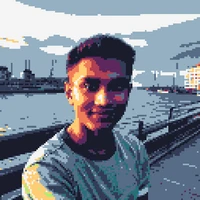
ArtFusion-onnx-int8
192x320
 256x256
 320x192

Model Details
A lightweight, efficient diffusion model engineered for fast, high-quality, low-resolution image generation. Built for constrained environments, the model weights are partially initialized from Stable Diffusion v1.4 and optimized for multi-aspect ratio flexibility.
⚠️ Experimental Status: This model is currently experimental, utilizing an aspect ratio bucketing strategy to train the UNet across multiple resolutions simultaneously. For a deep dive into the methodology, see the Training Section.
Supported Resolutions
The model natively supports the following resolution buckets:
Landscape: 320 × 192
Square: 256 × 256
Portrait: 192 × 320
Uses
# pip install "optimum-onnx[onnxruntime]"

from optimum.onnxruntime import ORTStableDiffusionPipeline

pipeline = ORTStableDiffusionPipeline.from_pretrained(
    "sam749/ArtFusion-onnx-int8",
    providers=["CPUExecutionProvider"]
)

prompt = "outdoors, mountain, sunset, no_humans, grass, scenery, sky, flower, mountainous_horizon, moon, cloud, reflection, evening, orb, landscape, plant, twilight"
result = pipeline(
        prompt,
        width=192,
        height=320,
        num_inference_steps=16,
    )
Most of the time you won't need negative_prompt
Training Details
Model was trained for 16 epochs with lr=1e-5
- Repository: Training Code
Limitations & Biases
Due to the composition of the training dataset, users should expect the following behavioral biases:
1. Aspect Ratio Bias: The training data was heavily skewed toward portrait-oriented images. As a result, the model performs optimally at 192x320 and may occasionally struggle with composition or coherence when generating in square or landscape resolutions.
2. Artistic Style Dominance: The dataset consists predominantly of artistic and illustrative styles. The model naturally mimics these aesthetics and is not intended for high-fidelity photorealism.
3. Prompting & Tag Bias: While the model understands standard natural language prompts, a significant portion of the training data utilized Danbooru-style tags. For the closest alignment to your prompt, incorporating descriptive tags (e.g., 1girl, solo, artistic style) alongside or instead of full sentences is highly recommended.
- Downloads last month
- 32