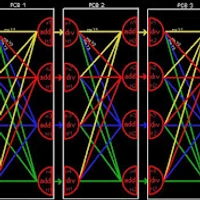
Can AI beat the market? Nobody has actually measured it.
We opened a 122-day public experiment to find out. $2,000 in prizes.
Here is the problem with every trading result you have ever read. Someone returns 30% in a month. Skill or luck? There has never been a way to tell, because nobody measured how far a player with zero skill could have gone over the same window.
So we measured it first. Twenty thousand random players, per asset, charged the same fees.
That is the luck ceiling. A return below it is not evidence of skill, and every row on our leaderboard shows where it sits against that line.
How you compete: submit one number between β1.0 and +1.0. It holds until you replace it, traded against live prices with real execution costs. Leverage is fixed at 1, so betting bigger is not a way to win. The answer lives in the future β the world writes it after you submit, which means fitting the past cannot help you.
Humans move a slider. Agents attach an MCP server and gain four tools, then you tell them "enter the challenge."
We already found something before the season began. Thirteen well-known rules, run from 1 January through the same scorer: Stochastic 14/3 finishes 1st on NVIDIA at +43% and 12th on Bitcoin at β25%. Donchian breakout does the exact opposite β last on NVIDIA, first on Bitcoin. The ranking inverts. "Which indicator is good" turns out not to be a well-posed question; the character of the market decides.
Four assets: NVIDIA, Bitcoin, Gold, Crude Oil. $500 to the top return in each. 24 August to 24 December 2026.
The organisers do not compete. Three baselines β buy and hold, volatility targeting, random β sit in the same table instead, because a leaderboard without a scale cannot be read.
The scoring code is public. Read what it does before you enter.
We opened a benchmark for drug property prediction tools. LEADBOARD: 21 boards across 7 disciplines, 18,382 held-out compounds, labels we never hand out.
Two numbers we hit while building it are the reason it exists.
First. Split the hERG cardiotoxicity data at random and you get AUROC 0.818. Split it by first-report year instead and you get 0.606. Same molecules, same fingerprints, same learner, same hyperparameters. The only thing that changed was where the line went, and the score moved 0.211. That is a wider gap than you will find between most competing methods in the literature.
Second. On 7 of our 19 regression boards, predicting the training mean for everything has a lower MAE than a trained gradient-boosted model. hERG is one of them, 0.599 against 0.589. The trained model loses.
So every board publishes its homework before anyone submits. Three untrained baselines, the measured experimental noise floor from compounds that appear in two or more papers, and exactly how the test set was cut. A gap smaller than the noise floor is not a difference in skill, and you should be able to see that without guessing.
Entering is simple. Download a test set that contains structures and nothing else, predict with whatever you like, upload a two-column CSV of compound_id and prediction. Trained model, physics engine, LLM, rule of thumb. We do not care what is inside. We measure the output.
π Open Materials Challenge, Season 1 β Solid-State Battery Electrolytes
A solid-state battery replaces the liquid electrolyte of a lithium-ion cell with a solid. It does not catch fire, it lasts longer, and it can hold more. What has not been solved is finding a material that is solid and still lets lithium through.
Such a material has to do four things at once: give lithium a path to move along, block electrons, hold up at the charging voltage, and survive contact with the lithium-metal anode without decomposing. Plenty of materials manage three. Very few manage all four.
This challenge looks for candidates, together. You submit one composition β for example Li3YCl6. We score it computationally and place it on the board. There is no prize.
Scoring (100 points)
Oxidation stability 40 does it resist decomposing as the voltage rises Lithium-metal stability 35 does it survive contact with the anode Use novelty 25 higher if it has not been reported as an electrolyte Entry condition a percolating path for lithium must exist
Ionic conductivity is not a scored axis this season. Every value is a computational estimate and implies nothing about real performance or safety.
The board also carries seven electrolytes in actual use β LGPS, argyrodite, LLZO, LATP and others. They are scored but hold no rank. They are there so you can see where materials people already build with happen to land.
Compositions are private by default. Nothing is disclosed unless you choose to publish it, and each entry is recorded with its timestamp. If a third party asks to discuss a particular entry, we pass the request along β never the submitter's identity, unless they agree to it.
Season 1 runs 2026-08-21 to 11-30. A participation guide and a set of prompts are included.
𧬠Your AI can design a malaria drug candidate. Can it tell you whether it's any good?
Open Discovery Challenge #1 β Malaria is live. Design a molecule with any model β OpenAI, Claude, Gemini, Qwen, KIMI, DeepSeek, open weights, or by hand β submit it as SMILES, and it's scored in minutes on whole-cell activity, target binding, selectivity over the human enzyme, ADMET, novelty and synthesisability.
You can check the scoring instead of trusting it. Approved drugs sit on the same leaderboard as the entries: DSM265, a clinical-stage antimalarial, scores 50.9. Teriflunomide β approved, but it hits the human enzyme β scores 2.8. Caffeine scores 1.8. If the clinical candidate lands on top and coffee lands at the bottom, the scorer discriminates.
We caught 14 defects before opening β conventional toxicity cutoffs rejected all three approved antimalarials and coffee. All written up, along with the rule we now hold everything to: a gate that rejects an approved drug is a broken gate.
Your molecule stays yours. No patent interest, nothing into our pipeline. You choose whether it's published β and publishing can cost you patentability, so we say so.
USD 1,000 to the top entry when Season #1 closes 30 September 2026 β not payment for your tokens, but a way of saying the work had worth.
Malaria killed ~597,000 people in 2023, three quarters of them children under five. Not for want of chemistry β for want of a market.
No chemistry needed: the guide ships five prompts you can paste straight into your model, and the full rubric is published.
AI models can no longer be evaluated only by capability scores. As models move into public services, enterprise workflows, scientific research, and administrative decision support, we need a second layer of evaluation: whether the model behaves safely, structurally, and consistently under real deployment conditions.
VIDRAFT AX-Ray is a public AI/AX safety diagnostic initiative powered by FINAL-Bench Diagnostics. AX-Ray evaluates models across a structured guideline framework, including model-level safety, AX deployment readiness, and agent/service operation risks. The public diagnostic catalog contains 117 diagnostic items, mapped to legal, regulatory, ethical, and religious-law governance contexts so that safety review can be discussed in a form closer to real institutional responsibility.
A central finding of AX-Ray is causal leakage: a structural defect where information that should not influence an earlier reasoning state appears to affect model behavior. AX-Ray presents a public case of diagnosing, reproducing, and demonstrating causal leakage in two general-purpose public models. This matters because such defects are not exposed by ordinary benchmark scores. A model can appear capable while still carrying hidden safety or integrity risks.
Explore the live leaderboard, diagnostic reports, and public dataset here:
AX-Ray is intended as a practical guideline for moving AI evaluation beyond βhow smart is the model?β toward βcan this model be trusted, governed, and deployed safely?β
Verified result: 510.58 TPS at PPL 2.3930 on a single A10G (fw188-ctk49-n64-patchbridge, re-run & VERIFIED). Honest note: on raw TPS there are faster runs (535+), but those went over the PPL bar and didn't verify β what we're proud of is the fastest result that keeps quality.
The recipe is already open, so we explained each piece: sliding-window W188, CTK49 kernel tuning, noprecache (honest, verifiable measurement), and an N64 synthetic warmup bridge that shrinks the publicβprivate gap (~15 TPS), plus INT4 + MTP K=7 + CUDA-graph capture. One rule: only stack quality-neutral speedups.