| | --- |
| | title: Inceptionv3 Dog VS Cat Classifier 🐕 |
| | emoji: 🐈🐕 |
| | colorFrom: yellow |
| | colorTo: green |
| | sdk: gradio |
| | sdk_version: 6.5.1 |
| | app_file: app.py |
| | pinned: false |
| | license: mit |
| | short_description: Cat vs Dog classifier with InceptionV3 model. |
| | models: |
| | - AIOmarRehan/InceptionV3_Dogs_vs_Cats_Classifier_Model |
| | datasets: |
| | - AIOmarRehan/Cats_and_Dogs |
| | --- |
| | |
| | [If you would like a detailed explanation of this project, please refer to the Medium article below.](https://medium.com/@ai.omar.rehan/building-a-near-perfect-cat-vs-dog-classifier-with-inceptionv3-01a5f9730907) |
| |
|
| | --- |
| |
|
| | # Cats vs Dogs Image Classification (InceptionV3 + TensorFlow) |
| |
|
| | ## Project Overview |
| |
|
| | This project focuses on building an image classification model that can distinguish between **cats and dogs** using **Transfer Learning** with the InceptionV3 architecture. |
| |
|
| | Instead of training a deep learning model from scratch, this project uses a pre-trained model and adapts it to solve a binary classification problem efficiently. |
| |
|
| | The goal of this project is to practice building a real-world computer vision pipeline including data preprocessing, training, evaluation, and visualization. |
| |
|
| | --- |
| |
|
| | ## Dataset |
| |
|
| | The project uses the **Cats and Dogs dataset**, which contains around: |
| |
|
| | * ~6,000 cat images |
| | * ~6,000 dog images |
| |
|
| | The dataset is balanced, which helps the model learn both classes fairly and avoids bias toward one class. |
| |
|
| | --- |
| |
|
| | ## Data Preprocessing |
| |
|
| | Before training, images go through several preprocessing steps: |
| |
|
| | * Resize images to **256 × 256** |
| | * Normalize pixel values |
| | * Handle very bright or very dark images |
| | * Apply data augmentation to improve generalization: |
| |
|
| | * Random flipping |
| | * Random brightness changes |
| | * Random contrast changes |
| |
|
| | TensorFlow’s `tf.data` pipeline is used to efficiently load and prepare data. |
| |
|
| | --- |
| |
|
| | ## Model Architecture |
| |
|
| | This project uses **Transfer Learning with InceptionV3**. |
| |
|
| | ### Base Model |
| |
|
| | * Pre-trained on ImageNet |
| | * Used as a feature extractor |
| | * Frozen during initial training |
| |
|
| | ### Custom Classification Head |
| |
|
| | Added on top of the base model: |
| |
|
| | * Global Average Pooling |
| | * Dense layer (512 neurons, ReLU) |
| | * Dropout (0.5) to reduce overfitting |
| | * Final Dense layer with **Sigmoid** activation for binary classification |
| |
|
| | --- |
| |
|
| | ## Training Strategy |
| |
|
| | ### Optimizer |
| |
|
| | * Adam optimizer |
| |
|
| | ### Loss Function |
| |
|
| | * Binary Cross-Entropy |
| |
|
| | ### Training Enhancements |
| |
|
| | The project uses callbacks to improve training: |
| |
|
| | * **EarlyStopping** |
| |
|
| | * Stops training when validation stops improving |
| | * **ModelCheckpoint** |
| |
|
| | * Saves the best model automatically |
| | * **ReduceLROnPlateau** |
| |
|
| | * Reduces learning rate when progress slows down |
| |
|
| | --- |
| |
|
| | ## Results & Evaluation |
| |
|
| | Model performance was evaluated using several visualization techniques. |
| |
|
| | --- |
| |
|
| | ### Accuracy |
| |
|
| | ``` |
| | 76/76 ━━━━━━━━━━━━━━━━━━━━ 3s 41ms/step - accuracy: 0.9941 - loss: 0.0194 |
| | Test Accuracy: 0.9933 |
| | 76/76 ━━━━━━━━━━━━━━━━━━━━ 16s 115ms/step |
| | Precision: 0.2498, Recall: 0.5000, F1-score: 0.3331 |
| | |
| | Classification Report: |
| | precision recall f1-score support |
| | |
| | cats 0.50 1.00 0.67 601 |
| | dogs 0.00 0.00 0.00 602 |
| | |
| | accuracy 0.50 1203 |
| | macro avg 0.25 0.50 0.33 1203 |
| | weighted avg 0.25 0.50 0.33 1203 |
| | ``` |
| | --- |
| | 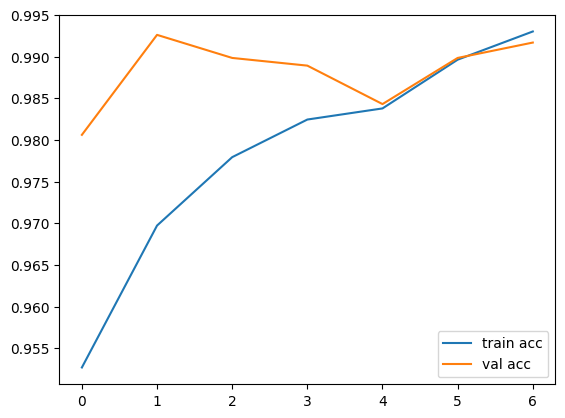 |
| | **Observation:** |
| | Training and validation accuracy both increase steadily and reach high performance (~98–99%). |
| |
|
| | --- |
| |
|
| | ### Loss |
| |
|
| |  |
| |
|
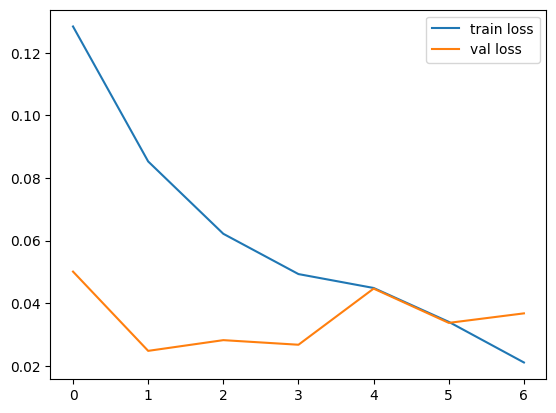
| | **Observation:** |
| | Both training and validation loss decrease and stabilize, indicating good learning and low overfitting. |
| |
|
| | --- |
| |
|
| | ### Confusion Matrix |
| |
|
| |  |
| |
|
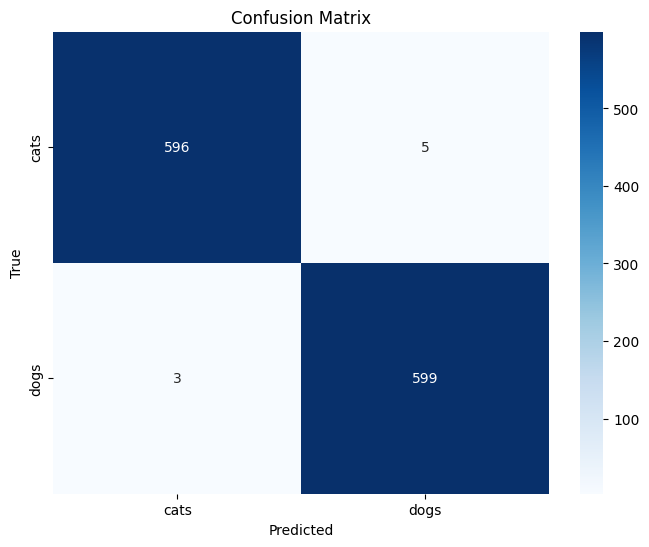
| | **Observation:** |
| | Most predictions lie along the diagonal, meaning the model correctly classifies both cats and dogs most of the time. |
| |
|
| | --- |
| |
|
| | ### ROC Curve |
| |
|
| |
|
| | | Binary Classification ROC Curve | (OvR) ROC Curve – Multi-Class Classification | |
| | |-------|-------| |
| | | <img src="https://files.catbox.moe/iou784.png" width="490"/> | <img src="https://files.catbox.moe/pz3mv7.png" width="540"/> | |
| |
|
| |
|
| |
|
| | **Observation:** |
| | The model achieves an AUC score close to **1.0**, which indicates excellent classification ability. |
| |
|
| | --- |
| |
|
| | ## Key Takeaways |
| |
|
| | * Transfer Learning significantly reduces training time. |
| | * Data augmentation improves model robustness. |
| | * Proper evaluation metrics give deeper insight into model performance. |
| |
|
| | --- |

