

balibabu
Fix: After executing npm i --force locally, the login page cannot be opened #4290 (#4292)
2f2501f
| sidebar_position: 2 | |
| slug: /launch_ragflow_from_source | |
| # Launch the RAGFlow Service from Source | |
| A guide explaining how to set up a RAGFlow service from its source code. By following this guide, you'll be able to debug using the source code. | |
| ## Target Audience | |
| Developers who have added new features or modified existing code and wish to debug using the source code, *provided that* their machine has the target deployment environment set up. | |
| ## Prerequisites | |
| - CPU ≥ 4 cores | |
| - RAM ≥ 16 GB | |
| - Disk ≥ 50 GB | |
| - Docker ≥ 24.0.0 & Docker Compose ≥ v2.26.1 | |
| :::tip NOTE | |
| If you have not installed Docker on your local machine (Windows, Mac, or Linux), see the [Install Docker Engine](https://docs.docker.com/engine/install/) guide. | |
| ::: | |
| ## Launch the Service from Source | |
| To launch the RAGFlow service from source code: | |
| ### Clone the RAGFlow Repository | |
| ```bash | |
| git clone https://github.com/infiniflow/ragflow.git | |
| cd ragflow/ | |
| ``` | |
| ### Install Python dependencies | |
| 1. Install Poetry: | |
| ```bash | |
| pipx install poetry | |
| ``` | |
| 2. Configure Poetry: | |
| ```bash | |
| export POETRY_VIRTUALENVS_CREATE=true POETRY_VIRTUALENVS_IN_PROJECT=true | |
| ``` | |
| 3. Install Python dependencies: | |
| - slim: | |
| ```bash | |
| ~/.local/bin/poetry install --sync --no-root | |
| ``` | |
| - full: | |
| ```bash | |
| ~/.local/bin/poetry install --sync --no-root --with full | |
| ``` | |
| *A virtual environment named `.venv` is created, and all Python dependencies are installed into the new environment.* | |
| ### Launch Third-party Services | |
| The following command launches the 'base' services (MinIO, Elasticsearch, Redis, and MySQL) using Docker Compose: | |
| ```bash | |
| docker compose -f docker/docker-compose-base.yml up -d | |
| ``` | |
| ### Update `host` and `port` Settings for Third-party Services | |
| 1. Add the following line to `/etc/hosts` to resolve all hosts specified in **docker/service_conf.yaml.template** to `127.0.0.1`: | |
| ``` | |
| 127.0.0.1 es01 infinity mysql minio redis | |
| ``` | |
| 2. In **docker/service_conf.yaml.template**, update mysql port to `5455` and es port to `1200`, as specified in **docker/.env**. | |
| ### Launch the RAGFlow Backend Service | |
| 1. Comment out the `nginx` line in **docker/entrypoint.sh**. | |
| ``` | |
| # /usr/sbin/nginx | |
| ``` | |
| 2. Activate the Python virtual environment: | |
| ```bash | |
| source .venv/bin/activate | |
| export PYTHONPATH=$(pwd) | |
| ``` | |
| 3. **Optional:** If you cannot access HuggingFace, set the HF_ENDPOINT environment variable to use a mirror site: | |
| ```bash | |
| export HF_ENDPOINT=https://hf-mirror.com | |
| ``` | |
| 4. Run the **entrypoint.sh** script to launch the backend service: | |
| ``` | |
| bash docker/entrypoint.sh | |
| ``` | |
| ### Launch the RAGFlow frontend service | |
| 1. Navigate to the `web` directory and install the frontend dependencies: | |
| ```bash | |
| cd web | |
| npm install | |
| ``` | |
| 2. Update `proxy.target` in **.umirc.ts** to `http://127.0.0.1:9380`: | |
| ```bash | |
| vim .umirc.ts | |
| ``` | |
| 3. Start up the RAGFlow frontend service: | |
| ```bash | |
| npm run dev | |
| ``` | |
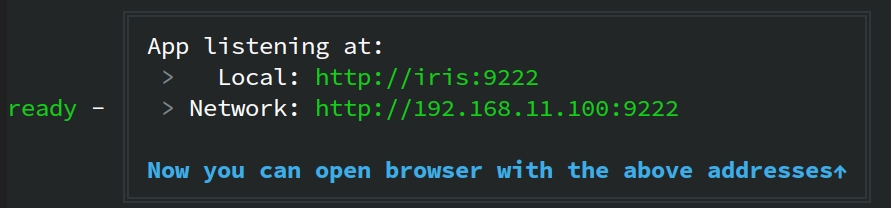
| *The following message appears, showing the IP address and port number of your frontend service:* | |
|  | |
| ### Access the RAGFlow service | |
| In your web browser, enter `http://127.0.0.1:<PORT>/`, ensuring the port number matches that shown in the screenshot above. | |
| ### Stop the RAGFlow service when the development is done | |
| 1. Stop the RAGFlow frontend service: | |
| ```bash | |
| pkill npm | |
| ``` | |
| 2. Stop the RAGFlow backend service: | |
| ```bash | |
| pkill -f "docker/entrypoint.sh" | |
| ``` | |