

DBbun Synthetic Missions for the DARPA Lift Challenge
See DBbun listed as a contributor on the DARPA Lift Challenge Contributor Portal.
Live DBbun Lift Dashboard: https://dbbun-lift-dashboard.streamlit.app/
This repository provides synthetic heavy-lift VTOL aircraft designs, mission results, time-series telemetry, reports, dashboards, decks, white papers, focused technical notes, and generative simulation code developed by DBbun LLC for DARPA Lift Challenge-related research and development.
The current dataset family was generated with version 1.2 of the DBbun Synthetic Mission and Aircraft Generator, a substantially expanded and corrected version of the earlier v1.1 generator.
Abstract
This repository provides high-fidelity synthetic flight missions, design metadata, and generative simulation code developed by DBbun LLC to support engineering teams in the 2026 Defense Advanced Research Projects Agency (DARPA) Lift Challenge problem space.
All aircraft configurations, mission profiles, parameters, failures, telemetry traces, and performance outcomes are fully synthetic. They are generated by simulation software and do not represent physical prototypes, manufacturer specifications, flight-tested vehicles, or build-ready engineering blueprints.
The dataset is intended for:
- Concept exploration
- Design-space screening
- Synthetic mission analytics
- Payload-efficiency benchmarking
- Early autonomy and flight-control experimentation
- Failure-mode reasoning
- Comparative evaluation of bio-inspired VTOL architectures
A defining feature of the simulator is its bio-inspired design language. Each aircraft concept is derived from one or more animals whose natural capabilities — lifting power, gust stability, payload handling, endurance strategies, energy-efficient movement, compliant structures, and robust landings — are translated into explicit engineering traits.
Those traits influence:
- Propulsion architecture
- Rotor count and thrust distribution
- Energy system sizing
- Structural material and load paths
- Payload mounting strategy
- Stability and control emphasis
- Mission-phase behavior
- Failure probabilities
- Mission success and prize-tier outcomes
The goal is to help teams reason faster, compare trade-offs, and identify promising design directions before spending time and budget on physical hardware.
What Is New in Version 1.2
Version 1.2 is a much more advanced release than v1.1. Major changes include:
Power saturation bug fixed
In v1.1,burst_power_factorincorrectly multiplied power demand during takeoff. In v1.2, burst capability correctly increases available supply-side power.Environmental penalties recalibrated
Wind and turbulence penalties were reduced to avoid double-counting environmental difficulty already reflected in groundspeed and mission timing.Battery C-rate floor increased
The minimum battery discharge capability was raised to ensure sampled battery packs can sustain baseline hover power.Dynamic soaring and glide model corrected
MISSION_GLIDE_SEGMENTSnow separates wind-independent glide planning from wind-scaled dynamic soaring.Physics equations corrected and expanded
Hover power, burst power, gust rejection, morphing membrane efficiency, actuator-disk calibration, and landing-energy scaling were corrected or clarified.Focused physical-validity documentation added
A focused documentation file explains the governing equations, biological evidence, simulator implementation, and accuracy/conservatism assessment for each bio-inspired trait.Engineering guides added
Reports now include guidance for engineers designing a new heavy-lift VTOL aircraft from scratch and for engineers using the simulator to improve an existing drone design.DARPA Lift competition metadata added
Mission analytics now include prize-tier logic and the 4:1 payload-to-aircraft ratio threshold.4:1 prize-threshold fields added
Mission outputs include fields such asis_4to1_qualifyingandprize_tier.Hover-turn power spikes added
Loaded cruise now includes 16–20 hover turns, modeled as deceleration, near-hover reorientation, and re-acceleration events.Gas and hybrid propulsion architectures added
New architectures includepure_gas_multirotorandseries_hybrid_gas_electric, alongside electric configurations.Remote ID module mass added
A fixed Remote ID broadcast module mass overhead is included in every design.Time-series visualization expanded
Visualization scripts now produce altitude, horizontal speed, total speed, vertical rate, distance, power used, power requested, power available, battery remaining, and motor temperature charts.Large-scale runs added
The repository now includes dataset tiers up to 100,000 designs and 1,000,000 simulated missions.
Dataset Scale Family
The v1.2 dataset family includes multiple scales so teams can start small and then move to large synthetic sweeps.
| Dataset Tier | Designs | Missions | Intended Use |
|---|---|---|---|
| Mini sample | 10 | 100 | Quick inspection, report review, schema understanding |
| Small sample | 100 | 1,000 | Early exploratory analysis and pipeline testing |
| Standard sample | 1,000 | 10,000 | Design-space exploration and model development |
| Expanded sample | 10,000 | 100,000 | Larger-scale benchmarking and robustness analysis |
| Large run | 100,000 | 1,000,000 | High-volume screening, ranking, failure analysis, and synthetic benchmark development |
Project Overview Video
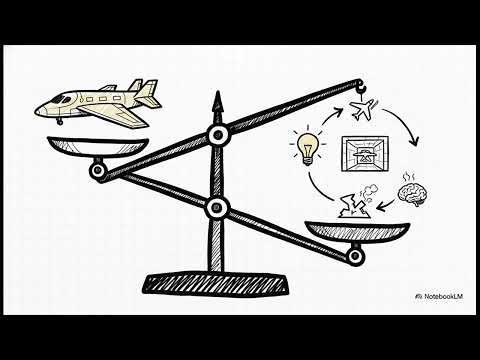
Live Dashboard
A live Streamlit dashboard is available here:
https://dbbun-lift-dashboard.streamlit.app/
The dashboard provides an interactive way to inspect DBbun DARPA Lift synthetic design and mission outputs, explore rankings, compare design behavior, and review mission-level analytics.
Comprehensive Documentation, White Papers, Focused Notes, and Decks
Comprehensive documentation files, white papers, reports, focused technical notes, and presentation decks are available in the repository under:
These materials provide additional engineering context beyond the CSV tables, including:
- Detailed DBbun DARPA Lift synthetic mission reports
- Bio-inspired design rationale
- Animal-to-trait mappings
- Engineering interpretations of selected aircraft concepts
- Mission analytics and failure-mode summaries
- Physical-validity notes for the simulator
- Focused equation and assessment documents
- Equations and modeling assumptions used by the v1.2 generator
- Design-ranking methodology
- Guidance for engineers using the simulator for new or existing VTOL concepts
- Presentation and deck materials when available
The documentation is intended to help users understand not only the dataset fields, but also the reasoning behind the synthetic design universe: how biological inspirations are translated into aircraft traits, how traits affect propulsion, structure, payload handling, stability, mission behavior, and how synthetic outcomes should be interpreted.
The white papers, focused technical notes, and decks should be read together with the dataset files and source code. The CSV files provide machine-readable synthetic data; the reports and decks provide the explanatory engineering layer.
Dataset Files
The repository combines machine-readable synthetic datasets with human-readable engineering documentation.
The core data model uses relational tables that can be joined through design_id and mission_id.
| File or Folder | Description |
|---|---|
designs.csv |
Bio-inspired aircraft architecture parameters and design-level attributes |
missions.csv |
One summary row per mission, including success/failure, mission timing, energy use, prize-tier fields, weather, turbulence, and failure reason |
missions_timeseries.csv |
Time-series telemetry for each mission, typically including altitude, speed, distance, power, battery, thermal, and phase information |
White_Papers/ |
Comprehensive reports, white papers, focused documentation, explanatory notes, and decks |
| Reports | Human-readable engineering summaries, top-design analyses, mission analytics, trait summaries, ranking methodology, and physics notes |
| Figures / visualizations | Time-series and mission-performance charts generated from the synthetic telemetry |
| Source code | Generator and analysis scripts used to create and evaluate synthetic design universes |
The CSV files provide the structured synthetic dataset. The reports, white papers, focused notes, and decks provide the explanatory engineering context needed to interpret the simulator, design traits, ranking logic, failure modes, and v1.2 modeling assumptions.
Source Code and App Availability
The full universe generator powering this dataset is provided here:
Source Code Repository: https://github.com/DBbun/dbbun-darpa-lift
A related dashboard repository is provided here:
Dashboard Repository: https://github.com/DBbun/dbbun-darpa-lift-dashboard
The live DBbun Lift dashboard is available here:
Live Dashboard: https://dbbun-lift-dashboard.streamlit.app/
Teams may use the generator and dashboard to:
- Extend the mission physics model
- Add new design variables, materials, or propulsion systems
- Introduce new biological inspirations
- Modify failure models and turbulence impacts
- Generate larger or more targeted design universes
- Run focused sweeps around promising architectures
- Benchmark candidate designs against synthetic alternatives
- Explore rankings and mission analytics interactively
The repository is intentionally modular for rapid adaptation.
Bio-Inspired Trait Framework
The synthetic universe uses nine animals as design archetypes. Each animal maps to one or more engineering traits.
| Animal | Why Selected | Engineering Inspiration |
|---|---|---|
| Harpy Eagle | Extreme lifting power at low altitude and decisive vertical maneuvering | Aggressive vertical takeoff, climb authority, and centered payload control |
| Golden Eagle | Power combined with stability and endurance | Sustained lifting capability and controlled flight under variable winds |
| Osprey | Precision payload handling while carrying loads that can swing | Sling-load mounting, damping, and wind-aware stabilization |
| Albatross | Energy-efficient long-range flight using wind and altitude | Efficient cruise surfaces, glide segments, and dynamic-soaring-inspired planning |
| Dragonfly | High control authority and rapid stabilization | Distributed thrust, redundancy, and strong gust rejection |
| Bee | Robust hover and unsteady aerodynamic lift mechanisms | Improved hover margin and distributed thrust for fine control |
| Bat | Morphing surfaces and agile transition behavior | Morphing and foldable wing concepts for phase-dependent efficiency |
| Cheetah | Burst performance and multi-gait movement strategy | Short-duration power boost and segment-specific flight modes |
| Tiger | Rugged strength and resilient landings | Robust landing gear and high-load structural tolerance |
Animal-to-Trait Mapping
| Animal | Associated Traits |
|---|---|
| Albatross | WING_HIGH_ASPECT, LIFT_ENERGY_DENSE, MISSION_GLIDE_SEGMENTS |
| Bat | WING_MORPHING_MEMBRANE, WING_FOLDABLE |
| Bee | LIFT_UNSTEADY_AERO, STAB_DISTRIBUTED_THRUST |
| Cheetah | LIFT_BURST_POWER, STRUCT_TENDON_CABLES, STAB_COMPLIANT_SPINE, MISSION_MULTI_GAIT |
| Dragonfly | STAB_DISTRIBUTED_THRUST, STAB_GUST_REJECTION |
| Golden Eagle | LIFT_BURST_POWER, LIFT_HIGH_CONTINUOUS, PAYLOAD_CENTRAL_TALON |
| Harpy Eagle | LIFT_BURST_POWER, LIFT_HIGH_CONTINUOUS, PAYLOAD_CENTRAL_TALON |
| Osprey | PAYLOAD_SLING_LOAD, PAYLOAD_DAMPED, STAB_GUST_REJECTION |
| Tiger | LIFT_BURST_POWER, STRUCT_TENDON_CABLES, STRUCT_ROBUST_GEAR |
Trait Encyclopedia
LIFT_BURST_POWER
Short burst thrust for takeoff and climb.
Engineering implications:
- Motors and controllers need short-duration overcurrent tolerance.
- Supercapacitors or burst buffers reduce battery sag during takeoff and climb.
- Larger or more numerous rotors can convert burst power into useful climb instead of inefficient high-RPM losses.
- Burst ramps should avoid torque steps that excite frame resonance or payload swing.
LIFT_ENERGY_DENSE
Energy-dense storage and endurance emphasis.
Engineering implications:
- Higher specific-energy batteries or fuel systems increase mission margin.
- Energy storage must be balanced against power density.
- Lower drag, lower induced power, and reserve margins become central design drivers.
- Useful for long or variable mission profiles.
LIFT_HIGH_CONTINUOUS
Sustained lifting capacity under heavy load.
Engineering implications:
- Motors, controllers, and cooling should be sized for continuous torque, not only peak power.
- Larger total disk area reduces induced hover power.
- Battery voltage stability and continuous discharge capability matter.
- Thermal policy should be conservative for long hover and climb phases.
LIFT_UNSTEADY_AERO
Unsteady aerodynamic lift inspired by insect-like vortex mechanisms.
Engineering implications:
- Most useful for hover and low-speed margin.
- Requires fast thrust modulation and transient inflow tolerance.
- Cyclic loads require fatigue-aware arms, joints, and fasteners.
- The simulator treats this conservatively rather than assuming full insect-scale gains transfer directly to rotors.
MISSION_GLIDE_SEGMENTS
Glide or partial-power segments when mission conditions allow.
Engineering implications:
- Benefits require stable aerodynamic surfaces or flight modes.
- Transition logic is important to avoid inefficient mode switching.
- Works best when combined with high-aspect or deployable surfaces.
- v1.2 separates wind-independent glide planning from wind-dependent dynamic soaring.
MISSION_MULTI_GAIT
Multiple flight modes tuned to different mission phases.
Engineering implications:
- Hover, loaded cruise, payload drop, and unloaded return may require different control modes.
- Gain scheduling and stable transitions are critical.
- Segment-wise energy budgeting usually outperforms one-size-fits-all tuning.
- Useful for designs that behave differently when loaded and unloaded.
PAYLOAD_CENTRAL_TALON
Central payload cradle aligned with the center of gravity.
Engineering implications:
- Reduces pitch and roll coupling.
- Improves drop precision and control stability.
- Reinforces central load paths instead of twisting arms.
- Reduces payload-induced asymmetry and yaw bias.
PAYLOAD_DAMPED
Damped payload mounting to reduce swing.
Engineering implications:
- Can use passive elastomer, friction damping, winch control, or active load-angle feedback.
- Reduces gust-triggered oscillations.
- Helps protect sensors from payload-induced vibration.
- Improves drop accuracy and stability during acceleration and deceleration.
PAYLOAD_SLING_LOAD
Sling-load payload mounted below the airframe.
Engineering implications:
- Practical for heavy payloads but introduces pendulum dynamics.
- Requires jerk limits, acceleration shaping, and sway management.
- Adds lateral and yaw coupling under gusts.
- Should be tested against worst-case sling angles and turbulence.
STAB_COMPLIANT_SPINE
Compliant structure that absorbs dynamic loads.
Engineering implications:
- Selective compliance can reduce gust and landing stress peaks.
- Excessive global softness can destabilize control.
- IMU and sensor mounting must avoid structural-flex corruption.
- Control bandwidth should account for flexible dynamics.
STAB_DISTRIBUTED_THRUST
Many smaller rotors or propulsors distributed across the airframe.
Engineering implications:
- Improves control authority and redundancy.
- Enables thrust reallocation after rotor degradation or failure.
- Increases wiring, motor-controller, and power-distribution complexity.
- Can reduce per-rotor loading and improve sensor stability.
STAB_GUST_REJECTION
Enhanced gust rejection and stability control.
Engineering implications:
- Requires thrust headroom, high-rate inertial sensing, and robust control filters.
- Helps avoid instability during hover turns, payload drop, and landing.
- Should not be treated as free energy savings in calm air.
- v1.2 correctly gives zero gust-rejection benefit at zero wind.
STRUCT_ROBUST_GEAR
Reinforced landing gear for higher touchdown loads.
Engineering implications:
- Adds energy absorption, stroke, and touchdown tolerance.
- Helps during turbulence, battery sag, and imperfect descent control.
- Adds mass that must be recovered elsewhere through materials or structure.
- Particularly relevant because hard touchdown is a common failure mode.
STRUCT_TENDON_CABLES
Tendon and cable tension members for mass-efficient load paths.
Engineering implications:
- Converts some bending-dominated structures into tension-dominated structures.
- Can improve payload fraction under empty-mass limits.
- Requires pretension control, robust anchors, abrasion protection, and inspection.
- Sensitive to slack, creep, and anchor failure.
WING_FOLDABLE
Foldable wings that deploy after vertical takeoff and landing.
Engineering implications:
- Compact during vertical operations, more efficient during cruise.
- Hinges and locks must carry bending loads with minimal play.
- Deployment must avoid asymmetric moments.
- Adds reliability and mass trade-offs.
WING_HIGH_ASPECT
High-aspect lifting surfaces for efficient forward flight.
Engineering implications:
- Helps shift energy demand from hover to more efficient cruise.
- Requires stiff, light spars and careful center-of-pressure integration.
- More relevant for compound VTOL designs than pure multirotors.
- Works naturally with glide-segment planning.
WING_MORPHING_MEMBRANE
Morphing membrane-like wings and surfaces.
Engineering implications:
- Allows phase-adaptive camber or area.
- Requires predictable flexible-skin stiffness and failure-safe defaults.
- Control gains must change with morph state.
- Useful only when added complexity produces measurable efficiency or stability improvement.
Physical Validity and Equations
Each bio-inspired trait translates a biological capability into one or more mathematical modifiers applied to power demand, failure probability, or mission planning logic.
The equations are intended to make the simulator interpretable. They should not be read as full CFD, hardware certification models, or flight-test predictions.
Physical Baseline: Actuator-Disk Hover Power
All hover-power calculations derive from actuator-disk theory.
The ideal induced hover power for total disk area A, lifted mass m, gravitational acceleration g, and air density ρ is approximated by:
P_ideal = (m · g)^(3/2) / sqrt(2 · ρ · A)
The simulator uses a calibrated surrogate form:
P_hover ≈ k · m^(3/2)
where:
mis vehicle mass,kis a calibrated hover-power coefficient,- v1.2 uses
k = 8.0as a synthetic-universe calibration.
For reference, the focused v1.2 documentation notes that k = 8.0 gives approximate hover powers of:
| Mass | Approximate Hover Power |
|---|---|
| 75 kg | 5.2 kW |
| 90 kg | 6.8 kW |
| 105 kg | 8.6 kW |
A stricter actuator-disk estimate for 12 rotors of 0.45 m diameter gives approximately k = 14.2, so k = 8.0 should be interpreted as a calibrated surrogate coefficient rather than a direct model of one specific rotor geometry.
The reports discuss sensitivity to:
| Hover Coefficient | Interpretation |
|---|---|
k = 8.0 |
Current calibrated simulator baseline |
k = 10.0 |
More conservative rotor model |
k = 12.0 |
Nearer a practical heavy-VTOL estimate |
k = 14.2 |
Strict 12-rotor actuator-disk stress test |
Position: DBbun uses physics-informed surrogate equations to compare heavy-lift VTOL design concepts, expose failure modes, and rank trade-offs under DARPA Lift-style constraints. The simulator does not claim to predict the absolute flight performance of any specific real-world aircraft.
LIFT_BURST_POWER
Biological basis: large raptors and sprinting animals can produce short-duration burst power substantially above sustained output.
In v1.2, burst power is modeled on the supply side, not as additional physical demand:
P_available_burst = P_battery · f_burst + P_supercap
where:
f_burstis sampled over a short-duration burst range,P_supercapis added separately,- the supercapacitor term is not multiplied by
f_burst.
This avoids double-counting supercapacitor burst contribution. The focused documentation assesses this as accurate because the supply-side placement and separated supercapacitor term are physically correct.
LIFT_UNSTEADY_AERO
Biological basis: bees and other insects exploit unsteady lift mechanisms, such as clap-and-fling and leading-edge vortex attachment.
The simulator treats this benefit conservatively. Hover power is reduced by a capped fraction:
P_hover_adjusted = P_hover_base · (1 - reduction_factor)
The focused documentation notes that a theoretical CL ratio of 1.5 implies a hover-power ratio of:
1 / sqrt(1.5) ≈ 0.816
or about an 18.4% power reduction. The simulator caps the maximum benefit at 12.5%, making this trait conservative.
WING_HIGH_ASPECT
Biological basis: albatrosses have high-aspect-ratio wings and excellent glide efficiency.
Cruise efficiency is connected to lift-to-drag ratio:
L/D_max ≈ 1 / (2 · sqrt(C_D0 / (π · e · AR)))
where:
ARis aspect ratio,eis span efficiency,C_D0is zero-lift drag coefficient.
The focused documentation compares an albatross-like wing to a typical VTOL auxiliary wing and notes that the simulator applies a modest cruise-power reduction, appropriate for rotor-dominant VTOL concepts with auxiliary lifting surfaces rather than full fixed-wing aircraft.
MISSION_GLIDE_SEGMENTS
Biological basis: albatrosses combine glide-segment planning with dynamic soaring.
v1.2 separates two effects:
P_cruise_adjusted = P_cruise · (1 - k_base - k_wind · wind_factor)
where:
k_baserepresents wind-independent glide-segment planning,k_windrepresents wind-scaled dynamic-soaring contribution,- dynamic-soaring benefit correctly approaches zero in calm air.
The focused documentation describes this two-term decomposition as accurate because it separates glide planning from wind-dependent dynamic soaring.
STAB_DISTRIBUTED_THRUST
Biological basis: dragonflies independently modulate multiple wings, while distributed multirotor systems can reallocate thrust across propulsors.
The simulator includes:
P_hover_adjusted = P_hover · 1.03
to represent a small distributed-thrust overhead, while reducing control-failure probability:
p_control_adjusted = p_control · 0.80
This reflects the trade-off between additional propulsion complexity and improved redundancy/control authority.
STAB_GUST_REJECTION
Biological basis: ospreys and dragonflies stabilize under wind and gust disturbances.
Gust rejection acts on environmental penalty, not baseline power:
environmental_factor = 1 + wind_penalty + turbulence_penalty
With gust rejection active, the simulator reduces only the environmental portion. In calm air:
wind_factor = 0
turbulence_factor = 0
environmental_factor = 1
So there is no free benefit when no disturbance exists.
The simulator also reduces gust-failure probability:
p_gust_adjusted = p_gust · 0.75
WING_MORPHING_MEMBRANE
Biological basis: bat wings have many controllable degrees of freedom and can adapt shape under changing aerodynamic conditions.
The simulator models cruise efficiency as an environmental-condition-scaled benefit:
P_cruise_adjusted = P_cruise · clamp(eff_gain, 0.90, 1.00)
The focused documentation notes that v1.2 corrected the morphing coefficient to allow up to a 10% maximum reduction under peak off-nominal conditions, while giving zero benefit in calm conditions.
WING_FOLDABLE
Biological basis: bats fold wings during low-speed maneuvering and deploy them for efficient forward flight.
The simulator applies different modifiers for folded hover and deployed cruise behavior. The intended interpretation is:
- folded or compact configuration during hover and vertical phases,
- deployed surfaces during cruise,
- added deployment reliability risk.
This trait is useful when cruise efficiency matters but compact VTOL geometry is still required.
PAYLOAD_SLING_LOAD and PAYLOAD_DAMPED
Biological basis: ospreys carry fish below the body, introducing pendulum dynamics.
Sling-load behavior is related to pendulum natural frequency:
f_n = (1 / 2π) · sqrt(g / L)
where:
Lis sling length,gis gravitational acceleration.
Example approximate natural frequencies:
| Sling Length | Natural Frequency |
|---|---|
| 0.3 m | 0.91 Hz |
| 0.5 m | 0.70 Hz |
| 0.8 m | 0.56 Hz |
These frequencies can overlap with multirotor attitude-control bandwidth, motivating damping, jerk limits, load-angle feedback, and acceleration shaping.
The simulator models sling load as increasing gust and structural risk, while damped payload mounting reduces gust and control risk.
STRUCT_TENDON_CABLES and STAB_COMPLIANT_SPINE
Biological basis: felid tendons store and return energy, while compliant spines redistribute dynamic loads.
The simulator treats tendon/cable structures as mass-efficient tension-dominant load paths:
mass_saving ∝ f_tendon · α
where:
f_tendonis the fraction of relevant load path shifted to tendon/cable members,αis a material efficiency factor.
Compliant spine behavior limits longitudinal stiffness to absorb dynamic loads:
frame_stiffness_longitudinal ≤ 0.70
This can reduce stress peaks but must be balanced against control stability.
STRUCT_ROBUST_GEAR
Biological basis: tigers and other large animals absorb high landing forces through compliant musculoskeletal systems.
Landing severity scales with kinetic energy:
E_landing = 0.5 · m · v^2
A 50% higher touchdown velocity implies:
1.5^2 = 2.25
or 2.25× more landing energy to absorb.
Therefore, robust landing gear must improve energy absorption through stroke length, crush structures, damping, or progressive-spring response, not merely by adding mass.
Mission and Prize Metrics
The simulator records mission-level performance fields including:
- Mission success / failure
- Total mission time
- Energy used
- Battery remaining
- Wind and turbulence
- Failure phase
- Failure reason
- Rule violation category
- Qualifying-run status
- 4:1 qualifying status
- Prize tier:
none,partial, orfull
The 4:1 threshold corresponds to a 55 lb aircraft carrying 220 lb of payload. In the synthetic mission outputs, designs at or above the 4:1 payload-to-aircraft ratio can be marked as full-prize qualifying when the mission succeeds.
Failure Analysis
The large-run reports summarize common failure modes and suggest first engineering interventions.
| Dominant Failure | First Improvement to Test |
|---|---|
| Time limit exceeded | Increase cruise speed, reduce hover-turn penalty, improve route energy strategy, or use wing/glide traits where justified |
| Power saturation | Increase total disk area, motor/controller current margin, battery C-rate, burst buffer, or hybrid support |
| Hard touchdown | Add robust landing gear, improve descent control, and preserve reserve energy for landing |
| Energy system fault | Reduce peak current stress, improve thermal design, add redundancy, or simplify power architecture |
| Gust-induced instability | Add gust-rejection control margin, distributed thrust, better sensors, and avoid saturation near hover |
| Wing deploy failure | Simplify deployment, add locks/redundancy, or test a non-folding surface variant |
| Structural overload | Improve load paths, mass-efficient structure, tendon/cable reinforcement, and landing-load distribution |
| Propulsion architecture fault | Simplify propulsion architecture or add fault isolation and maintenance margin |
| Control saturation | Increase thrust/control margin, improve allocation, reduce payload swing, and adjust gain scheduling |
Research and Challenge Applications
This dataset can support:
- Design space exploration
- Payload-efficiency benchmarking
- Endurance vs. thrust trade-off studies
- Stability and turbulence resilience assessment
- Reinforcement learning and autonomy training
- Energy budgeting and mission survivability analytics
- Failure-mode classification
- Synthetic telemetry analysis
- Control-policy stress testing
- Prize-tier sensitivity analysis
- Rapid prototyping of hypothetical future VTOL aircraft
The dataset enables teams to iterate quickly, explore alternatives, and reduce early-stage design risk.
Important Limitations
These materials are synthetic and should be interpreted carefully.
- The vehicles are hypothetical.
- The simulator does not represent flight-tested aircraft.
- Results are not manufacturer specifications.
- Mission outputs are not operational guarantees.
- Equations are physics-informed surrogates, not full CFD or flight-test models.
- Rankings are comparative within the synthetic universe.
- A high synthetic rank does not mean a design is build-ready.
- A low synthetic rank can still reveal useful design lessons.
- No endorsement by DARPA or the U.S. Government is implied.
Contact & Entity Credentials
DBbun LLC
CAGE Code: 16VU3
UEI: QY39Y38E6WG8
Email: contact@dbbun.com
Website: https://dbbun.com/
SAM.gov SBA Profile: https://search.certifications.sba.gov/profile/QY39Y38E6WG8/16VU3
Citation
If your engineering work or research uses this dataset, please cite:
Kartoun, U. (2025–2026). DBbun Synthetic Missions for the DARPA Lift Challenge. DBbun LLC. https://huggingface.co/datasets/DBbun/DARPA_Lift_2026
Suggested license citation:
DBbun LLC. “DBbun DARPA Lift Challenge Synthetic Simulation Materials.” DBbun LLC, 2025–2026. https://huggingface.co/datasets/DBbun/DARPA_Lift_2026
License Update Notice — June 22, 2026
DBbun LLC updated the DBbun DARPA Lift Challenge R&D License from v1.0 to v1.1.
The updated license clarifies the definition of “Licensee,” post-challenge use, academic research use, redistribution restrictions, government-purpose use, deletion obligations, warranty disclaimer, limitation of liability, and future licensing requirements.
The current license applies to access, downloads, copying, running, modification, and use of the Licensed Materials on or after June 22, 2026.
The prior v1.0 license is retained in this repository for recordkeeping.
License Terms
This dataset is provided under the DBbun DARPA Lift Challenge R&D License v1.1.
The Licensed Materials are provided only for internal research and development related to participation in the DARPA Lift Challenge.
Redistribution, mirroring, re-uploading, public disclosure, sale, sublicensing, commercial use, operational deployment, procurement-related use, broader government-purpose use, or inclusion in non-DARPA external programs requires explicit written approval from DBbun LLC.
After conclusion of the DARPA Lift Challenge, continued use requires a separate written agreement with DBbun LLC, except as expressly permitted under the Academic Research Exception in the license.
See LICENSE.md for full legal terms.
This simulator and all Licensed Materials are an independent research and development project by DBbun LLC and are not affiliated with, endorsed by, sponsored by, approved by, or produced by DARPA or the U.S. Government. No endorsement by DARPA or the U.S. Government is implied.
- Downloads last month
- 472