
instruction stringlengths 15 21.8k |
|---|
Does the Dieckmann Reaction proceed via the conjugated enolate of the product? |
Is the change of the Gibbs free energy always zero (at constant pressure)? |
How does the pressure change in the dimerization of nitrogen dioxide? |
How to predict the outcome of a crossed Cannizzaro reaction? |
How to predict the effusion/diffusion for a mixture of gases? |
In a Gas Chromatography instrument can a Flame Ionization Detector be used with H2 as carrier gas?
My intuition says no, because I'd be afraid you'd set the whole column on fire (or worse).
Is this right? Or can an FID be used even with H2 carrier gas safely? |
Can a Flame Ionization Detector be used with H2 as carrier gas? |
Why did the alpha-particles in Rutherford's experiment not collide with the electrons? |
Why does the Oxymercuration Demercuration mechanism lead to stereorandomization? |
How does the Photoelectric effect depend on the frequency of the light? |
How to derive the Hasselbalch-Henderson equation? |
How to calculate partition coefficients? |
Now I (and most of us here, I guess) have grown up around "Mercury's toxic! Avoid handling it! Do NOT screw around with this thing, if you love your life" and other equally heartening pieces of advice regarding mercury. Apparently mercury poisoning makes you, *really* lose it. https://en.wikipedia.org/wiki/Mad_hatter_d... |
Mercury metal: Not toxic? |
Now I (and most of us here, I guess) have grown up around "Mercury's toxic! Avoid handling it! Do NOT screw around with this thing, if you love your life" and other equally heartening pieces of advice regarding mercury. Apparently mercury poisoning makes you, *really* lose it. https://en.wikipedia.org/wiki/Mad_hatter_d... |
How is the Activation Energy of the Arrhenius equation related to the exponents in rate laws? |
We were dealing with the *Third Law of Thermodynamics* in class, and my teacher mentioned that it is physically impossible to attain a temperature of *zero* kelvin (absolute zero).
When we pressed him for the *rationale* behind that, he asked us to take a look at the graph for Charles' Law :
[
The structure of the azacrown is as follows
I... |
In a store bought fresh orange juice that is preserved using potassium sorbate is it possible to detect the presence of potassium sorbate and also measure the amount present?
What methods of testing are available? |
Is it possible to detect and measure the amount of potassium sorbate used to preserve fruit juice? |
My instructor once while teaching qualitative analysis told us that there's a salt in laboratory which, if inhaled, causes cold and cough. Is that true? Because today I was identifying a salt in the lab which was $\ce{AlCl3}$ and now I can feel that I've cold and cough. Is it true? Could there be any connection? |
Is it possible to catch a cold by inhaling an inorganic salt? |
Why can't chlorine atoms form hydrogen bonds even though they have very similar electronegativity to nitrogen, which can?
Electronegativities are as follows:
$\ce{Cl} - 3.16$
$\ce{N} - 3.04$
Is it because of the size ?
|
Why can't chlorine atoms form hydrogen bonds? |
This question crossed my mind during a lab today because we were making $\ce{Ni(DMG)2}$, which is shown below. 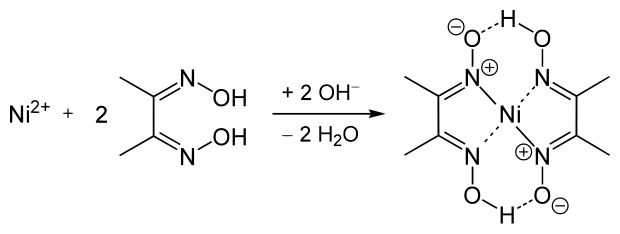.
Well first, this is charged in some sense, but it is net-neu... |
The idea of using **basis** (in general sense, not just basis set) in electronic structure theory is due to the fact that we can't solve the wave function of a system analytically except those with only one electron (H, H2+,..). So, we need to introcude some approximations to find the wave function.
There are actual... |
Because for the reason same crystals of same metal do not wield togeter inside the same metal, they are kept here just simply because of their shape, do not wrongly believe atmospheric pressure keeping togheter clean enough surfaces is cold wielding, cold wielding do not exists by simply put togheter pieces of metal.
... |
Say you have two lumps or blocks of an element, like lithium for example, say in the form of two bars.
Why, when you bring the two bars together so that they touch each other, do they not instantly bond with each other forming one larger bar or block? We can weld elements together so they 'stick' to each other, but ... |
The reaction of the compound in picture with potassium tert-butoxide , pyridine, diethanolamine and 4-toluene symphony chloride group leads to the formation of an azacrown.

It seems that the OH groups of the ether molecule and That of the diethanola... |
The reaction of the compound in picture with potassium tert-butoxide, pyridine, diethanolamine and 4-toluenesulfonyl chloride group leads to the formation of an azacrown.
[![enter image description here][1]][1]
It seems that the OH groups of the ether molecule and That of the diethanolamine group react with wat... |
I am not sure whether this question is even reasonable, but here it goes. We are taught about the different types of basis sets (extended, minimal, double-zeta, plane wave), but I do not think it is clear as to why they are needed. After all, it is possible to do computational chemistry without a basis set (see [James ... |
For the reason crystals of the same metal do not wield together inside the same metal. They are separate just simply because of their shape. Do not wrongly assume atmospheric pressure keeping together clean enough surfaces can be considered as cold wielding. Cold wielding does not exist by simply putting together piece... |
> Why, when you bring the two bars together so that they touch each other, do they not instantly bond with each other forming one larger bar or block? ... Why do we need to 'weld' two bars together - why don't they just bond on their own?
The problem is generally one of two things: gases (air) or metal oxides get i... |
For the reason crystals of the same metal do not wield together inside the same metal. They are separate just simply because of their shape. Do not wrongly assume atmospheric pressure keeping together clean enough surfaces can be considered as cold wielding. Cold wielding does not exist by simply putting together piece... |
For the reason crystals of the same metal do not wield together inside the same metal. They are separate just simply because of their shape. Do not wrongly assume atmospheric pressure keeping together clean enough surfaces can be considered as cold wielding. Cold wielding does not exist by simply putting together piece... |
This question crossed my mind during a lab today because we were making $\ce{Ni(DMG)2}$, which is shown below.

Well first, this is charged in some sense, but it is net-n... |
It appears that symmetric hydrogen bonds can exist between neutral molecules, even between water molecules! But it takes 60 GPa of pressure to make water to bond like that.
Article named very descriptively "[Compression of Ice to 210 Gigapascals: Infrared Evidence for a Symmetric Hydrogen-Bonded Phase][1]" proves it... |
I want to derive an expression for the internal energy of mixing, $\Delta_{mix}U$, and entropy of mixing, $\Delta_{mix}S$. The framework for this is the Lattice Theory of Ideal Solutions. Specifically, I am mixing $N_A$ molecules of type A with $N_B$ molecules of type B together. I am supposed to find the following two... |
What happens to Potassium Bitartrate (Cream of Tartar) at temperatures in excess of 1000°F? For example, if it is placed on an oven bottom and then run through a self clean cycle. |
What happens to Potassium Bitartrate (Cream of Tartar) at temperatures in excess of 1000°F? |
What happens to potassium bitartrate (cream of tartar) at temperatures in excess of 1000°F? For example, if it is placed on an oven bottom and then run through a self clean cycle. |
What happens to potassium bitartrate (cream of tartar) at temperatures exceeding 1000°F? |
Many of potassium bitartrate's Safety Data Sheets ([available online][1]) state that potassium bitartrate decomposes to carbon oxides at high temperatures (carbon monoxide and carbon dioxide), but don't state what that temperature is. Though the vast majority say something like "not determined," a few say it decomposes... |
Zinc hydroxide is more amphoteric as quantitatively investigated in [Effect of pH, Concentration and Temperature on Copper and
Zinc Hydroxide Formation/Precipitation in Solution][1]
In summary, in the case of Cu(OH)2, only at extremely low concentrations and very high pH can a third OH- be coordinated.
>At high... |
Picric acid has nitro groups in p- and o- positions, so it has great possibility to go for resonance, thus it is supposed to be a very good acid.
But a question arises! The O of -OH has intramolecular H-bonding with o- nitro groups present on both sides. So will the firstly mentioned theory work well or the answer is ... |
Is picric acid a very good acid? |
Picric acid has nitro groups in *para* and *ortho* positions, so it has great possibility to go for resonance, thus it is supposed to be a very good acid.
But a question arises! The O of $\ce{-OH}$ has intramolecular H-bonding with *ortho*-nitro groups present on both sides. So will the firstly mentioned theory work ... |
So, there has been a fairly groundbreaking new invention that can convert CO<sub>2</sub> dissolved in water to Ethanol<sup>[[1]][1]</sup>. At face value, it's cheap, easy, and relatively energy-lightweight. All it requires is the catalytic surface and CO<sub>2</sub> to be dissolved in water.
I'm just curious, this ... |
Does water freely absorb atmospheric CO2? |
Er, the quick, simple technical answer is "Yes, water will absorb $\ce{CO2}$". However, there is a "but" coming. Actually, two "buts".
First, plain water will not be able to adsorb much $\ce{CO2}$. Henry's Constant for $\ce{CO2}$ in $\ce{CO2}$ is $K_H=29.76 \frac{atm}{mol/L}$. Considering the partial pressure of $\c... |
Picric acid has nitro groups in *para* and *ortho* positions, so it has great possibility to go for resonance, thus it is supposed to be a very good acid.
But a question arises! The $\ce{O}$ of $\ce{-OH}$ has intramolecular $\ce{H}$-bonding with *ortho*-nitro groups present on both sides. So will the firstly mentione... |
Is picric acid a very strong acid? |
Er, the quick, simple technical answer is "Yes, water will absorb $\ce{CO2}$". However, there is a "but" coming. Actually, two "buts".
First, plain water will not be able to absorb much $\ce{CO2}$. Henry's Constant for $\ce{CO2}$ in $\ce{H2O}$ is $K_H=29.76 \mathrm{atm\over mol/L}$. Considering the partial pressure ... |
Zinc hydroxide is more amphoteric as quantitatively investigated in [Effect of pH, Concentration and Temperature on Copper and
Zinc Hydroxide Formation/Precipitation in Solution][1]
In summary, in the case of Cu(OH)2, only at extremely low concentrations and very high pH can a third OH- be coordinated.
>At high... |
I am trying to cast bismuth, which melts at 271.4°C. Silicone rubber seemed like a good material to use for a mold, given its flexibility and the ease with which it can be cast itself, as well as its high (~300°C from some sources) heat tolerance.
I have had the opportunity to test casting bismuth in this way once s... |
The ideal gas equation (daresay "law") is a fascinating combination of the work of dozens of scientists over a long period of time.
I encountered Van der Waals interpretation for non-ideal gases early on, and it was always somewhat in a "closed-form"
$$\left( p + \frac{n^2a}{V^2} \right)(V - nb) = nRT$$
with $a$... |
My book says the atomic radius of gallium is less than that of aluminium, but I found out different atomic sizes on different sites.
For example, [this][1] says gallium is 136 pm and aluminium is 118 pm, but [Wikipedia][2] says Ga is 130 pm, Al is 125 pm.
Both of them give different atomic radii but are consisten... |
##Foreword:
I am developing a variable-processing program for my Computer Science research project.
One particular part of the program mimics the behavior of biological enzymes, except instead of catalyzing break downs and compositions of chemicals, its catalyzing break downs and compositions of variables (specif... |
Word for a specific enzymatic process? |
Why are aprotic solvents unable to solvate negative ions well? I know that the reason is due to the absence of very positive hydrogen atoms, but then why are they able to solvate positive ions well? Shouldn't its ability to solvate both types of ions be the same? I thought there their ability to solvate ions is related... |
Why are aprotic solvents unable to solvate negative ions well? |
How does diluting acetic acid affect how it reacts with sodium bicarbonate? |
I am struggling with something..
Carbon has 4 atoms in its last energy level right ?
But what do I call the bonds that it is making ?
the same thing goes with my main question..
when do I say this is three/two single bonds and when do i say double/ triple? |
I've a doubt I can't seem to get cleared.
Carbon has 4 electrons in its last energy level right? But what do I call the bonds that it makes?
The same thing goes with my main question...
when do I say there are three/two single bonds and when do I call it a double/ triple bond? |
Zinc hydroxide is more amphoteric as quantitatively investigated in [Effect of pH, Concentration and Temperature on Copper and
Zinc Hydroxide Formation/Precipitation in Solution][1]
In summary, in the case of Cu(OH)2, only at extremely low concentrations and very high pH can a third OH- be coordinated.
>At high... |
Have you actually done the experiment yet? The most convincing support you can have for your conjecture is your experimental results.
Once you have the results, then you try to explain them on the basis of established chemical principles. One of those principles is stoichiometry: acetic acid and sodium bicarbonate alw... |
I want to derive an expression for the internal energy of mixing, $\Delta_{mix}U$, and entropy of mixing, $\Delta_{mix}S$. The framework for this is the Lattice Theory of Ideal Solutions. Specifically, I am mixing $N_A$ molecules of type A with $N_B$ molecules of type B together. I am supposed to find the following two... |
I was studying about properties and behaviour of hydrogen and found that hydrogen is lightest element.It is so light that 1 litre of hydrogen at N.T.P weighs only 0.0980 grams.
The first statement that **hydrogen is lightest element** seems reasonable to me,but the data **1 litre of hydrogen at N.T.P weighs only 0.... |
why hydrogen is so light? |
Zinc hydroxide is more amphoteric as quantitatively investigated in [Effect of pH, Concentration and Temperature on Copper and
Zinc Hydroxide Formation/Precipitation in Solution][1]
In summary, in the case of Cu(OH)2, only at extremely low concentrations and very high pH can a third OH- be coordinated.
>At high... |
Learning basic chemistry: In our class our professor said that since hydrogen is in group one it has a charge of 1+ Does this refer to its ionic charge or more towards its oxidation state? Confused on this. |
Subsets and Splits
No community queries yet
The top public SQL queries from the community will appear here once available.