
instruction stringlengths 15 21.8k |
|---|
How to tell charges by group? |
[![enter image description here][1]][1]
[1]: https://i.stack.imgur.com/I6mR4.png
Hello! I have completely memorized how to draw all 20 amino acids in the way seen in the picture (middle, between the "ball-and-stick" and fisher projection)
By my understanding this is in the L configuration, what is the corr... |
Correct way of drawing D-configuration with this stereochemistry? |
[![enter image description here][1]][1]
Hello! I have completely memorized how to draw all 20 amino acids in the way seen in the picture (middle, between the "ball-and-stick" and fisher projection)
By my understanding this is in the L configuration, what is the correct way of drawing them in D- configuration? I... |
Why do osmium and iridium have the most oxidation states of all the elements? |
> Why do some dentists claim mercury “leaks out” of amalgam fillings?
Because it does.
http://www.fasebj.org/content/4/14/3256.abstract
|
Froth floatation process - why CuSO4 is the champ over here? |
With ever stronger magnets coming out every year, LC-NMR coupling becomes more attractive and is now used frequently in the pharmaceutical industry as well. Considering the rapid progress that is made in that direction I wondered why no MS-NMR coupling has been reported yet, especially as gas phase NMR is possible alre... |
Why is no MS-gas phase NMR coupling possible? |
(The magnets are not really getting stronger. The > 20 T magnets are still too big and expensive to be widely used. The 1GHz Bruker magnet came out five years ago. Since then seemingly nothing.)
Fundamental problem is T1 relaxation in the gas phase. It is much too slow. You need hyperpolarisation techniques, that yo... |
> Saturated hydrocarbons: Each carbon atom is bonded to as many hydrogen atoms as possible. In other words, the carbon atoms are saturated with hydrogen ([Source][1]).
or
> Saturated means that the hydrocarbon has only single bonds and that the hydrocarbon contains the maximum number of hydrogen atoms for each ca... |
Can a saturated hydrocarbon have side chains? |
In my inorganic chemistry class, we were introduced to computational chemistry. We are told to use B3LYP theory in the program, but we never actually learned any of the computation yet. Could anyone explain simply what B3LYP is and how it fits into the DFT equation that looks like EDFT[P]=TS[p]+Ene[p]+J[p]+Exe[p]?
|
The utility (usefulness) of the Periodic Table is beyond question. I've used it a couple of times during my career as a chemist - but ONLY a couple of times (in 40+ years). It is unquestionably most useful in school, for those learning the similarities (and differences) between the properties and characteristics of the... |
(The magnets are not really getting stronger. The > 20 T magnets are still too big and expensive to be widely used. First 900 MHz was from 2001, the 1GHz Bruker magnet came out five years ago. Since then seemingly nothing... [except this 1020 MHz hybrid prototype by JEOL et al.][1] Looks a bit unwieldy.)
Fundamental... |
This question crossed my mind during a lab today because we were making $\ce{Ni(DMG)2}$, which is shown below.
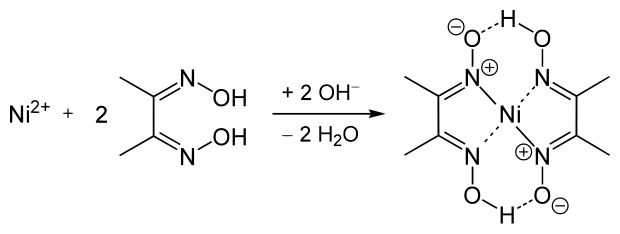
Well first, this is charged in some sense, but it is net-n... |
Whenever I read about coordination compounds in my textbooks, I always find a discussion about spin-only magnetic moment which is given by $\sqrt{n(n+2)}\cdot\mu_\mathrm{B}$, where $n$ is the number of unpaired electrons and $\mu_\mathrm{B}$ the Bohr magneton.
I'd like to know how to calculate the total magnetic mom... |
I've heard the term cathode ray pretty much every year in school since they introduced chemistry, and I know that it's a stream(?) of electrons. I'm just having troubles relating it to the real world. I think lightning would be a prime example, but I'm not sure; looking for confirmation. |
Is Lightning Basically a Cathode Ray? |
I wanted figure out what the identity of this scrap metal was. It seems to be some sheet metal but Wikipedia says sheet metal can be made of a variety of metals. My dad said it might be tin so I thought I'd try and see if it would melt easily since tin melts at a very low temperature. I heated it with a propylene torch... |
It's astonished me when I learned that at nanoscale gold is no more gold, rather it's red. And other elements also change their colors at nanoscale?
Why does this phenomenon occur?
P.S. This might be duplicate. But I've found anything while searching. |
Why nano particles change color? |
This question crossed my mind during a lab today because we were making $\ce{Ni(dmg)2}$, which is shown below.

Well first, this is charged in some sense, but it is net-n... |
The idea for this question comes from Jan's comment [over here](http://chemistry.stackexchange.com/questions/47346/do-symmetric-hydrogen-bonds-in-neutral-molecules-exist/61299?noredirect=1#comment104678_61299). I realized I don't know how I would compute the probability of tunneling in the process of a reaction.
Whe... |
How does one find the probability of tunneling along a reaction coordinate computationally? |
It astonished me when I learned that at nanoscale, gold is no longer that "gold" color, rather it's red. Other elements also have a different color at nanoscale?
Why does this phenomenon occur? |
Why are nanoparticles a different color? |
To understand solvation, the first and best approximation is to look at the definition of the term. The [IUPAC][1] says about solvation:
**Solvation**
**Any stabilizing interaction of a solute (or solute moiety) and the solvent or a similar interaction of solvent with groups of an insoluble material (i.e. the ion... |
While triiodide ion is commonly known, why is that trichloride ion (and its salts) almost unheard of? While it does exists according to [literature][1], why is the stability of trichloride ion in aqueous environment much worse than its bromine and iodine counterparts? Aren't elements down the group bulkier and hence fo... |
> We use a lot of chemicals […]
1. **Before** you start to use potentially hazardous compounds and products, get their *Material Safety Data Sheets* (MSDS) and **read them**.
2. Learn about storage, handling, disposal and **emergency measures** in case of
+ eye contact
+ skin contact
+ inh... |
How to treat skin corrosion by sodium hydroxide? |
I downloaded a periodic table app which gives detailed information for each element. The app shows some elements, however, have two different oxidation states. Hydrogen, for instance, can have either a 1+/1- states.What these two states signify(why more than one?).
Can someone explain this? |
I downloaded a periodic table app which gives detailed information for each element. The app shows some elements, however, have two different oxidation states. Hydrogen, for instance, can have either a 1+ or 1- state. What do these two states signify? (why more than one?)
Can someone explain this? |
I'm under training of becoming floorman in the rig. We use a lot of chemicals and one of them is caustic soda or sodium hydroxide. In case it touches my skin can you tell me of ways to treat it? I have thought of neutralizing it by slowly going less basic by using for example household ammonia then hand soap then sea w... |
(The magnets are not really getting stronger. The > 20 T magnets are still too big and expensive to be widely used. First 900 MHz was from 2001, the 1GHz Bruker magnet came out five years ago. Since then seemingly nothing... except this [1020 MHz][1] hybrid prototype by JEOL et al. Looks a bit unwieldy. There is a reas... |
This is going to be a long shot, and I might be wrong in any and all of my assumptions, be warned (... and please correct me). I might also be trivially right, I have no idea.
At equilibrium, each degree of freedom has the kinetic energy:
$$E = \frac{1}{2}k_\mathrm{B}T$$
So, I have water at, say, $300\ \mathrm... |
> We use a lot of chemicals […]
1. **Before** you start to use potentially hazardous compounds and products, get their *Material Safety Data Sheets* (MSDS) and **read them**.
2. Learn about storage, handling, disposal and **emergency measures** in case of
+ eye contact
+ skin contact
+ inh... |
(I have a PhD in math, but I don't remember most of the chemistry I had in high-school, so please be understanding. :) )
I had a silver-looking coin (not valuable, don't worry) that was heavily covered in black. I thought it could be silver, so I cleaned it with the electrolysis method (salt + sodium bicarbonate sol... |
> My question is: is it possible to know the amplitude of
> oscillation/stiffness constant of a O−H bond?
**Yes.**
Your approach is along the right lines **but** -
The Hooke's Law formula you used
$$E = \frac{1}{2}kA^2$$
is for the stretching of a spring. Hooke's law changes if the spring has mas(ses)... |
I had a silver-looking coin (not valuable, don't worry) that was heavily covered in black. I thought it could be silver, so I cleaned it with the electrolysis method (salt + sodium bicarbonate solution; copper on the positive pole and the coin on the negative). This didn't really work, though it seemed to make the coin... |
The first definition of hydration enthalpy I found on the net is :
> The hydration enthalpy is the enthalpy change when $1$ mole of gaseous
> ions dissolve in sufficient water to give an infinitely dilute
> solution. **Hydration enthalpies are always negative.**
Another definition I found in a book is :
> ... |
What is the correct definition of Hydration Enthalpy and why is it always negative? |
The first definition of hydration enthalpy I found on the net is :
> The hydration enthalpy is the enthalpy change when $1$ mole of gaseous
> ions dissolve in sufficient water to give an infinitely dilute
> solution. **Hydration enthalpies are always negative.**
Another definition I found in a book is :
> ... |
Oxygen is a rather boring element. It has only two allotropes, dioxygen and ozone. Dioxygen has a double bond, and ozone has a delocalised cloud, giving rise to two "1.5 bonds".
On the other hand, sulfur has many stable allotropes, and a bunch of unstable ones as well. The variety of allotropes, is mainly due to th... |
Why does sulfur, but not oxygen, catenate? |
Is it more than one or less than one?
According to me, since it's a dilute and aqueous solution, so FeSO4 will be hydrated and new formula will be FeSO4.7H2O.
Thus abnormal mass would be greater than the normal molar mass.
Therefore, vant Hoff factor would be less than 1 .
Am i correct? |
What's the vant hoff factor of dilute aqueous ferrous sulphate solution? |
Is it preferable to balance redox equations with $\ce{H+}$ or $\ce{H3O+}$? I think the latter, because first, the bare hydrogen proton doesn't exist in water solution. So why write down something we know not to exist?
I ask because in this problem, if we balance using both species, $\ce{H^+}$ and $\ce{H3O+}$, we a... |
Balancing redox equations in acidic media: to use H+ or H3O+? |
What is the difference between the maximum and mimimum oxidation states of sulfur in $\ce{S4O6^{2-}}$?
[![Structure][1]][1]
[1]: https://i.stack.imgur.com/l5kDW.png |
Carbon-13 NMR of dimethyl 3,4,5,6-tetraphenylphthalate? |
Is $\ce{Al(OH)3}$ in a very dilute solution deemed as a strong base? Are there any actual experimental data for it? |
Is aluminium hydroxide a strong base? |
Explain the following experiments and their results. What is their chemical equations as well?
1. When immersing a Magnesium (Mg) chunk inside aqueous solution of Copper ions (Cu(II)), a red-brown sediment of Copper appears. Why?
2. When immersing a Silver (Ag) stripe inside aqueous solution of Calcium ions (Ca(... |
It is commonly taught in chemistry class that the conjugate base of a weak acid (well, at least if it's not weaker than water) is a weak base, as shown by the relation
$$\mathrm{p}K_\mathrm{a} = 14 - \mathrm{p}K_\mathrm{b} \iff K_\mathrm{a}=\frac{K_\mathrm{w}}{K_\mathrm{b}}$$
where the $K_\mathrm{a}$ is of the c... |
Why is sodium sulfate neutral while its conjugate acid is weak? |
For example, elemental iodine is deep violet. Its sigma bond or perhaps the lone pairs are capable of absorbing all visible light frequencies except violet which is why we see it as that color.
Lithium, on the other hand, is red which means its valence electrons must be reflecting red frequencies.
So, does that mean... |
What is the name for the equation ΔG = ΔG° + RT ln Q? |
While triiodide ion is commonly known, why is that trichloride ion (and its salts) almost unheard of? While it does exist according to [literature][1], why is the stability of trichloride ion in aqueous environment much worse than its bromine and iodine counterparts? Aren't elements down the group bulkier and hence for... |
Why does the Förster resonance energy transfer scale as 1/r⁶? |
I am working on synthesis homework and I can not figure out how to remove a carbon substituent from a cyclohexane.
The cyclohexane starts off with a allyl group attached and ends up with a ketone attached to the same carbon of the cyclohexane. What is the best way to remove the three carbons and exchange them for a k... |
What is the best way to remove/break carbon carbon bonds? |
I am working on synthesis homework and I can not figure out how to remove a carbon substituent from a cyclohexane.
[![enter image description here][1]][1]
What is the best way to remove the three carbons and exchange them for a ketone?
[1]: https://i.stack.imgur.com/wv613.png |
For H-H
* bond length is `74 pm`
* bond energy is `436 kJ/mol`
(according to the [chemical bond][1] page on wikipedia)
Just wondering, can the force on a single hydrogen atom due to the bond be calculated?
Here's one approach.
`436 kJ` is the energy for a mol of molecules. The energy for a single H-H mo... |
My textbook mentions that SCUBA tanks often contain a mixture of oxygen and nitrogen along with some helium which serves as a diluent.
Now as I remember it, divers take care not to surface *too* quickly because it results in 'the Bends', which involves the formation of nitrogen bubbles in the blood and is potential... |
Why would breathing pure oxygen be a bad idea? |
For H-H
* bond length is `74 pm`
* bond energy is `436 kJ/mol`
(according to the [chemical bond][1] page on wikipedia)
Can the force on a single hydrogen atom due to the bond be calculated?
[1]: https://en.wikipedia.org/wiki/Chemical_bond |
I am working on synthesis homework and I can not figure out how to remove a carbon substituent from a cyclohexane.
[![enter image description here][1]][1]
What is the best way to remove the three carbons and exchange them for a ketone?
[1]: https://i.stack.imgur.com/0JM6e.png |
My textbook mentions that SCUBA tanks often contain a mixture of oxygen and nitrogen along with some helium which serves as a diluent.
Now as I remember it, divers take care not to surface *too* quickly because it results in 'the Bends', which involves the formation of nitrogen bubbles in the blood and is potential... |
So, I wanted to make calcium acetate, through the reaction of Calcium Carbonate and Vinegar.
The reaction:
$$\ce{2CH3COOH(aq) + CaCO3(aq) -> Ca(CH3COO)2(aq) + CO2(g) + H2O(l)}$$
There doesn't really seem to be much of a reaction between the chalk--source of CaCO$_3$--and the vinegar--source of Acetic Acid--, e... |
I am working on synthesis homework and I can not figure out how to remove a carbon substituent from a cyclohexane.
[![enter image description here][1]][1]
[![enter image description here][2]][2]
What is the best way to remove the three carbons and exchange them for a ketone?
[1]: https://i.stack.imgur... |
I am working on synthesis homework and I can not figure out how to remove a carbon substituent from a cyclohexane.
[![enter image description here][1]][1]
[![enter image description here][2]][2]
What is the best way to remove the three carbons and exchange them for a ketone?
[2]: https://i.stack.imgur.c... |
I am working on synthesis homework and I can not figure out how to remove a carbon substituent from a cyclohexane.
[![enter image description here][2]][2]
What is the best way to remove the three carbons and exchange them for a ketone?
[2]: https://i.stack.imgur.com/woqD8.png |
Our body is used to the environment around us. Once you change part of the environment, you have to be ready for the consequences.
Inhaling pure oxygen is the cause for what is known as [oxygen toxicity](https://en.wikipedia.org/wiki/Oxygen_toxicity).
> Oxygen toxicity is a condition resulting from the harmful eff... |
There are lots of pans nowadays that have a ceramic nonstick coating instead of a PTFE coating. However I can not find anything online describing what kind of ceramic such nonstick coatings are. Does anyone have an idea what these nonstick ceramics are on a chemical level?
(And can someone with the required rep add ... |
What is the chemical structure of ceramic nonstick coating on pans? |
What does 10 Vols mean? |
I'm trying to understand what parameter in the `$FORCE` group is better to use in computing vibrational frequencies (`NVIB=2`) of compounds after optimization. I'm using GAMESS Aug'16 on Ubuntu 14/16.04.
Initially, three separate methods for both gas and water (PCM) are used to optimize. Later, higher levels of theo... |
There are lots of pans nowadays that have a ceramic nonstick coating instead of a PTFE coating. However I can not find anything online describing what kind of ceramic such nonstick coatings are. Does anyone have an idea what these nonstick ceramics are on a chemical level? |
I love chemistry, but I am interested in so many other things too. I believe it's important to have a complete intellectual life, and it always makes me happy to find examples of people who took their love for science and created great art with it. Many would be surprised at how many great authors were also chemists. H... |
Who are some writers that also had careers in chemistry? |
So, I wanted to make calcium acetate, through the reaction of calcium carbonate and vinegar.
My proposed reaction:
$$\ce{2CH3COOH(aq) + CaCO3(aq) -> Ca(CH3COO)2(aq) + CO2(g) + H2O(l)}$$
It seems that there is not much reaction between the chalk (source of $\ce{CaCO3}$ and the vinegar (source of acetic acid), e... |
For $\ce{H-H}$:
* bond length is $74~\mathrm{pm}$
* bond energy is $436~\mathrm{kJ~mol^{-1}}$
(Source: article [chemical bond][1] on Wikipedia.)
Can the force on a single hydrogen atom due to the bond be calculated?
[1]: https://en.wikipedia.org/wiki/Chemical_bond |
Is it more than one or less than one?
Here is what I think: since it is a dilute and aqueous solution, so $\ce{FeSO4}$ will be hydrated and new formula will be $\ce{FeSO4*7H2O}$.
Thus, the abnormal mass would be greater than the normal molar mass.
Therefore, van 't Hoff factor would be less than $1$.
AMI... |
What's the van 't Hoff factor of dilute aqueous ferrous sulphate solution? |
The other answers here, describing oxygen toxicity are telling what can go wrong if you have too much oxygen, but they are not describing two important concepts that should appear with their descriptions. Also, there is a basic safety issue with handling pressure tanks of high oxygen fraction.
An important property... |
In the dry cell, the overall reactions that occur are:
$$\textbf{anode:}~~~ \ce{Zn -> Zn^{2+} + 2e^-}~~~~~~~~~~~~~~~~~~~~~~~~~~~~~~~~~~~~~~~~~~~~~~~~~~~~~~~~~~$$
$$\textbf{cathode:} ~~\ce{2NH4+ + 2MnO2 + 2e- -> Mn2O3 + 2NH3 + H2O}$$
I have read that the overall reaction at the cathode actually consists of two separ... |
Is it more than one or less than one?
Here is what I think: since it is a dilute and aqueous solution, so $\ce{FeSO4}$ will be hydrated and new formula will be $\ce{FeSO4*7H2O}$.
Thus, the abnormal mass would be greater than the normal molar mass.
Therefore, van 't Hoff factor would be less than $1$. Is tha... |
Why is cubane called pentacyclo[$4$.$2$.$0$.$0^{2,5}$.$0^{3,8}$.$0^{4,7}$]octane?
I am especially intrigued by the pentacyclo part. |
My textbook mentions that SCUBA tanks often contain a mixture of oxygen and nitrogen along with some helium which serves as a diluent.
Now as I remember it, divers take care not to surface *too* quickly because it results in 'the Bends', which involves the formation of nitrogen bubbles in the blood and is potential... |
It astonished me when I learned that at nanoscale, gold is no longer "gold",rather it's red. Other elements' nanoparticles also have a different color than their macro counterparts.
Why does this phenomenon occur? |
Why do nanoparticles have a different color than their macro counterparts? |
I was wondering is someone could please help answer this question for me. I was recently reading the ingredients on my toothpaste container, and one of the compounds in it was 'Sodium Pyrophosphate'; what does the 'Pyro-' prefix mean? I see it elsewhere but I've never come across such a nomenclature such as this. What ... |
Regardless of whether the newspaper uses the newer, safer inks or older, toxic ones, isn't wrapping food in newspaper something of a food safety risk? For one thing, newspaper isn't designed for food packaging and so it would not be subject to the same standards of 'cleanliness' or hygiene (can't think of a better word... |
Just say I wanted to give a pH calculation to three significant figures.
Eg: the pH of a 0.500 M soln. of HCl is -log(0.5) = 0.3010299957...
Would 3 s.f. be 0.301 or 0.30?
I know normally when zero comes before a number, it isn't considered a significant number (ie 0.00034 and 0.34 both have two significant fi... |
Significant figures in pH calculations: does pH 0.30 count as 2 or 3 significant figures? |
My teacher said that metals lose electrons and non-metals gain electrons to complete the noble gas configuration because of stability as it consumes less energy but why are systems having high energy less stable as compared to systems having less energy.
Why do metals and non-metals lose and gain electrons respectivel... |
Why do not metals gain electrons and non-metals donate electrons? |
First, it is a hi-school bullshit that was kept only bacause of lack of desire to revise basic courses.
Can metal gain electrons? Certainly, YES. Sodium has several compounds with negative oxidation state, many transition metals have extensive chemistry where the metal is in formal negative oxidation state and so fo... |
First, it is a high-school rubbish that was kept only because of lack of desire to revise basic courses.
Can metal gain electrons? Certainly, YES. Sodium has several compounds with negative oxidation state, many transition metals have extensive chemistry where the metal is in formal negative oxidation state and so f... |
Subsets and Splits
No community queries yet
The top public SQL queries from the community will appear here once available.