
instruction stringlengths 15 21.8k |
|---|
Should I expect any surprise when trying to shoot green fireballs like this? |
How to transform oxalic acid small crystals into large crystals? |
My textbook mentions that SCUBA tanks often contain a mixture of oxygen and nitrogen along with some helium which serves as a diluent.
Now as I remember it, divers take care not to surface *too* quickly because it results in 'the Bends', which involves the formation of nitrogen bubbles in the blood and is potential... |
I stumbled across 'Miscibility Curves' in the section *Solubility of Liquids in Liquids* ( *Organic Chemistry*, by Wallwork and Grant ) today. Now I'm not sure if it's an issue with way the content was laid out in the book, or whether it's due to my 'shortcomings' as a high-schooler, but I feel the book has dealt with ... |
Zinc hydroxide is more amphoteric as quantitatively investigated in [Effect of pH, Concentration and Temperature on Copper and
Zinc Hydroxide Formation/Precipitation in Solution][1]
In summary, in the case of Cu(OH)2, only at extremely low concentrations and very high pH can a third OH- be coordinated.
>At high... |
I have a question regarding the denaturation of industrial ethanol with methanol to discourage its consumption.
The boiling point of *methanol* is **64.7 °C**, while the boiling point of *ethanol* is **78.37 °C**. Wouldn't it be trivial then, to separate the methanol by simply distilling industrial ethanol at **64.... |
Zinc hydroxide is more amphoteric as quantitatively investigated in [Effect of pH, Concentration and Temperature on Copper and
Zinc Hydroxide Formation/Precipitation in Solution][1]
In summary, in the case of Cu(OH)2, only at extremely low concentrations and very high pH can a third OH- be coordinated.
>At high... |
It would depend mainly on the chemical composition of the ink (permanent marker? standard ballpoint?)
If it was signed with standard ballpoint, you have a problem, because the main film forming / thickening agent used for ballpoint pen ink is the same used in the majority of nail polishes - nitrocellulose. This mean... |
My textbook mentions that SCUBA tanks often contain a mixture of oxygen and nitrogen along with some helium which serves as a diluent.
Now as I remember it, divers take care not to surface *too* quickly because it results in 'the Bends', which involves the formation of nitrogen bubbles in the blood and is potential... |
We were dealing with the *Third Law of Thermodynamics* in class, and my teacher mentioned that it is physically impossible to attain a temperature of *zero* kelvin (absolute zero).
When we pressed him for the *rationale* behind that, he asked us to take a look at the graph for Charles' Law :
[![enter image descr... |
My textbook mentions that SCUBA tanks often contain a mixture of oxygen and nitrogen along with some helium which serves as a diluent.
Now as I remember it, divers take care not to surface *too* quickly because it results in 'the Bends', which involves the formation of nitrogen bubbles in the blood and is potential... |
What aspects of a macromolecule/protein do the various contributions to its entropy relate to? |
Stuck proving the relation $$\mu_i=\mu_i^0 + RT\ln a_i,\tag{1}$$ I looked up the definiton of activity. It is
$$a_i=e^{\frac{\mu_i-\mu_i^0}{RT}},\tag{2}$$
------------------------------------
but the the intuition/motivation for such a definition is unclear. Is it just because we wish for a relation like $(1)$ to... |
What is the intuition and motivation behind defining activity as $a_i=e^{\frac{\mu_i-\mu_i^0}{RT}}$? |
Stuck proving the relation $$\mu_i=\mu_i^\circ + RT\ln a_i,\tag{1}$$ I looked up the definiton of activity. It is
$$a_i=e^{\frac{\mu_i-\mu_i^\circ}{RT}},\tag{2}$$
------------------------------------
but the the intuition/motivation for such a definition is unclear. Is it just because we wish for a relation like ... |
What is the intuition and motivation behind the definition of the thermodynamic activity? |
In school I saw how NaCl was formed and I noticed that there was a violent reaction. Can someone tell me why there is such a violent reaction? |
Why is there such a violent reaction when NaCl is formed? |
Feynman is correct. Stop and think a moment. What does it mean to be "at absolute zero" if we accept the proposition that absolute zero is unobtainable? Assume that absolute zero is unobtainable. Which of these statements is more false:1. At absolute zero, there is no motion. or 2. At absolute zero, there is no mass. ... |
This is a homework question about rates.
---
> A researcher is investigating the following overall reaction: $$\ce{2C + D -> E}$$
The researcher claims the rate law for the reaction is written as follows: Rate = k[C][D]
> 1. Is the rate law equation possible for the given reaction?
2. If so, suggest a mechan... |
Is the following rate law possible for the given reaction? |
I was wondering what research exists that combines computational chemistry and organic chemistry.
For the past three years, I've been using Amber and Gaussian (in hopes) to identify and understand trends in intramolecular interactions. This really just serves as an example of my past research which incorporated both... |
Last semester in organic chemistry 1, we learned that staggered conformations have lower energy/higher stability.
However, my thought is that if you have interacting OH groups, the hydrogen bonding would make the eclipsed conformations more stable. Is this be the case? Why or why not?
For example, a small molecul... |
How do you calculate the equilibrium constant with the absorbance of a substance and the absorbance constant? |
I read that according to QM the electron in the ground state orbital produces no magnetic field, if that is true, can you explain why so and in what states there is a magnetic field and how that is produced? Why the difference?
Anyway, I am interested in learning how the classical model calculated it, since I read ... |
How does the backbone of a peptide look at $\mathrm{pH}\ 2$ ?
know that at low pH the amino acids have a $\ce{-NH3+}$ and a $\ce{-COOH}$, but when the residues link where does the additional hydrogen of the carboxyl go? (please mention where it is linked and if it is bolded or dashed) |
As I am writing this I am at a conference and one of the participants just asked a question where he linked reaction barriers to durations for the reaction to complete. To paraphrase:
> From our experience a reaction with an activation barrier of 15 kcal/mol should occur instantaneous at room temperature. An activatio... |
How to relate a reaction barrier to the time the reaction needs to proceed? |
Why do Asn-Ser and Glu-Thr have different H bonding patterns? |
For orbitals with the same value of $n + l$ (e.g. the $\mathrm{3d}$ and $\mathrm{4p}$ orbitals), we usually expect the orbital with the lower value of $n$ to be filled earlier. Hence, for example, the $\mathrm{3d}$ orbitals are filled before the $\mathrm{4p}$ orbitals in the transition metals.
However, the electroni... |
Why is the 5d orbital instead of the 4f orbital filled in lanthanum? |
The process of creating 2D depictions is explained in detail [here][1]. This way, it is possible to create a 3D image via running e.g.
obabel <input-smiles> -O 2d_depiction.png
However, how do I generate a ball and stick 3d depiction (as image) instead?
[1]: http://open-babel.readthedocs.io/en/latest/FileF... |
Openbabel: Generate 3D depiction? |
The process of creating 2D depictions is explained in detail [here][1]. This way, it is possible to create a 2D image via running e.g.
obabel <input-smiles> -O 2d_depiction.png
However, how do I generate a ball and stick 3d depiction (as image) instead?
[1]: http://open-babel.readthedocs.io/en/latest/FileF... |
Why do Asn-Ser and Gln-Thr have different H bonding patterns? |
The point is AgCl(aq) is the same as Ag+ + Cl- (again, in water)
So my reduction reaction would be Ag+ + Cl- + e- ---> Ag + Cl- , then the equation is simplified by removing Cl- from both sides (Spectator Ion).
Now there is Ag+ + e- ---> Ag which has a potential of 0.80V, so why the original equation is 0.22V.
... |
The point is $\ce{AgCl_{(aq)}}$ is the same as $\ce{Ag+}$ + $\ce{Cl-}$ (again, in water)
So my reduction reaction would be
$$\ce{Ag+ + Cl- + e- -> Ag + Cl-}$$ then the equation is simplified by removing $\ce{Cl-}$ from both sides (Spectator Ion).
Now there is $\ce{Ag+ + e- -> Ag}$ which has a potential of 0.80V, s... |
At high enough temperature, diatomic molecules in a dilute gas should dissociate. Where do their electrons go? Will they dissociate into neutral atoms or into ions? Does it depend on the substance? What for H_2, O_2, HCl, HF? Which quantum mechanical technique can decide the question - Hartree-Fock? |
At high enough temperature, diatomic molecules in a dilute gas should dissociate. Where do their electrons go? Will they dissociate into neutral atoms or into ions? Does it depend on the substance? What for $\ce{H2, O2, HCl, HF}$? Which quantum mechanical technique can decide the question - Hartree-Fock? |
At high enough temperature, diatomic molecules in a dilute gas should dissociate. Where do their electrons go? Will they dissociate into neutral atoms or into ions? Does it depend on the substance? What for $\ce{H2}$, $\ce{O2}$, $\ce{HCl}$, $\ce{HF}$? Which quantum mechanical technique can decide the question - Hartree... |
Normally we see IR signals that correspond to the vibration of covalent bonds. Can a (strong) hydrogen bond (or a vibration thereof, to be precise) correspond to an IR signal as well? How about other non-covalent forces? What are examples were hydrogen bonds can be seen in the IR spectrum? |
I was wondering which Pka to use when calculating the ratio of Hz to z- of amino acids, the henderson hasselbalch formula used:<br>
$\mathrm{pH} = \mathrm{p}K_\text{a} +\log\frac{[\ce{Z-}]}{[\ce{ZH}]}$
<br>
Because most amino acids have two Pka's one for the amino group and one for the carboxyl group (and sometimes ... |
Which Pka to use to calculate percentage composition on amino acids (henderson hasselbalch)? |
Which Pka to use to calculate Z-/HZ ratio of amino acids (henderson hasselbalch)? |
> Where do their electrons go?
IIRC, in the gas phase, the energy required for [heterolysis][1] is usually *much greater* than that required for [homolysis][2]. Consequently, usually, each of the atoms of a diatomic molecule retains one of the originally bonded electrons on dissociation.
> Which quantum mechanica... |
We were dealing with the *Third Law of Thermodynamics* in class, and my teacher mentioned that it is physically impossible to attain a temperature of *zero* kelvin (absolute zero).
When we pressed him for the *rationale* behind that, he asked us to take a look at the graph for Charles' Law :
[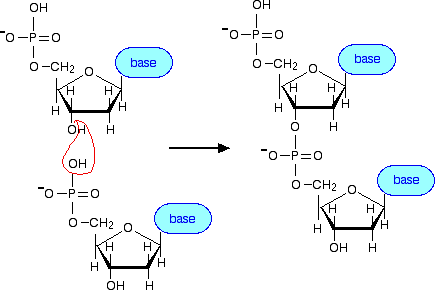
Doesn't the phosphate now have 10 electrons mutually shared between the oxygen atoms? I am unable to understand how the phosphate bond would be formed if phosphate does not obey the octet rule.
T... |
How is phosphate stable disobeying octet rule? |
I stumbled across miscibility curves in the section *Solubility of Liquids in Liquids* (*Organic Chemistry*, by Wallwork and Grant) today. I'm not sure if my problem is with the way the content was laid out in the book or whether I'm not fully understanding the material, but I feel the book has dealt with the topic in ... |
[![enter image description here][1]][1]
[1]: https://i.stack.imgur.com/0ELLr.png
The question asks which of the following pyridines are most basic. I would've considered D, since chlorine being the most electronegative, would have the largest d-ve charge, thereby creating a more basic Nitrogen. However the ans... |
I was wondering which $\mathrm{pK_a}$ to use when calculating the ratio of $\ce{HZ}$ to $\ce{Z-}$ of amino acids, the henderson hasselbalch formula used:<br>
$$\mathrm{pH} = \mathrm{p}K_\text{a} +\log\frac{[\ce{Z-}]}{[\ce{ZH}]}$$
<br>
Because most amino acids have two $pK_a$'s one for the amino group and one for the... |
>Which of the following pyridines are most basic?
>$\hspace{3cm}$[![enter image description here][1]][1]
[1]: https://i.stack.imgur.com/0ELLr.png
I would've considered D, since chlorine is the most electronegative, and would therefore have the largest d-ve charge, making it more basic than the nitrogen subst... |
The way my pchem professor explained it is that fluorescence /phosphorescence is caused by collision excitation. During this collision the spin of the promoted electron is flipped to a parallel spin of the orbit it left. The Pauli Exclusion Principle prevents relaxation/emission until the electron is some how able to "... |
Can fluorescent & phosphorescent molecules still be fluorescent or phosphorescent as ions and not as salts? |
I was reading Silberberg's principles of general chemistry when I noticed that it says that the mass of carbon12 is exactly 12 amu.
But when I calculated the total mass of its components (6 protons : 1.00727 amu each , 6 neutrons : 1.00866 amu each and 12 electrons : 0.000548 amu each) it was obviously greater than... |
I was reading Silberberg's principles of general chemistry when I noticed that it says that the mass of carbon12 is exactly 12 amu.
But when I calculated the total mass of its components (6 protons : 1.00727 amu each , 6 neutrons : 1.00866 amu each and 6 electrons : 0.000548 amu each) it was obviously greater than ... |
I'm doing experiment with the PDMS.
But I want to change material with no oxygen containing functional group
Is there a UV curable polymer with no oxygen atom?
Much better if it's cheap but I want to know is there something like that.
Or
Please recommend any UV curable or photoresist with well-known morphologi... |
I'm experimenting with the PDMS. I want to change the material with no oxygen containing functional group.
Is there a UV curable polymer with no oxygen atom?
Preferably cheap.
Or
Please recommend any UV curable or photoresist with well-known morphological property and molecular (polymer) structure.
|
I noticed that Asn-Ser H-bonding is different from the H-bonding between Gln-Thr.
However both have the same functional groups. I wasn't able to find any information about this. Maybe it's due to [steric effects][1], but because these striking similarities between Asn and Gln and on the other side Ser and Thr I don't ... |
We talk about divers using SCUBA tanks that contain a only a small concentration of oxygen diluted in a mixture of other gasses such as nitrogen or helium.
From what I've read, this is because breathing pure oxygen, or a concentration that exceeds the normal partial-pressure of oxygen at sea level, when diving can ... |
How is Oxygen Toxic? |
I'm a TA (technically my position is something else, but for the intents and purposes of this question a TA is close enough) helping with correcting lab reports, and one of the experiments the students did was heating of ammonium bicarbonate, $NH_3HCO_3$ in powder form, over Bunsen burners, which turns the compound int... |
Why are there many examples of 2-methylquinolines being treated with a base then an electrophile but none of the corresponding reaction with 3-methylquinolines? Is this to do with the charge not being stabilised for the 3-methylquinoline? |
Ethanol and Isopropyl alcohol have boiling points 78.37 °C and 82.6 °C respectively. Increase in the boiling point is obvious due to increase in carbon chain length which resulted in increase in boiling point of Isopropyl alcohol.
But recently, i come across fluorinated Ethanol and isopropanol, The trend of boiling... |
Reason for decreased boiling point of Hexafluoroisoproponal? |
I'm helping with correcting lab reports, and one of the experiments the students did was heating of ammonium bicarbonate, $\ce{NH_3HCO_3}$ in powder form, over Bunsen burners, which turns the compound into water, carbon dioxide and ammonia (all gasses). They are supposed to say, in their report, whether this is an endo... |
I am using an approximation of density matrix in a high order series expansion to predict the total internal energy of chemical systems. During my research,it was found out that the precision of such algorithm is accurate up to 0.00001 Hartree by optimising the independent parameters, which is roughly 0.026kJ/mol's err... |
Why are there many examples of 2-methylquinolines being treated with a base then an electrophile but none of the corresponding reaction with 3-methylquinolines? Does this have to do with the charge not being stabilised for the 3-methylquinoline? |
>Which of the following pyridines are most basic?
>[![pyridine, 4-methylpyridine, 4-dimethylaminopyridine and 4-chloropyridine][1]][1]
I would've considered D, since chlorine is the most electronegative, and would therefore have the largest partial negative charge, making it more basic than the nitrogen substitue... |
My physics lecturer was introducing the idea of what a Theory of Everything was, and said something like this:
> Other sciences have their own theories of everything too, fundamental axioms from which everything else can be derived from. In mathematics, we have ZFC, and well, the entire framework of abstract mathema... |
Does organic chemistry somehow defy the periodic table? |
Consider the following singlet carbenes:
$\ce{:CH2}$ , $\ce{:CF2}$, $\ce{:CCl2}$
The order of stability expected considering back bonding is;
$\ce{:CH2}$ < $\ce{:CCl2}$ < $\ce{:CF2}$
However the correct order is:
$\ce{:CCl2}$ < $\ce{:CH2}$ < $\ce{:CF2}$
Can someone explain why dichlorocarbene(singlet) should be l... |
I was reading a module on waste management.
There were two interesting points.
1. High pH results in higher solubility of CN-. I understand it for HCN as below:
HCN->H+ + CN- higher pH means that equilibrium will be shifted rightwards and concentration of CN- will increase.
But will others CN- like KCN, NaCN h... |
what reagents are required to form the following product with the following starting material?
Is it possible for compound to react with a halogen gas e.g. bromine to form a bromine on the carbon and then react with e.g. NaOH to form the OH with Br as the leaving group?
[![reaction of pyrrole][1]][1]
[1]: ht... |
What reagents are required to form the following product with the following starting material?
Is it possible for the starting material to react with a halogen gas e.g. bromine to form a bromine on the carbon and then react with e.g. NaOH to form the OH with Br as the leaving group?
[![pyrrole][2]][2]
[1]: h... |
We talk about divers using Scuba tanks that contain a only a small concentration of oxygen diluted in a mixture of other gasses such as nitrogen or helium.
From what I've read, this is because breathing pure oxygen, or a concentration that exceeds the normal partial-pressure of oxygen at sea level, when diving can ... |
[![enter image description here][1]][1]
[1]: https://i.stack.imgur.com/vvXuk.jpg
Would the attack take place?
I am confused about this as, cyclopropilium is aromatic implying that it is highly stable.
But if it attacks the benzene ring it would lose its aromaticity thus rendering it comparatively less stable.
... |
Subsets and Splits
No community queries yet
The top public SQL queries from the community will appear here once available.