|
|
--- |
|
|
license: mit |
|
|
size_categories: |
|
|
- 10K<n<100K |
|
|
--- |
|
|
Dataset for the evaluation of data-unlearning techniques using KLOM (KL-divergence of Margins). |
|
|
|
|
|
# How KLOM works: |
|
|
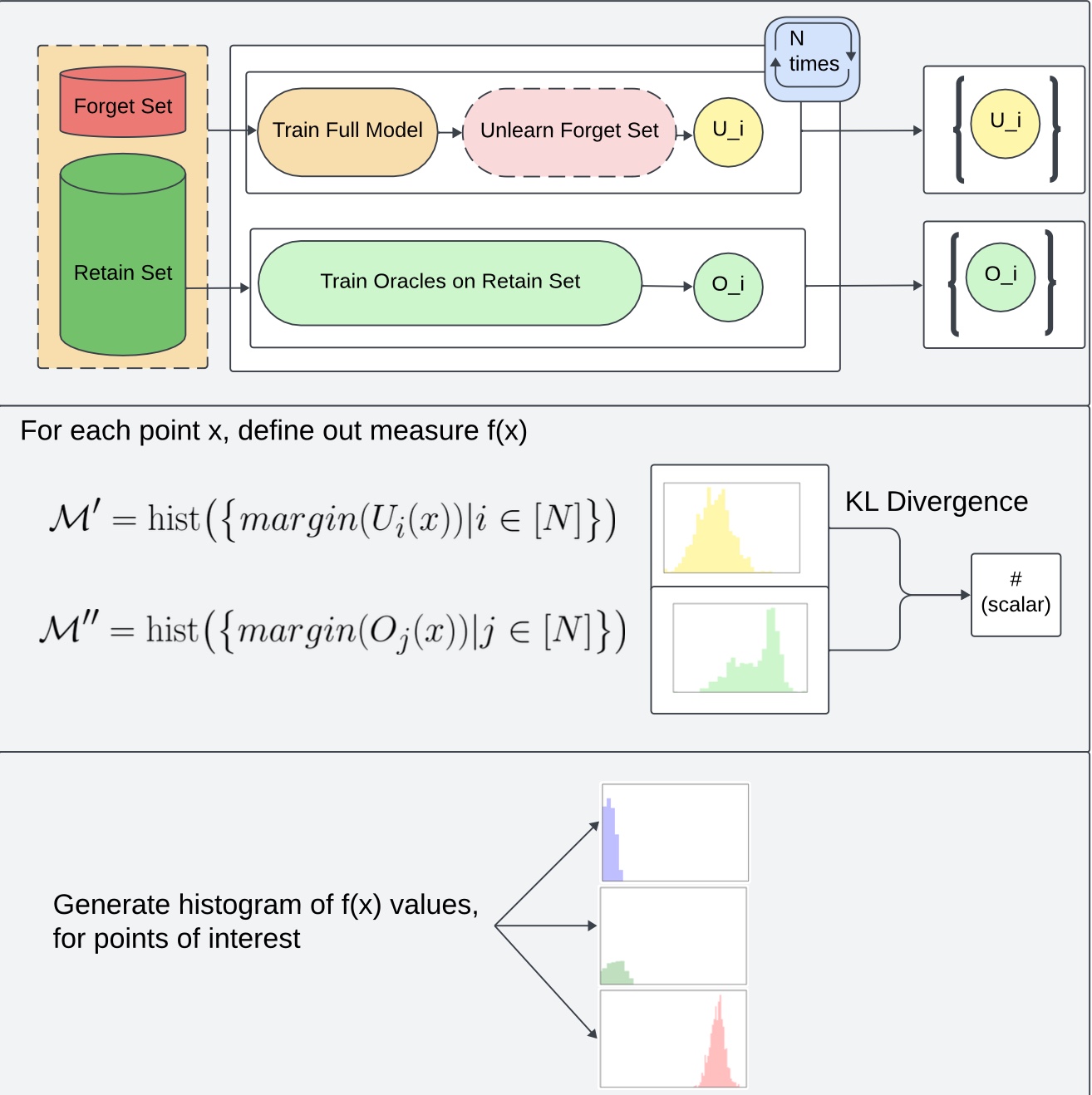
KLOM works by: |
|
|
1. training N models (original models) |
|
|
2. Training N fully-retrained models (oracles) on forget set F |
|
|
3. unlearning forget set F from the original models |
|
|
4. Comparing the outputs of the unlearned models from the retrained models on different points |
|
|
(specifically, computing the KL divergence between the distribution of _margins_ of oracle models and distribution of _margins_ of the unlearned models) |
|
|
|
|
|
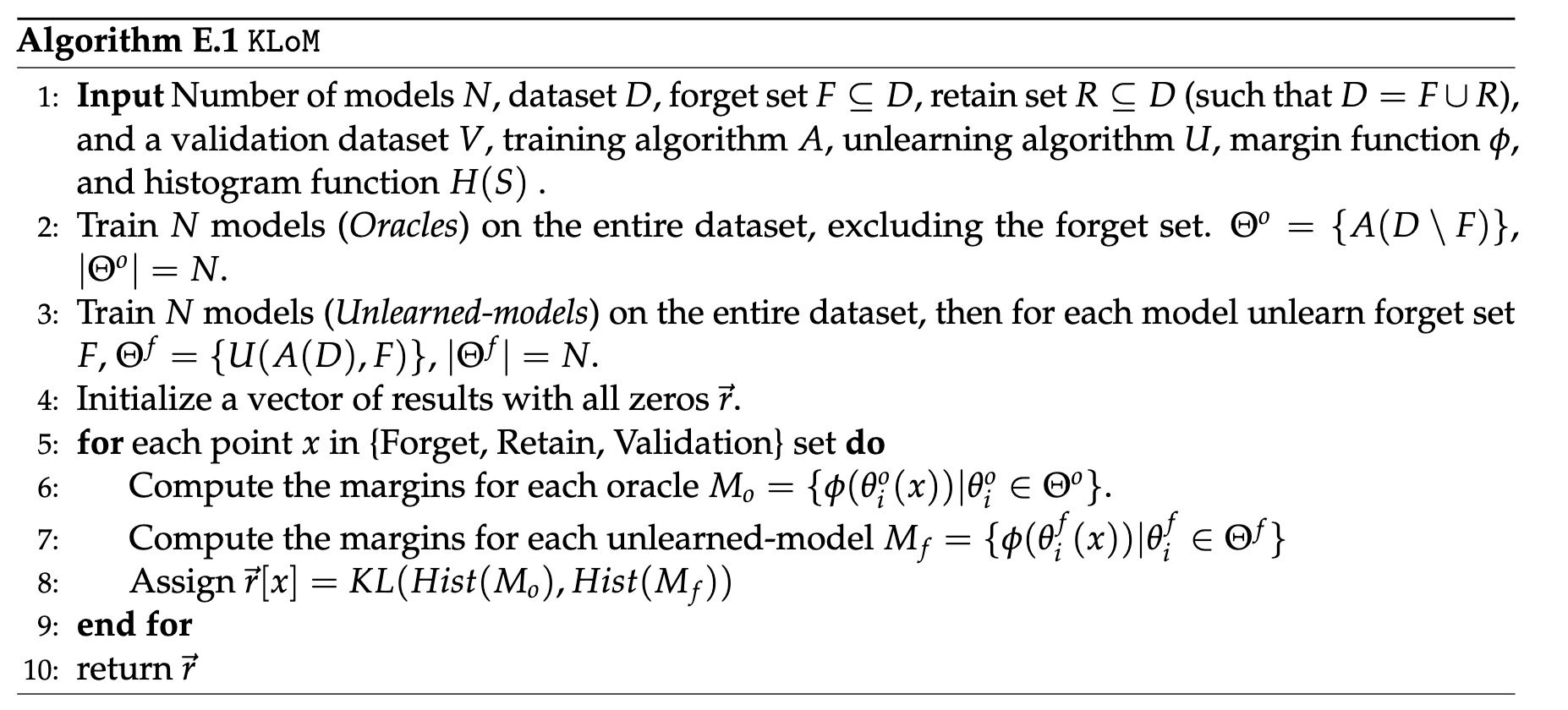
Originally proposed in the work Attribute-to-Delete: Machine Unlearning via Datamodel Matching (https://arxiv.org/abs/2410.23232), described in detail in E.1. |
|
|
|
|
|
**Outline of how KLOM works:** |
|
|
 |
|
|
|
|
|
|
|
|
**Algorithm Description:** |
|
|
 |
|
|
|
|
|
# Structure of Data |
|
|
|
|
|
The overal structure is as follows: |
|
|
``` |
|
|
full_models |
|
|
├── CIFAR10 |
|
|
├── CIFAR10_augmented |
|
|
└── LIVING17 |
|
|
oracles |
|
|
└── CIFAR10 |
|
|
├── forget_set_1 |
|
|
├── forget_set_2 |
|
|
├── forget_set_3 |
|
|
├── forget_set_4 |
|
|
├── forget_set_5 |
|
|
├── forget_set_6 |
|
|
├── forget_set_7 |
|
|
├── forget_set_8 |
|
|
├── forget_set_9 |
|
|
└── forget_set_10 |
|
|
``` |
|
|
Each folder has |
|
|
|
|
|
* train_logits_##.pt - logits at the end of training for model `##` for validation points |
|
|
* val_logits_##.pt - logits at the end of training for model `##` for train points |
|
|
* `##__val_margins_#.npy` - margins of model `##` at epoch `#` (this is derived from logits) |
|
|
* `sd_##____epoch_#.pt` - model `##` checkpoint at epoch `#` |
|
|
|
|
|
|
|
|
# How to download |
|
|
|
|
|
|
|
|
|
|
|
Create script `download_folder.sh` |
|
|
|
|
|
``` |
|
|
#!/bin/bash |
|
|
REPO_URL=https://huggingface.co/datasets/royrin/KLOM-models |
|
|
TARGET_DIR=KLOM-models # name it what you wish |
|
|
FOLDER=$1 # e.g., "oracles/CIFAR10/forget_set_3" |
|
|
|
|
|
mkdir -p $TARGET_DIR |
|
|
|
|
|
git clone --filter=blob:none --no-checkout $REPO_URL $TARGET_DIR |
|
|
cd $TARGET_DIR |
|
|
git sparse-checkout init --cone |
|
|
git sparse-checkout set $FOLDER |
|
|
git checkout main |
|
|
``` |
|
|
|
|
|
Example how to run script: |
|
|
``` |
|
|
bash download_folder.sh oracles/CIFAR10/forget_set_3 |
|
|
``` |
|
|
|
|
|
|
|
|
|
|
|
## How forget sets generated |
|
|
|
|
|
We have 10 different forget sets: sets 1,2,3 are random forget sets of sizes 10,100,1000 respectively; sets 4-9 correspond to semantically coherent subpopulations of examples (e.g., all dogs facing a similar direction) identified using clustering methods. |
|
|
Specifically, we take a $n \times n$ datamodel matrix constructed by concatenating ``train x train`` datamodels ($n=50,000$). Next, we compute the top principal components (PCs) of the influence matrix and construct the following forget sets: |
|
|
* Forget set 1: 10 random samples |
|
|
* Forget set 2: 100 random samples |
|
|
* Forget set 3: 500 random samples |
|
|
* Forget set 4: 10 samples with the highest projection onto the 1st PC |
|
|
* Forget set 5: 100 samples with the highest projection onto the 1st PC |
|
|
* Forget set 6: 250 samples with the highest projection onto the 1st PC and 250 with lowest projection |
|
|
* Forget set 7: 10 samples with the highest projection onto the 2nd PC |
|
|
* Forget set 8: 100 samples with the highest projection onto the 2nd PC |
|
|
* Forget set 9: 250 samples with the highest projection onto the 2nd PC and 250 with the lowest projection. |
|
|
* Forget set 10: 100 samples closest in CLIP image space to training example 6 (a cassowary) |
|
|
|
|
|
\paragraph{ImageNet Living-17.} We use three different forget sets: |
|
|
* Forget set 1 is random of size 500; |
|
|
* Forget sets 2 and 3 correspond to 200 examples from a certain subpopulation (corresponding to a single original ImageNet class) within the Living-17 superclass. |
|
|
|
|
|
|