| <div align="center"> |
| <h1 align="center"> |
| UltraTex: Unleashing 2K Multi-View Diffusion <br> for 3D Texturing |
| </h1> |
|
|
| <a href="https://yiboz2001.github.io/UltraTex/"><img src="https://img.shields.io/badge/Project%20Page-UltraTex-blue"></a> |
| <a href="https://arxiv.org/abs/2609.23169"><img src="https://img.shields.io/badge/arXiv-2609.23169-b31b1b.svg?logo=arXiv"></a> |
| <a href="https://huggingface.co/datasets/YiboZhang2001/G-buffer-TexVerse"><img src="https://img.shields.io/badge/%F0%9F%A4%97%20Hugging%20Face-G--buffer%20TexVerse-blue"></a> |
| <a href="https://www.youtube.com/watch?v=9tOsRvGxfN4"><img src="https://img.shields.io/badge/YouTube-Video-red?logo=youtube"></a> |
| <br> |
| <strong>SIGGRAPH Asia 2026</strong> |
| <br> |
| <strong>Yibo Zhang<sup>1,2</sup></strong>, |
| Ze Yuan<sup>3</sup>, |
| Nan Cao<sup>4,2</sup>, |
| Li Zhang<sup>5,2</sup>, |
| Yan-Pei Cao<sup>6</sup>, |
| Yuan-Chen Guo<sup>6</sup>, |
| Rui Ma<sup>1 †</sup> |
| <br> |
| <sup>1</sup>Jilin University |
| <sup>2</sup>Shanghai Innovation Institute |
| <sup>3</sup>The University of Hong Kong |
| <br> |
| <sup>4</sup>Tongji University |
| <sup>5</sup>Fudan University |
| <sup>6</sup>VAST |
| <br> |
| <sup>†</sup> Corresponding author |
| </div> |
|
|
|  |
|
|
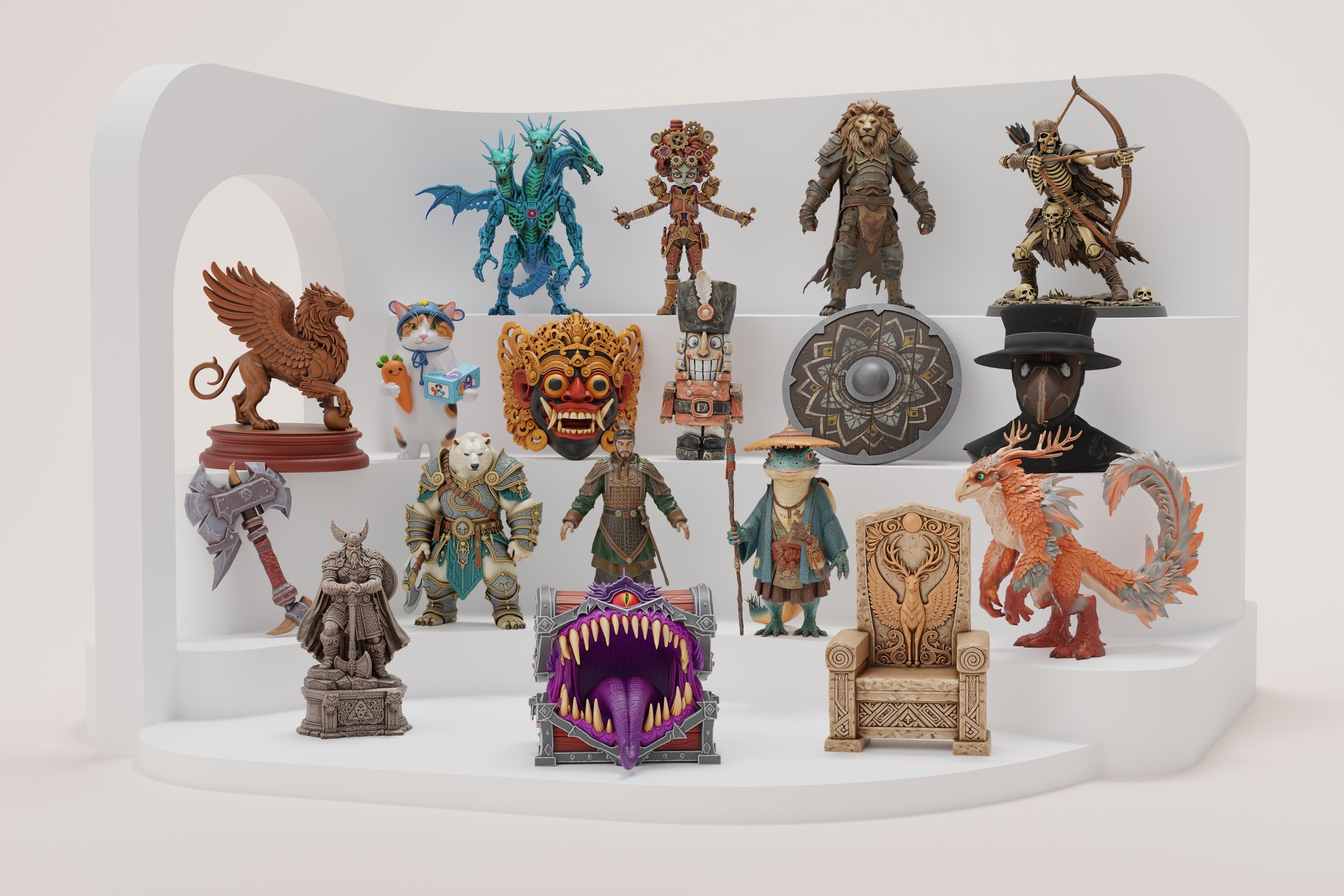
| **UltraTex** is an efficient end-to-end framework for high-resolution multi-view diffusion-based 3D texturing at **2048×2048**. Object-centric multi-view renderings contain two major sources of redundancy: background-induced sequence redundancy and sparse token interactions within the foreground. UltraTex addresses them with: |
|
|
| 1. **Background Token Dropping (BTD)** — discard background tokens before the DiT backbone, keeping original RoPE indices so spatial coordinates and the multi-view geometric prior survive. |
| 2. **Block-Sparse Attention (BSA)** — top-*k* sparse attention over the retained foreground sequence. |
| 3. **Foreground-Aware VAE Decoding** — replace the undenoised background latent with a canonical in-distribution background and lightly fine-tune the decoder so 2K reconstruction stays artifact-free. |
|
|
| On common samples in G-buffer TexVerse, this yields **20.6×–91.1×** training speedup and **22.3×–74.6×** end-to-end inference speedup over the dense baseline. |
|
|
| Feel free to contact me ([ybzhang23@mails.jlu.edu.cn](mailto:ybzhang23@mails.jlu.edu.cn)) or open an issue if you have any questions or suggestions. |
|
|
| ## News |
|
|
| - [2026-10-03] Training and inference code and [weights](https://www.modelscope.ai/models/Yibo-Zhang/UltraTex) released. |
| - [2026-09-22] Paper available on [arXiv](https://arxiv.org/abs/2609.23169). |
| - [2026-09-22] [Project page](https://yiboz2001.github.io/UltraTex/) and [G-buffer TexVerse](https://huggingface.co/datasets/YiboZhang2001/G-buffer-TexVerse) released. |
|
|
| ## Installation |
|
|
| Tested with Python 3.12, CUDA 12.4 and PyTorch 2.5.1. |
|
|
| ```bash |
| git clone https://github.com/yiboz2001/UltraTex.git |
| cd UltraTex |
| conda create -n ultratex python=3.12 -y |
| conda activate ultratex |
| pip install -r requirements.txt |
| ``` |
|
|
| `requirements.txt` pins the exact versions we tested. The sparse-attention |
| kernels are Triton (`triton==3.1.0`) and are compiled on first use. |
|
|
| Download the UltraTex weights into `checkpoints/` (layout below): |
|
|
| ```bash |
| pip install modelscope |
| modelscope download --model Yibo-Zhang/UltraTex --local_dir checkpoints |
| ``` |
|
|
| ## Repository structure |
|
|
| ``` |
| UltraTex/ |
| ├── ultratex/ |
| │ ├── backbones/ |
| │ │ ├── flux1/ # FLUX.1-dev backbone (BTD + BSA in math.py) |
| │ │ └── flux2/ # FLUX.2-Klein backbone (4B / 9B) |
| │ ├── sparse_attention/ # Vendored SLA, sparse branch only, Triton 3.x / H100 fixes |
| │ ├── data/ # Dataset loaders |
| ├── train_flux1.py # Training on FLUX.1-dev |
| ├── train_flux2.py # Training on FLUX.2-Klein (albedo) |
| ├── train_flux2_mr.py # Training on FLUX.2-Klein (metallic-roughness) |
| ├── inference_flux1.py # Inference on FLUX.1-dev |
| ├── inference_flux1_ai.py # Inference on AI-generated meshes (FLUX.1) |
| ├── inference_flux2.py # Inference on FLUX.2-Klein |
| ├── train_vae/ # Foreground-Aware VAE Decoder training |
| │ ├── train_decoder.py # Decoder fine-tuning, FLUX.1 AE (FG-restricted L2) |
| │ ├── train_decoder_flux2.py # Decoder fine-tuning, FLUX.2 AE |
| │ ├── infer_decoder.py # Decoder eval (FLUX.1) |
| │ └── infer_decoder_flux2.py # Decoder eval (FLUX.2) |
| ├── scripts/ # Shell launch scripts |
| └── requirements.txt |
| ``` |
|
|
| ## Weights |
|
|
| UltraTex ships weights for two backbones. Each needs its own LoRA **and** its |
| own Foreground-Aware VAE decoder — the decoders are not interchangeable, since |
| the two backbones use different autoencoders. |
|
|
| Download the UltraTex weights from [ModelScope](https://www.modelscope.ai/models/Yibo-Zhang/UltraTex) and place them under `checkpoints/`: |
|
|
| ``` |
| checkpoints/ |
| ├── flux1/ |
| │ ├── lora/ # UltraTex LoRA for FLUX.1-dev |
| │ └── decoder.pt # FG-aware VAE decoder for FLUX.1 |
| ├── flux2/ |
| │ ├── lora/ # UltraTex LoRA for FLUX.2-Klein 9B (albedo) |
| │ └── decoder.pt # FG-aware VAE decoder for FLUX.2 |
| ├── flux2_mr/ |
| │ └── lora/ # UltraTex LoRA for FLUX.2-Klein 9B (metallic-roughness) |
| └── base/ # base models, downloaded separately |
| ├── FLUX.1-dev/ |
| │ ├── flux1-dev.safetensors |
| │ └── ae.safetensors |
| ├── xflux_text_encoders/ # T5 for FLUX.1 (XLabs-AI/xflux_text_encoders) |
| ├── clip-vit-large-patch14/ # CLIP for FLUX.1 (openai/clip-vit-large-patch14) |
| └── flux2/ |
| ├── flux-2-klein-base-9b.safetensors |
| ├── ae.safetensors |
| └── qwen3-8b/ |
| ``` |
|
|
| Base models come from their original sources: |
| [FLUX.1-dev](https://huggingface.co/black-forest-labs/FLUX.1-dev), |
| [FLUX.2](https://huggingface.co/black-forest-labs/FLUX.2-dev), |
| [Qwen3-8B](https://huggingface.co/Qwen/Qwen3-8B), and the |
| [XLabs T5](https://huggingface.co/XLabs-AI/xflux_text_encoders) / |
| [CLIP](https://huggingface.co/openai/clip-vit-large-patch14) encoders for FLUX.1. |
|
|
| A LoRA only loads into the backbone it was trained on: the 9B LoRA will not fit |
| the 4B model (hidden size 4096 vs 3072). |
|
|
| ## Training |
|
|
| FLUX.1-dev backbone: |
|
|
| ```bash |
| bash scripts/train_flux1_2048.sh |
| ``` |
|
|
| FLUX.2-Klein 9B backbone (albedo, or the metallic-roughness branch with `TASK=mr`): |
|
|
| ```bash |
| bash scripts/train_flux2_9b_2048.sh |
| TASK=mr bash scripts/train_flux2_9b_2048.sh |
| ``` |
|
|
| Both default to the bundled demo objects (`data/train_demo.json`). Training |
| continues from the released LoRA when it is present under `checkpoints/`, |
| otherwise the LoRA is trained from scratch. |
|
|
| Key environment variables (all overridable, see scripts for defaults): |
|
|
| | Variable | Description | |
| |---|---| |
| | `TRAIN_JSON` | Path to training data JSON | |
| | `EVAL_JSON` | Path to evaluation data JSON | |
| | `CHECKPOINT` | UltraTex LoRA directory | |
| | `DECODER_CKPT` | Foreground-aware VAE decoder checkpoint | |
| | `LR` | Learning rate | |
| | `RESOLUTION` | Training resolution (default 2048) | |
|
|
| Base model locations are read from the environment so nothing is fetched from |
| the Hub at run time. The launch scripts set these to the `checkpoints/base/` |
| layout above; override them if your weights live elsewhere. |
|
|
| | Variable | Backbone | Points at | |
| |---|---|---| |
| | `FLUX_DEV_MODEL_PATH` | FLUX.1 | `flux1-dev.safetensors` | |
| | `AE_MODEL_PATH` | both | autoencoder `ae.safetensors` | |
| | `T5` | FLUX.1 | XLabs T5 encoder directory | |
| | `CLIP` | FLUX.1 | CLIP encoder directory | |
| | `KLEIN_9B_BASE_MODEL_PATH` | FLUX.2 | `flux-2-klein-base-9b.safetensors` | |
| | `QWEN3_8B_PATH` | FLUX.2 | Qwen3-8B directory | |
|
|
| ## Inference |
|
|
| ```bash |
| # FLUX.1 |
| bash scripts/inference_flux1.sh |
| |
| # FLUX.2 |
| bash scripts/inference_flux2.sh |
| ``` |
|
|
| UltraTex predicts albedo by default. Pass `--task mr` to predict the |
| metallic-roughness map instead; that path uses `train_flux2_mr.py` and reads |
| `roughness_metallic/` as the target: |
|
|
| ```bash |
| bash scripts/inference_flux2.sh standard --task mr # uses checkpoints/flux2_mr/lora |
| ``` |
|
|
| The metallic-roughness branch shares the FLUX.2 VAE decoder (`checkpoints/flux2/decoder.pt`). |
|
|
| The backbone must match the checkpoint: a LoRA trained on |
| `flux.2-klein-base-9b` will not load into the 4B model (hidden size 4096 vs |
| 3072). |
|
|
| ## Foreground-Aware VAE Decoder |
|
|
| Each backbone has its own decoder, trained separately so that foreground-only |
| latents decode without background leakage. The AE encoder stays frozen and only |
| the decoder is trained, with an L2 loss on foreground pixels. |
|
|
| Training (defaults to the bundled demo objects; set `TRAIN_JSON` / `EVAL_JSON` |
| for your own data): |
|
|
| ```bash |
| bash scripts/train_vae_flux1.sh # FLUX.1 AE -> outputs/train_vae_flux1/decoder_step*.pt |
| bash scripts/train_vae_flux2.sh # FLUX.2 AE -> outputs/train_vae_flux2/decoder_step*.pt |
| ``` |
|
|
| Both read `AE_MODEL_PATH` (defaults to the `checkpoints/base/` layout above) and |
| accept `LR`, `MAX_TRAIN_STEPS`, `RESOLUTION`, `SAVE_EVERY`, `OUTPUT_DIR`, |
| `NUM_GPUS` and `MAIN_PROCESS_PORT`. |
|
|
| Evaluation, run from the repository root: |
|
|
| ```bash |
| export PYTHONPATH=$PWD |
| accelerate launch train_vae/infer_decoder.py --decoder_ckpt checkpoints/flux1/decoder.pt |
| python train_vae/infer_decoder_flux2.py --decoder_ckpt checkpoints/flux2/decoder.pt |
| ``` |
|
|
| ## G-buffer TexVerse |
|
|
| The training dataset is available at [G-buffer TexVerse](https://huggingface.co/datasets/YiboZhang2001/G-buffer-TexVerse) — 351,847 BSDF assets with multi-view G-buffer renderings at up to 4096×4096. See the dataset card for layout and download instructions. |
|
|
| ## Acknowledgements |
|
|
| - [FLUX](https://github.com/black-forest-labs/flux) by Black Forest Labs |
| - [UNO](https://github.com/bytedance/UNO) by ByteDance |
| - [SLA (Sparse Linear Attention)](https://github.com/thu-ml/SLA) by Jintao Zhang, Haoxu Wang et al. — vendored under `ultratex/sparse_attention/` (Apache-2.0). We use its sparse block-attention kernels only (the linear-attention branch is removed) and patch them for Triton 3.x / H100; see `ultratex/sparse_attention/PATCHES.md` |
| - [Poly Haven](https://polyhaven.com/) for CC0 HDR environment maps |
|
|
| ## Citation |
|
|
| ```bibtex |
| @inproceedings{zhang2026ultratex, |
| author = {Zhang, Yibo and Yuan, Ze and Cao, Nan and Zhang, Li and |
| Cao, Yan-Pei and Guo, Yuan-Chen and Ma, Rui}, |
| title = {UltraTex: Unleashing 2K Multi-View Diffusion for 3D Texturing}, |
| year = {2026}, |
| isbn = {9798400728426}, |
| publisher = {Association for Computing Machinery}, |
| address = {Kuala Lumpur, Malaysia}, |
| url = {https://doi.org/10.1145/3829340.3842299}, |
| doi = {10.1145/3829340.3842299}, |
| booktitle = {Proceedings of the SIGGRAPH Asia 2026 Conference Papers}, |
| series = {SA Conference Papers '26}, |
| } |
| ``` |
|
|
| ## License |
|
|
| This code is released under the [MIT License](./LICENSE). |
|
|
| ## Krea 2 and Qwen-Image 2.1 backbones (port) |
|
|
| This fork adds two open-weight single-stream DiT backbones next to the FLUX |
| ports, selected with `--backbone`: |
|
|
| | Backbone | Weights | Latent | Tokens per 2K view | Conditioning | |
| |---|---|---|---|---| |
| | `krea2` | Krea 2 Raw, 12.8B, 28 blocks, 6144 wide, GQA 48/12 | Qwen-Image / Wan 2.1 VAE, 16ch, 8x, 2x2 patch | 16,384 | Qwen3-VL-4B 12-layer tap (`txtfusion`), 3-axis RoPE (index, h, w), theta 1000 | |
| | `qwen21` | Qwen-Image 2.1, 7.1B, 32 blocks, 4096 wide | Qwen-Image 2.1 RGBA VAE, 64ch, 16x, patch 1 | 16,384 | Qwen3-VL-8B last hidden state, block-causal prefix (text + references) modulated from t = 0, 3-axis RoPE (frame, h, w) | |
|
|
| Everything UltraTex adds (background token dropping with preserved RoPE ids, |
| SLA block-sparse attention, foreground-aware decoder, foreground-restricted |
| flow matching, UNO-style shifted timestep sampling, 2x3 TexVerse canvases, |
| length-aware bucketing) is shared in `ultratex/mv.py` and |
| `ultratex/backbones/common.py`; the backbone modules under |
| `ultratex/backbones/{krea2,qwen21}/` load the released checkpoints with |
| `strict=True` and only change the sequence interface. |
|
|
| Qwen-Image 2.1 specifics: the sequence is `[text, normal canvas, reference |
| render, target canvas]`; the prefix is causal and timestep-independent, so at |
| inference its K/V are computed once and cached across all sampling steps |
| (`--use_prefix_cache`). With `--attention full` it trains bidirectionally like |
| the FLUX ports. The RGBA VAE encodes the alpha channel directly, so the |
| canonical background is white + transparent and the decoder's alpha is |
| supervised too. |
|
|
| Krea 2 specifics: the sequence is `[text, target canvas, normal canvas, |
| reference render]` with the references on RoPE index planes 1 and 2 (the Krea 2 |
| edit-adapter convention); `--ref_timestep_zero` modulates reference tokens from |
| t = 0. |
|
|
| ### Setup |
|
|
| The scripts run inside a ComfyUI checkout that has Qwen-Image 2.1 support |
| (ComfyUI is imported as a library for the VAEs and text encoders; no weights |
| are converted). `scripts/mv_env.sh` holds the paths; override as needed: |
|
|
| ```bash |
| export COMFY_ROOT=/path/to/ComfyUI # with Qwen-Image 2.1 support (>= 2026-09-20) |
| export MV_PYTHON=$COMFY_ROOT/.venv/bin/python |
| export QWEN21_MODEL_PATH=.../qwen_image_2.1_bf16.safetensors |
| export QWEN21_VAE_PATH=.../qwen_image_2.1_vae_bf16.safetensors |
| export QWEN21_TEXT_ENCODER=.../qwen3vl_8b_bf16.safetensors |
| export KREA2_MODEL_PATH=.../krea2_raw_bf16.safetensors # Krea 2 Raw (train on Raw) |
| export KREA2_VAE_PATH=.../qwen_image_vae.safetensors # 16-channel Qwen-Image / Wan 2.1 VAE |
| export KREA2_TEXT_ENCODER=.../qwen3vl_4b_bf16.safetensors |
| ``` |
|
|
| Prompts are the empty string for image-guided texturing, so the text |
| conditioning is encoded once and cached (no text encoder at train time): |
|
|
| ```bash |
| BACKBONE=qwen21 bash scripts/precompute_text_mv.sh # -> checkpoints/qwen21/text_cond.safetensors |
| BACKBONE=krea2 bash scripts/precompute_text_mv.sh # -> checkpoints/krea2/text_cond.safetensors |
| ``` |
|
|
| ### Data |
|
|
| ```bash |
| # G-buffer TexVerse is gated: request access on Hugging Face first. |
| hf download YiboZhang2001/G-buffer-TexVerse canonical/bsdf/00.zip --repo-type dataset --local-dir /data/texverse/zips |
| python tools/prepare_texverse.py --zips /data/texverse/zips/canonical/bsdf --out /data/texverse/assets \ |
| --train-json data/texverse_train.json --eval-json data/texverse_eval.json --eval-count 32 |
| ``` |
|
|
| ### Train / infer |
|
|
| ```bash |
| BACKBONE=qwen21 bash scripts/train_vae_mv.sh # foreground-aware RGBA decoder |
| BACKBONE=qwen21 RESOLUTION=1024 TRAIN_JSON=data/texverse_train.json \ |
| EVAL_JSON=data/texverse_eval.json BUCKET_METADATA_JSON=/data/texverse/assets/foreground_ratios.json \ |
| DECODER_CKPT=outputs/train_vae_qwen21/decoder_step3000.safetensors bash scripts/train_mv.sh |
| BACKBONE=qwen21 LORA=outputs/train_qwen21_albedo_res=1024_lr=5e-5/checkpoint-20000 \ |
| DECODER_CKPT=outputs/train_vae_qwen21/decoder_step3000.safetensors bash scripts/inference_mv.sh |
| ``` |
|
|
| `BACKBONE=krea2` selects Krea 2 everywhere. Unit tests for the sequence |
| layout, block-causal attention and prefix caching: `python -m pytest tests/`. |
| On the Atlas fleet, `scripts/mv_leased_run.sh` runs a command on a workboard |
| lease as a detached systemd user unit with heartbeats. |
|
|


