| | --- |
| | title: Sports Ball Classification Inceptionv3 |
| | emoji: ⚽ |
| | colorFrom: purple |
| | colorTo: blue |
| | sdk: gradio |
| | sdk_version: 6.6.0 |
| | app_file: app.py |
| | pinned: false |
| | license: mit |
| | short_description: InceptionV3 sports ball classifier with Gradio. |
| | models: |
| | - AIOmarRehan/Sports_Balls_Classification_InceptionV3 |
| | datasets: |
| | - AIOmarRehan/Sports-Balls |
| | --- |
| | |
| | # Sports Ball Classification using InceptionV3 |
| |
|
| | A deep learning image classification model that identifies different types of sports balls using transfer learning with InceptionV3. The model achieves high accuracy through careful data preprocessing, augmentation, and a two-stage training strategy. |
| |
|
| | ## Overview |
| |
|
| | This project demonstrates a production-ready approach to image classification, focusing on data quality, preprocessing pipelines, and comprehensive evaluation. The model can classify various sports balls including basketballs, soccer balls, tennis balls, baseballs, and more. |
| |
|
| | ## Key Features |
| |
|
| | - Transfer learning with InceptionV3 pre-trained on ImageNet |
| | - Comprehensive data preprocessing and quality analysis |
| | - Automated data balancing through augmentation |
| | - Two-stage training: feature extraction followed by fine-tuning |
| | - FastAPI deployment for easy inference |
| | - Docker support for containerized deployment |
| | - Rigorous evaluation with multiple metrics (precision, recall, F1-score, ROC curves) |
| |
|
| | ## Project Structure |
| |
|
| | ``` |
| | InceptionV3_Sports_Balls_Classification/ |
| | ├── app/ |
| | │ ├── main.py # FastAPI application |
| | │ └── model.py # Model loading and prediction logic |
| | ├── Notebook and Py File/ |
| | │ ├── Sports_Balls_Classification.ipynb |
| | ├── saved_model/ |
| | │ └── Sports_Balls_Classification.h5 |
| | ├── Results/ |
| | │ └── InceptionV3_Sports_Balls_Classification.mp4 |
| | ├── requirements.txt |
| | ├── Dockerfile |
| | └── README.md |
| | ``` |
| |
|
| | ## Installation |
| |
|
| | ### Local Setup |
| |
|
| | 1. Clone the repository: |
| | ```bash |
| | git clone https://github.com/yourusername/sports-ball-classifier.git |
| | cd sports-ball-classifier |
| | ``` |
| |
|
| | 2. Install dependencies: |
| | ```bash |
| | pip install -r requirements.txt |
| | ``` |
| |
|
| | ### Docker Setup |
| |
|
| | Build and run using Docker: |
| | ```bash |
| | docker build -t sports-ball-classifier . |
| | docker run -p 8000:8000 sports-ball-classifier |
| | ``` |
| |
|
| | ## Usage |
| |
|
| | ### Running the API |
| |
|
| | Start the FastAPI server: |
| | ```bash |
| | uvicorn app.main:app --host 0.0.0.0 --port 8000 |
| | ``` |
| |
|
| | The API will be available at `http://localhost:8000` |
| |
|
| | ### Making Predictions |
| |
|
| | Send a POST request to the `/predict` endpoint: |
| |
|
| | ```python |
| | import requests |
| | |
| | url = "http://localhost:8000/predict" |
| | files = {"file": open("path/to/sports_ball_image.jpg", "rb")} |
| | response = requests.post(url, files=files) |
| | print(response.json()) |
| | ``` |
| |
|
| | Response format: |
| | ```json |
| | { |
| | "predicted_label": "basketball", |
| | "confidence": 0.985, |
| | "probabilities": { |
| | "basketball": 0.985, |
| | "soccer_ball": 0.012, |
| | "tennis_ball": 0.003 |
| | } |
| | } |
| | ``` |
| |
|
| | ### Using the Notebook |
| |
|
| | Open and run the Jupyter notebook for training and evaluation: |
| | ```bash |
| | jupyter notebook "Notebook / Sports_Balls_Classification.ipynb" |
| | ``` |
| |
|
| | ## Model Architecture |
| |
|
| | The model uses InceptionV3 as a feature extractor with custom classification layers: |
| |
|
| | - Base: InceptionV3 (pre-trained on ImageNet, frozen initially) |
| | - Global Average Pooling 2D |
| | - Dense layer (512 units, ReLU activation) |
| | - Dropout (0.5) |
| | - Output layer (softmax activation) |
| | ```python |
| | x = GlobalAveragePooling2D()(inception.output) |
| | x = Dense(512, activation='relu')(x) |
| | x = Dropout(0.5)(x) |
| | prediction = Dense(len(le.classes_), activation='softmax')(x) |
| | model = Model(inputs=inception.input, outputs=prediction) |
| | model.summary() |
| | ``` |
| |
|
| | ### Training Strategy |
| |
|
| | **Stage 1: Feature Extraction (5 epochs)** |
| | - Freeze InceptionV3 base layers |
| | - Train only top classification layers |
| | - Learn task-specific patterns |
| |
|
| | **Stage 2: Fine-Tuning (10 epochs)** |
| | - Unfreeze last 30 layers of InceptionV3 |
| | - Train entire model with lower learning rate |
| | - Adapt deep features to sports ball classification |
| |
|
| | ## Data Preprocessing |
| |
|
| | The preprocessing pipeline includes: |
| |
|
| | 1. Corruption and quality checks |
| | 2. Brightness and contrast analysis |
| | 3. Class balancing through augmentation |
| | 4. Normalization and resizing |
| | 5. TensorFlow data pipeline optimization (prefetching, caching, parallel processing) |
| |
|
| | ## Evaluation Metrics |
| |
|
| | The model is evaluated using: |
| |
|
| | - Accuracy |
| | - Precision, Recall, F1-Score (per class and macro-averaged) |
| | - Confusion Matrix |
| | - ROC Curves (one-vs-rest) |
| | - Classification Report |
| |
|
| | 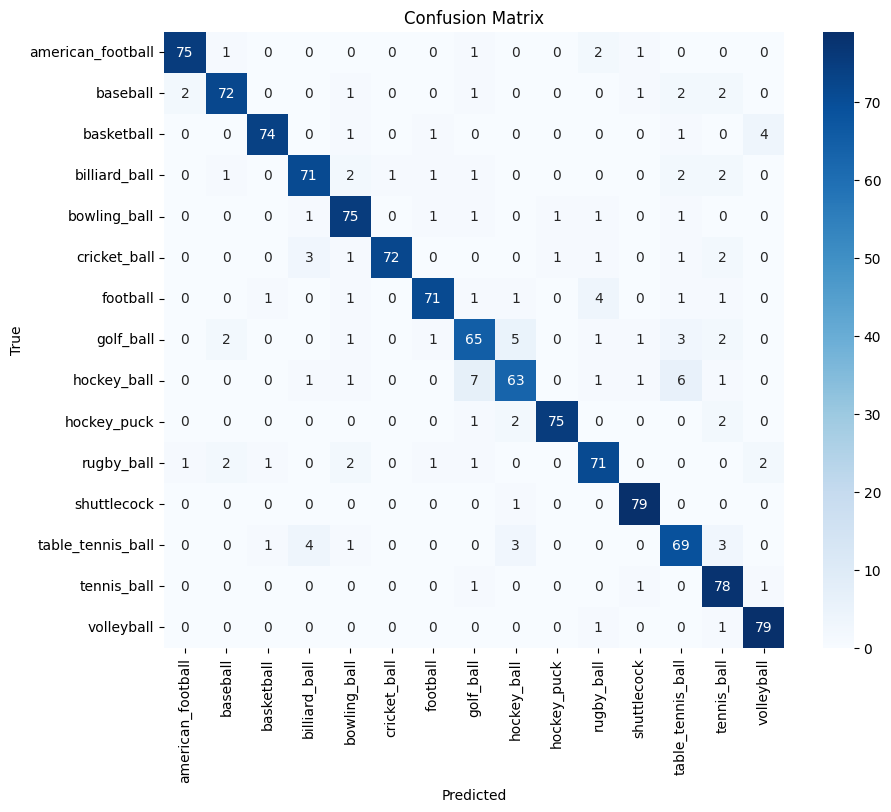 |
| | 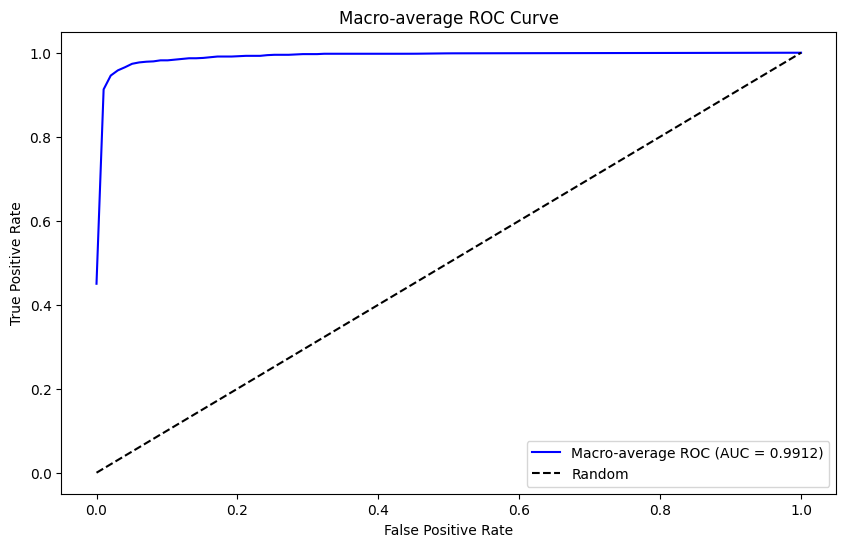 |
| |
|
| | ## Requirements |
| |
|
| |  |
| |  |
| |  |
| |  |
| |  |
| |  |
| |  |
| |  |
| |  |
| |  |
| |
|
| | See `requirements.txt` for complete dependencies. |
| |
|
| | ## Performance |
| |
|
| | The model achieves strong performance across all classes after addressing: |
| | - Class imbalance through augmentation |
| | - Image quality issues (dark, bright, low contrast images) |
| | - Proper train/validation/test splits (80/10/10) |
| |
|
| | Detailed metrics available in the notebook evaluation section. |
| |
|
| | ## Check the Results |
| |
|
| | <a href="https://files.catbox.moe/gn2xut.mp4"> |
| | <img src="https://files.catbox.moe/851c5y.avif" width="300"> |
| | </a> |
| |
|
| | ## License |
| |
|
| | This project is licensed under the MIT License. |

