|
|
--- |
|
|
base_model: stabilityai/stable-diffusion-xl-base-1.0 |
|
|
library_name: diffusers |
|
|
license: creativeml-openrail-m |
|
|
tags: |
|
|
- stable-diffusion-xl |
|
|
- stable-diffusion-xl-diffusers |
|
|
- text-to-image |
|
|
- diffusers |
|
|
- diffusers-training |
|
|
- lora |
|
|
inference: true |
|
|
datasets: |
|
|
- Shuhaib73/stablediffusion_celeba1k |
|
|
pipeline_tag: text-to-image |
|
|
--- |
|
|
|
|
|
<strong style="color: rosybrown; font-size: 18px">Text-to-Image Generation with Fine-Tuned SDXL [QLoRA]</strong> |
|
|
|
|
|
|
|
|
<strong style="text-decoration: underline">Example Prompts: </strong> |
|
|
<p style="color: orangered">1. A young, attractive female with arched eyebrows and a pointy nose. She has wavy brown hair, wears heavy makeup with lipstick, and exudes a confident, stylish look. The scene features soft, flattering lighting that enhances her youthful features and glamorous appearance.</p> |
|
|
<p style="color: orangered">2. A male with an oval face, big nose, high cheekbones, and a receding hairline. He has black hair, bushy eyebrows, and his mouth is slightly open in a smile. The subject is clean-shaven, with no beard.</p> |
|
|
<p style="color: orangered">3. Male with a big nose, black hair, bushy eyebrows, high cheekbones, and a receding hairline. He has an oval face, a mouth slightly open in a smile, and is clean-shaven with no beard.</p> |
|
|
|
|
|
|
|
|
<strong>Goal of this project:</strong> This project focuses on building an advanced text-to-image generation system using the Stable Diffusion XL (SDXL) model, a state-of-the-art deep learning architecture. The goal is to transform natural language text descriptions into visually coherent and high-quality images, unlocking creative possibilities in areas like art generation, design prototyping, and multimedia applications. |
|
|
|
|
|
To enhance performance and tailor the model to specific use cases, SDXL is fine-tuned using <strong>QLoRA (Quantized Low-Rank Adaptation)</strong>. This approach leverages efficient parameter fine-tuning and memory optimization techniques, enabling high-quality adaptations with reduced computational overhead. Fine-tuning with QLoRA ensures that the model is optimized for domain-specific text-to-image tasks, delivering even more precise and creative outputs. |
|
|
|
|
|
Simplified Architecture: 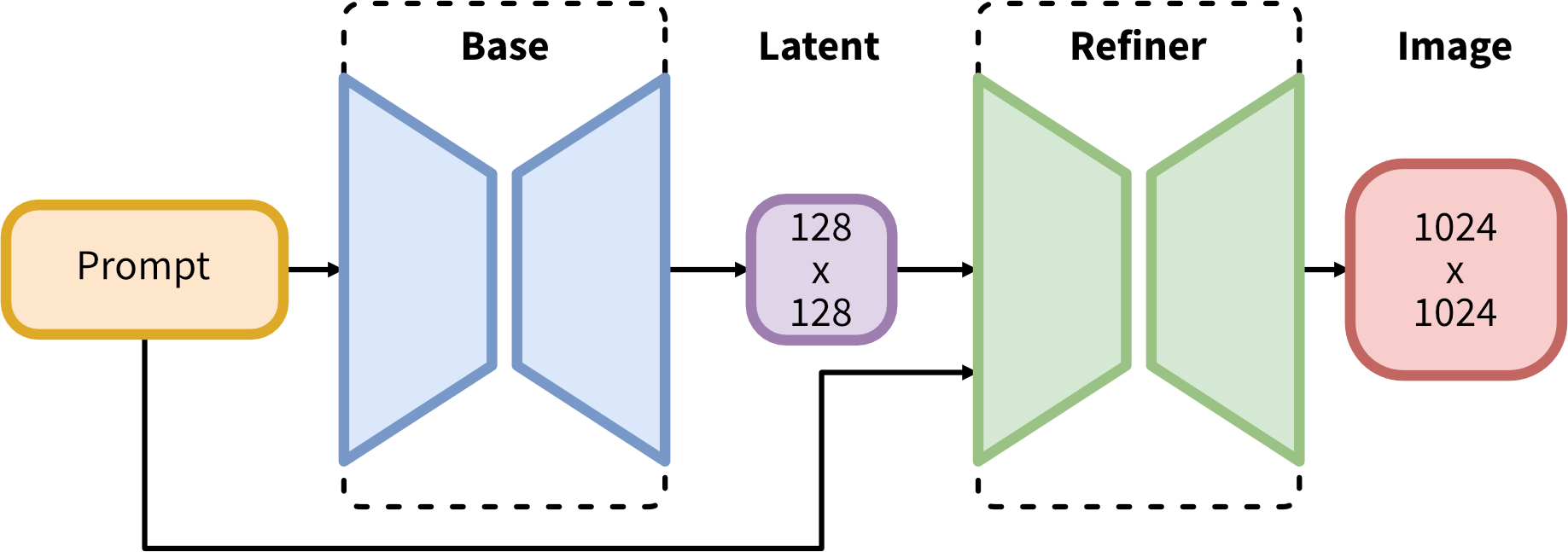 |
|
|
|
|
|
|
|
|
<p style="font-family:Lucida Sans ;font-size:15px;">Dataset Description: CelebFaces Attributes Dataset (CelebA).</p> |
|
|
|
|
|
<p style="font-family: Lucida Sans ;font-size:15px;">The CelebA dataset is a widely-used, large-scale dataset in the field of computer vision, particularly for tasks related to faces. It consists of over 200,000 celebrity face images annotated with a rich set of attributes. The dataset offers diverse visual content with variations in pose, facial expressions, and backgrounds, making it suitable for a range of face-related applications.</p> |
|
|
|
|
|
|
|
|
<strong>Here are few examples of generated images Using Stable Diffusion SDXL:</strong> |
|
|
|
|
|
<strong>Before Fine-Tuning SDXL</strong> |
|
|
|
|
|
 |
|
|
|
|
|
<strong>After Fine-Tuning SDXL on Custom Dataset</strong> |
|
|
|
|
|
 |
|
|
|
|
|
 |
|
|
|
|
|
|
|
|
<!--  |
|
|
|
|
|
 |
|
|
 |
|
|
|
|
|
--> |
|
|
|
|
|
|
|
|
|
|
|
|
|
|
#### How to use |
|
|
|
|
|
```python |
|
|
import torch |
|
|
from diffusers import DiffusionPipeline |
|
|
|
|
|
model_path = "Shuhaib73/stablediffusion_fld" |
|
|
|
|
|
trained_pipe = DiffusionPipeline.from_pretrained("stabilityai/stable-diffusion-xl-base-1.0", torch_dtype=torch.float16) |
|
|
trained_pipe.to("cuda") |
|
|
trained_pipe.load_lora_weights(model_path) |
|
|
|
|
|
``` |
|
|
|

